

E-waste management

Background :-

  • Discarded electrical or electronic devices are called as ‘e-waste (Electronic waste)’.
  • E-waste is also called as e-scrap, or Waste Electrical and Electronic Equipment (WEEE).
  • The electronic industry is the world’s largest and fastest growing manufacturing industry and so does e-waste.
  • The fraction of iron, aluminium, gold, copper in e-waste is over 60%,  plastic is about 30%, hazardous substances is about 2.70%, and remaining is wastage.

Causes :-

  •  The rapid growth of users of computers and other technology devices.
  •  Disposal of technology devices is not an easy task, as they contain hazardous materials.
  •  Average life span of electronic devices is decreasing as people are updating their houses with new electronic devices always.
  •  Transferring e-waste from developed countries to developing countries in the name of donations.
  •  Less life time of electronic goods.
  • Nobody is interested to reuse and repair the electronic goods as there are new products available in attractive prices.

Effects :-

  • Resources are wasted as valuable materials in e-waste are being dumped in normal wastage.
  • Toxic materials in e-waste cause severe health risk.
  • Environmental damage.
  • Land filling of e-wastes can lead to the launching of lead into the ground water.
  • When CRT (cathode ray tube) is burned, it emits toxic fumes into the air.
  • The cadmium from one mobile battery can pollute 600 m3 of water.
  •  Informal recyclers are attracting the poor people in the name of employment and making them disassemble the components with bare hands and without any precautions, which is highly dangerous for their health.

Solutions :-

  • Manufacturer must take the responsibility for the product after the completion of it’s life time to disassemble and reuse or recycle the components.
  • Customers must buy products from the manufacturers who take back their product or who offer discount on new products by taking old products.
  • Manufacturers must try to design the eco-friendly products as lead-free, halogen-free and recycled plastics.
  • Life time of products must be increased.
  • Government must take action on informal recyclers.
  • Collection centers of expired electronic and electrical goods must be there. So that e-waste will not be mixed and burned along with normal wastage.
  • Public awareness programs must be conducted because the role consumers is very high in this issue.
  • Government must collect the total data of e-waste including of legal and illegal imports from developing countries. So-that private sector will come forward to invest in the e-waste projects if they know the approx data and if they are sure of returns.

Conclusion :-

            Government, manufacturers of electronic and electrical goods and public together must take responsibility to develop a good and healthy world.

Are women better managers than men?

Points in favour – Women are better managers than men:

  • Women are more patient and composed while making decisions. It’s because of the way women are raised.
  • Be at homes or offices, women manage their work flawlessly. Hence they are good at multitasking.
  • Women are more flexible and can adapt to any situation or adversity. It’s because they are taught from childhood to adjust to the situations.
  • They are good time managers. As most of the women today manage work and home, they can prioritize their time well.
  • Due to the way they are raised in general, women are better listeners and give importance to minute details too at work.
  • In general, they’ve coherent minds, are punctual and are dedicated to their work. These inbuilt qualities do make them better managers than men.

Against – Women are not better managers than men:

  • Most of the women are emotional and soft-hearted. That’ll not be suitable at all times, especially for the role of a manager. many time, the position demands them to be tough.
  • Women tend to take calculated risks. At times business persons need to choose risky paths.
  • As many women are emotional, they tend to take things personally, which can result in biased decisions.

Conclusion:

The differences between women and men managers exist because of society’s way of raising men and women. Women were encouraged to be empathetic, kind etc. Men were taught to be harsh and demanding. Now the situations are changing. Both boy and girl children are being raised equally. Hence with time, the differences between men and women in any field will not exist.

Hard Work vs Smart Work

Smart work:-

  • Advantages of Smart work:-
    • Smart work is intellectual. Hence it improves our innovative and creative thinking skills.
    • Smart work improves productivity.
    • It teaches time management skills.
    • Because of smart work, we now have more free time. For example, modern transport systems reduced effort and time in moving to another place.
    • Smart work forces us to concentrate on work fully because it demands mental presence too.
  • Disadvantages of Smart work:-
    • Smart work may make us lazy, as we get used to doing less work and get more output.
    • Mere smart work may not yield results. “Hard work beats talent when talent doesn’t work hard”. Hence we cannot completely rely on smart work.
    • To work smartly, at first we need knowledge about the work, which comes only with hard work and experience.
    • We cannot teach hard work to smart working persons if they are not willing to work hard.

Hard work:-

  • Advantages of Hard work:-
    • Through hard work, we gain knowledge and experience. This will help us to do smart work, that means we can then analyse shortcuts to do the same amount of work.
    • Hard work teaches us patience and discipline.
    • The result of hard work will be more appealing to us because we put a lot of effort into achieving it.
    • Everyone will choose hardworking persons to work under them.
    • We can teach smart work to hard-working people and we can be sure about the improved productivity because they work hard.
  • Disadvantages of Hard work:-
    • Hard work may become boring and monotonous.
    • It consumes a lot of time and effort.
    • If we fail after doing so much hard work, it’ll be very difficult to cope up with it.

Conclusion:-

We need to work hard as well as smart to achieve success in our lives. Only one of both will not be sufficient in this modern world. And hence both hard work and smart work are essential to succeed in life.

City vs Village

City Life:-

Advantages of City Life:-

  • City life has an advanced and well-equipped environment. People migrate to cities because of better job opportunities, stability and a decent income which is a lack in villages.
  • Cities have a huge number of schools, colleges or universities established. Hence, the city folks get proper quality education which is a primary factor for standard living.
  • Recreation and entertainment are plenty in the cities. People also get adequate opportunities to establish and showcase their talents here.
  • City life provides commercialization, banking systems, and entrepreneurial businesses. This attracts more people from townships to settle in cities.
  • Better transportation, sanitation, availability of water and drainage systems are seen in cities. The drainage of polluted water goes through treatment before getting dumped in lakes or rivers. This keeps a small check on pollution too.
  • Medical help is at fingertips when required. There are a number of hospitals and clinics and well-equipped doctors and nurses for people in need.
  • Anonymity in cities helps in escaping from the judgements of people.

Disadvantages of city life:-

  • Urbanization is increasing at a rapid pace, and currently, about 30-33% of Indians lives in cities. This rate tends to be around 40% by 2030. With the high population density, the quality of life in cities is expected to degrade and become unfit for living.
  • City life is a very busy one, developing every second to a better version of itself. This results in a loss of cultural qualities and flavours.
  • High demand for city life has resulted in congestion. Human population has increased a lot in city areas.
  • The city’s population increases day by day. This leads to an environment with polluted air, smog, unclean water supplies, noise pollution
  • It follows from the previous point that an increase in pollution rates in the cities brings in more health issues. People tend to fall sick more in cities due to the polluted environment which is unfit for living.
  • Unfair competition among businesses, an increase in crime rates and immorality of the people is more in the cities.
  • Increase in costs and expenditure is a vital problem for city dwellers. This creates a reason for more competition for gaining wealth and hence increases stress and crimes too.

Village Life:-

Advantages of rural life:-

  • A pollution-free environment is available in the rural/village areas only.
  • Scenic beauty and greenery of rural areas are prominent. This also attracts tourists from around the globe.
  • Rural areas have a scope for socio-economic benefits like reduction in prices of agricultural and consumer products, access to markets, public transport, employment opportunities, and better education and healthcare facilities.
  • The essence of folk and culture is prominent in these areas. This defines the rural areas uniquely.

Disadvantages of rural life:-

  • Lack of higher education is a backlog for rural lives. This creates the main hurdle for better standards of living.
  • Rural areas have poor road connectivity. Over 40 per cent of India’s rural population remains outside the rural road network. According to the Planning Commission’s Working Group on Rural Roads, there are over 3.3 lakh rural habitations with no road connection.
  • Limited medical help persists in these areas. A counted number of hospitals and even lesser doctors are available. Hence at times, people are bound to move to city areas for sustaining life.
  • Rural life is difficult for women more because of lack of proper sanitation and toilets. The primary reason for this has to be the lack of educational opportunities.

Conclusion:-

  • Though the city life has many disadvantages, people flock there more for its advantages.
  • Improper road connectivity is one of the main reasons for stopping growth in rural areas. But the government is making situations better for rural India. The Pradhan Mantri Gram Sadak Yojana (PMGSY) is a step towards improving road connectivity in rural parts of the country.
  • Hence, the reduction of pollution in cities and the development of roads and infrastructure in rural areas will bring a balance between the two.

Open book exams – Pros, Cons & Challenges

  • Delhi University conducted online open-book exams in 2020 due to COVID-19 pandemic.
  • In open-book exams, students are allowed to have their textbooks and other approved reference materials. They can check the material while writing their answers. The ability to find, analyse and apply the information will be tested through this type of exams.
  • The United States and some other countries have already implemented open-book exams in higher education. In India, the concept of open-book exams is being discussed in the past few years. Some experts are recommending these exams to reform the Indian education system. And some others are against this alternative to normal exams.
  • Central Board of Secondary Education (CBSE) has also tested open-book exams from 2014 to 2018 to make the exams suitable for all the students, who have different abilities & strengths.
  • Karnataka state too tried implementing open-book exams.

Pros:

  • Open-book exams can eliminate rote learning, which is deeply ingrained in the Indian education system. As they will analytical skills, students will be encouraged to be analytical & creative.
  • Memory-based exams often award the students that have better memory and are a cause of worry to students, who can understand the concepts but cannot memorize. Open-book exams can be a boon for the students, who have different learning abilities.
  • Without the fear of memory-based tests, students can peacefully learn concepts. At present, students are concentrating more on preparing themselves for exams rather than on conceptual understanding.
  • Open-book exams can reform the method of teaching and can improve the quality of education.
  • It can also eliminate cheating & copying.
  • Many are of the opinion that students will just copy the content from the textbook. But the questions in open-book exams are formulated in such a way that analysing the content is required.

Cons:

  • Fear of exams encourages many students to study. With open-book exams, students may not focus much on their studies.
  • In India, there are many coaching centres that prepare students for various exams. They may provide model answers for all the concepts, which can be memorized. This can dilute the purpose of open-book exams.
  • Memory training is also important, especially for children. Open-book exams may discourage students in memorizing even the basic things.
  • As the evaluation in open-book exams will be tough, it may put even more pressure on students.
  • Fear of forgetting the content will be eliminated.

Challenges:

  • If students are not guided well to give open-book exams, they may just copy what is in the textbook. And it will not serve the purpose for which the exams are held.
  • Training a large number of evaluators in the new evaluation method is also a challenge.
  • The lack of quality teachers in India will be a serious challenge in implementing the new way of teaching. Students in some high-quality schools will be at an advantage over other students.

Conclusion:

Open-book exams can bring a revolutionary change in the Indian education system by reforming the method of teaching. But it may not be suitable for primary education and will be useful in higher education. Not just open-book exams, but testing different kinds of exams as an alternative to memory-based exams is much needed to improve the quality of our education system.

Social media influencers – Impact on youth

  • Until recently, the impact of celebrities on youth is vastly discussed. Now, social media celebrities have more influence on people than traditional celebrities. Social media websites such as Youtube, Instagram, Twitter gave opportunities to common people to earn fame and thereby resulted in the rise of social media influencers.
  • Social media influencers have a great impact on many people and especially youngsters. Even film celebrities are collaborating with influencers to promote their films.

Impact of social media influencers on youth:

  • People trust social media influencers more than traditional celebrities because they are more relatable having the image of a girl/boy next door. Followers and especially youngsters feel closer to the influencers they follow because influencers interact with them frequently. And hence many youngsters follow social media influencers religiously and are influenced by what they say and promote.
  • As youngsters are spending more time on social media than people of other age groups, social media influencers have more impact on youngsters than others.
  • Brands are also preferring to collaborate with social media influencers over traditional celebrities due to the influence they have on youngsters, and also because the sponsored content is easily blended into the normal content of influencers. Influencer marketing is on the rise and is affecting the purchasing behaviour of youngsters. Moreover, youngsters are more likely to research the product before buying. And they will check the reviews by the influencers they follow.
  • Some influencers do not mention whether the content they created is sponsored or not. They promote products for money and mislead the youngsters. A few influencers are also creating paid content in favour of political parties. As followers do not know that it is paid content, they are likely to believe it and may get influenced.
  • The food habits of the youngsters are also shaping up by the influencers they follow.
  • As influencers are creating attention-grabbing content, several youngsters are wasting their precious time by watching the content.
  • Some influencers fake perfect bodies and perfect lives. So, some youngsters are comparing them with those influencers and are feeling insecure. This is resulting in low self-esteem, mental health issues, cosmetic surgeries and materialism. This influences identity formation too.
  • Youngsters are listening to different world views and perspectives from social media influencers.
  • Some social media influencers genuinely review the products they used. By watching their reviews, people are saving money and are avoiding bad purchases.
  • There are so many influencers on social media that promote positive things such as body positivity, financial awareness, ethical values etc.

Way forward:

  • With great power comes great responsibility. So, social media influencers should be socially responsible. They should avoid doing things that have the possibility of influencing people negatively.
  • Youngsters should be aware of the influence social media influencers have on them and need to make conscious decisions. They should choose to follow genuine influencers who are ethical and socially responsible.
  • Parents and teachers also have the responsibility to make their children aware of the positive and negative impact of social media celebrities on their daily lives.
  • Regulations should be there on influencer marketing to mitigate the negative impact and to prevent the misuse of fame.

Conclusion:

Social media influencers have the power to impact the daily lives of youngsters. However, many young people are increasingly aware of the influence social media celebrities have. So, they can choose the good leave the bad. But, influencers have the responsibility to be ethical.

Confidence vs Knowledge

  • Knowledge is essential to understand and solve problems. Confidence is necessary to take opportunities and to put the knowledge to use. So, both knowledge and confidence are important to achieve success.
  • When we have knowledge, we feel confident. More knowledge often increases confidence.
  • Knowledge alone may not give us success. Even if we have expertise, lack of confidence results in not utilising the knowledge, and hence wastage of resources.
  • Similarly, confidence without knowledge is not helpful in many circumstances. Sometimes, overconfidence without having the appropriate knowledge results in negative consequences.
  • Confidence alone is not sufficient to maintain success. To sustain the success in any field, one must work hard to gain and update the required knowledge.
  • But in some situations, confidence saves us even if we have no knowledge. For example, in group discussions, if we are confident enough we can understand what other participants are saying and we can manage to form new related points. If we are not confident enough and if we feel panicked, we cannot do so.
  • Sometimes more knowledge creates confusion and self-doubt. At that point, confidence helps in taking risks and in trying new things.
  • Most of the successful people are confident people or at least they fake confidence to overcome self-doubt. They work hard to increase their knowledge to maintain the level of confidence.

Conclusion:

Both confidence and knowledge are essential to achieve success. However, the importance of each varies depending on the situation.

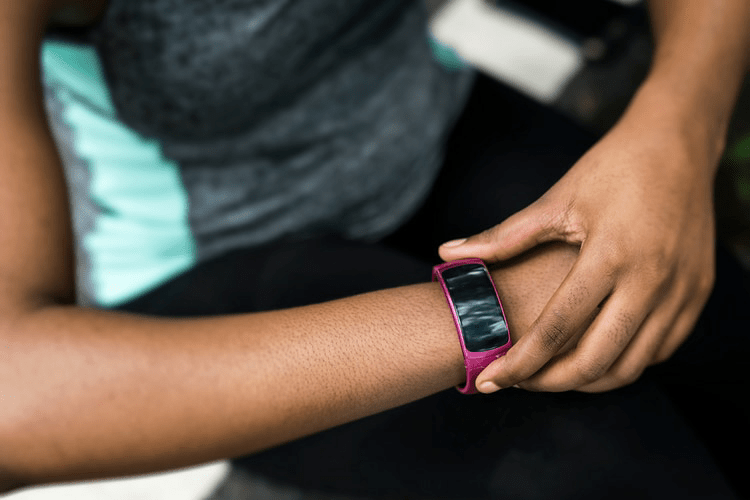
S.M.A.R.T. Weight Loss & Your Fitness Device

It Wouldn’t be nice if you knew exactly what to do to lose weight successfully? What you need is a fitness tracker and a smart goal! S.M.A.R.T. is an acronym to remind you how to set a goal that maps out exactly what you need to do. These goals are Specific, Measurable, Attainable, Relevant, and Time-bound.

Don’t just stack up data you get from a fitness device. Use the info you track, your calories burned, food eaten, and hours slept to shape S.M.A.R.T. goals for yourself.

Here’s one example of how to do it. Look at your fitness device to see how many calories you burn a week by . Let’s say it’s 1,000 calories.

Use that data to bump up your calorie burn. For example, a S.M.A.R.T. goal is “I will walk enough to burn at least 1,250 calories through exercise this week.”

Specific. Rather than simply saying, “I’m going to exercise more,” you’ve specified how many calories you’ll burn.

https://c602e2df2c4d24406b948fbd14b87a85.safeframe.googlesyndication.com/safeframe/1-0-38/html/container.html

Measurable. Your device will track the calories you burn, so you’ll be able to clearly know when you succeed.

Attainable. Since you’re already burning 1,000 calories a week through exercise, bumping it up a bit should be manageable. To burn 1,250 calories, you’ll need to add about one extra workout.

Relevant. Exercise is totally relevant to weight loss! So exercise more fits into your larger weight loss plan.

Time-bound. This is your goal for this week. Period. You can choose to pursue this goal again next week, or you can set a new goal. It’s easier to commit to a goal — and be successful — if you do it for a set amount of time.

9 Benefits of Yoga

If you’ve done your “downward dog” yoga pose today, you’re probably feeling more relaxed. Regardless of your level of yoga expertise, if you’re practicing regularly, you can feel better from head to toe.

Yoga offers physical and mental health benefits for people of all ages. And, if you’re going through an illness, recovering from surgery or living with a chronic condition, yoga can become an integral part of your treatment and potentially hasten healing. 

A yoga therapist can work with patients and put together individualized plans that work together with their medical and surgical therapies. That way, yoga can support the healing process and help the person experience symptoms with more centeredness and less distress.

1. Yoga improves strength, balance and flexibility.

Slow movements and deep breathing increase blood flow and warm up muscles, while holding a pose can build strength.

Try it: Tree Pose
Balance on one foot, while holding the other foot to your calf or above the knee (but never on the knee) at a right angle. Try to focus on one spot in front of you, while you balance for one minute. 

2. Yoga helps with back pain relief.

Yoga is as good as basic stretching for easing pain and improving mobility in people with lower back pain. The American College of Physicians recommends yoga as a first-line treatment for chronic low back pain.

Try it: Cat-Cow Pose
Get on all fours, placing your palms underneath your shoulders and your knees underneath your hips. First, inhale, as you let your stomach drop down toward the floor. Then, exhale, as you draw your navel toward your spine, arching your spine like a cat stretching. 

3. Yoga can ease arthritis symptoms.

Gentle yoga has been shown to ease some of the discomfort of tender, swollen joints for people with arthritis.

4. Yoga benefits heart health.

Regular yoga practice may reduce levels of stress and body-wide inflammation, contributing to  Several of the factors contributing to heart disease, including high blood pressure and excess weight, can also be addressed through yoga.

Try it: Downward Dog Pose
Get on all fours, then tuck your toes under and bring your sitting bones up, so that you make a triangle shape. Keep a slight bend in your knees, while lengthening your spine and tailbone.

5. Yoga relaxes you, to help you sleep better.

that a consistent bedtime yoga routine can help you get in the right mindset and prepare your body to fall asleep and stay asleep.

Try It: Legs-Up-the-Wall Pose
Sit with your left side against a wall, then gently turn right and lift your legs up to rest against the wall, keeping your back on the floor and your sitting bones close to the wall. You can remain in this position for 5 to 15 minutes. 

6. Yoga can mean more energy and brighter moods.

You may feel increased mental and physical energy, a boost in alertness and enthusiasm, and fewer negative feelings after getting into a routine of practicing yoga.

7. Yoga helps you manage stress. 

According to the National Institutes of Health, scientific evidence shows that yoga supports stress management, mental health, mindfulness, healthy eating, weight loss and quality sleep.

Try It: Corpse Pose (Savasana) 
Lie down with your limbs gently stretched out, away from the body, with your palms facing up. Try to clear your mind while breathing deeply. You can hold this pose for 5 to 15 minutes.

8. Yoga connects you with a supportive community. 

Participating in yoga classes can ease loneliness and provide an environment for group healing and support. Even during one-on-one sessions loneliness is reduced as one is acknowledged as a unique individual, being listened to and participating in the creation of a personalized yoga plan.

9. Yoga promotes better self-care. 

Scientific Research on Yoga Benefits 

The U.S. military, the National Institutes of Health and other large organizations are listening to — and incorporating — scientific validation of yoga’s value in health care.

Numerous studies show yoga’s benefits in arthritis, osteopenia, balance issues, oncology, women’s health, chronic pain and other specialties.

Sweets

Sweet this word brings smile on everyone’s face and make them…happy and to feel good.

In every festivals we make sweets to enjoy the auspicious day or special day..

In every function they start the meal with sweet because they want everything to be good.

Children have a huge crazy on sweet they like to eat sweets more and more… Like that some leaders also have crazy like that and …i too like sweets.

There are so many kinds of sweets but each sweet has its own taste ..and in some sweet they have medical benefits also……

FACTS

Eating the sweet item first enables the flow of digestive secretions. By pushing the sweets to the last, you would slow down your digestion.” Having a bite or two of sweet or a chunk or gur(jaggery) sweet right at the start of your meal is also said to activate the taste buds.

CONCLUSION

Though sweets are like by everyone …too much of anything is Good for nothing…so taking this words eat little sweet and make yourself happy and feel good with Good Health and lots of happiness………….😍😍😍😍😍😍😀😀😀😀😀😀

Musical instrument

musical instrument is a device created or adapted to make musical sounds . In principle, any object that produces sound can be considered a musical instrument—it is through purpose that the object becomes a musical instrument. A person who plays a musical instrument is known as an instrumentalist. The history of musical instruments dates to the beginnings of human culture. Early musical instruments may have been used for rituals, such as a horn to signal success on the hunt, or a drum in a religious ceremony. Cultures eventually developed composition and performance of melodies for entertainment. Musical instruments evolved in step with changing applications and technologies.

The date and origin of the first device considered a musical instrument is disputed. The oldest object that some scholars refer to as a musical instrument, a simple fults, dates back as far as 67,000 years. Some consensus dates early flutes to about 37,000 years ago. However, most historians believe that determining a specific time of musical instrument invention is impossible, as many early musical instruments were made from animal skins, bone, wood, and other non-durable materials.

Musical instruments developed independently in many populated regions of the world. However, contact among civilizations caused rapid spread and adaptation of most instruments in places far from their origin. By the class, instruments from were in maritime Southeast Asia, and Europeans played instruments originating from North Africa. Development in the Americas occurred at a slower pace, but cultures of North, Central, and South America shared musical instruments.

A musical instrument is a device created or adapted to make musical sounds. In principle, any object that produces sound can be considered a musical instrument—it is through purpose that the object becomes a musical instrument. A person who plays a musical instrument is known as an instrumentalist. 

Miscellaneous

  1. Advantages of having a three-day weekend instead of a two-day weekend
  2. Why everyone should visit Disney World
  3. Allow married women to enter Miss World and Miss Universe pageants.
  4. There couldn’t be enough beauty contests for children!
  5. Beauty contests degrade women.
  6. Some market toys provoke and promote violent behavior.
  7. Mac is better than PC
  8. Santiago de Chile tourists must be made aware of pickpocketers. (or another city)
  9. Love is far more powerful than hate
  10. Make free public wi-fi available
  11. Bike-sharing programs
  12. Stealing from the rich to give to the poor is not nobel.
  13. The morals behind lying
  14. Silly games like Candy Crush are making people less intelligent
  15. Using hands-free devices while driving
  16. Using lie detector tests for employment purposes
  17. What doesn’t kill you makes you stronger
  18. Money can’t buy happiness
  19. Is Batman a real superhero?
  20. Why there aren’t more female construction workers
  21. Lie detector tests are inaccurate.
  22. Organic food tastes better.
  23. Alternative power is the answer to our energy crisis.
  24. It’s immoral to genetically design babies.
  25. Every property needs to have at least one tree.
  26. Nursery rhymes need to be looked at better.
  27. Hostels are not a place for children.
  28. Plant fruit trees on sidewalks.
  29. Religion and science can go hand in hand.
  30. Everyone should know how to swim.
  31. Not wearing a seat belt a personal choice.
  32. Opposites will always attract.
  33. Climate change is always changing.
  34. Not enough is done to end world hunger.
  35. Battery farming is unethical.
  36. People shouldn’t be paying for drivers licenses.
  37. Smokers make the most acquaintances.
  38. First impressions are always right.
  39. Cash should be abandoned completely.
  40. Allow mind reading during poker.
  41. Minimum wage is too low.
  42. Security cameras are an invasion of privacy.
  43. Clients don’t want birthday messages from businesses.
  44. Allow casual dress clothes in the workplace.
  45. Make public transport free.
  46. The welfare system doesn’t work.
  47. Organ donors should be paid.
  48. All kids on a winning team should get a trophy.
  49. Illegal immigrants don’t harm the economy.
  50. Humans are vegetarian by nature.
  51. Self-driving cars will cause fewer accidents.
  52. It is time to include internet slang to dictionaries.
  53. Teens are unfairly stereotyped.
  54. Group homes are better than foster care.
  55. Guns don’t kill people.

Women empowerment

Women empowerment refers towomen to make them capable of deciding for themselves. Women have suffered a lot through the years at the hands of men. In earlier centuries, they were treated as almost non-existent. As if all the rights belonged to men even something as basic as voting. As the times evolved, women realized their power. There on began the revolution for women empowerment.

Essay on Women Empowerment

As women were not allowed to decision for them, women empowerment came in like a breath of fresh air. It made them aware of their rights and how they must make their own place in society rather than depending on a man. It recognized the fact that things cannot simply work in someone’s favor because of their gender. However, we still have a long way to go when we talk about the reasons why we need it.

Need for Women Empowerment

Almost every country, no matter how progressive has a history of ill-treating women. In other words, women from all over the world have been rebellious to reach the status they have today. While the western countries are still making progress, third world countries like India still lack behind in Women Empowerment.

In India, women empowerment is needed more than ever. India is amongst the countries which are not safe for women. There are various reasons for this. Firstly, women in India are in danger of honor killings. Their family thinks its right to take their lives if they bring shame to the reputation of their legacy.

How to Empower Women?

There are various ways in how one can empower women. The individuals and government must both come together to make it happen. Education for girls must be made compulsory so that women can become illiterate to make a life for themselves.

Women must be given equal opportunities in every field, irrespective of gender. Moreover, they must also be given equal pay. We can empower women by abolishing child marriage. Various programs must be held where they can be taught skills to fend for themselves in case they face financial.

Most importantly, the shame of divorce and abuse must be thrown out of the window. Many women stay in abusive relationships because of the fear of society. Parents must teach their daughters it is okay to come home divorced rather than in a coffin.

Mahatma Gandhi

Mahatma Gandhi was a great patriotic Indian, if not the greatest. He was a man of an unbelievably great personality. He certainly does not need anyone like me praising him. Furthermore, his efforts for Indian independence are unparalleled. Most noteworthy, there would have been a significant delay in independence without him. Consequently, the British because of his pressure left India in 1947. In this essay on Mahatma Gandhi, we will see his contribution and legacy.

Essay on Mahatma Gandhi

Contributions of Mahatma Gandhi

First of all, Mahatma Gandhi was a notable public figure. His role in social and political reform was instrumental. Above all, he rid the society of these social evils. Hence, many oppressed people felt great relief because of his efforts. Gandhi became a famous international figure because of these efforts. Furthermore, he became the topic of discussion in many international media outlets.

Mahatma Gandhi made significant contributions to environmental sustainability. Most noteworthy, he said that each person should consume according to his needs. The main question that he raised was “How much should a person consume?”. Gandhi certainly put forward this question.

Legacy of Mahatma Gandhi

Mahatma Gandhi has influenced many international leaders around the world. His struggle certainly became an inspiration for leaders. Such leaders are Martin Luther King Jr., James Beve, and James Lawson. Furthermore, Gandhi influenced Nelson Mandela for his freedom struggle. Also, Lanza del Vasto came to India to live with Gandhi.

The United Nations has greatly honored Mahatma Gandhi. UN has made 2nd October as “the International Day of Nonviolence.” Furthermore, many countries observe 30th January as School Day of Nonviolence and Peace.

The awards given to Mahatma Gandhi are too many to discuss. Probably only a few nations remain which have not awarded Mahatma Gandhi.

In conclusion, Mahatma Gandhi was one of the greatest political icons ever. Most noteworthy, Indians revere by describing him as the “father of the nation”. His name will certainly remain immortal for all generations.

Save Trees

From childhood, we have heard that trees are our best friend but in practical life, we didn’t see anyone who treats trees as their friends. Although they are the most valuable life source on the earth. They benefit every life form in a direct or indirect way. And the earth is connected to them to maintain a natural balance. In this essay on save trees, we are discussing the reason why our friends need saving.

They nourish us and protect us in many ways. Also, they keep our  green and clean. So, it becomes our responsibility to repay them for the things they do for us by saving them. Besides, large trees are more beneficial than small ones because they capture more carbon, capture more water, combat the heat, filtergreenhousegases, gives shelter from heat and sunlight, etc. So, it can be said that we depend on them more rather than they on us.

essays on save trees

Advantages and Importance of Trees

As we have discussed the benefits of trees in short but here we are going to discuss them in detail.plants and trees fight the climatic changes that are destroying the earth. They also filter the air that we breathe and absorb all the harmful chemical gases and odors from the environment. Also, they take in the harmful carbon dioxide and gives out oxygen.

They are good for the diversity of flora and fauna. They give us food, shelter and many more things that we can’t count. Besides, they never demand anything from us and also prevent . Above all, they control and manage the effects .