Bad Bank

Have u ever heard of bad bank? Well, in this article we will know about what bad bank is and how is it taking shape in India. 
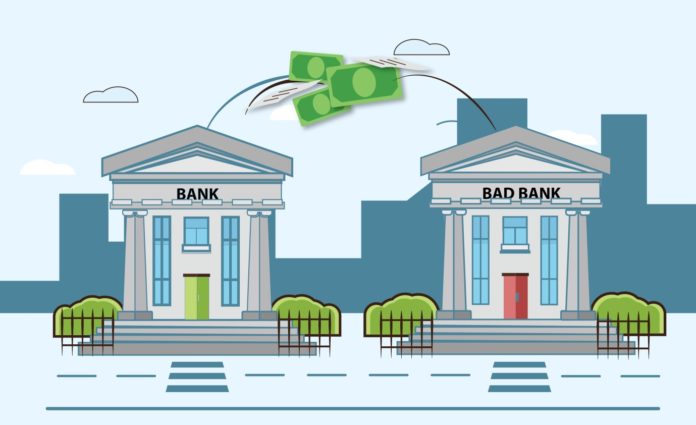
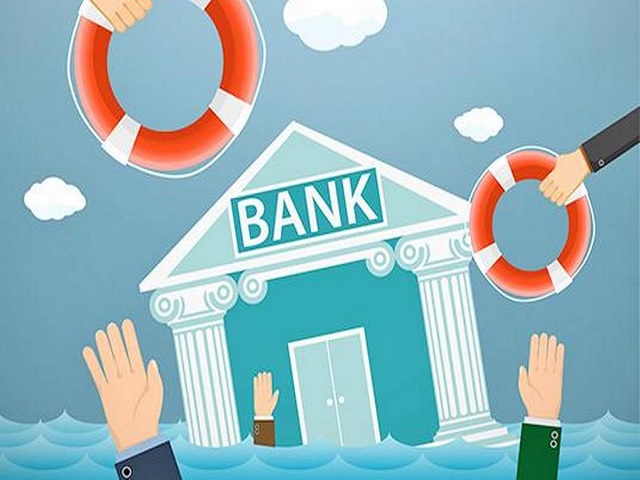
So to start over, A bad bank is a financial entity that was formed to purchase the risky loans and other illiquid assets of another financial institution. The company with many nonperforming assets will sell them to the bad bank at market value. The goal of Bad Bank is to bring financial stability to the banking industry. It would store bad loans for public sector banks, which will be offered to investors at a discount which will eventually assist banks in cleaning up their balance sheets. 

Recently, Nirmala Sitharaman, the Union Finance Minister, has announced the establishment of a bad bank in the nation. Sitharaman said in her budget address that an Asset Reconstruction Company Limited and an Asset Management Company will be established to manage the bad debt of public sector banks such as the State Bank of India, Punjab National Bank, and others.

However, Experts were perplexed by this because IBC known as insolvency and bankruptcy code was considered to be pretty efficient in settling problematic debts. But the government was concerned about delays and low asset realization under the IBC. Furthermore, the loans were offered at steep discounts. The assets were liquidated in some circumstances. There were also issues regarding the public sector bank’s(PSB) lack of cooperation. 

So, to consolidate and take over the current stressed debt, an ARC and AMC will be established. It will then manage and sell the assets to Alternative Investment Funds and other potential buyers in order to realize their full worth. To put it another way, it will store bad loans for public sector banks, which will subsequently be sold to investors at a lower cost which will aid in the cleaning up of the balance sheet and will eventually lessen the financial burden of future capital requirements. So, India’s bad bank is now taking form. With the formation of the National Asset Reconstruction Company Ltd, the much-anticipated wait for the “Bad Bank” came to an end. 
Given its size and development potential, the Indian economy will experience a steady supply of distressed assets. When the one-time loan arrangement finishes, Covid-19 will be a source of concern for many businesses. For public sector banks, the existing portfolio of problematic loans is a major source of concern. As of September 2020, the banking system’s total gross nonperforming assets (NPAs) accounted for 7.5% of the entire loan book. 

This is anticipated to rise to 13.5 percent by March-September this year, according to the Reserve Bank of India (RBI). Moreover, Many people believe that running a bad bank successfully necessitates a variety of factors. One, it must be for a defined purpose and include a time limit. For instance, Sweden AMC, supported by the government, recovered over 90% of bad loans in six years in the early 1990s. However, the Chinese AMC, which is supported by the government, failed to deliver. Now it’s up to NARCL, private ARCs, and IBC to preserve the value of stressed assets by restructuring and resolving them in a timely manner.


Is Chocolate a Compulsive Consumption?

The popular saying goes, “nine out of 10 people enjoy chocolate, and the tenth person always lies.” This is accurate since who doesn’t like chocolate?

For hundreds of years, people have loved chocolate and other sweets. And now it is consumed in a variety of ways and is probably one of the most popular meals, so you might be curious if it’s addictive.

So, can you become a chocoholic? Let’s explore the answer in this article. Distinct varieties of chocolate have different components, however they all share a few important ones. Some of these could be linked to chocolate’s risk for addiction. The main ingredients are cocoa mass, cocoa butter, sugar, milk, vanilla and other products can be used to help preserve chocolates and maintain a creamy consistency. Cocoa butter offers many benefits, but it’s also heavy in fat. This contributes to chocolate’s addictive potential, especially when paired with the high sugar content in some types. Some experts also doubt that food additives play a role in compulsive eating. Flavorings and artificial sweeteners are frequently used in highly processed and extremely appealing goods like chocolate. 

Also, just like addictive medications such as drugs, scientifically, exceptionally delicious foods like chocolates have been shown to trigger the release of dopamine, a neurotransmitter linked to pleasure, in the reward circuit in a brain area. After a time, merely thinking about these enjoyable things triggers the reward circuit. Your brain tends to crave these feel-good substances once you start connecting them with positive feelings. This kind of relationship can be made with lots of different foods but Scientists have identified several properties in chocolate that are particularly tempting. This might just be due to the fact that chocolate is generally high in sugar and fat as stated above, but according to one new study, it could be due to its interaction with a chemical called enkephalin, which is found in our brain and appears similar to endorphins, and may be the source of our addiction. 

Chocolate is frequently represented as a go-to pleasure as well as something we’re expected to feel guilty about, and the image of the hapless chocoholic appears in advertising and the media on a regular basis, typically in good humour. So, at least in part, the sense that we’re going crazy for chocolate originates from outside of our bodies. Furthermore, We’re naturally reward-seeking creature,we had to be to survive long enough to compete in the gene pool. Chocolate and other sugary, high-fat meals are natural rewards, so our brain responds by saying, “get more of that—if you can!” Now, however, we are able to do so. Almost all of the time. Especially in a culture when chocolate comes in all forms and sizes and may even be delivered.

So, eating chocolate that is less processed and lower in sugar and fat,is one approach to avoid the most potentially addicting forms of chocolate. 

Sugar content is reduced in many dark chocolate types. Furthermore, dark types contain the highest concentration of antioxidants and other beneficial elements. So, choosing dark kinds with less sugar and fat may be a healthier way to enjoy this delicacy.

Therefore, Chocolate is similar to medication, but like medicine, the key is moderation. Don’t overdo it. 

Government vs Twitter

Chris pirillo said that “twitter is a great place to tell the world what you are thinking before you have had a chance to think about it”. However, the government wants to control it. 

India’s Covid-19 rise had eclipsed all superlatives only a few months ago. Hundreds of thousands of people have died because of India’s worst public-health catastrophe in history, which has highlighted the country’s deteriorating healthcare infrastructure. In the midst of the tragedy, while armies of medical personnel and volunteers focused their energies on battling the virus, the administration looked to be concentrating on a different issue. And that issue is TWITTER.

 The initial root of the situation was a tweet sent by BJP spokesperson Sambit Patra on May 18. Patra displayed a paper he referred to as a “toolkit” in this tweet, which appears to be an internal Congress document outlining the processes for undermining the BJP’s reaction to the epidemic and increasing publicity of the party’s activities. Days later, the Delhi Police, which reports to the Union government but is not a full-fledged state, paid a visit to Twitter’s headquarters in Delhi and Gurugram, ostensibly to find out why the company opted to put the warning label on Patra’s post. According to local sources, authorities in Uttar Pradesh recently blamed Twitter, along with journalists and opposition party officials, for posting a video that sparked communal strife. The video, which alleged to depict majority Hindus beating a minority Muslim guy, prompted another complaint against Twitter India CEO Manish Maheshwari, according to Delhi police. However, The problematic footage has subsequently been deleted, with no more comment from the firm other than a remark about following local regulations. 

The government has opted to focus on digital image management many times during the epidemic, including the most recent occurrences. Following government demands, Twitter and Facebook pulled down about 100 postings in April. The government’s approach to the epidemic was criticized in several of these tweets.Following the agricultural demonstrations, Twitter agreed to the BJP’s demands to temporarily and permanently restrict 500 accounts, including those of opposition leaders and journalists. The government also forced Twitter to remove several well-known personalities who expressed support for the protestors, like Punjabi musician JazzyB, whose account has 1.2 million followers but can’t be viewed from India, though the firm hasn’t followed through on all of its demands.

Therefore, they not only silence the critical voices but also exposes the corporation to much more pressure to stifle government critics in India and elsewhere. Twitter, a relative newcomer with 17.5 million members, has India as one of its fastest-growing markets. However, its limited reach makes it vulnerable in a country that demonstrated its willingness to outlaw popular foreign services a year ago when it banned TikTok — which had 200 million users in the country — WeChat, and hundreds of other Chinese-made apps following a violent clash on the disputed border. It is critical to political debate in India, and Modi himself is a frequent user with a following of over 69 million people, demonstrating its global reach. While politicians have been outspoken in their criticism of Twitter, none have publicly threatened to abolish it. 

DELUGE: A CONCERN

Every year, monsoon season occurs in various parts of the world. It has been coming sooner in recent years, accompanied by rising amounts of rainfall, or later than normal, with a considerably drier start. While monsoon-affected nations plan for the monsoons on a yearly basis, the changes due to covid-19 are making it more difficult for them to respond without help.

Recently, the heavens have opened up in the highlands of north India and along the coasts of western India in the last ten days, unleashing severe weather phenomena. More than 150 people have died because of landslides and flash floods across Himachal Pradesh, Uttarakhand, Maharashtra, and parts of Karnataka. At least 53 people were killed when a hilltop collapsed south of the city in Raigad, Maharashtra’s hardest-hit district. The floods in Goa are the worst since 1982. The Indian monsoon is rapidly becoming known for its unpredictable behavior of the elements. However, the country’s weather forecasters, planners, and lawmakers have yet to accept climate change as a threat. 

Most Indian cities, including Delhi and Mumbai, are ill-equipped to deal with such severe rains, with drainage systems blocked at many locations. The defense of city residents against weather oddities is jeopardized by urbanization that is uninformed by basic hydrological principles. 

Farmers in several areas have discovered that rain is falling in torrents rather than being evenly distributed throughout the season, resulting in floods and erosion, followed by times of drought. Increasing automation, on the other hand, entails heavy machinery tamping down soil and producing rutting, all of which are detrimental to the orchard and vineyard floor. Furthermore, Aquifers that used to recharge groundwater and convey rainfall to bigger water bodies have been replaced by concrete in most cities.

Therefore, it is vital to tackle this problem as soon as possible because these disasters affect the poor in return. The scale of the devastation witnessed in the preceding examples, as well as what occurred in the Bay of Bengal last year, demonstrate a lack of disaster preparedness and mitigation, an issue that affects most of the country’s metropolitan areas. 

We propose that the government develop long-term disaster management plans to reduce the impact of floods in Indian states. It is critical to enhance flood-forecasting techniques and install flood-warning systems in low-lying areas as a first step in this direction. Second, the government should devote greater resources to flood prevention, mitigation, and preparation. Third, river connection and the development of multifunctional structures and flood shelters in low-lying regions should be done on a mission-mode scale to assist minimize flood-related deaths. However, these methods will go a long way toward reducing and avoiding flood damage in Indian states. But its better to do something to prevent it all rather than sitting and watching the god’s show. 

Scholars in development studies have written on these issues, but in ecologically vulnerable places, the political costs of altering the current development paradigm are frequently substantial. The Gadgil committee report on the Western Ghats, for example, which recommended for controlling development operations, was met with opposition in the region and largely ignored by mainstream political parties. 

ATLANTIC CHARTER

The Atlantic Charter was a joint statement published by the United States and the United Kingdom during World War II (1939–45) that laid forth a vision for the postwar world. It set forth a wide set of objectives of U.S and British war such as:-

1. the desire for no territorial changes without the consent of the peoples affected.

2. They believed that every people had the right to select their own type of government and that those who had been stripped of their sovereign rights and self-governance should have them restored.

3. They would work to ensure that all states had equitable access to commerce and raw commodities.

4. They aimed to enhance labor standards, economic growth, and social security by promoting global collaboration.

5. They would seek a peace in which all countries could live peacefully inside their borders, without fear or want, after the “Nazi tyranny” (Germany) was destroyed.

Now, u must be wondering about why we are discussing the year-old charter now. That is because recently, The President of the United States and the Prime Minister of the United Kingdom have signed a revised version of the 80-year-old Atlantic Charter.

This revised version is a 604-word declaration which is an attempt to lay out a grand vision for global relations in the twenty-first century, much like the original charter was a declaration of a Western commitment to democracy and territorial integrity just months before the United States entered World War II. It’s a declaration of principles, a pledge that the United Kingdom and the United States will work together to meet the challenges of their time. It also emphasizes climate change and the need of biodiversity preservation. With references to new technology, cyberspace, and global development that is sustainable. 

It urges Western partners to fight electoral meddling, particularly through misinformation and other harmful activities. In a technology era, it rates the risks to democratic states. It also declared that that the North Atlantic Treaty Organization (NATO) will remain a nuclear alliance as long as nuclear weapons exist.

Now, what will this new version of Atlantic charter holds the opportunity for India. Comparing the old and new version of Atlantic charter, the previous Atlantic Charter alienated Indian nationalism from the West, but the new Charter, as well as the rebooting of western institutions, could pave the way for a fruitful period of India’s collaboration with the US and its allies. 

In 1941, the United Kingdom maintained that the charter’s self-determination concept did not apply to India. However, the inclusion of India and South Africa, as well as Australia and South Korea (as guests) at the G-7 meeting in 2021, demonstrates the urgent need to broaden the West’s base in dealing with global issues. Furthermore, The present Anglo-American initiative to formalize western talks with India is long overdue. 

The Indian Prime Minister, who is participating in the G-7 meeting from afar, has the chance to demonstrate a commitment to both addressing views of decreasing democratic freedoms in India and offering genuine partnership with western democracies on global issues.

Existing Unjust Laws for Women Across the Globe

No country in the world has succeeded in closing the gender gap. Its undeniably true that there’s never been a finer moment for women to be born because there are some sexist laws which are still prevailing. In this article we will know about the discriminatory laws against the women. 

  1. In India Wives can be raped by their husbands with no repercussions.

Starting with our very own country, non-consensual sex inside marriage is not considered a criminal offence or a kind of rape as long as the woman is over a particular age i.e 18 years old. Indian Government in a press release stated that due to various factors, such as levels of education/illiteracy, poverty, myriad social customs and values, religious beliefs, and the society’s mindset to treat marriage as a sacrament, the concept of marital rape, as understood internationally, cannot be appropriately applied in the Indian context.

2. Women may be slaughtered in the sake of “honor” in Jordan

There is no honor in murdering a spouse, daughter, sister, or niece for a supposed moral violation, yet far too many nations like Jordan continue to look the other way when killers use this as an excuse.Articles 340 and 98 of Jordan’s penal code allow judges to lower penalties in situations of murder committed in retaliation for adultery or in a fit of rage.

3. In Northern Nigeria, a man is permitted to strike his wife in order to “correct” her.

Intimate partner violence is legal as long as a husband can show that the beating is “for the purpose of correcting his wife” and does not cause “grievous physical harm.” Surprisingly, the same phrase defines “bodily damage” as injuries that need more than 21 days in the hospital. The Russian government just approved on a measure to decriminalize domes across the world. According to the new rule, first-time offenders would no longer face criminal penalties, while repeat offenders will be granted mercy if the abuse occurs “no more than once a year.”

4. Women in Saudi Arabia are still unable to get a passport without the consent of a man. 

Saudi Arabia may have been elected to the United Nations Women’s Council and recently reversed a prohibition on women driving, but it remains one of the least gender-equal countries in the world. Women in Saudi Arabia are still barred from getting a passport, marrying, or using some government services unless they get permission from a male guardian.

5.A lady may be imprisoned in Iran for disobeying the country’s stringent clothing code.

An instance can be highlighted on this issue when an Iranian lady was detained in 2016 after sharing a selfie of herself on Instagram without a hijab. The arrest drew increased attention to Iran’s stringent dress code, which mandates that women wear a hijab in public or face fines and up to a two-month prison sentence. In recent years, a website called My Stealthy Freedom has encouraged Iranian women to submit photographs of themselves with their heads uncovered in protest of the government’s policies.

E-COMMERCE IN PANDEMIC WORLD

Covid-19 worldwide pandemic was one of the 2020’s defining events and it still is. It has changed everything even the e-commerce world. The internet and e-commerce industries have grown amid the COVID-19 issue and experienced extraordinary and unexpected development. 

Many restaurants, pubs, movie theatres, and gyms are closing in major cities. Meanwhile, many office workers are encountering new problems as they transition to full-time remote employment. However, People are adjusting to the reality of our interconnected society and the difficulty of briefly separating oneself from others. It would be an understatement to suggest that we are living in extraordinary times. In these times, lockdowns became the latest trend therefore, companies and customers progressively “went digital,” and started delivering and purchasing more products and services over the internet which in turn boosted e-share commerce’s of global retail trade from 14% in 2019 to almost 17% in 2020 as per the statistics. The epidemic has sped up the transition from physical to digital purchasing by around five years.

Customers are avoiding public locations, and non-essential enterprises are being forced to close in these trying times due to covid-19 situation where cities are going under lockdowns. Shopping for only the bare necessities is becoming the new normal. So, To satisfy shifting requirements, brands are adapting and becoming adaptable by consumers. 

Millions of individuals turned to e-commerce platforms this year, not only in metropolitan area  but also in tier III and beyond, due to the need for social distance and prioritizing safety during the epidemic, according to companies like Amazon and Flipkart as well as industry analysts. It is expected that the coronavirus pandemic influence will increase e-commerce business by 84% to $111 billion by 2024. Mobile shopping will fuel India’s e-commerce sector, which is expected to increase at a rate of 21% annually over the next four years. The most common payment methods online in 2020 were digital wallets, credit cards, and debit cards. As well all know that Physical retail has merged with the digital world and e commerce capacity is no longer restricted to traditional websites. Consumers are becoming habitual with this e-commerce world and  want the same hassle-free and convenient shopping experience whether they purchase via an app, through their social feeds, or in person in near future. 

However, despite several governments’ attempts during the COVID-19 crisis to promote e-commerce, persisting digital inequalities mean that not everyone has been able to participate. Furthermore, in the event of growing universal sales models or novel modes of delivery, rules that are not suited to e-commerce might create hurdles for businesses. While many of these issues existed before to COVID-19, the present crisis, as well as the growing role of e-commerce for consumers and businesses, has increased the need for governmental intervention.

Systemic issues in connection, financial inclusion, skills, and trust (for instance- digital security, privacy, and consumer protection) have been brought to the forefront for consumers. To solve this issue, governments may provide rural and underdeveloped areas with inexpensive and high-quality internet, improve financial inclusion, and encourage trust and the development of skills needed to participate in e-commerce.

Governments must also maintain fair system in the context of online platforms. It’s also critical to provide enough competition in the retail sector and a well-functioning enabling environment for e-commerce, which includes communication services, logistics, and trade.

PADMA AWARDS

The Padma Awards are one of India’s highest civilian accolades, given out on the eve of Republic Day every year. The three categories of awards are as follows:-

  1.  Padma Vibhushan which is given for extraordinary and distinguished service
  2.  Padma Bhushan for distinguished service of higher level
  3. Padma Shri for distinguished service in any field

The award is intended to reward accomplishments in all professions or disciplines where public service is a factor. The profession may include art, sports, trade, and industry etc. They are given out based on the recommendations of the Padma Awards Committee, which is formed every year by the Prime Minister. The public is invited to participate in the nomination process. Even one can nominate oneself. These honors are open to everyone, regardless of ethnicity, occupation, status, or gender. Government employees, including those who work for PSUs, are not eligible for these awards, with the exception of physicians and scientists. 

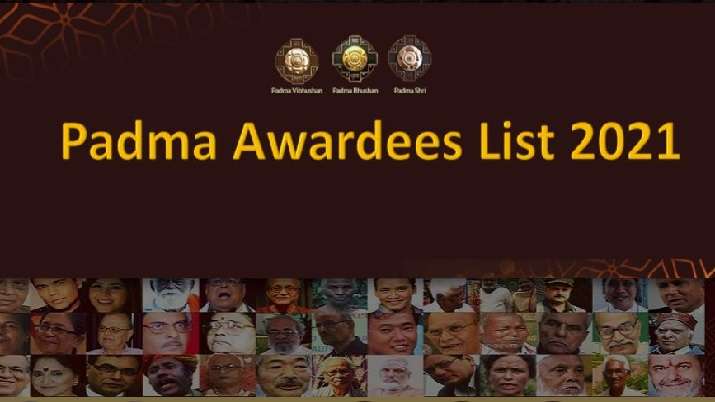
The President has authorized the conferment of 119 Padma Awards this year, including one dual case in which the Award is considered as one. There are seven Padma Vibhushan awards, ten Padma Bhushan awards, and 102 Padma Shri awards on the list. There are 29 women among the honorees, as well as 10 foreigners, NRIs, PIOs, and OCIs, 16 posthumous awards, and one transgender awardee. The list is as follows:-

PADMA VIBUSHAN (7)

NAMEDISCIPLINE/FIELDSTATE/COUNTRY
1 Shri Shinzo AbePublic affairsJapan
2.Shri S P Balasubramanian(posthumous)Art Tamil Nadu 
3.Dr. Belle Monapo HedgeMedicine Karnataka
4. Shri Narinder Singh Kapany (Posthumous)  Science and engineering United states of America 
5. Maulana Wahiduddin Khan Others-spiritualismDelhi 
6. Shri B. B. Lal  Others-ArcheologyDelhi 
7. Shri Sudarshan Sahoo  Art Odisha 

PADMA BHUSHAN(10)

NAMEDISCIPLINE/FIELDSTATE/COUNTRY
1.Ms. Krishnan Nair Shantakumari Chithra Art Kerala
2.Shri Tarun Gogoi (Posthumous)Public affairsAssam 
3.Shri Keshubhai Patel(Posthumous)  Public affairsGujrat 
4.Shri Chandrashekhar Kambara Literature and Education Karnataka 
5.Ms. Sumitra Mahajan Public Affairs Madhya Pradesh 
6.Shri Nripendra Misra Civil service Uttar Pradesh 
7.Shri Kalbe Sadiq (Posthumous)Others-spiritualism Uttar pradesh 
8. Shri Tarlochan Singh  Public affairs Haryana 
9.Shri Rajnikant Devidas Shroff Trade and industryMaharashtra 
10.Shri Ram Vilas Paswan (posthumous)Public Affairs Bihar 

PADMA SHRI(102)

NAMEDISCIPLINE/FIELDSTATE/COUNTRY 
Gulfam AhmedArtUttar Pradesh
P. AnithaSportsTamil Nadu
Rama Swamy AnnavarapuArtAndhra Pradesh
Subbu ArumugamArtTamil Nadu
Prakasarao AsavadiLiterature and EducationAndhra Pradesh
Bhuri BaiArtMadhya Pradesh
Radhe Shyam BarleArtChhattisgarh
Dharma Narayan BarmaLiterature and EducationWest Bengal
Lakhimi BaruahSocial WorkAssam
Biren Kumar BasakArtWest Bengal
Rajni BectorTrade and IndustryPunjab
Peter BrookArtUnited Kingdom
Sangkhumi BualchhuakSocial WorkMizoram
Gopiram Bargayn BurabhakatArtAssam
Bijoya ChakravartyPublic AffairsAssam
Sujit  ChattipadhyayLiterature and EducationWest Bengal
Jagdish Chaudhary (Posthumous)Social WorkUttar Pradesh
Tsultrim ChonjorSocial WorkLadakh
Mouma DasSportsWest Bengal
Srikant DatarLiterature and EducationThe U.S.A.
Narayan DebnathArtWest Bengal
Chutni DeviSocial WorkJharkhand
Dulari DeviArtBihar
Radhe DeviArtManipur
Shanti DeviSocial WorkOdisha
Wayan DibiaArtIndonesia
Dadudan GadhaviLiterature and EducationGujarat
Parshuram Atmaram GangavaneArtMaharashtra
Jai Bhagwan GoyalLiterature and EducationHaryana
Jagdish Chandra HalderLiterature and EducationWest Bengal
Mangal Singh HazowaryLiterature and EducationAssam
Anshu JamsenpaSportsArunachal Pradesh
Purnamasi JaniArtOdisha
Matha B. Manjamma JogatiArtKarnataka
Damodaran KaithapramArtKerala
Namdeo C. KambleLiterature and EducationMaharashtra
Maheshbhai and Nareshbhai Kanodia (Duo) (Posthumous)ArtGujarat
Rajat Kumar KarLiterature and EducationOdisha
Rangasami Lakshminarayana KashyapLiterature and EducationKarnataka
Prakash KaurSocial WorkPunjab
Nicholas KazanasLiterature and EducationGreece
K. KesavasamyArtPuducherry
Ghulam Rasool KhanArtJammu and Kashmir
Lakha KhanArtRajasthan
Sanjida KhatunArtBangladesh
Vinayak Vishnu KhedekarArtGoa
Niru KumarSocial WorkDelhi
LajwantiArtPunjab
Rattan LalScience and EngineeringThe U.S.A.
Ali ManikfanOthers- Grassroots InnovationLakshadweep
Ramachandra ManjhiArtBihar
Dulal MankiArtAssam
Nanadro B MarakOthers- AgricultureMeghalaya
Rewben MashangvaArtManipur
Chandrakant MehtaLiterature and EducationGujarat
Rattan Lal MittalMedicinePunjab
Madhavan NambiarSportsKerala
Shyam Sundar PaliwalSocial WorkRajasthan
Dr. Chandrakant SambhajiMedicineDelhi
Dr. J. N. Pande (Posthumous)MedicineDelhi
Solomon PappaiahLiterature and Education- JournalismTamil Nadu
PappammalOthers- AgricultureTamil Nadu
Krishna Mohan Pathi MedicineOdisha
Jaswantiben Jamnadas PopatTrade and IndustryMaharashtra
Girish PrabhuneSocial WorkMaharashtra
Nanda PrustyLiterature and EducationOdisha
K. K. Ramachandra PulavarArtKerala
Balan PutheriLiterature and EducationKerala
Birubala RabhaSocial WorkAssam
Kanaka RajuArtTelangana
Bombay Jayashri RamnathArtTamil Nadu
Satyaram ReangArtTripura
Dhananjay DiwakarMedicineKerala
Ashok Kumar SahuMedicineUttar Pradesh
Dr. Bhupendra Kumar Singh SanjayMedicineUttarakhand
Sindhutai SapkalSocial WorkMaharashtra
Chaman Lal Sapru (Posthumous)Literature and EducationJammu and Kashmir
Roman SarmahLiterature and Education- JournalismAssam
Imran ShahLiterature and EducationAssam
Prem Chandra SharmaOthers- AgricultureUttarakhand
Arjun Singh ShekhawatLiterature and EducationRajasthan
Ram Yatna ShuklaLiterature and EducationUttar Pradesh
Jitender Singh ShuntySocial WorkDelhi
Kartar Paras Ram SinghArtHimachal Pradesh
Kartar SinghArtPunjab
Dilip Kumar SinghMedicineBihar
Chandra Shekhar SinghOthers- AgricultureUttar Pradesh
Sudha Hari Narayan SinghSportsUttar Pradesh
Virender SinghSportsHaryana
Mridula Sinha (Posthumous)Literature and EducationBihar 
K. C. Sivasankar (Posthumous)ArtTamil Nadu
Guru Maa Kamali SorenSocial WorkWest Bengal
Marachi SubburamanSocial WorkTamil Nadu
P. Subramanian (Posthumous)Trade and IndustryTamil Nadu
Nidumolu SumathiArtAndhra Pradesh
Kapil TiwariLiterature and EducationMadhya Pradesh
Father Valles (Posthumous)Literature and EducationSpain
Dr. Thiruvengadam Veeraraghavan (Posthumous)MedicineTamil Nadu
Sridhar VembuTrade and IndustryTamil Nadu
K. Y. VenkateshSportsKarnataka
Usha YadavLiterature and EducationUttar Pradesh
Col. Quazi Sajjad Ali ZahirPublic AffairsBangladesh

China’s three child policy

Earlier In china, one child policy was there which began in 1980 and was severely enforced until January 2016 when it was replaced by two-child policy. 

China’s Communist Party Politburo meeting, headed by President Xi Jinping, declared on May 31,2021 that each couple in the nation will be allowed to have up to three children, a significant increase from the previous two-child restriction.

It was in response to the findings of the 2020 census, after Chinese mothers gave birth to just 12 million kids in 2020 and the global population increased to 1.412 billion in 2020 from 1.4 billion the previous year. 

So therefore, As officials strive to resolve the country’s long-term demographic imbalances, Chinese couples will now be permitted to have up to three children. Supporting measures are also proposed which aims at easing the financial strain of raising children, including educational and housing expenditures. However, Existing exceptions to family planning, such as the lack of birth restrictions for some ethnic minority groups, remain in force. Couples that have more children than they are allowed risk significant fines, as well as unofficial consequences such as job loss, especially for those in the public sector.

Policymakers also stated that with addressing housing and school expenses they will also enhance maternity leave regulations, in order to reduce the costs of having children. But, administration made no specific promises on these topics, but did state that it would “protect the legitimate rights and interests of women in the workplace.” 

The question now is why did the government modify the regulations in the first place. So, the government did so because its census shows long-standing demographic imbalances that might jeopardize the country’s economic viability, forcing Party officials to take action. Furthermore, unlike industrialized countries with low fertility rates, China remains a growing middle-income country with a limited social safety net. The fact that China does not accept large numbers of immigrants, domestic reproduction is even more important in maintaining the size of its workforce. Demographers predict that by 2050, the people over 60 years old will account for a quarter of the population because of which China’s economic growth and social services would be hampered by a declining working-age population and an increasing senior population. According to a research issued in 2019 by the Chinese Academy of Social Sciences, urban pension funds might run out by 2035 owing to demographic issues. Also, The one-child policy also resulted in selective sex-based abortions, resulting in a long-term sex imbalance with 723.34 million males and 688.44 million women in 2020.

The reaction of people are very important on such issues. So Therefore, An online poll was taken shortly after the modification was revealed which showed that 90% of those polled stated they “would not contemplate” having three kids. In response to this, an independent political economist in Beijing said that The three-child policy may have limited appeal for China’s new ‘lying flat’ generation, but it may have some hold on others. He further added that to enhance people’s willingness to have more children, the government should work hard to reduce the burden of education, housing, and other things. However, young Chinese are unlikely to desire bigger families  

UNIFORM CIVIL CODE

In areas like as marriage, divorce, inheritance, and adoption, the Uniform Civil Code (UCC) advocates for the creation of a single law for India that would apply to all religious sects. The law is based on Article 44 of the Constitution, which states that the state must work to ensure that citizens throughout India have access to a uniform civil code.

For over a century, the subject has been at the forefront of political discourse and discussion, and it is a top priority for the Bharatiya Janata Party (BJP), which has been pressing for legislation in Parliament. The saffron party was the first to vow that if it wins power, it will adopt UCC, and the subject was included in its Lok Sabha election program for 2019.

The central family law acts were extended to Jammu and Kashmir when Article 370 was repealed. Although this is another step toward adopting UCC across India, there is still a long way to go in this endeavor. 

Human rights and the values of equality, fairness and justice all support the creation of a standard civil code. Article 44 of the Indian constitution’s directive principle is important because its goal is combat discrimination against vulnerable groups and to bring disparate cultural groupings together across the country. While drafting the Constitution, the father of our constitution “Dr. B R Ambedkar” stated that while a UCC is desirable, it should remain voluntary for the time being, and so Article 35 of the draft Constitution was added as part of the Directive Principles of State Policy in Part IV of the Constitution of India as Article 44. It was included into the Constitution as a condition that would be met when the nation was ready to embrace it and the UCC could gain societal acceptability.

The UCC aims to provide the following:-

  1. Protection of Vulnerable Portions of Society: The UCC strives to safeguard vulnerable sections of society, like women and religious minorities, as envisioned by Ambedkar, while simultaneously encouraging nationalistic ardour via unity.
  2. Rules will be simplified: The code will make the complicated laws of marriage ceremonies, inheritance, succession, and adoptions more accessible to everyone. All citizens, regardless of their faith, shall be subject to the same civil law. When passed, the code would strive to simplify laws that are now divided based on religious views, such as the Hindu code bill, Sharia law, and other similar legislation.
  3. Secularism: A goal established in the Preamble, and a secular republic requires a single law for all people rather than differentiating regulations based on religious customs.
  4. Gender justice: Each religion in India has its own set of personal rules covering weddings, divorce, succession, adoption, and maintenance. Women’s rights, however, are typically restricted by religious legislation, whether Hindu or Muslim. A famous example is the practice of triple talaq which is now been held unconstitutional.

All personal laws will be abolished if an unified civil code is established. 

Therefore, the people’ fundamental rights to equality before the law and equal protection under the law, as guaranteed by the Constitution, need a comparable response throughout these regions. Article 44, which requires the state to make reasonable efforts to ensure that citizens have access to an unified civil code across India, has the same effect.

EID-AL-ADHA

Eid al-Adha is a Muslim religious holiday. In Islam, there are two major Eids: Eid-ul-Fitr, which marks the end of the Holy Month of Ramadan, and Eid-ul-Adha, which marks the end of the yearly Hajj journey during the time of Qurbani means ‘sacrifice’. It is celebrated by Muslims all around the world and might span several days depending on where you live. 

The Festival of Sacrifice is also known as Eid al-Adha. It commemorates the narrative of Ibrahim, a prophet who attempted to show his faith in Allah by sacrificing his son Ishamel. He made the decision to obey Allah’s word. Despite several obstacles, he was on the verge of sacrificing his kid. At that very time of sacrifice, Ishamel had been replaced with a ram by Allah because Ibrahim had demonstrated his loyalty to Allah without any question.

Therefore, Muslims commemorate Ibrahim’s steadfastness and allegiance to Allah above everything else.

Although Eid-ul-Adha has no direct link to the Hajj Pilgrimage, it occurs just a day after the Hajj is completed and so has historical significance. The tenth day of the last (twelfth) month of the Islamic Lunar Calendar, Dhu-al-Hijjah, is Eid-ul-Adha. The date of the celebration is determined by a valid sighting of the moon after the yearly Holy Pilgrimage of Hajj, which is a requirement for all Muslims who meet certain conditions and is one of Islam’s fundamental Five Pillars. 

It usually lasts two to four days. Following the Eid Salaah (Eid Prayers), which are done in congregation at the closest Mosque on the morning of Eid, the act of Qurbani (sacrifice) is performed. The act of Qurbani consists of slaughtering an animal be it sheep, goat, cow, bull, camel as a sacrifice to commemorate Prophet Ibrahim’s sacrifice for Allah on this special date. Udhiya is another name for this. From the 10th to the 12th of Dhu-al-Hijjah, three days of animal sacrifice are observed. The animal should be slaughtered in a “halal” friendly, Islamic manner, and the animal must be in excellent health and beyond a particular age. 

The Qurbani meat can then be divided into three equal parts each share: one-third for you and your family, one-third for friends, and the last third for charity.

The day is traditionally spent celebrating with family, friends, and loved ones, typically by dressing new or finest outfits and exchanging gifts. But however in today’s time, keeping in mind the pandemic situation and social distancing many of these gatherings may not be possible. Some festivities may be held only with intimate relatives or may be held entirely online.

Usually, When Eid al-Adha begins, some Muslims attend Hajj a pilgrimage in Saudi Arabia. They hurl pebbles at three massive stone pillars in Mina’s city. Muslims say that this is where Ibrahim flung pebbles at the devil to chase him away. But, The event has been reduced back this year due to social distance. Only 60,000 persons in Saudi Arabia who have been inoculated with vaccines will be authorised to conduct the procedure

PEGASUS LEAK IN INDIA

Pegasus is a spyware program developed by the Israeli business NSO Group that may gather data from mobile phones. Stating simply, It is a type of malware that infects iPhones and Android smartphones, allowing its users to extract texts, images, and emails, as well as record calls and covertly activate microphones.

 Pegasus was found to be spying on roughly 50,000 phone numbers throughout the world, according to a worldwide investigation. Out of which 300 of them being confirmed Indian numbers. According to an investigation into a large data breach, authoritarian regimes have targeted human rights activists, journalists, and attorneys all around the world using hacking tools provided by the Israeli spy business NSO Group. In India, the phone numbers include of  the legal community, businesspeople, government officials, scientists and acitivists. According to THE WIRE, Over 40 journalists, three major opposition figures, one constitutional authority, two serving ministers in the Narendra Modi government, current and former heads and officials of security organizations, and scores of businesspeople are among those in the database and their names would be soon released in the upcoming days. Newspapers like, The Guardian and The Washington Post, among others, released important facts showing the extent of what they dubbed “global surveillance operations” using Pegasus. The NSA whistleblower Edward Snowden tweeted on Sunday that this “spill” might be “the tale of the year.” 

So basically, all we have to know is how Pegasus operates and how does it actually work. So after it is installed, it may collect data from emails, text messages such as SMS, WhatsApp conversations, phone records, contact lists, and GPS data and send it to the attacker. It can also activate a microphone, call recorder, and camera to give the attacker with surveillance capabilities. Forensic examinations on certain phones linked to the target numbers found unmistakable indications of Pegasus malware targeting and this task made simpler by the fact that the device was an Apple iPhone. 

However, The Israeli firm that distributes Pegasus, NSO Group, disputed the claims, claiming that it only sells its spyware to “vetted countries.” Representatives claimed the business was “considering a defamation action” after allegations that it sold malware to intelligence, military, and law-enforcement organizations in 40 nations. On the other hand, the government of India also denied any involvement in the hacking, claiming that “the claims about government monitoring on individual people have no solid basis or truth linked with it whatsoever.” They also released a statement which states that in the past, similar accusations were made regarding the Indian State’s use of Pegasus on WhatsApp. In the Supreme Court, all parties, including WhatsApp, explicitly rejected the reports. They also said that this press release looks to be a similar fishing expedition, based on speculation and exaggeration in order to discredit India’s democracy and institutions.

Nevertheless, Pegasus was reportedly used to target journalists and human rights activists in India by Facebook-owned WhatsApp in 2019, according to a few sources. This information was revealed in a lawsuit filed in a US court in San Francisco by WhatsApp.

Central Vista Project

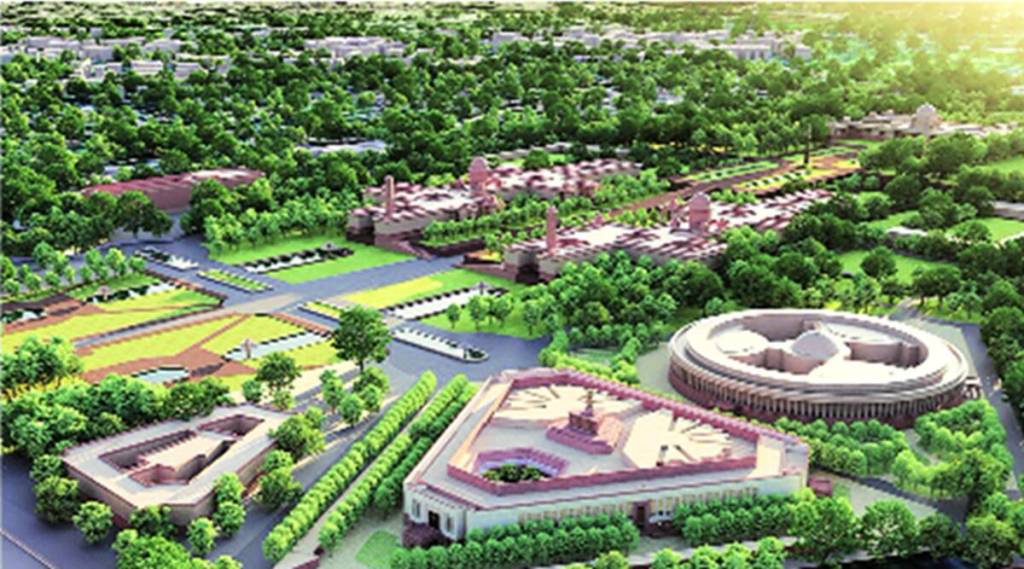
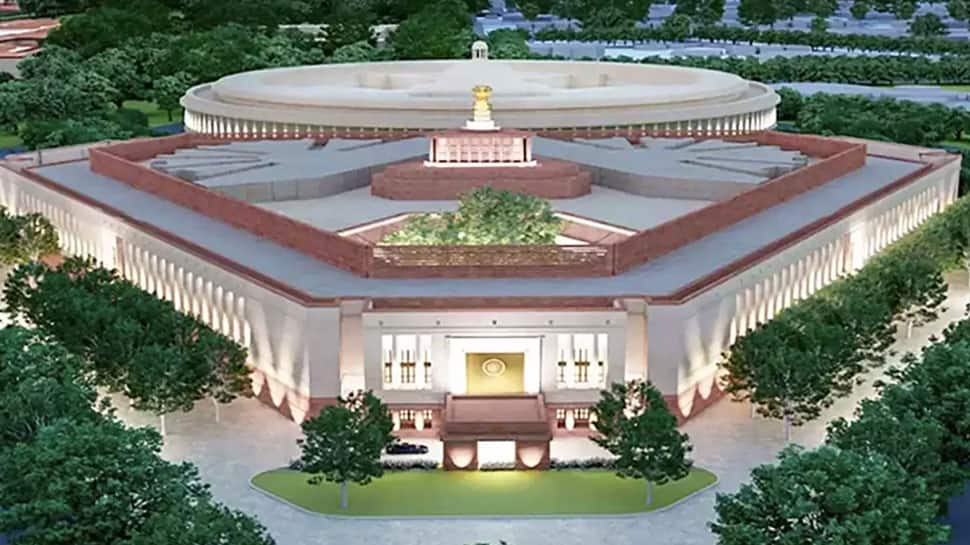
Central vista project is an ambitious initiative by the Narendra Modi-led NDA government at the Centre to reconstruct a 3.2-kilometer stretch known as the Central Vista in the heart of Lutyens Delhi, which was erected by the British in the 1930s. In 2019, The national government proposed this renovation project to give India’s “power corridor” a new identity. The Union Ministry of Housing and Urban Affairs is in charge of the project, which is expected to be finished by 2024 and its estimated cost is more than Rs. 20,000 crore. The main vision of this project is to symbolize India’s commitment to confront the tough challenges that have afflicted it for decades and it is relentlessly focused on modernizing in order to satisfy the needs and ambitions of its inhabitants. Tradition is respected, but it is not held captive by it. The project is environmentally conscious yet not paralyzed by it. 

This project which intends to renovate and enlarge India’s Parliament, Prime Minister’s home, and numerous other official buildings at a cost of Rs 20,000 crore, has been dubbed a sign of indifference and highlighted as an example of the administration’s misdirected priorities during the Covid-19 epidemic. The criticism to central vista project can be seen in various instances as follows:-

On July 12, a Maharashtra-based organization held a public gathering in the capital to protest the project, claiming that the country “needs hospitals, not a new Prime Minister’s home.” The Central Public Works Department restricted photography and video recording at the building site in May, when the project was attracting criticism for continuing despite the devastating second wave of Covid-19, allowing for even more severe criticism. 

Due to many criticisms and reacting to opposition’s objections the central government released a document busting all the myths related to this ongoing project to bring a reality amongst citizens of India.

According to the report and defining the current activity at the project site, the central ministry stated that suspending it at this point would result in the government incurring responsibilities under existing contracts and jeopardizing the interests of the employees. Inflation is also a major concern if the project is delayed. The government also stated that environmental sustainability is at the heart of the Central Vista project, dispelling the misconception that it will harm the environment. No heritage structures, including India Gate, Parliament, the North and South Blocks, the National Archives, and others, would be demolished, according to the administration. The center has also   rejected claims that the Prime Minister’s new home will cost Rs 13,450 crore. The estimate covers a number of projects, including ten structures, according to the ministry, which also stated that the construction work for the Prime Minister’s house has yet to be bid and that the government has given no approval. The major criticism of continuing the work amid covid 19 was also dismissed by the government by citing that the work comes under  Essential Services Act.  On May 31, the Delhi High Court also dismissed a petition challenging the Central Vista Redevelopment project’s ongoing construction operations, calling the Public Interest Litigation (PIL) a “illegal motivation” to halt the work.

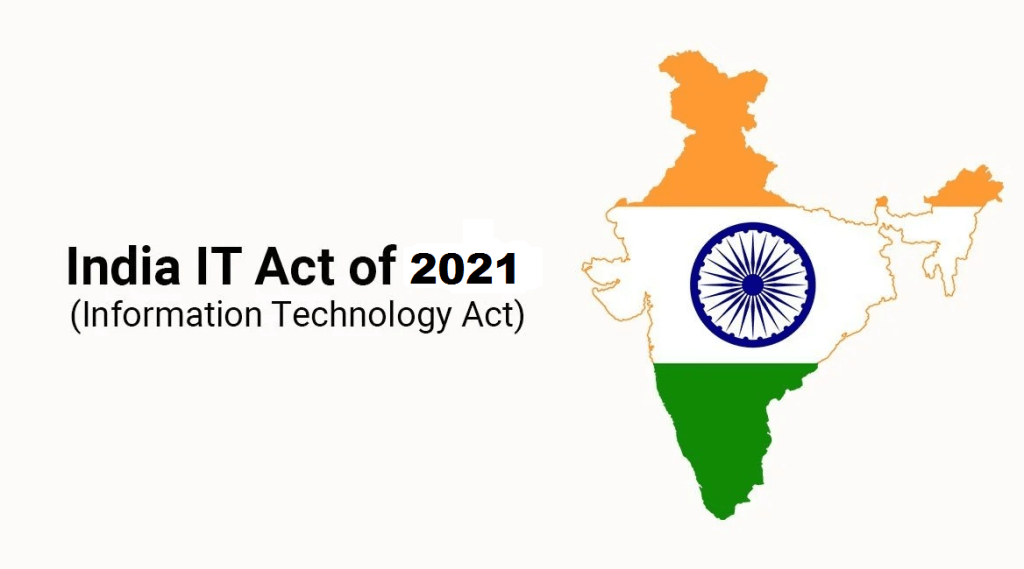
ANALYSIS OF IT (INFORMATION TECHNOLOGY) ACT, 2021

This year in February the Ministry of Electronics and Information Technology announced the Information Technology (Intermediary Guidelines and Digital Media Ethics Code) Rules. the Information Technology Rules 2011 were superseded by the Digital Media Ethics Code) Rules 2021, which were framed, in the exercise of powers under section 87 (2) of the Information Technology Act,2000. As per the data gathered, In India, there are 530 million WhatsApp users. While YouTube has 448 million users, Facebook and Instagram each have 410 million and 210 million users, respectively. 

Social Media has grown into an arena for trade and commercial operations in addition to being a medium of entertainment. It has also preserved the fundamental standards for information transmission and provided a platform for individuals to openly express their ideas and beliefs. 

Therefore, in this growing trend of using social media, few rules must be there in order to make social media a secure place to open up and share ideas. So, IT RULES, 2021 came up which intended to provide ordinary users of social media platforms and over-the-top (OTT) platforms with a system for grievance redress and fast resolution through the employment of a Grievance Redressal Officer (GRO) who must be a resident of India. Special attention has been paid to protecting women and children from sexual assaults, fake news, and other forms of social media abuse.

On the other hand, OTT platforms, online news, and digital media organisations would be required to adhere to a Code of Ethics. Under the new guidelines, OTT platforms would be referred to as “publishers of online curated content.” They’d have to divide the content into five groups based on age, and apply parental controls for everyone above the age of 13. They must also provide procedures for age verification for adult related content.

Furthermore, three-tiered grievance resolution system has been established. The appointment of a GRO, self-regulatory entities registered with the Ministry of Information and Broadcasting (MIB) to oversee the Code of Ethics, and a Charter for the self-regulating bodies created by MIB are all part of this.

However, the new regulations have been criticized by some as a breach of free expression, the government has emphasized that they allow social media sites to operate freely in India while adhering to the law. The country’s Constitution and the Rule of Law must be followed by all entities. Furthermore, according to Article 19 of the Constitution, the right to free speech and expression is not absolute and is subject to legitimate limitations, particularly when national sovereignty and security are at risk.

The new restrictions were given a three-month grace period for social media intermediaries to comply. On May 26, the government sent a second notice to all social media intermediaries, requesting information on the status of compliance with the new laws that took effect that day. Various social media sites such as Google, LinkedIn did shared details as per the requirements but other sites such as twitter requested for the compliance window to be extended and demanded a collaborative approach from the government to protect public freedom of speech. WhatsApp has launched a lawsuit against the government in the Delhi High Court, alleging that the new restrictions infringed user privacy by breaking the end-to-end encryption in order to identify traceability.  The administration, on the other hand, has maintained that tracking will be necessary only in the event of “extremely serious offences” that endanger India’s sovereignty and integrity. It may also be done without compromising the end-to-end encryption. Companies, on the other hand, will be responsible for developing a technical solution

So, as we know that no freedom is a total freedom. It comes up with some level of restrictions and is not absolute unrestricted. Since the establishment of the Constitution of india, striking the appropriate balance between fundamental rights and determining the rationality of a limitation has been a continual struggle. Therefore, the battle between the governments that want to impose reasonable restrictions and users concerned about data privacy and restrictions on freedom of speech and expression vs the tech giants who own significant amount of huge data  is only going to get more complicated before optimal solutions are found. So, The IT Rules 2021 which preserves digital sovereignty and aim to answer people’ concerns without compromising on their privacy or personal rights should be properly followed by the social media sites which is only the best solution left.  

UNESCO WORLD HERITAGE SITES IN INDIA

Over the years, Unesco has declared a number of world historic sites in India due to their exceptional cultural or physical significance. From natural wonders to architectural marvels, there is something for everyone on this list. The United Nations Educational, Scientific, and Cultural Organization (UNESCO) aims to promote the identification, protection, and preservation of cultural and natural heritage that is of exceptional importance to mankind across the world and the UNESCO world heritable committee maintains the list of World Heritage Sites.

India now possesses 38 World Heritage Sites, making it the world’s sixth largest country in terms of World Heritage Sites.

According to UNESCO, India has 30 cultural sites, 7 natural sites, and 1 mixed sit. In this article we will know about the permanent and tentative world heritage sites in india state and union territory wise.

PERMANENT LIST OF WORLD HERITAGE SITES IN INDIA 

State/UTCultural(30)Natural(7)Mixed(1)
Uttar Pradesh Agra Fort (1983)Fatehpur Sikri (1986)Taj Mahal (1983)  
MaharashtraAjanta Caves (1983)Chhatrapati Shivaji Terminus (formerly Victoria Terminus) (2004)Elephanta Caves (1987)Ellora Caves (1983)Victorian Gothic and Art Deco Ensembles of Mumbai (2018)Western Ghats (2012)  
BiharArchaeological Site of Nalanda Mahavihara at Nalanda, Bihar (2016)Mahabodhi Temple Complex at Bodh Gaya (2002)  
Madhya PradeshBuddhist Monuments at Sanchi (1989)Khajuraho Group of Monuments (1986)Rock Shelters of Bhimbetka (2003)  
GujaratChampaner-Pavagadh Archaeological Park (2004)Historic City of Ahmadabad (2017)Rani-ki-Vav (the Queen’s Stepwell) at Patan, Gujarat (2014)Western Ghats (2012) 
GoaChurches and Convents of Goa (1986)Western Ghats (2012) 
Tamil NaduGreat Living Chola Temples (1987,2004)Group of Monuments at Mahabalipuram (1984)Mountain Railways of India (1999,2005,2008)Western Ghats (2012) 
KarnatakaGroup of Monuments at Hampi (1986)Group of Monuments at Pattadakal (1987)Western Ghats (2012) 
RajasthanHill Forts of Rajasthan (2013)Jaipur City, Rajasthan (2019)The Jantar Mantar, Jaipur (2010)Keoladeo National Park (1985)  
DelhiHumayun’s Tomb, Delhi (1993)Qutb Minar and its Monuments, Delhi (1993)Red Fort Complex (2007)  
ChandigarhThe Architectural Work of Le Corbusier, an Outstanding Contribution to the Modern Movement (2016)  
West BengalMountain Railways of India (1999,2005,2008)Sundarbans National Park (1987) 
Himachal PradeshMountain Railways of India (1999,2005,2008)Great Himalayan National Park Conservation Area (2014) 
OrissaSun Temple, Konârak (1984)  
AssamNoneKaziranga National Park (1985)Manas Wildlife Sanctuary (1985) 
UttarakhandNoneNanda Devi and Valley of Flowers National Parks (1988,2005) 
KeralaNoneWestern Ghats (2012) 
SikkimNone Khangchendzonga National Park (2016)

TEMPERORY WORLD HERITAGE SITES IN INDIA 

STATE/ UNION TERRITORY HERITAGE SITES 
West BengalTemples at Bishnupur, West Bengal (1998)Neora Valley National Park (2009)Santiniketan (2010)
KeralaMattanchery Palace, Ernakulam, Kerala (1998)Padmanabhapuram Palace (2014)
Uttar PradeshAncient Buddhist Site, Sarnath, Varanasi, Uttar Pradesh (1998)
PunjabSri Harimandir Sahib, Amritsar, Punjab (2004)
AssamRiver Island of Majuli in midstream of Brahmaputra River in Assam (2004)Moidams – the Mound-Burial system of the Ahom Dynasty (2014)
Arunachal PradeshNamdapha National Park (2006)Thembang Fortified Village (2014)
GujaratWild Ass Sanctuary, Little Rann of Kutch (2006)Wild Ass Sanctuary, Little Rann of Kutch (2006)Dholavira: A Harappan City (2014)Archaeological remains of a Harappa Port-Town, Lothal (2014)
RajasthanDesert National Park (2009)
TelanganaThe Qutb Shahi Monuments of Hyderabad Golconda Fort, Qutb Shahi Tombs, Charminar (2010)Monuments and Forts of the Deccan Sultanate (2014) Qutb Shahi Monuments at HyderabadThe Glorious Kakatiya Temples and Gateways (2014)Remnants of Swayambhu temple and Keerthi Thoranas, Warangal fortRudreswara Temple, HanumakondaRudreswara (Ramappa) Temple, Palampet
Jammu & KashmirMughal Gardens in Kashmir (2010)Cold Desert Cultural Landscape of India (2015)the Leh-Kargil areas of Ladakh 
DelhiDelhi – A Heritage City (2012)Bahá’í House of Worship, New Delhi (2014)
KarnatakaMonuments and Forts of the Deccan Sultanate (2014)Bahmani Monuments at GulbargaBahmani and Barid Shahi Monuments at BidarAdil Shahi Monuments at BijapurMonuments of Srirangapatna Island Town (2014)Sacred Ensembles of the Hoysala (2014)
Andaman & Nicobar IslandsCellular Jail, Andaman Islands (2014)Narcondam Island (2014)
Madhya PradeshGroup of Monuments at Mandu, Madhya Pradesh (1998)The historic ensemble of Orchha (2019)
Tamil NaduSri Ranganathaswamy Temple, Srirangam (2014)
OdishaChilika Lake (2014)Ekamra Kshetra – The Temple City, Bhubaneswar (2014)
Himachal PradeshCold Desert Cultural Landscape of India (2015)Spiti Valley
MeghalayaGaro Hills Conservation Area (GHCA) (2018)
ManipurKeibul Lamjao Conservation Area (2016)