Top 10 Internet Companies in the World (Part 1)

10) Baidu: Baidu is the main search engine in China. It offers maps, news, videos, anti-virus software, and Internet TV. It is listed in the Cayman Islands and is known to restrict search results to comply with Chinese laws and political directives. It specializes in Internet-related services and products and artificial intelligence. Its American depository receipt is listed on Nasdaq. It had a market cap of $41.32 billion on June 30, 2020, and its 2019 revenue amounted to $15.43 billion. It was founded by Robin Li and Eric Xu in 2000. Li is still the CEO till date.

9) Booking.com: Booking.com is an online travel company that lets users book reservations for restaurants, hotels, rental cars, airline tickets, safaris, cruises, and other travel services. It is based in Amsterdam, Netherlands. It had a market cap of $65.20 billion on June 30, 2020.  In 2019, its total revenues were $15.07 billion. It was founded by Geert-Jan Bruinsma in 1996. The current CEO is Glenn Fogel.

8) JD.com: JD.com is a Chinese e-commerce company headquartered in Beijing. It is one of the largest B2C online platforms in China and a member of the Fortune Global 500. It is headquartered in Beijing. The company’s cutting-edge retail infrastructure seeks to enable consumers to buy whatever they want, whenever and wherever they want it. Its market cap was $93.01 billion on June 30, 2020. JD.com’s total revenue in 2019 was $82.86 billion. It was founded by Liu Qiangdong in 1998 and he remains the CEO till date.

7) Salesforce: Salesforce is cloud computing and social enterprise solutions company. It is based in San Francisco, California. It also provides customer relationship management services to various businesses. It’s one integrated CRM platform that gives all your departments — including marketing, sales, commerce etc. — a single, shared view of every customer. It had a market cap of $176.92 billion on June 30, 2020 and its total revenue in 2019 amounted to $13.28 billion. It was founded by Marc Benioff and Parker Harris in 1999. Benioff is still the CEO.

6) Netflix: Netflix is an OTT and entertainment service company that provides video streaming platforms. It has a network of over 167 million members across more than 190 countries. It is headquartered in Los Gatos, California. Its market cap was $200.68 billion on June 30, 2020. In 2019, its total revenues were $20.16 billion. It was founded in 1997 by Reed Hastings and Marc Randolph. It was originally a movie rental service where you could rent DVDs. Its current CEO is Ted Sarandos.

Alibaba.com

Alibaba Group also known as Alibaba.com, is a Chinese multinational technology company specializing in e-commerce, retail, Internet, and technology. It was founded on 28 June 1999. On 19 September 2014, Alibaba’s initial public offering on New York Stock Exchange raised $25 billion, giving the company a market value of US$231 billion and, by far, then the largest IPO in world history. It is one of the top 10 most valuable corporations, and is named the 31st-largest public company in the world on the Forbes Global 2000 2020 list. In January 2018, Alibaba became the second Asian company to break the $500 billion valuation mark, after its competitor Tencent. Alibaba also has the sixth-highest global brand valuation. It is one of the world’s largest retailers and e-commerce companies. In 2020, it was also rated as the fifth-largest artificial intelligence company. It is also one of the biggest venture capital firms, and one of the biggest investment corporations in the world. The company hosts the largest B2B, C2C, and B2C marketplaces in the world. It has also been expanding into the media industry, with revenues rising by triple percentage points yeaafter year.

Alibaba’s mission is to make it easy to do business everywhere. They enable businesses to transform the way they market, sell and operate and improve their efficiencies. They also provide the technology infrastructure and marketing reach to help merchants, brands and other businesses to leverage the power of new technology to engage with their users and customers and operate more efficiently. They aspire to make Alibaba the place where customers meet, work and live. As they continue to expand our businesses from commerce to cloud computing, digital media and entertainment, among other sectors, Alibaba has evolved into an ecosystem that is unique, energetic and innovative. It have set five-year goals to serve over 1 billion annual active consumers and achieve over 10 trillion Yuan in annual consumption through the China consumer business by the end of fiscal year 2024 as they continue on the path of globalization. Alibaba believes the five-year goals put them closer to achieving their vision for 2036: to serve 2 billion global consumers, enable 10 million businesses to become profitable and create 100 million jobs.

China’s 600 million-plus Internet users are migrating to smartphones, setting off a scramble among the country’s Internet giants. Alibaba’s toughest rival is Tencent, which runs the WeChat mobile messaging application, with 355 million users. The companies are spending billions of dollars to invest in businesses that can help them compete. Many brands say Alibaba’s site are rife with counterfeits. Alibaba says it spends millions of dollars a year battling fakes, and some merchants say Taobao has gotten faster at taking down suspect listings. These are some of the challenges that the Alibaba group is facing. But regardless, Alibaba is one of the most successful internet companies today.

Jeff Bezos: A Biography

Jeff Preston Bezos is an American businessman and investor. Bezos is the founder and executive chairman of Amazon, having previously been the chairman, president and CEO of the company. With a net worth of more than $200 billion as of June 2021, he is the richest person in the world according to both Forbes and Bloomberg’s Billionaires Index. He was born on 12th January 1964 in New Mexico and raised in Miami, Bezos graduated from Princeton University in 1986. He has a degree in electrical engineering and computer science. Bezos founded Amazon in 1994, on a cross-country road trip from New York City to Seattle. The company began as an online bookstore and has since expanded to a wide variety of other e-commerce products and services, including video and audio streaming, artificial intelligence, and cloud computing. It is currently the world’s largest online sales company, the largest Internet company by revenue, and the world’s largest provider of virtual assistants and cloud infrastructure services through its Amazon Web Services branch. He also purchased the major American newspaper The Washington Post in 2013 for $250 million, and manages many other investments through his venture capital firm, Bezos Expeditions. Bezos founded the aerospace manufacturer and sub-orbital spaceflight services company Blue Origin in 2000. Blue Origin’s New Shepard vehicle reached space in 2015, and afterwards successfully landed back on Earth. The company has upcoming plans to begin commercial human spaceflight.

He is the first centi billionaire on the Forbes wealth index and was named the “richest man in modern history” after his net worth increased to $150 billion in July 2018. In August 2020, according to Forbes, he had a net worth exceeding $200 billion. In 2020 during the COVID-19 pandemic, Bezos’s wealth grew by approximately $24 billion. On February 2, 2021, Bezos announced that he would step down as the CEO of Amazon sometime in the third quarter of 2021 and transition into the role of executive chairman, officially stepping down on July 5, 2021. Andy Jassy has become the new CEO of Amazon.

Bezos has also invested very sizable sums in giving back through multiple charitable donations. In addition to the Bezos Family Foundation that funds several education projects, Bezos has made individual multimillion-dollar charitable contributions to the Seattle Museum of History & Industry as well as to his alma mater, Princeton University. In January 2018, Bezos and his ex-wife, MacKenzie, announced a $33 million donation to TheDreamUS, an organization working to improve college access for immigrant youths who were brought to the United States as children. The grant will provide college scholarships to 1,000 U.S. high school graduates with Deferred Action for Childhood Arrivals (DACA) status.

Two of Bezos’ investments that engender a lot of discussion and are considered a bit off-the-wall are the 10,000-year clock and the now-complete F-1 engine retrieval project. The 10,000-year clock project is an effort to build a clock into the side of the Sierra Diablo mountain range in Texas, a clock that literally keeps ticking for 10,000 years. The F-1 engine retrieval project was an effort to salvage from the ocean floor the engines that powered the Apollo 11 flight to the moon. Enough artifacts were recovered to fashion displays out of two F-1 engines. Bezos is truly a great business mogul is this day and age.

Corporate and Individual Social Responsibility

Social Responsibility is a form of responsibility that we owe to society being members of the same and partaking in activities that alter its natural flow. For example, by being a part of the natural environment, we owe the environment the restoration to offset the degradation conducted by mankind. In such a way, social responsibility is the accountability that we face towards society in all its aspects, to all its stakeholders. Indeed there exist various forms of social responsibility but two prominent ones are an individual and corporate social responsibility. It can be understood that much of the social responsibility activities can be considered under the same labels: one where the volunteers bring physical changes by cleaning the neighbourhood, distributing food and other necessities, securing funds and such for the needy, while the other where people advocate for the change and instil civic morals. While each indicates its own form of responsibility, the combination of both is what the present world needs to be ensured of sustainable development.

Corporate Social Responsibility is one of the keywords that underline an organisation’s social standpoint among various economic actors such as the government, consumers and certain types of investors. A responsible organization is bound to be more reliable because of its forward-thinking and ethical nature. Although the term was coined in the mid-1900s by Henry Bowen (the father of Corporate Social Responsibility) in his paper, the concept existed long before that. A few of the pioneers in the field of corporate social responsibility are Johnson & Johnson and Hershey’s. These responsibilities include:-

Economic Responsibility: This includes maintaining the satisficing amount of profits so that the business can
sustain enough to pay off their lenders, investors, creditors and employees. Legal Responsibility: The legal responsibility of a business includes complying with all the corporate bylaws, contracts with either another company or the government. An example of legal responsibility would be to adhere to the accounting compliance standards in reporting financial information. Ethical Responsibility: This consists of responsibilities outside the legal framework but matching the
company’s philosophy. For example, ensuring employees have a healthy work-life balance beyond the government-mandated levels.

Individual responsibility stems from the philosophy that holds each individual accountable for every action they take, which may have intended or unintended consequences for society. Hence, every individual has a responsibility towards the society that deems them ideal members of their community. Not only do we have the duties of controlling the negative spillover effects of our actions but we are required to step further and teach those ignorant of
these ideas the sense of responsibility. The UN suggests a list of actions that any and every individual could accomplish that can bring minor changes to the environment, called the “The lazy person’s guide to save the world”. The list is generated according to the individual’s willingness to pave the way for a sustainable future. Some of the individual responsibilities are using biodegradeable bags, donation to various charities, Use recyclable goods, segregation of trash, using renewable sources of energy etc. In this day and age it has become very important to uphold our social responsibilities.

AirBnB

AirBnB is an online market that connects people that are looking for accomodations with people that are looking to rent out their homes. It is operational in more than 100,000 cities in over 220 countries worldwide. Travelers can book an AirBnB for considerably lower than a hotel room. However, the main risk is that the property may not love up to the expectation.

Advantages of AirBnB include:-

  1. Host price preference: The hosts can decide the price guests have to pay to rent the property. It can be charged per day, per week and sometimes even per month.
  2. Free Access: Hosts don’t have to pay any fee to get listed on AirBnB. The property on the website includes a detailed description, some photos and a profile about the hosts
  3. Wide Selection: The AirBnB website lists single rooms, apartments, entire houses and even yachts and houseboats.
  4. Guarantees for Guests and Hosts: The host guarantee program provides protection for upto $1,000,000 in damages, if any. AirBnB also holds the guest’s payment for 24 hours before releasing it to the host.
  5. In more recent years, AirBnB has started offering restaurants and other experiences. People can search by location and will see a list of experiences, such as workshops and sightseeing, offered by local Airbnb hosts. Restaurant listings also include reviews from Airbnb hosts.
  6. Customizable searches: Guests can search through all the AirBnB listings—not only by date and location, but by price, type of property, amenities, and the language of the host.

However, it also has some disadvantages. They are:-

  1. Not legal everywhere: Hosts need to check if AirBnB is allowed to operate in their country before publishing the listing. They might be required to acquire special licenses or permissions. Some countries where it is illegal are Syria, Croatia and Netherlands.
  2. Potential damage: The biggest risk for the hosts is property damage. The Host guarantee program doesn’t cover loss or damage of cash, paintings or jewellery. There have been many cases when the host’s property has been trashed.
  3. Additional Fees: A number of additional fees are imposed. Guests pay a service fee of 20% on top of the reservation fee to cover Airbnb’s customer support and other services. Banks or credit card issuers may add fees if applicable. And while listings are free, Airbnb charges hosts a service fee of at least 3% for each reservation, to cover the cost of processing the transaction.

So, how does AirBnB make money? They take commissions from both the guests as well as the hosts for every successful transaction. Recently, AirBnB has been facing a lot of restrictions because of the COVID-19 pandemic. It has lost millions of dollars beacuse of it. But they have resumed operations in some countries and is certain to make a comeback.

Virgin Galactic

Virgin Galactic is a spaceflight company that was founded in 2004 by British businessman Richard Branson. It is the first commercial spaceline company in the world and are developing new spacecraft designs to make space travel accessible to everyone. Their mission is to use space for good while delivering an immaculate customer experience. They believe that space exploration is the ultimate expression of the human desire to push desires and is the pinnacle of acheivements for the human species. Fewer than 600 humans have had the golden opportunity to visit space and there are millions of people who would do anything to go to space. This is what inspired Branson to create Galactic.

The new space age has just begun and Virgin Galactic is pioneering the next generation of reusable spacecrafts. They also are building basic space infrastructure that will enable scientitsts and engineers to conduct space research that would be vital for future life on other planets. Initially, they aim to give safe space experiences to non-professionals in micro gravity environments. Eventually, they expect to operate multiple spacecrafts from various locations to transport passengers to Earth orbiting hotels and science labs. Virgin Galactic is striving to open up space and change the world for the better.

On July 11th 2021, the VSS Unity, Virgin’s commercial spacecraft reached 53 miles beyond the boundary of space and touched down safely. It was launched from Spaceport America in New Mexico and the journey went as smooth as it could go. Onboard were 6 crewmates, including Richard Branson and they went far enough to experience weightlessness and the beautiful view of the Earth’s curvature. The launch of the VSS Unity passenger rocket plane marked Galactic’s 22nd test flight of its SpaceShipTwo system and its fourth crewed mission beyond Earth’s atmosphere. It was also the first to carry a full complement of space travellers – two pilots and four mission specialists.

These commercial space tickets are currently selling for over $250,000 each and the market for space flights is extremely limited, atleast for now. But demand is seemingly quite high as seen from the number of reservations. Virgin has said it plans for at least two more test flights of the spacecraft in the months ahead before beginning regular commercial operations in 2022. By 2030, the value of the space tourism market is said to reach $3 billion. With everything said and done, commercial space travel is still a long way from being viable and accessible to the masses.

International Monetary Fund

The International Monetary Fund (IMF) is a global organization that promotes financial stability, economic growth and international trade. It also aims to reduce poverty around the world. The IMF describes its mission as “to foster global monetary cooperation, secure financial stability, facilitate international trade, promote high employment and sustainable economic growth, and reduce poverty around the world.”

The IMF was originally founded in 1945 to support expansion of trade and economic growth, discouraging policies that hampered international relations and promoting international monetary cooperation. From the 1970s the IMF has promoted floating exchange rates, meaning that market forces determine the currency value relative to one another. It is based in Washington, D.C and started with just 40 member countries. Today, it has 189 member countries. Each of the member countries have a representation proportional to its financial power on the IMF’s executive board. Quotas of member countries are a key determinant of the voting power in IMF decisions. They are based on something called special drawing right (SDR). SDRs are an international type of monetary reserve currency created by the IMF as a supplement to the existing money reserves of member countries. Votes comprise one vote per 100,000 special drawing right (SDR) of quota plus basic votes.

The IMF carries out 3 main operations to attain their goals. These are:

Surveillance- Large amounts of data are collected on a country’s international trade, state of global economy and provides regular economic forecasts. They also advise on how the current fiscal, monetary and trade polices will affect the country’s financial stability and its foreign relations.

Lending- The IMF often gives out loans to countries that are in serious debt or in some other economic predicament. This is so that they don’t fall into a financial crisis. Member countries pool in funds to form the loan. In 2019, the total loan amount the IMF had was $11.4 billion. However, these loans are not unsecured. It is almost always conditional on the country making some serious financial reforms to increase their potential for growth.

Capacity development- Member countries are given training, advice on policy decisions through capacity development programs. These programs include training in data collection and its analysis, which feed into the IMF’s role of monitoring national and global economies.

The IMF is accountable to its member country governments. At the top of the organization structure is the Board of Governors, consisting of one governor and one alternate governor from each member country, usually the top officials from the central bank or finance ministry. The Board of Governors meets once a year at the World Bank Annual Meetings. The executive board has 24 members and they oversee the day to day operations. The total staff in the IMF amounts to over 2,700 and they come from more than 150 different countries.

The Organization of Petroleum Exporting Countries

The Organization of Petroleum Exporting Countries (OPEC) is a intergovernmental organization comprising of oil-producing countries that work together on forming petroleum policies. They want to stabilize the oil prices while eliminating any fluctuations and provide a regular supply to all oil consuming countries. They also ensure a fair return to all those who invest in the petroleum industry.

OPEC was founded in September 1960 in Baghdad and the founding members were Iraq, Kuwait, Venezuela, Saudi Arabia and Iran. It was later registered with the United Nations in 1962. Today, the member nations also include the United Arab Emirates, Libya, Nigeria, Congo, Algeria and Angola. OPEC was first headquartered in Geneva but was later moved to Vienna, Austria in 1965 even though Austria is not a member nation. When OPEC was first formed their goal was to prevent large oil producers and refineries from lowering the price of oil. They wanted more control over the oil prices through coordinated production and export policies.

OPEC controls approximately 4/5th of the world’s petroleum reserves and produce 2/5th of the world’s oil. The member countries differ considerably in terms of size of reserves, economy and political interests. Countries like Saudi Arabia and Kuwait have very large per capita oil reserves and are relatively strong financially and thus have considerable flexibility in adjusting their production. Saudi Arabia has always played a dominant role in determining overall production and prices. However, Venezuela has the largest oil reserves and and only produces a small fraction of what Saudi Arabia produces.

Experts have said that OPEC is not a cartel and has very little influence over oil prices and its production. In fact, there has been an ongoing debate on whether OPEC can be a called a cartel or not. The influence of individual OPEC members on the organization and on the oil market usually depends on their production and the size of their reserves. Saudi Arabia, which controls a third of OPEC’s total oil reserves, has a leading role in the organization. Other important members are Iraq, Iran, Kuwait, and the UAE, whose combined reserves are much greater than that of Saudi Arabia. Iran and Iraq, both with growing and large populations, have generally produced at a higher level relative to reserves. Kuwait, which has a very small population, has shown a willingness to cut production relative to the size of its reserves. However, with all the wars and revolutions over time, some OPEC members cannot maintain their high production levels.

The REvil Ransomware Attack

On July 2nd 2021, the Russian ransomware-as-a-service group known as REvil launched an attack on the American software company Kaseya. The hackers targeted the Virtual Server Administrator (VSA) to distribute ransomware as the VSA is used to send out software updates to every computer on that server. 50 of Kaseya’s clients were affected and since they also sold IT services, more customers were prone to attack. This is known as a supply chain attack. It is reported that about 1500 businesses were hit. REvil is demanding $50 million to unlock their files.

The US government has been trying to put an end to cyber crimes like this for quite some time. It does not look like it has been disruptive but it still is being called the largest ransomware attack in history. The ransomware is so sophisticated that it avoids the systems that has the languages that came from the former USSR regions (Russian, Armenian, Romanian, Ukrainian etc.). It is known that criminal cyber groups are allowed to operate freely in Russia as long as they target The United States and other Western countries.

Joe Biden and his administration is actively trying to rally enough global support and pressure the Russian government to find and arrest cyber criminals like REvil. A month ago, at the Geneva summit with Vladimir Putin, Biden had talked to Putin about ransomware becoming a serious threat and that he will take action if Russia doesn’t stop allowing cyber criminals to operate without any consequences. White House officials are expected to deliberate over this problem and come up with a course of action. Biden will most likely tell Russia to live up to its obligations and prevent Russian land to be used for criminal acts like these. The least that they can do is hand over these criminals so they can stand trial for their actions. Russia has even signed an international agreement where it states that they will not allow criminal activity in their territory. The individuals behind this attack must be arrested and the files must be returned to all the businesses immediately.

Biden even said that if Russia continues to not bat an eye, the US would be forced to respond with an attack of their own. He added that the last thing Putin would want on his hands now is a new Cold War. This is not the first time an attack like this has occured. A Russian cyber group had previously attacked hospitals and food-processing plants. This is why the US has had enough and want swift justice.

Minimum Support Price

Minimum support price or MSP is the guaranteed price at which farmers can sell their produce and goods. The government buys the crops from the farmers at pre-set prices to save the farmers from price fluctuations or lack of market access. These price fluctuations occur due to poor market integration, poor monsoon and lack of information. The Commission for Agricultural Costs and Prices (CACP) fixes the MSP for various crops twice a year. These crops include wheat, maize, bajra, ragi, groundnut, cotton, jute etc. MSP was introduced in 1966 when India was facing a deficit in crop production. In the wake of the Green Revolution, the Indian Government realised that they needed to give some incentives to farmers to grow labour intensive crops like wheat and paddy. These crops also didn’t fetch good prices in the market.

The CACP while fixing the prices, takes into consideration some costs. These costs are:-

A2: Expenses incurred on seeds, fertilisers, labour, irrigation and fuel

A2+FL: A2 costs and also includes the value of unpaid family labour

C2: Includes A2+FL and revenue on owned land and interest on fixed capital that is foregone.

The CACP generally uses A2+FL while fixing the MSPs for several crops. C2 costs are kept as a benchmark to check if the recommended prices cover the costs in major producing states. Various other Ministries and Departments also help the CACP in determining the MSPs. In the last decade, the growth rate of MSPs has consistently been declining for both rabi and kharif crops.

Advantages of MSP- MSPs provide an incentive for farmers to grow a crop which may be in short supply, It has helped in transferring incomes to the rural areas, It leads to crop rotation, Profits coming from MSP can be invested in new machinery and equipment by the farmer and also can prevent farmer suicides.

Disadvantages of MSP- Only 6% of Indian farmers actually sell at MSP because of the lack of awareness, As the MSP is announced just before the sowing season many farmers may have started growing some other crop, lack of government machinery and procurement measures, some states benefit more than others.

In the future a higher budget must be allocated toward MSP and adopt a more scientific approach to increase product per hectare. Awareness must be spread about crop diversification as this can prevent supply shocks. Modern warehousing infrastructure is needed like storage facilities and weighing bridges to extend shelf life and prevent rotting of crops. Lastly, MSP should be fixed based on current costs and not on historical costs. These are some ways the MSP system can be improved.

Alleviating poverty through education

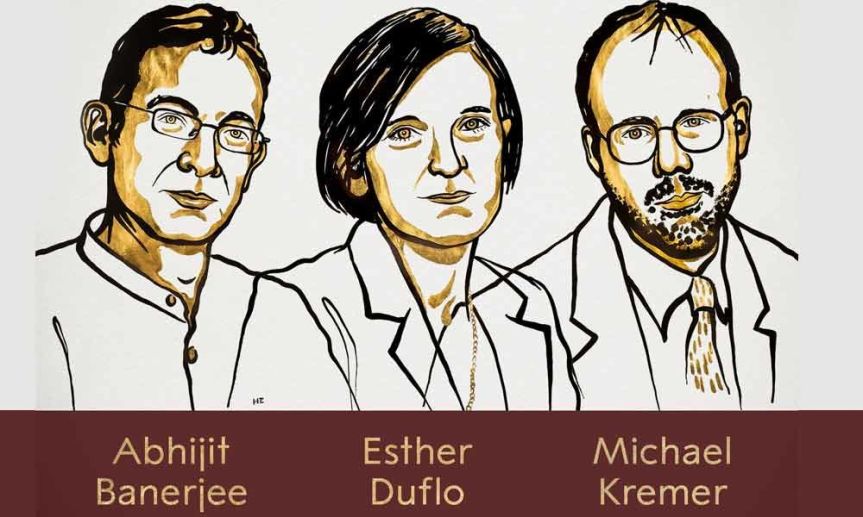
In 2019, Abhijeet Bannerjee, Esther Duflo and Michael Kremer received the Nobel Prize in Economics for their experimental approach to alleviating poverty. Poverty is one of the biggest issues faced by mankind. It is associated with social problems such as malnutrition, poor education and health. Poverty alleviation is the method of systematically reducing poverty by improving peoples’ education and job opportunities and in turn drastically improve their standard of living.

Their approach was very simple. To tackle the big problem of how to remove poverty, break it down into smaller, manageable questions. Once you find those questions, try to answer each one of them with a field experiment. A field experiment is a randomized controlled trial in which participants make choices in their normal day-to-day environment. Some of these experiments were carried out to find out how exactly education plays a role in reducing poverty.

Michael Kremer rounded up a large number of schools that needed some kind of support and split them up into groups. These schools were given resources that they were not receiving before. These resources varied from textbooks to free school meals. The outcome of the resource distribution was randomised. Due to this, researchers could find a connection between the various types of resources and how it helped children learn better. Surprisingly, textbooks and free school meals proved to make no difference in the learning of the students. It was observed that lack of resources was not the major problem that the low-income schools were facing. The biggest problem was that the teaching happening in these schools was not in accordance with the students’ needs. Banerjee and Duflo analysed remedial tutoring in Mumbai and Vadodara by providing schools with teaching assistants who helped students that had special needs. They discovered that helping the weakest student was a very effective measure in increasing the quality of education.

These experiments showed us that teachers lacked incentive and accountability, which showed in a high level of absenteeism. Reforms had to be made to bring teaching in line with students’ needs and the experiments showed that extra resources are of very limited value.

After the field experiment, this is what Banerjee and Duflo had to say on education policy formation:

  1. They believe that if the cost of schooling decreases, it would lead to a sizeable increase in school enrolment. If some financial barriers and non -financial barriers (e.g: distance to school) are removed it would certainly result in better school participation,
  2.  Awareness about the benefits of education should be spread. If the underprivileged know that there is a wage gap between the educated and uneducated, they would certainly want to be educated. Providing information about jobs would lead to an increase in education investment.

3. More attention should be paid to weaker students. Teaching assistants should be provided to make sure all students are able to cope with the level of teaching and should ensure no child is left behind.

This was how field experiments in education proved to be useful in alleviating poverty.

Causes for the Eurozone crisis of 2008

The European debt crisis started in 2008 when many European countries were not able to refinance their government debt or bail out over-indebted banks of their country without the supervision of third parties like the European central bank (ECB), other countries and the International Monetary Fund (IMF). Portugal, Italy, Ireland, Greece and Spain had to some degree failed to generate enough economic growth to pay off bondholders.

There were many reasons behind why the European debt crisis occurred. One of the main reasons was because of the common currency of Europe, the Euro.

Every member of the EU shared the Euro and also had similar monetary policies. But each country had control over its own fiscal policies that decided government borrowing and spending. Because of this, countries like Portugal and Greece kept borrowing and spending and soon, it went out of control. Large amounts of debt began to build up. This was the structural problem of having a common currency for multiple countries but not having rules on forming their respective fiscal policies.

The second cause was the Global Financial Crisis in 2008. Because of this, Industrial production fell and financial institutions plummeted. This discouraged investors. The cost of borrowing also increased as investors demanded more interest. Hence, Greece struggled to keep up as they relied heavily on debt. Their GDP decreased by almost 7% and output fell by 16%.

Third, strict restrictions slowed economic growth. Unemployment was increased, consumer spending was reduced and also reduced lending capital. There were also no penalties for violating debt to GDP ratios that were set up by the EU. This was because it was believed that the only penalty possible was exclusion from the EU and this would lead to a fall in the value of the Euro itself.

Another cause was the increasing central government debt and the high cost of borrowing coupled with the failing financial system. Greece’s debt became 113% of their total GDP and needed countries like Germany to bail them out and pay their creditors. Soon, Spain, Ireland and Portugal also needed bailouts.

Lastly, many of the EU countries had large trade imbalances which contributed heavily to the crisis as a whole. Germany was the only country with a good debt and fiscal deficit situation. Countries like Italy, Spain and Portugal had a large fiscal deficit and an even worse balance of payment position. Some countries went to the World Bank and International Monetary Fund for assistance as they were very financially stable. Amidst all this, the Euro was devalued to boost exports in hopes of helping economic recovery. However, what this did was worsen the debt situation as it increased the dollar value of the existing debt.

Mark Cuban: A Biography

Mark Cuban was born on July 31st 1958 in Pittsburgh, Pennsylvania to a Jewish working-class family. From the early age of 12, he began showing entrepreneurial skills. He used to sell garbage bags going door to door to pay for shoes and clothes. In high school he earned extra money by selling stamps and old coins. To pay for his college tuition, he even started giving dance lessons.

He graduated from Indiana University in 1981 and moved to Dallas, Texas where he started his first company MicroSolutions, a computer consulting business. For 8 years, he grew MicroSolutions to become an expert in computer networking. In 1990, he sold the company for $6 million. This was also the time when the internet was gaining traction. Sensing that it was going to become the next big thing, he and his friend Todd Wagner started the internet company Broadcast.com. Broadcast.com let people across the globe listen to basketball games. The comapny was a huge success and was soon sold to Yahoo for $5.6 billion.

Cuban always wanted to be a part of professional sports. So, in 2000 he bought the NBA team, Dallas Mavericks for about $300 million. The Mavericks however, were not really a winning team. Cuban planned to turn this around. He sacked many of the old staff, built a new stadium and always supported his players. He sat courtside for many games and cheered for his team, which was rare for a team owner to do. In 2011, the Mavericks finally won their first NBA championship thanks to their star player Dirk Nowitzki.

In 2011 he also appeared in the reality TV show Shark Tank and has invested in over a hundered companies as of 2020. His net worth today is a whopping $4.5 billion and has made the Forbes list of Top billionaires of the world. He currently resides in Dallas with his wife and 3 children.

Energy Economics

This up and coming career option deals with the consumption and supply of energy on a macroeconomic scale. Energy economists analyse energy markets and financial decisions that affect the global energy market. Energy commodities include gasoline, electricity, natural gas, coal etc. In recent years, natural resources like crude oil and geothermal deposits have been decreasing at an alarming rate and it is imperative that we now conserve these energy resorces and learn to use them efficiently. The objective of energy economics is to use these natural resources without degarding the environment in any way. This can be done because energy can be neither created nor destroyed. Rather, it can only be converted into different forms. Also, energy taken from the physical environment ultimately has to return back. So, energy has to be converted into renewable forms like solar, wind and hydroelectric energy to keep the environmental impact to a minimum.

In economics, energy will always have positive demand no matter what the price becomes. Because of this, energy is seen as an essential good. Meaning some portion of the consumer’s income always goes toward energy. As such, the public policies that affect the global energy market should be taken very seriously. The main concerns that energy economists have to deal with are the demand and supply for each of the main fossil fuels and the competition for these fuels and of course, the impact these fuels have on the environment.

Energy economists can be classified into resource and environmental economics, mineral economics, and energy. Each of these three specialities arose because of different perceived needs and they all have different bases. Resource and environmental economics arose due to a federal government study on natural resource availability. After seeing the problems with availability of natural resources, the US setup Resources for the Future, a research institute that dealt with managing natural resources. Mineral economics came about in the 1930s when mineral extraction issues were being faced. Finally, energy economics as a separate speciality came about in the 1970s when there was a energy crisis and the people needed some organisation that dealt with these kind of issues.

Thus, energy economics is a very viable field to pursue a career in as they are more in demand now than they ever have been.

-Siddhant Kulkarni