Feminism and politics of childhood

Book review

Name of the book-Feminism and the politics of childhood Friends or foes?

Author of the book-Rachel Roshen and Katherine Twamley

DOI: //https://doi.org/10.14324/111.9781787350632

Publisher 

UCLPRESS (university college London)

www.ucl.ac.uk/ucl-press

Published in

2018

Feminism and the politics of childhood friends or foes? is written and edited by Rachel roshen and Katherine Twamley. The book consists of eighteen chapters in itself. The book is a contribution of many scholars, psychologists, professors and lecturers of education, catholic priest, activist and anthropologists. 

Rachel Rosen is a senior lecturer in childhood in the department of social science at the UCL institute of Education and Katherine Twamley is a Leverhulme Trust Early Career Fellow in the department of social science at the UCL institute of Education.

The book discussed various kinds of feminism and children’s politics. It has an exploration of perceived commonalities and conflicts between the women and children. The whole book is in a dialogic method from a range of geographical contexts, social science discipline, activist organisations, and theoretical perspectives. The wide varieties of subjects include refugee camps, care labour, domestic violence and childcare and education. The author focuses on the local & global level and tries to drive the interconnection about the theoretical traditions.

Erica Burman found that the formulation of relation between women and children are representative. The responsibility of child caring is totally up to the mother as the bundling of women has been comprehensively critiqued. She also focused on the early care education of childhood. The book consists of childhood studies and women’s studies. Women and children are vulnerable victims or valorized as angelic innocents of home and hearth and the subject through which hope for national development flows. She said we should try to provide social and economical justice to the women and children. 

The book discussed gender & society. Barrie Throne wanted to ask about feminism and the politics of childhood. Thrawn worked with various frameworks and theories such as intersectionality theory, psychosocial studies, and critical disability studies. Grassroots Women (GW) was an anti- imperialist, feminist organization in East Vancouver, Canada in early 1990s. The organization welcomed her members with their children. They said the presence of children makes their members also focused on their work. They consider universal childcare a woman’s right. In the end they said (GW) children and women are became great power if they united. 

The book had a glance about the children and caretaker rights. Every child has the right of proper care and love. Radical feminism considers the children as the burden over the women and ground of oppression of women. They also discussed the challenges of/to feminist solidarity in the Sahrawi refugee camps (South Africa). 

Marxist feminism focused over the renewed frame attention to social reproduction. They consider the women as the second and less paid workers. Taking care of the children should be the first job of women. 

The concept of surrogacy is also shared here. The data is collected by the international commercial surrogacy. Here the practice of surrogacy is considered as the reproductive and productive laboring. Some feminist are in favor as some are in against. It directly impacts the child and women’s mental, emotional and physical condition. Decolonising childbearing and challenging the patriarchal nuclear family through indigenous knowledge is also shared here. In this chapter we discuss the role of men in child care and how the traditional value system of child bearing will guide the people to develop more effective programming for parent education and support family reunification. Child marriage practice is also criticized by the feminist. They share the world wide data of the early child marriage and its impact on the children and women. 

The feminist is mean to be a fighter of social justice, they fight and struggle to get the social justice foe women and children. Domestic violence is a cycle of violence, a person tries to fill a woman or a child with a lot of guilt and shame so she could not try to stop the violence over her. Feminist also work in this sector too for give a save environment for them. 

I chose this book for many reasons and one of them is this it discusses various feminism waves and theories. It gives a clear understanding of why we need feminism and the different context of women and children’s condition. Children and women are inseparable in order to provide strength to each other. 

Reflection 

The book is really Informative and interesting. It consists different view of feminism and feminist which going to help in my assessment too. The book had a broad number of examples, interviews and experiences about the challenges faced by the women and children at local and global level. Why we need feminist and how they struggle to achieve the goal of social justice for all. Here I also find the difference between radical feminism is different feminism. They consider child bearing as the ending of life or burden over the women or women does not want children or should not have children if they want to do something. The book gives a holistic perspective to think about geographical, social and economical impact on the condition of women and children. Everyone should go through the book once. They provide you with alternate theoretical constructs and practical examples of research on how best make sense of the importance of relation and thinking with complexity. 
Person with disabilities and education system.

Introduction:  

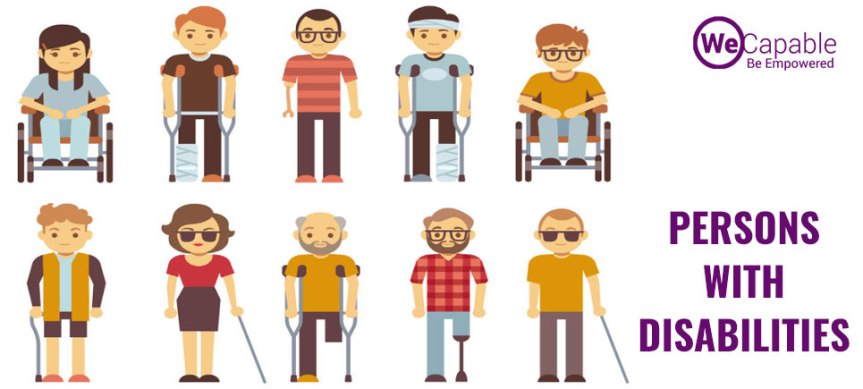
Person with disabilities is considered a person who has different abilities to perform a task. Sometimes different abled people are born but sometimes they meet with an accident which causes the disability. A person can have one and more disabilities in themselves. There could be cured and uncured disabilities. 

In India the disabilities are connected with karma. If a person has some defect they might do something wrong in their past life. The karma concept believed that a person with disabilities must do some good thing so they can overcome their disabilities in upcoming life. The disable person should only focus on God so they get forgiven from god. 

 Earlier, the education system also excluded people with disabilities. They had an idea that PwD must have a different environment for their education. Their disabilities must affect the other children. Earlier the disabilities were considered touchable. So the school administration and parents do not want to include the people with disabilities in their so called normal children education system. 

The video shares an idea of inclusion at every level of society. People with disabilities discussed their struggles to get education along with their parents.  They put focus on the obstacles they had in their life. The video shows that hardly only parents accept children’s disabilities and love them as the other children of the family. 

The story of Krishna kanth and Sai Prasad who  were accepted by their parents with their disability and were encouraged to study in normal school. They said our children are our pride. No matter what they are, how they are- only the thing that matters is that they are our children. Acceptance of the people with disabilities  at home is important to their development. The love and care they get from their parents helps them to fight with their circumstances. As a family we don’t need to feel ashamed, instead we must feel proud that we have a person who has different abilities in itself. 

In our education system disabilities are considered as special cases. They don’t want to admit children with disabilities. They said we don’t have teaching staff and proper infrastructure for special needs children. 

The inequality is not only in the rural area urban education system but also part of this injustice. In rural areas, parents are economically weak; they can’t afford a special educator and any other alternative. Due to weak economic conditions both parents have to work. In that case, one of the siblings has to live at home to take care of the other child. In the end both the children remain uneducated.

In urban areas, parents have enough money but the schools don’t want to admit their children who have any disabilities. They considered the children with disabilities as the problem. They thought that their school image would be ruined because of people with disabilities.

Rekha Shani (trustee of a school) gave a statement that we have not  any issue or problem but the parents of other children deny. They said if the school admitted disable people in school or college we would not let our children go there. The statement shows how  society thinks about people with disabilities. They don’t see them with their children. The inequality is the reason many bright differently abled people are moved aboard or remain in darkness of life. Behaviour of society must be more positive toward the people with disabilities. Society is not only doing injustice to them but also other children missed the chance to learn many things from them. 

We should involve the inclusive education in our society and education system as the mandatory level. 

Uma tuli the founder of Amar Jyoti foundation new delhi said when I started the inclusive education under a tree with 30 students in which 15 children were differently abled and 15 were other people said the madam is mad. How could she teach those children with so-called normal children? But she was so determined to do her work that she opened an inclusive school for all children. The parents of other children are also happy that our children get a chance to learn more with the different abled children. The infrastructure of the school is designed to be considered for all the disabilities such as tactile path for blind children, enough length and width  of stairs and gate, ramps for wheelchairs,  special educator for differently abled children. 

People with disabilities often face physical abuse and mental harassment by the family or by society. We should encourage them, not motivate them. 

Governments play an important role to promote inclusive education among the schools. There are some policies and acts are

  • Samagra shiksha abhiyan – launched in 2018-19 by MHRD. It is an integrated scheme which promotes inclusive education in the school system. The scheme is regulated by RTE 2009.
  • Right to education- Right to free and compulsory education 2012 as per amendment, all the children ( differently abled) have right to get education. No school can deny the children in the school.
  • As per the Amendment of 2012, the RTE Act also mandates that a child with multiple and/or severe disabilities has the right to opt for home-based education.

Conclusion

In  the video clip we discussed what challenges faced by the person with disabilities. Society focused on the karma concept.

It’s the brain of other people who have become disable who can’t accept the diversity .

So it’s the people who are disable to see the special abilities of these children because it’s not the children who are disable it’s the environment and people’s minds who are not providing the appropriate environment. As we know all 5 fingers are different similarly all children are different and have different abilities .

Everyone should have faith in themselves and accept themselves as they are instead of feeling low or inferior . 

The external help or sympathy shouldn’t come out of pity but from the heart. 

So inclusion is not about the writing on paper but it’s important to bring inclusion in practice , action .

Constitutional provisions in education system

Constitutional provision in education

Introduction

India got independence on 15 august 1947 at midnight. There was an urgent need for a constitution to lead the nation. Dr. Rajendra parsad was elected as the president of the constitutional committee. Dr. B. R . Ambedkar was the head of the drafting committee. Our constitution was enacted on 26 november 1949 and enforced on 26 January 1950. It took 2 years 11 month and 18 day to make our constitution. Our constitution has 6 fundamental rights and 20 directive principles in itself.  There were 365 articles and 6 seven fundamental rights initially. 

Our constitution has a preamble. It contains the summary of our whole constitution. 

Constitutional provision: The constitution provision is important for the recognition of access to information as a fundamental right. 

There are many constitutional provisions in the constitution which promote education in India. These constitutional provisions act as security for the people about the access of the rights related to education. There are mainly 11 constitutional provisions.  These articles are 45, 21A, 15(1) (3), 46, 25, 28 (1) (2) (3), 29, 30, 350-A, 351, 239 and  51(A). 

The constitution of India provides free and compulsory education till the age of 14. The 86th amendment of the constitution created the right to education. There would be no discrimintation on the basis of gender (article 15 (1). The constitution also promotes the education for women of weaker sections (46).  Article  21, 28 , 29 and 30 promotes religious education too. Article 51 states that minorities have the right to education. Noone will be discriminated against on the basis of religion, caste , gender or birth place. Article 350-A states that instruction would be in the mother tongue at primary stage. Article 351 promoted Hindi for its development and propagation. 

The government of India provided many provisions to frame a strong structure for the school environment. The aim of these provisions are holistic development of the people of India. The government of India wants to provide inclusive education to all. Many administrations were made for the development and watch out on the education system.  Education is also included in the concurrent list. 

There is a separate ministry for education at centre as well as state level.. The ministry works over the education structure, setting goals and achieving the aims by planning organisation and direction. The ministry of education at centre level directs, controls, and plans for the ministry at state level. The state level ministry works with the guidelines provided by the central government.

The central government also controls the action of private institutions.  The central government shares their funds on education with the state government. There are many pilot projects such as rural education, regional institutions for education and sarva shiksha abhiyan. 

There are three lists in the constitution which are divided as the concurrent, union and states list. The list consists of subjects. Every list has some entity about education. 

The whole constitution promotes education at every level. The preambles, articles and lists promote education at states and union territories level. 

Career choices and obstacles

Career choices and obstacles 

Abstract

We all learn to get work. Learning is different according to our needs and interest in our careers. We set the objective, make goals and identify the obstacles. Sometimes obstacles change our choices and interests too. 

Keyword

Career, obstacles.

Introduction

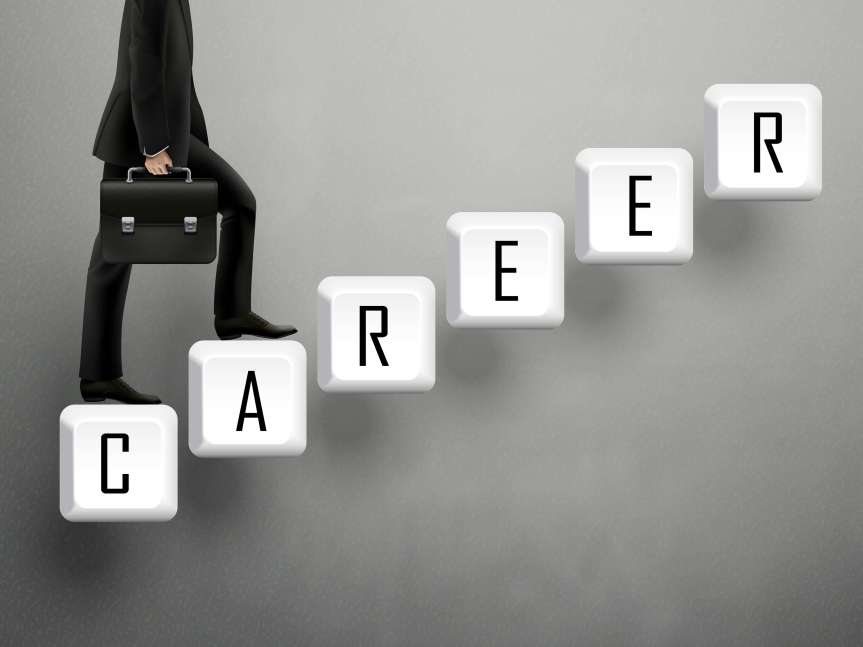
Career can be defined as the process in which we learn certain skills to get the job/ work. Choosing a career is not an easy task. An individual needs to set goals, objectives and schedule their whole life according to that aim. Career helps and individual to earn wealth, name and fame. Because of this reason people want to choose the high profile ranking job. 

In India parents help their children to settle their career- by providing funds for their business or by providing education and qualification till the higher studies. Parents want their children to attain the high position in society. According to them – only some jobs have respect in society- engineer, doctors, lawyer and teacher. 

The work culture are as

Gold or white collar jobs- doctor, surgeon, engineer lawyer.

Green collar job- They related to the environmental sector

Red collar job – government services

Pink collar job- EnterConclusion

Black collar job- worker

This working culture divide the people and classifies them from a high job profile to a low job profile.

The career choices are divided not only on the basis of what the child wants, but also what their parents and society require.

The obstacles are stated from here when the parents ask the child to learn more so they get a good job as a career.

Obstacles children face to choose their career.

Family : Family is a supportive pillar for an individual. They provide their best to the child but the actual thing they forget to give is freedom to choose their career on their own. Somewhere, the male child is pressured to become an engineer , doctor or any job related to white collar job. The female child would do some non technical courses. This thinking of family becomes an obstacles for an individual to choose their career option.

Division of work : As above we discussed how the collar colour described the nature of the job. Parents prefer  that their children go with white collar or pink collar jobs. Because the job consists of fame and wealth. So the division of work becomes an obstacle to choosing a career.

Potential of an individual: Every individual has their own potential to gain knowledge. Some are really good at writing work, others are good at designing. When we as parents want to take out that potential, we forget that what the child innates is his/ her self. It is important to analyse the real potential  of an individual. When we can’t do that it becomes an obstacle to choosing a career.

Lack of Motivation: sometimes an individual has enough potential knowledge and skills to do a particular job. But due to lack of motivation, they don’t want to do that work. They thought that what if they failed. They are afraid of society and don’t  want to laugh. And the obstacles can affect their career choosing process. So it is important to give motivation to your child if they have any special talent in themselves.

These are some of the obstacles which impact on an individual to choose their career. There are many others but they are major. 

Conclusion

Family plays an important role in choosing a career for an individual. As the family member we should be supportive and try to remove obstacles , so they can choose their career according to their interests and not under any pressure. 

References

https://klcampbell.com/complete-collar-colors-understanding-consumer-personas/

https://www.glassdoor.com/blog/obstacles-changing-careers/

The book of life- Daily meditation.

Book review

Author name-Jiddu krishnamurti

introduction

He is an Indian spiritual leader. He was educated in theosophy by the British social reformer Annie Besant. His basic philosophy lies on observation. His works includes on mind and thoughts, nature, environment, relationship, living and dying, love, lowliness, fear and freedom.

Book name -The book of life- Daily mediation

Chapter -The book contains 12 chapters within itself.

Publisher’s name  –  HyperCollins Publishers (Australia) Pty.Ltd.

Publishing year-Sep/2019

ISBN-9780141004969

About the book

The book is written by Jiddu Krishnamurti at the basics of daily routine. The book is based on the observations and experiences of the author. The book is about finding the truth of life through living. This book presents the 365 days of the year. The writer was meditating and trying to find the truth of life. His experiences are interconnected with others. He started writing from January to December.

The story of man of mankind is in you, the vast experiences, the deep-rooted fears, anxieties, sorrow, pleasure and all the beliefs that man has accommodated throughout the millennia.

The book is about the listening process, learning, authority and self-knowledge. The author said, ask yourself why do we follow a leader or authority and later on we criticize them and insist on carving ourselves. Self-awareness is a process of knowing one self. It is not about isolation or withdrawal from the relationships mentioned by the author. He said self-knowledge can help to bring change in society.

The author described the sense of becoming, beliefs, action and good and evil. The author said everyone wants to become something. Becoming something is a will. A will is led by self-projections and a conflict is about struggling to reach our wills. All wills and conflicts are becoming integrated. The author mentioned the love and self, role and hinders of beliefs. He focused on the observations, action and ideas. He said goodness has no motive whereas evil things can’t be justified at any cost. 

Dependence, attachment, relationship and fear are in sync. We all depend on something, be it beliefs, religion or a person. The dependence leads to attachment. The attachment develops the relationship when the relationship starts having conflicts and a fear of detachment. The root of fear, anger and loneliness is you and I. we have to learn the tricks to deal with our fear.

The author discussed intimacy, love, lust, marriage and profession. Here also he asked the individual to leave the ego and accept the reality of life. He also discussed the intelligences, thoughts, knowledge, brain, transformation. He said aloneness is not loneliness. Mediation is the way by which we can achieve that peace and truth of life.

To choose this book for the review is my first option because the book is related to the life experiences of the author. The book consists of all aspects of life. The author discussed every topic briefly with causes and results. The book has a religious aspect of life. It is a daily life experience. How meditation helps a person to attain inner peace, the importance of self-knowledge, self- reliance and the truth of life- all the things are core essence of this book.

But I feel the book is in accidental order. The author is just assuming the things. The topic discussed by the author in this book is very common. I think he could work on some other topics too.

Conclusion: 

We are just busy in our lives. We all are lost in the darkness of sorrow, greed, anger and love. We stopped to think about the truth of life. We are just focusing on the material world. We all are ignoring our truth of life. We just have to spend our life handling some emotions like sorrow, anger and ego. The cause of the problem is only the sense of supremacy. We are just working for I and degrading you. We are not happy with what we have. We are not satisfied with what we achieved. We all are having an unnecessary race. The book gives us idea how we can deal with ourselves. Knowing yourselves, listening, hearing and what is the true knowledge we are not even don’t care about all of these things. The book focuses on this value. The attainment of true knowledge is only possible through mediation. The mediation helps to awaken your inner desire of knowing truth, learning about the real meaning of peace and maintaining the meaning of self-knowledge. The book supports love not lust. The difference between love and desire, willing and integration, loneliness and loneliness are clearly mentioned in the book. Aloneness is the essence of achieving the truth whereas loneliness is about withdrawal of your feelings. Relationship is the mirror- the lines really give a different idea about the relationship. Here the meaning of relationship is considered as knowing yourself from another point of view. I learnt the value of self-knowledge and I felt that self- knowledge is the only key to unlocking life. Controlling and managing your emotions is really important because it reflects your knowledge which could be only possible by mediation.

Political agenda of education.

Book review

Introduction

  1. Title: Political Agenda of Education                 
  2. Author: krishan kumar
  3. Fiction or Nonfiction: Non fiction                              

The book is divided into two parts.

  • Part i- knowledge

This part focused on true and valid knowledge. The writer said we are following the colonial education system in current time which causes the lack of moral education among the learners. Colonial education just needs quantity of education not quality of education. But nowadays we need a quality of education which is based on true and valid knowledge. 

  • Partii- the three quest

In this part of the book the writer discusses the curriculum and pedagogy. They focused more on the curriculum which was set after the colonial period in India.

In the introduction we see a zoo where all the students perform different activities and their teacher reacts to their actions. While reading the book I found the same situation when I was on any educational field trip. The children were harassing the animals, writing their name on the walls and other museum material. The teachers were only focused over their own duties which were assigned to them during the trip. The writer felt so bad when he observed the behavior of school children towards the animals as they were hitting the animal with stones. Some students were interested in what’s going on in their surroundings. They just follow their teacher’s instructions.

What is worth teaching?  One of the key processes involved in educational change concerns the question because was there a wide gap between an Indian child’s life at school and that at home . The school’s daily curriculum had no reference to the children’s life outside the school. The teachers were  free to make such a reference, and they occasionally do. Whereas curriculum policy permits  the teacher to teach all the school subjects without establishing any link between the child’s life and social life  and the knowledge content of the syllabus . 

In the indigenous tradition, the teacher was remunerated by the community he served but under the new system, he became a paid servant of the colonial government.  

State control over schools had significant implications for curriculum and teachers.  The points of ‘inconsistency’ Arnold noticed between the Indian and the English concepts of education can be placed in two categories. The first included his observations concerning language and reading or literacy, and in the second   placed his observations concerning science, including geography and mathematics. 

In the context of language education, Arnold made two basic points. One is that pupils were  capable of reading but unable to derive any meaning out of what they read. The other point was that education in a ‘common vernacular’ like Urdu—which his office decided to introduce in schools in place of Persian—was ‘utterly inconsistent’ with people’s idea of ‘erudition and learning’. 

Both these points relate to the perception of literacy and that of its functions in a culture. 

1857,  Persian School, where is more number of students are Hindu and Muslim. In this school that taught about writing, but with less energy and success. a student learns how to read without understanding the meaning of those words, and the shocking thing is it satisfies both teacher and parents. Reading aloud from it was a source of pleasure and satisfaction, even its meaning could not be comprehended. why did we just discard all the old Persian books? I mostly don’t know the meaning of new books.  it is very unwise and worse. Language has a great role in education as well as religion and morality. We have to include this domain in education.

 Facts and rule

We know how subjects are interrelated to each other but we found people ignorant of the geography of their province, Ignorant that there was Science as geography. in Victorian-era geography and natural history had begun to find places in the curriculum of some  English public schools. Rugby student 1840s, Arnold Exposed to the new interest shown in a study of nature and earth. he was irritated with arithmetic, where arithmetic was divided into two main classes-   the Khattries trained by long and diligent practice, But at a loss when directly they got beyond their habituated problems because they are unknown with the scientific method.  In his first report, Arnold Had described a style of account keeping.  for better school education he suggested for rules of arithmetic-  the rule of three methods through the medium of legible character-  more profitable to the scholar than the cumbrous Process and illegible Handwriting of Banias Bookkeeping.  Where are I supposed to teach the former, in hopes one day effecting a change in the latter? Arnolds Director of public instructions,  Punjab. Gratifying result of new curriculum policy. In  report boys  Hindu and Muslim,  four rules of arithmetic pass a good exam in the geography of India. But teachers Resisted the new curriculum. But training for the same.  The training was seen as a solution to the problem posed by teachers.

Teacher training was seen as a solution to the problem of incompetency of teachers for the new curriculum. According to Arnold, having basic knowledge of arithmetic, history & geography will be enough to teach efficiently. Thus teacher training was really a re-education of teachers.

 In the old system, a teacher decides his\her pedagogy of teaching but in the new system, teachers were perceived as a source of resistance to curricular change. 

The colonial policy led to the suspicion of Englishman’s education & the subtle resistance to his pedagogy. The Englishman’s religion & education system became a matter of concern in Indian society as the Indian parents who enrolled their children in English schools were worried about religious conflict that can come between them and their child. Walsh also discussed in her study that the greatest fear of Indian parents in the 19th century was that their children would convert to Christianity. 

Parents blame education for the views & behavior of their children. As caste system is prevalent in Indian society drinking water from a Muslim by a child is considered as outraging caste rules and the child was told that all this came through his reading English. 

In case of girls, the perception of remaining uneducated was common till early 20th century but the scenario improved after revivalist movements such as Arya Samaj etc. 

Mishra identifies in his studies that educated men are set apart from all others because they are considered as Christian.  In response to this belief Chaturvedi quoted ‘Learn English and you lose your humanity’. The educated men served as a scapegoat in this respect. 

On the other side, the colonizer’s design in teaching English language & literature to the natives was to influence their morality. The East India Company administrators had been under pressure from missionaries, traders, as well as members of parliament, to take steps to improve India morally by teaching religion in one form or another. Some Indian administrators oppose religion-education as it can cause backlash. The question of teaching religion directly and morality remained uncertain throughout the 19th century and even later. 

Out of this conflict arose the fluctuation that the government’s relationship with missionaries went through.From its early policy of discouraging missionaries, the Company had been pushed towards a sympathetic view of missionary work around the time its own educational role had crystallized.

Although teaching a lesson inevitably involved getting chil-dren to memorize the ‘maxims’ given in the textbook, mission teach-ers were concerned that the boys understood what they had learnt by rote.

Once the child saw how little the accounts of gods and goddesses have to do with the ‘facts’ of history and geography, it was expected that he would turn to the ‘rational’ belief system that Christianity had to offer. 

Children everywhere protect themselves in classrooms with the help of memorized re-production when they are faced with concepts or material that they cannot grasp or find meaningless.

The tradition now acquired a new validity and focus under the auspices of a textbook-centred curricu-lum and examination. To the English administration, examina-tions—like textbooks—were a means of norm maintenance.

 All he could do was to prepare them to the hilt, which meant giving them the opportunity to rehearse endlessly the skills of reproducing the text from memory, summarizing, and essay-type writing on any ques- tion based on the textbook.

Although I understand that a good teacher  needs to give opportunity to each and every student to explore their own environment and under the basic concept of theme. 

Online classes and primary level students

Online classes and primary learners (4to9)

Abstract 

During the worldwide pandemic, nations opposed an emergency lockdown. There was a need to shift the education system from traditional to online methods. It was new for the learner to learn through the online medium. Primary level children (4 to 9) faced many problems accessing online platforms. 

Keywords: COVID-19, online learning, primary level learners, mental exhaustion.

Introduction

Covid- 19 is a communicable disease. For the safety of the people it was a sudden need of lockdown. All the sectors such as industrial, agricultural, mechanical and educational sectors were dismissed. But the show must be going on. The method working transformed. Companies started work from home for their employees. Hence the education system also shifted their method to online platforms. Primary, upper primary, secondary, senior secondary and higher education learners start their learning through the online medium. 

Primary level students are in the 4 to 9 years old age group. The children are really small in age. Their concentration power is really low compared to other level learners. But their minds are developing and they can learn and grab things easily.  Online classes became an exhaustion for them. Due to the pandemic they are not allowed to go outside and play. The online classes are really long. The children have to spend 4 to 5 hours on screen. The children start feeling dizzy and uninterested in studies. 

Children (4 to 9) enjoy their studies through some fun activities during traditional methods of teaching. They learn many things in groups. The social and playful environment is missing at home. The child does not feel well when they have to study online. They are not aware about the access of the technology. 

Some issues children face during online classes 

  • Environment of home- Environment of home is important during the online classes. Primary children must have a peaceful and joyful environment for learning. At home it is not possible. Children are not able to find the circumstances of learning. That leads to unnecessary chaos in the child ‘s mind.

  • Anxiety of using technology- Introduction of technology without any preparation creates an anxiety among the students. They were not used to the technology. They have to learn the use of technology. Using phone, login in meetings, using tools of that particular application, submission of their works creates anxiety among the students. Yet the teachers try to make it simple but the introduction of technology to the students was at the wrong time. 
  • Low concentration- These age groups have low concentration  power. Primary level students can not focus over the thing for long. They start looking for fun and neglect their classes. The children find studies uninterested and watching cartoon or something else on their devices. They lost their interest in class.
  • Limited sources of learning -The teacher plans many activities to engage the students in school. But online they have limited sources such as showing ppt and videos. The child explores things by learning and doing. But in online methods, the child is dependent on the internet or webworld.
  • Long screen time- The timing of classes mostly 9 to12:30 for the primary level students. It means 3 hours 30 minutes per day. The child has to spend a minimum of that time on screen. They have to stick to the screen. Such a long time can  impact their eyes. Children usually feel strain on their eyes and headaches during the classes. Their Physical growth also impacted because of long screen time.
  • Less understanding- Topics are not clear to the students during the online class. They hardly understand the concept. They could be physically present on the screen but they start to ignore the thing when they don’t understand them. The teacher can modify their teaching method for the students to make the concept easy and joyful at traditional methods. But due to limited e- resources it is not possible on online methods for these particular age groups.
  • Exhausted during online classes – After the long session, the children start feeling tired, lazy and dizzy. Most of the children don’t want to study. They felt fatigue during and after the online classes. 

The children not only felt mentally tired, their physical activities were also affected. They become so tired that they don’t want to do anything else or participate in any game or activities. Not only this particular age group, all the age group learners face the same kind of problem and mental illness. There are no proper guidelines for the online classes from the government.

Classes became the source of mental exhaustion rather than providing knowledge. 

Conclusion

Online classes are needed for the current time. But there should be proper guidelines for all age groups according to their needs and interests. We have to make classes more interesting for the primary level so the children don’t suffer from any kind of anxiety and stress. Classes should be knowledge providers not mental tiredness. 

Aim of education

Abstract

The aim of education is important to know how would education will help an individual in their lifespan.

Aim means the objectives of a plan which are going to meet by the action. Aim of education can be said to be the objective or goals of education which meet the interest of an individual and lead the society towards development.

Importance of aim of education in society:

Intellectual Achievement: To provide students with academic knowledge and skills in order to prepare them for post-secondary education or the workforce. This has been the most agreed upon aim of education. Most parents want their children to reach high standards in math, English, history, and science.

Prosocial Values: To train students for responsible citizenship and prepare them for adulthood through socializing them in the norms and values of society. Teachers, who symbolize authority to the child, emphasize the values of a democratic society, such as patriotism, obedience, honesty, cooperation, competitiveness, and moral responsibility.

Economic Competitiveness (social efficiency): To provide students with skills and knowledge needed to be competitive in a global economy; become an effective and efficient workforce; and prepare workers with values and socialization needed in the workplace through developing attitudes such as punctuality, cooperation, and following rules.

Personal Growth: To help students find self-fulfillment, personal relevance, clarification of personal values, communication and self-expression skills, and development of effective learning styles. Student interests and feelings are emphasized. The curriculum is created collaboratively between teachers and students to help students reach their potential.

Socialization and Culture: To impart culture to students through great ideas of western culture, such as works of art, literary classics, and basic skills so that they are literate and cultured citizens and can participate intelligently in American society. Schools are places where students from diverse language and cultural backgrounds learn English and learn about American traditions, holidays, historical figures, geography, and democracy.

Social Change: To help students become productive citizens that are capable of changing the social order through emphasis on social issues and solving social problems. Students are provided with the knowledge and skills to improve society and are given opportunities to see themselves as both individuals and contributing to the group and the larger society. They are encouraged to participate in community service or service learning, so that they become reflective and responsive about the needs and problems in their community. The purpose of education is to advance social mobility, rather than perpetuate the status quo.

Equal Educational Opportunity: To ensure that all students have a free education, common curriculum, opportunities for diverse students to attend the same school, and equality of financial expenditure in a given locality. There is clear evidence that certain groups in American society are denied equal opportunity economically, socially, and educationally. It is essential that all children, regardless of race, ethnic background, gender, religion, socioeconomic level, or language, receive a quality education. A balance between diversity and unity is needed in schools.

Problem Solving: To teach students how to learn through the development of thinking, research, and study skills so that they become excellent problem solvers and creative thinkers who are capable of dealing with change. The rapidity of change today, technological advances, and the explosion of information require that students develop tools for lifelong learning.

Factors which affects the aim of education in society

1.Nature of Reality.

Aims of education have direct relationship with the prevailing philosophy of life. The philosophy of life at a certain time is influenced by the views of eminent thinkers and schools of philosophy.

According to the idealistic view, the aim of education should be self-realisation or unfolding of what is potential within the child. According to the naturalistic view-point, self- expression or self-gratification should be the aim of education. The pragmatists think that education should aim at enabling the individual “to control his environment and fulfill his possibilities.”

2.  Human Nature

Educational aims have often been decided keeping in view one or the other element which comprises human nature. Idealists regard ‘unfolding the divine in child and man’ as the aim. To naturalists, the aim of education is ‘self-expression.’

3. Political Ideologies and Individual-State Relationship.

Political ideologies influence the aims of education. Under a totalitarian system, the aims of education will be much different from those under a democratic political system. Under the former, the system of education becomes stereotyped and education takes the form of indoctrination. School and text-books must promote the ideology of the State.

Under the latter (democratic), the individual enjoys freedom and free play. The goal of education is the good man who is to be educated for a life of freedom. Education aims at developing the full personality of each individual, irrespective of caste, creed, class or religion.

4. Socio-Economic Problems.

Socio-economic problems of a country also determine the aims of education. For example, the Indian Education Commission (1964-66) put emphasis on “increasing productivity’ as one of the national objectives of education.”

5. Exploration of Knowledge.

Exploration of knowledge is a potent factor in determining aims of education. With the advancement of scientific and technical knowledge, education all over the world has become science-education

Conclusion

The aim of education should be holistic development of the individual. An individual is the foundation of the nation. It is important that their education must be according to their needs and interests. 

Reference.

Greenhouse effect

Greenhouse effect 

Abstract

Greenhouses affect the level of oceans and seas. Many environmental problems arise due to carbon dioxide excess in the environment. Reason of greenhouse effects is excess use of chemicals which release harmful gases.  Individuals can reduce the carbon footprints. Government can also take strict action against the companies who are responsible for degradation in the environment. 

Greenhouse effect

The greenhouse effect means increasing the level of gases in the earth’s atmosphere which leads to the warmness in the environment and an excess of the temperature of the environment. 

In the atmosphere there are three layers of exosphere, thermosphere, mesosphere, stratosphere and troposphere. 

There is an ozone layer above the stratosphere. It helps to protect from ultraviolet rays and maintain the temperature of the environment. Due to the pollution, the ozone layer starts depleting. The gases are trapped in the atmosphere and increase the warmth (by 3- 4 degree celsius) in the environment. 

 The gases which are responsible for the greenhouse effect are:

Carbon, nitrous oxide, methane, chlorofluorocarbons (CFCs) and water vapour.

Type of layers in atmosphere.

Causes of greenhouse effect

Over time human activities continue to develop. Humans want more and more from everything. Burning fossil fuel, deforestation for urbanisation and cultivation, progress in chemical factories, use of cfcs in cooling stuff of home appliances, overpopulation, farming, transportation, landfill and forestry smog and pollution, acidification of water bodies and industrial act effect  leads to climate change in the environment.

 According to the environmental experts and scientists only the United States of America produces 95% of the gases worldwide (5th assessment report on climate change). 

https://www.ipcc.ch/site/assets/uploads/2018/02/ipcc_wg3_ar5_summary-for-policymakers.pdf

Reference link of that report.

Impact of greenhouse effect 

  • Melting of polar ice – Due to the rise in temperature the polar ice starts melting. The level of oceans and seas increased, which led to floods and cyclones. 
  • Climatic extremes-  climatic extremes such as drought, excess rainfall , leads to threat to the life and wealth of an individual. An increase of co2 in the environment also affects the ecosystem of a particular place. Some fungi, pests and weeds are also deprived under warm water.
  • Impact on crops- our crops are also affected by the increasing of level co2 in the environment.  Co2 reduces the nutrient level of crops. It imbalanced the concentration of protein and other important and essential nutrients.
  • Health issues- warming the environment also increase the health risk of an individual. Malaria, cholra, dengue and now covid-19  all are result of increasing the temperature in the environment.
  • Migration of species- due to the change in the climate, many species have to migrate forcefully from their regions. The migration create the problem of sustaning and settlement.

Prevention from greenhouse effect

Reducing the emission of gases lead gcan prevent the greenhouse effect. International organisation also give some recommendations as follow

At individual level

  • Use of renewble energy- we should use solar panel for our household and small industries.
  • Use of public transport insist of private: Transportron also increase the level of co2 in the environment because of the combustion of dissel and petrol. So we should use public transport instead of private.
  • Afforestion- Go green , grow more trees. Trees and plants  consume the carbondioxide and release oxygen and make the environment cool in temperature.

at national level

  • India greenhouse programme- The programme provide standarized method and measure to use GHG emission.
  • The world resources (WRI)-  it was launched by 2013 and provide the companies knowledge of identify the emission, measure the use of GHG, establish the long and short terms goals.
  • National Action Plan on Climate Change (NAPCC) 2008.- The plan take initiative to work for the mitigation of green house gas emissuon that are causing change in climate.

conclusion.

The green house effect has cause by the emission of methane, nitrous oxide and carbondioxide. The level of increasing co2 in the environment can lead the warmth in the temperature. Due to the high temperature the polar ice are melting which leads flood and other climatic extreme. We should work at the rooth level to reduced the emission of co2 gasses.

Reference 

Education policies of India

Abstract

After the independence of India there was the urgent need for change in the education system. British education system was rigid and followed their principal. The evolution in education policies was slow. One education policy worked as the draft for another policy.

Introduction

Education policy : policies are a set of written rules and strategies given to an organisation ( government and private). Education policy is about policy which helps to set rules in the educational department. Education policies help the government to decide the objectives of education. Government decided some goals to empower the youth and achieve them through educational policies. 

How many policies have been established after independence.

After independence, Indian decided to degarde the British education system. British education system is just helpful for them. They have difficult course and exam patterns. There was an urgent need for new education policies which related to Indian context. 

  • Universal education system (1948)

It was the first education policy of independent India. It was headed by the first president Dr. Sarvepalli radhakrishnan. The committee gave recommendations for reorganising the examination pattern, medium of instruction, cultural heritage, vocational education and many more.

  • Secondary education system (1952)

This committee works with primary and secondary levels of education. The committee was headed by the Dr. A. L murlidhar. Recommendations given by the committee were reorganising the aim of education and teaching medium at the secondary level. It is also known as muralidhar committee.

  • Indian education system (1964-66)

After the Two committees  there were still some defeats in the education system. The previous committees gave suggestions to organise a new committee. The committee is known as the Kothari commission. It was headed by the D. S. Kothari. The major recommendations were improvement in the education system, focus on national development, addressing the needs and interest of aspiritant. The committee emphasized education for national development 

  • National education policy (1968)

In 1968, late former prime minister shri rajiv gandhi introduced the new education policy. According to him, we have an urgent need for a new education policy for the holistic development of the nation. Free and compulsory education for the children, protection and development for all education systems, and work experience in every field were the programmes under the NEP 1968. It was the first education policy which included agriculture and industries as the courses in education.

  • National educational policy (1986)

National education policy came in 1986. It was focused on equal opportunities for all. The police have an idea of inclusion of scheduled tribes, scheduled caste, handicapped, and women in education. NEP 1986 had 23 task forces under it. 

  • New education policy (2020).

The new education policy 2020 was introduced by the prime minister of India, Shri Narendra Damodardas modi. 

The main aim of NEP 2020 is to provide infrastructure support, innovative education centres to bring back dropouts into the mainstream besides tracking of students and their learning levels, facilitating multiple pathways to learning involving both formal and non-formal education modes and association of counsellors or well-trained social workers with schools.

The vision of NEP 2020 is The vision of the Policy is to instill among the

learners a deep-rooted pride in being Indian, not only in thought, but also in spirit, intellect,and deeds, as well as to develop knowledge, skills, values, and dispositions that support responsible commitment to human rights, sustainable development and living, and global well-being, thereby reflecting a truly global citizen.

The new education policy changed the school structure from 10+2 to 5+ 3+3+4.

 In the new education policy, early childhood and care is considered as the foundational year of learning. The ECC consists of 5 year of school structure. Children will go to bal vatika and anganwadis. There will be universal access to early child care and education. 

Upliftment of literacy and numeracy, cutting the droprate rates, universal access of free and compulsory education, change in pedagogical and curriculum system, rigid to flexible and enjoyable classroom environment, holistic development of the learner, increasing the critical thinking among the learners, empowerment of student through the flexibility in the subject choices, vocational education and teacher training are some major recommendations of new education policy 2020.

Conclusion

The Indian education system always works for the better development of the nation. Every education gives recommendations on the basis of the first one. The aim of all education policies was to provide education facilities to all.

References 

Women in vedic period

Status of women in vedic period

Abstract 

During vedic period women were enjoying fair and equal opportunities as the men. Women have the essence of freedom and use their power and status in society.

introduction  

Vedic period was that time when vedic was the centre of every action, reaction and activities. People follow the rule and regulation of vedas. They read them and work according to them. There are four vedas

  • Rig veda : earliest veda 
  • Yajur veda : veda for prayer
  • Sama veda : veda for singing 
  • Atharva veda: veda for medicine.

. Everyone had the right to live with dignity irrespective of their caste and gender. The vedic period was the period when women had the rights to do anything according to their needs and interests. In this article we are going to highlight some sectors to discuss the status of women during the vedic period. 

The sectors are

  • Education 
  • Marital rights
  • Social status
  • Economics rights
  • Political status 

Education 

During the vedic period women had the right of  education. In vedic period education is considered a source which helps an individual to attain self-knowledge, self reliant and self confidence. For a better society it was really important that every individual should be educated and attain spirituality. Women were also given a chance to get education. In vedic period there was no existence of child marriage. And education was the must for the women too. Samaveda, atharva veda, house management,cooking, running horses and using swords- that all were the subjects in teaching. Women can continue their studies without getting married. Gargi, vak apala Ghosa, Kakhivati Surya Savitri, Indrani, Shradha Kamayani, Yami Shachi, Poulomi, Urvashi etc. many more were the female educators. 

Marital right

During vedic period child marriage does not exist. Women were getting married when they were physically mentally and emotionally ready. Women had the right to choose their husband. They can have inter caste marriages too. Women can marry anyone with her choices. Partichary was still there but women have their own status. If a woman did not want to marry and spend her life alone it would be ok with society. There Were no sati pratha during the vedic period. Widow remarriage was acceptable. 

Social status

In vedic period women had freedom to express their views. Women can speak in public and give suggestions and opinions in society. Women can participate in any social function and competitions. Women enjoy a high status in society during the vedic period. Women also advise men on social matters.

Economic rights

There was no gender inequality between men and women during the vedic period. Unmarried daughter had equal shares in properties as the son. Married women have financial support from her husband. But the rights were limited. 

Political status.

Women had the right to participate in sabha and can pass the order in absence of higher authorities. Women could rule the throne if there were no sons. Women had the right to make decisions on political issues.  They have the right to express their thoughts in the sabha and can put the question to the higher authorities. Women have a prestigious and fair position in politics during the vedic period. Manu the father of political theory considers the women as reliable and subordinates.

Conclusion

During the vedic period women have the right to education, martial rights and have a prestigious position in society. There was no oppression against the women. They had equal rights. In vedic period a man was considered half without his wife. The women were ardhangi and gerhswamni, which means half body part and the owner of the house. Women have limited economic rights. Marriage was a choice for women in vedic period. 

Vedic period was a golden and feminine era for women.

References 

Cinema and youth of India

Cinema is a huge industry in itself. Indian cinema is considered more spicy and entertaining. Television shows, bollywood and tollywood are the industries of cinema. It is a long journey of success and luck. 

When cinema started in India.

In India cinema started on 7 July 1896 by the lumiere brothers at watson hotels in Mumbai. They made a showcase of six films at that time.

Cinema was a combination of motion pictures. Earlier there was no sound in movies. The whole story of movie dialogue time was dictated by a person. Dadasheb phalke was the first who was introduced in Indian cinema. He produced and directed the movie “Raja harishchandra. It was the first silent movie of our nation. All the characters were male. Dadasaheb phalke also known as the father of the Indian cinema.  

Evolution  in cinema 

Evolution of cinema in India is just as dramatic as the cinema itself. You must have read about the Darwin evolution theory. In the late 1910s we found our first mute film and in 1931 ardeshir irani introduced the first sound movie alam ara. 

The first coloured movie was kisan kahaniya in 1937.

The 1960s is known as the golden era of cinema. 1960 was the time when we got many pictures and legendary actors and actresses. Earlier the involvement of the women in cinema was absent. That was the belief of the people that women should not appear on television. They would be objectified if they showed themselves on screen.  Drugabai Kamat (marathi) was the first female actress of Indian cinema.

Fight, love, action and song are always part of the cinema. Earlier graphics were not used. So-called heroism always dominates the cinema. 

Youth of India and cinema

Cinema is always loved by every generation of India. Cinema provides the material for all generation needs. Cartoons for children, love and motivational content for youth and religious content for older. 

But the youth of India is impacted more than others. They are really influenced by the movies and TV series. Movies like Triranga, border, tango chalier and many other army based movies invoke the feeling of nationalism. They want to choose the army. Bhagwan, khani ghar ghar ki, swarg all the movies which made us realise that our elders do so much for us. How  we should treat them when they grow old.  Youth is really inspired by what they see in the cinema. They start to carry that behaviour. 

Eve teasing or following a girl is something heroic in the cinema. As a result most of the youth do the same. But they forget that the movie is just a fiction of a person’s mind. The luxurious life which shows up in the movies also is a dream of youth. We often see people say that I copy the style of karina, katrina or any other actress. Even the choices of youth, their mindset is also influenced by the cinema. Young boys and girls consider that love is greater than anything. They learn from cinema that a career oriented person is selfish. Workaholics and successful people are rude and especially that one day you met a person who fell in love, left your career, still you became rich and returned back to your family and love. I am not denying that this couldn’t be true but the journey of success took time.

Youth of India spend most of their time on streaming aur watching movies. If the content is more science based, it could be the best combination of learning. Because motion pictures work with imagination. 

Status of women in household and education.

Women in region of India

India- the place of love, worship, harmony, diversity and unity. Indian religious book said we have to respect everyone as gender, colour and race. In this article we are going to know the women in different regions of India. Women are considered as the supreme in our dharma. They are provider, preserver,  destroyer and creator. 

In India we have four major regions- 

South

North 

East

West 

And the other we divided our four regions into urban and rural areas. The condition of women crossing over in the nation is different from one to another. Somewhere patrichay is following (north of India)  and another part of India is following matrichay (south of India).  

We are going to talk here about the status of women in different region on the behalf of
Household

Education

a). Household

Household chores considered the woman’s responsibility to do. We all hear many times that she is a girl and must know how to do household chores.

 In the north region of India, the urban area household is considered the primary job of the woman. The woman should be well educated but pursuing her career or not would be decided by her in-laws. Care taking of their children and family must be their prime concern whereas in Rural areas women have to work in the field too (uttar pradesh, haryana, punjab, himachal pradesh, uttrakhand). They need to work at home and also must be provided financial support to their families. The point should be noted that the household chores responsibility is reliant on women in urban as well as rural areas of the north region of India. But in rural areas women have to give financial support to their family.

In the south region of India, the condition of women is a little better than other regions. They have to work at home of their choice. The major importance is given to their education and career. 

In the west region of India (rajasthan, gujrat, maharashtra) women not only have to work at home they have to maintain the ritual prosperity of their house. In urban Women work at home and join the other functions of society whereas in rural areas women responsibilities increase. They have to carry the drinking water for their family.

In the east region of India most of the communities are tribal. The women have to do all the household chores. They work in the field. 

In every region of India or I must say world the household responsibility always relies on the woman’s shoulder. 

b). Education

Education is the one of the most important aspects which can help women to stop their oppression in society. Education brings the knowledge that enlightens the inner strength of an individual person. 

In the north region of India women get a chance to get qualified graduation in rural areas. The main purpose of educating the girls in urban areas is to get them married to a high profile family Whereas in rural areas women only passed with higher secondary education. Most of them young girls drop out from the school after the 8th class. The reason behind could be unavailability of resources and lack of reach education to them. 

In the south of India women are highly educated. They get a chance to pursue their career. In rural areas as well as urban areas, women get equal chances to study. Even the region has the highest literacy rate in India.

In the east region of India the literacy rate of females is 70.3%. Women in urban areas are qualified with degrees and work out of the region whereas in rural areas women are literate; they can write, read and do arithmetic . 

In the west region of India women are educated in urban areas and mostly work in high ranking offices. But they have to study in their states. In rural areas women get a chance to study. Most of the time the young girls have to drop out from the school for their early marriage.

In this article we discussed the status of household and education of women in different regions of India.

Science textbook analysis

Of class 6th NCERT book

We all are going through this science book in class 6th. But now we will see how much our book are gender netural. At class 6th students started their puberty. It is important that our textbook should be gender netrual.

About the book 

The textbook is published  by the National Council Of Educational Research and Training. This textbook is an updated version. The syllabus is based on the latest pattern of CBSE. All the three subjects- physics, chemistry and biology are included in the syllabus.

Grade 6th science textbook is fully child centric. The pictures are bright and big. The colour of the textbook is really attractive and good. The quality of paper used to develop the content is flexible and does not leave any impression behind the page. The pages are properly numbered and activities are low cost or no cost activities. The activities can easily be performed by the student and provide them a better conceptual understanding. Assessment, evaluation, learning and facts are in different colours so the child can attract them.

Cover page of the textbook

The cover page of the science textbook for 6th class are designed by Mr. Dev Anand and Mr. Sunil Kumar. The cover page designers are both men. There is no woman. The government should include the woman candidate too for designing the cover page. Might the cover page be more attractive. 

The director of the book is also a man and even the production committee is also heard by Mr. Anil kumar sharma. I found that all the members of the design  production and direction committee are men. There is no participation of women in any such work. 

Introduction is also given by an male IAS officer Mr. Binay Bhushan- director of education and sports. There are many other women IAS officers who worked in the education department.

Textbook development committee 

The textbook development committee consists of 26 members in itself. The number of women participants is ten which is not even half the man participants. The higher ranking office belongs to one woman out of 10. 

Chapter1 ; food: where does it come from 

Page no. 2 image no. 1.3- transportation of wheat 

Here a man carries the food to the market. A woman can represent the same. The content developer should use a woman representative too. A sixth class student considers that transportation is only related to man. Women do not participate in this work.

Chapter 2: component of food

Page no.15 image there is a fat boy who represents the over eating. They can use the girl too. But there is a stereotype that a girl should be slim. It will be ok if a man is overweight.

Chapter 3; fiber to fabric

Page no.20, 21 and 22 image no. 3.7, 3.11 and 3.13, the work represents the status of women. The women are working with charkha and weaving meaning at home whereas men are working in the field of cotton. But the reality is different as shown in pictures.

Chapter 5:separation of substance 

Page no 37 image 5.4 and 5.5- there is a man who worked in the field and the woman works with the execution method of separating wheat and dust.  The picture shows the gender roles of men working in the field and women working at home.

Pageno. 38 image 5.7- man is working on a filtration method. The man is labour but why do they use only men and women also do the same thing in the same way.

Chapter 9: living -features and habitat 

Page no. 88 image no. 9.10- in the growth process images mostly man used as the representative. I rarely see any woman as the representative of the growth process . Do women have a different growth process than men? 

Chapter 10; measurement of speed and distance 

In this chapter women’s representation is neglected . All the activities are performed by a single gender ( male). Might be content developers consider that women are not good in numbers so he does not include pictures of women.

Chapter 15; air in our surrounding 

Page no. 148 image 15.5 – the mountaineer is a man why not a woman. The women also climb the mountain but the picture again is a reflection of less representation of women in the text development committee.

Page no. 150 image no. 15.8 There is a policeman who controls the traffic. When they look at the book he /she considers that only a man could be a traffic police woman not.

Dialogue 

The textbook consists of two characters known as the bhuju and pheli. Pheli is a girl who is very curious to know everything whereas bhuju is a boy who knows everything and performs activities. I feel that somewhere the content developer considers that girls are curious whereas boys are silent observers

Conclusion 

The science textbook of 6th class is published by the NCERT. The book is updated but somewhere gender equality is missed by the content developer. The picture can develop a gender role distinguished in the child mind. Same as the pheli bhuju creates and thinks that girls are curious and boys have answers to the all query. We should neglect this type of representation of women in the textbook and there is an urgent need for more female participants in content developing and cover designing.

Rath yatra during pandemic

Rath yatra during COVID-19

Rath yatra is celebrated every year on dwitiya tithi of shukla paksh at ashada maas (hindhu calendar). This year it was celebrated on July 12 Monday 2021. It is one of the biggest yatra in India.

Jagannath rath yatra is devoted to the one form of lord vishnu. Jagannath- lord of the world- in sanatan dharm hindhu consider the bhagwan vishnu as the preserver of the world. Bhagwan vishnu preserves the whole cosmos from the evils- written in shrimad bhagwat katha. 

Jagannath temple is situated in the puri odisha. It was built by the king indradyumna. He was the bhakt of jagannath. His wife gundicha is known as jagannath swami maternal aunt (masi). She was blessed by the jagannath that he would come at her place for eight days every year on ashada maas on dwitiya  tithi of shukla paksh. 

 In Jagannath temple, bhagwan jagannath is worshipped along with his brother balbhadr and sister subhadra. It is the only temple in the world where brother and sister is worshipped.

Jagannath temple is one of the most beautiful monuments of Indian architecture. The temple is near the ocean. There is a sudarshan chakra at the top of the temple. The flag is daily because they believe that if the flag is not changed on a single day the temple will remain closed for the upcoming 18 year. The height of the jagannath temple is 65 metres. The roof of the temple is supported by 12 pillars. There is a mukti mandap which is made up of granite in the area of 900 square feet in square shape.

During the pandemic, only a few members of the temple committee participated in the yatra. The members are fully vaccinated and found negative in covid-19 test. Maha pandit of the temple said over a lakh people used to participate in the rath yatra. People from all over the world come here to see the precious yatra of bhagwan jagannath from temple to gundicha temple. It is the celebration of ten days in  which hera pancham (fourth day of rath yatra) and the return yatra. I hope that everything will be fine soon so people can celebrate the yatra as earlier. 

The court of puri ordered that the yatra must be in a limited area of puri. In other states the rath yatra is banned by the supreme court. The prime minister of India shri narendra das domodar das modi also greeted the people of the nation on the occasion of the rath yatra. The government of India is preparing for the third wave of covid-19.  If they allow the gathering of people for the rath yatra, it causes the risk of increasing the case of covid-19 in the nation.

We hope that this pandemic will be over soon and we can celebrate the other rath yatra with full of joy and love. Because it is not only a rath yatra, it is a symbol of brotherhood, unity and harmony.