MAJOR DHYAN CHAND

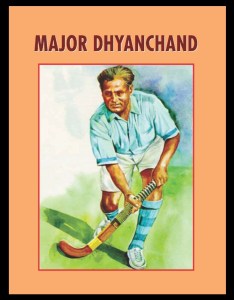
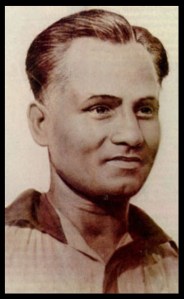
Major Dhyan Chand (29 August 1905 – 3 December 1979) was an Indian field hockey player widely regarded as one of the greatest in the history of the sport. He was known for his extraordinary goal-scoring feats, in addition to earning three Olympic gold medals, in 1928, 1932 and 1936, during an era where India dominated field hockey. His influence extended beyond these victories, as India won the field hockey event in seven out of eight Olympics from 1928 to 1964.

Popularly known as The Wizard or The Magician of hockey for his superb ball control, Chand played internationally from 1926 to 1949; he scored 570 goals in 185 matches according to his autobiography, Goal. The Government of India awarded Chand India’s third highest civilian honour of Padma Bhushan in 1956. His birthday, 29 August, is celebrated as National Sports Day in India every year. India’s highest sporting honor, the Khel Ratna Award was renamed after Chand in 2021.
 

EARLY LIFE

Dhyan Chand was born in Allahabad on 29 August 1905 in a Bais Rajput family. He was the elder brother of another hockey player Roop Singh and the son of Sharadha Singh  and Sameshwar Singh. Dhyan Chand’s father was enlisted in the British Indian Army, and he played hockey for the army. Dhyan Chand had two brothers – Mool Singh and Roop Singh. Because of his father’s numerous army transfers, the family had to move to different cities and as such Chand had to terminate his education after only six years of schooling. The family finally settled in Jhansi, Uttar Pradesh, India.

Chand graduated from Victoria College, Gwalior in 1932. Being in the military, his father got a small piece of land for a house.

Young Chand had no serious inclination towards sports though he loved wrestling. He stated that he did not remember whether he played any hockey worth mentioning before he joined the Army, though he said that he occasionally indulged in casual games in Jhansi with his friends.
 

FINAL YEARS

Chand continued to hold his emergency commission in the Indian Army post-Independence, with the service number IEC 3526, but was apparently not granted a regular commission. In 1951 he was honoured at India’s National Stadium with the inaugural Dhyan Chand Tournament, which he attended to the admiration of the spectators.

After 34 years of service, Chand retired from the Indian Army on 29 August 1956 as a lieutenant (acting captain). The Government of India honoured him the same year by conferring him the Padma Bhushan, India’s third-highest civilian honour.

After retirement, he taught at coaching camps at Mount Abu, Rajasthan. Later, he accepted the position of Chief Hockey Coach at the National Institute of Sports, Patiala, a post he held for several years. Chand spent his last days in his hometown of Jhansi, Uttar Pradesh, India.

Chand died on 3 December 1979 from liver cancer at the All India Institute of Medical Sciences, Delhi. He was cremated at the Jhansi Heroes ground in his hometown, after some initial problems in getting clearance. His regiment, the Punjab Regiment, accorded him full military honours.

LEGACY

Dhyan Chand remains a legendary figure in Indian and world hockey. His skills have been glorified in various apocryphal stories and anecdotes. A number of such these revolve around the fact that Singh had extraordinary control over dribbling the ball. Chand’s birthday, 29 August, is celebrated as National Sports Day in India. The President gives away sport-related awards such as the Rajiv Gandhi Khel Ratna (now called the Dhyan Chand Khel Ratna), Arjuna Award and Dronacharya Award on this day at the Rashtrapati Bhavan, India.

The 20th National Award 2012, the Gem of India, awarded by the Union Minister of India, was given to Dhyan Chand. The award was received by Dhyan Chand’s son, Ashok Dhyan Chand (a hockey Olympian in his own right) on behalf of his deceased father. The award was given by Journalist Association of India under the flagship of Journalists Federation of India, Sirifort Auditorium, New Delhi, India, on 22 September 2012.

India’s highest award for lifetime achievement in sports is the Dhyan Chand Award which has been awarded annually from 2002 to sporting figures who not only contribute through their performance but also contribute to the sport after their retirement. The National Stadium, Delhi was renamed Dhyan Chand National Stadium in 2002 in his honour.

A hostel at Aligarh Muslim University, of which he was an alumnus, has been named after him.

He scored over 400 goals in his career, from 1926 to 1948.

An Astroturf hockey pitch, at the Indian Gymkhana Club in London, has been named after Indian hockey legend Dhyan Chand.

The government of India has issued a commemorative postage stamp and a First Day Cover in honour of Dhyan Chand. He remains the only Indian hockey player to have a stamp in his honour.

Dhyan Chand was among the nominees considered for India’s highest civilian award, Bharat Ratna, for 2014 and there was support for it. The award was then given to Sachin Tendulkar and C. N. R. Rao. The family members of Dhyan Chand were disappointed with government decision. The RTI was filed which suggested that the Prime Minister’s Office had ignored the recommendation from sports ministry on giving the award over Sachin Tendulkar. In 2021, India’s highest sporting honor, the Khel Ratna Award, previously called the Rajiv Gandhi Khel Ratna Award was renamed after Chand.


KNEE PAIN AT YOUNG AGE

Sore, aching knees might seem like a problem only older people experience, but guess what? Plenty of younger people have knee pain, too. But while the symptoms may feel similar, younger people tend to have knee pain for different reasons. And that means they’ll need to have different types of care to feel better.

Knee pain in our 20s is often associated with overuse injuries. When the muscles, ligaments or tendons are “overworked,” pain, stiffness and other symptoms can develop pretty quickly. Tendonitis and bursitis are a couple of overuse injuries that are most commonly associated with strenuous activity. But they can also occur in relatively inactive people who ramp up their activity too quickly. Still, while these types of injuries are fairly common in young adults, they’re not the only causes of knee pain.

Patellofemoral syndrome is a pretty common cause of knee pain in younger people. It usually occurs by an imbalance in the muscles that support your knee joint and help it move. Weak thigh muscles or overly tight muscles or tendons around our knee can change the way your knee works, causing areas of strain and pressure inside the knee joint. Over time, these areas can become irritated and inflamed, and before you know it, we can start to have pain around the kneecap and in the front of the knee. People with patellofemoral syndrome might have pain or stiffness when kneeling, squatting or climbing stairs. Some people also experience crepitus, a grinding or grating sensation inside the knee.

Yep, that’s right — arthritis can affect our knees as early as your 20s, especially if you’re an athlete or you’re overweight or obese. Arthritis develops when the protective layer of cartilage inside your knee joint wears down. Some athletes — especially those who do a lot of pivoting, jumping or other high-impact activities — are more prone to arthritis, thanks to the excess wear and tear inside the joint. Repeated injuries to the knee can also damage the cartilage, making it more likely you’ll develop arthritis. Obesity affects your knees in a similar way. The added strain that comes from carrying all that weight weakens the cartilage layer and causes it to break down more quickly. From symptoms to treatment ways, if you suspect you have knee arthritis, check out this article for more information on knee arthritis symptoms, recovery and treatment.

Kids and teens can have knee pain, too, especially if they’re very active or play on sports teams. Adolescent knee pain usually isn’t caused by arthritis, but it can be caused by patellofemoral syndrome. Adolescent anterior knee pain is another common cause of symptoms in teens and kids — so common, in fact, it actually has the word “adolescent” in its name. It’s most common in younger athletes — especially girls.

Typically, adolescent anterior knee pain develops as a result of overuse or poor training routines. Most often, it occurs when one set of muscles is worked harder than another. The resulting imbalance can wind up pulling the kneecap out of alignment, causing uneven stress inside the joint. In addition to knee pain, other symptoms can occur, like knee “popping” or “creaking” or aching knees at night.

NEERAJ CHOPRA

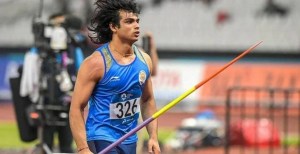
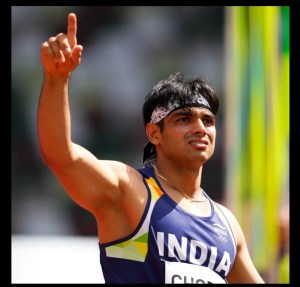
Neeraj Chopra VSM (born 24 December 1997) is an Indian javelin thrower. He is the first track and field athlete to win an Olympic Gold medal for India. He is the reigning Olympic champion with 87.58m winning throw on 7th August, 2021. Chopra hurled the javelin at 88.07m to break his own national record. His previous best was the 88.06m gold-medal winning throw at the 2018 Asian Games and 2018 Commonwealth Games. Chopra was also selected as the flag-bearer at the opening ceremony for India at the 2018 Asian Games, which marked his first Asian Games appearance. In his earlier career, he was the 2016 World U20 champion and set the world under-20 record of 86.48 m. He is the first Indian athlete to ever win a World title in Track and Field at U-20.


He won his first medal in Olympics in Sport Athletes, event – Men’s Javelin throw. His throw of 87.86m at his first competition after an elbow injury guaranteed a ticket to Tokyo. He then qualified in the qualification round with a throw of 86.65m and marched to the finals. He brought home the first Gold Medal in the 2020 Summer Olympics at Tokyo. Neeraj threw his first javelin round on a distance of 87.03 meter and again threw the best of finals that’s was 87.6 metres. He is the second person after Abhinav Bindra to win a gold medal in any individual games at the Olympics for India.

Neeraj Chopra is from Khandra village, Panipat district, Haryana. He was educated at DAV College, Chandigarh. In 2016, he was appointed a Junior Commissioned Officer in the Indian Army with the rank of Naib Subedar. On 31 March 2020, he donated Rs. 2 Lakh in PM Cares Fund for COVID-19 pandemic.

Neeraj won a gold medal in 2020 Summer Olympics on 7th August 2021 with the 87.58 m throw, which is the first Olympic medal in athletics won by an Indian. Neeraj Chopra is only the second Indian to win an individual Olympic gold medal. On 11 August 2008, Abhinav Bindra won the gold medal in the men’s 10 m air rifle in 2008 Summer Olympics.

Neeraj won a gold medal at the 2016 South Asian Games with a throw of 82.23 m, where he equalled the Indian national record.

He won a gold medal in 2016 IAAF World U20 Championships in Bydgoszcz, Poland. He also set a world junior record. Despite these performances, he failed to qualify for the 2016 Summer Olympics as the cut off date was 11 July. Neeraj won another gold medal in Asian Athletic championships 2017 with a throw of 85.23 meters.

Neeraj Chopra registered a season best effort of 86.47 meters in men’s javelin throw at 2018 Commonwealth Games (CWG). With that, Chopra not only joined an elite list of Indian athletes to win a gold medal on their Commonwealth Games debut, but also became the first Indian to triumph in Javelin Throw at CWG.

In May 2018, he again broke the national record at the Doha Diamond League with a throw of 87.43 meters.

The 22-year-old Chopra is the only track and field athlete to be recommended by the AFI for the country’s highest sports award in the year 2018. Neeraj Chopra has already been conferred with the Arjuna Award in 2018 after winning a gold in the Gold Coast Commonwealth.

He is currently being coached by German bio-mechanics expert Klaus Bartonietz. Previously, he has been coached by Gary Calvert, Werner Daniels and Uwe Hohn.

On 27 August 2018, Neeraj threw a distance of 88.06 m to win gold in the Men’s javelin throw at the 2018 Asian Games and set a new Indian national record, bettering his own previous record. He won the gold medal in Tokyo 2021 Olympics. On 5 March 2021, Neeraj Chopra again broke his past National Record setting the new at 88.07m, with a World Leading position in 2021.

Javelin thrower Neeraj Chopra opened his international season of 2021 with a throw of 83.18 metres that earned him javelin gold medal at an event in Lisbon, Portugal.

ONE NATION ONE RATION CARD

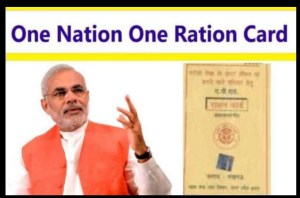
The Supreme Court had earlier ordered the implementation of Centre’s One Nation One Ration Card (ONORC) scheme across the country by July 31. Just days before the deadline Delhi Cabinet on July 19 decided to implement the scheme. All the beneficiaries would get ration free of cost in a phased manner through e-PoS devices on biometric authentication at all fair price shops (FPS) across Delhi.

“Migrant beneficiaries under national portability having proper ration cards and who have been identified under the National Food Security Act, 2013 (NFSA) in their parent state would also get ration free of cost under this plan. The Delhi government has decided to continue the distribution of ration free of cost up to November 2021,” an official statement said.


What is One Nation One Ration Card scheme? 

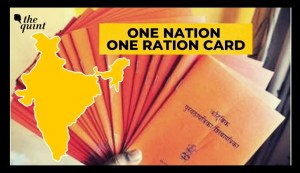
The ONORC is a central government initiative that allows eligible beneficiaries to avail food grains they are entitled to, under the National Food Security Act (NFSA) from any Fair Price Shop (FPS) also known as ration shops across the country.

The scheme eliminates the need to obtain a new ration card for the new location.

A pilot run for the inter-state portability system was started by the union minister in two clusters of adjoining states — Andhra Pradesh-Telangana and Gujarat-Maharashtra in 2019. This enabled beneficiaries from either states’ cluster to avail benefits under the NFSA from any of the two states.

This is aimed at ensuring that the beneficiaries under the National Food Security Act (NFSA) and other welfare schemes, especially the migrant workers and their families, get ration from any Fair Price Shop (FPS) across the country.

Other aims of the intended reform were to better target beneficiaries, elimination of bogus/duplicate/ ineligible ration cards, and thus enhance the welfare and reduce leakage. For this, the reform conditions stipulated Aadhar Seeding of all Ration Cards, biometric authentification of beneficiaries, and automation of all the Fair Price Shops (FPS) in the State.


Who are eligible beneficiaries under the ONORC? 

The beneficiaries under the system are ration cardholders who are eligible to get food grains from fair-price shops. Ration cardholders can buy up to 5 kg of rice at Rs 3/kg, wheat at Rs 2/kg, and coarse grains at Rs 1/kg per month, as mandated under the National Food Security Act passed in 2013.

Under the previous process, migrants had to apply for new ration cards at their new locations if they want to buy subsidised food grain, as the cards are linked to their residing places.

However, the new system helps the large migratory population to avail the benefits anywhere across the country.


How many states have implemented the One Nation One Ration Card scheme? 

According to the Union Finance Ministry’s latest update, 17 states have successfully operationalised the One Nation One Ration Card system with Uttarakhand being the latest State to complete the reform. The 17 states that have implemented the scheme are Andhra Pradesh, Goa, Gujarat, Haryana, Himachal Pradesh, Karnataka, Kerala, Madhya Pradesh, Manipur, Odisha, Punjab, Rajasthan, Tamil Nadu, Telangana, Tripura, Uttarakhand, Uttar Pradesh.


HUMAN RESOURCE MANAGEMENT

Every organization, large or small, uses a variety of capital to make the business work. Capital includes cash, valuables, or goods used to generate income for a business. For example, a retail store uses registers and inventory, while a consulting firm may have proprietary software or buildings. No matter the industry, all companies have one thing in common: they must have people to make their capital work for them. This will be our focus throughout the text: generation of revenue through the use of people’s skills and abilities.

Human resource management (HRM) is the process of employing people, training them, compensating them, developing policies relating to them, and developing strategies to retain them. As a field, HRM has undergone many changes over the last twenty years, giving it an even more important role in today’s organizations. In the past, HRM meant processing payroll, sending birthday gifts to employees, arranging company outings, and making sure forms were filled out correctly—in other words, more of an administrative role rather than a strategic role crucial to the success of the organization.


MANAGERIAL FUNCTIONS OF HRM

1.Planning: Research and plan about wage trends, labour market conditions, union demands and other personnel benefits. Forecasting manpower needs etc.

2. Organizing: Organizing manpower for the achievement of organizational goals and objectives.

3. Staffing: Recruitment & Selection

4. Directing: Issuance of orders and instructions, providing guidance and motivation to managers and employees.

5. Controlling: Regulating personnel activities and policies according to plans. Observations and comparisons of deviations.

OPERATIONAL FUNCTIONS OF HRM

1. Procurement: Planning, Recruitment and Selection, Induction and Placement

2. Development: Training, Development, Career planning and counselling.

3. Compensation: Wage and Salary determination and administration

4. Integration: Integration of human resources with organization.

5. Maintenance: Sustaining and improving working conditions, retentions, employee communication

6. Separations: Managing separations caused by resignations, terminations, lay offs, death, medical sickness etc.

ROLE OF HR MANAGERS

1. Humanitarian Role: Reminding moral and ethical obligations to employees.

2. Counsellor: Consultations to employees about marital, health, mental, physical and career problems.

3. Mediator: Playing the role of a peacemaker during disputes, conflicts between individuals and groups or management.

4. Spokesman: To represent the company in Media and other forums because he has better overall picture of his company’s operations.

5. Problem Solver: Solving problems of overall human resource management and long-term organizational planning.

6. Change Agent: Introducing and implementing institutional changes and installing organizational development programs

7. Management of Manpower Resources: Broadly concerned with leadership both in the group and individual relationships and labour-management relations.

SCOPE OF HRM

The scope of HRM is, indeed, very vast and wide. It includes all activities starting from manpower planning till employee leaves the organisation. Accordingly, the scope of HRM consists of acquisition, development, maintenance/retention, and control of human resources in the organisation.

Labour or Personnel aspect-

This is concerned with manpower planning, recruitment, selection, placement, transfer, promotion, training and development, lay-off and retrenchment, remuneration, incentives, productivity, etc.

Welfare aspect-

It deals with working conditions, and amenities such as canteen, creches, rest and lunch rooms, housing, transport, medical assistance, education, health and safety, recreation facilities, etc.

Industrial aspect-

This covers union-management relations, joint consultation, collective bargaining, grievance and disciplinary actions, settlement of disputes, etc.

OBJECTIVES OF HRM

1. To help the organisation to attain its goals effectively and efficiently by providing competent and motivated employees.

2. To utilize the available human resources effectively.

3. To increase to the fullest the employee’s job satisfaction and self-actualisation.

4. To develop and maintain the quality of work life (QWL) which makes employment in the organisation a desirable personal and social situation.

5. To help maintain ethical policies and behaviour inside and outside the organisation.

6. To establish and maintain cordial relations between employees and management.

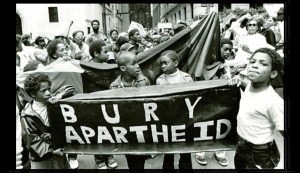
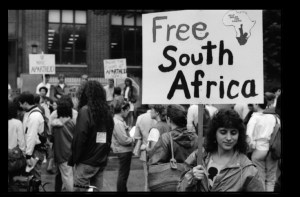
APARTHEID

Apartheid was a system of legislation that upheld segregationist policies against non-white citizens of South Africa. After the National Party gained power in South Africa in 1948, its all-white government immediately began enforcing existing policies of racial segregation. Under apartheid, nonwhite South Africans (a majority of the population) would be forced to live in separate areas from whites and use separate public facilities. Contact between the two groups would be limited. Despite strong and consistent opposition to apartheid within and outside of South Africa, its laws remained in effect for the better part of 50 years. In 1991, the government of President F.W. de Klerk began to repeal most of the legislation that provided the basis for apartheid. President de Klerk and activist Nelson Mandela would later win the Nobel Peace Prize for their work creating a new constitution for South Africa.


WHO STARTED APARTHEID IN SOUTH AFRICA? 

Racial segregation and white supremacy had become central aspects of South African policy long before apartheid began. The controversial 1913 Land Act, passed three years after South Africa gained its independence, marked the beginning of territorial segregation by forcing black Africans to live in reserves and making it illegal for them to work as sharecroppers. Opponents of the Land Act formed the South African National Native Congress, which would become the African National Congress (ANC).

The Great Depression and World War II brought increasing economic woes to South Africa, and convinced the government to strengthen its policies of racial segregation. In 1948, the Afrikaner National Party won the general election under the slogan “apartheid” (literally “apartness”). Their goal was not only to separate South Africa’s white minority from its non-white majority, but also to separate non-whites from each other, and to divide black South Africans along tribal lines in order to decrease their political power.

APARTHEID BECOMES LAW. 

By 1950, the government had banned marriages between whites and people of other races, and prohibited sexual relations between black and white South Africans. The Population Registration Act of 1950 provided the basic framework for apartheid by classifying all South Africans by race, including Bantu (black Africans), Coloured (mixed race) and white. A fourth category, Asian (meaning Indian and Pakistani) was later added. In some cases, the legislation split families; parents could be classified as white, while their children were classified as colored.

A series of Land Acts set aside more than 80 percent of the country’s land for the white minority, and “pass laws” required non-whites to carry documents authorizing their presence in restricted areas. In order to limit contact between the races, the government established separate public facilities for whites and non-whites, limited the activity of nonwhite labor unions and denied non-white participation in national government.

APARTHEID AND SEPARATE DEVELOPMENT

Hendrik Verwoerd, who became prime minister in 1958, would refine apartheid policy further into a system he referred to as “separate development.” The Promotion of Bantu Self-Government Act of 1959 created 10 Bantu homelands known as Bantustans. Separating black South Africans from each other enabled the government to claim there was no black majority and reduced the possibility that blacks would unify into one nationalist organization. Every black South African was designated as a citizen as one of the Bantustans, a system that supposedly gave them full political rights, but effectively removed them from the nation’s political body.

In one of the most devastating aspects of apartheid, the government forcibly removed black South Africans from rural areas designated as “white” to the homelands and sold their land at low prices to white farmers. From 1961 to 1994, more than 3.5 million people were forcibly removed from their homes and deposited in the Bantustans, where they were plunged into poverty and hopelessness.


APARTHEID COMES TO AN END

In 1976, when thousands of black children in Soweto, a black township outside Johannesburg, demonstrated against the Afrikaans language requirement for black African students, the police opened fire with tear gas and bullets. The protests and government crackdowns that followed, combined with a national economic recession, drew more international attention to South Africa and shattered all illusions that apartheid had brought peace or prosperity to the nation. The United Nations General Assembly had denounced apartheid in 1973, and in 1976 the UN Security Council voted to impose a mandatory embargo on the sale of arms to South Africa. In 1985, the United Kingdom and United States imposed economic sanctions on the country.


Under pressure from the international community, the National Party government of Pieter Botha sought to institute some reforms, including abolition of the pass laws and the ban on interracial sex and marriage. The reforms fell short of any substantive change, however, and by 1989 Botha was pressured to step aside in favor of F.W. de Klerk. De Klerk’s government subsequently repealed the Population Registration Act, as well as most of the other legislation that formed the legal basis for apartheid. De Klerk freed Nelson Mandela on February 11, 1990. A new constitution, which enfranchised blacks and other racial groups, took effect in 1994, and elections that year led to a coalition government with a nonwhite majority, marking the official end of the apartheid system.

FOREX MARKET

The foreign exchange market is where currencies are traded. Currencies are important because they enable purchase of goods and services locally and across borders. International currencies need to be exchanged in order to conduct foreign trade and business.

If we are living in the U.S. and want to buy cheese from France, either we or the company that buy the cheese from has to pay the French for the cheese in euros (EUR). This means that the U.S. importer would have to exchange the equivalent value of U.S. dollars (USD) into euros. The same goes for traveling. A French tourist in Egypt can’t pay in euros to see the pyramids because it’s not the locally accepted currency. As such, the tourist has to exchange the euros for the local currency, in this case the Egyptian pound, at the current exchange rate.

The foreign exchange (also known as FX or forex) market is a global marketplace for exchanging national currencies.

Because of the worldwide reach of trade, commerce, and finance, forex markets tend to be the largest and most liquid asset markets in the world.Currencies trade against each other as exchange rate pairs. For example, EUR/USD is a currency pair for trading euro against the US dollar.

Forex markets exist as spot (cash) markets as well as derivatives markets offering forwards, futures, options, and currency swaps.

Market participants use forex to hedge against international currency and interest rate risk, to speculate on geopolitical events, and to diversify portfolios, among several other reasons.One unique aspect of this international market is that there is no central marketplace for foreign exchange. Rather, currency trading is conducted electronically over-the-counter (OTC), which means that all transactions occur via computer networks between traders around the world, rather than on one centralized exchange. The market is open 24 hours a day, five and a half days a week, and currencies are traded worldwide in the major financial centers of London, New York, Tokyo, Zurich, Frankfurt, Hong Kong, Singapore, Paris and Sydney—across almost every time zone. This means that when the trading day in the U.S. ends, the forex market begins anew in Tokyo and Hong Kong. As such, the forex market can be extremely active any time of the day, with price quotes changing constantly.

A BRIEF HISTORY OF FOREX

In its most basic sense, the forex market has been around for centuries. People have always exchanged or bartered goods and currencies to purchase goods and services. However, the forex market, as we understand it today, is a relatively modern invention.

After the accord at Bretton Woods in 1971, more currencies were allowed to float freely against one another. The values of individual currencies vary based on demand and circulation and they are monitored by foreign exchange trading services.

Commercial and investment banks conduct most of the trading in forex markets on behalf of their clients, but there are also speculative opportunities for trading one currency against another for professional and individual investors.

There are two distinct features to currencies as an asset class:

We can earn the interest rate differential between two currencies.

We can profit from changes in the exchange rate.

An investor can profit from the difference between two interest rates in two different economies by buying the currency with the higher interest rate and shorting the currency with the lower interest rate. Prior to the 2008 financial crisis, it was very common to short the Japanese yen (JPY) and buy British pounds (GBP) because the interest rate differential was very large. This strategy is sometimes referred to as a “carry trade.”


SPOT MARKET

Forex trading in the spot market has always been the largest because it trades in the biggest “underlying” real asset for the forwards and futures market. Previously, volumes in the futures and forwards markets surpassed those of the spot market. However, the trading volumes for forex spot markets received a boost with the advent of electronic trading and proliferation of forex brokers. When people refer to the forex market, they usually are referring to the spot market. The forwards and futures markets tend to be more popular with companies that need to hedge their foreign exchange risks out to a specific date in the future.

FORWARD AND FUTURE MARKETS

A forward contract is a private agreement between two parties to buy a currency at a future date and at a pre-determined price in the OTC markets. A futures contract is a standardized agreement between two parties to take delivery of a currency at a future date and at a predetermined price.

Unlike the spot market, the forwards and futures markets do not trade actual currencies. Instead they deal in contracts that represent claims to a certain currency type, a specific price per unit and a future date for settlement.

In the forwards market, contracts are bought and sold OTC between two parties, who determine the terms of the agreement between themselves. In the futures market, futures contracts are bought and sold based upon a standard size and settlement date on public commodities markets, such as the Chicago Mercantile Exchange.

HUMAN RIGHTS

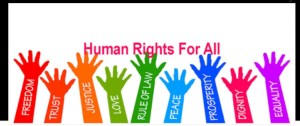
Human rights are a set of rights which every human is entitled to. Every human being is inherited with these rights no matter what caste, creed, gender, the economic status they belong to. Human rights are very important for making sure that all humans get treated equally. They are in fact essential for a good standard of living in the world. Moreover, human rights safeguard the interests of the citizens of a country. You are liable to have human rights if you’re a human being. They will help in giving you a good life full of happiness and prosperity.


HUMAN RIGHTS CATEGORIES

Human rights are essentially divided into two categories of civil and political rights, and social rights. This classification is important because it clears the concept of human rights further. Plus, they also make humans realize their role in different spheres.

When we talk about civil and political rights, we refer to the classic rights of humans. These rights are responsible for limiting the government’s authority that may affect any individual’s independence. Furthermore, these rights allow humans to contribute to the involvement of the government. In addition to the determination of laws as well.

Next up, the social rights of people guide the government to encourage ways to plan various ways which will help in improving the life quality of citizens. All the governments of countries are responsible for ensuring the well-being of their citizens. Human rights help countries in doing so efficiently.

IMPORTANCE OF HUMAN RIGHTS

Human rights are extremely important for the overall development of a country and individuals on a personal level. If we take a look at the basic human rights, we see how there are right to life, the right to practice any religion, freedom of movement, freedom from movement and more. Each right plays a major role in the well-being of any human.

Right to life protects the lives of human beings. It ensures no one can kill you and thus safeguards your peace of mind. Subsequently, the freedom of thought and religion allows citizens to follow any religion they wish to. Moreover, it also means anyone can think freely.

Further, freedom of movement is helpful in people’s mobilization. It ensures no one is restricted from traveling and residing in any state of their choice. It allows you to grab opportunities wherever you wish to.

Next up, human rights also give you the right to a fair trial. Every human being has the right to move to the court where there will be impartial decision making. They can trust the court to give them justice when everything else fails.

Most importantly, humans are now free from any form of slavery. No other human being can indulge in slavery and make them their slaves. Further, humans are also free to speak and express their opinion.

In short, human rights are very essential for a happy living of human beings. However, these days they are violated endlessly and we need to come together to tackle this issue. The governments and citizens must take efforts to protect each other and progress for the better. In other words, this will ensure happiness and prosperity all over the world.

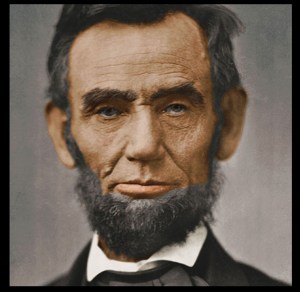
Abraham Lincoln

Abraham Lincoln, the name in itself speaks volumes. He is considered the greatest president of the United States of America. Historians and Political Scientists consistently rank him as the best American president ever. Above all, the man is renowned for ending slavery in his country. This certainly created a world-wide awareness against the evil of slavery. In the realm of social reform, he is holding a lofty status.Many surveys of the Presidents of the United States have taken place. Many scholars and experts of the United States took part in such surveys. Most noteworthy, Lincoln is always ranked in the top 3 in such surveys. Furthermore, there has been an organization of Presidential ranking polls since 1948. Abraham Lincoln certainly has the top rating in most of such polls.

Probably the most famous survey was by Chicago Tribune in 1982. There was a participation of 49 Historians and Political Scientists in that survey. These experts were to rate all the United States Presidents in five categories. The categories were: leadership, crisis management, political skills, appointments, and character/integrity. As was probably the prediction of most people, Lincoln got top place. Most noteworthy, Lincoln got top place in all the categories. This shows his magnificent historical reputation.


Many social reformers view him as a champion of liberty. He has the description of a classic liberal by historians. He is a role model to liberal intellectuals and human rights organizations. Some of his avid supporters even compare his life to Jesus Christ.

Abraham Lincoln appears on many postage stamps in the United States. His image also appears on two United States currency denominations. His sculpture on Mount Rushmore is certainly a world-class memorial. Furthermore, his other memorials include Ford’s theatre, Peterson House, and Lincoln Memorial.

The United States military greatly honors Lincoln. Many believe him to a symbol of national unity and pride. Two United States navy ships bear his name.

Abraham Lincoln was certainly a legendary American president. Probably everyone believes him to be a global icon of peace. His legacy is a powerful symbol against oppression. Above all, his greatest contribution to mankind is the emancipation of slaves. The forces of evil tried to stop him. However, his legacy became more glorious because of such attempts. Finally, his assassination took place at the hands of evil forces. However, this assassination left him as a national martyr. The name of Abraham Lincoln certainly belongs in the pages of greatness.

Lincoln taught himself law, passing the bar examination in 1836. The following year, he moved to the newly named state capital of Springfield. For the next few years, he worked there as a lawyer and serving clients ranging from individual residents of small towns to national railroad lines.

He met Mary Todd, a well-to-do Kentucky belle with many suitors (including Lincoln’s future political rival, Stephen Douglas), and they married in 1842. The Lincolns went on to have four children together, though only one would live into adulthood: Robert Todd Lincoln (1843–1926), Edward Baker Lincoln (1846–1850), William Wallace Lincoln (1850–1862) and Thomas “Tad” Lincoln (1853-1871).

PRESIDENTIAL ELECTION

In 1864, Lincoln faced a tough reelection battle against the Democratic nominee, the former Union General George McClellan, but Union victories in battle (especially General William T. Sherman’s capture of Atlanta in September) swung many votes the president’s way. In his second inaugural address, delivered on March 4, 1865, Lincoln addressed the need to reconstruct the South and rebuild the Union: “With malice toward none; with charity for all.”

As Sherman marched triumphantly northward through the Carolinas after staging his March to the Sea from Atlanta, Lee surrendered to Grant at Appomattox Court House, Virginia, on April 9. Union victory was near, and Lincoln gave a speech on the White House lawn on April 11, urging his audience to welcome the southern states back into the fold. Tragically, Lincoln would not live to help carry out his vision of Reconstruction.


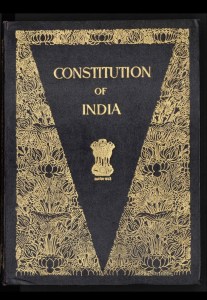
CONSTITUTION OF INDIA

The constitution of India came into force from 26 January. A special committee is gathered to draw and outline the constitution. The constitution gives all the details related to what is legal and what is illegal in the country. In addition, with the enforcement of the constitution, the Indian sub-continent become the Republic of India. Besides, the drafting committee consists of seven members that were supervised by B.R. Ambedkar. Moreover, the constitution helps in maintaining prosperity and peace in the country.


FEATURES OF INDIAN CONSTITUTION

The list of salient features of the Indian constitution is very long and there are many uniqueness about it that you won’t find in any other countries constitution.

  • Longest Written Constitution

The first thing that makes the Indian constitution different is its length. The constitution of India contains a preamble, 448fourhundred, and forty-eight Articles, twenty-five groups, twelve Schedules, and five appendices. Moreover, it takes around 3 years to complete the draft of the constitution.

  • The Rigidity and Flexibility of the Indian Constitution

The constitution is hard as well as soft both at the same time. While on one side the supreme power needs to be followed carefully to maintain the law and order in the country, on the other side the citizen can appeal to amend the outdated provisions. But there are certain provisions that can be easily amended and there are some that take a lot of time and resources to amend. Furthermore, there have been more than 100 amendments in the constitution from the day of its enforcement.

  • Preamble

The original constitution does not have preamble but it was later on added to the constitution. Also, it gives a detailed account of the constitution’s philosophy. The preamble states that India is a Socialist, Secular, Sovereign, and Democratic republic. In addition, it believes in equality, justice, and freedom of its people. The constitution puts the welfare of its people first rather than the state.

  • A Secular State

According to the constitution of India is a secular country that means that it does not give special status to any religion. Anyone can perform his religion freely.

  • Republic

It means a dictator or monarch does not rule the country. Moreover, it nominates and elects its head every five years.

Fundamental Policies

The constitution of the country states every fundamental duty of its citizens under it. These duties have to be followed by all the citizens of the country equally whether it’s a rich person or a poor one. Besides, these duties include the respect of national flag and national anthem, integrity and unity of the country, the safeguard of public property, and various others.


Directive State Principle or Policy

This policy is simple guidelines to the state in which ensure the development of its socio-economy via its policies.

In conclusion, the constitution serves as guidelines for every citizen. Also, law and rule are completely defined in the constitution. The head of the drafting committee Dr. B.R. Ambedkar has done a remarkable job that no one can forget. He and his team draft constitution that no other country has bale to do till date. Besides, the constitution has helped India to attain the status of the Republic in the world.

SAME SEX MARRIAGE

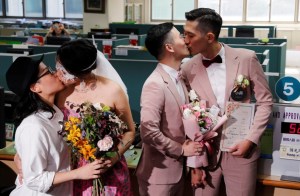
Love comes in all forms. It would be wrong to say that a person cannot marry someone just because they are not from the opposite sex. The world is evolving more than ever and we need to keep up with times. Same-sex marriage is when any person chooses to marry the same sex instead of the opposite. We should not shun this concept anymore.In other words, gone are the days when people had to be ashamed because of their sexuality. In today’s accepting world, we must make way for every human being irrespective of their gender. One needs to realize that there are more than two genders. The society needs to be more inclusive of all kinds of people. It will make the world a happier place when everyone feels they are accepted and appreciated.


IMPORTANCE OF SAME SEX MARRIAGE

All of us are human beings at the end of the day. Before labeling each other with the religion we follow or the people we choose to love. Everyone must realize this fact and act like it. Same-sex marriage is more than important in today’s time as the world is progressing.

Moreover, people can finally be themselves and own their individuality. Just because someone does not love a person from the opposite sex, it does not make them wrong. We can love anyone we want.

In addition, it is better to spend the rest of your life with someone from the same sex you love rather from the opposite sex whom you don’t even like. People will obviously lead happy lives with their loved ones rather than being forced to marry someone.

Same-sex marriage gives the other people hope that they can also have a future. In addition, it paves a brighter path for the LGBTQ community. This community has already suffered enough due to discrimination. They deserve to be able to marry whomever they wish irrespective of gender or sex.


CONCLUSION

Same-sex marriage in India especially is not encouraged. There are many countries which have stringent laws against it yet the people are open-minded. In India, neither are the laws lenient but the people are also very narrow-minded.

Most importantly, they never give these people a chance to prove themselves. Indian society does not like change. It is not as adaptable as western countries. India still needs time to be okay with the concept of same-sex marriage.

However, not knowing about the concept is a different thing and completely opposing it is different. Not only in India, but in other countries, people do not support same-sex marriage because they think it is against their religion.

Thus, this creates a lot of problems for them. People do not want the LGBTQ community to get the right to marry their lovers. This takes away their very basic human rights. The LGBTQ community has fought for a long time for their rights. Yet there is a far way to go.

When we talk about India, we see how it is on its way of progress. Like how it ended Section 377, which criminalizes homosexuality. However, we still have a long way to go in terms of the LGBTQ community. We must not any form of love be it same-sex marriage or anything else.

Olympics

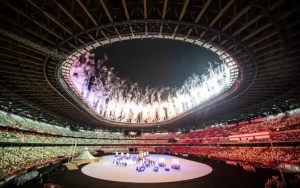
The modern Olympic Games or Olympics are leading international sporting events featuring summer and winter sports competitions in which thousands of athletes from around the world participate in a variety of competitions. The Olympic Games are considered the world’s foremost sports competition with more than 200 nations participating.The Olympic Games are normally held every four years, alternating between the Summer and Winter Olympics every two years in the four-year period.

Baron Pierre de Coubertin founded the International Olympic Committee (IOC) in 1894, leading to the first modern Games in Athens in 1896. The IOC is the governing body of the Olympic Movement with the Olympic Charter defining its structure and authority.

The evolution of the Olympic Movement during the 20th and 21st centuries has resulted in several changes to the Olympic Games. Some of these adjustments include the creation of the Winter Olympic Games for snow and ice sports, the Paralympic Games for athletes with disabilities, the Youth Olympic Games for athletes aged 14 to 18, the five Continental games (Pan American, African, Asian, European, and Pacific), and the World Games for sports that are not contested in the Olympic Games. The IOC also endorses the Deaflympics and the Special Olympics. The IOC has needed to adapt to a variety of economic, political, and technological advancements.

The Olympic Movement consists of international sports federations (IFs), National Olympic Committees (NOCs), and organising committees for each specific Olympic Games. As the decision-making body, the IOC is responsible for choosing the host city for each Games, and organises and funds the Games according to the Olympic Charter. The IOC also determines the Olympic programme, consisting of the sports to be contested at the Games. There are several Olympic rituals and symbols, such as the Olympic flag and torch, as well as the opening and closing ceremonies. Over 14,000 athletes competed at the 2016 Summer Olympics and 2018 Winter Olympics combined, in 35 different sports and over 400 events.The first, second, and third-place finishers in each event receive Olympic medals: gold, silver, and bronze, respectively.

The Games have grown so much that nearly every nation is now represented. This growth has created numerous challenges and controversies, including boycotts, doping, bribery, and a terrorist attack in 1972. Every two years the Olympics and its media exposure provide athletes with the chance to attain national and sometimes international fame. The Games also provide an opportunity for the host city and country to showcase themselves to the world.


The Olympic Games programme consists of 35 sports, 30 disciplines and 408 events. For example, wrestling is a Summer Olympic sport, comprising two disciplines: Greco-Roman and Freestyle. It is further broken down into fourteen events for men and four events for women, each representing a different weight class. The Summer Olympics programme includes 26 sports, while the Winter Olympics programme features 15 sports. Athletics, swimming, fencing, and artistic gymnastics are the only summer sports that have never been absent from the Olympic programme. Cross-country skiing, figure skating, ice hockey, Nordic combined, ski jumping, and speed skating have been featured at every Winter Olympics programme since its inception in 1924. Current Olympic sports, like badminton, basketball, and volleyball, first appeared on the programme as demonstration sports, and were later promoted to full Olympic sports. Some sports that were featured in earlier Games were later dropped from the programme.

Olympic sports are governed by international sports federations (IFs) recognised by the IOC as the global supervisors of those sports. There are 35 federations represented at the IOC.There are sports recognised by the IOC that are not included in the Olympic programme. These sports are not considered Olympic sports, but they can be promoted to this status during a programme revision that occurs in the first IOC session following a celebration of the Olympic Games.

WIPRO

Wipro Limited is an Indian multinational corporation that provides information technology, consulting and business process services. The Fortune India 500 ranks it the 29th largest Indian company by total revenue. It is also ranked the 9th largest employer in India with nearly 195,000 employees.

The company was incorporated on 29 December 1945 in Amalner, Maharashtra by Mohamed Premji as “Western India Products”, later abbreviated to “Wipro”. It was initially set up as a manufacturer of vegetable and refined oils in Amalner, Maharashtra, British India, under the trade names of Kisan, Sunflower, and Camel. During the 1970s and 1980, the company shifted its focus to new opportunities in the IT and computing industry, which was at a nascent stage in India at the time.

Wipro continued to expand in the consumer products domain with the launch of “Ralak” a Tulsi based family soap and “Wipro Jasmine”, a toilet soap.

In 1988,Wipro added mobile hydraulic cylinders and heavy-duty industrial cylinders to its line of products. A joint venture company with the United States’

General Electric in the name of Wipro GE Medical Systems Pvt. Ltd. was set up in 1989 for the manufacture, sales, and service of diagnostic and imaging products. In February 2002,Wipro became the first software technology and services company in India to be ISO 14001 certified. Wipro Consumer Care and Lighting Group entered the market of compact fluorescent lamps, with the launch of a range of CFL, under the brand name of Wipro Smartlite. As the company grew, a study revealed that Wipro was the fastest wealth creator for 5 years (1997–2002). It set up a wholly owned subsidiary company (Wipro Consumer Care Limited) to manufacture consumer care and lighting products.

Indian IT services firm Wipro believes it is “very critical” today for all enterprises to move beyond traditional AI and looking at historical data. Instead, Wipro said, it’s time for companies to embrace advanced AI capabilities, which means ensuring an AI system can recognize emerging patterns. With AI permeating all aspects of technology, building an AI practice has become a logical step for channel partners. Over a year ago,Wipro developed what it calls the STRL — or sense, think, respond and learn – framework.

The STRL framework aims to help customers use AI across their entire data and analytics value chain to identify patterns, make predictions and shape the outcomes of what they’re looking at, as well as understand customer behavior, said Manoj Madhusudhanan, Wipro’s global head of cognitive technologies. The framework also seeks to help organizations understand the behavior of their end customer.

Wipro Consumer Care and Lighting is among the fastest growing FMCG businesses in its operating geographies of Asia the Middle East and Africa, with revenues of over Rs.7700 Crore. Its businesses include personal wash products, skincare products, male grooming products, toiletries, wellness products, household products, electrical wire devices, domestic and commercial Lighting and modular office furniture. It has a strong brand presence with significant market share across segments in India, South East Asia, East Asia, Africa and the Middle East.


KARGIL WAR

Kargil war was a very difficult time that our country went through. Furthermore, it was a crisis situation that ensued a feeling of nationalism, patriotism, and unity among every Indian. Kashmir is a beautiful region that resides in an extremely mountainous area, containing some of the highest peaks in the world. Unfortunately, this amazing land has remained a constant battleground between the two countries of India and Pakistan.

The dispute began from the First Kargil War in 1947-1948 which led to the establishment of the LOC, line of control. The LOC still divides the land of Kashmir between India and Pakistan. As part of the Simla Agreement in 1972, there was an agreement that neither India nor Pakistan would contest the border by making use of military means. Since the agreement, both countries began guarding the border heavily for the majority of the year. During the exceedingly cold winter months, both the Indian and Pakistani guards abandon their posts, only to return back in the spring.

However, during the winter of 1998-1999, a surprise attack took place from the Pakistan army and it became successful in crossing the LOC and into India’s portion of Kashmir. Moreover, slowly and gradually, they went on capturing one Indian outpost after another and held their position in Kargil.

In February 1999, at the same time as the winter invasion, the Lahore Declaration was being signed between India and Pakistan which was based on peace. After a few months, the Kargil war began between the two countries. Furthermore, a series of bloody battles were fought between the two nations of India and Pakistan.

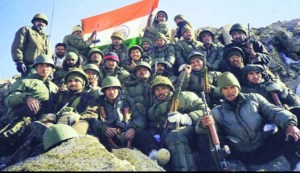
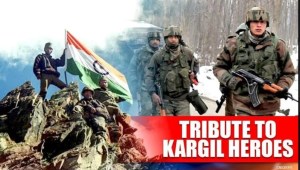
The battles posed a huge challenge for the Indian forces as they had to fight on difficult mountainous terrain. In spite of this challenge, the Indian soldiers showed amazing bravery. After a long struggle, the Indian army became successful in pushing back the Pakistani forces across the line of control.

RISE OF NATIONALISM

By July 14, 1999, there were heavy causalities on both sides. However, the sacrifice of Indian soldiers was not in vain. This great struggle of the Indian army has carved a place in the heart of every Indian.

The entire Kargil war was a time of tension and nervousness for the Indian people. It infused the spirit of national pride in every Indian. Most noteworthy, it served as an opportunity of unifying all the Indians together irrespective of caste, colour, religion, language etc.

CONCLUSION

The Kargil war has become an unforgettable event in the history of India. Nevertheless, this was an event that brought about feelings of patriotism in the hearts of every Indian like never before. The brave struggle of the Indian soldiers will continue to be an inspiration for all the citizens of this country

History of Indian Rupee

The Indian rupee refers to India’s national currency and is represented by ISO code INR. It is regulated by the Reserve Bank of India (RBI), the country’s central bank. The Indian rupee is named after the “rupiya,” a silver coin issued for the first time in the 16th century.

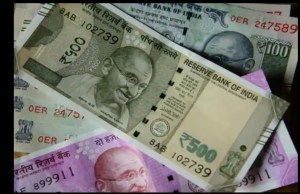
India’s economy used to be cash-based, resulting in the circulation of counterfeit currencies by those involved in criminal activity. Over the years, RBI was compelled to change and upgrade INR notes with new security features. Generally, large denominations are the most forged bills. In 2016, the Government of India declared the demonetization of all notes in denominations of 500 INR and 1000 INR of the Mahatma Gandhi Set.

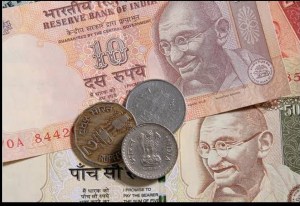
At the beginning of 1830, the English exerted a significant influence in India. The Coinage Act of 1835 made a standardized coinage possible in the country. The new version of the coins featured the effigy of William IV on the original side and the denomination on the reverse, written in Persian and English.

On the other hand, coins issued after 1840 bore a portrait of Queen Victoria. In 1862, the first coin issued under the crown was authorized. The Coinage Act of India, which regulates the establishment of mints and the issuance of coins, was passed in 1906 and is still in force today.

Historically, the rupiya was a silver coin. It resulted in significant implications in the 19th century when the world’s largest countries were under the gold standard. The discovery of huge volumes of silver in the European colonies and the U.S. sparked the panic of 1873. It led to the devaluation of silver compared to gold, resulting in a fall in India’s standard currency value.

The condition during the Second World War led to Quaternary Silver Alloy replacing the regular rupee. The coins produced in 1940 were substituted in 1947 by pure nickel coins. India gained its independence on August 15, 1947. However, the prevailing currency remained frozen until January 26, 1950, when the country adopted its own constitution. In 1957, India introduced a decimal currency scheme where 100 paise formed a rupee.

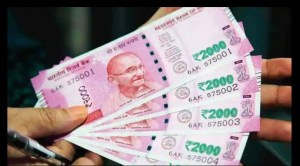
In 2016, the government decided to demonetize 500 and 100 INR notes, arguing that it would curb the underground economy, rendering it even more difficult to use illicit and counterfeit cash to finance crime and terrorism. Following the move, the RBI declared the issuance of new notes of denominations 500 and 2000 INR in a new Mahatma Gandhi series.

As of April 2019, the latest circulated notes included denominations of 5 INR,10 INR, 20 INR, 50 INR, and 100 INR notes of the Mahatma Gandhi Old Series and the 10 INR, 20 INR, 50 INR, 100 INR, 200 INR, 500 INR and 2000 INR notes of the Mahatma Gandhi New Series. The new series of INR notes contains various micro-printed texts, such as “Bharata” and “RBI,” in different locations.

Officially, INR’s exchange rates are determined by the market. However, the RBI aggressively deals in the USD/INR currency market to influence the exchange rate. As a result, the currency system in place for INR compared to the USD is a regulated exchange rate. It is often called a “managed float.”

Other exchange rates, such as INR/JPY and EUR/INR, are subject to fluctuations characteristic of floating exchange rates. As a result, it generates arbitrage opportunities against the exchange rates.


Successive governments through RBI prefer not to pursue a strategy of pegging the INR to a particular foreign currency at a specific exchange rate. RBI’s interference in currency markets is primarily intended to make sure that the exchange rate volatility is low.