Listening Workshops – Or the Simplest Step to Educational Reform

Is \’bottom up\’ change really possible?
If you are an educational functionary, by now you must be  fed up of hearing how planning and change have to be \’bottom up\’. By which is usually meant that those who are \’under\’ you must somehow begin to contribute, own and implement a range of actions. And you inwardly wonder if this is ever going to happen!

It was during a discussion on precisely such views that the idea of a listening workshop emerged. Colleagues in the Institute of Educational Development (IED) in BRAC University, Bangladesh felt that a \’listening workshop\’ might help them understand teachers and grassroots functionaries better.

Listening workshop – a straightforward structure
It was agreed that before forming any views, it is critical to simply listen to teachers and head teachers. Hence a straightforward meeting / interaction / workshop was designed around the following three questions that would be asked of teachers and head teachers:

  • What do you really do? Exactly what does your work involve?
  • What do you like doing?
  • What do you find difficult or dislike doing?

It was also agreed that IED colleagues initiating the discussion would only listen, and not prompt or provide leading questions or offer any comment from their side. In other words, they really had to listen rather than talk!

So why is all this worth writing about? Because around ten such listen workshops were actually conducted, and most turned out to have  a very interesting pattern, followed by an unexpected twist.

What teachers felt
The listening workshops, it transpired, tended to proceed in the following stages.

  • Teachers found it really difficult to believe that anyone could come down from the capital only to listen to them! There had to be a \’hidden conspiracy\’ or an \’agenda\’ they were not aware of… It would take anywhere from 40-60 minutes to convince the participants that the intention really was to listen to them. (What do you think this tells us about the functionaries that teachers usually deal with?)
  • Once teachers believed the above, their initial reaction was that of giving vent to all their frustration and anger at \’you people who sit up there and form all kinds of views about us without ever visiting the field and observing the realities for yourself.\’
  • Finally, teachers would pour their hearts out on the three questions given above.

The teachers\’ replies have of course begun to inform the work of the institute in many ways. However, it was the completely unanticipated outcome below that left everyone (cautiously) elated.

The unexpected \’reform\’
In the case of a large number of teachers who participated, a few days after the listening workshop it was found that they were implementing many new pedagogical actions in their classrooms! In the entire discussion, at no point had they been asked to make any improvement in their classrooms. So it was not as if teachers did not know improved methods – a large number of in-service interactions had ensured that they had had exposure. It\’s just that they were not using them. But for some reason the listening workshops triggered a change process in the classrooms!

What do you think this tells us about teachers, about their motivations, and about the kind of relationships they experience? If you can bear the initial first hour, isn\’t holding a listening workshop the simplest way to initiate educational reform at the local level?
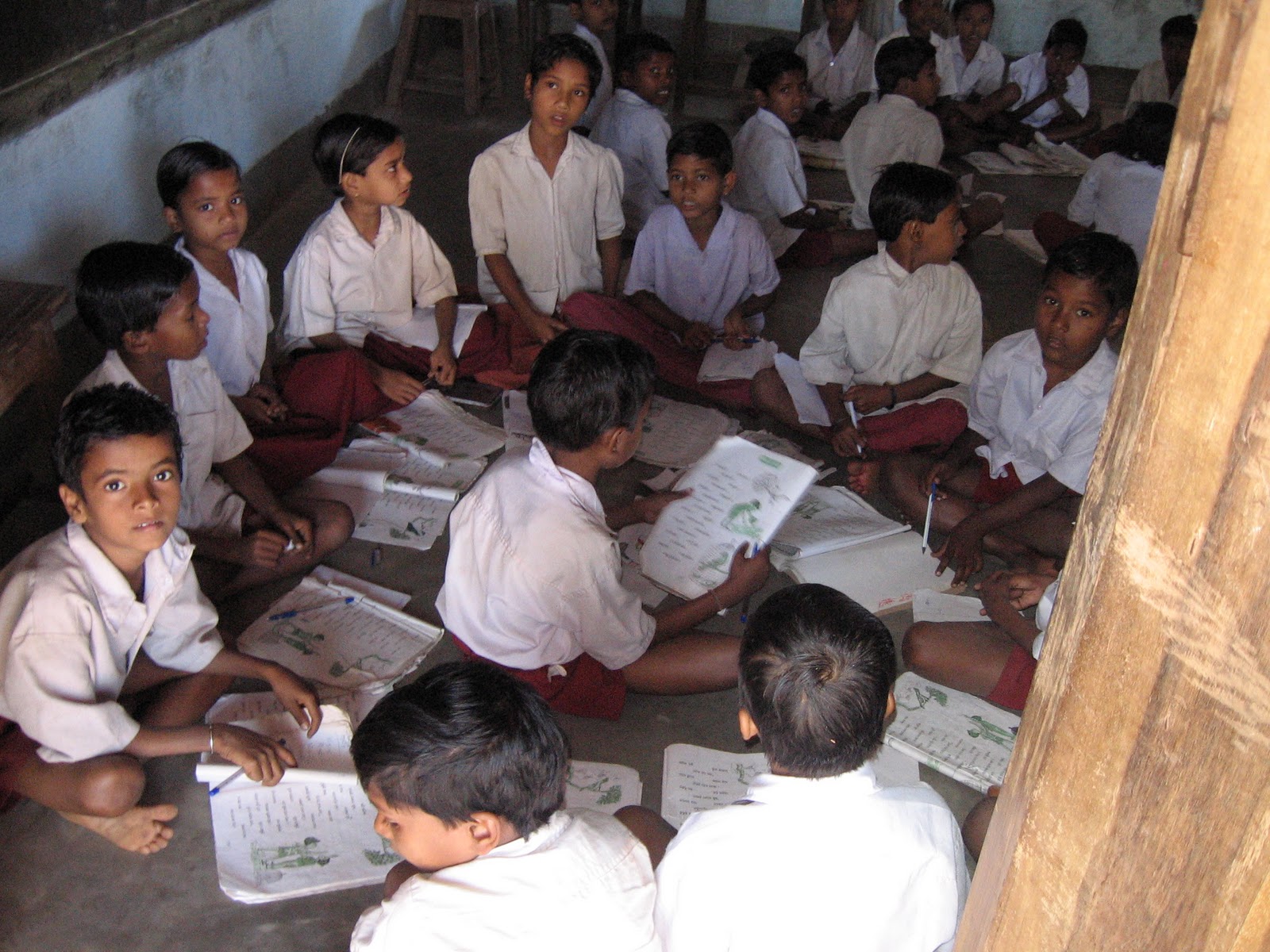
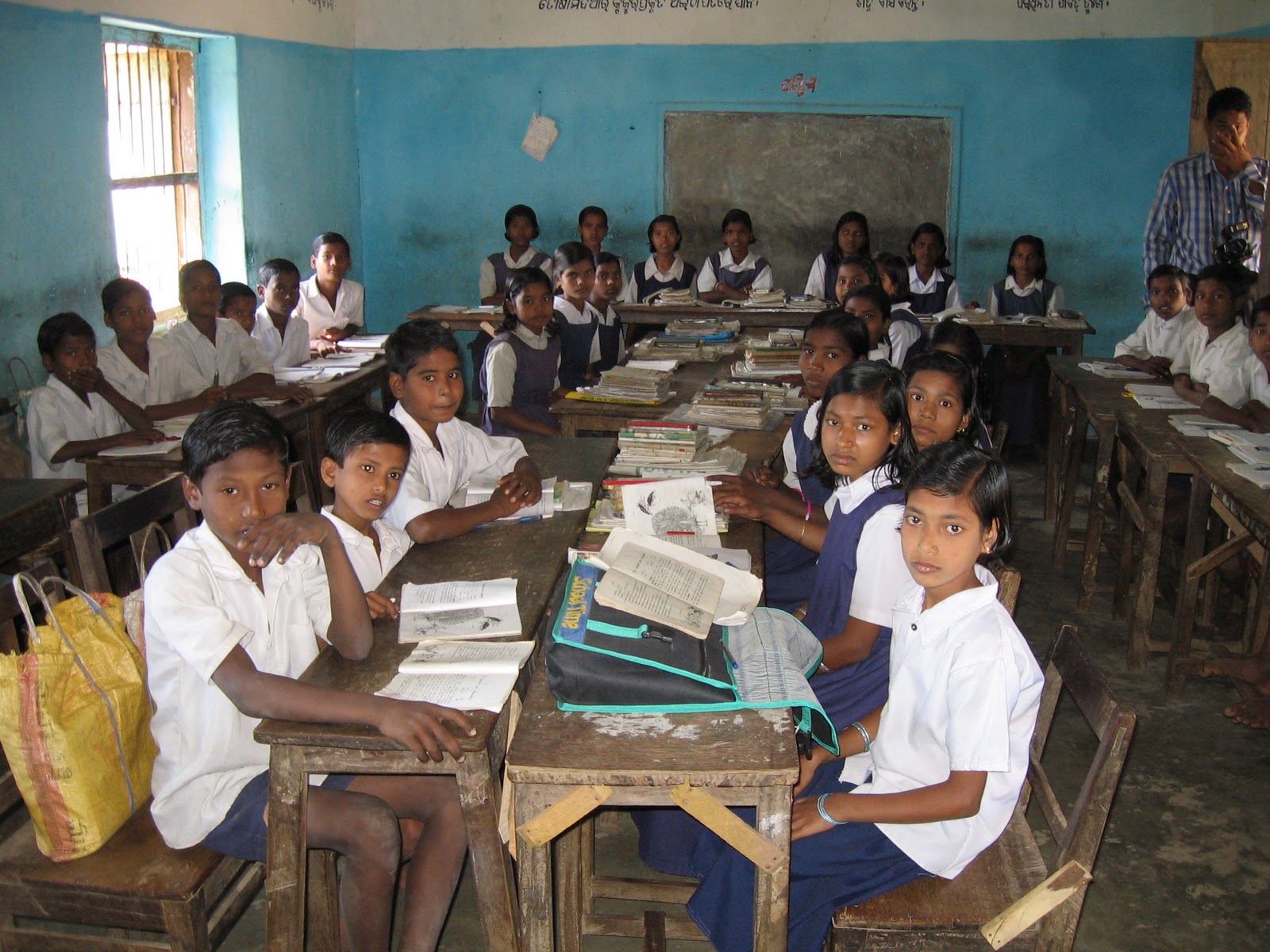
These teachers really need to learn how to teach – HELP!

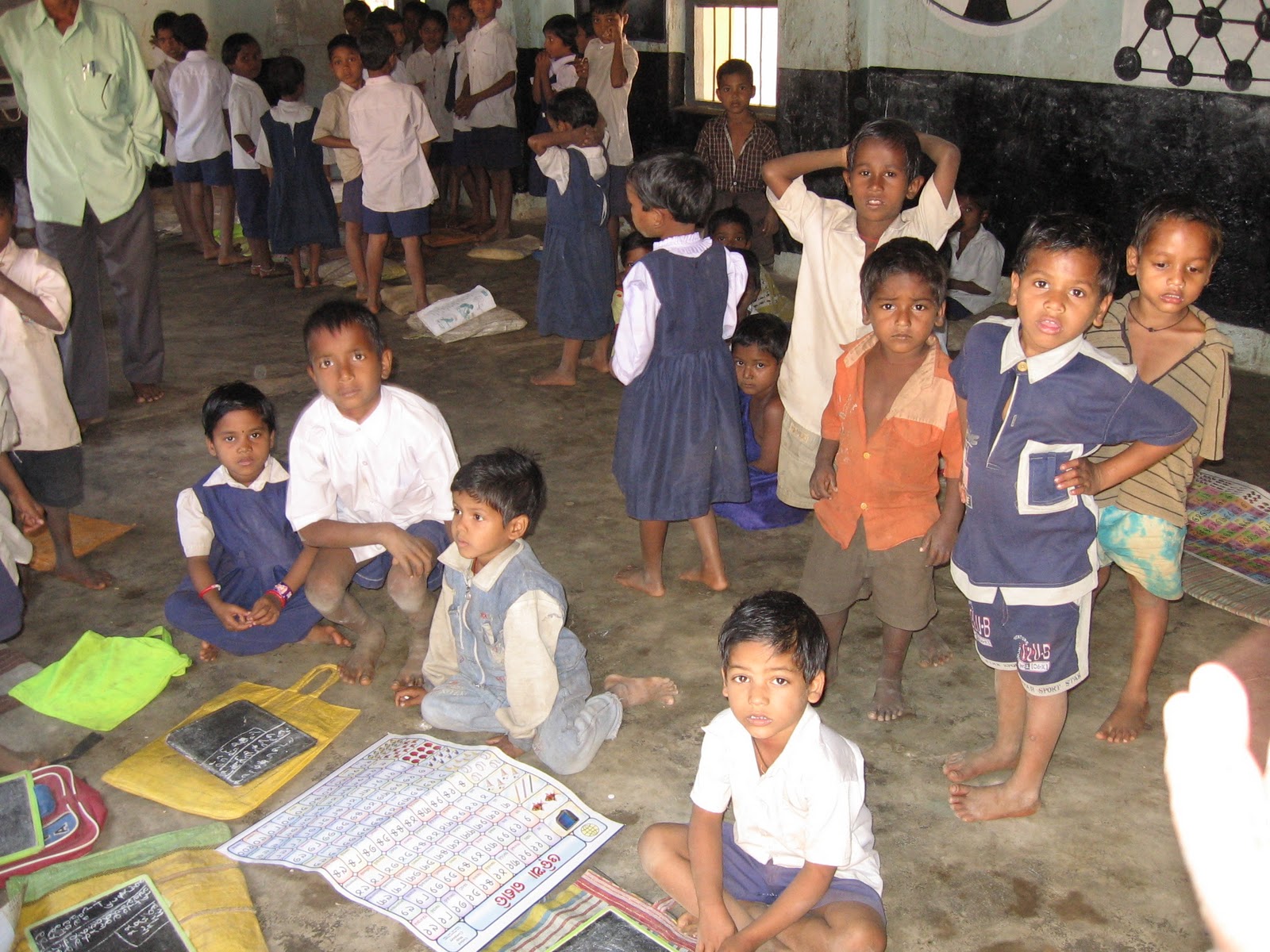
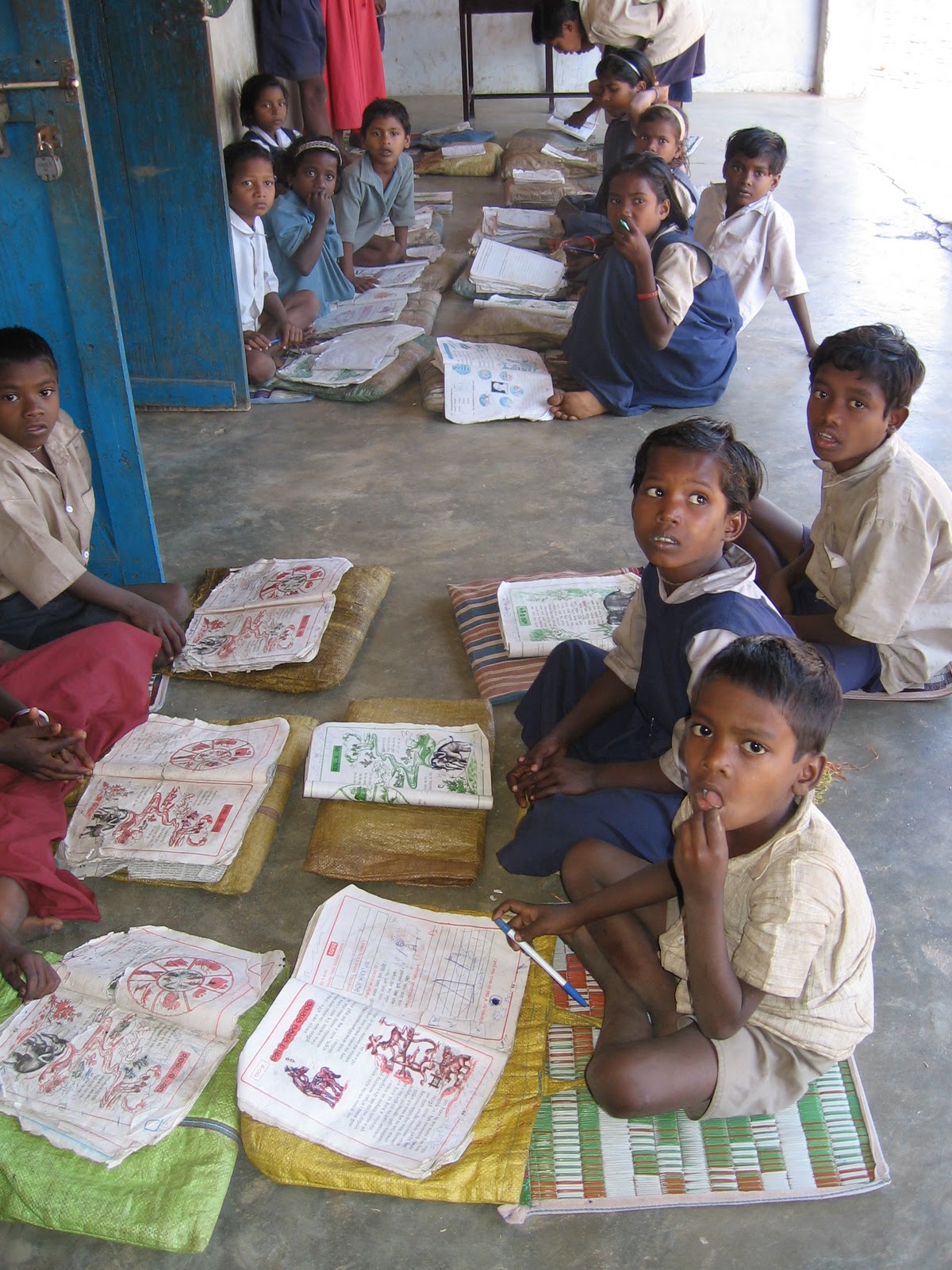
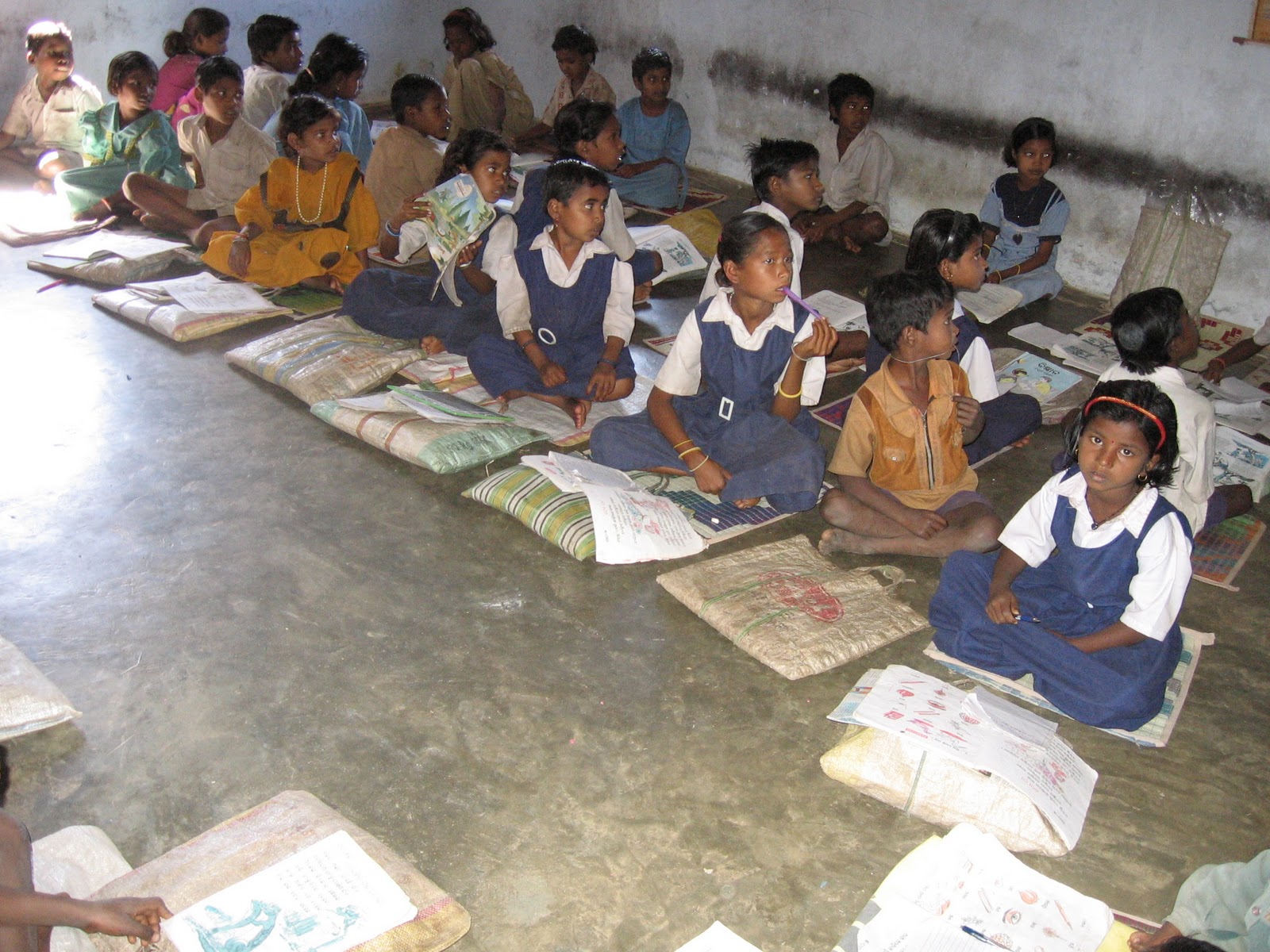
These images capture the teachers\’ attempts to generate the appearance active learning without actually teaching in this way (on a daily, regular basis). At least this is my reading of the pictures. What do you think? Are these teachers really running active classrooms where children will learn well? And what would you do if you were on hand to help the teacher?
Image 1
Such large groups – is there any scope of getting any work done? 
And even the books cannot be opened fully. 
Surely this is \’whole-class\’ disguised as \’group-work\’?
Image 2
What can these children do other than listening to the teacher? 
How can it be re-organized?
 And what kind of activities would be appropriate for this age group?

Image 3
This teacher has three different age groups and no real clue about 
what to do. What should he do? 
Suggestions desperately needed.

Image 4
These children have clearly never had any real engagement in learning. 
They are used to sitting like this for long durations, meekly doing nothing. 
What would you do if you were a
 CRC-BRC member visiting this school?

Image 5
This is the same school as in Image 4, only with a different and older group. 
Unfortunately this is a very, very common sight. 
If you had a hundred such schools in your block, 
what would you do?

Are You An \’Education Survivor\’?

If you\’re reading this you obviously went through the education system. And maybe you are among those who are grateful that your school days were lovely. And that what you learnt is being put to use every day.

Or maybe not.

Conduct a group discussion with people (friends, colleagues, family members), around their school days. You will find a mix of smiles, frowns and giggles — and the frowns will usually be about their experiences inside the classroom. Almost everyone has a story of how they were wrongly punished or discriminated against or didn\’t receive their just dues for something or the other. Around half the people will recall the oppression they felt at different times — examinations, punishment being handed out, the subject/s they could make neither head nor tail of, the quiet acceptance by their families that they would be mediocre and their own realization that they would not be \’good enough\’ in a number of things.

Cut to the present, and many of them (now quite successful in life) will also be saying : \”Why did we learn all those things? And even what I studied in college, what am I doing with it now?\”

These are the symptoms of the \’education survivor\’. Are you one of them? Are there really as many of them around as my dire prediction indicates? Is it only our tendency to wallow in self-pity? Or just the usual, superficial user-critique of education? Finally, is school education really something like a dreadful disease (or at least a dreadful experience) which leaves behind \’survivors\’?

The Case for Children\’s News Programmes

Imagine regular news programmes for children
While advertising and entertainment programmes have begun to cater to children\’s needs, for some reason news channels have ignored children altogether! Imagine a regular children\’s news programme, at a fixed time, presented in a lively way, as something for children to look forward to daily. It could be on radio and better still, on TV.

What such programmes could contain
While national and international events would figure in it, children\’s news would focus on the world as seen by children. Background information would make the news more accessible, along with activities that can be done at home or school. There might even be discussions and debates on issues that children have views and opinions on, along with scope to engage with the channel through phone calls / sms / email.

Newspapers too
And perhaps newspapers would follow with some space for children\’s news, based on what came on TV the previous night. This would not only enable greater understanding of the news itself, it would greatly boost higher order literacy (apart from newspaper circulation). This would also provide teachers with more current material for use in different classes across a range of subjects!

Many benefits
The immediate benefits for the channels themselves would be in terms of developing loyal viewers for the future (and perhaps an expanded revenue source through increased advertising range).

However, the longer term implications for children themselves, for society and the country would be enormous.

  • Children who have had the opportunity to engage with a world beyond their immediate environment would develop cognitively and socially (well exceeding the abysmal levels attained at present!) 
  • Focusing the programming at special groups (e.g. girls, or children with disabilities or the rural poor or those who need help to learn the state language – such as tribal children – or English) would dramatically increase learning opportunities for the marginalized and the disadvantaged.
  • Wide spread use of such programmes would also help harness the demographic dividend India has at the present.

If handled sensitively, this could help create a nation where plurality is cherished and the narrow confines of identity are not allowed to become a source of conflict.

D for Discipline, D for Democracy!

The moment the word \’discipline\’ is mentioned in a gathering of teachers or educational functionaries (or even parents or community members), it acquires a special meaning, as in \’children have to be kept in discipline\’. Here, the quintessential role of the teacher is that of the \’shepherd\’ (with stick and all), and children are seen as unruly sheep that have no mind of their own and need \’order\’ in their lives. I hope this sounds as dated in the reading as it does in the writing!

Perhaps this is more the case in Asian societies. Apart from most Indian states, I\’ve found myself caught in this discussion  in Bangladesh, Afghanistan, China, Nepal, Sri Lanka, Cambodia, Laos… and there\’s an amazing unity of thought across these varying geographies and cultures! Children need to be guided and taught — if their errors are not corrected as soon as the occur, it will be too late to correct them later on! (All this is said in a deep, sonorous tone to emphasize its seriousness.)

Interestingly, these are also cultures that teach you to respect your elders (whether they have any quality other than age or not!). In short, in societies where control has a role to play, \’discipline\’ comes to mean doing the will of the powerful (because they are adult, or older or richer or occupy a \’position\’). These are also the same places where the guru or the master or the preceptor is venerated (i.e. given a status next to God herself).

This sits a little uneasily with the clamor for greater democracy in the classroom. Active / joyful learning is now advocated in most of the countries mentioned. In India, the recently enacted Right to Education actually mandates activity-based classrooms where children will construct their own knowledge. The National Curriculum Framework 2005 makes an eloquent plea for \’democracy in the classroom\’, where collaboration and partnership with children (rather than their \’sincerity and obedience\’) will be the hallmark of quality.

As you can guess, change is a long way coming. Despite the fact that democratic classrooms are \’Official Policy\’ backed by law, and nearly a decade and a half of yearly rounds of in-service teacher training emphasizing the virtue of active learning,  classroom teaching tends to remain teacher-directed, instruction-based, with asking questions and offering one\’s opinions being considered almost a sin on the part of children.

When reports last came in, thus, D for Discipline was clearly winning over D for Democracy!

Are teachers villains or victims?

At some point or the other in their lives, almost everyone has held the view: \’If only teachers did their work better, so many problems would be solved…\’  Schools would be so much better off, isn\’t it? Education would be great and our lives very different as a result; in fact, society itself would change, if only teachers did their work better.

People who think thus are, of course, only being \’nice\’. Because there are any number of others who have less \’nice\’ ways of putting it. \’Bloody teachers, curse them, they don\’t work at all. They\’re never there in school, and when they\’re there they don\’t teach. And if they teach, they don\’t teach properly, beat children, and don\’t even know themselves what they\’re supposed to teach. All they\’re interested in is their salaries, and making money from the grants that flow to the school.\’

In fact, this is unfortunately a very widely held view, especially among officials, supervisors, trainers and others who are in any way responsible for and towards teachers. Condemn them, point out all their flaws (exaggerate where it helps) and hold them accountable for all the ills of the education system. Teacher condemnation remains the starting point of many discussions related to improving education.

Anyone who spends time in school trying to implement what teachers are asked do on a daily basis soon finds that motivation has a way of evaporating rather rapidly. You\’re supposed to teach children of one class, but you find yourself teaching more than one class, of children at different ages, with huge variations among them.  Often, you don\’t know their language, and whatever you do, so many of them seem not to be getting it at all (partly also because they cannot attend regularly). Far from support, you get indifference (often derision) from those who are supposed to support you (head teachers, community representatives, supervisors, officials). Soon, if you happen to be from another area than your posting, you start trying to get yourself transferred.

Those \’above\’ them are not immune to exploiting teachers either – using their services to support their own administrative tasks, or even asking them to pay bribes for getting their travel allowance or even school grants (I came across a state where teachers used to be paid only Rs.400 as the TLM grant, with someone siphoning off Rs.100!).

But this doesn\’t mean teachers should absent themselves from school or beat children up, you would say. It\’s true, they shouldn\’t. It\’s just that it\’s so hard (and rare) to experience success as a teacher that it\’s not so surprising. Perhaps our system is victimizing teachers such that they\’re becoming villains? Or do you think they\’re only victims? Or are they really villains?

What We Learn Cannot Be Burnt – \’An Afghan Neo-Literate Woman

As we work in education, it often tends to get too \’sanitized\’ – as if it is not about real people in real situations, where education has a meaning that\’s almost impossible to comprehend. Here\’s a story from Afghanistan, from a programme called Learning for Life that sought to provide initial literacy and health awareness to enable women to become CHWs (community health workers, sorely needed in the country). This story was documented in June 2005, by Judie Schiffbauer, and shared by Katy Anis.


Each morning, six days a week, 40 year old Zeba Gul wraps a light gray shawl around her head and shoulders and leaves her family’s mud-walled compound in the Afghan village of BegToot.  She follows a path that winds through dusty alleyways and then along green fields to arrive at a two-story building constructed of unbaked brick made from mud and straw.  Inside, a set of narrow stairs leads to the Learning for Life classroom, where other women are already gathered.  Removing her shoes at the doorway, she enters and lowers herself to the mat-covered floor, tucking her long legs beneath her.  
In December 2004, when the LfL health-based literacy program began in BegToot, wind whipped snow against the classroom windows, but on this fine summer day, the windows are open to admit a pleasant breeze.  The room looks out over groves of mulberry trees, for which the village is named.  Tall, creviced mountains rise high in the distance, still bearing traces of winter snow.
But the 26 women in the class are not admiring the view.  Instead, each attends to Qotsia, their 21-year-old teacher, who stands beside a small blackboard at the front of the room.  One of millions of Afghans who fled the war-torn country, Qotsia grew up as a refugee in Iran, where she received 12 years of formal education.  Now she has returned to BegToot, and the women are grateful.
 Dressed and coifed in black, Qotsia begins to write with a piece of chalk.  Carefully demonstrating each stroke, she writes a word in Dari composed of several letters from the alphabet displayed on a poster on the wall.  The dark black letters on the poster are easy to see, but six months ago, no woman in the class could have named or written a single one.  Today, hands shoot up when Qotsea asks someone to spell out and then read what she has written.  One woman rises and comes forward:  k a r u m (worm).  “Very good, Pashtoon Jan!” says Qotsia.  Pashtoon Jan smiles as her fellow learners sound out the word, repeat it in unison, and write it in their notebooks:   k a r u m.  Worms are the topic of today’s lesson.  
To the left of the blackboard, a series of drawings depicts women busy with women’s chores:  one is cleaning vegetables; one is boiling water to be stored in an earthenware jar; another is feeding a sick baby; and one is washing a child’s dirty hands.  Now the women in this Level One literacy class are going to learn how worms and a child’s dirty hands are related. 
As one of six Community Health Workers enrolled in the class, Zeba Gul already knows a lot about worms.  Their life cycle and method of transmission were explained to her when BRAC, a REACH NGO-grantee, trained her as a CHW.  But until now, Zeba Gul has never known how to spell, read or write the names of the parasites– roundworm, tapeworm, and pinworm—that sicken so many children and adults in the village. 
As Qotsia begins the lesson, Zeba Gul leans forward and points to a young woman sitting nearby: “That’s my daughter,” she whispers. “Because of this class, she is learning to read and write before her hair turns gray.”
Later, the class at an end and women lingering to talk, Zeba Gul told her story.  She was born in Paghman, but she has not always lived there.  When she was sixteen, she married and moved to Kabul with her husband to live with his family. Her daughter and several other children were born in the city.
“It was good,” says Zeba Gul.  “My husband had a small shop.  He worked hard.  In the morning, he opened the shop.  In the afternoon, he had a second job in a government building.”
Even during the dark days of war, the family chose not to leave Afghanistan for sanctuary in Pakistan or Iran.  “We stayed,” she says, remembering their struggles with a hint of pride in her voice.  “We were hard workers, and we stayed.” 
For a time after the Russians left, Zeba Gul thought the worst was behind them.  But peace did not last long.  “After that,” she said, “I wasn’t sure what the fighting was about; I know only that it did not stop.  So much fighting.”
When Zeba Gul explains that both the family’s shop and home were near Damazang in Karte Seh, the room grows very quiet.  Everyone knows that Karte Seh was virtually destroyed during the civil war.  “Ay, Khoda!” the women whisper, as Zeba Gul continues her story:
“One night, our shop was ablaze. How it burned!  And our house burned too.  Everything we had was swallowed in fire.  Oh, God.  What could we do?  We had nothing left!  So we returned to Paghman.  It was more than ten years ago.  Here, my husband is a farmer.  Thanks to Allah, he is alive.” 
Many of her listeners have been less fortunate, and the widows nod in agreement as Zeba Gul utters her prayer of gratitude.  The women in the room have known great sorrows, but it is resilience that binds them. 
“Now,” continues Zeba Gul, “I am a CHW.  And I am learning to read and write in this class.  See there: my daughter is also here! Faz l’Khoda–Give thanks to God.  What we learn cannot be burned.”  

The Qualities of a Change-Maker

Improving educational quality ends up being about change rather than tinkering with some elements. 

What then are the qualities of those involved in bringing about this change? 

Here are my guesses. As can be expected, this is a long wish-list! I need your help to identify which ones are really important. And suggestions, too, about how to generate these qualities in the people we work with.
A change-maker:
  1. is sharp, can quickly see what needs to be changed, and has effective ways of helping others see this too, but without getting into a conflict!
  2. can spot opportunities for introducing change
  3. does not have a sense of hierarchy; does not discriminate
  4. has a sense of humour, which gives her/him the ability to live with the difficulties and slow pace of change
  5. at the same time, s/he can take quick decisions and act fast if needed
  6. is aware that he may himself by a victim of the old ways of thinking and living; so is constantly examining himself and trying to improve himself
  7. can help a person see what is wrong without feeling bad or without that person feeling he is being disliked.
  8. has a sense of strategy – that is, of actions that will slowly, perhaps indirectly, bring about the change desired, in stages
  9. is honest and has the greatest accountability to herself, on behalf of those she works for
  10. is aware that there will be some conflicts, and has a plan and ability to deal with this; if necessary, generates conflict, though in a calibrated manner
  11. is aware that his role is that of enabling others to deliver rather than deliver on their behalf
  12. knows how long change takes, and does not give up
  13. Can work as a team member, and also get others to work as a team – for which, helps by:
  • Sharing goals

  • Sharing information

  • Recognizing, utilizing and balancing the strengths and weaknesses of the group

  • Ensuring recognition as a team


What kind of process would help develop these qualities? 
What kind of reflection, debate and conversation do you think is needed? 
And can it be done in the kind of time-frames we usually have

How Alternate Schools Are Right For Your Child

How Alternate Schools Are Right For Your Child

Is your child is going to attend an alternative school or are you searching for the best option for the child? Well, you do not have to look anymore as attending an alternative high school is the right choice for your kid. These schools are best for some of the schools and can be defined as a school with an unconventional curriculum and teaching methods. Such schools are popular for providing a wide range and definitive learning strategies. These schools are not only famous for their strategies of learning and beliefs but also for the small class sizes, close relation of pupil and teachers, and a sense of responsibility. These schools can be public as well as private. 

Here is how an alternative school is right for your child:
Flexible schedules:
 
There are various alternative schools which are offering their classes at night. It is very helpful for students who are also earning along with their studies. There are other schools as well where the students are introduced with flexible graduation requirements and give students more than enough choices that they can make. 
This can make the students get ready for their particular field of interest whether it is English, maths, science or other subjects. They can pursue it and make their career in it as well. 
Smaller and convenient class sizes:
 
Every parent wants their children to study in a less rushed environment. They want the best for their children and want them to be heard in the classroom. Smaller class sizes in Alternative schools have been known to provide the best education among the students.

The smaller classes allow the teachers to focus more on each and every child in the class. Smaller classrooms also make it easier to tailor lessons according to specific student needs. 

Various teaching methods:
Various teaching methods are being inspired by creativity as well as interaction. This can also help students who struggle and face the problem with taking notes all day.
Some students are inclined towards one teaching method and others might be grasping from others. These schools make sure that they are carrying out the teaching part properly and according to every student’s satisfaction. 
Social and mental needs of the students:
It is true that the teachers are there to address your academic needs. But in addition to these, there are other needs such as emotional, mental, and social. These schools help take care of the students in every way possible. Students sometimes need counseling which can help them and make them stand up for themselves.

There are other alternative schools that do not evaluate the students on the basis of grades but provide evaluations that are written.

If you are still doubtful of what alternative schools you want to send your children to, here is the list of some schools from which you can consider.

Why students should actually choose a community college and how to enroll?

Most of the people have a question in their mind why they should choose a community college over a big university name. This is one of the biggest questions that all the students who are looking for a college have. However, for some of the students, community college comes in the last slots of options but for many students, community college is the number one choice. Students are not choosing universities just to save their money or to stay closer to their home. But there are also many other reasons why students actually choose a community college. Have a look at these reasons:
College cost too much
Most of the big reputed universities and colleges cost too much and students are not able to afford these. The cost of the tuition fee is really very high at colleges. They choose community college to save their money for at least 2 years. After completing 2 years of a community college degree, they transfer themselves into a big name university.
“Community college enables them to avoid their debts”. Therefore, they ignore admission in universities and highly reputed college. 
Not ready for the university and college
Many times, students are not ready for university and college. They are not even ready to enter the first year of college. Sometimes, students have to take pre-req classes to get ready for college credit. It is one of the most common situations that students face. The general and pre-req classes at community college is considered as a step towards the degree, therefore, most of the students prefer to get admission in a community college. On top of that, community colleges are well equipped with resources where you can get a quality education.
It’s a choice of students
It is good news that community colleges have a good reputation in the market. According to community college review, many solid students prefer community college even they can afford the fee of the reputed colleges and universities. However, there are also some myths and misperceptions for community colleges. The community college also offers transfer, therefore, you can complete your degrees that will offer a boom to your carrier.
“Even in some community colleges, students can transfer directly into a local state university”
Therefore the transfer has become easier for the students and they can complete their degrees to give rise to their future. There are also programs in the community colleges that can excel the skills of students.
Academic Flexibility
Academic flexibility is another one of the most important reasons that make community college a great option for all students. It is a great option to ease into the world of higher education. This is a great option if you are struggling in your school or if you don’t have enough time as well as money. You can attend community college while working as part-time to support yourself financially. This is one of the great ways to complete your studies while supporting your family financially.
STEM education opportunities
Community college offers science, technology, engineering, and mathematics programs. If you are interested in any of the subject then this is the right choice for you. So, if you want to enhance your skills through these programs then community college is an ideal option got you.
Transfer options
Most of the community colleges offer transfer certificate, therefore, these colleges are not the final destination for the students. You can complete your college after completing two years if education here. You can easily transfer to your college after completing your community college education along with saving hundreds of your dollars.
Get personalized attention
According to community college review, most of the community colleges have smaller class size, therefore, each student can get equal individual attention from their teachers. So if you have any kind of query you can ask your teacher and can enhance your skills. It is a big big plus point to all the students who like to learn their own while asking a number of questions from their teachers.
Bottom line:
Community colleges should be at the first slot when it comes to choosing the right college for yourself. So, check out a list of community colleges of your area and select the right one for you as per your needs and requirements. 

Public school review: Choose the best school for your child to let him/her shine!!!

Children’s education is one of the toughest decisions that parents need to take. And the biggest decision which parents have to take is to send their children into the right school. If you are also the one who is looking for the right school for your children then here are some tips for you. In the US, there are three options for parents to choose the right school and these are private schools, charter schools, and public schools.

According to the public school review, the majority of the students who are studying in public schools come for the families that can’t afford the higher cost of the private schools. It does not mean that the public schools are not offering quality education, however, private schools outperform public schools. Still, in many ways, public schools can be a better option for the overall growth of your child.
Private schools focus only on the academics of the child, on the other hand, public school nurture child in every aspect. Have a look at the public school review and decide what you want for your child.
Public school review
Parents with lower income level and who don’t want to send their children into a private school then the biggest question for them is to choose the right school between a charter and a public school. What if you don’t need to decide between a charter and a public school? Choose a school that is a charter public school.
Let us have a look at the features of public school so that you can take the right decision for your child.
Performance of the schools
Many people consider that a charter school can outperform public schools. But it is not always true, in some cases, public schools outperform the charter schools and this has also been proved by research as well.
Accessibility
Both the charter and the public schools are accessible to all the kids that are not able to afford a good education. However, charter schools can reject an application of a student and that is what makes public schools better. There is no process to take admission in public school, everyone is equal to take admission.
Oversight
However, the popularity of the charter schools is really very high and most of the people consider charter schools a better option than that of public schools. However, the inconsistency of charter schools can make it even tougher to decide which one to choose. In some areas, charter schools are performing really well however in some areas, these are not performing well. So the decision becomes even tougher.
Resources
Both the charter and the public schools are lesser in resources. However, the public schools are in the great need of the resources, still, there is a lack of resources and that is why the level of education can be low. But some public schools are not lacking in resources and even some which are not having many resources are performing really very well in academics.
Which one should you consider? A charter school or a public school
When we compare both the charter and the public schools, most of the parents prefer to go their kids to a charter school rather than choosing a public school for them. Because charter schools tend to be more specific in academics, they are free to design their own curriculum to extend which is the first choice of the parents.
Charter schools are working under private organizations so there is a complete focus on the studies and the performance on the school children. These schools promote a higher level of education so that the performance of the school can be greater. On the other hand, because of the inconsistency and the poor education level and lesser number of resources, some parents don’t prefer to choose a charter school over a public school. Considering these facts, nothing can be clearly said that which one is a better school.
So, if you are still confused which school should you choose for your child? If yes, here is a solution for you!!!
Choose Academia Avance Charter for your children which is a charter public school, the school is a charter cum public school so complete all your needs. Now, you don’t have to confuse between which school is best for your kid, make the right decision for your child.

Top 5 Best Physics Books for IIT JEE Mains Preparations

After completing our class 10th we all choose our streams according to our interests at that time. Some students opted for commerce to make a career in banking or preparing to become a CA. While some opted for humanities to pursue careers in public sectors or teachers

.
But most of the students aspire to become engineers or doctors someday so, they prepare for arguably the best examination in India, IIT JEE Mains. Although lacs of students appear for the JEE Mains exam only a few thousand seats are available.
Most of the students fail to clear the cutoff of the exam due to a simple reason – Lack of practice. As the students don\’t know which book to study properly for the examination.
So, how can you prepare for this exam? The answer is simple by studying several previous years question paper and some excellent book. Today we will suggest the Top 5 Best Physics books for preparing the IIT JEE Mains exam and you can easily buy that books by using Aliexpress Promo Codes at reasonable prices.

1. NCERT Book of Physics

Well if you want to start preparing for the JEE Mains you should start from the basic and NCERT is the best book to learn the basics of any subject. In the 11th and 12th class NCERT, the topics are defined thoroughly with sample problems along with the topic. Also, at the end of each chapter, there are more questions for your practice with answers at the back of the textbook.

2. Concepts of Physics Vol. 1 and Vol.2 by H.C. Verma

HC Verma\’s physics books are one of the most renowned books available in the market. The book is divided into two volumes, Vol.1 covers the entire syllabus of Class 11th while the Vol.2 covers the entire syllabus of Class 12th. If you are looking for some advanced physics problems after completing the NCERT then you should give the books by HC Verma a try.

3. Fundamentals of Physics by Halliday and Resnick

A book which is recommended in institutes like FITJEE and VMC, Fundamentals of Physics by Halliday and Resnick is a book which has several advanced level problems explained in an easy manner. Also, one gets to practice several MCQ questions based on the chapters. Although the book is highly recommended for preparing the IIT JEE Advance due to the easy and understandable language of the textbook, one can use the guidance of this book for preparing for the JEE Mains too.

4. Problems in General Physics by I.E. Irodov

I.E. Irodov\’s book, Problems in General Physics is considered to be one of the most difficult books till now. The book contains several numericals and if one wants to solve these questions he should at least know all the basics of Physics. I.E. Irodov\’s book is recommended in every major institute which helps the students to prepare for competitive exams. So, if your aim is to claim a seat in one of the top IIT colleges in India then make sure to buy this book and at least solve all the questions one time which are given in this textbook.

5. Previous Years Question Papers

Although the previous years\’ questions are not repeated in the JEE Mains or Advance, one can still have a look at the previous 10 or 20 years question papers. The reason behind this is to have a general idea about the exam pattern and level of questions which are given in the exam. There are several books which give the previous years\’ question paper in a detailed manner with solutions and answers for every question.
One such book is the 40 Years’ Chapter wise Topic wise Solved Papers (2018-1979) IIT JEE Physics by DC Pandey. As the name suggests the book provides the topic wise and the chapter wise questions which were asked in the past 40 years by JEE Mains. So, do not forget to include this book in your study material when preparing for the JEE Mains Exam.
Summary
The above mentioned 5 books are highly recommended for the preparations of the JEE Mains exams but it is not necessary you only prepare from these books only. If you do not understand the language of the book or maybe the questions are too difficult for you to understand then do not hesitate one bit in opting to updated physics books by using Flipkart Offers Today Special Offer.
In the market, there are hundreds of preparation books and mock question paper tests available for you to attempt and prepare accordingly to that. Another way for studying for the JEE Mains exam is to study online courses which help students in completing several topics in a comparatively lesser amount of time. Although opting for a crash course should be considered your last option.

Choosing the right school for your child

Choosing the perfect school for your child is not an easy task. There is always a thought bothering you whether you should study in a private or public school. There could be endless reasons because of which you might be sending your child to a private school. But still the fact is that choosing that one perfect school for you child can become a daunting task.
Choosing the right school for your child

If you have already made up your mind to send your child to a private school, then there must
Begin with identifying your needs then surveying the private schools. Once you have narrowed down the school you need to visit them personally and take a few things in consideration like:
Practical requirements
·         Find a place close to your workplace, the other thing that you need to do is look for the desired element that you need to find the perfect private school.
·         Travelling facilities provided by the school
·         If your child has any emotional, physical, linguistic or learning needs that you need to pay attention to
·         How much does the school cost and the budget of the private school?
Desired Requirements
·         Is preparing for school a priority?
·         Are modern school facilities important to you?
·         Is your child looking for a small school environment or a large school with s large strength?
·         How will the school authorities communicate with the parents when in need?
·         Some parents desire to send their child to a catholic school that instills and imparts faith based catholic values to their children which will be considered as a desired requirement. Monsignor Slade Catholic School in is a co-educational religious institution that fosters Christian values in the children. Therefore, majority of parents who will seek to admit their child in this particular school or any other catholic school would do so because of their specific desire to send their child to a catholic school. So, choices could be desire based.
Extracurricular requirements for your private school
After when you have completely analyzed the practical requirements and it fits your requirements then it is time to dress the cake with icing. Extracurricular activities are very crucial for your child and that can lead to the overall development of the child. Therefore, you need to check if the school is giving the child a push to participate in the extracurricular activities or not.
·         Before getting admission for your child see are their any sports facilities available in the college and if yes which all are?
·         What are the clubs that your child needs to attend?
·         Check what are the music and art programs are important to you?
Survey Schools
Don’t just take admission in the first school that you visit. Make sure that you shortlist so many schools that after that you can choose the best one out. Make sure that you collect all the numbers and facts of each school on the list:
·         Read the philosophy of the school, ask about the school’s program and the different approaches of teaching.
·         See if all the services that are available at the school such as on-site nurse, counsellors, secretary, librarian.
·         Check the school’s structure. Does it follow a year-round school or follows a traditional school calendar?
·         What is the qualification and background of the teacher?
·         Examine the policy of the school discipline to check if the rules are fair.
·         Find the school curriculum and look for the grading and the homework policies
·         Check for the school’s policy for students on carrying knives, guns, hazardous items etc.
·         Is the school accredited and if yes then how?
Check for the school policies regarding the students
·         What is the basis for grading the students?
·         What is the class size in the school? Class size matters a lot and especially in the primary grades.
·         Is the library well equipped?
·         The teaching methodology and if the teachers are working in groups or do they work in groups?
·         How does the school monitor the students and the academic standards?
·         What does the school do to support the students with the academics, emotional and social difficulties?
·         School’s policy for English speaking children.
The achievements of the school
According to a website Pen2Print– The accomplishments of a school explain how far it has gone and what are its future plans to go further. Therefore, you must always conduct a thorough research on the accomplishments of the school. After all it is about your child’s future.

How to Help Your Teen Prepare for College Admissions Interviews

College and university interviews allow admissions officers to gain a more personal perspective on all applicants and what they can offer if they are accepted in the institution. Because of this, the interview is an important element of the whole college application process and one that all incoming freshmen should successfully pass.
How to Help Your Teen Prepare for College Admissions Interviews

Although your teen will be the only who will be interviewed, and thus, the outcome will depend on him or her alone, there are ways for you to help your child prepare for his or her college admissions interviews. Here are some tips for doing so:

1.    Enroll your teen in a college interview prep program

If acing interviews has never been your teen’s forte because he or she tends to get easily overwhelmed by his or her anxieties, you can help your child overcome this by signing him or her for some interview preparation courses.
Under this program, qualified instructors will conduct mock interviews with your teen to help him or her have an idea of how the whole process goes. The instructors will ask questions that are normally asked during formal admissions interviews and will assess your teen’s responses.
If the interviewers are not satisfied with your child’s answers or feel that they are lacking, and he or she doesn’t appear confident throughout the interview, they will give your teen pointers on how to come up with better, more suitable responses.
The instructors will give your child tips on how to boost his or her confidence and deal with his or her anxieties as well.

2.    Conduct mock interviews with your child

Allow your child to practice whatever he or she learned from the prep course at home by conducting mock interviews with him or her.
Aside from pointing out other weaknesses your teen may not be aware of, you can also give him or her other tips on how to improve. Make sure you tell your child the good points of the mock interview and compliment your child whenever you see him or her improving or making an effort. All these will help build up your teen’s self-confidence.

3.    Visit the college or university with your teen

Help your child feel more comfortable for an upcoming admissions interview by bringing him or her to the campus before the actual interview.
With a campus visit, your teen won’t have to go through feelings of unfamiliarity during the interview which can affect his or her concentration. Going for a visit will also help your child make a more informed decision about choosing this particular school or selecting another.
After the visit, encourage your teen to think about and reflect on the visit. Ask him or her questions that will make him or her finalize or reconsider his or her decision.  If your teen really likes the college or university, help him or her recognize why he or she would be a good fit for the school.

4.    Research about the school

Another great way you can assist your teen in preparing for the interview is to read about his or her potential college or university.
Compile some interesting facts about the school by visiting their website and reading their online newspaper. Give the information to your child and help him or her connect his or her academic passions, achievements, and extracurricular interests to distinct features of his or her course and the school.
By doing this additional research, you will allow your kids to skip this extra step and focus more on preparing their responses, and for the whole interview process.

5.    Help your teen prepare questions to ask during the interview

Since you already did some additional research about your teen’s potential school, work with him or her to come up with a list of questions to ask during the interview.
College admissions officers also encourage applicants to ask questions after the interview. You will enable your child to impress the interviewers by coming up with relevant, well-thought-out questions he or she can ask.
Make sure these questions are not generic or ones that can be answered by reading the school’s brochure. Try to think of questions that are specific such as what the college or university’s plans are of giving students more modern learning experiences, or how they will implement new technologies in your child’s chosen course.
Lastly, don’t forget to share other typical tips that will help your child ace his or her interview. These can include tips on:
       What to wear
       How much makeup to put on
       What accessories to wear
       What time to arrive for the interview
       How to shake hands professionally
Always remind your child that smiling and being confident and conversational will go a long way in enabling him or her to have a successful interview and be admitted by the college or university.
AUTHOR BIO
Maloy Burman is the Chief Executive Officer and Managing Director of Premier Genie FZ LLC. He is responsible for driving Premier Genie into a leadership position in STEM (Science, Technology, Engineering and Mathematics) Education space in Asia, Middle East and Africa and building a solid brand value. Premier Genie is currently running 5 centers in Dubai and 5 centers in India with a goal to multiply that over the next 5 years.

Custom Essay Writing Service: How to Choose the Needed Writer

For many students who are thinking of buying custom essays through an online custom paper provider, choosing the best writer for the job probably isn’t on their list of things to think about. Many students might even leave it up to the management of the website to choose the best writer, but that could be a big mistake.

Why do I need to choose a writer?
Students know their own writing style best. Many students have said that they can immediately recognize their own writing when it is read out loud because they know how they phrase things, whether they use long or short sentences and the type of vocabulary that they like to use. It is essential that students are able to choose a writer who will be able to replicate their own writing style. Any student who does not do this could find themselves answering some difficult questions. Brand new custom essay writing serviceThePensters.com knows this and ensures that writers and customers are perfectly matched to ensure the best possible experience.
Ok, so how do I choose a writer?
Choosing a writer is not as hard as you might think if a few basic steps are followed:
Read samples
This is such an easy, basic thing to do. The best writers will have hundreds of samples of writing that they have done for others. All you need to do is to ask to see some of them. Writers should be able to share with you examples of different essays, assignments, and dissertations that they have done for different people. As a reader, you should be able to sense the versatility a writer has. If the pieces all sound the same then keep looking! Custom essay writing service ThePensters.com will happily provide writing samples to customers as part of the overall service.
Ask to see testimonials
The quality of the writing isn’t the only thing which needs to be thought about. To get the best service it is essential that there is a good relationship between the service provider and the customer, so ask to see testimonials from current and previous clients. Brand new custom essay writing service ThePensters.com provides testimonials for all their writers.
Ask a friend
There are times when you don’t want your friends to know that you are making use of a custom paper writing service – why give them the same great advantage that you have? However, they might know some fabulous writers who could really help you to achieve your goals. It is worth asking people you know and trust about any experiences they have had with custom essay writing services.
A brand new kind of a custom essay writing service – ThePensters.com – knows how difficult it is to choose the best writer for the task. That’s why they make it as easy as possible for customers who care about their work to find the best match. Whether it is an assignment on archaeology or an essay for English, ThePensters.com will provide testimonials and writing samples to help make finding the perfect writer easier.