Put new life to some of your old stuff

There are some things that we are very attached with. But once they get old you may not be able to use them. But there are some hacks which will help renew them so you can use them for longer

• If your shoes have got creases you can stuff a thick cloth enough to give rise to area where your feet come. Then upon it put a cloth over your shoe and iron it for some time. You will notice the crease has lessened. Do not iron you shoe directly or it may cause damage.

• Gold jewellery loses its shine over time. To get back its shine put your jewellery in light beer. The acid in it will polish gold.

• To get rid of creases on your leather products like jackets, apply olive oil on the crease and then put a thick cloth over it and iron. Remove the cloth after ironing and apply clear shoe polish. Let dry. Use it.

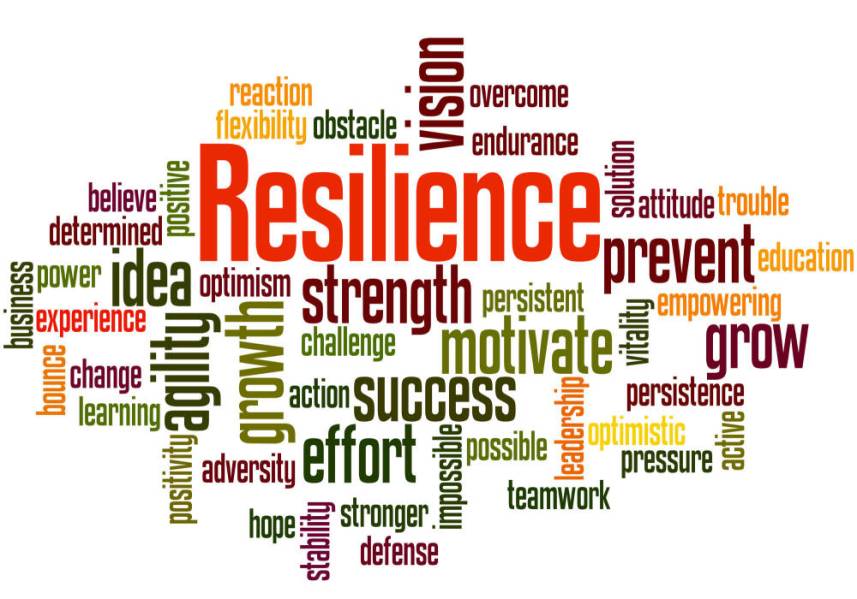
Resilience

There is a mindset commonly known as resilience. Resilience means when a person can recover from hardships and turn the difficult times into the favorable ones. This is a virtue which can change a person’s outlook and the way to handle strenuous situations. The resilient people have the capacity to be calm in types of stressful situations and can balance circumstances which have the power of going out of hand. They can nurture a positive point of view and can handle pressure in all kinds of conditions constructively. We all can nurture and grow the habit of being resilient to be prepared for all hardships and overcome it with a smile by practicing seven skill sets.

The first skill that we have to upgrade in us is knowing your true self as it helps us in evolving our inner confidence and helps us in growing us from inside. When we have our confidence with us, we can handle any situation without a problem. There are many researches done in this area that with confidence it’s a play task to overcome any problem and recover from it. When we become well aware of ourselves and learn to handle and deal with stressful situations, we can tone our resilient nature for the better future.

The second skill is to feel that our body and mind is one. Many people are born resilient, it is their innate nature but those who are not born it they can acquire it by healing our minds and strengthening our bodies as when we have to find a hard situation our body and mind works together. If they do so or there is less coordination between them then it becomes more and more difficult to tame the situation. If the body is in pain then the mind also gets panic commands and forgetting that they have to fight the situation, they start succumbing to it. To become resilient, we have to keep our body fit by giving it dosage of a healthy lifestyle. Healthy lifestyle can be attained by keeping check on eating, sleeping and exercising activities. We have to keep every lifestyle activity in balance. 

The third skill set is adopting change with an optimistic attitude. To be flexible from inside is one of the essential parts of being resilient. To respond to any plight of life, we should learn to become adaptable in all the situations. As when we become adaptable, we would be able to accept the hardships and turn the crisis into a positive opportunity to evolve into a much better personality. Those who can thrive in adverse conditions and branch the adverse condition into a brand-new path which leads to success. When many people succumb to these situations and put themselves in a dark hole because of it, resilient people focus on overcoming the situation with better outcomes. As they are wired in such a way that they never give up. They are optimistic and always have that hopeful perspective. Being positive or hopeful doesn’t mean that they ignore the problem but they have a clearer understanding of the situation and understand that these hardships are an inevitable part of life. They have the ability to fight with the situation, it may look a difficult skill to attain, but we can practice it by thinking positively and keeping a mindset that everything on this earth is temporary so as the challenging situation present in front of us. Then we also will be able to combat with the obstacles of life without any inhibition.

 The fourth skill set is nourishing our minds and stabilizing our minds. To improve resilience ability, we have to maintain nourishment of the body and balancing mind. When we are in a stressful situation our mind sends a message to the body to fight the situation by using the available resources and protecting us from critical situations. If the person won’t have enough stamina then fighting any situation is a dream but those with good coordination between body and mind will thrive in the situation. We should make time from our daily life to self-nurture us by engaging us in activities which we like. In this way our body and mental health will boost and will be ready to face any obstacle of life.

The fifth skill set is to build our relationships within the real world. We should give out time to maintain our social network to enhance resilient ability. As today, in present times, we give more time to social media by being fake and expressing only those feelings which are worth presentable and hide from real relationships. We don’t have to hide our true self as our family members, real friends won’t have a problem accepting that real nature. So, it is really necessary to indulge in healthy relationships and increase our resilient nature. When real relationships support us in mastering resilience, sham of social media relation puts a breakdown on it.

The skill set which we have to observe next is keeping the goal in life. As setting goals, keeps our minds engaged and in check to overcome any problem. We are hardwired to cross any hardship if we have a purpose in our life. Purpose instills a fuel in us to fight with any situation and grab that goal. We can keep our mind on track by practicing meditation in our daily life as it makes our mind clear and we become more aware of our capabilities and how to cultivate them in mastering resilience.

The last but not the only skill set which we have to adapt in our lifestyle is savouring the journey when achieving resilience. It is a long process and takes time to take shape. So, it is mandatory for us to not be discouraged if we can still not overcome the stressful situations and turn it into a positive opportunity. To attain resilience, we don’t have to follow any set pattern but when we are in the process, we can start loving that process as when we start seeing positive change in us, we would be positively motivated by it and grow to become the most patient, resilient person. We will be able to overcome any crisis just by focusing on strengths.

Last but not the least, by becoming resilient, we would not only be able to solve our problems in a positive manner but would be able to help and serve others as well.

Bilingual Education

Communication is the most important tool for anyone to share his/her thoughts, ideas or any information from one person to another. The process of communication occurs between every living organisms. Be it animals, plants or insects, every living organism do communication. For humans though, communication plays a very important role because humans are the most social among every living organism.

The most basic tool for communication of humans is by using language.  Language is the system of communication in speech and writing that is used by the people of a particular country. There are many languages like English, French,  Dutch, Japanese, Korean, Irish, Turkish and many more. These languages are used by the people to communicate with the people of another country.

India also have many different languages according to the different states and regions. Some of them are Gujarati, Punjabi, Marathi, Bengali, Telugu, Tamil, Malayalam etc. These languages are used by the people of a particular state.

Now, if a person is aware of only one language, he/she can communicate with the people knowing that language only. He/she won’t be able to communicate with the people knowing some other languages. This is why it is important to have knowledge of at least 2 languages. This is known as bilingual education.

Bilingual education is the process of teaching students using two languages. Educators usually teach students in their native language in conjunction with a second language utilizing differing levels of the native and second language depending on the requirements specified in lesson plans and teaching models. This makes the students able to read, write and understand 2 languages at a same time.

Pros and Cons:

Every coin has 2 faces. The process of bilingual education also have some postive and negative points:

Pros:

Having a ‘secret’ language when around monolingual people.

Being able to learn new languages easier (depends which languages you already know)

Depending on the languages you know, you may be able to understand what another language (but you wouldn’t be able to speak it).

It looks good on one’s job/university applications and resumes.

Makes getting on good terms with foreigners/etc. easier as if you speak the language they are most comfortable with, they will be thankful.

Increases your interest and knowledge of culture as during learning the languages, you also learn about the cultures.

Cons:

Sometimes bilingual students may get languages mixed up.

Bilingual students may get confused sometimes about  it’s vocabulary, accents or anything like that.

The students may not have a perfect command on any of the language while the student studying only one language may have a perfect command on his language.

But overall, bilingual education is better. This is why most schools have policy of bilingual education nowadays.

Swachh Bharat Abhiyan

“Sanitation should not be seen as a political tool, but should only be connected to patriotism commitment to public health.” – Narendra Modi

Swachh Bharat Abhiyan campaign, launched on 2 October 2014 on the birth anniversary of Mahatma Gandhi, by our P.M. Narendra Modi aimed to reduce open defecation and improve the management of municipal solid waste in both urban and rural areas.

He also flagged off a walkathon at Rajpath and surprised people by joining in not just for a token few steps, but marching with the participants for a long way. With the view to fulfil the dream of hygienic India, he took the broom cleaning dirt and making the cleanliness drive successful.

Many parts of India celebrated the day by hosting speeches informing about the mission, cleaning seaside waste in groups, doing marches with slogans such as ‘Na gandagi karenge, Na karne denge.’, swaach bharat swasth bharat. This is seen as a major step contributing to understanding the significance of sanitation and health. A sense of responsibility has been evoked among the people through the Clean India Movement.

It aims to provide every rural family with a toilet by 2019. It helps to maintain the GDP growth improving the economic conditions. The major slogan of One step towards cleanliness was adopted. One individual could take his responsibility to take care of cleanliness around his residence or area can prove to be helpful.

To promote the idea the Swachh Bharat Swachh Vidyalaya campaign was launched by the Minister of Human Resource Development, Government of India by participating in the cleanliness drive along with the school’s teachers and students.

The idea is propagated in universities and colleges on large scale.

Keep your earth clean and green as cleanliness is next to godliness!

MEDITATION

Meditation is an very effective exercise which help you to make your mind healthy and fresh. Everyone has a different technique of doing meditation. It does not require knowledge of skill and training. There are no rules for doing meditation, you can do meditation according to your preference. It had originated from Buddhist teachings.

Meditation can be done in starting of the day/ early morning or at the end of night. Meditation can be done while keeping your back straight or just by lying down. It is fine if you fall asleep. Meditation do not require to go blank with your thoughts.

Important things to keep in mind while doing meditation-

i) focus on your breath. keep track of your exhale or inhale process

ii) feel your body parts, the eyes, hands, pumping of heart, motion of lungs, etc.

iii) start meditation on thinking things you are grateful for.

iv) if you feel difficulty in concentrating choose a mantra for yourself example- OM

v) focus on personal fulfillment.

vi) think about what inspires you the most.

vii) feel the essence of nature.

BENEFITS- Meditation help to heal you from internal pain and sorrows.

It help to maintain a sleep cycle,and ideal routine of your day.

It help to deal with depression and anxiety, Delete psychosomatic disorders caused by tension.

It lowers blood pressure and strengthens the immune system. It slows the aging process.

It helps to be more tolerant and sensitive. It help to control anger and stress.

Meditation is the art of focusing your attention on a single point is hard work, and you must be committed intentionally!

Juvenile Act

A “Juvenile” or “Child” means a person who has not turned eighteen years of age. International Law interprets, a ‘Child’ means every human being below the age of 18 years. Today this is a universally accepted definition of a child which comes from the United Nations Convention on the Rights of the Child (UNCRC)In india the problems of juveniles were lately highlighted compared to other countries in the world .

Before only rules were made and less importance were given to children’s cases.The frightful incident of “Nirbhaya Delhi Gang Rape Case” on December 16, 2012 shocked the whole nation and many debates were started among legal fraternity and socialists.So thats how juvenile system and juvenile board got its importance and made aware to not only the judges or respected legal faculties but also each and every person in our country.

INTRODUCTION

Our country’s future depends on our children. So its the duty and responsibility of every individual to ensure that the children have a safe environment to live in. Juvenile crime has elevated  to be one of the most menacing and intimidating disease in our society.This act has guaranteed that regardless of religion, youngsters needing consideration and assurance will be given the advantages of a different legal process.

After Independence, the constitutional provisions have encouraged the developments in the field of juvenile justice system in India. 

Part III and Part IV of the constitution of India which deal with “Fundamental Rights” and “Directive Principles of State Policy” respectively and contain special provisions with respect to care and protection of the children.

Juvenile Justice ( Care and Protection)Act, 2015:

The Juvenile Justice Bill, 2014 was passed by the Parliament in December, 2015 and it became the Juvenile Justice Act, 2015 which into force from 15th January, 2016. Under the Act of 1986, Section 2(a) defined the term juvenile as a “boy who has not attained the age of 16 years and girl who has not attained the age of 18 years”.The main reason and issue of the debate was the involvement of accused, who was just six months away to attain the age of 18 years. The involvement of the accused in such a heinous crime of rape forced our Indian Legislation to introduce a new law and thus, Indian Parliament came up with a new law which is known as “ Juvenile Justice ( Care and Protection),Act 2015.

The Introduction of this Act has replaced the existing juvenile laws and has introduced some remarkable changes as follows;

 One of the remarkable changes is juvenile under the age group of 16 to 18 years should be tried as the Juvenile Justice (Care and Protection of Children) Bill, 2015 was passed by Lok Sabha on 7th May, 2015; was passed by Rajya Sabha on 22nd December, 2015 and received Presidential assent and came into force on 31st December 2015, to whole India except the state of Jammu and Kashmir.

Article 15 (3):  It allows the State to make special provisions for children and women.This view is reflected in the decision of the Bombay High Court in Dattatraya Motiram vs State of Bombay (55 B.L.R. 323) where Chagla C.j. held that the State could discriminate in favour of women against men but it could not discriminate in favour of men against women.

Article 21-A: The state shall provide free and compulsory education to all children of the age of six to fourteen years.Its main object was to abolish illiteracy from the country.Thus in Unni KrishanVS State of U.P. (1993 1 SCC , 645) the supreme court had observed that education under the age of 14 was passed as fundamental right under constitution of India.

Article 23: Prohibition of traffic in human beings , begars and other similar forms of forced labour.Here traffic in human beings means buying and selling men and women like goods which also includes immoral traffic in women and children for immoral purposes.

One such case is of Deens vs union of India  in this labours were taken from prisoners without paying proper remuneration in form of forced labour which is violative in article 23so in these prisoner are entitled to get reasonable wages for their work for which court was under duty to enforce their claim.

Article 24: Prohibition of the employment of children below and the age of fourteen

years in factories, mines and other hazardous employments.As we all know children are the assets of the nation thats why this provision is certainly made in the interest of public health and safety of the children.

As we can see in the case of people’s union for democratic rights vs union of India the act of employment of children 1938 act was not applicable in the case of employment of children in the construction work of Asiad projects in delhi since in above given act no such construction work for children was specified. The court rejected their contention and held that construction work is hazardous under article 24 even if the construction work is not specified in the schedule to the employment of children act 1938.

Article 39(e): It directs the State to safeguard the tender age of children from entering into avocations unsuited to their age or strength.

Article 39(f): Directs the State to give opportunities and facilities for the healthy development of children and to protect childhood and youth against exploitation and moral and material abandonment.

Article 45:The state gives early childhood services and schooling to infants under the age of six. The Eighty-sixth Amendment m 2002 adopted this clause. Section 45 of the foregoing provides that the State shall endeavour to provide free and compulsory education to all children between the ages of 6 and 14 years of age as a basic fundamental right.

Article 47: It is the duty of the state to raise level of nutrition and standard of living and to improve health. And for this it would bring about prohibition of intoxicating drinks and drugs which are injurious to health except for medicinal purposes.

REASONS

 Anti – social behaviour, biological changes, psychological causes are some of the reasons which is responsible for juvenile delinquency.

  • Disintegration of Family System: – In normal cases divorce of parents, lack of parental control, lack of love and affections are the major factors of juvenile delinquency.
  • Economic condition and Poverty: –Due to poverty of parents or guardian fails to fulfil the needs of the child which encourages them in stealing money from homes or any other parents.
  • Migration: – Migration of deserted and destitute juveniles’ boys to slums also carries some illegal activities like prostitution, smuggling of drugs or narcotics etc.
  • Sex Indulgence: – The children those who have experienced sex assault or any other kind of unwanted physical assault in their early childhood may develop any kind of repulsiveness in their behaviour and mind. Too much of sex variance may lead the boys towards the crime of kidnapping and rapes etc.
  • Modern Life Style: – The rapidly changing society patterns and modern living style, makes it very difficult for children and adolescents to adjust themselves to the new ways of lifestyle and are unable to differentiate between right and wrong.

TYPES

Types of Juvenile Crime: s

The three major kinds of juvenile crimes or delinquency are : 

  1. violent crimes: Crimes which result in bodily injury, such as assault, rape, murder; 
  2. Property crimes : Crimes which are committed when a juvenile uses force or threat of force to obtain the property of others 
  3. Drug-related crimes: It involve the possession or sale of illegal narcotics.                               

DATA

Current situation:

According to the National Crime Records Bureau (NCRB) relating to violent crimes are most dangerous against women. According to 2011 crime in India the number of rats committed by juveniles are just doubled over past decades that is from from 399 rapes in 2001 to 858 rapes in 2010 whereas crime in idea 2012 records doubled from 485 in 2002 to 1149 in 2011.As suggest by the data between 2011 and 2012 alone creates massive increase that is directly to 300 which is almost as much as over entire decade it alone makes our amendment imperative. Infact More than sixteen thousand juvenile cases are pending in the various Juvenile Justice.

But juvenile crimes are not only committed by boys there are many girls too who are included in such offence and intact their ratio is more then boys.Juvenile female crimes are committed who are under the age of 18 which are included for drug-abuse violations, liquor law violation, curfew, larceny, runaway, prostitution and for loitering.Girls share over al juvenile is increasing rapidly from about 15% to 29%.Its also suggested that girls are arrested disproportionately more than boys for such status offences like because of a tendency to sexualize their offences as running away & curfew violations because of a tendency to sexualize their offences and to control their behaviour under the patriarchal authority of juvenile justice system.There are also various proofs that there girls try to escape from home or streets and they are vulnerable to further sexual victimization.

There is always pros and cons in every decision or matter we deal with

Some of them are as follows:

Pros;

  1. Just by ordering a convict to spend 3 years in special or correctional home who just performed heinous and grievous crimes like rape and murder is not going to stop others from committing such crimes against women.

2.     As we all know society is not static, it is dynamic. Its needs change with time to survive so stands for law it should be changed with changing society.

3.    As criminals were hiring the poor and needy minors in allurance for small amounts of money to execute their acts, because they know very well that JJ Act would be acting as a safeguard for them so for such anti social elements this amendment was made in fear.

Cons:

  1. There was not a proper concrete or evidence data about crime rates for juveniles neither in India nor in another foreign country where any severe or harsher crime have helped them in lowering down of crime rate in anywhere in the world.
  2. The basic aim of juvenile justice board was never to punish offenders no matter however intended or serious heinous crime it looked they just wanted to reform such offenders which too may encouraged in rising crimes.
  3. Because of this new law it affected all ambigous laws which were already implemented smoothly only due to the pressure of societal outrage resulting from a single incident and didn’t give into more thoughts before actually making the amendment.

Recommendations

After such a big decision of amendment here are some suggestions which I feel can help to improve this juvenile justice system:

  1. The very first thing we all can look upon is moulding our society in such a way that no juveniles could commit crimes and this can only be sorted by dealing through all circumstances smoothly and smartly but not emotionally or though any pressure.
  2. Whatever act we implement it should be imposed heavily in our country so that in this pressure there is fear of committing such offences.

3.   We can also divide the juvenile system into different age groups that means different types of crime should have different juvenile age limits which would be decided by juvenile justice courts respectively.

Conclusion:

At the end , I would just like to conclude that reducing the age of the juvenile under the JJ Act is not the solution to the problem.Because if today we lower the age from 18 to 16 on the basis of nirbhaya rape case incident then what will the surety that child of 15 years wont do such heinous crimes and again we all will protest to reduce the age by 14?

So that instead of reducing the age we should remove the root cause of this crime. Because juvenile crimes are not the only reasons behind these offenders there are many more to it such as parental neglect, addiction to drugs, unemployment, poverty , love revenges and abundance of alcohol.So these issues of juvenile should be paid more attention not only by government but even society should play a major role in this act.We all not only depend on courts or its orders but complete our full responsibility by providing proper facilities , proper education , proper health care children only then we will be able to bring any change and reduce the juvenile crime in the country. Because if this issue is left untouched the condition would just get worse and there would be no way of improving it.


The War on Women

Book Review.

The book “War on the Women” by ‘Sue Llyod’ brings to life the inconceivable and dangerous life Sue led. It tells the story of an orphan Marry Merritt who is sixteen years old, instead of being released from the care of nuns was interned by them in a Magladen Laundry and forced to work twelve hours a day, six days a week, without pay, for over a decade. In twelve chapters Lloyd- Roberts brings to life the many stories of women who suffered, witnessed and combated oppression, discrimination and violence, The focus on her first chapter is on female genital mutilation (FGM). At the same time the author also describes the suffering of those who are expected to perform the act of mutilating girls, including their own daughters.

Cyber Security

The Internet is a medium through which people and companies can connect from one end of the world to the other. Technological advances have made humans dependent on the Internet in every way. Easy access to the Internet has made everything available in one place.

Social networking, online shopping, information exchange, gaming, online studies, online jobs, everything a human can imagine is possible with just one click on the Internet. Infact, nowadays, because of Covid-19 pandemic, every work is happening digitally. Web media is also getting popular day by day. If you are reading this blog, that’s also a part of web media.

But as there is a popular saying, Every coin has 2 faces, the other aspect of this facility, people around the world are stealing personal information of people sitting at home through online internet, which is called cyber crime. The incidence and rates of cybercrime in India along with other foreign countries are increasing day by day.

What is Cybercrime?


Cybercrime is an unlawful act where the computer is used as an instrument or target or both. Cybercrime is a broad term, which can also be defined as: “criminal activity where a computer or computer network is used as an instrument, target, or location of criminal activity”.
Cybercrime involves the illegal use of modern telecommunications networks (Internet, mobile phones) to commit an individual or group of people to commit crimes, torture them, intentionally cause physical or mental harm to them and damage their reputation.

Different types of cyber crime:

Web hijacking:

It is a crime in which a person’s website is controlled illegally. In this way the website owner loses control and important information on that website.

Cyber stocking:


It is a crime by which a person is repeatedly harassed; Chasing the victim, taunting, harassing by phone, tampering with property. After stocking up, the objective is to harm the victim mentally and physically.

Attack service:

This is a crime in which the victim’s network or electrical message container is filled with useless traffic and messages. All this is done so that the victim is intentionally harassed or the victim is unable to access their email.

Virus attack:
Viruses are microorganisms that affects the proper functioning of cells of a human body. Similarly in the world of computers, viruses are programs that have the ability to infect other computer programs or spread copies of them to other programs. These are malicious software that attaches itself to some other software or annoys the computer. Trojan horses, time bombs, logic bombs, rabbits etc. are all malicious software. Viruses affect computers in such a way that they either alter or destroy information in the computer so that it is no longer usable.

Catching fish:

It is a crime in which an email is sent to the victim, claiming to have been used by an established enterprise to extract confidential personal information from the victim or harass them against the victim. .
Measures for cyber security:
Computer users can adopt various technologies to prevent cyber crime –
Computer users should use a firewall to protect their computers from hackers.
Computer users should install anti-virus software such as McAfee or Norton Anti-Virus.

Cyber experts have suggested that users should shop only on secure websites. They never give their credit card information to suspects or strangers.
Users should develop strong passwords on their accounts.
Check the security settings of Facebook, Twitter and YouTube and be careful.
Users should be cautious when using public Wi-Fi hotspots. Avoid conducting financial transactions on these networks.
Users should be careful while giving personal information like name, address, phone number or financial information on the Internet.
Everything must be judged intelligently before clicking on a link or a file of unknown origin. Do not open any email in the inbox. Check the source of the message. If there is any doubt, verify the source. Never reply to emails that ask them to verify information or to confirm a user’s password.

Agriculture Infrastructure Fund

Indian Prime Minister Narendra Modi recently announced a ₹1 lakh crore agriculture infrastructure fund. It is launched to make 1 Indian farmers self-reliant. The objective of this fund is to provide facility of medium-long term debt financing to the farmers. The loan facility provided under this will be for post harvest management infrastructure like warehouse, silos, cold chains and e-marketing. The loan to be given has a limit of ₹2 crore and a subvention of 3% on interest will be given. The subvention will be given for a maximum period of 7 years.

It is a 4 year plan in which ₹10,000 crore will be given in this current financial year and ₹30,000 crore each will be give in in the next three financial years. All those banks and financial institutions who want to provide this facility to the farmers have to sign a MoU with Nabard and Department of Agriculture. All those providing this loan will be giving guarantee by the government that if there is any money which they won’t get back the government will return that money. this will be done through Credit Guarantee Fund Trust for Micro and Small Enterprises. This loan will be given under the already existing Union or State government schemes.

An online Management Information System will be created which will help monitor proper implementation. All those farmers or people related to agriculture who want to take a loan can apply online, does having transparency in interest rate get credit guarantee and also the information regarding all the documents required. This fund has been launched keeping in mind farmers welfare, with an aim to double farmers income and increase job opportunities in rural India.

PERFECT COMPETITION MARKET

Market refers to all such system or arrangements that bring the buyers and sellers in contact with each other to settle the sale and purchase of goods.

PERFECT COMPETITION- It is a form of form of market where there is large no. of buyers and sellers of a homogeneous product whose price is determined by forces of supply and demand. An individual buyer has no control over price.

FEATURES- i) Large no. of buyers and sellers: All producers contribute insignificantly to the market. A firm can sell any amount of good at given price it cannot influence market price. So firm is considered as price taker, not maker.

ii) Homogeneous Product- Zero degree of product differentiation led uniform price in market. There is no selling or advertisement costs.

iii) Free entry and exit conditions- Firm earn only normal profits in long run as in case of extra normal profits new firms will join industry and supply increases causing fall in price and vice-versa.

iv) Perfect knowledge on the part of buyers and sellers- The buyers know in full about the commodity sold and the price prevailing in the market. The sellers know the potential sales at various price levels in the market.

v) Independent decision making- Firms do not form trusts or cartels so we have maximum output and minimum price.

vi) Absence of transport cost- If transport costs are incurred, prices should be different in different sectors of the market.

vii) Perfect mobility of factors of production- It leads to uniform price of factor, no matter who hires it.

In the long run, perfectly competitive firms will react to profits by increasing production. They will respond to losses by reducing production or exiting the market. Ultimately, a long-run equilibrium will be attained when no new firms want to enter the market and existing firms do not want to leave the market, as economic profits have been driven down to zero.

So this competition is hypothetical in nature.

Price Determination under Perfect Competition: Equilibrium of Firm
PRICE ELASTICITY IS INFINITY.

Need of the Hour

Retrieved from thedailymeal.com

We all love a fit body whether it’s a guy or girl. From old to young, nobody wants to be fat, obese or overweight. But when it comes to eating, most of us love eating outside food, junk food, street food, overall, the food which tastes delicious. When somebody talks about getting up early in the morning or to sleep early at night, we grumble. When someone talks about having fruits, juices etc, we like the idea but when we have to do it, we give it a toss. We love talking about health and healthy food but when it’s time to corporate that healthy habit in our lifestyle, then we take a back foot. We all love that aromatic pizza, yummy burger, spicy pani-puri, sizzling chats and other things more than vegetables, grain, legumes as they look and taste awesome and satiate out taste buds whereas veggies and other things are just boring.

This is the era when everyone is running at a fast pace and in this fast-paced world, fast food has just made its place silently without letting anyone know that where they are full of taste, they are packed with hazardous food chemicals which look innocent but are dangerous for our bodily system. A poor diet may lead to health risks like heart disease, hypertension, diabetes, osteoporosis, obesity and certain types of cancer as well.

But if we switch to healthy food habit and make our youngsters learn about healthy food habit as habits are carried from childhood to adulthood, we can save ourselves from such problems. Migrating to healthy diet doesn’t mean that we have completely forget food which tastes good but we can find a good alternative of those. And when we follow healthy habits for a longer time, it changes our mindset as well. Then our mind also comes in our control and all those things which looked tastier earlier, we would not like to look at those things.

When we talk about a healthy diet, many people will come about the idea of keeping fast, dieting or other such rituals which may help you in taking shortcuts and becoming lean soon but never ever forget that for a long run success, shortcuts are never an option. With shortcuts we may lose our weight soon but along with it will come weakness from inside because of which we lose our energy.

It’s not some short time process which will lead to a miracle. It’s a long-term commitment to ourselves to become healthy, fit, charged up, energetic and disease free. To achieve that we have to work on ourselves daily, by adapting to a good diet, eating proper amounts of veggies and legumes to fulfill our proteins, calcium and vitamin intake.

Apart from this we have to incorporate working out or exercising in our daily routine. When we exert out, we help excretion of toxic substances present in our body through perspiration. We can opt for dancing, go for a brisk walk, running, yoga, Zumba or adapt any other technique which helps to flush out the waste materials out of the body. It helps us to keep our body in shape and makes us feel fresh throughout the day. It helps us in sleeping well and keeping our cholesterol level in check and increases our bone-density.

We can opt for meditation as well; it calms us from inside. Meditation helps us in achieving mental stability, improves our cognition and keeps our mental health in check. It is really necessary to keep our body and mental health balanced as both body and mind are connected, one cannot function without another. Meditation along with soft music not only helps us to keep our mental health stable, it helps us to connect with ourselves as listening to good music enhances capability of minds and instills peace in a person. We all have seen that when we are going through a rough patch in a day, listening to music helps us in healing us from inside and boosts us to be cheerful instantly. Right music has the power of vanishing all of the worries we go through.

Along with giving attention to right food, meditation, exercising daily, we have to follow one more thing religiously and regularly, and we have to be strict about that habit. Yes, I am talking about drinking water. Drinking water is really mandatory for our body and it is advised that a person should drink 10-12 glasses of water daily that is approximately, 2-3 litres daily. We may find alternatives to everything, from food to exercise but water has no other alternative. We have to drink it without any excuse. We all know that 60% of our body constitutes water and water is excreted from the body mainly in the form of perspiration and urine. So, to keep ourselves hydrated, we have to drink water otherwise we will become prone to all types of diseases. Having a doubt why to drink so much water daily. Here are its benefits:

Water helps us in lifting our mood. Water is a miracle drink which helps us in keeping fit by delivering oxygen throughout the body, maintaining body temperature, flushing out body waste, lubricating our body joints, keeping our digestive system fit, keeping our kidneys strong and maintaining our weight as well.

B.K.S. Iyengar has rightly said, “Health is a state of complete harmony of the body, mind and spirit. When one is free from physical disabilities and mental distractions, the gates of the soul open.” We don’t need to be fit to lose weight only, we need to be physically and mentally fit to be happy and attain peace and wisdom.

Book Review: The Alchemist

Books are our best friends. Every book makes us learn something new which and gives us knowledge. The genre of the book doesn’t matter.

But the most loved genre of a book is fiction, because it takes a reader in a whole new dimension, a new world and let the reader feel the story of the book. It makes us so connected with the characters of the book that it feels like we are one of them.

Their are some books who are total fiction and aren’t possible in real life. Books like, Harry Potter are example of this. But few fictions have the stories which is actually possible in reality. One of those book is The Alchemist by Paulo Coelho who is a Brazilian author. Initially, the books was written in Portuguese but has been translated in around 70 languages.

The Alchemist is a story of a shepherd, Santiago, who leaves his flock and his land to pursue his dream. A boy who is on a journey of discovering his destiny and realising his dream of finding a treasure. This story tells us that the happiness, contentment, peace & joy of one’s life lies within his journey towards his dream of life.

While reading this novel , the reader enjoys the journey of Santiago and learns a lot of t hings which Santiago learns from his journey.

Most importantly, one learns the idea of living in present and investing all your strength and energy in your present is really helpful for a better future.

Overall, it is a fantastic book and the storytelling is beautiful. The choice of words are impeccable, full of wisdom and philosophy. The story is very enchanting and bursts with optimism which I think is very important in our lives. The book shows that the journey to your destiny is as important as the destiny itself. The way in which the book emphasizes on the importance of faith, hope and spirituality through the story of an ordinary boy is amazing. I think this book appeals to everyone because we all have dreams and sometimes we just want someone to tell us that they may come true. I can’t believe how one can write such beautiful words in his very first book. There are many quotes written inside the book which gives the reader the way to live the life. This exciting fiction novel deserves a space in everyone’s bookshelf.

New Epidemics Pouring In!

No, I am not talking about any movie but about our earth which is continuously under threat of one disease or other. The reason is nothing else but our own habits and activities. Day by day global warming is increasing at a higher rate. Our encroachment of wildlife areas always lands us in a soup. COVID-19 is one of the major examples how our trespassing in wild areas has led to the death of 772,000 humans. If we won’t stop interfering with nature, soon we may see more catastrophic situations.

Our Eco prints may harm the earth in other ways: warming of the planet has led to the change in the climate with an increase in Celsius helping infectious diseases to regain their footprint. As the infectious diseases which are sealed under deep snow have the risk of coming out due to thawing of ice. In Serbia, a child got ill from a disease which had vanished from the place 75 years ago.

It is speculated that if ice thaws too much and brings out our biggest fear, which is, the diseases which have made Neanderthals, woolly rhinos, mammoths sick and disappear from this earth. The small pox which was said to be eliminated, their return in those areas after 50 years is not a coincidence.

We are just getting the taste of our medicine and it has just started. So it’s a high time to wake up and give our best shot in saving the earth.

Effect of covid-19 on working culture and recruitment of workers from market for an organisation

With the ongoing COVID-19 pandemic, many organizations have to rapidly adjust their way of working. It’s forcing a digitalization that many companies had spoken about, and perhaps mentioned in their marketing, but are now having to implement at breakneck speed.

Fortunately today, the technical aspects of remote work are much easier. Everything from Google docs, Hangouts, Zoom, and Skype for communication, as well as cloud-based process management tools such as Jira, make life significantly easier. However, there is a difference between being technically ready, and being culturally and emotionally ready for this new world.

Maintaining the company culture during the tremendous change

During times of change, and when almost from one day to the next, your workforce needs to shift how it works, your culture will come under strain. You may have individuals and teams working for the first time both at home, and physically separated.

While the initial focus will, of course, be on maintaining your customer relationships and ensuring your business can successfully navigate this new world, it’s also critically important to consider the impact on your employees and on your culture.

Meanwhile, we all have to understand that the current situation is like a tunnel and we don’t know how long this tunnel is, so better we should respect the time & liberty given by the organization and stay connected with each other through technology.

Work from home is “New Normal “

All the organizations worldwide have ordered their employees to work from home. Work from home has become an unprecedented event or a shift in the working culture but is it working the way the employer is expecting.

The responsibility of bringing movement on in the work is on the shoulders of both Employer and employee. Company culture, leadership, employee experience, and digital workplace experiences are now being put to the test. The way many companies work changed overnight. Massive numbers of workforces have gone remotely. Travel restrictions have gutted the ability to accomplish certain tasks. Team collaboration, moral support and the ability of executive teams to pivot, and quickly, have seemingly never been more paramount.

Dawn of the new era of digital workplace : Whatever the future of digital workplaces may one day look like, it is already true to say that people working from home face some specific challenges:

Those who work from home or remotely from elsewhere inevitably accept that the clear boundaries between their professional and private lives will blur. And while teleworking can provide more freedom and flexibility, it is also associated with the need for greater personal responsibility. Managers and affected employees must therefore jointly examine how the balance between private and professional needs can be maintained – not least from the point of view of protecting health.

THE PANDEMIC HAS FORCED THE ADOPTION OF NEW WAYS OF WORKING. ORGANISATION MUST REIMAGINE THEIR WORK AND THE ROLE OF OFFICES IN CREATING SAFE, PRODUCTIVE AND ENJOYABLE JOBS AND LIVES FOR EMPLOYEES.

Covid-19 has brought human and humanitarian challenges. Many companies around the world have risen to the occasion, acting swiftly to safeguard employees and migrate to a new way of working that even the most extreme business-continuity plans hadn’t envisioned. Across industries, leaders will use the lessons from this large-scale work-from-home experiment to reimagine how work is done—and what role offices should play—in creative and bold ways.

Changing attitudes on the role of the office

Before the pandemic, the conventional wisdom had been that offices were critical to productivity, culture, and winning the war for talent. Companies competed intensely for prime office space in major urban centers around the world, and many focused on solutions that were seen to promote collaboration. Densification, open-office designs, hoteling, and co-working were the battle cries.

organizations are looking ahead to the reopening and its challenges. Before a vaccine is available, the office experience probably won’t remain as it was before the pandemic. Many companies will require employees to wear masks at all times, redesign spaces to ensure physical distancing, and restrict movement in congested areas (for instance, elevator banks and pantries). As a result, even after the reopening, attitudes toward offices will probably continue to evolve.

These steps reimagine work and workplace :We recommend that organizations take the following steps to reimagine how work is done and what the future role of the office will be.

  1. Reconstruct how work is done

During the lockdowns, organizations have necessarily adapted to go on collaborating and to ensure that the most important processes could be carried on remotely. Most have simply transplanted existing processes to remote work contexts, imitating what had been done before the pandemic. This has worked well for some organizations and processes, but not for others.

For both processes and cultural practices, it is all too tempting to revert to what was in place before the pandemic. To resist this temptation, organizations could start by assuming that processes will be reconstructed digitally and put the burden of proof on those who argue for a return to purely physical pre–COVID-19 legacy processes. Reimagining and reconstructing processes and practices will serve as a foundation of an improved operating model that leverages the best of both in-person and remote work.

2. Decide people to work or work to people

Roles can be reclassified into employee segments by considering the value that remote working could deliver:

  • fully remote (net positive value-creating outcome)
  • hybrid remote (net neutral outcome)
  • hybrid remote by exception (net negative outcome but can be done remotely if needed)
  • on site (not eligible for remote work)

3. Redesign the workplace to support organisational priorities

We all have ideas about what a typical office looks and feels like: a mixture of private offices and cubicles, with meeting rooms, pantries, and shared amenities. Few offices have been intentionally designed to support specific organizational priorities. Although offices have changed in some ways during the past decade, they may need to be entirely rethought and transformed for a post–COVID-19 world.

To maintain productivity, collaboration, and learning and to preserve the corporate culture, the boundaries between being physically in the office and out of the office must collapse. In-office videoconferencing can no longer involve a group of people staring at one another around a table while others watch from a screen on the side, without being able to participate effectively.

4. Resize the footprint creatively

The pandemic has forced the adoption of new ways of working. Organizations must reimagine their work and the role of offices in creating safe, productive, and enjoyable jobs and lives for employees.

.

?

.

Foreign investment increasing in India

Economies of many countries have been affected due to coronavirus. India is no different. But India is trying its level best to attract companies from all over the world to invest in India and setup there branches here in India. Many companies across the world have announced that they will be setting up their factories in India.

It will help India become a manufacturing hub which in turn increase India’s export business and at the same time provide employment opportunities to a lot of people. Almost 22 mobile companies will be able to create around 12 lakh employment opportunities. Among these, there will be 3 lakh direct and 9 lakh indirect jobs. All this mobile companies cumulated will be investing ₹1 lakh crore, producing mobiles worth ₹11 lakh crore. The foreign companies investing in India include companies like Apple, Samsung, Rising Star.

Currently China which has a global supply chain across the world is seeing many companies backing out from there. India at the same time is trying to attract all these companies to India. According to sources alomost 300 out of 1000 companies which have come out from China are in talks with the Indian government. If things work out there is chance of more investment and employment opportunities in India.