Emergency :black days

44 years ago, in 1975, India saw its darkest phase when then Prime Minister Indira Gandhi declared emergency across the country.

The emergency was issued by President Fakhruddin Ali Ahmed under Article 352(1) of the Constitution and lasted 21 long months beginning 25th June 1975 and going on until 21st March 1977. Here are some facts from the emergency period.

1974: A student agitation by the Bihar Chatra Sangharsh Samiti received the support of Gandhian socialist Jayaprakash Narayan, referred to as JP, against the Bihar government.

Meanwhile, in Patna, JP called for “total revolution,” asking students, peasants, and labour unions to non-violently transform Indian society. He also demanded the dissolution of the state government, but this was not accepted by Centre.

Another significant movement was the Nav Nirman movement in Gujarat, between December 1973 and March 1974.
Raj Narain filed cases of election fraud and use of state machinery for election in the Allahabad High Court. He had been defeated in the 1971 parliamentary election by Indira Gandhi.

This was for the first time that a Prime Minister was cross-examined in the Court.

Allahabad High Court found Indira Gandhi guilty and declared her election null and void and unseated her from her seat in the Lok Sabha.

Indira Gandhi challenged Allahabad High Court’s decision in the Apex Court.

Justice V. R. Krishna Iyer, on 24 June 1975, upheld the High Court judgement and ordered all privileges Gandhi received as an MP be stopped, and that she be debarred from voting.
ws
SHARE THIS NEWS
WHATSAPPFACEBOOKTWITTERLINKEDINEMAIL
CANCEL
Nifty11,271.0568.20Sensex38,318.07246.94Dr. Reddys Laborat4,531.30229.10Gold (MCX) (Rs/10g.)53,115.00-72.00USD/INR74.860.05Market Watch

Politics and Nation
The darkest phase in Indira’s tenure as PM
Updated: 31 Oct 2019, 12:10 PM IST
Emergency!BCCL1/8Emergency!
44 years ago, in 1975, India saw its darkest phase when then Prime Minister Indira Gandhi declared emergency across the country.

The emergency was issued by President Fakhruddin Ali Ahmed under Article 352(1) of the Constitution and lasted 21 long months beginning 25th June 1975 and going on until 21st March 1977. Here are some facts from the emergency period.
The catalystsBCCL2/8The catalysts
1974: A student agitation by the Bihar Chatra Sangharsh Samiti received the support of Gandhian socialist Jayaprakash Narayan, referred to as JP, against the Bihar government.

Meanwhile, in Patna, JP called for “total revolution,” asking students, peasants, and labour unions to non-violently transform Indian society. He also demanded the dissolution of the state government, but this was not accepted by Centre.

Another significant movement was the Nav Nirman movement in Gujarat, between December 1973 and March 1974.
ET Prime

AUTO
Future cars will be software on wheels
Sibros, a Silicon Valley startup by an ex-Tesla engineer from India, wants …
Read 2 More Stories
The case that shook IndiaAgencies3/8The case that shook India
Raj Narain filed cases of election fraud and use of state machinery for election in the Allahabad High Court. He had been defeated in the 1971 parliamentary election by Indira Gandhi.

This was for the first time that a Prime Minister was cross-examined in the Court.

Allahabad High Court found Indira Gandhi guilty and declared her election null and void and unseated her from her seat in the Lok Sabha.

Raj Narain (center)

Debarring IndiraAgencies4/8Debarring Indira
Indira Gandhi challenged Allahabad High Court’s decision in the Apex Court.

Justice V. R. Krishna Iyer, on 24 June 1975, upheld the High Court judgement and ordered all privileges Gandhi received as an MP be stopped, and that she be debarred from voting.
Internal disturbanceAgencies5/8Internal disturbance
The goal of the 21-month-long Emergency in the country was to control “internal disturbance”.

Indira Gandhi justified her steps in terms of national interest, primarily based on three grounds.

India’s security and democracy, rapid economic development and upliftment of the underprivileged and intervention of powers from abroad which could destabilise and weaken India.
The Gandhi Government laid out some rules for the journalists across the country and they were told about “guidelines” to follow.

All the newspapers in the country were asked to take permission before publishing any anything by the Press Advisor.
The Gandhi Government laid out some rules for the journalists across the country and they were told about “guidelines” to follow.

All the newspapers in the country were asked to take permission before publishing any anything by the Press Advisor.

Human rights violations
Several other human rights violations were reported from the time, including a forced mass-sterilization campaign spearheaded by Sanjay Gandhi, the Prime Minister’s son.

The Emergency is one of the most controversial periods of independent India’s history.

The months preceding the declaration of the Emergency were fraught with economic troubles — growing unemployment, rampant inflation and scarcity of food. The dismal condition of the Indian economy was accompanied by widespread riots and protests in several parts of the country. Interestingly, the hitherto simmering borders of the country were rather quiet in the years preceding the Emergency. “As if to compensate, there was now trouble in the heartland, in parts of the country which, for reasons of history, politics, tradition, and language, had long considered themselves integral parts of the Republic of India,” writes historian Ramachandra Guha in his book, ‘India after Gandhi.’ The trouble began in Gujarat, spread to Bihar and from there to several other parts of Northern India. While the streets were raging against Gandhi’s governance, another challenge came to the doorstep of the prime minister in the form of a petition filed in the Allahabad High Court.

concept of pradhanpati

pradhan is the post which is also called mukhiya in some parts of india like bihar and odisa . it is the post which is very respected and it is up to panchayat level . a person has to fight election like member of parliament and member of legislative assemblies in wich the people of that panchayat directly cast thier thier vote in the favour of the personwhom they want to see as thier representative . so this clear its a legally elected body who ovwelooks a panchayat . now lets talks about the pradhan pati what wrong with this name ? actually the constitution has garnted equal rights to both mwn and women and given the reservation to the womens to balance the system of equality. so the seats in the panchayat elections are reserved for the womens to do welfare and equally give the rights to the females . in this situation the male or the husband of that elected reprentative take the actual charge and the role of the actual womwn pradhan is limited or restricted to signing any documents . all the works are done by the husband of that pradhan this culture is primarily known as the PRADHAN PATI . Though the panchayati raj system originally envisioned empowering women, over the years the husbands of elected women and sarpanches have made a mockery of the rules. Gandhi has criticised the way the vision of women’s empowerment in the panchayati raj system has been given a short shrift. “Thirty years ago when Rajiv Gandhi announced it, the idea was to get women into the mainstream. 33 percent of all sarpanchs would be women. That was a brilliant idea. But women allowed themselves to be used as tools. New institutions like ‘pradhan pati’ and ‘sarpanch pati’ came up. They even became legitimised as district magistrates allowed husbands to sit in panchayat meetings. Pradhan patis would run the show while women stayed in ghunghats.”Gandhi said the problem stems from two factors. “One is overpopulation. In an overpopulated society violence does increase and it’s always aimed at the weaker. So, it is always going to be one caste against other, one class against other. Our job is to empower women rather than change the mindset of men which is not possible at this point.” What the government can do in this regard is empower the women.

“Has Panchayats in our country ever thought that there should be no poor left in our country. If one village brings out five persons out of poverty in a year, what a big change will come in the country”

Prime Minister Narendra Modi in an event called for an end to the practice of “husbands of women sarpanches” or “sarpanch pati” exercising undue influence on the work of their wives elected to power.

At an event to mark the National Panchayati Raj Day here, Mr. Modi hailed the contribution of women to the functioning of panchayats. He urged panchayat members to work with a five-year vision with concrete plans to bring about positive changes in their villages.

Mr. Modi urged panchayat members to instil pride about the village. He said issues such as education of children and vaccination for them should be paid special attention. Mr. Modi asked panchayat members to motivate government officials to spend at least one hour a week with the school-going children.

He gave away the Annual Devolution Index (States) Awards and e-Panchayat awards and congratulated the zila parishads and gram panchayats which were being felicitated on the occasion.

changing nature of fraud

the fraud has been always seen by changing its nature from a different type to different type in the 90 the modes ewre mostly te physical but after the introduction of electronic facility in the 20th century the humans has devloped different types of the techniques related to the fraud . due to accessebiluty of the banking fqcility in the current world keeping in hand the smart phones . it is absolutely true tht the technologies had given us so freedon and made our work easy but at the same time it has been saw that its creating a big loss to the people hwen it goes in wrong hand and where guilty mind lies .

talking about the new trends of frauds throuhgh the electronic means which includes

net banking fraud

app fraud- phne pay , paytm, olx , quikr etc

fraud on call

data hacks

The Unified Payments Interface or UPI has made transferring money very simple, thanks to the rising popularity of apps like Google Pay, PhonePe, and others. But while UPI is fostering a new way of digital payments, it has also opened up new ways to trick unsuspecting users. I found out just how common such scams on UPI are thanks to my father’s recent interactions on OLX, where he wanted to sell his bike.

The scam unfolded like this– My father, who lives in a small town in Uttar Pradesh received a call from someone who claimed to be from a nearby city, and said was keen to purchase the listed motorcycle. He also offered to pay Rs 10,000 in advance and promised to pay the rest of the amount in cash within two days when he would come to pick it up.

This person did not want to see the bike and persisted to pay the advance, even when assured that my father would not make a deal with anyone else in that period. The caller continued to badger my father to send his UPI address so the amount could be transferred. This raised enough suspicion for my father to cut him off.https://065b80b7c89cf5066931acd4099ca854.safeframe.googlesyndication.com/safeframe/1-0-37/html/container.html

Watch out! Don’t fall for fraud calls or SMS for Paytm KYC

A week later, he refreshed the listing and within an hour, he received a call and the same thing followed. My father was now sure that it is some kind of fraud, but could not understand how giving up his UPI ID alone could result in a scam. He called me to look into the matter and when I searched for ‘UPI fraud OLX’ on Google, there was plenty to show how such scams were being executed.

However, I soon found out that it was not the only way that people were being conned. I myself received a call in the office where the caller claimed that I have pending cashback in my PhonePe account. “Do you want me to ‘pay’ the amount or do you wish to ‘decline’ it,” the caller said. Obviously, he did not have the answers to my questions like– “Since when did cashback needs to be accepted,” and “Why the cashback is on hold,” and “Why have I got cashback in the first place?”

The person even sent a payment request on PhonePe with three options as usual — “Pay”, “Later”, and “Decline”.

How the fraud happens

What follows after you tell the fraudster your UPI ID is that user gets a payment request. The scammer might have promised to transfer the money for the item you have listed on the classified site, but instead sends a request demanding money from you.

The scammer tells you that he has sent the money, please accept this ‘request’. He says that in order to receive the money you will have to tap on the ‘Pay’ button, while tapping on ‘Decline’ will result in cancellation of the said transaction.

However, the receiver in a UPI transaction does not need to do anything to get their money. People, unaware of the very fact, end up paying the scammer in the hopes of receiving the money. This small negligence on your part makes you a victim of UPI fraud.

How to save yourself from fraud

To transfer money or make a transaction using the UPI apps, users need to enter their M-PIN, which differs for every linked bank account. The M-PIN is like a digital ATM PIN. If at any point of time, you are entering your M-PIN into the UPI app, you are either checking your account balance or you are making a transaction where money will be deducted from your linked bank account.

Treat your M-PIN exactly like you treat your ATM PIN. Do not disclose or share your M-PIN with anyone. The same applies for UPI login passcode– a password that you need to enter to log in to your UPI app. To be on the safer side, put a lock on your payment apps.

Being a writer

I want to be a writer because it had in me,I am meant for this, I love writing, it’s my passion!
Look how childish these answers seems to be.There is complete lack of conscience. I mean everyone could easily guess what the answer might be. Then the point is why should one ask such questions??Answering and art of answering are two different things. So you might be thinking what could I answer if i were in your place, and my answer will be
“I want to be a writer because its a Decision rather than a choice”

When I wear my writer’s hat,
My wings unfold,
I travel to a mysterious dimension,
Where time stands still
Thoughts intoxicate me,
and words enchant me,
my heart sings
and my brain weaves
a grand design
It’s harmony
that resonates
within my whole being

Anti-defection law

Introduction

The strength of Indian Parliamentary Democracy lies in its people’s commitment towards being active participants in the electoral foray by utilizing their right to universal adult sufferage for Legislative Assemblies and Parliament, every five years. 

However, in recent times, India has been witnessing some departure from the established conventions whereby elected representatives from one party have been switching sides and helping a party that otherwise lacks the requisite number, to form government. This process of Defection has been defined by Soli J. Sorabjee as “the abandonment or disloyalty to duty or ideology. In political term the ‘defectors’ not only violate the credibility of political party on whose ticket they were elected but also betrays the electors who had voted for them. It commits a breach of faith not only to the party on whose ticket the member has been elected but also commits a breach of faith with electorates whose votes were secured on the basis of affiliation with the party.”

The 10th Schedule was inserted in the constitution to curb this menace of defection and to reduce the power of money used for alluring the elected members to break or topple government and to ensure that elected members remain loyal to the party on whose ticket he/she has been elected as well as electors. 

The anti-defection law in India, technically the Tenth Schedule to the Indian Constitution, was enacted to address the perceived problem of instability caused by democratically elected legislators in India’s Parliamentary System of Government shifting allegiance from the parties they supported at the time of election, or disobeying their parties’ decisions at critical times such as during voting on an important resolution. Such shifting of allegiance was considered to be a symptom of endemic political corruption, which in turn provided some legitimisation for corruption prevalent in other aspects of life in the country.

Prior to the introduction of the anti-defection law, both the central Government of India and the governments of some of its states and territories had experienced instances of perceived instability resulting from legislators changing their political allegiance. By one estimate, almost 50 per cent of the 4,000 legislators elected to central and federal parliaments in the 1967 and 1971 general elections subsequently defected, leading to political turmoil in the country.

A law was sought to limit such frequent defections in India. In 1985, the Tenth Schedule of the 52nd amendment to the Constitution of India was passed by the Parliament of India to achieve this. Following recommendations from many constitutional bodies, Parliament in 2003 passed the Ninety-first Amendment to the Constitution of India. This strengthened the act by adding provisions for disqualification of defectors and barring them from being appointed as ministers for a period of time.

What is the anti-defection law?

Aaya Ram Gaya Ram was a phrase that became popular in Indian politics after a Haryana MLA Gaya Lal changed his party thrice within the same day in 1967.  The situation between 1967 to 1971 was so grave that jokingly this phase has been termed as that of ‘AYARAM GAYARAM‘ when as many as 142 MPs and over 1900 MLAs changed their political parties.

 In this context of weakening democratic ethos, there was a dire need to create mechanisms that would discourage these tendencies and discipline the legislators and for this objective on December 8, 1967, the Lok Sabha constituted a high-level Committee (Known as “Committee on Defection”) under the chairmanship of then Home Miniter Y. B. Chavan. The Committee in its report dated January 7, 1969, made certain recommendations for outlawing defections. Keeping in view these recommendations, the Constitution (Thirty-second Amendment) Bill, 1973, was introduced in the Lok Sabha on May 16, 1973, but the Bill lapsed on account of the dissolution of the House. Thereafter, the Constitution (Forty-eighth Amendment) Bill, 1979, was introduced in the Lok Sabha containing similar provisions. But, it was opposed by ruling as well as opposition parties at the stage of introduction of the Bill, resulting in its withdrawal.

The Tenth Schedule was inserted in the Constitution in 1985 with the aim “to curb defection to bring the political stability and to discourage the practice of defection of members from one party to another after their election.” It came into force on March 1, 1985.  It lays down the process by which legislators may be disqualified on grounds of defection by the Presiding Officer of a legislature based on a petition by any other member of the House. A legislator is deemed to have defected if he either voluntarily gives up the membership of his party or disobeys the directives of the party leadership on a vote. This implies that a legislator defying (abstaining or voting against) the party whip on any issue can lose his membership of the House.  The law applies to both Parliament and state assemblies.

The court in Ravi S. Naik case held that “the words “voluntarily given up his membership of such political party” are not synonymous with “resignation” and would have a wider connotation, even in the absence of a formal resignation from membership, an inference could be drawn from the conduct of a member that he had voluntarily given up his membership of the political party to which he belonged.” Thus, the act of voluntarily giving up the membership of the political party, may be express or implied, non-fulfilment of formalities for joining a party is of no consequence.Clause (2) of Paragraph 2 of Tenth schedule provides that an independent member shall be disqualified for being a member of the House if he joins any political party after such election.

To maintain and sustain the process of democratic governance the Fifty-second Amendment Act, 1985, made necessary changes in Articles 101, 102, 190 and 191, besides adding the Tenth Schedule in the Constitution. It contains provisions as to disqualification on the ground of defection along with certain exceptions.

Are there any exceptions under the law?

Yes, legislators may change their party without the risk of disqualification in certain circumstances. The law allows a party to merge with or into another party provided that at least two-thirds of its legislators are in favour of the merger. In such a scenario, neither the members who decide to merge, nor the ones who stay with the original party will face disqualification.

Various expert committees have recommended that rather than the Presiding Officer, the decision to disqualify a member should be made by the President (in case of MPs) or the Governor (in case of MLAs) on the advice of the Election Commission.This would be similar to the process followed for disqualification in case the person holds an office of profit (i.e. the person holds an office under the central or state government which carries a remuneration, and has not been excluded in a list made by the legislature).

Judgements

On the pattern of Lily Thomas case, the Apex Court should issue directions that the defected person automatically should be treated as disqualified and s/he should not be allowed to be elected for either house at least for 5 years. Such defectors should also not be allowed to be appointed as a minister even for a single day. In addition to this, the benefit of Article 75 (5) and Article 164 (4) should not be available to the defectors. 

In Keisham Meghachandra Singh v. The Hon’ble Speaker Manipur Legislative Assembly & Ors., the Supreme Court has held that “Speaker of the Legislative Assembly should decide on a petition seeking disqualification of a member under 10th Schedule of the Constitution within a period of three months, in the absence of exceptional reasons. The bench also acknowledged the problem of Speakers acting in a partisan manner due to their political loyalties. Therefore, the bench suggested that “the Parliament should amend the Constitution to provide for an independent mechanism, such as a Permanent Tribunal headed by retired judges, to decide disputes under Tenth Schedule.”

The whole object of Anti-defection law was to discipline the legislators but it seems that this law could not contain defection, the politicians continuously changing their party affiliation and this system of political turncoats has become rampant, especially after 2014. Defectors by changing their party affiliation allow other political party to form government which was rejected by the voters in the election. The ensuing changes in the government composition following defection in Arunachal Pradesh (2016), Goa (2019), Manipur (Manipur), Karnataka (2019), Madhya Pradesh (2020) and currently the ongoing power struggle in Rajasthan are some of the illustrations of this assertion.

Defectors have no fear as they mostly join the ruling party and the Speaker who has the power to disqualify belongs to the ruling party, therefore, the chances are too remote that the Speaker being political person will decide against the will of his/her political party.

Conclusion

It can be concluded that this legislation has proved to be completely ineffective in curbing the menace of defection. It is really difficult to prevent defections because politician mostly join ruling the party in the House to which even the Speaker belongs to. The lack of non-partisan and ethical conduct by those in privileged positions such as that of the Speaker further jeopardizes the efficacy of the Anti-Defection Law in India. Some hope could be seen in the Apex Court’s suggestion given in Keisham Meghachandra Singh case, whereby it stated that “the power should be vested in independent tribunal” as also suggested by the different Commissions in the past. The government should do the needful in this direction while adopting a more stringent approach.

How to deal with people judging you?

Most times as we’re improving to strive and achieve our targets, there would still be those negative people who couldn’t see our potential and would still try to demotivate us and drag us down.Judgmental people are everywhere. You may also be one of them and not realize it! Yet no matter whether you condemn or not, we definitely both know whether others criticize us. They ‘re pessimistic, exhausting and not letting you feel good. So what can you do to deal with that?

Here are some guidelines about how to deal with them:

Don’t take anything personally:

Remember one thing if you are confident in what you doing is right you should not care on what other is commenting on you. Rather, you can not take their thing seriously with what you’ve been focusing on. And we typically think someone is doing it for us. But the truth is that massively-judiciary people criticize everyone and everything – especially themselves.So remember this: It’s not YOU … it’s THEM.

 Be Compassionate:

People are never born of judgement, they are influenced by their environment or the actions without their parents, etc. And you will still have compassion because you choose to be happy. But if you want someone to be truly happy, then you should be compassionate.

Look it as a life lesson:

The sooner we respond favorably on these people in criticism, the quicker it will motivate us to develop our lives positively. So before that, we should decide if the message is beneficial or harmful. Whether it is good, continue to focus actively on it, and if it is detrimental, then strive and avoid such negative comments and move on.

Don’t sink to their level:

Like I already said, anytime anyone criticizes us, our first reaction is to be protective and to defend ourselves. Or maybe you’re just fighting back. Yet doing so doesn’t make you any greater than others do. When you don’t like their actions, don’t give them the ability to affect who you are. Don’t let their criticism transform you into an irritable, crab-like person who enjoys a judgmental game with them.

See them as if they are still child:

We don’t expect children to learn everything of it. That’s why we forgive and embrace negative actions by children more frequently than we can from adults. We think he’s not mature enough to understand. however if we consider children as a infant – somebody that’s only learning and progressing and who understands nothing better – so it’s easier to be more forgiving towards them.

Reframe it:

When you change your attention from these judgmental people to focus on the reality that you need to enhance your professional life, your life will become easier indirectly. And after that you won’t really worry about their opinions or perceptions on you and that would also allow you to raise confidence.

Have an attitude of gratitude.

  Be thankful that you would not have been abused and teared down by your parents as their parents did. Be grateful that you’re more like other people than they. For any case you will still consider something about which to be thankful – particularly though it’s a tough one.  “Gratitude makes sense of our past, brings peace for today and creates a vision for tomorrow.”

Focus your attention on other people who love and support you.

If you can stop or detach your life from the judgmental person, so do it! And if your own parent is the judgmental one, it doesn’t mean you have to speak to her every day. You should set yourself to distance from them. Try staying under the ground as far as possible, if the person is your boss. The individual can forget to criticize you, and instead go and choose someone else.“You have to surround yourself with people who love you and want the best for you.”  

Only because somebody is judging you wouldn’t mean what they’re saying is true! Many judgmental people find pleasure in bringing down someone and attempt and feel better for themselves. But don’t let them pull you down.

“If you accept the expectations of others, especially negative ones, then you never will change the outcome.” – Michael Jordan 

covid 19 and the indian raiways

the indian railways has been the life line of the counrty as it takes the the burden of atleast 90 percent of the population its the 3rd most largest indian company that has immsense number of empoyess so it has both the significance of the increasing the country growth and maintaiing the standard of life by providing large number of jobs in the country . in the time of the pandemic the indian railways has faced huge shortage of the revennue generation altouhgh it was in debt again it has gone and yet suviving in the worst conditions . the railways ministry has teminted all the type of the passenger trains and only few special trains arerunning to make eefctive the lockdown machinerey in the country . coming toward the other side we had all witnnesed the railways was always in the burden of the loss and the pandemic hs added oil in that fire .there is loss of around 35000 crore from the passenger train in finncial year 2021 .

Currently, Indian Railways is operating only 230 special trains, with an overall occupancy of 75%. According to railway ministry data, only a fourth of these trains have an occupancy rate of 100%. A rapid rise in covid-19 cases and the nationwide lockdown have forced the national transporter to put off plans to introduce more trains.

“Passenger segment is not doing well. We are running only 230 trains and these trains are not fully occupied. Overall occupancy is 75%. Earnings from the passenger segment was ₹ 50,000 crore (last year). We don’t know how the corona situation will unfold,” railway board chairman Vinod Kumar Yadav said in a virtual briefing.https://68ad5308c261d508f471ca2dbe282581.safeframe.googlesyndication.com/safeframe/1-0-37/html/container.html

Yadav said the railways is banking on its freight revenue this fiscal, expecting freight earnings to jump 50% from the previous year.

“But certainly, the passenger segment earnings will be less. We are expecting passenger segment earnings to be 10-15% only. Whatever we will lose from this segment— ₹30,000-35,000 crore—we will have to make it up from freight. That is the target we are keeping,” he said.

The national transporter pegged earnings from freight at ₹1.47 trillion for 2020-21, while passenger revenue is estimated to grow to ₹61,000 crore, according to budget estimates. Railway ministry officials said that these estimates are being re-worked due to the disruption caused by the lockdown. Freight revenue declined close to a third during the first quarter of the financial year 2020-21 at ₹22,266 crore. In terms of volume, it was down 21.4% year-on-year to 241.55 million tonne (mt). Yadav did not disclose fresh targets.

ACID ATTACK

Acid attack in women is a burning issue in the present scenario. It is the most heinous form of violence against women. Perpetrator’s aim is not to kill the victim but to leave her in a pathetic condition. Injuries on the body heal and leave scars not only on the body but also physically and psychologically the whole personality of the survivor affected. Male victims were commonly affected in most of the countries, but in Bangladesh, Taiwan, Cambodia, and the USA (Newyork), females were the most common victim.[1] Violence against women has become a critical issue of discussion at every platform in recent world.
Despite the existing laws and banning of over counter sale of acid, this horrific crime has been on the rampant rise in India . Compared to women throughout the world, women in India are at higher risk of being victims of acid attacks, 72% of reported acid attacks in India have involved women. The one-sided affairs often faced denial from women and thus hit the ego of men. Females are usually considered as a second-class citizen in this male dominant society, influenced by cultural and social norms. These norms award
males to be aggressive, powerful, controlling and thus contribute to a social acceptance of dominant part of our society. Ignorance and justification of sex-linked offenses by our society are also precipitating factor for such heinous crime. In rural India, Indian mythology and scriptures, which teach a woman to respect and obey their male counterpart, such as a woman should eat only after him, should walk behind him in public, etc., are prevalent,
unlike the urban areas. When these people migrate to urban areas, these male individuals are more reluctant to accept the equality of gender and often indulged in these types of
cold premeditated assault. Besides, its easy availability and illegal sale of acids over-the-counter are also some additional contributory factors. ] In some cases, jealousy of these perpetrators has crossed to such extent that they throw or pour acid over the genital region. These cases were also associated with the sexual assault. Physical damages are repairable but the damages, which are inflicted over emotions of the victim, completely destroyed the hopes and dreams of her innocent mind. Acid attack is a deadly nuisance against her alluring appeal. It destroyed her identity, self-esteem, and
confidence immediately and on the long-term prevalent stigma of justifying the violence against women, forces her to live a life of socialeconomic sequestration. Level of
this stigma is so strong that their faces not only become roadblocks to the social life but also a major brunt on their livelihood . Hence this is a major problem of todays era and a change is to be brought about this henious crime in our society and it will only be possible with cooperation of all excluding none .

DEPRESSION

Depression is a severe clinical illness. It’s greater than only a feeling of being unhappy or “blue” for some days. If you’re one of the greater than 19 million young adults and adults withinside the United States who’ve despair, the emotions do now no longer pass away. They persist and intervene together along with your ordinary life.

Symptoms can include:

Feeling unhappy or “empty”
Loss of hobby in favorite activities
Overeating, or now no longer trying to devour at all
Not being capable of sleep, or slumbering too a good deal
Feeling very tired
Feeling hopeless, irritable, anxious, or guilty
Aches or pains, headaches, cramps, or digestive problems
Thoughts of loss of life or suicide
Depression is a sickness of the mind. There are a number of reasons, together with genetic, biological, environmental, and mental factors. Depression can take place at any age, however, it frequently starts offevolved in young adults and younger adults. It is a good deal greater, not an unusual place in women. Women also can get postpartum despair after the start of a baby. Some humans get seasonal affective sickness withinside the winter. Depression is one a part of bipolar sickness.

Causes


The clinical network does now no longer completely apprehend the reasons of despair. There are many viable reasons, and sometimes, different factors integrate to cause signs.

Factors which are probable to play a position include:

genetic features
modifications withinside the mind’s neurotransmitter levels
environmental factors
mental and social factors
extra conditions, together with bipolar sickness
Treatment
Natural remedies
Some humans use herbal remedies, together with natural medicines, to deal with mild-to-mild despair.

However, because the FDA does now no longer reveal natural remedies, producers won’t be honest approximately the first-class of those products. They won’t be secure or powerful.

The following are a number of the greater famous herbs and plant life that humans use to deal with despair:

St. John’s wort: This isn’t always appropriate for humans who’ve or can also additionally have bipolar sickness. Learn greater right here.

Ginseng: Practitioners of conventional medicinal drugs can also additionally use this to enhance intellectual readability and decrease stress. Find out greater right here approximately ginseng.

Chamomile: This includes flavonoids which could have an antidepressant effect. For greater statistics approximately chamomile, click on right here.

Lavender: This can also additionally assist lessen tension and insomnia. Learn greater right here approximately lavender.

It is vital to talk to a medical doctor earlier than the use of any form of natural treatment or complement to deal with despair. Some herbs can intervene with the movement of medication or in any other case make signs worse.

Supplements
A character can also additionally take the herbs above as dietary supplements to deal with signs of mild-to-mild despair. Other varieties of dietary supplements may additionally assist deal with those signs.

It is crucial to don’t forget that the FDA do now no longer reveals dietary supplements to make sure that they’re powerful or secure.

Nonherbal dietary supplements which could assist deal with despair include:

S-adenosyl methionine (SAMe): This is an artificial shape of a herbal chemical withinside the body.

5-hydroxytryptophan: This can also additionally assist raise serotonin, the neurotransmitter withinside the mind that impacts a character’s mood.

Some studies have cautioned that SAMe can be as useful because the prescription antidepressants imipramine and escitalopram, however greater research is necessary.

Learn greater approximately how herbs and dietary supplements can also additionally assist relieve despair.

Food and food plan
Eating plenty of sugary or processed meals can result in numerous bodily fitness problems. Results of a 2019 take a look at endorse that a food plan that consists of a lot of those varieties of meals may want to have an effect on the intellectual fitness of younger adults.

The take a look at additionally discovered that ingesting greater of the subsequent meals helped lessen despair signs:

fruit
vegetables
fish
olive oil

Importance of Money in today’s world

Modern Organization
Many times, people say they can live without money. They define money as one of the tools that improve human habitation. However, in real life money is the most important thing in people’s lives. While it is possible that people in history may have lived on exchanges and did not rely on real money, today’s society cannot function without money. Money plays a vital role in society in various ways, such as business, social work, and education.

Higher level of education
People are very fond of education in their lives and quality education depends on the amount of money spent on this type of investment. Every single person in this country should invest in education to gain access to education. This education would include not only the schooling they received but also other external activities such as piano, art, and even dance. Most of the time, in order for people to have talents like playing the piano, they have to donate their money to a teacher who has a high degree of piano. Similarly, in school, people would like to be taught by a teacher who is high in their field

Business World
Money also plays an important role in our society and in our global business. In the business world, most of the interactions people have include big money. One common example of global business is investment. In the investment industry, people invest heavily in a particular market and as the market grows larger and builds a higher reputation, the amount of investment invested increases. In this investment, people earn a lot of money but often lose all of them with their luck. The money they earn from investment is often used to build other new businesses or even to invest in different markets. The importance of these businesses in our world is that it helps our economy to run smoothly.

Quality of life
Even if there is very little in the business, wages and wages are important when it comes to people. Reward is a testament to people’s efforts and dedication to the work they do. Earnings vary depending on the type of work done and the position in the company. People use the money they earn from their work in many ways. They buy the necessities of life, such as home, food, and a car. They eat nutritious food that helps maintain good health and use cars to move wherever they want to go. On the other hand, people who are unemployed and who have no income often have difficult times to support their health. They have nothing to support their health. And they do not have permanent shelter where they can live.

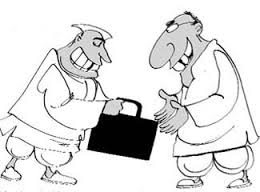
Corruption; the ugly truth

Corruption is the mistreatment of authority for personal gain of an individual or group of a country. It is the unjust use of public power for some private advantages by violating rules and regulations made by the government. These days, it has spread its roots deeply in the society which has made it difficult to be rid of it. Corruption is something that is so deep set in the roots of our society that has made it difficult for anyone to not fall into the crutches.

Nowadays, every important work is conducted with corruption. These days, corruption is done with the health of online transfers or in the form of expensive gifts etc. In order to get their work done quickly and rather easily, people take the easier route and bribe the officials.   Some people that are enlisted in the government or non-government offices have been mixed up in the corruption and will do anything to fulfil their wishes.

Corruption, is one form or another, is a worldwide phenomenon. Everyone admits that corruption is something immoral and detestable. Unfortunately, in our country, corruption has become a part of life. It has entered the very roots of Indian society.

Corruption has been defined variously by scholars. But the simple meaning of it is that corruption implies perversion of morality, integrity, character or duty. Corruption is the misuse of authority, public position, natural or public resources, power, etc. by someone to gain his/her personal gratifications.

Corruption is increasing in India day by day because there is a strong connection between the officials, politicians and criminals who are making this country weak. India got Independence in 1947 and it was slowly becoming strong and developing but in the mid-way, the disease of corruption started and stopped India to grow ahead.

Corruption is everywhere and in every department cheater it politics, hospitals, education, job, government offices, nothing is left of corruption. Everything has become a business and the source of earning money in the wrong way.

Evils, it is said, percolate in any society from the top. The topmost people in the country must present model examples of conduct, honesty and behaviour. One must not only be honest but one must also be above doubt. We, the common men also have some responsibilities towards our nation. If we stop giving bribe, the corrupts have no option but to do their job honestly. Then we shall be able to root out the evil of corruption from the entire society.

Corruption is the unjust use of public power for private advantages. We are all familiar with corruption and know that the occurrence is not a new thing in society. Violating rules and taking advantage has become a common practice. In order to get your work done in a shorter amount of time, people resort to giving and taking bribes.

It is a very common toxin in the society since ancient time. It has been found that corruption has been in practice since Mughal times. It is reaching new heights these days and increasing rapidly. It has affected the minds of people to such an extent and become so widespread that wrong people can play with the lives of people of the society. It is a type of materialism that corrupts the human mind and destroys one’s humanity.

Corruption comes in all fields of society such as sports, entertainment, education and politics etc. Corruption weakens a man’s mind and makes him dependent due to his greed and shallow mind. In a country like which is riddled with poverty, corruption is the only means to get by. People take bribes for the smallest things. Third World countries are the one that is the most well known for their corruption activities.

The World Bank has tried reprimanding them for their activities, but so far no strict action has been taken to curb the growing corruption. It is slowly destroying the lives of innocent people.

Struggles of an extrovert

You get excited over nearly everything
Even a little thing makes you excited and satisfied. You always make sure that you are entertained all by your own self.

When you’re upset you have to talk to as many people as you can about it.
You need many of them to listen to your problem because you can’t keep it up to yourself. Sharing the same will make it lighter.

Being home alone actually gives you anxiety.
You have the habit of staying with people and you don’t have the habit of being alone as you need someone always. But when you are home alone it actually gives you anxiety.

People often associate you with words like, “intense” “full on” or “very loud.
People often judge you because of your extra behaviors which for you is normal. As you are always ready for anything and everything there are chances when people won’t like it.

Wanting to go out when everyone else wants to stay in.
You can never be at rest. Be it your workplace, classroom or a weekend you have to go out for any reason.

You’re apparently not allowed to be sad.
Extroverts are not robots. They have emotions as equal as others. But people always believe that you can never be sad as they have always seen you excited and happy.

You’re expected to be the entertainment, everywhere, every time.
Not everytime they have the same energy, they have their own issues, sometimes they may be sad. But everyone expect you to be the one who entertains them.

Being expressive makes them seem like a rebel.
Maybe you don’t do it intentionally but you may sound like a one at some point because of your tone or your ways of expressing it.

Career in content writing.

“writing” the word itself means hard and smart work, both combined to give a great boost to your creative career in content writing
, The best way to start a career in content writing is only with more practice. One can opt for content writing as their career if you are enthusiastic to prove your writing skills. This can be done when you start writing your own blogs about any specific topic it might be any topic or field in which you are interested. And following some effective tips to write the content will be helpful.

To start a career in content writing means you already need to start writing all by yourself. All you need is to know how to write and it should be presentable and approachable. A career in this field is not as easy at it seems to be, so you need to have utter patience, educate yourself as much as you can, take criticisms positively and make your words make worth. Because, in the sudden moment, you will need to mold yourself into the market demands in writing, yet keeping alive your creativity. To write effective content one should have good command over English and vocabulary
There are many such organizations, websites which gives you a wide range of platform to showcase your writing skills through their blogs, post, etc which gives you an experience, knowledge, and grip to your career.
Start writing, gain the experience, get better at writing and you’ll find there are a ton of opportunities awaiting you.

Struggles of an introvert.

Not a conversation starter
They never start a conversation instead they sulk in the background until someone introduces them.

Staying home can become an addiction.
As they don’t like socializing much they prefer to be isolated rather than being with people. They prefer staying at home as a better option rather being out with others.

Social anxiety hits them anytime.
It’s really hard for them to actually be in large groups and from nowhere they may have a serious anxious feeling.

Phone calls are the absolute WORST.
They always try to avoid people as much as they can. They are much more of a ‘text’ person.

People underestimate them.
As they don’t come up usually, people underestimate them which is wrong. People have a misconception that they may lack talent or they are of no use but in reality they have much more than the ordinary.

Saying No
It’s very hard for them to say no. As they are not sure for the same. They would rather die than just saying no.

Public Speaking
This is the most challenging and horrying thing for a shy person. Human interaction foe them is so scary and when the same is in huge numbers you can’t imagine the fear they come across.

Making idle conversation is hard
They are better when they have their loved ones with them. They never approch or have a conversation with a stranger. And evend if they do so it turns out to be real hard.

Someone Approaching them.
This is the most hardest thing for a shy person. They always try to avoid people, specially strangers. And if someone approaches they become anxious.

Positive effects of lockdown in environment.

Effect on Air Quality
After the lockdown in many countries, there was lesser travelling done by people, whether it be by their own cars, or by trains and flights.
Industries were closed down and not allowed to function. This in turn led to the pollution in the air dropping significantly, as there was a marked decline in nitrous oxide emission.

Water Quality:
Since there were no boats, whether they be fishing or other activities, be it on the rivers and waterways, the water has cleared up.
In areas like Venice, the water became so clear that the fish could be seen and there was better water flow. No doubt, because of the lesser human footfall even the oceans are recovering and marine life is thriving.

Effect on Wildlife:
Again where fish is concerned, the lockdown has seen a decline in fishing, which means that the fish biomass will increase after over-fishing almost depleted it.
Apart from that, animals have been spotted moving about freely where once they would not dare to go. Even sea turtles have been spotted returning to areas they once avoided to lay their eggs, all due to the lack human interference.

Effect on Vegetation:
Plants are growing better because there is cleaner air and water, and because yet again there is no human interference.
With everything at a standstill, plants are allowed to thrive and grow and produce more coverage and oxygen. Less litter also means lesser clogging of river systems, which is good in the long run for the environment.

Pollution level:
Be it air pollution, water pollution or noise pollution the levels have decreased a lot as compared to the previous datas.
This lockdown has definetley proven positive for the environment around.

In conclusion, though there has been a positive impact on the environment due to the lockdown, there is fear that once people start travelling again or go back to doing what they have been doing, all the positive impact will also disappear.