
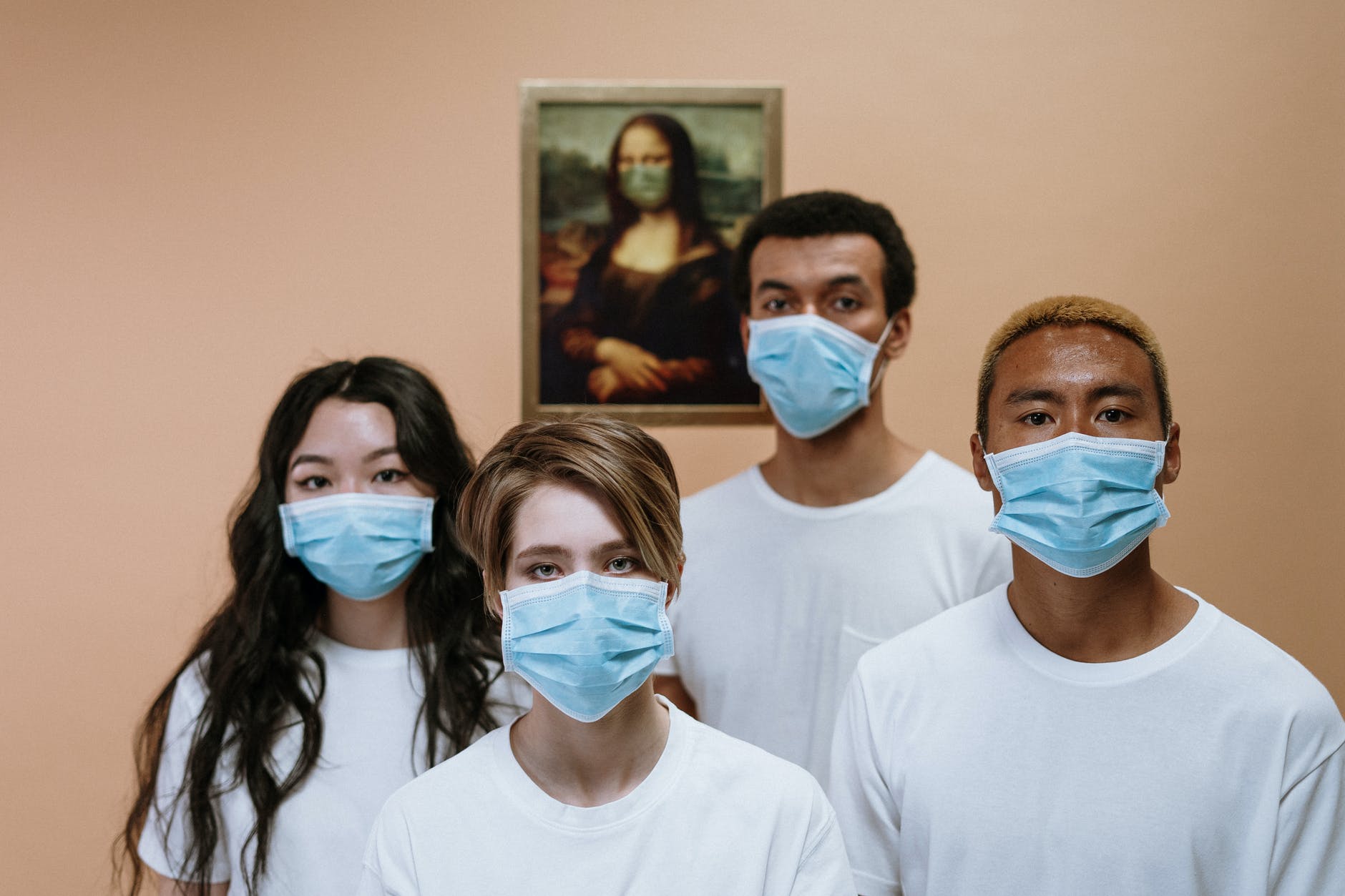
Boost your immunity to deal with the Second Corona Wave

Photo by cottonbro on Pexels.com

The second wave of coronavirus has wreaked havoc in our lives, once again. The number of cases are increasing tremendously with each passing day, which makes taking care of our immunity of utmost importance. Staying at home, not stepping out until urgent and keeping our immunity up and tight is our best bet to save ourselves from the deadly coronavirus.

Maintain a healthy diet

As with most things in your body, a healthy diet is key to a strong immune system. This means making sure you eat plenty of vegetables, fruits, legumes, whole grains, lean protein and healthy fats.

In addition to providing your immune system the energy it needs, a healthy diet can help ensure you’re getting sufficient amounts of the micronutrients that play a role in maintaining your immune system, including:

  • Vitamin B6, found in chicken, salmon, tuna, bananas, green vegetables and potatoes (with the skin)
  • Vitamin C, found in citrus fruit, including oranges and strawberries, as well as tomatoes, broccoli and spinach
  • Vitamin E, found in almonds, sunflower and safflower oil, sunflower seeds, peanut butter and spinach

Since experts believe that your body absorbs vitamins more efficiently from dietary sources, rather than supplements, the best way to support your immune system is to eat a well-balanced diet.

Exercise regularly

Physical activity isn’t just for building muscles and helping yourself de-stress — it’s also an important part of being healthy and supporting a healthy immune system.

One way exercise may improve immune function is by boosting your overall circulation, making it easier for immune cells and other infection-fighting molecules to travel more easily throughout your body.

In fact, studies have shown that engaging in as little as 30 minutes of moderate-to-vigorous exercise every day helps stimulate your immune system. This means it’s important to focus on staying active and getting regular exercise.

Hydrate, hydrate, hydrate

Water plays many important roles in your body, including supporting your immune system. A fluid in your circulatory system called lymph, which carries important infection-fighting immune cells around your body, is largely made up of water. Being dehydrated slows down the movement of lymph, sometimes leading to an impaired immune system.

Even if you’re not exercising or sweating, you’re constantly losing water through your breath, as well as through your urine and bowel movements. To help support your immune system, be sure you’re replacing the water you lose with water you can use — which starts with knowing how much water you really need.

Get plenty of sleep

Sleep certainly doesn’t feel like an active process, but there are plenty of important activities happening in your body when you’re not awake — even if you don’t realize it. For instance, important infection-fighting molecules are created while you sleep.

Studies have shown that people who don’t get enough quality sleep are more prone to getting sick after exposure to viruses, such as those that cause the common cold. To give your immune system the best chance to fight off infection and illness, it’s important to know how much sleep you should be getting every night, as well as the steps to take if your sleep is suffering.

Minimize stress

Whether it comes on quick or builds over time, it’s important to understand how stress affects your health — including the impact it has on your immune system. During a period of stress, particularly chronic stress that’s frequent and long-lasting, your body responds by initiating a stress response. This stress response, in turn, suppresses your immune system — increasing your chance of infection or illness.

Stress is different for everyone, and how we relieve it is, too. Given the effect it can have on your health, it’s important to know how to identify stress. And, whether it’s deep breathing, mediation, prayer or exercise, you should also get familiar with the activities that help you reduce stress.

I hope these tips help you to protect yourself from the second wave of corona virus.

Thank you.

Advantages of offline training

  • It is an active learning method, where students can interact with faculty, thus the concentration level is very high.
  • Course completion rate is almost 75% as compared to 7% of online.
  • The faculty can pass on the passion and enthusiasm of a subject to students.
  • Faculty can easily judge the performance of each student during the class and can work on problem areas.
  • Students who are trained offline usually tend to perform better than online training, if the course content remains the same. One of the reasons is peer’s pressure and competition.
  • Relationship building with like minded people, who are also going to be in similar profession is a bonus.
  • Limited students in each batch ensures individual attention.

Offline training has been the dominating medium for a long time and for a good reason.  

Offline learning

Offline Education means a student needs to go in a school, in a classroom, and attend a class face to face with a teacher.

The absence of network connectivity in remote areas made it difficult for learners to gain access to course content. This offline learning feature became a hit for those who don’t have an internet connection at home or while traveling. Offline learning requires you to physically travel to a training center or a school and be present at fixed hours. In an offline setting, students listen to long lectures and take notes, sometimes easily get bored and might doze off a little.

Whereas offline learning takes place in a fixed location, with a fixed schedule and requires you to travel and be on time, online learning is the opposite. If you have a training center close to your location, prefer to travel and study in another place than your hometown, then offline learning is absolutely fine. With offline learning, it’s easier to ensure students are paying attention to the training. Some students also find it easier to retain the knowledge and skills they’ve learnt through offline learning than they do with online learning.

Benefits of learning online

  1. The freedom to learn whatever you want
  2. Comfort of learning from your own home
  3. Ability to work a job while you study
  4. They offer ultimate convenience and flexibility
  5. Earn bonus points for your resumé
  6. Reduced education costs
  7. More opportunities for teacher-student interaction
  8. You can study at your own pace
  9. Expand your career horizons
  10. Gain greater access to experts in their fields
  11. Expand your professional network
  12. Greater ability to concentrate
  13. Avoid the dreaded commute
  14. Study with thousands of students around the world
  15. Reduced academic pressure
  16. Boost your brain and keep it healthy
  17. Study according to your learning style
  18. Build self-discipline and accountability
  19. Ability to pursue a hobby or interest
  20. Improve your communication skills

How can we improve online education in future?

When the COVID-19 pandemic finally reached the United States, the country immediately went into full panic mode.  Just about every industry took a major blow, with education being one of the largest areas of concern.  In only a matter of days, every school and university had shut down indefinitely, causing instant uncertainty for the future of education.  New questions rose every day about how teaching could continue without physically being in the classroom for the safety of students and teachers.  With the help of online technologies such as Zoom, GoToMeeting, and various other programs, learning was able to continue so that students will not fall too far behind due to the pandemic.  Once education was able to run smoothly via the internet, the financial and mental benefits of online learning for students started to be much more clear.

The intent of this blog post is to introduce the benefits of online education and give readers insight into some beneficial resources that can be utilized to further improve their online education experience as both a student or teacher.  Due to the global pandemic that we are currently experiencing, a number of changes have been made in the way that education is continuing.  By transitioning to an online education environment, the cost of attending universities may decrease, new technologies are being introduced to facilitate online learning, and the retention of information for students has started to increase.

Future of online education

Online teaching is here to stay. Many students prefer the online classroom since it offers flexibility in their busy schedules. Being physically present in a classroom isn’t the only learning option anymore — not with the rise of the internet and new technologies, at least. Nowadays, you have access to a quality education whenever and wherever you want, as long as you have access to a computer. online education plays an important role in helping individuals access the learner-centered and self-directed instruction.

With enhanced software, hardware, and Internet access, more options for online education will become available. Students pursuing an education that meets their needs, the future of online education will continue to grow. Online education enables the teacher and the student to set their own learning pace. It offers a wide selection of programs. Online education enables you to study or teach from anywhere in the world. This means there’s no need to commute from one place to another, or follow a rigid schedule. It allows for a customized learning experience. Unlike in-person education methods, online education tends to be more affordable.

Benefits of online education

  1. Flexibility:

Students have the freedom to juggle their careers and school because they aren’t tied down to a fixed schedule.

2. Efficiency:

Online learning offers teachers an efficient way to deliver lessons to students. Online learning has a number of tools such as videos, PDFs, podcasts, and teachers can use all these tools as part of their lesson plans. 

3. Affordability:

Another advantage of online learning is reduced financial costs. Online education is far more affordable as compared to physical learning. This is because online learning eliminates the cost points of student transportation, student meals, and most importantly, real estate. 

4.  Improved Student Attendance:

Since online classes can be taken from home or location of choice, there are fewer chances of students missing out on lessons.

5. Accessibility Of Time And Place:

Another advantage of online education is that it allows students to attend classes from any location of their choice. Additionally, online lectures can be recorded, archived, and shared for future reference. This allows students to access the learning material at a time of their comfort. Thus, online learning offers students the accessibility of time and place in education.

Resources for online learning

The resources offered to you for learning online will depend on the institution where you take your online program. Taking an online learning program, you’ll be an officially registered student at your institution and have access to the same resources as an on-campus student, like your institution’s digital library, learning management system etc. Online learning may be a completely new experience for you. 

  • EBooks;
  • Journals;
  • Videos;
  • Recorded lectures;
  • Quizzes;
  • Discussion forums
  • Live Q&A sessions; 

Here are some learning resources that help you learn anything:

  1. Coursera
  2. Udemy
  3. YouTube
  4. Alison
  5. edX

What is online education?

Online education is a form of education where students use their home computers through the internet. It is infinite number of ways to teach and learn outside of traditional classrooms and away from college campuses. Online education is electronically supported learning that relies on the Internet for teacher/student interaction. With online education, students can turn anywhere with Internet access and electricity into a classroom. When used to its full potential, online education has been shown to be more effective than pure face-to-face instruction. 

Online learning gives educators an opportunity to reach students who may not be able to enroll in a traditional classroom course and supports students who need to work on their own schedule and at their own pace. With the increased availability of the internet and computer technology, students are able to access information anytime and anyplace.

Educational studies

There are a lot of choices for them who are interested and looking for a top education as a subject but don’t want to work on the frontline as a teacher. Educational Studies is a program designed to help you graduate with a major and a minor in education with a non-license teaching degree. While Educational Studies does not earn you a teaching certification, you may choose to pursue a full teaching degree later in life.

Skills for educational studies:

  • Critical thinking skill
  • Problem-solving abilities
  • Communication skills
  • Strategic thinking and action planning
  • Organizational and analytical data gathering
  • A deep understanding of social issues within the education field
  • Teamwork and management skills
  • Leadership and decision-making abilities

Why is physical education important?

A good physical education program can set a child up for a lifetime of healthy habits. Physical education isn’t just important for older children; even at the preschool level, it’s an essential part of the school day. Physical Education (PE) develops students’ competence and confidence to take part in a range of physical activities that become a central part of their lives, both in and out of school. They develop a wide range of skills and the ability to use tactics, strategies and compositional ideas to perform successfully. They also reflect on their own and others’ performances and find ways to improve upon them. As a result, they develop the confidence to take part in different physical activities.

Physical education helps students develop personally and socially. They take on different roles and responsibilities, including leadership, coaching and officiating.

How to Write Better Articles

Photo by Liza Summer on Pexels.com

Article writing is an art, and it’s not everybody cup of tea. Though when it comes to Blogging, anyone can write an article ignoring quality as a metric here.

But to stand out from the general crowd, a normal article can never take you to the next stage. As a Freelance Writer, you will not be able to make huge money and as a Blogger, you will not be able to create an impression

Today, I will be sharing some tips to enhance your article writing skills. If you want to be an outstanding writer, you should not only follow the below tips but make them a habit.

1. Startup

“The fewer words you use, the better.”

Yes, you read it right.

Don’t worry about the length of your article besides this you should keep in mind that you’re writing this article for developing your skills of writing which can help you many people in the future to develop the same for themselves.

2. Write Early in the morning

This is something interesting.

As I have analyzed many serious and professional writers and Bloggers do prefer to write their contents in the morning time. Morning time allows them to write fresh stuff.

Moreover, the morning atmosphere seems quite quiet and energetic, which can help them to improve their Article writing skills right away. Give it a try and feels the fresh experience of being a healthy writer. I’m sure it won’t hurt you.

3. Be a Good Reader

This is the most mandatory thing for the one who wants to build their career in Writing or Blogging. You have to be a good reader. With this, your mind will allow you to create your thoughts and let allow yourself available to write on your particular topics. There are many more blogs available to follow, having some good and informative content.

“YOU are what you read and Write!”

4. Be Simple

For generating good traffic on your content, your way of writing should be simple enough.

For that express your views in a simple and appropriate way. This will help visitors or readers in a good manner.

5. Complete your articles in various stages

One who wants to be famous with his contents, have to follow some serious stages while he is writing his article. Every blogger knows writing an article takes much time, and every blogger and writer have to let pass on their articles through many stages.

Firstly you have to analyze your topic that you’re going to write on it.

Secondly, you have to make a list of some ideas of the related topic. Thirdly you need to complete sentences and paragraphs of your article, related to your topic. Fourthly you need to edit your article and let clear all the queries.

Lastly, proofreading is a must.

These were the stages to follow while you’re writing on a single topic. Be sure these all stages need some specific time. For that, you need to make your schedule for the following stages. And then it will become a healthy content for sure.

6. Write in a Distraction-Free Location

Many bloggers have many more accounts on many social networking sites and have many more other things that can easily distract their minds while they’re about to write an article.

And I’m sure that you are having the same. For that, you should keep your location where you can find out some peaceful atmosphere around you.

Avoid your Social networking activities and mobile phones while you’re writing something.

The distraction-free location keeps you motivated to write healthy content. If you wish to pimp up your Article writing skills and speed, I would recommend writing using any Distraction-free software.

You can use the WordPress Distraction Free Writing option.

I hope these tips help you.

Thank you.

Why is Early Childhood Education Important?

Typically, early childhood education encompasses any education a child receives up until the age of eight, or around third grade. During these initial years of life, children’s brains are growing and learning at a rapid rate, and learning typically comes very easy to them. The purpose of education at this stage is to build a solid foundation for children to build upon for the rest of their lives.

When looking at pre-school, one of the earliest educational opportunities,“7–8 of every 10 preschool children did better than the average child in a control or comparison group”. This makes sense, given that education in those early years sets children up for success.

 the students who were given a high-quality education performed better than the other students in many areas, both academically and socially. These students:

  • Scored higher on standardized testing
  • Had higher attendance rates
  • Had fewer discipline referrals
  • Were rated higher by their teachers in terms of behaviors, social interactions, and emotional maturity.

The list of studies showing the importance of early childhood education goes on virtually forever. Early education also teaches kids how to be students. 

What is the main difference between formal education and informal education?

Sometimes as educators, we have a clear idea of what we’d like to see achieved; at others, we do not and should not. In the case of the former, we might be working to a curriculum, have a session or lesson plan with clear objectives, and have a high degree of control over the learning environment. This is what we often mean by ‘formal education’. When we are working with a community group, the setting is theirs and, as educators, we are present as guests. This is an example of informal education.

First, the group may well be clear on what it wants to achieve. They know learning is involved – it is something necessary to achieve what they want – but it is not the main focus. 

Second, this learning activity works largely through conversation – and conversation takes unpredictable turns. 

In both forms, educators set out to create environments and relationships where people can explore their, and other’s, experiences of situations, ideas and feelings.

Education – cultivating hopeful environments and relationships for learning

It is often said that we are learning all the time and that we may not be conscious of it happening. Learning is both a process and an outcome. As a process, it is part of being and living in the world. We are social animals. As a result, educators need to focus on creating environments and relationships for learning rather than trying to drill knowledge into themselves and others. Teachers are losing the education war because our adolescents are distracted by the social world. Naturally, the students don’t see it that way. They desperately want to learn, but what they want to learn about is their social world. You should pay some attention to the kind of material you are working with, and it may have some influence on what you try to do. 

Education is deliberate. We act with a purpose – to build understanding and judgement and enable action. We may do this for ourselves. This process is sometimes called self-education or teaching yourself.