Land settlement

The Indian National Army (INA) or Azad Hind Fauj was an armed force formed by
Indian nationalists in 1942 in Southeast Asia during World War II.
The aim of the army was to overthrow the British Raj in colonial India, with Japanese
assistance. Initially composed of Indian prisoners of war captured by Japan in her
Malayan campaign and at Singapore, it later drew large numbers of volunteers from
Indian expatriate population in Malaya and Burma.
Initially formed in 1942 immediately after the fall of Singapore under Mohan Singh, the
first INA collapsed in December that year before it was revived under the leadership of
Subhas Chandra Bose in 1943 and proclaimed the army of Bose’s Arzi Hukumat-e- Azad
Hind (The Provisional Government of Free India). This second INA fought along with
the Imperial Japanese Army against the British and Commonwealth forces in the
campaigns in Burma, Imphal and Kohima, and later, against the successful Burma
Campaign of the Allies. The end of the war saw a large number of the troops repatriated
to India where some faced trial for treason and became a galvanising point of the Indian
Independence movement.
After Indian independence, the ex-INA members, with some exceptions, were refused
service in the Indian Army. However, a number of notable members later became
involved in public life in India and in Southeast Asia.
The legacy of the INA is controversial given its associations with Imperial Japan, the
course of Japanese occupations in Burma, Indonesia and other parts of Southeast Asia,
her alliance with Nazi Germany and Fascist Italy, as well as Japanese war crimes and the
alleged complicity of the troops of the INA in these. Also, its relative insignificance in
military terms, its obvious propaganda value to the Japanese, as well as wartime British
Intelligence propaganda of cowardice and stories that associated INA soldiers in
mistreatment of captured Allied troops, to some extent mires the history of the army.
However, after the war, the Red Fort trials of captured INA officers in India provoked
massive public outcries in support of their efforts to fight the Raj, eventually triggering
the Bombay mutiny in the British Indian forces. These events in the twilight of the Raj
are accepted to have played a crucial role in its hasty end.

Ratan tata

Ratan Naval Tata is an Indian industrialist, philanthropist, and a former chairman of Tata Sons. He was also chairman of Tata Group, from 1990 to 2012, and again, as interim chairman, from October 2016 through February 2017, and his most profits are donated to charitable trusts

He was born in 1937 on 28th of december(83 yrs) and his parents were Naval Tata and sooni tata his education was completed in hardvard business school in 1975.and he has a brother named noel tata. And the awards he got received are padma vibhushan, padma bhushan, CNN-IBN Indian of the year in business.

And ratan tata was fond of cars he adores cars Ratan naval Tata is highly fond of cars. He has a wonderful collection of high-end cars including Ferrari California, Cadillac XLR, Land Rover Freelander, Chrysler Sebring, Honda Civic, Mercedes Benz S-Class, Maserati Quattroporte, Mercedes Benz 500 SL, Jaguar F-Type, Jaguar XF-R, and some others.

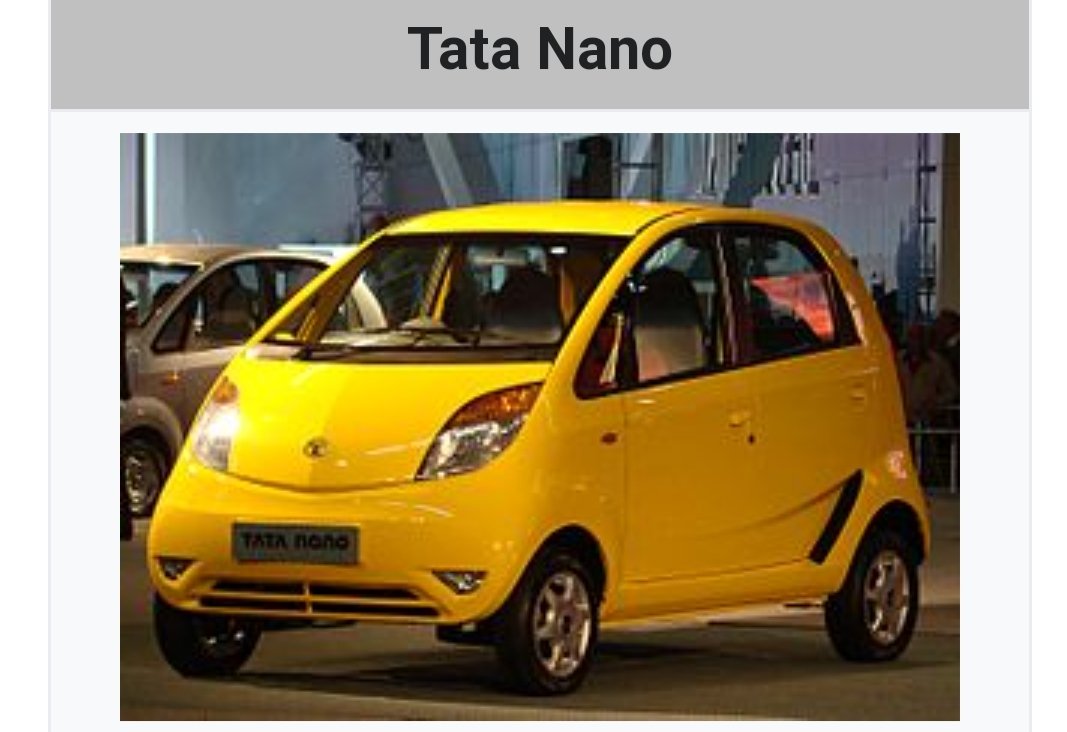
Nano cars are the dearest project for ratan Tata in 2009, he promised to make a car that would cost only 1 lakh rupee. For middle class family it is useful. He kept the best efforts to keep up his promises to the society.

Ratan tata didn’t get married because he fell in love and due to some reasons they got separated and she got married to another person.

ICT and Education During Covid-19 in India

When the whole world is facing a pandemic situation and it affected every single sector of the world. And it has impacted the educational sector tremendously. Every single educational institutions is closed and we don’t have a choice. As a result globally, over 1.2 billion children were out of the classroom. In India, according to a UNICEF report, “School closures have impacted 247 million children enrolled in elementary and secondary education and 28 million children enrolled in pre-schools and Anganwadi centers. This is in addition to the more than 6 million girls and boys who were already out of school before the COVID-19 crisis”, the report mentioned. ICT appears as a bridge to break the distance and survive the learning i.e, the gap which was created by lockdown between teachers and learners has been filled with the help of ICT.

Due to this Covid-19, every educational institution and pandemic forced the sector to shift to a virtual and blended mode of learning. Because this was the only way to continue the education. Initially some problems were faced by students as well as teachers. Because suddenly they have to shift in a totally different situation than earlier and many teachers and institutions were not trained and equipped adequately to shift to online teaching. Hence, they give their best and learn new skills in such difficult times. And gradually they adopted and teaching-learning process continued.

ICT initiatives for continuing the Learning Process

In the era of digitalization ICT is necessary in every aspects of life. It stands for Information, Communication and Technology. These three words have different meaning but collectively ICT becomes a part and parcel of human being. With the help of ICT Educational Institutions have been using various platforms like Google Classrooms, Microsoft Team, Zoom, Google Meeting and many more to continue the process of learning for students amid pandemics. Techers also provide e-content to students for better learning.

National level ICT initiatives

To address the challenges of learning, the Ministry of Education has undertaken several initiatives to assist students and educators. Some initiatives used which already exists digital platform like DIKSHA(Digital Infrastructure for Knowledge Sharing), e-Pathshala, NROER(National Repository of Open Educational Resources). These were used extensively for supporting the learners and teachers across the country with educational resources and relevant trainings. ICT tools like T.V( Swayam Prabha TV channels), Radio(All India Radio) helped the government to reach a larger number of target audiences. Various states also adapted initiatives to provide the necessary resources. For example

Chhattisgarh’ Education at Your Doorstep(Padhai Tuhar Duar) Initiative:– It is a portal to tackle the impact of the Covid-19 crisis in the education sector. It aimed to provide the platform to connect the teachers and learners by providing access to good quality educational content from comfort of their homes. It has a mix resources like Live classes, Offline Video Lectures, Animations, Podcasts etc.

Kerala- KITE Initiatives:- The state government launched virtual classes through Kerala Infrastructure and Technology for Education which was launched in 2005. During the difficult times of Covid-19, the state has been effectively using technology to ensure continuous learning and embodied their slogans “Physical Distance and Social Utility into Practice.” and many more initiatives by central and state government.

Individual Initiatives

Initiatives by various profit, non-profit organizations, and individuals have been incredible force behind the effort to use technology to make learning possible to many learners. Some initiatives in India like Smarter ED Platform(it is an initiative by Lenevo in collaboration with Vidayalaya(a non-profit organization) that connects volunteer teachers and learners.) and Digital Daan. Individual efforts of teacher to reach every student to continue their learning has been also incredible during this pandemic situation. One such teacher is Ritika Tomar from Sonbhadra ,UP has come up with the solution to provide necessary information to her students. she divides her students into two groups one having smartphones and other having simple cell phones. she used WhatsApp and message services to reach out tob both groups respectively. Her efforts helped the available ICT iniciatives to reach her students in the best possible way. Few teachers in rural areas teaches their students following the protocols of social distancing using Loudspeakers. In this way lot of teachers have explored and used ICT tools to teach their students in the pandemic.

Thus it can be said that ICT has proved itself as a boon to education in the pandemic situation . Education sector has been impacted tremendously especially in India. technological innovation in the sector have made it possible to overcome the situation due to the crisis. The importance of e-learning has been realized and it has been acknowledged by educational communities. We can say that the era of e-learning has been started due to this pandemic. In post pandemic world to this ICT can be used in blended mode of learning.

KOLKATA:THE CITY OF JOY

Kolkata previously Calcutta (the official name until 2001) is the capital of the Indian state of West Bengal. Located on the eastern bank of the Hooghly River, the city is approximately 80 kilometres (50 mi) west of the border with Bangladesh .It is the primary business, commercial, and financial hub of Eastern India and the main port of communication for North-East India. According to the 2011 Indian census, Kolkata is the seventh-most populous city in India, with a population of 1.49 crores. Spread roughly north–south along the east bank of the Hooghly River, Kolkata sits within the lower Ganges Delta of eastern India approximately 75 km (47 mi) west of the international border with Bangladesh; the city’s elevation is 1.5–9 m (5–30 ft).Much of the city was originally a wetland that was reclaimed over the decades to accommodate a burgeoning population .The remaining undeveloped areas, known as the East Kolkata Wetlands, were designated a “wetland of international importance” by the Ramsar Convention (1975). As with most of the Indo-Gangetic Plain, the soil and water are predominantly alluvial in origin. Kolkata is located over the “Bengal basin”, a pericratonic tertiary basin. Bengal basin comprises three structural units: shelf or platform in the west; central hinge or shelf/slope break; and deep basinal part in the east and southeast. Kolkata is located atop the western part of the hinge zone which is about 25 km (16 mi) wide at a depth of about 45,000 m (148,000 ft) below the surface. The shelf and hinge zones have many faults, among them some are active. Total thickness of sediment below Kolkata is nearly 7,500 m (24,600 ft) above the crystalline basement; of these the top 350–450 m (1,150–1,480 ft) is Quaternary, followed by 4,500–5,500 m (14,760–18,040 ft) of Tertiary sediments, 500–700 m (1,640–2,300 ft) trap wash of Cretaceous trap and 600–800 m (1,970–2,620 ft) Permian-Carboniferous Gondwana rocks. The quaternary sediments consist of clay, silt and several grades of sand and gravel. These sediments are sandwiched between two clay beds: the lower one at a depth of 250–650 m (820–2,130 ft); the upper one 10–40 m (30–130 ft) in thickness. According to the Bureau of Indian Standards, on a scale ranging from I to V in order of increasing susceptibility to earthquakes, the city lies inside seismic zone III.

ORIGIN

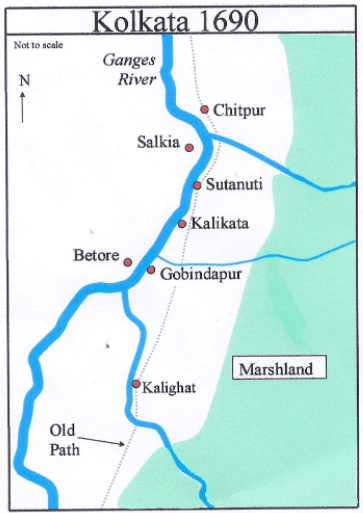
The word Kolkata is derives from Kalikata/ Kolikata,the Bengali name of one of three villages that predated the arrival of the British, in the area where the city was eventually established; the other two villages were Sutanuti and Govindapur.

In the late 17th century, the three villages that predated Calcutta were ruled by the Nawab of Bengal under Mughal suzerainty. After the Nawab granted the East India Company a trading licence in 1690,the area was developed by the Company into an increasingly fortified trading post. Nawab Siraj ud-Daulah occupied Calcutta in 1756, and the East India Company retook it the following year. In 1793 the East India company was strong enough to abolish rule, and assumed full sovereignty of the region. Under the company rule and later under the British Raj, Calcutta served as the capital of British-held territories in India until 1911, when its perceived geographical disadvantages, combined with growing nationalism in Bengal, led to a shift of the capital to New Delhi. Calcutta was the centre for the Indian independence movement. Following independence in 1947, Kolkata, which was once the centre of Indian commerce, culture, and politics, suffered many decades of political violence and economic stagnation.

A demographically diverse city, the culture of Kolkata features idiosyncrasies that include distinctively close-knit neighbourhoods (paras) and freestyle conversations (adda). Kolkata is home to West Bengal’s film industry Tollywood, and cultural institutions, such as the Academy of Fine Arts, the Victoria Memorial, the Asiatic Society, the Indian Museum and the National Library of India. Among scientific institutions, Kolkata hosts the Agri Horticultural Society of India, the Geological Survey of India, the Botanical Survey of India, the Calcutta Mathematical Society, the Indian Science Congress Association, the Zoological Survey of India, the Institution of Engineers, the Anthropological Survey of India and the Indian Public Health Association. Four Nobel laureates and two Nobel Memorial Prize winners are associated with the city.Though home to major cricketing venues and franchises, Kolkata differs from other Indian cities by focusing on association football and other sports.

Arts student job opportunity

As a arts student your opportunity not limited to Masters in Arts or UPSC and other government exam. Of course they are available for you. Today I will post some more amazing career option which you might not know.

MBA/MMS

Nowadays top B school are focusing on diversities. If your acads are low then the best exam would be MHCET. Many college in Mumbai don’t conduct gd-pi. If you communication skill is poor then you must aim for these mba/mms course(they mostly offer mms) .

CFA

If you are graduate (Final year) you can give CFA 1 exam. Then you will get an internship easily. And it will help you clear interview of Personal interview happens in bschool. In summer internship in mba program CFA certificate definitely help to crack it.

Law

Law give you opportunity to understand our legal system better and indepth. Many law firm recruit law graduate.

Indian National Army

The Indian National Army (INA) or Azad Hind Fauj was an armed force formed by
Indian nationalists in 1942 in Southeast Asia during World War II.
The aim of the army was to overthrow the British Raj in colonial India, with Japanese
assistance. Initially composed of Indian prisoners of war captured by Japan in her
Malayan campaign and at Singapore, it later drew large numbers of volunteers from
Indian expatriate population in Malaya and Burma.
Initially formed in 1942 immediately after the fall of Singapore under Mohan Singh, the
first INA collapsed in December that year before it was revived under the leadership of
Subhas Chandra Bose in 1943 and proclaimed the army of Bose’s Arzi Hukumat-e- Azad
Hind (The Provisional Government of Free India). This second INA fought along with
the Imperial Japanese Army against the British and Commonwealth forces in the
campaigns in Burma, Imphal and Kohima, and later, against the successful Burma
Campaign of the Allies. The end of the war saw a large number of the troops repatriated
to India where some faced trial for treason and became a galvanising point of the Indian
Independence movement.
After Indian independence, the ex-INA members, with some exceptions, were refused
service in the Indian Army. However, a number of notable members later became
involved in public life in India and in Southeast Asia.
The legacy of the INA is controversial given its associations with Imperial Japan, the
course of Japanese occupations in Burma, Indonesia and other parts of Southeast Asia,
her alliance with Nazi Germany and Fascist Italy, as well as Japanese war crimes and the
alleged complicity of the troops of the INA in these. Also, its relative insignificance in
military terms, its obvious propaganda value to the Japanese, as well as wartime British
Intelligence propaganda of cowardice and stories that associated INA soldiers in
mistreatment of captured Allied troops, to some extent mires the history of the army.
However, after the war, the Red Fort trials of captured INA officers in India provoked
massive public outcries in support of their efforts to fight the Raj, eventually triggering
the Bombay mutiny in the British Indian forces. These events in the twilight of the Raj
are accepted to have played a crucial role in its hasty end.

A NECESSARY REVOLUTION.

An incapable, corrupted Government has always been considered a major reason for shortcomings in growth of our country. Innumerable debates are regularly put forward by citizens, officials, media and opposition against the decisions and steps taken by existing government. Despite the presence of years of mistrust and distress between Indian Government and it’s citizens, the Commencement of governance of Narendra Modi enlightened a ray of hope within the residents. Ever since, Mr. Narendra Modi came into power he has constantly been into the limelight , be it for his appreciable deeds or sometimes the trolled one. But one fact about his rule within all this time has remained common. That is., CHANGE which not just included some petite conclusions of his’s but a big bowl of immensely astonishing and striking shocks for whole of the Country. And here came yet another tremendous move by BJP ( Bhartiya janta party) officials. A wholesome Cabinet Reshuffle and expansion of PM Narendra Modi led government took place a few days back.

Image source

Descriptions In Detail

On 7th July, 2021. A total of 43 ministers in the Union Cabinet expansion took an oath at the Rashtrapati Bhavan. The President Of India Mr. Ramnath Govind welcomed a great number of new ministers as well as rearranged positionings of various existing Council of ministers. Along with that, a major buzz was created at the news of resignation by Ministers of Four one of the most important departments including Health Minister Harsh Vardhan, Chemicals and Fertilizers Minister D V Sadananda Gowda, Labour Minister Santosh Gangwar and Education Minister Dr Ramesh Pokhriyal Nishank. The reports state that PM modi now has 77 nee ministers and almost around half of them i.e. 36 ministers are new to the ministry. BJP has now set a record of having highest number of members from Other backward classes, by inculcating about 27 members from Other backward classes out of which 12 belong to SC/ST castes. Each of these members belong to different origins and category of classes. According to a reliable source, the council will now have a sum of 11 females too.Out of all these members, 68 ministers are graduates and Professionals comprising of 13 lawyers, 6 doctors, 5 engineers, 7 Civil Servants, 7 Phd holders and 3 MBAs. Another fact is that under this list the minimum age of a minister has decreased upto 38-40 years old.

Here’s the complete List of all the reshuffled ministers with the positions assigned to them;

Cabinet Ministers

1. Narayan Rane

2. Sarbananda Sonowal : Ports and Shipping, AYUSH Ministry.

3. Dr Virendra Kumar

4. Jyotiraditya Scindia : Civil Aviation.

5. Ramchandra Prasad Singh : Steel Ministry.

6. Ashwini Vaishnav : Railways, Communication & Electronics and Information Technology.

7. Pashu Pati Kumar Paras: Minister of Food Processing Industries.

8. Kiren Rijiju : Law and Justice Ministry.

9. Raj Kumar Singh : Power and Ministry of New and Renewable Energy.

10. Hardeep Singh Puri : Petroleum, Housing and Urban Development.

11. Mansukh Mandaviya : Chemicals and Fertilizers, Health Ministry.

12. Bhupender Yadav

13. Parshottam Rupala

14. G Kishen Reddy

15. Anurag Thakur : Information & Broadcasting and Sports.

Ministers of States

16. Pankaj Choudhary (Minister of State in the Ministry of Finance) .

17. Anupriya Singh Patel (Minister of State in the Ministry of Commerce and Industry).

18. Satya Pal Singh Baghel (Minister of State in the Ministry of Law and Justice).

19. Rajeev Chandrasekhar (Entrepreneurship; and Minister of State in the Ministry of Electronics and Information Technology).

20. Shobha Karandlaje (Minister of State in the Ministry of Agriculture and Farmers Welfare).

21. Bhanu Pratap Singh Verma (Minister of State in the Ministry of Micro, Small and Medium Enterprises).

22. Darshana Vikram Jardosh (Minister of State in the Ministry of Textiles; and
Minister of State in the Ministry of Railways).

23. Meenakshi Lekhi (Minister of State in the Ministry of External Affairs; and
Minister of State in the Ministry of Culture).

24. Annpurna Devi (Minister of State in the Ministry of Education).

25. A Narayanaswamy (Minister of State in the Ministry of Social Justice and Empowerment).

26. Kaushal Kishore (Minister of State in the Ministry of Housing and Urban Affairs).

27. Ajay Bhatt (Minister of State in the Ministry of Defence; and Minister of State in the Ministry of Tourism).

28. BL VermaMinister of State in the (Ministry of Development of North Eastern Region; and Minister of State in the Ministry of Cooperation).

29. Ajay Kumar (Minister of State in the Ministry of Home Affairs).

30. Chauhan Devusinh (Minister of State in the Ministry of Communications).

31. Bhagwanth Khuba (Minister of State in the Ministry of New and Renewable Energy; and Minister of State in the Ministry of Chemicals and Fertilizers).

32. Kapil Moreshwar Patil (Minister of State in the Ministry of Panchayati Raj).

33. Pratima Bhoumik (Minister of State in the Ministry of Social Justice and Empowerment).

34. Subhas Sarkar (Minister of State in the Ministry of Education).

35. Bhagwat Kishanrao Karad (Minister of State in the Ministry of Finance).

36. Rajkumar Ranjan Singh (Minister of State in the Ministry of External Affairs; and Minister of State in the Ministry of Education).

37. Bharati Pravin Pawar (Minister of State in the Ministry of Health and Family Welfare).

38. Bishweswar Tudu (Minister of State in the Ministry of Tribal Affairs; and
Minister of State in the Ministry of Jal Shakti).

39. Shantanu Thakur (Minister of State in the Ministry of Ports, Shipping and Waterways).

40. Dr Munjapara Mahendrabhai (Minister of State in the Ministry of Women and Child Development; and Minister of State in the Ministry of AYUSH).

41. John Barla (Minister of State in the Ministry of Minority Affairs).

42. Dr L Murugan (Minister of State in the Ministry of Fisheries, Animal Husbandry and Dairying; and Minister of State in the Ministry of Information and Broadcasting).

43. Nishith Pramanik (Minister of State in the Ministry of Home Affairs; and Minister of State in the Ministry of Youth Affairs and Sports).

Everything Have it’s Pros and Cons

According to a reliable source, A new report formed by the Association of for Democratic reforms (ADR) poll rights group says, that out of these new team of ministers 42% that is., 33 ministers have had Criminal cases against them. Out of these 24 have declared serious cases against them inclusive of murder, attempt to murder and robbery. Moreover, 90% of them are into Millionaires they hahavtotal assets amounting to 1 crore and above. While this huge step and the positive points about even distribution of authorities within ministers gave hopes for better growth opportunities, the ADR reports yet again drag down the expectations. However, Future is unpredictable and so is the Government. Thus, all left with common man to do is await and pray for decisions to work in their favour.

Digital Marketing

Digital marketing is the use of the Internet, mobile devices, social media, search engines, and other channels to reach consumers. Some marketing experts consider digital marketing to be an entirely new endeavor that requires a new way of approaching customers and new ways of understanding how customers behave compared to traditional marketing.

Understanding Digital Marketing

Digital marketing targets a specific segment of the customer base and is interactive. Digital marketing is on the rise and includes search result ads, email ads, and promoted tweets – anything that incorporates marketing with customer feedback or a two-way interaction between the company and customer.

In the parlance of digital marketing, advertisers are commonly referred to as sources, while members of the targeted ads are commonly called receivers. Sources frequently target highly specific, well-defined receivers.

Digital Marketing Channels

  • Website Marketing

A website is the centerpiece of all digital marketing activities. Alone, it is a very powerful channel, but it’s also the medium needed to execute a variety of online marketing campaigns. A website should represent a brand, product, and service in a clear and memorable way. It should be fast, mobile-friendly, and easy to use.

  • Pay-Per-Click (PPC) Advertising

PPC advertising enables marketers to reach Internet users on a number of digital platforms through paid ads. Marketers can set up PPC campaigns on Google, Bing, LinkedIn, Twitter, Pinterest, or Facebook and show their ads to people searching for terms related to the products or services. PPC campaigns can segment users based on their demographic characteristics (such as by age or gender), or even target their particular interests or location. The most popular PPC platforms are Google Ads and Facebook Ads.

  • Content Marketing

The goal of content marketing is to reach potential customers through the use of content. Content is usually published on a website and then promoted through social media, email marketing, SEO, or even PPC campaigns. The tools of content marketing include blogs, ebooks, online courses, infographics, podcasts, and webinars.

  • Email Marketing

Email marketing is still one of the most effective digital marketing channels. Many people confuse email marketing with spam email messages, but that’s not what email marketing is all about. Email marketing is the medium to get in touch with your potential customers or the people interested in your brand. Many digital marketers use all other digital marketing channels to add leads to their email lists and then, through email marketing, they create customer acquisition funnels to turn those leads into customers.

  • Social Media Marketing

The primary goal of a social media marketing campaign is brand awareness and establishing social trust. As you go deeper into social media marketing, you can use it to get leads or even as a direct sales channel.

  • Affiliate Marketing

Affiliate marketing is one of the oldest forms of marketing, and the Internet has brought new life to this old standby. With affiliate marketing, influencers promote other people’s products and get a commission every time a sale is made or a lead is introduced. Many well-known companies like Amazon have affiliate programs that pay out millions of dollars per month to websites that sell their products.

  • Video Marketing

YouTube has become the second most popular search engine and a lot of users are turning to YouTube before they make a buying decision, to learn something, read a review, or just to relax. There are several video marketing platforms, including Facebook Videos, Instagram, or even TikTok to use to run a video marketing campaign. Companies find the most success with video by integrating it with SEO, content marketing, and broader social media marketing campaigns.

  • SMS Messaging

Companies and nonprofit organizations also use SMS or text messages to send information about their latest promotions or giving opportunities to willing customers. Political candidates running for office also use SMS message campaigns to spread positive information about their own platforms. As technology has advanced, many text-to-give campaigns also allow customers to directly pay or give via a simple text message.

Digital marketing challenges

1. Not getting lost in the volume

The digital world is booming, and almost every business out there has taken its products/services online to reach out to the masses. According to a report by Experian, most marketers are now facing the challenge of making their brand stand out in the volumes available on the internet. This eventually leads to the difficulty of running a brand awareness campaign or acquiring new customers.

What can you do?

While it is a fact that at least some of your products/services might be similar to what another business has to offer, there is a minor aspect that is unique to you. Discover the USP of your product/service and find ways to convey the same. Conduct surveys on your existing customers and your target audience to better understand what they are looking for and identify which needs your brand can fulfill.

2. Driving relevant traffic to the website

Continuing on the point above, marketers today are consistently facing a challenge in spreading brand awareness in the right target market. This also makes it harder for them to drive the ideal traffic to their business websites. Therefore, understanding which channel to tap into and driving the relevant audience to your website to turn them into customers is becoming an ongoing challenge for marketers.

What can you do?

Conduct an audit of your online activity. Identify what tactics you are opting to reach out to your audience. Consider the content you’re producing, the channels you’re presenting it on, your social presence, and the paid/unpaid campaigns you are running. Use robust analytics to know which of them work the best for you and optimize your efforts simultaneously. But it is essential to measure your analytics at modest intervals of time to give each of your efforts enough span to work over.

3. Targeting the right audience effectively

The first and foremost thing that an effective marketer would do is identify their target audience in the market. With the number of internet users increasing by the day and their needs changing almost every second, targeting the right audience has become one of the biggest challenges for marketers.

Keeping in mind what your business has to offer and what kind of problems it would solve when put to use, create your value proposition. This will help you identify who or what demographics would resonate with it the most when targeted.

What can you do?

Look at the general demographics of the market that you want to reach out to. Identify their needs and create customer personas taking into consideration their online behavior and possible future needs. In this case, companies like Wigzo equip you with machine learning and predictive analytics tools to enable better persona creation.

4. Lead generation using social media

When it comes to the various social channels, most businesses and marketers don’t know how to remain consistent. Most of them feel that it is all about the paid campaigns they are supposed to run for brand awareness and lead generation. Although, both of them is a constant challenge with the ever-increasing market competition.

Even though considerable marketing budgets are set aside by businesses, most marketers cannot run their engagement into revenue. But you mustn’t just build your social following – you need to get conversions that add up to the overall business goal.

What can you do?

The most effective way to leverage social media is to integrate your marketing and sales efforts. Sharing behavioral data and interaction levels with leads on social media can help the sales team define a custom, personalized customer journey for them – which they are more likely to convert on.

5. Optimizing marketing budgets and ROI

With the increase of digital channels and advanced analytics tools, marketers are now expected to optimize the marketing budgets and the ROI to best suit the business’s needs. He is expected to measure each effort and its value to achieve the end goal – the number of leads generated or the revenue raised.

What can you do?

Tap into the power of machine learning and robust analytics regularly. An effective marketer can gauge the value of every single lead generated from a marketing effort. Understand the impact of each digital campaign on lead generation, test different variants and approaches of reaching out to your target audience to optimize your campaigns for much better results.

While you measure the digital inbound results, ensure that you consider the outbound efforts being made by your business and what kind of results it is yielding.

6. Keeping up with the changing trends

The digital market and marketing techniques have changed drastically over the last few years. And it continues to change even today to cater to the modern-day addressable market needs. Hence, marketers need to stay up-to-date with all these changes.

Be it the launch of a new social media platform or a technology that would make a marketing effort more robust, marketers need to remain on top of things to ensure their business does not lose out on possible conversions.

What can you do?

Consistently engage with your target audience on platforms that they are most active on. The most effective way of doing so is to leverage social listening using tools like Hootsuite. They help you understand what people are saying about you and your product/service, what they expect – allowing you to become a part of their conversation.

7. A Check on Increased Security Risks

We have come across cases wherein online security has been compromised.  The news and media keep it afresh. Since more information is shared online, hackers get more incentives to find ways to get through security. Shopping, bill payment, application submission, order copies, certificates, and other essential documents, and so much more are stored online for easy access – making these spaces a treasure trove for hackers and thieves. Venturing into digital marketing sure comes with its cost of security getting compromised as most of the work remains online. Security comes as a challenge.

What can you do?

You may already have a good firewall, HTTPS encryption, and maybe a good antivirus program. But that’s not enough. You will need more. Sit out and work with an authentic security team and identify your website’s weak spots and apps to create measures to reduce risk.

8. Lesser Focus on Keywords

Keywords were the bread and butter of SEO sometime in the immediate past. You just needed to find the right keywords and use them right, and your site could shoot up to the top in the search results—helping you with more exposure and traffic.

Now Google has changed algorithms making the keywords less critical. However, they are still to be used but are not the focus. Instead, it has become a topical approach rather than seeking and finding one, meaning that Google first gets an overall scope of your website.

What can you do?

First, you need to use search phrases instead of keywords and build content around topics rather than coming up with content for each keyword you want to target. Make your website a resource for the phase or question you need to target and see the changes.


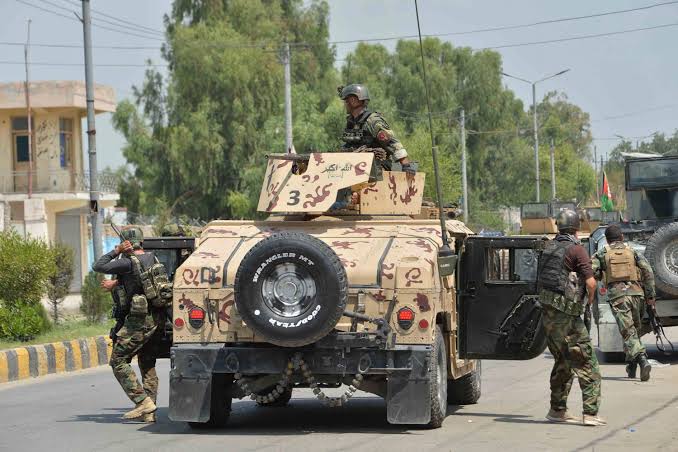
Afghanistan- A war-torn nation

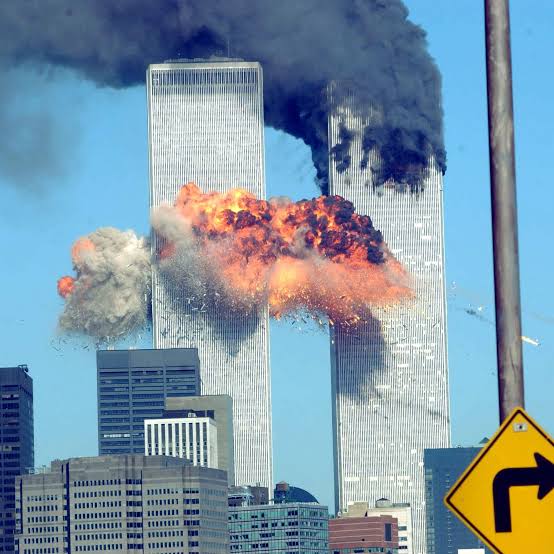
With Al-Qaeda militants carrying out coordinated attacks on American soil,also known as 9/11 Attacks and Taliban government refusing to hand over the main culprit behind these attacks ‘Osama Bin Laden’. A war was declared by US and it’s allies against terrorism and Afghanistan was invaded in 2001.

US tried it’s best to avoid the mistakes done by British & Russia (then USSR),it gained some success by driving out the Taliban government and killing the Terrorists. This whole operation have costed US more than $800 billions and more than 2300 soldiers lives. While on the other side, Afghan civilians had been caught in between this war and have suffered at the hands of both US & Terrorists (Al-Qaeda & Taliban) .

There is a popular saying about Afghanistan – ‘The Graveyard Of Empires’ for those who have tried to conquer it. Afghanistan is tough to rule, not only because of its terrain but also of the hostilities between the different tribes present there.

US Navy seals carried out a mission code-named ‘Operation Neptune Spear’ and killed Laden on 2nd May 2011 in Pakistan. US thought that by killing Laden they had achieved their goal but they were mistaken.

India aided in the overthrow of the Taliban-led government and has been the largest regional provider of humanitarian and reconstruction aid in the country. India have provided over $3 billion in assistance and every year it continues to do so.

Challenges ahead for Afghanistan and it’s neighbours

Taliban is slowly gaining pace and have formed alliance with other terror outfits to overthrow the present government. Civil war is not far, after US withdrawal. Fight is going on between Afghan security forces supported by civilians against the Taliban.

There’s little hope that Taliban will agree on the terms mentioned in peace talks . War-torn Afghanistan is now at the same stage before US invasion and onus now is on China,india,pakistan,Iran to maintain peace and provide stability in the Afghanistan.

Nehru report 1928

The Government of India Act 1919 was essentially transitional in character. Under
Section 84 of the said Act, a statutory Commission was to be appointed at the end of ten
years to determine the next stage in the realization of self-rule in India. Accordingly, the
Simon Commission was sent to the Sub-continent under the command of Sir John Simon.
All members of the commission were British. This was regarded as highly insulting to the
Indians and immediate protest was raised from all the important political parties. When
the Simon Commission arrived, the local masses welcomed it by with slogans of “Go
back Simon!”. All the major political parties of Sub-continent, except the Shafi League of
Punjab, boycotted the Simon Commission.
After the failure of Simon Commission, there was no alternative for the British
government but to ask the local people to frame a constitution for themselves. They knew
that the Congress and Muslim League were the two main parties and that they both had
serious difference of opinions. Birkenhead, Secretary of Sate for Indian Affairs, threw the
ball in the Indian politicians’ court, and asked them to draw a draft of the forthcoming Act
on which both Hindus and Muslims could agree. The Indian leaders accepted the
challenge and for this purpose, the All Parties Conference was held at Delhi in January

  1. More than a hundred delegates of almost all the parties of the Sub-continent
    assembled and participated in the conference. Unfortunately, the leaders were not able to
    come to any conclusion. The biggest hindrance was the issue of the rights of minorities.
    The second meeting of the All Parties Conference was held in March the same year, but
    the leaders still had their differences and again were not able to reach a conclusion. The
    only work done in this conference was the appointment of two subcommittees. But due to
    the mutual differences between Muslims and Hindus, the committees failed to produce
    any positive result.
    When the All Parties Conference met for the third time in Bombay on May 19 1928,
    there was hardly any prospect of an agreed constitution. It was then decided that a small
    committee should be appointed to work out the details of the constitution

Do you know why revolt of 1857 Failed?

Reasons for the revolt: the new revenue policy impoverished the peasants were
impoverished; the English policies of trade and commerce ruined the Indian Industries.
Hence a strong resentment developed among the artisans such as the weavers,
blacksmiths and carpenters. The English interfered with the customs and traditions of the
people by enacting laws such as prohibitions of sati, permitting widow marriages etc.
They upheld the right of inheritance of those who had forsaken their religion and had
embraced Christianity. Such laws led the orthodox people to believe that the alien
government is out to destroy the very foundations of their way of life. Hence, they too
resented the English rule.
From 1848 to 1856 Lord Dalhousie had annexed many Indian states such as Satara,
Jhansi, Nagpur and some other states by refusing to recognize the right of inheritance of
the adopted sons of those rulers. Pensions of the heirs of some deposed rulers were
discontinued. They, too, developed a strong resentment against the tyrannical British rule.
Discontent among the Indian soldiers: the majority of the Indian soldiers in the
Company’s army came from peasant families. They were deeply hurt to see their family
groaning under the insufferable burden of poverty. These soldiers were treated
contemptuously by their English Officers. Their allowances also were gradually reduced.
Because of all these reasons, acute discontent prevailed among the Indian soldiers.
Against such a background came to the fore the episode of the greased cartridges. In
1856, new long range Enfield rifles with greased cartridges was given to the soldiers.
While loading the rifles, the greased covering of the cartridges had to be bitten off. The
news that this grease contained the fat of cows and pigs infuriated the soldiers beyond
measure.
The outbreak of the uprising: The first explosion of the uprising took place on the 29th
of March 1857 in the cantonment at Barrackpore. As the military parade began, a soldier
name Mangal Pande refused to use the new cartridges and exhorted other soldiers also
not to do so. When the English Officer of the battalion tried to force the soldiers to use
the cartridges, Mangal Pande fired at him. Mangal Pande was arrested and hanged. This
news spread likes wildfire in the other military cantonments. On the 24th of April 1857,
Indian soldiers of the cavalry unit at Meerut flatly refused to use the new cartridges. They
were all thrown into prison. Because of this, the whole battalion of Indian soldiers at
Meerut rose in revolt on the 10th of May 1857. They advanced to Delhi, which was
barely 64 kilometers away. On the way, thousands of common people joined them. As
they reached Delhi, the Indian soldiers in Delhi cantonment made common cause with the
rebels. All these soldiers appealed to the Mughal Emperor Bahadur Shah Zaafar to lead
the revolt. They proclaimed Bahadur Shah the Emperor of India.

The scope of the revolt: within no time the revolt spread to all parts of North India.
From Bihar to Rajputana, all the India soldiers in the Company’s army contonments
raised a standard of rebellion. Lakhs of common people joined them. Within a period of
four months all the territories of East Punjab, areas around Delhi, Rohilkhand,
Bundelkhand, Allahabad, Avadh, Western Bihar were engulfed by the fire of rebellion.
The British power collapsed in those areas. However, territories south of the river
Narmada were not affected by the revolt to great extent, though in Nagpur, Satara,
Kolhapur and some other aces, there were some sporadic incidents of revolt. Local like
the uprising of the Bhils in Khandesh under the leadership of Kharjasingh and the one in
the Satpuda area under Shankarshah were nipped in the bud by the English.
Leadership of the revolt: Bahadur shah, the aged Mughal Emperor, was the leader of
the revolt were Peshwa Nanasaheb, Tatya Tope, Rani Laxmibai, Begum Hazrat Mahal,
Maulavi Ahmedulla, Kunwarsingh and the Mughal general Bakht Khan. The revolt
assumed serious proportions especially in Delhi, Kanpur, Lucknow, Jhansi, and the
western parts of Bihar.
In September 1857 British captured Delhi. They arrested Bahadur Shah and killed his
sons. In the region around Kanpur, Nanasaheb Peshwa and Tatya Tope revolt led the
revolt. In West Bihar the Zamindar of Jagdishpur, Kunwarsingh, along with his sons gave
a determined fight to the English while in Rohilkhand, Maulavi Ahmedulla inspired the
people to rise against them.
The revolt is crushed: The rebels and their leaders fought the English bravely but within
a short time, the English recovered from the first shock of the unexpected revolt. Within
six months the picture began to change. The English recaptured all-important places that
they had lost to the rebels. By the end of 1858,leaders like Rani Laxmibai Kunwarsingh;
Ahmedulla fell fighting against them. Bahadur Shah was deported to Rangoon.
Nanasaheb and Begum Hazrat Mahal took refuge in Nepal. Tatya Tope, however,
continued his struggle against the English for ten long months, but ultimately he was
betrayed. The English hanged him. The end of 1858 mercilessly crushed the revolt by the
English.
Why did the revolt fail? : The revolt of 1857 was an event of great magnitude. But it
didn’t end the English power in India. On the side of the rebels, there was no centralized
leadership and hence there was no co-ordination of planning and action. The rebels didn’t
have sufficient arms. Moreover, the educated Indians and rulers of majority of the States
kept themselves aloof from the struggle. The revolt didn’t spread to South India. The
English had with them centralized leadership, a trained and disciplined army, modern
weapons and experienced commanders. They also controlled the means of transport.
Therefore, the Indians couldn’t resist them successfully.
The effects of the revolt: The revolt of 1857 had far reaching effects. It made the rulers
of Britain realize the intense disaffection of Indians against the English rule. They were
convinced that the power of the British in India wasn’t safe in the hands of the Company.
Hence, the British parliament made a law in 1858 dissolving the East India Company and
taking over the administration of India directly into their hands.

De- Industrialization

Commentators often talk of the long decline of industry in the British economy. In
simple terms this is what we mean by de-industrialization – a fall in the contribution made
by the manufacturing sector to national output, employment and income. We can
consider manufacturing as a whole, or focus on individual industries such as steel and
clothing and textiles
De-industrialization is a long-term process of structural change in an economy – leading
to a change in the composition of national output, and important alterations to the
structure of our labour market.
There is a number of different ways of measuring the extent to which our manufacturing
sector is experiencing de-industrialization:
Its impact on the Indian Economy
The economic condition of India in the 19th century started becoming worse due to
several polices of the British government. The Indian manufacturing sector was
sometimes sharply disrupted sue to the import of machine made foreign goods. While
analyzing the economic impact of British rule and consequent poverty, Indian nationalists
has quite convincingly argued that British rule has de-industrialized India. However,
recent researches in modern economic history of India after independence has challenged
this widely accepted hypothesis on many grounds. To reach at final analysis it is
imperative to go through all major views of the scholars and sources of information of
different parts of 19th century India.
Drain of wealth the systematic policy of ferring the economic resources of India to
Britain i.J erished the country. The officials of the British I government were paid out of
the Indian exchequel money went out of India. There was a heavy tax t on the Indian
people because large sums had to b annually as interest on loans contracted by the Gove~
of India. UnemploY}llent increased in India. It was first time in India’s history that the
balance of trade t unfavourable towards India.
De-industrialisation The British caused 1 Dous harm to the traditional handicraft
industry decayed beyond recovery. Heavy customs dutiE imposed on Indian goods. The
British officials! Preference for European goods. This provided an. to the demand for
European goods and contribute decline of Indian handicrafts. The availability of n made
goods in abundance at a comparatively low H greatly contributed to the decline of Indian
handicri failure of the British Government to offer any protE indigenous industry also
contributed to the de Indian handicrafts because they could not compt machine-made
goods produced in bulk, and Consequently cheaper. With the subjugation of Indian
princely 51 patronage to the handicraft industry ceased to exist.

Health effected by chemical hazard – a major problem

A chemical hazard is a (non-biological) substance that has the potential to cause harm to life or health. Chemicals are widely used in the home and in many other places. Exposure to chemicals can cause acute or long-term detrimental health effects. There are many types of hazardous chemicals, including neurotoxins, immune agents, dermatologic agents, carcinogens, reproductive toxins, systemic toxins, asthmagens, pneumoconiotic agents, and sensitizers. In the workplace, exposure to chemical hazards is a type of occupational hazard. The use of protective personal equipment(PPE) may substantially reduce the risk of damage from contact with hazardous materialsLong-term exposure to chemical hazards such as silica dust, engine exhausts, tobacco smoke, and lead (among others) have been shown to increase risk of heart disease, stroke, and high blood pressure.

The decisions you make concerning the use of chemicals in the laboratory should be based on an objective analysis of the hazards, rather than merely the perception of the risks involved. Once this has been accomplished, a reasonable means of controlling the hazards through experimental protocol, work practices, ventilation, use of protective clothing, etc., can be determined.
In order to assess the hazards of a particular chemical, both the physical and health hazards of the chemical must be considered.
Before using any chemical, the safety data sheet (SDS) or other appropriate resource should be reviewed to determine what conditions of use might pose a hazard. Accidents with hazardous chemicals can happen quickly and may be quite severe. The key to prevention of these accidents is awareness. Once the hazards are known, the risk of an accident may be reduced significantly by using safe work practices.
The most common exposure route to chemicals in the work environment is through inhalation. Gas, vapour, mist, dust, fumes, and smoke can all be inhaled. Those with occupations involving physical work may inhale higher levels of chemicals if working in an area with contaminated air. This is because workers who do physical work will exchange over 10,000 litres of air over a 8-hour day, while workers who do not do physical work will exchange only 2,800 litres. If the air is contaminated in the workplace, more air exchange will lead to the inhalation of higher amounts of chemicals.
Chemicals may be ingested when food or drink is contaminated by unwashed hands or from clothing or poor handling practices.
Chemical exposure to the skin is a common workplace injury and may also occur in domestic situations with chemicals such as bleach or drain-cleaners.. The exposure of chemicals to the skin most often results in local irritation to the exposed area. In some exposures, the chemical will be absorbed through the skin and will result in poisoning. The eyes have a strong sensitivity to chemicals, and are consequently an area of high concern for chemical exposure. Chemical exposure to the eyes results in irritation and may result in burns and vision loss.
Injection is an uncommon method of chemical exposure in the workplace. Chemicals can be injected into the skin when a worker is punctured by a sharp object, such as a needle. Chemical exposure through injection may result in the chemical entering directly into the bloodstream.

Types of Health Effects :-


A chronic health effect is an adverse health effect resulting from long-term exposure to a substance. Symptoms do not usually subside when the exposure stops. Examples of chronic health effects include asthma and cancer. 
Acute health effects can be observed immediately or soon after an exposure; often a large, brief exposure. Many times the symptoms will subside after the cause is removed, however, depending on the amount/dose, permanent damage or even death can occur from a single exposure. Examples of acute health effects include dizziness, skin irritation, and throat irritation.
Keep in mind that a chemical may cause both acute and chronic effects. Health effects can vary depending on the organ, the dose level, frequency, duration, and route of exposure (inhalation, skin contact, etc.).
Ethanol is an excellent example of a compound that causes varied health effects based on the parameters mentioned above. A small amount of ethanol (from alcoholic beverages) over several hours results in loss of coordination and impaired judgement; large one-time consumption leads to vomiting, unconsciousness, or even death; consumption over several days by a pregnant person can lead to birth defects; and chr:onic consumption over many years can lead to cirrhosis of the liver.

Signs and symptoms of chemical exposure:-

Signs of an exposure are external and can often be seen by you or others in the laboratory. They are objective and can sometimes be measurable. Signs of exposure sometimes include hives, puffiness, sneezing, etc. They are often temporary and can go away when the source of the exposure is removed.
Symptoms are internal and are not visible to the naked eye. They are only felt by the person feeling them and examples include pain, dizziness, numbness, etc.
Sometimes a sign can indicate a symptom. For example vomiting is a sign than indicates someone is feeling nauseated (symptom).
There are different signs/symptoms of exposure to chemicals based on their hazards, reactivity, and the route of exposure. Many of the signs and symptoms of exposure to chemicals are similar, but there are some specific signs which are indicative of particular compounds. For example, osmium tetroxide vapors damage the cornea of the eye, can make your eyes feel gritty, and even turn them black. It is important to know the signs and symptoms of the chemicals with which you work and other chemicals in the laboratory to which you could potentially be exposed. 

Symbols of chemical hazards:-

Hazard pictographs are a type of labeling system that alerts people at a glance that there are hazardous chemicals present. The symbols help identify whether the chemicals that are going to be in use may potentially cause physical harm, or harm to the environment. The symbols are distinctive, as they are shaped like diamonds with red borders. These signs can be divided into:
1. Explosive (exploding bomb)
2. Flammable (flame)
3. Oxidizing (flame above a circle)
4. Corrosive (corrosion of table and hand)
5. Acute toxicity (skull and crossbones)
Hazardous to environment (dead tree and fish)
6. Health hazard/hazardous to the ozone layer (exclamation mark)
7. Serious health hazard (cross on a human silhouette)
8. Gas under pressure (gas cylinder)


These pictographs are also subdivided into class and categories for each classification. The assignments for each chemical depends on their type and their severity.

First aid :-

In case of emergency, it is recommended to understand first aid procedures in order to minimize any damage. Different types of chemicals can cause a variety of damage. Most sources agree that it is best to rinse any contacted skin or eye with water immediately. Currently, there is insufficient evidence of how long the rinsing should be done, as the degree of impacts will vary for substances such as corrosive chemicals. However, the recommended flush time is as follows:
1. 5 minutes – non- to mild irritants
2. 15 minutes – moderate to severe irritants and chemicals that cause acute toxicity
3. 30 minutes – most corrosives
4. 60minutes – strong alkalis such as sodium, potassium or calcium hydroxide.


Transporting the affected person to a health care facility may be important, depending on condition. In the case that the victim needs to be transported before the recommended flush time, then flushing should be done during the transportation process. Some chemical manufacturers may state the specific type of cleansing agent that is recommended.

MORE DIFFERENT KIND OF HAZARD :-


1. Anthropogenic hazard – Hazard caused by human action or inaction
2. Biocontainment – Physical containment of pathogenic organisms or agents in microbiology laboratories
3. Biological agent – Pathogen that can be weaponized
4. Biological hazard – Biological material that poses serious risks to the health of living organisms
5. Biosafety level – Level of the biocontainment precautions required to isolate dangerous biological agents
6. Chemical safety – means of ensuring that chemicals are safe
7. Hazard – Substance or situation which has the potential to cause harm to health, life, the environment, property, or any other value
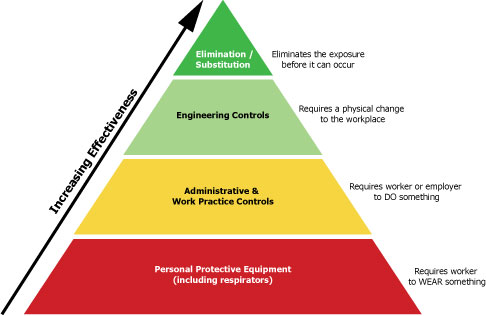
8. Health hazard – Hazards that would affect the health of exposed persons.Hierarchy of hazard controls – System used in industry to eliminate or minimize exposure to hazards
9. Mechanical hazard – Hazard with a mechanical energy source
10. Occupational exposure banding – Process to assign chemicals into categories corresponding to permissible exposure concentrations
11. Occupational hazard – Hazard experienced in the workplace
12. Physical hazard – Hazard due to a physical agent
13.Planetary protection – Guiding principle in the design of an interplanetary mission, aiming to prevent biological contamination of both the target celestial body and the Earth
14. Psychosocial hazard – Occupational hazard to one’s psychological well-being
Public health – Preventing disease, prolonging life and promoting health through organized efforts and informed choices of society and individuals .

Cancer, book, me!

Dude Wasted 6-7 years trying to understand science ( failed miserably) , reading fiction (mostly Assamese , some  English ) ….. Time for some solid non-fiction books ( not self help books) , let’s do some real work  before mf chronic disease dm me ….

~hey do you sometimes cough , sneeze?
Yes I do 
~ Google is programmed ( rather websites) to convey you that you have cancer ….. Start chemotherapy 
 mf typing best oncologist in India( because dude want to contribute in GDP of America, India ,….etc , of course dude is going to die . He wants to do some social shit )
Dude is dying , dude feel cheated , dude started hating capitalism, dude want to read Marx and all…. Dude is now confused , dude choose to die less painfully ( studying Marx itself is pain) .
Rip Dude