
BIODIVERSITY

The different types of organisms found in an area is known as biodiversity or you can define it in a more accurately as ” the totality of genes, species, and ecosystems of a region”.

Biodiversity differ from place to place and dependence of human population has been enormously increased on biodiversity for their necessities.

The known and described number of species of all organisms on the earth is between 1.7 and 1.8 million which is fewer than 15 percent of the actual number. The predicted number of total species varies from 5 to 50 million averages at 14 million. About 61 per cent of the known species are insects. A large number of plant species and vertebrates are known. There are many more species that have not been described.

Biological diversity includes three hierarchical levels :

1. Genetic diversity

We know that each species, varying from bacteria to higher plants and animals, stores an immense amount of genetic information.

Genetic diversity refers to the variation of genes within species. The genetic diversity enables a population to adapt to its environment and to respond to natural selection. If a species has more genetic diversity, it can adapt better to the changed environmental conditions.

2. Species diversity

Species are distinct units of diversity, each play specific role in an ecosystem.

Species diversity refers to the variety of species within a region. Simplest measure of species diversity is species richness, I.e., the number of species per unit area. The no. Of species increases with the area of the site. Generally, greater the species richness, greater is the species diversity

3. Community and Ecosystem Diversity

Diversity at the level of. community and ecosystem has three perspectives. :-

◆ Alpha diversity ( within community diversity). Refers to the diversity of organism sharing the same habitat.

◆ Beta diversity ( between community diversity). Refers to species composition of community along environmental gradient.

◆ Gamma diversity ( diversity of the habitats over the total landscape or geographical area) Greater the dissimilarity between communities, higher is the beta diversity

USES OF BIODIVERSITY

source of food and Improved Varieties. ● Drugs and Medicines. ● Aesthetic and cultural Benefits. ● Ecosystem service

THREATS TO BIODIVERSITY

Habitat loss and fragmentation. ● Disturbance and pollution. ● Introduction of exotic Species. ● Extinction of species.

CONVERSATION OF BIODIVERSITY

Conversation of biodiversity is now important for us. We know that ecosystem are undergoing change due to pollution, invasive species, over exploitation by humans, and climate change.

Most people are beginning to recognise that diversity at all levels – gene pool, species and biotic community is important and need conservation.

There are two basic strategies of biodiversity conservation, institute (on site) and exsitu ( off site).

° Insitu conservation strategies

The in situ strategies emphasis protection of total ecosystems. The in situ approach includes protection of a group of typical ecosystem through a network of protected areas.

Protected Areas

These are areas of land and sea, especially dedicated to the protection and maintenance of biological diversity. Examples are National parks and wildlife sanctuaries.

Biosphere Reserves

It is special category of protected areas of land and coastal environment where people are integral components of the system. There are 13 biospheres in india.

Sacred forests and sacred lakes

These are forest patches of varying dimensions protected by tribal community due to religious factors.

° Exsitu conversation strategies

Cryopreservation

In vitro conservation especially in liquid nitrogen at a temperature of -196℃. It is a storage of vegetatively propagated crops like potato.

HOW TO STUDY EFFECTIVELY AS A STUDENT

Education is important for all of us and it is our right to take education but today’s education system makes our study problematic and even student find it difficult to study their subjects.

Our teachers, parents only told us to study but they never told us How?

But there is always a real practical approch to do anything that you want to do and for study effectively it can also apply.

1. Adopt a study schedule

Every student studies many subjects in the school. For effective learning, we should know how to achieve more in less time and with lesser effort. It can be done by adopting a study schedule. When we make a schedule. We mentally prepare how to achieve it. It removes the uncertainty as to what we need to or not to do.

● Points to remember while making a study schedule

° Study schedule should be flexible to add and subtract some uncertain work to it which arises in day to day life.

° you should make it in such a way that it leaves. Some time in between for relaxation.

° personal preferences must be kept in mind while making a study plan

° you should always resolve to follow the schedule strictly then only you will have the maximum benefit from the study plan.

° Study schedule should include provision for homework, revision and some time for making notes.

° You should also have separate study plan for school days and holidays.

2. Make Notes

Note making is the most important skill leading to greater success in exams, but it is not enough to just make notes.

° Notes must be clear and understandable, they should be written in such a way that a glance should enable you to recall the entire subject

° Good notes are simple, well organized and easy to understand

3. Mind Mapping

Mind mapping involves visual images and other graphics details to make a deeper impression.

Because you know the fact that mind learn easily from images, songs, symbols, sounds and shapes.

Through mind mapping you can learn whole chapter or entire subject on one page.

4. How to Make Mind Map

Make mind maps on your own. Write the main topic in the middle. Add a branch extending out from the centre for each important point and add the details. Use abbreviations to learn it easily.

5. Look, Memorize, Write and Check Technique

Study a topic for some time and then close the book and write down what you remember. Now check your work with the book. Repeat this practise until you have most of the work correct and then move on to the next topic. Practice this technique on each topic twice atleast.

6. Revision- Important part of the effective study plan

It is the most important part but many students leave it as it is not important or procrastinate it for long time

° Prepare a revision plan for all the subjects.

° Keep a checklist for the all the chapters that you studied

° Do not exceed your revision time and break up the available time into study sessions and breaks.

DEFORESTATION – A REAL DANGER TO ENVIRONMENT

Deforestation

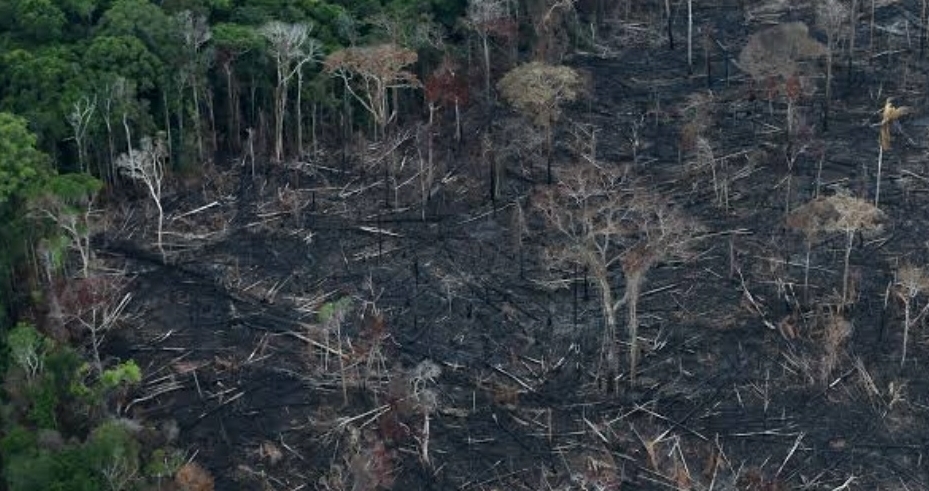
Deforestation is the permanent removal of trees to make room for something besides forest. This can include clearing the land for agriculture or grazing, or using the timber for fuel, construction or manufacturing. 

Deforestation occurs for a number of reasons, including farming, with 80% of deforestation resulting from extensive cattle ranching and logging for materials and development. It has been happening for thousands of years, arguably since man began converting from hunter/gatherer to agricultural based societies, and required larger, unobstructed tracks of land to accommodate cattle, crops, and housing. It was only after the onset of the modern era that it became an epidemic.

Increased Greenhouse Gases

In addition to the loss of habitat, the lack of trees also allows a greater amount of greenhouse gases to be released into the atmosphere. Healthy forests absorb carbon dioxide from the atmosphere, acting as valuable carbon sinks. Deforested areas lose that ability and release more carbon.

Soil Erosion and Flooding

Further effects of deforestation include soil erosion and coastal flooding. Trees help the land to retain water and topsoil, which provides the rich nutrients to sustain additional forest life.

Without forests, the soil erodes and washes away, causing farmers to move on and perpetuate the cycle. The barren land which is left behind in the wake of these unsustainable agricultural practices is then more susceptible to flooding, specifically in coastal regions.

Here are some basic facts about deforestation. These facts are explored in greater depth below.

  • Forests are cut down to clear land for agriculture, livestock grazing, and settlement; for timber; to produce charcoal; and to establish tree plantations.
  • Deforestation occurs across all forest types, but is concentrated in the tropics and boreal regions. Temperate regions are experiencing a net increase in forest cover due to natural regeneration.
  • While deforestation produces food, fiber, and fuel, it can also pose risks to climate, biodiversity, and food security by degrading the ecosystem services normally afforded by healthy and productive forests
  • Scientists estimate that 80% of the planet’s terrestrial species live in forests. Deforestation is therefore one of the biggest extinction risks to many species.

Types of deforestation

The “causes of deforestation” section above focuses on direct drivers of deforestation, but indirect drivers are also important to consider. For example, logging is a major indirect driver of deforestation in the tropics. Logging in tropical rainforests is typically selective, meaning only a few trees are harvested per hectare. But successive logging cycles degrade the perceived economic value of the forest, increasing pressure to convert the forest for intensive use, like agricultural or an industrial plantation (e.g. oil palm, wood pulp, or timber are the most common tropical tree plantations). Logging also usually involves road construction, which facilitates access to remote areas, greatly boosting the likelihood that an area of forest will eventually be cleared or burned.

Drivers of deforestation can be even farther removed however. For example, corruption, governance, and land rights can all be important factors in whether a forest gets destroyed. Corruption can enable companies to circumvent environmental regulations, while poor governance can allow illegal actors to clear forests with impunity since there isn’t any law enforcement. Insecure land rights can spur a free-for-all where forests get cleared because no one has clear stake to maintain them for the public good. Research has shown that forests are more likely to be maintained in indigenous communities that have secure land titles.

BIOTECHNOLOGY- FUTURE OF THE MODERN WORLD

Biotechnology branch of biology deals with the the techniques of using living organism or enzymes to produce useful product for human welfare.

European federation of biotechnology (EFB) has has given a defination of biotechnology from both traditional and modern molecular biotechnology point of view. The definition given by EFB is as follows :

The integration of natural science and organisms,cells,parts thereof, and molecular analogues for products and services”

Engineer Karl Ereky first coined the term ‘biotechnology‘ in 1919, meaning the production of products from raw materials with the aid of living organisms 

Humans have used biotechnology since the dawn of civilization. Egyptians used yeasts to bake leavened bread, the Chinese developed fermentation techniques for brewing and cheese making, and the Aztecs used Spirulina algae to make cakes. Today, when most people think of biotechnology, they probably think of recombinant DNA. Although much of modern biotechnology does deal with manipulating DNA, classical biotechnology began long before we even knew about genes or chromosomes. What began as recipes for production of food now includes technology to enhance everything from farming to pharmaceuticals.

principles of biotechnology.

Traditional biotechnology

Traditional biotechnology refers to ancient ways of using living organisms to make new products or modify existing ones. An example of traditional biotechnology is what human beings have been doing for centuries: cloning plants. Each time a little branch is cut off from a plant and placed in soil to grow a new plant, cloning occurs. Over the past 30 years, biologists have increasingly applied the methods of physics, chemistry and mathematics in order to gain  precise knowledge.

Modern biotechnology

Modern biotechnology we are not only doing the physical manipulation at the visual level but also at the molecular level. In modern molecular biotechnology, we select the desired characteristic at the molecular level and add it to the organism’s genetic makeup. Whereas traditional biotechnology exploits  the potential of processes performed by living organisms, such as fermentation, modern biotechnology manipulates the genes of organisms and inserts them into other organisms to acquire the desired trait. 

However, both traditional and modern biotechnology share the same foundation:  the use of living organisms to enhance crops, fuels, medical treatments and other tools to help humans.

Among many, the two core techniques that enabled birth of modern biotechnology are:

1. Genetic engineering : Techniques to alter the chemistry of genetic material (DNA and RNA),to introduce these into host organisms and thus change the phenotype (physical character) of the host organisms.

2.Chemical engineering : Maintance of sterile microbial contamination free ambience in chemical engineering processes to enable growth of only the desired microbe/ eukaryotic cell in large quantities for the manufacturing of biotechnological products like antibiotics, vaccines, enzymes, etc.

Stanley Cohen and Herbert Boyer in 1972 isolated the first recombinant DNA and the antibiotic resistance gene by cutting out a piece of DNA from a plasmid( autonomously replicating circular extra- chromosomal DNA) which was responsible for conferring antibiotic resistance.

The cutting of DNA at specific locations became possible with the discovery of the so- called ‘molecular scissors’ – Restriction enzymes

Biotechnology is the emerging field nowadays and in coming future it will be the important part For the development of the country. By manipulating genes we can produce more and more useful products for the human welfare.

THEOPHRASTUS – THE FATHER OF BOTANTY


The ancient Greek Theophrastus (371–286 B.C.E.) is known as the father, or founder, of botany. He wrote two large books, On the History of Plants and On the Causes of Plants. … He also developed a theory of plant growth and wrote about how plants were structured. He identified and described 550 different

While Theophrastus studied very diverse issues, he is best known for his work with plants. He has often been referred to as the first scientific botanist, and two of his practical, yet influential, books on the subject have survived into modern times.

Theophrastus was one of the few Peripatetics who fully embraced Aristotle’s philosophy in all areas of metaphysicsphysics, physiology, zoologybotanyethics, politics, and history of culture. His general tendency was to strengthen the systematic unity of those subjects and to reduce the transcendental or Platonic elements of Aristotelianism as a whole. Of his few surviving works, the most important are Peri phytōn historia (“Inquiry into Plants”) and Peri phytōn aitiōn (“Growth of Plants”), comprising nine and six books, respectively. Of dubious origin are the smaller treatises attributed to him on fire, winds, signs of weather, scents, sensations, and other subjects. His notable Charaktēres (many English translations) consists of 30 brief and vigorous character sketches delineating moral types derived from studies that Aristotle had made for ethical and rhetorical purposes; this work later formed the basis for the masterpiece of Jean de La BruyèreLes Caractères . . . (1699). In his ethical teachings, famous because of the assaults of the Stoic philosophers, Theophrastus reiterated Aristotle’s notion of a plurality of virtues with their relative vices and acknowledged a certain importance to external goods.

Among Theophrastus’ other works is the Physikōn doxai (“Opinions of Natural Philosophers”). As reconstructed by Herman Diels in Doxographi Graeci (1879), it provides a foundation for the history of ancient philosophy

Theophrastus and his reasearches

newsletter icon
  • Metaphysics (or On First Principles).
    • Enquiry into Plants: Books 1-5.
    • Enquiry into Plants: Books 6-9; Treatise on Odours; Concerning Weather Signs.
    •  De Causis Plantarum. There are 3 volumes of this book .
    • On Sweat, On Dizziness and On Fatigue. 

Theophrastus introduced his Physics with the proof that all natural existence, being corporeal and composite, requires principles,and first and foremost motion as the basis of all change.

Denying the substance of space, he seems to have regarded it, in opposition to Aristotle, as the mere arrangement and position (taxis and thesis) of bodies.Time he called an accident of motion, without, it seems, viewing it, with Aristotle, as the numerical determinant of motion. He attacked the doctrine of the four classical elements and challenged whether fire could be called a primary element when it appears to be compound, requiring, as it does, another material for its own nutriment.

Surely, then, if the life in animals does not need explanation or is to be explained only in this way, may it not be the case that in the heavens too, and in the heavenly bodies, movement does not need explanation or is to be explained in a special way? Theophrastus, Metaphysics, 10a.16-29

FEMALE EDUCATION

Importance of female education

One of the most important benefits of female education is that the country’s future will be brighter and better. Similarly, our economy can grow faster if more and more women become financially strong thereby reducing poverty. Furthermore, women who are educated can take proper care of their children.


But sadly after a decade many female face problems regarding their education which is tragic not for some people but for the entire nation. Due to lack of female education, they get married at early age and face many problems due to early age pregnancy and health related problems.

Our government has taken many initiative for female education and actively working on it but people should understand that how important it is to educate a female. Educate a one girl child and they will educate the entire family and can build a beautiful future for them.
Educated women make more money, are able to obtain better jobs, and invest their money for their families.

Problems faced by female in their education

Even in this 21st century. Many females face problems regarding their study. In many parts of the country female at their early ages get married and start managing their household chores and they don’t even get a chance to study

But females who got chance to study they get only their education at early age in their 20s.After that even when they want to pursue their study they don’t get the chance and start managing their household chores.

Many females get the chance to study but they don’t have permission from their family to do job, businesses etc. and become a financially independent. They cannot do what they want

But there is always pros over cons

Many NGOS and government scheme has led to development of education for females in our country. Their are many schemes for female education

  • Benefits of the Government Girl Child Schemes in India.
  • Beti Bachao, Beti Padhao.
  • Balika Saridhhi Yojana.
  • Sukanya Samriddhi Yojana.
  • Ladli Scheme and the Kanya Kosh Scheme.
  • National Scheme of Incentive for the Girls of Secondary Education.
  • Ladli Laxmi Yojana of Madhya Pradesh.
  • Karnataka Bhagyashree Scheme.
  • The Chief Minister’s Girl Child Protection Scheme of Tamil Nadu
  • Mazi Kanya Bhagyashree Scheme from the Government of Maharashtra

Female education is important for our society and for our country to grow. Devlopment will only take place if we give all the freedoms to females which only males benefits

Today in this 21st century a girl should be financially independent and for becoming financially independent they should get first their education

History have proven that female who get education even before 100 years ago they made the difference in the world. There are many examples of women empowerment in the world

Amazing women who have changed the world

  • Jane Austen: 1775 – 1817.
  • Florence Nightingale: 1820 – 1910.
  • Emmeline Pankhurst: 1858-1928.
  • Marie Curie: 1867 – 1934.
  • Coco Chanel: 1883 – 1971.
  • Katharine Hepburn: 1907 – 2003.
  • Mother Teresa: 1910 – 1997.
  • Margaret Thatcher: 1925 – 2013.

There are also many others examples of women extraordinary power and the work they did for the humankind.

WARREN EDWARD WAFFET

Warren Edward Buffett was born on August 30, 1930, to his mother Leila and father Howard, a stockbroker-turned-Congressman. The second oldest, he had two sisters and displayed an amazing aptitude for both money and business at a very early age. Acquaintances recount his uncanny ability to calculate columns of numbers off the top of his head

While other children his age were playing hopscotch and jacks, Warren was making money. At only six years old, Buffett purchased six-packs of Coca-Cola from his grandfather’s grocery store for 25 cents and resold each of the bottles for a nickel, pocketing a 5-cent profit. Five years later, Buffett took his first step into the world of high finance.

Find your passion

At eleven years old, he purchased three shares of Cities Service Preference at $38 per share for both himself and his older sister Doris. Shortly after buying the stock, it fell to just over $27 per share. A frightened but resilient Warren held his shares until they rebounded to $40. He promptly sold them—a mistake he would soon come to regret. Cities Service shot up to $200.1 The experience taught him one of the basic lessons of investing: Patience is a virtue.

Warren buffet rules for success

1. Find your passion

If anyone can find their passion, they can achieve success in whatever work they want.

2. Hire well

The three things in hiring to people you look for are integrity, intelligence and energy. And you should always look for first ‘integrity’ if you don’t have integrity you cannot have any of two other things in you

3. Don’t care what others think

Many people gonna tell you that why are you doing this and judge you but not caring what others think is key to success so follow your heart

4.Read, read, read

Read many books as you can because reading makes your mind clear and sharp.. Warren wuffet started reading when he was 7 years old

5. Save margin of safety

” Be greedy when everyone is fearful, and be fearful when everyone is greedy” Warren waffet once said this before investing in stock market try to save some margin of safety

6.Have a competitive advantage

In the world of competition you have to be competitive and take it as a advantage

7. Schedule for your personality

He don’t like to have things all packed for hour n hour. He also said in his one of the interview that ‘ I really get to do what I like to do, the way I wanted to do with the people we choose to around that are terrific. I’ve got everything I wanted and it’s fortunate’

8.Always be competitive

Somebody always after you but you have to ahead of them. You always wanna be in the move. When you got really great business but the danger would always there but you have to be comptitive in order to get what you want

9. Unconditional love

The best advice he received from his father that whatever you do in life and the people in your life give them unconditional love.