Radio In India

N kavya

Radio broadcasting began in India in 1922. The Government owned radio station All India Radio dominated broadcasting since 1936.

Broadcasting in India actually began about 13 years before AIR came into existence. In June 1923 the Radio Club of Bombay made the first ever broadcast in the country. This was followed by the setting up of the Calcutta Radio Club five months later. The Indian Broadcasting Company (IBC) came into being on July 23, 1927, only to face liquidation in less than three years.

In April 1930, the Indian Broadcasting Service, under the Department of Industries and Labour, commenced its operations on an experimental basis. Lionel Fielden was appointed the first Controller of Broadcasting in August 1935. In the following month Akashvani Mysore, a private radio station was set up. On June 8, 1936, the Indian State Broadcasting Service became All India Radio.

The Central News Organisation (CNO) came into existence in August, 1937. In the same year, AIR came under the Department of Communications and four years later came under the Department of Information and Broadcasting. When India attained independence, there were six radio stations in India, at Delhi, Bombay, Calcutta, Madras, Tiruchirapalli and Lucknow. The following year, CNO was split up into two divisions, the News Services Division (NSD) and the External Services Division (ESD). In 1956 the name AKASHVANI was adopted for the National Broadcaster. The Vividh Bharati Service was launched in 1957 with popular film music as its main component

The phenomenal growth achieved by All India Radio has made it one of the largest media organisations in the world. With a network of 262 radio stations, AIR today is accessible to almost the entire population of the country and nearly 92% of the total area. A broadcasting giant, AIR today broadcasts in 23 languages and 146 dialects catering to a vast spectrum of socio-economically and culturally diverse populace.

Programmes of the External Services Division are broadcast in 11 Indian and 16 foreign languages reaching out to more than 100 countries. These external broadcasts aim to keep the overseas listeners informed about developments in the country and provide a rich fare of entertainment as well.

The News Services Division, of All India Radio broadcasts 647 bulletins daily for a total duration of nearly 56 hours in about 90 Languages/Dialects in Home, Regional, External and DTH Services. 314 news headlines on hourly basis are also being mounted on FM mode from 41 AIR Stations. 44 Regional News Units originate 469 daily news bulletins in 75 languages. In addition to the daily news bulletins, the News Services Division also mounts number of news-based programmes on topical subjects from Delhi and its Regional News Units

AIR operates at present 18 FM stereo channels, called AIR FM Rainbow, targeting the urban audience in a refreshing style of presentation. Four more FM channels called, AIR FM Gold, broadcast composite news and entertainment programmes from Delhi, Kolkata, Chennai and Mumbai. With the FM wave sweeping the country, AIR is augmenting its Medium Wave transmission with additional FM transmitters at Regional stations.

In April 2020, as per a survey by AZ Research PPL, commissioned by the Association of Radio Operators for India (AORI) Radio listenership in India touched a peak of 51 million.

Does radio have a future?

The consoles, connected watches and TV’s that we use every day will be just another way in which radio stations can broadcast and increase their audience numbers. Since its creation, radio has continually evolved with the times

Why Radio is still popular?

Portable and Inexpensive: Radio is portable among many modes of communication. They can be used in cars, stores, and other places, which helps to reach the targeted audience. According to researchers, broadcast radio reaches 99% of the Indian population today.

The Government decision for transition to the digital mode of transmission, AIR is switching from analog to digital in a phased manner. The technology adopted is the Digital Radio Mondiale or DRM. With the target of complete digitization by 2017, the listeners can look forward to highly enhanced transmission quality in the near future.

General issues on Environmental ecology

The environment plays a significant role to support life on earth. But there are some issues that are causing damages to life and the ecosystem of the earth. It is related to the not only environment but with everyone that lives on the planet. Besides, its main source is pollution, global warming, greenhouse gas, and many others. The everyday activities of human are constantly degrading the quality of the environment which ultimately results in the loss of survival condition from the earth.There are hundreds of issue that causing damage to the environment. But in this, we are going to discuss the main causes of environmental issues because they are very dangerous to life and the ecosystem.

Pollution – It is one of the main causes of an environmental issue because it poisons the air, water, soil, and noise. As we know that in the past few decades the numbers of industries have rapidly increased. Moreover, these industries discharge their untreated waste into the water bodies, on soil, and in air. Most of these wastes contain harmful and poisonous materials that spread very easily because of the movement of water bodies and wind. Greenhouse Gases – These are the gases which are responsible for the increase in the temperature of the earth surface. This gases directly relates to air pollution because of the pollution produced by the vehicle and factories which contains a toxic chemical that harms the life and environment of earth. Climate Changes – Due to environmental issue the climate is changing rapidly and things like smog, acid rains are getting common. Also, the number of natural calamities is also increasing and almost every year there is flood, famine, drought, landslides, earthquakes, and many more calamities are increasing.

Development recognises that social, economic and environmental issues are interconnected, and that decisions must incorporate each of these aspects if there are to be good decisions in the longer term.For sustainable development, accurate environment forecasts and warnings with effective information on pollution which are essential for planning and for ensuring safe and environmentally sound socio-economic activities should be made known.


THE EARTH IS WHAT WE
ALL HAVE IN COMMAN

History of India & Indian National Movement.

Early times the Indian subcontinent appears to have provided an attractive habitat for human occupation. Toward the south it is effectively sheltered by wide expanses of ocean, which tended to isolate it culturally in ancient times, while to the north it is protected by the massive ranges of the Himalayas, which also sheltered it from the Arctic winds and the air currents of Central Asia. Only in the northwest and northeast is there easier access by land, and it was through those two sectors that most of the early contacts with the outside world took place.

Within the framework of hills and mountains represented by the Indo-Iranian borderlands on the west, the Indo-Myanmar borderlands in the east, and the Himalayas to the north, the subcontinent may in broadest terms be divided into two major divisions: in the north, the basins of the Indus and Ganges (Ganga) rivers (the Indo-Gangetic Plain) and, to the south, the block of Archean rocks that forms the Deccan plateau region. The expansive alluvial plain of the river basins provided the environment and focus for the rise of two great phases of city life: the civilization of the Indus valley, known as the Indus civilization, during the 3rd millennium BCE; and, during the 1st millennium BCE, that of the Ganges. To the south of this zone, and separating it from the peninsula proper, is a belt of hills and forests, running generally from west to east and to this day largely inhabited by tribal people. This belt has played mainly a negative role throughout Indian history in that it remained relatively thinly populated and did not form the focal point of any of the principal regional cultural developments of South Asia. However, it is traversed by various routes linking the more-attractive areas north and south of it. The Narmada (Narbada) River flows through this belt toward the west, mostly along the Vindhya Range, which has long been regarded as the symbolic boundary between northern and southern India.

India’s movement for Independence occurred in stages elicit by the inflexibility of the Britishers and in various instances, their violent responses to non-violent protests. It was understood that the British were controlling the resources of India and the lives of its people, and as far as this control was ended India could not be for Indians.

On 28 December 1885 Indian National Congress (INC) was founded on the premises of Gokuldas Tejpal Sanskrit School at Bombay. It was presided over by W.C Banerjee and attended by 72 delegates. A.O Hume played an instrumental role in the foundation of INC with an aim to provide Safety Valve to the British Government.
A.O Hume served as the first General Secretary of INC.
The real Aim of Congress is to train the Indian youth in political agitation and to organise or to create public opinion in the country. For this, they use the method of an annual session where they discuss the problem and passed the resolution.
The first or early phase of Indian Nationalism is also termed as Moderate Phase (1885-1905). Moderate leaders were W.C Banerjee, Gopal Krishna Gokhale, R.C Dutt, Ferozeshah Mehta, George Yule, etc.
Moderates have full faith in British Government and adopted the PPP path i.e. Protest, Prayer, and Petition.
Due to disillusionment from Moderates’ methods of work, extremism began to develop within the congress after 1892. The Extremist leaders were Lala Lajpat Rai, Bal Gangadhar Tilak, Bipin Chandra Pal, and Aurobindo Ghosh. Instead of the PPP path, they emphasise on self-reliance, constructive work, and swadeshi.
With the announcement of the Partition of Bengal (1905) by Lord Curzon for administrative convenience, Swadeshi and Boycott resolution was passed in 1905.


ONE INDIVIDUAL MAY DIE; BUT THAT IDEA WILL, AFTER HIS DEATH, INCARNATE ITSELF IN A THOUSAND LIVES.

-Netaji Subhash Chandra Bose

Internet Protocol

What is an IP address?

An IP address abbreviation of Internet Protocol address, it is an address that is provided by the Internet Service Provider to the user, it is just like a postal address code that is pin code to find the location or place where to send the message.  An IP address is a unique group of number what are separated by the period (.), it varies from 0 to 255, and   every device has a separate and unique IP address that is assigned by the specific Internet Service Provider (ISP) to identify which particular device is communicating with them and accessing the internet from there.

If you want to access internet from you device which may be your Android, I phone, Computer the service provider assigned them a particular, unique  address  that is help them to communicate send, receive information from the right person without any misunderstanding, mistake the message is pass to the authentic person to whom it has to send.  This problem is solved by the IP address, in olden days; we have postal address to send the message/letter to the person, the message that has to be sent with the help of the address which may be his house number, city, town, postal code.  The sender will write the address on the top of the letter envelope so that it will be delivery to the right person.  If the person connected his device to internet provide by the hotel, the hotel‘s Internet Service Provider will assign an IP address to the device.

Types of IP addresses

There are different types of IP based on different categories, types.

Consumer IP addresses

A Consumer IP addresses is the individual IP addresses of a customer who connects his/her  device to a public or private  network.  A consumer connects his device through internet from his Internet Service Provider, or from the Wi-Fi.  In these days the Consumer has many electronic gadgets which he connects to his router that transfer the data from the Internet Service Provider.

Private IP addresses

A  Private IP addresses are a secure one that is connected Private Network and every devices that is connected to this Private Network is assigned a unique IP address that is assigned by the Internet Service Provider.  All Mobile devices, Computer, and Internet of Things that are connected to this private network are assigned a unique string number to the devices.

Public IP addresses

A Public IP addresses is the main address that is related to your network, as stated above that the IP address are assigned by the Internet Service Provider, the Public IP address is also assigned by the Internet Service Provider, The Internet Service Provider has a large amount of IP addresses that are stored and assigned to the customer. The public IP address is the address that  devices that are outside the network use to identify the network.

The Public IP addresses are further classified into two types they are:

  1. Dynamic
  2. Static

Dynamic IP addresses

                The Dynamic  IP address  are the IP address that changes very frequently, so the Internet  Service Providers  purchase a very huge amount of IP addresses , they assign it mechanically to the customer . This frequently changing the IP address helps the customer not to make the security actions. The frequently changing IP address won’t let the hacks to track or pool your data.

 Static IP addresses

The Static IP addresses is the contradictory to the Dynamic IP address, it remain fixed. The IP address remains fixed when it is assigned by the Internet Service Provider.  The mostly many person and business man don’t   choose static because it is risk of getting easily track, but most business which are trying host her own website server choose Static IP address so it will easier  for the customer to find them.

                The IP address can be protect by 2 ways that are using proxy and the other one is use of Virtual Private Network.   A proxy server acts as a intermediary between the internet server and your internet service providers, when you visit any website it will show the proxy IP address not yours. 

Where to find IP address is Device?

                The IP address set up in every device that is connected to the Internet, but the steps or direction is different in different devices. Some of device direction is given below:

In Window or any other Personal Computer

  1. Go to the Start Menu
  2. Type  ‘Run’ in the Search bar
  3. A Run Tab pops up
  4. Type  ‘cmd’
  5. A black screen pops up
  6. Type ‘ipconfig’
  7. Your  IP address is found.

In Android Mobile

  1. Go to the Settings
  2. Tap on Network and Internet
  3. Tap on Wi-Fi, it will show the IP address

Horace as a Critic

Quintus Horatius Flaccus (65 BCE–8 BCE ), more commonly known as Horace, was a Roman poet, best known for his satires and his lyric odes.

His letters in verse, particularly his Ars Poetica: Epistle to the Pisos, outline his beliefs about the art and craft of poetry. His main contribution to the traditions of literary theory we are exploring lie in his articulation of the purpose of poetry, or literature in general: it is dulce et utile, sweet and useful.

Horace insists that literature serves the didactic purpose which had been Plato’s main concern, and that it provides pleasure; the two goals are not incompatible, as Plato had feared. Poetry is a useful teaching tool, Horace argues, precisely because it is pleasurable. The pleasure of poetry makes it popular and accessible, and its lessons thus can be widely learned. Like Plato, Horace sees nature as the primary source for poetry, but he argues that poets should imitate other authors as well as imitating nature. Horace thus establishes the importance of a poet knowing a literary tradition, and respecting inherited forms and conventions, as well as creating new works.

Except for a few late Roman and early medieval writers who contributed to the discussion of theories about literature, such as Plotinus (204–70), Boethius (480–524), St. Thomas Aquinas (1225–74), and Dante Alighieri (1265–1321), the writings of Plato, Aristotle, and Horace pretty much defined the parameters of thought about literature from the ancient world until the Renaissance.

The explosion of art, literature, and science which we think of as the hallmark of the European Renaissance in the fourteenth to the sixteenth centuries prompted not only a deluge of literary texts, including the works of such luminaries as Shakespeare, but also a torrent of writings about the purpose, form, and importance of literature. The Renaissance discourse on literary theory was stimulated at least in part by the rediscovery of Aristotle’s Poetics, a text which had been lost to Western culture during the Dark Ages.

Aristotle as a Critic

Crucial to Aristotle’s defense of art is his 

  • Rejection of Plato’s Dualism

Man is not an “embodied” intellect, longing for the spiritual release of death, but rather an animal with, among all the other faculties, the ability to use reason and to create

  • Rejection of Plato’s Rationalism
    We must study humans as we would study other animals to discover what their “nature” is. Look among the species; see who are the thriving and successful and in what activities do they engage? For Aristotle, this is how to determine what is and is not appropriate for a human and human societies
  • Rejection that Mimesis= Mirroring Nature

Aristotle: Art is not useless

  • It is Natural:
  1. It is natural for human beings to imitate
  2. Any human society which is healthy will be a society where there is imitative art
  3. Nothing is more natural that for children to pretend
  • Art production and training is a necessary part of any education since it uses and encourages the imaginative manipulation of ideas
  1. Nothing is more natural than for human beings to create using their imagination
  2. Since art is imitation, it is an imaginative use of concepts; at its heart art is “conceptual,” “intellectual”

Aristotle: good art is not dangerous

A) Art is not deceptive:

  • Artists must accurately portray psychological reality in order for characters to be believable and their actions understandable
  • It teaches effectively and it teaches the truth
  • Convincing and powerful drama is convincing and powerful because it reveals some truth of human nature
  • Introduces the concept of “Organic Unity” – the idea that in any good work of art each of the parts must contribute to the overall success of the whole
  • Just as in biological organisms each part contributes to the overall health and wellbeing of the creature, so too in good works of art reflects or imitates reality
  • Unified action, “with its several incidents so closely connected that the transposal or withdrawal of any one of them will disjoin and dislocate the whole”

B) Sensuous art is not a bad thing:

  • Aristotle did not believe that the mind was one thing and body was something else and therefore Aristotle did not have the bias against physical pleasure that Plato had
  • The only way of acquiring knowledge at all, according to Aristotle, was through the senses and so developing, exercising and sharpening those senses through art was a healthy thing to do
  • Art was not solely concerned with the sensual pleasures, but rather was/should be an intellectual, conceptual affair.

C) (Good) Art is tied to Morality and Truth

  • (Successful Tragic) Drama always teaches morality. When trying to understand how tragedies achieve their peculiar effect (Pathos), he notes the psychology and morality on which they must be based
  • NB: Aristotle believe that drama imitated not only “evens” but actions. As such they imitated intended behaviours, psychological forces and the unseen “inner life” of persons
  • He unwittingly set up two functions for a work of art to fulfil; to imitate nature’s perceptual detail and to imitate nature’s “organic unity.”

Aristotle agreed that art did stir up negative emotions but, he claims it then purged these in harmless, healthy way. This led to the principle of Catharsis

  • Art is neither psychologically destabilizing nor politically destructive
  • Art is a therapeutic part of the healthy life of not only the individual, but of the nation

Aristotle: Mimesis is not equal to imitation

Mimesis is more like

  • Rendering
  • Depicting
  • Construing
  • Idealizing
  • Representing

Aristotle’s Critical Responses

  • Poetry is more Philosophical than History
  • “Poetry is sometimes more philosophic and of graver importance than history (He means a mere chronicle of events here), since its statements are of the nature rather of universals, whereas those of history are singulars”
  • Poetry describes “not the thing that has happened” as Aristotle imagines history does “but a kind of thing that might happen, (i.e, what is possible) as being probable or necessary”
  • Thus history mere “mirrors,” but not art. Art is necessarily conceptual /cognitive.

Aristotle on Tragedy

In the Poetics, Aristotle compares tragedy to such other metrical forms as comedy and epic. He determines that tragedy, like all poetry, is a kind of imitation (mimesis), but adds that it has a serious purpose and uses direct action rather than narrative to achieve its ends. He says that poetic mimesis is imitation of things as they could be, not as they are — for example, of universals and ideals — thus poetry is a more philosophical and exalted medium than history, which merely records what has actually happened.

The aim of tragedy, Aristotle writes, is to bring about a “catharsis” of the spectators — to arouse in them sensations of pity and fear, and to purge them of these emotions so that they leave the theater feeling cleansed and uplifted, with a heightened understanding of the ways of gods and men. This catharsis is brought about by witnessing some disastrous and moving change in the fortunes of the drama’s protagonist (Aristotle recognized that the change might not be disastrous, but felt this was the kind shown in the best tragedies — Oedipus at Colonus, for example, was considered a tragedy by the Greeks but does not have an unhappy ending).

According to Aristotle, tragedy has six main elements: plot, character, diction, thought, spectacle (scenic effect), and song (music), of which the first two are primary. Most of the Poetics is devoted to analysis of the scope and proper use of these elements, with illustrative examples selected from many tragic dramas, especially those of Sophocles, although Aeschylus, Euripides, and some playwrights whose works no longer survive are also cited.

Several of Aristotle’s main points are of great value for an understanding of Greek tragic drama. Particularly significant is his statement that the plot is the most important element of tragedy:

Tragedy is an imitation, not of men, but of action and life, of happiness and misery. And life consists of action, and its end is a mode of activity, not a quality. Now character determines men’s qualities, but it is their action that makes them happy or wretched. The purpose of action in the tragedy, therefore, is not the representation of character: character comes in as contributing to the action. Hence the incidents and the plot are the end of the tragedy; and the end is the chief thing of all. Without action there cannot be a tragedy; there may be one without character. . . . The plot, then, is the first principle, and, as it were, the soul of a tragedy: character holds the second place.

Aristotle goes on to discuss the structure of the ideal tragic plot and spends several chapters on its requirements. He says that the plot must be a complete whole — with a definite beginning, middle, and end — and its length should be such that the spectators can comprehend without difficulty both its separate parts and its overall unity. Moreover, the plot requires a single central theme in which all the elements are logically related to demonstrate the change in the protagonist’s fortunes, with emphasis on the dramatic causation and probability of the events.

After We Fell by Anna Todd

Book Three of the After series—now newly revised and expanded, Anna Todd’s After fanfiction racked up 1 billion reads online and captivated readers across the globe. Experience the Internet’s most talked-about book for yourself!


Tessa and Hardin’s love was complicated before. Now it’s more confusing than ever. AFTER WE FELL…Life will never be the same. #HESSA
Just as Tessa makes the biggest decision of her life, everything changes. Revelations about first her family, and then Hardin’s, throw everything they knew before in doubt and makes their hard-won future together more difficult to claim.
Tessa’s life begins to come unglued. Nothing is what she thought it was. Not her friends. Not her family. The one person she should be able to rely on, Hardin, is furious when he discovers the massive secret she’s been keeping. And rather than being understanding, he turns to sabotage. Tessa knows Hardin loves her and will do anything to protect her, but there’s a difference between loving someone and being able to have them in your life. This cycle of jealousy, unpredictable anger, and forgiveness is exhausting. She’s never felt so intensely for anyone, so exhilarated by someone’s kiss—but is the irrepressible heat between her and Hardin worth all the drama? Love used to be enough to hold them together. But if Tessa follows her heart now, will it be…the end?


5 stars(this review contains spoilers for After and After We Collided)


The After series keeps on getting better and better! After We Fell is by far my favorite of the three!
At the end of After We Collided we were left again on a cliffhanger with a rather unexpected turn of events, Tessa is trying to find a way to break the news of her impending move to Seattle to Hardin when she runs into her estranged father outside a tattoo shop…
I hope you guys are fond of rollercoasters because, this book like its two predecessors, is nothing short of one, so hang on tight! 

It’s no surprise when I tell you that as soon as I started I was already frustrated.Tessa is going ahead with her plans to relocate to Seattle with Vance Publishing, Things are rocky with Hardin though not completely called off.Hardin is wayyyyyyyy frustrating though, when one thinks that he is starting to understand that a relationship takes compromise and that it’s not all about him and what he wants, he turns into the most unreasonable person ever. He doesn’t have a valid reason at all to not want to move with Tessa to Seattle other than his insecurities, but yet even when he knows this he still chooses to be a total idiot about it.Tessa talks him into coming on a weekend trip with her and his family, in an effort to try and mend things and have some fun together.The trip will prove to be anything but fun! I felt like jumping into the book and screaming at Hardin I just couldn’t even process what he was doing!

 Once again the Hardin from the past surfaces and it’s like we took 10 steps backward rather than forward, again he proves he can be overly controlling and inconsiderate. I was seriously pissed with him when I found out the lengths that he went to in order to try and get his way. I couldn’t blame Tessa for being tired of his antics, when over and over he screws things up and then expects her to just forgive and forget.

I was glad though to see that Tessa didn’t give in to Hardin’s wishes, and put herself and her career first. I think Hardin needs to learn that not everything can go his way.Though while super smart for some things Tessa can be soooo dense for others. She gets invited to a “going away” party at the frat house out of all places. Why would she even consider going there and hanging out with all those people that were nothing but horrible to her? I was screaming at the top of my lungs in frustration, ok fine maybe I was screaming into my Goodreads updates, but seriously Tessa!!

This is the point when things start getting really screwy and my heart was racing out of my chest, I mean we have seen betrayal before and I really didn’t think I would see anything that would have me totally flabbergasted again…! I was crying angry tears for Tessa, I had to put the book down and walk away from it for a bit… I was in total and absolute disbelief…

I don’t want to give you tooo many details but just know that there is drama, frat house drama, Tessa’s dad drama, Tessa’s mother drama oh! and if you didn’t guess it? Yeah, there is plenty of Zed drama!I mean I get it Zed is hot, he is nice, he shows up at the right time and at the right place but come on Tessa!!!! How much more are you going to push Hardin? Again I found myself wanting to slap some sense into this girl.

In After We Fell, like After We Collided, we have Hardin’s POV which again is crucial to the story because while he still makes you mad you can understand why he is the way he is. I cant deny the growth in him, trying to control his temper, trying not to be impulsive and especially being much more considerate with Tessa, even his relationship with Landon makes you smile in this book. Again you see the wonderful guy he can be if he can learn to love himself.

But, it’s Hessa we are talking about here so drama doesn’t stay at bay for too long and the last part of the book will prove to be jaw dropping totally unexpected drama, and for this I won’t drop even a hint because you really need to experience this for yourself. All I can say is that it was unexpected and devastating, I’m scared for Hardin and his state of mind and him falling into that downward spiral he seems to often flirt with. What he will face will definitely be a very tough pill to swallow.

The last line in this book left me hyperventilating and in disbelief…

and in need of wine.. lots and lots of wine… 

It has been a very long time since I’ve had a book hangover, years even. I finished After We Fell and couldn’t stop thinking about it, let alone start another book right away.

The fourth and final installment will be hitting shelves on February 24, yup that’s 49 days from today (but who’s counting), I can totally wait, because I’m so not dying to know what happens next….

Top 5 books to read at least once in your life. 

This is an image of Top 5 books to read at least once in your life.
Photo by rikka ameboshi on Pexels.com

Reading is an immersive experience that often rewards you with a great story and good vocabulary. There are books across several genres one can choose from to indulge in a wonderful reading experience. But there are some books that fall under the category of ‘classics’ as their themes, characters, and plot lines become relevant for ages to come. These are written by some of the brilliant literary minds that became popular and they went on to influence many modern works of literature. 

Animal Farm- a satirical allegory

This is an image of Animal Farm
Photo by Amelie Lachapelle on Pexels.com

The story begins with a typical farm being run by a human with a variety of animals living in it. The farm animals are often mistreated, overworked and ignored by the human which agitates them. Hoping to overthrow the human race and reaping all the benefits of their work, they drive the human out of the farm. What follows is a satirical allegory to the events that happened during and after the Russian Revolution of 1917. 

Although the story revolves around farm animals, its  themes of corruption, slavery, dicatorship, class distinction, and characters, makes the readers draw parallels with the current political scenario. It is a must-read for a better understanding of the Russian revolution and an engaging experience. 

The Great Gatsby- The Jazz age novel

The Great Gatsby is a 1925 novel written by F. Scott Fitzgerald. It follows the life of a self-made millionaire named Jay Gatsby who is in pursuit of his long lost lover named Daisy Buchanan. The novel however, has little scope for romance and represents America in the 1920s. It highlights the era of unrivalled wealth and materialistic access. 

The novel upon its release didn’t gain commercial success. Critics believed that it did not amount to Fitzgerald’s earlier novels. However, it began to gain popularity during World War II as free copies were distributed among American soldiers who were serving overseas. The Great Gatsby went on to become an important part of America’s educational curriculum and pop culture. 

The novel continues to attract scholarly attention and is a contender for the title of ‘The Great American Novel’. 

Harry Potter and the Philosopher’s stone- You Know Who

This is an image of Harry Potter and the Philosopher's stone
Photo by Dzenina Lukac on Pexels.com

This book can be considered as J.K Rowlings’ stepping stone to success. After being rejected by 11 publications and finally being published by Bloomsbury publication, upon the request of the chief executive’s 8 year old daughter. Harry Potter and the Philosopher’s stone went on to be translated into 73 languages and sold 120 million copies. Becoming the second best-selling novel of all time. 

The story follows Harry Potter and the readers’ introduction to the world of magic, following Harry’s discovery of his magical heritage and acceptance into the Hogwarts School of Witchcraft and Wizardry. As the readers alongside Harry manage to grasp the  revelation of a whole new world of possibilities, worthy opponents and dangers show up on whom magic must be used to defeat and protect. 

The Book Thief- Narrated by death.

Photo by Ingo Joseph on Pexels.com

Reading is an immersive experience that often rewards you with a great story and good vocabulary. There are books across several genres one can choose from to indulge in a wonderful reading experience. But there are some books that fall under the category of ‘classics’ as their themes, characters, and plot lines become relevant for ages to come. These are written by some of the brilliant literary minds that became popular and they went on to influence many modern works of literature. 

The book thief is a 21st century novel that uses the Nazi regime in Germany as its background. Although it has its fair share of horror and despair. The Book Thief delivers hope to its readers through love and tranquility among family and friends. 

The novel follows the life of Liesel, who moves into her new foster parents’ home following her brother’s death. As she goes on to witness the dangers posed by the Nazi regime, Liesel adopts her newly found passion for reading by stealing books from the rubbles and also the Mayor’s house. One of the pivotal characters in the novel is death itself as it narrates the entire story. 

The Lion, The Witch, and The Wardrobe- A world of fantasy

This is an image of The Lion, The  Witch and The Wardrobe
Photo by Pixabay on Pexels.com

Open the book to a whole new world of fantasy, mythical creatures and magic. When 4 siblings are relocated to a large house in the countryside due to wartime evacuation. They discover a wardrobe in the house which had more than just clothes hanging inside. The 4 siblings venture into the world of dreams upon entering the wardrobe. They go on to encounter the witch and the lion, and participate in an impending war to end the evil’s oppression over the good. 

This fantasy novel was the first to be published among the 7 volumes known as The Chronicles of Narnia. C.S Lewis wrote this novel as a dedication to his goddaughter named Lucy Barfield. 

Here are some of the classic novels from the 20th century across different genres to enhance your reading pleasure. 

Happy Reading.

Buy books on Amazon

References

Anna Chui, 26th  January 2021, lifehack.org

goodreads.com

wikipedia.org

Remembering R K Narayan, The Creator of Malgudi

R K Narayan is arguably one of the brilliant storytellers who could create stories and characters that were relatable yet intriguing. He was one among the few writers of his era, who could weave magic with simple words and effortlessly spin a tale out of the mundane everyday events.

Born as Rasipuram Krishnaswami Iyyer NarayanaSwami in Madras, R K Narayan spent a part of his childhood in Madras with his grandmother and later moved to Mysore when his father, a school headmaster, was posted to the Maharajah’s College High School. An avid reader, he devoured the works of Dickens, Wodehouse, Thomas Hardy and Arthur Conan Doyle during his boyhood. 

If you were to observe the trajectory of R K Narayan’s life, you would find that he wasn’t someone who has had a smooth ride. From failing his university entrance exam, taking an extra year to complete his bachelor’s degree, quitting his rather short stint  as a school teacher, remaining jobless for a very long time to being ridiculed for his writing and facing a series of initial rejections, setbacks were a part and parcel of his life. Through all these, what kept him going was his intense passion for writing. 

During his initial days as a writer, he wrote occasionally  for local publications. His first short story Dodo – about a boy who wanted to earn pocket money to roam about and buy peanuts – was published by The Merry magazine. Thereafter he managed to get several other of his works printed by the magazine and by the Hindu. Later, he had also worked as a reporter for The Justice, a Madras-based paper, after his marriage to the love of his life, Rajam.

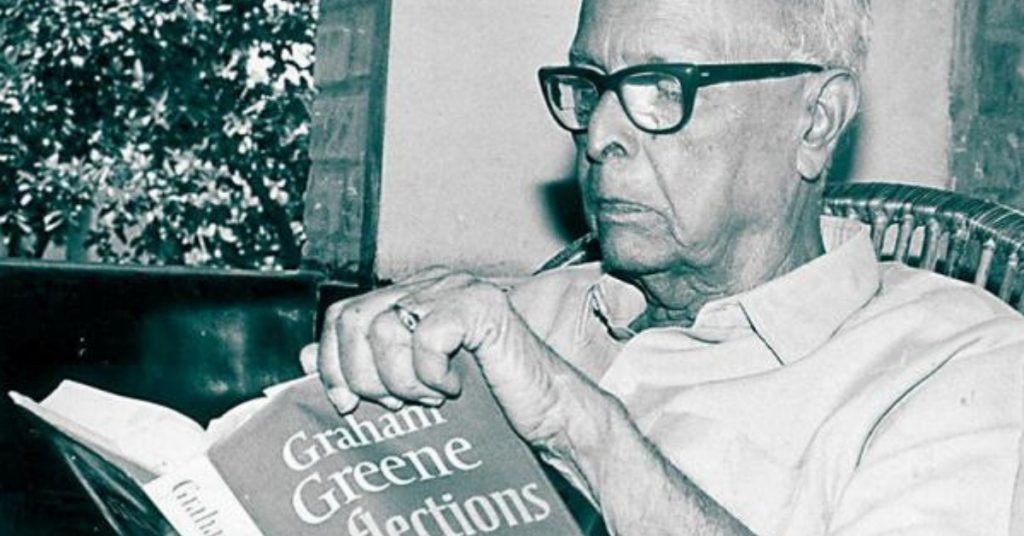
When he wrote his first book, Swami and Friends, it went through a string of rejections that, after a point, Narayan lost hope and asked his friend Kittu Purna in Oxford (whose address he had given as return address for the manuscript), to weigh manuscript  down with rocks and  drown it in the Thames if it were to be rejected again. Well, the novel did get rejected but his friend had a better idea than drowning it. He took it to Graham Greene, a writer who he had met in Oxford, who ended up loving it and even found a publisher for the book. The literary world would forever be indebted to Kittu Purna for not complying to his friend’s request or else the magical town of Malgudi would have forever remained hidden in the depths of the Thames. 

Around the time when he was gradually making a mark as a writer, life was not being particularly kind to him on the personal front. He lost his father and his wife within a gap of merely a couple of years, which left him devastated. In the face of losses, it was the world of words that held his hands and he managed to channel his grief into creating masterpieces in literature. The English Teacher, as he later acknowledged, was a reflection of his emotions during the time of his wife’s death.He went on to write several other novels and short stories during his career and most of them were set in Narayan’s very own Malgudi.

Image Credit: Farnaz Fever

Narayan was a brilliant storyteller who could capture the essence of the mundane everyday life and turn it into a literary masterpiece.Through simple words, punctuated cleverly by just the right amount of humour, he found his way into the hearts of millions of readers.

During the course of his literary career, he won various awards including the Sahitya Akademi Award for The Guide and the AC Benson Medal by the British Royal Society of Literature. He was also awarded Padma Bhushan and Padma Vibhushan  for his contributions to the country. 

He was a man of simple needs (well,  except for that coffee, which he needed exactly the way he liked it ! ) and just like his characters lived a rather simple life. He always made sure to keep himself rooted in reality.Even during his later years, he never missed the chance to have a chat with the people who he used to meet during his afternoon strolls. He treated these walks as his office hours for that is where he often met his characters. 

Narayan was a person who valued friendships more than anything else. Much of his later years were spent in having warm conversations and the perfect Narayan-style coffees with the people he treasured the most. Perhaps those were the things that kept him going after he lost his daughter to cancer.  His final novel, Grandmother’s Tale was dedicated to his daughter Hema. He was a writer who was so invested in his craft that he used to write around 1000 words daily, even while travelling (aspiring writers please make a note !). Even a few hours before he was shifted to the ventilator, all he wanted was for his friend, N. Ram, to get him a notebook for the next novel that he was planning to write. Unfortunately for the readers, that novel never got materialised as he passed away soon after, at the age of 94.

R K Narayan will always be remembered as one of the finest storytellers who inspired many generations of writers to discover the beauty of their own backyards and his legacy will live on through every reader, who secretly wish to pack their bags and move to Malgudi.

Things to know before taking up Mass Media and Communication courses.

Photo by Caleb Oquendo on Pexels.com

Let’s begin by knowing what Mass Media or Mass Communication is. Mass media refers to the media technologies such as movies, songs, news, podcasts, advertisements and photos, that are utilized to carry information to the masses. 

Importance of Mass Media

This blog you are reading is helping you gain knowledge about Mass Media and communication. Hence this blog becomes a media technology and educating you in the field of Mass Media defines its importance. From applying for a job to reaching out to a friend on your phone, everything becomes a portion of Mass Media as they help users pass on information from one place to another or one person to another. 

Here are some advantages of Mass Media to highlight its importance. 

  • It becomes a voice for the voiceless: Mass Media provides every individual with an opportunity to practice their freedom of speech and spread their ideas among the world. YouTube is a great example of Mass Media. As a platform in this 21st century it helps both small and large creators publish their videos for everybody to watch. 
  • Enables widespread communication: Today, the world is often referred to as a global village. This is made possible due to several types of mass media technologies such as social media, internet, and other digital content. It helps governments, businesses and organizations to communicate with each other and stay connected. 
  • Diversifying culture: Mass Media helps in diversifying languages and cultures beyond its place of origin. A good internet connection and a mobile phone or a computer is all you need to learn a new language or gain knowledge about a new culture. You can even take a peek around the world without leaving your home. 

The Evolution of Mass Media

Mass Media can be traced back to the 800 AD which consisted of prehistoric arts, writings and some basic printing technology. The introduction of Gutenberg’s printing press in the 1450s helped art and literature gain a wider reach among the people.The year 1605 witnessed the publishing of the first weekly newspaper in Antwerp, known as ‘Relation’. This was followed by the inventions of radio and television in 1895 and 1925 respectively. Finally in 1990, the world wide web was introduced by Tim Berners Lee. 

The number of people benefiting from these media technologies witnessed a steady growth from a handful, to thousands, and millions with the introduction of newspapers, radios and televisions. Today, due to the internet, these numbers are reaching billions. In 2018, the number of  World Wide Web’s users was estimated to be 4 billion. 

The 21st century has introduced the ability for even individuals to broadcast a customised message for thousands across the globe. You no longer need to be a part of some huge networking channel to do so. A good internet connection and a hand held device can do the job. 

The functions of Mass Media

Mass Media, in the form of writing, podcasting, and publishing, has a significant effect on the masses. Commercials on television, billboards and social media influence the audience into buying a product or availing a service. Hence companies across the world look for suitable mediums such as social media, blogs, forums, or video streaming platforms to convey their messages based on their businesses. Once they find the right mass media technology, they conduct campaigns to communicate their ideas. 

Majority of the companies today create and maintain their social media pages, maintain blog posts on their websites, and run advertisements on video streaming platforms to educate viewers about their products or to entertain them. These define the functionality of Mass Media. 

Courses in the field of Mass Media and communication

Photo by Redrecords u00a9ufe0f on Pexels.com

After addressing the ‘Wh’ questions of Mass Media, let us dive into the courses one can opt for in the field of Mass Media and communication. There are three kinds of courses available for aspiring students in the field of Mass Media and communication. Courses at undergraduate, postgraduate and diploma levels.

Both the course levels familiarise students both practically and theoretically in the field of Mass Media and Communication. 

Eligibility for courses in Mass Media and communication (UG PG) 

A student aspiring to seek admission in a Bachelor of Arts in Mass Communication course, he or she must fulfil some eligibility criterias. 

  • The applicant should have completed senior secondary schooling (10+2) from a recognized university. 
  • The applicant must have scored a minimum of 50% from the aggregate in their senior secondary schooling. 

Similarly, students aspiring for seeking admission in the Master of Arts in Mass Communication course must fulfil the following eligibility criterias. 

  • The applicant must have a Bachelor’s degree in any stream from a recognized university. 
  • The applicant must have scored a minimum of 50% from the aggregates in their Bachelor’s degree. 

Institutes may also require you to give an entrance exam to fulfil the admission process.

Here’s what you will learn from Mass Media and Communication courses

Courses in Mass Media helps you get acquainted with subjects such as Public Relations, Design and Graphics, Digital Media, Reporting and Editing for Print Media, Data Journalism, Photojournalism, Event Management, and Media Law and Ethics. The courses are inclusive of Computer based learning, Guest Lectures, Seminars, Workshops, Massive Open Online Courses, Individual and Group projects, and community based projects. 

Scope for Mass Media courses under employment prospect.

Photo by Pixabay on Pexels.com

With an increase in media technologies following new inventions and establishments such as Television Channels, Radio Stations, Advertising Agencies, PR Agencies, etc. Scope in this field is also parallely increasing. Here are some of the job profiles candidates can look out for upon completion of the course. 

  • Journalism
  • Public Relations
  • Advertising
  • Media Planner
  • Broadcasting and Production
  • Event Manager

Conclusion

Mass Media and Communication as a field in academics has a great scope in India and overseas. Freshers with expertise in specific areas and sufficient experience will be hired by prominent media companies for different job profiles. Individuals with good communication skills, writing proficiency, and passion for learning can pursue an undergraduate or a postgraduate course in Mass Media and Communication. 

References

Ritika Shrivastava, May 17, 2021 09:36 IST, shiksha.com

Akanksha Sirohi, July 15 2020, collegedekho.com

https://www.careers360.com/courses/mass-communication-course

About that author – Robert Frost 

Robert Frost, most famous among us for his poem The Road not Taken which a lot of us might remember reading in school is one considered as one of the most famous poets in the world.  

Early Life 

Robert Lee Frost was born in 1874, in San Francisco, California and later moved to Lawrence, Massachusetts in 1885 after his father’s death. Frost’s father was a journalist and he died in 1885 due to tuberculosis. Frost’s mother took him and his sibling to their grandparents in Massachusetts.

Frost graduated from high school in 1892 and was at the top of his class. He showed an interest in poetry from an early age which he continued to pursue even after his graduation. 

Robert got into Dartmouth College and in 1894, his first piece of work was published “My Butterfly: An Elegy” in a weekly newsletter named The Independent. Frost dropped out of college in less than a year because the routine was too monotonous for him and he had grown tired of it. In 1895, he married his high school sweetheart Elinor Miriam White who shared the interest of poetry with frost. 

Adult Life 

In 1897, Frost went to Harvard University but was forced to leave 2 years later in 1898 due to illness. Between 1900 and 1909 Frost worked on a farm  near Derry, New Hampshire, which his grandmother had left for him before he died. He also worked as an english teacher in Pinkerton Academy while working on the farm and raising poultry there. During this time Frost wrote a lot of poems which were published later on and later became famous for as well. 

In 1912, Frost and his family set sail for England and settled there. The very next year he published his first book of poetry titled “A Boy’s Will” which included poems such as Storm Fear,“”The Tuft of Flowers”. The next year he published another book of poetry  North of Boston which included  “Mending Wall,” “The Death of the Hired Man,” “Home Burial” and a lot more famous poems of his. 

Publications and Success 

During  World War I the family had to move back to America where an edition of  A Boy’s Will which went on to become the best seller. 

Frost was awarded 4 Pulitzer Prizes throughout his career for  New Hampshire in 1924,  Collected Poems in 1931, A Further Range in 1937 and A Witness Tree in 1943. Frost served as a resident poet in multiple colleges and universities between 1939 and 1963. 

After having an extremely successful career and making a profound impact in the world of poetry he died in 1963 at the age of 88 due to some complications from a surgery. He is survived by his eternal multitude of work. 

Frost’s work revolved around despair that follows existence. His poems are described as poems that are a reflection of common people. He used poetic vocabulary and beautiful metaphors to describe some of the most common yet stark things of human life. He could write about one of the most abject experiences in one of the most beautiful of ways. 

About that author- Oscar Wilde

Oscar Wilde, a writer and a dramatist, this name noticeably sits on the plays that he wrote in the last decade of his life. 

Oscar Fingal O’Flahertie Wills Wilde, was an Irish poet and a playwright born in 1854 in Dublin, Ireland. Oscar’s father, William Wilde was Ireland’s foremost ear and eye surgeon, his mother was an Irish poet who wrote under the pseudonym Speranza which is “hope” in Italian. Wilde was homeschooled till he was 9 and learnt German and French. Later he went to the  Portora Royal School with his brother Willie. At school, Wilde was exceptional, academically and was also popular among his peers for his funny stories.

After attending the Portora School Wilde got into Trinity College, Dublin through multiple scholarships and later to Magdalen College, Oxford.

During his time in Magdalen College he wrote a poem Ravenna which won the Newdigate Prize.

Here is an excerpt from Ravenna

“Taken from life where life and love were new,

He lies beneath God’s seamless veil of blue;

Tall lance-like reeds wave sadly o’er his head,

And oleanders bloom to deeper red,

Where his bright youth flowed crimson on the ground”

He was highly inspired by the likes of John Ruskin, a writer and philosopher of the Victorian era  and Walter Pater, who was a writer and an art critic, just like many others in his time. 

Wilde had established himself in the world of literature in the early 1880s.

In 1881, he published his first book “Poems” , which received quite jumbled reviews. A periodical called “Punch” was at the forefront of this criticism and made him out to be a caricature. 

After a few years of the release of “Poems’ ‘, he went to America to deliver a few lectures and was more accepted by the American readers.

Wilde got married in 1884, to Constance Lloyd and gave birth to two children Cyril and Vyvyan.

He became the editor of Woman’s World,  a fashion magazine in 1887. During his time as an editor he published The Happy Prince and Other Tales (1888), which is a collection of stories for children though it consists of some stories that do not pertain to the young readers. The Happy Prince and Other Tales received positive reviews overall and Wilde was even validated by Walter Pater, who wrote to him praising the book.

In 1889, after giving up the editorship at the Woman’s World Wilde started working on The Picture of Dorian Gray, which is a philosophical novel with witty dialogues, wilde was able to blend gothic themes with French decadence. Despite all his great, articulately written novels his success is attributed to his dramas. He wrote over 10 plays in his lifetime, some of the most famous being Lady Windermere’s Fan (1893), A Woman of No Importance (1893), An Ideal Husband (1899). These plays were all societal comedies, most of them but one Salomé , which offended a lot of people for it’s violent acts and the representation of biblical characters.

After the essay “The Decay of Lying” was published in 1889 , Wilde was accused of indulging in sodomy and was found guilty 4 years later. He was released in 1897, and had gone bankrupt. A year after his release, he died due to acute meningitis followed by an ear infection.

About that author- Virginia Woolf

A woman must have money and a room of her own if she is to write fiction. 

Adeline Virginia Stephen, popularly known as Virginia woolf was born in 1882 in London, England. Her father was a famous literary figure and her mother was someone with artistic connections. Virginia grew up with 3 of her own siblings and 3 half siblings playing and bickering with them. 

In 1891, Virginia and her siblings started Hyde Park Gate News recounting the shenanigans of the Stephen family. Virginia ran this paper until 1895, when her mother died. 2 years later her half sister, Stella Duckworth died as  well. This was also the year when Virginia started keeping a diary. In 1904, her father passed away, after which the Stephen siblings moved away from their half siblings and started living on their own. They would host weekly gatherings. In 1906, her brother Thoby died of typhoid fever, which made Virginia lose her brother to a disease and then later she “lost” Vanessa when she got engaged. 

Virginia was secretly writing “Reminiscences” in which she describes the loss of her mother. This was published in 1908. She had seen a lot of death in her family and was almost always grieving for one of them.

In 1912, Virginia married Leanord Woolf and continued working on her first novel.

her novel the voyage out involves the protagonist going on a trip to south America and finds out about herself. A lot of characters in her novels are based on real life people, mostly her siblings. Her novel “the voyage out” was published in 1915 .

Virginia attempted to kill herself in 1913, because she felt unloved by her sister and her husband and was consumed with self doubt, feeling that she is not a good enough writer. Later in life, she never encountered such thoughts.

In 1917, the wool’s bought a printing press and the same year jointly published Two Stories.

Woolf was a very skilled and innovative writer of the 20th century.  Mrs Dalloway, one of her most famous novels published in 1925, revolves around a day in the life of Clarissa Dalloway. She goes around the city in the morning reminiscing about her youth and pondering over her choices.

In 1927 she published To the Lighthouse , about a family’s visit to Scotland.

Woolf experimented with a lot of genres in her lifetime and her writing is characterized by absolutely fine and also fluid narrative. Her writing style is quite modernist, meaning a style of writing which is characterized by “self conscious  breaks with traditional ways of writing”.

Woolf published a novel Between the Acts in 1941 and received good reviews but despite that she felt that this novel was not enough considering at that time England was at the brink of invasion. This rendered her depressed and unable to write. The thoughts she had encountered during her first suicide attempt all came back to her.

in march, 1941 she walked behind a monk’s house, filled her pockets with stones and drowned herself. Her novel Between the Acts was published posthumously later that same year. 

About that author- Emily Dickinson

One of the most prominent 19th century poet, who sharpened her skill with self reflection and seclusion and made such a huge impact in literature

Emily Elizabeth Dickinson born in 1830, in Amherst, Massachusetts, U.S. her father Edward Dickinson was a Whig lawyer and her mother was a docile housekeeper. Her parents were loving but strict with their 3 children. So Emily and her siblings Austin and Lavinia got closer. The 2 sisters never got married and stayed at home.

Emily was a well behaved, docile little girl just like anyone would expect a 19th century girl to be like. All the siblings went to the same school where Emily excelled academically and was particularly good in music and composition and she also played the piano. 

Emily’s family was highly religious and she grew up with religious faith all around her household and it inspired some of her work as well. Contrary to her family’s beliefs, Emily herself was not particularly religious and was the only member from her family who did not join Amherst’s First Congregational Church.

Dickinson was introduced to the works of  William Wordsworth,  Ralph Waldo Emerson by one of her father’s friends Benjamin Franklin Newton, who she also talks about in one of her poems.

It was during her late teens when Dickinson started writing poetry consistently. And later her poems took the form of letters assorted with a little bit of humor which she sent to her brother and her friends, one of whom was married to Austin. She was especially close with Susan Gilbert, her brother’s wife and sent more than 300 letters to her. Susan was very supportive of Dickinson’s work and was a very dear friend.

Her poems also possessed a sense of alienation and seclusion as she faced loss of friends in her life. 

As time passed Emily withdrew to herself and became isolated from the outside world. This was because of her mother’s illness and someone had to stay with her at all times. During this time she found comfort in reading and writing. In 1858, she started rewriting her previously written poems. Between 1858 and 1865 she wrote around 800 poems, which no one was aware of until after her death. These are the works that Dickinson is most famous for.

Dickinson’s work possessed a certain melancholy to it, the kind that can also be seen in Sylvia Plath’s work, which shows that Plath was inspired by Dickinson. Her poems mostly revolved around death, which for some weird reason she seemed aggressive, self reflection and immortality. Her poems have been punctuated with dashes that critics are still not sure as to why they were used by the poet.

The last few years of Emily’s life were extremely tough for the Dickinsons; one death followed another. In an 1884 poem she wrote “The Dyings have been too deep for me, and before I could raise my Heart from one, another has come.” In 1886 she died, her physician gave the cause of her death as Bright’s disease. Before her death she asked her sister Lavinia to burn all her poems. Lavinia found 1800 poems after her sister’s death. Her first volume of poems was published four years after her death and Thomas H. Johnson published Dickinson’s Complete Poems in 1955.   

About that author- Edgar Allan Poe

Edgar Allan Poe established his name in literature majorly as a short story writer and poems with his great command in writing. He is also considered as the architect of the modern short story. Edgar Allan Poe, often discussed through his writing which was usually in the horror genre.

Early Life 

Edgar Allan Poe was born in 1809 in Boston, Massachusetts, U.S. his parents were both actors. He was very young when he lost both his parents and was then taken care of by John Allan and his wife. In 1824 Poe got into the University of Virginia and was doing well academically but had to leave due to financial stress. 

Early career 

After living with Allan for sometime Poe went to Boston and published a collection of poems Tamerlane, and Other Poems in 1827. He also was forced to join the army, because of his poverty. 

He published his next collection of poetry Al Aaraaf, Tamerlane, and Minor Poems in 1829. Both of the collections that were published did not receive much attention. The same year Poe’s father helped him secure him an appointment at the U.S. Military Academy at West Point.

About 2 years later Poe moved to New York  , where he published another collection of his works, Poems.

He later went back to Baltimore to his aunt and began writing stories. His stories were getting published in newsletters, he also won a 50 USD cash prize for one of his short stories MS. Found in a Bottle involving an unnamed narrator who sails a ship and encounters a bunch of terrifying situations along his journey.

Poe was offered the position of an editor at Southern Literary Messenger in Richmond where he married his 13 year old cousin, which is bizarre but it was 1836. 

Poe established himself as a fine literary critic over the years although his writing did not grab people’s eyes until the late 1930s. 

Later Years 

His career was going well but he was still not earning enough, his jobs were not getting him enough money so he went to New York again, where he was often seen drinking. In 1838, he published The Narrative of Arthur Gordon Pym, the only complete novel by him.

A year later, he was the editor of Burton’s Gentleman’s Magazine in Philadelphia and after that he was the editor of Broadway Journal in New York City. While editing in Philadelphia and New York he published several stories like Broadway Journal in New York City. which was published in Burton’s Gentleman’s Magazine while he was editing there, Burton’s Gentleman’s Magazine, his first detective story published in 1842 in Graham’s magazine.

Poe’s work grabbed national attention after the publishing of his poem The Raven which led him to become an editor of the Broadway Journal. Virginia, Poe’s wife passed away due to tuberculosis in 1847 after which he was involved romantically with multiple women. 

Poe moved to Baltimore in 1849, where one morning Poe was discovered lying, almost unconscious and a few days later, he died. The cause of his death is still not known