A review is a critical evaluation of a text, event, object, or phenomenon. Reviews can consider books, articles, entire genres or fields of literature, architecture, art, fashion, restaurants, policies, exhibitions, performances, and many other forms. This handout will focus on book reviews. For a similar assignment, see our handout on literature reviews.
Ajay believes in living for himself; Bhavna teaches him to live for others. Ajay is a planner for life; Bhavna makes him live in every moment. You are the Best Wife is a story of two people with contradictory ideologies who fall in love. It changes them for good. It changes the way they look at the world and the way the world looks at them. Until destiny reveals its plans. This is a true inspiring story of the author and his struggle with life, after his beloved wife left him halfway through their journey. But her last words, ‘you are the best husband’ gave him the strength to live on, and fulfil his promise of love. Told with frankness and doses of humor, this heartwarming tale of a boy and a girl who never gave up on their love in face of adversities, ends on a bittersweet and poignant note as Ajay comes to terms with the biggest lesson life has to offer.
Every person’s life ends the same way. It’s only the details of how he/she lived that distinguish one person from another
– You are the best wife(Ajay K Pandey)
It is based on a true story. It has a sequel too. This story has a sad and an emotional ending. But the whole story ends at the book 2.
Sequel:2
Ajay has lost his wife and is deep in depression. No amount of medication or therapy seems to help him as he struggles with his grief. He has only one wish—he wants to immortalize his wife. Then, he meets Anisha, who is shocked at Ajay’s hatred towards God. How can a person hate God? Where would that hatred lead him? Anisha is ready to judge Ajay harshly, when a simple, caring and guileless gesture changes her perception of him. So begins the journey of two people who are poles apart. A journey which will change their outlook towards life. A bittersweet tale, told very simply, by a man who lost everything, except his ability to find humour in the world. This is the story of Ajay who finds a second lease of life. What helps him? A friend? Or the love that he finds again?
This is the sequel of “ You are the best wife”. This book has a happy ending.
Both of these books are meant to read. If you read one and leave the other, the story will be incomplete. The story is written completely from heart and soul and directly touches your heart. These books inspire you to believe in yourself and fulfill your dreams.
The first sequel will make you tear up and the second will bring peace to it. You will start to value and celebrate every moment with your loved ones. This story will touch deep down your heart and make an impact. The characters are described in a detailed wonderful way.
I recommend these books to those who believe in love stories. For those who believe in LOVE. It is a sentimental story but effective one. Worth all the time you spend on reading.
Like I say : Reading books is magic, it makes you live hundreds of lives in a single one. Or atleast that’s what I believe. Hopefully this book will have an impact and magic you are/ were waiting for. I’ll take a leave.
L.Frank Baum was an American author born on May 15,1856 ChittenangoNew York. He has written 14 novel on Oz, plus 41 on others and many more works.
. SUMMARY
Let’s talk about one of the greatest literary work of L.Frank ‘The Wizard’s of Oz’ which became a classic of children literature. The novel is about a girl named Dorothy, who lives with her uncle Henry and aunt Em with her pet dog Toto in Kansas. A sudden cyclone strikes and swift away Dorothy and Toto along with her uncle’s farmhouse and dumped it in the land of Munchkin of Oz’s, in the process killing the wicked witch of East. Wanting to go back to her homeland the story embarks her journey on the yellow brick road to the emerald City of great wizard of oz. On the way she makes friends with the Scarecrow who wants a brain, the Tin woodmen who wants a heart and a cowardly Lion who wants courage. After many adventures they reach the Emerald City to the great wizard of Oz. The wizard lay’sa condition only if they kill the wicked witch of west the desires will be fulfilled. They commence their journey on killing the witch , after a lot of difficulties they are able to kill the witch. On returning back to the wizard they are left shocked………. Let me leave the summary on this note so the readers curiosity is not killed.
. THEME
The story has many theme ; one must find their strength in oneself and their friendship. The courage to tackle the problems comes from within and the good circle of friends who surrounds them. The grass is not greener on the other side , we should enjoy our present and stay contented from within . It also depicts there no place like home one can not find the happiness of a family to a foreign land but their own land . Life throws you many hurdles but one must fight with it with their full potential and never to lose hope .
House of Cards is the story of Mridula, a bright young woman with enormous enthusiasm for life who hails from a Karnataka village. A chance meeting with Sanjay, a talented but impoverished doctor, leads to love—and the couple marry and settle in Bangalore. The more Mridula sees of the world, the more she realizes how selfish and materialistic people can be. But she does not take the ups and downs of life to heart, and lives each day with positive energy. Trouble brews when Sanjay quits his government job and starts an immensely successful private practice. With affluence comes the neverending ambition for more, and the inevitable slide into corrupt practices. For a long time, Mridula has no idea that Sanjay has sold his soul; when the truth hits her, she has no recourse but to walk out on him. But can she really find a space of her own?
This intricately woven novel explores human relationships in telling detail, and holds up a mirror to our society with candour and with conviction.
This book is wonderfully written. The harsh realities of the real life are fictioned in a simple language. The story focus on both love and practical life. The end of the story is very good. The fictional village (Aaladahalli, Karnataka) amuses the readers. It tells us the power of money, and how it affects the relationships. This will keep you hooked up.
Would recommend it. As Sudha Murthy writes beautifully in a simple language it is easy for most of the readers to grab the information and relate to a few characters. For beginners, I suggest to start with her children’s books and then her novels. This book is worth a read.
Like I say : Reading books is magic, it makes you live hundreds of lives in a single one. Or atleast that’s what I believe. Hopefully this book will have an impact and magic you are/ were waiting for. I’ll take a leave.
An exception occurs when the PL/SQL engine encounters an instruction which it cannot execute due to an error that occurs at run-time. These errors will not be captured at the time of compilation and hence these needed to handle only at the run-time.
For example, if PL/SQL engine receives an instruction to divide any number by ‘0’, then the PL/SQL engine will throw it as an exception. The exception is only raised at the run-time by the PL/SQL engine.
Exceptions will stop the program from executing further, so to avoid such condition, they need to be captured and handled separately. This process is called as Exception-Handling, in which the programmer handles the exception that can occur at the run time.
In this tutorial, you will learn the following topics-
Exceptions are handled at the block, level, i.e., once if any exception occurs in any block then the control will come out of execution part of that block. The exception will then be handled at the exception handling part of that block. After handling the exception, it is not possible to resend control back to the execution section of that block.
The below syntax explains how to catch and handle the exception.
BEGIN
<execution block>
.
.
EXCEPTION
WHEN <exceptionl_name>
THEN
  <Exception handling code for the “exception 1 _name’' >
WHEN OTHERS
THEN
  <Default exception handling code for all exceptions >
END;
Syntax Explanation:
In the above syntax, the exception-handling block contains series of WHEN condition to handle the exception.
Each WHEN condition is followed by the exception name which is expected to be raised at the run time.
When any exception is raised at runtime, then the PL/SQL engine will look in the exception handling part for that particular exception. It will start from the first ‘WHEN’ clause and, sequentially it will search.
If it found the exception handling for the exception which has been raised, then it will execute that particular handling code part.
If none of the ‘WHEN’ clause is present for the exception which has been raised, then PL/SQL engine will execute the ‘WHEN OTHERS’ part (if present). This is common for all the exception.
After executing the exception, part control will go out of the current block.
Only one exception part can be executed for a block at run-time. After executing it, the controller will skip the remaining exception handling part and will go out of the current block.
Note: WHEN OTHERS should always be at the last position of the sequence. The exception handling part present after WHEN OTHERS will never get executed as the control will exit from the block after executing the WHEN OTHERS.
Types of Exception
There are two types of Exceptions in Pl/SQL.
Predefined Exceptions
User-defined Exception
Predefined Exceptions
Oracle has predefined some common exception. These exceptions have a unique exception name and error number. These exceptions are already defined in the ‘STANDARD’ package in Oracle. In code, we can directly use these predefined exception name to handle them.
Below are the few predefined exceptions
Exception
Error Code
Exception Reason
ACCESS_INTO_NULL
ORA-06530
Assign a value to the attributes of uninitialized objects
CASE_NOT_FOUND
ORA-06592
None of the ‘WHEN’ clause in CASE statement satisfied and no ‘ELSE’ clause is specified
COLLECTION_IS_NULL
ORA-06531
Using collection methods (except EXISTS) or accessing collection attributes on a uninitialized collections
CURSOR_ALREADY_OPEN
ORA-06511
Trying to open a cursor which is already opened
DUP_VAL_ON_INDEX
ORA-00001
Storing a duplicate value in a database column that is a constrained by unique index
INVALID_CURSOR
ORA-01001
Illegal cursor operations like closing an unopened cursor
INVALID_NUMBER
ORA-01722
Conversion of character to a number failed due to invalid number character
NO_DATA_FOUND
ORA-01403
When ‘SELECT’ statement that contains INTO clause fetches no rows.
ROW_MISMATCH
ORA-06504
When cursor variable data type is incompatible with the actual cursor return type
SUBSCRIPT_BEYOND_COUNT
ORA-06533
Referring collection by an index number that is larger than the collection size
SUBSCRIPT_OUTSIDE_LIMIT
ORA-06532
Referring collection by an index number that is outside the legal range (eg: -1)
TOO_MANY_ROWS
ORA-01422
When a ‘SELECT’ statement with INTO clause returns more than one row
VALUE_ERROR
ORA-06502
Arithmetic or size constraint error (eg: assigning a value to a variable that is larger than the variable size)
ZERO_DIVIDE
ORA-01476
Dividing a number by ‘0’
User-defined Exception
In Oracle, other than the above-predefined exceptions, the programmer can create their own exception and handle them. They can be created at a subprogram level in the declaration part. These exceptions are visible only in that subprogram. The exception that is defined in the package specification is public exception, and it is visible wherever the package is accessible. <
Syntax: At subprogram level
DECLARE
<exception_name> EXCEPTION;
BEGIN
<Execution block>
EXCEPTION
WHEN <exception_name> THEN
<Handler>
END;
In the above syntax, the variable ‘exception_name’ is defined as ‘EXCEPTION’ type.
This can be used as in a similar way as a predefined exception.
Syntax:At Package Specification level
CREATE PACKAGE <package_name>
 IS
<exception_name> EXCEPTION;
.
.
END <package_name>;
In the above syntax, the variable ‘exception_name’ is defined as ‘EXCEPTION’ type in the package specification of <package_name>.
This can be used in the database wherever package ‘package_name’ can be called.
PL/SQL Raise Exception
All the predefined exceptions are raised implicitly whenever the error occurs. But the user-defined exceptions needs to be raised explicitly. This can be achieved using the keyword ‘RAISE’. This can be used in any of the ways mentioned below.
If ‘RAISE’ is used separately in the program, then it will propagate the already raised exception to the parent block. Only in exception block can be used as shown below.
CREATE [ PROCEDURE | FUNCTION ]
 AS
BEGIN
<Execution block>
EXCEPTION
WHEN <exception_name> THEN
             <Handler>
RAISE;
END;
Syntax Explanation:
In the above syntax, the keyword RAISE is used in the exception handling block.
Whenever program encounters exception “exception_name”, the exception is handled and will be completed normally
But the keyword ‘RAISE’ in the exception handling part will propagate this particular exception to the parent program.
Note: While raising the exception to the parent block the exception that is getting raised should also be visible at parent block, else oracle will throw an error.
We can use keyword ‘RAISE’ followed by the exception name to raise that particular user-defined/predefined exception. This can be used in both execution part and in exception handling part to raise the exception.
CREATE [ PROCEDURE | FUNCTION ]
AS
BEGIN
<Execution block>
RAISE <exception_name>
EXCEPTION
WHEN <exception_name> THEN
<Handler>
END;
Syntax Explanation:
In the above syntax, the keyword RAISE is used in the execution part followed by exception “exception_name”.
This will raise this particular exception at the time of execution, and this needs to be handled or raised further.
Example 1: In this example, we are going to see
How to declare the exception
How to raise the declared exception and
How to propagate it to the main block
DECLARE
Sample_exception EXCEPTION;
PROCEDURE nested_block
IS
BEGIN
Dbms_output.put_line(‘Inside nested block’);
Dbms_output.put_line(‘Raising sample_exception from nested block’);
RAISE sample_exception;
EXCEPTION
WHEN sample_exception THEN
Dbms_output.put_line (‘Exception captured in nested block. Raising to main block’);
RAISE,
END;
BEGIN
Dbms_output.put_line(‘Inside main block’);
Dbms_output.put_line(‘Calling nested block’);
Nested_block;
EXCEPTION
WHEN sample_exception THEN
Dbms_output.put_line (‘Exception captured in main block');
END:
/
Besides being a software engineer, Marianne Bellotti is also a kind of technological anthropologist. Back in 2016 at the Systems We Love conference, Bellotti began her talk by saying she appreciated the systems most engineers hate —”messy, archaic, duct-tape-and-chewing-gum.” Then she added, “Fortunately, I work for the federal government.”
At the time, Bellotti was working for the U.S. Digital Service, where talented technology workers are matched to federal systems in need of some consultation. (While there, she’d encountered a web application drawing its JSON-formatted data from a half-century-old IBM 7074 mainframe.)
The rich experiences led her to write a book with the irresistible title “Kill It with Fire: Manage Aging Computer Systems (and Future Proof Modern Ones).” Its official web page at Random House promises it offers “a far more forgiving modernization framework” with “illuminating case studies and jaw-dropping anecdotes from her work in the field,” including “Critical considerations every organization should weigh before moving data to the cloud.”
Bellotti is now working on products for defense and national security agencies as the principal engineer for system safety at Rebellion Defense (handling identity and access control).
But her latest project is a podcast chronicling what she’s learned while trying to write her own programming language.
“Marianne Writes a Programming Language” captures a kind of expedition of the mind, showing how the hunger to know can keep leading a software engineer down ever-more-fascinating rabbit holes. But it’s also an inspiring example of the do-it-yourself spirit, and a fresh new perspective on the parsers, lexers and evaluators that make our code run.
In short, it’s a deeply informative deconstruction of where a programmer’s tools really come from.
Going Deep
In one blog post, Bellotti invited listeners to “start this strange journey with me through parsers, grammars, data structures and the like.”
And it is a journey, filled with hope and ambition — and a lot of unexpected twists and turns. “Along the way, I’ll interview researchers and engineers who are active in this space and go deep on areas of programming not typically discussed,” the podcast host promised. “All in all, I’m hoping to start a conversation around program language design that’s less intimidating and more accessible to beginners.”
But the “Marianne Writes a Programming Language” podcast also comes with a healthy dose of self-deprecation. “Let’s get one question out of the way,” her first episode began. “Does the world really need another programming language? Probably not, no.” But she described it as a passion project, driven by good old-fashioned curiosity. “I have always wanted to write a programming language. I figured I would learn so much from the challenge.”
“In an industry filled with opinions, where people will fight to the death over tabs -vs.- spaces, there isn’t much guidance for would-be program language designers.”
—Marianne Bellotti, software engineer and podcast host
Fifteen years into a sparkling technology career, “I feel like there are all these weird holes in my knowledge,” Bellotti told her audience. And even with the things she does know — like bytecode and logic gates — “I don’t have a clear sense of how all those things work together.”
In the podcast’s third episode, Bellotti pointed out that, “for me at least, the hardest part of learning something is figuring out how to learn it in the first place.” She discovered a surprising lack of best-practices documents, she wrote in an essay in Medium. “In an industry filled with opinions, where people will fight to the death over tabs -vs.- spaces, there isn’t much guidance for would-be program language designers.”
Still, her podcast’s first episode showed the arrival of those first glimmers of insight. “Even knowing very little upfront, I had a sense that in order for a programming language to work, there had to be some sense of cohesion in its design.”
Where to Begin?
Her Medium post cited a 2012 article titled “Programming Paradigms for Dummies: What Every Programmer Should Know,” which offers a taxonomy of language types based on how exactly they’re providing their abstractions. That article apparently got her thinking about how exactly a programming language helps communicate the connections that exist between its various data structures — which led to more insights. (In a later podcast, Bellotti even says “technology suggests to its user how it should be used.”)
“Eventually I came to my own conclusions,” she wrote in her Medium article. To be successful at creating her own language, she realized that she needed to think of programming paradigms like object-oriented or functional programming “as logical groupings of abstractions and be as intentional about what is included and what isn’t.”
Bellotti is also trying to design a language that will work for her specific needs: to know how likely certain types of problems are in a given system, to achieve model resilience. But on her first podcast episode, Bellotti acknowledged that she still had to begin by typing, “How do you design a programming language” into Google —and was surprised by how little came up. (Although she did discover “there’s a whole world of obscure experimental languages that appear in research papers, rack up a host of citations, and never touch an actual computer other than their inventor’s.”)
“I feel like I’ve been struggling to hang pictures around my home and one day someone knocks on my door and introduces me to the hammer,”
—Marianne Bellotti, software engineer and podcast host
That book’s author, Thorsten Ball, became her podcast’s first guest, explaining that his language was not so much designed as experimented into existence. (Later, other people suggested something similar — that Bellotti “pick something you like in another language and copy the implementation to start, because figuring out all the edge cases from scratch is really hard.”)
In that first podcast episode, Bellotti explained her concern that “tiny little design decisions I don’t even realize I’m making could have dramatic impacts… it does seem to be the case that programmers create languages without being able to fully anticipate exactly how they will be used or how technology will change around them.”
Things Get Complicated
There are moments where it all sounds so simple. (“What you’re doing when you write a programming language is actually writing a series of applications that take string input and translate it into something the machine can execute.”)
But things get complicated pretty quickly, and by episode three Bellotti started to see a pattern: “Confronting what feels like a tidal wave of information is becoming an all too familiar feeling on this project.” Yet, while considering a need for her language’s source code-interpreting parser, she realized that parsers can be auto-generated — as long as she can supply that tool with the necessary grammar rules.
“I feel like I’ve been struggling to hang pictures around my home and one day someone knocks on my door and introduces me to the hammer,” she told her podcast audience.
She ends up talking to a linguist who studied under Noam Chomsky, who refers her to another linguistics professor, who begins by discussing whether language can be learned through the brute-force assimilation of machine learning, and ends up explaining why Chomsky’s “context-free grammar” ultimately became the basis for programming languages and compilers.
But there are resources to discover. Along the way, Bellotti found a Reddit forum about programming language design. (“This subreddit is full of great stories and people will give detailed explanations and encouragement, which is rare on the internet these days.”) She’s also found a forum for people building Domain Specific Languages.
By December, she’d received a comment from a grateful listener who was also writing their own programming language, and was glad to find a relevant podcast. And Bellotti acknowledged in a response that her whole journey “has been so much fun so far.”
Progress is clearly being made. By episode 12, Bellotti considered how hard it would be to add modules to her language. (“From my vantage point, being able to split a system specification into smaller parts means you get to reuse those parts and build progressively more complex systems that are in easily digestible chunks.”) And there’s also already an empty repository on GitHub that’s waiting expectantly for the code to arrive.
Then, in mid-April Bellotti announced that episode 12 would be the last one “for a while. I’ve made some design decisions that I feel really good about, but it’s clear that the only way to validate them is to write code and try things out.”
She’s also spending some time researching how to optimize her compiler, “But really, I just need to just be heads-down, hands-on-a-keyboard for a while on this.”
And so, the podcast has entered a productive hiatus, leaving listeners with this tantalizing promise.
“I’ll be back in a couple of months to let you know how that went.”
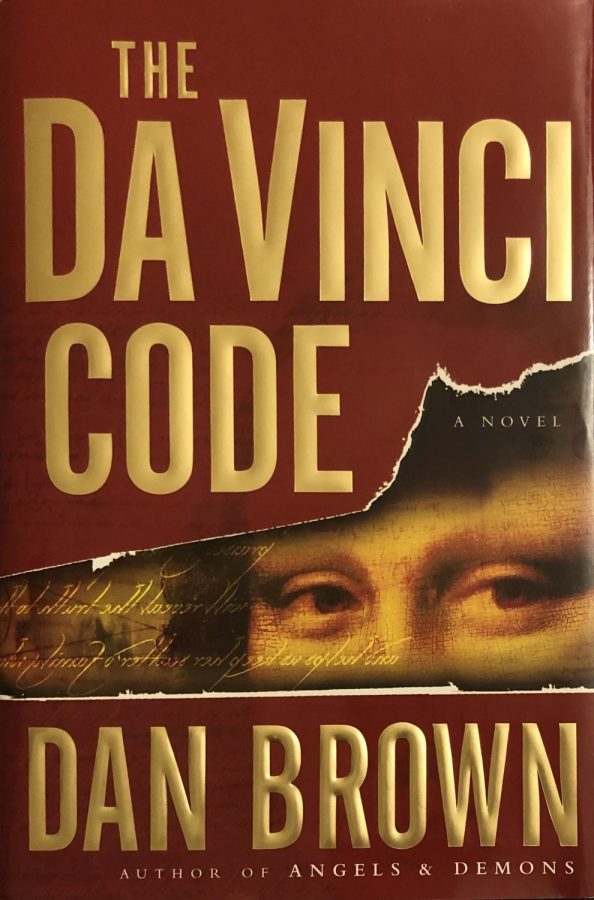
Author : Dan Brown Publication date : April 2003 Pages : 689 (U.S. hardback) 489 (U.S. paperback)
The novel explores an alternative religious history, whose central plot point is that the Merovingian kings of France were descended from the bloodline of Jesus Christ and Mary Magdalene, ideas derived from Clive Prince’s The Templar Revelation (1997) and books by Margaret Starbird. The book also refers to The Holy Blood and the Holy Grail (1982) though Dan Brown has stated that it was not used as research material.
Characters
Robert Langdon: A professor of symbology at Harvard University and the protagonist of the novel.
Jacques Saunière: The grandmaster of priory of Sion, Curator of Louvre Museum and primary antogonist of the novel.
Sophie Neveu: A Cryptologist of French police and granddaughter of Saunière.
Bezu Fache: A member of Opus dei and a French police.
Silas The monk: A member of Opus dei who murders Saunière.
Manuel Aringarosa: A bishop of Vatican and member of Opus dei.
Sister Sandrine: A Seneschal of priory of Sion and sister of St. Sulpice.
André Vernet: A guard of Zurich bank.
Sir Leigh Teabing The Teacher: A Grail scholar, living in Paris and secondary antogonist of the novel.
Rémy Legaludec: A maid who assist Teabing.
Jérôme Collet: A French police.
Marie Chauvel Saint-Clair: Sophie’s grandmother and Saunière’s wife.
Summary
In the Louvre, a monk of Opus Dei named Silas apprehends Jacques Saunière, the museum’s curator, and demands to know where the Holy Grail is. After Saunière tells him, Silas shoots him and leaves him to die. However, Saunière has lied to Silas about the Grail’s location. Realizing that he has only a few minutes to live and that he must pass on his important secret, Saunière paints a pentacle on his stomach with his own blood, draws a circle with his blood, and drags himself into the center of the circle, re-creating the position of Da Vinci’s Vitruvian Man. He also leaves a code, a line of numbers, and two lines of text on the ground in invisible ink.
A police detective, Jerome Collet, calls Robert Langdon, the story’s protagonist and a professor of symbology, and asks him to come to the Louvre to try to interpret the scene. Langdon does not yet realize that he himself is suspected of the murder.
After murdering Saunière, Silas calls the “Teacher” and tells him that, according to Saunière, the keystone is in the Church of Saint-Sulpice in Paris. The Teacher sends Silas there. Silas follows Saunière’s clues to the keystone’s location and discovers that he has been tricked. In a fit of rage, he kills Sister Sandrine Bieil, the church’s keeper and a sentry for the Priory of Sion. At the Louvre, Langdon meets Jerome Collet and Bezu Fache, the police captain, and realizes that the two policemen suspect him of the murder.
Sophie Neveu, an agent of the department of cryptology and Saunière’s granddaughter, arrives at the crime scene and tells Langdon that he must call the embassy. When Langdon calls the number Sophie gave him, he reaches her answering service. The message warns Langdon that he is in danger and should meet Sophie in the bathroom at the Louvre.
In the bathroom, Sophie shows Langdon that Fache is noting his movements with a tracking device. She throws the device out the window onto a passing truck, tricking the police into thinking that Langdon has escaped from the Louvre.
Sophie also tells Langdon that the last line in the secret message, “P.S. Find Robert Langdon,” was her grandfather’s way of alerting her: P.S. are the initials of her grandfather’s nickname for her, Princesse Sophie. Langdon thinks that P.S. might stand for Priory of Sion, an ancient brotherhood devoted to the preservation of the pagan goddess worship tradition, and to the maintenance of the secret that Saunière died protecting.
Langdon decodes the second and third lines in Saunière’s message: “Leonardo Da Vinci! The Mona Lisa!” Sophie returns to the paintings to look for another clue. The police have returned to the Louvre as well, and they arrest Langdon. Sophie finds a key behind the Madonna of the Rocks. By using the painting as a hostage, she manages to disarm the police officer and get herself and Langdon out of the building.
As Sophie and Langdon drive toward the Swiss bank identified on the back of the key, Langdon explains the history of the Priory of Sion and their armed force, the Knights Templar. He reveals that the Priory protects secret documents known as the Sangreal, or the Holy Grail. Langdon’s latest manuscript is about this very subject.
When Sophie and Langdon enter the bank, an unnamed security guard realizes that they are fugitives and calls the police, but André Vernet, the bank’s manager and a friend of Saunière’s, recognizes Sophie and helps her and Langdon escape. Sophie and Langdon figure out that the number left near Saunière’s body must be the account number that will open the vault. When they open the vault they find a cryptex, a message delivery device designed by Da Vinci and crafted by Saunière. The cryptex can only be opened with a password.
Vernet successfully smuggles Sophie and Langdon past Collet in the back of a locked armored car. Vernet turns on them, but they manage to get away with the cryptex, which Langdon realizes is actually the Priory keystone—that is, the key to all of the secrets the Priory holds about the location of the Holy Grail.
Langdon and Sophie go to the house of Sir Leigh Teabing, a historian, to ask for his help opening the box. Teabing tells them the legend of the Grail, starting with the historical evidence that the Bible didn’t come straight from God but was compiled by Emperor Constantine. He also cites evidence that Jesus’ divinity was decided by a vote at Nicaea, and that Jesus was married to Mary Magdalene, who was of royal blood, and had children by her. Teabing shows them the hidden symbols in The Last Supper and the painted representation of the Magdalene. He tells them that the Holy Grail is actually Mary Magdalene’s body and the documents that prove Mary’s blood line is related to Jesus. He says he thinks Saunière and the others may have been killed because the Church suspected that the Priory was about to unveil this secret.
As Langdon is showing off the cryptex, Silas appears and hits him over the head. Silas holds Sophie and Teabing at gunpoint and demands the keystone, but Teabing attacks Silas, hitting him on the thigh where his punishment belt is located, and Sophie finishes him off by kicking him in the face. They tie Silas up.
Collet arrives at the castle, but Sophie, Langdon, the bound Silas, Teabing, and his servant, Rémy, escape and board Teabing’s private plane to England. Sophie realizes that the writing on the cryptex is decipherable if viewed in a mirror. They come to understand the poem, which refers to “a headstone praised by Templars” and the “Atbash cipher,” which will help them arrive at the password. Langdon remembers that the Knights Templar supposedly worshipped the god Baphomet, who is sometimes represented by a large stone head. The word, unscrambled by the Atbash Cipher, is Sofia. When they open the cryptex, however, they find only another cryptex, this one with a clue about a tomb where a knight was buried by a pope. They must find the orb that should have been on the knight’s tomb.
Fache realizes that Teabing and the rest of them are in the jet. He calls the British police and asks them to surround the airfield, but Teabing tricks the police into believing that there is nobody inside the plane but himself. Then he goes with Sophie, Langdon, Rémy, and Silas to the Temple Church in London, the burial site of knights that the Pope had killed.
Rémy frees Silas and reveals that he, too, follows the Teacher. Silas goes to the church to get the keystone, but when he tries to force Langdon to give it up, Langdon threatens to break it. Rémy intervenes, taking Teabing hostage and thus forcing Langdon to give up the cryptex.
Meanwhile, Collet and his men look through Teabing’s house and become suspicious when they find that he has been monitoring Saunière. Over the phone, the Teacher instructs Silas to let Rémy deliver the cryptex. The Teacher meets Rémy in the park and kills him. The Teacher calls the police and turns Silas in to the authorities. As Silas tries to escape, he is shot, and he accidentally shoots his idol, Bishop Aringarosa.
Silas takes Bishop Aringarosa to the hospital and staggers into a park, where he dies. In the hospital the next day, Aringarosa bitterly reflects that Teabing tricked him into helping with his murderous plan by claiming that if the Bishop delivered the Grail to him, he would help the Opus Dei regain favor with the Church.
Sophie’s and Langdon’s research leads them to the discovery that Sir Isaac Newton is the knight they are looking for, the one buried by a Pope, because they learn he was buried by Alexander Pope. They go to Westminster Abbey, where Newton is buried. There, the Teacher lures them to the garden with a note saying he has Teabing. They go there only to discover that Teabing himself is the Teacher. Teabing suspected that Saunière had decided not to release the secret of the Priory of Sion, because the Church threatened to kill Sophie if the secret was released. Wanting the secret to be public knowledge, he had decided to find the Grail himself.
Teabing gives Langdon the cryptex and asks Langdon and Sophie to help him open it. Langdon figures out that the password is apple—the orb missing from Newton’s tomb. He opens the cryptex and secretly takes out the papyrus. Then he throws the empty cryptex in the air, causing Teabing to drop his pistol as he attempts to catch it and prevent the map inside from being destroyed. Suddenly, Fache bursts into the room and arrests Teabing.
The papyrus inside the second cryptex directs Sophie and Langdon to Scotland, where Sophie finds her brother and her grandmother. During the reunion, she discovers that her family is, indeed, of the bloodline of Jesus and Mary Magdalene. Sophie and Langdon part, promising to meet in Florence in a month. Back in Paris, Langdon comprehends the poem, which leads him to the small pyramid built into the ground in the Louvre, where he is sure the Grail must be hidden
Review
The Da Vinci Code by Dan Brown was a wonderful book. At several points in the book I found myself wondering what the next twist would be. The Da Vinci Code is about a symbologist named Robert Langdon.
I enjoyed how the author tied symbology into his novel. I learned things that I was not expecting to in a way that did not feel like I was in a class. I also feel that the action-packed novel kept me engaged with the characters. I often found myself sitting on the edge of my seat waiting for the next piece of the puzzle to be revealed. I highly recommend The Da Vinci Code to any who love mysteries or even to those looking for an adventure.
Looking for the positivity does not necessarily mean overlooking faults. being a positive thinker does not mean one has to agree or accept everything. It only means that a person is solution-focused.
– Shiv Khera
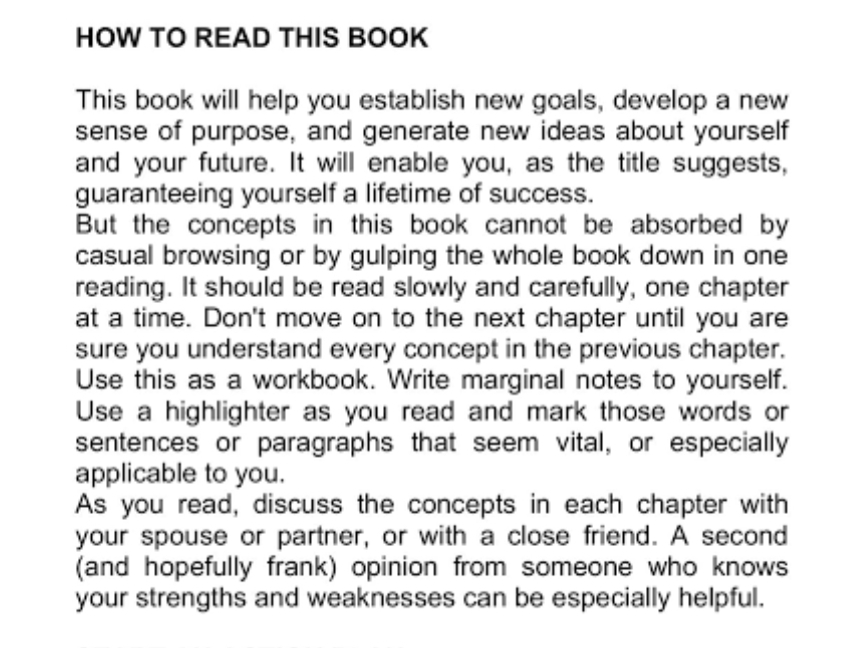
This book was recommended to me. I had high hopes on it that it will be as good as they said. And it turned true. It is one of the wonderful life-changing books. This book defines success. It gives us solutions to come from failure to success. Its easy language of description makes it easier to grasp the concepts
This book helps increase self confidence and achieve great goals in life. It gives a lot more inspiration for businesses related people. The book contains small basic stories, quotes in between and action plan at the end of every chapter to let you know about yourself.The perfect balance of professional & personal development can be maintained on reading & understanding this book.
Under Adverse conditions – some people break down,some break records
– Shiv Khera
A practical, common sense guide that will help you: · Build confidence by mastering the seven steps to positive thinking · Be successful by turning weaknesses into strengths · Gain credibility by doing the right things for the right reasons · Take charge by controlling things instead of letting them control you · Build trust by developing mutual respect with people around you · Accomplish more by removing the barriers to effectiveness
Motivation is like fire—unless you keep adding fuel to it, it dies. Your fuel is your belief in your inner values.
– Shiv Khera
This book is totally worth every minute you spend on reading it. It’s even worth every penny you spend on it. It keeps you motivated. Hunger for positivity increases. This book is truly recommended to those who wish to change themselves for a better version of themselves.
Like I say : Reading books is magic, it makes you live hundreds of lives in a single one. Or atleast that’s what I believe. Hopefully this book will have an impact and magic you are/ were waiting for. I’ll take a leave.
Learning your first programming language is a huge step in your journey to becoming a developer, but if the learning stops there it can dramatically impact your career prospects and income potential.
Technology is emerging at an unprecedented pace, with new coding languages created every year to keep up with this rapid innovation. Believe it or not, there are currently more than 500 programming languages, and that number continues to rise!
Companies like Shutterstock that used to be dedicated to only one language (Perl) are now multi-lingual with a developer team that programs in Node.js, Ruby, Java, Python, PHP, and Objective-C. A company using multiple programming languages isn’t the exception, it’s the norm.
So, here’s the million dollar question: Can someone really become a successful developer only knowing a single programming language? While there are specialized roles in single languages, including JavaScript, the majority of companies and jobs do, in fact, require knowledge of multiple programming languages.
Whether you already have one programming language under your belt, or are deciding where to start, here are a 4 reasons to learn multiple programming languages.
1. More Tools To Get The Job Done
As a developer, the end goal isn’t learning as many languages as you can, or even learning how to code. Instead, it’s about being able to look at a problem and figure out what tools (read: programming languages), you can bring in to get the job done. Naturally, the more tools you have under your belt the more ways you’ll be able to tackle different problems.
Just as there are hammers, screwdrivers, sanders, and an array of other tools for different tasks, there are countless programming languages, with each serving a unique purpose.
2. Pick and Choose the Jobs You Love
Knowing a variety of programming languages, especially in this day and age, helps open up the job market tremendously.
Let’s say you recently graduated from a coding bootcamp and are ready to dive headfirst into the field of programming. There are dozens of companies looking for junior developers, although you find only a fraction of them are hiring for the language you learned while attending a coding bootcamp. By default, only knowing one programming language automatically limits you to fewer roles.
Take a look at the market demand for each of these 9 programming languages:
Having a solid grasp of multiple programming languages, on the other hand, means you have an edge in the job market and qualify for a wider range of job opportunities. You can pick the role and company you love, rather than settle with the limited options you’re dealt with after graduation.
3. Increase Your Salary Potential
More languages equals more money. Don’t believe me? Here’s a recent blog post that highlights the increasing number of companies looking for developers who can work across a number of different functions (and what they’re willing to dish out in return):
And while companies are often [cross-functional developers] to keep costs down, they’re also prepared to pay more to get someone who can switch between projects and has three or four programming languages at their fingertips. In fact, they’re prepared to pay up to a year more for developers who can work in multiple languages.
Facebook is another example of a company that uses a mashup of languages. Facebook.com’s front-end is built on JavaScript, back-end built on Hack, PHP, C++, Java, Python, Erlang, D, Xhp and Haskell, and its database on MySQL, HBase and Cassandra.
Additionally, there are several contributing factors when it comes to determining a developer’s salary. One being whether or not someone is a front-end, back-end or full-stack developer. Full-stack developers know all aspects of the development process, and can use both front-end and back-end technologies, making them more valuable to a company. Because of this, companies are willing to pay an average salary that tops out at roughly $20,000 higher than that of a front-end or back-end developer.
4. Don’t Get Left Behind: Become A More Versatile Developer
Learning a programming language isn’t all that different from learning a foreign language. Once you learn your first foreign language, it becomes progressively easier to learn your second, third or even forth. The reason for this is because while learning your first foreign language you were essentially “learning how to learn.” You can also start recognizing similarities across languages, which accelerates the learning process. The same principle goes for learning additional programming languages.
One of Coding Dojo’s lead instructors has been in the industry for 25 years. During that time, he’s learned more than 20 different programming languages! Throughout his career he applied for jobs not knowing any of the languages they used, but was still hired because he showed that he was able to quickly learn, and run with, new languages and technologies.
Being a versatile developer and knowing multiple programming languages means your skills will never become outdated, and you can quickly adapt to industry trends. You can use your vast knowledge of software and web development to keep your job opportunities varied and fresh. Even if you get hired on to work as a programmer for a specific programming language, it’s not unusual for companies to switch course and decide to move to or bring in new technologies. In this day and age, you really can’t afford not to know more than one programming language!
People usually tend to avoid the sci-fi and fantasy genre, and honestly, I don’t blame them. Complicated worlds, entirely different from our own, magic and otherworldly creatures, characters tasked with saving the world. It’s standard fantasy fare from the time of Tolkien, and it seems everyone is tired of it.
Six of Crows by Leigh Bardugo came as a breath of fresh air then in the Young Adult category. What is it about, you ask? I’ll give you three words:
Morally grey characters.
The first point in its favour was marked the moment it presented our chosen leads: a thief, a spy, a sharpshooter, a runaway scientist, a soldier girl trying to survive in the city with her powers, and a child soldier and ex-convict with a thirst for revenge.
Bardugo’s story is set in a world different from our own, with different nations, but same political machinations. Beings called Grisha wield powers of the elements. In some nations, they are revered and have a high standing in the armies (Ravka). In others, ingrained prejudice makes humans hunt them like dogs going for a kill (Fjerda). Unlike her previous trilogy, Shadow and Bone, this story takes place in Ketterdam, the capital of a small island called Kerch, filled with thieves and con artists and ruthless businessmen looking to make a coin.
The story is based on a heist, and our criminal mastermind, Kaz Brekker, is tasked with freeing a valuable Grisha prisoner from the Ice Court—the world’s most impenetrable fortress. To venture there means signing your death warrant, but Kaz accepts anyway. Why?
He is promised thirty million kruge.
Like I said, this story does not feature any selfless Chosen Ones.
With his mission given, Kaz gathers his crew: Inej Ghafa, a brown girl and one of the best spies on the Ketterdam rooftops; Jesper Fahey, a biracial boy with an excellent aim and the most charismatic smile; Wylan van Eck, a runaway scientist who also happens to be the son of a rich businessman; Matthias Helvar, former prisoner who is torn between assisting with the heist and the ingrained prejudices and loyalty to his country.
As the blurb of the book says, “Six dangerous outcasts. One impossible heist. Together they might just be unstoppable—if they don’t kill each other first.”
What made this book even more amazing, in addition to the fast-paced plot and action, were the characters themselves. With five point-of-views, I got a clear picture of their past traumas and motivations, their quirks and flaws, and that just made me fall in love with all of them even more. The way they all slowly developed friendships and became each other’s family against impossible odds was heartwarming to see, especially for Kaz, who is used to operating alone as the mastermind.
Another great thing about this book has to be the representation. The author suffers from a disability herself which requires her a cane. It is no surprise then that Kaz too suffers from a permanent leg injury and chronic pain. This is never made fun of, and actually explains why he relies on his cunning and smarts so much.
While most white authors resort to stereotypical representation of brown people, Bardugo instead makes Inej a strong female character. She is kind even in the face of adversity and tries her best to embrace her religion and heritage. Despite her brutal past and obvious mental scars, she is talented with her knives and spying and as another brown girl, this was inspiring to read. Through her, Bardugo also elaborates on human trafficking and sex slavery of children: important topics of discussion that most people shy away from.
Nina Zenik, the Grisha Heartrender, is fat. No stereotypes. No jokes. She loves food. She loves her body, and she is a powerful magician and fighter. She is also incredibly street-smart (speaks at least seven languages) and a great actress. Her spunk, charisma and energy were infectious, even in the face of her past as a child soldier.
Jesper Fahey is biracial—half Black. Like Nina, he is energetic and extroverted, coded as having ADHD, however addicted to gambling. He is an expert with guns and sharpshooting, Kaz’s right-hand man in any physical confrontation. His bisexuality is a normal thing in the world. No biphobia. His friends gladly accept him. His character arc and internal prejudices are elaborated upon in a very believable way, and I cannot wait to see his development in the sequel.
Also, the romances in the book were very well-written! Most books rush into the relationship too fast, but every couple in Six of Crows had proper development and slow build-up. Each couple became a well-functioning team first. This is especially true for Kaz and Inej, who each suffer from a form of touch aversion due to trauma. Both vow to become better people first before pursuing any sort of relationship, even though they work extremely well as a team.
Overall, this book deserves a full five-star rating! The world-building and magic system is a bit complicated to get into in the first few chapters, but the characters and their lovely friendships eventually get you hooked. If you love magic, want to have a different kind of adventure than the standard fantasy one, and like seeing heist movies, then this book is for you!
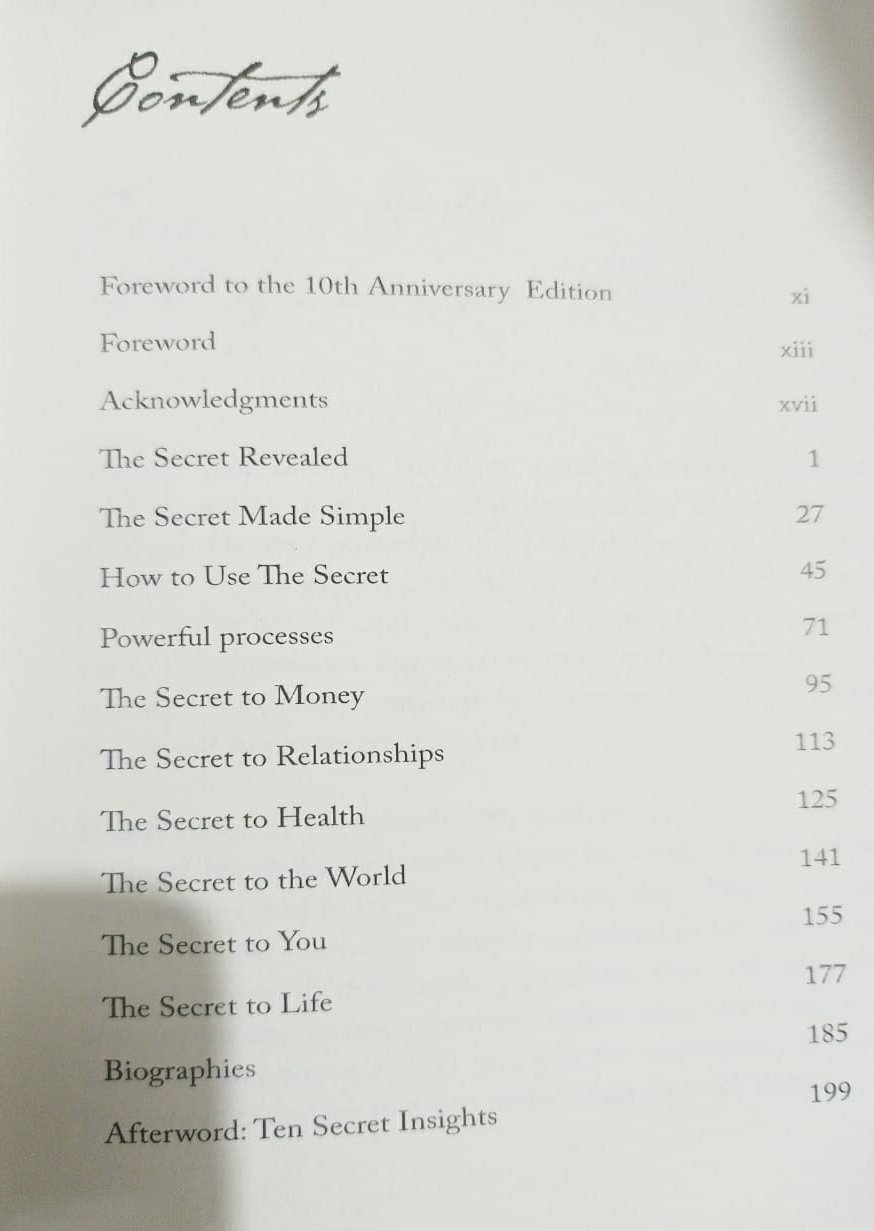
The Secret, there is a movie (specifically documentry) that goes by this name. The movie is based on this book. As the title says, it spills the secrets. All that we are is the result of what have thought. We are made of our thoughts; we are moulded by our thoughts.Change your life by changing your thoughts. It is as simple and as complicated. Because our thoughts become our words, words become actions, actions become habits, habits led you to your destiny.
This book, is a bit complicated for beginners. This book awakens the positivity in you. The hope on the goodness of universe will become more stronger than usual. It speaks about the law of attraction. The title itself attracts readers. At few movements you may feel you know those but by reading those facts from The Secret, will make your will to follow them stronger.
Secrets revealed.
In the era of finger taps, following the tricks and methods mentioned may seem a difficult task. But it is worth every difficult step you take. You will find the new you a lot more happier and energetic than usual. A wonderful recommendation for all those who are not afraid of changing themselves.
Like I say : Reading books is magic, it makes you live hundreds of lives in a single one. Or atleast that’s what I believe. Hopefully this book will have an impact and magic you are/ were waiting for. I’ll take a leave.
As professional or aspiring data scientists today, we face so many challenges: Learning new skills, improving existing skills, building a strong professional network, job hunting, and landing a role. Data science is one of the glamorous tech fields at the moment, from being an analyst to deep learning professional. The resources to learn are many, the interested candidates are there, but the job availability is not always a match.
To move on in your career, especially in data science, you need to build more projects, hone your skillset, and prove your value as a data scientist. But, how are you going to do that if you can’t find a job or if you weren’t given a chance to put your knowledge to use and prove you can use it correctly?
One of the great options to improve your skills, gain experience, strengthen your portfolio, and have an income is freelancing. Personally, I am a big fan of freelancing; although I am fully aware that succeeding as a freelancer is not easy, it’s very doable. As a freelance data scientist, you can choose the projects that you find interesting and really want to work on. You can also set your hourly pay, and most importantly, you get to be your own boss.
Perhaps my favorite thing about being a freelancer is the freedom of time. You get to choose when to work and when to take some time off, which is not always an option in regular 9-to-5 jobs. So now, you probably have a few questions, like, how do I get started with freelancing? Where do I find a freelance role (a gig)? What kinds of gigs exist out there?
I answered the latter question in another article, and I will write one answering the first question later this month. But today, let’s focus on the middle question, “where can I find and browse available data science freelance gigs?” So I will focus today on the top 6 websites you can use to find freelance data science roles.
№1: LinkedIn Job Finder
I will start with a great website that is often ignored, especially when looking for LinkedIn freelance gigs. Of course, we all know the professional networking website, and some of us have found our full-time job on LinkedIn. But, LinkedIn won’t probably come to mind if you’re looking for a freelance project.
LinkedIn can be used to look for freelance jobs; the trick is to filter the role type to “contract” or “temporary” only to see the freelance roles. Another good thing about using LinkedIn to find freelance roles is that you can set your experience level only to see jobs that match your skillset.
№2: AngelList
Next up on the list is a website very popular with startups, AngelList. AngelList is one of the top websites to find freelance tech roles in general and data science ones in particular. So, all you need to do is build a potent profile and start browsing available roles.
My next website is not your typical freelance website; it’s a community of developers and startups, Lemon.io. We all understand the importance of community, of belonging especially in the freelance world. However, being a freelancer may feel lonely; Lemon tries to overcome that by building an exclusive community.
In Lemon, you can find different freelance roles for all tech specialties, from pure Python to web dev to data science, with hourly pay anywhere from $35~ to $55. To ensure quality, you will need to pass a simple English test and technical interview with one of Lemon’s developers to join Lemon.
№4: Toptal
When you ask an experienced freelance data scientist to recommend you a website to find roles, one of the websites that you will hear often is Toptal. Toptal is a remote talent company that aims to match skilled people with projects that match their skillset.
Toptal is more than a hiring website; it offers many resources and events to improve your skills and learn more about the future of work. Once you pass the initial screening and based on your experience and skill level, you can have an hourly rate ranging from $20 to $100+.6 Lesser-Known Data Science Blogs That Are Worth Followingtowardsdatascience.com
№5: Upwork
Next on today’s list is a website famous for being the freelance holy grail, not just tech freelance, but any freelance out there, Upwork. Create a profile, pass the screening, start browsing available roles, or just wait for clients to contact you.
In Upwork, you can mainly find two types of jobs based on payment: fixed payment and flexible roles. The fixed price has a fixed price to a specific amount of hours, while the flexible ones have average hourly pay starting from $20 and up.
№6: Kolabtree
Last but not least is a freelance platform with over 20,000 scientists and experts on board, Kolabtree. Kolabtree connects freelancers of all levels of experiance to businesses of all sizes from all over the world, with hundreds of projects are posted every month, and you can filter it by the exact topic you want to work on, like data science or a more specific subject areas.
Kolabtree is free to signup for and starts applying for projects with an hourly rate starting from $30 on data analysis, machine learning, and statistical analysis projects.
Final thoughts
As a data scientist myself and a computer science instructor, I fully understand the frustration of applying to tens of jobs and sometimes not hearing back from any. I know what it is like to feel unworthy and not enough, skilled enough, smart enough, and good enough. Unfortunately, the current way job hunting work tends to strengthen this feeling of unworthiness and leave the applicant mentally tired.
But, one of the ways I was able to overcome that feeling of being unemployable is freelancing. So, I decided to get out of the job-hunting world and make my own path to prove myself, to myself first, and to employers out there. I made a profile and started doing freelance projects. I started small, and the size of my projects and my skills grew with time.5 Python Books to Transfer Your Code to The Next Leveltowardsdatascience.com
So, if you reached a good point in your learning journey or got tired of your company and looking for something new, something challenging and rewarding, I suggest you give freelancing a try. Check the websites I proposed in this article out, and maybe you will find a gig that matches your skills and that you will feel excited about.
The book starts from Keith Clayton’s perspective. Keith is a local police officer. He is at a location where local college students go for nude swimming. He is carrying a camera he borrowed from the Police Department and is taking pictures of three female college students. One of them leaves the beach and comes upon Keith who is supposed to be on duty. He hides the camera and talks with the girls about their breaking the law by nude bathing. He lets them go. He comes across a man whom Keith describes as looking like a hippie walking down a logging road by the beach with a dog. It is Logan Thibault and his dog, Zeus. Keith is concerned Logan saw everything that had happened and tries to find a way to take Logan in. However, after running a background check on Logan and Logan refusing to let him search his bags he lets Logan go. He asks Logan where he is going and states he is heading to Arden. Keith goes back to find the camera he hid, but it is gone and the tires on his squad car are slashed. Keith becomes concerned as his father is the local Sheriff and his grandfather is a local judge.
When the story changes to Logan’s perspective, he is in the car with the three college girls who picked him up when he indicated he wanted to hitch a ride. He gives the camera (from which he removed the memory disk) to the college girls. The story also back tracks to Logan witnessing Keith taking the pictures and Logan taking the camera, destroying the disk, and slashing the tires of Keith’s cruiser. The story then goes back further into Logan’s life as he reflects on his walking all the way from Colorado and even further back as to why he decided to join the Marines. It is explained how Logan began to play Poker while tensions were building in the Middle East and this was his outlet. He lost all of his money while doing this and eventually gave up joining in on the games. It is then mentioned that Logan liked to go for early morning runs while in the Middle East and one day he came upon a picture half buried in the sand. It turns out to be a picture of Beth who is wearing a shirt that says Lucky Lady. His luck then begins to change. It is first noticed when his friend in his squad, Victor, encourages him to join in a poker game that night. Victor also believes in omens and superstitions and is the one who slowly convinces Logan the picture and the girl in the picture are powerful to Logan and the picture may have a deeper meaning in Logan’s life.
Elizabeth (Beth) is next introduced in the story. It starts at a birthday party her son, Ben, is attending. It comes up that Beth’s grandmother, Nana, recently had a stroke and Beth has been helping her run the dog kennel/obedience school Nana owns. It is also mentioned that Nana raised Beth, because Beth’s parents died in a car accident when Beth was 3 years old. Beth is also a teacher at a local school. It slowly becomes known that Keith Clayton is the ex-husband of Beth, and the father of Ben. Beth expresses her frustration about Keith’s disappointment in Ben as Ben is not as athletically inclined as other boys of his age. It becomes apparent that Ben does not care for his father much and does not like spending every other weekend with Keith.
The story goes back to Logan and the beginning of his experience in the Middle East is mentioned. A story is told about how the two comrades in his fire team are killed by a RPG and Logan survives. Logan is staying at a local motel and first decides to find the fairgrounds where the picture he had of Beth was taken. He finds the exact location where the picture was taken and knows he is in the right place. He determines he is going to go to a pool hall/bar to ask the locals if anyone knows the girl in the picture.
Next, Keith reminisces about his day and having to explain the slashed tires to his father. It comes to light that his dad and grandfather are well known in the town and Keith is stuck between keeping out of trouble and his family being able to get him out of trouble due to their status in town. Keith also explains his dislike for his son’s (in Keith’s eyes) weaknesses. Instead of wanting to be with Ben, Keith wants to be out looking for Logan to make him pay for what he did. Keith receives a phone call from a co-worker, Tony, who says a stranger has a picture of Beth at a local pool hall and was asking about her. Keith asks if the guy looks like what Logan had looked like earlier, but the co-worker says that is not the description of the man at the pool hall. Keith is disappointed and decides to do nothing about man with the picture.
Logan’s version of the bar/pool hall encounter is described and he learns Beth’s full name. The next day Logan goes to the dog kennel and meets Beth for the first time. He applies for a position at the kennel and Beth becomes suspicious due to the half told story Logan tells her. (He leaves the part out about the picture as the reason why he came to Hampton). Beth is skeptical and decides to have Nana talk with Logan. Nana decides to hire Logan, but admits she feels he isn’t telling the whole truth about being in Hampton. Once hired, Logan finds a place to rent in town and begins working at the kennel. Over the next few weeks Logan (and Zeus) becomes closer with Nana, Beth and Ben.
Nana decides to go on a trip to visit her sister in Greensboro, leaving Beth and Logan to tend to the kennel. Beth and Logan get to know each other better, and this is one of the weekends when Ben spends time with his father. Logan and Beth make ice cream on the Saturday night Ben is gone when Keith brings him back to Beth. Ben has a bruise on his face and his glasses are broken. Keith tells Ben to tell Beth it wasn’t his fault, but it’s apparent Keith threw a baseball too hard and it hit Ben in the face. Keith does not notice Logan initially, but when he does he demands to know what Logan is doing there. Zeus becomes defensive and Logan tells Keith to leave. Keith does, but is upset about the incident, because he does not like being challenged and forced to back down. He also upset to have found out that Logan had never left town and is concerned Logan may still have the camera’s memory disk.
Beth and Logan go on a date and Logan opens up about Victor and Logan’s boating trip in Minnesota. Logan informs Beth that Victor died when another boat hit their boat. Logan and Beth continue to date, and eventually Keith breaks into Logan’s home to see if he could the photo disk. Logan suggests to Beth that Keith has been the reason why none of her relationships have lasted and tells her about the break-in he had had in his home. Nana implies she agrees with Logan. Beth goes to a former boyfriend’s home and he weakly admits Keith may have been involved in his breaking up with her. Beth (politely) confronts Keith about this. Keith during this conversation tries to convince Beth that she knows nothing about Logan and this could dangerous. Keith thinks he has begun to convince Beth and is in high spirits. However, Logan did research on Keith’s family and meets Keith at his Keith’s home. Logan tells Keith he knows it was Keith who broke into his home and bluffs that he has a video recording of the break in. Logan said he would take the information to Keith’s family if Keith did not stay out of Beth’s business. Keith realizes he no longer has the upper hand and begins to drink heavily.
Later, there is a storm that comes through Hampton and it rains for days/weeks and the area begins to flood. Ben convinces Logan to go to his tree house and Logan realizes it is no longer safe because of the flooding. They still enter the tree house and Logan gives Ben the picture because he feels it will keep Ben safe. Logan mentions his friend Victor’s belief in the luck of the photo. Logan also plays the piano in church for Nana and the town begins to admire Logan, and even Keith’s grandfather praises Ben, deepening Keith’s hatred of Logan.
Tony, the co-worker who called Keith from the pool hall when Logan first arrived in town, goes to Keith’s house and informs Keith that Logan was the guy who had had the picture of Beth which Keith had ignored. Keith goes to the school where Beth works and convinces Beth that Logan is a stalker. Beth doesn’t necessarily believe Keith at the time and confronts Logan who admits to having the photo. Beth becomes extremely upset and demands the picture. Logan informs Beth that he had given it to Ben.
Later, Beth asks Ben for the photo and asks him to tell her everything Logan had said when Logan had given it to Ben. Beth realizes Logan had been honest about how he felt the photo was a good luck charm. Beth goes to Logan’s home and he tells her everything. He also mentions the tree house being very unsafe to Beth. Keith spies on Beth and Logan and is enraged. When Beth leaves Logan’s house Keith follows her to her home. Keith tells her he was going to take her to court to obtain full custody of Ben if she doesn’t follow his rules. He wants her to stop seeing Logan and date him (Keith) again. Ben overhears Keith threatening to take full custody, and tells Keith he doesn’t want to live with him. Ben runs away to his tree house. Logan had seen the extra set of tire tracks and realizes Keith had been around when Beth was at his house. Logan runs to Beth’s house.
Beth finally realizes Ben had run to the tree house and both Keith and Beth struggle to get to the tree house through the flooding and rain. When they arrive at the tree house it has partially collapsed and Ben was in the creek running under the tree house clinging to the rope bridge. Keith tries to go to the tree house but falls through the rotten wood and breaks his ribs and clings to rope bridge as well. Beth broke her foot on the way to the tree house and only able to watch everything unfold. Logan and Zeus arrive and try to help, as well. Logan ends up closer to Keith and Keith clings to Logan dragging him under when the whole tree house collapses and Logan and Keith disappear into the abyss. Zeus saves Ben.
In the epilogue it becomes apparent that Keith died and Logan survives. Ben continues to carry the photo around for good luck.
Review
Over the past few years I have have come to realize that I am a hopeless romantic. I love reading stories about two people having a chance meeting and just knowing from that moment that they were meant to be together, no matter how much their relationship gets tested. That is why this week’s selection happens to be from the man that I like to call the King of Romance Novels, Nicholas Sparks. “The Lucky One” tells the story of Logan Thibault, a U.S. Marine who finds a lost picture while in Iraq. When nobody claims the picture he decides to keep it, providing him with good luck in every situation he is put into. After coming home he decides to find the woman in the picture even though he knows nothing about her. When he meets Beth Clayton there is an instant attraction and a passionate love affair begins, but Logan has a secret that may tear them apart for good.
I liked this book. I have read two previous Nicholas Sparks novels -“A Walk To Remember” and “Dear John,” and enjoyed them, even though they both had sad endings. The ending to this novel is also sad but happy at the same time. The book drags in certain spots because there is a lot of back story about each character that needs to be told, but there are also moments of action. Now, keep in mind because this is a romance novel the action scenes are few and far between, but the few that do exist leave an impact on the reader, especially the ending.
Sparks writes from the perspective of the main love triangle – Logan, Beth, and Beth’s ex-husband, Keith. As I’ve mentioned before, I am not the biggest fan of multiple points of view, but this method helps push the plot along. It also shows the readers how the characters are connected. This book is great for anyone, especially those who love a great love story every now and then. I enjoyed reading it and I hope you do too. Maybe someday we will have that chance meeting where we meet the right person.
This book by Sudha Murthy is a fictional novel that revolves around a girl Vinuta. It is a regular novel with good narration. Even though the ending is quite predictable it is a good book to read for all those who likes family drama. The story is comparison between Indian lifestyle and American lifestyle.
The writing style is simple and very easy to follow. The story may not have big twists or interesting turning points, but still they keep you glued to the book till the end. If you like to go on with simple reading I would recommend it. But if you are looking for something good then this book may fall an inch short. These are words for those who are already familiar with Sudha Murthy’s work. But for those who are not, it is quite a wonderful book. I would rate it very good if I had too.
I am sorry if I hurt anyone’s sentiments. As I say in my book reviews: Reading books is magic, it makes you live hundreds of lives in a single one. Or atleast that’s what I believe. Hopefully this book will have an impact and magic you are/ were waiting for.
Amidst the pandemic, it is essential to understand the major skills and a quick peep into the most in demand tech jobs that may help professionals to grow and explore various career prospects.
Especially with the evolving technology, which is offering innumerable job opportunities, for fresh graduates and even experienced programmers who are willing to learn the innovative trends that are emerging into the world of programming.
For a few the chances might be minimum in the growing tech market due to skills being mismatched. Therefore, to supersede this obstacle, we tailored 3 top programming skills which have high demand in the tech world today:
1. C++ The post-pandemic work that has forced people to work from home has seen an enormous rise in demand for cloud adoption. Various problems of data breaches have forced companies to come up with a greater budget for security purposes. The day-to-day cybersecurity threat is getting worse. So, if one wants to prosper in the said field, should be highly fascinated with IT not just that, sometimes it is even required more than that. Having command over various programming languages like C++ will make it easier. The demand for cybersecurity professionals with C++ skills has been rising especially with the rising cybersecurity cases globally.
2. Python AI and ML are rising unexpectedly, mostly during pandemic times as businesses have been stuck in the digital world having no other way out than opting for AI and ML. For an AI engineer, it requires both the knowledge of technical and non-technical skills. A fastest-growing industry like this needs an ample amount of people with proper skills and knowledge. Well, Python is considered by experts the most suitable programming language for Machine Learning, Artificial Intelligence, and Natural Language Processing.
3. Rust If one is starting a career in the world of programming they should be highly equipped with the knowledge of Python and JavaScript which forms the very base of it the reason being as they have a wide number of applications and have been used for many years. However, 2021, which is full of different things has something new to offer for people who aspire to be a programmer. In a survey, it was found that Rust was the most loved programming language which has been gaining prominence for the past few years.
Acting as an alternative for C++. Useful mostly for people who are looking for problem-solving techniques when they are working on large-scale applications. Offering a new atmosphere to programmers is highly functional helping developers remove bugs caused by C++.
Various courses are available with projects for hands-on experience.
We’ve got decades of experience in programming and language adoption under our belt at this point, and there are a few things we can say definitively that developers in general (and DevOps engineers specifically) should be aware of.
First, it doesn’t matter as much as you think. It really doesn’t. Most developers don’t choose programming languages based on important things like optimization or general applicability. They choose a language based on ease of use, availability of third-party libraries and simplification of things like UI. Open source version availability helps, but only insofar as it spawns more third-party libraries. So, use the language that works best for the project, and don’t get too hung up on whether or not it’s the newest shiny one.
Second, the changes in use and adoption that matter–the top five to 10 languages that make up the vast majority of all professional programming activity–don’t happen overnight. Both JavaScript and Python are considered “rapid ascent” in terms of uptake when they took off … but both were around for years before that spike in adoption occurred. So, learning any of the top few languages is a far better long-term investment than learning the hottest new language.
Third, those top languages actually don’t change much. They were written to fulfill a need, and that doesn’t change much over time. Indeed, the only language I can think of that has fundamentally changed in its lifetime is C++, which seems to want to keep up with the times rather than keep serving its original niche. Python? Java? Still pretty much the same as when they became popular back in the day. And that’s a good thing. But that means if you want to try something new and engaging, you need to look to up-and-coming languages. At the time of this writing, specialist languages like R and Kafka are having their day, and that’s a good thing. After all, we know that different applications have different needs and different platforms have different needs–and have been trying to address that second one forever, currently with languages like Flutter. All of these will offer new ways of doing things, which is good exposure.
Fourth, (though we briefly toyed with eliminating this one) organizations do determine the pool of available languages. Frankly, allowing each team to build a separate architecture was never a good idea from a long-term maintenance point of view … but a fairly large number of organizations played with the idea and learned the lessons about technical debt all over again. Now we’re back to “We use these languages, pick one,” which is better than “We’re an X shop,” and offers maintainability over time without burning a ton of man-hours.
And finally, you can do anything with those languages your organization makes available. I’ve seen object-oriented assembler, I’ve seen entire websites served in C; the list goes on. The language you choose makes certain things easier or harder, but if you need to get it done, you’ll either get an exception to the language list, or you’ll figure out how to get it done with what’s available. But you can … But as my father used to love to say, “Just because you can, doesn’t mean you should.” He had nothing to do with programming and as little as possible to do with computers, but his logic still applies perfectly.
So, grab an approved language, and crank out solutions. Just keep driving it home; you’re rocking it. Don’t stop, and don’t worry too much about which language you’re using, just focus on the language and do what needs doing–like you’ve done all along. And spin us up even more cool apps.

















 Eduindex
You must be logged in to post a comment.