Any communication channel through which any kind of information, news, entertainment, education, data, promotional messages etc. can be disseminated is called media. Mass media refers to communication devices, which can be used to communicate and interact with a large number of audiences in different languages. Be it the pictorial messages of the early ages, or the high-technology media that are available today, mass media has become an inseparable part of our lives. Media can be broadly classified as: • Print Media (newspapers, magazines, books and Brochures, Billboards, etc.) • Electronic Media (news websites, social networking sites, mass SMS schemes, television, internet, radio, cinema etc.) • New Age Media (Mobile Phones, Computers, Internet, Electronic Books)
Where Media is Misleading? – Threat to Internal Security • Indian media does not have a wider perspective of India’s national security issues. • Indian media is in no mood to apply brakes or observe self-restraint on its wayward and insensitive treatment of national security issues. • Indian media’s (especially electronic media) analysis and over-analysis of national security issues by groups of former diplomats, generals and academia’s arm chair strategists distort national security perspectives. All these gentlemen can only draw on their outdated experience and none of them are privy to latest inputs. Also in many cases, reticence is their first casualty after retirement. • Indian TV anchors discussing national security issues do not have the political and strategic maturity to discuss national security issues as their Western counter-parts do. • Indian TV debates on national security issues tend to cut out development of contrary views and perspectives by imposing commercial breaks, or go hectoring themselves.
For a country like India, the backbone of its democracy and the propagator of its national interests remains the access to information and expression. It helps citizens to make responsible and objective choices, to promote accountability by its officials, to provide solutions to conflict resolution, and also to encourage diverse views of its diverse people. This access of information has allowed the Indian media to play the role of watchdog that holds the Government accountable in all its activities, and also functions as the only mode of expression for its people.
The role of media in a democracy like India, therefore, can be summed up as to: • Inform and educate people objectively, impartially and in an unbiased manner about security threats and challenges • Unbiased reporting with the restraints of self regulations • Promotion of the principles of healthy democracy • Respect for the Constitutional Provisions • To build a bridge between people and governments at the national level • Uphold fairness, justice, national unity and international cooperation • Inform, educate, entertain, publicize and most importantly correct the excesses in any society. • Highlight the trouble spots in the society and press the government and public to devise suitable mechanisms to eliminate them • Shape the perceptions of government, influence public opinion, promote democracy, good governance as well as influence peoples’ behavior and support people- oriented policies Following the globalization, the responsibilities of media have also widened. It has to play a role for preserving and pursuing the national interests of the state and highlighting its perspective along with the global issues. It has to examine the conduct of international relations and again to highlight the trouble spot at global level in lieu of global security.
“The internet is the largest experiment involving anarchy in history. (…) It is a source for tremendous good and potentially dreadful evil, and we are only just beginning to witness its impact on the world stage.”
Eric Schmidt, Executive Chairman, Google and Jared Cohen, Director, Google Ideas
As per Information Technology Act, 2000, “Cyber security means protecting information, equipment, devices computer, computer resource, communication device and information stored therein from unauthorized access, use, disclosure, disruption, modification or destruction.”
1.1. Cyberspace India’s Cyber Security Policy 2013 defines cyberspace as a complex environment comprising interaction between people, software and services, supported by worldwide distribution of information and communication technology devices and networks.
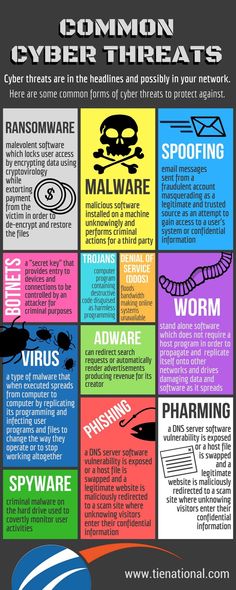
1.2. Cyber threats Cyber threats can be disaggregated into four baskets based on the perpetrators and their motives – Cyber Espionage, Cyber Crime, Cyber Terrorism, Cyber Warfare. 1.2.1. Cyber Crime/ Cyber Attacks Cyber-attack is “any type of offensive maneuver employed by individuals or whole organizations that targets computer information systems, infrastructures, computer networks with an intention to damage or destroy targeted computer network or system.” These attacks can be labeled either as Cyber-campaign, Cyber-warfare or Cyber-terrorism depending upon the context, scale and severity of attacks. Cyber-attacks can range from installing spyware on a PC to attempts to destroy the critical infrastructure of entire nations. 1.2.2. Cyber terrorism Acts of Terrorism related to cyber space or act of terrorism executed using Cyber technologies is popularly known as ‘cyber terrorism’. “Cyber terrorism is the convergence of terrorism and cyber space. It is generally understood to mean unlawful attacks and threats of attacks against computers, networks, and information stored therein when done to intimidate or coerce a government or its people in furtherance of political or social objectives, Further, to qualify as cyber terrorism, an attack should result in violence against persons or property or at least cause enough harm to generate fear, Serious attacks against critical infrastructures could be acts of cyber terrorism depending upon their impact.” It should be noted here that if they create panic by attacking critical systems/infrastructure, there is no need for it to lead to violence. In fact such attacks can be more dangerous. Besides, terrorists also use cyberspace for purposes like planning terrorist attacks, recruiting sympathizers, communication purposes, command and control, spreading propaganda in form of malicious content online to brain wash, funding purposes etc. It is also used as a new arena for attacks in pursuit of the terrorists’ political and social objectives.
Cyber Security has assumed strategic and critical importance because of following reasons: • Cyberspace has become key component in the formulation and execution of public policies. • It is used by government to process and store sensitive and critical data which if compromised can have devastating impact. • Taking down cyberspace will result into disruption of many critical public services like railways, defense systems, communication system, banking and other financial system etc. • Several states are developing the capabilities in the area of cyber attacks which can alter outcomes in the battlefield. • Individuals are using internet based services at a growing pace making them vulnerable to cybercrimes, such as- online bank frauds, surveillance, profiling, violation of privacy etc.
Government has taken a number of steps to acquire and increase capacity in the field of cyber security. Some of which are discussed below.
National Cybersecurity Policy 2013
Information Technology Act 2000 (As Amended in 2008)
Being one of the most viewed programmes on Indian channel and getting good TRP with desi viewers many different dubbed shows were appreciated from pakistan, turkey, korean, ukranian etc.
1. ZINDAGI GULZAR HAI(PAKISTANI)
This serial was a phenomenon that made its stars insanely popular in both Pakistan and India, boosting the steady trickle of cultural exchange into a river of cross-border friendship. Powerful performances from Sanam Saeed, Samina Peerzada and Fawad Khan made this serial an international favourite.
ZINDAGI GULZAR HAI (2012)(2014 in India)
This was the show that made Pakistani actor Fawad Khan a popular face in India. The show that premiered in 2012 on Hum TV in Pakistan was based on a novel by Umera Ahmad and was also inspired from Jane Austen’s Pride and Prejudice. It was a love story of Kashaf played by Sanam Saeed and Zaroon played by Fawad Khan. It was a classic poor girl and a rich boy love story and focussed on women’s struggle in the orthodox Pakistani society. The show instantly became a hit in Pakistan. And when the show travelled to India two years later, it re-created the history. The charms of the male protagonists, played by Fawad Khan floored TV Ji and many Indian female fans.
2. DESENDENT OF THE SUN(KOREAN)
Korean heartthrob Song Joong Ki plays the role of a Special Force Officer. He is considered to be one of Korea’s hottest actors with a huge fan following across South East Asia. The series will premiere on Indian television on 8 February 2017 and became one of the first K-dramas to be available on a widely known Indian cable network.
DESENDENT OF THE SUN(2016)(2017 in India)
‘Descendants of the Sun’ is the story of Special Force Officer and a surgeon who fall in love at first sight. Their contrasting ideologies and values (as one kills to protect lives while the other one saves lives to protect them) makes them shy away from one another. Destiny plays an interesting role and after almost a year of having parted ways, they meet at a warzone ‘Uruk’, a land far from Seoul. Now, circumstances bring them face to face where they must work closely together driven by their principles.
3. FERIHA(TURKISH)
The first Turkish drama on Indian television was aired on 15th September 2015, Adını Feriha Koydum (Feriha) which had become a huge success. And from that time the Turkish TV Series has been very popular in India.
FERIHA(2011)(2015 in India)
It is a story of a young ambitious girl, who belongs to a poor family. But with the dreams of making it big out in the world. Beautiful, intelligent, and young, and with the thirst to see and travel the world, Feriha works hard to secure a scholarship to a private university.
But the new life at the university, where she goes to study on a scholarship, which awaits Feriha, about which she has no clues, wraps its arms around her and spins her around. Coming from a poor family and intimidated by the riches of the people around her at the university, Feriha soon entangles herself in a whirlwind of lies and made up stories. Emir Sarrafoglu, a rich son of a rich dad soon becomes the center of attraction of Feriha’s world, and telling lies, her new lifestyle.
4.SNOWDROP(UKRAINIAN)
“Snowdrop” was premiere in India on January 16 , 2017. This captivating story of love and revenge from the heart of Ukraine will not only enchant viewers with its superlative content but also give the audience an experience of a global palate.
SNOWDROP(2015)(2017 in India)
The show revolves around Nadya, an innocent, good hearted and hard working girl, who gets wrongly framed for an accident. Irina, her beautiful, spoilt and manipulative step sister and the man that both of them are in love with is Igor. He is the heir to a cosmetics empire. A tragic accident kills Igor’s beloved sister. Igor, who loved Nadya loses all his trust in her after the ill-fated incident. Irina, takes advantage of the situation and convinces Igor to marry her. The drama starts with a very exciting jail break. In first episode, Nadya will be seen escaping prison and rushing to a hotel where she confronts Irina as she is getting engaged to Igor. The confrontation ends with the stepsisters handcuffed to each other, falling off a roof. As they fall, Nadya wonders how they came to this juncture in life and remembers her past. The show depicts Nadya’s fight to prove her innocence and get the real culprit punished.
5. BOYS OVER FLOWER
This is the most popular K-Drama that dubbed in Hindi and become famous in the whole subcontinent. This drama didn’t only get popularity but the whole cast get popularity from this drama. This is another High school story with rich boy and the poor girl but intense triangle love story.
BOYS OVER FLOWER( 2009)(2017 in India)
Geum Jan Di comes from a poor family who owns a dry-cleaning shop. One day, she visits Shinhwa High School, a prestigious school for the wealthy, and saves a student trying to commit suicide because of bullying. For her heroic act, Jan Di receives a swimming scholarship and starts attending the school. In school, she meets the notorious F4, the most popular and powerful group of boys at the school, consisting of Gu Jun Pyo; the leader of F4 and heir to the Shinhwa Group, Yoon Ji Hu; the grandson of a former president of Korea, So Yi Jung; a skilled potter who comes from a family that owns the country’s biggest art museum, and Song Woo Bin; whose family runs the country’s largest construction company. Her life at school starts out miserable, as she doesn’t fit in with other students because of her status, and later becomes worse when she is labeled as the new bullying target of the F4.
these are the some international shows which was well appreciated with the Indian desi viewers and become hit and was trend setter for the other drama of different countries.
Not doing something will always be faster than doing it. This statement reminds me of the old computer programming saying, “Remember that there is no code faster than no code.”
The same philosophy applies in other areas of life. For example, there is no meeting that goes faster than not having a meeting at all.
This is not to say you should never attend another meeting, but the truth is that we say yes to many things we don’t actually want to do. There are many meetings held that don’t need to be held. There is a lot of code written that could be deleted.
How often do people ask you to do something and you just reply, “Sure thing.” Three days later, you’re overwhelmed by how much is on your to-do list. We become frustrated by our obligations even though we were the ones who said yes to them in the first place.
It’s worth asking if things are necessary. Many of them are not, and a simple “no” will be more productive than whatever work the most efficient person can muster.
But if the benefits of saying no are so obvious, then why do we say yes so often?
Why We Say Yes
We agree to many requests not because we want to do them, but because we don’t want to be seen as rude, arrogant, or unhelpful. Often, you have to consider saying no to someone you will interact with again in the future—your co-worker, your spouse, your family and friends.
Saying no to these people can be particularly difficult because we like them and want to support them. (Not to mention, we often need their help too.) Collaborating with others is an important element of life. The thought of straining the relationship outweighs the commitment of our time and energy.
For this reason, it can be helpful to be gracious in your response. Do whatever favors you can, and be warm-hearted and direct when you have to say no.
But even after we have accounted for these social considerations, many of us still seem to do a poor job of managing the tradeoff between yes and no. We find ourselves over-committed to things that don’t meaningfully improve or support those around us, and certainly don’t improve our own lives.
Perhaps one issue is how we think about the meaning of yes and no.
The Difference Between Yes and No
The words “yes” and “no” get used in comparison to each other so often that it feels like they carry equal weight in conversation. In reality, they are not just opposite in meaning, but of entirely different magnitudes in commitment.
When you say no, you are only saying no to one option. When you say yes, you are saying no to every other option.
I like how the economist Tim Harford put it, “Every time we say yes to a request, we are also saying no to anything else we might accomplish with the time.” Once you have committed to something, you have already decided how that future block of time will be spent.
In other words, saying no saves you time in the future. Saying yes costs you time in the future. No is a form of time credit. You retain the ability to spend your future time however you want. Yes is a form of time debt. You have to pay back your commitment at some point.
The invention of mobile phones is one of the greatest achievement of humankind. The first mobile phone service was started in Japan in 1979 and within 42 years it has revolutionized the lives of people. Mobile phones usage is growing at a rapid rate, today the world is unimaginable without mobile phones.
Mobile phones is one of the quickest means of communication device. A person can communicate with their friends or family who lives miles apart. It has eradicated the olden system of letter delivery. In morden generation assess to internet has acted as miracle to many tech company to accumulate wealth for their companies. We can take phones in our pocket and roam anywhere. By use of mobile phones life has become more comfortable also phones now do the work of laptop’s; we can do NetBanking, send our important documents to the required place through email and many more.
Parent’s encourage their children to use mobile phones as it promotes learning. People can assess to google or youtube for educational purposes. In the current pandemic situation the world has shifted to virtual meating and imparting knowledge as socializing is prohibited in peron/groups. Parents also encourage their children to use mobile phones as it has GPS system so that they are assured of their child safety when they venture out in the world alone. Phones also serves as an entertainment purposes. People can assess to different apps for movies and shows to keep themselves busy. People can save their money due to introduction of eBooks. Many important date can be stored in our phone which out mind can’t remember. It’s helps a person to captured their sweetest memory for them to cherish.
Mobile phones has connected the world digitally through internet. People can know what is happening around the world through news. The current scenario has changed a lot now the world is leading itself to globalization. Branding and advertising are done through online platform it’s has made growth in many different industries. Different countries set their own cyber security so that there is no breach of people’s privacy. Many tech company hires professional hackers for their companies digital data so that no one can hack into their companies system.
“Mobile phones are neither good or bad it depends on the individual how they use “.
SWATCH BHARAT SWASTH BHARAT Whether the Sun shines or it Rains; Cleaning the India should be our aim. Pledge for cleanliness to show your keenness to clean India. India will teach us the tolerance and gentleness of mature mind, understanding spirit and a unifying, pacifying love for all human beings.” – Will Durant India is in dire need of a cleanliness drive like Swachh Bharat Abhiyan to eradicate dirtiness. It is important for the overall development of citizens in terms of health and well-being. This a scheme to help us amd to make India healthy and clean and to make India swatch and swasth.
Swachh Bharat Abhiyan is one of the most significant and popular missions to have taken place in India. Swachh Bharat Abhiyan translates to Clean India Mission. This drive was formulated to cover all the cities and towns of India to make them clean. This campaign was administered by the Indian government and was introduced by the Prime Minister, Narendra Modi. It was launched on 2nd October in order to honor Mahatma Gandhi’s vision of a Clean India. The cleanliness campaign of Swachh Bharat Abhiyan was run on a national level and encompassed all the towns, rural and urban. It served as a great initiative in making people aware of the importance of cleanliness. This helped in making the message reach wider. It aims to build sanitary facilities for all households. One of the most common problems in rural areas is that of open defecation. Swachh Bharat Abhiyan aims to eliminate that. Generally, in these areas, people do not have proper toilet facilities. They go out in the fields or roads to excrete. This practice creates a lot of hygiene problems for citizens. Therefore, this Clean India mission can be of great help in enhancing the living conditions of these people. When we will dispose of waste properly and recycle waste, it will develop the country. As its main focus is one rural area, the quality of life of the rural citizens will be enhanced through it. Similarly, they also wanted to make people aware of health and education through awareness programs. After that, a major objective was to teach citizens to dispose of waste mindfully. Most importantly, it enhances the public health through its objectives. This helped in making the message reach wider. It aims to build sanitary facilities for all households. Every small step towards sanitation will bring a big change for the nation. Heaven could be on earth, Cleanness is something which has priceless worth.
The main objective of Swachh Bharat Abhiyan is to aware the citizens of the country of their utmost priority and responsibility towards cleanliness in the nearby surroundings and the spread of filth and infectious parasites. The campaign primarily focuses on eradicating the unhealthy practices of open defecation and provide basic sanitation facilities by constructing toilets, solid-liquid waste disposal systems, supplying clean drinking water, etc.
“Let’s make this our plea; we will make India open defecation free. Cleanness can provide us inner peace, clean India mission is something that we need. For cleanness we still have hope, because Swachh Bharat Abhiyan has a big scope.”
Swatch Bharat Abhiyan is a great accomplishment and proved out to a one of a kind project in the history of India. We must carry forward the practices of cleanliness with the same enthusiasm and zeal and help each other by keeping our Mother India clean and beautiful. There are lots of schemes made for us by our government. These Abhiyan tries to make our beautiful India more beautiful and to make us healthier. We can make our country beautiful; by participating in Swachh Bharat mission we can achieve something fruitful. Let’s work on cleanliness from our side, and make India feel pride and clean your houses, roads and street, Cleanliness is our basic need. Make India great again, participate in Swachh Bharat mission to bring new reign. Due to waste lying in the streets cause dangerous diseases which hampers our health and may cause dangerous diseases. These Abhiyan is a kind initiative to help us and to free us from these dangerous diseases. These are some examples how these Abhiyan help us and gift us a healthy life. Clean India mission is something which we need for progress of our country.
Contaminated water causes many water-borne infections like diarrhoea, and also serves as a carrier for vectors such as mosquitoes spreading epidemics. Open defecation means no sanitation. It fouls the environment, and spreads diseases. According to WHO-UNICEF report (2010), India has the highest rate of open defecation. Access to safe drinking water and good sanitation are vital for family well-being. It results in control of enteric diseases, and boosts child health. A healthy child has better learning and retaining ability. Girls avoid going to school where there are no proper sanitation measures. Sanitation makes a positive contribution in family literacy. One key goal of sanitation is to safely reduce human exposure to pathogens. Pathogens are excreted by infected individuals and if not properly contained or treated, may present a risk to humans who come in contact with them. These individuals can also be exposed to pathogens through drinking water or eating food contaminated with pathogens found in human excreta. According to a UNICEF study, for every 10 per cent increase in female literacy, a country’s economy can grow by 0.3 per cent. Thus, sanitation contributes to social and economic development of the society. Improved sanitation also helps the environment. Clean drinking water and good sanitation would not prevent infections without practicing good hygiene. A simple habit of washing hands goes a long way towards preventing diseases. The stored water supply may also serve as a source of infection in the absence of hygiene. Sanitation envisages promotion of health of the community by providing clean environment and breaking the cycle of disease. Sanitation systems aim to protect human health by providing a clean environment that will stop the transmission of disease, especially through the fecal–oral route. For example, diarrhea, a main cause of malnutrition and stunted growth in children, can be reduced through adequate sanitation.
If we follow the sanitation system then we can create a healthy world . If we live healthy then we can be wealthy. Swatch bharat is swasth bharat is a true word. If the world become clean then everyone become healthy. If we want to make India a developed nation then clean India mission is the necessity. Let’s take oath; by participating in clean India mission we will make our country proud. Clean India mission is something which we need for progress of our country. Working towards sanitation will bring a significant positive change for the nation.
Have you at any point been in that abnormal circumstance with somebody where you were unable to move beyond the short discussions? Starts with the good tidings and afterward a total full stop? The underlying driver of this load of issues is ill-advised relational abilities!
WHAT EXACTLY IS COMMUNICATION?
Indeed, the course book might characterize it as “the demonstration of giving, getting, and sharing data” But it is significantly more than that, and when placed into straightforward words, it’s essentially trading thoughts and considerations, being liberal about one another’s point of view and being somewhat weak enough to trust the individual that you address.
HOW TO GET BETTER AT COMMUNICATION IN THE PROFESSIONAL SECTOR?
A few group might confront issues when they need to fire up the discussion, they are normally clear initially, don’t have the foggiest idea how to begin the discussion, however when they get into it and open up, they discover no issues in proceeding with the discussion.
Have some ‘profound’ ice breakers close by :
You can’t anticipate that topics should just snap in your psyche, so perhaps it is smarter to set yourself up ahead of time. To do that, you should initially have to accept that, the individual you are conversing with likewise coordinates with a similar excitement as yours. In any event, when uncertain, step up, it might wind up knocking your socks off!
Pose inquiries about subjects the other individual is keen on :
Extraordinary compared to other approaches to proceed with the protection is talking on the subjects the other individual is keen on, so to do that, you should essentially know something’s about him/her, which should either be possible by a little historical verification, assuming the individual you are addressing has direct impact over you, it is smarter to know things about him/her to dazzle. Else you can get by their non-verbal communication with respect to where their inclinations may lay.
Try not to push individuals to see your point of view :
We all are special in our own specific manner, likewise outlooks differ from one individual to another. At the point when you are discussing a specific subject ensure you are simply bringing up your considerations and sentiments yet not pushing them. They will have their own point of view, pay attention to it, not the entirety of our realities should be right as now and then when you go further into the subject you might understand that there is plausible to investigate the matter contrastingly as well! So rather than pushing your considerations, keep the discussion light and end with “What are your viewpoints about it?”
Try not to discuss the climate :
The subject of climate essentially implies that you are either not intrigued by the discussion or don’t have a clue what else to talk about. So I recommend you not take up this theme.
Uncover something somewhat close to home about yourself :
Rather than straightforwardly leaping direct, you can discuss your own insight with regards to why you have the assessment that you have. At the point when you disclose to them more about yourself they get a reasonable thought as well! Rather than asking them inquiries and anticipating answers, you can request their accounts, rather than posing inquiries like, “Did you have a good end of the week?” or, “What’s happening?” have a go at inquiring “What was the most amazing aspect of your end of the week?” or “What are you anticipating this week?”
Never back down, feeling that you talking or that your inflection isn’t adequate. You need to commit errors to learn! Step up and accept circumstances for what they are!
India never invaded any country in her last 10000 years of history.
India invented the Number System. Zero was invented by Aryabhatta.
The World’s first university was established in Takshila in 700BC. More than 10,500 students from all over the world studied more than 60 subjects. The University of Nalanda built in the 4th century BC was one of the greatest achievements of ancient India in the field of education.
Sanskrit is the mother of all the European languages. Sanskrit is the most suitable language for computer software, reported in Forbes magazine, July 1987.
Ayurveda is the earliest school of medicine known to humans. Charaka, the father of medicine consolidated Ayurveda 2500 years ago. Today Ayurveda is fast regaining its rightful place in our civilization.
Although modern images of India often show poverty and lack of development, India was the richest country on earth until the time of British invasion in the early 17th Century.
The art of Navigation was born in the river Sindh 6000 years ago. The very word Navigation is derived from the Sanskrit word NAVGATIH. The word navy is also derived from Sanskrit ‘Nou’.
Bhaskaracharya calculated the time taken by the earth to orbit the sun hundreds of years before the astronomer Smart.; Time taken by earth to orbit the sun: (5th century)365.258756484 days.
The value of pi was first calculated by Budhayana, and he explained the concept of what is known as the Pythagorean Theorem. He discovered this in the 6th century long before the European mathematicians.
Algebra, trigonometry and calculus came from India; Quadratic equations were by Sridharacharya in the 11th Century;The largest numbers the Greeks and the Romans used were 10^6(10 to the power of 6) whereas Hindus used numbers as big as 10^53(10 to the power of 53) with specific names as early as 5000 BCE during the Vedic period. Even today, the largest used number is Tera 10^12(10 to the power of 12).
According to the Gemological Institute of America, up until 1896, India was the only source for diamonds to the world.
USA based IEEE has proved what has been a century-old suspicion in the world scientific community that the pioneer of Wireless communication was Prof. Jagdeesh Bose and not Marconi.
The earliest reservoir and dam for irrigation was built in Saurashtra.
According to Saka King Rudradaman I of 150 CE a beautiful lake called ‘Sudarshana’ was constructed on the hills of Raivataka during Chandragupta Maurya’s time.
Chess (Shataranja or AshtaPada) was invented in India.
Sushruta is the father of surgery. 2600 years ago he and health scientists of his time conducted complicated surgeries like cesareans, cataract, artificial limbs, fractures, urinary stones and even plastic surgery and brain surgery. Usage of anesthesia was well known in ancient India. Over 125 surgical equipment were used. Deep knowledge of anatomy, physiology, etiology, embryology,digestion, metabolism, genetics and immunity is also found in many texts.
When many cultures were only nomadic forest dwellers over 5000 years ago, Indians established Harappan culture in Sindhu Valley (Indus Valley Civilization)
The place value system, the decimal system was developed in India in 100 BC.
[These facts were recently published in a German Magazine, which deals with World History Facts about India.]
Individuals are social animals. We need the friendship of others to flourish throughout everyday life, and the strength of our associations massively affects our emotional wellness and satisfaction. Being socially associated with others can ease pressure, nervousness, and wretchedness, support self-esteem, give solace and happiness, forestall dejection, and even add a long time to your life. On the other side, lacking solid social associations can represent a genuine danger to your psychological and passionate wellbeing.
In this day and age, a large number of us depend via web-based media stages like Facebook, Twitter, Snapchat, YouTube, and Instagram to discover and associate with one another. While each has its advantages, recollect that online media can never be a substitution for certifiable human association. It needs face to face contact with others to trigger the chemicals that reduce pressure and cause you to feel more joyful, better, and more good. Amusingly for an innovation that is intended to unite individuals, investing an excess of energy drawing in with online media can really cause you to feel all the more desolate and detached—and intensify emotional wellness issues like uneasiness and despondency.
In case you’re investing an unnecessary measure of energy in web-based media and sensations of bitterness, disappointment, dissatisfaction, or dejection are affecting your life, it could be an ideal opportunity to rethink your online propensities and track down a better equilibrium.
The positive parts of web-based media – While virtual cooperation via online media doesn’t have similar mental advantages as vis-à-vis contact, there are as yet numerous positive manners by which it can help you stay associated and support your prosperity. Web-based media empowers you to: – Impart and keep awake to date with loved ones all throughout the planet. – Discover new companions and networks; network with others who share comparative interests or aspirations. – Join or advance advantageous aims; bring issues to light on significant issues. – – Look for or offer enthusiastic help during difficult stretches. – Discover fundamental social association in the event that you live in a far off region, for instance, or have restricted freedom, social uneasiness, or are essential for a minimized gathering. – Discover a source for your imagination and self-articulation. – Find (with care) wellsprings of important data and learning.
The negative parts of web-based media
Since it’s a somewhat new innovation, there’s little examination to set up the drawn out results, positive or negative, of online media use. In any case, different examinations have tracked down a solid connection between substantial online media and an expanded danger for gloom, tension, dejection, self-hurt, and surprisingly self-destructive musings.
Online media might advance negative encounters, for example,
Insufficiency about your life or appearance. Regardless of whether you realize that pictures you’re seeing via online media are controlled, they can in any case cause you to feel unreliable about what you look like for sure’s going on in your own life. Additionally, we’re all mindful that others will in general share simply the features of their lives, infrequently the depressed spots that everybody encounters. In any case, that doesn’t decrease those sensations of jealousy and disappointment when you’re looking through a companion’s artificially glamorized photographs of their tropical sea shore occasion or finding out about their intriguing new advancement at work.
Dread of passing up a major opportunity (FOMO). While FOMO has been around far longer than online media, destinations, for example, Facebook and Instagram appear to intensify sentiments that others are having a good time or carrying on with preferable lives over you are. The possibility that you’re passing up specific things can affect your confidence, trigger nervousness, and fuel much more prominent web-based media use. FOMO can force you to get your telephone like clockwork to check for refreshes, or urgently react to every single caution—regardless of whether that implies facing challenges while you’re driving, passing up rest around evening time, or focusing via web-based media communication over certifiable connections.
Separation. An examination at the University of Pennsylvania tracked down that high utilization of Facebook, Snapchat, and Instagram increments rather diminishes sensations of dejection. Then again, the investigation found that decreasing web-based media use can really cause you to feel less desolate and separated and work on your general prosperity.
Melancholy and nervousness. Individuals need vis-à-vis contact to be intellectually solid. Nothing lessens pressure and lifts your mind-set quicker or more viably than eye-to-eye to eye connection with somebody who thinks often about you. The more you focus via online media communication over in-person connections, the more you’re in danger of creating or compounding state of mind issues like tension and gloom.
Cyberbullying. Around 10% of youngsters report being harassed via web-based media and numerous different clients are exposed to hostile remarks. Web-based media stages, for example, Twitter can be focal points for spreading terrible bits of gossip, lies, and misuse that can leave enduring enthusiastic scars.
Self-retention. Sharing unending selfies and all your deepest contemplations via web-based media can make an unfortunate narcissism and distance you from genuine associations.
Signs that web-based media is affecting your psychological well-being Everybody is unique and there is no particular measure of time spent via web-based media, or the recurrence you check for refreshes, or the quantity of posts you make that demonstrates your utilization is becoming unfortunate. Maybe, it has to do with the effect time spent via web-based media has on your disposition and different parts of your life, alongside your inspirations for utilizing it. For instance, your web-based media use might be risky in the event that it makes you disregard eye to eye connections, diverts you from work or school, or leaves you feeling jealous, furious, or discouraged. Essentially, in case you’re spurred to utilize web-based media since you’re exhausted or forlorn, or need to present something on make others envious or upset, it very well might be an ideal opportunity to rethink your online media propensities.
Pointers that online media might be antagonistically influencing your emotional well-being include:
Investing more energy in web-based media than with true companions. Utilizing web-based media has gotten a substitute for a ton of your disconnected social communication. Regardless of whether you’re out with companions, you actually want to continually check web-based media, regularly determined by sentiments that others might be having some good times than you.
Contrasting yourself horribly and others via web-based media. You have low confidence or negative self-perception. You might even have examples of disarranged eating.
Encountering cyberbullying. Or then again you stress that you have no power over the things individuals post about you.
Being occupied at school or work. You feel strain to post customary substance about yourself, get remarks or likes on your posts, or react rapidly and energetically to companions’ posts.
Lacking the capacity to deal with self-reflection. Each extra second is filled by drawing in with online media, leaving you or no an ideal opportunity for pondering what your identity is, your opinion, or why you act the way that you do—the things that permit you to develop personally.
Participating in hazardous conduct to acquire preferences, offers, or positive responses via online media. You play risky tricks, post humiliating material, cyberbully others, or access your telephone while driving or in other perilous circumstances.
Experiencing rest issues. Do you check web-based media last thing around evening time, before anything else, or in any event, when you awaken in the evening? The light from telephones and different gadgets can disturb your rest, which thusly can truly affect your psychological well-being.
Deteriorating side effects of uneasiness or melancholy. Maybe than assisting with reducing negative sentiments and lift your state of mind, you feel more restless, discouraged, or desolate in the wake of utilizing online media.
When it comes to the possibilities and possible perils of artificial intelligence (AI), learning and reasoning by machines without the intervention of humans, there are lots of opinions out there. Only time will tell which one of these quotes will be the closest to our future reality. Until we get there, it’s interesting to contemplate who might be the one who predicts our reality the best.
“The development of full artificial intelligence could spell the end of the human race. It would take off on its own, and re-design itself at an ever-increasing rate. Humans, who are limited by slow biological evolution, couldn’t compete, and would be superseded.”— Stephen Hawking
Will computers eventually be smarter than humans?
Everyone is talking about artificial intelligence (AI) – in the media, at conferences and in product brochures. Yet the technology is still in its infancy. Applications that would have been dismissed as science fiction not long ago could become reality within a few years. With its specialty materials, the Electronics business sector of Merck is contributing to the development of AI.
HOW SMART ARE YOU?
Who’s smarter — you, or the computer or mobile device on which you’re reading this article? The answer is increasingly complex, and depends on definitions in flux. Computers are certainly more adept at solving quandaries that benefit from their unique skill set, but humans hold the edge on tasks that machines simply can’t perform. Not yet, anyway.
Computers can take in and process certain kinds of information much faster than we can. They can swirl that data around in their “brains,” made of processors, and perform calculations to conjure multiple scenarios at superhuman speeds. For example, the best chess-trained computers can at this point strategize many moves ahead, problem-solving far more deftly than can the best chess-playing humans. Computers learn much more quickly, too, narrowing complex choices to the most optimal ones. Yes, humans also learn from mistakes, but when it comes to tackling the kinds of puzzles computers excel at, we’re far more fallible.
Computers enjoy other advantages over people. They have better memories, so they can be fed a large amount of information, and can tap into all of it almost instantaneously. Computers don’t require sleep the way humans do, so they can calculate, analyze and perform tasks tirelessly and round the clock. On the other hand, humans are still superior to computers in many ways. We perform tasks, make decisions, and solve problems based not just on our intelligence but on our massively parallel processing wetware — in abstract, what we like to call our instincts, our common sense, and perhaps most importantly, our life experiences. Computers can be programmed with vast libraries of information, but they can’t experience life the way we do.
Some of that’s rethinking how we approach these questions. Rather than obsessing over who’s smarter or irrationally fearing the technology, we need to remember that computers and machines are designed to improve our lives, just as IBM’s Watson computer is helping us in the fight against deadly diseases. The trick, as computers become better and better at these and any number of other tasks, is ensuring that “helping us” remains their prime directive.
The important thing to keep in mind is that it is not man versus machine. “It is not a competition. It is a collaboration.”
“Always remember, your focus determines your reality.” — George Lucas
Unless you have a strong desire to learn the information or develop a skill, it can be hard to focus all of your attention in one place. If you are impatient to learn or master anything, it wouldn’t benefit you more. If you are restless, you will make more mistakes and you will be more distracted as your whole focus will be on result, not on your action.
Instead, remain calm and be devoted to your work.
A mind which is calmer helps you to concentrate better, attaining undivided focus and it makes you proactive.
Television, smart phones, social media, friends, and family can all distract you from your goal of doing well in school. Create an environment that helps you focus. Set a schedule that maximized your study time. Try different study techniques and take breaks so you don’t become too overwhelmed. Here are some of the best tricks that scientists have come up with to help you increase your focus in studying.
Get rid of distractions. Choose the right spot. In order to concentrate, you must eliminate those things that you know will distract you. Put up mobile devices. Turn off the TV. Close other pages in your web browser. Sit away from people making loud noises.
Play music without lyrics. Some people cannot stand silence. They need to have background noise to help keep themselves motivated. Consider playing classical music softly. For some people, music helps them concentrate. For some, it doesn’t. Try it out and see what works best for you. A little something in the background can make you forget that you’re studying instead of out having fun.
Come prepared. Be sure to have all the materials needed to work. Have pencils, pens, highlighters, paper, textbooks, calculators, or whatever else will help you finish the task. Organize the area. A clean space will mean less distractions too. Your goal should be to take care of everything outside of studying before you sit down to focus. If not, you’ll just end up getting up repeatedly. Having to stop and start takes more time than continuously working.
Find a place where you can “unplug”. One of the biggest complaints that teachers have about their students is their inability to concentrate on a subject. Our constant use of social media and personal devices like cell phones divides our attention and makes it more difficult to concentrate.
Learn when to say no. Often times, people find it difficult to concentrate on their studies because they are overextended with other obligations. If this is you, don’t be afraid to tell people no. Just explain that you need to study and won’t have the time or energy to do so, if you help them out.
Ultimately, there’s no quick, one-size-fits-all solution to staying focused while studying. Different methods and tools will work better for some than others. However, with a little trial and error and the tools and techniques above, you can create a routine of focused studying that works best for you.
After passing some years of our life we come in professional life. Now every one who are in professional life they think about how to manage their life. Because for a new person which newly joined their professional life they are not able to maintain their personal life as well as their professional life. Sometimes it is seen that the person who are doing job they are busy in her work they does not have time for their personal life.
We are humans beings nothing is impossible for us. If we try to manage then it can be. But now the question is arising that how to managed these two things. For my point of view –
We can to that when we are in office or at the work place at that time we think only about our professional life and if we are at home then we think only about the personal life. Don’t should be mixed them. In your home also you do your work. If we have lots of office work and you are not able to complete it during office time then you do the rest of work at night if it is very important then only do it and otherwise do the next day.
The most important thing the person who are working outside or lives away from their house they take vacation and own vacation time they will gave all his/her time to their parents or family.
Another important thing that if you have stress related to their profession or their personal try to don’t express their stress to any one of them. It is found that if a person have some issues regarding to their work they started to express their stress. For this reason relation started breaking down. It is also found that a person who are in meeting and they think about her personal life. So always try to not do this.
Always try to give time both in equally. Separate them and try to solve the problem of office in office time or personal issues in their house only don’t mix up it. Because both of them are important for any person.
“There are times in our lives when we have to realize our past is precisely what it is, and we cannot change it. But we can change the story we tell ourselves about it, and by doing that, we can change the future.” ― Eleanor Brown
We often hear that ‘the past is past, don’t bother about it’. But actually, the past is not only the past, but also it is the foundation of our future. Every moment is going to be past. It is the only reality that we can know. Future and present are related. Everything is being examined on the basis of past, future and present. Past is a set of experiences, events and beliefs that someone or something confronted with. Everything has a past and that past constitutes the essence of its present and future. It can be said that history is the collection of recorded past events in the form of written documents, monuments, oral discourses etc. But the past is beyond these historical remains.
The things and deeds we did in past are now to give us fruit in present and also in the future. And our present which is going to be our past will give us its fruit in the future. Some think it is essential to study history in order to make their future bright but some think past has no concern with the future. Other thinks that future is related to present, the things they have in present remain same as in future. Different people have different believe on the same the topic. Why is it so? Due to the different experiences, they have in their past life. In some way or another experience is second name of past.
What actually affect the future?
Experience affects the future. Future can never be predicted but we can strive to make it better by mean of the past experiences. Without knowing the past, we repeat mistakes made in the past, and destroy our future.
We can’t say that we are guessing future upon the past, but in some way, we can perk up our future by relating it to the events take place in past, and work to make it enhanced. No one knows what will happen in the future but the past lends us a hand and lead us to our destiny.
There must be some reasons why past contribute a lot in building future. It is vitally important to study history and keeping the past in mind to avoid repeating the mistakes of the past and understand why things are as they are!
We study history to learn where we were in the past and where we are now, to learn what worked for people in the past. We study history to know what is the right thing to do and what is wrong so that we can understand what to do in life and how the wrong things happen and how we can be prevented.
New thoughts and systems cannot be formed overnight. It is subject to change and reconstruction over the centuries and generations. We cannot say that the past is always constructive and beneficial. Progress is being made by identifying faulty systems. Many things that were once considered right and socially good are now considered as reactionary and unprogressively.
For example, once untouchability was a prevailing practice in our society which was considered as a normal thing. But later, the practice of untouchability is abolished and now we know how ridiculous it is. This realization is the product of reconstruction. This sort of change can be seen in all areas of life such as culture, cinema, environment, caste, religion, gender, language etc. What we firmly believe to be right and wrong today may not be like that tomorrow. Reconstruction aims at deconstruction also.
Future is created through rectifying the mistakes of our past by maintaining its positive aspects. It is determined by the realizations gained through the past experiences. Therefore, it is essential to have a proper sense of past and history.
Here lies the relevance of the reconstruction of the past. The future can only be built by a proper understanding of the past. We must be able to embrace what is progressive and reject what is irrational and biased. Thus, it would be better to say that reconstructing our past is the foundation for building our future instead of reconstructing our past is more important than building our future.
“The more content you try to capture during a lecture or a meeting, the less you’re thinking about what’s being said. You burn through most of your attention parroting the source.”
Do you sometimes struggle to determine what to write down during lectures? Have you ever found yourself wishing you could take better or more effective notes? Whether you are sitting in a lecture hall or watching a lecture online, note-taking in class can be intimidating, but with a few strategic practices, anyone can take clear, effective notes. This handout will discuss the importance of note-taking, qualities of good notes, and tips for becoming a better note-taker.
In-class benefits
Taking good notes in class is an important part of academic success in college. Actively taking notes during class can help you focus and better understand main concepts. In many classes, you may be asked to watch an instructional video before a class discussion. Good note-taking will improve your active listening, comprehension of material, and retention. Taking notes on both synchronous and asynchronous material will help you better remember what you hear and see.
Post-class benefits
After class, good notes are crucial for reviewing and studying class material so that you better understand it and can prepare appropriately for exams. Efficient and concise notes can save you time, energy, and confusion that often results from trying to make sense of disorganized, overwhelming, insufficient, or wordy notes. When watching a video, taking good notes can save you from the hassle of pausing, rewinding, and re watching large chunks of a lecture. Good notes can provide a great resource for creating outlines and studying.
Gather your note-taking materials. It may sound pretty basic, but it’s important to have all of your note-taking materials organized and ready to go before the start of any class, meeting or lecture.
Come prepared. Before you come to a class, lecture, or meeting, make sure to review your notes from the last time round. This will bring you fully up to speed and ready to pick up where you left off.
Be an active listener. When note-taking, many people make the mistake of mindlessly taking down every word, without really comprehending what is being said. Instead, make an effort to understand the topic while you’re in class. Focus on what’s really being said, then ask questions if you don’t understand
Take notes by hand. Although taking notes on your laptop is convenient, research shows note takers actually retain information better when they take notes by hand. This may be because people typing on a laptop tend to transcribe every word without understanding the meaning, while people writing by hand are forced to pick out relevant information in order to keep up
Don’t be afraid to ask questions. When you come across something you don’t understand, don’t just jot it down and tell yourself that you’ll worry about it later — ask the teacher/lecturer for clarification.
FINALLY
Follow up after class
Part of good note-taking includes revisiting your notes a day or so after class. During this time, check for clarity, fill in definitions of key terms, organize, and figure out any concepts you may have missed or not fully understood in class. Figure out what may be missing and what you may need to add or even ask about. If your lecture is recorded, you may be able to take advantage of the captions to review.
Cooperation is not always an easy thing to achieve in the workplace, but the effort is worth it because it leads to a harmonious and productive space. Cooperation can make the difference between success and failure for many businesses. When employees dedicate more time to their duties in a cooperative workplace, they are more productive and things get done more quickly and efficiently. Valuable time is not lost resolving bickering and conflict between employees and management when there is cooperation at the workplace. Teamwork is a mark of cooperation at the workplace. ‘Teamwork makes the dream work” says author John C. Maxwell. In a cooperation-rich workplace, individuals will voluntarily engage in open discussion. Management and employees work together and try to keep arguments to a minimum.
It takes empathy and skill, to bring a group of employees to cooperate and come together as a team. The basic role of a leader is to inspire. If you are a leader, in any sense, never forget the influence you have on others. As a boss, supervisor or leader, your attitude affects your employees and co-workers. Remember, that as your attitude affects your employees, in turn their attitudes affect your customers. And, as we all know, your customers are the lifeblood of your business.
A lot of people don’t know how to build a highly effective team. It is cooperation which is the pillar of teamwork. It has to be a part of any team that hopes to be successful. So what does it mean? And how do you get it? Cooperation means a group of employees working together for everyone’s benefit.
Techniques of Co-Ordination (How to Achieve Co-Ordination?):
(i) Clearly Defined Goals:–
The goals of the enterprise should be laid down clearly. Every individual in the enterprise should understand the overall objectives and the contribution of his job to these objectives.
(ii) Precise and Comprehensive Programmes and Policies:–
Laying down well defined programmes and policies is another measure for achieving effective coordination. This brings uniformity of action because everybody understands the programmes and policies which act as guides for taking decisions.
(iii) Clear Lines of Authority and Responsibility:–
An enterprise is composed of several vertical and horizontal authority relationships. Authority flows from top through various positions down to the level of operative workers. There is a line of authority in every enterprise which indicates that who is accountable to whom. This line of authority and responsibility should be clearly defined to achieve coordination.
(iv) Effective Communication:–
Effective communication is key to proper coordination. The channel of communication used in the enterprise should be reliable so that they are able to create proper understanding in the mind of the receiver. As advised by Mary Follett, personal contacts should be encouraged as it is the most effective means of communications for achieving coordination.
(v) Effective Leadership and Supervision:–
Management can achieve better coordination through effective leadership and supervision. Effective leadership ensures coordination both at the planning and the implementing stage. Effective supervision is also necessary to guide the activities of individuals in the proper direction. This will bring unity of action which is essential to co-ordination.
Ways to Gain Cooperation and Increase Engagement–
If you want to increase your employees’ engagement and commitment and encourage teamwork there are a few things you can do to make them feel valuable which will lead to committed employees.
It is easy for workers to feel like cogs in a big machine and having no real impact when they are not shown recognition. In cooperative workplaces, where employees are treated like a valuable part of the organization, management commonly reaches out to lower-leval employees seeking their input as to what should be done or how a task should be completed.
Engaging Your Employees–
If you want employee engagement you have to find a way to make them part of the process. There is a difference between commitment and compliance. Compliant employees do what is required and no more. Committed employees become part of a team, looking for ways to benefit the company with their expertise, their ideas and their energy. Employees buy in to what they help to create. Once you have built a platform of trust with them, you can go to the next level and get their active participation.
Showing Respect–
If you ever had a boss who did not show much respect, but, now being on the other side of the fence, perhaps you do understand that leaders get tired of employee complaints, and frequently talk about how drama in the workplace hampers productivity. As a leader, you must set the tone of how complaints are registered, and you must develop the wisdom to respond appropriately instead of reacting to an employee’s negativity.
Listening to your Employees–
The worst thing that a manager can do when an employee comes to him/her with a problem is to criticize or ignore. Do not make your employee feel insignificant. Pretending to listen or be sympathetic is even worse. Even if you hear what is being said, if you are distracted by checking e-mail, or looking at a message on your phone, you are unintentionally communicating that the person in front of you is not important enough to give your full attention.
Magnifying the Strengths-
The benefits of developing existing staff more than outweigh the cost of the time and money required to find new workers. The best companies make their employees even better and the least of them become better than what they thought they would ever be! In today’s competitive business economy, Managers are pushed towards minimizing labour costs rather than developing the long terms goal of increasing employees’ potential.
Conclusion:-
Co-ordination results in creation of a true whole that is larger than the sum total of its parts. The analogy of the conductor of a symphony orchestra is appropriate here. The conductor by his coordinating skills of vision, leadership and simultaneous attention to totality of the orchestra group and its individual instrument players, creates a living musical performance and not mere noise.
In any case, management has no alternative but to perform mediating, moderating and motivating roles in securing coordinated action. Mediation with external environment, moderation while controlling internal environment and motivation of individual organisational members are integral coordinating functions of management.






.jpg?itok=USAeMtDX)





















 Eduindex
You must be logged in to post a comment.