ARE INTROVERTS MORE PRONE TO DEPRESSION THAN EXTROVERTS?

To begin with we first need to understand what exactly introversion and extroversion is. Introverts become exhausted when they are with other individuals, but when they are alone, they restore their vitality, whereas extroverts are the people who gets energetic when they are surrounded by people but when they are alone, they grow exhausted and gloomy. We must understand that there is nothing wrong with being either especially  the people who are introverts because they are the one’s  who are often looked down upon because of their personality traits of being diffident and timid. But they are the ones who have creative and original mind and are a great problem-solvers. 
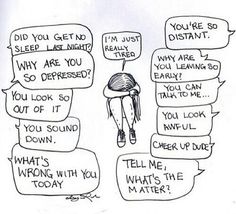
However, a prominent symptom of depression is withdrawal from people which is also a personality trait of introverts who likes to be in solitude away from others. Thus, someone who doesn’t know the introvert well might believe that the person have depression or social anxiety based on these traits. But a closed one can motivate the introvert to seek professional help. 

REASONS WHY INTROVERTS ARE MORE PRONE TO DEPRESSION

1.BRAIN ACTIVITY IN INTROVERTS

Introverts don’t want or crave more stimulation from other people because they already have a lot on their minds. Because of which their brain activity is significantly higher than that of extroverts, according to neurological research. But this has a negative as well as positive aspect since such brain activity can be used as strength because introverts typically are brilliant thinkers and creators but but it can also be a disadvantage because they may overthink certain ideas and emotions especially overthinking negative emotions like guilt, embarrassment, and helplessness as a result of social isolation can cage their minds and make them more vulnerable to mental health disorders.

2. Traits of being a perfectionist and self-assertive 

There are many self-help books which claim that being a perfectionist will not help you in gaining power over others or do not exhibit self- confidence instead it develops negative emotions. Introverts do have this personality trait of being a perfectionist and are very self-assertive because of which they feel unsatisfied with themselves and with their lives of not doing good enough. And it leads to mental exhaustion and creates anxiety and they become more prone to depression. So, a gentle reminder to all the people who are being harder on themselves, to relax and be gentler and cautious of these traits.

3.Tendency of being alone

Being at ease with oneself and enjoying alone should be viewed as a strength but As we all know that excess of everything is dangerous. So, Excessive seclusion is a harmful habit that can lead to depression and other psychological problems and is the one thing the introverts should be mindful about.  

Many studies were conducted to see the linkage between introversion and depression, and it has been found out that introversion contribute to the onset of depression. A research was conducted in 2017 which suggests that people with lower extroversion tends to have more social anxiety and depressive thoughts such as suicide because they have higher levels of neuroticism which means experiencing negative feelings. 

So people with introversion are more likely to have a higher risk of depression and if someone is suffering from depression or other mental health condition should seek mental health professional help in order to correctly diagnose, treat, and analyze such diseases because recovery takes time and asking for help is a brave move.

JOURNEY TO SANITY – DOUBLE STANDARDS

EMOTIONS ARE GENDER NEUTRAL

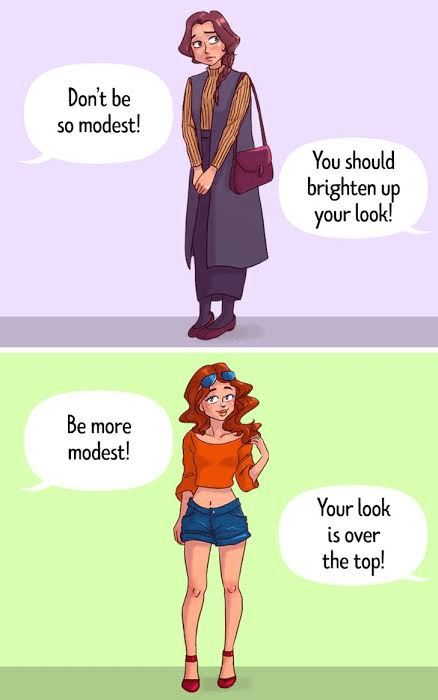
We have been conditioned in such a way that it is believed, that women are supposed to be fragile and sensitive in nature where as men are supposed to be thick-skinned and emotionally numb. However, in reality emotions are gender neutral. It’s not manly to be strong and harsh. And similarly, it’s not feminine to be weak and to cry. The experiences faced by men or women might be different but since they are both humans and have emotions, it is not wrong to express it.
(So, the next time someone tells you to man up and stop crying, you know what to say)

SHARING RESPONSIBILITIES AND RESPECTING THE OPINIONS OF YOUR PARTNER DOES NOT MAKE YOU A ‘JORU KA GULAM

Understanding, Compassion and Mutual – Respect should be the basis for any healthy relationship. It is the basic need of a human to be heard and acknowledged. Hence, it doesn’t make a man a ‘Joru Ka Gulam’ if he is respectful to the opinions of his partner and understands him/her. Society in general tends to question and mock those changes that question their years of belief. In order to avoid their inner-conflict, they discourage the progressive mass so that they don’t have to change and no one can question them. (Yes, kind of like a defence mechanism – Pointing fingers at the other person before they point at you).

FAMILY RESPONSIBILITY SHOULD NOT BE THE SOLE RESPONSIBILITY OF A MAN OR A WOMEN.

Two people form a relationship and they are called partners for a reason. They are part responsible for every aspect of a household. So why should the burden of the entire family fall on the shoulders of a single person. It is normal for a woman to have a successful career and to support a family financially. (No, it doesn’t make him less manly by earning less or letting his wife handle finances). Similarly, household chores should not be the sole responsibility of a women. It doesn’t make a man submissive if he cooks for his partner or does basic household chores. Rather, such relationships are built on mutual respect and compassion which tend to last longer.

STRONG, BRAVE AND INDEPENDENT ARE NOT TERMS SYNONYMOUS WITH MEN.

It is acceptable for a women to be strong yet sensitive, to be scared yet courageous enough to face it. Adjectives like strong, brave are often used for men, whereas it’s completely normal for a women to have each of those qualities. We have women officers who are equally as brave as the men. There are men who prefer household work over finances and it doesn’t make them dependant on their partners or submissive in any way.

Do not forget to read more from the series 🙂

JOURNEY TO SANITY – ACCEPTANCE

JOURNEY TO SANITY – SUNSHINE 🌤️

JOURNEY TO SANITY – MINDFULNESS

JOURNEY TO SANITY -JOURNALING

Pet.

A pet, or companion animal, is an animal kept primarily for a person’s company or entertainment rather than as a working animal, livestock or a laboratory animal. Popular pets are often considered to have attractive appearances, intelligence and relatable personalities, but some pets may be taken in on an altruistic basis (such as a stray animal) and accepted by the owner regardless of these characteristics.

Two of the most popular pets are dogs and cats; the technical term for a cat lover is an ailurophile and a dog lover a cynophile. Other animals commonly kept include: rabbits; ferrets; pigs; rodents, such as gerbils, hamsters, chinchillas, rats, mice, and guinea pigs; avian pets, such as parrots, passerines and fowls; reptile pets, such as turtles, alligators, crocodiles, lizards, and snakes; aquatic pets, such as fish, freshwater and saltwater snails, amphibians like frogs and salamanders; and arthropod pets, such as tarantulas and hermit crabs. Small pets may be grouped together as pocket pets, while the equine and bovine group include the largest companion animals.

Pets provide their owners (or “guardians”) both physical and emotional benefits. Walking a dog can provide both the human and the dog with exercise, fresh air and social interaction. Pets can give companionship to people who are living alone or elderly adults who do not have adequate social interaction with other people. There is a medically approved class of therapy animals, mostly dogs or cats, that are brought to visit confined humans, such as children in hospitals or elders in nursing homes. Pet therapy utilizes trained animals and handlers to achieve specific physical, social, cognitive or emotional goals with patients.

People most commonly get pets for companionship, to protect a home or property or because of the perceived beauty or attractiveness of the animals. A 1994 Canadian study found that the most common reasons for not owning a pet were lack of ability to care for the pet when traveling (34.6%), lack of time (28.6%) and lack of suitable housing (28.3%), with dislike of pets being less common (19.6%). Some scholars, ethicists and animal rights organizations have raised concerns over keeping pets because of the lack of autonomy and the objectification of non-human animals.

Chennai’s water crisis- Natural or man made?

Chennai, the capital city and heartthrob of Tamil Nadu observed ZERO DAY on 19th June, 2019 when there was no water left in all the four reservoir tanks built in the city. Chennai is a city located on southeast coast of India serving as a gateway to the magnificent South India with the Bay of Bengal surrounding it on one side, the city is intersected by three rivers. How come that the city which has “abundant of water bodies” becomes dry. Read this blog to know how the water crisis in Chennai is a result of man’s selfish actions and is a warning giving a hint of what the nature holds for us in future if we degrade it.

Causes of water scarcity in Chennai

Chennai is situated on the south east coast of India and receives majority of its rain during winters because being situated on the south east coast, it lies on the leeward side of the Western Ghats preventing the south west monsoon winds which originates in the Arabian sea on the west coast of India to shed its rain there during summers when generally rest of the country experiences monsoon. Thus it gets majority of its rain from retreating southwest monsoon winds and northeast winds during the months of December and January. The rest of the months the city has to rely on occasional rains and mainly on the reserved water which is scarce in Chennai.

Owing to Urbanisation and construction on the bodies which once were the catchment and flood relief basins, the space required to hold the rains is now blocked. The very suitable example being the very famous IT corridor of Chennai which is built on 230 square kilometers of marshland , has reduced the area of the places to hold the precipitation which occurs during its monsoon. Moreover with the rise in the number of Industries , the water bodies in Chennai are highly polluted. Though the industrialization resulted in Chennai being called “The Deteroit of India” due to the vast automobile sector established there housing the scions such as the Tata motors, the neglection of the authorities in maintaining the precious water bodies resulted to Chennai experiencing the ZERO DAY.

Chennai receives rain on an average of 54 days per year with a minimum average of 140 centimeters of rainfall which is enough for the survival if the water is properly harvested but it is the inability to collect and reserve the rain water which led to the MAN MADE water crisis. Between 1893 and 2017 the area covered by the water bodies is reduced from 12.6 square kilometers to 3.2 square kilometers. As reported by The Diplomat, NITI Aayog  predicted in June that 21 Indian cities would run out of groundwater in 2020. A report by the London-based risk analytics firm Verisk Maplecroft named Chennai as facing an “extreme risk” of water stress, saying its present crisis “could be the new normal for tens of millions of people” in India’s urban centers.

Since there is no enough reserved water for the heat days which comes in June and the water remaining in the water bodies is either too saline or too polluted to be fit for use, Chennai has to rely on the tanks which carry water from hundreds of kilometers far away to satisfy its water needs. As suggested by the various reports , there is 85 percent decline in Chennai’s groundwater levels.

Actions taken by the Government to prevent

  • Chief Minister of Tamil Nadu Edappadi Palaniswami , after that dreadful day in June 2019, announced a public program including maximum participation of women covering everything from rainwater harvesting to water saving and recycling to the protection of water bodies and a massive study on how to clean the polluted rivers. Until the research and the plan is completed , the government decided the construction of desalination plants in the city which though costly will help in a great way to solve Chennai’s water problems until the natural water bodies are restored, by desalining the sea water making it fit for domestic and industrial use. The plan is however still in the initial process as there are many protests regarding how it will cause environmental damages and intense loss to the local fisheries.
  • The past always comes to the rescue. Supported by the Asian Infrastructure Investment Bank and the Dutch Government , the Greater Chennai Corporation has started an initiative called “the city of 1000 tanks” which aims at restoring the tanks near the temples and making it the reservoirs for storing the rain water just like in the past and building new tanks too surrounded by green slopes to help catch the rainwater and increase the groundwater level.

The state of Tamil Nadu of which Chennai is the capital has predicted in its climate action plan that the annual temperature of the city will raise by 3.1 degree celsius by 2100 from its original level of what it was in 1983 and 2000s with the annual rainfall falling by 9%.Further , the little rainfall which the city experience in June and September which was enough to refill the reservoirs and maintain the growth of crops will decrease while the winter rainfall will increase causing more floods and droughts.

The condition which Chennai is facing can be taken as a threat issued by nature to not degrade it else the consequences can be severe. The day is not too far when the rest of the world may also experience what Chennai is , if the present practice continues and that day will lead to our downfall.

Swayam Prabha

• Group of 34 DTH channels – telecasting high-quality educational programmes.

• 24.X.7 telecast using the GSAT-15 satellite.

• Channels are uplinked – Bhaskaracharya National Institute for Space Applications and Geo-informatics.

• Contents – provided by NPTEL, IITs, UGC,CEC, IGNOU, NCERT and NIOS.

• Web portal maintained by Information andLibrary Network Centre.

SWAYAM – The Study Webs of Active Learning for Young Aspiring Minds

• To achieve 3 Fundamental principles of Education
Policy – access, equity and quality.

• Objective – to take the best teaching learning resources to all, including disadvantaged sections.

• Courses hosted
 Video lecture
 Specially prepared reading material
 Self-assessment tests
 An online discussion forum.

• Seeks to bridge the digital divide for students.

National Digital Library of India (NDL)

• Virtual repository of learning resources.

• Provides host of services for the learner community.

• Filtered searching – to facilitate focused searching.

• Group-specific services – Examination Preparatory for School, College students and
job aspirants.

• Sponsored and mentored by the Ministry of Education through its National Mission on Education through Information and
Communication Technology (NMEICT).

DIKSHA (Digital Infrastructure for Knowledge
Sharing)

• National platform for school education.

• Initiated by National Council for Education
Research and Training.

• Developed on the core principles of open
architecture, open access, open licensing diversity and choice.

• Policies and tools – make education ecosystem
to participate, contribute and support a common platform. • Can be accessed by learners and teachers across the country.

• Supports 18+ languages and the various curricula of NCERT, CBSE and SCERTs across India.

Awareness on Educational Rights

‘Education is a human right which should be accessible to everyone without any discrimination.’

Right to Education (RTE) Act, 2009

The Right to Education Act 2009, also known as the RTE Act 2009, was enacted by the Parliament of India on 4 August 2009. 

Free and compulsory education for children aged between 6-14 years in India under Article 21 (A) of the Constitution of India.

This act came into effect on 1 April 2010 and made India one of the 135 countries to have made education a fundamental right for every child. 

1. Compulsory and free education for all

2. The benchmark mandate

3. Special provisions for special cases

4. Quantity and quality of teachers

5. Zero tolerance against discrimination and harassment

6. Ensuring all-round development of children

7. Improving learning outcomes to minimize detention.

8. Monitoring compliance of RTE norms

9. Right to Education Act is justiciable

10. Creating inclusive spaces for all

Still there is no proper awareness about this among people.

Qualified faculty, including both male and female teachers, close accessibility of schools, proper infrastructure, hygienic toilets, and free meal system must be implemented in all the schools.

Awareness creates interest and interest creates demand. So, let’s show some interest and hope that this demand creates a real, free, and quality education for everyone someday soon.

Aristotle’s view on the Tragic Hero [Part B]

Along the same lines of how a tragic hero need to be an enabler for not just a good plot but to reach for the desired set of emotions equally is 5) Hamartia a tragic hero with imperfections; the specific being his/her “tragic flaw” not the best adaptation of Hamartia, but is far more commonly used for a characteristic moral failing in an otherwise predominantly good man. The Hamartia of the hero is closely and inseparably connected with 6) “Peripety” the several of fortune from the point-of-view of the character involved and for a spectator or a reader the plot of the play as a whole is a reversal of the direction of the action. The analogy is thus that Peripety is contained in the idea of the boomerang effect of one’s own action. 7) Discovery – “A change from ignorance to knowledge.” The discovery of the truth of the matter is the costly beginning from the state of ignorance which is the very essence of “hamartia”. Hamartia, Peripety and Discovery all together in their ideal schematisation of the tragic plot.
Furthermore, tragedy, is presupposed as purging out of emotions of Pity and Fear i.e. Catharsis; exhilaration, a pleasurable sense of relief and the Tragic hero is given the title of the enabler of the purgation of these emotions. Relation of emotional catharsis which tragedy helps generate is the tragic pleasure. Therefore the continuous insistence towards Pity and Fear is because pity is generated under the pretence of a tragedy towards the character whose punishment for the audience is exceeding his crime; the punishment is more that what he deserves, and similarly Fear is when the hero; who being “not pre-eminently just and virtuous” is still better than ourselves and yet failed, then what hope do we have left?
Therefore the catharsis that Aristotle mentioned just once in Poetics is of emotions that occurs accidentally but surely in a tragedy is something he elaborates on, this accident is to be experienced to everyone in the audience or to anyone reading a work of art; no 

matter of high intellect does experience this form of proper pleasure which happens through proper tools and albeit perceived to be an “accident” is a sure shot guaranteed by the tragic hero.
Thus the tragic hero of Aristotle accounts to the whole of the Tragedy to be brought up to its potential and serve its purpose.

Aristotle’s view on the Tragic Hero [Part A]

Make sure you also read the second part of this post.

When Aristotle is talking about the tragic hero, it’s important to pan out where the tragic hero is being placed at and accordingly the significance of the ‘tragic hero’ needs to be questioned. This is furthered by the interpretation of the plot and the use of tragedy in the said plot that would give the idea of what Aristotle is describing as the tragic hero. So it’s important to understand tragedy; before anything, and so Poetics seems to be a plausible guide alongside plenty of other definitions within a dictionary which although correct; doesn’t fully help apply the idea of Aristotle. No-one in any absolute sense could define what Poetics denote as words have been genuinely lost in translation and what we could scavenge are a sense of one’s own point-of-view or interpretation to pacify their intellect; one could contest it to be inconsistent and probably is right in doing so, but the fact of the matter is the idea of lost in translation remains undeterred. 

Additionally, discussing on the characteristics of the tragic hero is an extremely elaborated idea of what Tragedy is and while, Aristotle’s Tragic Hero is someone who is primary agent in his Tragedy; which is an essential element in the notion of arousing Pity and Fear – the catharsis of Pity and Fear for Tragic Pleasure is also an important characteristic feature for the Tragic Hero. 

Humphrey house affirm seven points directed towards the dramatic character or the tragic hero 1) The tragic hero or the character in a tragedy must be Good. Tragedy is a limitation of personages better than the ordinary man. Hence goodness of character is a prerequisite for Aristotle as it is the foundation of initial sympathy in a spectator without which tragic emotions cannot be roused, that is tragic pleasure is ultimately conveyed through sympathy or Pity, a very basic of the whole tragic pleasure. All characters in a tragedy for Aristotle should be equivocally good. Although Aristotle’s good man is not good unless he is desiring specific, positive, good ends and working towards the attainment; therefore its necessary for the execution of a tragic plot that the hero has to be “not prominently virtuous or just”; adding here Immanuel Kant who talks action to be morally worthy, something that should be executed to do the right thing for the right reason and is said to hold that to do the right thing for personal reason isn’t morally right and that the motive of duty should be autonomous and not altruistic. Scholars have questioned on what does Aristotle mean by “good”, and it’s later when reading Poetics is established on the Ethical Goodness of a character. 2) Appropriateness of Character – a fitting character, the Plot should attempt to guarantee the individuality of Character in compliance to its status which is fundamental. 3) “Likeness” of Character – the literary portrait produced by the poet should be ‘like the original’, i.e. like what the personage in question is in history of legend; depriving the poet of his creative freedom and ties him to a quiet indefinable exemplar, because history and legends are largely the creation of other writers. Likeness — Aristotle differentiating Tragedy and Comedy by the consideration of type of characters shown acting in each — characters are either better or worse than ourselves, or just like ourselves: although Comedy makes its personages “worse” and Tragedy makes its personages “better than the men of the present day.” 4) Consistency – Aristotle describes a formula “consistently inconsistent” it is not concerned with momentary conflicting passions but with “the basis or foundation of a character “, — habit, bent or tendency. 

All you need to know about Eclipses

Ever heard of eclipses? I am sure you must have. Ever seen one? If you have then you are very lucky, and if you have observed a total or annular solar eclipse you are even luckier and I am jealous. The word eclipse is derived from the ancient Greek noun ἔκλειψις (ékleipsis), which means “the abandonment”, “the downfall”, or “the darkening of a heavenly body. 

What is an Eclipse?

For any two objects in space, a line can be extended from the first through the second. The latter object will block some amount of light being emitted by the former, creating a region of shadow around the axis of the line. Typically these objects are moving with respect to each other and their surroundings, so the resulting shadow will sweep through a region of space, only passing through any particular location in the region for a fixed interval of time. As viewed from such a location, this shadowing event is known as an eclipse.

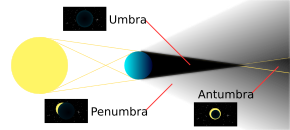
Typically the cross-section of the objects involved in an astronomical eclipse are roughly disk shaped. The region of an object’s shadow during an eclipse is divided into three parts:

  • The umbra, within which the object completely covers the light source. For the Sun, this light source is the photosphere.
  • The antumbra, extending beyond the tip of the umbra, within which the object is completely in front of the light source but too small to completely cover it.
  • The penumbra, within which the object is only partially in front of the light source.

Eclipses on Earth

On earth lunar eclipses and solar eclipses are the major form of eclipses which occur here on Earth.

Lunar eclipse:

Image result for Total Lunar Eclipse Diagram

The Moon moves in an orbit around Earth. At the same time, Earth orbits the Sun. Sometimes Earth moves between the Sun and the Moon. When this happens, Earth blocks the sunlight that normally is reflected by the Moon. Instead of light hitting the Moon’s surface, Earth’s shadow falls on the Moon. This is an eclipse of the Moon, or a lunar eclipse. A lunar eclipse can occur only when the Moon is full. A lunar eclipse usually lasts for a few hours. At least two partial lunar eclipses happen every year, but total lunar eclipses are rare. It is safe to look at a lunar eclipse. A lunar eclipse can be seen from Earth at night. 

There are two types of lunar eclipses:

  1. Total lunar eclipse- A total lunar eclipse occurs when the Moon and the Sun are on exact opposite sides of Earth. Although the Moon is in Earth’s shadow, some sunlight reaches the Moon. The sunlight passes through Earth’s atmosphere, which filters out most of the blue light. This makes the Moon appear red to people on Earth.
  2. Partial lunar eclipse-A partial lunar eclipse happens when part of the Moon enters Earth’s shadow. In a partial eclipse, Earth’s shadow appears very dark on the side of the Moon facing Earth. What people see from Earth during a partial lunar eclipse depends on how the Sun, Earth and Moon align.

Solar Eclipse:

Image result for Total solar Eclipse Diagram

Sometimes when the Moon orbits Earth, the Moon moves between the Sun and Earth. When this happens, the Moon blocks the light of the Sun from reaching Earth. This causes an eclipse of the Sun, or a solar eclipse. During a solar eclipse, the Moon casts a shadow onto Earth. Solar eclipses happen every 18 months somewhere on Earth. Unlike lunar eclipses, solar eclipses last only a few minutes.

There are three main types of solar eclipses:

  1. Total solar eclipse: A total solar eclipse is visible from a small area on Earth. The people who see the total eclipse are in the center of the Moon’s shadow when it hits Earth. The sky becomes very dark, as if it were night. For a total eclipse to occur, the Sun, Moon and Earth must be in a direct line.
  2. Partial solar eclipse: This happens when the Sun, Moon and Earth are not exactly aligned. The Sun appears to have a dark shadow on a small part of its surface.
  3. Annular solar eclipse: An annular eclipse happens when the Moon is farthest from Earth. Because the Moon is farther away, it seems smaller. It does not block the entire view of the Sun. The Moon in front of the Sun looks like a dark disk on top of a larger Sun-colored disk. This creates what looks like a ring around the Moon.

Eclipses on other planets

The gas giant planets have many moons and thus frequently display eclipses. The most striking involve Jupiter, which has four large moons and a low axial tilt, making eclipses more frequent as these bodies pass through the shadow of the larger planet. Transits occur with equal frequency. It is common to see the larger moons casting circular shadows upon Jupiter’s cloud tops.

On the other three gas giants (Saturn, Uranus and Neptune) eclipses only occur at certain periods during the planet’s orbit, due to their higher inclination between the orbits of the moon and the orbital plane of the planet. The moon Titan, for example, has an orbital plane tilted about 1.6° to Saturn’s equatorial plane. But Saturn has an axial tilt of nearly 27°. The orbital plane of Titan only crosses the line of sight to the Sun at two points along Saturn’s orbit. As the orbital period of Saturn is 29.7 years, an eclipse is only possible about every 15 years.

On Mars, only partial solar eclipses (transits) are possible, because neither of its moons is large enough, at their respective orbital radii, to cover the Sun’s disc as seen from the surface of the planet. Eclipses of the moons by Mars are not only possible, but commonplace, with hundreds occurring each Earth year. There are also rare occasions when Deimos is eclipsed by Phobos. Martian eclipses have been photographed from both the surface of Mars and from orbit.

Pluto, with its proportionately largest moon Charon, is also the site of many eclipses. A series of such mutual eclipses occurred between 1985 and 1990. These daily events led to the first accurate measurements of the physical parameters of both objects.

Eclipses in 2021

  • May 26, 2021 — Total Lunar Eclipse
  • Jun 10, 2021 – Annular Solar Eclipse
  • Nov 18–19, 2021 — Partial Lunar Eclipse
  • Dec 4, 2021 – Total Solar Eclipse

Scientists use solar eclipses as an opportunity to study the Sun’s corona. The corona is the Sun’s top layer. During an annular eclipse, NASA uses ground and space instruments to view the corona when the Moon blocks the Sun’s glare.

https://www.nasa.gov/audience/forstudents/5-8/features/nasa-knows/what-is-an-eclipse-58/ http://en.wikipedia.org/wiki/Eclipse

Ideology defined by Louis Althusser

Figuring out what Ideology is, when understanding these Marxist terminology, it’s important to look at these ideas not as obsolete reality but an ever evolving pervasive concept. Karl Marx, has his own definition of Ideology as ideas and beliefs set out by the dominant class of a society for everyone to obey and thus justify the actions of the dominant class in any society. Here, Louis Althusser sets out with his own interpretation and has worked in “On The Reproduction Of Capitalism: Ideology And Ideological State Apparatuses”, that;  i) Ideology has no history, it is eternal; ii) Ideology represents the imaginary relationship of individuals to their real conditions of existence; iii) Ideology has a material (or spiritual) existence; iv) Ideology interpellates individuals as subjects. The four of these points become a pinnacle to what Althusser insists in the nature of Ideology.

These 4 parameters help us understand its nature, to what Ideology represents, for when man entered the state of nature, by subscribing to ideas and beliefs, we subscribed to this ideology, which though speaks of, no history  in itself, it’s still is an  implicit force that drives the Capitalistic existence, although  omnipresent. And leading on  to the second point, that “men represent their real conditions of existence to themselves in an imaginary form”. Who one is, is just another fragmented idea of you, which Lacan also states in the Mirror Stage and this is crucial in the understanding of this idea as well, that ideology works within multiplicity of narratives, conscious or unconscious, that shapes or has the ability to shape one’s identity. When the material existence of ideology is brought up, it is the material practices, ritual, and action that works under Ideology, unsuspecting and yet controlling one within their grasp. And lastly, Althusser believes, ideology interpellates individuals as subjects – their subjection to the category of subjects. There is no ideology except by the subject and for subjects, which by working seamlessly and weaving thoroughly over the three previous paradigms to concreticise the concept of ideology. 

One could say, Althusser’s insight about the “social unconscious” when it comes to assessing the concrete political realities and struggles, is thus become not just another crucial point to define and understand Ideology, but in itself a very significant negotiation of the concept of ideology in itself. 

You’ve graduated, now what?

Never give up on an opportunity for education, to educate yourself is a very pivoting experience.

The seemingly biggest existential crisis for most of us, if not all, hits when you’ve finally graduated but can’t focus on what is the next right step. This comes with a lot of challenges and pressures, but always remember; to focus on what you want, these are the years where you can mess up, pick up the pieces and move forward, do that, unabashedly. 

Are you scared, or not ready to take up your Masters? Or do you want to look for a stable job right away? This is your life, and you get the reigns for it, no matter the pressure, don’t let people fool you into pursuing what you weren’t read for, these people are not gonna be around forever to scrutinise you, we all just need to learn to create healthy boundaries. 

Make sure you are engaging yourself with all sorts of information and not just one sided research thrusted upon you by someone. That’s got to be your first step.

Think clear of long term goals before pursuing any thing, imaging what do you consider of yourself in the next 10 years, and plan accordingly.

If the situation isn’t favourable now, that doesn’t necessarily should spiral you into depression, work hard on proving a plan, it seems superficial for some, but it always works. 

Have your plans gone sour? No worries, it’s not the end of the world, nothing truly happening to you is, just keep a calm mind and multiple options at your disposal; never put all your eggs in one basket. 

Your degree doesn’t satisfy what you had planned, get another one, it’s just matter of years you’d put in, and it would be enlightening. 

Take up courses, brush up your skills, know more and have the zeal to learn and tackle anything, and that’s it for you, if you could just wholesomely tackle anything that is in you way, you can surely win over all your situations.

But, most importantly, don’t run behind something or someone, you’re young, you’re going to make mistakes and you need to own upto it, but sticking to someone or something would always narrow down your path while you just want to do the opposite. 

Just make sure that you —no matter what’s the situation is in ahead of you don’t loose faith in yourself, even when no one truly are standing besides you; because its always empty at the top 😉

Getting New Tempo of Life from Nanak Singh

Nanak Singh 1998 stamp of India.jpg
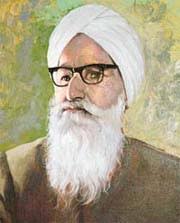
Nanak Singh (Source: Wikipedia)

Looking Back to inmost salient lion from North-west corner of India:

The milieu where we are going through, reminds us of such a beacon whose life was out of the world of ceramic painting. In the prevailing situation in where myriad of youths are gloomy and distracted, all the deluge of depression and ‘break-up’ with our soul & courage, that poet-cum-author pillages our interest towards his escapade in the worrit situation he passed through, not lying on fortune’s lap.

“It seems to imply that in the lifeblood of our society, red corpuscles have disappeared.”

From Novel Chitta Lahu (White Blood), by Nanak Singh

Yes, we are talking about that very Panjabi author — Nanak Singh. This Indian poet, songwriter & novelist of Panjabi language made a royal entry to this world on the 4th July, 1897 through a poor Punjabi Hindu family. His literature produced crackles in the period of India’s Independence movement. If we take a magnificent lens on the pages of Modern Indian History, Nanak Singh was more prominent of them who wanted to eliminate the dual mentality of that ‘babu’ who went soft on the fierce deeds of the British.

The revolutionary identity got influenced and involved in the Jallianwala Bagh Massacre. On that auspicious day (April 13, 1919), of Punjabi New Year, Singh saw a lot of kin shot to death by the British troops, even two of his friends drooped on his lap for their last time. Then the author entity of Singh’s inner mind erupted in anger — invented an epic poem, mocking colonial rule — “Khomeini Visayans” (Bloody Baisakhi) from native heart. While conducting ‘Akali Movement’, in charge of the editor of ‘Akali’ papers, he became the subject of crimson eyes of the British — that resulted in the imprisonment of that new leader. In the meanwhile, he converted himself into Sikh. Hence, he portrayed the savagery and ‘legal violence’ of the British on peaceful Sikhs — and published his second anthology called “Zakhmi Dil ” (1923), which got banned within a fortnight of its publication, as expected.

Implementation of Singh’s Views in Present time:

This legend’s natural inclination towards protest against coercion, unjust & inequitable feud, as well as bluffing at every step, pulled him to pick-up ink as well as the flag of Mother India. Under Singh’s tenure, both the fallacy of British & dogmatism of Literature (specially in regional languages) got curtained. Yes, we agree delightfully that the British are no longer in power in India. But the orthodoxy, bigotry & undesired fanaticism has prepared a lot of arrest warrants for Indians. This situation reminds us of that nonesuch person:

Who escaped the boundary of patriarchy — implemented the quote of Lalan Fakir in reality —

“Everyone Sees Male & Female/ But, I see Only Humans” 

“সবাই দেখে নারী পুরুষ, আমি দেখি শুধুই মানুষ”

Lalan Fakir

We get a lot of views in his novels.

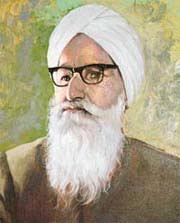
Nanak Singh (Source: ‘The Watchmaker‘ book written by Singh & translated by Navdeep Suri)

He’s Nanak Singh, whose voice was full of courage & pluck that successfully punctured British’s confidence, gives a message to us to belabor the deception of socio-political hand-cuffs. In his writing, always one thing got itself highlighted — the search for celestial happiness through fraternity, integrity & Liberty. 

However, all Indians, not only Panjabis draw inspiration from this icon who gives birth to every Indian from the previous fluffy life of usual inertia — that erects pillars to build a Happier nation for Future.


So, don’t delay to come forward to blow the conch of Humanity with the previously chanted hymns of Nanak Singh.

Innovation and its types

Innovation is the discovery of new knowledge. It is neither automatic nor accidental rather it is a product of deep thinking, careful observation, and systematic activity. Scientific inquiry is an unending process and the object of this inquiry is innovation.

Types of innovation:

Product- Innovation in this category refers to the innovation in the quality of the product and both improvements to existing product lines or completely new offerings. The key is to add significant value.

Service- It involves the improvement of the consumer’s experience. It includes innovation in the offerings of the product, making it easier to use, fixing common problems. Here the objective is to make the product stand out.

Process- It is an inward-looking innovation, improving core competencies. It includes significant changes in technology, equipment, or software. For example, Henry Ford’s invention of the assembly line shortened the time necessary to produce a single-vehicle.

Management- It is the process of managing innovative ideas. The planning and process behind coming up with ideas, turning them into action plans, and developing them for the business until they become a reality. Implementation of new management practices, processes, etc that shows a departure from older norms.

Open- It refers to the innovation process to collaborate globally, bring out newer ideas, working beyond boundaries and expand the markets for external use of innovation.

Value-creation- It means to give something valuable for receiving something valuable in return. Value creation involves a process to make the product stand out,to deal with competitions, create demand in the market.

Radical innovation- It involves the birth of new industries and the application of revolutionary technologies. They allow society to take a leap forward. It brings about revolutionary changes in society like the industrial revolution.

Incremental innovation- Majority of innovation are of this type. It includes making improvements in existing products. the aim is to make the product stand out in the market and reduce competition around it. For example, the newer updates in smartphones and various apps add new features and improve their efficiency.

Disrupting Innovation- It involves the creation of newer markets and value networks which eventually disrupts the existing market and value network. It describes a process that initially a product is at the bottom of the market, it is less expensive and more accessible and gradually comes to rule the market. For example, Netflix disrupted the video rental business.

Architectural Innovation- It refers to innovation in the architecture of any product that changes or modifies the way various components of the system relate to each other.

Pluto-The King of Kuiper Belt

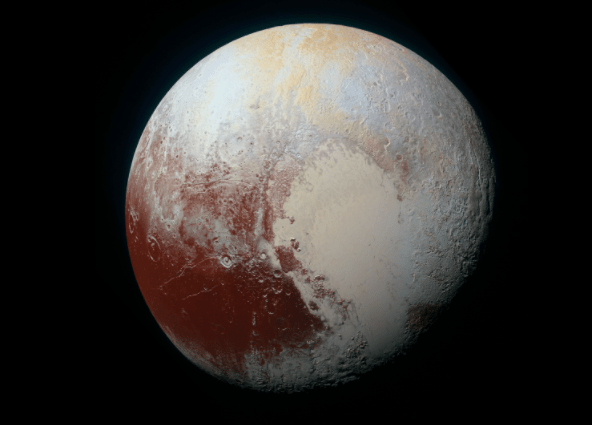
Pluto is the ninth-largest and tenth-most-massive known object directly orbiting the Sun. It is the largest known trans-Neptunian object by volume but is less massive than Eris. Pluto is a dwarf planet in the Kuiper belt, a ring of bodies beyond the orbit of Neptune. It was the first and the largest Kuiper belt object to be discovered. After Pluto was discovered in 1930, it was declared to be the ninth planet from the Sun. Beginning in the 1990s, its status as a planet was questioned following the discovery of several objects of similar size in the Kuiper belt and the scattered disc, including the dwarf planet Eris. This led the International Astronomical Union (IAU) in 2006 to formally define the term “planet”—excluding Pluto and reclassifying it as a dwarf planet.

Some facts about Pluto

Diameter-   2300km

Orbital period-  247.8 yrs

Length of a Day-    6.39 days

Axis tilt- 123 degrees

Distance from  the Sun- 39.5AU (5.9billion km)

Moons- 5

Special features

Like other Kuiper belt objects, Pluto is primarily made of ice and rock and is relatively small—one-sixth the mass of the Moon and one-third its volume. It has a moderately eccentric and inclined orbit during which it ranges from 30 to 49 astronomical units or AU (4.4–7.4 billion km) from the Sun. This means that Pluto periodically comes closer to the Sun than Neptune, but a stable orbital resonance with Neptune prevents them from colliding. Light from the Sun takes 5.5 hours to reach Pluto at its average distance (39.5 AU).

Natural satellites

Pluto has five known moons: Charon, Nix, Hydra, Kerberos and Styx. This moon system might have formed by a collision between Pluto and other similar-sized bodies early in the history of the solar system.

Charon, the biggest of Pluto’s moons, is about half the size of Pluto itself, making it the largest satellite relative to the planet it orbits in our solar system. It orbits Pluto at a distance of just 12,200 miles (19,640 kilometers). For comparison, our moon is 20 times farther away from Earth. Pluto and Charon are often referred to as a double planet. Charon’s orbit around Pluto takes 153 hours—the same time it takes Pluto to complete one rotation. This means Charon neither rises nor sets, but hovers over the same spot on Pluto’s surface. The same side of Charon always faces Pluto, a state called tidal locking.

Pluto’s other four moons are much smaller, less than 100 miles (160 kilometers) wide. They’re also irregularly shaped, not spherical like Charon. Unlike many other moons in the solar system, these moons are not tidally locked to Pluto. They all spin and don’t keep the same face towards Pluto.

See the source image

Structure and Atmosphere

Pluto is about two-thirds the diameter of Earth’s moon and probably has a rocky core surrounded by a mantle of water ice. Interesting ices like methane and nitrogen frost coat its surface. Due to its lower density, Pluto’s mass is about one-sixth that of Earth’s moon. Pluto’s surface is characterized by mountains, valleys, plains, and craters. The temperature on Pluto can be as cold as -375 to -400 degrees Fahrenheit (-226 to -240 degrees Celsius).

Pluto has a thin, tenuous atmosphere that expands when it comes closer to the sun and collapses as it moves farther away—similar to a comet. The main constituent is molecular nitrogen, though molecules of methane and carbon monoxide have also been detected. 

When Pluto is close to the sun, its surface ices sublimate (changing directly from solid to gas) and rise to temporarily form a thin atmosphere. Pluto’s low gravity (about six percent of Earth’s) causes the atmosphere to be much more extended in altitude than our planet’s atmosphere. Pluto becomes much colder during the part of each year when it is traveling far away from the sun. During this time, the bulk of the planet’s atmosphere may freeze and fall as snow to the surface.

Exploration

The New Horizons spacecraft, which flew by Pluto in July 2015, is the first and so far only attempt to explore Pluto directly. Launched in 2006, it captured its first (distant) images of Pluto in late September 2006 during a test of the Long Range Reconnaissance Imager. The images, taken from a distance of approximately 4.2 billion kilometers, confirmed the spacecraft’s ability to track distant targets, critical for maneuvering toward Pluto and other Kuiper belt objects.

https://www.nasa.gov/audience/forstudents/k-4/stories/nasa-knows/what-is-pluto-k4.html
https://en.wikipedia.org/wiki/Pluto

Basic Maths: Averages

What do you understand by averages?

Average is sum of all observations upon number of observation. For eg. Kripa had monthly salary of 20000 and krishna of 40000. There average would be 40000+20000 i.e. sum 60000 upon 2. Answer is 30000. In this question there were 2 observation.

some basic formulas

Sum of first n natural no. = n(n+1)/2

Sum of first n odd no. = n square

Sum of first n even no.= n(n+1)

sum of square of first n natural no. = n(n+1)(2n+1)/6

sum of cube of first n natural no= (n(n+1/2))whole square

  • If n is odd: The average of n consecutive numbers, consecutive even numbers or consecutive odd numbers is always the middle number.
  • If n is even: The average of n consecutive numbers, consecutive even numbers or consecutive odd numbers is always the average of the middle two numbers.

When two groups of Parts or objects are combined together, then we can talk of the average of the entire group. However, if we know only the average of the two groups individually, we cannot find out the average of the combined group of objects.

Ex: The average of 6 consecutive even number is 21. Find the largest number? Largest no. = A + (n−1)
A = average
n = no. of terms
Largest no. = 21 + ( 6 -1) = 26


Ex: The average of 5 consecutive even number is 46. Find the smallest number? 
Smallest no. = A – (n – 1)
A = average
n = no. of terms
Smallest no. = 46 -( 5 -1)
= 42

Ex: The average of 6 consecutive odd number is 22. Find the smallest number?Smallest no. = A – (n – 1)
A = average
n = no. of terms
Smallest no. = 22 – ( 6 – 1)
= 17

https://www.google.com/url?sa=t&source=web&rct=j&url=https://www.sscadda.com/quant-notes-average/amp&ved=2ahUKEwjhqr2rz8nxAhWw73MBHYxgA8gQFjACegQIBBAG&usg=AOvVaw1TahxS_tOROsOMfdE7IkbH&ampcf=1&cshid=1625408936926

https://www.google.com/url?sa=t&source=web&rct=j&url=https://byjus.com/free-cat-prep/shortcut-techniques-in-averages/&ved=2ahUKEwjhqr2rz8nxAhWw73MBHYxgA8gQFjADegQIHhAC&usg=AOvVaw0blWocmvGQEsmRMUWkhM2w&cshid=1625408936926