June 30 is the world asteroid day and it is held on the anniversary of Siberian Tunguska event which is known as one of the most dangerous asteroid related event on earth. This day is designed by United Nations general assembly to raise awareness about the harmful effects of asteroids and measures to be taken to avoid these effects. On this day lets know more about the asteroids.
After the formation of the solar system, some of the rocky remains which failed to form a planet started to revolve around the sun around 4.6 billion years ago and these are called asteroids. Asteroids are made of same starting materials as earth and the other planets. But they are not big enough to be called a planet. Currently 1,097,065 is the known asteroid count and there is an asteroid belt between Jupiter and Mars which contains more than 200 asteroids of size larger than 60 miles in diameter. And many asteroids are present outside the belt also.
asteroids can be very big of 940km and can be very small of 6-foot-wide. They are irregularly shaped although some are nearly spherical. Their surface is pitted as moon`s surface. Some of the asteroids also have their own moon. There are binary asteroids also present which revolve around the sun in pair and revolve around each other too. The average temperature on their surface is minus 73 degree Celsius.
THERE IS A CLASSIFICATION FOR ASTEROIDS BASED ON THEIR COMPOSITION
asteroid
C-type asteroids: They are also called as carbonaceous asteroids. This is the most common type of the asteroid making 75% of the population. They are mostly grey in color. They have large amount of carbon with rocks and minerals. They inhabit the main belt`s outer region.
M-type asteroids: They are also called as metallic asteroids. They are mostly made of nickel and iron and small amount of stone. They are moderately bright and red in color. They are in the middle region of the main belt.
S-type asteroids: They are also called as siliceous asteroids. They are of 17% of the total asteroids present at inner region of the asteroid belt. They are mostly made of silicate materials. Their composition is similar to meteorites.
CAN ASTEROIDS BE A SPACE COLONY FOR HUMANITY?
The desperation of the humanity for survival is the main driving force to think about colonizing the asteroids. But this has many obstacles. The main challenge is the transportation. Asteroid belt is 204.43 million miles away from the earth & journey to them may take more than 18 months. And size of the asteroids is not enough to produce gravity. This makes landing on them difficult. Another problem is the temperature which is very less. Scientist are studying to remove all these obstacles and possibility of habiting on the asteroids is quite at the far end of the future.
MINING ON ASTEROIDS
mining
Mineral depletion is becoming a major thing on the earth. It is predicted that earth will run out of the minerals in coming 50-60 years. So extraction of minerals from the space that too asteroids sounds interesting and hopeful. Asteroids also contain water which can be used as fuel for the spacecrafts used. Its been said that the world`s first trillionaire will be a person who owns asteroid mining. Asteroid mining will bring the essential economic progress.
Mining on asteroids requires a lot amount of resources. Some of may include mining robots and haulers. Construction and maintenance of infrastructure is important. In-space manufacturing should be enabled to do mining effectively. Bringing the mined materials back to earth is also a challenge.
The technology for asteroid mining is being constructed by a company called Deep space industries. They are developing 3 types of spacecrafts. They are: Fireflies to examine the asteroids, Dragonflies to bring back samples to the earth and Harvesters to voyage to the asteroids and gather tons of minerals and return back to the earth. TransAstra is another company which is developing technologies for the same. If all these companies succeed then the dream of mining on asteroids will come true and will benefit the earth`s economy.
Learning lessons of management from business books is not the only option to gain knowledge about business but we can gain similar knowledge by exploring our Indian street markets where we encounter a wide variety of businesses and street vendors. We can learn something new point from every interaction on streets.
WHY INDIAN UNORGANIZED SECTOR GOT THAT MUCH POPULARITY IN MAKING ECONOMY?
The street markets (or) small businesses comes under unorganized or non-corporated sector. This sector has loin share in national income, manufacturing activities, employment, forex earnings etc.. Only unorganized sector itself comprises 92 percent of Indian workforce.
Street vendors every day thrive through many difficulties. The environment where they operate is dynamic and constantly changing. They used to adopt different strategies to sell their limited sources to the customers. Most of the small businesses or street vendors do not have permanent shops. Street vendors should set up shops every day and close them by evening.
For Example: When we come across a street markets, we can observe the prices of commodities cheaper when compared to the marts. This is because, they do not have to pay rent or electricity bills or fees to the government and there will be a large number of shops which sell the same goods. If some trader charge high on a particular commodity then people would move to the other shop where they can get same commodity under low price or where the buyer can bargain and bring the price down.
The above stated example shows us the scenario of the street markets and make us to understand the hectic competetive situation of the vendors.
THE TECHNIQUES THAT WE CAN LEARN FROM THE STREET VENDORS ARE:
1) Most of the street vendors “work with limited resources” . They doesn’t any office setup to sell their products. They only look about how to sell their products using less resources.
2) Street vendors used to be customer centric: Yes, most of the street vendors truly apply the fact that ” customer is the king”. They take the initiative step to interact with the customers instead of waiting for the customers. Not only that most of the street vendors like to set up their shop where they can get the potential customers to sell their products.
3) Discipline and Consistency: Street vendors used to be focused to wards their work. They have to wake up early in the morning in order to get the stocks for that day and will return to their stay after every one has gone. They should maintain the same routine through out the year. This shows that discipline and consistency are the virtues that should be possessed by every entrepreneur in order to see profits in their business.
4) Symbiotic co-existence with customers : Street vendors possess a good collaborative skills with their competitors also. Though they sit next to each other and sell the same products also they used to help each other. This is one of the best thing that we can learn from vendors.
5)Adaptive nature: Street vendors used adapt different strategies to sell their goods as per the demand. At the same time they used to manage their business by changing the products to sell according to the season and demand.
CONCLUSTION:
Finally, when we start understanding the street markets or small businesses they teach us the other side of the coin. The one, who really want to get succeed as an entrepreneur (or) who want to learn tactics of the business then try to visit your local market places where you can learn many new principles that you can’t even get from your academics to execute your business wisely.
” THE KEY TO LEARN SOMETHING NEW IS TO OBSERVE THE THINGS AROUND YOU “
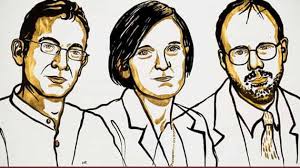
The 2019 Nobel Prize in Economic Sciences was awarded to Abhijit Banerjee and Esther Duflo, who currently work at the Massachusetts Institute of Technology, and Michael Kremer of Harvard University. The Prize committee noted that these economists “introduced a new approach to obtaining reliable answers about the best ways to fight global poverty.” The new Nobel laureates are considered to be instrumental in using randomised controlled trials to test the effectiveness of various policy interventions to alleviate poverty.
So what is randomised control trial?
A randomised controlled trial is an experiment that is designed to isolate the influence that a certain intervention or variable has on an outcome or event. A social science researcher who wants to find the effect that employing more teachers in schools has on children’s learning outcomes, for instance, can conduct a randomised controlled trial to find the answer. The use of randomised controlled trials as a research tool was largely limited to fields such as biomedical sciences where the effectiveness of various drugs was gauged using this technique. Mr. Banerjee, Ms. Duflo and Mr. Kremer, however, applied RCT to the field of economics beginning in the 1990s. Mr. Kremer first used the technique to study the impact that free meals and books had on learning in Kenyan schools. Mr. Banerjee and Ms. Duflo later conducted similar experiments in India.
Why is randomised controlled trial so popular?
At any point in time, there are multiple factors that work in tandem to influence various social events. RCTs allow economists and other social science researchers to isolate the individual impact that a certain factor alone has on the overall event. For instance, to measure the impact that hiring more teachers can have on children’s learning, researchers must control for the effect that other factors such as intelligence, nutrition, climate, economic and social status etc., which may also influence learning outcomes to various degrees, have on the final event.Randomised controlled trials promise to overcome this problem through the use of randomly picked samples. Using these random samples researchers can then conduct experiments by carefully varying appropriate variables to find out the impact of these individual variables on the final event.
What are some criticisms of randomised controlled trials?
A popular critic of randomised controlled trials is economist Angus Deaton, who won the economics Nobel Prize in 2015. Mr. Deaton has contended in his works, including a paper titled “Understanding and misunderstanding randomised control trials” that simply choosing samples for an RCT experiment in a random manner does not really make these samples identical in their many characteristics.
While two randomly chosen samples might turn out to be similar in some cases, he argued, there are greater chances that most samples are not really similar to each other. Other economists have also contended that randomised controlled trials are more suited for research in the physical sciences where it may be easier to carry out controlled experiments. They argue that social science research, including research in the field of development economics, may be inherently unsuited for such controlled research since it may be humanly impossible to control for multiple factors that may influence social events.
My mom told me a story about how everyone has their own story
A Young Man and his father were travelling by train and they seem to be very happy. A young man in his twenties was seeing out from the train’s window and suddenly he is shouted father, see the sun it looks like a circle Then his father smiled at him.
young men again shouted – father, look at the trees as they are going behind. father again smiled at the young man. A couple sitting nearby looked at the young man’s childish comment with pity.
Suddenly the young men exclaimed again.. father, look at the clouds and sun! they are all running with us. The couple observed the young man’s behaviour for a long time they couldn’t resist and said to the old man “why don’t you take your son to a good doctor?” The old man smiled at his son and said “we did and we are just coming from the hospital”
The couple saw them with strange expression. The Old man said again “My son was blind from birth and he just got his vision today”
Every person in the world has a story. Don’t judge people before you truly know them. The Truth might surprise you.
The persisting scenario of pandemic and prolonged lockdown has proven the fact that education can be done online. The learners aren’t required to be physically present but still they can complete the entire course through a virtual platform. This condition might have influence on the post pandemic period or even the present methodology can be adopted. Such things leaves us thinking, WHAT IS THE REAL PURPOSE OF EDUCATION ? WHAT IS THE ROLE OF SCHOOLING IN AN INDIVIDUAL’S LIFE ? Though we can’t come up with a solution for the problems still we have answers for the mentioned questions. Hence we can form a better system.
Going through the history of schooling a certain idea can be derived, the purpose being preaching religious values, morality and knowledge of life or which can be called as art of living a life in a righteous way. Through years it slowly evolved with various theories ending up in the system that exist today which entirely focuses on developing their knowledge in particular field. This system enables the learners to pursue a job and make earning but it fails to teach the person to survive in the society. It denys them from giving a picture of social life thus forgetting the ultimate aim of education. Also in the contemporary world where children confined to their rooms without any other source of entertainment are left to rely on their mobile phones and electrical gadgets. Without supervision of their parents there are lots of chance for them getting mislead with negative influence which promotes violent behaviour in them. This can be seen through the increasing number of crimes which are being committed by the graduates who are being mislead and manipulated to follow wrong beliefs.
To contradict this we need a social form of education where they learn moral values. The student must be open to social crisis through regular discussion by which they get a idea of the current scenario of world, providing them a real picture and thus allows them to share thier view towards it. This method develops their communication skills and ensures a positive form of interaction. The range of success differs,it changes place to place and between individuals, so one cannot define whether you lived a successful life but can definitely tell whether you lived in courteous way. Thus inorder to form a well built society for future we need to teach the young generation with moral values.
The ability to build real relationships is one of the most important aspects of social media and a key factor in attracting people of all ages, genders and nationalities. It is an important part of developing healthy social networks and powerful social network tools. People can share their business, products and services with the world as long as they stay connected and use social media. Social networks allow people to communicate, and everyone can update and report at any time. Companies make full use of social media to improve your online reputation and greatly help increase sales and personal income.
You need to make sure to use all social media platforms to gain insight into the needs of your customers. To make the most of social media for your business, make sure you have a content marketing plan. If you need content on any social media platform, you can use social media asset management tools to create high-quality content.
You can also use social media to track what people say on social media. Although social media is mainly used by the public, the government also uses it to raise public awareness.
Although the use of social media for teaching can be distracting, educators can do everything they can to guide students to develop good habits and practices, Benefit. Regarding the advantages provided by social networks.
If you consistently and continuously invest time and effort, you will see the real benefits of social media marketing. Social media can give your business a huge advantage by helping you connect with your target audience. It can cover a large number of people, but for social media, it is also a media sharing network.
Social media advertising is one of the two components used together to attract potential customers and spread information and brand awareness. Different from classic ads. When you actively post on social media pages, social media marketing is easy.
SOCIAL MEDIA AS A BLESSING
There are some people who actually make a good or can say the best use of the social media. Like if we talk about the young entrepreneurs who have just begun with a start up but is lacking in public attraction and funding so they create a short 30seconds advertisement and attach it with the trending apps which work through network connection . Talking about the awareness ;both the social media and mass media have been playing their roles very well by keeping their viewers updated with the latest screamers , exposing the Scams ,scandals , and even the worse parts of humanity .
The developing utilization of online applications has opened diverse vocation roads for youth across the globe. Regardless of an applicant is a fresher or an accomplished one, these new position profiles help one in better proficient future and furthermore great motivations.
One of such occupation profile is of Search Engine Optimization (SEO) proficient. As a large portion of individuals across the world use web crawlers like Google to determine their questions. Website design enhancement is one of the advanced showcasing methods that assistance in better streamlining of a site and rank it top in web search tools for applicable questions.
There are many type of improvement, for example, on location content and site page enhancement or site backlink streamlining. Web optimization not just plans to rank better sites or drive quality traffic yet in addition assist with building brand perceivability in the online world.
Different ongoing investigations recommend that SEO will be a significant showcasing device for creating leads and procuring new clients. It has constrained pretty much every organization to put more in SEO prompting expanded interest of SEO experts in India. The developing interest of SEO experts has constrained alumni and website specialists to learn SEO for a superior profession ahead.
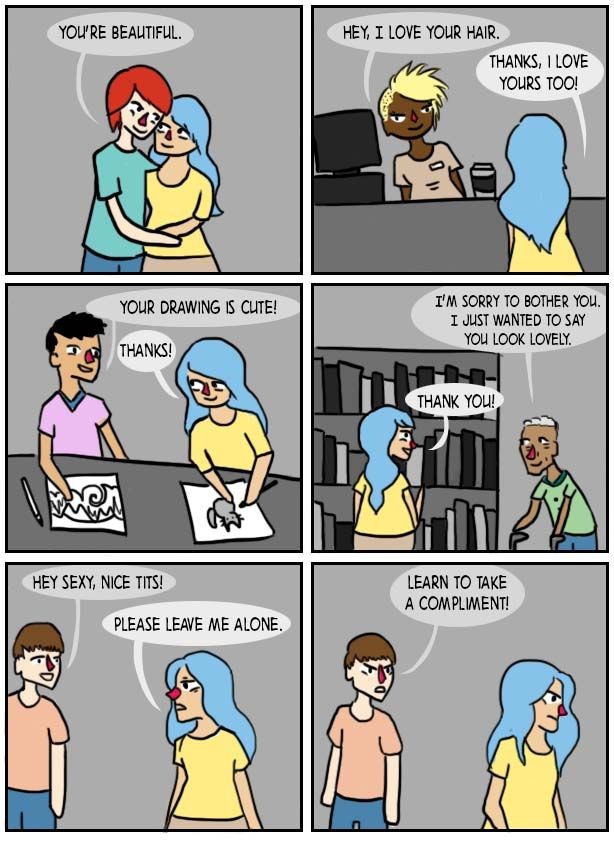
Catcalling is a form of harassment primarily consisting of unwanted sexual comments. This may include honking, wolf-whistling and indecent exposures. Most of the time, it is a man who catcalls and a woman who is catcalled.
According to surveys by Stop Street Harassment (a non-profit organization):
Nearly 95% of female respondents were honked at one or more times
Nearly 82% of female respondents were the target of a vulgar gesture at least once
Nearly 81% of female respondents were the target of sexually explicit comments from an unknown man at least once
Just over 77% of women said they were the target of kissing noises from men.
Where catcalling takes place?
Catcalling doesn’t only happen on the streets. Sexual harassers find targets on campus sidewalks, in restaurants and movie theaters, at work, inside homes – literally anywhere. Similarly, anyone can be a catcaller – including a person’s acquaintances. Online catcalling is also an issue just as severe as in-person catcalling. What’s worse, people on social media are able to say more because they are protected by a screen.
The Problems with Catcalling
It’s disrespectful: Catcalling is uncalled-for and usually makes the victim feel exposed and uncomfortable. In some cases, catcalling is used as a method of expressing power over someone, rather than the misperception of it being a “compliment”.
It’s not impressive: Someone may catcall in order to impress their friends, or the person they are catcalling at, but it’s actually unimpressive and immature.
Catcalling is not a compliment, it’s a harassment!!
Whilst compliments and flirting can be harmless and fun, shouting at strangers is not flattering, it leaves “targets” feeling exposed.
Catcalling is degrading, demeaning, and disgusting.
Women have the right to be treated with as much respect and dignity when walking down the street as any man. Women deserve to feel safe.
How to react if you are being catcalled?
Catcallers usually look for a reaction. Don’t give them one, especially fear.
Get to a safe or crowded place as soon as you can. Seek help if needed.
If you are around other people and it’s safe, you can use a simple comeback like “that’s harassment” or “don’t do that”.
While snapping back (if you choose to do so), make sure to keep walking and don’t stop.
Avoid the use of swear words or eye contact.
If it’s online, you can block and report them. Choosing to reply is also an option (e.g., asking “would you find it okay if someone spoke to your mother or sister in that way?”).
Document it: write it down or take a picture/screenshot. By doing this you can call them out later.
Share your story if you feel comfortable.
How to intervene if someone is being catcalled?
Call out the harasser if it is safe to do so.
Create a distraction or start chatting with the target (e.g., drop your keys and ask “are these yours?”).
Approach the target afterwards to see if they need company or if there is anything else you can do to help.
Whatever you do, don’t put the person who is catcalled at greater risk (e.g., becoming aggressive).
Catcalling has become normalized, as it is often disregarded as a “joke”, or even a compliment. These are some tips to learn why this is absolutely not the case.
The Current World powers have always had some sort of geographical shields protecting them. India is no exception and is blessed by many natural geographical factors which has effectively shielded the country from various external forces. The Himalayas, Indian Ocean and the Thar desert are some of the of regions which act as a shield for India.
The Himlayas
The Himalayas
The Himalayas are largest and tallest mountain ranges in the world. Many of the world’s tallest peaks like Mt.Everest, K2, Kanchenjunga, Nanda Devi are situated in this majestic range. The Himalayas stretch from the edges of the Hindu Kush mountains of northeastern Afghanistan, through the Indian states of Jammu & Kashmir, Ladakh, Himachal Pradesh, Uttarakhand, Sikkim and Arunachal Pradesh and countries like China(Tibet), Nepal, Bhutan and Northern Myanmar. The Himalayas have historically acted as a buffer between India and China and was even considered as a factor which prevented Genghis Khan’s ferocious Mongol Armies from invading India. During the 1971 Bangladesh Liberation war, India chose to declare war on Pakistan in winter as it was almost impossible for China to mobilize their armies during the brutal Himalayan winter. India has fought many wars with it’s neighbor Pakistan in the region to maintain the status quo as both understand how vital control over this region is.
The Thar Desert
The Thar desert in Rajasthan acts as a natural border between India and Pakistan. The scorching desert and sand means it’ll be difficult for Pakistan to maintain supply lines and logistics incase of an invasion of India. This applies for India as well but it would be far easier to defend than to attack through this frontier.
The Seas
India is a peninsula, as it is surrounded by water on three sides. The Arabian sea to the west, Indian ocean to the south and the Bay of Bengal to it’s east. All these water bodies ensure India will be well protected by a natural barrier as it would require an external navy to invade, ensure naval supremacy so a land invasion is possible which is an almost impossible task given India’s naval strengths.
Life is the most valuable and opulent gift that God has ever bestowed onto the inhabitants of our world. And we have qualities that no other creature or species possesses. Some people, on the other hand, are not so fortunate to exist and endure because of serious and fatal diseases, unbearable torment, endless miseries and pain that they cannot tolerate, and so they choose to terminate their lives. Euthanasia is the outcome of this wish. Euthanasia is the practise of ending one’s life and choosing death in order to alleviate oneself of pain and suffering. Voluntary euthanasia is lawful in some countries, such as the United States and several Canadian provinces, but non-voluntary euthanasia is always deemed murder and is thus prohibited elsewhere. The question is whether or not it is justified and feasible to consider Euthanasia to be legal or unlawful. Depending on the situation and surrounding conditions, this could have both advantages.
It is legal and so permissible as follows:
1.Death with dignity: Those who are in excruciating pain look forward to death because they prefer to die with dignity rather than in agony. Nobody knows how much suffering they are in, thus it is understandable if they seek death to be free of it. 2. Government regulation: It is possible that if Euthanasia becomes legal, it could be exploited in harmful and disruptive ways by many people, but I believe that if stringent regulations governing its application are enacted, it will be managed and administered securely for those who need it. 3. Patient’s choice: It may also be considered a patient’s will if he or she begs to die, believing that there is nothing more to live for but to die and be at peace for the rest of one’s life.
The words and classifications associated with euthanasia
A. Physician Assisted Suicide (PAS) is a type of assisted suicide in which a doctor deliberately provides medical help to a patient who is suffering from unbearable pain and suffering. The doctor conducts a thorough examination of the patient’s medical state and selects the most painless and effective manner of death. B. Voluntary Euthanasia occurs when a person decides to end their life with the assistance of another person. It necessitates complete understanding of the topic and procedure. C. Non-Voluntary Euthanasia is when someone else, such as a family member or a partner, makes the decision to end a person’s life. When a person is in a persistent condition of unconsciousness and is unable to be treated, this occurs. D. The term “active euthanasia” refers to a situation in which a doctor can immediately end a person’s life. This procedure is also known as ‘Positive Euthanasia’ or ‘Aggressive Euthanasia.’ The doctor may intervene directly and suggest a painless manner of ending a person’s life. E. Passive Euthanasia, also known as “Negative Euthanasia” or “Non-Aggressive Euthanasia,” is the deliberate killing of a person by withholding necessary and vital care, food, or drink. It’s a deliberate stoppage that also entails the removal of artificial life support systems. It is a more pleasant procedure than the active method and is called a slow killer.d a person’s life. This procedure is also known as ‘Positive Euthanasia’ or ‘Aggressive Euthanasia.’
Conclusion Today, there is a debate going on all over the world over its legal status, as well as ethical and moral difficulties. Those in favour of Euthanasia show some zeal in defending their ideas after seeing that the law isn’t ill-equipped to re-evaluate earlier unbending attitudes regarding the sanctity of life . Euthanasia opponents argue that there are good, ethical, and moral commitments that cannot be ignored. They argue that no one, including the individual, has the authority to end a person’s life. Euthanasia may be beneficial for someone who is in excruciating pain, but it may also be dangerous if used improperly, thus it is critical that it be carried out under strict supervision and in accordance with the rules. In any case, the ramifications of the euthanasia connotation should be re-examined at regular periods, based on societal growth in terms of providing medical treatment to the handicapped and those who cannot be treated and will inevitably die.
UNIX development was started in 1969 at Bell Laboratories in New Jersey. Bell Laboratories was (1964–1968) involved on the development of a multi-user, time-sharing operating system called Multics (Multiplexed Information and Computing System). Multics was a failure. In early 1969, Bell Labs withdrew from the Multics project.
Bell Labs researchers who had worked on Multics (Ken Thompson, Dennis Ritchie, Douglas McIlroy, Joseph Ossanna, and others) still wanted to develop an operating system for their own and Bell Labs’ programming, job control, and resource usage needs. When Multics was withdrawn Ken Thompson and Dennis Ritchie needed to rewrite an operating system in order to play space travel on another smaller machine (a DEC PDP7 [Programmed Data Processor 4K memory for user programs). The result was a system called UNICS (UNiplexed Information and Computing Service) which was an ’emasculated Multics’.
Unix Development
The first version of Unix was written in the low-level PDP-7 assembler language. Later, a language called TMG was developed for the PDP-7 by R. M. McClure. Using TMG to develop a FORTRAN compiler, Ken Thompson instead ended up developing a compiler for a new high-level language he called B, based on the earlier BCPL language developed by Martin Richard. When the PDP-11 computer arrived at Bell Labs, Dennis Ritchie built on B to create a new language called C. Unix components were later rewritten in C, and finally with the kernel itself in 1973.
Since it began to escape from AT&T’s Bell Laboratories in the early 1970’s, the success of the UNIX operating system has led to many different versions: recipients of the (at that time free) UNIX system code all began developing their own different versions in their own, different, ways for use and sale. Universities, research institutes, government bodies and computer companies all began using the powerful UNIX system to develop many of the technologies which today are part of a UNIX system. By the late 1970’s, a ripple effect had come into play.
Key Factors
1969 The Beginning
The history of UNIX starts back in 1969, when Ken Thompson, Dennis Ritchie and others started working on the “little-used PDP-7 in a corner” at Bell Labs and what was to become UNIX.
1980 Xenix
Microsoft introduces Xenix. 32V and 4BSD introduced.
1983 System V
Computer Research Group (CRG), UNIX System Group (USG) and a third group merge to become UNIX System Development Lab. AT&T announces UNIX System V, the first supported release. Installed base 45,000.
1991
UNIX System Laboratories (USL) becomes a company – majority owned by AT&T. Linus Torvalds commences Linux development. Solaris 1.0 debuts.
1998 UNIX 98
The Open Group introduces the UNIX 98 family of brands, including Base, Workstation and Server. First UNIX 98 registered products shipped by Sun, IBM and NCR. The Open Source movement starts to take off with announcements from Netscape and IBM. UnixWare 7 and IRIX 6.5 ship.
How does one gets married? Normally people get married by publishing matrimonial ads in newspapers, online sites, or with the help of relatives who acts as mediators. This was about the modern industrial society, but the tribal society is unique, so their ways of getting married are also unique. Tribes have nine different ways of acquiring a mate.
In this article, I will show the different ways of acquiring a mate prevalent in tribal society.
Marriage by capture– When a man snatches away a woman from her village and marries her, it is called marriage by capture. This form of marriage is most popular among the Naga who invade villages and capture girls.
Marriage by exchange- Under this marriage, two households exchange women with each other and thus avoid paying the bride price. Bride price is the payment made by the groom’s side to the bride’s side to marry her. This form of marriage is found all over India and is also found among the non-tribals.
Marriage by purchase- In this form of marriage bride price is the central theme. Among the Munda, Ho, Santhal it is the most prevalent. The high bride price has the worst consequences as is seen in the case of the Ho tribe of Chotanagpur where to escape the bride price many youth resorts to marriage by capture or remain unmarried.
Marriage by elopement- It is a peculiar feature of tribal India. Anthropologists believe this kind of marriage has emerged as a result of boys and girls shedding their traditional submissiveness. If the parents’ consent is not forthcoming, they resort to elopement and get married.
Marriage by service- In this form of marriage the groom serves in the house of the bride as suitor-servant and marries her after a lapse of few years. they have to work in the bride’s household for three years and have to fulfill all the responsibilities of a son. This form of marriage is a way to avoid payment of bride price completely or minimizing it through service rendered by the prospective groom at the bride’s residence. For example, marriage by service is found among the Gond Baiga, Birhor.
Marriage by intrusion- Here a girl desirous of marrying an unwilling young man thrust herself on the groom and his parents. She tries to serve her prospective in-laws and can be tortured in return. If she persists in her intentions and her endurance lasts for a considerable period she is finally accepted as a daughter-in-law.
Marriage by trial- In this form of marriage, the prospective groom has to prove his prowess before he can claim the desired girl. Thus he is required to undergo a trial.It is most popular among Bhils. During Holi festival, young men and women perform a folk dance known as ‘gol gadhedo’ around a pole or a tree to the top of which there is a coconut and jaggery tied. The girls make a ring around the tree and the boy to marry the girl has to break the ring and eat the coconut and jaggery after climbing the tree. In all this, he is beaten up, and inspite of all this if he succeeds he gets the right to demand any girl from the group as his wife.
Marriage by mutual consent- In this formalities of marriage are arranged by parties concerned through the process of mutual consent and consultation. This practice is result of tribal contacts with Hindus, Christians, etc.
Marriage by probation- Under this the prospective husband and wife are expected to live together for some time for marriage in the bride’s house. If they like each other and willing to marry, elders arrange their marriage.Otherwise, the man has to pay compensation to the girl’s parents. This form of marriage can be called a primitive version of the modern practice of courtship. It is prevalent among Kuki tribes of Andhra Pradesh.
Hence this was the nine different ways of acquiring mate found among the tribals. These kind of marriages is in contrast to the marriages in mainstream society. These interesting ways of getting married make the tribes even more unique.
MAHATMA GANDHI (1869)Mohandas Karamchand Gandhi (2 October 1869- 30th January 1948), Popularly known as MAHATMa Gandhi or Bapu (Father of Nation ),he was the pre-eminent leader of Indian nationalism in British -ruled India . Employing non-violent Civil disobedience, Gandhi led India to independence and inspired movements of non-violence ,civil rights and freedom across the world. He is known in India as the Father of Nation ;his birthday, 2 October, is celebrated as Gandhi Jayanthi, a National holiday and world -wide as the international Day of Non-violence .world-wide Gandhi’s philosophy was not theoretical but of pragmatism. Asked to give messages to the people, he responded, “My life is my messages “.Civil rights movements in South Africa (1893-1914)Gandhi was 24 when he arrived in South Africa to work as a legal representative for the Muslim Indian Traders based in the city of Pretoria.He spent 21 years in south Africa, where he developed his political view,ethics and political leadership skills. In South Africa, Gandhi faced the discrimination directed at all coloured people. Heels thrown off a train at Pietermaritzburg after refusing to move from the first -class though he had a first-class ticket.Struggle for Indian Independence (1915-47)In 1915,Gandhi returned to India permanently . He attained an international reputation as leafing Indian nationalist ,theorist and organizer . He joined the Indian National congress and was introduced to Indian issues, politics and the Indian people primarily by Gopala Krishna Gokhale. Gokhale was a key leader of the Congress Party best known for his restraint and moderation,and his insistence on working inside the system .Gandhi took Gokhale’s liberal approach based on British Whiggish tradition and transformed it to make it look wholly Indian.Champaran and khedaGandhi’s first major achievements came in 1918 with the Champaran and Kheda agitations of Bihar and Gujarat. The Champaran agitation pitted the local peasantry against their largely British landlords who were backed by the local administration. The peasantry was forced to grow Indigo, a cash crop whose demand had been declining over two decades, and were forced to sell their crops to the planters at a fixed priceKhilafat movementsIn 1919 Gandhi ,with his weak position in congress, decided to broaden his base by increasing his appeal to Muslims. The opportunity came from the khilafat movement, a worldwide protest by Muslims against the collapsing status of the caliph,the leader of their religion. His success made him India’s first national leader with a multicultural base and facilitated his rise to power within congress,which had previously been unable to reach many Muslims. In 1920 Gandhi became a major leader in congress. Gandhi always fought against “communalism “,which pitted Muslims against Hindus in politics, but he could not reverse the rapid growth of communication after 1922.Salt Satyagraha(Salt March)Gandhi stayed out of active politics and,as such,the limelight for most of the 1920s. He focused instead on resolving the wedge between the swaraj party and the Indian National Congress, and expanding initiatives against untouchability , alcoholism,ignorance and poverty. He returned to the fore in 1928.In the preceding year, the British government had appointed a new constitutional reform commission under sir John Simon, which did not include any Indian as its member. Gandhi then launched a new Satyagraha against the tax on slat in March 1930.This was highlighted by famous Salt March to Dandi.Quit Undia MovementQuit India became the most forceful movement in the history of struggle,with mass arrests and violence on an unprecedented scale. In 1942 although stillb committed in hid efforts to “launch a non-violent movement “,Gandhi clarified that the movement would not be stopped by individual act of violence, saying that the ” ordered anarchy ” of “the present system of administration ” was “worse than real anarchy “.He called on all congressmen and Indians to maintain discipline via ahimsa,and Karo ya maro (“Do or die”) in the cause of ultimate freedomNon-violenceGandhi explains his philosophy and way of life in his autobiography “The story of My Experiments with Truth “.Literary worksGandhi was a prolific writer. One of Gandhi’s earliest publications, Hind Swaraj,Published language; Indian Opinion while in South America and, Young India, in English, and Navajivan ,a Gujarati monthly, on his returns to India. Later,Nakajima was also published in hindi. In addition, he wrote letters almost every day to individuals and newspapers. Gandhi also wrote several books including his autobiography, “The Story of My Experiments with Truth “.Rabindranath Tagore is said to have accorded the title ” Mahatma” to Gandhi.World Farm Animals DayGandhi’s birthday is chosen as a commemoration for the billions of non-human animals that are slaughtered by the human farming industry each year. The practice started in 1983.AssassinationOn 30 January 1948,just five months of coyntry’s Independence, the Mahatma was on his way to his usual prayer meeting in the Birla Mandir in the capital city. His smiling face revealed only a divine serenity. Suddenly a middle-aged man named Nathuran Godse entered his path and directly facing him fired three shots point and blank at the 79 year old disarmed leader. Dignitaries Jawaharlal Nehru declared: “The lights has gone out of our lives”. It is nearly six decades that Gandhiji departed from us,but Gandism is still very much alive and kicking in the national psyche of India.Current impact within IndiaGandhi’s birthday, 2 October, is National holiday in India, Gandhi’s date of death death,30 January, is commemorated as a Martyrs’ Day in India. There are two temples in India dedicated to Gandhi,One is located sambalpur in orissa and the other at Nidaghatta village nera kadur in chikmangalur district of Karnataka. The Gandhi Memorial in Kanyakumari resembles central Indian Hindu temples and the Tamukkan or Summer palace in Madurai now houses the Mahatma Gandhi Museum.MAHATMA GANDHI (1869)Mohandas Karamchand Gandhi (2 October 1869- 30th January 1948), Popularly known as MAHATMa Gandhi or Bapu (Father of Nation ),he was the pre-eminent leader of Indian nationalism in British -ruled India . Employing non-violent Civil disobedience, Gandhi led India to independence and inspired movements of non-violence ,civil rights and freedom across the world. He is known in India as the Father of Nation ;his birthday, 2 October, is celebrated as Gandhi Jayanthi, a National holiday and world -wide as the international Day of Non-violence .world-wide Gandhi’s philosophy was not theoretical but of pragmatism. Asked to give messages to the people, he responded, “My life is my messages “.Civil rights movements in South Africa (1893-1914)Gandhi was 24 when he arrived in South Africa to work as a legal representative for the Muslim Indian Traders based in the city of Pretoria.He spent 21 years in south Africa, where he developed his political view,ethics and political leadership skills. In South Africa, Gandhi faced the discrimination directed at all coloured people. Heels thrown off a train at Pietermaritzburg after refusing to move from the first -class though he had a first-class ticket.Struggle for Indian Independence (1915-47)In 1915,Gandhi returned to India permanently . He attained an international reputation as leafing Indian nationalist ,theorist and organizer . He joined the Indian National congress and was introduced to Indian issues, politics and the Indian people primarily by Gopala Krishna Gokhale. Gokhale was a key leader of the Congress Party best known for his restraint and moderation,and his insistence on working inside the system .Gandhi took Gokhale’s liberal approach based on British Whiggish tradition and transformed it to make it look wholly Indian.Champaran and khedaGandhi’s first major achievements came in 1918 with the Champaran and Kheda agitations of Bihar and Gujarat. The Champaran agitation pitted the local peasantry against their largely British landlords who were backed by the local administration. The peasantry was forced to grow Indigo, a cash crop whose demand had been declining over two decades, and were forced to sell their crops to the planters at a fixed priceKhilafat movementsIn 1919 Gandhi ,with his weak position in congress, decided to broaden his base by increasing his appeal to Muslims. The opportunity came from the khilafat movement, a worldwide protest by Muslims against the collapsing status of the caliph,the leader of their religion. His success made him India’s first national leader with a multicultural base and facilitated his rise to power within congress,which had previously been unable to reach many Muslims. In 1920 Gandhi became a major leader in congress. Gandhi always fought against “communalism “,which pitted Muslims against Hindus in politics, but he could not reverse the rapid growth of communication after 1922.Salt Satyagraha(Salt March)Gandhi stayed out of active politics and,as such,the limelight for most of the 1920s. He focused instead on resolving the wedge between the swaraj party and the Indian National Congress, and expanding initiatives against untouchability , alcoholism,ignorance and poverty. He returned to the fore in 1928.In the preceding year, the British government had appointed a new constitutional reform commission under sir John Simon, which did not include any Indian as its member. Gandhi then launched a new Satyagraha against the tax on slat in March 1930.This was highlighted by famous Salt March to Dandi.Quit Undia MovementQuit India became the most forceful movement in the history of struggle,with mass arrests and violence on an unprecedented scale. In 1942 although stillb committed in hid efforts to “launch a non-violent movement “,Gandhi clarified that the movement would not be stopped by individual act of violence, saying that the ” ordered anarchy ” of “the present system of administration ” was “worse than real anarchy “.He called on all congressmen and Indians to maintain discipline via ahimsa,and Karo ya maro (“Do or die”) in the cause of ultimate freedomNon-violenceGandhi explains his philosophy and way of life in his autobiography “The story of My Experiments with Truth “.Literary worksGandhi was a prolific writer. One of Gandhi’s earliest publications, Hind Swaraj,Published language; Indian Opinion while in South America and, Young India, in English, and Navajivan ,a Gujarati monthly, on his returns to India. Later,Nakajima was also published in hindi. In addition, he wrote letters almost every day to individuals and newspapers. Gandhi also wrote several books including his autobiography, “The Story of My Experiments with Truth “.Rabindranath Tagore is said to have accorded the title ” Mahatma” to Gandhi.World Farm Animals DayGandhi’s birthday is chosen as a commemoration for the billions of non-human animals that are slaughtered by the human farming industry each year. The practice started in 1983.AssassinationOn 30 January 1948,just five months of coyntry’s Independence, the Mahatma was on his way to his usual prayer meeting in the Birla Mandir in the capital city. His smiling face revealed only a divine serenity. Suddenly a middle-aged man named Nathuran Godse entered his path and directly facing him fired three shots point and blank at the 79 year old disarmed leader. Dignitaries Jawaharlal Nehru declared: “The lights has gone out of our lives”. It is nearly six decades that Gandhiji departed from us,but Gandism is still very much alive and kicking in the national psyche of India.Current impact within IndiaGandhi’s birthday, 2 October, is National holiday in India, Gandhi’s date of death death,30 January, is commemorated as a Martyrs’ Day in India. There are two temples in India dedicated to Gandhi,One is located sambalpur in orissa and the other at Nidaghatta village nera kadur in chikmangalur district of Karnataka. The Gandhi Memorial in Kanyakumari resembles central Indian Hindu temples and the Tamukkan or Summer palace in Madurai now houses the Mahatma Gandhi Museum.
The freedom of the press signifies that media has the capability of communicating and elucidating information through several modes of communication. It is the absence of any statutory body controlling the propagation of information, knowledge, ideas and thoughts. According to the constitution of India it guarantees freedom of speech and expression to all its citizens under Article 19 which states that “All citizens shall have the right to freedom of speech and expression.” The Indian news press has the right to exercise and enjoy their freedom to engage in the business of disseminating news to the citizens of the country under the right to carry out any profession, trade, occupation, industry or business which is guaranteed under article 19(1) of the constitution.
Democracy in India is powerful and has its own terms and advantages but is not fully efficient in working without the presence of the media, specifically the free press. The media plays a crucial role in becoming the bridge between the people and the government. The press is considered to be the voice of the voiceless in the country, it is responsible in forming opinions and influence decision making for the people. Proper functioning of democracy requires citizens to be informed about the happenings in the country and even abroad, only they will be able to form rational opinions. It is the means through which people receive free flow of information which is essential to intelligent self-governance, that is, democracy. The press is held responsible to cater news which is relevant and accurate and serves the interest of the people. In today’s world freedom of press has become the heart of political and social intercourse. The fundamental principle which was included in freedom of press was the “right to know” therefore the freedom of press is essential and is important for the proper functioning of democratic processes in the country.
With great power comes greater responsibilities in terms of press, they are expected to cover the news and events in a responsible and respected manner. They should always ensure that they do not abuse the power it carries. If they convey false news and information it can lead to harming the reputation of a person or a section of the society, the damage that will be caused would be irreparable. Hence, they should take care and of it and always investigate any news item before reporting and publishing it. There have been times when the country has witnessed that the media is presenting distorted or twisted news that may have an element of truth but also an element of untruth, they should avoid yellow journalism and sensationalism. There should be freedom of press but with limitations.
Media is considered to be the watchdog of a democratic country. But in the recent years, there has been a visible drastic change as the press is now taking money, favours from the government, big corporate houses and is thus displaying all that news which are favourable to them. It is said that the media is losing its credibility but this can be prevented by practicing self-regulation which is a combination of standards which are set by one particular body without any views of external bodies. It is way a through which they can preserve their protection and government interference. The press is required to be held accountable for authentic news, as it is considered to be the fourth pillar of democracy.
The death penalty is a sentence to death for murder and other serious offences (serious crimes, especially murder, which are punishable by death). For murder and other deadly offences, any state legislature may impose the death sentence, also known as capital punishment. Murder, rape, false prophecy, blasphemy, armed robbery, repeated drug use, apostasy, adultery, witchcraft, and sorcery are among the crimes that can result in the death penalty, which can be carried out by beheading with a sword, firing squad, or stoning. Almost all countries have utilised the death penalty since the beginning of the twentieth century, however it is no longer applied in some. The benefits and drawbacks of the death penalty lead to the question of whether it is necessary or not. It’s quite difficult to defend. By 2006, 86 countries had abolished the death sentence, and another 25 had not employed it in more than ten years. The United States, China, Pakistan, Rwanda, and Sudan were among the ten countries that voted against the resolution. Most countries in Asia, Africa, and the United States had kept the law. Except for the United States of America and Japan, most democratic countries are poor and undemocratic. Finally, the death penalty treats the rest of society with dignity. The death sentence permanently imprisons criminals, the majority of whom are hardened and repeat offenders, and so safeguards society from these unwanted individuals. Finally, allowing individuals to roam the streets without fear for their lives and safety is one of the most effective methods to respect their safety and liberty. Aside from the obvious incapacity of those who have been sentenced to death, the death penalty has a significant deterrent effect. The death penalty contributes to the safety of the streets and innocent people.
Retribution
“Bad individuals ought to be rebuked.” This can be a crude statement, however it expresses the guts of a wide control belief: persons WHO do responsible wrongs should have their lives worsened as a results of their actions. What causes you to suppose they {are} deserving? Maybe as a result of it is not truthful for wrongdoers’ lives to be smart whereas the lives of the innocent are unhealthy – penalization evens the taking part in field. Regardless of the case could also be, “Retributivists” — people who believe retribution – claim that criminal penalization is in and of itself valuable; that’s, it’s helpful in and of itself, instead of being valuable due to its positive outcomes (for example, preventing future crime).
Deterrence
“Criminals should be punished in order for them and others to be less likely to perpetrate crime in the future, so making everyone safer.” Many people argue that retributivism is nothing more than a fruitless desire for barbarous vengeance.
To be morally permissible, inflicting suffering on human beings must have a forward-looking goal: saving the innocent from harm. If this makes sense to you, you presumably feel that the goal of punishment is deterrent rather than retribution.
Reform
“Punishment sends a message to offenders that what they did was wrong, and it allows them to apologise and reform.” There are other variations of this viewpoint: instructional, communicative, and rehabilitative – each with significant differences. However, the essential concept is that punishment should make the perpetrator realise what he or she has done wrong and encourage repentance and transformation.
India still has the provision of death penalty in its statutes. But, it also restricts it with the proviso that it should be imposed in only the rarest of the rare cases after proper investigation of the criminal’s offence, and many layers of judicial appeals culminating with mercy petition to the President.
















 Eduindex
You must be logged in to post a comment.