Politics is both a study and skill as to how power is exercised and by whom, through the administration of power, to manage people’s affairs. Politics is integral part of the operation of public education. Politics in education is not just about the ways of the election of student board members or local student councils but it is an integral part of day-to-day life. Political activity is about negotiations over the allocation of scarce resources and about deciding who gets what? But all political activities are not the same.
Political struggles in schools and colleges have different views and objectives. The introduction of student council’s and groups has led not only to a healthy student voice but it has become a tool for shaping young people’s minds for voting in the future. Young people today are more informed and civic minded than before and student organization’s provide opportunities for many opinions and various political interest on campus.
Students participate in a wide ranging programmes including forums, study groups and conferences. But the young lack the mindset and maturity to see the right respective. It is true that there are a lot of opportunities for people who want to take on leadership positions at the university and in other political organizations. Its elected members are representatives to the administration and the student community and at times the only representatives.
These are also responsible for sponsoring many of the programmes and services which are nearest and dearest to the students hearts like concerts, celebration etc. But another aspect of politics is that students get themselves involved in various outside campus political activities and spoil their results or carriers. They shouldn’t talk part in undemocratic activities within or outside the campus. However they should necessarily have awareness about the political development in their country.
Students of today are the future guardians of our nation’s destiny. They’re the moulders and builders of future India. Political consciousness, is therefore, an indispensable factor, contributing to the growth and development of a healthy public opinion on the part of the future pillars of the nation. But in no case should this young men and women be allowed to be used as cat’s paw of the selfish and self centred shoddy politicians.
Students of India must promote a sub line sense of discipline which is one of the first essential requisites of democracy. Should Indian students take part in politics or not has been one of the most baffling questions before our national leaders. During the British reign, Indian students, on one hand, where stirred up by a section of our leaders to take vagarious part in politics, while on the other advised by the pro-British moderate group of leaders to abstain from taking part in politics, however, we know that in the freedom movement of our country our students played they’re role as much seriously and vigorously as any other section of the community could have done.
Time management is concerned with managing your time efficiently so that all your daily tasks can be completed in a systematic system. One who can follow his timetable correctly can complete almost any task successfully. This is the reason that time management is necessary and it is very important for people from different walks of life.
Time management is important in every field
Time management is essential for people belonging to different walks of life. Whether it is a student or a homemaker, working professional, freelancer or business professional, everyone should manage time to successfully carry out their tasks. Here is detailed information on the importance of time management for each of these groups:
Importance of time management for students
Many such activities are included in this list from the time the student participates in various activities throughout the day and from getting involved in self-study to being fit by participating in additional exercise activities. In such a situation, if you do not arrange your time properly, then you will not be able to do any work efficiently.
Importance of time management for business personnel
If you are planning to start a business, discipline is the first thing that needs to be kept in mind and the first step to discipline is respecting time. In your business, you are the owner yourself, so you have more responsibilities on you rather than working for someone else. To handle everything efficiently you have to start everything by streamlining your time resources.
Importance of time management for homemakers
Housemakers toil throughout the day. Their task list is endless and if they do not manage their tasks properly then it may take them a long time to finish the work. Since they have to do different kinds of tasks every day, they need to prepare a list in the morning. They can prioritize tasks on their list and do them one by one. This will not only enable housemakers to manage their time efficiently but they will also feel a sense of satisfaction in their work.
Importance of time management for freelancers
Freelancers who do household chores, in particular, should ensure that they make a daily schedule and follow it faithfully. Most people who do household chores choose this option because they have to complete some other chores in the house. It is quite challenging to fulfil your systematic duties and professional tasks simultaneously. The key to handling both tasks together is managing your time efficiently. Identify the hours in the day when you can concentrate the most so that you can finish your business tasks diligently.
Importance of time management for professionals
Working professionals also need to perform well in their fields with increasing competition. They are expected to do something different so that their image will remain good in the eyes of their superiors, beating their fellow personnel. Professionals need to schedule their time so that they not only take time out for their normal work but also have enough time to do something different/new.
Tips for efficient time management
• List the work that is necessary
• Finish important tasks first
• Focus only on current work
• Learn to say ‘no’
• As soon as you start your work, put your phone aside
• Get 7-8 hours of sleep a day
• Have a healthy diet
• Exercise regularly
Conclusion
It may appear simple to look at but efficient time management demonstrates a person’s great qualities. You need to always be disciplined and constantly remind yourself why it is important to complete your tasks on time properly.
Mary Wollstonecraft was born in 1759. She is sometimes called the Mother of Feminism. Her body of work largely is concerned with Women’s rights. In her 1791-92 book, A Vindication of the Rights of Woman, now considered a classic of feminist history and feminist theory, Wollstonecraft argued primarily for the rights of woman to be educated. Through education would come emancipation.
Mary Wollstonecraft was a participant in and observer of a significant range of social changes. Firstly, was the Enlightenment thought which regarded institutions as out-dated, and in need of review, along with changes in educational theory and domestic structure. Reason was of primary importance to the Enlightenment philosophers, a company to which Mary Wollstonecraft belongs.
Wollstonecraft wasn’t taken seriously by many people during her time because her ideas were so unique. Mary was a moral and political theorist as well as a women’s rights activist. She was a true French Revolution child, a new age of reason and benevolence. She wanted women to achieve a better life, not only for themselves but for their children and husbands too and to bring together what people already had and ‘ultimate perfection’. She argued that women’s education was “strictly training them to be incapable and frivolous” so they could only be wives and mothers, but she wanted to secure happiness for women and men so they could be looked at as equals. She wanted women to take a stand and fight for their educational rights, not to be weak and depend on men for their identity.
As aforementioned, she is sometimes called the Mother of Feminism. Her body of work is largely concerned with women’s rights. In her 1791-92 book, A Vindication of the Rights of Woman, Mary Wollstonecraft argued primarily for the rights of woman to be educated. Through education would come emancipation. A keen and vital concern with education, especially the education of girls and women, runs throughout Mary Wollstonecraft’s writing and remains a dominant theme to the abrupt end of her career. The title of her first book, Thoughts on the Education of Daughters, speaks for itself. Her single most important work, A Vindication of the Rights of Woman, begins as a plea for the equal education of women and includes an ambitious and farsighted proposal for a national school’s system. More directly, Wollstonecraft produced a book for children in the innovative, progressive mode of the day, edited an innovative reader specifically designed for the use of girls. Education was critically important to Wollstonecraft both as a liberal reformer and as a radical theorist and proponent of women’s rights.
Wollstonecraft accepts the definition of her time that women’s sphere is the home, but she does not isolate the home from public life as many others did and as many still do. For her, the public life and domestic life are not separate, but connected. The home is important to Wollstonecraft because it forms a foundation for the social life, the public life. The state, the public life, enhances and serves both individuals and the family. Men have duties in the family, too, and women have duties to the state.
What is the first thing that cross your mind while thinking about improving the quality of your life? Well, most people would link the increase in one’s income or making more money as the sole solution to improve one’s life. But money alone cannot bring a change in the quality of life you are living. As we all know, money alone cannot buy you happiness. Let us explore some simple ways to live a quality life. 1) Maintain healthy relationships- A healthy relationship plays a vital role in increasing one’s happiness, reducing stress and is crucial for your mental well-being. So, strive to socialise more and build healthy connections with people, as every human being needs a strong support system who can help fight their battles. 2) Discover meaning in your work- the work you choose for yourself plays a major role in forming your identity and shaping self-worth. Working in a job just for the sake of working would have a negative impact on your health. Ask yourself― are you happy with your current job? If not, take a step forward and search for some other work opportunities, or if quitting your job appears impossible,even though you find no meaning in it and feel directionless in life, then you can restructure your workday and strive to make your work enjoyable. 3) Make time for leisure- Take a break from your work when needed. I know there are times when it feels like even working for 24hours ain’t adequate and still a lot of work remains undone. But what we often fail to recognize is that making time for leisure not only lowers your stress level and improves your mood, but it additionally enhances your problem-solving skills,as well. Therefore, indulging oneself in pleasurable leisure activities is imperative for one’s mental well-being. 4) Read, learn and grow- just like physical workout routines keep your physique healthy, similarly the habit of reading books keep your mind healthy. As we all know learning is a life-long process and no man or a woman can become all knowing in a lifetime, so the more you read, the more you learn and you grow as a person with time. Devoting atleast an hour every day on reading and trying to feed new knowledge to your brain would assist you improve your life,for the better. 5) Disconnecting from toxic people- just like a healthy relationship is imperative for your psychological well-being similarly toxic relationships are hazardous for your standard well-being. Disconnect yourself from every person who serves no good to you. The more you’ll stay away from negative people , the more you’ll be at peace and attract positivity and joy into your life. 6) Healthy lifestyle- to improve the quality of your life, lastly, you should inculcate certain healthy habits into your daily routine for instance, practising meditation and physical workouts, which are necessary to maintain a healthy body and mind. Apart from it, consuming healthy food is another important habit that should be followed. Choosing a healthier lifestyle would eventually assist in improving the quality of your life and bring in more happiness making you feel content and at peace with yourself. The above mentioned points are therefore some of the simple ways following which you can bring positive changes in your life and live a quality life in the end.
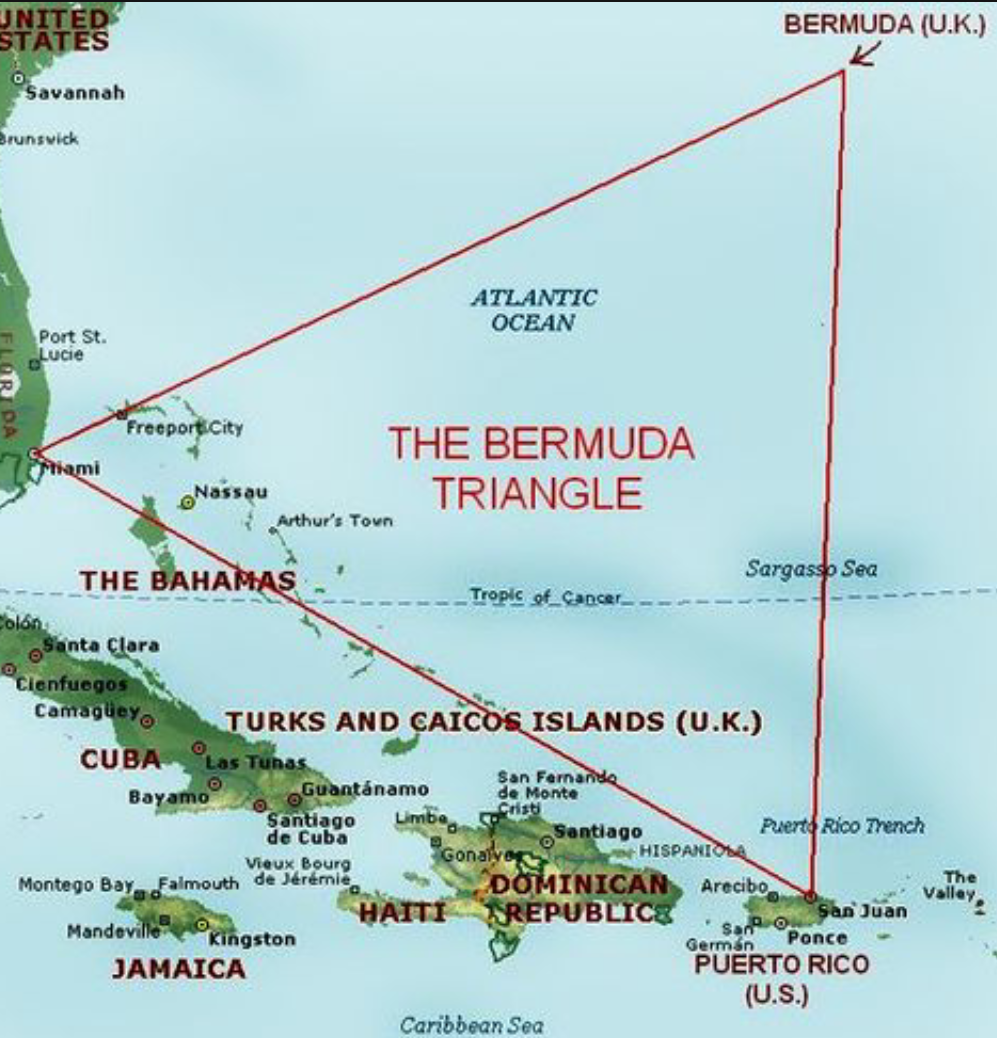
The Bermuda triangle is a region of the Atlantic Ocean between Bermuda and Florida, where ships and planes have mysteriously disappeared. Vincent Gaddis, who wrote about the disappearance named the region: ‘the deadly Bermuda triangle’.
The legend of the Bermuda triangle was uncovered when E.V.W. Jones, a reporter penned an article on a strange occurrence he had stumbled across. It seemed that an unusual number of planes and ships had been disappearing in the ocean between Florida and Bermuda. Over the years more than 200 separate mysterious disappearances have been attributed to the Bermuda triangle. No trace was ever found of the crafts or their passengers. The disappearance of Flight 19, ranks at the very top of Bermuda triangle lore. In 1945, five Navy planes vanished while on a routine training mission over the Atlantic. The media really went over board putting forward theories as to what might have happened at Bermuda triangle. The theories range from attacks by sea monsters to freak killer waves and kidnappings by aliens. However, later studies reveal that most of the incidents have been inaccurately reported and many agencies have declared the number and nature of disappearances in the region is similar to any other area of the sea.
•Islands that vanished mysteriously
Have you heard of the Aurora islands? Even if you have, you are unlikely to ever see them, for they have vanished from the face of the Earth! The story begins in the 18th century when the captain if the ship sailing in the South Atlantic waters saw three small islands called the Aurora Islands after the name of the first ship. They soon became a common landmarks for the Spanish ships that routinely went to south America and then suddenly, the islands disappeared!
Since most islands are produced through volcanic activity, they can appear and disappear just as quickly over time and leave no trace for sea explorers to find. This maybe the explanation why another phantom island, Isla Grande, which lay just to the North of Aurora islands, has now vanished too. However, this explanation does not hold good for the disappearance of islands called Davis’ Land. There is even an island named the Isle of Brasil, which keeps appearing off and on near the coast of Ireland.
• Uniqueness of Stonehenge
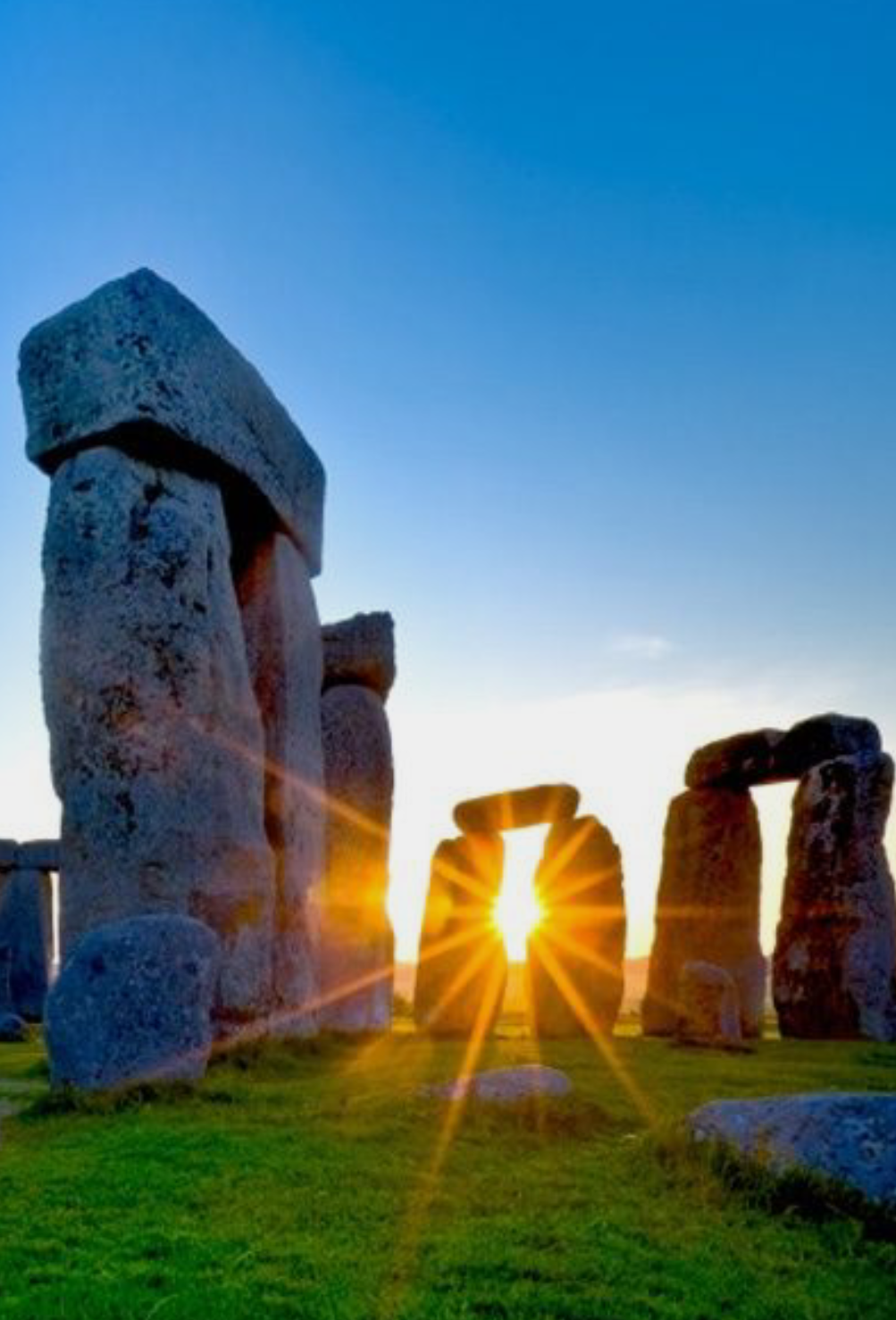
On the misty green plains of Salisbury, in southern England, stands one of the most mystical of the megaliths- Stonehenge. The beauty of these stones take one’s breath away. The 3.96 meters high stones are unique in that unlike the other megaliths, each stone has been artificially shaped into a curve. As a result, when they were assembled, they formed the outer line of a circle, when seen from above. At the same time, each stone has a slight bulge, so that when seen from below, they appeared to be in a straight line! Amazing isn’t it?
The astonishing scale and beauty of the stones, the great care and labour in construction and the mystery that surrounds their original purpose are just some of the reasons why Stonehenge is one of the most popular sights in England. Stonehenge is a magical experience indeed.
John Rawls is a contemporary American Philosopher who is regarded as the first original theorist of justice since the times of Aristotle and Plato and other ancient political philosophers. His theory of justice had brought a lot of attention in the world of political philosophy. With the publication of his book called ‘A Theory of Justice’. So as to arrive at the principles of Justice Rawls used Locke’s methodology of ‘social contract’. His theory of justice focuses on a society of free citizens holding equal basic rights, enjoying equal opportunities of advancement and cooperating to achieve a common goal.
Rawls famous works are- ‘A theory of Justice’ (1971), ‘Political Liberalism’(1993), ‘The Law of Peoples’ (1999), and ‘Justice and Fairness’(2001). In his celebrated book ‘A theory of Justice’ he asserts that a good society is characterized by a number of virtues. Justice is the first virtue of a good society. In other words, Justice is a necessary but not a sufficient condition of a good society. Those who argue that justice should not come in the way of social advancement and progress run the risk of losing the moral degradation of the society. In a just society, justice is established as the foundation of social structure. Hence all political and legislative decisions should be designed to fulfil the requirements of justice.
Rawlsian theory of justice focuses on two things.
Distributive Principle
Difference Principle
Distributive principles focus on the availability of basic or primary goods to call. Equal rights, equal opportunities and same income.
While Difference principles focuses more on the arrangement of social and economic inequalities in a way that they are to the greatest benefit of the least advantaged person and are attached to positions open to all under conditions of fair equality and opportunity.
Rawls sets out two basic moral principles of justice which constitutional democracy should satisfy. First, each person engaged in institution affected by it has an equal right to its most extensive liberty compatible with a like liberty for all.
Second, inequalities as defined by the institutional structure or fostered by it are arbitrary, unless it is reasonable to expect that they will work out to everyone’s advantage and provided that the positions and offices to which they may be gained are open to all.
Rawls Theory of Justice
John Rawls was an ardent advocate of fairness and equality of opportunity. He believed that if people were put under the ‘Veil of Ignorance’ then they would choose themselves to be in a position where everyone will get equal opportunity and income. He has used the style of the contractualists like Hobbes and Locke in arriving at the need for the usage of ‘Original Position’ , This theory is also called as contractarian theory of justice. He is against the utilitarian concept of justice where the ‘greatest good of the greatest number’ is held valid. He believes that human beings are ‘rational agents’ who will in their ‘original position’ always make sure to keep themselves in a position where they get equal opportunities. Each individual is selfish and an intelligent negotiator who carefully negotiates with other human beings. Sometimes the individuals do not know of this fact that distribution of offices or rewards is justly done according to the results of a competition conducted in a fair manner.
Rawls take up the issues of just distributive justice on focusing two principles.
Each person is to have an equal right to the most extensive liberty compatible with a similar liberty for all.
Social and economic inequalities are to be arranged so that they are both: (a) to the greatest benefit of the least advantaged and (b) attached to positions and offices open to all under conditions of fair equality of opportunity.
While the first principle reflects a traditional liberal commitment to formal equality, the second principle (the so- called difference principle) points towards a significant measure of social equality.
Justice requires that each and every single individual have equality in the nature of equal rights and opportunities and some income. Each person should have some income and so for this the state should eradicate economic inequality Only then the least advantaged person may have the benefit of improving his lot so as to become the highest member of his society. Such a situation shall strengthen the incentives and enlarge the size of the social cake. In his view the people will support it if they were not placed under the ‘ veil of ignorance’ which deprives them of the knowledge of their social position and status. The people cooperating together for mutual advantage should have an equal claim to the fruits of their cooperation and should not be penalized as a result of their gender, race and genetic inheritance over which they have no control. Redistribution and welfare are therefore ‘Just ‘, because they confirm to the widely held view of what is fair.
According to Rawls the problem of justice consists in ensuring a just distribution of ‘primary goods’ which include rights and liberties, powers and opportunities, income and wealth, means of self-respect and so on. Rawls described his theory as the theory of pure procedural justice. It means that once certain means of principles of justice are accepted, the distributive resulting from their application will be necessarily just.
Rawls severely criticized those theories of allocation which ignore the moral worth of individual for the attainment of any predetermined goals. He particularly attacked utilitarianism because in calculating the ‘greatest happiness of the greatest number’ it attainment of any predetermined goals. He particularly attacked utilitarianism because in calculating the ‘greatest happiness of the greatest number’ it does not care if it leads to extreme hardship to any particular individual. For instance, one might imagine a state of affairs in which maximum amount of happiness would be produced and its distribution to a maximum number of people achieved by the enslavement of minority. Rawls has brilliantly argued that you cannot compensate for the sufferings of the distressed by augmenting the joys of the prosperous.
Karl Marx was a German philosopher, economist and political thinker, usually portrayed as the father of 20th century Communism. After a brief carrier as a teacher and journalist, Marx spent the rest of his life as an active revolutionary and writer, living mainly in London and supported mainly by his friend and life-long collaborator Friedrich Engels. From Marx’s perspective, human beings distinguished themselves from other animals based on their consciousness, autonomy, and ability to be productive members of a society, which give them a sense of purpose in life. Broadly, this is what Marx referred to as human nature, which he characterized as the essence of a person, or one’s ability to control their own destiny to a certain extent.
One of the most original contributions of the Marx is his Theory of Alienation. This is contained in his early work Economic and Political Manuscripts, which were written in 1843 but were discovered nearly fifty years after his death. These Manuscripts shows that ‘early Marx’, was mainly interested in the problem of alienation.
The concept of Alienation has increasingly occupied a forefront in sociological and philosophical interest. This is mainly due to the growing awareness and concern over the negative and unexpected consequences of rapid scientific and industrial progress in contemporary life. Marx’s theory of Alienation involves the relationship between workers in capitalist society and their productive activity or the act of labour itself. Workers do not confirm themselves in their work, they experience their work as misery, their physical and intellectual capacities are stunted, their work is not freely chosen and their work belongs to another. Yes, Marx’s conception of alienation illuminates some premises of the idea of emancipation. From his point of view, this social position discouraged the labourer from taking control of their own future or pursuing ways to climb the social ladder, which put increasing distance between individuals and their human nature.
For Marx, alienation is rooted in the historical situation and its consequences. In the Capitalist society, the creation of objects or production does not help man to realize himself, i.e. to realize his potential. This inability of man to realize his potential while being engaged in the creation of objects causes alienation. Hence, alienation will be overcome when the production of objects will lead to unfolding of the human potentialities. Alienation as exists in the capitalist society has many dimensions. However, three dimensions are fundamental.
Marx developed his theory of alienation to reveal the human activity that lies behind the seemingly impersonal forces dominating society. He aimed to show how, although aspects of the society we live in appear natural and independent of us, they are the results of past human actions. Marx believed that human action could shape a future world free from the contradictions of capitalism. For him, alienation was not rooted in the mind or in religion, as it was for his predecessors Hegel and Feuerbach. Instead Marx understood alienation as something rooted in the material world. Alienation meant loss of control, specifically the loss of control over labour.
How can I ever forget those days when India was brutally stabbed in the back by the Pakistani invader General Pervez Musharraf by inflicting Kargil war on us and we lost more than 600 soldiers as per official figures and I too lost my child friend late Captain Amit Verma who was just 24 and was the only child of his family and whose father was also an Army Officer and retired as Colonel? We all know how Captain Saurav Kalia was brutally tortured for 23 days and he along with 5 soldiers of 4 Jat Regiment were maimed of all their crucial body parts before finally killing them yet our leaders felt over excited to see Pakistani invader Gen Musharraf in India walking like a “royal king” with Indian politicians attending him like durbaris! Even many BJP leaders appeared too excited!
When all the Indian politicians were busy chanting “Pervez, Pervez, Musharraf, Musharraf” and “Lagta Hai bada pyara nahin dikta hai bada pyara, mahin rota hain bada pyara nahin sota hain bada pyara, Musharraf jab chalta hain jab to dekho, Musharraf jab dekhta hain jab to dekho, Musharraf jab rota hain jab to dekho etc etc” and were all united cutting across party lines in according him a grand welcome in India as we saw when he held talks in Agra with the then Deputy PM LK Advani, there was only one politician whom I saw lashing out at Gen Musharraf whose name is Pranab Mukherjee! Pranab lashed out openly and that too in presence of many VVIP dignitaries and Ambika Soni who is also a Congress leader could not believe her eyes as her facial expression spoke for herself feeling totally shocked as to what is he saying when he said that, “How can terrorists be termed as “freedom fighters” and how can terrorism be termed as “freedom struggle” by Gen Musharraf? Why are we according him such a grand welcome?” I still find it hard to believe that a Congress leader can lash out so hard against Pakistani invader like Gen Musharraf who candidly admitted masterminding Kargil war and of entering 15-16 km inside Indian territory to motivate his soldiers to kill our soldiers most ruthlessly as we saw with Captain Kalia and 5 soldiers!
Pranab spoke nothing but the brutal truth and this alone explains why “powerful lobby” ensured that he never became PM! It is not Pranab Mukherjee’s misfortune but India’s misfortune that he could not become PM! But still we must be satisfied that at least he became the President and he always enjoyed good equations with leaders of all parties! I hold the late PM Rajeev Gandhi in highest esteem as I grew up watching him in my young days but certainly when her mother late Mrs Indira Gandhi died, it was Pranab who was best suited to the job as he held the prestigious post of Finance minister also and he was ruthlessly sidelined and he still like a loyal worker said nothing which speaks how much patience he had!
As if this was not enough, he was again sidelined when Congress led by Mrs Sonia Gandhi decided to make Dr Manmohan Singh as PM even though earlier he was boss of Dr Manmohan when he was RBI Governor! Yet he tolerated everything quietly and behaved like a disciplined soldier of his party! All this can never be ignored! He had the potential to lead India and to give a tough response to the likes of Pakistani invader Gen Musharraf but alas that was not to be! Still he rendered his invaluable contribution in various capacities like Finance Minister, External Affairs Minister and Defence Minister apart from other key portfolios like Commerce!
This alone explains why PM Narendra Modi on becoming PM in 2014 sought blessings from him as he was President since 2012 with huge experience and he was gracious enough to bless him! He never shied away from giving free and fair advice whenever sought by PM Modi which the latter acknowledges also! India has lost the most precious gem by his passing away!
It was Pranab Mukherjee who ensured that terrorists were no longer given long rope and Afzal Guru who was convicted for the attack on Parliament in 2001 was hanged by rejecting his mercy petition! Similarly, Ajmal Kasab who was caught alive while killing innocent in Bombay during the dreaded 26/11 terror attacks was also hanged, all because of Pranab Mukherjee’s strong decision! He had zero tolerance for terrorists and never hesitated to take his own individual stand on terror issues which affect our national security and was deadly against declaring any kind of ceasefire with terrorists and terror groups who mercilessly kill innocents not sparing even woman and children, what to talk about others!
Ram Nath Kovind who himself is now President too said while remembering Pranab that, “Sad to hear that former President Shri Pranab Mukherjee is no more… A colossus in public life, he served Mother India with the spirit of a sage.” M Venkaiah Naidu who is now Vice President while remembering Pranab said that, “At the end of every meeting, I used to walk away with an impression that he was nothing short of an encyclopedia. His number crunching ability and sharp memory at his age was bewildering.” PM Narendra Modi too candidly acknowledged that, “As India’s President, Pranab Mukherjee made Rashtrapati Bhavan even more accessible to common citizens.” Amit Shah who is Home Minister too rightly said that, “Pranab Da’s life will always be cherished for his impeccable service and indelible contribution to our motherland. His demise has left a huge void in Indian polity.”
No wonder, he won many awards in his life. He was awarded Padma Vibhushan in 2008 and most remarkably was awarded by the NDA government with Bharat Ratna which is the highest civilian honour of India in 2019 which naturally filled not just him and his family but also all his fans and supporters with supreme happiness! He always spoke with humility and it was only once in a blue moon that he lost his cool as we saw when the Pakistani invader Gen Musharraf was invited to India like a royal emperor and that too after masterminding Kargil war! This alone explains why he had friends in almost every party!
Even former PM Dr Manmohan Singh too candidly acknowledges that, “In his death, our country has lost one of the greatest leaders of independent India. He and I worked very closely in the government of India and I depended on him a great deal for his wisdom, vast knowledge and experience and public affairs.” Congress President Sonia Gandhi too acknowledged that, “Pranabda had been such an integral and prominent part of normal life, the Congress party and the central government for over five decades that it is hard to imagine how we can do without his wisdom..”
All those Congress leaders who keep shamelessly comparing RSS with terror organizations like Hizbul among others must pity themselves! Why Pranab attended RSS meeting in June 2018 in its headquarters in Nagpur if it is a terror organization even before his death? Let Congress leaders not forget that at that event organized by RSS, Pranab had talked about the celebration of diversity and tolerance and underlined how India’s identity had taken shape after a “long-drawn process of confluence, assimilation and co-existence”. RSS Chief Mohan Bhagwat himself described Pranab Mukherjee as a “guide for the Sangh who didn’t believe in political untouchability”.
It is high time and all those Congress leaders must now really stop fooling themselves who term “RSS” on same footing as “Hizbul” and “other terror organizations” and instead be more tolerant like “Pranabda” who always respected even his worst political opponents! The earlier they do this, the better it shall be for their long term political interests also! It is the top leadership of Congress which must understand this best as it is they who call the shots and decide everything as to what will be the official stand of Congress on such key issues!
Born in Mirati which is a village in undivided Bengal on December 11, 1935, he entered Parliament in 1969. He is a former college teacher with degrees in political science and history (a Masters) and law. He became a protégé to the then PM Indira Gandhi and remained loyal to her even during the Emergency. As he was sidelined after Indira’s death, he felt exasperated and formed his own party but returned to the Congress after reconciliation with Rajiv Gandhi who realized that some of his close advisers had fed him wrong information on Pranab and he was “a man of strong character”! I am sure that if he was there in Rajiv Gandhi’s Cabinet, Congress would not have lost and would have again won as he knew the art of governing India! He worked commendably with former PM Narasimha Rao as also with former PM Dr Manmohan Singh!
Most pleasing to note that the government has announced a seven day of state mourning for Pranab! During this period, the national flag will fly at half mast on all buildings throughout India, where it is flown regularly, and there will be no official entertainment. This he deserves also being the former President of India! It is Pranab who had tried to bring back the ashes of Netaji Subhash Chandra Bose from Renkoji Temple in Tokyo even though he could not succeed!
I have just no hesitation to say from my heart that even God must also definitely salute Pranab Mukherjee as he lived the most exemplary life and never hesitated in calling a spade a spade as we saw in the case of Pakistani invader Gen Musharraf! His absence will be always felt in India! But we all can certainly always strive to follow his good ideals and love our motherland more than anything else just like him! There can just be no denying it!
Studying about the voting pattern and election pattern of the world’s largest democracy is a challenge. India has seen a tremendous change in the voting pattern since the first elections of 1952. Election during that time was solely based on the leader and there was principal focus on only one political party but now the situations have changed. India has grown through the 21st century to see a lot of changes within the political system. Starting from the changes during the time of independence till today.
The voting pattern has seen considerable changes lately. During the time of independence the pattern of voting was solely based on the legacy of the nationalist movement. This was because people only voted for the single largest party at that time and that is the Indian National Congress. INC was people’s first choice since it had the legacy of the Independence struggle as well as it had an all India background which accommodated people from all kinds of religion and caste unlike other political parties which had its ground on only a single community of people.
While Today’s political system is quite complicated. The voting pattern has also become quite complex unlike earlier times. These days people’s voting pattern and behaviour have changed a lot. There are many factors for this change. It is quite a complex study where we have to unravel things from the core. For this we have to take a look from where this change in voting period has started from.
Till the 1977 elections congress party ruled India. The INC consecutively won the elections till 1977. Only to be defeated by the Janata Party. In 1989 INC was again defeated for the second time due to the unpopular rule of the congress and the lack of representation of the regional parties, lower or backward castes, minorities etc. 1989 put an end to the rule of single party system and welcomed in the multi-party coalition system in India.
Most striking trend in the Indian politics is the political competition between the Indian Political Parties that have grown past these years. This rise in the number of the political parties in India is due to the lack of representation of the various regionalities and communities. There has been a constant competition between various communities in the country for power. People are being voted mainly because they belong to a particular community or religion. This pattern of politics emerged only very recently within the country.
The behaviour of a voter in India is defined by the various factors
Religion
Caste
Performance of the party in power
Money
Policy
The political parties make use of these factors to attract more voters. Although no party can convince a person to vote for them in the name of religion and caste, this is an important factor
In the elections. Since India is a secular country the political parties nor the government cannot have a tilt towards a single religion. Even still political parties use religion and caste to catch the polls.
RELIGION is one of the main factors which affect the voting behaviour these days in our country. People are more interested to elect for candidates to more or less belong to their same religion or community since they feel that then only they can identify themselves with the leader. Despite India being a secular country and the fact that no religious affiliations can be used in the election matters we can still see that people use the religious sentiments of the people to make use of their vote. Political campaigning’s are also done for the same. For an example the Bharatiya Janata Party (BJP) is the leading political party of India which is said to have the ideology of Hindutva. The party has a tilt towards the Hindu religion. Another example of a political party is the Indian Muslim League which is as the name says a Muslim political party.
The establishment of a secular state along with the freedom of religion – that is to choose to practise, profess and propagate any religion of our choice, treating all religions equally and not putting any religion one above the other , the political parties have failed to keep their word. Even after all these laws the use of religion in politics hasn’t come to and end and it seems like it never will according to the recent political activities and trends. The continued existence of political parties which are one way or the other linked with a religion is the main reason why religion cannot be put away from politics. The very existence of these religious acts as a black hole to the act of secularism in our country. The existence of religious pluralism affects the political system. The selection of a candidate is sometimes solely based on religions preferences. The religionization of socio- political issues by the political parties is one of the methods by which they continue to get the voters in their consideration.
CASTE is yet another important factor in determining the voting behaviour of the people. Caste has always had its root in all kinds of problems in India. Caste is an important determinant in the politics of India. It constitutes an important basis for social relations in the country. Despite the various measure taken stop the discrimination, caste still continues to an important basis for election. Politics in caste and caste in politics are very common in the Indian political scenario as we all know. Sometimes for the elections to various constituencies people are selected on the basis of their caste. Also while formulating various policies, election strategies and programme caste is taken as a major factor in the backdrop. Caste system has had its roots for years and so it will take a lot of time for people to weed out these roots even from the political scenario. Votes are brought in the name of caste by the candidates.
Caste is an important determinant for the selection of candidate for the rural population. Despite the various laws and the adoption of secularism, uneducated people mostly living in the rural India choose to vote for people who belong to their own caste. The candidates despite the laws in the country make use of their sentiments to seek vote for them. Although recently this trend has been changing at least in the urban households since as you go up the social ladder caste tends to be invisible. While in the rural areas caste tends to be an important factor in the selection of their leader.
PERFROMANCE OF THE PARTY IN POWER. The performance of the party already ruling is also another important determinant. Each political party comes into power with a election manifesto and various promises. After the elections it is their duty to fulfil all of this and meet the various aspirations of the people. And so the performance of the party during the time it rules is an important factor in determining whether the people should elect for the party next time too.
Improper ruling of the party during its tenure can result in it being not chosen for the next time. The way the party rules influences the people in a big way. We can see an example of this by looking at the example of the elections during 1989. The parties which got elected only stayed in power for a short period of time due to their political instability and the lack of a charismatic leader during the time of ruling. Their unpopular rule with the lack of ideology since it was a coalition lead the people to choose another political party.
MONEY influences people in different ways. Usually people with money and power tend to stay in high positions and rule the people according to their wishes. India is a developing country and most of people live under the poverty line. And so the people having money and power tend to rise to the top. Without other factors like political wave getting involved usually it’s the people with money and power who wins the elections. Rich and the powerful throw around the money to catch the ballot. But this is not always true though because in the 1989 elections congress used a lot of money and power but it couldn’t win the elections. BJP won the elections.
POLICY. Various policies taken by the government or the political parties stand out as an important deciding factor in elections by a common man. When a party announces its political manifesto the policies it takes for the people is an important determinant in voting. A person who doesn’t know much about politics and party tends to take a look at the policies of the party or what it has done in the past years. And so creating a policy that attract the crowd and implementing it in a proper way is important for any party.
These are the various trends which are seen across the country during the election time. The voters turnout has consistently increased from the time of independence till today. People has started to see election as an important way of choosing their leaders. As people are getting educated they started to look into the doings of the party and make a proper decision when it comes to who to vote for. Voting behavior is a form of electoral behavior and understanding it can help us understand how and why people choose to vote for certain people. And the above study was about voting behavior and its determinants.
International relations have been a subject of fascination for most of us, the subject brings us into the different kinds of relations countries shared across the world. But have we ever stopped to think, why we should learn about international relations? Not really. International relations is a vast subjects, its main focus is on the relations shared between the different countries.
Its primary focus is to maintain peace and prosperity across the world. In international relations, peace is indivisible. The core objective of International Relation is to minimize the causes of war and create conditions for peace. We all are human beings, it is in the nature of human beings to share different and radical perspectives on the same thing, but what we should all focus is the need to eradicate a condition that can be a threat to our peace and prosperity.
An important objective introduced in the International Relations is the ‘Logic of Deterrence’. This logic was put into act during the cold war time. The time after World War II saw a lot of changes in the international system. There was an existence of two super powers, US and USSR. There was tension between these countries and it has led to many proxy wars in other countries. But US and USSR never waged a war against each other, this was due to the logic of deterrence, both of the countries know that they have enough weapons to harm each other, and that there will no winner left standing. It could result in a lot of deaths without having a purpose and so they avoided a civil war at any cost, but it never stopped them from involving with other countries.
The League of Nations was replaced by United Nations after 1945. This was because it couldn’t prevent the second world II. The UN was established with the motive of preventing any more world wars and in spreading conditions of peace and tranquility. The UN had five main members – US, USSR, France, UK and China. They were known as the big five and are the permanent members of the UN, while the others members of UN are temporary. The landscape of International Relations has changed across the times, from the disintegration of Soviet Union to globalization paved its way.
Contemporary shape of the international relations has been a collective result of the following three factors. Firstly, with the disintegration of the soviet union, there was only one super power, it was the US. Times after was the US Hegemony, other countries and states were afraid of US. Countries who were not even part of the both the alliances were also very careful to keep themselves out of the way of US.
Second reason was the widespread ideology of liberalism. With communism out of the match, liberalism was seen as a better ideology across the world. Now countries were close to each other for economic reasons rather than political or cultural reasons. One of the example is the Look East Policy by the countries of South East Asia. Sometimes countries are forced into being slaves, not as colonies but in a new term called as neo-colonialism.
And finally, with an increase in the connections across the countries, it has put into effect a set of undesirable changes. Some countries had problems of their own and soon that become problems of other nations too, like terrorism, environmental issues etc. Globalization has set into motion a chain irreversible change. As globalization has set in, it gave a lot of opportunities as well as challenges too. It has become so much important to study about these in our day to day lives.
“Marksheet has become ‘Prestige Sheet’, New Education Policy will get children out of the race of marks.”
Amid preparations for implementation of the National Education Policy, Prime Minister Narendra Modi on Friday, 11th September, 2020 made it clear that from the year 2022, the students will be studying from the curriculum being prepared under the new education policy. Referring to the current problems of the education system, the PM said that a big problem is that instead of learning based education in our country, the education system with marks and marksheets dominates. The truth is that the marksheet has now become the mental pressure sheet and the family’s prestige sheet, that is, it has become a question of prestige. In a virtual address to the two-day conference of teachers associated with school education in the 21st century, the Prime Minister said that removing children from the stress of education is one of the main objectives of the National Education Policy. He said that the exam should be done in such a way that students do not have to be unnecessarily pressurized. At the same time, efforts should also be made not to evaluate the students from one examination only, but to have different aspects of their development. This is the reason why the National Education Policy has proposed a report card covering all aspects of students in place of marksheet, which will include the student’s specific ability, capability, attitude, talent, skill, overall efficiency etc. “When we celebrate the completion of 75 years of independence, students will move towards a new future with a new curriculum.” This course will be visionary, futuristic and scientific. At the same time, the PM also replied to those who questioned the language and said that here we need to understand that language is the medium of education. Finally, the Government has taken a great step for taking forward the country’s education system.
Also, Prime Minister Narendra Modi told- Why we had to bring a new education policy
During this time, the PM also explained the reason behind the National Education Policy. He said that every region of the world has changed in the last three decades, every system has changed. There is hardly any aspect of life in these three decades that is the same as before. But what had not changed was our education system. It was running on the old pattern. Changing the old education system was as important as changing a spoiled black board.
National Testing Agency (NTA) has declared the NTA JEE Main result 2020 at jeemain.nta.nic.in. The JEE Main 2020 result latest news shows 24 candidates have scored 100 percentile in JEE Main 2020 result.
The website may have gone down due to heavy traffic, students may wait for a while and then check their JEE Main 2020 results.
The Union Education minister Ramesh Pokhriyal on Wednesday said that out of the 8.58 lakh candidates who had registered for the JEE (Main) exam, 6.35 lakh candidates appeared in the examination. Over 8 lakh students had appeared in the JEE Main 2020 examination amid the COVID-19 pandemic.
Students, parents and Opposition leaders had protested strongly demanding the postponement of the exam. But the government did not pay heed to their requests. Instead it issued strict guidelines for the appearing students and invigilators at the exam centre and conducted the entrance tests.
At the time of going to print, the National Testing Agency, which conducts the examination, had not yet released the full all-India rank list or the cut-off score for eligibility to attempt the JEE Advanced to be held on September 27. Students can check their scores and the final answer keys at jeemain.nta.nic.in.
For September, the number of students who have scored 100 is 15. State wise break up for the numbers is Telangana with 8 followed by Delhi with 5 students. 2 students from Haryana and 1 student each from Gujarat and Maharashtra scored 100 percentile. Rajasthan has 4 toppers and Andhra Pradesh has 3 students who scored 100 percentile. Along with the 100 percentilers, NTA would also be releasing the state wise list of toppers.
The complete list of toppers would be provided shortly along with the JEE Main 2020 Rank list on the official site as well. In January, 9 students had scored 100 percentile. The complete list of toppers would be provided shortly along with the JEE Main 2020 Rank list on the official site as well. The score card of the candidates would be released online on jeemain.nta.nic.in. As many as 2.5 lakh students would qualify to appear for JEE Advanced 2020 or IIT JEE examination, scheduled for September 27.
1. Landa Jitendra – Andhra Pradesh
2. Thadavarthi Vishnu Sri Sai Sankar – Andhra Pradesh
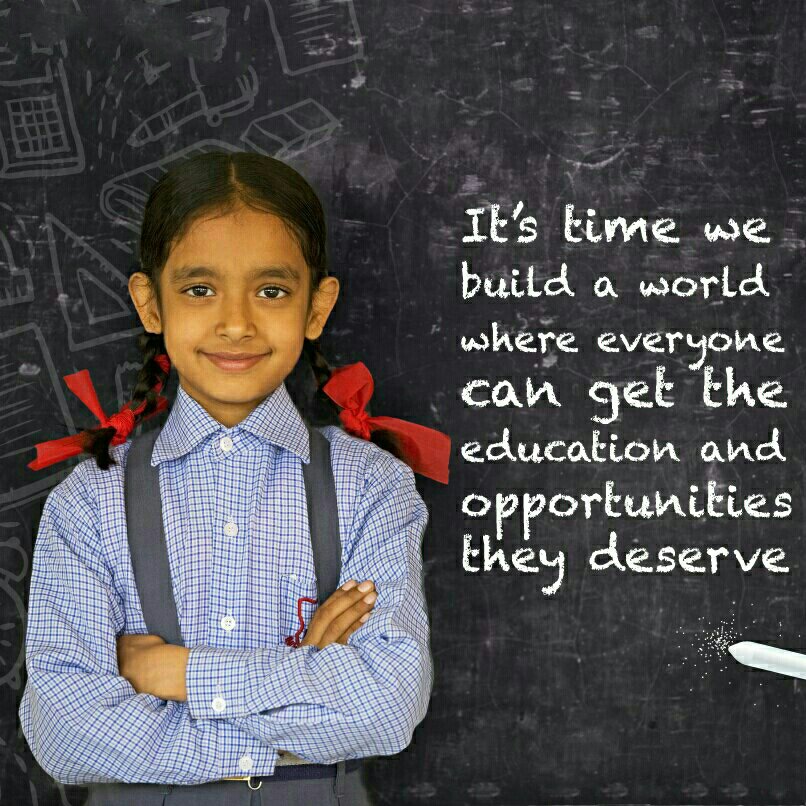
“Education begins the moment we see children as innately wise and capable beings. Only then can we play along in their world.” But unfortunately, there are many children in our country who are yet far away from education. Yes, I am talking about those little buds that must be withering somewhere today. There are still 72 million children in India who are far away from education which is the most important and basic right of a child. And the main reason for which they are deprived of education is their economic circumstances. Because of which they have come so far from education. For this reason, they have to do work like begging, stealing, and what we do later is that we badly abuse them. Friends, we all must have seen the children spreading their hands on the road for the sake of some money. But have you ever thought that why they want to do this or they have some compulsions?
So let me tell you today what their compulsion is – society today stands at a level where education is called a mirror. And this thing is a great example in itself to explain the importance of education. A survey by Child Welfare found that most of the children are deprived of education because the condition or situation in their houses are not good due to which their parents send them to earn wages for living. Their father’s one-day earnings could not even complete the ration. In a poor family, a girl child is assigned household chores and the boy child is sent to work outside. Government’s Sarva Shiksha Abhiyan runs but may not reach the children who need it. “A human becomes a demon without education” and in today’s era, we are well aware of this. Those little hands simply dry up in someone’s house washing dishes and cleaning the dirt.
There are many noble people who are giving free education to poor children by spreading and sharing their knowledge to serve society. There are many great people who are sharing knowledge with poor children and giving free education to them so that those children can grow up and serve for the welfare of the country. So, why can’t we take a step from our side to promote the education of poor children, to motivate them and to make them aware of their rights? so that the lives of those innocent children can be improved and filled with happiness. Even if you start with one child then he or she can improve many lives.
The idea of models that provide a discourse of analysis came into use in the 1970s and 1980s. They were thought as modes of organizing problems and giving them a form and coherence. A model essentially involves the notion of constructing a boundary around reality which is held common and while studying public policy, it is important to note how these models clash and shift around and solve problems.
SYSTEMS MODEL FOR POLICY ANALYSIS
The systems model is associated with David Easton, who defines the political system as that part of the society which is engaged in authoritative allocation of resources. He regards the policy process as a black box and thus this model is also called ‘the Estonian black box model’. The political system for Easton consists of inputs, environments, policy making process, output and feedback.
INSTITUTIONAL APPROACH
This approach focuses on the relationship between public policy and government institutions as policy making majorly depends on the interactions of institutions created by the government. One such institution is the state which is a web of government structures and institutions. It performs various functions like adjudicating between conflicting social and economic interests, guarding the interests of all the sections of the society by accommodating and reconciling them. It also includes the legislatures, executive, bureaucracy, etc.
RATIONAL POLICY MAKING MODEL
Rationality is considered to be the ‘yardstick’ in policy making and this approach emphasizes that policy making is making a choice among policy alternatives on rational ground. In other words, rational policy making means to ‘choose the best option’. A rational policy is designed to maximize net value achievement. This model is associated with Herbert Simon.
LINDBLOM’S INCREMENTAL APPROACH
This model is associated with Charles Lindblom who proposed it as an alternative to the rational model of policy making. His incremental approach, majorly focused upon in his ‘science of muddling through’ involves a process of continually building out from the current situation, step by step and in small degrees. This is the branch approach which is the basis of his approach and is in contrast to the root approach of the rational model wherein the policy makers start anew each time, building on the past experiences. Lindblom rejected the root approach because he believed that constraints on time, intelligence, and cost prevent policy makers from identifying all the alternatives and consequences. Rather, he suggested that successive limited comparison is both more relevant and more realistic in a condition of ‘bounded rationality’.
DROR’S NORMATIVE OPTIMUM MODEL
Dror’s model was an alternative to incrementalism for he believed that incrementalism increased the gap between those who had more power and those who had less power which made it difficult for the latter to bring about change. Thus, as an alternative to this, he proposed a model which seeks to accept the need for rationality, management techniques for enhancing rationality of decision making at low levels, policy science approach for dealing with complex problems and the need to take account of values and irrational elements in decision making.
These models as discussed above, emphasize public policy as an important area of politics and public management and can be understood in terms of policy analysis and through political public policy. Therefore, policy making is a mixture of all these models combined to form a crucial aspect of the political system.










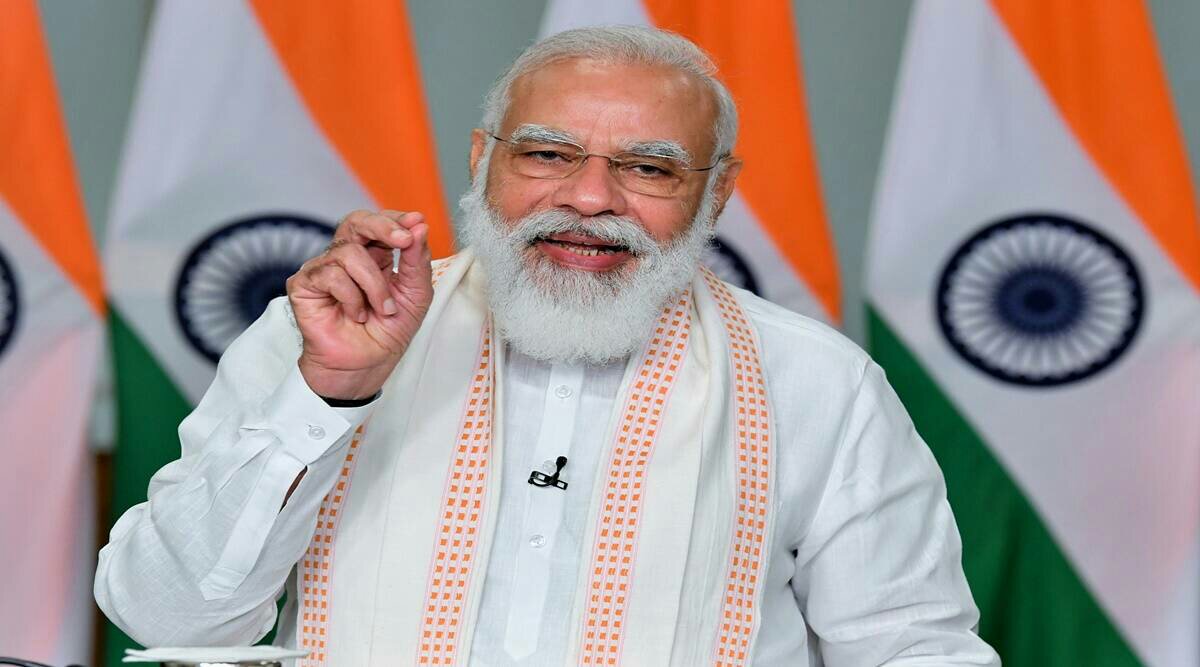 Amid preparations for implementation of the National Education Policy, Prime Minister Narendra Modi on Friday, 11th September, 2020 made it clear that from the year 2022, the students will be studying from the curriculum being prepared under the new education policy. Referring to the current problems of the education system, the PM said that a big problem is that instead of learning based education in our country, the education system with marks and marksheets dominates. The truth is that the marksheet has now become the mental pressure sheet and the family’s prestige sheet, that is, it has become a question of prestige. In a virtual address to the two-day conference of teachers associated with school education in the 21st century, the Prime Minister said that removing children from the stress of education is one of the main objectives of the National Education Policy. He said that the exam should be done in such a way that students do not have to be unnecessarily pressurized. At the same time, efforts should also be made not to evaluate the students from one examination only, but to have different aspects of their development. This is the reason why the National Education Policy has proposed a report card covering all aspects of students in place of marksheet, which will include the student’s specific ability, capability, attitude, talent, skill, overall efficiency etc. “When we celebrate the completion of 75 years of independence, students will move towards a new future with a new curriculum.” This course will be visionary, futuristic and scientific. At the same time, the PM also replied to those who questioned the language and said that here we need to understand that language is the medium of education. Finally, the Government has taken a great step for taking forward the country’s education system.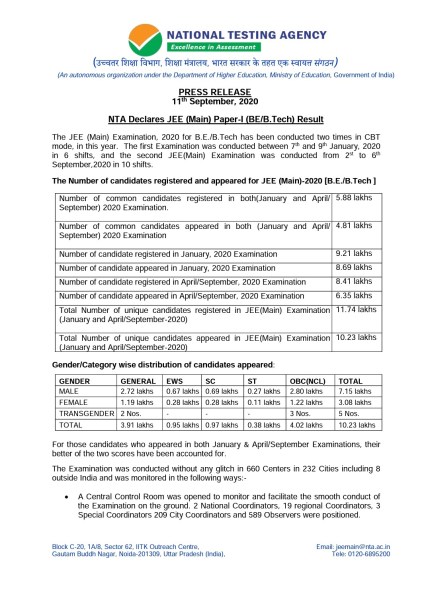
 Eduindex
You must be logged in to post a comment.