Rashtrapati Bhavan to Host Conference of Directors of IITS, NITS and IIEST on November 19

Rashtrapati Bhavan will host a conference of the Directors of IITs, NITs and IIEST, Shibpur on November 19, 2019. This Conference is part of regular interactions of the President of India, Shri Ram Nath Kovind, with such institutions in his capacity as visitor to 152 Central Universities and institutions of higher learning.
The agenda items of the conference will include – deliberations on challenges / opportunities along broad parameters on which NIRF rankings are based; participation and contribution of alumni in activities of the institutes; steps to increase representation of women in faculty and student intake; ways to involve students in nation building; promotion of research, innovation and entrepreneurship; filling up of vacancies, including faculty from foreign universities;  and review of major infrastructure projects.

Apart from the Directors of 23 IITs, 31 NITs and IIEST, Shibpur, the Conference will be attended by the Union Minister for Human Resource Development, Minister of State in the Ministry of Human Resource Development, Secretary (Higher Education), Secretary, Department of Science and Technology and Chairman AICTE.
****

ECI to establish a Visiting Chair on Interdisciplinary Approach to Electoral Studies in memory of former CEC Sh T N Seshan

To commemorate and celebrate Sh T N Seshan’s special connect with the young and aspiring India, Election Commission of India has decided to establish and fund a Visiting chair on interdisciplinary approach to Electoral Studies in the Centre for Curriculum Development at India international institute of Democracy and Election Management( IIIDEM ), New Delhi from 2020-2025. The Chair will be mentored by Sh N Gopalaswami Former CEC.
Chief Election Commissioner Sh Sunil Arora today announced this decision while delivering the Keynote address at the Institute of Law, NIRMA University, Ahmedabad. President of NIRMA University, Dr Karsanbhai K Patel, Sh.Umesh Sinha Secretary General ECI, Vice Chancellor-Dr. Anup Singh, Dr Purvi Pokhariyal, Director, Institute of Law, faculty and students were present on the occasion. Sh Arora had been invited by the University on the occasion of Law Conclave organized in memory of the legendary Constitutional expert, economist and jurist par excellence Shri Nani Palkhiwala.  
Speaking on the occasion Sh Arora said “Sh T N Seshan’s enduring contribution to the cause of probity, transparency and integrity in various aspects of the electoral process in India has made his name synonymous with electoral best practices worldwide. In his memory thus ECI would establish the Chair. It shall be our endeavour to ensure that the Chair becomes fully functional during the next academic session  August- September, 2020.” The detailed modalities of the establishment of the Chair shall be worked out by Sh. Umesh Sinha, Secretary General, Sh. Dharmendra Sharma, DG IIIDEM and Mona Sreenivas, Director ECI and will be presented to the Commission by March 15, 2020. The Visiting Chair programme will be targeted to young academics with proven track record in fields relatable to electoral studies. The Chair will also be expected to curate one National Level Seminar on specific aspects of Electoral Studies. The Visiting Chair will also supervise designing and development of interdisciplinary curriculum/ modules for further training and research at the IIIDEM.
photo.jpg         
Delivering his lecture on Electoral law – its evolution and practice in India, Chief Election Commissioner said “Coincidentally, the 70th Anniversary of the adoption of the Constitution of India on 26th November, 1950 is close at hand, affording an opportunity for all of us to deliberate upon the path ahead”.
Sh Arora said “Our Constitution is a living document. In many ways, it is also an evolving document which has endured the test of times. From its very inception, the Constitution has spelt, for each and every Indian, a vocabulary of rights, entitlements, duties as well as the trinity of equality, freedom and dignity which make life meaningful” CEC said. The Election commission, like any institution, has to constantly reinvent itself in order to confront new and emerging challenges”, CEC stated.
 Shri Arora said “The electoral journey has been remarkable. Yet we cannot sit on past laurels. The Commission is committed to bring more reforms to ensure that the process become more in sync with the times, the current technologies and enhanced voter participation. Recently, the concept of Absentee voters has been made part of our process. We hope to have more than one qualifying dates for eligibility of voters. We have large number of overseas population and we need to devise a mechanism to facilitate their participation in the electoral process. We also need to work harder to curb the menace of money power, misinformation and to check the criminal elements in the arena of elections.” He added that “the roots of democracy run deep in our consciousness. So does an inherent sense of what constitutes right and wrong. Given this, I can say with conviction that the voter of this country is no longer naïve, passive recipient in the play of political democracy. Despite the fact that voting is not compulsory, more than 67% people come out to vote especially the women, senior citizens and persons with disability. “The strength lies in “We the People”. It is the collective power of the People that is invoked through the Constitution” Sh Arora emphasized.

Journalism is a pious mission for the cause of nation – Vice President

The Vice President, Shri M. Venkaiah Naidu today urged the media to not color news with views and stressed the need to maintain objectivity, fairness and accuracy. “The neutrality and sanctity of newsrooms should be upheld at all times”, he said.
Speaking at an event organized by Press Council of India on the occasion of National Press Day, in New Delhi today, he said that the cardinal principle of journalism is to present fair, objective, accurate and balanced information to the reader and viewer without journalists assuming the role of the gatekeepers.
The Vice President further said that this has become all the more critical in the present times after the advent of the ‘fake news’ phenomenon and the huge impact the social media is creating. “Sensationalism, biased coverage and paid news have become the modern-day afflictions of the media, he said adding that under no circumstances can slanted and opinionated reporting be termed as ‘interpretative reporting’.
Shri Naidu expressed concern over the fact that business groups and even political parties setting up newspapers and TV channels to further their interests.“With this the core values of journalism are getting eroded”, he said.
Maintaining that freedom and responsibility cannot be considered as inseparable, he opined that media must not only act as the watchdog to protect democracy but must also act as the true champion of the underdog. It has to be in the vanguard of fighting the ills that are plaguing the society.
The Vice President said that media landscape has transformed dramatically over the years and so have the values of journalism. In the past, journalism was treated as a mission for the nation’s service. Talking about the present state of affairs, he asked journalists’ bodies like PCI to do a serious introspection.

Shri Naidu said that time has come for media bodies to come out with a code of conduct for journalists. “In view of the critical role journalism plays in protecting democracy and in serving the larger good of the society, we should strengthen this important fourth pillar by ensuring that ‘truth’ is never compromised”, he added.
Noting that mobile phones are revolutionizing the manner in which we share information, he said every smart phone user has become a potential journalist. “No doubt, the internet and mobile telephony have democratized the availability of information. However, the glut of information is also generating fake news and fake narratives”, he added cautioning that, “journalists must guard against such news and fake narratives as they can be used by vested interests to create dissensions and divisions in our pluralistic society”.
The Vice President also appealed to media to provide greater space to development news andimportant sectors such as agriculture.
Admitting that legislations alone can not bring desired change, he called upon the media to play a positive role in creating public opinion on the need to eradicate corruption and social evils like gender and caste discrimination. “We have seen the positive impact created by the media in promoting the campaign for a Clean India”, he said.
Talking about the abrogation of Article370, he said that it was only a temporary provision which was removed by the Parliament with huge majority. He appealed to Indian journalistic community to convey the right facts to the world about Kashmir.
During this occasion, the Vice President also gave away the awards to the winners of ‘National Awards for Excellence in Journalism 2019’ under various categories.Eminent journalist Shri Gulab Kothari was awarded the prestigious ‘Raja Ram Mohan Roy Award’ for his outstanding journalism.
Shri Naidu also released three publications namely – the Directory of Press Council of India since 1966, the updated Norms of Journalistic Conduct Edition -2019 and a souvenir, ‘Reporting-Interpretation–A journey’  on the occasion.
Union Minister, Shri Prakash Javadekar, PCI Chairperson, Justice Chandramauli Kumar Prasad, Convener, Jury Committee and Member, PCI, Shri Jai Shankar Gupta and Secretary, PCI, Smt. Anupama Bhatnagar were among the dignitaries who graced the occasion. Representatives from various foreign countries such as Bangladesh, Nepal, Bhutan and Myanmar also attended the event.
Following is the full text of the speech –
“I am indeed extremely delighted to be amidst you all and share my views on the occasion of the National Press Day, which symbolizes the important role played by a free and responsible press.
It was on this day in 1966, the Press Council of India, a quasi-judicial body, started functioning as a watchdog body.
I am happy that several journalists in different areas are being honored for excellence in journalism today. My congratulations to all the winners!
Dear sisters and brothers,
Ever Since the launch of the first newspaper in India-‘The  Bengal Gazette’ by James Augustus Hickey in 1780, the presshas been playing an outstanding role in empowering the people.
The press played a pioneering and stellar role in inspiring the masses to fight against the Britishduring the freedom struggle and in strengthening the democratic foundations in the country since Independence. The nationalist role played by the newspapers and journals contributed in no small measure to influencing and moulding the public opinion during the freedom struggle.  However, during the Emergency, barring few exceptions like ‘The Indian Express’, ‘The Statesman’ and ‘The Mainstream’, the response of the Indian press by and large was muted during the Emergency.
The blank editorial published by The Indian Express during Emergency, under the leadership of Ramnath ji, was perhaps one of the strongest protests ever published against censorship in India.
It spoke more loudly than any words could have.
When asked about his fight for the truth in the face of stiff resistance, Ramnath Goenka ji was reported to have said : “I had two options–to listen to the dictates of my heart or my purse. I chose to listen to my heart”.
The media landscape has transformed dramatically over the years and so have the values of journalism. In the past, journalism was treated as a mission and those who wielded the pen were committed to ethics and highest standards of journalism. They used to work with undiminished enthusiasm and were overzealous in protecting its values.
The topic chosen for discussion on National Press Day this year–“Reporting-Interpretation–A journey” is quite appropriate. News used to be news in the past and it was neither interpreted nor misinterpreted.News and views were easily distinguishable.
The times have changed and so have the trends. These days, there appears to be a very thin dividing line between news and views. The news story is not only interpreted in tune with the management’s line of thinking, but the treatment it gets conveys a lot.
Occasionally, we do find that even important and newsworthy developments do not merit place on the front page and are rather buried in the inside pages.
The cardinal principle of journalism is to present fair, objective, accurate and balanced information to the reader and viewer without journalists assuming the role of the gatekeepers.
Fortunately for us there are a number of journalists who follow these principles. And that is what makes the Indian media so credible and unshackled by constraints.
However, there are aberrations like in any system. It is one thing to provide an insightful analysis of a news development by substantiating it with facts and figures and another thing to build a story on conjecture. The essential challenge is when this trend tends to become a new normal. Under no circumstances can slanted and opinionated reporting be termed as “interpretative reporting”.
Perhaps, it would be appropriate here to recall the views of Mahatma Gandhi on newspapers. He had said:“One of the objects of a newspaper is to understand popular feeling and to give expression to it; another is to arouse among the people certain desirable sentiments; and the third is fearlessly to expose popular defects.”
Instead of giving expression to popular feeling, some newspapers these days are giving expression to coloured and partisan views.For instance, reading any one major newspaper in the past used to give a fairly good understanding of what was happening around the country and the world. But it is not the case now. One will have to read a minimum of four to five major newspapers to get a complete sense of the current developments. Same is the case with the news channels.
Time and again, I have urged the media to not color news with views and stressed the need to maintain objectivity, fairness and accuracy. The neutrality and sanctity of newsrooms should be upheld at all times.
This has become all the more critical in the present times after the advent of the ‘fake news’ phenomenon and the huge impact the social media is creating.
With the electronic and social media providing news by the minute with alerts and flashes on smart phones, journalists will have to exercise greater caution and guard against ‘fake news’, disinformation and misinformation.
Sensationalism, biased coverage and ‘’paid news’’ have become the modern-day afflictions of the media.
With business groups and even political parties setting up newspapers and TV channels to further their interests, the core values of journalism are getting eroded.
Without delving further into the reasons for the present state of affairs, I would like journalists’ bodies like yours to do a serious introspection.
In such a context, freedom and responsibility of the media acquire far greater significance than ever before. Freedom and responsibility cannot be considered as inseparable and are inter-dependent on each other. The media has the onerous responsibility to not only provide unadulterated and correct information, but also educate the people on their rights as well.
It should also be remembered that freedom of media is not absolute and is circumscribed by certain reasonable restrictions relating to security of State, public order, decency or morality, defamation and contempt of court and sovereignty and integrity of India.
It should also be noted that during sensitive developments, vested interests use the social media to spread fake news and disinformation.
Finally, media must not only act as the watchdog to protect democracy but must also act as the true champion of the underdog. It has to be in the vanguard of fighting the ills that are plaguing the society. 
The media must also provide greater space to development news andimportant sectors such as agriculture.
Since the press has the power to influence public opinion, the credibility of newspapers in particular and the media in general is extremely crucial. A newspaper with credibility will gain the trust of the readers and has the chance to establish long-standing relationship with them.
In view of the huge influence in shaping the public opinion, the role of mass media assumes greater significance in the present era. It can play a positive role in creating public opinion on the need to eradicate corruption and social evils like gender and caste discrimination. The investigative journalism that uncovered the Watergate scandal and the subsequent downfall of an American President is still fresh in memory. There are many instances in which the media and of late the social media played a critical role—take the example of Egyptian uprising some years ago.
We have seen the positive impact created by the media in promoting the campaign for a ‘Clean India’. Thus, I feel that the press, TV and even the social media must educate the people on important health issues such as lifestyle changes and growing incidence of Non Communicable Diseases.
Of course, mobile phones are revolutionizing the manner in which we share data, information and visuals. With the number of smart phone users crossing 450 million in the country, every smart phone user has become a potential journalist. In fact, there are many instances where smart phone users have become “citizen journalists and virtually provided breaking news alerts to TV news channels. No doubt, the internet and mobile telephony have democratized the availability of information. However, the glut of information is also generating fake news and fake narratives. Journalists must guard against such news and fake narratives as they can be used by vested interests to create dissensions and divisions in our pluralistic society.
Apart from enforcing self-regulation, the media must ensure that the core values of accuracy, fairness, objectivity, news worthiness and independence are never compromised.Instead of focusing on negativity, it is important for newspapers in a country like India to accord importance to development journalism.
May be the time has come for media bodies to come out with a code of conduct for journalists. In view of the critical role journalism plays in protecting democracy and in serving the larger good of the society, we should strengthen this important fourth pillar by ensuring that “truth” is never compromised.
I compliment the Press Council of India for its role in promoting responsible journalism in the country.
Jai Hindi!”
*****


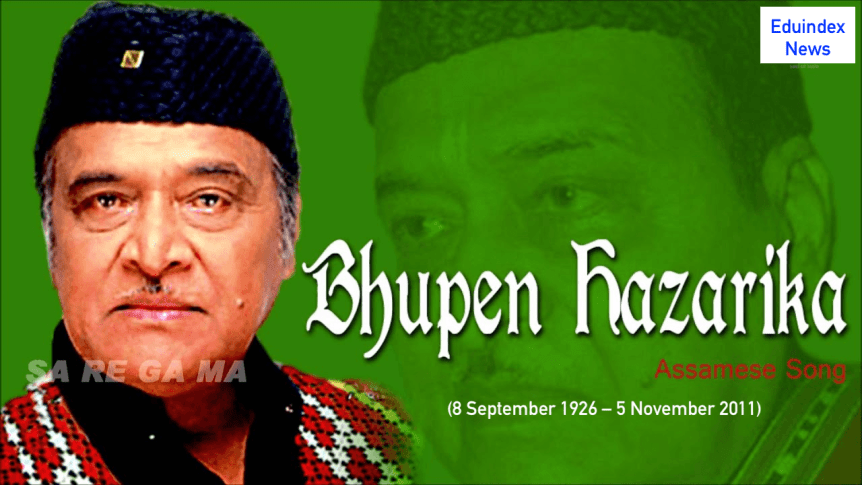
Bhupen Hazarika: A Legend in the Music World

Death of Dr. Bhupen Hazarika is a loss of music lovers of the world. His songs contained rhythm of Indian classical music vis-a-vis a lucid meaning depicting nature, Indian culture, language, unity etc. For example “Mahabahu Brahmaputra, Maha Milonor Thirtha…….. “(Assamese song -Meaning River the Brahmaputra is symbol of national integration….). Another song in Bengali explains ‘love to human being ……’ i.e. in Bengali, “Ami Bhalobasi Manuske….” 

In one of his songs, Dr Hazarika sang “Can anyone provide a person whose blood is white or any person whose blood is black. That is when colour of blood is same then why the differentiation among the human beings”. Meaning is so nice that after listening any human being will feel for others. All the songs carried specific meanings and very touchy. His songs enthralled us. 
I had the opportunity to listen him in Guwahati in many occasions at the ‘Bihu-toli’ (where Bihu functions are held normally in mid of April i.e. in Assamese New Year).I have observed he sings with core of his heart. His songs are not only popular in India but also in Bangladesh and other countries. While I was in Bangladesh many persons told about him and his songs were highly esteemed by them, because of music and meaning. During my two years stint in Eritrea, (a country located in north east Africa) I carried mainly Dr. Hazarika’s CDs and evening always used to listen his songs. My Indian, Pakistani and Eritrean friends used to visit my residence and highly charmed by his melodious songs. I was explaining meaning of the songs so they were more excited and appreciated his talent. 
Born at Sadia, in upper Assam on September 8, 1926, father Sri Nilakanta Hazarika was a high school teacher. Dr Bhupen Hazarika had his schooling in different places of Assam viz., at Dhubri, Guwahati and Tezpur. He completed his matriculation in 1940; Intermediate in Arts (IA) from Cotton College in 1942 and then joined Banaras Hindu University (UP) for higher study and subsequently completed his B.A. (1944) and M.A. (1946). The maestro rendered his services as music director in as many as 36 Assamese films, 8 Bengali films and 5 Hindi films. His activities were rightly recognized by conferring various awards. These inter alia, include Dada Saheb Phalke, Sangeet Ratna, Padma Bhusan, Asam Ratna, Srimanta Sankardev etc. He was the architect of the movement that culminated in the establishment of a film studio in Guwahati, a first full-fledged film studio in Assam. He made many films such as Era Bator Sur (1956), Mahut Bandhure (1958), Shakuntala (1961), Pratidhvani (1964), Loti Ghoti (1966), Chik Mik Bijuli (1969), Siraj (1988) and a tele- film Miri Jiori (1990), documentaries like For Whom the Sun Shines (1974), Amuthi Chaulor Kahini (1974), Rupkonwar Jyotiprasad aru Joymoti (1976), Through Melody and Rhythm (1977), Along the River Brahmaputra (1981), Satras and Namghars of Assam, Glimpses of the Misty East (1996) and The Brahmaputra, An Endless Journey (2006). Due to his endeavour ‘Sattriya dance’ (a form of dance performed at Holy places, i.e.Namghar) got national recognition. He published books for the children — Bhupen Mamar Geete-Mate, A, Aa, Ka, Kha and a transcript autobiography — Moi eti jajabor.
Although he passed away on 5th November 2011 in Mumbai but he will be remembered in this world through his melodious songs. 
Sri Tej Hazarika, only son of Dr Bhupen Hazarika performed his last rites on 9th November 2011 at the cremation ground prepared for him at Jalukbari campus of Gauhati University, Guwahati. Before the pyre was lit, Jawans of the Assam Police offered 21-gun salute. During rituals many dignitaries including Governor of Assam, Sri JB Patnaik, Chief Minister Sri Tarun Gogoi, and opposition leader of Lok Sabha Smt. Sushma Swaraj, Union Minister of State (Independent) for Development of the North East Region (DoNER) Sri Pawan Singh Ghatowar, Secretary of All India Congress Committee Sri Jaydev Jena and many ministers of Assam were present. Sri Ghatowar represented the Prime Minister, while Jena represented UPA chairperson Sonia Gandhi. In addition to the dignitaries, millions of people irrespective of caste, creed, religion, language attended to adieu Dr Hazarika which vividly reveals that he was in the heart of all sections of people. 
Dr Shankar Chatterjee
Former Professor & Head (CPME),NIRD & PR ( Govt. of India), Hyderabad,  India
Former Associate Professor, Eritrea

Former Assistant Prof, Govt. Degree College, Tripura, India
Former Senior Planning Officer, Govt of Assam, India 

Azad Hind Fauj/Indian National Army and Freedom Movement of India

ESTABLISHMENT OF AZAD HIND FAUJ 

Indians remember this 21 October as Great Day and it is celebrated with full gaiety in many parts of the country as on this date in 1942, the Indian National Army (INA/ Azad Hind Fauj) was formed by two stalwarts and Indians Sri Rash Behari Bose and Sri Mohan Singh (in 1942) in Southeast Asia during World War II. Its main objective was to secure Indian independence from British rule. To attain the same Azad Hind Fauj/INA formed an alliance with the Empire of Japan in the latter’s campaign in the Southeast Asian theatre of WWII ( name given to the campaigns of the Pacific War in Burma, Ceylon, India, Thailand, the Philippines, Indochina, Malaya and Singapore). 
The first INA collapsed and was disbanded in December 1942 after differences between the INA leadership and the Japanese military over its role in Japan’s war in Asia. It is pertinent to mention that the Japanese Imperial General Headquarters in October, 1942 set up the Fujiwara Kikan, or the F-kikan, in Bangkok, headed by the Major Fujiwara Iwaichi, chief of intelligence of the 15th army. As INA member, Mohan Singh had good relation with the members of Fujiwara Kikan, but he was soon disillusioned with the Japanese Army’s behaviour. It is believed that they wanted to use the Indian National Army only as a part of Japanese army to fulfil their own objectives. In meantime, Netaji Subhas Chandra Bose arrived in Japan in 1943 and INA was invigorated. More than 60,000 soldiers of Indian origin were associated with Azad Hind Fauj/Indian National Army who were prisoners of war in those days and because of initiative of Sri Mohan Singh they joined in INA/Azad Hind Fauj to fight against the British. Out of them about 26,000 soldiers sacrificed their lives so their sacrifice must be saluted. 

SUCCESS STORY OF AZAD HIND FAUZ

The INA/Azad Hind Fauj first success was capturing of Moirang of Manipur. On 18 April 1944, the suicide squads led by Col. Shaukat Malik broke through the British defence and captured Moirang. After Moirang, INA penetrated the Kohima road, creating a threat to the British positions in both Silchar (presently in Assam) and Kohima (now capital of Nagaland state). Col. Gulzara Singh’s column had entered 250 miles into India. Anyway rest is history as Azad Hind Fauj/INA could not succeed to come up to Delhi. 
But the INA’s activities influenced the decision to leave India by the British is reflected by the views of Mr. Clement Richard Attlee, who was the Prime Minister of the United Kingdom from 1945 to 1951. Mr. Attlee cited several reasons, the most important of which were the INA activities of Subhas Chandra Bose, which weakened the very foundation of the British Empire in India, and the Royal Indian Navy Mutiny which made the British realise that the support of the Indian armed forces could no longer be relied upon. In the book written by Indian army scholar, General G D Bakshi, mentioned that in 1956, Mr. Clement Attlee had come to India and stayed in Kolkata (then Calcutta) as a guest of Sri P.B. Chakraborthy then Chief Justice of the Calcutta High Court and also serving as acting Governor of West Bengal. During the course of discussion, Sri Chakraborthy asked about the contribution of Mahatma Gandhi and Subhas Chandra in independence movement. This may be quoted from the book itself, ‘Bose An Indian Samurai: Netaji and the INA A Military Assessment’, “Toward the end of our discussion I (means Sri Chakraborthy) asked Mr. Attlee what was the extent of Gandhi’s influence upon the British decision to quit India. Hearing this question, Attlee’s lips became twisted in a sarcastic smile as he slowly chewed out the word, m-i-n-i-m-a-l!” Regarding the Royal Indian Navy Mutiny it may be mentioned that it took place in the context of the Indian National Army trials (INA trials), which are also known as the Red Fort trials, took place between November 1945 and May 1946. In the first trials, INA persons were Colonel Prem Sahgal, Colonel Gurbaksh Singh Dhillon, and Major General Shah Nawaz Khan. And in the second trials the INA officials were Abdul Rashid, Shinghara Singh, Fateh Khan and Captain Munawar Khan Awan. Most of the INA soldiers were set free after cashiering and forfeiture of pay and allowance. 
No Indians can forget Azad Hind Fauj/INA’s contribution in freedom movement. While I was in abroad even many Pakistanis and Bangladesh persons told about Subhas Chandra and INA/ Azad Hind Fauj.

Dr Shankar Chatterjee
Former Professor & Head (CPME),
NIRD & PR (Govt. of India), 
Hyderabad-500091 , India
Email <shankarjagu@gmail.com>


Nobel Peace Prize in 2019: My Experience in Eritrea

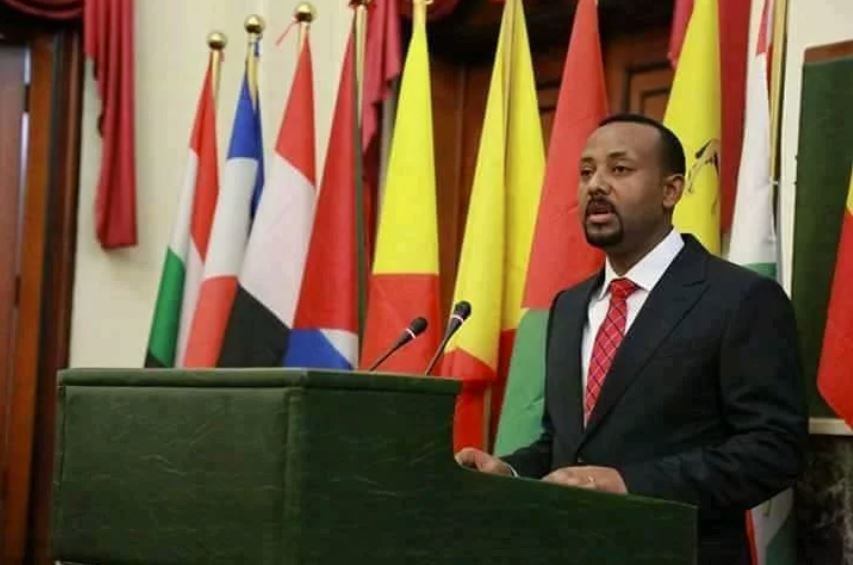
Nobel Peace Prize 2019 has been awarded to Ethiopian Prime Minister Mr. Abiy
Ahmed Ali for his effort to resolve 20-year-long border conflict between
Ethiopia and Eritrea. I congratulate the Norwegian Nobel Committee for
conferring the award to him.
  I was in Eritrea as senior
faculty from 2005 to 2007 and observed both Ethiopia and Eritrea had awful
relation as a sequel under United Nations Mission in Ethiopia and Eritrea
(UNMEE), Indian army was posted as peace –keeper. It is pertinent to mention
that fighting between Eritrea and Ethiopia erupted in May 1998, as a result of
border dispute. The Secretary-General of Security Council immediately contacted
the leaders of the countries, urging restraint and offering assistance in
resolving the conflict peacefully. Despite all efforts, the fighting between
Eritrea and Ethiopia erupted again on 12 May 2000.

      While I was in Eritrea many locals
(Eritreans) told against Ethiopian rulers but they highly appreciated our armed
personnel. Our army had great image in Eritrea.  I visited our army camp two times – one on
Republic Day and in another time I had the opportunity to visit for my ailment
(little injury in eye while playing volleyball).  During the time of my visit medical staff
after examining me gave some medicines – eye drops and tablets at free of cost;
in addition they offered me tea and snacks also. Within couple of days I was
cured. I was joyous to observe their hospitality.
After completion of my
assignment from Eritrea, I came back to my home town in Hyderabad but still
following news etc. about Eritrea and Ethiopia. Anyhow when Mr. Abiy Ahmed
became Prime Minister in Ethiopia in April 2018, he made it clear that he
wished to resume peace talks with Eritrea, so he was in close touch with Mr. Isaias
Afwerki, the President of Eritrea. Both Ethiopia and Eritrea are not
economically strong so the war had created huge economic loss to both the
countries in addition to death of thousands. According to,wikipedia.org/wiki/Eritrean%E2%80%93Ethiopian_War,
“Eritrea claimed that 19,000 Eritrean soldiers were killed during the conflict;
most reports put the total war casualties from both sides as being around
70,000. All these figures have been contested and other news reports simply
state that ‘tens of thousands’ or ‘as many as 100,000’ were killed in the war”.
Whatever the number of casualties but damage was severe, human lives were lost,
property was damaged, citizens of both the countries suffered.  Mr. Abiy Ahmed Ali immediately after becoming
President took some positive steps. The steps inter alia were a) in May, 2018 he ordered to free thousands of
political detainees, including opposition leader Andargachew Tsege b) in June,
2018 he lifted state of emergency two months early and in same month he agreed
to give disputed territory to Eritrea c) in 2018, July he along with the
Eritrean President declared ‘the end of war between the two countries’, d) also
in September itself, he arranged to reopen land border with Eritrea. Mr. Abiy
Ahmed’s another praiseworthy contribution was appointment of women members to
half of ministerial posts. I personally feel awarding Noble Peace Prize to such
peace activist of 43 years aged-person is a great step by the Noble Committee.
Hope peace will prevail in entire Africa and thus all the 54 countries will
economically flourish. All rational persons and all regions never endorse war, terrorism,
violence etc. I remember the statement of one of Saudi’s top Islamic clerics,
the Grand Mufti Sheikh Abdul Aziz al-Sheikh, who told “Islam does not allow
terrorism at any cost. Islam condemns all violence and terrorism plaguing the
world today. Muslims should demonstrate a love for peace and unity,”
I wish to conclude by
quoting Swami Vivekananda, “Lovers see this world as full of love, and haters
as full of hatred; fighters see nothing but strife, and the peaceful nothing
but peace.”
Dr. Shankar Chatterjee
Former Professor& Head (CPME)
NIRD &PR,
Hyderabad-500 030
Telangana, India

Right To Access Internet Is Part Of Right To Privacy And Right To Education: Kerala HC

Right To Access Internet Is Part Of Right To Privacy And Right To Education: Kerala HC
It is highly remarkable that the Kerala High Court has just recently on September 19, 2019 in a latest, landmark and extremely laudable judgment titled Faheema Shirin RK Vs State of Kerala and others in WP (C) No. 19716 of 2019 (L) has taken a giant step forward by declaring clearly, categorically and convincingly that right to access internet is a fundamental right forming part of right to privacy under Article 21 of the Constitution of India. This commendable judgment was delivered by a single Bench of Justice PV Asha while allowing a petition filed by a student named Faheema Shirin challenging the unwarranted restrictions on the usage of mobile phones in a girls hostel. The Kerala High Court also added that it also forms part of the right to education. Very rightly so!

To start with, the ball is set rolling in para 1 of this commendable judgment which briefly states the background of the case by saying that, “A 3rd semester B.A. student of Sree Narayanaguru College, Chelannur, Kozhikode, has filed this Writ Petition aggrieved by her expulsion from the hostel. It is stated that she has been staying in hostel run by the college which is an aided college affiliated to University of Calicut. It is stated that the inmates of the hostel were not allowed to use their mobile phone from 10 p.m. to 6 a.m. within the hostel and that undergraduate students were not allowed to use laptop also in the hostel. While so from 24.06.2019 onwards the duration of the restriction in using the mobile phones was changed as 6 p.m. to 10 p.m. The petitioner claims that though she, along with other inmates of the hostel, met the Deputy Warden – the 5th respondent, requested to convene a meeting of the inmates, explaining the inconveniences caused to them on account of the restrictions, the Deputy Warden or the matron did not respond. It is also stated that though a meeting was convened within a week thereafter, no discussion was made regarding the restriction of the electronic devices. It is stated that the 5th respondent sent a Whatsapp message informing that those who do not abide by the rules would have to vacate the hostel. The petitioner claims that she thereupon approached the Principal on 03.07.2019 and submitted Ext.P2 letter requesting to relax the restrictions. Thereupon, Ext.P3 letter was obtained from her in writing to the effect that she was not willing to abide by the new rule restricting usage of phone between 6 p.m. to 10 p.m. Thereupon her parents were asked to meet the Principal on 05.07.2019; the 4th respondent informed them that the petitioner has to vacate the hostel as she refused to abide by the rules; Ext.P4 memo dated 05.07.2019 was issued to her directing her to vacate the hostel immediately; respondents 4 to 6 convened a meeting of the hostel inmates on 08.07.2019 when the students were informed about the action taken against the petitioner based on her request to relax the rules and that the inmates were asked to give in writing their willingness to abide by the restrictions when all the hostel inmates except the petitioner submitted such willingness; on 11.07.2019, Ext.P5 notice was issued to the petitioner directing her to vacate the hostel within 12 hours; on 15.07.2019, the petitioner submitted Ext.P6 leave letter for the period from 12.7.2019 on 15.7.2019, as it was not possible for her to attend the classes since she had to travel nearly 150 km every day; when the petitioner reached the hostel on 15.7.2019 to vacate her room, it was seen locked and the hostel authorities did not allow her to take her belongings.”

Before proceeding ahead, it would be useful to mention the names of all the 7 respondents. They are as follows: –

1. State of Kerala represented by the Secretary;

2. University of Calicut represented by its Registrar;

3. University Grants Commission represented by its Secretary;

4. Principal Sree Narayanaguru College, Chelannoor, Balussery, P.O. Kozhikkode;

5. Deputy Warden, Women’s Hostel, Sree Narayanaguru College;

6. Matron, Women’s Hostel, Sree Narayanaguru College; and

7. SFLC.IN represented by its Executive Director, New Delhi.

No doubt, it is rightly pointed out in para 8 that, “The question to be considered is whether the restrictions imposed by the hostel authorities on use of mobile phones while enforcing discipline has infringed the fundamental rights of the petitioner, even assuming that such modification was brought about at the request from the parents.”

Going forward, it would be useful to have a quick look at the relevant part of para 9 which states that, “However in this case the question to be examined is whether such enforcement of discipline by restricting the use of mobile phones would result in curtailing the right of the students to acquire knowledge by different means. Using of mobile phones by itself would not cause any harm to anyone. If a restriction is unreasonable and arbitrary and infringes the fundamental right of an inmate, it cannot be said that the student has to abide by such restriction, especially when the inmate is an adult.”

Furthermore, while examining the impact of using mobile phone in hostel, it is then enunciated in para 10 that, “It is therefore necessary to examine whether usage of mobile phone during 6 pm to 10 pm would amount to indiscipline and whether the refusal to abide by the instruction in using it should result in expulsion from the hostel. It is stated that the object behind introducing such a restriction is to see that the students are utilizing their study time for study purposes alone. The respondents have not stated whether usage of mobile phone by the petitioner or by any inmate caused any disturbance to other inmates. Therefore, indiscipline comes only to the extent of disobedience of an instruction. Then the question is whether an instruction or restriction can stand in the way of acquiring knowledge by the inmates. It is also necessary to examine whether they can utilise the study time for study purposes using the mobile phones also, in this advanced world of technology. The college authorities as well as parents should be conscious of the fact that the students in a college hostel are adults who are capable of taking decisions as to how and when they have to study. It is a fact that there is large scale misuse of mobile phones; but that misuse can happen with the laptops also; it can be even before 6 pm and 10 pm, before and after the study time.”

While underscoring the growing indispensable importance and necessity of mobile phones in routine life, it is then rightly pointed out in para 11 that, “The mobile phones which were unheard of once and later a luxury has now become part and parcel of the day to day life and even to a stage that it is unavoidable to survive with dignity and freedom. Though initially it was a mere replacement of land phone enabling one to connect another and talk, on the advent of internet the connectivity became so wide. On availability of more and more facilities, since the year 1998, the number of users gradually increased and as at present India stands 2nd in the world in the usage of internet. The facilities to access internet, which was initially possible only through desktop computers, later in laptop, is now available in mobile phones which are handy and portable; with more and more applications, connectivity became feasible for everyone everywhere even among the common man. Apart from the facilities to read E-newspapers, e-books, etc. one can undergo online courses also sitting at home or hostel and it is pointed out that there are courses under SWAYAM recognized by the UGC, which students can undergo even when they are undergoing regular studies in colleges. Though the respondent college has stated that there is no restriction for the inmates to use laptops, all the students would not be ordinarily able to afford to have a laptop in addition to mobile phone. Assuming that the purpose is to prevent misuse of mobile phones during study time, such misuse is quite possible with laptops also. Thus the purpose of such restriction would not be achieved. It would not be proper for the college authorities to impose such restrictions on students of the college going age even if it is at the request of parents, in their anxiety to see that their children are studying and not being misdirected through mobile phones. It is a well known fact that these phones as well as the modern technologies are prone to misuse. At the same time, the college authorities as well as the parents cannot be permitted to shut their eyes on the innumerable advantages out of internet on various aspects of learning with world wide connectivity, on its proper usage. Apart from facilities for interaction, exchange of ideas or group discussions, there are several methods by which the devices can be usefully utilised by its proper use by downloading of data or e-books or undergoing other courses, simultaneously utilising the facilities under the Swayam program of UGC, etc; knowledge can be gathered by adopting the method which one chooses. When one student may be interested in garnering knowledge by reference of books in libraries, one may be interested in referring to e-books or downloading data.”

While batting for more freedom for students above 18 years, it is then rightly articulated in para 12 that, “By compelling one that she should utilise the books in the library during the study time or that she should not access the technological means during a particular time or study time may not always yield positive results. A student above the age of 18 years shall be given the freedom to choose the mode for her studies provided it does not cause any disturbance to others. The schools in Kerala promotes digitalisation with smart class rooms and the modern technology has taken its place in all the fields even from primary section. Thus the usage of mobile phones in order to enable the students to have access to internet will only enhance the opportunities of students to acquire knowledge from all available sources based on which they can achieve excellence and enhance quality and standard of education.”

While quoting liberally from the landmark cases, it is then pointed out in para 15 that, “As found by the Apex Court in Charu Khurana v. Union of India (2015) 1 SCC 192, women still face all kinds of discrimination and prejudice and the days when women were treated as fragile, feeble, dependent and subordinate to men, should be a matter of history.” Similarly, it is then held in para 16 that, “In the judgment in Puttaswamy’s case (supra) the Apex Court held that right to privacy is held to be an intrinsic part of the right to life, personal liberty and dignity and hence a fundamental right under part III of the Constitution.”

Be it noted, para 18 then envisages that, “Though it is true that the Principal of the college is the supreme authority to enforce discipline as held by this Court in Manu Wilson’s case, Sojan Francis’ case, Indulekha Joseph’s case (supra) and that there cannot be any dispute that rules and regulations lawfully framed are to be obeyed by the students and that teachers are like foster parents who are required to look after, cultivate and guide the students in their pursuit of education for maintaining excellence of education, the rules should be modified in tune with the modernisation of the technology so as to enable the students to acquire knowledge from all available sources. It would be open to the authorities in the hostel to supervise whether any distraction or disturbance is caused to other students on account of usage of mobile phone or take action when any such complaint is received. The total restriction on its use and the direction to surrender it during the study hours is absolutely unwarranted. When the Human Rights Council of the United Nations have found that right to access to Internet is a fundamental freedom and a tool to ensure right to education, a rule or instruction which impairs the said right of the students cannot be permitted to stand in the eye of law.”

What’s more, it is then eruditely pointed out in para 19 that, “It is pertinent to note that the learned counsel for the college vehemently argued that in the absence of any challenge to the rules and regulations, the petitioner cannot be heard to challenge the action taken in accordance with the rules. The learned counsel for the college also argued that in the light of the judgment of the Full Bench of this Court in Pavitran VKM V. State of Kerala & others 2009(4) KLT 20: 2009(4) KHC 4, the rules and regulations of the hostel will stand as long as it is not set aside. But in this case the rule was that the mobile phones shall not be used in the hostel. Therefore, what remains is only the decision/instruction restricting/banning the use of mobile phone from 6 pm to 10 pm and the direction to surrender the mobile phone to the warden. When it is already found that such an action infringes the fundamental freedom as well as privacy and will adversely affect the future and career of students who want to acquire knowledge and compete with their peers, such instruction or restriction cannot be permitted to be enforced.”

To put it succinctly, para 20 then states unambiguously that, “While enforcing discipline it is necessary to see the positive aspects of the mobile phone also. As held by this Court in the judgment in Anjitha K. Jose’ case (supra), the restriction should have connection with the discipline and when there is nothing to show that there was any act of indiscipline on account of the usage of mobile phone by the petitioner, that cannot stand. The fact that no other student objected to the restriction or that all others obeyed the instructions will not make a restriction legal if it is otherwise illegal. No student shall be compelled either to use mobile phone or not to use mobile phone. It is for each of the students to decide with self confidence and self determination that she would not misuse it and that she would use it only for improving her quality of education.”

While adding a word of advice for parents, hostel authorities and students, para 21 then states that, “The parents as well as the authorities of the hostel have to consider the fact that almost all the undergraduate students staying in the hostel have attained majority. They have joined the course after passing one or two public examinations. The students in that age group are expected to be conscious of their duty to study properly in exercise of their right to education. The manner in which as well as the time during which each person can study well, vary from person to person.”

More importantly, Justice PV Asha who delivered this landmark judgment then categorically observes in para 22 that, “I am of the view that what is required is a counseling for the students, as well as parents in the colleges. The students in the hostels should be given counseling in order to inculcate in them self restraint in the usage of mobile phones, to make them capable of choosing the right path, to make them aware of the consequences of misuse as well as advantage of its proper use. It should be left to the students to choose the time for using mobile phone. The only restriction that can be imposed is that they should not cause any disturbance to other students. While acting in exercise of right to privacy, persons like the petitioner shall also see that such exercise does not invade the right to privacy of another student residing in the hostel especially in her room.”

While spelling out the boundaries for enforcement of rules and discipline, it is then observed in para 24 that, “Regarding the contention of the respondent that any inmate is bound to abide by the rules and regulations or else she is free to leave the hostel, it is pertinent to note that rules and regulations require reforms to cope up with the advancement of technology and the importance of modern technology in day to day life. As per the University Regulations as well as the UGC Regulations, the college is bound to run a hostel to enable the students to reside near the college in order to enable them to have sufficient time to concentrate in their studies. Therefore, the hostel authorities are expected to enforce only those rules and regulations for enforcing discipline. Enforcement of discipline shall not be by blocking the ways and means of the students to acquire knowledge.”

Finally, it is then held in the last para 25 that, “In view of the aforesaid reasons, I am of the view that imposing of such restrictions is unreasonable and therefore the respondent shall re-admit the petitioner in the hostel without any further delay. It is made clear that the petitioner or her parent shall not do any act in a manner humiliating any of the respondents or any other teacher or warden or Matron in the hostel/college. The petitioner or any other inmate shall also see that no disturbance is caused to others by usage of mobile phone in the hostel. The Writ Petition is allowed to the above extent.”

In the ultimate analysis, what can be easily inferred from the above foregoing discussion is that the Kerala High Court has laid down in no uncertain terms that right to access internet is part of the right to privacy under Article 21 of the Constitution of India and also the right to education. We all know fully well how crucial internet is to acquire invaluable information about anything which cannot be acquired from other sources so easily which makes it all the more important!

It also cannot be denied that even the UN General Assembly had declared right to internet to be a human right in 2014. Even the Kerala Finance Minister Dr Thomas Issac in 2017 in his budget speech had recognized right to internet as a human right and had disclosed that efforts were being made to make internet accessible to all. The only restriction that can be imposed is that the students using mobile phones should not cause disturbance to other students! This was made clear by the Kerala High Court also in this commendable judgments and all students must adhere to it!

Sanjeev Sirohi, Advocate,

s/o Col BPS Sirohi,

A 82, Defence Enclave,

Sardhana Road, Kankerkhera,

Meerut – 250001, Uttar Pradesh.

Ishwar Chandra Vidyasagar: A Legendry Personality

On this date i.e. on 26 September in 1820 Ishwar Chandra Vidyasagar (Ishwar Chandra Bandyopadhyay/ at present many persons with same surname write
Banerjee instead of Bandyopadhyay) was
born in then Bengal, present West Bengal. Because of his vast knowledge later
on of his life, he is known as
Vidyasagar means knowledge of ocean. He was also
known as ‘Dayar Sagar’ or ‘Karunar Sagar’
(meaning ocean of kindness) because of his charitable nature and generosity.
His enormous contribution for the development of the society is gratefully
remembered by all not only in India but also in Bangladesh. 
Ishwar Chandra Vidyasagar: A Legendry Personality

He reconstructed the
Bengali alphabets and simplified Bengali typography into an alphabets.
He was a social reformer
and advocated widow remarriage and worked against polygamy.
Because of his initiative,
the Widow Remarriage Act was passed in 1856 making the widow marriage legal.
   Vidyasagar worked endlessly to provide equal
education to all men and women irrespective of their caste, religion and
gender.
He
was protagonist of women education. According to him with education only women
can live in the society with dignity and respect. He lobbied hard for girls’ school
and for this; he went door to door requesting heads of families to allow their
daughters to admit in the schools. And it is believed that he could open 35
schools for girls throughout then Bengal where around 1300 students were
enrolled. It is pertinent to mention that because of his arduous labour and
support received from John Elliot Drinkwater Bethune, the first girls’ school
in India, the Bethune School was established on 7 May, 1849 in Calcutta.
He worked as a Sanskrit
professor in Sanskrit College, Calcutta. While he was principal of the college undertook
some reforms and one of them was admission of students belonging to  marginalised group (present SC/ST) as earlier
they were not allowed admission. Further, when he was Professor in Sanskrit
College successfully included English and Bengali as medium of learning, in
addition to Sanskrit. He introduced courses of European History, Philosophy and
Science along with Vedic scriptures. During his lifetime, Vidyasagar wrote many
books and thus enriched education system.
In present days, he is
remembered in many ways, inter alia
of which are:
a)     
Vidyasagar Setu, which
connects Howrah and Kolkata, is a bridge over the Hooghly River in West Bengal.
b)     
A
fair/mela named Vidyasagar Mela (dedicated
to spreading education and increasing social awareness) is held annually in
West Bengal since 1994.
c)     
Vidyasagar
College in Kolkata is named after him, as well as Vidyasagar University in Paschim Midnapore, West Bengal.
d)     
A
street in then Calcutta now Kolkata has been named after him
e)     
The
West Bengal Government has established a stadium named after him at Barasat, North 24 Parganas, district.
f)      
For
his immense and selfless service for the marginalised people of then Bihar
present Jharkhand, a railway station has been named as Vidyasagar Station in Jamtara district of Jharkhand.
g)     
Indian
Post issued stamps featuring Vidyasagar in 1970 and 1998.
       In addition to above, I have observed
many persons in the states of South India keep their son’s name Ishwar Chandra
Vidyasagar/
Vidyasagar
(prefix as family name). When I visited Bangladesh amazed to observe his
popularity among the people of Bangladesh.
Vidyasagar although has
passed away on 29 July, 1891 but he is still remembered by all Indians. After
his death Rabindranath Tagore wrote, “One wonders how God, in the process
of producing forty million Bengalis, produced a man!”

Dr Shankar Chatterjee
Former Professor & Head (CPME),NIRD & PR ( Govt. of India), Hyderabad,  India

Former Associate Professor, Eritrea

Former Assistant Prof, Govt. Degree College, Tripura, India
Former Senior Planning Officer, Govt of Assam, India 
PRESENT ADDRESS
Prof. Shankar Chatterjee 
Lidom Villa, No.13
Peranchuru, Bandlaguda(Jagir), Hyderabad-5000091

We have responsibility to save the environment

 SAVE NATURE – PLEASE  TAKE PRINTOUT WHENEVER NECESSARY

Preparing for the Interview (part 3)

In last articles of this series, we gave you
glimpses of the interview process. By now, we have discussed why interview
process is important for the interviewer and for the candidate. We have
discussed what the interviewer is looking for in the interview process. We have
also discussed how to mentally prepare and present yourself at the interview
venue. In one phrase-
“Be professional and mean Business.”
In an
earlier article we had also talked about the two types of interview and gave
you a brief idea on how to prepare for the technical round of the interview. If
you are preparing for technical roles and not very high in the organization
chart roles, then the two-three articles will take care of you perfectly fine.
But everybody progresses and sooner or later (we will pray sooner) you will be
dealing with the most grueling parts of the interview.

The Interview

In the previous article we discussed what
preparations you need to do before reaching the interview venue or rather
interview room. Once you are called for interview, gather your things from the
lobby, follow the person who called you. Unless you are showed inside, it is
always better to knock and ask for permission before you enter the room. Firmly
shake hands if the interviewers are offering, or a polite hello would suffice.
Take chair when you are offered. Try not to
drag the chair a lot, but do not be uncomfortable. Appropriately distance the
chair from the table. You may place the file on the table. Pass it to
interviewer when they ask for it. They probably already have your resume, but
it is always better to carry an extra copy at the top of your file. If you want
water, you may ask for it politely. But it is better to do so at the beginning
of the interview process itself.
Now, we are ready to face the interviewer.

Introduce Yourself

Invariably, 95% of the interviews begin with
customary “Tell me about yourself.” This may seem mundane, even unnecessary.
After all they have your full CV and your file. There is everything that you
ever did or achieved! Why they cannot just go through that. Why this stupid
question! But remember, there are no unnecessary questions. This first
open-ended question is your opportunity to give direction to the interview
process.
Since this is such a common question, it is better
to practice answering such questions. Self-introduction reveals lot many more
things about you than you can imagine. Practice short crisp answers. Something
between 1-2 minutes is a decent length introduction. Do not rush, go
chronologically. Leave no important details out, but do not drag the answer.
And most importantly, personalise the answer. Do not sound like machine. Speak
clearly and calmly. Add personal details such as hobbies, your city etc
wherever suitable.
We will be discussing few more of such common
questions in the latter articles.
Good Luck!

Preparing for the Interview (part 2)

In last article of this series, we gave you
some advice on the first type of interviews that is technical round. To recap
in a couple of short lines-
1.      
Be
calm.
2.      
Be
systematic and organized in your thought process.
3.      
Showcase
this clearly to your interviewers.
4.      
State
the assumptions clearly to your interviewer if any.
In this part, we will look into the other type
of interviews- that is the behavioral interviews. One thing that we would like
to mention here is that even when there is no apparent behavior based
question, you are continuously being monitored. You definitely need to be ready
for this.


Homework for the interview
process

The process starts way before you enter the
room. You have to dress properly, groom properly, no loud makeup- unless your
job demands it. Look professional, sharp and attentive. There is no need to be
someone that you are not but looking professional and meaning business does no
harm. After all that’s what you are going for.
The next thing is the documents you have to
carry with you. If there was a list given to you before the interview date or
at any stage of the selection process- normally colleges and Government jobs
share the list of documents that candidates are required to bring with them at
the prospectus stage itself. Prepare according to list, double check to be
sure. Arrange them in reverse chronological order- i.e. the latest documents go
first. Make sure that the documents are arranged neatly and do not fall our
when someone opens the file.
Once you are done with the preparations at your
home. The next thing to do is to reach the interview venue. Be punctual, better
be early and wait for a while than be late and give a bad impression. If God
forbid, you are running late because of any reason, or you cannot make it to
interview venue; please inform your interview coordinator as early as
possible. Be apologetic and communicate clearly that you understand the
importance of the interview process, but because of such reasons you will not
be able to make it today, or you will be late. If you are comfortable, give
them gist of the situation but do not drag them into details.
When you arrive at the interview venue, you may
be asked to wait for a while. There may also be many other candidates who may
be interviewing for your job or some other jobs. Whatever the case maybe, be
patient, do not get nervous. Avoid any chit chat with other candidates. If you
are talking, keep the talks professional. Talk softly, maintain the decorum of
the place. And as far as possible, do not run after the candidates leaving the
interview room to bombard them with questions. If they are your friend it maybe
alright, but if they are strangers- it does not say anything nice about you.
We will be continuing this series in later
articles.
Good Luck!

Benefits of leaning a foreign language

Introduction
A different language is a different vision to the life.
Federico Fellini
Learning a language other than your own native language has
always its benefit. It just not been advantage to your resume but is also handy
for travelling making one smarter and make better to connect with world. Many
studies have suggested that communicating in different language has a great
benefit.  It is a great asset to mental
awareness supporting cognitive process. Not only this, the brain of a bilingual
people operate is not the same as other, they have different way to
function.  They have another mental level
which bilingual people lack in caliber. 
That is why learning a foreign language has its benefit as it makes your
brain sharper and stronger.
 Few are the Benefits
of learning foreign language.
One doesn’t learn languages in one go and it became
powerful. The brain has to put extra effort for improving the functionality of
your brain. The brain challenges itself to learn, negotiate meaning, and
communicate in different system. It means the learner has skills that boost the
ability of solving tasks as well.It builds multitasking skills.
Toddlers and children are very much skilled in catching new
words and switching between two systems that includes speech, writing, and
structure. Switching between the languages makes a good multitasking as it’s
easy to switch between the languages.
It enhances the memory power
A good learner often likes its brain to do exercise because
it functions well in that case. Learning something obeys the memorizing rule
and a set of vocabulary that assist a learner to gain mental strength and
stretches mental muscles.  This totally
improves an entire memory, that proves that multilingual are better learner and
remembering list and arrangements. They could easily catch names and address,
says many studies. They are also veteran at retaining shopping and merchandise
good list names, and directions.
Help in improving decision making skills
According to a study from the University of Chicago,
bilinguals tend to make more rational decisions. Every language has its own set
of jargon and glitches and subtle implication included in the vocabulary that
influences the judgments. It makes any bilingual more confident on its decision
making skills. They are quick in checking whether initial conclusion stand up.
They hardly become biased and subconsciously influence the judgment.
 What motivates native
English speakers to study foreign languages?
It is said that language is best learned between the
sheets.  If a learner has to study a
language he/she   better aim of a culture
and its diversity. Also help in getting a good knowledge of society are
interactively motivated.   Language and its aptitude is the main tool
that builds for long relationships and meaningful provides communication.
Linguistic studies show that integrative motivation always yields faster and
more effective language learning results than any other type of learning.
Learner studying language can achieve their goal more instantly than others as
they are more motivated. Therefore, tracing its origins or evolution is the
most difficult thing. If we want to know when humans started walking upright,
we can dig fossils.  It helps in professional
or personal accomplishment of anything faster than others as professional or
personal accomplishment.
 Motivation to learn a
language is not problematic but if a learner has a zero cultural curiosity then
it’s hard for him/her to learn. The learning process will be more difficult
than for those with integrative motivation and difficult to target or even
prejudice. Desire to communicate and accelerate language learning that can
motivate one to learn a language.  It is
also a basic need for a cross cultural friendship and one can fuel integrative
motivation.  It is simply a gesture of
respect toward other nation and in-law or distant relative with no English
ability can also motivate language learning.
Conclusion
Learning can never be useless be it a foreign language or
any other type.  It hand help building a
long and friendly relationship that unites two nations.  It may not 
easy but not that difficult to do. Once you learn a language it also
helps both professionally and personally and help in getting a good job role in
different country.

Preparing for the Interview! (part 1)

Interview process is normally one of the last
rounds of the selection process. Be it college or job or even getting
admissions for your children in some schools- you have to pass through an
interview round. It involves face to face interaction with current employees of
the organization who have held the roles similar to what you have applied for,
or they have an experience in that area. Since this is a face to face round, a
lot of things become visible which could have been hidden during written tests
or other phases of candidate screening. While most of us are scared of this
additional stage, this is not necessarily a bad thing. You have a perfect
opportunity to showcase the things about you which you could not show in
earlier stages of the selection process. You can show the interviewers what
sets you apart and why they should prefer selecting you over other similar or
even higher scoring candidates of the earlier rounds.

The interviews mainly are of two types.
Technical and behavioural. There can be multiple rounds for each of these or
within the same round both the aspects of the interview can be handled. This
varies with the organization you are interviewing for and the level you are
interviewing for. If you are interviewing for above manager level, you should
be prepared to handle more than 4-5 rounds of the interviews. So, it is obvious
how important interview plays nowadays in candidate selection. Love it or hate
it but you can not ignore it. Therefore, it is only wise to be prepared for the
interviews.

Technical Round of
Interview

The technical rounds are not much different
from pen and paper rounds except that the interviewer tends to improvise on the
questions and understand your thinking process. On a real job, one can not
expect to deal only with the situations that have come in at some point of
time. There are new challenges every day, therefore it is a fair ask to
evaluate the thinking process of the candidate. Therefore, our advice is
definitely to learn your subject well. You anyway did that for pen and paper
rounds.
But the one extra thing, that we would like to
advice you, is to showcase your thinking process. Take the interviewer through
your thought process and approached the problem. Of course you need to be clear
and organized in your thinking. Only a clear and systematic thinking can be
translated into solving newer problems at work. Therefore, organize your
thought process and practice to express it in a systematic way to your
interviewers. If you are making any assumptions about the question asked,
mention them clearly or ask your interviewer if you can make those assumptions.
If you can showcase your thought process to
your interviewer, there is nothing to bother you in the technical round. Be
calm, and even if you are not sure about the final answer, proceed in steps, in
a systematic way to the most reasonable conclusion you can think.
Good Luck!

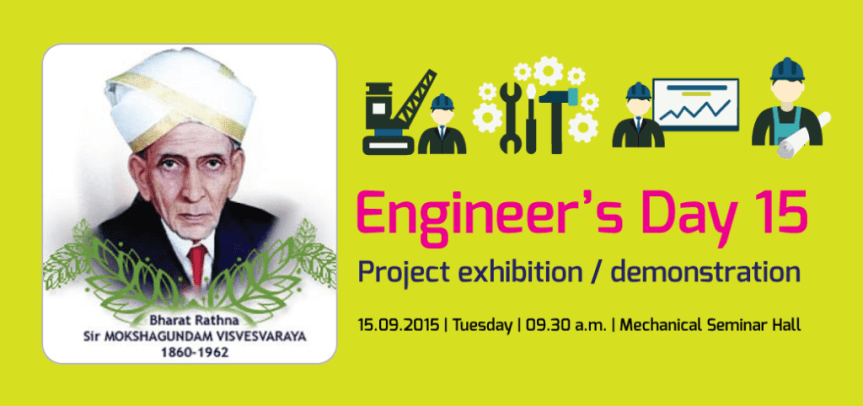
Engineers’ Day

The Prime Minister, Shri Narendra Modi has greeted engineers on Engineers’ Day. The Prime Minister also paid tributes to Sir M. Visvesvaraya on his birth anniversary.
“Engineers are synonymous with diligence and determination. Human progress would be incomplete without their innovative zeal. Greetings on Engineers Day and best wishes to all hardworking engineers. Tributes to the exemplary engineer Sir M. Visvesvaraya on his birth anniversary”, the Prime Minister said.

September 15 is celebrated every year in the country as “Engineers’ Day” to commemorate the birthday of the legendary engineer Sir MokshagundamVisvesvaraya. Sir Visvesvaraya, an eminent Indian engineer and statesman was born in a remote village of Karnataka, the State that is incidentally now the Hitech State of the country. Due to his outstanding contribution to the society, Government of India conferred “Bharat Ratna” on this legend in the year 1955. He was also called the precursor of economic planning in India. His learned discourse on economic planning in India, Planned Economy for India and Reconstructing India, was the first available document on the planning effort of the country and it is still held as the parent source matter for economic planners. A theme of national importance is chosen every year by the National Council of the Institution and deliberated at its various State/Local Centres to educate the engineering fraternity in general and the society in particular. This year the National Council of the Institution has selected the theme as “Engineering Challenges for Knowledge Era

Death of a Committed IAS officer – B.N. Yugandhar

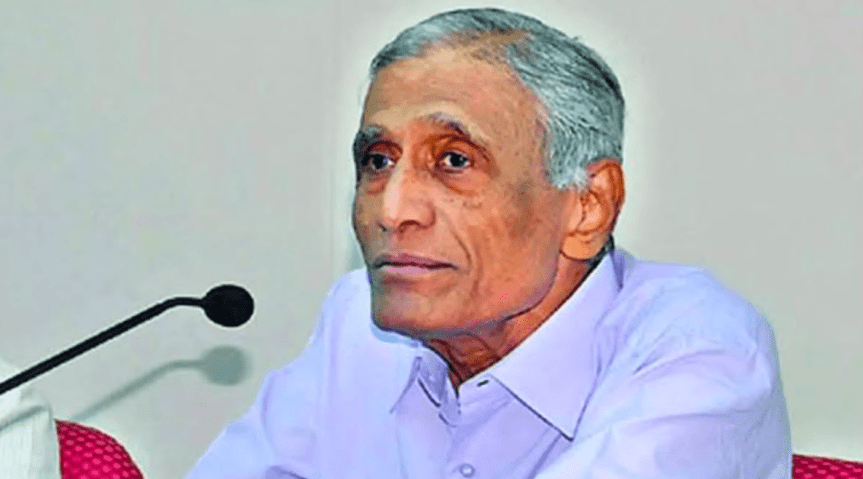
On 13 September 2019, country has lost a dedicated IAS officer (retired) of 1962 batch, Sri Bukkapuram Nadella Yugandhar, popularly known as B.N. Yugandhar, who served in many important positions in Union Government including Prime Minister’s Office and the Planning Commission. He also worked as Director Lal Bahadur Shastri National Academy of Administration, Mussoorie. Sri Yugandhar is from Anantapur district of Andhra Pradesh. It is known to all that great son of India, Sri Neelam Sanjiva Reddy who served as Sixth President of India was also from Anantapur district. 

In 2014, Sri BN Yugandhar’s life added a ‘feather in the cap’ when his erudite son Sri Satya Nadella became CEO of Microsoft. It is pertinent to mention that Microsoft founder Bill Gates was all praises for Sri Satya Nadella, saying “he has successfully charted a course for making the most of the opportunities created by technology and helped the IT giant to stand out in the computing industry”. Sri B.N. Yugandhar reached at the zenith because of his dedication, sincerity and hardwork. He was popular in the country not only among the officials but among the common persons also. When he was Secretary Rural Development in the Government of India, he with his team used to visit different regions of the country to assess and review rural development programmes implemented in their respective state and thus accountability for everyone is assured. And in those days progress of self-employment, wage employment and housing programmes of Ministry of Rural Development, Government of India in all the states were creditable. During his tenure few praiseworthy steps taken by him inter alia, were: 
He was instrumental for institutionalise money flow for watershed development direct to districts from the Central government, bypassing states so that time can be saved.
He played a pivotal role in the SC/ST special component plans — where resources were exclusively allotted to them
As member of Planning Commission, Sri Yugandhar was instrumental in getting an entire chapter on disability issues included in the Plan. 
He worked for upliftment of the marginalised sections of the society and to improve life in rural India. In this regard by quoting Poguri Chennaiah of AP Vyavasaya Vruthidarula Union, it may be stated that “He was instrumental in 30,000 acres passing on to farmers in Anantapur when he was the collector. The issue had festered for years with farmers tilling the land that was on paper classified as government land. Once we brought the issue to his notice, it was solved in three months”.
He authored some books on decentralised planning, land reforms and rural development. After his retirement on superannuation, he for a short period of time served in the National Institute of Rural Development and Panchayati Raj (NIRD&PR), Hyderabad which (NIRD&PR) is an autonomous organisation under the Union Ministry of Rural Development. It is a premier national centre of excellence in rural development and Panchayati Raj. In addition to the main campus at Hyderabad, the Institute has North-Eastern Regional Centre at Guwahati, Assam.
While serving at NIRD&PR, Sri Yugandhar has proved his academic brilliancy for which many faculty members were inspired. Although he left for heavenly abode on 13 September 2019 but his contributions both tangible and intangible will never be erased. 
Dr Shankar Chatterjee
Former Professor & Head (CPME),NIRD & PR ( Govt. of India), Hyderabad,  India
Former Associate Professor, Eritrea

Former Assistant Prof, Govt. Degree College, Tripura, India
Former Senior Planning Officer, Govt of Assam, India 
PRESENT ADDRESS
Prof. Shankar Chatterjee 
Lidom Villa, No.13
Peranchuru, Bandlaguda(Jagir), Hyderabad-5000091

The allure of the journal impact factor holds firm, despite its flaws

Many researchers still see the journal impact factor (JIF) as a key metric for promotions and tenure, despite concerns that it’s a flawed measure of a researcher’s value.
A journal’s impact factor indexes the average number of citations its recently published articles receive. As critics have noted, it’s often driven by a small number of highly cited articles, is vulnerable to being gamed by editorial policy, and is not calculated in a transparent way. Nonetheless, it remains an integral part of the Review, Promotion and Tenure (RPT) process at many academic institutions.
A recent survey of 338 researchers from 55 universities in the United States and Canada showed that more than one-third (36%) consider JIFs to be “very valued” for promotions and tenure, and 27% said they were “very important” when deciding where to submit articles.
The survey was led by Meredith Niles, assistant professor at the Department of Nutrition and Food Sciences at the University of Vermont, and was part of a larger study, published as a preprint on bioRxiv, investigating how researchers feel about the JIF.
It found that the respondent’s age or status had no bearing on what they perceived to be the value of the JIF in the RPT process. But non-tenured and younger researchers, for whom RPT matters most, put more weight on JIFs when deciding where to publish.
The respondents also indicated a belief that their peers placed more importance on the JIF than they did. Niles describes this as a form of “illusory superiority”, whereby people tend to view themselves in a more favourable light than others.
This result indicates the need for “honest conversations” about what really matters when communicating academic research, Niles says.
“If we don’t actually care about the JIF as much as factors such as readership and sharing the results of our work with people who can most advance our field, then let’s stop pretending we care and treating it as the gold standard.”
A call for research assessment reform
The survey follows a study from the same project, published in eLife last month, which analyzed the text of 864 RPT documents from 129 North American universities.
Overall, 30 of the institutions (23%) referred to impact factors or related phrases such as “high impact journal” in at least one of their RPT documents. That figure rose to 40% for research-intensive institutions.
“Faculty often talk about impact factors as featuring heavily in evaluations, but we weren’t aware of any studies that had tried to quantify its use,” says lead author, Erin McKiernan, professor in the Biomedical Physics programme at the National Autonomous University of Mexico.
Among the 30 universities that mentioned impact factors, the majority (87%) supported their use. Just four (13%) expressed caution against using them.
McKiernan notes that the analyses did not include possible indirect references to JIFs such as “top-tier journal”. “We may be seeing only the tip of the iceberg,” she says.
According to Björn Brembs, a neuroscientist from the University of Regensburg, in Germany, who reviewed the study for eLife, the continuing deference to the JIF shows how scientists can be highly critical in their own subject domain, yet “gullible and evidence-resistant” when evaluating productivity.
“This work shows just how much science is in dire need of a healthy dose of its own medicine, and yet refuses to take the pill,” he says.
Anna Hatch, community manager of the San Francisco Declaration on Research Assessment(DORA), which cautions against the use of journal-level metrics in academic evaluations, adds that the results provide an important benchmark by which to measure progress in research assessment reform.
“I hope the findings inspire faculty, department chairs, and other university administrators to examine their RPT documents and, if necessary, have frank discussions about how to best evaluate researchers without relying on proxy measures of quality and impact,” she says.