Large Hadron Collider-the world’s largest machine

The smallest thing that we can see with a light microscope is about 500 nano-meters. A typical atom is anywhere from 0.1 to 0.5 nano-meters in diameter. So we need an electron microscope to measure these atoms. The electron microscope was invented in 1931. Beams of electrons are focused on a sample. When they hit it, they are scattered, and this scattering is used to recreate an image. Then what about protons or neutrons? Or what about quarks? The quarks are the most fundamental building blocks of matter. So how did we find such small particles exist? The answer is a particle collider. A particle collider is a tool used to accelerate two beams of particles to collide since 1960s.

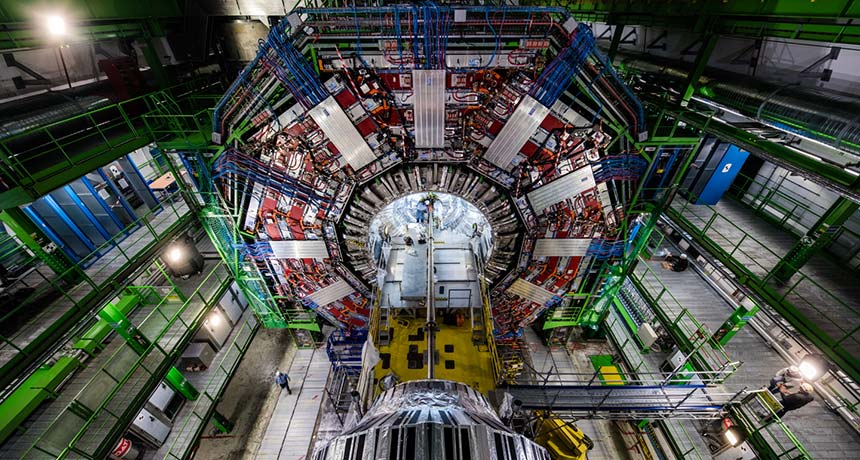
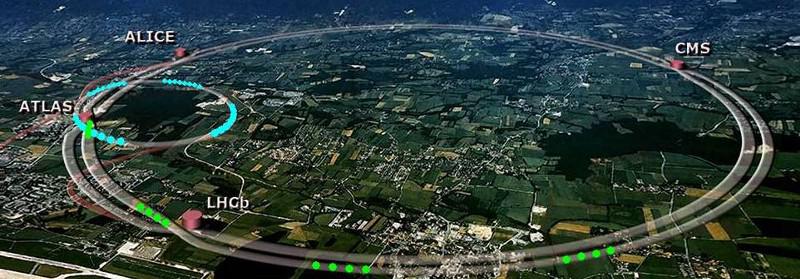
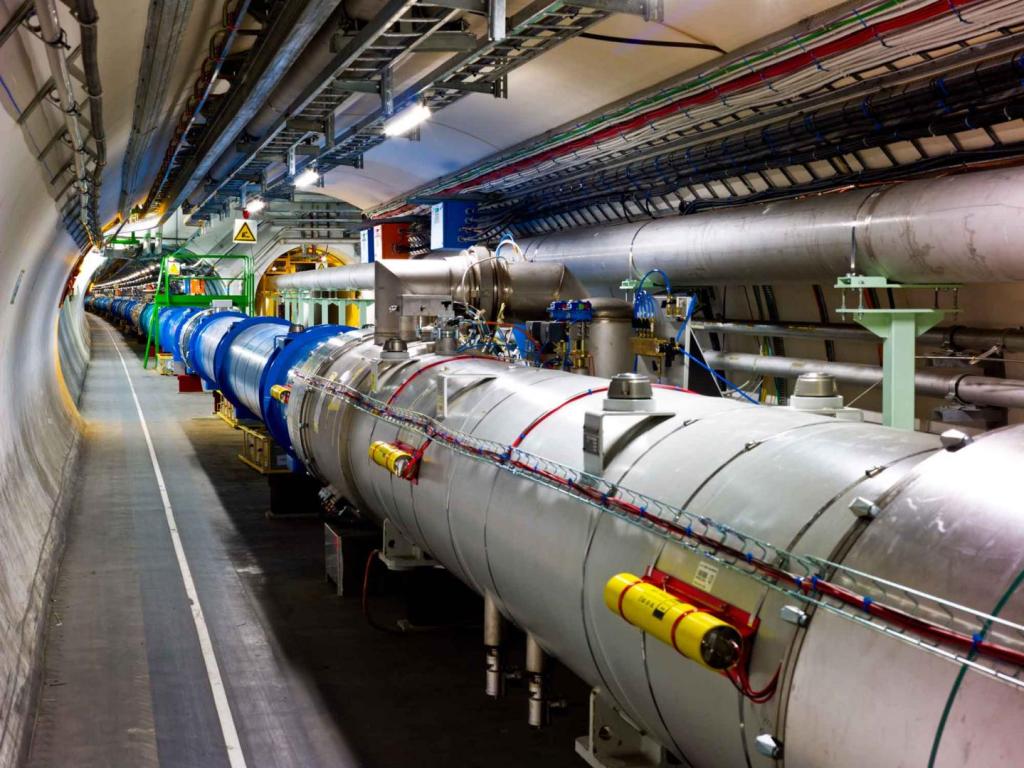
The largest machine built by man, the Large Hadron Collider (LHC) is a particle accelerator occupying an enormous circular tunnel of 27 kilometres in circumference, ranging from 165 to 575 feet below ground. It was situated near Genoa, Switzerland. It is so large that over the course of its circumference crosses the border between France and Switzerland. That’s the giant collaboration going on between over 100 countries and 10,000 scientists. The tunnel itself was constructed between 1983 and 1988 to house another particle accelerator, the Large Hadron Collider, which operated until 2000, its replacement, the LHC, was approved in 1995, and was finally switched on in September 2008.

The Larger Hadron Collider (LHC) covers the circumference of 27 kilometres

Working of the Large Hadron Collider

 The LHC is the most powerful particle accelerator ever built and has designed to explore the limits of what physicists refer to as the standard Model, which deals with fundamental sub-atomic particles. There are two vacuum pipes are installed inside the tunnel which intersects in some places and 1,232 main magnets are connected to the pipe. For proper operation, the collider magnets need to be cooled to -271.3 °C. To attain this temperature, 120 tons of liquid helium is poured into the LHC. These powerful magnets can accelerate protons near the speed of light, so they can complete a circuit in less than 90 millionths of a second. Two beams operate in opposite directions around the ring. At four separate points the two beams cross, causing protons to smash into each other at enormous energies, with their destruction being witnessed by super-sensitive instruments. But it’s not that easy to do this experiment. Each beam consists of bunches of protons and most of the protons just miss each other and carry on around the ring and do they it again. Because, atoms are mostly empty space, so getting them to collide is incredibly difficult. It’s like colliding a needle into a needle, provided that the distance between them is 10 kilometres.

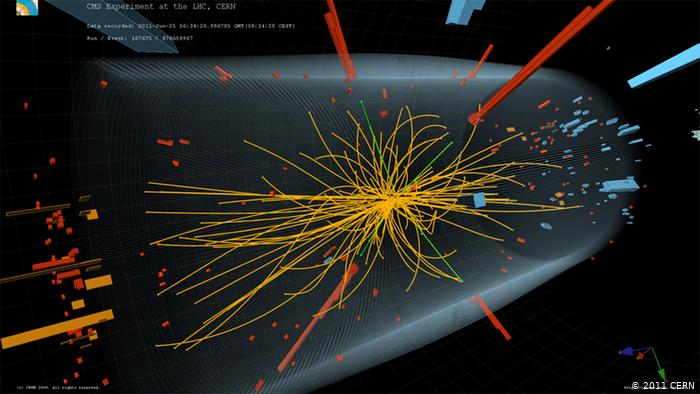
Collision of protons at near the speed of light

The aim of these collisions is to produce countless new particles that stimulate, on a micro scale, some of the conditions postulated in the Big Bang at the birth of the universe. Higgs Boson was discovered with the help of LHC. This so called ‘God Particle’ that could be responsible for the very existence of mass. If it disappeared, all particles in the universe will become absolutely weightless and fly around the universe in the speed of light (299,792,458 m/s). that means we can reach our moon in 1.3 seconds from earth.

“When you look at a vacuum in a quantum theory of fields, it isn’t exactly nothing.”Peter Higgs

TOP FIVE INFORMATION TECHNOLOGY IN INDIA

Information technology is the use of computer to create, process, store, and exchange all kinds of electronic data and information. IT is typically used within the context of business operation as opposed to personal or entertainment technologies. Here I came with top five most-valuable information technology in India

1) TATA CONSULTANCY SERVICES

Tata Consultancy Services is a global leader in IT services, consulting & business solutions with a large network of innovation & delivery centers. https://www.tcs.com/home TCS is the largest IT services company in the world by market capitalisation ($200 billion). It was founded in 1968 by TATA Sons. It has headquarters in Mumbai, Maharashtra, India. The main service of the company is consultancy, services, outsourcing. TCS is the second largest Indian company by market capitalisation and is among the most valuable IT services brands worldwide.Tata Consultancy Services has around 380,000 offices across 46 countries and 147 delivery centres in 21 countries. There are 378,210 offices in India alone. The revenue of TCS is Rs1.62 trillion in 2020.https://en.wikipedia.org/wiki/Tata_Consultancy_Services

2) WIPRO

Global company delivering innovation-led strategy, technology, and business consulting services. https://www.wipro.com/ Mohamed Premji was founded WIPRO in 1945. It was founded to trade refined oil and manufacturing vegetables. After the death of Mohammad Premji https://en.wikipedia.org/wiki/Azim_Premjihis son Azim Premji took over wipro as chairman in age of 21. During the 1970s and 1980s, the company shifted its focus to new opportunities in the IT and computing industry, which was at a nascent stage in India at the time.In February 2002, Wipro became the first software technology and services company in India to be certified. The revenue of wipro is ₹61,943 crore in 2021. https://en.wikipedia.org/wiki/Wipro

3) INFOSYS

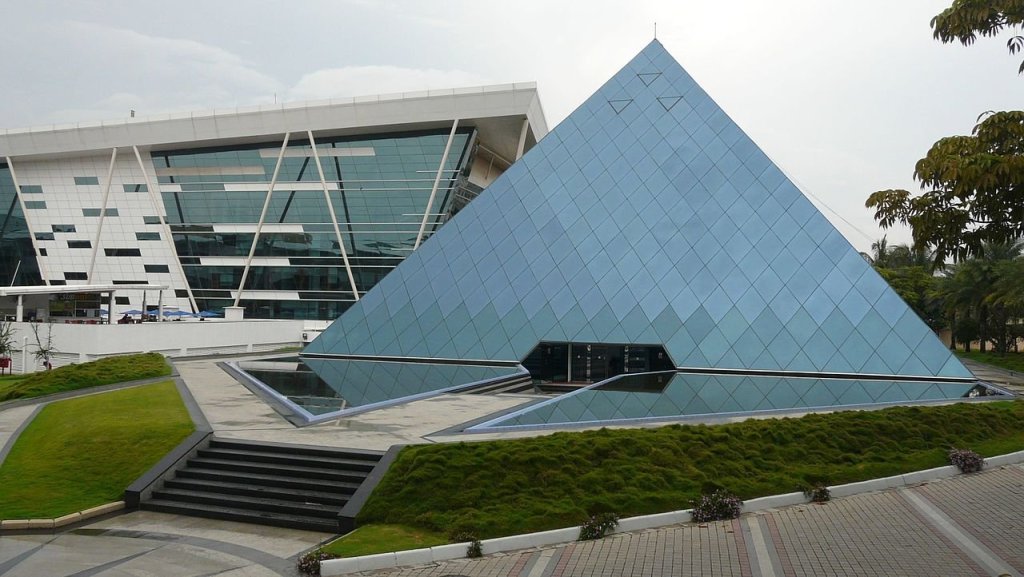
Infosys is a global leader in next-generation digital services and consulting.https://www.infosys.com/ Infosys was founded by seven engineers in Pune, Maharashtra, India with an initial capital of $250 in 1981. Infosys provides software development, maintenance and independent validation services to companies in finance, insurance, manufacturing and other domains.Infosys had a total of 259,619 employees as of 2021, out of which 38.6% were women. Out of its total workforce, 229,658 are software professionals and remaining 13,796 work for support and sales.https://en.wikipedia.org/wiki/Infosys In 2016, 89% of its employees were based in India. The revenue of this company is ₹102,673 crore in 2021. Website is https://www.infosys.com/

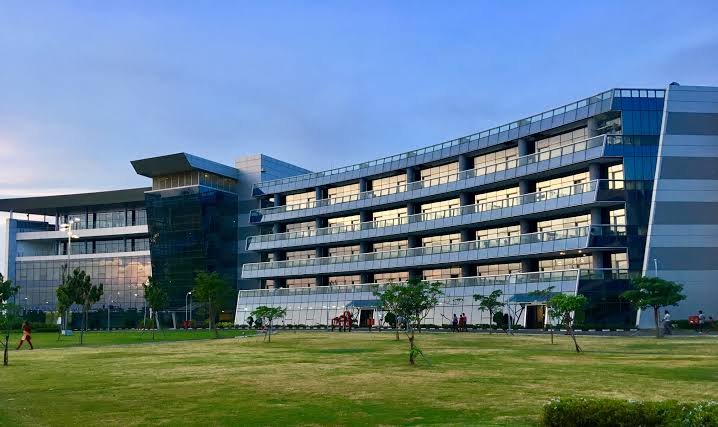
Infosys Pyramid in Bengaluru

4) TECH MAHINDRA

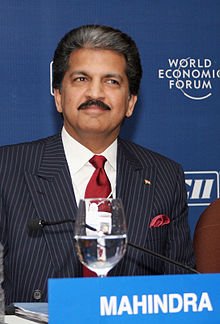
Tech Mahindra is an Indian multinational company that provides information technology and business process outsourcing services. A subsidiary of the Mahindra Group, the company is headquartered in Pune and has its registered office in Mumbai. It was founded by Anand Mahindra. https://en.m.wikipedia.org/wiki/Anand_Mahindra in 1986. This company has services in worldwide.

ANAND MAHINDRA

Tech Mahindra have 125,236 (2020) . The revenue of this company is ₹38,642 crore in 2021. Website is http://www.techmahindra.com/

5) HCL

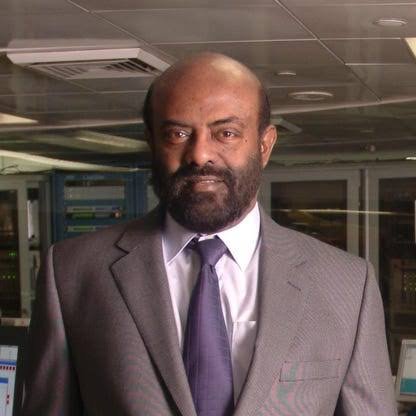
HCL was founded in 1976, HCL is one of India’s original IT garage startups. HCL stands for Hindustan Computers Limited. The company has offices in 50 countries. It was founded by Shiv Nadar https://en.wikipedia.org/wiki/Shiv_Nadar in 11 August 1976. It operates across sectors including aerospace and defense, automotive, banking, capital markets, chemical and process industries, energy and utilities, healthcare, hi-tech, industrial manufacturing, consumer goods, insurance, life sciences, manufacturing, media and entertainment, mining and natural resources, oil and gas, retail, telecom, and travel, transportation, logistics & hospitality. It aslo have services in consulting, outsourcing and software development. The revenue of this company is ₹76,306 crore in 2021. The website for this company is https://www.hcltech.com/.

Founder of HCL

How atomic clocks are so accurate?

Most types of clocks rely on the oscillation of a slid body, be it a pendulum, a balance-wheel, or a quartz crystal, but each suffers from the effects of temperature, pressure, and gravity. Time measuring devices depended on the spin of the earth, but these suffer from seasonal effects and tidal friction. The moon causes tides to occur on earth and it causes friction between moon and the earth. This friction slows down the earth’s rotation by few milliseconds. This is called tidal friction. The atoms, however, vibrate a fixed number of times per second. Both the U.S. National Bureau of Standards and the United Kingdom’s National Physics Laboratory tried to take advantage of these vibrations.

In 1949 the Americans built a quartz clock that was synchronized by the 24-GHz vibrations of low pressure gaseous ammonium molecules. The British, under the leadership of physicist Louis Essen (1908-1997), used the oscillations of an electrical circuit synchronized to the vibrations of caesium atoms, the first caesium was kept in a tunable microwave cavity and the clock relied on the fact that were 9,192,631,770 transitions between two hyperfine ground state energy levels every second. This number defined the second, as opposed to the old definition of there being 86,400 seconds in one day. A good atomic clock was accurate to one part in 1,014, and therefore would take about 3 million years to lose or gain a second.

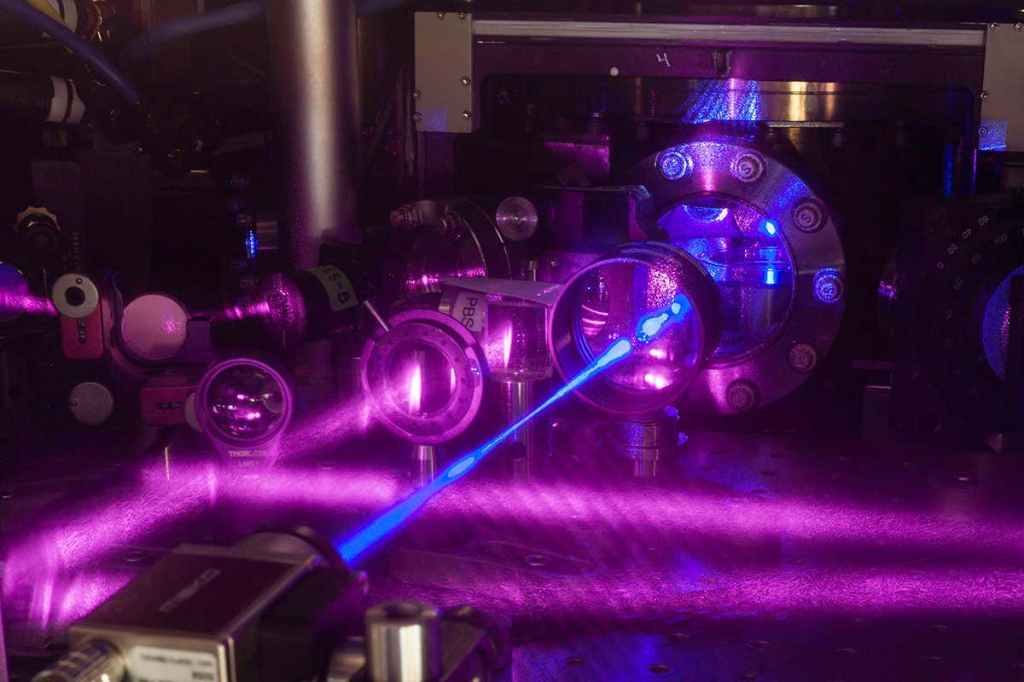
JILA’s 3-D Quantum Gas Atomic clock

Four atomic clocks are used in each of the many satellites of the global positioning system and comparisons of electromagnetic-wave travel times enable positions of earth to be measured very precisely. The clocks are also used by geophysicists to monitor variations in the spin rate of earth, and the drifting of the continents. Since record began, earth recorded the shortest day on July 19, 2020, when the day was 1.4602 milliseconds shorter than 24 hours.

Why atomic clocks is used in GPS?

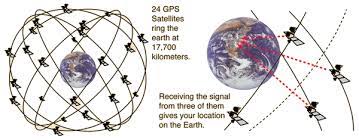
The Global Positioning System (GPS) consists of 24 satellites orbiting the earth. A GPS receiver uses the position of four of these satellites to locate itself. One to correct the time on the receiver, and three to locate its position. A signal is sent to the receiver from the first satellite that contains the satellites location and the signal’s time of departure. The receiver then multiplies the signal’s travel time by the speed of light to calculate its distance from the satellite. With one satellite the receiver knows that it’s located o a sphere around that satellite with a radius equal to the calculated distance. So, it does the same calculation with a second satellite. The intersection of these two spheres narrows the location to the circumference of a circle. Then with a third satellite, the receiver can reduce the location to a single point. Since signals are travelling at the speed of light, being off by even a millisecond means an error off about a million feet, or 300 kilometres. But with atomic accuracy, the receiver can locate itself to about 3 feet. Global Positioning System (GPS) satellites fly in medium earth orbit (MEO- Medium Earth Orbit) at an altitude of approximately 20,200 kilometres from ground.

The NIST-F1 is one of the most accurate time standards based on microwave atomic clocks. The most accurate atomic clocks lose about a second over 138 million years.

“Time isn’t the main thing. It’s the only thing.” – Miles Davis

WHY MENSTRUATION A TABOO IN INDIA?

Menstruation is a phenomenon unique to girls. Menstruation is the natural part of the reproductive cycle in which blood from the uterus exits through the vagina. It is a natural process that first occurs in girls usually between the age of 11 and 14 years and is one of the indicators of the onset of puberty among them.

Taboos surrounding menstruation exclude women and girls from many aspects of social and cultural life. Some of these are helpful, but others have potentially harmful implications.

In India especially, I found it extremely ironic for it to be still a taboo in this time and era, even before I don’t understand why it was called a taboo and the reason for that I guess was, India where a girl child recognised as boon ( as GODDESS LAKSHMI when born) and giving birth is also considered boon given only to women despite that this unique process that make it possible for a women to have a child is considered a TABOO. Even with many scientific clarification of the process of this unique phenomenon, even though being this 21st century there still continuous myth regarding this adapted within the society.

SOME OF THEM ARE:

  • Women who menstruate have long been taught to keep silent about their periods. Young girls are taught from a young age that they have to manage it privately and discreetly.
  •  In Indian households including the literate ones, women are constantly reminded of the old-age traditions where “you are not allowed to touch anything holy, visit temples, cook or touch pickle.”
  • The taboo is so ingrained that women often have the “walk of shame” while carrying their sanitary pads wrapped in black plastic bags in their hands. 
  • Strangely enough, in some cultures, celebrations are held on the commencement of menstruation. And in the same cultures, the already menstruating women are looked down upon as impure and filthy.
  • It is not uncommon for boys to giggle and laugh during biology class when the topic of menstruation comes up.
  • BUT NOT IN EVERY CULTURE IT OCCURS- In Kashmiri Hindu culture, menstruating women are given special care considering the belief that they become weak due to blood loss. They do not consider them to be impure and rules like, a woman on her period can’t visit temples or can’t work don’t apply.

#BREAKTHEBLOODYTABOO

It’s high time that we normalize menstruation as just a healthy and positive part of the female life cycle. Menstrual periods are nothing to be ashamed of. Just like digestion, blood circulation and respiration are considered as natural and biological processes, both men and women should work towards making menstruation an important topic to talk about openly. This is the only way to combat its silence and break the stigma.

some changes I notice toward breaking this taboo for women in this society

  • The greatest changed I noticed was for the changed working environment toward women as the sanitary environment facilities given to them as employment care like washroom provided with sanitary pads and tampons etc.
  • knowledge about the first period to young girls now given at their school is compulsory not only to girls but to boys too given knowledge for it be known as normal topic and not as a taboo topic.
  • Advertisement about sanitary pads and tampons starts to make this topic to talk openly about.
  • Men buying the sanitary pads and tampons make it comfortable for women during their periods so that they can express their thoughts, sorrows, angers, happiness with them.

Indian Surgical Strike

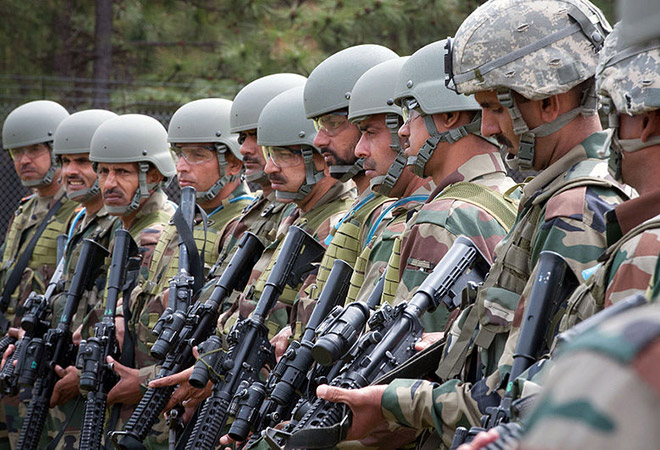
Today 28th September, we are celebrating the anniversary of surgical Strike. It was the first operation in which the Indian army’s para special forces has crossed the Line of Control to destroy terrorists camps and launch pads.

Reason for conducting surgical Strike

The Indian Army conducted the surgical Strike in response to the Uri attack on September 18, 2006, which was conducted by a Pakistani base terror group jaish-e-mohammed. The Attack aimed Indian army camp killings 19 soldiers. Similar attacks where done in Gurdaspur and Pathankot, so this was an alarming security alert for the Indian armed forces.

How it was conducted

Indian Army Army conducted this operation In the Midnight of 28 and 29 September 2016. There were 70 to 80 soldiers involved in teams a team of the forces crossed LOC in Kupwara district while, another group cross LOC from poonch district. They destroyed terrorist camp using granites and rockets, there were no casualties and no commoner was harmed during this mission. A soldier was injured due to tripping landmine.

New India

This was a moment the whole Nation was celebrating as we got our revenge of Uri attack and other previous attacks. Nations security is atmost priority and Indian Army Soldiers showed the whole world that this is New India, which knows how to enter in enemy’s land and finish them off ( Bhart dushmano ke ghar me ghusega bhi aur marega bhi).

What is the smallest particle in the universe?

In the early models of the atom were simple, with protons and neutrons forming a nucleus and negatively charged electrons orbiting it, it seemed like a tiny solar system. In the early 1930s, however, analysis of cosmic rays and experiments with particle acceleration showed the existence of new particles by the dozen. In the early of 1960s American physicist Murray Gell-Mann and George Zweig independently conjectured that protons and neutrons were made of even more fundamental particles. They named the subatomic particles as Quark in 1964. The word quark came from James Joyce’s novel “Finnegan’s Wake” in which it is a nonsense word made by Joyce.  He key evidence for their existence came from a series of inelastic electron-nucleon scattering experiments conducted between 1967 and 1973 at the Stanford linear accelerator center. Other theoretical and experimental advances of the 1970s confirmed this discovery, leading to the standard model of elementary particle physics currently in force.

Properties of Quarks

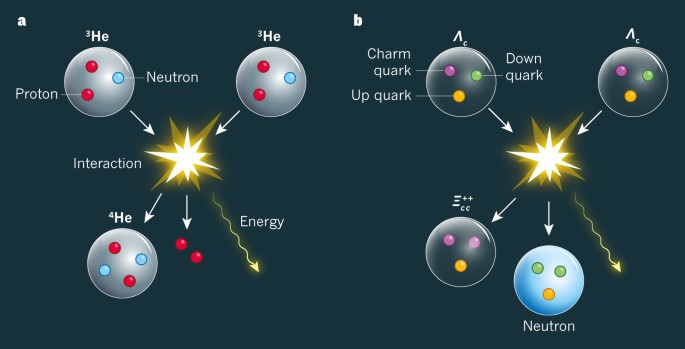
Quarks are most commonly found inside protons and neutrons. They have many properties including mass, electric, charge, and color. There are six types of quarks, up quark, down quark, top quark, bottom quark, strange quark, charm quark. They can have positive (+) or negative (-) electric charge. Up, charm and top quarks have a positive 2/3 charge. Down, strange, bottom quarks have a negative 1/3 charge. So protons are positive because there are two quarks (+2/3) ups and one down quark (-1/3), giving a net positive charge (+2/3+2/3-1/3 =1). These three quarks are known as valence quarks, but the proton could have an additional up quark and anti-up quark pair.

 An anti-quark is the anti-particle of a quark and it could have other types of quarks. It includes pairs of strange quarks and anti-strange quarks, charm quarks, and anti-charm quarks. In fact, the proton has tons of quarks, anti-quarks pairs. The quarks are held together by the strong force which is carried by particles called gluons. So inside the proton, there are zillions of gluons and quarks all moving around close to the speed of light. The quarks that comprise a proton only make of 1% of the mass of that proton. A neutron consist two down quarks and one up quark which gave it an overall charge of 0. The quarks have a property called color change. It includes three color, red, blue, green and each of them is complemented with an anti-color. When we mix these three colors, we get white, that’s why proton is called colorless. The quarks change their colors constantly but, In order to maintain colorless state, the ant-color mix into it.The interaction between quarks and gluons is responsible for almost all the perceived mass of protons and neutrons and is therefore where we get our mass.

The Large Hadron Collider (LHC)- the world’s largest particle accelerator (27 kilometres).

Conclusion

The discovery of quarks was a gradual process that took over a decade for the entire sequence of events to unfold. A variety of theoretical insights and experimental results contributed to this discovery, but the MIT-SLAC deep inelastic electron scattering experiments plays a vital role. The existence of quarks is recognized today as a cornerstone of the standard model. I numerous experiments at CERN including those at the Large Hadron Collider (LHC), physicists are measuring the properties of Gell-Mann and Zweig’s particles with ever-greater precision.

                  “Three quarks for muster mark!” – Author James Joyce

About that author James Baldwin

An American essayist and novelist, born in 1924 in Hampton, James Baldwin who addressed the issue of race in 20th century america. He grew up poor, in a black ghetto and in the 1930s, during a time when racism encompassed the whole of America and Baldwin too was subjected to it all his life.

His work revolves around the racial and social issues that existed in 20th century america.

Early life

James Baldwin never knew his biological father who was a drug addict, owing to this reason his mother left his father and moved to Harlem where she gave birth to James baldwin. Baldwin was the eldest to his 8 siblings. Baldwin figured out his affinity toward writing at an early age and was exceptional at it too. He wrote his first article when he was only 13, this article was published in his school magazine. Throughout his teenage years Baldwin published short stories and essays in local literary magazines. In his young teenage years Baldwin was a youth minister at the church. Bldwin was a devout christian, this could be because his father was a baptist minister. In later years of his life, he refused to being religious however his religious attitude shaped his perception to a great extent.

Throughout his life he faced incidents of racism, some of which he addresses in his work as well. 

Career

In 1943, he moved to Greenwich village to pursue literature and work with other writers and literaries. During his time at Greenwich he was also able to secure a writing fellowship. At this time Baldwin’s short stories were being published and not in local but well recognized and reputed magazines.

About 3 years later Baldwin emigrated to France under another fellowship where he would not be treated with the racist remarks of the American and would be able to make a name for himself beyond his african -american community. In France he was met with his sexual conflict and hoped to come to terms with it and understand it better.

Work

Baldwin wrote his first novel Go Tell It on the Mountain which was published in 1953. a near autobiographical novel which revolves around a young teenager growing up in Harlem, New York and his relationship with his father and the church. The book deals with several issues that prevailed in america. It talks about racism, poverty, Harlem, New York, basically all the things that Baldwin endured in his childhood are mentioned in this work through the eyes of another character.

Giovanni’s Room, was his second novel released in 1954, which deals with the sexul ambivalence of a man, and his relationship with other men  living in paris. Homosexuality was a tabboo during that time and who else could have talked about a topic so contreversial if not Baldwin.

Baldwin’s subsequent novels Another Country and Tell Me How Long The Train’s Been Gone, talk about race and homosexuality.

James Baldwin is known for his thought inducing essays. He had the ability to write about an issue giving the reader another highly intellectual way to look at it. In addition to being an important literary figure of the 20th century he was also an important figure in the Civil Rights Movement.

Baldwin in 1987 died in Saint-Paul-de-Vence, France due to stomach cancer leaving his work enriched with revolution behind.

Women Empowerment: It’s Meaning and Why is It Important?

“I rise up my voice- not so I can shout, but so that those without a voice can be heard…we cannot succeed when half of us are held back.”

Nobel Laureate Malala Yousafzai

And that sentiment precisely outlines the basis of new age women empowerment. Discrimination against women is rampant all over the world even in this 21st century. Even though about 50% of the world’s population consists of women, but unfortunately most of them are denied basic rights education, freedom of speech, voting power and even independent identity.

In India, in theory, women enjoy a status of equality with the men as per constitutional and legal provisions. Arguably, our country has taken enormous strides towards inclusion of women with the fairer gender excelling in diverse fields, from literature to astrophysics to finance. But with headlines about dowry killing, female foeticides and domestic violence still making the newspapers, put a silent question mark behind the two words.

Meaning of Women Empowerment

If it is to be elucidated beyond the two self-explanatory words, ‘Women Empowerment’ refers to complete emancipation of women from socioeconomic shackles of dependancy and deprivations. Often made synonymous to gender equality, the term women empowerment encompasses a much larger set of principles that needs whole-hearted attention.

Empowerment of women would mean encouraging women to be self-reliant, economically independent, have positive self-esteem, generate confidence to face any difficult situation and incite active participation in various socio-political development endeavours. The growing conscience is to accept women as individuals capable of making rational and educated decisions about them as well as the society, increasing and improving the economic, political and legal strength of the women, to ensure equal-right as men, achieve internationally agreed goals for development and sustainability, and improve the quality of life for their families and communities.

The various facets of women empowerment that needs to be addressed for a rounded out development are listed as:

Human Rights & Individual Rights:

A woman has the right to express her thoughts and opinions freely, without any restriction. Individual empowerment may be achieved by imparting self-confidence to articulate and assert the power of independent decision making. Women should be aware of their rights and social positions that they are entitled to constitutionally.

Social Empowerment of Women:

The most critical aspect of social empowerment of women is the promotion of gender equity. Gender equality implies that in society women and men enjoy the same opportunities, outcomes, rights and obligations in all spheres of life.

Educational Empowerment of Women:

It means enabling women to grab the knowledge, skills and self-confidence necessary to participate fully in the development process. Giving preference to the girl child for educational opportunities is a start.

Economic Empowerment of Women:

It means reducing the financial dependence of women on their mate counterparts by making them a significant part of the human resources. A better quality of material life, within the family as well as for the overall society, can be achieved through promotion of sustainable livelihoods like cottage industries, small entrepreneurial efforts owned and managed by women.

Empowerment Through Legal Knowledge:

Not only does it suggest the provision of an effective legal structure which is supportive of women empowerment, there also is the need to spread awareness among women about their legal rights and laws preventing their exploitation. It means addressing the gaps between what the law prescribed and what actually occurs.

Political Empowerment of Women:

The existence of a political system encouraging the participation of women in the political decision-making process and in governance. Indian constitution has provided the bulwarks for gender equality in the country in the following articles:

Article 14: Equality before law “The State shall not deny to any person equality before the law or the equal protection of the laws within the territory of India Prohibition of discrimination on groups of religion, race, caste, sex or place of birth”.

Article 16 (2): Equal opportunities “No citizen shall, on grounds only of religion, race, caste, sex, descent, place of birth, residence or any of them, be ineligible for, or discriminated against in respect or, any employment or office under the state”.

Article 23: Prohibition of traffic in human beings and forced labour.

Article 39(a): The citizen, men & women equally have the right to an adequate means of livelihood.

Article 40 (after the 73rd Amendment): 1/3rd of seats in panchayats shall be reserved for women.

Article 42: State shall make provisions for just and humane working conditions & maternity relief.

Article 51 A (e): One of the duties of every citizen is to renounce practices derogatory to the dignity of woman.

Government Laws and its subsequent amendments have seen larger inclusion of women with respect to their standing in the society and also there many acts which are preventing polygamy and bigamy, and their strict enforcements has to a large extent contributed towards lessening women exploitation. Various government schemes like Rastriya Mahila Kosh and STEP (Support to training cum Employment for women) have managed to bring financial development of rural women through self-sustainable employment. Also “Kanyashree” scheme which is in West Bengal, has been ranked 1st globally for women empowerment. The National Policy of Empowerment of Women (2001) is aimed at addressing all forms of violence against women including physical, mental and that arising from customs and traditions.

Why Woman Empowerment is Important?

A strong patriarchal society with deep-rooted socio-cultural values continues to affect the progress of women’s empowerment in the country. The need of the hour is an egalitarian society. Where there should be no place for gender superiority. Aim of government policies should be to identify and eliminate forces that are directed towards keeping the tradition of male dominance over its female counterpart alive.

Women empowerment in its actually is synonymous with complete development of the society. An educated woman, with knowledge about health, hygiene, cleanliness is capable of creating a better disease-free environment for her family. A self-employed woman is capable of contributing not only to her family’s finances, but also contributes towards increment of the country’s overall GDP. And many things which can be achieved.

All we need is an organized approach from the Government and law enforcement agencies of the country focussed in the right direction that would rest only with the liberation of women from all forms of evil.


Stem cell therapy – the future of modern medicine.

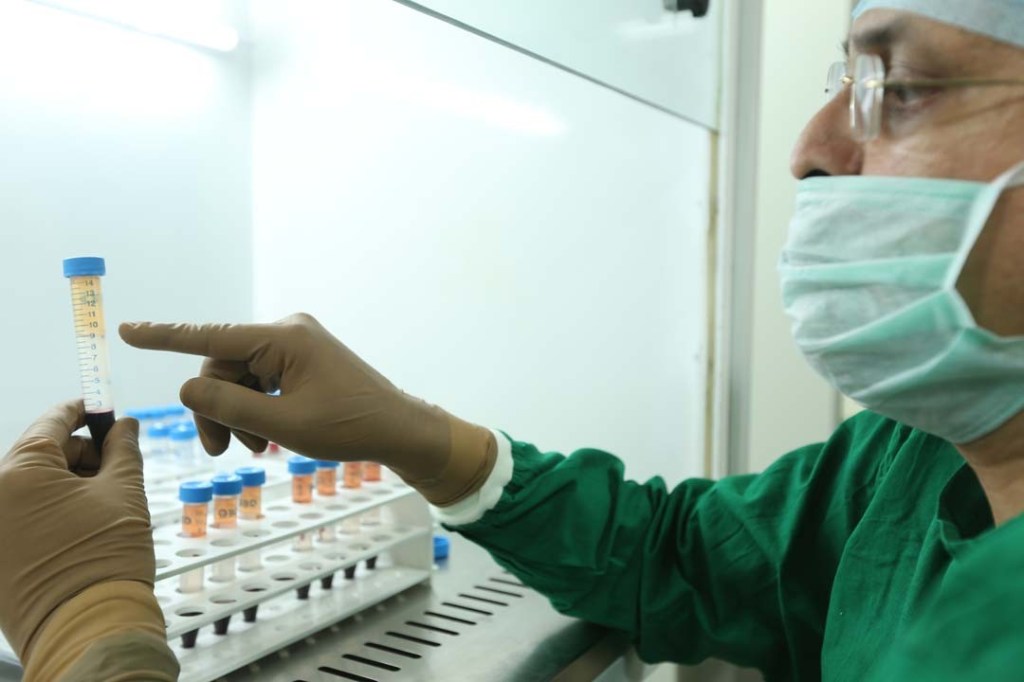
Our bodies contain many specialized cells that carry out specific functions. These specialized cells are called differentiated cells. Stem cells are cells with the potential to develop into many different types of cells in the body. They act as a repair system for the body. They are unspecialized cells, so they cannot do specific functions in the body. It can create the potential for the cells to be used to grow replacement tissues. American development biologist James Thomson (1958), from the University of Wisconsin School of medicine, won the race to isolate and human embryonic stem cells. On November 6 1998, the ‘journal science’ published the results of Thompson’s research. It described how he used embryos from fro fertility clinics which were donated by couples who no longer needed them, and developed ways to extract stem cells and keep them reproducing indefinitely.

With the ability to develop into any one of the 220 cell types in the body, stem cells hold great promise for treating a host of debilitating illness, including diabetes, leukemia, Parkinson’s disease, heart disease, and spinal cord injury. They also provide scientists with models of human disease and a new ways of testing drugs more effectively in living organisms. But for all the hopes invested, progress has been slow. It has helped that stem cell research has been steeped in controversy, with different groups questing the ethics of harvesting stem cells from human embryos.

Stem cell therapy – Delhi, India

In 2007 Thomson and Shinya Yamanaka, from Kyoto university, Japan, both independently found a way to turn ordinary human skin cells into stem cells. Both groups used four genes to reprogram human skin cells. Their work is being heralded as an opportunity to overcome problems including the shortage of human embryonic stem cells and restrictions on U.S. federal funding for research.

How stem cell therapy works?

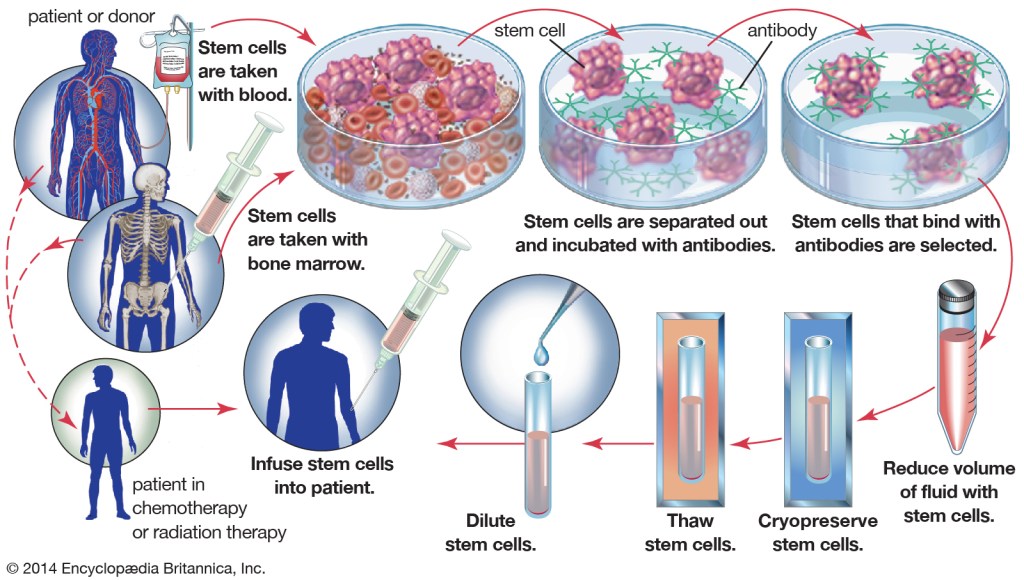
Researches grow stem cells in lab. These developed stem cells are manipulated to specialize into specific types of cells, such as heart muscle cells, blood cells or nerve cells. These manipulated specialized cells can be implanted into the heart muscle. The healthy implanted heart muscle could then contribute to repairing defective heart muscle. The first stem cell therapy was a bone marrow transplant performed by French oncologist Georges Mathew in 1958 on five workers at the Vinca nuclear institute in Yugoslavia who had been affected by a criticality accident.

Stem cell therapies have become very popular in recent years, as people are seeking the latest alternative treatments for their many conditions. Stem cell therapies are very expensive to pursue. Even simple joint injections can cost $1,000 and more advancement treatments can rise in cost up to $100,000 depending on the condition. Patients must do their research and ask as many questions as they can before financially committing to treatment. Since it is a life changing treatment, it will effectively cost high.

Future stem cell treatments

 The stem cell treatment can helps us curing various diseases in the future. But it is important not to overhype the potential of stem cells and to accurately communicate findings to the public. We must not allow the misleading of some people says that we can cure the untreatable diseases with stem cell treatments. However with more research and investment, I believe that stem cell therapy could transform disease outcomes of many patients.

“The regenerative medicine revolution is upon us. Like iron and steel to the industrial revolution, like the microchip to the tech revolution, stem cells will be the driving force of this next revolution.”   -Cade Hildreth

Seven Wonders of the World

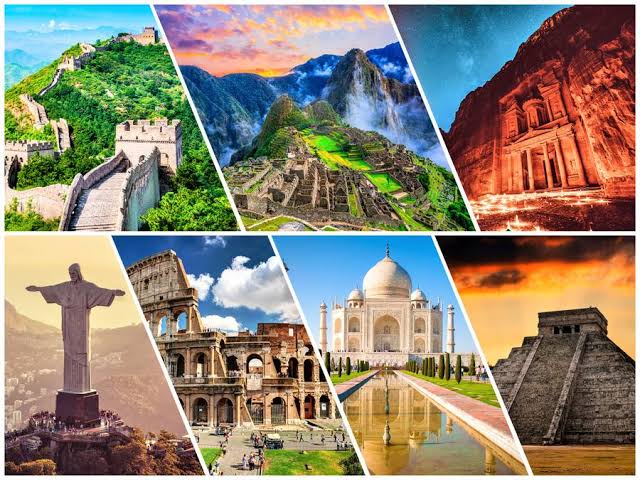
Seven wonders of the world namely The Great Wall of China, Machu Picchu, Petra, Christ the Redeemer, Colosseum, Taj Mahal and Chichen Itza. In 2000 a campaign new seven wonders of the world was launched by a Swiss Foundation in which more than hundred million votes were cast using different medium from around the world. And on 2007 the seven wonders of the world were named. According to a New York-based polling organisation it was the largest poll on record.

Great Wall of China

The Great Wall of China was build in several stretches, which later was joined by Qin Shi Huang the first Emperor of China. The well known section of the wall was built by Ming dynasty. There were various purposes to build this wall like, for the defense, imposition of duties on goods that are transported through Silk route, encouragement for trading activities, etc. It spans over 20,000 km.

Machu Picchu

Machu Picchu is located in Southern Peru. It is build in classical Inca style. It is famous for its dry stone walls made without the use of mortar. It is also known as the ‘Lost city of Inca’.It has a tropical mountain climate. It was included in UNESCO World Heritage site in 1983.

Petra

Petra is a city in Southern Jordan. The city has been inhabited as early as 7000 BC and this was the Nabataean’s capital city in their Kingdom. In 1985 Patra was announced as the World Heritage site.

Christ the Redeemer

It is a statue of the Christ which is situated in Rio de Janeiro, Brazil. The statue has a height of about 30 metres and his arm stretch 28 wide. It is located on the peak of Corcovado mountain in Tijuca Forest National Park.

Colosseum

Colosseum is located in the centre of the city of Rome in Italy it is the largest ancient as well as modern amphitheatre. It was used to host gladiatorial shows. It was built by Emperor Vespasian and his successor  Titus and modifications were made by Domition.

Taj Mahal

Taj Mahal is located on the banks of river Yamuna in Agra, Uttar Pradesh, India. It was built by Mugal Emperor Shah Jahan for his dearest wife Mumtaz. He built this in her remembrance. It is also known as the symbol of love. It is made from Marble. It was declared as UNESCO World Heritage site in 1983.

Chichen Itza

Chichen Itza is situated in Mexico. It is the largest pre-columbian city built by the Maya people. It is one of the most visited archaeological site in Mexico.

About that author- Sylvia Plath

If the moon smiled, she would remember you. You leave the same impression of something beautiful but annihilating.

This quote is from one of my favorite Sylvia Plath poems “The Rival”. 

If you read Sylvia Plath you would find that her poetry wasn’t about the beauty that surrounded her, the fruity aroma of the garden flowers or blistering sun shining on her face or the wind sweeping her way. No, it was about none of that. Her poetry style was confessional.

LIFE

Sylvia Plath was born on october 27 of 1932 in Boston Massachusetts. She was a poet and a novelist who shaped American literature to a great extent. Plath published her first poem at the age of 8 in an American newspaper under the children’s section.From then on Plath went on to write  and publish multiple poems in different magazines and newspapers. At the age of 8 Plath also faced a great deal of personal loss, her father passed away due to untreated diabetes. Her father was also a subject for a lot of her poems that she wrote in her later years.

Plath was a good student, she excelled in academics and attended the Smith’s College in Massachusetts. Plath also suffered from depression, which she elaborates in her poems. She underwent electrocution therapy for her depression. We are talking about the year 1950, when mental illness was not a socially acceptable concept. No points for guessing that the electrocution therapy did not work in fact it made matters worse for plath. In 1953, at the age of 21, the feeling of which she describes in one of her works as “blissfully succumbed to the whirling blackness that I honestly believed was eternal oblivion.” plath made her first suicide attempt by taking her mother’s sleeping pills. After this incident she remained in psychiatric care for months. 

Career 

In 1960, Sylvia Plath released a collection of her poems, entitled the colossus and other poems.. In this collection she talks about death, suicide, her father, and her depressive periods and thoughts.

Sylvia Plath’s poetry wasn’t particularly happy and that is because it was confessional or even autobiographical in a sense and Plath herself was deeply depressed. Here is an excerpt from one of her poems called Lady Lazarus;

“Dying is an art,

like everything else. 

I do it exceptionally well. 

I do it so it feels like hell. 

I do it so it feels real. 

I guess you could say I’ve a call”.

If it wasn’t clear until now, then these lines give us an idea of the intensity of torment that her own mind was subjecting her to.

Marriage and the aftermath

Plath married Ted Hughes, a poet and writer in 1956. They had 2 children together. The two later separated in 1962. The couple did not have a great relationship, some controversy and rumors surrounded Hughes even after Plath’s death.

During the last few years of her life Plath published exceptional work, some of the best work ever written. This vey period of Plath’s life is the one that shaped literature and inspired the future confessional poets. Plath poured her heart out on the pages during these years. She published a novel “the bell jar” in 1963 which did exceptionally well. But her career was cut short when at the age of 30, in 1962 after what is described as “a burst of creativity” she took her own life. Her posthumously published collection of poems “Ariel” also attracted a lot of readers and to this day transcends her.

Discovery and working of an MRI

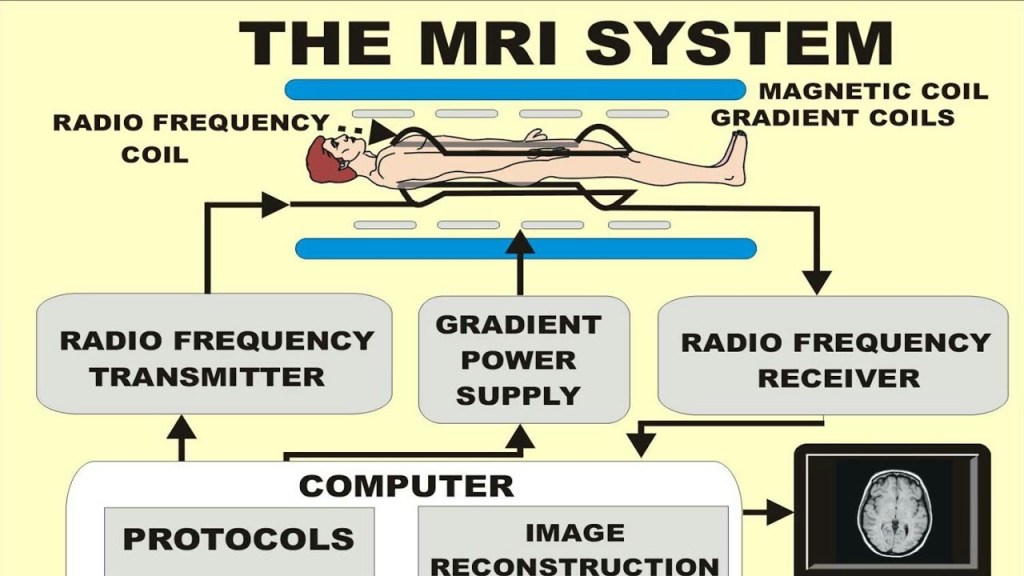
      The MRI (Magnetic resonance imaging) scan is a medical imaging procedure that uses a magnetic field and radio waves to take pictures of our body’s interior. It is mainly used to investigate or diagnose the conditions that affect soft tissue such as tumors or brain disorders. The MRI scanner is a complicated piece of equipment that is expensive to use and found only in specialized centers. Although Raymond Vahan Damadian (1936) is credited with the idea of turning nuclear magnetic resonance to look inside the human body, it was Paul Lauterbur (1929-2007) and Peter Mansfield (1933) who carried out the work most strongly linked to Magnetic resonance imaging (MRI) technology. The technique makes use of hydrogen atoms resonating when bombarded with magnetic energy. MRI provides three dimensional images without harmful radiation and offers more detail than older techniques.

       While training as a doctor in New York, Damadian started investigating living cells with a nuclear magnetic resonance machine. In 1971 he found that the signals carried on for longer with cells from tumors than from healthy ones. But the methods used at this time were neither effective nor practical although Damadian received a patent for such a machine to be used by doctors to pick up cancer cells in 1974.

The first full body MRI scanner at the University of Aberdeen in Scotland (1970)

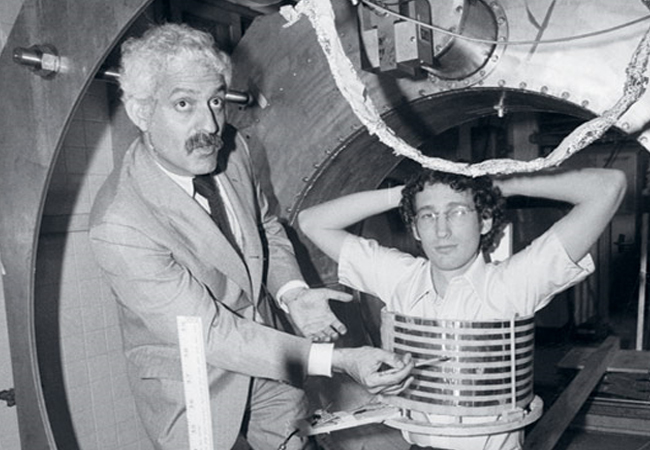
       The real shift came when Lauterbur, a U.S, chemist, introduced gradients to the magnetic field so that the origin of radio waves from the nuclei of the scanned object could be worked out. Through this he created the first MRI images in two and here dimensions. Mansfield, a physicist from England, came up with a mathematical technique that would speed up scanning and make clearer images. Damadian went on to build the full body MRI machine in 1977 and he produced the first full MRI scan of the heart, lungs, and chest wall of his skinny graduate student, Larry Minkoff – although in a very different way to modern imaging.

Working of an MRI machine

        The key components of an MRI machine are magnet, radio waves, gradient, and a super advanced computer. We all know that human bodies are made up of 60% water, and water is magnetic. Each of the billons of water molecules inside us consists of an oxygen atom bonded to two hydrogen atoms that are called as H2O. Small parts of the hydrogen atoms act as tiny magnets and are very sensitive to magnetic fields. The first step in taking an MRI scan is to use a big magnet to produce a unified magnetic field around the patient. The gradient adjusts the magnetic field into smaller sections of different magnetic strengths to isolate our body parts. Take brain as an example, normally the water molecules inside us are arranged randomly. But when we lie inside the magnetic field, most of our water molecules move at the same rhythm or frequency as the magnetic field. The ones that don’t move along the magnetic field are called low energy water molecules. To create an image of a body part, the machine focuses on the low energy molecules. The radio waves move at the same rhythm or frequency as the magnetic fields in an MRI machine.

       By sending radio waves that match or resonate with the magnetic field, the low energy water molecules absorb the energy they need to move alongside the magnetic field. When the machine stops emitting radio waves, the water molecules that had just moved along the magnetic field release the energy they had absorbed and go back to their position. This movement is detected by the MRI machine and the signal is sent to a powerful computer which uses imaging software to translate the information into an image of the body. By taking images of the body in each section of the magnetic field the machine produces a final three dimensional image of the organ which doctors can analyze to make a diagnosis.

“Medicine is a science of uncertainty and an art of probability”. –William Osler

Is Bollywood distracting Indian Youth

what is the first thing that comes to your mind when you hear the word Bollywood? An Item number or a random song which is having no meaning. Nowadays most of the Bollywood movies are just filled with item number, a lot of songs with no specific meaning and a repeating storyline. To just be specific, I am not talking about all the movies, I am taking about most of the movies. There are meaningful movies too like Dangal, Neerja, Hichki, Mary Kom etc, that makes sense and gives motivation to the youth for good things.

The Bollywood is actually started decreasing the quality of story, they are just focusing on the songs and weird sense. Without even thinking that what message do they give to the youth who are following them. Most of the movies that are being made now are love story with actually giving no meaning or motivation to the youth.

the youth after watching such movies gets distracted as they feel that they should follow their idols. The actors for the producers should realise their responsibility as they are the role model for many who are following them. They should make movies which have good impact on the youth and increases them to do hard work to achieve their goals.

And the youth too should understand and know to whom to follow and what to watch and not randomly follow anybody. So pick up everything very carefully with the what to watch and whom to follow.

Job Creation

Getting job is like climbing Mount Everest nowadays. If you are employed you have achieved they greatest hight in your life.

But here we are not going to take about the problems we face for like population explosion etc in getting employment, instead we are going to take about the solutions for it.

Some solutions

  • Encouraging people to do startups : this is the first and foremost step to increase job creation as if one do startup then automatically job creation begins and economic gets and boost.
  • Is in getting loans for startups : the banks should make the process of getting the loans for startup much easier as to encourage people to do it.
  • Improvement in academic curriculum : there should be improvement in academic curriculum as 2 to encourage the young mind to do their own startup.
  • Making foreign investment easier : the process for the multinational companies to invest in India should be eased up, by reducing unnecessary paper works and Taxes.
  • Increase in living standards : if the living standard of the general citizen of the country increases it automatically increases their needs like car, expensive gadgets etc, and to fulfill these needs more companies will bi setup and ultimately increases the employment.
  • Policy to control population growth : government should introduce policy that encourages people to have less children and ultimately getting a control on the population.

There can be many more ways to create employment. Everybody should contribute their ideas in what ways India can achieve full employment of their people, to get rid of this problem. These were some solutions from my side.

Population Explotion

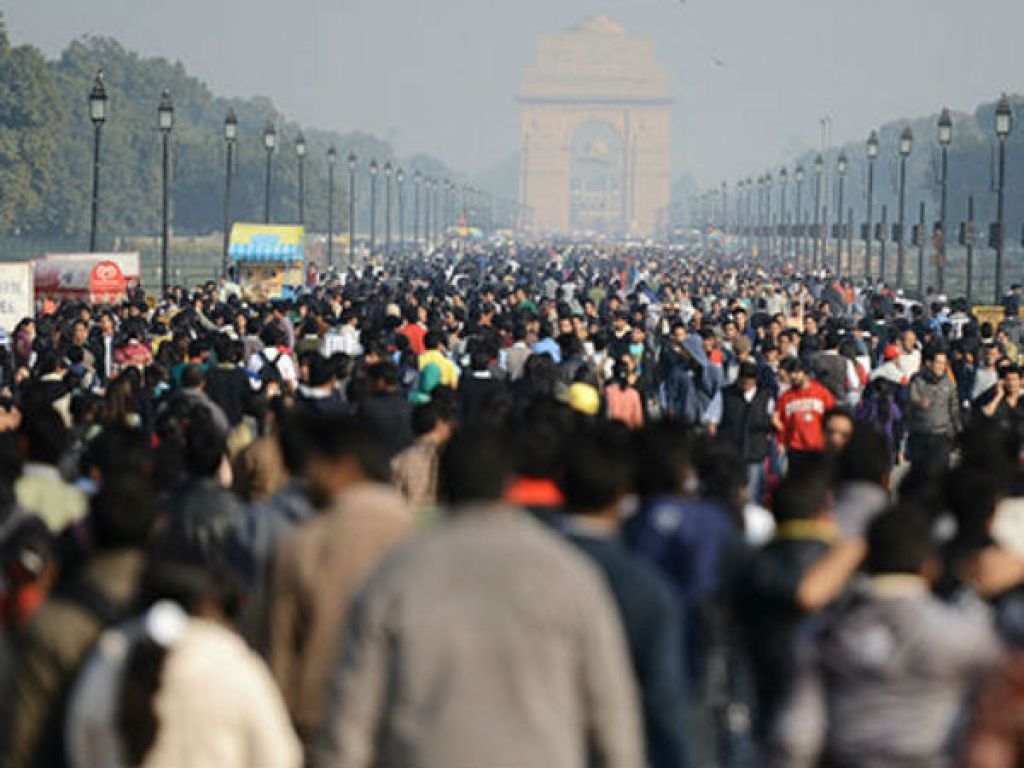
Do you know the evergreen asset and even problem of India? From the title you have already got the answer for it, our increasing population. It has been a strength and a hinders too. Let’s look as some positive and negative sides of it.

Positive aspect

  • Helps in economic growth : having a large population always impact economic growth as more and more companies would like to invest in India, as there are availability of cheap and skilled labours.
  • Strength of the country : being one of the largest democracy in the world, help India to have a significant and important place in the world to play.
  • Large number of killed people : as there is large number of skilled labour available in India so they are in huge demand in the foreign Nation.
  • Large market : because of the large population India has a very large market for which there is huge competition among the multinational companies to invest in India for that they can get profit.

Negative aspects

  • Increase in unemployment : there is large population so the competition to get job increases which increases the unemployment among the people.
  • Shortage of space : as the population grows the area of country remains the same and it creates problem for people to have a property for oneself.
  • And equal wealth distribution : There is huge competition for job so there is huge difference between the salaries too, which increases the gap between the rich and the poor.
  • Difficulty in controlling population : As there is huge population it is difficult for the government to handle their issues and make a plan which is good for everyone.
  • Huge competition : having large population means having competition for everything and everywhere.
  • Dissatisfaction some social group : as having one of the largest population in the world whatever the policies are made there is always a dissatisfaction among some group of society i.e., you can’t make everyone happy.

There is always a positive and negative aspect for everything we should always look at the positive side and should try to get the solution for the negative aspects as well. No the government is also looking the add population control as type so as to have a better future ahead.