International Women’s Day and its relevance

International Women’s Day

Whenever the discussion on International Women’s Day arise, Indians believe all days are meant for women as many Indians particularly believer of Hindu faith perform puja in the form of Kali or Durga or other form of deity. Devotion of Ramakrishna to Kalimata in Dakshineswar Kali Temple is known to all. His great disciple Swami Vivekananda had great respect towards women. On 30 September 1893, an interview of Swami Vivekananda was published in the Boston Evening Transcript. In that interview he was asked if he had a plan to get married. Vivekananda’s prompt reply was— “Why should I marry, when I see in every woman only the divine Mother?  To emancipate myself from earthly ties and attachments so that there will be no re-birth for me. When I die I want to become at once absorbed in the divine, one with God. I would be a Buddha.” Swami Vivekananda considered Sita as the ideal Indian woman. He also told, “The ideal womanhood of India is motherhood— that marvellous, unselfish, all suffering, ever-forgiving mother.” He understood the day India started neglecting their women, the downfall of the nation would start.

Anyway International Women’s Day is celebrated every year on March 8 to honour women for their enormous service to mankind. It is also known as the United Nations (UN) Day for Women’s Rights and International Peace. A woman is a mother, sister, wife and finally torchbearer of the human civilization as without a mother male, female or even transgender cannot see the light in this world. Unfortunately, in many places, women are victimized in different ways in the world. One of the reasons is that they are not earning so do not have much say in the family, whereas in all religions woman has got important position. Hinduism has the strongest presence of the divine feminine from ancient times to the present.  The Goddess is viewed as central in Shakti and Hindus perform Puja in the name of Durga, Kali, Saraswati and others. Although in Hinduism, there are different names of Goddess or God but God/Goddess is one.  In the Holy Quran, it is stated that all humans are equal: “To whoever, male or female, does good deeds and has faith, We shall give a good life and reward them according to the best of their actions.” (16:97). Mother Mary is most respected by Catholic Christians of the world. In every Catholic Church, Mary’s portrait can be seen along with Jesus. According to Sikhism, women are equal to men. “Guru Nanak proclaimed the equality of men and women, and both he and the gurus that succeeded him encouraged men and women to take a full part in all the activities of Sikh worship and practice”. So it is evident that women are respected in different religions also.

In the context of International Women’s Day it is pertinent to mention that, following the decision agreed at Copenhagen in 1911, International Women’s Day was honoured the first time in Austria, Denmark, Germany and Switzerland on 19 March 1911 where   more than 1 million people in Germany, Switzerland, Austria, and Denmark took part indicating the event was a great success. The date 19 March was selected because it commemorated the day that the Prussian King promised to introduce votes for women in 1848. The promise gave hope for equality but he failed to keep.

The International Women’s Day date was later on shifted to 8 March in 1913. The UN took initiative for global attention to women’s concerns in 1975 by calling for an International Women’s Year. It organised the First Conference on women in Mexico City that in 1975 itself. Subsequently, the UN General Assembly invited member states to proclaim 8 March as the UN Day for Women’s Rights and International Peace in 1977. The Day intended to eliminate discrimination against women and also to celebrate the women’s movement and struggle for equality. According to the United Nations, the theme for International Women’s Day 2020 is “I am Generation Equality: Realizing Women’s Rights”.  It aims at “bringing together people of every gender, age, ethnicity, race, religion and country”, in a bid to drive actions that will lead to a “gender-equal world we all deserve”.

It is pertinent to mention that International Men’s Day is celebrated on November 19 every year little more than 80 countries.

Dr. Shankar Chatterjee

Former Professor& Head (CPME)

NIRD &PR (Govt. of India),

Hyderabad-500 030

Telangana, India

Email <shankarjagu@gmail.com>


Batticaloa District of Sri Lanka endowed with Pristine Beauty

My visit in Sri Lanka in two occasions – one in first part of March 2018 and another was in November 2019 has greatly fascinated me.  I could get more insight about the Island and its people and culture as well as seen many places. Everywhere wonderful people with pristine beauty and peace can be observed. In this article , few points about Batticaloa District (visited in last part of November 2019) and my interaction with senior district official Mr M. Uthayakumar ( district head) officially called Government Agent or District Secretary are highlighted. He was very through about the Governments’ programmes, an erudite person and a dynamic officer.

Let me start first with Sri Lanka and in view of this, few lines about Sri Lanka’s socio-economic conditions are presented.   Sri Lanka is spread over to an area of 65,000 square kilometres home of little more than 2 crore people. It has to be appreciated that country’s socio-economic development is better than many countries. In this regard by referring, Rural Development Statistics, 2016-17 prepared by National Institute of Rural Development and Panchayati Raj popularly known as (NIRD&PR, an Organisation of Government of India), Hyderabad few particulars on Sri Lanka are presented. Annual population growth rate of Sri Lanka during 2010-15 was 0.8 per cent with crude birth rate 17.6 per 1,000 people and death rate 6.2 per 1,000. Infant mortality per 1000 live births was 8.2 in 2013 while mortality rate under five years of age was 9.6. Average life expectancy at birth (2015 data) in general was 75 years- male 71.7 years and female 78.4 years.  Literacy is important for the development of people and effective literacy skills open the doors to more educational and employment opportunities so that people are able to pull themselves out of poverty and chronic underemployment.  The statistics show adult literacy rate (15 years and above) in the country during 2005-13 was 91.2 per cent. Whereas youth literacy rates (15-24 years) for male and female during the same period were 97.7 and 98.6 years respectively.  While I was in the country talked to cross section of youths, educated persons and observed youths were more interested in study discouraging child marriage. The married persons prefer two children.

As already mentioned, in November 2019, I visited Batticaloa District and interacted with senior district official Mr M. Uthayakumar also many local residents. The district is located at eastern side of Sri Lanka. The data provided by the district officials based on 12 April 2019 publication, reveal that the total land area of the district is 2610 square kilometres and inland water area is 224 square kilometres and thus total area of the district is 2854 square kilometres. The Batticaloa Lagoon, beach, old Catholic Church and Hindu temples are attracted places from tourism pint of view.

The total population of the district was 603,192 and male and female were – 296,513 and 306,679 respectively indicating more female than male.  Further the data reveal that 72.2 per cent were Sri Lankan Tamil, 26.3 per cent Sri Lankan Muslim (they also speak Tamil), rests Sinhalese and Burgers.

The district had a total of 177,440 families (as mentioned earlier total population 603 192) and of these 31,946 families were headed by woman member (18%). A little more than 83, 000 (in actual figure 83,091) families were dependant on agriculture and paddy is the main crop with average yield was around 4000 kilograms per hectare. Altogether 23,726 families were eking out their livelihoods through fishing both Sea and Lagoon. Therefore, it is evident that primary sector, covering agriculture and fishing, was the source of livelihood for 106,817 families (60 per cent). Further, the data reveal that total milk production in a year was to the tune of 95 lakh litres which were available from three main source viz. cows, buffaloes and goats.  There were no large industry till the day of visit but as medium scale industry there were four garments factories in the district. In addition, there were 11, A-category Tourism hotels. The district had little more poverty than the national average – (11.3% in the district) against the national average of 4.1 per cent (as per 2016 report).

During my visit to the district, I had interacted with many persons all in unison praised Indians as peaceful country. Many goods are imported from India so they expressed their happiness with the quality. I also personally feel, people across Sri Lanka (after my two visits) are amicable and hospitable to Indians. Sri Lanka is a worthy place for visit as peace prevails in the country and many of the places have its own importance from tourism point of view. Also Sri Lankan’s tea, coffee, cashew and fish curry have greatly attracted me.

Dr. Shankar Chatterjee

Former Professor& Head (CPME)

NIRD &PR (Govt. of India), 

Hyderabad-500 030

Telangana, India 

Email <shankarjagu@gmail.com>


RTP Mela of NIRD & PR (Government of India) Promotes National Integration

Hyderabad is an important city of India as it is endowed with many historical places, mouth-watering dishes including veg and non-veg biryani, different types of fruits and vegetables, ornamental items (pearl and related items), famous for medical tourism, etc. Hyderabad is also a city of national integration and above caste, creed, and religion all live amicably. As an example, a legendary figure may be mentioned here as known to all that Sarojini Naidu being a Bengali lady was born in Chattopadhyay/Chatterjee family in 1879 in Hyderabad and married to a Telugu man, Dr. Govindarajulu Naidu and finally settled down in Hyderabad. Her parental home was in undivided Bengal.

RTP Mela of NIRD
RTP Mela of NIRD

In this section, a case of national integration promoted by the National Institute of Rural Development and Panchayati Raj (popularly known as NIRD&PR), an autonomous organization of the Ministry of Rural Development, Government of India is presented. The NIRD&PR, apart from its academic activities, has been organizing Mela every year from 2003 where across India, rural artisans mainly self-help group (SHG) members participate with their products for scaling up of selling.

In 2019, 17th Mela held from 29 November to 3 December 2019 was inaugurated by the Governor of Telangana, Dr. Tamilisai Soundararajan on 29 November 2019.  As reported by Mr Md. Khan, Sr. Consultant of RTP-NIRD&PR, in the Mela mainly women members of Self Help Groups (SHG) from 24 states across the country including Arunachal Pradesh, Meghalaya, Mizoram, Manipur, Tripura, Sikkim, J&K participated. The participation of so many states from north-east in other years of the Mela was seldom. Further, around 200 stalls were set up covering various items like veg and non-veg foods, dress materials for ladies, gents and children, different types of ornamental items, etc.

RTP Mela of NIRD
RTP Mela of NIRD

The author interacted during the time of Mela with few members who came with their products from different parts of the country. And all in unison appreciated stay, food, etc. which were provided free of cost to the guests by the NIRD&PR. Of course, travel costs had to be borne by the respective state or organisation or by the SHG may be from their corpus fund.

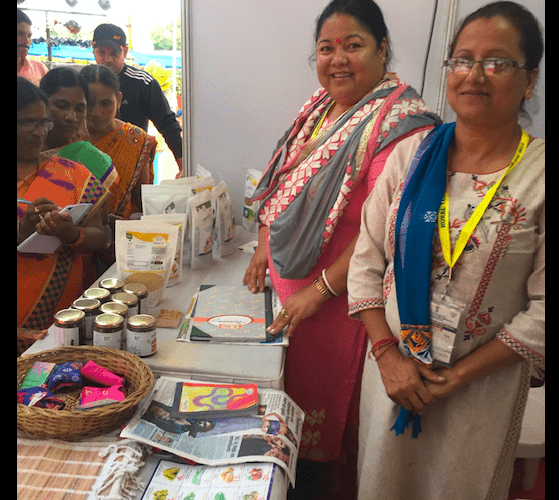
While interacting, Mrs Ronita, a member of Laxmi SHG, from Imphal East district of Manipur observed she (also her woman friend) was absolutely happy as for the Mela both of them could visit Hyderabad. She informed that albeit their SHG was established in January 2018 but earlier did not visit Hyderabad. Their travel cost was borne by the district officials. They brought a special variety of black rice, different types of pickles, fruit candies, etc. Both have enjoyed Hyderabad as a huge city with peaceful environment. Mrs Kamal Kumari Jamatia of Tripura, a member of Golap SHG (10 women members in SHG and all ST) also expressed her happiness as first time she attended the Mela. She brought different types of ladies dresses made by tribal women, craft and bamboo products etc. From Sikkim, two women came first time came in Hyderabad with local products such as ginger powder,   raw turmeric, and other local food products. Also from Haryana two women participated as well as their first visit in Hyderabad. They brought and made in the stall different types of food items and I tasted their delicious ‘laddus’. From West Bengal of Birbhum district, two women with different types of Sarees first time attended the Mela.  Also near Darjeeling area of West Bengal few Lepcha women members came who were well versed with ‘Momo’ preparation. On the spot, they prepared tasty ‘Momo’ and such taste may not be found in other restaurants.  Mrs. Shalini of Kerala also expressed her happiness after participating first time in the Mela. She along with her husband participated Mela with a different types of clay items used in cooking. Although the SHG was established in 2003 with 16 women members this was their first visit.

It is evident that Mela is an important place of marketing of SHGs’ products.  It acts as an important forward linkage as sellers can bring their products from far-flung areas and buyers can get within their area with reasonable price and thus both are benefitted. Further, Mela has been promoting national integration. In view of this, it is suggested that such Mela should be organised across the country more in numbers. NIRD&PR can organise two times in a year.

Dr Shankar Chatterjee
Former Professor & Head (CPME),NIRD & PR ( Govt. of India), Hyderabad,  India
Former Associate Professor, Eritrea

Former Assistant Prof, Govt. Degree College, Tripura, India
Former Senior Planning Officer, Govt of Assam, India 

Rajya Sabha to form an informal group of MPs to discuss challenges posed by social media- Vice President

The Vice President, Shri M. Venkaiah Naidu today advised media to provide more coverage to the substantive work being done by the parliament rather than only focusing on sensational remarks or disruptive behavior by some members.

Presenting the first ‘TVR Shenoy Award for Excellence in Parliamentary Journalism’ to veteran political journalist Shri Vinod Sharma, Shri Naidu called the press as the extension of parliament as it holds the elected representatives accountable to the people whom they represent.

The Vice President called the parliamentary committees as a beautiful system within our parliamentary system. All members discuss and debate there constructively as there is no media glare, he said.

However, Shri Naidu expressed concern that the Chairman of the several parliamentary standing committees now complain of only one third of the members attending the meetings on an average. This is a worrying trend, he said. He also said that he is planning to write to all political parties regarding this.

The Vice President called the role of a parliamentary journalist of critical importance, as people form their opinions based on the information provided by the press. With this information, they analyze and evaluate the performance of their elected representatives and the government.

Therefore, VP urged the media to not color news with views and stressed the need to maintain objectivity, fairness and accuracy in reporting. “Impartiality and objectivity of press is of supreme importance for a democracy to survive and flourish”, he said.

Quoting Mahatma Gandhi, who described journalism as ‘service’, Shri Naidu expressed concern over politicians and business groups setting up newspapers and TV channels. “This erodes the credibility and core values of journalism”, he observed.

He also called upon media bodies to come up with some sort of self regulation to ensure that credibility and reliability of press remains steadfast.

Highlighting that press fought hard for its freedom, the Vice President called for using this freedom judiciously. He also drew media’s attention towards its responsibility to provide people correct information and educate them on their rights.

Further, Shri Naidu appealed to media to demystify parliament’s procedures and work, insisting that “people should be able to understand parliament’s functioning in easy and friendly language”. This will inspire them to become active stakeholders in the political processes, he opined.

Talking about the growing volume of parliamentary data, the Vice President felt a need to invest more in creating infrastructure, tools, capacity and skills for ‘data smart’ journalists.

“A good data journalist can help the citizens better understand the institution of parliament”, he said, adding that this may also improve the output of MPs as they would become more aware of their performance.

Shri Naidu also advocated for unhindered access to the important information generated by parliament on a day to day basis in a user friendly format.

Calling the people’s ‘right to know’ as a vital component for an informed society, Shri Naidu called for a good working relationship between the parliamentarians and journalists. If their relationship becomes too adversarial or too close, it would undermine the public’s ‘right to know’, he added.

Talking about the impact of social media on the institution of parliament and parliamentarians, VP said that it enables MPs to reach their constituencies directly and is also a good medium for obtaining public feedback.

However, he also cautioned the parliamentarians to be aware of social media’s potential to spread fake news and misinformation. In this regard, he called for the creation of a system of checks and balances to curb the possible misuse of social media by anti social elements.

In this regard, Shri Naidu said that Rajya Sabha will form an informal group of MPs to discuss various challenges posed by social media, such as the spread of pornographic content.

He expressed worry that this trend on social media is misleading the children and posing the biggest challenge to Indian values by devaluing our age old family system.

Appreciating the initiative by Prof. K.V. Thomas Vidyadhanam Trust to institute an award to honour late Shri T.V.R. Shenoy, Vice President said that Shri Shenoy was an illustrious journalist and editor who served the public cause through his writings for five decades.

I also congratulate Shri Vinod Sharma, Political Bureau Chief, Hindustan Times on being conferred first TVR Shenoy Award for Excellence in Parliamentary Journalism.

Shri A.K Antony, former Defence Minister, Prof. K.V. Thomas, Chairman, Trust, Dr. Omcheri NN Pillai, Chairman of Jury and Smt. Sarojam, wife of late Shri TVR Shenoy were among the dignitaries present at the event.

Following is the full text of the speech –

“Dear Shri A.K Antony Ji, former Defence Minister

Priof. K.V. Thomas, Chairman, Trust,

Shri Vinod Sharma, Political Chief of Bureau, Hindustan Times

Dr. Omcheri NN Pillai, Chairman of Jury

Mrs. TVR Shenoy

Ladies and gentlemen,

I am very happy to be among you on this special occasion of presenting the TVR Shenoy Award for Excellence in Parliamentary Journalism.

Friends,

Shri T.V.R. Shenoy was an illustrious journalist and editor who served the public cause through his writings for five decades. A reporter par excellence, he wrote extensively on issues ranging from politics, economy to international affairs and wars.

In early nineties, his investigative journalism led to the expose of several banking and stock market scams including the Harshad Mehta scam.

Shri Shenoy was honored with the Padma Bhushan in 2003 for his services to the nation.

I appreciate the initiative by Prof. K.V. Thomas Vidyadhanam Trust to honour late Shri Shenoy by instituting an award in his name.

I also congratulate Shri Vinod Sharma, Political Bureau Chief, Hindustan Times on being conferred first TVR Shenoy Award for Excellence in Parliamentary Journalism. Shri Sharma is a very familiar face to me as he has been reporting on the parliament for more than 25 years.

Dear friends,

The importance of a parliamentary journalist can not be overemphasized in a parliamentary democracy.

Our parliament debates and discusses various issues of national importance everyday.

It is a place where major policy decisions are taken.

It is the place where governments form and collapse.

It is the source of valuable political ideas and points of view.

And the people as important stakeholders in democratic process have a right to know how parliament is functioning, what it is discussing and debating.

They want to know what their elected representatives are saying or doing.

A parliamentary reporter has crucial responsibility of reporting all of this to the public.

People form their opinions based on this information provided by the press. With this information, they make up their minds whether or not to support a candidate in next election …. They analyze and evaluate the performance of their government.

That is why the role of a parliamentary journalist assumes critical importance in the way he decides which issues to publicise or what angle to give to a new story.  His work and orientation plays an important role in scrutinizing the functioning of the parliament, government and the oppostion.

That is why press is often called as the extension of parliament. It holds the elected representatives accountable to the people whom they represent.

Therefore impartiality and objectivity of press is of supreme importance for a democracy to survive and flourish.

Friends,

Time and again, I have urged the media to not color news with views and stressed the need to maintain objectivity, fairness and accuracy. The neutrality and sanctity of newsrooms should be upheld at all times.

Our Father of Nation, Mahatma Gandhi, who was an eminent journalist is his own right had said that, –

“I realized that the sole aim of journalism should be service. The newspaper press is a great power, but just as an unchained torrent of water submerges whole countryside and devastates crops, even so an uncontrolled pen serves but to destroy. If the control is from without, it proves more poisonous than want of control. It can be profitable only when exercised from within.”

But today we see even many politicians and business groups setting up newspapers and TV channels. With these mediums under their control, the reporting can become distorted. This erodes the credibility and core values of journalism.

Therefore, I feel that media bodies need to come up with some sort of self regulation to ensure that credibility and reliability of press remains steadfast.

Friends,

The cardinal principle of journalism is to present fair, objective, accurate and balanced information to the reader and viewer without journalists assuming the role of the gatekeepers. This is particularly true while reporting on a political controversy. Rather than opining which argument is the strongest, a good political reporter should lays out all the arguments and facts without bias, and let the people take a decision on the relative merits of the arguments.

Dear friends,

Press fought hard for its freedom and this freedom should be used judiciously.  Article 19 (1)(a) of the Constitution guarantees to the citizen, the right to “Freedom of speech and expression”. With regard to parliamentary privileges also, press has full protection as long as reporting is true, without malice and for public good.

However, freedom and responsibility cannot be considered as inseparable. There can not be unfettered freedom without any responsibility.

The media has the onerous responsibility to not only provide unadulterated and correct information, but also educate the people on their rights as well.

Friends,

When it comes to reporting on the parliament, media has one more special responsibility.

It should uncode and demystify parliamentary proceedings and procedures to the larger public. People should be able to understand parliament’s functioning in easy and friendly language.

I appreciate that many news organizations are already doing good work in this direction, specially while reporting the budget, but more needs to be done.

Many parliamentarians do a lot of research and put forth their views in the parliament. This should be covered more extensively rather than only some sensational remarks or disruptive behavior.

This will enable a deeper understanding of the functioning of Indian parliamentary system among the masses inspiring them to become active stakeholders in the political processes shaping the destiny of their lives and the nation.

I suggest that similar efforts need to be made with respect to the growing volume of the parliamentary data.

Friends,

Recently, I saw a new story titled as ‘Rajya Sabha records 90% productivity in first week of winter session’.

This is the power of data.

A good data journalist can help the citizens better understand the institution of parliament. The members of parliament may also become more aware of their performance. The output may improve as a consequence.

Therefore, I feel that there is a need to invest in creating infrastructure, tools, capacity and skills for ‘data smart’ journalists.

At the same time, there should be unhindered access to the important information generated by parliament on a day to day basis in a user friendly format. This would help masses in gaining better understanding of the functioning of Parliament, participation of MPs and various legislative proposals under consideration.

Dear friends,

For a democracy to thrive, it is desirable that there should be a good working relationship between the parliamentarians and journalists.

The media on one hand, communicates parliamentary activities to the citizens, and on the other it also provides valuable feedback on public opinions.

Thus media creates a two-way flow of information which is vital for the healthy functioning of democracy and good governance.

Dear friends,

If this relationship between the parliamentarians and journalists becomes too adversarial or too close, it would undermine the public’s ‘right to know’.

And this ‘right to know’ is a vital component in our quest for an informed society and informed democracy.

This is important for empowerment of our citizens.

But at times it is observed that adjournments and commotion tend to make news rather than substantive debates on important issues.

Therefore, I would urge my friends in media to not focus on sensationalism and ‘bite journalism’ and impartially report the multiplicity of views expressed by Members in the parliament.

Friends,

In the end, I come to the impact of latest technological developments – such as social media – on the institution of parliament and parliamentarians.

It is true that social media has enabled parliamentarians to reach their constituencies directly, bypassing journalists. Social media also provides a good medium for obtaining public feedback.

But, the parliamentarians have to be aware of the pitfalls of the social media which has tremendous scope to spread fake news and misinformation. We need to create a system of checks and balances to curb the possible misuse of social media by anti social elements.

Dear friends,

In the end, I once again congratulate Shri Vinod Sharma for the prestigious award.

Wishing you all the best.

Jai Hind!”

*****

‘Urgent need to end gender discrimination’ – Vice President

The Vice President of India, Shri M. Venkaiah Naidu today called for ending the gender discrimination and ensuring safety security, and dignity of the women.

Speaking at the Silver Jubilee Celebrations of Indian Women Press Corps,  he said that it was the collective responsibility of the governments, media and civil society to ensure that women were made equal partners in the developmental process of the nation.

Referring to various reports on the Gender and pay gaps in the media sector, the Vice President called for collective efforts of news organizations, associations such as Press Council of India, IWPC and the National Broadcasters Association to work together and find out a way to address disparities based on gender within the journalistic profession.

Stating that the menace of fake or doctored stories that find a way to masses via news, internet, and messaging services have often led to chaos, confusion, and panic, Shri Naidu stressed that media has the onerous responsibility to not only provide accurate information but also educate the people on their rights and responsibilities as well.

The Vice President urged the media not color news with views and stressed the need to maintain objectivity, fairness, and accuracy in decimating information to the reader and viewer without assuming the role of the gatekeepers.

He called for collective efforts of the Press Council of India, NBA to establish a mechanism to curb the menace of fake news, propaganda and paid news.

Describing journalists as catalysts for change and media as an instrument to bring in a positive change in society, the Vice President asserted that Media professionals must strengthen democracy through their observations, suggestions, and writings.

The Vice President asked the regional and vernacular Media organizations to promote Indian languages, culture, and traditions of different states and regions through special programs along with the news. He stressed that media must lay special emphasis on matters relating to farmers, women, youth, entrepreneurs and rural India.

On the occasion, Shri Naidu also released Indian Women’s Press Corps Souvenir.

Smt. Jyoti Malhotra, President Indian Women’s Press Corps, Ms. Vinita Pandey, General Secretary Indian Women’s Press Corps and eminent journalists from several organizations were present at the event.

Following is the full text of the speech –

“Namaskar,

Let me first begin by congratulating the Indian Women’s Press

Corps (IWPC), a reputed association of women journalists on completing 25 successful years. It was set up in 1994 to support women journalists in their professional work, in enhancing their knowledge and skills and to provide a forum for networking.

I am glad that the organization has been playing a key role in creating a conducive working environment for women journalists and also working towards safeguarding their rights. This non-profit, nonpartisan, progressive, professional organization has been focusing on creating a positive change for women journalists.

With reporters, editors, producers, anchors, and cameraperson from across the print, TV and new media as its members, the organization has become an important institution and has been organizing press meets and interactions with eminent personalities from various fields.

It is commendable that women have come forward in such large numbers to join this noble profession to play their rightful role as the fourth pillar of the state.

I was informed that IWPC has been providing essential infrastructure support to women journalists by supporting them in performing their duties both on the field and at the desk.

The press and the media played a pioneering and stellar role in inspiring the masses to fight against the British during the freedom struggle and in strengthening the democratic foundations in the country since Independence.

Journalism provides citizens with the information they need to make the best possible decisions about their lives, their communities, their societies, and their governments.

The purpose of journalism is to give people the information they need to make better decisions. In other words, journalism is supposed to empower.

The media has the onerous responsibility to not only provide accurate information but also educate the people on their rights and responsibilities as well.

As we all are aware, the media landscape has transformed dramatically over the years and so have the values and ethics of journalism.

Professions such as Politics, Medicine, and journalism were considered as a mission and those who were in the job used to commit to ethics. Unfortunately, there is a decline in such commitment due to various factors including business and politics. Unfortunately, stories or reports are being mixed with views according to the management’s line of thinking.

Adding to this is the menace of fake or doctored stories that find a way to masses via news, internet, and messaging services. Such instances have often led to chaos, confusion, and panic.

I have been urging the media not color news with views and have been stressing the need to maintain objectivity, fairness, and accuracy.

The cardinal principle of journalism is to present fair, objective, accurate and balanced information to the reader and viewer without journalists assuming the role of the gatekeepers.

I am glad that many journalists follow these principles ensuring that Indian media is by and large credible.

Journalists are catalysts for change and media acts as an instrument to bring in a positive change in society. Media professionals are the watchdogs of society and strengthen democracy through their observations, suggestions, and writings.

It is unfortunate that we still come across instances of harassment of women, gender discrimination and domestic violence.  The glass ceiling limited women’s opportunities for growth is, unfortunately, still a reality in contemporary society.

According to the Global Media Monitoring Project (GMMP), as per the latest data of 2015, globally, women as news reporters were most present on radio at 41% and least in print news at 35%. (TV and Internet constituted the remaining 24%).

The report said that the global share of women reporters dropped on radio and television by four percentage points in both mediums between 2010 and 2015.

The report pointed out that between 1995 and 2015, the percentage of women media professionals rose from 17% in (Newspaper, Television, Radio) to 24%, which is a 7% rise. Men still dominate the industry with 76%.

Findings of another study, “Inside the News: Challenges and Aspirations of Women Journalists in Asia and the Pacific”, launched by UNESCO, and the UN Women and the International Federation of Journalists (IFJ) suggested that the presence of women in media has more than doubled in two decades but they constitute only 28.6 percent of the media workforce in Asia and the Pacific and men outnumber women in 4:1 ratio in India.

It pointed out that “on average across Asia and the Pacific, women make up 28.6 percent of the media workforce. The proportions are lower in decision-making roles in media organizations where women make up 17.9 percent of executive roles, 19.5 percent of senior editorial and 22.6 percent of mid-level editorial positions.”

Another recent report released by UN Women, female journalists in India “continue to be denied their fair share” at major media organizations in India. The report, “Gender Inequality in Indian Media”, pointed out that women were better represented online than in newspapers and TV.

Keeping these things in mind, collective efforts must be made by the managers of News organizations, Associations such as yours and the Press Council of India and the NBA must work together and find out a way to address disparities based on gender within the profession.

A systematic, structured approach must be put in place by the media and the government to address all the crucial matters relating to women’s safety, security, and dignity. There is an urgent need to end gender discrimination and neglect of women.

I am happy to know that the organization has been organizing regular workshops, and training sessions for its members to achieve its important goal of advancing the impact of women in the media by being a resource to members and the industry.

As you all are aware, women’s participation is extremely crucial to ensure the overall development of the nation. It is the responsibility of the governments, institutions, media and civil society to see that women are made equal partners in the developmental process of the nation.

The media must highlight the success stories of women achievers to inspire others.

As we celebrate the 25 years journey of IWPC, we must strive to set higher benchmarks and achieve excellence in the field of media.

I would like all of you to inform and educate people with well documented, research-based reports based on facts. Fearless adherence to truth should be your creed.

The rise of social media has increased competition among entities, organizations. It is important our newsrooms and professionals are trained and sensitized on flashing news and updates by exercising greater caution.

Collective efforts need to arrest sensationalism, end biased coverage and paid news. Entire Media, as a responsible institution, must contribute to strengthening democratic foundations of the country.

Here, the Press Council and Media Organizations including yours should take lead in training professionals to be more responsible in disseminating information.

You must empower the audience or readers to make informed choices.

I urge the media, especially regional and vernacular Media organizations to promote Indian languages, culture, and traditions of different states and regions through special programs along with the news.

In the end, I urge the media to focus on rural India. We must lay special emphasis on matters relating to farmers, women, youth, entrepreneurs.

I am happy to learn that IWPC has been providing important professional resources to women journalists like library, computers and enabling its members to meet newsmakers from all walks of life on a regular basis.

I am sure such support helps all the journalists, especially the young journalists to learn from their seniors during their interactions and upgrade their professional skills.

I once again convey my wishes to the Indian Women’s Press Corps (IWPC) and all its members on their contribution to the profession and the nation.

Jai Hind!”

*****

Five Books Written In Five Ways by Piyush Goel – Miracle Man of India

1.Mirror Imaged Shree Mad BhagvadGita (Pen)
Piyush Goel has a unique art, he can write words in mirror image Piyush Goel can write words in mirror image in two languages Hindi and English.
He has completed “World First Mirror Image Book Shreemad BhagvadGita”, all 18 chapters, 700 verses in two languages Hindi and English.Besides all of these he has completed “ShreeDurga Saptsatti” in Sanskrit Languages,ShreeSai Satcharitra in two languages Hindi and English,Sundar Kand (two times).
Mirror Imaged Shree Mad BhagvadGita
2. Needle Write Book “Madhushala”(Needle)
To read a book in front of a mirror ,reading then mirror very hard.People asked Piyush to read your mirror imaged books,mirror is necessary, he replied “Yes”.
After a lot of thinking an idea stuck into his mind “Why should i not write a book with Needle.Then he started writing “Madhushala”,a book of Harbans Rai Bachchan,father of Amitabh Bachchan,Legend of Indian
Cinema,now no need of Mirror.(Mirror image but no need of mirror).
2-needle-book
3. Book “Gitanjali”written with Mehndi Cone(Mehdi Cone)
Piyush always think “DO SOMETHING NEW”,because of this thinking,he make a project and work on it.Whenever he has spare time and bring out the work at the end and this is the result of “Gitanjali”a book of Noble Literate Rabindra Nath Tagore,completed with the help of Mehndi Cone.
3-mehandi-book
4. Book “PiyushVani” with the help of Iron Nail (Iron Nail)
Imagination and Creativity brings new things to the world, Piyush started writing “PiyushVani” one of his own published book, written on A-4 size Aluminium Sheet with the help of “Iron Nail”.(Mirror image but no need of mirror).
4-piyushvani
5. Book ‘Panchtantra”with the help of Carbon Paper (Carbon Paper)
Recently Piyush Goel completed “Vishnu Sharma”,s “Panchtantra” 5 tantras ,41 stories with the help of Carbon Paper,on one page both the words(mirror/non mirror) appeared in front and in the reverse.(Mirror image but no need of mirror).
5-panchtantra

‘Aadi Mahotsav’ a platform for tribals to showcase their handicrafts, culture, traditions and food in front of the world: Shri Amit Shah

Union Minister for Home Affairs, Shri Amit Shah inaugurated the National Tribal Festival ‘Aadi Mahotsav’, in New Delhi today. Union Minister for Minority Affairs, Shri Arjun Munda also graced the occasion, among other dignitaries.
3.JPG

Addressing on the event, Shri Shah said that Prime Minister Shri Narendra Modi has seen a vision of the ‘Aadi Mahotsav’ and developing ‘Van Dhan Vikas Kendras’, to accelerate the development of tribal people across the country, who reside in 40% of its area and constitute 8% of its population. Over a thousand tribal artisans from 27 states are participating in the event. This platform is helping the tribal artisans, their handicrafts, culture, traditions and food to showcase them in front of the world. Such a platform not only proves to be a vital source of employment to lakhs of tribals, but also gives them recognition and instills a sense of pride and worthiness in them, he said.

Through this initiative, Home Minister said, Modi government is showing its commitment to safeguard tribal culture and ensure its development in a sustainable manner, as it believes in Pandit Deen Dayal Upadhyay’s philosophy of Antyodaya. Shri Shah said, “I want to assure crores of tribal brethren that the Narendra Modi government is committed to ensure sustainable development and improvement in standard of living of tribals, without disturbing their culture and traditions”. He further said that it was first time since independence that, under the government led by Shri Atal Bihari Vajpayee, a separate Ministry was formed for the development of tribals. Such an important thing was neglected by governments in the past, he added.
1.JPG

Remembering Bhagwan Birsa Munda on his birth anniversary, Home Minister said that it was he who gave the first call of a revolution against the British rule in the ‘Ulgulan Andolan’. He was the person who showed new horizons to the tribal society with his revolutionary thoughts. In such a short life, he fought for the rights of the tribals and forest dwellers, which is why he came to be known as ‘Bhagwan’ among them. Talking about recognizing the immense contribution of tribals in fighting the British rule, Shri Shah said that Modi government has built museums worth over Rs. 180 crores across the country to preserve the contribution of tribal leaders in India’s freedom struggle.
Shri Shah called the tribals as the protectors of forests, which in turn are the lungs of the nation. The tribals are still attached to nature as well as maintain their centuries-old culture. Such a coexistence of nature with human culture is best exemplified by the tribal society. Tribals might not have the modern life of luxury and comfort, yet they have the gift of happiness that comes from staying in the lap of nature with harmony, he said. Shri Shah noted that in today’s times of climate change, when the whole world is seeing ill effects of global warming, it is the tribals who are a live example for the whole world of how humans can sustainability coexist with nature.

4.JPG
Talking about the schemes of Government of India that are benefiting tribal population, Shri Shah said that Narendra Modi government has given every household gas, electricity, free healthcare till Rs. 5 lakhs and houses with toilets, among others, which are the basic needs of the people. Talking about specific schemes about tribal development, he said that Modi government initiated the concept of the District Mineral Fund, under which proceeds of over Rs. 32000 crores, besides budgetary allocations, have been employed in the last 5 years for development of tribal areas, villages and people. Further, an audio-visual digital library consisting of over 10,000 tribal cultural events has been developed by this government to preserve and protect the tribal culture and traditions for future generations, he said.

Talking about the government’s push to increase penetration of education in tribal areas, Shri Shah talked about how Modi government has initiated the ‘Eklavya’ model and increased the funds of Tribal Research institutes across the country. He said that by the 75th year of India’s independence, 2022, each block would have a tribal school on Eklavya model. 465 schools have already been constructed, he added.

Observing how the earlier governments have neglected the development of the under privileged sections of the society and how privileged classes have cornered benefits of development, Home Minister said that tribals and dalits have never been the priority of any government earlier, but Modi government is a firm believer that the poor and underprivileged sections have the first right over the resources of the country before anyone else. This government truly believes in Prime Minister Modi’s vision of ‘Sabka Saath, Sabka Vikas’, he said.
2.JPG
Concluding his speech, Shri Shah assured the tribal people across the country that Narendra Modi government is standing like a rock behind the adivasis and would leave no stone unturned in the path of their development.
*****

Finally Hindus Get The Right To Worship At Entire Disputed Land And Muslims Get 5 Acre In Ayodhya

“The court does not decide title on the basis of faith or belief but on the basis of evidence…it applies settled principles of evidence to adjudicate upon which party has established a claim to the immovable property.”
– CJI Ranjan Gogoi while reading the verdict
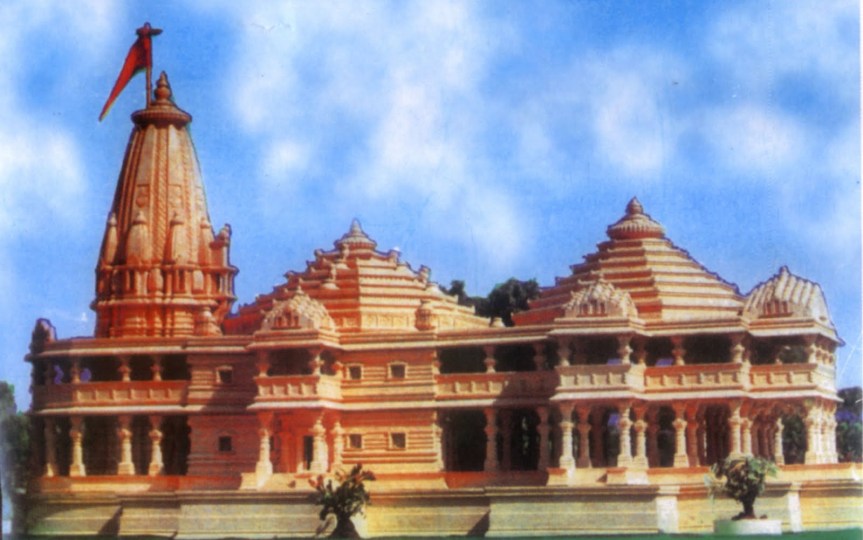
To start with, the name of the incumbent Chief Justice of India (CJI) Ranjan Gogoi who is due to retire shortly on November 17 along with the other 4 Judges – Justice Sharad Arvind Bobde who is the new designated CJI, Justice DY Chandrachud, Justice Ashok Bhushan and Justice S Abdul Nazeer who all were part of the five-Judge Bench that have put a supreme closure on the centuries-old Hindu-Muslim dispute by finally deciding it shall always be written in golden letters in the annals of history because they all have not just decided it finally but also decided it unanimously which must be applauded, admired and appreciated in no uncertain terms! Now there can be no more violence on this issue as the highest court of the country has now finally settled it once and for all which has to be accepted now by all of us most gracefully! The Ram Janambhoomi-Babri Masjid disputed land shall be handed over for the construction of a Ram temple at the entire site thus accepting Hindus claim and simultaneously also ordering that Muslims shall be allocated five acres at a prominent place in Ayodhya for a mosque. 
Needless to say, in a unanimous judgment titled M Siddiq (D) Thr Lrs. Vs. Mahant Suresh Das & Ors in Civil Appeal Nos. 10866-10867 of 2010 along with other Civil Appeals delivered just recently on November 9, a Bench headed by CJI Ranjan Gogoi has asked the Centre, which had acquired the entire 67.73 acres of land including the 2.77 acres of the disupted Ramjanambhoomi-Babri Masjid premises in 1993 to constitute a trust in three months for overseeing the construction of a temple and frame a scheme for its functioning as well as on matters pertaining to management of trust and construction of temple. For the time being, the possession of the disputed property would continue to vest with the Centre until a notification is issued by it investing the property in the trust. The Bench also directed that the Sunni Central Waqf Board should be given a five acre plot, either by the Centre from within its acquired area, or by the Uttar Pradesh government “at a suitable, prominent place in Ayodhya”. The Board would be at liberty to construct a mosque there. This should be done simultaneously with the transfer of the property to the proposed trust. 
Speaking for myself, I most politely beg to differ with Supreme Court on this as I very strongly believe that why can’t a temple and mosque coexist and why can’t Hindus and Muslims pray peacefully at any place together anywhere in India? Why can’t we be more respectful for each other? Why can’t we respect religion of those different from us just like we respect our own?
Speaking for my best friend Sageer Khan, he inspite of being a Muslim differed very strongly with me on this and said way back in 1993-94 directly to about 4 to 5 Muslims in my absence but which I overheard as I had just returned after attending my BSc classes at Sagar University which shocked me also to the hilt and which he repeated in my presence also then that, “Centre must declare Ayodhya, Kashi and Mathura as Hindu sites and not a single shrine of any other religion should ever be constructed at any of these three places. Should a temple be built in Mecca or Medina? What if Hindus also demand similarly? Will any Muslim anywhere in world agree to building of a temple anywhere in Mecca or Medina or anywhere in Saudi Arabia or any other Gulf country? Why do we then not do with others what we expect from others to do with us? Moreover, no true Muslim should offer namaz at any disputed place or by disturbing others like on roads and Hindus consider these 3 places as most sacred since lakhs of years. How can all this be overlooked? Will we become small if we accord Hindus due respect just like they respect Mecca and Medina. I don’t consider disputed site at Ayodhya as mosque because no namaz has been offered there since last many decades and moreover it is disputed where no true Muslim should ever go and Hindus have considered it always as Lord Ram’s birthplace and even Archeological Survey of India has found remains of temple at the disputed site! A very prominent Imam of Iran has also upheld Hindus strong claim on Ayodhya. We must be large hearted and accept the deepest sentiments which Hindus share with these 3 places – Ayodhya, Kashi and Mathura just like we do with Mecca and Medina. How will we feel if Hindus demand temple at these two sites? We will get mad in anger than why do we also not respect Hindus sentiments just like they respect ours? Allah never accepts prayers offered by hurting the sentiments of others. I will prefer not praying at all rather than pray by hurting my Hindu brothers! Muslims enjoy maximum freedom in India all over the world. No place can be more safe for Muslims than India where they enjoy maximum liberty. Indian Muslims are always discriminated in Pakistan which alone explains that why no Muslim from India ever wants to reside permanently in Pakistan and they are still termed as “Mohajjir”. I am proud to be an Indian and shall certainly die as an Indian. Religion are just different path to reach the common goal. God is called by different names but he is one.” There can certainly be no communal violence ever in India if all Indians always think like him! 
It is this same Sageer Khan who when I expressed to him my desire to become a Muslim like him as he always stood by me in my most difficult times took a vow from me in 1994 by placing my hand on his head with tears in his eyes saying that, “You shall never renounce your religion” as he (Sageer) felt always that, “Anything can be changed but nation, religion and parents can never be changed” and also the God Shiva in whom I believed till then but had lost faith in him shall continue worshipping him till my last breath just like he (Sageer) shall never renounce his Allah and his religion! It is this same Sageer who regularly ensured that I worshipped Lord Shiv while he used to offer namaz and it was a coincidence that whenever he took me to different temples which he did regularly from April 1993 to April 1995, the idol was always of Lord Hanuman due to which I started believing in him also fully along with Mata Durga where Sageer always bowed his head in a temple in Sagar in Madhya Pradesh for my faith to stay intact! I must acknowledge that the utmost sincerity with which he used to bow entirely in front of idols of Lord Hanuman and Mata Durga and shake his head on ground with fullest dedication when I never at that time liked to even bow down injected in me fresh lease of faith in not just Lord Shiva but also in Lord Hanuman and Mata Durga whom I never worshipped earlier for which I shall forever be indebted to him! It is again Sageer who took a vow from me that I shall never enter any mosque in my life nor bow my head ever in front of mosque as I am Hindu and should always visit only temple and bow head there only or in dargah as both Hindus and Muslims go there! 
Speaking now for Supreme Court who delivered this path breaking judgment, it was also made clear that, “In exercise of the powers vested in this Court under Article 142 of the Constitution, we direct that in the scheme to be framed by the Central Government, appropriate representation may be given in the Trust or body, to the Nirmohi Akhara in such manner as the Central Government deems fit.” Prime Minister Narendra Modi has hailed the restraint following the Supreme Court’s judgment in the Ayodhya case saying it should be seen as a message of unity which proves that the most difficult of problems can be solved within the framework of the Constitution and Courts. He very rightly tweeted saying that, “This verdict shouldn’t be seen as a win or loss for anybody. Be it Ram Bhakti or Rahim Bhakti, it is imperative that we strengthen the spirit of Rashtra Bhakti. May peace and harmony prevail!” I hail PM Modi for saying so!
It is most heartening to see that after giving the disputed land to Hindus and a separate five acres of land at a prominent place to Muslims for construction of a mosque in Ayodhya, the Supreme Court shut the door for fresh litigation to alter the status quo of religious sites such as those in Kashi and Mathura which has also seen discord over worship. I had the honour to visit Kashi in 2012 along with my advocate friend Amit Sharma and his family where we did pooja freely and I did not see any Hindu-Muslim tension at all! This clear assertion by top court must put to rest all doubts and speculations over such claims being presented at other disputed sites also by Hindus! 
It cannot be overemphasized that leaders from all parties must refrain from expressing unfounded fears on this and should recognize that the top court has itself said clearly and categorically on this which cannot be questioned by anyone! Central and state governments to follow Religious Places (Special Provision) Act, 1991, which mandates maintenance of status quo on character of the disputed sites as it existed in 1947. Only Ram Janambhoomi-Babri Masjid excluded from ambit of this law.
It is for the first time in history of Supreme Court that such a landmark decision was given on Saturday! It is also for the first time that the name of the author of judgment has not been mentioned and so it can be termed as a collective judgment even though as pointed out in Sunday Times dated November 10 that, “It was clear from the printed version of the judgment that the author was none other than Justice DY Chandrachud. It was a valid surmise. SC judges have their own styles and use distinct fonts. For those familiar with the style of Chandrachud, the matter was settled; well, almost beyond reasonable doubt.”
It is also for first time that the main judgment is accompanied by a 116-page “addenda” which was in the shape of a complete judgment and could well have been passed off as a separate, although concurring judgment which is believed to be authored by Justice Ashok Bhushan! No doubt, it is certainly remarkable and historic from all angles!
This noteworthy judgment also pulled back no punches to conclude that, “The destruction of the mosque took place in breach of the order of status quo and an assurance given to this Court. The destruction of the mosque and the obliteration of the Islamic structure was an egregious violation of the rule of law.” The court concluded that the Muslims were ousted from the 1,500 square yards of the mosque through acts of damage during communal riots in 1934, desecration in the intervening night of December 22-23 of 1949 when idols were placed inside the mosque and finally, the demolition of the mosque in 1992.” It also concluded that, “All forms of belief, worship and prayer are equal.” There can be no denying it! This landmark verdict cannot be interpreted either as victory for Hindus or defeat for Muslims! 
Zufar Faruqi of UP Sunni Central Waqf Board said that, “We welcome and humbly accept the verdict…we will not go in for any review of the apex court’s order or file any curative petition.” Maulana Tauqeer Raza Khan who is national President of Ittehad-e-Millat Council said that, “I respect the SC decision. Our faith has taught us to express gratitude to God in happiness and be patient while in sorrow. However, the verdict has ended the politics in the name of temple and will eliminate the hatred in the name of faith. I hope that the focus of politics will now be betterment of the country.” PM Modi too has already made his noble intentions clear on this and said unequivocally that, “The SC verdict has brought a new dawn. Now the next generation will build a new India! Maulana Shahbudin Razvi who is General Secretary of Tanzeem Ulama-e-Islam said that, “I welcome the decision of Supreme Court. The matter had become a major issue of contention between two communities of the country and today’s decision has ended a decades old dispute. I appeal to the people that they should maintain communal harmony in the country.” Pawan Arora who is VHP’s Divisional President also said that, “We welcome the decision which has been passed in the country’s interest.” 
To conclude, Supreme Court has accepted what many Muslims like Sageer Khan and Sufi Khan have steadily maintained that Hindus have always considered the disputed site in Ayodhya as the birth place of Lord Ram since lakhs of years and their unflinching faith in this stands vindicated by the report of Archaeological Survey of India which found proof of temple beneath the disputed site which can be considered as an expert opinion! The Apex Court conceded that Hindus and Muslims had a competing right over the disputed site but Hindus showed better evidence of their continuous worship at the disputed structure for centuries. It also maintained that no evidence produced by Muslims to indicate that their possession of disputed structure was exclusive and that offering of namaz was exclusionary of Hindus. 
It was also conceded that Muslims have never been in possession of outer courtyard. Inner courtyard has been a contested site with conflicting claims of Hindus and Muslims. But there has been no abandonment of mosque by Muslims as namaz was offered till December 1949. It held that, “The allotment of land to Muslims is necessary because though on balance of possibilities, evidence regarding claim of Hindus to the composite whole of the disputed property stands on a better footing than the evidence adduced by Muslims, but Muslims were dispossessed upon desecration of mosque on 22/23 December 1949, which was ultimately destroyed on 6 December 1992.”
Thus we see that Hindus get the entire disputed site and as a balancing act Muslims also get 5 acre of land at some prominent place in Ayodhya to be decided later! The Apex Court has thus set aside the September 30, 2010 verdict of Allahabad High Court which had divided the core disputed area into three equal parts and allotted one part each to Ram Lalla (the area under the central dome of the demolished mosque), Nirmohi Akhara (outer courtyard including Ram Chabutra and Sita Rasoi) and the rest to Sunni Waqf Board. Let’s earnestly hope now both Hindus and Muslims would be able to pray peacefully as directed by the top court!
Sanjeev Sirohi, Advocate,
s/o Col BPS Sirohi,
A 82, Defence Enclave,
Sardhana Road, Kankerkhera,
Meerut – 250001, Uttar Pradesh.

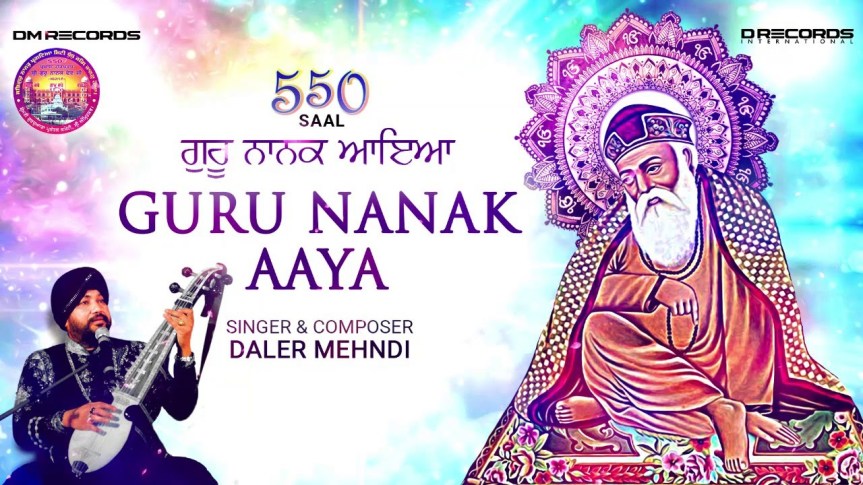
550 Birth Anniversary of Guru Nanak Dev & the Golden Temple

On this date of 12
November 2019, 550 birth anniversary of Guru Nanak Dev ji is being celebrated
across the world particularly in India and Pakistan with full dedication,
devotion and gaiety.
    His sayings and messages are still relevant
and will also continue till the day human beings survive. I am quoting from one
of his sayings which has greatly influenced me, “There is but One God. His name
is Truth; He is the Creator. He fears none; he is without hate. He never dies;
He is beyond the cycle of births and death. He is self-illuminated. He is
realized by the kindness of the True Guru. He was True in the beginning; He was
True when the ages commenced and has ever been True. He is also True now”.
Another one, “Even Kings and emperors with heaps of wealth and vast dominion
cannot compare with an ant filled with the love of God”.

    Guru Nanak ji was born at present place of Nankana Sahib, near Lahore of Pakistan.
According to various literatures and beliefs, the birth and initial years of
Guru Nanakji’s life were marked with
many astonishing incidents that validated that Nanak ji was born with divine
power.
 Guru Nanak Dev ji later on settled down at Kartarpur (now in Pakistan) which was
founded by him in 1522 and spent the rest of his life there (1522-1539). Kartarpur is now great news in the world
as 3-kilometre  corridor which connects Darbar Sahib in Kartarpur with Dera Baba
Nanak shrine in Gurdaspur district of
Punjab (India) has  allowed pilgrims’
mainly Sikh pilgrims’ direct access to the historic Gurdwara Darbar Sahib in
Kartarpur
, where Guru Nanak Dev
passed away. Hope this corridor will bring peace in the region so that no
mothers have to lose their sons or children had to suffer because death of
their fathers. Guru Nanak Dev ji long ago rightly said, “Dwell in peace in the
home of your own being, and the Messenger of Death will not be able to touch
you”.       
  Although Guru Nanak ji was the founder of
Sikhism and the first of the ten Sikh Gurus but all the other Gurus had done
excellent work for human beings. In this context, the Golden Temple is a
glaring example. The Golden Temple of Amritsar (Sri Harmandir Sahib) is not only a central religious place of the
Sikhs, but also a symbol of human brotherhood and equality. Everybody
irrespective of caste, creed, religion or race can visit the place.
Regarding the Temple it
may be mentioned that, as advised by Sri Guru Amar Dass Ji (3rd Sikh Guru), Sri Guru Ram Dass Ji (4th Sikh Guru)
started the digging of Amrit Sarovar
(Holy Tank) of Sri Harmandir Sahib in
1577 A.D., which was later on brick-lined by Sri Guru Arjan Dev Ji (5th Sikh Guru) on 15 December, 1588 and he
also started the construction of Sri Harmandir
Sahib
. Sri Guru Granth Sahib
(scripture of the Sikhs) was first installed at Sri Harmandir Sahib on 16 August 1604 A.D.
     The Golden Temple (Sri Harmandir Sahib Amritsar) has a unique
Sikh architecture. Built at a level lower than the surrounding land level, the Gurudwara teaches the lesson of
egalitarianism and humility. The four entrances of this holy shrine from all
four directions signify that people belonging to every walk of life are equally
welcome. The Sikhs and others of different religions all over the world daily
visit Sri Harmandir Sahib.  
    The author had the opportunity to visit
holy Golden Temple (Sri Harmandir
Sahib) in August 2017. So the author’s first visit to Golden Temple created different
feelings in the mind and heart of the author as everywhere selfless service was
observed- whether serving of food, water, cleaning of utensils, making of roti etc. were concerned. It is
heartening to mention by quoting Hindustan Times, 19th May 2016,
epaper, that “The Golden Temple (Harmandir
Sahib) in Amritsar has been ranked number 3 in the country on the travellers’
choice landmarks list of a leading travel planning and booking site
TripAdvisor. Surrounded by a holy ‘sarovar’,
its construction was completed in 1604 and presently runs one of the largest
free kitchens in the world, which serves an average of 1,00,000 people daily”.

Dr Shankar Chatterjee
Former Professor & Head (CPME),NIRD & PR ( Govt. of India), Hyderabad,  India
Former Associate Professor, Eritrea
Former Assistant Prof, Govt. Degree College, Tripura, India
Former Senior Planning Officer, Govt of Assam, India

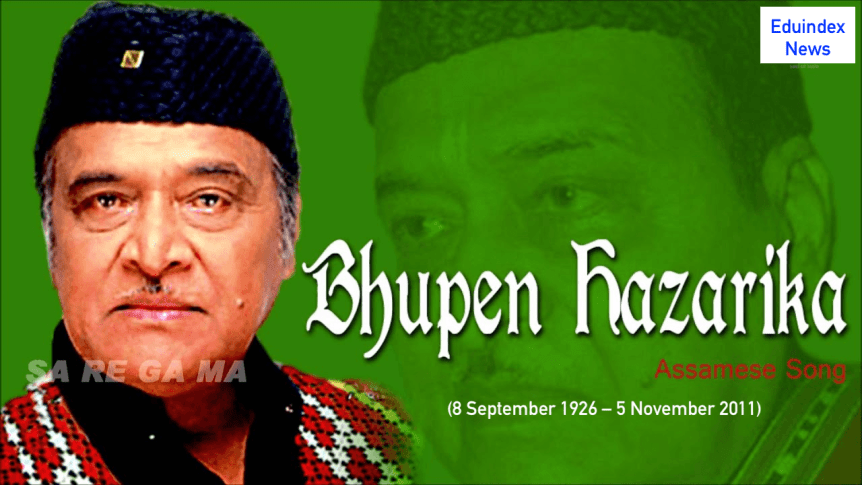
Bhupen Hazarika: A Legend in the Music World

Death of Dr. Bhupen Hazarika is a loss of music lovers of the world. His songs contained rhythm of Indian classical music vis-a-vis a lucid meaning depicting nature, Indian culture, language, unity etc. For example “Mahabahu Brahmaputra, Maha Milonor Thirtha…….. “(Assamese song -Meaning River the Brahmaputra is symbol of national integration….). Another song in Bengali explains ‘love to human being ……’ i.e. in Bengali, “Ami Bhalobasi Manuske….” 

In one of his songs, Dr Hazarika sang “Can anyone provide a person whose blood is white or any person whose blood is black. That is when colour of blood is same then why the differentiation among the human beings”. Meaning is so nice that after listening any human being will feel for others. All the songs carried specific meanings and very touchy. His songs enthralled us. 
I had the opportunity to listen him in Guwahati in many occasions at the ‘Bihu-toli’ (where Bihu functions are held normally in mid of April i.e. in Assamese New Year).I have observed he sings with core of his heart. His songs are not only popular in India but also in Bangladesh and other countries. While I was in Bangladesh many persons told about him and his songs were highly esteemed by them, because of music and meaning. During my two years stint in Eritrea, (a country located in north east Africa) I carried mainly Dr. Hazarika’s CDs and evening always used to listen his songs. My Indian, Pakistani and Eritrean friends used to visit my residence and highly charmed by his melodious songs. I was explaining meaning of the songs so they were more excited and appreciated his talent. 
Born at Sadia, in upper Assam on September 8, 1926, father Sri Nilakanta Hazarika was a high school teacher. Dr Bhupen Hazarika had his schooling in different places of Assam viz., at Dhubri, Guwahati and Tezpur. He completed his matriculation in 1940; Intermediate in Arts (IA) from Cotton College in 1942 and then joined Banaras Hindu University (UP) for higher study and subsequently completed his B.A. (1944) and M.A. (1946). The maestro rendered his services as music director in as many as 36 Assamese films, 8 Bengali films and 5 Hindi films. His activities were rightly recognized by conferring various awards. These inter alia, include Dada Saheb Phalke, Sangeet Ratna, Padma Bhusan, Asam Ratna, Srimanta Sankardev etc. He was the architect of the movement that culminated in the establishment of a film studio in Guwahati, a first full-fledged film studio in Assam. He made many films such as Era Bator Sur (1956), Mahut Bandhure (1958), Shakuntala (1961), Pratidhvani (1964), Loti Ghoti (1966), Chik Mik Bijuli (1969), Siraj (1988) and a tele- film Miri Jiori (1990), documentaries like For Whom the Sun Shines (1974), Amuthi Chaulor Kahini (1974), Rupkonwar Jyotiprasad aru Joymoti (1976), Through Melody and Rhythm (1977), Along the River Brahmaputra (1981), Satras and Namghars of Assam, Glimpses of the Misty East (1996) and The Brahmaputra, An Endless Journey (2006). Due to his endeavour ‘Sattriya dance’ (a form of dance performed at Holy places, i.e.Namghar) got national recognition. He published books for the children — Bhupen Mamar Geete-Mate, A, Aa, Ka, Kha and a transcript autobiography — Moi eti jajabor.
Although he passed away on 5th November 2011 in Mumbai but he will be remembered in this world through his melodious songs. 
Sri Tej Hazarika, only son of Dr Bhupen Hazarika performed his last rites on 9th November 2011 at the cremation ground prepared for him at Jalukbari campus of Gauhati University, Guwahati. Before the pyre was lit, Jawans of the Assam Police offered 21-gun salute. During rituals many dignitaries including Governor of Assam, Sri JB Patnaik, Chief Minister Sri Tarun Gogoi, and opposition leader of Lok Sabha Smt. Sushma Swaraj, Union Minister of State (Independent) for Development of the North East Region (DoNER) Sri Pawan Singh Ghatowar, Secretary of All India Congress Committee Sri Jaydev Jena and many ministers of Assam were present. Sri Ghatowar represented the Prime Minister, while Jena represented UPA chairperson Sonia Gandhi. In addition to the dignitaries, millions of people irrespective of caste, creed, religion, language attended to adieu Dr Hazarika which vividly reveals that he was in the heart of all sections of people. 
Dr Shankar Chatterjee
Former Professor & Head (CPME),NIRD & PR ( Govt. of India), Hyderabad,  India
Former Associate Professor, Eritrea

Former Assistant Prof, Govt. Degree College, Tripura, India
Former Senior Planning Officer, Govt of Assam, India 

Ishwar Chandra Vidyasagar: A Legendry Personality

On this date i.e. on 26 September in 1820 Ishwar Chandra Vidyasagar (Ishwar Chandra Bandyopadhyay/ at present many persons with same surname write
Banerjee instead of Bandyopadhyay) was
born in then Bengal, present West Bengal. Because of his vast knowledge later
on of his life, he is known as
Vidyasagar means knowledge of ocean. He was also
known as ‘Dayar Sagar’ or ‘Karunar Sagar’
(meaning ocean of kindness) because of his charitable nature and generosity.
His enormous contribution for the development of the society is gratefully
remembered by all not only in India but also in Bangladesh. 
Ishwar Chandra Vidyasagar: A Legendry Personality

He reconstructed the
Bengali alphabets and simplified Bengali typography into an alphabets.
He was a social reformer
and advocated widow remarriage and worked against polygamy.
Because of his initiative,
the Widow Remarriage Act was passed in 1856 making the widow marriage legal.
   Vidyasagar worked endlessly to provide equal
education to all men and women irrespective of their caste, religion and
gender.
He
was protagonist of women education. According to him with education only women
can live in the society with dignity and respect. He lobbied hard for girls’ school
and for this; he went door to door requesting heads of families to allow their
daughters to admit in the schools. And it is believed that he could open 35
schools for girls throughout then Bengal where around 1300 students were
enrolled. It is pertinent to mention that because of his arduous labour and
support received from John Elliot Drinkwater Bethune, the first girls’ school
in India, the Bethune School was established on 7 May, 1849 in Calcutta.
He worked as a Sanskrit
professor in Sanskrit College, Calcutta. While he was principal of the college undertook
some reforms and one of them was admission of students belonging to  marginalised group (present SC/ST) as earlier
they were not allowed admission. Further, when he was Professor in Sanskrit
College successfully included English and Bengali as medium of learning, in
addition to Sanskrit. He introduced courses of European History, Philosophy and
Science along with Vedic scriptures. During his lifetime, Vidyasagar wrote many
books and thus enriched education system.
In present days, he is
remembered in many ways, inter alia
of which are:
a)     
Vidyasagar Setu, which
connects Howrah and Kolkata, is a bridge over the Hooghly River in West Bengal.
b)     
A
fair/mela named Vidyasagar Mela (dedicated
to spreading education and increasing social awareness) is held annually in
West Bengal since 1994.
c)     
Vidyasagar
College in Kolkata is named after him, as well as Vidyasagar University in Paschim Midnapore, West Bengal.
d)     
A
street in then Calcutta now Kolkata has been named after him
e)     
The
West Bengal Government has established a stadium named after him at Barasat, North 24 Parganas, district.
f)      
For
his immense and selfless service for the marginalised people of then Bihar
present Jharkhand, a railway station has been named as Vidyasagar Station in Jamtara district of Jharkhand.
g)     
Indian
Post issued stamps featuring Vidyasagar in 1970 and 1998.
       In addition to above, I have observed
many persons in the states of South India keep their son’s name Ishwar Chandra
Vidyasagar/
Vidyasagar
(prefix as family name). When I visited Bangladesh amazed to observe his
popularity among the people of Bangladesh.
Vidyasagar although has
passed away on 29 July, 1891 but he is still remembered by all Indians. After
his death Rabindranath Tagore wrote, “One wonders how God, in the process
of producing forty million Bengalis, produced a man!”

Dr Shankar Chatterjee
Former Professor & Head (CPME),NIRD & PR ( Govt. of India), Hyderabad,  India

Former Associate Professor, Eritrea

Former Assistant Prof, Govt. Degree College, Tripura, India
Former Senior Planning Officer, Govt of Assam, India 
PRESENT ADDRESS
Prof. Shankar Chatterjee 
Lidom Villa, No.13
Peranchuru, Bandlaguda(Jagir), Hyderabad-5000091

We have responsibility to save the environment

 SAVE NATURE – PLEASE  TAKE PRINTOUT WHENEVER NECESSARY

Hindi is the language of coexistence. Its growth will never be at the cost of any other language: Shri Amit Shah

Union Minister of Home Affairs Shri Amit Shah graced the Hindi Divas Samaroh 2019 as Chief Guest today at Vigyan Bhawan in New Delhi. Also present on the dais were Ministers of State for Home Affairs Shri Nityanand Rai and Shri G Kishan Reddy, as well as Secretary and Joint Secretary, Department of Official Language.
Shri Shah said that while unity in diversity is India’s defining trait, a common language is needed as a culturally unifying factor. Shri Shah remarked that even Gandhi ji and Sardar Patel, who forged a united India, appealed to people to accept Hindi as the national language. Shri Shah lauded the work done by the Department of Official Language in popularizing Hindi, and appealed to citizens to work towards making Hindi the most widely used language in the world. Shri Shah also emphasized Hindi as a factor that unites India.
Shri Shah appealed to all to get connected with Hindi. He noted the unanimous consensus for Hindi as national language in the Constituent Assembly, in spite of the Assembly’s sheer diversity. He said that this decision was an important factor in ensuring cultural unity of India. Noting on the linguistic richness of India, he said that the nation was home to 122 languages and more than 19500 dialects.
Shri Shah said that a country that forgets its language kills its cultural existence. Language connects us to the roots of the nation. Addressing the youth of India, Shri Shah called for introspection and said that if we lose our language, we will be cut off from our culture. He asserted that the richest languages of the world belong to India. The depth of Indian languages is unparalleled, because of the equally unparalleled depth of Indian culture. 
Shri Shah said that we must leave the inferiority complex towards Hindi and our other languages that has set in due to colonial hangover. He called for greater use of the national language in all aspects of life. He said that only when we understand the importance of Hindi, can it thrive and prosper. He said that we must be proud of our language. Noting the role played by teachers in the growth of languages, he said that teachers and educators must instil a sense of pride about Hindi in students.
Shri Shah said that while diversity in languages is the strength of our nation, a national language needed so that foreign languages and cultures do not overpower our own. He proclaimed that next year, the Hindi Divas Samaroh would be a public program, as Hindi belongs to the people. He said that the Government would take Hindi Divas outside Delhi, and would celebrate a Hindi Saptah across the country. He called Hindi the heart and soul of the freedom struggle.
Shri Shah noted Vinoba Bhave’s love for Hindi and Gandhi ji’s assertion that a nation is mute without its national language. He said that our power to express our culture will die in the absence of our national language. Quoting Dr. Ram Manohar Lohiya, Shri Shah said that without Hindi, democracy is not possible in India. The language of the state should be that which people can understand. He remembered Purushottamdas Tandon, who proclaimed national language to be the lifeblood of a nation.
Shri Shah remembered former Prime Minister Shri Atal Bihari Vajpayee as the first Minister of External Affairs to give a speech in Hindi at the United Nations in 1977. He hailed this as a seminal step to break the inferiority complex of Indians with respect to Hindi. He also hailed former Minister of External Affairs Sushma Swaraj’s contribution to the global growth of Hindi, who encouraged the UN to use more Hindi, including on Social Media. This eventually led to the Hindi Twitter account of the UN.
Praising the Prime Minister’s commitment to Hindi, he noted that  wherever the Prime Minister addressed expatriates, he spoke in Hindi. Shri Shah noted that the Prime Minister addressed even the  UN General Assembly and the World Economic Forum in Davos in Hindi, making him the first head of government to address WEF in a national language other than English. 
Shri Shah called upon institutions and individuals to be committed to the growth and use of Hindi. He spoke of the need to proliferate Hindi in technical fields like medicine, engineering and law. He expressed confidence that Hindi would have reached ever greater heights by 2024 elections. He asserted that the growth of Hindi will never be at the cost of any other language and added that Hindi is the language of coexistence.
Speaking on the occasion, Minister of State Shri G Kishan Reddy said that while Telugu was his mother tongue, he had equal love for Hindi. He said that a mother tongue and national language must go together. He noted that the Constituent Assembly accepted Hindi as a national language, as it had been the unifying thread between cultures,  religions and regions during the freedom struggle. He called Hindi a source of self-pride for the country. He noted the famous Tamil poet Subramania Bharathi’s love for Hindi. He added that Hindi is India’s greatest social and cultural heritage and is emerging as a powerful cultural capital of India. He remarked that even multinational firms were accepting Hindi as a functional language. He noted the growing popularity of Hindi with India’s films, and said that the growth of Hindi on the global stage adds to India’s soft power. He advocated a greater use of IT for the development and popularization of Hindi.
Minister of State Shri Nityanand Rai said that languages are the souls of societies and nations. People express themselves in their languages. He added that Hindi consists of our emotions and aspirations, and acts as a connecting language for the whole of India. He called Hindi the symbol of India’s democratic system and said that our nation’s identity depends on the strength and popularity of our national language. He noted that the Constitution has given us the responsibility of the growth and development of Hindi and called for greater use of Hindi in the official work of Union Government and that of various regional languages in the official work of State Governments. He said that Antyodaya is our goal, and Hindi plays a vital role in achieving that goal, as it is the commonest language of communication across the nation. 
Shri Shah launched the E-Saral Hindi Vakya Kosh and E-Maha Shabda Kosh Mobile App, both initiatives of the Department of Official Language that aim to harness information technology for the growth of Hindi. He awarded Rajbhasha Gaurav Puraskar and Rajbhasha Kirti Puraskar to government departments and public sector units respectively for their contribution to Hindi.

Dr. Sarvepalli Radhakrishnan: Pronam to the Legendry personality on occasion of Teacher’s Day

Since 1962, 5 September is celebrated in India as Teacher’s Day as on this day in 1888 a great scholar, philosopher, erudite person and statesman Sir Sarvepalli Radhakrishnan was born at Thiruttani, Madras Presidency of India. His many activities and assignments are too small to mention here as for this volumes are required. Even then few lines are mentioned on occasion of his birth anniversary. Among his many extensive works in the form of publications, one is Sir highlighted basic tenets and philosophy of Hinduism as well as he had copious knowledge of the Western philosophy and literatures for which many consider him a bridge-builder between India and the West.
At the very young age (33 years) in 1921, he was selected for the prestigious George V Chair in Philosophy at Calcutta University where he had proved his erudite skill. While, he was in Calcutta (now Kolkata) two volumes of Indian Philosophy were published – one in 1923 and the second was four years later. The Philosophy of Rabindranath Tagore written by Sarvepalli Radhakrishnan was also an excellent publication for which he should be applauded. 
Throughout the 1920s, Sir Radhakrishnan’s reputation as a scholar continued to grow both in India and abroad. He was invited to Oxford to give the 1926 Upton Lectures, published in 1927 as The Hindu View of Life, and in 1929 Radhakrishnan delivered the Hibbert Lectures, later published under the title An Idealist View of Life. Also he wrote commentaries on the Prasthanatraya (main primary texts of Vedanta), the Upanisads (1953), Brahma Sutra (1959) and the Bhagavadgita (1948). Dr. Radhakrishnan was awarded several top awards inter alia of which are knighthood in 1931, the Bharat Ratna, the highest civilian award in 1954 etc. He was awarded honorary membership of the British Royal Order of Merit in 1963. He was also one of the founders of Helpage India, a non-profit organisation for elderly underprivileged in India.
Dr Shankar Chatterjee
Former Professor & Head (CPME),NIRD & PR ( Govt. of India), Hyderabad,  India
Former Associate Professor, Eritrea

Former Assistant Prof, Govt. Degree College, Tripura, India
Former Senior Planning Officer, Govt of Assam, India 
PRESENT ADDRESS
Prof. Shankar Chatterjee 
Lidom Villa, No.13
Peranchuru, Bandlaguda(Jagir), Hyderabad-5000091

Vice President Releases Special issue of think India Quarterly on Faiz Ahmed Faiz

The
Vice President of India Shri M. Hamid Ansari  said that it had been observed that the poetry
of Faiz Ahmad Faiz blends skilfully classical sobriety and artistry with modern
incisiveness and ruthlessness of expression in exposing to light the turmoil
and revolutionary urges of the time.essing after releasing Special issue of
Think India” quarterly on Faiz Ahmad Faiz at a function here today, he opined
that Romance and revolution thus
became part of the same impulse and, in Faiz’s own words, “gham-e-jaana aur
gham-e-douran eik hi tajrabe ke do pehlu hain”. 
The resulting mix is overpowering;
it accounts for the popularity of Faiz in the subcontinent and beyond.
Shri Ansari said that the previous week had been a spiritually
uplifting one for him personally. On Friday he was in Dhakka participating in
the joint Bangladesh-India celebration of Rabindranath Tagore’s 150th birth anniversary. Today, he is here
to release this volume. Two great poets, both born Indian, who used the medium
of verse to reflect on issues of wider concern. One thought in evolutionary
terms, the other in revolutionary ones. The menu of options, a teasing one, was
laid bare.
Following
is the text of the Vice President’s address
:
            “I am happy to be here today to
participate in the release of the Faiz Centenary number of Think India.
It brings together writings and impressions of a good number of shaidaa ee yaan-e-Faiz the world over
and would be of particular value to the younger, post-Faiz, generation.
            This
week has been a spiritually uplifting one for me personally. On Friday I was in
Dhakka participating in the joint Bangladesh-India celebration of Rabindranath
Tagore’s 150th birth anniversary. Today, I am here to release this
volume. Two great poets, both born Indian, who used the medium of verse to
reflect on issues of wider concern. One thought in evolutionary terms, the
other in revolutionary ones. The menu of options, a teasing one, was laid bare.
            It
has been observed that the poetry of Faiz Ahmad Faiz blends skilfully classical
sobriety and artistry with modern incisiveness and ruthlessness of expression
in exposing to light the turmoil and revolutionary urges of the time. Romance
and revolution thus became part of the same impulse and, in Faiz’s own words, “gham-e-jaana aur gham-e-douran eik hi
tajrabe ke do pehlu hain”.
The resulting mix is overpowering; it accounts
for the popularity of Faiz in the subcontinent and beyond.
Faiz saheb’s verses challenge authoritarian
edifices and evoke hope for a better tomorrow:
Kahaan hai manzil-e-raahe tamanna hum bhi dekhen gai
Yeh shab hum par bhi guzre gi, yeh farda hum bhi dekhen
gai
Theher ai dil , jamaal-e-roo-e- zaiba hum bhi dekhain gei
Again, in the well
known lines of Tarana:
Darbaar-e-watan main 
ek din sub jaane wale jaaen ge
Kooch apni saza to pohnchen ge, kooch apni jaza le jaaen
ge
Ai khak nasheeno, uth baitho, woh waqt qareeb aa pahuncha
hai
Jab takht  giraae
ja ain ge, jab taaj uchale jaa en ge
And, there are
expressions of despair emanating from the harsh experience of life:
Himmat-e-ilteja nahin baaqi—Zabt ka howsala nahin baaqi
Ho chuka khatm ahd-e-hijr o wisal—Zindagi main maza
nahin baaqi
Or
Jo chal sako to chalo ke raahe wafa bahut mukhtasar
hui hai
Muqaam hai ab koi na manzil, faraaz-e-daar o rasan se
pehle.
            The time Faiz Ahmad Faiz spent in
jail produced some of his most evocative verses. He explained it convincingly: Jail khana, aashqi ki tarah, khud eik
bunyaadi tajraba hai,jis main fikr aur nazar ka eik aadh naya dareecha khud
bakhud khul jaa ta hai.
            The volume before us also brings
forth some delectable episodes in the life of Faiz. One relates to his meeting
with Jazbi in Lucknow
in 1936. Another to how, on being recruited in the public relations department
of the army in World War II, he developed a motivational approach for the
soldiers and for which he received an OBE.
            One of the contributors to this
volume has summed up the sentiments of many who read and cherish Faiz: “He
makes us feel good about ourselves. He makes our lives bearable. He gives us a
glimpse of hope.”
            One last word before I conclude. In
November 1984, I was wandering in Urdu Bazar and acquired a collection of Faiz
entitled Waraq Waraq. It was edited
in 1975 by a distinguished predecessor of mine in this office, the late Shri
Krishan Kant. In an erudite Introduction, he dwelt on various aspects of the
poet’s work. I will share with you his concluding lines:
Bharat main jahan Urdu kasm-pursi ke aalam main hai,
nai nasl Faiz ke kalam ko surma samajh kar aankhon se lagaati hai. Mehnat aur
sarmay ki kash ma kash ka shaoor jun jun awam main barhta jai ga, aane wali
naslain usai ek aham tareeki aur funni dastawaiz ke taur par harz-e-jaan banaen
ge.  

            The poetry of Faiz Ahmad Faiz earned
him immortality in his lifetime. It is incumbent on us, all of us, to pass on
this precious heritage to succeeding generations. D.P. Tripathi ji has earned
our gratitude by bringing forth this collection of writings”.

Courtesy: https://pib.gov.in/newsite/PrintRelease.aspx?relid=72053

Shri Sharad Pawar Released Think India Quarterly

Shri Sharad Pawar, Union Minister of Agriculture and Food Processing Industries released the special issue of Think India Quarterly
on Indian Agriculture. While appreciating the effort, he remarked that
thinking is not an easy task as it requires in-depth study and
understanding of the issue with all ramifications. Shri Pawar raised
some of the important issues and challenges before Indian Agriculture
in his speech. He reminded the contribution of stalwarts such as Dr C
Subramaniam, Shri Jagjivan Ram ji, Dr B P Pal and others who made
significant contributions in accelerating agricultural growth in India
which ultimately led to globally acclaimed green revolution.  Shri Pawar
reiterated the need to make Indian Agriculture more profitable through
processing and marketing initiatives and offering remunerative prices
to farmers.
Shri Sharad Pawar Released Think India Quarterly
Dr M S Swaminathan, noted thinker and Member of Parliament,
highlighted the enormous employment potential of the agricultural
sector despite the slow growth while presiding over the function. Dr
Swaminathan advocated a judicious blending of technology with policy
intervention to make a difference in the Indian Agriculture. He pointed
out the huge untapped potential of agricultural growth in eastern part
of the country which can be developed as an asset in the food security
of the nation.
Dr (Ms) Syeda Hameed, Member (Health Grp, Gender & Equity Grp), Planning Commission, emphasized the important role of Mahila Sashaktikaran Yojana in agriculture and rural development of the country, which needs to be extended to far and wide areas across social groups.
Think India Quarterly is an initiative of Vichar Nyas
Foundation which is a modest attempt to re-emphasize the value of ideas
in both understanding and changing society, culture and politics. The
special issue on Indian Agriculture, edited by D. P. Tripathi, presents
thought provoking articles on various facets of Indian agriculture by a
galaxy of thinkers and innovators.
The release function was attended by policy planners, academia, media and other stakeholders in agriculture.