GATE Preparation, Reimagined: Learn, Practice, and Progress with Free Resources from Track2Training

https://i.ytimg.com/vi/jgechCQpXVw/maxresdefault.jpg?utm_source=chatgpt.com

4

GATE Preparation, Reimagined: Learn, Practice, and Progress with Free Resources from Track2Training

The journey to cracking the GATE (Graduate Aptitude Test in Engineering) is often described as demanding, competitive, and resource-intensive. Many aspirants assume that success requires expensive coaching programs, bulky study materials, and paid test series. However, a growing number of students are proving otherwise—by relying on well-structured free learning platforms that emphasize clarity, practice, and consistency.

One such platform steadily supporting GATE aspirants across India is Track2Training.

From Confusion to Clarity: Why the Right Resources Matter

GATE is not an exam that rewards rote memorization. Instead, it tests fundamental understanding, analytical ability, and problem-solving skills developed over time. Aspirants often struggle not because of lack of effort, but due to scattered resources and unclear preparation paths.

Track2Training addresses this challenge by offering focused, exam-oriented content—helping students move from confusion to clarity. Its freely accessible GATE preparation section is designed to support learners at different stages, whether they are starting early or revising intensively.

What Makes Track2Training’s GATE Resources Stand Out?

Rather than overwhelming learners with excessive theory, Track2Training emphasizes practice-driven learning. The platform provides:

  • Carefully curated GATE practice sets
  • Objective-type questions aligned with the latest exam pattern
  • Discipline-focused content, including Architecture & Planning
  • Simple explanations that reinforce core concepts

Each practice set encourages aspirants to think conceptually, manage time efficiently, and become familiar with the logic behind GATE-style questions.

Learning That Fits Your Schedule

One of the biggest advantages of Track2Training’s free GATE materials is flexibility. Whether you are a full-time student, a working professional, or someone preparing alongside college exams, these resources adapt to your routine.

You can:

  • Practice a few questions daily
  • Use practice sets for weekend revision
  • Integrate them with standard textbooks and previous year papers

There are no subscriptions, deadlines, or paywalls—just open access learning that respects your pace and preparation style.

Encouraging Independent and Confident Preparation

Self-study is a powerful approach when supported by the right tools. Track2Training encourages aspirants to become independent learners, capable of evaluating their own progress and identifying weak areas.

By solving practice questions regularly, aspirants develop:

  • Better accuracy in numerical and conceptual problems
  • Confidence in handling different question formats
  • Familiarity with exam pressure and time constraints

This gradual improvement is crucial for long-term success in GATE.

Building a Learning Community

Preparation can feel isolating, especially when studying alone. Track2Training bridges this gap by connecting learners with online communities and discussion channels, where aspirants can exchange ideas, clarify doubts, and stay motivated throughout their preparation journey.

Such peer interaction often plays a key role in sustaining consistency—an essential factor for competitive exams like GATE.

Why Free GATE Resources Are a Game-Changer

Accessible education is no longer a luxury—it is a necessity. Platforms like Track2Training demonstrate that quality preparation does not need to be expensive. By offering free study and practice resources, they help democratize access to competitive exam preparation and empower students from diverse academic and economic backgrounds.

In an exam where understanding and discipline matter more than money, free and reliable resources can make a decisive difference.

Begin Your Preparation Today

If you are looking to strengthen your GATE preparation with structured practice and zero financial burden, Track2Training’s GATE section is an excellent starting point.

🔗 Explore free GATE study materials and practice sets here:
https://www.track2training.org/search/label/GATE?&max-results=8

Final Note

GATE success is built step by step—through regular practice, conceptual clarity, and sustained effort. With Track2Training’s free resources, you gain a dependable companion for this journey.

Prepare wisely. Practice consistently. And move closer to your GATE goals—one question at a time.
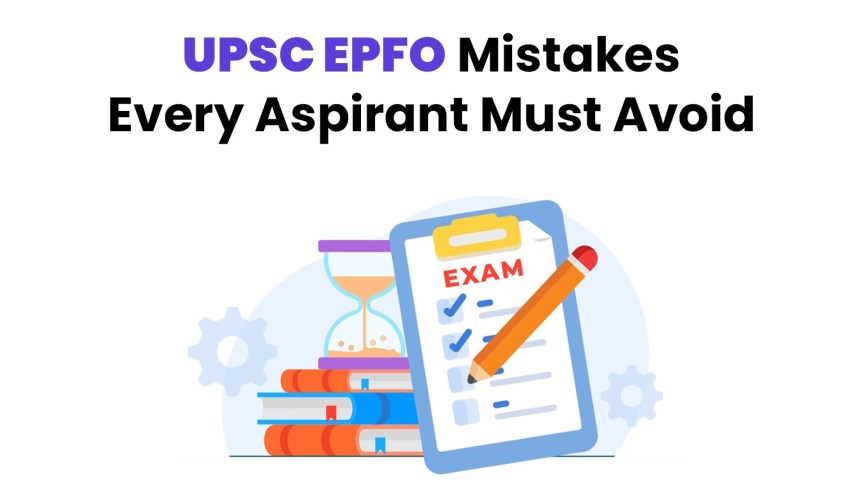
UPSC EPFO Mistakes Every Aspirant Must Avoid

The UPSC EPFO exam is one of the highly competitive exams, which many aspirants fail to clear because they all make the same mistakes every year. These mistakes often include ignoring the syllabus, avoiding UPSC EPFO previous year papers, skipping mock tests, etc. 

Making such mistakes reduces your chances of cracking the UPSC EPFO exam, and you need to invest another year in preparing. Which is again risky, as this is not a regular exam.

In this article, I’ll share the most common mistakes UPSC EPFO aspirants make and how you can avoid them!

Mistake 1: Not Checking Exam Pattern and Syllabus

It’s easy to make a big mistake when getting ready for the UPSC EPFO exam: not truly understanding the exam pattern and syllabus.

If you don’t match your study plan to how the exam is set up, you could end up wasting a lot of time on things that don’t matter.

How to Avoid This Mistake:

  • Rely on the official UPSC EPFO notification for the latest pattern 
  • Verify the syllabus from multiple sources so that you don’t miss any important topics. 
  • Focus on high-weightage topics from all subjects, but don’t ignore the rest of the topics.

Mistake 2: Avoid Solving UPSC EPFO Previous Year Papers

Another big mistake while preparing for the UPSC EPFO exam is not solving previous year papers. Many candidates focus too much on reading the concepts and forget to check the question types and patterns from the actual exam.

How you can use UPSC EPFO PYQs:

  • Solve past papers with a timer to simulate exam conditions.
  • Keep your phone on silent to avoid distractions.
  • Analyze every mistake to understand why you got the question wrong.

Mistake 3: Assuming Current Affairs Are Easy

Current Affairs are not as easy as they may look. They include various topics related to core EPFO subjects.

Many aspirants make the mistake of taking current affairs lightly, and they keep it for the end. But covering the past 4 to 6 months of current affairs in the end is quite challenging, as your mind has a limit to retain information to a certain point. 

Here is how you can prioritize GA:

  • Pay close attention to each current affair that is directly related to the UPSC EPFO syllabus, such as social security schemes, labor laws, and government policies.
  • Along with the reliable newspapers, you should also include the Press Information Bureau (PIB) for official government updates and announcements.
  • Learning current affairs is a continuous process. Dedicate time each week to review what you’ve read. Create short notes or use your daily current affairs app’s weekly summaries to reinforce your memory.
  • As you read a news item, think about how it relates to a topic in your syllabus.

Mistake 4: Not Practicing Enough Mock Tests

Many aspirants preparing for the UPSC EPFO exam skip practicing mock tests. They only focus on learning new concepts. 

Failing to practice mock questions leaves you unprepared, as you don’t actually know if those concepts are clear or not if you don’t practice. You’ll release this in the actual exam. 

How to Avoid This Mistake:

  • Make time every week to do a full mock test, just as if it were the real exam.
  • After each test, review your performance. 
  • Find your mistakes and check the detailed explanation to know where you went wrong.
  • See where you’re losing time and what topics are giving you trouble. Then, focus your practice on those areas.

Mistake 5: Not Revising Regularly

It’s easy to forget things you’ve studied, and you’ll not even realize this. You need to understand that revising is as important as learning new concepts. In order to ensure that your mind will retain what you just read, you should revise regularly.

How to resize:

  • Dedicate a specific time each week to go back over what you’ve covered.
  • Repeatedly practice key topics and formulas until they feel second nature.
  • Make short notes for important concepts so you can easily revise when needed.

Mistake 6: Poor Time Management

A common mistake while preparing for the UPSC EPFO APFC and AO/EO exams is poor time management. You can easily spend too much time on 1 less important topic while leaving the important topics untouched.

How can you manage time efficiently? 

  • Don’t get stuck on one topic. Distribute your study time evenly to ensure all subjects are covered.
  • When you take mock tests, set a timer for each section or complete exam. This will help replicate the actual exam environment.
  • Tackle your most difficult subjects first, and later move on to practice your stronger areas.

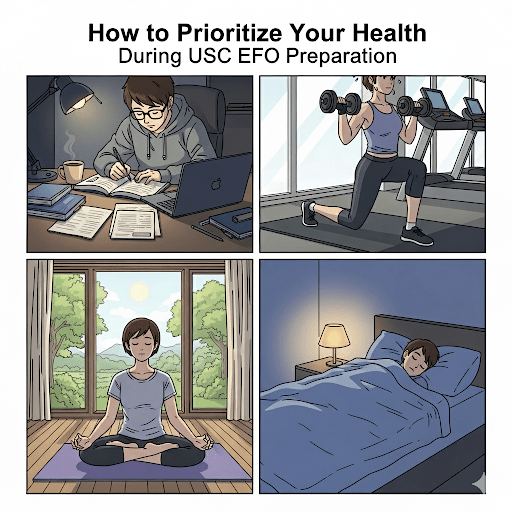
Mistake 7: Ignoring Health and Well-Being

You must know that the UPSC EPFO exam preparation is a marathon. If you constantly push your mind to the limit, chances are it will break at some point, and you’ll lose motivation at that time. So, if you want to always perform at your best, you must prioritize your health.

Here is how you can prioritize your health:

  • Take short breaks of 5 minutes during long study sessions.
  • Add some exercise to your daily routine.
  • Practice yoga or meditation.
  • Eat a healthy diet. 
  • Get at least 7 hours of sleep.
  • Talk to your friends and family.

Conclusion

Now that you know the common mistakes aspirants make while preparing for the UPSC EPFO exam, you should use this information to create a customized study plan for yourself. Copying a study schedule of any other aspirant is another mistake. You must understand that what might work for him/her may or may not work for you. 

Boost Your Speed & Accuracy with IBPS RRB PO Free Mock Tests

1 / 3

Boost Your Speed & Accuracy with IBPS RRB PO Free Mock Tests

Tackling the IBPS RRB PO Examination requires a well-structured approach and a solid preparation strategy. Staying consistent, diligent, and focused significantly improves understanding and problem-solving speed. Online free study materials allow aspirants to access valuable resources without extra costs. Solving free online mock test papers refines time management skills and enhances challenge readiness.  

The IBPS RRB PO free mock test is a practical tool for evaluating performance and identifying weak areas. Continuously challenging yourself to surpass previous scores strengthens accuracy and confidence levels. Here, we focus on practical strategies, essential tips, and recommended study methods for success. Reading this article ensures better preparation, smarter revision techniques, and improved chances of securing a top rank.

1. Improves Time Management Skills for Better Performance

Mock tests help candidates develop strategies for managing time effectively in competitive exams. Practicing a free practice exam paper for IBPS RRB PO enhances efficiency in answering all questions accurately. Candidates identify time-consuming sections and refine strategies for optimizing speed during the test. Developing a structured approach ensures better accuracy and maximized scores on the final day.

Here are a few smart tips to enhance time-management skills:

  • ● Set a strict time limit for each section while practicing to build a faster answering pace.
  • ● Prioritize high-scoring and less time-consuming questions to maximize efficiency within the given exam duration.
  • ● Develop a habit of skipping difficult questions initially and revisiting them with remaining time.
  • ● Use online timers or exam simulation tools to create a real-time test-taking environment for practice.
  • ● Analyze post-test performance to identify weak areas and work on improving response speed.
  • ● Train your mind to stay calm under pressure by practicing mindfulness and deep breathing techniques.
  • ● Break down complex questions into smaller parts to solve them efficiently within the allotted time.

2. Enhances Accuracy by Reducing Common Mistakes

Accuracy is crucial for competitive exams where negative marking impacts overall performance significantly. Attempting a free mock test regularly minimizes errors by refining answering techniques. Analyzing mistakes from mock tests helps candidates recognize patterns and avoid


2 / 3

repeating errors. Strengthening accuracy through consistent practice ensures better scores and higher chances of success.

3. Builds Confidence Through Real-Time Exam Simulation

Mock tests simulate the actual exam environment, reducing stress and improving confidence levels for candidates. A free practice paper familiarizes individuals with actual exam conditions and pressure. Experiencing time constraints and complex questions beforehand enhances composure during the actual exam. The confidence gained through regular practice improves decision-making skills and performance under exam conditions.

4. Strengthens Problem-Solving Skills for Complex Questions

Problem-solving skills play a vital role in achieving high scores in competitive exams. Solving mock question papers improves logical reasoning and analytical thinking for better problem-solving. Exposure to varied question patterns helps candidates identify practical problem-solving approaches. Strengthening these skills leads to better accuracy, speed, and improved performance on the test.

5. Identifies Weak Areas and Encourages Continuous Improvement

Recognizing weaknesses and addressing them systematically leads to better exam preparedness. Taking a mock test highlights areas requiring additional study and focused revision. Candidates can track progress by analyzing mock test results and refining strategies. Continuous improvement through targeted practice ensures intense preparation and increased confidence in all subjects.

6. Develop a Strategic Approach for Exam Success

Developing an effective strategy is essential for maximizing scores in competitive exams. Attempting a mock examination enables candidates to create structured approaches for different sections. Experimenting with techniques helps optimize time and increase efficiency. Continually refining strategies ensures better accuracy, speed, and overall exam performance.

Achieving success in competitive exams requires utilizing trusted online educational platforms effectively. Reliable online resources provide structured guidance, expert-curated materials, and essential tools for mastering exam topics. Taking the IBPS RRB PO free mock test regularly improves speed, accuracy, and confidence for the actual examination. Maximize your preparation efforts by leveraging high-quality mock tests and refining your approach for outstanding results.


3 / 3


Preparation for Board Exam

Preparing for Board Exams: A Comprehensive Guide
Board exams are a significant milestone in a student’s academic journey. The pressure to perform well can be overwhelming, but with proper preparation and a strategic approach, you can ace your exams. Here’s a comprehensive guide to help you prepare effectively:

  1. Understand the Syllabus and Exam Pattern:
  • Thorough Analysis: Break down the syllabus into smaller, manageable topics.
  • Identify Weak Areas: Pinpoint the areas where you need extra focus.
  • Practice Previous Year Papers: Understand the exam pattern, question types, and time management strategies.
  1. Create a Realistic Study Schedule:
  • Time Management: Allocate specific time slots for each subject.
  • Prioritize Topics: Focus on important and challenging topics first.
  • Consistent Study Habits: Develop a regular study routine and stick to it.
  1. Effective Study Techniques:
  • Active Learning: Engage with the material through techniques like summarizing, questioning, and explaining.
  • Mind Mapping: Visualize concepts and relationships between ideas.
  • Regular Revision: Reinforce your understanding by reviewing regularly.
  • Practice Tests: Simulate exam conditions to build confidence and identify knowledge gaps.
  1. Healthy Lifestyle and Stress Management:
  • Balanced Diet: Fuel your body with nutritious food to enhance concentration and energy levels.
  • Adequate Sleep: Prioritize sleep to ensure optimal cognitive function.
  • Regular Exercise: Physical activity reduces stress and improves focus.
  • Stress Management Techniques: Practice relaxation techniques like meditation and yoga.
  1. Tips for Exam Day:
  • Stay Calm: Manage anxiety through deep breathing and positive affirmations.
  • Read Instructions Carefully: Understand the question paper and time allotted for each section.
  • Time Management: Allocate time wisely to each question.
  • Write Neat and Legible: Present your answers clearly and concisely.
  • Review Your Answers: If time permits, check your work for errors.
    Additional Tips:
  • Join Study Groups: Collaborate with peers to discuss concepts and solve problems.
  • Seek Help When Needed: Don’t hesitate to ask teachers or tutors for clarification.
  • Stay Positive and Motivated: Believe in yourself and your abilities.
    Remember, consistent effort and smart study habits are key to success. By following these guidelines, you can approach your board exams with confidence and achieve your desired results.
    Would you like to delve deeper into a specific aspect of exam preparation, such as time management, stress relief, or study techniques?

GATE 2025 important Update

The GATE exam 2025 is just around the corner, and if you’re planning to take it, here’s what you need to know.

Exam Dates
The exam is scheduled to take place on February 1, 2, 15, and 16, 2025 ¹. Make sure to mark these dates on your calendar.

Eligibility Criteria
To be eligible for the exam, you must have cleared your 10+2 standard and hold a bachelor’s degree in a relevant discipline ¹. This includes students who have completed government-accredited programs in engineering, technology, architecture, science, commerce, arts, or humanities.

Registration Process
The registration process is currently ongoing at the GOAPS portal, and the last date to fill out the application form without a late fee is September 26, 2024 ¹. Don’t miss this deadline!

Application Fees
The application fees for GATE 2025 remain unchanged from last year. For all candidates, including foreign nationals, the fee is INR 1800 without a late fee and INR 2300 with a late fee ¹. For SC/ST/PwD and female applicants, the fee is INR 900 without a late fee and INR 1400 with a late fee.

Exam Pattern
The exam pattern will remain the same as last year, with a 3-hour online CBT mode ¹. Each paper will have a General Aptitude section and a subject-specific section.

Syllabus
The syllabus for all 30 subjects has been released on the official website, gate2025.iitr.ac.in ¹. Make sure to check it out and plan your preparation accordingly.

Preparation Tips
According to previous year’s toppers, it’s essential to understand your capabilities, make a proper plan, and optimize your preparation with both hard work and smart work ¹. Start preparing early, and don’t hesitate to seek help from recommended books and online resources.

Important Dates

  • Release of application form: August 28, 2024
  • Last date to fill out application form without late fee: September 26, 2024
  • Admit card release date: First week of January 2025
  • GATE 2025 exam date: February 1-16, 2025
  • Answer key release: Fourth week of February 2025
  • Result declaration: Second week of March 2025 ¹

Stay focused, and good luck with your preparation!

National Defence Academy (NDA) exam

The National Defence Academy (NDA) exam is a national-level entrance examination conducted by the Union Public Service Commission (UPSC) in India. The exam is held twice a year, typically in April and September, to select candidates for admission to the NDA, which is a premier training institution for the Indian Armed Forces.

Here are the details about the NDA exam:

Eligibility Criteria:

  • Age: 16.5 to 19.5 years (as of the first day of the month in which the course is commencing)
  • Nationality: Indian citizen
  • Education: 12th class pass or equivalent
  • Physical Standards: Meet the physical standards set by the UPSC

Exam Pattern:

  • Written Exam: 900 marks
    • Mathematics: 300 marks (2.5 hours)
    • General Ability Test (GAT): 600 marks (2.5 hours)
  • SSB Interview: 900 marks (5-day process)

Syllabus:

  • Mathematics: Algebra, Trigonometry, Geometry, Calculus, Statistics, and Probability
  • GAT: English, General Knowledge, Physics, Chemistry, Biology, History, Geography, and Current Events

Selection Process:

  1. Written Exam
  2. SSB Interview (for candidates who clear the written exam)
  3. Medical Examination
  4. Merit List preparation

Training:

  • 3-year training at NDA, followed by
  • 1-year training at Indian Military Academy (IMA) for Army cadets
  • 1-year training at Naval Academy for Naval cadets
  • 1.5-year training at Air Force Academy for Air Force cadets

Career Prospects:

  • Commissioned Officer in the Indian Army, Navy, or Air Force
  • Opportunities for specialization and higher education
  • Leadership roles and promotions

Tips and Preparation:

  • Start preparation early (at least 1 year prior to the exam)
  • Focus on building a strong foundation in Mathematics and GAT subjects
  • Practice with sample papers and mock tests
  • Develop physical fitness and mental toughness
  • Stay updated on current events and general knowledge

Remember, the NDA exam is highly competitive, and preparation requires dedication and hard work.