
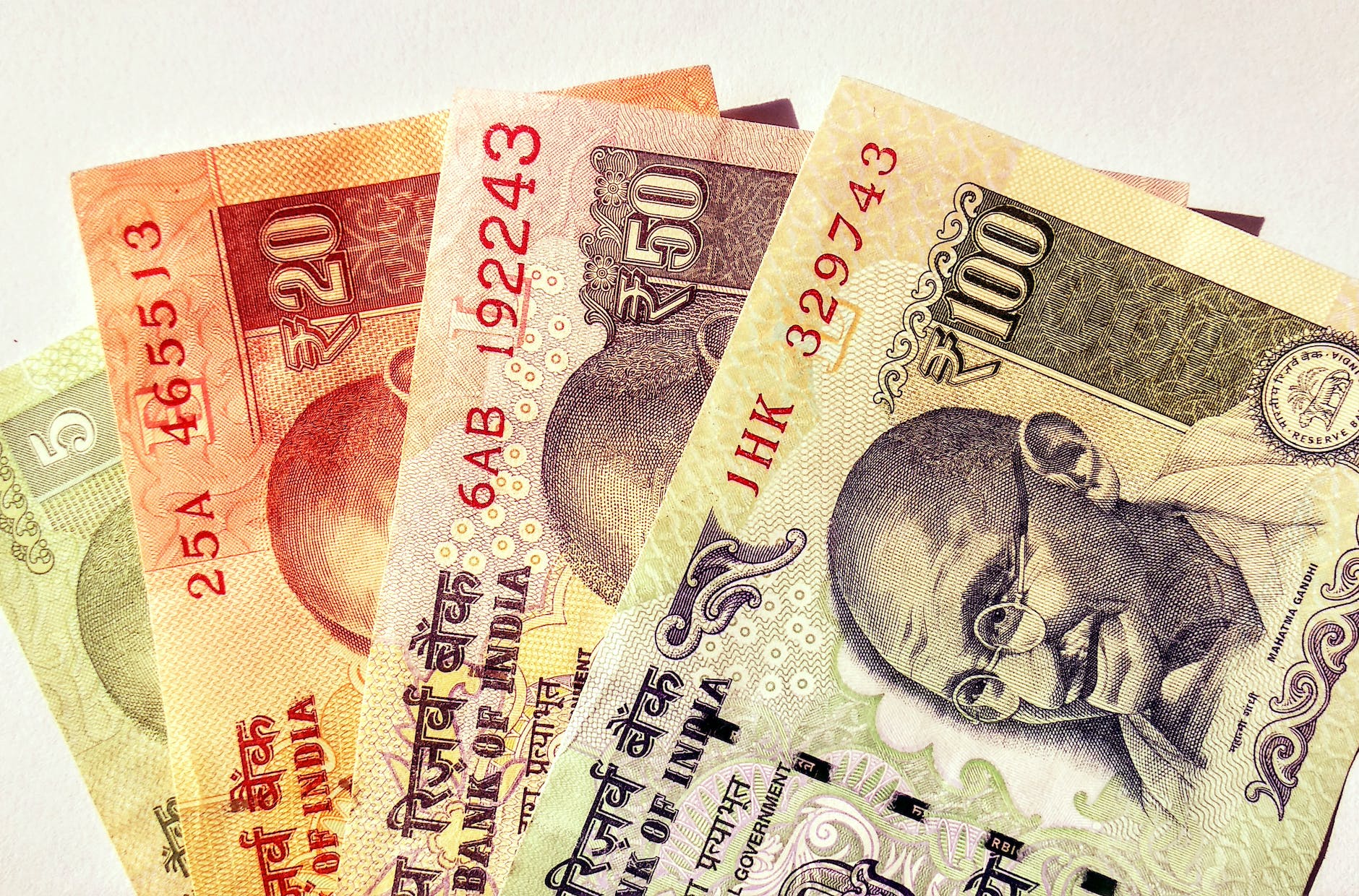
After Russia, Sri Lanka to use Indian rupee(INR) for internation trade.

India’s rupee trade settlement mechanism, which was set up by the Reserve Bank of India in July 2022, is attracting interest from more countries apart from Russia.

The mechanism is a means of using rupees instead of dollars and other big currencies for international transactions in order to promote growth of global trade with emphasis on exports from India and to support the increasing interest of global trading community in the rupee.

Dollar-strapped Sri Lanka and sanctions-hit Russia will be the first countries to use the Indian rupee trade settlement mechanism.

Sri Lanka has agreed to use Indian rupee (INR) for international trade. It comes days after the Government of India said it is looking at ways to bring countries that are particularly short of dollars into the ambit of Indian rupee trade settlement mechanism. Central Bank of Sri Lanka (CBSL) said it is waiting for RBI’s (Reserve Bank of India) approval to designate Indian rupee as foreign currency of Sri Lanka.

Tajikistan, Cuba, Luxembourg and Sudan have begun talking to India about using the mechanism, reported Reuters, quoting two sources and an official document. It has already been used by Russia following the imposition of sanctions on Moscow over the Ukraine war.

Key points of UN COP15 summit held at Canada.

After four years of fractious talks, nearly 200 countries, including India, approved a historic Paris-style deal on Monday to protect and reverse dangerous loss to global biodiversity following an intense final session of negotiations at the UN COP15 summit here in Canada.

The UN Development Programme said the “historic agreement” meant people around the world could hope for real progress to halt biodiversity loss.

The main points include:

  • Maintaining, enhancing and restoring ecosystems, including halting species extinction and maintaining genetic diversity
  • “Sustainable use” of biodiversity – essentially ensuring that species and habitats can provide the services they provide for humanity, such as food and clean water
  • Ensuring that the benefits of resources from nature, like medicines that come from plants, are shared fairly and equally and that indigenous peoples’ rights are protected
  • Paying for and putting resources into biodiversity: Ensuring that money and conservation efforts get to where they are needed.

Furthermore, the framework also calls for increasing the amount of money sent to poor countries to at least $20 billion every year by 2025 which could be increased by $10 billion each year by the end of the decade. However, the document only calls for identifying subsidies by 2025 which can be reformed or phased out and work on reducing them by 2030. 

The draft comprised four broad goals and 22 targets addressing the protection of nature and sharing its benefits which included, the management of wildlife, working on the restoration of habitats and using less plastic. 

Indian Navy commissions guided missile destroyer INS Mormugao.

The Indian Navy’s latest  indigenous guided stealth destroyer Mormugao – which is armed with surface-to-surface BrahMos missiles and Barak-8 long range surface-to-air missiles – was commissioned.


INS Mormugao was built at Mazagon Dock Shipbuilders Ltd (MDSL) as part of the Project 15B destroyers or the Visakhapatnam-class.

The ship is constructed using Indigenous Steel DMR 249A and is amongst the largest destroyers constructed in India, with an overall length of 164 meters and a displacement of over 7,500 tons. The ship is a potent platform capable of undertaking a variety of tasks and missions, spanning the full spectrum of maritime warfare. It is armed with supersonic Surface-to-Surface ‘BrahMos’ missiles and ‘Barak-8’ Long Range Surface to Air Missiles. Towards undersea warfare capability the Destroyer is fitted with indigenously developed anti-submarine weapons and sensors, prominently the hull mounted Sonar Humsa NG, heavy weight torpedo tube launchers and ASW rocket launchers.

The ship can accommodate a crew of 312 persons, has an endurance of 4,000 nautical mile and can carry out a typical 42 days mission with extended mission time in out of area operation.

Enhanced stealth has also been achieved, making the ships difficult to detect. With a significantly increased indigenous content, P15B destroyers are a hallmark of self-reliance in warship design and building, and a shining example of Atmanirbhar Bharat.

The indigenous content in P15B class destroyers is 72per cent which is a notch above their predecessors P15A (59per cent) and P15 (42per cent) Class Destroyers, reaffirming the Government’s focus in the ‘Make in India’ programme.

The first Ship of P15B – INS Visakhapatnam was commissioned last year on 21 November,  2021. 

Russia remains India’s top oil supplier for the month of november too.

Russia has for the first time emerged as top oil supplier to India replacing Iraq as refiners last month snapped up oil from Moscow fearing a price cap from Dec. 5 could hit supplies and choke payment avenues, data obtained from trade sources showed.

India’s oil imports from Russia rose for the fifth straight month, totaling 908,000 barrels per day (bpd) in November, up 4% from October, the data showed.

The Group of Seven nations, Australia, and the 27 European Union countries have imposed a price cap of $60 a barrel on Russian seaborne oil from Dec. 5 as the West tries to limit Moscow’s ability to finance its war in Ukraine.

India, which rarely used to buy Russian oil because of costly logistics, has emerged as Russia’s second biggest oil client after China as refiners snap up discounted crude shunned by Western nations since the February invasion of Ukraine.

Higher purchases of Russian oil dragged down Indian imports from the Middle East and member nations of Organization of Petroleum Exporting Countries (OPEC) declined to the lowest ever in November, the data showed.

What is hooch tragedy, which is happening in Bihar recently.

The toll of dead in Bihar’s Chhapra Hooch tragedy has soared to 50, succumbing after consuming spurious liquor in the Saran district. People have died and several others hospitalised in India’s Bihar state after drinking toxic alcohol, authorities and local media said.

The deaths happened mainly in two villages in the impoverished eastern state, where the sale and consumption of liquor were banned in 2016 after women’s groups campaigned against poor workers splurging their meagre incomes on drinking.

Such bans are in force in several Indian states, driving a thriving black market for cheap alcohol made in unregulated backstreet distilleries that kills hundreds of people every year.

Hooch is a commonly used term for poor quality alcohol, derived from Hoochinoo, a native Alaskan tribe that was known to produce very strong liquor. Unlike branded liquor which is produced in factories with sophisticated equipment and rigorous quality control, hooch is made in more crude settings without any quality checks.

All that matters is to produce alcohol that will intoxicate, and hooch surely does that. The only problem is that if prepared incorrectly, it can kill. Importantly, it is near impossible to tell whether hooch is safe to consume before actual consumption.

Amid border tension with China, India tested Agni-V missile.

The test-firing of the missile from the APJ Abdul Kalam Island off Odisha coast came amid India’s lingering border row with China.

The Agni-V project is aimed at boosting India’s nuclear deterrence against China which is known to have missiles like Dongfeng-41 having ranges between 12,000-15,000 km.

Agni-V can bring almost the entire Asia including the northernmost part of China as well as some regions in Europe under its striking range.

While the test was carried out days after the clashes, it had been planned earlier. India had announced its intention to test a long-range missile and issued a NOTAM or Notice to Airmen well before the incident in Arunachal’s Tawang.

Notably, Agni-5 is the most advanced missile in the Agni series with a strike range of over 5000 kms. Apart from Intercontinental Ballistic Missiles (ICBMs) Agni-5, the Indian armoury of the Agni series includes Agni-1 with a 700 km range, Agni-2 with a 2,000 km range, Agni-3 and Agni-4 with a 2500 km to more than 3500km range.

What the employees around globe, thinks of recommending their profession to the next generation? Look at the report.

India ranked the highest with 66 percent of employees stating that they wouldn’t recommend their profession to their children or any young person that they care about, while 67 percent wouldn’t recommend their employers, according to The Workforce Institute at UKG.

The report, ‘We Can Fix Work’, provides insights into what parents, family members and mentors are telling children about what they should value in their jobs and employers — urging future generations to let purpose, not money, guide career choices.

It found that on a global scale, nearly half (46%) of employees would neither recommend their company nor their profession to their children or a young person they care about, and a startling 38 percent “wouldn’t wish my job on my worst enemy.”

The report also stated that 45 percent of employees worldwide don’t want to work anymore. There has been a recent rise in the anti-work mindset, globally, owing to the pandemic as 77 percent of employees around the world want to spend less time working and more time doing things that matter to them.

It further showed that too much overtime affects the employee-employer relationship. If employees tend to work overtime more than twice per week, it strains their relationship with the employer and they’re even less likely to recommend their jobs or their companies to the next generation.

Take a loot at a report related to employability of Indians published by Wheelbox India Skill.

The employability of Indians has gone up in the last one year according to The Wheebox India Skills Report. As per its evaluation, half of the candidates – at 50.3% were found to be employable as compared to the 46.2% last year.

This report is a result of the evaluation of 3.75 lakh candidates or freshers who took the Wheebox National Employability Test (WNET) across India and the participation of 150 corporations from over 15 different industries in the Early Career Edition of the India Hiring Intent Survey.

It is interesting to note that the percentage of the employable women workforce stands at 52.8%, compared to 47.2% for men.

“The consistent rise in women’s employability over the past ten years is a positive sign of radical changes in India’s developing labour market. Increased participation of women at work will give industries an edge with key roles already being occupied by women as we go into 2023,” the report said.

“Success rate of Indian startups is higher than rest of the world” said the commerce minister.

The success rate of startups in India is relatively higher than the rest of the world, Union commerce minister Piyush Goyal said while answering a question in the Lok Sabha on 14th december.

The number of recognised startups has increased from 452 in 2016 to 84,012 as on November 30, 2022, the Minister said.
Startups are offered the funding at various stages of their business cycles through the Fund of Funds for Startups (FFS), Startup India Seed Fund Scheme (SISFS), and Credit Guarantee Scheme for Startups (CGSS).

The SISFS has been approved with a corpus of 945 crore and has also been sanctioned for four years beginning in 2021–22. It aims to give entrepreneurs financial support for concept proofing, prototype development, product trials, market-entry, and commercialization.

Vande Bharat trains has faced multiple accidents with cattles since operation.

Indian Railways’ premier train Vande Bharat Express which now operates on six routes across the country has recorded 68 instances of animal hit in the last six months starting from June this year.

This information was given by the Union Minister of Railways, Ashwini Vaishnaw in a written reply to the Lok Sabha on 14 December in a query to the number of incidents of Vande Bharat Express trains hit by animals in the last six months. Union Railway Minister in another reply said that the shell structure of Vande Bharat coach is made of high-grade steel. However, the coupler cover fitted in front of the Vande Bharat train as part of nose cone which provides aerodynamic profile to the train is made of fibre reinforced plastic to absorb the impact of hit.

Replying to another question, Vaishnaw said currently the Vande Bharat trains are running with sitting capacity with a maximum distance of 500 to 550 km and once the Vande Bharat trains with sleeping facilities will ply, the trains will cover longer distances

India and Chinese troops clashes on border.

Soldiers from India and China clashed last week along the two countries’ disputed Himalayan border. In 1962, when the countries fought a bloody, high-altitude war over the contested territories, China seized Arunachal Pradesh, which it claims as part of South Tibet, before returning it to Indian control, but the disputed area belongs to and will remain in the integral control of India.

It was the first reported standoff between troops from the two Asian giants since deadly clashes in 2020 strained their already tense relations. 

Both sides were involved with a few soldiers suffering minor injuries. China is yet to comment on the stand off. But Reuters reported an Indian army source saying at least six Indian troops were injured.

“Both sides immediately disengaged from the area,” the Indian army said.

It added that commanders from both sides had held a meeting immediately after “to restore peace and tranquility”.

India’s Defence Minister Rajnath Singh told the parliament on Tuesday that no Indian soldiers had been “hurt or seriously injured” in the clash and that the incident has been “taken up at diplomatic levels”. He added that because of “timely intervention of Indian military commanders, PLA soldiers went back to their positions”.

China and India share a disputed 3,440km (2,100 mile) long de facto border – called the Line of Actual Control, or LAC – which is poorly demarcated. The presence of rivers, lakes and snowcaps means the line can shift. The soldiers on either side – representing two of the world’s largest armies – come face to face at many points.

Russia offers India large ship on lease.

Russia has offered India to lease and build very large crude carriers (VLCC) as insurance on Russian oil. “Traditionally India couldn’t get large quantities of crude from Russia as there weren’t any VLCC’s. However, now with India’s imports from Russia reaching nearly 30 per cent of total requirement, VLCC is the need of the hour.

This can also remove insurance liability on India as after price cap most insurers have backed out from insuring Russian crude,” say sources. This offer was given  when Russian Russian Deputy Prime Minister Alexander Novak met India’s Ambassador to Russia, Pavan Kapoor on December 9th.

In 2021, bilateral trade between Russia, India increased by 46.5 per cent, exceeding $13.5 billion. From January to September 2022 trade reached $20.4 billion.

India to become a hub of drone technology.

Union Information and Broadcasting Minister Anurag Thakur this week said that India will become a hub of drone technology and the country will require at least 1 lakh drone pilots by next year. He was speaking at the gathering after flagging of the ‘Drone Yatra 2.0’, in Chennai.

Stating that India will require at least 1 lakh pilots in 2023, he said that each pilot will earn at least Rs 50-80 thousand a month. “If you take the Conservative Average even Rs 50,000 × 1 lakh youth × 12 months = Rs. 6000 crores a year worth employment could be created in the Drone sector,” he said

Apart from this, Industries and Government agencies which use Drones will also be impacted. He appreciated the that Garuda Aerospace’s plan to make one lakh ‘Made in India’ drones in the next two years.

Garuda’s Drone Skilling & Training Conference which is to be conducted in 775 districts across the country hopes to reach 10 lakh Youth. With an aim to train 1 lakh Youth to significantly impact not just the Drone ecosystem or generate employment for Youth, but hopes to create a massive impact in agriculture, mining, government departments and Other industries.

While noting that currently there are over 200 drone start-ups operating in the country, the minister said that this number will increase to generate lakhs of new job opportunities for the youth.

US’s list for religious freedom, Pakistan questioned why India not blacklisted.

Last week, Pakistan expresses strong exception to the United States recent decision to add the country to its religious freedom blacklist and exclude India from it, saying the decision is “detached from ground realities of Pakistan”.

Last week, the US added Pakistan, China and Latin American adversaries Cuba and Nicaragua, among others, to a blacklist — Countries of Particular Concern from 2021 — on international religious freedom, opening the path to potential sanctions.

Secretary of State Antony Blinken took no action against India, ignoring a recommendation by the autonomous US Commission on International Religious Freedom (USCRIF), which said that treatment of minorities was “significantly” worsening under Prime Minister Narendra Modi´s Hindu nationalist government. India is seen by the US as a key emerging ally.

India won’t be a US ally rather a great power : WH official.

Washington: India, which has a unique strategic character, will not be an ally of the US, but another great power, a top White House official has said, asserting there is no other bilateral relationship that is being “deepened and strengthened” more rapidly than between the two countries over the last 20 years.

Responding to a question on India during his appearance at the Aspen Security Forum meeting here on Thursday, Kurt Campbell, the White House Asia Coordinator, said that in his view India is the most important bilateral relationship for the United States in the 21st century.

“The fact is, I don’t know of any bilateral relationship that is being deepened and strengthened more rapidly than the United States and India over the last 20 years,” he told a Washington audience.

The United States needs to invest even more of its capacity, and build in people-to-people ties, working together on technology and other issues, he said.

“India has a unique strategic character. It will not be an ally of the United States. It has the desire to be an independent, powerful state and it will be another great power. But I think there are reasons to believe that our strategic alignment is growing across the board in almost every arena,” Campbell said.