
0:02 / 2:08
Coconut laddoo | Easy 3 step recipe

NATIONAL mean a person owing allegiance to and entitled to the protection of a sovereign state. CITIZEN is preferred for one owing allegiance to a state in which sovereign power is retained by the people and sharing in the political rights of those people. the rights of a free citizen SUBJECT implies allegiance to a personal sovereign such as a monarch. the king’s subjects NATIONAL designates one who may claim the protection of a state and applies especially to one living or traveling outside that state.
Our country is a pioneer in industrial development and the demo-graphs of such development is soaring high each day. Also, with the complexity in both geography and life, it is necessary the rules established should be strict and more absolute principle of liability with the respect of no fault liability. Thus, the principle established in Rylands v Fletcher of strict liability evolved in the 19th century, and in the period when the industrial revolution had just begun cannot be used in the modern world. The two century old principle of tortious liability compared to the present conditions of our country when it is in the verge of being one of the most globalized countries of the world, cannot be taken into consideration without modifications. It is also to notice that the technical complexity and the nature of industrial development being high at a high rate, the protection of the human rights and lives of people should be taken into consideration. Hence, the principle of strict liability cannot be still considered as the only redressal. It is also true that law cannot afford to be static and the fact that the industrial development cannot be done without the existence of inherently dangerous industries, it is very much necessary that the responsibility for the protection of people from any such type of accidents, etc is put on the shoulders of the industries themselves. From the above mentioned points, it is a key necessity that such a principle is evolved which will not only shape the jurisprudence but will also help to not carry the absolute principle of Strict liability in modern society. Thus, the necessity factors as discussed clearly helps us to understand that the principle of absolute liability is not only required to protect the human rights of the people, but also to develop tort law in India which will expand our own country’s jurisprudence.
In absolute liability only those are risk which are associated with risky or isn’t fundamental. It is material to those harmed inside and outside the preface. The rule doesn’t have any special exceptions like Strict Liability. The control which was clarified in Rylands v Fletcher applies just to the normal utilization of land, however, outright risk applies even to the common utilization of land. When a man utilizes a dangerous substance and that substance gets away, he will be held liable even if he had taken due care. The degree of the dangerous activity also depends upon the money and size related capacity of the establishment. The Supreme Court additionally expressed that the undertaking must be held to be under a “commitment to guarantee” that the hazardous dangerous activity exercises in which it must be directed with the most standard of safety and security if any damage comes because of such careless activity. The organization, then, must be held absolutely liable to adjust, for any harm caused and no defense that he had taken all sensible care and the damage caused with no carelessness on his part.
The principles of absolute and strict liability can be viewed as exceptions. It is known that a man can be at risk if he has fault. The guideline overseeing these two rules is that a man can be a subject even without his fault. Thus, this is also known as principles of “no fault liability”. Under these principles, the individual at risk might not have done or been involved in the act, but he will be at charge despite everything because the harm was caused by the act. In the principle of strict liability, there are a few exceptions where the defendant would not be made at risk. But in absolute liability, no exceptions are given to the defendant. Tort is a civil wrong for which the remedy is a precedent based law activity for unliquidated harms and which doesn’t necessarily happen due to breach of an agreement or the break of a trust or just fair commitment. For “no fault liability”, the individual at risk might not have done any act of negligence or carelessness or may have put in some positive attempts but however the rule will hold him liable. This guideline has its foundations in the two landmark cases – Rylands v Fletcher (Strict Liability) and MC Mehta v Union of India (Absolute Liability). The strict liability principle expresses that a person who keeps hazardous or inherently dangerous substance in his territory will be in charge of the fault if that substance escapes in any way and causes any harm. This rule stands genuine even if there are no negligence or carelessness in favor of the person keeping it. The burden of proof lies on the defendant to act how is not at risk. The principle of absolute liability, on the other hand, held that where a person is undertaking a hazardous or inherently dangerous movement and it hurts anybody because of an accident while carrying out the characteristically hazardous action, the result is strictly and absolutely liable decision where the remedy is to repay to everyone who was affected by the accident. Both these principle take after the “no fault liability principle”, a principle in which the defendant is held liable regardless of whether he is not specifically or impliedly in charge of the harms caused to the plaintiff.
I spent my time this last few months becoming an amazing cook.
Here’s a list of videos that show beautiful recipes that I’ve made and can vouch for.


India’s recent growth story is now much analyzed, and quite well understood. Despite some temporary controversy over the relative impacts of economic reforms in the 1980s and 1990s – hesitant and piecemeal in the first of those decades, deeper and more systematic in the subsequent period – the new consensus is not very different from the old, namely, that an overall shift in economic policy toward greater reliance on the market for resource allocation, including greater openness to the global economy, has been an important factor in increasing India’s average growth rate from its previous low levels. This recognition of the role of market competition does not diminish the Indian government’s past importance in building physical infrastructure and human capital, and in providing stability and safety nets. Nevertheless, the reform of India’s governance is one of two major strands of current policy debates, the other being areas where further “liberalization” of the economy is needed (e.g., small scale industry reservations, privatization, and matters pertaining to openness to foreign capital). Debates about India’s governance include old concerns about corruption, affirmative action (e.g., the latest controversy over quotas in higher education) and social safety nets (e.g., the new Employment Guarantee Scheme), as well as newer worries about growing regional inequality. Managing the public finances appropriately has been an obvious part of the reform story, since fiscal deficits have been a continuing problem for well over a decade. Within the broader context of governance, issues of federalism and decentralization have been addressed in a somewhat piecemeal fashion. Thus, the need for fiscal consolidation has focused considerable attention on the states’ situations in this regard, and the central government, central bank, and central Finance Commission have all made efforts to ameliorate aspects of the states’ fiscal crisis. At the same time, the decentralization to local governments, put in motion by the 73rd and 74th amendments to the Constitution, has been proceeding unevenly, and with mixed success. States have made various kinds of efforts to attract investment, done various deals with multilateral agencies, and wrestled with potentially major tax reforms, all the while struggling with fulfilling their constitutional responsibilities to constituencies such as the rural poor.
Underlying all the developments in economic policymaking, and concerns about governance, therefore, is the working of India’s federal system. It is important to understand what this system is, what it does, and how it has been changing in response to the forces put in motion by India’s renewed struggle to fulfill its “tryst with destiny” by substantially improving the well-being of all its citizens in a tangible manner. In particular, many of India’s fiscal federal institutions evolved in the context of a planned economy, with the state playing a dominant role and that of the private sector and markets heavily circumscribed, and largely closed to the outside world. Economic liberalization with state control receding and markets coming into their own, and globalization together require a comprehensive reassessment of these institutions.
In today’s time we have seen multiple examples where this federal system of India had been challenged. We’ve seen example of west-bengal and telangana states of India who denied to no-permit entry of Central Bureau of Investigation (CBI), where CBI holds power of independent investigation from the Indian constitution and as per that CBI officials need not seek any kind of permit to enter into any of Indian states. CBI when required can be into any Indian state because it comes under its investigation needs. Another recent example is the on-going dispute between Maharashtra’s and Bihar’s police, where two different FIRs had been launched for the same case of Indian Bollywood actor Sushant singh’s death. Here, Mumbai police’s investigation has been repeatedly alleged to delay the investigation process. Things were stretched into far ends when Bihar police’s investigation team was forcibly taken off from their scheduled press meeting. Another example was set when Bihar police’s IPS officer who came Mumbai in regards to FIR filled in Patna was held and sent into 14 days quarantine. Now this is seen as a fight between two Indian state police and their prestige, such activities seriously damage India’s federal integrity of state and the union.
The Administrative Tribunals rendering Administrative equity comprise a side-effect of the government assistance state. In the eighteenth and nineteenth century when ‘free enterprise’ hypothesis held influence, law courts rose out as the caretaker of the rights and freedoms of the individual residents. On occasion they also ensured the privileges of the residents at the expense of the State authority.
With the rise of government assistance state, social intrigue started to be given a precedence over the individual rights. The current legal executive neglected to maintain the new framework. In the expressions of Robson, “with the expansion during the nineteenth and twentieth centuries of the functions of the legislature to one new field after another, with the dynamic confinement of the privileges of the people in light of a legitimate concern for the wellbeing, security and general government assistance of the community overall, with the improvement of aggregate power over the states of work and way of living and the rudimentary necessities of the individuals changed. There has emerged a requirement for a method of settling better fitted to react to the social prerequisites of the time than the intricate and exorbitant arrangement of choice gave by case in the courtrooms. In brief the new arrangement of authoritative arbitration fit new social finishes upheld by a government assistance state. It demonstrated a potential instrument for authorizing social arrangement and enactment.
Anything which tends or might be viewed as tending to make an individual choose a case in any case than on proof must be held to be one-sided. The primary prerequisite is that the appointed authority ought to be unprejudiced and common and must be liberated from inclination. One can’t go about as judge of a reason in which he himself has some intrigue either monetary or in any case as it manages the most grounded evidence against impartiality. One must be in a situation to act judicially and to choose the issue impartially. In the event that the appointed authority is liable to
inclination for or against either gathering to the debate or is in a place that a predisposition can be accepted, he is precluded to go about as an adjudicator and the procedures will be vitiated.
Equity can never be checked whether a man goes about as an appointed authority in his own motivation or is himself keen on its result. This rule applied not exclusively to legal procedures yet in addition to semi legal and managerial procedures. In responding to the inquiry with respect to what alleviation the individual is qualified for on account of the court when the disappointment of characteristic equity has happened, it is that down to earth contemplations ought to win as opposed to attempting to address the inquiry by applying such unfeeling words as “void” and “voidable” or theoretical rationale.
The cases don’t delineate uniform methodology in the matter of giving extreme alleviation by the court when the
disappointment of regular equity including giving of reasons has happened. In the matter of disappointment of Audi alteram partem the courts have received any of the three options as the equity of the circumstance requested—just subduing the request, not suppress the request yet keeping up the state of affairs and guiding the administration to give a consultation, lastly suppress as well as disallowing the legislature from reexamining the issue.
Further, the Supreme Court has faltered in giving further help normally spilling out of the subduing of the request. Most definitely, where the reasons host nor been provided to the get-together nor to the court, the assignment of the legal executive is to some degree simple. The courts have pretty much suppressed the regulatory request. In such a case, there isn’t the main disappointment of common equity however the non-correspondence of reasons might be demonstrative of the way that the authority has not applied its psyche to the issue. Where, be that as it may, the reasons have been given to the court, however not to the gathering, the cases don’t portray a uniform methodology.
In various cases, the court has maintained the authoritative request once it is fulfilled that the reasons set under the
steady gaze of the court legitimized the equivalent. There are a couple of cases likewise despite what might be expected. Here maybe the issue may must be settled based on equity however the idea of equity is a liquid and escaping one.
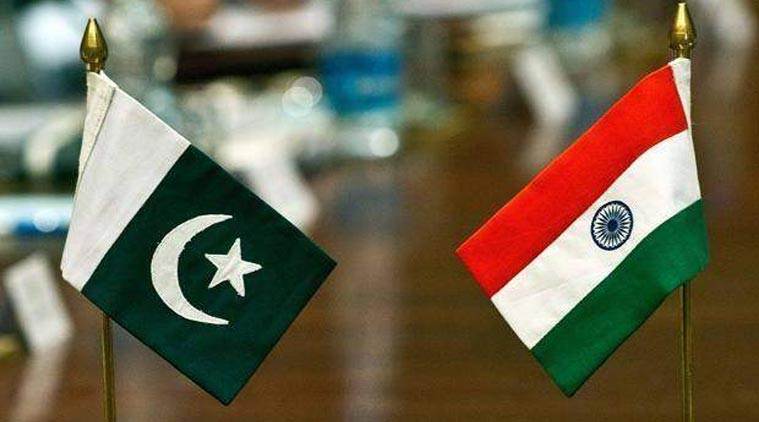
Cricket
The India–Pakistan cricket rivalry is one of the most intense sports rivalries in the world. The tense relations between the two nations, resulting from bitter diplomatic relationships and conflict that originated during the Partition of British India into India and Pakistan in 1947, the Indo-Pakistani Wars, and the Kashmir conflict, laid the foundations for the emergence of an intense sporting rivalry between the two nations who had shared a common cricketing heritage.
The two sides first played in 1952, when Pakistan toured India. Test and, later, limited overs series have been played ever since, although a number of planned tours by both sides have been cancelled or aborted due to political factors. No cricket was played between the two countries between 1962 and 1977 due to two major wars in 1965 and 1971 and the 1999 Kargil War and the 2008 Mumbai terrorist attacks have also interrupted cricketing ties between the two nations.
The growth of large expatriate populations from both countries across the world led to neutral venues, including the United Arab Emirates and Canada, hosting bilateral and multilateral One Day International (ODI) series involving the two teams and the teams have met during International Cricket Council (ICC) competitions. Tickets for matches in which the two teams play each other at international competitions are in high demand, with over 800,000 applications for tickets made for the 2019 Cricket World Cup meeting between the two sides.
Players from both teams routinely face intense pressure to win and are threatened by extreme reactions in defeat. Extreme fan reactions to defeats in key matches have been recorded, with a limited degree of hooliganism. At the same time, India–Pakistan matches have also offered opportunities for cricket diplomacy as a means to improve relations between the two countries by allowing heads of state to exchange visits and cricket followers from either country to travel to the other to watch the matches.
IAF’s Wing Commander Abhinandan
On the day of February 27th 2019 both India and Pakistan said they shot down each other’s fighter jets on , with Pakistan capturing an Indian pilot a day after Indian warplanes struck inside Pakistan for the first time since the 1971 Liberation War, reports Reuters.
Earlier, India carried out air raids on rebel camps inside Pakistan weeks after a suicide attack in the disputed Kashmir region, raising fears of a war between the nuclear-armed South Asian nations.
Indian Prime Minister Narendra Modi vowed a strong response in the wake of the worst attack on soldiers in decades.
Pakistan will return a captured pilot “as a peace gesture” to India, Pakistan’s Prime Minister Imran Khan said on next day.
But the actual scenario seems to differ, it was reported later that the United States weighed in on the Pakistan Army through high-level military channels to release Wing Commander Abhinandan Varthaman within hours of his capture on February 27, making it clear to Rawalpindi that it was the only way to de-escalate matters. United States warned Pakistan of India’s strong military response if their wing commander isn’t released at the earliest.
We have seen in the case of Sarabjeet Singh (an Indian abducted and jailed by Pakistan police) that how Pakistan treats Indians into its side of territory. Mr. Sarabjeet was allegedly tortured to death and when his dead body was returned to India, it was later found that vital body parts of Sarabjeet were removed while he was still alive. So it’s obvious that there’s nothing like “peace gesture from Pakistan”. If someone really wish to see a peace gesture, then they should see Shimla treaty signed between India and Pakistan post 1971 Indo-Pak war in which Pakistan lost miserably and around 90,000 of Pakistani soldiers who were initially kept as war prisoners were later released under this treaty.
Hence its clear that which nation wants actual peace and which nation use the term of peace only for causing propaganda at United nations and the rest of world. It seems Pakistan would never change its attitude but India has moved on with its motive to boost its economy and parallel help other countries in Humanitarian operations. Where Pakistan is seen as terror camping underdeveloped and unsafe nation for business, India’s potential is being explored by great economies of the world.
We will travel again, but it will not be the same. Even if borders reopen, travellers must trust that boarding a plane is safe and that they will be able to enter the destination country. New health safety protocols and systems will need to be in place, and these have yet to be defined. As governments and industry plan for recovery in this new context and adapt to changing traveller behaviour, the use of digital identity and biometrics technologies could restore trust while also ensuring a seamless journey. However, these tools will only be effective if users feel that their data is protected. Privacy, consent and transparent data governance must be at the heart of any technical solution.
1. The queue at immigration will be longer than ever before
We’re already seeing with China, Singapore, and South Korea, countries that feel like they are on top of their outbreaks, that the biggest worry now is new infections coming from outside. Korea is ordering all persons entering from the US and Europe to isolate for two weeks, even if they test negative for COVID-19. Those without a permanent residence are being sent directly to an isolation ward. Manufacturers of heat cameras are seeing a spike in demand. Even when lockdowns in Europe are over and we start to travel again, countries will test at the border. If you thought the line at JFK immigration control was torturous before, now consider what it’ll be like as you line up, take a swab test, and wait for the results.
2. You’ll need more than a passport
Some countries will not even take the chance of testing at the border. Especially if you’re coming from an outbreak hotspot. Entrance will be refused unless you have a certificate of immunity since you’ve recovered from an infection or because you’ve been vaccinated (once there are vaccines available). Wristbands with barcodes like those in the movie Contagion are a very real prospect. Certainly in the short-term, travel will become more defined by purpose. Any business travel will need to be strictly validated as an economic activity, with companies tightening the numbers of employees who travel for them. Countries will likely only open their borders where there is merit and it’s safe to let travellers through. This may mean temporary visas and more documentation that you’ll need to take with you when travelling.
3. Travel will have different (expensive) seasons
A very influential paper from Imperial College London speculates that governments will need to turn lockdown measures on and off to keep demands on healthcare systems at a manageable level. This means there will be windows of opportunity to travel that last only weeks or even days. Even with airlines desperate to get airborne again, seats will be limited and we could see dramatic increases in pricing during those windows.
4. Recovery will be uneven
We’re seeing already that the factors influencing this pandemic are numerous. Strictness and timing of lockdown measures, robustness of healthcare systems, the weather, luck, and other factors are all at work. Meaning some countries and regions will recover first. We will see corridors of recovery open back up one by one.
5. You’ll pack differently
We may well see the relaxing of liquid carry-on restrictions as travellers want to take more than 100ml, especially on long-haul flights. Along with hand sanitizer travel packs, it’s a pretty easy prediction to make that a lot more people will travel with masks. In the same way that companies like Away have made luxury, fashionable travel baggage, we will most likely see “desirable” travel masks worn by Instagram influencers.
6. You’ll tick that little box every time
We’re all very used to aeroplane bookings coming with tens of add-ons once we’ve chosen our flight. Let’s be honest, most of us skip past speedy boarding, extra baggage, car rental, and even seat selection. One box that we won’t be skipping past as much as the one asking us if we want to ensure the flight. Be careful though, often this “insurance” doesn’t cover you for many things, including the outbreak of a pandemic. Either airline providers or insurance companies are going to have to change to accommodate our new reality.
7. Society won’t like you when you’re sick
Even those who have recovered from COVID-19, and have built up immunity (if the virus doesn’t mutate too much) won’t want to travel with a cold. The current situation and the conviction with which the world is adopting social distancing will make it socially unacceptable to travel with a cold or any symptoms. The looks you will get if you cough or sneeze at an airport or on a plane will be scathing.
8. You’ll take the train before the plane
Domestic travel will recover first (there’s no border control) and for most countries that means taking a train. Not only will we be able to get back on tracks (ha, a pun) first, we’ll also be more secure about it. Trains are less crowded, have windows that open, and also are much more environmentally friendly. Once the lockdowns we see in Europe now are lifted, I predict people will rush to take a train, just because they can.
9. Air quality will be an advertised feature
Any idea what grade air filter Lufthansa uses on their flights? How about British Airways? Korean Air? Which Airbus model has the cleanest air? Do Boeing planes have fewer microbes in the air? No idea? Well, you may not know now, but once we’re flying again, airlines will start boasting about their filtration systems. Some have already started emailing customers about their current systems in a bid to stop people cancelling. By the end of the year, it’ll be a question many people will be asking—how safe is the air onboard?
Touchless travel
The most immediate and perhaps most visible change will be a shift to touchless travel from airport curbside to hotel check-in. Even with strict cleaning protocols in place, exchanging travel documents and touching surfaces through check-in, security, border control, and boarding still represent a significant risk of infection for both travellers and staff.
Automation across the entire sector will become the new norm. Biometrics is already a widely accepted solution for identity verification, and their use will become more widespread as physical fingerprint and hand scanners are phased out. More touchless options will come into play including contactless fingerprint, as well as iris and face recognition. Moreover, technology for touchless data-entry such as gesture control, touchless document scanning and voice commands are already being tested. Care must be taken to ensure these technologies are inclusive and to eliminate the risk of potential biases.
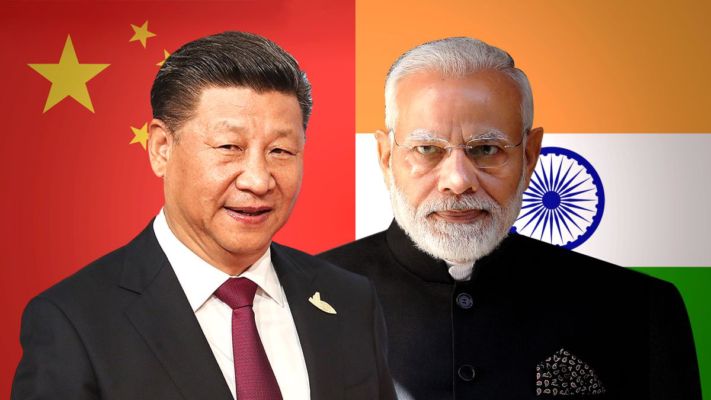
China and India are the two fastest growing Asian economies. Respective governments have left no stones unturned to project the two nations as ideal investment destination on global platform, inviting industrialists with the lure of a business-friendly atmosphere. The two countries have always been at loggerheads for political reasons, making their bilateral relationship really rocky. The leaders at the helm of power of these two neighbours are known for their reformative approach and the similarities between Indian Prime Minister Narendra Modi and Chinese President XI Jinping are conspicuous. Both of them are known to rub shoulders with ten-figure friends to draw investments. While China has wowed the world with its bullet trains, India is pacing ahead in its space mission, launching valuable communication satellites.
Here’s a list of four fronts in which India is ahead of China in terms of growth:
India Being one of the Greatest Economy Balancer
An important metric where India beats China is financial market development. India ranks 38, while China ranks 56. Though the two nations introduced separate sets of reforms at different points of time, China started moving towards the pro-market economy in 1978 and India did the same in 1991. But India is 15 years ahead of China with regard to reforms in economic and financial markets. Experts are of the opinion that India has performed better than China in the financial sector. Indian bond market is known as one of the most liquid in Asia, which is well regulated by the RBI and is fully electronic. India is known as one of the best countries in the world in the way the financial sector is managed. As far as equity markets are concerned, reporting standards in India maintain global standards.
Tight Competition Among India and China in Space Technology
Though China is doing really good in space missions, India is not much behind with its successive launching of communication satellites. Recently, India has sent its heaviest communication satellite with its own GSLV MK III. India reportedly aims to win a bigger share of the $300-billion global space industry. It has successfully launched record 104 satellites, earning praise even from its northern neighbour. China started its space missions in the late 1950s while India entered the space in 1962 and is racing fast.
India being a Top Pharmaceutical Manufacturer and Exporter
India regards pharmaceutical production and exports as one of its biggest strengths. It has consistently beaten China in exports of pharmaceutical products to Latin America in the past five years. In 2016, India exported products worth $651 million to Latin America, as compared to China’s $404 million-worth exports, stated the IBEF report. Fortunately, India has never suffered regulation bottlenecks in the sector, ensuring the ease of doing business for Indian manufacturers and vendors.
What makes our country’s growth in this sector more interesting is the fact that it imports the bulk of its raw materials from China. This sector is not really the focus area of Beijing. A study by Assocham forecasted in june 2016 that India’s pharma exports could reach $20 billion by 2020. It has already crossed this mark and in fact the impact of covid-19 in 2020 has led to major medicinal demands from India than any time before. Demands of hydroxychloroquine from India have surged to a point where many countries like US, Australia, UK & other European countries are all lined up for getting these and many other medical drugs.
Innuendo is used to describe defamation from libel or slander. It is derived from a Latin term “innuere”, “to nod toward”. In lawsuit for defamation, usually to show that the party suing was the person about whom the defamatory statement was made. Example: ‘the former Mayor is a crook,” and Joe Alexander is the only living ex-Mayor, thus by innuendo Alexander is the target of the statement.
Defamation is the injury to the reputation of a person. If a person harms the reputation of another he does so at his own risk. As in the case of interference with the property, a man’s reputation is his property, and if possible, more valuable, than other property.
Any intentional false, defamatory statement or communication, written or spoken that decrease the respect, regard or confidence of a person will be called defaming him. Essential of defamation include, the statement being published, the statement should not be truth and it must refer to the plaintiff.
The intention to defame is not necessary as held in the Scottish case of Morrison v. Ritchie and Co.[1] ,where damages were recovered against the proprietors of a newspaper who in all innocence had announced in the paper that a lad, who had in fact been married only a month, had given Innuendo is a concept that is related to tort law and is a personal injury law. The word is derived from ‘innuere’, which is a Latin word and means to ‘nod forward’. In legal terms, Innuendo is used to describe defamation from either libel or slander. It usually shows that the plaintiff had bad comments made about him and those comments were in fact defamatory.
The innuendo is usually just used in actions for slander, when a defamation made by words or gestures. Innuendo typically refers to a condition where a person explains a factual situation which on the first note might not sound defamatory but, yet after interpreting can cause or has caused damage to the person.
Thus, when Innuendo is on the table to be proved, it must always show the entire scenario from start to the end of the declaration. This serves to be very important to prove that the intent can be mistaken, or when it cannot be directly obtained from the forms of slander or libel.
There are two major types of innuendo. True Innuendo and False Innuendo. False innuendo is a defamatory statement made that has an implied meaning. So, only individuals who have the necessary contextual knowledge can understand that the comment made is defamatory.
Secondly, legal or true innuendo. While this is not defamatory on its face, a true innuendo statement can be defamatory when combined with certain outside circumstances. This contextual information may cause a statement to be considered defamatory in a certain way while not another.
A statement may be prima facie defamatory when their natural, obvious and primary sense is defamatory. Sometimes, the words may prima facie be innocent but because of some latent or secondary meaning, it may be considered to be defamatory.
Where the words alleged to be defamatory do not appear to be such on their face, the plaintiff must make out the circumstances which made them actionable, and he must set forth in his pleading the defamatory sense he attributes to them. Such an explanatory statement is called an innuendo.
When the natural and ordinary meaning is not defamatory but the plaintiff wants to bring an action for defamation, the burden of proof lies on him to prove the innuendo.
In the absence of an innuendo, no evidence can be admitted to prove a special meaning and the suit will be dismissed.
An innuendo is necessary where the imputation is made in an oblique way, or by way of question, exclamation, or conjecture, or irony.
An innuendo, properly so called, which provides a separate cause of action, must be supported by extrinsic facts or matter and cannot be founded on mere interpretation.
[1] 1902 SLR 39
Energy drinks are widely promoted as products that increase energy and enhance mental alertness and physical performance. Next to multivitamins, energy drinks are the most popular dietary supplement consumed by American teens and young adults. Men between the ages of 18 and 34 years consume the most energy drinks, and almost one-third of teens between 12 and 17 years drink them regularly. Energy drinks are supposed to do just what the name implies — give you an extra burst of energy. As it turns out, most of that “energy” comes from two main ingredients: sugar and caffeine. A typical energy drink can contain up to 80 milligrams of caffeine (about the same amount as a cup of coffee). By comparison, a 2006 study found that the average 12-ounce soda contains 18 to 48 mg of caffeine.
Other than caffeine levels, how do energy drinks differ from sodas and sports drinks? Soft drinks are mainly water, sugar and flavouring. They don’t do anything for your body; they’re just supposed to taste good. Sports drinks are designed to replenish fluids lost during activity. They typically contain water, electrolytes and sugar. Energy drinks have added caffeine and other ingredients that their manufacturers say increase stamina and “boost” performance. They’re designed for students, athletes and anyone else who wants an extra energy kick.
Energy drinks became popular in Asia long before they reached the United States. In 1962, Japanese pharmaceutical company, Taisho, released its Lipovitan D drink. It was designed to help employees work hard well into the night. Lipovitan D contains taurine, the same ingredient found in many of today’s energy drinks.
The very first “energy” drink to reach the United States wasn’t an energy drink at all — it was more of a hyped-up soft drink called Jolt Cola. The “jolt” in the cola was a lot of added sugar and caffeine. Introduced in the 1980s, Jolt Cola quickly became a staple of college campuses.
There are two kinds of energy drink products. One is sold in containers similar in size to those of ordinary soft drinks, such as a 16-oz. bottle. The other kind, called “energy shots,” is sold in small containers holding 2 to 2½ oz. of concentrated liquid. Caffeine is a major ingredient in both types of energy drink products—at levels of 70 to 240 mg in a 16-oz. drink and 113 to 200 mg in an energy shot. (For comparison, a 12-oz. can of cola contains about 35 mg of caffeine, and an 8-oz. cup of coffee contains about 100 mg.) Energy drinks also may contain other ingredients such as guarana (another source of caffeine sometimes called Brazilian cocoa), sugars, taurine, ginseng, B vitamins, glucuronolactone, Yohimbe, carnitine, and bitter orange.
Consuming energy drinks raises important safety concerns.
A growing body of scientific evidence shows that energy drinks can have serious health effects, particularly in children, teenagers, and young adults. In several studies, energy drinks have been found to improve physical endurance, but there’s less evidence of any effect on muscle strength or power. Energy drinks may enhance alertness and improve reaction time, but they may also reduce the steadiness of the hands. The amounts of caffeine in energy drinks vary widely, and the actual caffeine content may not be identified easily. Some energy drinks are marketed as beverages and others as dietary supplements. There’s no requirement to declare the amount of caffeine on the label of either type of product.
An electric car is just a car propelled by one or more electric motors using energy stored in rechargeable batteries, instead of burning petrol or diesel internally and exhausting fumes. There are broadly three kinds of electric cars at present:
1. Solar-powered electric cars and vehicles
2. Hybrid electric cars powered by a mix of internal combustion and batteries
3. Electric cars with on-board battery packs also known as battery electric vehicle (BEV)
More often than not, electric cars in the context of mobility and environmental conservation refer to battery electric vehicles, but may also refer to plug-in hybrid electric vehicles (PHEV)
In the Indian context, automobile manufacturers have announced electric four-wheelers such as Hyundai Kona Electric, Mahindra e-Verito, Mahindra e2o, Porsche Taycan, Tata Tigor EV 2019, MG ZS. But many more will be needed if India is to take meaningful steps towards becoming an EV-first nation.
With enthusiasm rising around the chances of Elon Musk’s Tesla launching in India in 2020, many local and global auto manufacturers have started testing the waters in the Indian market for electric cars.
Some questions arise that need to be discussed these
* How do you see the evolution globally of electric vehicles in the coming years?
* Are there pockets or regions where EVs will take off sooner?
* What will happen to ICE platforms?
* What does that mean for global automakers in different regions such as Asia, Europe and US?
* What can be done to push the take rate of EVs?
What Are The Advantages Of Electric Cars Over Fuel Cars?
At a fundamental level, electric cars offer a dramatically lower operating cost compared to conventional internal combustion engines. On average, electric vehicles are 75-80% cheaper from fuel and maintenance perspective, which is an important consideration for many consumers who have high usage. This reality holds across form factors because it’s materially cheaper to charge a battery compared to refuelling a conventional liquid fuel tank.
Moreover, EVs have 75-80% fewer moving components and this ultimately translate to a much lower maintenance bill. Over and above the robust operating cost angle, EVs also possess an inherent advantage when it comes to performance and driveability.
Breaking away the old norms and establishing new consumer behaviour is always a challenge. It is common to find users anxious about the speed and range of EVs. Thus, a lot of sensitisation and education is needed, to bust several myths and promote EVs within the Indian market, Zoomcar’s Moran told Inc42.
Apart from this, there are several challenges in the adoption of electric vehicle cars in India shortly. These include:
1. Charging infrastructure
2. Battery performance
3. Supply-demand gap
4. Creating the closed-loop
There is a complete absence of primary battery cell manufacturing in India which poses the risk of increasing our trade deficit. At the moment, most manufacturers rely on batteries imported from Japan, China, Korea and Europe. Hence, the Indian market needs encouragement for indigenous technologies that are suited for India from both strategic and economic standpoint, such as aluminium fuel cells.
How Can The Government Promote Electric Cars Further?
The Indian government is gunning for its goal of making 30% of Indian vehicles electric by 2030. The steps taken in 2019 to promote electric vehicles in the country include:
1. Special policy measures such as slashing GST on EVs to 5% versus 28% for combustion engines
2. INR 1.5 lakh tax exemption on loans to buy electric vehicles
3. INR 10K Cr allocated to FAME II to push electric mobility through standardisation
4. Union cabinet has proposed customs duty exemption on certain EV parts including electric drive assembly, on-board charger, e-compressor and a charging gun to cut down costs
5. To localise the value chain, cabinet outplayed a five-year phased manufacturing programme (PMP) until 2024
6. Nearly a dozen states either issued or proposed electric vehicle policies till date, with Delhi being the latest one.
“We will soon be pushing for setting up of bigger factories for battery manufacturing. We are open to listening to new ideas and pushing them, so I encourage all founders to push the envelope,” Amitabh Kant, CEO, Niti Aayog, said recently.
Further, the industry leaders Inc42 spoke to highlighted more measures that are needed:
1. More incentives, tax cuts or rebates for every stakeholder in the mix, including the manufacturers and consumers
2. Facilitating access to capital both for R&D as well as manufacturing
3. Promotion of indigenous technology and capacity
4. Creating infrastructure supporting shared mobility
5. Offering a permit distribution for shared micro-mobility services as against a tendering system to open up the market
6. Promoting mobility-as-a-service using EVs
7. Phasing out ICE vehicles. For OEMs, 60% of new vehicles sold after April 1, 2025 should be zero-emission vehicles. This could be applied in a gradual way leading to 60% by 2025.
8. Access to vehicular loans for EVs to the end-user at interest rates at par with normal vehicles even for new brands.
Total Covid-19 positive cases stand at 16,95,988 including 5,65,103 active cases, 10,94,374 cured/discharged/migrated and 36,511 deaths, the health ministry said.
With 57,117 people testing positive for coronavirus in a day, India’s COVID-19 tally neared 17 lakh mark today, while the recoveries jumped to 10,94,374. The country’s death toll rose to 36,511 with 764 fatalities being recorded in a day. The fatality from covid currently stands at 2.18% in India as compared to global average of about 4%.
This is the third consecutive day that COVID-19 cases have increased by more than 50,000. The total number of confirmed cases also includes foreigners.
A day after Maharashtra added the highest number of Covid-19 cases, the state’s tally dropped marginally to 10,320 on Friday, its third highest addition so far. This is the second day in a row that the state has added over 10,000 cases. Active cases in the state crossed the 1.5-lakh mark.
The number of COVID-19 cases in Pune city touched 54,255 after 818 people were detected with the infection in the last 24 hours, According to Worldometer.
Odisha Announces Weekend Shutdown in Rourkela City, 4 Districts Till Aug 31 Meanwhile in India, the Odisha government on Friday announced a weekend shutdown in four districts and Rourkela city till August 31 in the wake of a spike in coronavirus cases.
Andhra was also among eight states that recorded their highest single-day jump in cases on Friday.
The others were Uttar Pradesh 4,453 new cases, Bihar 2,986, Bengal 2,496, Assam 2,112, Telangana 1,986, Kerala 1,310, Delhi 1195 and Punjab 665.
In India Corruption goes hand in hand with nepotism. It goes on in government and private jobs both. Nepotism is common in politics, judiciary, and business and in the film industry. It goes on even in religious circles, arts, industry, and other types of organisations. Many members of Parliament and various Legislative Assemblies have a generations-long legacy of nepotism allocation of constituencies to their relatives. Many judges and advocates of the High courts and the Supreme Court are alleged to be appointed by exercising casteism, nepotism and favouritism, primarily because the Supreme Court and the High Court’s uses a non-transparent undemocratic appointment process called Collegiate which recommends to the President, in a legally binding manner, the names of judges to be appointed or promoted to the higher judiciary. The various judicial services exams are also infamous for these practices. The Bajaj family is related to the Birla family which itself is related to the Biyani family by marriage. Moreover, dynasty in politics remains. Rahul Gandhi, Vice-President of the Indian National Congress party, is a descendent of Jawaharlal Nehru and Indira Gandhi & Rajiv Gandhi. Data shows since 1999, the Congress has had 36 dynastic MPs elected to the Lok Sabha, with the BJP not far behind with 31 dynastic MPs. The highly popular sport of cricket is also affected with nepotism, although to a lesser extent, in the form of Stuart Binny, Rohan Gavaskar and very recently Arjun Tendulkar. Home minister Amit Shah’s son was appointed as the BCCI secretary.
Growing nepotism in the Indian film industry (Bollywood)
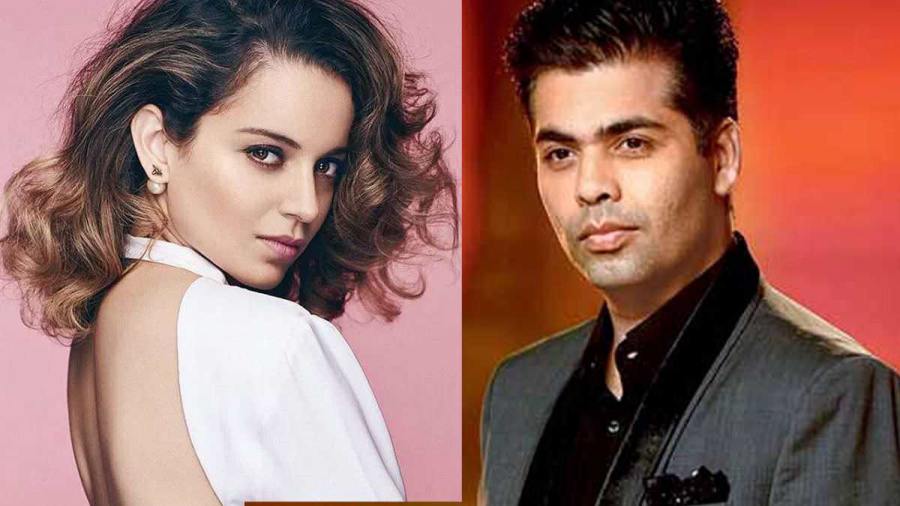
The Kapoor families and many other Indian film actors have been known for bringing their children into the industry with their endorsements and influence for decades. However, a fresh debate on nepotism soon followed the untimely demise of actor Sushant Singh Rajput, investigations into which have pointed to professional rivalry and instances of “bullying”. As per media reports, he was ostracized by the film fraternity despite being an accomplished actor. Filmmaker Karan Johar, with whom Rajput had worked in the Netflix film Drive, was quickly hailed as the flagbearer of nepotism by actress Kangana Ranaut, with Rajput’s fans calling for a boycott of Johar and his banner, Dharma Productions, as well as of actor Salman Khan and his brothers, who were greatly accused of bullying outsiders in the past. Actors and actresses like Alia Bhatt, Varun Dhawan, Janhvi Kapoor, Ishaan Khatter, Ananya Pandey, Athiya Shetty, Tiger Shroff, Arjun Kapoor, Sara Ali Khan, all of whom hail from film families, were also widely criticized for their mediocre filmography and quickly lost millions of social media fans and followers within a week. Responding to allegations of nepotism against her, Sonam Kapoor sparked controversy with a tweet on Father’s Day, with trolls calling her out for delivering poor films in the past few years.
In recent weeks, nepotism has become centre stage in mainstream public discourse. Triggered by speculations over the death of actor Sushant Singh Rajput, the debate was initially confined to the film industry. But it has since spread to other domains. What began as a hashtag about a tragic death has acquired a life of its own. How do we understand this sudden upsurge, given that nepotism is not a new phenomenon?
In India, whichever field one may consider, there is no denying the prevalence of influential families that wield nepotistic influence. But does this mean we make peace with nepotism? Certainly not. But a lot depends on how the debate is framed, and the nature of the contingent politics around the nepotism discourse.
The International Science Collaborations on COVID-19 has a new discussion on the table. The idea of patent pooling.
Costa Rica, one of the countries in the meeting suggested the inkling of pooling the rights to deal with the current pandemic through minimal or at times free, preferably affordable licensing to ensure that the outcomes of efforts by various countries which can be used by one another and especially by those countries which have limited economic resources to deal with this problem. This proposal had received full support from all the other countries except from the UK and the US.
Patent Pooling, according to World Intellectual Property Organisation (WIPO), is defined as an agreement made between two or more patent holders. The agreement licenses the patents to one another or any third party. The main idea is to share the intellectual property rights and also to have a hand in the product.
Generally, patents pooling is done with the objective for necessitating the complex technologies as complementary patents. It is believed to provide productive technical solutions. Such an idea was seen in work in regard to the vaccines which were produced in the present COVID-19 crisis.
The ‘Sewing Machine Combination” made in the year 1856 is recognised to be as the first modern patent pool done in the US.
Patent pooling structures were actively debated and implemented during the SARS outbreak of 2002-03. The same process was also seen during the H5N1 influenza outbreak of 2005, followed by the 2009 H1N1 influenza pandemic.
Patent pooling ensures innovation between companies by minimizing the potential legal issues which arise due to the use of protected concepts of the other. It lowers the transaction costs and allows better process efficiencies as businesses that hold these complementary patents. Such a pooling by effectively agreeing not to sue each other for infringement can result in better and new products in the marketplace.
The International steps towards patent pooling that were taken are the C-TAP, GISAID, MIPP, TRIPS and CBD.
The COVID-19 Technology Access Pool (C-TAP) which is hosted by WHO accumulates all the pledges of commitments made under the Solidarity Call to Action. It is done in order to voluntarily share COVID-19 health technology related data, knowledge and intellectual property.
Global Initiative to Sharing of All Influenza Data (GISAID) promotes the data of rapid sharing of the virus as seen in the case of all influenza viruses and the coronavirus capable of causing COVID19. This also includes genetic sequences data, related clinical data and also the epidemiological data which might be associated with human viruses to be endorsed in public. The geographical and species-specific data is noted. According to this data, in the recent times, around 49,781 genome sequences of the COVID virus have been shared and they have been shared voluntarily by the researchers from all over the world.
Medicines Patent Pool (MPP) has simplified the development of generic drugs. For tuberculosis, HIV and Hepatitis C by allowing them to be sold at an affordable price. MPP is a UN backed public health organisation. It works to increase the access of the drugs and also in the facilitation of development of these life-saving medicines especially for the low- and middle-income countries.
Trade Related Intellectual Property Regime (TRIPS) consents the countries to grant compulsory licences to the selected companies which would work to produce a patented product at the times of such emergencies.
Nagoya Protocol under Convention on Biodiversity (CBD) frames Article 2(e) in the protocol which includes the genetic sequence information. These information forms the basis of all ongoing researches and developments that take place for the COVID-19 treatment and prevention. The Protocol specifically requires the contracting parties to provide the options for access and benefit sharing when the resources could be used for commercial purposes. It indirectly provides the scope for patent pooling.
The concept of ‘patent pooling’ is practically new in India. It primarily focuses to have solutions for the affordable health care.
Indian Patents Act (IPA), 1970 does not either render for any provisions related to formation of such patent pools or provide any guidelines for the same. But at the same time, it neither restrains to create nor denies for the formation of patent pools.
Under this Act, the Central Government on its motion can set up a patent pool by acquiring the patents and inventions required in the public interest. Such an exception only exists in the hands of the authorities and thus, the pooling is particularly viewed as a restrictive practice by Competition Act, 2002 and is claimed to be anti-competitive in nature.


 Eduindex
You must be logged in to post a comment.