NATIONAL mean a person owing allegiance to and entitled to the protection of a sovereign state. CITIZEN is preferred for one owing allegiance to a state in which sovereign power is retained by the people and sharing in the political rights of those people. the rights of a free citizen SUBJECT implies allegiance to a personal sovereign such as a monarch. the king’s subjects NATIONAL designates one who may claim the protection of a state and applies especially to one living or traveling outside that state.
Cognitive Science is the study of human mind and brain, focusing on how mind represents and manipulates knowledge and how mental representations and processes are realized in the brain. The field is highly transdisciplinary in nature, combining ideas, principles and methods of psychology, computer science, linguistics, philosophy, neuroscience etc. In Indian scenario which is full of diversity, it is important to foster scientific research in interdisciplinary field of Cognitive Science for better understanding of Indian mind sets, languages and cognitive disorders etc. With this aim, the Department of Science & Technology (DST) had initiated a highly focused programme “Cognitive Science Research Initiative (CSRI)” in 2008 during 11th Five year plan. The Cognitive Science Research Initiative facilitates a platform to scientific community to work for better solution of challenges related with cognitive disorders and social issues through various psychological tools & batteries, early diagnosis & better therapies, intervention technologies and rehabilitation programmes.
Objectives:
Cognitive Science Research Initiative is aimed to revolutionize research in various fields, such as:
Nature and origins of mental disorders, of physiological, social and neuro-chemical origins.
Design of better learning tools and educational paradigms.
Design of better software technologies and artificial intelligence devices.
Streamlining of social policy formulation and analysis.
Thrust Areas: Cognitive science has wide horizons which covers different aspects of cognition. DST has identified specific thrust areas in Cognitive Science which include Foundations of Cognition; Language and Cognition; Computational Intelligence; Cognitive Psychology and Cognitive Neuroscience etc.
Activities Supported under CSRI:
Individual R&D Projects: Grant is available for R&D projects in any thrust areas identified. Support will be provided for Equipments, Manpower and other research grant.
Multi-centric Mega Projects: Multi-centric projects are encouraged to provide better solution of issues related with social relevance, better understanding of neurodegenerative diseases and their therapeutics.
Post Doctoral Fellowship:Two years ‘Post Doctoral Fellowship’ Programme is aimed to develop human resource in Cognitive Sciences. The Scheme provides Opportunities to Young Scientists (below 40 years) for pursuing innovative research in frontier areas of Cognitive Science.
Support for Schools, Training, Workshops, Conferences etc: The CSRI programme extends partial support for organizing conference/seminar/symposia/training programmes/workshops/schools on a selective basis. The support is provided to Academic or Research Institutions, Universities and other Professional bodies to encourage young researchers and keep scientific community abreast of the latest developments in various areas of Cognitive Science.
Programme Schedule: Department invites Individual Project Proposals and application for Post Doctoral Fellowship once in a year through advertisement in all leading Newspapers and DST website. Mega projects for intensified research in particular area are supported under top-down approach in discussion with DST and stakeholders. Proposals for conducting Schools /Conferences are open throughout the year and considered on request.
The Science and Engineering Research Board (SERB) is a statutory body established through an Act of Parliament. Supporting basic research in emerging areas of Science & Engineering are the primary and distinctive mandate of the Board. The Board structure, with both financial and administrative powers vested in the Board, would enable quicker decisions on research issues, greatly improving thereby our responsiveness to the genuine needs of the research scientists and the S&T system.
What SERB offers to Scientists?
SERB supports research in frontier areas of Science and Engineering. A regular faculty / researcher in an academic / research institution can seek research support to carry out his/her research. Board also gives special attention to young scientists below the age of 35 years (relaxable by 5 years in the case of SC/ST/OBC, woman and physically handicapped category) to undertake independent research in newly emerging and frontier areas of science and engineering. High priority areas are supported in through the “Intensification of Research in High Priority Area “(IRHPA) Program. The Board offers JC Bose National Fellowship to scientists and engineers for their outstanding performance and contributions and RAMANUJAN Fellowship for brilliant scientists and engineers from all over the world to take up scientific research positions in India, especially those scientists who want to return to India from abroad. Board also provides financial assistance for presenting research paper in international scientific event (conference/ seminar/ symposium/ workshop etc.) held abroad. SERB extends partial financial support, on selective basis, for organising scientific events (National as well as International) in the country.
NSTMIS, DST is responsible for collection, collation, analysis and dissemination of information on resources devoted to S&T activities in the country.
The Scientific and Technological (S&T) activities play a vital role in the economic, social and physical development of a country. Scientific and technological research needs huge investments and calls for a judicious utilization of scarce resources like finance, trained manpower, raw materials etc. Data collection and analysis pertaining to resources, devoted to S&T, therefore, assumes significant importance. The growth of S&T, its performance and impact on society and economy are indicators to assess the effectiveness of planning and policy formulation.
The National Science and Technology Management Information System (NSTMIS), a division of Department of Science and Technology (DST) has been entrusted with the task of building the information base on a continuous basis on resources devoted to scientific and technological activities for policy planning in the country.
Activities
NSTMIS undertakes broadly two types of research activities:
In-house Research
Sponsored Research
In-house Research
National Survey on resources devoted to S&T activities in the country.
National Level database on Extramural (sponsored) R&D projects.
As an outcome of above in-house research, NSTMIS brings out the following publications
Research and Development Statistics
Research and Development in Industry
S&T Data Book
Directory of R&D Institutions
Directory of Extramural R&D Projects
Sponsored Research
While some of the valuable basic data on input resources into S&T activities were processed in -house, it was felt necessary to involve other interested individuals/organisations to take up studies in the sponsored project mode in order to convert this activity into a very comprehensive and cohesive plan programme to make available Science and Technology indicators. Keeping this in view, the divisional activities were further strengthened during Seventh Five Year Plan (1985-90) by enlarging the scope and including the following :
Creation, Updation and Dissemination of databases on R&D resources, projects, institutions, experts, equipments, other infrastructure facilities.
Development of S&T indicators.
Studying aspects related to R&D management and policy issues.
Estimation of short term and long term requirement of different categories of scientific manpower particularly in new emerging areas of S&T.
Studying the mismatch between employment and output of S&T personnel.
Supporting R&D projects on various S&T dimensions.
So far, more than 125 projects on the various facets of S&T have been sponsored to various organisations/ establishments and the results of 85 completed projects have already been published in the form of reports and disseminated to various researchers/users.
Innovation plays a vital role in nation’s prosperity. Recognizing the importance, the Indian Government has mounted a new initiative the Science, Technology, Innovation and Creation of Knowledge framework (STICK). The National Innovation Survey framework, evolved upon in-depth discussion with the national and international experts shall be used in the implementation of the STICK Programme.
NSTMIS division maintains a close liaison with UNESCO, NSF, OECD, etc. for matters relating to S&T statistics and indicators. NSTMIS officers are taken as resource persons by UNESCO for the various workshops conducted by them on standardisation of concepts and terminologies used in S&T statistics. NSTMIS expertise has also been shared with other developing nations like China and Trinidad and Tobago. Apart from this, NSTMIS continually interacts with various national organisations like Planning Commission, Institute of Applied Manpower Research, University Grants Commission, Confederation of Indian Industries and other scientific organisations for exchange of information and expertise related to Science Statistics and Indicators.
The Government is making efforts to ensure that foodgrains are readily available for distribution in all the States for meeting their requirements under the “Pradhan Mantri Garib Kalyan Anna Yojana (PM-GKAY)”. The Union Minister for Consumer Affairs, Food and Public Distribution, Shri Ram Vilas Paswan said here today the FCI has already loaded a total number of 2641 rakes (including Wheat and Rice) towards this end and the approx quantity loaded is 73.95 LMT (55.38 LMT Rice and 18.57 LMT Wheat). This is an all time record as this heavy / huge movement of foodgrains was accomplished during the period from 24.03.2020 (the date on which lockdown was clamped across the country) to 08.05.2020.
He said 21 States/UT have completed more than 90% distribution for the month of April under PM-GKAY covering nearly 41.35 Crore beneficiaries in these States/UTs. Some States/UTs namely, Andaman Nicobar Island, D&NH and Daman & Diu, Madhya Pradesh, Odisha, Puducherry, Himachal Pradesh etc. are distributing foodgrains for two months in one go under PMGKAY.
The Minister said 6 Crore Special SMSs have also been sent by about 20 States/UTs to NFSA ration card holders for awareness generation about of additional benefit of free foodgrains under PM-GKAY.
PM-GKAY is aimed at ameliorating the hardships faced by the poor due to various economic disruptions caused by the COVID19 pandemic. Under the package the Government aims to ensure no poor vulnerable family/person suffers on account of non-availability of foodgrains due to disruptions in the next three months.
Accordingly, the Department of Food & Public Distribution has also announced the policy decision taken in this regard to distribute additional foodgrains to about 80 Crore NFSA beneficiaries under the PM-GKAY in all States/UTs for a period of three months April to June 2020, including the UTs which are on DBT Cash Transfer mode.
Pulses distribution under PM-GKAY
Besides the food grains, Shri Paswan said the Government is also distributing free one kg of pulses to about 19.50 crore households for three months in the country. He said, this is the first time that the Department of Consumer Affairs is carrying such a massive operation of pulses. Government has allowed use of its stocks lying in about 165 NAFED godowns across the country for this scheme. Over 100 dal mills across the country have been pressed into service by NAFED so far.
The Minister said, as on date, about 51,105 LMT of pluses have been distributed across 21 States and 5 UTs. He said the delay in supply and distribution of pulses is due to late intimation by States/UTs on their choice of particular pulses variety such as Tur Dal, Urad Whole, Moong Whole, Chana hole, Chana Dal and Masur Dal besides the logistics involved in transportation from different States during the lockdown. In many inaccessible locations, such as Vijayanagar in Arunachal Pradesh on the Myanmar border and Ladakh, pulses have been lifted by air route under extremely challenging conditions. Besides, some States like UP have decided to distribute pulses with food grains in order to minimize social contact leading to delayed distribution, he said.
17 States/UTs covered under ‘One Nation One Ration Card’
Shri Paswan said, under the “One Nation One Ration Card” plan, 5 more States/UT of Uttar Pradesh, Bihar, Punjab, Himachal Pradesh and Darda & Nagar Haveli and Daman & Diu, have been asked to integrate with the National Cluster. The cluster already has 12 States namely – Andhra Pradesh, Goa, Gujarat, Haryana, Jharkhand, Kerala, Karnataka Madhya Pradesh, Maharashtra, Rajasthan, Telangana and Tripura w.e.f. 1st January 2020. Now, with a total of 17 States/UTs integrated with the National Cluster, the facility of national/inter-State portability would be enabled for 60 Crore NFSA beneficiaries of 17 States/UTs to lift their entitled quota of foodgrains from any Fair Price Shop of their choice by using their same/existing ration card.
Food grains procurement by FCI on track
Shri Paswan assured sufficient food grains supply is available to meet the increased demands and the procurement process is also on track. As on 08.05.2020, cumulative Procurement of Wheat in Rabi Marketing Season (RMS) 2020-21 is 226.85 LMT whereas corresponding procurement during RMS 2019-20 was 277.83 LMT. Therefore, procurement of Wheat in current season is less by 18.35% than the previous season in corresponding period, he said. Cumulative Procurement of Paddy, as on 06.05.2020, in terms of Rice in Kharif Marketing Season (KMS) 2019-20 is 439.02 LMT whereas corresponding procurement during KMS 2018-19 was 398.13 LMT. Therefore, procurement of rice in current season is more by 10.27%, he said.
The procurement of Wheat and Paddy / Rice during RMS 2020-21 normally commences on the 1st of April. But due to COVID-19 situation, most of States could commence their procurement operations around 15th of April.
In view of the prevailing unprecedented situation, it has been decided that procurement of Wheat during the ensuing Rabi Marketing Season (RMS) 2020-21 and Procurement of Paddy / Rice of Rabi Crop in Kharif Marketing Season (KMS) 2019-20 may be carried out on provisional basis, while keeping the target / estimate of procurement the same as during previous RMS -2019-20 and KMS 2018-19 (Rabi crop) in case of wheat and Paddy / Rice, respectively.
States were advised to ensure that the procurement operations take place in a staggered manner so as to avoid congregation of large number of farmers at a time and some kind of token system should be put in place for this. The number of procurement centres could also be increased to the extent possible so as to disperse the procurement operations for ensuring social distancing and maintaining hygiene at these centres.
Shri Paswan said the Department of Food & Public Distribution has constituted a Task Force to assess the situation arising out of shortage of jute bags / bales for packaging of foodgrains due to the COVID19 lockdown and also relaxed guidelines for packaging of foodgrains in used gunny bags and HDPE /PPE bags (commonly known as plastic bags for packaging of foodgrains, especially Wheat).
While displaying zero tolerance for sexual harassment of women at workplace, the Supreme Court Bench comprising of Justice Dr DY Chandrachud and Justice Ajay Rastogi have just recently on February 25, 2020 in a notable judgment titled Punjab and Sind Bank and Others Vs Mrs Durgesh Kuwar in Civil Appeal No. 1809 of 2020 have minced no words to make it abundantly clear that sexual harassment at the workplace is an affront to the fundamental rights of a woman. This was so remarked while upholding a Madhya Pradesh High Court judgment that had quashed a transfer of a woman bank employee! Very rightly so! There must be no tolerance for sexual harassment at any workplace and those indulging in it must be made to face the music of law!
Sexual Harassment At Workplace
To start with, the ball is set rolling in para 2 of this noteworthy judgment authored by Justice Dr Dhananjaya Y Chandrachud for himself and Justice Ajay Rastogi wherein it is observed that, “A senior officer of a public sector banking institution complains that her reports about irregularities and corruption at her branch and her complaints against an officer who sexually harassed her met with an order of transfer. The case involves the intersection of service law with fundamental constitutional precepts about the dignity of a woman at her workplace.”
Be it noted, para 3 then discloses that, “This appeal arises from a judgment of a Division Bench of the Indore Bench of the High Court of Madhya Pradesh dated 18 March 2019 in a Writ Appeal arising out of an order of the learned Single Judge dated 11 February 2019.”
To recapitulate, it is then remarkably laid bare in para 4 that, “The respondent was appointed as a Probationary Officer of the Punjab and Sind Bank, the first appellant, on 8 October 1998 in Junior Management Grade Scale 1. She was promoted to the post of Chief Manager in Scale IV. On 2 September 2011, the respondent was transferred to the Zonal Office at Mumbai. On 7 October 2011, she was transferred to the Branch Office at Indore. In September 2016, the first respondent was promoted to the post of Chief Manager in Scale IV. On 23 September 2016, the competent authority of the bank decided to continue her at the branch in Indore upon promotion. On 11 December 2017, the respondent was transferred from the Branch Office at Indore to the Branch Office at Saraswa in the district of Jabalpur. Intimation of the transfer was furnished to her on 14 December 2017. On 31 January 2018, the respondent submitted a representation to the Zonal Manager, recording a reference to the circulars of the bank governing the posting of women officers. She made a request for being retained at Indore. Following the earlier representation, she submitted a reminder on 15 February 2018 and a representation on 19 February 2018 to the Executive Director of the Bank.”
Women’s Fundamental Rights
After hearing both sides, the Bench then observes in para 17 that, “We must begin our analysis of the rival submissions by adverting to the settled principle that transfer is an exigency of service. An employee cannot have a choice of postings. Administrative circulars and guidelines are indicators of the manner in which the transfer policy has to be implemented. However, an administrative circular may not in itself confer a vested right which can be enforceable by a writ of mandamus. Unless an order of transfer is established to be malafide or contrary to a statutory provision or has been issued by an authority not competent to order transfer, the Court in exercise of judicial review would not be inclined to interfere. These principles emerge from the judgments which have been relied upon by the appellants in support of their submissions and to which we have already made a reference above. There can be no dispute about the position in law.”
women sexual harashment
For the sake of brevity, the key issue in real terms that is raised in para 18 is as stated that, “The real issue which the Court needs to enquire into in the present case is as to whether the order of the High Court quashing the order of transfer can be sustained, having regard to the above principles of law. The material on record would indicate that commencing from 31 December 2016 and going up to 15 November 2017, the respondent, who was posted as Chief Manager in her capacity as a Scale IV officer at Indore branch, submitted as many as six communications drawing attention to the serious irregularities which she had noticed in the maintenance of bank accounts of and transactions by liquor contractors. The contents of the complaints raised serious issues. The order of transfer was served on the respondent within a month of the last of the above representations, on 14 December 2017. On 19 February 2018, the respondent levelled allegations specifically of sexual harassment against the Zonal Manager. The bank initially constituted an ICC. The respondent raised an objection to the presence of some of the members of the Committee.”
Going forward, para 19 then stipulates that, “The report of the ICC contains a reference to the objections which the respondent raised to the members at serial numbers (ii), (iv) and (vi) above. These objections were noted in the course of the report of the ICC dated 26 February 2019. The respondent drew the attention of the Presiding Officer of the ICC to the fact that Ms Rashmita Kwatra, AGM is the spouse of a retired General Manager, who was part of the process of the transfer of the respondent. As against Ms Seema Gupta, who was nominated as an independent member, the respondent noted that she was a panel advocate of the bank and was regularly contesting cases in court involving the bank. The respondent also raised an objection in regard to the presence of Mr Vimal Kumar Attrey as a member of the Committee. The report of the Committee contains a reference to the fact that following the objections which were raised by the respondent, the Committee was reconstituted, as a result of which Ms Rashmita Kwatra and Mr Vimal Kumar Attrey were substituted by two other officers of the bank. However, Ms Seema Gupta, Advocate continue to be a member of the ICC.”
Most significantly, it is then elegantly postulated in para 20 that, “The Act was enacted to provide protection against sexual harassment of women at the workplace as well as for the prevention and redressal of complaints of sexual harassment. Sexual harassment at the workplace is an affront to the fundamental rights of a woman to equality under Articles 14 and 15 and her right to live with dignity under Article 21 of the Constitution as well as her right to practice any profession or to carry on any occupation, trade or business.”
What’s more, it is then rightly brought out in para 22 that, “Clause (c) of Section 4(2) indicates that one member of the ICC has to be drawn from amongst a non-governmental organization or association committed to the cause of women or a person familiar with issues relating to sexual harassment. The purpose of having such a member is to ensure the presence of an independent person who can aid, advise and assist the Committee. It obviates an institutional bias. During the course of hearing, we have received a confirmation from the learned senior counsel appearing on behalf of the bank that Ms Seema Gupta was, in fact, a panel lawyer of the bank at the material time. This being the position, we see no reason or justification on the part of the bank not to accede to the request of the respondent for replacing Ms Seema Gupta with a truly independent third party having regard to the provisions of Section 4(2)(c) of the Act. This is a significant facet which goes to the root of the constitution of the ICC which was set up to enquire into the allegations which were levelled by the respondent.”
Simply put, the Bench then goes on to add in para 24 that, “The material which has been placed on record indicates that the respondent had written repeated communications to the authorities drawing their attention to the serious irregularities in the course of the maintenance of accounts of liquor contractors and in that context had levelled specific allegations of corruption. The respondent was posted on 14 December 2017 to a branch, which even according to the bank, was not meant for the posting of a Scale IV officer. The sanctity which the bank attaches to posting officers of the appropriate scale to a branch commensurate with their position is evident from the Board’s Resolution to which we have adverted earlier. Admittedly, the branch to which the respondent was posted was not commensurate to her position as a Scale IV officer. There can be no manner of doubt that the respondent has been victimized. Her reports of irregularities in the Branch met with a reprisal. She was transferred out and sent to a branch which was expected to be occupied by a Scale I officer. This is symptomatic of a carrot and stick policy adopted to suborn the dignity of a woman who is aggrieved by unfair treatment at her workplace. The law cannot countenance this. The order of transfer was an act of unfair treatment and is vitiated by malafides.”
To put it succinctly, it is then observed in para 25 that, “In view of the above analysis, we are of the view that the High Court cannot be faulted in coming to the conclusion that the transfer of the respondent, who was holding the office of Chief Manager in the Scale IV in Indore branch to the branch at Saraswa in the district of Jabalpur was required to be interfered with. At the same time, a period of nearly four years has since elapsed. Despite the order of stay, the respondent was not assigned an office at Indore and had to suffer the indignity of being asked to sit away from the place assigned to a Branch Manager. Considering the period which has elapsed, it would be necessary for the Court to issue a direction, which, while sub-serving the interest of the bank, is also consistent with the need to reserve the dignity of a woman employee who, we hold, has been unfairly treated.”
Now coming to the concluding paras, para 26 holds that, “We accordingly direct that Ms Durgesh Kuwar, the respondent officer, shall be reposted at the Indore branch as a scale IV officer for a period of one year from today. Upon the expiry of the period of one year, if any administrative exigency arises the competent authority of the bank would be at liberty to take an appropriate decision in regard to her place of posting independently in accordance with law keeping in view the relevant rules and regulations of the bank, in the interest of fair treatment to the officer.”
Lastly, it is then held in para 27 that, “While affirming the decision of the High Court, the appeal is disposed of in terms of the above directions. The respondent would be entitled to costs quantified at Rs 50,000 which shall be paid over within one month.”
Summing Up the Discussion
To sum up, the crux of this latest, landmark and extremely laudable judgment is that there has to be zero tolerance for sexual offences directed against women . Those men who dare to still indulge in it have to be made to suffer most swiftly the penal consequences of their reprehensible actions! The sum and substance of this noteworthy judgment is that sexual harassment of women at workplace is an affront to the fundamental rights of a woman to equality under Articles 14 and 15 and her right to live with dignity under Article 21 of the Constitution as well as her right to practice any profession or to carry on any occupation, trade or business. The provisions of the Sexual Harassment of Women at Workplace (Prevention, Prohibition and Redressal) Act, 2013 must be strictly and swiftly implemented so that the woman victim gets the due relief at the earliest! There can be no denying or disputing it!
In continuation of the convincing, courageous and commendable judgment delivered by the same Division Bench of Apex Court comprising of Justice Dr DF Chandrachud and Justice Ajay Rastogi on February 17, 2020 that favoured the extension of permanent commission for women in the armed forces so that gender equality is implemented in reality in the case titled The Secretary, Ministry of Defence vs Babita Puniya and others in Civil Appeal Nos 9367-9369 of 2011 with Civil Appeal Nos 1127-1128 of 2013 and with Civil Appeal No 1210 of 2020, we see once again that these same Judges have now in yet another case titled Union of India & Ors vs Lt Cdr Annie Nagaraja & Ors in Civil Appeal Nos 2182-87 of 2020 @ SLP (C) Nos. 30791-96 of 2015 along with others very clearly, convincingly and commendably held that serving women Short Service Commission Officers in Indian Navy were entitled to Permanent Commission at par with their male counterparts. We thus see that the Apex Court Bench thus upheld the 2015 Delhi High Court verdict which had upheld women officer’s claim in this regard! Very rightly so!
To be sure, women were not commissioned in the Navy till the issuance of notification dated 9th October 1991, whereby for the first time, the power under the enabling provision under Section 9(2) of the Navy Act was exercised to lay down that women would also be eligible for appointment as officers in the Indian Navy. But the induction of women was confined to four branches namely Logistics, Law, ATC and Education. It was also stated by the Ministry then that policy guidelines regarding permanent commission for women will be laid down in 1997. But such guidelines were not laid down until 2008. On 26th September 2008, the Ministry for the first time took a decision to grant permanent commission to SSC women officers in all the three forces. Regulation 203 of Chapter IX of the Indian Navy Act, 1957 puts no restriction to the grant of permanent commission either gender wise or category wise. But this offer was restricted to certain categories and was also to operate prospectively. As per this policy, only women officers inducted after January 2009 were eligible for permanent commission, that too only in the branches of education, law and naval architecture. The cadre of logistics and ATC which were opened to women for SSC in 1991 were excluded.
Before proceeding ahead, it would be instructive to now mention that the Delhi High Court Division Bench comprising of Justice Kailash Gambhir and Justice Najmi Wazri in Annie Nagaraja and others vs Union of India and others in W.P. (C) 7336/2010, CM Nos. 9348/2012 & 6859/2014 along with others have held the denial of permanent commission to women Short Service Commission (SSC) officers in the Indian Navy in different branches which includes the cadres of Education, ATC and logistics to be discriminatory. It is very rightly held in para 32 of this notable judgment while ordering that permanent commission should be offered to the petitioners that, “We fail to comprehend that when these petitioners along with the male officers had undertaken the same kind of training but nevertheless were denied permanent commission although the men were granted the permanent commission with no special merit except for the fact that they belong to the male sex. If this does not tantamount to gender discrimination then what else does?”
Needless to say, in this present case we see that the Apex Court was considering the appeals filed by the Union Ministry against a judgment delivered by the Delhi High Court on September 4, 2015 allowing the claim of women officers for permanent commission. While rejecting the appeals of the Union Government and upholding the Delhi High Court judgment, the Apex Court held that both male and female officers are to be treated equally in granting permanent commission in Indian Navy, once the statutory bar for inducting women in Navy was lifted. Discrimination on the ground of sex as we see here or on the ground of religion or on the ground of region or on any other ground can never be justified under any circumstances!
For the sake of brevity, let us now deal starightaway with the directions passed by the Apex Court in this landmark, latest and extremely laudable judgment. It is held in para 96 that, “We hold and direct that:
(i) The statutory bar on the engagement or enrolment of women in the Indian Navy has been lifted to the extent envisaged in the notifications issued by the Union Government on 9 October 1991 and 6 November 1998 under Section 9(2) of the 1957 Act;
(ii) By and as a result of the policy decision of the Union Government in the Ministry of Defence dated 25 February 1999, the terms and conditions of service of SSC officers, including women in regard to the grant of PCs are governed by Regulation 203, Chapter IX, Part III of the 1963 Regulations;
(iii) The stipulation in the policy letter dated 26 September 2008 making it prospective and restricting its application to specified cadres/branches of the Indian Navy shall not be enforced;
(iv) The provisions of the implementation guidelines dated 3 December 2008, to the extent that they are made prospective and restricted to specified cadres are quashed and set aside;
(v) All SSC officers in the Education, Law and Logistics cadres who are presently in service shall be considered for the grant of PCs. The right to be considered for the grant of PCs arises from the policy letter dated 25 February 1999 read with Regulation 203 of Chapter IX Part III of the 1963 Regulations. SSC women officers in the batch of cases before the High Court and the AFT, who are presently in service shall be considered for the grant of PCs on the basis of the vacancy position as on the date of judgments of the Delhi High Court and the AFT or as it presently stands, whichever is higher;
(vi) The period of service after which women SSC officers shall be entitled to submit applications for the grant of PCs shall be the same as their male counterparts;
(vii) The applications of the serving officers for the grant of PCs shall be considered on the basis of the norms contained in Regulation 203 namely: (i) availability of vacancies in the stabilised cadre at the material time; (ii) determination of suitability; and (iii) recommendation of the Chief of the Naval Staff. Their empanelment shall be based on inter se merit evaluated on the ACRs of the officers under consideration, subject to the availability of vacancies;
(viii) SSC officers who are found suitable for the grant of PC shall be entitled to all consequential benefits including arrears of pay, promotions and retiral benefits as and when due;
(ix) Women SSC officers of the ATC cadre in Annie Nagaraja’s case are not entitled to consideration for the grant of PCs since neither men nor women SSC officers are considered for the grant of PCs and there is no direct induction of men officers to PCs. In exercise of the power conferred by Article 142 of the Constitution, we direct that as a one-time measure, SSC officers in the ATC cadre in Annie Nagaraja’s case shall be entitled to pensionary benefits. SSC officers in the ATC cadre in Priya Khurana’s case, being inducted in pursuance of the specific representation contained in the advertisements pursuant to which they were inducted, shall be considered for the grant of PCs in accordance with directions (v) and (vi) above;
(x) All SSC women officers who were denied consideration for the grant of PCs on the ground that they were inducted prior to the issuance of the letter dated 26 September 2008 and who are not presently in service shall be deemed, as a one-time measure, to have completed substantive pensionable service. Their pensionary benefits shall be computed and released on this basis. No arrears of salary shall be payable for the period after release from service;
(xi) As a one-time measure, all SSC women officers who were before the High Court and the AFT who are not granted PCs shall be deemed to have completed substantive qualifying service for the grant of pension and shall be entitled to all consequential benefits; and
(xii) Respondents two to six in the Civil Appeals arising out of Special Leave Petition (C) Nos 30791-96 of 2015, namely Commander R Prasanna, Commander Puja Chhabra, Commander Saroj Kumar, Commander Sumita Balooni and Commander E Prasanna shall be entitled. In addition to the grant of pensionary benefits, as a one-time measure, to compensation quantified at Rs 25 lakhs each.”
Going forward, it is then held in para 97 that, “We affirm the clarification which has been issued in sub-para (a) of paragraph 50 of the impugned judgment and order of the Delhi High Court.”
Furthermore, it is then held in para 98 that, “Compliance with the above directions shall be effected within three months from the date of this judgment. We accordingly dispose of the appeals.”
Most significantly, it is very rightly and remarkably held in para 91 that, “Once the policy decision of the Union Government was communicated on 25 February 1999, the authorities were bound to consider the claims of the SSC officers for the grant of PC in terms of Regulation 203. The naval authorities and the Union Government failed to do so, depriving them of the entitlement to be considered for the grant of PC. By the failure of the authorities to consider the SSC officers for PCs in terms of the policy communication of 25 February 1999, SSC officers lost out on the opportunity to be granted PCs and all the responsibilities and benefits attached to the grant of PC, including promotions and pensionable service. The situation which has come to pass is due to the failure of the authorities to implement statutory notifications issued under Section 9(2) the policy statement of 25 February 1999 by which they were bound and as the decisions of the Delhi High Court and the AFT.”
Most remarkably, it is then further commendably held in this same para 91 ahead that, “These SSC officers cannot be left in the lurch and the injustice meted to them by lost years of service and the deprivation of retiral entitlements must be rectified. The injustice is a direct consequence of the authorities having breached their duties under law, as explained above. To deny substantive relief to the SSC officers would result in a situation where a breach of duty on the part of the authorities to comply with binding legal norms would go unattended. This would result in a serious miscarriage of justice to the SSC officers who have served the nation and is unsustainable in law.”
Equally heartening to note is that the Apex Court rejected the Centre’s objections based on physiological features of women as “gender stereotypes”! Justice Dr DY Chandrachud while reading the operative part of the judgment minced no words to state commendably that, “Performance at work and dedication to the cause of the nation are the surest answers to prevailing gender stereotypes. To deprive serving women officers of the opportunity to work as equals with men on PCs in the Indian Navy is plainly discriminatory. Furthermore, to contend that women officers are ill-suited to certain avocations which involve them being aboard ships is contrary to the equal worth of the women officers who dedicate their lives to serving in the cause of the nation.”
Words are short to commend these two Judges of the Apex Court – Justice Dr DY Chandrachud and Justice Ajay Rastogi who have delivered this extremely commendable judgment which has opened the door for permanent commission of women in the Navy just like earlier they by their order had similarly opened the doors of permanent commission of women in the Army! They rightly rejected the specious submission that women are not suited for sea sailing duties. It was laudably observed that, “It is impossible to countenance a submission that women cannot sail alongside men sailors.”
Without mincing any words and without pulling back any punches, a three Judge Bench of the Supreme Court headed by Chief Justice of India (CJI) SA Bobde and comprising also of Justice BR Gavai and Justice Surya Kant most recently on March 18, 2020 in a notable judgment titled Bhagwan Singh vs State of Uttarakhand in Criminal Appeal No. 407 of 2020 [Arising out of Special Leave Petition (Crl.) No. 656 of 2018 have sought to send a firm and final message to all the people in our country that guns licensed for self protection cannot be used for celebratory firings and those who still dare to do it would have to pay a heavy cost for doing so! It also expressed its serious concerns on the increasing number of such incidents in our country. There has to be zero tolerance for all such incidents of celebratory firings in which all rules are broken with impunity and the lives of innocents are endangered most shamelessly and most carelessly!
To start with, the ball is set rolling in para 2 of this noteworthy judgment wherein it is observed that, “This Criminal Appeal is directed against the judgment dated 26th July, 2017 passed by the High Court of Uttarakhand whereby the appellant’s criminal appeal against the judgment and order dated 11th/12th July, 2013 rendered by Learned Sessions Judge, Bageshwar convicting the appellant under Sections 302 and 307 of Indian Penal Code (for short, ‘IPC’) and sentencing him to undergo life imprisonment (under Section 302, IPC) and 5 years’ rigorous imprisonment (under Section 307, IPC) along with a fine of Rs. 20,000/- in default whereof he was directed to undergo 6 months additional rigorous imprisonment was dismissed. The appellant was, however, acquitted for offence punishable under Section 25 of the Arms Act for want of the requisite sanction.”
Needless to say, it is then stated in para 3 that, “It may be mentioned at the outset that notice of the special leave petition was issued on the limited question to determine the nature of offence committed by the appellant i.e. whether it falls under the ambit of Section 302 or 304 of IPC. To determine this question the facts may be briefly noted.”
To recapitulate, while narrating the facts it is then observed in para 4 that, “On 21st April, 2007, the marriage ceremony of the Appellant’s son was taking place at village Dafaut, Uttarakhand, when around 5:30 pm as soon as the marriage procession reached the Appellant’s courtyard – he suddenly fired celebratory gunshots. The pellets struck 5 persons standing in the courtyard namely, Smt. Anita W/o Chanchal Singh, Khushal Singh @ Sonu, Ummed Singh (P.W.6), Smt. Vimla W/o Devendra Singh (P.W.5) and Smt. Vimla W/o Bhupal Singh (P.W.7). The injured were taken to the hospital where two of them – Anita and Khushal Singh @ Sonu succumbed to their injuries. Later at about 8:40 pm, Dharam Singh (P.W.3) filed an FIR at PS Kothwali, Bageshwar, narrating in full detail the incident of which he himself was a witness.”
Be it noted, it is then noted in para 5 that, “After the conclusion of investigation, initially a charge sheet under Section 304, IPC was filed but later on the appellant was charged under Sections 302 and 307, IPC along with Section 25 of the Arms Act.”
Celebratory Firing
Of course, it is then brought out in para 6 that, “The Ld. Sessions Judge held the appellant guilty of offences under Sections 302 and 307, IPC based on testimonies of eye witnesses and injured witnesses. It was noted that Appellant fired shots from his son’s licensed gun causing fatal injuries to Smt. Anita and Khushal Singh and injuring three others. He was consequently sentenced in the manner as briefly noticed in the opening paragraph of the order.”
What follows next is then stated in para 7 that, “The appellant went in appeal before the High Court. His primary contention was that he had no intention to cause anyone’s death. He stated that the firing was by a ball with which some children were playing. The ball struck against the gun in his hand and led to the firing of shots. The occurrence was an admitted fact and the only plea taken was that it being a case of accidental firing, Section 300 punishable under Section 302, IPC was not attracted.” But the High Court rejected his plea as pointed out in para 8.
As it turned out, the Bench then points out in para 15 that, “The trial court as well as the High Court have proceeded on the premise that the appellant’s act by firing from the gun which was pointed towards the roof was as bad as firing into a crowd of persons so he ought to have known that his act of gun-shot firing was so imminently dangerous that it would, in all probability, cause death or such bodily injury as was likely to cause death.”
More significantly, it is then held in para 16 that, “The facts and circumstances of the instant case, however, do not permit to draw such a conclusion. We have already rejected the prosecution version to the extent that the appellant aimed at Smt. Anita and then fired the shot(s). The evidence on record contrarily shows that the appellant aimed the gun towards the roof and then fired. It was an unfortunate case of mis-firing. The appellant of course cannot absolve himself of the conclusion that he carried a loaded gun at a crowded place where his own guests had gathered to attend the marriage ceremony. He did not take any reasonable safety measure like to fire the shot in the air or towards the sky, rather he invited full risk and aimed the gun towards the roof and fired the shot. He was expected to know that pellets could cause multiple gun-shot injuries to the nearby persons even if a single shot was fired. The appellant is, thus, guilty of an act, the likely consequences of which including causing fatal injuries to the persons being in a close circuit, are attributable to him. The offence committed by the appellant, thus, would amount to ‘culpable homicide’ within the meaning of Section 299, though punishable under Section 304 Part 2 of the IPC.”
Most significantly, it is then underscored in para 17 that, “Incidents of celebratory firing are regretfully rising, for they are seen as a status symbol. A gun licensed for self-protection or safety and security of crops and cattle cannot be fired in celebratory events, it being a potential cause of fatal accidents. Such like misuse of fire arms convert a happy event to a pall of gloom. Appellant cannot escape the consequences of carrying the gun with live cartridges with the knowledge that firing at a marriage ceremony with people present there was imminently dangerous and was likely to cause death.”
To buttress its point further, we then see that the Bench observes in para 18 that, “A somewhat, similar situation arose in Kunwar Pal (Supra) wherein this Court held as under:
“12. We find that the intention of the appellant to kill the deceased, if any, has not been proved beyond a reasonable doubt and in any case the appellant is entitled to the benefit of doubt which is prominent in this case. It is not possible therefore to sustain the sentence under Section 304 Part I IPC, which requires that the act by which death is caused, must be done with the intention of causing death or with the intention of causing such bodily injury as is likely to cause death. Though it is not possible to attribute intention it is equally not possible to hold that the act was done without the knowledge that it is likely to cause death. Everybody, who carries a gun with live cartridges and even others know that firing a gun and that too in the presence of several people is an act, is likely to cause death, as indeed it did. Guns must be carried with a sense of responsibility and caution and are not meant to be used in such places like marriage ceremonies.”
On balance, it is then held by the Bench in para 19 that, “Resultantly, we hold that the appellant had the requisite knowledge essential for constituting the offence of ‘culpable homicide’ under Section 299 and punishable under Section 304 Part-2 of IPC. He is thus held guilty under Section 304 Part-2 and not under Section 302 of IPC. On the same analogy, the appellant is liable to be punished for ‘attempt to commit culpable homicide’ not amounting to murder under Section 308, in place of Section 307 of IPC for the injuries caused to the other three victims. To this extent, the appellant’s contentions merit acceptance.”
Last but not the least, it is then held in para 20 that, “For the above-stated reasons, the appeal is allowed in part. The conviction of the appellant under Section 302, IPC is modified to Section 304 Part-2, IPC and that under Section 307, IPC is altered to Section 308, IPC. As a necessary corollary, the sentence of life imprisonment awarded to the appellant for committing the offence under Section 302 IPC, is reduced to 10 years’ rigorous imprisonment and the sentence awarded to him under Section 307, IPC is substituted with Section 308 IPC, without any alteration in the fine imposed by the trial court.”
No doubt, the time is ripe now to enact the strictest law which completely prohibits celebratory firing and the jail term for it must be increased from 10 to 30 or at least 20 years and in addition a heavy fine should also be imposed on those indulging in the same! The Apex Court Bench headed by CJI Sharad A Bobde have sent the simple and straight message to one and all that if you indulge in celebratory firing and break the law then you are bound to face the punishment as envisaged right now under our penal laws and be behind bars for 10 years! Very rightly so!
To sum up, one hopes earnestly that now strictest law is enacted by Parliament on this at the earliest so that innocent and invaluable lives are saved from being lost forever! It brooks no more delay anymore now! All that is required is just adequate political will! Nothing else is required. We have lost many invaluable lives for no fault of theirs on account of this celebratory firing which deserves zero tolerance yet we see that the punishment level is still the same! It goes without saying that more than the fine it is the increase in jail term that will deter people from indulging in the same!
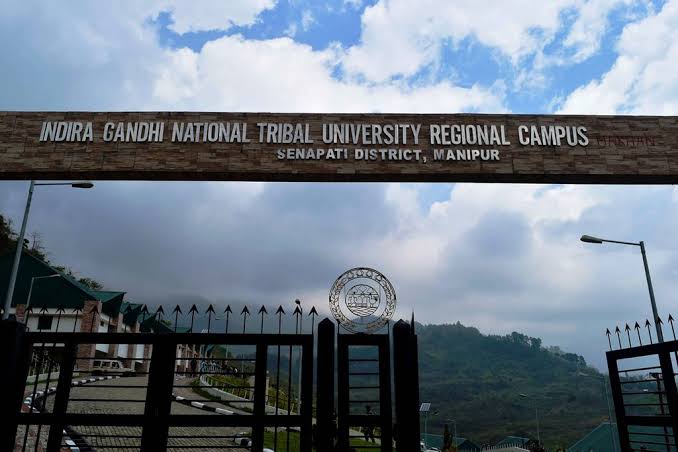
The Central Government has already established two Central Tribal Universities namely the Indira Gandhi National Tribal University, Amarkantak and Central Tribal University of Andhra Pradesh, Vizianagram with a view to provide avenues of higher education and research facilities primarily for the tribal population of the country. Besides, the Andhra Pradesh reorganization Act, 2014 inter-alia mandates for establishment of a new Central Tribal University in Telangana. Further, there are several Central Universities in different States which also fulfil the aspirations of higher education of tribal youth of the region.
Further, the UGC is implementing a scheme for the benefit of Scheduled Tribe (ST) students i.e. National Fellowship for Higher Education of Scheduled Tribe Students. In addition to this, UGC is implementing the following schemes for the benefit of weaker sections of the society including ST students:
Residential Coaching Academies of Minorities /SC/ST and Women
Establishment of Centres in Universities for study of Social exclusion and inclusive Policy
Establishment of Equal Opportunities Cells (EOCs)
Establishment of Scheduled Caste and Scheduled Tribe Cells in Universities
Coaching Schemes for Scheduled Castes/ Scheduled Tribes/OBC (non-creamy layer)/ Minorities: (i) Remedial Coaching at UG & PG level (ii) Coaching for entry into services (iii) Coaching for NET.
This information was given by the Union Minister for Human Resource Development, Dr. Ramesh Pokhriyal ‘Nishank’ in a written reply in the Rajya Sabha today.
The Lok Sabha passed the Special Protection Group (Amendment) Bill, 2019, after negating all the proposed amendments today.
Initiating the debate on the Special Protection Group (Amendment) Bill, 2019 today in the Lok Sabha, Union Home Minister Shri Amit Shah said that SPG shall provide proximate security to the Prime Minister and his immediate family members residing with him at his official residence. The Bill says that family members of a former Prime Minister who reside with him at his allotted accommodation will get security cover of the SPG only for five years, from the date he/she ceases to hold the office of Prime Minister.
Special Protection Group (Amendment) Bill, 2019
Replying to the debate, the Home Minister noted that there is a perception in the country that the amendment in SPG Act is only for the purpose to remove the SPG security cover for the Gandhi family. Contrary to this, the change of the security cover has been done only on the basis of yearly security threat perception review by the government. Such a security review has been a part of the original act, he added.
Shri Shah emphasized that the security cover of the Gandhi family has not been reduced or taken away, rather it has just been changed from SPG cover to Z Plus security cover by the CRPF, along with ASL and ambulance, across the country. The level of the security cover has been maintained and not even one security personnel has been reduced. He also said that the SPG security cover is being formed by the same security personnel who comprise of the Z plus security cover.
Shri Shah informed that based on the recommendations of the Birbal Nath committee report, SPG came into existence in 1985. From 1985 to 1988, SPG was governed by an Executive Order and only in 1988 the SPG Act came into existence to provide security to the Prime Minister and his/her family.
Shri Shah said that the SPG Act was enacted in 1988 to provide for the constitution and regulation of the SPG as an armed force to provide proximate security to the Prime Minister and his/her immediate family members. Amendments to the Act were effected in 1991, 1994, 1999 and 2003 and today a further amendment is being brought to revert back to the original spirit of the Act.
Shri Shah stated that the previous amendments to the 1988 Act have been carried out each time to provide security cover only to one family. According to the original Act, SPG is a specialised force to provide comprehensive security cover to the Prime Minister of the country and not a particular family. SPG doesn’t only provide physical security, but it takes care about protection of Prime Minister’s office, his/her communication systems, foreign tours and issues pertaining to his/her health and well being.
Dismissing the charge of vindictiveness for removal of SPG cover of Gandhi family, Shri Shah stated that such security cover reviews have happened in the past with respect to ex prime ministers, including Shri P.V. Narasimha Rao, Shri I.K. Gujaral, Shri Chandra Shekhar, Shri H.D. Deve Gowda and Dr. Manmohan Singh, but there was no such opposition ever when SPG cover was withdrawn. The Home Minister said that the Government is committed to secure each citizen of the country.
Shri Shah further stated that the Modi government never takes decision of providing security cover on the basis of vendetta politics but on scientific threat analysis for a particular individual. He also said that security cover has been provided to members of all political parties based on individual case based threat analysis. Security cover must not be treated as a status symbol by individuals. The security cover meant specifically for the Prime Minister, must not be enjoyed by any other individual. Moreover, the three protectees of the Gandhi family who have been specially mentioned here, have been on many trips without informing SPG, the Home Minister pointed out.
Talking about the rationale behind bringing the amendment, Shri Shah informed the House that in the Act, there is no cut off period for providing the SPG protection to former Prime Ministers or members of their immediate families. Thus, the number of individuals to be provided SPG cover can potentially become quite large. In such a scenario, there can be severe constraint on the resources, training and related infrastructure of SPG. This can also impact the effectiveness of SPG in providing adequate cover to the principle protectee, the Prime Minister in office.
Shri Shah said that the main aim of bringing this amendment is to make SPG more efficient. This would ensure that no omission happens in carrying out its core mandate, as the security of the Prime Minister, as Head of the Government, is of paramount importance for Government, governance and national security. The Bill says that when the proximate security is withdrawn from a former Prime Minister, such proximate security shall also stand withdrawn from members of his or her immediate family.
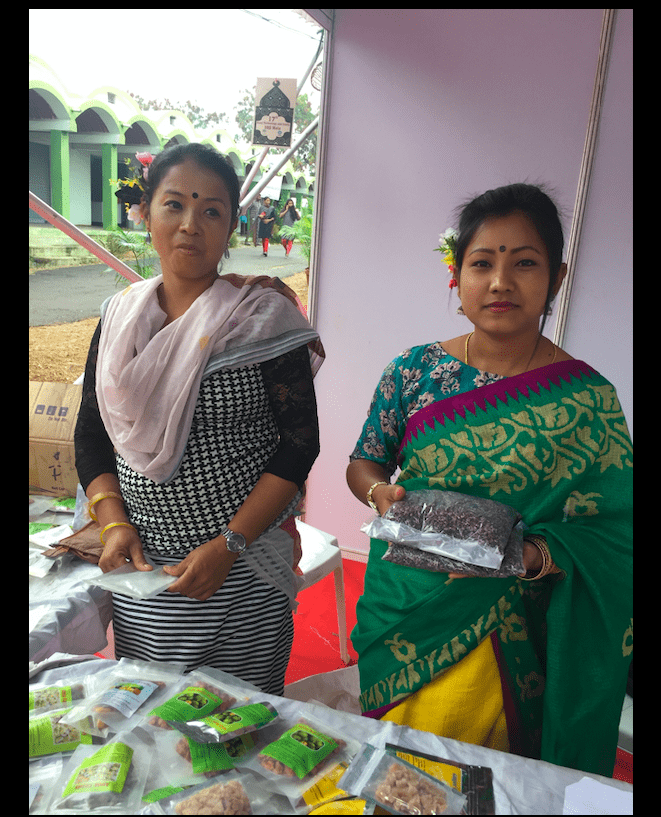
The Speaker, Lok Sabha Shri Om Birla visited the National Tribal Festival “Aadi Mahotsav”at Dilli Haat, INA, today. The 15 days’ festival (16th to 30th November, 2019) is the celebration of the spirit of Tribal Craft, Culture, Cuisine and Commerce. Union Tribal Affairs Minister Shri Arjun Munda, Chairman, TRIFED, Shri R.C. Meenaand MD, TRIFED, Shri Pravir Krishna were present on the occasion.
The Speaker visited the Stalls put up by tribal artisans and interacted with them. He witnessed the Tribal Cultural performances on the occasion.
Addressing the tribal artists and artisans, Shri Birla praised Ministry of Tribal Affairs and TRIFED for their unique exemplary efforts for transforming the lives of tribal people of our country. He paid homage to tribal freedom fighters. He opined that the tribal people are true protectors of our nature and environment. Aadi Mahotsav is a very novel initiative for overall development and welfare of tribal people of our country. He congratulated all participating tribal artists and artisans for their creative endeavors and it is very important that their natural skills must be channeled to promote their sources of income for their better life.
In his address, Shri Arjun Munda said that thetribal people have always fought for our country since ancient period till freedom struggle. They are firm believer in Panchtatva and have always protected our nature and environment. He opined that tribal people are protector of our ancient culture also and always away from social evils. The Adivasi way of life is guided by primal truth, eternal values and a natural simplicity. The tribes of India have a wide range of handicrafts. The Aadi Mahotsav is an effort to take tribal commerce to the next level of digital and electronic transactions. The concept of organizing Aadi Mahotsav in major cities of the country has proved to be a boon for tribal artisans.
Chairman TRIFED, Shri R. C. Meena, in his speech said that TRIFED is doing significant workfor the overall development and welfare of tribal people and events like Aadi Mahotsav are veryimportant in this regard. The tribes of India have a wide range of handicrafts and the governmentseeks to promote interaction between tribal artisans and the people.
The theme of the Mahotsav is: “A Celebration of the Spirit of Tribal Culture, Craft, Cuisine and Commerce”. The festival features exhibition-cum-sale of tribal handicrafts, art, paintings, fabric, jewellery and much more through 220stalls. Over 1000 tribal artisans and artists from different States creating a Mini-India are participating in thefestival.
Post inauguration of event on 16th November 2019, the balance 14 days of the festival have been dedicated to Parliamentarian’s Day, All India Service Day, Diplomats Day, Tourism Day, Defence Day, Sports Day, Textile Day, IAS Officers Wive’s Association, Media Day, Cooperative Day, North East Day, TRIFED Partner/Tribal Entrepreneur Day with Closing Ceremony on last day i.e. 30th November 2019.
The tribal textiles manufactured by Master tribal Craftsmen from Jammu & Kashmir in the North to Tamil Nadu in the South and from Gujarat in the West to Nagaland/Sikkim in the East are the main attractions. For the first time, this AADI MAHOTSAV is showcasing a wide range of products from the tribal artisan from Leh (Ladaakh). Apart from this special attraction a wide range of products from North Easter States are on display and sale. TheTribalhandicrafts are soldthrough more than 220Stalls under the Tribes Banner by tribalArtisans.
In line with the national aspiration to go cashless, the tribal artisans are accepting payment through major credit/debit cards for which Point of Sale (POS) machines have been provided in each stall. A special training has been conducted by State Bank of India for smooth operations of this. The Mahotsav is displaying the rich digital commerce and e-commerce being promoted by Tribes India.
TRIBES India proudly informs the signing of MOUs with Amazon, Amazon.com, Snapdeal, Flipkart, PayTM and GEM, a Government of India Portal for e-commerce of the tribal products. Besides TRIBES India has also has its own e-com portalwww.tribesindia.com.The Aadi Mahotsav is an effort to take tribal commerce to the next level of digital and electronic transactions. The Mahotsav apart from exotic handicrafts is also showcasing the electronic and digital skills of the tribals as a special attraction.
At a ceremony held today (November 18, 2019) at 0930 hrs in the Durbar Hall, Rashtrapati Bhavan, Shri Justice Sharad Arvind Bobde was sworn in as the Chief Justice of the Supreme Court of India. He made and subscribed to the oath of office before the President.
Union Home Minister ShriAmit Shah presided over a function to launch a special winter-grade diesel, developed by Indian Oil Corporation (Indian Oil), for the high-altitude regions of Ladakh through a video-link here today. Shri Dharmendra Pradhan, Minister of Petroleum & Natural Gas and Steel, and Shri Jamyang Tsering Namgyal, MP of Ladakh were also present on the occasion.
Motorists in high-altitude sectors like Ladakh, Kargil, Kaza and Keylong face the problem of freezing of diesel in their vehicles when winter temperatures drop to as low as -30o Celsius. Indian Oil has come up with an innovative solution to this problem by introducing a special winter-grade diesel with a low pour-point of -33o Celsius, which does not lose its fluidity function even in extreme winter conditions.
Speaking on the occasion, Shri Amit Shah congratulated the people of Ladakh for getting their long-pending demand fulfilled, by getting Union Territory status for Ladakh. The new status will accelerate the pace of holistic development of the region and bring prosperity to the people at par with the rest of India.
The Home Minister said that the Government of India has initiated a number of development projects for the UT of Ladakh,in the areas of power, solar energy, education and tourism with an estimated investment of Rs. 50,000 crore. He further said that, keeping in view the special development requirement of the region, the Government of India has made a provision that the budget allocation for the UT of Ladakh will remain non-lapsable, so as to enable the local administration to make full use of these funds as per their development needs. The Home Minister assured the people of UT of Ladakh that they will witness a fast pace of growth and development of the region under the decisive leadership of Hon’ble Prime Minister, Shri Narendra Modi.
Expressing his happiness at Indian Oil’s customer-driven approach,Shri Dharmendra Pradhan said that today is an important day for the people of Ladakh region as they will now get uninterrupted supply of special winter-grade diesel, which will help reduce the hardships faced by the local people for transportation and mobility during the harsh winter months. This will further facilitate the local economy as well as tourism of the region. Shri Pradhan expressed his gratitude to the Home Minister for launching the special winter-grade diesel and facilitating ease of living for the Ladakh region.
Shri Pradhan reassured that the UT of Ladakh will have all-round development under the visionary leadership of Hon’ble Prime Minister Shri Narendra Modi and people-centric welfare initiatives of Home Minister Shri Amit Shah.
The Home Minister and Petroleum Minister complimented the Indian Oil Team for devising solutions to help cater to the energy needs of the consumers in various parts of the country.
Prime Minister Shri Narendra Modi attended the All Parties Leaders meeting here today. Leaders from all major political parties were present on this occasion and they put forth their views on the upcoming session of Parliament.
In his remarks, Prime Minister observed that this session of the Parliament will be a special occasion for it will mark the 250th session of the Rajya Sabha and expressed his happiness that special events and activities were being planned to mark this occasion. Prime Minister emphasized that the 250th session of the Upper House provided a unique opportunity for highlighting the unique strengths of the Indian Parliament as well as the Indian Constitution, in providing an overarching framework of governance institutions for a diverse country like India. The backdrop of the session being held as India celebrates the 150th birth anniversary of the Father of the Nation Mahatma Gandhi also made it a unique and special occasion.
Prime Minister, while responding to specific issues raised by the representatives of various political parties said that the Government would work together with all parties in a constructive manner to address pending legislations and frame policy solutions for specific issues related to environment and pollution, the economy, the agricultural sector and farmers, and the rights of women, youth and the less privileged sections of society.
Prime Minister also complemented the Presiding officers of the two Houses for smooth running of the last session of Parliament and observed that this had helped to create a positive impact amongst the people about the functioning of the legislative arm of Government. In this regard, Prime Minister made a particular mention of the energetic participation by first term members of Parliament on discussions related to diverse issues and expressed the hope that constructive engagement between the Treasury and opposition benches will make the present session a successful and productive one
Briefing the media persons after the meeting,Union Minister for Parliamentary Affairs, Coal and Mines, Shri Pralhad Joshisaid that the Government is always ready to discuss on the floor of the both the Houses of Parliament, any issue as permitted under Rules of Procedure and sought the co-operation of all the party for the smooth functioning of the House.
Giving details about the ensuing Winter Session, Shri Joshi informed that The Winter Session, 2019 of Parliament is scheduled to be held from Monday, the 18thNovember, 2019, and subject to exigencies of Government Business, the Session may conclude on Friday, the 13th December, 2019.
He informed that 27 Bills will be taken up for introduction, consideration and passing. Shri Joshi also informed that two Bills replacing Ordinances namely (i) the Prohibition of Electronic Cigarettes (Production, Manufacture, Import, Export, Transport, Sale, Distribution, Storage and Advertisement) Ordinance, 2019 and (ii) the Taxation of Law (Amendment) Ordinance, 2019 are required to be passed during the ensuing Winter Session.
The Session will provide a total of 20 sittings spread over a period of 26 days including four Private Members’ days.
The Minister added thatin the meeting with Secretaries/ Senior Officers of various Ministries/ Departments held on 5thNovember, 2019, certain items were identified for being taken up during the ensuing Winter Session and based on the feedback tentatively 47* items have been identified for being taken up during the Winter Session, 2019. (*46 Legislative and 01 Financial items)
Some important pending legislations in the Houses required to be considered and passed during the Session are (i) The National Institute of Design (Amendment) Bill, 2019; (ii) The Chit Funds (Amendment) Bill, 2019; (iii) The Surrogacy (Regulation) Bill, 2019; (iv) The InterState River Water Disputes (Amendment), Bill, 2019; (v) The Dam Safety Bill, 2019; (vi) The Transgender Persons (Protection of Rights) Bill, 2019; (vii) The Jallianwala Bagh National Memorial (Amendment) Bill, 2019; (viii) The Constitution (Scheduled Tribes) Order (Amendment) Bill, 2019; and (ix) The Constitution (Scheduled Tribes) Order (Second Amendment) Bill, 2019.
Some important new Bills likely to be introduced, considered and passed during this session apart from the 2 Bills replacing Ordinances are (i) The Pesticides Management Bill, 2019; (ii) The Insolvency & Bankruptcy (Second) Amendment Bill, 2019; (iii) The International Financial Services Centres Authority Bill, 2019; (iv) The Medical Termination of Pregnancy (Amendment) Bill, 2019; (v) The Citizenship (Amendment) Bill, 2019; (vi) The Personal Data Protection Bill, 2019; and (vii) The Arms Act (Amendment) Bill, 2019
Besides Legislative items, 1 financial item relating to First Batch of Supplementary Demands for Grants for 2019-20 is required to be discussed and passed during the Session.
Shri Joshi also informed that a function would be held in the Central Hall, Parliament House to commemorate the 70 years of adoption of the Constitution on 26th November 2019. Hon’ble President, Hon’ble Vice President, Hon’ble Prime Minister and Hon’ble Speaker, Lok Sabha will address members of both Houses of Parliament assembled together.
The all-party meeting was attended by the Union Minister for Home Affairs Shri Amit Shah, the Minister for Social Justice and Empowerment Shri Thawar Chand Gehlot, the Minister of State for Parliamentary Affairs and Heavy Industries and Public Enterprises Shri Arjun Ram Meghwal andthe Minister of State for Parliamentary Affairs and External Affairs Shri V. Muraleedharan, along with other leaders.
The leaders of the Political parties raiseda number of issues during the meeting. A consensus across emerged across party lines to ensuring smooth functioning of the Parliament without disruptions and deadlocks which may be resolved through constructive discussions in both the Houses.
Items of Government Business Identified for being taken up in both the Houses of Parliament during ensuing Winter Session, 2019
Union Home Minister Shri Amit Shah today launched the the first Winter-Grade Diesel outlet for Ladakh region, which will help to address the problem faced by people due to loss of fluidity in Diesel fuel during extreme winter conditions. He said, the winter grade diesel produced by Panipat Refinery for the first time has a pour point of – 33degreeCelsius and does not lose its fluidity function even in the extreme winter weather of the region unlike the normal grade of Diesel which becomes exceedingly difficult to utilize.
Speaking on the occasion, Shri Shah said that the government led by Shri Narendra Modi was committed since 2014 to bring the region of Ladakhat par with the rest of the country, which wasneglected for the last 70 years. He said that the abrogation of Article 370 was a step in that direction. He also said that by bringing change in the status of Ladakh and the enhanced budget, all round development of the region has been ensured. He added that the newly introduced provisions of local taxation will also augment their financial resources.
Referring to a series of developmental measures taken by the Narendra Modi Government in the last 5 years including the Srinagar-Leh Transmission Line for electricity, 14 Solar projects for Leh and Kargil, Ladakh University, 2 new degree colleges, 5 new Tourist Circuits and Tracks for tourists and mountaineers, subsidised helicopter sewaand up gradation of District Hospital, Shri Shah said that people of Ladakh, Leh and Kargilnow enjoy same rights and will be an equal partner in the development of the country.
Shri Shah said that besides 9 MW Hydro power project, India’s largestSolar project of 7500 MW with an outlay of Rs, 50,000 Crore will be completed in 4 years. This will not only bring development in the Ladakh region but will also create employment opportunities.
The Home Minister said that this Winter-Grade Diesel will not only smoothen the travel and transportation during peak tourist season in extreme cold, but will also help in giving a boost to tourism and supply needs of the people of the region and helping in the overall economic development.
Tour and Taxi operators and the common man linked through the video-conferencing from Leh thanked the Union Home Minister for taking this historic measure and said this new version of Diesel will bring a New Dawn in the region.
Union Minister for Petroleum and Natural Gas, Shri Dharmendra Pradhan, Member of Parliament from Ladakh,JamyangTseringNamgyal and other senior officials of the Home Ministry and Petroleum Ministry were present on the occasion.
Raksha Mantri Shri Rajnath Singh held a bilateral meeting with US Secretary of Defence Dr Mark T Esper on the sidelines of ASEAN Defence Ministers’ Meeting-Plus (ADMM-Plus) in Bangkok today. Expressing happiness on the growing relationship between India and US, Raksha Mantri said, the bilateral cooperation between the two sides has grown across a wide range of sectors including defence and security, economy, energy, counter-terrorism and people-to-people ties.
Shri Rajnath Singh added that there is growing convergence between India and US in the Indo-Pacific region and India’s vision for Indo-Pacific is for a free & open, peaceful, prosperous and inclusive region supported by a rules-based order and respect for sovereignty and territorial integrity. Association of Southeast Asian Nations (ASEAN) is central to India’s vision of Indo-Pacific. Both countries are working together in the area of Maritime security including elements such as joint exercises, Humanitarian Assistance and Disaster Relief (HADR) operations and Maritime Domain Awareness.
The two Ministers also discussed a number of other issues concerning regional security and bilateral defence cooperation. The meeting ended on a positive note and Raksha Mantri looked forward to have substantial discussions during the forthcoming 2+2 dialogue in Washington DC later next month.
Later, in a tweet, Shri Rajnath Singh described his meeting with US Secretary of Defence as excellent. “We talked about ways to expand defence cooperation between India and the United States,” he tweeted.


![[PDF]](https://dst.gov.in/sites/all/modules/contributed/filesize_filter/icons/application-pdf.png) 392.39 KB
392.39 KB














 Eduindex
You must be logged in to post a comment.