FCI has become a lifeline for food distribution

Union Minister for Consumer Affairs, Food & Public Distribution, Shri Ram Vilas Paswan today chaired the review meeting with the Food Corporation of India’s Zonal Executive Directors and Regional General Managers on the distribution and procurement of food grains, through video conference.

In his address, Shri Paswan lauded the role of FCI during the lockdown and said food grain movement has been at an all-time high. He said FCI workforce have emerged as Food Warriors at the time of global pandemic crisis and they turned this challenge into an opportunity. FCI has undertaken record loading, unloading and transportation of food grains during the lockdown period. On the other hand, procurement also continued without disruptions and the wheat procurement by government agencies this year surpassed the last year’s figures.

The Minister also took stock of the distribution of food grains in the states and UTs during the review meeting.

Atma Nirbhar Bharat Package

While reviewing the allocation of food grains under Atma Nirbhar Bharat Package for Migrants/Stranded Migrants, Shri Paswan said that the Government of India has made allocation of 8.00 LMT food grains (2.44 LMT wheat and 5.56 LMT Rice) to 37 State/UTs for the months of May and June 2020.  According to FCI, against this allocation, up to 27.05.2020, 2.06 LMT food grains have been lifted by the States/UTs. Andaman & Nicobar, Andhra Pradesh and Lakshadweep have lifted the entire allocation foe two months. The Minister directed the FCI to coordinate with the State/UT Governments and expedite the lifting of food grains.

Pradhan Mantri Garib Kalyan Anna Yojana

Under this scheme, Government has made allocation of 120.04 LMT food grain (15.65 LMT wheat and 104.4 LMT Rice) to 37 State/UTs for the months of April, May and June 2020. While reviewing this scheme Shri Paswan asked the concerned officials to coordinate with State/UTs Government to expedite the lifting, so that the food grains reach the beneficiary in time. FCI informed, against the PMGKAY allocation, up to 27.05.2020,  95.80 LMT food grain (15.6 LMT wheat and 83.38 LMT Rice) have been lifted by the States/UTs.

Sale of food grain to Charitable / NGO under OMSS(D) without e-auction

As per the instructions of Government of India, up to 25.05.2020, FCI informed that it has approved sale of 1179 MT wheat to 186 organisations and 8496 MT rice to 890 organizations against which 886 MT wheat & 7778 MT rice have been lifted by these organizations.

Amphan Cyclone in West Bengal and Odisha

As per FCI, West Bengal Government has requested 11,800 MT rice stock under OMSS (D) sale without e-auction @Rs.2250/- per qtl, but no requirement of food grains has been intimated by the Odisha Government till date. Shri Paswan said that the FCI should coordinate with the State Governments of West Bengal and Odisha and appraise the latest status of food grains in the Cyclone hit states.

Procurement (Rice/Wheat)

In the review meeting the minister reviewed the sale of wheat in RMS 2020-21 and procurement rice in KMS 2019-20. As the procurement of wheat is already ahead of its last year’s procurement quantity, the minister asked FCI to update the further wheat (RMS 2020-21) and rice (KMS 20-21) procurement. According to FCI as on 27.5.2020, total 351 LMT wheat (RMS20-21) has been procured.  60.40 LMT rice (RMS) has been procured. Total 700.29 LMT paddy  (including 470.23 LMT rice) has been procured in 2019-20.

Movement of food grains

Since the lockdown, food grains have been lifted and transported across the country including North Eastern States though roads, railways, waterways and by air in difficult and hilly areas. About 100 LT food grains have been transported through 3550 rail rakes. 12 LT food grains have been transported through roads and 12,000 Tonnes of food grains was transported through 12 ships. Total 9.61 LMT food grains have been transported to North Eastern states.

Stocks in Central Pool

FCI informed about the current stock position of food grains as on 27.05.2020. Officials said 479.40 LMT wheat & 272.29 LMT rice, total 751.69 LMT food grain are available in the Central Pool. Expressing satisfaction at the stock position to meet the country’s present and future need of food grains, Shri Paswan pledged the government’s all-out support to FCI officers and workers who have been toiling hard during this period of crisis.
NHAI gears up to keep National Highways in good condition

In order to keep the national highways in patchless and traffic worthy condition, National Highway Authority of India (NHAI) has directed its Regional Officers (ROs) and Project Directors (PDs) to undertake maintenance of the National Highways on top priority-basis considering ensuing monsoon season. The aim is to facilitate timely action and keep the highway stretches traffic-worthy ahead of the monsoon season i.e. latest by 30th June, 2020.

NHAI has issued new policy guidelines to help its ROs/PDs plan and prioritize better; and then expedite the process of highway maintenance in the desired manner. The target is to ensure thorough planning of the requisite activities and the implementation of the same in a time bound manner.

Regional Officers of NHAI have been delegated sufficient financial powers to take quick decisions regarding maintenance activities.  Project Directors have been advised to make assessment of the condition of highways supported by technology driven tools through car mounted camera/ drone/ Network Survey Vehicle (NSV) etc. for identification of various highway distress (like depression, rutting, cracking etc.) and plan rectification measures.

All field officers have been directed to adhere to the timelines, regularly monitor the progress of maintenance work and keep reporting the same to the Authority at regular intervals.

NHAI HQ will be monitoring the progress closely through its Project Management Software – Data Lake where pictures of before and after repair works would be uploaded, apart from other repair related information.

Researchers find a new possibility to improve rice productivity

Rice is one of the main staple foods across the world since it has very high carbohydrate content and provides instant energy. In Southeast Asia, where it is consumed more than in the other part of the world, it accounts for more than 75% of the calorie intake. India has the largest area under rice crop cultivation: almost all States grow rice. However, it suffers from a problem of low productivity.

In order to meet the demand of the growing population of India and the world, production of rice needs to increase significantly, say by about 50% of current productivity. Traits like number of grains per plant and weight of the grain mainly determine the yield in rice. Thus, one of the main aims of the researchers and breeders has been to develop superior rice varieties with heavier grains, which can give higher yield and better nutrition.

In a new study, researchers from the Department of Biotechnology’s National Institute of Plant Genome Research (DBT-NIPGR), ICAR-Indian Agricultural Research Institute (ICAR-IARI), ICAR-National Rice Research Institute (ICAR-NRRI), Cuttack and University of Delhi South Campus (UDSC), have identified a region in the genome of rice, which seems to have the potential for improving productivity.

The scientists conducted their study by sequencing the genomes of four Indian genotypes (LGR, PB 1121, Sonasal & Bindli) that show contrasting phenotype in seed size/weight. After analyzing their genomic variations, they found that the Indian rice germplasms had much more genomic diversity than that estimated so far.

They then studied the DNA from 3,000 rice accessions from across the world along with the four Indian genotypes sequenced in the study. They identified one long (~6 Mb) genomic region, which had an unusually suppressed nucleotide diversity region across the centromere of chromosome 5. They named it as `low diversity region’ or LDR in short.

An in-depth multidimensional analysis of this region revealed that it had played an important role during domestication of rice varieties as it was present in most of the cultivated rice genotypes and absent in wild varieties. Most of the modern cultivated rice varieties belong to japonica and indica genotypes. They had this region prominently. In contrast, it was less prominent in the aus group rice varieties, which  are closer to the wild type. Further studies revealed that the LDR region contained one QTL (Quantitative Trait Locus) region that was significantly associated with grain size/weight trait.

The new study assumes importance as in addition to genome-wide exploration, it has highlighted an important and a long domestication-related genomic region, which was found to be evolutionarily crafted to carry multiple agronomic traits associations. “We believe that in future efforts, this LDR region could be utilized for improving rice production by targeting various traits including the seed size QTL identified here”, team leader, Jitendra Kumar Thakur of DBT-NIPGR said. 

The study team included Swarup K. ParidaAngad Kumar, Anurag Daware, Arvind Kumar, Vinay Kumar and Subhasish Mondal of DBT-NIPGR, Akhilesh K. Tyagi of University of Delhi South Campus, Gopala Krishnan S and Ashok. K. Singh of ICAR-IARI, and Bhaskar Chandra Patra of ICAR-NRRI. They have submitted a report on their work to The Plant Journal. It has accepted it for publication.

Maximum temperatures over plains of north India likely to recede

According to the National Weather Forecasting Centre of the India Meteorological Department:

♦ In view of the enhanced cloud cover and deepening of southwesterly winds upto mid tropospheric levels, Southwest Monsoon has further advanced into some more parts of south Bay of Bengal, most parts of Andaman Sea and Andaman & Nicobar Islands today. The Northern Limit of Monsoon (NLM) passes through Lat.5°N/Long.82°E, Lat.7°N/Long.86°E, Lat.10°N/Long.90°E, Port Blair, Lat.15°N/Long.97°E.  

 ♦ Conditions are becoming favourable for further advance of Southwest Monsoon into some parts of Maldives-Comorin area and adjoining southeast Arabian Sea, remaining parts of Andaman Sea and some more parts of south and central Bay of Bengal during next 48 hours.  

♦ Under the influence of a Western Disturbance and an east-west trough in lower levels and likely occurrence of rain/thunderstorm from 28th-30th May, maximum temperatures over plains of north India likely to recede from 28th onwards with substantial reduction of Heat wave conditions from 29th May. Under favourable wind conditions over parts of central India, heat wave conditions also likely to reduce from these areas from 29th May.  

♦ Due to strong southerly winds from Bay of Bengal to northeast India at lower tropospheric levels; Heavy to very heavy rainfall with extremely heavy falls likely at isolated places over Meghalaya, Tripura and Mizoram during next 2 days. Heavy rainfall at isolated places over parts of south peninsular India during 27th-30th May, 2020.

For more details kindly visit www.imd.gov.in

Locust swarms sweeping across northern India, control operations stepped up

Amidst a wave of locust swarms sweeping across western and northwestern India, the Department of Agriculture and Farmers’ Welfare (DAC&FW) has stepped up locust control operations in the affected States of Rajasthan, Punjab, Gujarat and Madhya Pradesh. As of today, there are active swarms of immature locust in Barmer, Jodhpur, Nagaur, Bikaner, Ganganagar, Hanumangarh, Sikar, Jaipur Districts in Rajasthan and Satna, Gwalior, Seedhi, Rajgarh, Baitul, Devas, Agar Malwa district of Madhya Pradesh.

crop field under rainbow and cloudy skies at dayime

At present 200 Locust Circle Offices (LCO) are conducting survey & control operations in close coordination with District Administration and agriculture field machinery of the affected States. Locust control operations are in full swing in coordination with State Agriculture Departments and Local Administration. In Rajasthan 21 districts, in Madhya Pradesh 18 districts, in Punjab one district and in Gujarat 2 districts have undertaken Locust control till now. For effective control of locusts beyond Scheduled Desert Areas, temporary control camps have been established in Ajmer, Chittorgarh and Dausa in Rajasthan; Mandsaur, Ujjain and Shivpuri in Madhya Pradesh and Jhansi in Uttar Pradesh.

So far (till 26.05.2020), control operations against Locusts have been done in 47,308 hectare area in total 303 places in Rajasthan, Punjab, Gujarat and Madhya Pradesh by LCOs in coordination with District Administration and State Agriculture Department. 89 fire brigades for pesticide spray; 120 survey vehicles; 47 control vehicles with spray equipments and 810 tractor mounted sprayers have been deployed for effective locust control, as per requirement during different days.

Usually, the locust swarms enter the Scheduled Desert Area of India through Pakistan for summer breeding in the month of June/July with the advent of monsoon. This year, however the incursions of locust hoppers and pink swarms have been reported much earlier because of presence of residual population of Locusts in Pakistan which they couldn’t control last season. Since 11th April 2020, locust hoppers and from 30th April, 2020, the incursion of pink immature adults has been reported in bordering districts of Rajasthan and Punjab, which are being controlled. Pink immature adults fly high and cover long distances during day hours from one place to another along with the westerly winds coming from the Pakistan side. Most of these pink immature adults settle on the trees during night and mostly fly during day.

Concerned over the early attack of locust swarms this year, the Union Minister for Agriculture & Farmers’ Welfare, Shri Narendra Singh Tomar chaired a meeting with the pesticide manufacturers and all related stakeholders on 6th May, 2020 to review the preparedness for locust control in the affected States. Following directions of the Agriculture Minister Shri Tomar, a video conference was conducted under the chairmanship of Secretary (DAC&FW) Shri Sanjay Agarwal was conducted on 22nd May, 2020 with the District Administration and District Agriculture Officers of locust threatened districts of Punjab, Rajasthan, Gujarat, Madhya Pradesh and Uttar Pradesh along with the representatives of NDMA.  Locust awareness literature, SOPs, approved pesticides and awareness videos were shared with the States in the meeting. Earlier, a video Conference was held on 5th May, 2020 with the Principal Secretary (Agriculture) and DMs of the locust prone districts of Rajasthan, Gujarat and Punjab under the chairmanship of Secretary, DAC&FW to review the preparedness and further coordination with the locust States for taking necessary action.

On 11th March, 2020 a High- Level virtual meeting on Desert Locust in South-West Asian countries was held at the office of the FAO representative in India. Representatives of four member countries (Afghanistan, India, Iran and Pakistan) and the Plant Protection Division of FAO, Rome also participated in the meeting. The MoS (Agriculture & FW) Shri Kailash Choudhury and Secretary DAC&FW attended the meeting. It was decided to hold the virtual meetings of technical officers of member countries every Monday via Skype and nine meetings have so far been held. Advisories have been issued to the States of Rajasthan, Gujarat, Haryana and Punjab regarding the locust attack and necessary measures to be taken for effective control and pesticides that are to be used for effective Locust control in the cropped area.

Currently Locust Control Offices have 21 Micronair and 26 Ulvamast (47 spray equipments) which are being utilized for locust control. On approval of the Agriculture Minister Shri Tomar, supply order for additional 60 sprayers has been placed to M/s. Micron, United Kingdom. e-Tender has been invited for the empanelling agencies to provide services of drones for aerial spraying of insecticides for effective control over tall trees and inaccessible areas. Ministry of Civil Aviation has approved “Conditional exemption to Government entity (DPPQS) for use of Remotely Piloted Aircraft System for anti-locust operations” on 21st May, 2020 and in accordance with this order, two firms have been finalized through tender for use of the drones for spray of pesticides for Locust control.

Meanwhile, supply order for procurement of additional 55 vehicles has been placed to strengthen the control potential. Adequate stock of Pesticide is being maintained (53,000 litres Malathion) with Locust Control Organizations. Under Sub-mission on Agriculture Mechanization, assistance for 800 tractors mounted spray equipments has been sanctioned for Rajasthan costing Rs. 2.86 crores. Also, under RKVY sanction for hiring of vehicles, tractors and for purchase of pesticides has been issued for Rajasthan worth Rs. 14 crores. Under RKVY sanction for purchase of vehicles, spray equipments, safety uniform, android application and training has also been issued for Gujarat at a cost of Rs. 1.80 crores.

As per FAO’s Locust Status Update of 21st May, 2020, the current situation remains extremely alarming in East Africa where it is an unprecedented threat to food security and livelihoods. New swarms will migrate to the summer breeding areas along both sides of the Indo-Pakistan border as well as to Sudan and West Africa. As vegetation dries out, more groups and swarms will form and move from these areas to the summer breeding areas along both sides of the Indo-Pakistan border. Good rains are predicted during the first half of June along the Indo-Pakistan border that would allow egg-laying to occur.


During 2019-20, India witnessed a massive locust attack which was successfully controlled. Starting from 21st May, 2019 till 17th February 2020, a total of 4,03,488 ha area was treated and locust was controlled. Along with this, the State Agriculture Department of Rajasthan and Gujarat coordinated Locust control in cropped areas of the State. During 2019-20, Control operations were done in 3,93,933 ha area of  11 districts of Rajasthan; 9,505 ha area in 2 districts of Gujarat and 50 ha area in 1 district of Punjab. Senior Locust Forecasting Officer of FAO who visited India on 16-17 January 2019 also appreciated the efforts of India in Locust control.

Everyday Locust Control Organizations and District Authorities and State Agriculture Department officials with control spray vehicles of LCOs, tractor mounted with sprayers and fire tenders, are undertaking Locust control operations in early morning hours. The immature locust is very active and their mobility makes it difficult to control the swarm at one location and it takes 4 to 5 days of control at different locations to control a particular locust swarm.

Locust is an omnivorous and migratory pest and has the ability to fly hundreds of kilometers collectively. It is a trans-border pest and attacks the crop in large swarm. Found in Africa, the Middle East and Asia, they inhabit some 60 countries and can cover one-fifth of Earth’s land surface. Desert locust plagues may threaten the economic livelihood of one-tenth of the world’s human population. Swarms of locusts in the desert come to India from Africa/ Gulf/ South West Asia during the summer monsoon season and go back towards Iran, Gulf & African countries for spring breeding.

In India more than 2 lakh square kilometers area comes under Scheduled Desert Area. Locust Warning Organization and 10 Locust Circle Offices (LCO) of Government of India are situated in Rajasthan (Jaisalmer, Bikaner, Phalodi, Barmer, Jalore, Churu, Nagaur, Suratgarh) and Gujarat (Palanpur and Bhuj) are responsible for monitoring, survey and control of Desert Locust in Scheduled Desert Area in coordination with State Governments.

Quality Education and Educational infrastructure for students of the North –Eastern States

Union HRD Minister Shri Ramesh Pokhriyal ‘Nishank’ said that Government is committed to provide quality education and infrastructure improvement in educational institutions all over India and especiallyto the students of the North –Eastern States of the country. He informed that in this regard, the government has taken some major decisions this year. The government has granted permission for the establishment of permanent campus of Sikkim University (a Central University) at Yangyang at a cost of Rs. 986.47 crore. The government of Sikkim has allotted 300 acres of land at cost of Rs. 15 crore, out of which 265.94 acres of land has already been handed over to the University. The handing over of remaining land is under process.

The Minister also informed that Government has already sanctioned revised cost estimates of 6 NITs at Arunachal Pradesh, Mizoram, Meghalaya, Nagaland, Delhi and Puducherry at Rs. 4371.90 crore. With the approved Revised Cost Estimates, these NITs will be fully functional from their respective permanent campuses by 31st March, 2022. The overall student capacity in these campuses will be 6320.

COVID-19 led to develop innovative tractor-mounted sanitization sprayer

For months, Rajendra Jadhav had been following the news of how Corona Virus was creating upheavals by devastating the health infrastructure and paralysing normal life. The sexagenarian villager from Satana in Nashik district had the vision to realise that this virus has the potential to create havoc if it happens to enter his village.

The information about how COVID-19 infection spreads and continuous awareness messages about the need for sanitization that were pouring in from radio, TV and WhatsApp messages. It made him realize the need for a mass sanitization drive in his village and tehsil.

The self-taught engineer who has been putting his technical knowledge to use in making agricultural tools and machineries to suit the needs of the local farming community, decided to develop a mass sanitizing machine. Accordingly, Jadhav started his research in his village workshop to develop a machine that can be used for mass cleaning of roads and public spaces. 

Within 25 days, he came up with an innovative sprayer mounted on a tractor which is capable of sanitizing or washing large areas like roads, societies, doors, compounds, walls, etc.

The sprayer consists of two radial fans of aluminium, moving opposite to each other. In terms of mechanism, each fan sucks air from two opposite directions, which is released through nozzles at high pressure with minute droplets sizes. As the panel rotates 180 degrees, it can cover from the ground up to 15 feet tall walls. Any 15 HP tractor can be used to operate this sprayer. 

Jadhav’s machine has a capacity to store 600 litres of disinfectant mixed water in the tanker. As a result, compounds, doors can easily be sanitized with this sprayer. 

An added advantage of using this sprayer for disinfecting works is that it hardly requires any human intervention and thus prevents human contact.  A single person can drive the tractor and operate the sprayer.

‘Yashwant’ santization sprayer has been identified as a potential S&T based innovative solution in Challenge COVID-19 Competition (C3) organised by the National Innovation Foundation 

The cost incurred for developing this machine is around 1.75 lakh rupees, stated Jadhav. This sprayer is being used by Satana Nagar Nigam to cleanse and disinfect about 30 sq. km area in Satana. 

Upon seeing the utility of this tractor mounted sprayer machine, a friend from Dhule district requested Jadhav to make one for sanitizing his village.  The second machine manufactured by Jadhav has been deployed for sanitization in Dhule district.

‘Yashwant’ Sanitization sprayer has been deputed to disinfect areas under Satana Municipality  

Rajendra Jadhav has named his innovative sprayer ‘Yashwant’. This is the brand name he uses for all the agricultural tools he makes.                             
While Rajendra Jadhav has applied for a patent for his unique sprayer, he has also sent across his innovative design to National Innovation Foundation (NIF). The Yashwant sprayer has been identified as a potential S&T based innovative solution in India’s fight against COVID-19.

Rajendra Jadhav with the tractor mounted sanitization sprayer he has developed to disinfect large areas in the wake of COVID-19. The sexagenarian is engaged in further improving the sprayer machine.

About National Innovation Foundation

NIF is India’s national initiative to strengthen the grassroots technological innovations and outstanding traditional knowledge. It was set up in the year 2000 in Ahmedabad to provide institutional support for scouting, sustaining and scaling up the grassroots innovations across the country.

Breakthrough event of Chamba Tunnel under Chardham Pariyojana

Union Minister for Road Transport & Highways and MSMEs Shri Nitin Gadkari today inaugurated the breakthrough event of Chamba Tunnel under Chardham Pariyojana through video conference mode. Border Roads Organisation (BRO) achieved this major milestone by digging up a 440 m long Tunnel below the busy Chamba town on Rishikesh-Dharasu road Highway (NH 94). The breakthrough was completed amidst threat of COVID-19 and nationwide lockdown. The construction of tunnel was a challenging task in terms of weak soil strata, continuous water seepage, heavy built up area on top thereby chances of sinking of houses, land acquisition issues, restrictions during COVID lockdown etc.

Union Minister for Road Transport & Highways and MSMEs Shri Nitin Gadkari today inaugurated the breakthrough event of Chamba Tunnel under Chardham Pariyojana through video conference mode.

Speaking on the occasion, the Minister said, this Rishikesh-Dharasu-Gangotri road in Uttarakhand has a very significant role from socio economic and religious point of view. He said, opening of this tunnel will ease out congestion though the Chamba town and reduce the distance by one kilometer and journey through the town will take only ten minutes as compared to thirty minutes earlier. Shri Gadkari lauded BRO for working in some of the very difficult terrain and ensuring implementation of critical projects. He said that he has been informed about completion of the project by October 2020, ie, three months ahead of the schedule.

Director General of Border Roads Organisation, Lt Gen Harpal Singh said, BRO started the work on North Portal of this tunnel in Jan 2019 but work on South Portal could be started only after Oct 2019 due to stiff resistance from locals on account of safety concerns and compensation issues. To compensate for the loss in time, day and night working shifts along with use of modern technology facilitated the breakthrough. BRO is a key stake holder in prestigious Chardham project and breakthrough of this tunnel has been achieved by Team Shivalik. Latest Austrian technology has been used in its construction. The tunnel will be through for traffic by October this year, almost three months before its scheduled date of completion.

Director General, Border Roads Organisation, Lt Gen Harpal Singh, PVSM, AVSM, VSM flagging off the first lot of vehicles through the tunnel. Shri Gadkari is seen in the inset.

Under prestigious Chardham Project costing around Rs 12,000 Crore with approximate length of 889 Km, BRO is constructing 250 Km of National Highways leading to holy shrine Gangotri and Badrinath. Majority of the works are progressing ahead of schedule and BRO is slated to complete four projects by October this year.

BRO has been entrusted 251 Km of stretches  costing Rs 3000 Cr approx consisting of 17 Projects on road Rishikesh – Dharasu (NH-94) from Km 28 onwards of 99 Km length, Dharasu- Gangotri Highway (NH-108) of 110 Km length and Joshimath to Mana ( NH-58) of 42 Km length. Out of these, 10 Projects consisting of 151 Km road length have been sanctioned which are worth Rs 1702 Cr and works are under progress as under:-

(i)       Rishikesh – Dharasu( NH-94) , 99 Km length (Five  projects).

(ii)     Dharasu- Gangotri Highway (NH-108), 22 Km length (Two  projects). Five projects of BESZ are yet to be sanctioned.

(iii)   Joshimath to Mana (NH-58) 32 Km (Three Projects). Two projects are yet to be sanctioned

BRO is slated to complete four Projects aggregating a length of 53 Km out of 10 ongoing projects ahead of their scheduled, date of completion as under:- 

  1. Dharasu- Gangotri Highway (NH-108) KM 110-123 by June 2020.
  2. Rishikesh- DharasuHighway (NH-94) Km28-59 by July 2020.
  3. Rishikesh- Dharasu Highway (NH-94) Km 59-65 including Chamba Tunnel by October 2020.
  4. Chinialisaur bye pass on Rishikesh- Dharasu Highway (NH-94) by October 2020.

A Tunnel of 440 mtr length to decongest busy Chamba town is being constructed out of these 10 projects. This is a Horse shoe type tunnel with 10 mtr carriage way width and 5.5 mtr vertical clearance. The sanctioned cost of this tunnel is 107.07 Crore. The awarded cost is Rs 86 Crore, including 43 Crore for Tunnel and 43 Crore for 4.2 Km approach roads to tunnel.

Opposition is raising bogey of J&K “demography”

Lashing out at the opposition political parties, Union Minister Dr Jitendra Singh said here today that the opposition is raising the bogey of Jammu & Kashmir “demography” for vote bank because it is apprehensive that the new Domicile Rules Notification will not enable it to continue thriving on limited pockets of vote bank by exclusion, as they had been doing in the past. 

In an interview to a private news channel on the new Domicile Law for Jammu & Kashmir, Dr Jitendra Singh said, few families had succeeded in maintaining their hegemony in Jammu & Kashmir, generation after generation, by including in the voter list only those whose vote bank they were capable of manipulating, and excluded those who they thought would not be vulnerable to their tactics, and could vote with free will. He said, this conspiracy went on to the extent that they not only deprived anybody from outside from obtaining citizenship or voter rights but also did not allow voting rights to large section of people which had settled in Jammu & Kashmir since 1947, and put up a self-righteous argument that these people were not entitled for citizenship or voting rights because they were refugees from the then West Pakistan. 

In a hard-hitting rejoinder to the votaries of so-called “Demography”, Dr Jitendra Singh asked what moral authority they had to talk of demography when they had themselves committed the greatest assault on demography by remaining silent witness to the mass exodus of the entire Kashmiri Pandit community from Kashmir Valley. Ironically, he said, those who swear by composite culture of Kashmir are themselves guilty of having committed the murder of the composite culture, which was sustained only by the presence of Kashmiri Pandit community in the valley. 

Dr Jitendra Singh predicted that the opposition leaders may be opposed to the new Domicile law, but their children in heart of hearts support this change and would feel blessed in the long run. History will vindicate us, he said. Referring to the various merits of the decision taken in the Union Cabinet meeting, Dr Jitendra Singh said, it was not only inhuman but also against the constitutional propriety and principle of equality that the All India Service officials who put in the prime of 30 to 35 years of their life serving the people of Jammu & Kashmir were, after superannuation, ruthlessly asked to pack up and, go and find a place to live anywhere in the country but not in Jammu & Kashmir.

            Ironically, this was happening at a time when some of the States in India not only facilitated residential settlement of these officials but also provided them plots of land at discounted rates, he added. Even worse was the plight of the children who were born, brought up and did schooling in Jammu & Kashmir but were later not eligible to apply for higher education institutions, which left them nowhere to go. Describing the Union Cabinet decision and the Demographic Notification historic, Dr Jitendra Singh said, this was a miscarriage and anomaly which waited for 70 years to be corrected. May be it was God’s will that only Narendra Modi as Prime Minister should perform this act of redemption.

Guidelines for Train Services beginning on 1st June 2020

Ministry of Railways (MoR) in consultation with Ministry of Health & Family welfare (MoHFW) and Ministry of Home Affairs(MHA) has decided that train services on Indian Railways shall be further partially restored w.e.f. from 01st June 2020.

Indian Railways will start operations of 200 passenger services as listed in the annexure (attached below). These trains shall run from 1/6/2020 and booking of all these trains will commence from 10 am on 21/05/20.

These special services shall be in addition to the existing Shramik special trains being run since 01st May and Special AC trains (30 trains) being run since 12th May 2020.

Other regular Passenger services including all mail/express, passenger and suburban services shall remain cancelled until further advice.

Train Type: Special trains on the pattern of Regular Trains

These will be fully reserved trains having both AC & Non AC classes. General (GS) coaches shall also have reserved seat for sitting. There will be no unreserved coach in the train.

Fare shall be as normal and for General (GS) coaches, being reserved, second seating(2S) fare shall be charged and seat will be provided to all the passengers.

Booking of Tickets & Charting:

i.          Only online E-Ticketing will be done through IRCTC website or through Mobile App. No tickets will be booked across the reservation counter on any Railway Station. Booking of tickets through ‘agents’, (both IRCTC Agents and Railway Agents) shall not be permitted.

ii.         The ARP (advance reservation period) shall be maximum 30 days.

iii.        RAC and Wait list will be generated as per extant rules however waiting list ticket holders shall not be permitted to board the train.

iv.        No unreserved (UTS) tickets will be issued and no tickets will be issued onboard to any passenger during the journey.

v.         No tatkal and premium tatkal booking shall be permitted in these trains.

vi.        First chart shall be prepared at least 4 hours before scheduled departure and second chart shall be prepared at least 2 hours((unlike present practice of 30 minutes) before scheduled departure. Only online current booking shall be permitted in between first and second chart preparation.

vii.       All passengers shall be compulsorily screened and only asymptomatic passengers are allowed to enter /board the train.

viii.      Passengers travelling by these special services will observe the following precautions :

1.         Only passengers with Confirmed tickets shall be allowed to enter the Railway station.

2.         All passengers must wear face covers/masks at the entry and during travel.

3.         The passengers shall reach the station at-least 90 minutes in advance to facilitate thermal screening at the station. Only passengers who are found asymptomatic will be permitted to travel.

4.         Passengers shall observe social distancing both at the station and on trains.

5.         On arrival at their destination, the travelling passengers will have to adhere to such health protocols as are prescribed by the destination state/UT

Quota Permitted:

All quotas shall be permitted in these special trains as has been permitted in Regular trains. Limited number of reservation (PRS) counters shall be operated for this purpose. However, normal ticket booking cannot be done through these counters.

Concessions: Only four categories of Divyangjan concession and 11 categories of patient concessions are permitted in these special trains..

Cancellation and Refund rule: Railway Passengers (Cancellation of Ticket and Refund of Fare) Rules, 2015 shall be applicable.

In addition following instructions already issued regarding Refund of fare in case passenger is not found fit for travelling due to symptoms of Corona shall remain applicable.

As per MHA guidelines all passengers shall be compulsorily screened and only asymptomatic passengers shall be allowed to enter/board the train.

If during screening a passenger has very high temperature/symptoms of Covid-19 etc., he shall not be allowed to travel despite having confirmed tickets. In such case full refund shall be provided to passenger as under:-

(i)         On PNR having single passenger.

(ii)        On a party ticket if one passenger is found unfit to travel and also all  other passengers on the same PNR do not want to travel in that case full refund shall be granted for all passengers.

(iii)       On a party ticket if one passenger is found unfit to travel however other passengers on the PNR want to travel in that case full refund of fare shall be granted to passenger who was not allowed to travel.

For all the above cases, TTE certificates as per extant practice shall be issued to the passenger at the entry/checking/screening point itself mentioning “Number of passengers not travelled due to symptoms of Covid 19 in one or more passengers”

After getting TTE certificates, online TDR shall be filed for refund of not travelled passengers, within 10 days from the date of journey and the original

TTE certificate issued shall be sent by the passenger to IRCTC as per extant provision and full fare for the part passenger/full who have not travelled shall be refunded by IRCTC in the customer’s account.

For the above purpose, CRIS and IRCTC shall make necessary changes for filing of TDR for non-travelling passengers due to covid-19 symptoms. One option ‘part/full passenger not allowed to travel by Railways due to very high temperature/covid-19 symptoms’ will be available.

Catering:

No catering charges shall be included in the fare. Provision for pre paid meal booking, e-catering shall be disabled. However, IRCTC shall make provision for limited eatables and packaged drinking water on payment basis only in limited trains, having Pantry car attached. Information to this effect shall be made available to passengers during time of booking ticket.

Passengers are encouraged to carry their own food and drinking water.

All static catering and vending units (Multi Purpose stalls, Bookstalls, Misc./Chemist stalls etc) at Railway stations will remain open. In case of Food Plaza and Refreshments rooms etc, cooked items may be served as take away only with no sit-down eating arrangements in place.

Linen and Blanket:

No Linen, blankets and curtains shall be provided inside the train. Passengers are advised to carry their own linen for the travel. The temperature inside AC coaches shall be suitably regulated for this purpose.

Zonal Railways have been instructed to ensure that there are separate entry and exit gates at Railway stations to the extent feasible so that there is no face to face movement of passengers. Zonal railways will be guided by standard social distancing guidelines on stations and trains and observe the safety, security and hygiene protocols.

All passengers must download and use the Aarogya Setu application. Passengers are advised to travel light.

As per MHA guidelines the movement of the passenger(s) as well as the driver of the vehicle transporting the passenger(s) to and fro the Railway Station shall be allowed on the basis of the confirmed e-ticket.

Link of Annexure

Proud moment for Indian Railways, producing high horse power locomotive indegenously.

First 12000 HP made in India Locomotive, manufactured by Madhepura Electric Loco Factory situated in Bihar, was put into operation by Indian Railways from Pt Deen Dayal Upadhyaya Jn Station yesterday.

New Design Locomotive at Madhepura Factory

The loco is named WAG12 with Number 60027. The train departed from DeenDayalUpadhyaya Station at 14:08 hrs in long haul formation for Dhanbad Division of East Central Railway, consisting of 118 wagons which travelled from Pt DeenDayalUpadhyayaJn to Barwadih via Dehri-on-Sone, Garhwa Road.

It was a proud moment for Indian Railways, as it became 6th country in the world to join the elite club of producing high horse power locomotive indegenously. It is the first time, high horse power locomotive has been operationalised on broad gauge track in the world. The locomotive has been produced under Make in India programme. The Madhepura factory is the largest integrated Green Field facility built to the highest standards of quality and safety with production capacity of 120 locomotives and spread across a massive 250 acres.

Main Factory Building

These locomotives are state of art IGBT based, 3 phase drive, 9000 KW (12000 horse power) electric locomotive. The locomotive is capable of maximum tractive effort of 706 kN, which is capable of starting and running a 6000 T train in the gradient of 1 in 150. The locomotive with twin Bo-Bo design having 22.5 T (Tonnes) axle load is upgradable to 25 Tonnes with design speed of 120 kmph. This locomotive will be a game changer for further movement of coal trains for Dedicated Freight Corridor. The locomotives can be tracked through GPS for its strategic use through embedded software and Antennae being lifted through the servers on ground through microwave link.

The locomotive is capable of working on railway tracks with conventional OHE lines as well as on Dedicated Freight corridors with high rise OHE lines. The locomotive has air-conditioned driver cabs on either side. The locomotive is equipped with regenerative braking system which provides substantial energy savings during operations. These high horse power locomotives will help to decongest the saturated tracks by improving average speed of freight trains.

Madhepura Electric Locomotive Pvt. Ltd. (MELPL) will manufacture 800 State of the Art 12000 HP Electric Freight Locomotives in 11 years and being one of the most power full electric locomotive in the world will increase the speed of freight trains and will allow faster, safer and heavier freight trains to move across the country, thus reducing congestion in traffic. It will also lead to considerable savings in energy consumption through re-generative braking. As part of the project, factory along with township has been set up in Madhepura, Bihar with capacity to manufacture 120 locomotives per year. The project will create more than 10,000 direct and indirect jobs in the country. More than Rs 2000 Crores has already been invested in the project by the company.

Along with the factory, socio-economic development in Madhepura is being driven by this project. As part of CSR initiative skill centres are being set up in Madhepura to impart training to local people.

It may be noted that Indian Railways entered into Procurement cum Maintenance Agreement with Madhepura Electric Locomotive Pvt. Ltd. (MELPL), as part of the largest Foreign Direct Investment project of Indian Railways to transform the heavy freight transportation landscape of the country. This is ‘Make in India’ Initiative by India Railways (IR).

The project started in 2018 and the Prime Minister of India inaugurated the project on 10th April’ 2018. The prototype locomotive was delivered in March 2018. Based on the test results having design issues, the complete locomotive including bogies has been redesigned. The new design of locomotive has been inspected by RDSO at Madhepura factory and cleared for dispatch from factory on 16th Nov’ 2019. Further RDSO has conducted oscillation trials at various speeds upto 132 kmph and the locomotive has passed oscillation trials successfully. The locomotive has made its maiden commercial run between DeenDayalUpadhaya Station to  Shivpur on 18.05.2020. The design was completed for the whole locomotive in a record time of four to six months and despite the initial hiccups and the onset of the COVID-19 pandemic, it could not dampen the spirit of August initiative of IR, surpassing all odds we could secure the permission of the Bihar Govt. to resume operations at the Madhepura Factory putting the project back on track.

****

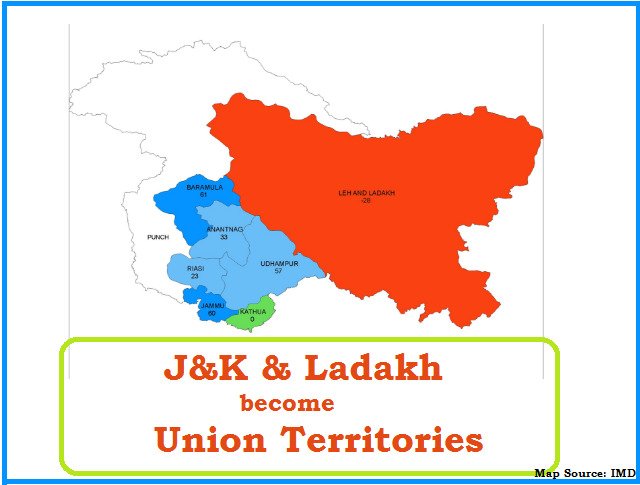
J&K Domicile Rules Notification

Describing the Jammu & Kashmir Domicile Rules Notification as the dawn of a new era for Jammu & Kashmir, Union Minister Dr Jitendra Singh said here today that history will vindicate us and prove that this course correction was in keeping with the principle of equality and the norms of a healthy democracy.

Dr Jitendra Singh said that a serious miscarriage of history had been undone after 70 years by the Jammu & Kashmir Domicile Rules Notification.

Addressing the media, Dr Jitendra Singh said, it was an anomaly waiting to be corrected and perhaps it was God’s will that it should get corrected only when Sh Narendra Modi takes over as the Prime Minister of India. He also complimented Home Minister Sh Amit Shah for the clarity with which the entire exercise has been carried out.

Dr Jitendra Singh noted that three generations of people in Jammu & Kashmir had been denied the right to live with justice and dignity, and it was heartening to see this redemption happening in our lifetime, which would prove to be a blessing for the future generations. He also expressed satisfaction that he and some of his contemporaries got an opportunity to be a part of this exercise, if not wholly, at least in a very small measure.

While the West Pakistan Refugees and displaced persons from PoJK have been restored their legitimate rights, Dr Jitendra Singh said, a discrimination of several decades has been undone and those who are opposing this move are only exposing themselves to the accusation that for the last 70 years they had been thriving on the politics of discrimination.

It is an irony, said Dr Jitendra Singh, that All India Services Officers, including IAS and IPS, who devoted 30 to 35 years of their life to serve in Jammu & Kashmir were, at the end of the day, after superannuation, asked to pack up, leave and look for a place elsewhere to settle. This was, he said, quite in contrast to the arrangement in several States and UTs where the All India Service officers of State Cadre are not only allowed to settle but are also provided plots of land for the same.

Similarly, he said, a gross injustice was being done to the children of these officials who did their entire schooling in Jammu & Kashmir but were debarred from applying for admission to higher education institutions.

Dr Jitendra Singh said, this should be seen as an opportunity for wider exposure and capacity building for our children, so that they could prepare themselves to flourish in global India.

 <><><><><>

Shekatkar Committee recommendations related to creating border infrastructure

Government has accepted and implemented three important recommendations of Committee of Experts (CoE) under the Chairmanship of Lt General D B Shekatkar (Retd) relating to border Infrastructure. These were related to speeding up road construction, leading to socio economic development in the border areas.

On the matter related to creating border infrastructure, the Government has implemented recommendation of CoE to outsource road construction work beyond optimal capacity of Border Roads Organisation (BRO). It has been made mandatory to adopt Engineering Procurement Contract (EPC) mode for execution of all works costing more than Rs 100 crore.

The other recommendation relating to introduction of modern construction plants, equipment and machinery has been implemented by delegating enhanced procurement powers from Rs 7.5 crore to Rs 100 crore to BRO, for domestic and foreign procurements. Border Roads has recently inducted Hot-Mix Plant 20/30 TPH for speedier laying of roads, remote operated hydraulic Rock Drills DC-400 R for hard rock cutting, a range of F-90 series of self-propelled snow-cutters/blowers for speedier snow clearance.

New Technology like blasting technology for precision blasting, use of Geo-Textiles for soil stabilisation, cementitious base for pavements, plastic coated aggregates for surfacing, is also being used to enhance the pace of construction. With the empowerment of field officers through enhanced delegation of financial and administrative powers, there has been significant improvement in faster financial closure of works.

The land acquisition and all statutory clearances like forest and environmental clearance are also made part of approval of Detailed Project Report (DPR). Further, with the adoption of EPC mode of execution, it is mandatory to award work only when 90 per cent of the statutory clearances have been obtained, implementing the recommendation of CoE regarding obtaining prior clearances before the commencement of the project.

25 NDRF teams deployed on ground to manage the situation

Prime Minister Shri Narendra Modi chaired a high-level meeting today to review the response measures against cyclone ‘Amphan’ developing in the Bay of Bengal.

Prime Minister took full stock of the situation and reviewed the response preparedness as well as the evacuation plan presented by the National Disaster Response Force (NDRF). During the presentation of the response plan, DG NDRF informed that 25 NDRF teams have been deployed on the ground while 12 others are ready in reserve. 24 other NDRF teams are also on standby in different parts of the country.

The meeting was also attended by Shri Amit Shah, Union Home Minister; Shri PK Sinha Principal Advisor to the Prime Minister; Shri Rajiv Gauba, Cabinet Secretary, besides other senior officers of Government of India. 

*****

Army medical COVID related assistance for Northeast and Jammu & Kashmir

Union Minister of State (Independent Charge) Development of North Eastern Region (DoNER), MoS PMO, Personnel, Public Grievances, Pensions, Atomic Energy and Space, Dr Jitendra Singh has lauded the Army medical COVID related assistance for Northeast and Jammu & Kashmir, and appreciated the Armed Forces Medical Services (AFMS) for responding to step in at the early stage of pandemic, in  order to supplement the diagnostic and treatment facilities in the initial phase of preparedness. 

In the context of Northeast, General Banerji briefed Dr Jitendra Singh about the latest developments and current status. He disclosed that while in Arunachal Pradesh, Military Hospital Tenga had 80 designated beds for COVID and 2 ICU beds, Military Hospital at Likabali has 82 designated beds for COVID and 2 ICU beds. Similarly, at Jorhat in Assam and Shillong in Meghalaya, Armed forces Medical Services had made available 110 and 247 designated COVID beds respectively, in addition to 10 and 4 ICU beds respectively.  

While receiving an update from the Director General, Armed Forces Medical Services (DG AFMS), Lt Gen Anup Banerji,  Dr Jitendra Singh had a special word of praise for the Army Command Hospital in Udhampur which had earmarked 200 designated beds for COVID cases and 6 beds in ICU for critical cases including civilian patients, in the  beginning itself. Similarly, he noted that the Army Hospital in Srinagar had also designated 124 beds and Army Hospital in Rajouri had designated 82 beds for COVID cases in order to supplement the facilities set up by Health authorities of the Union Territory government. In addition, the Command Hospital Udhampur was also providing diagnostic facilities right from the beginning, he added. 

Dr Jitendra Singh appreciated the proactive support in the initial stages of COVID pandemic which had also contributed in reducing the disease burden.  He also mentioned the quarantine  camps and isolation facilities set up by the Armed Forces Medical Sercvices. 

Director General AFMS informed the Minister that the number of such hospitals is being enhanced depending upon the situation and availability of equipment from suppliers. He assured the Minister that in future also, the number of beds will be increased depending upon the situation.