News for determining guilt or innocence, while lives hang in the balance. Often inspired by the latest headlines, the plots highlight legal, ethical or personal dilemmas to which people can relate.
Google has been making the headlines with hefty fines imposed by the Competition Commission of India (CCI) in recent months, alleging the company of abusing its position as a market leader with Android, and not allowing other companies to grow on the platform. Google has been legally battling these accusations in the country but it seems the company is ready to comply with the terms issued by the antitrust body.
Having limited choices of apps as an alternative to Chrome, Pay and Drive among others has worked in Google’s favour in India, but the ruling means other app developers might finally get the chance to catch your eye and allow it to be used on Android devices.
Google makes Chrome the default search option for Android users in India, but soon that will not be the only option for users. Android devices will give you a choice screen through which you can select which search engine is going to be your default option. The details are not clear for now, but it is likely that people will have the freedom to choose between Chrome, Bing or any other search option compatible on Android.
In November last year, TRAI floated a consultation paper seeking comments about the potential introduction of Caller Name Presentation (CNAP).
The feature will allow users to know the identity of the person calling them. The basic idea is that if people are aware of the person who is calling them, they can make an informed choice about those calls. At the same time, such a feature could potentially help in curbing harassment and other spam calls.
The proposal CNAP will also be difficult to execute from a technical perspective given that a number of phones in the Indian market may not be able to support it, telcos have said.
Meanwhile, Truecaller, which already offers a similar service albeit through a crowdsourcing model has said since several people purchase SIM cards using forged identity cards, TRAI’s proposal to use SIM registration data to display callers’ names might be fraught with inaccuracies since “the identity of the actual user of a mobile number may not be the same as the subscriber”.
China’s population fell last year for the first time in six decades, a historic turn that is expected to mark the start of a long period of decline in its citizen numbers with profound implications for its economy and the world.
The country’s National Bureau of Statistics reported a drop of roughly 850,000 people.
China’s birth rate has been declining for years, prompting a slew of policies to try to slow the trend.
But seven years after scrapping the one-child policy, it has entered what one official described as an “era of negative population growth”.
There is still no clarity on what is happening in China, with experts raising alarm that the country is witnessing a steep increase in the number of COVID-19 cases due to coronavirus variant BF.7.
The Union Health Ministry has, however, said that the next 40 days will be crucial in India – with the country likely to witness a surge in January.
“In the past, whenever a NBCOVID-19 wave was reported in India, it used to hit us in 30-35 days, starting from East Asia, it used to hit Europe in 10 days, moving towards America and the Pacific region, and then finally hitting India which would normally take 30 days,” a senior health ministry official told media, requesting anonymity.
The official added that the number of deaths and hospitalisations is likely to be low this time, even if India is hit by a COVID wave by the end of January.
Meanwhile, the Ministry is likely to make mandatory, from next week, negative RT-PCR reports for passengers arriving from China, Hong Kong, Singapore, Japan, South Korea and Thailand.
Filling up of ‘air-suvidha’ forms and 72-hour prior RT-PCR testing could be mandatory for arrivals from these countries.
The government has made random coronavirus testing mandatory for two per cent of passengers arriving in each international flight from December 24. Union Health Minister Mansukh Mandaviya is likely to visit the Delhi airport to take stock of testing and screening facilities there.
Residents in China have been scouring the market for generic COVID-19 drugs and India seems to be the answer to their problem. In the recent past, the Chinese authorities have approved two Covid antivirals – Pfizer’s Paxlovid and Azvudine – for the treatment. While China has ran out of the medicine, the Indian market is filled with it and is slowly becoming the next favourite destination.
In the past few months, topics like “anti-Covid Indian generic drugs sold at 1,000 yuan (US$144) per box” has been making the rounds of the Chinese social media. Platforms like Weibo and WeChat are filled with such queries and experts believe that black market deals are being conducted on them.
While the distribution of drugs which are not approved in China is not illegal, there can be penalties imposed on the illegal imports. Even the doctors in China have warned the public against buying drugs on the black market with several patients displaying massive side effects to the medicines.
Food and Consumer Affairs Minister Piyush Goyal on Saturday introduced a host of new initiatives, including a right to repair portal and an NTH mobile app and opened new premises of the National Consumer Helpline centre in the national capital.
On the ‘right to repair’ portal, manufacturers will share the manual of product details with customers so that they can either repair by self, by third parties, rather than depend on original manufacturers. Initially, mobile phones, electronic, consumer durables, automobile and farming equipments will be covered.
Speaking on the theme “Effective disposal of cases in consumer commission” on the occasion of National Consumer Day, Mr. Goyal lauded the consumer commissions for disposing of higher number of pending cases in last six months and expressed confidence of eliminating the backlog of cases across the country.
“In a short span of six months, we have doubled disposal of pending cases. About 90,000 pending cases were disposed (between July and November this year),” he said. About 38,000 pending cases were disposed of by consumer courts in the year-earlier period.
Union Health Minister Mansukh Mandaviya today reviewed the COVID-19 situation in the country in view of a sudden spurt in cases in some parts of the world, and directed officials to be alert and strengthen surveillance. “Use a mask if you are in a crowded space, indoors or outdoors. This is all the more important for people with comorbidities or are of higher age,” he said. “Only 27-28% of people have taken precaution dose. We appeal to others, especially senior citizens, to take precaution dose. Precaution dose is mandated and guided to everyone.”
In view of the rise in cases in Japan, the United States of America, Republic of Korea, Brazil and China the Union Health Ministry, urged all states and Union territories to ramp up the whole genome sequencing of positive samples of Covid to keep track of emerging variants.
In India, more than 220 crore vaccination doses have been administered, including booster shots. Many got reinfected or have already been exposed to omicron, its sub-variants, and sub-lineages. As a result, many Indians have developed ‘hybrid immunity’ or ‘super immunity’, due to a combination of extensive vaccination and natural infection. Nevertheless, in view of the sudden spurt of cases abroad, the government is reviewing the situation and has directed all relevant agencies to be alert.
After four years of fractious talks, nearly 200 countries, including India, approved a historic Paris-style deal on Monday to protect and reverse dangerous loss to global biodiversity following an intense final session of negotiations at the UN COP15 summit here in Canada.
The UN Development Programme said the “historic agreement” meant people around the world could hope for real progress to halt biodiversity loss.
The main points include:
Maintaining, enhancing and restoring ecosystems, including halting species extinction and maintaining genetic diversity
“Sustainable use” of biodiversity – essentially ensuring that species and habitats can provide the services they provide for humanity, such as food and clean water
Ensuring that the benefits of resources from nature, like medicines that come from plants, are shared fairly and equally and that indigenous peoples’ rights are protected
Paying for and putting resources into biodiversity: Ensuring that money and conservation efforts get to where they are needed.
Furthermore, the framework also calls for increasing the amount of money sent to poor countries to at least $20 billion every year by 2025 which could be increased by $10 billion each year by the end of the decade. However, the document only calls for identifying subsidies by 2025 which can be reformed or phased out and work on reducing them by 2030.
The draft comprised four broad goals and 22 targets addressing the protection of nature and sharing its benefits which included, the management of wildlife, working on the restoration of habitats and using less plastic.
The toll of dead in Bihar’s Chhapra Hooch tragedy has soared to 50, succumbing after consuming spurious liquor in the Saran district. People have died and several others hospitalised in India’s Bihar state after drinking toxic alcohol, authorities and local media said.
The deaths happened mainly in two villages in the impoverished eastern state, where the sale and consumption of liquor were banned in 2016 after women’s groups campaigned against poor workers splurging their meagre incomes on drinking.
Such bans are in force in several Indian states, driving a thriving black market for cheap alcohol made in unregulated backstreet distilleries that kills hundreds of people every year.
Hooch is a commonly used term for poor quality alcohol, derived from Hoochinoo, a native Alaskan tribe that was known to produce very strong liquor. Unlike branded liquor which is produced in factories with sophisticated equipment and rigorous quality control, hooch is made in more crude settings without any quality checks.
All that matters is to produce alcohol that will intoxicate, and hooch surely does that. The only problem is that if prepared incorrectly, it can kill. Importantly, it is near impossible to tell whether hooch is safe to consume before actual consumption.
In a bid to curb smoking for the next generation and make the country smoke-free by 2025, New Zealand passed the world’s first legislation prohibiting the sale of tobacco to anyone born on or after January 1, 2009.
According to the Guardian, the number of stores legally permitted to sell cigarettes will be reduced by a tenth, from 6,000 to 600 across the country. The law passed will go into effect in 2023, as New Zealand strives to become “smoke-free” by 2025.
New Zealand’s smoking rate is already at historic lows, with just 8% of adults smoking daily according to government statistic released in November – down from 9.4% last year.
It is hoped that the Smokefree Environments Bill will reduce that number to less than 5% by 2025, with the eventual aim of eliminating the practice altogether.
Soldiers from India and China clashed last week along the two countries’ disputed Himalayan border. In 1962, when the countries fought a bloody, high-altitude war over the contested territories, China seized Arunachal Pradesh, which it claims as part of South Tibet, before returning it to Indian control, but the disputed area belongs to and will remain in the integral control of India.
It was the first reported standoff between troops from the two Asian giants since deadly clashes in 2020 strained their already tense relations.
Both sides were involved with a few soldiers suffering minor injuries. China is yet to comment on the stand off. But Reuters reported an Indian army source saying at least six Indian troops were injured.
“Both sides immediately disengaged from the area,” the Indian army said.
It added that commanders from both sides had held a meeting immediately after “to restore peace and tranquility”.
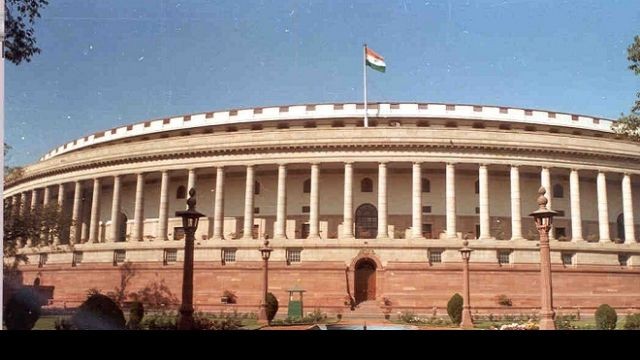
India’s Defence Minister Rajnath Singh told the parliament on Tuesday that no Indian soldiers had been “hurt or seriously injured” in the clash and that the incident has been “taken up at diplomatic levels”. He added that because of “timely intervention of Indian military commanders, PLA soldiers went back to their positions”.
China and India share a disputed 3,440km (2,100 mile) long de facto border – called the Line of Actual Control, or LAC – which is poorly demarcated. The presence of rivers, lakes and snowcaps means the line can shift. The soldiers on either side – representing two of the world’s largest armies – come face to face at many points.
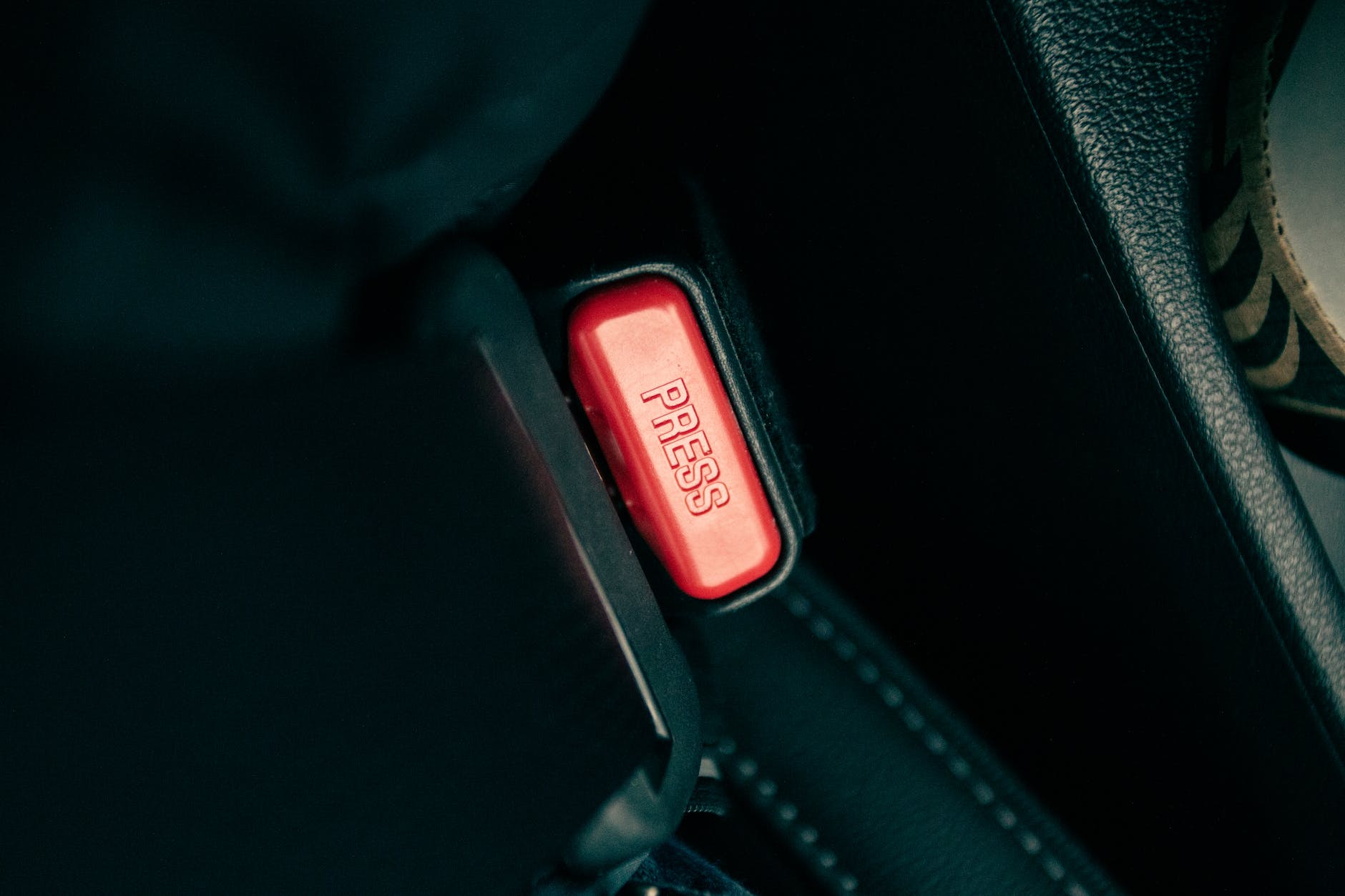
Passengers sitting in the rear seat of a car and not wearing seatbelts might also be fined soon, said Union Transport Minister Nitin Gadkari. In an exclusive interview, Gadkari said that although it was mandatory for rear-seat passengers to wear a seatbelt, people have not been following the same. Henceforth, they would be fined because at “any cost, lives have to be saved”. However, he emphasised that fining people was not the goal, but cutting down of road accidents by 50 per cent by 2024 was the aim.
Although a fine of Rs 1,000 is already in place under Article 138 (3) of the Central Motor Vehicle Rules (CMVR), the problem seems to be more about user behaviour and enforcing the regulations. Most people in India overlook belting up in the rear seats of a car, often assuming they are in a much safer place since there is no dashboard or steering wheel right in front of them.
The road transport and highways minister further said he was trying to work with the states to find ways to reduce accidents on National Highways as law and order comes under the state governments.
The government has asked online retail giant Amazon to stop selling devices designed to disable car seatbelt alarms, transport minister Nitin Gadkari told Reuters, citing potential safety risks. Apart from this, the Ministry of Road Transport and Highways has also written to the consumer affairs ministry to ask e-commerce companies to stop selling devices designed to disable car seat belt alarms, news agency PTI has reported citing a senior government official.
In the process of governance, which involves several sets of activities to deliver effective services to people, civil services play a pivotal role in providing shape to policies that reflect people’s needs and put their suggestive, analytical and informative roles to implement the policies. It is recognized that civil services play a crucial role in all societies. In the modern administrative state, public administration has become so significant that our development, upliftment and progress depend mainly upon the efficient functioning of civil services that are the bedrock of public administration. Civil services have assumed more important role in democracy to ensure good governance, both in developing and developed countries. Civil Services form a part of bureaucracy, wherein the roles of civil servants are determined by written rules. It’s an impersonal system operating on the basis of calculable rules and staffed by full time appointed officials. Usually, the civil servants are selected on basis of their technical qualifications, receive fixed salaries, have a defined sphere of competence and work under a clearly defined hierarchy of offices.
The role of Civil Servants across the domains of policy making and policy implementation is critical to the development process. They assist in identifying major policy areas such as preparing major policy proposals, analyzing various alternatives and solutions to societal problems requiring urgent attention, dividing the major policies into sub-policies, determining program of action and suggesting modification in the existing policy on the basis of its experience on the implementation front.Civil services carry on the governance when governments change due to elections etc. Ramsay Muir has remarked that while governments may come and go, ministers may rise and fall, the administration of a country goes on forever. It is needless to say that civil services form the backbone of administration. E.g. In India, when the President’s Rule is imposed in a state, the Governor runs the state through the Chief Secretary and other civil servants.The civil servants are responsible to the ministers of the departments in which they serve. The ministers are accountable to the people through the Parliament or State Legislatures, and the civil servants are accountable to the ministers. They should ideally serve the elected government of the day, as government policies are the functions of the civil services. However, an impartial civil servant is also accountable to the Constitution of India on which he has taken an oath of allegiance.
In India, bureaucracy or civil services is permanent and does not change with the government. The recruitment is based on merit and through competitive exams. This is in contrast to the system followed in the US, where civil servants, especially in the higher echelons, change with the government. This is called the spoils system where people who are close to the government of the day get posts.
With bad laws and good civil servants it’s still possible to govern. But with bad civil servants even the best laws can’t help.
In Indian scenario, extremism activities are increasing rapidly. The scale of the extremists operations is massive and consequently these activities have perilous impact on nation’s social, economic and political development.Many scholars explained the notion of extremism as any ideology considered to be far outside the normal attitudes of society or to interrupt common moral standards. It is usually constructed with moderation or extremists with moderates. Various political writers signified that extremism also has numerous strands starting from just holding to one’s ideas and values on one end of the continuum and use of violent means for nuisance on the other end. Thus, extremism is considered as a complex phenomenon.
Natural Calamities: During the last decade of the 19th century, affliction of people was filled to the brim. Famine, plague, earthquake, war and repressions were let loose in the country. From 1896 to 1900 prolonged and catastrophic famines occurred throughout the length and breadth of the land in a bewildering succession. In 1896 bubonic plague broke out in Bombay and took a toll of millions of lives. These natural calamities were accompanied by the intensified exploitation and suppression by the Government. Such devastating conditions led to development of extremist.
Labour, Unemployment and wages: Another intense issue that spreads extremism is joblessness which creates insecurity of living. People may develop dissatisfaction and anger both in urban and rural areas. In allocation of government jobs, there has been shown some favouritism and this activity leads to dissatisfaction among youth as they are being ignored.
Policing:Improper policies and their ineffective implementation may result in extremist activities among weaker sections of society. It is very necessary that government must consider poor people when devising policies for economic growth of country. These policies must be well-organized and unprejudiced which reveal good administration .Weaker section of people does not have much confidence in police. People have no faith that justice will be done to them against the powerful person in the society. Such impression about government officials develops extremist thoughts among poorer section of society.
Process of getting Justice: When lower section of society is struggling with various issues related to survival or employment and their conflicts and disputes are not settled in time, frustration among people in society develops. Presently, judicial system of India is very time consuming and disputes are not settled in short time. The parties to the dispute lose control over even the terms and details of the dispute once it goes to the court. These factors create extremist feelings among sufferers.
Extremism in the defense of liberty is no vice. And moderation in the pursuit of justice is no virtue.
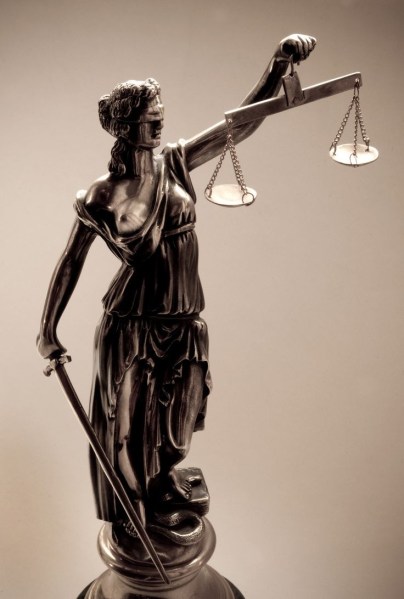
The aim of the Criminal Justice System is to punish the guilty and protect the innocent. Although the broad contours of the Criminal justice system are seldom codified, these can be inferred from different statutes, including the Constitution and judicial pronouncements. In a democratic civilized society, the Criminal Justice System is expected to provide the maximum sense of security to the people at large by dealing with crimes and criminals effectively, quickly and legally. More specifically, the aim is to reduce the level of criminality in society by ensuring maximum detection of reported crimes, conviction of the accused persons without delay, awarding appropriate punishments to the convicted to meet the ends of justice and to prevent recidivism.In this article, we shall be discussing the history and evolution of the system, the institutions, along with various perspectives of the constitutional aspect of rights of citizens, efforts for reforms, and delivery of justice.
Criminal law, including all matters included in the Indian Penal Code, Criminal procedure, including all matters included in the Code of Criminal Procedure feature under the concurrent list of the 7th Schedule as entries-1, and 2 respectively.Certain exceptions are also provided under these two provisions(Entry-1, and 2) of the 7th Schedule. For example, offences against laws with respect to the matters specified in List-I or List-II of the 7th Schedule of the constitution, excluding the use of naval, military or air forces or any other armed forces come under this category.
•The Criminal Justice System in India follows the legal procedures established by the British during the pre-independence era. •An Indian Penal Code (IPC) defining crime and prescribing appropriate punishments was adopted in 1860, prepared by the first Law Commission of India. •It was developed in line with the English criminal law. •Code of Criminal Procedure was enacted in 1861 and established the rules to be followed in all stages. This was amended in 1973. •The NN Vohra Committee, set up in 1993, observed increasing criminalization of politics, talked of the unholy nexus. •It was an effort to push the reforms in the criminal justice system. •In 2000, the Government of India formed a panel headed by the former Chief Justice of Kerala and Karnataka, Justice V.S. •Malimath, to suggest an overhaul of the century-old criminal justice system. •In 2003, the Justice Malimath Committee submitted a report with 158 recommendations. •The Committee opined that the existing system “weighed in favour of the accused and did not adequately focus on justice to the victims of crime.”
The entire existence of an orderly society depends upon the sound and efficient functioning of the Criminal Justice System. The law of the land has to be in tune with the demands of the changing times and nature of complexities in offences. There should be a broader dialogue among all the stakeholders for effective provisions so that the interest of justice is served and served right, where no innocent suffers prejudice, exclusion leading to miscarriage of justice.
Similarly, the rules and procedures established by law need to reach the common man, and the role of civil society in this endeavour is paramount. Further, there is a need to streamline the police reforms, beef up the forensic evidence-based investigation, and prioritize advanced scientific analysis which must be strengthened and upgraded, catering to the demands of the present times. The infrastructural challenges confronting the judiciary must be addressed to facilitate the process of ensuring justice.
The criminal justice system, like any system designed by human beings, clearly has its flaws.



 Eduindex
You must be logged in to post a comment.