News for determining guilt or innocence, while lives hang in the balance. Often inspired by the latest headlines, the plots highlight legal, ethical or personal dilemmas to which people can relate.
In India, the debates around prison reforms and rights of prisoners have been very limited. Through our three-part series we seek to initiate a debate towards prisoners’ civil and political rights. This series will cover prisoners’ right to vote, to write and to strike with the understanding that these rights, if granted, will expand the ever so shrinking spaces for an incarcerated person to express and reach out to the world outside highlighting conditions of the prison and their experiences, including those of torture. Prisons in the modern democracy have been envisioned as reformative care-giving institutions. However, the reality of prisons is that there is overcrowding; inhuman living conditions; a dearth of basic needs such as access to food, medical treatment and cleanliness; absence of accountability and transparency of administration, targeting and surveillance, torture and even death; least of opportunities of skill building or recreation. Why is this so? For one, society’s understanding of the treatment of prisoners is being highly influenced by the fear related to crime control and increasing targeting and etherisation of persons from certain socio-political affiliations. Being tough on crime through severest punishments is the new standard for good governance. Prisoners form a section of the society which is shunned, secluded and seldom talked about. Making matters worse is the fact that no document declares mandatory rights of prisoners, leaving it up to the changing governments and changing moods of the society.
The Constitution of India empowers us with one of the basic fundamental rights – Right to life and Personal Liberty mentioned in Article 21 which implicitly states the right to life with dignity. Certain articles mentioned in our Constitution like Article 14, 20, 21, 22 deals with prisoner rights in India. Article 14 talks of equality of law whereas Article 20 prohibits self- incrimination and double jeopardy. Article 21 is vast in its own terms which state the right to life with personal liberty. Under its ambit, certain rights find its place like right to food, bail, speedy trial and free legal aid services. Article 21 provides prisoners with right against custodial violence and right to health in order to maintain basic human dignity. There have been certain legislations regarding prisoner rights in India. They have several other rights like right against inhuman treatment inside the jail, right to consult a lawyer and right against solitary confinement. Right to interview and meet with friends and family is one the important prisoner rights.
According to the 2016 policy, the latest one, published by Government of India regarding prison management in the form of Model Prison Manual 2016, a “Perspective” chapter from the manual states:
“India shares the universally held view that a sentence of imprisonment would be justifiable only if it ultimately leads to the protection of society against crime. Such a goal could be achieved only if incarceration motivates and prepares the offender for a law-abiding and self-supporting life after his release. It further accepts that, as imprisonment deprives the offender of his liberty and self-determination, the prison system should not be allowed to aggravate the suffering already inherent in the process of incarceration.”
This perspective is a result of various judgments pronounced by the Supreme Court of India in the last several decades, in which the prison administration has been reprimanded regarding the inhuman living conditions in prisons and animal-like treatment of prisoners. The United Nation’s Standard Minimum Rules for Treatment of Prisoners also call for the dignified treatment of prisoners leading to their reintegration to into society and no further infliction of pain other than the imprisonment itself.
Following are the rights of prisoners which are implicitly provided under the Article 21 of the Constitution of India:-
Right of inmates of protective homes
Right to free legal aid
Right to speedy trial
Right against cruel and unusual punishment
Right to fair trial
Right against custodial violence and death in police lock-ups or encounters
Right to live with human dignity
Apart from these rights of prisoners Constitution of India also provides following rights to the prisoners:-
Right to meet friends and consult lawyer
Rights against solitary confinement, handcuffing & bar fetters and protection from torture
Right to reasonable wages in prison
Prisoner’s Rights under the Prisons Act, 1894
Prisons Act, of 1894 is the first legislation regarding prison regulation in India. This Act mainly focus on reformation of prisoners in connection with the rights of prisoners. Following Sections of the Prisons Act, 1894 are related with the reformation of prisoners:-
Accommodation and sanitary conditions for prisoners
Provision for the shelter and safe custody of the excess number of prisoners who cannot be safely kept in any prison
Provisions relating to the examination of prisoners by qualified Medical Officer
Provisions relating to separation of prisoners, containing female and male prisoners, civil and criminal prisoners and convicted and under trial prisoners
Provisions relating to treatment of under trials, civil prisoners, parole and temporary release of prisoners.
In the year of 2016 the Parliament has been passed the Prisons (Amendment) Bill, 2016 to amend the Prisons Act, 1894 with a view to provide protection and welfare of the prisoners.
Conclusion
It can be said that the prisoners are also entitled to all his fundamental rights while they are behind the prisons. Indian Constitution does not expressly provides for the prisoners’ rights but Articles 14, 19 and 21 implicitly guaranteed the prisoners’ rights and the provisions of the Prisons Act, 1894 contains the provisions for the welfare and protection of prisoners. The Court has ruled that it can intervene with prison administration when constitutional rights or statutory prescriptions are transgressed to the injury of the prisoner. Supreme Court in many cases held that prisoner is a human being, a natural person and also a legal person. Being a prisoner he does not cease to be a human being, natural person or legal person. Conviction for a crime does not reduce the person into a non-person, whose rights are subject to the whim of the prison administration and therefore, the imposition of any major punishment within the prison system is conditional upon the absence of procedural safeguards.
Trafficking of children is a form of human trafficking and is defined as the “recruitment, transportation, transfer, harboring, and/or receipt” of a child for the purpose of exploitation. The first major international instrument dealing with the trafficking of children is part of the 2000 United Nations Palermo protocols, titled the Protocol to Prevent, Suppress and Punish Trafficking in Persons, especially Women and Children. Article 3(a) of this document defines child trafficking as the “recruitment, transportation, transfer, harboring and/or receipt” of a child for the purpose of exploitation. The definition for child trafficking given here applies only to cases of trafficking that are transnational and/or involve organized criminal groups; in spite of this, child trafficking is now typically recognized well outside these parameters. The International Labour Organization expands upon this definition by asserting that movement and exploitation are key aspects of child trafficking. The definition of “child” used here is that listed in the 1989 U.N. Convention on the Rights of the Child which states, “a child means every human being below the age of 18 years, unless, under the law applicable to the child, majority is attained earlier.” The distinction outlined in this definition is important, because some countries have chosen to set the “age of majority” lower than 18, thus influencing exactly what legally constitutes child trafficking. Though statistics regarding the magnitude of child trafficking are difficult to obtain, the International Labour Organization estimates that 1.2 million children are trafficked each year. The trafficking of children has been internationally recognized as a serious crime that exists in every region of the world and which often has human rights implications. Yet, it is only within the past decade that the prevalence and ramifications of this practice have risen to international prominence, due to a dramatic increase in research and public action. A variety of potential solutions have accordingly been suggested and implemented, which can be categorized as four types of action: broad protection, prevention, law enforcement, and victim assistance.
OBJECTIVE OF CHILD TRAFFICKING IS OFTEN FORCED LABOUR
Children are trafficked for various reasons like children are trafficked for sexual exploitation, begging, child labour, etc.The objective of child trafficking is often forced child labour. Child labour refers specifically to children under a stipulated minimum age, usually 14 at the lowest, being required to work. UNICEF estimates that, in 2011, 150 million children aged 5–14 in developing countries were involved in child labour. Within this number, the International Labour Organization reports that 60% of child workers work in agriculture. The ILO also estimates that 115 million children are engaged in hazardous work, such as the sex or drug trade. Overall, child labor can take many forms, including domestic servitude, work in agriculture, service, and manufacturing industries. Also, according to several researchers, most children are forced into cheap and controllable labor, and work in homes, farms, factories, restaurants, and much more. Trafficked children may be sexually exploited, used in the armed forces and drug trades, and in child begging. In terms of global trends, the ILO estimates that in 2004–2008, there was a 3% reduction in the incidence of child labor; this stands in contrast to a previous ILO report which found that in 2000–2004, there was a 10% reduction in child labor. The ILO contends that, globally, child labour is slowly declining, except in sub-Saharan Africa, where the number of child workers has remained relatively constant: 1 in 4 children aged 5–17 work in this region. Another major global trend concerns the number of child laborers in the 15-17 age group: in the past five years, a 20% increase in the number of these child workers has been reported. A surprised example has occurred in the United States as McCabe (2008) indicates that in the 1990s, huge companies such as Gap and Nike were using industries “sweatshops” that use trafficked children to make their desired products.
CHILD LABOUR
Child labour refers to any work or activity that deprives children of their childhood. In effect, these are activities that are detrimental to the physical and mental health of children and that hinder their proper development. The International Labour Organization (ILO) defines child labor as work that is mentally, physically, socially or morally dangerous and harmful to children; and interferes with their schooling by: depriving them of the opportunity to attend school; obliging them to leave school prematurely; or requiring them to attempt to combine school attendance with excessively long and heavy work. Child labour includes: • Child labour before the minimum legal age : The basic minimum legal age at which children are authorized to work is 15 years (14 in developing countries). For light work (only a few hours from time to time) the limit is fixed at 13 to 15 years (12-14 in developing countries). Finally, for hazardous work, the limit is pushed up to 18 years (16 years under certain conditions in developing countries). • The worst forms of child labour :This encompasses all forms of slavery or similar practices such as forced labour, trafficking, debt bondage, serfdom. It also includes illicit activities and/or activities likely to endanger the safety, health, and morals of children, such as prostitution, pornography, forced or compulsory recruitment for armed conflict, drug trafficking, etc. • Hazardous work : This encompasses domestic tasks carried out over long hours in an unhealthy environment, in dangerous places requiring the use of dangerous tools or materials, or forcing the child to carry objects that are too heavy. Certain activities are not considered labour or exploitation. Activities which simply involve helping parents to complete everyday family chores, to which children can dedicate a few hours a week and which permit them to earn some pocket money, are not considered child exploitation because they do not hinder their well being.
Child labour in India: The use of child labour is very prevalence in India and the cause is deep rooted with poverty. UNICEF India has estimated 28 million children aged five to fourteen involved in work (UNICEF,2011) Child labour is not a new phenomenon in India where children has always worked. During the industrial revolution child labour increased, due to the shift of labour movements to colonial countries. Children can be found in every sector of the informal economy (Molanka,2008).The incidence of working children in India are engaged in hazardous occupations such as factories manufacturing diamonds, fireworks, silk and carpets, glass and bricks. There are several factors that force children to work such as inadequate economic growth, poverty, unemployment over population and lack of education and health care. On school attendance in India a large number of children between ten to fourteen years of age are not enrolled in school because of household economic condition. Attendance in school or dropout differs for male and female while boys are more likely to provide financial income for the family, girls are more involved in household chores (Kakoli & Sayeed ,2013).High illiteracy and dropout rates are high in India due to inadequacy of the educational system. Even through many poor families don’t see education as a benefit to society, they consider that work develops skills that can be used to earn income (Ahmed, 2012).
NEGATIVE EFFECTS OF CHILD LABOUR
The difficulty of tasks and harsh working are the following: • Working conditions create a number of problems such as premature ageing, malnutrition, depression, drug dependency etc. • From disadvantaged backgrounds, minority groups, or abducted from their families, these children have no protection. Their employers do whatever necessary to make them completely invisible and are thus able to exercise an absolute control over them. These children work in degrading conditions, undermining all the principles and fundamental rights based in human nature. • Additionally, a child who works will not be able to have a normal education and will be doomed to become an illiterate adult, having no possibility to grow in his or her professional and social life. • In certain cases, child labour also endangers a child’s dignity and morals, especially when sexual exploitation is involved, such as prostitution and child pornography. • Furthermore, a child who works will be more exposed to malnutrition. These children are often victims of physical, mental, and sexual violence.
INTERNATIONAL INSTRUMENTS CONCERNING THE TRAFFICKING OF CHILDREN Some international instruments have specific provisions concerning the trafficking of children. The Convention on the Rights of the Child (1989), and the Optional Protocol on the Sale of Children, Child Prostitution, and Child Pornography (2000), prohibit trafficking in children for any purpose, including for exploitive and forced labour. Article 39 of the CRC requires States to “take all appropriate measures to promote physical and psychological recovery and social reintegration of a child victim of: any form of neglect, exploitation, or abuse.” The CRC also requires States to recognize the right of every child to education (Article 28) and “to facilities for the treatment of illness and rehabilitation of health” (Article 24). The Optional Protocol to the Convention on the Sale of Children specifies particular forms of protection and assistance to be made available to child victims. Additionally, the ILO’s Worst Forms of Child Labour Convention (Convention No. 182 of 1999) prohibits perpetrators from using children under 18 years of age for all forms of slavery or practices similar to slavery, trafficking, debt bondage, serfdom, forced or compulsory labour, and prostitution. Article 7(2)(b) and (c) requires States to take effective and timely measures to provide for the rehabilitation and social integration of former victims of the worst forms of child labour, including trafficking, as well as to ensure their access to free basic education, and, wherever possible and appropriate, vocational training.
NATIONAL CONCERN FOR PREVENTION OF CHILD TRAFFICKING
Constitutional Provision The Indian Constitution specifically bans the traffic in persons. Article 23, in the Fundamental Rights section of the constitution, prohibits “traffic in human beings and other similar forms of forced labor”. Though there is no concrete definition of trafficking, it could be said that trafficking necessarily involves movement /transportation, of a person by means of coercion or deceit, and consequent exploitation leading to commercialization. The abusers, including the traffickers, the recruiters, the transporters, the sellers, the buyers, the end-users etc., exploit the vulnerability of the trafficked person. Anti Child Trafficking Laws The 1949 Convention against trafficking gave rise to the first Indian law against trafficking- The Suppression of Immoral Traffic Women & Girls Act 1956. Other legislation relations to child trafficking are:
1. Children (Pledging of Labor) Act, 1933
2. Immoral Trafficking (Prevention) Act 1956
3. Child Labor (Prohibition And Regulation) Act, 1986
4. Section 366,360B,372,373,370 of Indian Penal Code.
The judiciary has interpreted the aforesaid laws, in following landmark cases. It was categorically stated in Public at Large Vs. The State of Maharashtra and Ors by H’onble High Court of Bombay that the traffic in children is not confined only to what larger scale than innocent Members of this House may be aware – in what is known as White Slave traffic, namely, the buying and selling of young women including minor girl for export or import, from one set of countries to another; and their permanent enslavement or servitude to an owner or proprietor of the establishments of commercialized. In addition to this it was held by H’onble Supreme Court that a proper cell be created by Women and Child Welfare Department of the State of Maharashtra in order to rehabilitated victim of trafficking in society. On the same thought of line, it was observed in the Prerana Vs. State of Maharashtra & Ors that children who are being likely to be grossly abused, tortured or sold for the purpose of sexual abuse or illegal acts they will have to be produced before the Child Welfare Committee. Furthermore, the H’onble High Court of Bombay gave directions to state for Rehabilitation these victims of trafficking. In Vishal Jeet vs. Union of India H’onble Supreme Court issued directions to the state Government for setting up rehabilitate homes for children found begging in streets and also the minor girls pushed into ‘flesh trade’ to protective homes.
LEGAL FRAMEWORK AND POLICIES TO CONTROL CHILD LABOUR IN INDIA
The India government has established various proactive policies towards elimination of child labour. India has not yet ratified ILO Conventions 138 and 182 on banning child labour and eliminating the worst forms of exploitation. However the government of India implemented a child labour law in 1986(The Child Labour Prohibition and Regulation Act) the legislation sets a minimum age for employment of children at fourteen years and forbid child labour in dangerous sectors. The Government prohibits forced and bonded child labour but is not able to enforce this prohibition. The Child Labour Prohibition and Regulation Act does not forbid child labour but consider about regulating it.But indeed the law does not eliminate all forms of child labour specially when the vast majority of children under the age of fourteen are working in family farms or doing households (Venkatarangaiya Foundation;2005).
India has a number of child labour projects which have been implemented to help children from hazardous occupations and provide them an education. Including the National Child Labour Policy (NCLP) started in 1987. The aim of NCLP is to help children in hazardous activities and provide non-formal education, vocational training, supplementary nutrition etc. The ILO IPEC (International Programme on the Elimination of Child Labour) is also another progarmme which eliminate child labour, the programme sponsors 175 projects in India(Padmanabhan,2010 ) Furthermore, several NGOs like Care India, Child Rights and You, Global March against Child Labour, etc. have taken up the task to get the children back to school and also volunteers along with villagers. The MV Foundation is non-governmental organisation (NGO) whose mission is to tackle child labour through promoting elementary education, even approaching parents to send their children to school. In spite of various laws regarding child labour and much efforts done by the non-governmental organizations, nonetheless children continue to work on a massive scale in most parts of the country. This is a problem because most child labour laws in India do not cover all types of work such as agriculture, wholesale trade, restaurants and domestic works. Usually these children are the most vulnerable child labourers (Venkatarangaiya Foundation;2005). Despite these efforts, child labour legislation to protect children has been unsuccessful, this is because of the majority of Indian population lives in rural areas with lack of infrastructure and is difficult to enforcement of laws and policies in rural areas. Many of the policies and legislative tools in India are rooted deeply in defection, allowing for illegal behaviours to take advantage of flaws. Many people believe that the cause of these behaviours is something technical, it will be shown that there is a relative heavy percentage of human omitting factor involved, often arising from the mentioned attitudes.
5 days back on July 20, the Chief Minister of West Bengal, Mamata Bannerjee and the Home Secretary, Alapan Bandopadhyay conducted a meeting where it was jointly decided to impose a 2-day lockdown for every week in West Bengal. The sole reason for this lockdown is community transmission at some places in West Bengal. Due to such high rise of spread of infection, it was came as a verdict that offices, transports services and all the local shops will be closed on these 2 days. For this week 19th July to 25th July, those 2 days were Thursday (23rd July) and Saturday (25th July).
Due to the increase in the number of positive cases in west Bengal, our state minister had to take such a drastic step to contain the transmission. It was also decided that there will be further reviews if there arises any change in decision. To promote the mandatory 2-day lockdown, the city police have also undertaken quite a few steps to ensure compliance. They have released a mask-wearing awareness anthem, sung by Usha Utthup. At the same time, an awareness campaign ‘Mask-up Kolkata’ was promoted by Anuj Sharma, Police Commissioner.
Police raiding the streets of Kolkata
For one, the cases in West Bengal have been rising at an alarming rate. Apparently, Monday recorded 2,282 new cases, taking the total to 44,769. So to take this under control, the West Bengal police is also taking very strict steps to ensure that the citizens are following the lockdown rules. Around 10,000 policemen have hit the streets of West Bengal at around 5:30 am to curb the normal trends. Throughout the day, multiple cases came out where the house maids were trying to reach their places of work, shop owners even tried to open their shops with much disregard for the policemen and so much so, people just wandered off to the street saying that they were not aware of the rules of this new lockdown. But sadly, this time the police was there to check their behaviour and to make sure that there is no relaxation of the rules. The state ensured to circulate drones so as to prohibit people from leaving their homes. Cases arose where the bike riders tried to get away from the situation or where the shop owners forcefully tried to open their shops, ultimately resulting in police booking.
Yes at the end of the day, police cases arose from the places which had been declared as containment zones. As per Thursday’s report, 256 FIRs were registered, 1,273 people were arrested, 19 vehicles were seized, 665 people were booked for not wearing the masks and 128 people were caught for spitting openly on the roads. But in most of the cases, the victims complained that they were not aware of the exact conditions of this 2-day lockdown.
West Bengal, especially Kolkata, is doing a great job while trying to combat the increased transmission. But it is very necessary for Kolkata to stick to its own words to achieve success in this mission. And more importantly, we, the citizens should be cooperative enough to make this mission successful.
Summon is a legal document which is issued by the court that notifies or commands a person to whom it is served to show his/ her presence in the court in order to answer the questions raised upon/to that person.
A summons case signifies a case concerning to an offence not punishable with death, imprisonment for life or imprisonment for a term exceeding two years. The trial procedure prescribed for summons cases is mainly contained in sections 251 to 259 of Criminal Procedure Code, 1973. These cases are tried with much less formality than warrant cases, and the manner of their trial is less elaborate.
STEPS IN THE TRIAL PROCEDURE
Chapter XX of CRPC deals with Trial of summons cases by Magistrates.
Section 251: explaining the substance of the accusation to the accused.
“When in a summons case a accused appears or is brought before the magistrate, the particulars of the offence of which he is accused shall be stated to him, and he shall be asked whether he pleads guilty or has any defence to make, but it shall not be necessary to frame a formal charge.”[1]
The section only dispenses with a formal charge in a summons case but is does not dispense with the statement of particulars of the offence for which accused is to be dealt with. The purpose of questioning the accused under this section is to appraise him of the charge against him. The accused should have clear statement made to him:
That he is about to be put on trial
The offence or facts constituting the offence with the commission of which he is accused.
The record must show the facts which were stated or explained to the accused by the magistrate.
Section 252: conviction on plea of guilty.
“If the accused pleads guilty, the Magistrate shall record the plea as nearly as possible in the words used by the accused and may, in his discretion, convict him thereon.”[2]
When guilty is pleaded by the accused, it is imperative that the magistrate shall record the plea of guilty as nearly as possible in words used by accused. The requirement of section 252 is not merely empty formality but is a matter of substance intended to secure proper administration of justice, because the right to appeal of the accused depends upon circumstance whether he pleaded guilty or not. It is because of the reason that the legislature requires the exact words used by accused in hid plea of guilty should be as nearly as possible be recorded in his own words or language in order to avert any inaccuracy, error or misapprehension. If there are number of accused persons, the plea of ach accused shall be recorded separately in their own words after the accusation was read over to each one of them.
Section 253: conviction on plea of guilty in nonappearance of accused in petty cases.
It has been provided by section 206 that in the case of certain petty offences, an accused who is willing to plead guilty need not appear in the court either in person or through his pleader provided, he satisfies the conditions of that section. The object is to avoid unnecessary trouble to offenders who have committed petty offences and are willing to pay the penalty. Section 253 prescribes the procedure where a person to whom a summons has been issued under sec. 206 has transmitted to magistrate his plea to guilty without appearing before the magistrate. Where the accused wishes to plead guilty without attending the court, the accused is expected to pay Rs.1000/- by post or via a messenger (pleader) to the Magistrate.
Section 254:Process if the accused not convicted on plea
Section 254 specifies for both defence and prosecution case if the accused is not convicted on appeal under section 252 and 253.
Prosecution Case
The magistrate listens to the accused and collects all the evidence. In the hearing, the prosecution will be given opportunity to try its case by putting relevant facts which represent the case and by revealing the evidence which he relied upon to justify the case. The magistrate upon this application of the prosecution, present summon to any witness to attend and to produce some document or object. The judge must write the report of the facts according to section 274. Similar as other trials in summon cases even the magistrate must comply with section 279 i.e., presentation of evidence to the accused and 280 i.e., documentation of the conduct of the witnesses.
Hearing of Defence Case
Following the prosecution of the evidence referred to in section 254 and the defence examination referred to in section 313, the court shall proceed to the defence hearing referred to in section 254(1). In the hearing of the court, the defendant is asked to say about the evidence of the prosecution. In any case, failure to hear the accused constitutes a major error in the criminal process and cannot be cured pursuant to Article 465. Evidence provided by the accused is reported in the manner set out in section 274, 279, 280 for prosecution. Upon the facts provided by the defendant, his claims under section 314 shall be allowed to be presented.
Section 255: Acquittal or conviction
Subsequently, after the evidence is recorded under 254, the magistrate shall absolve the accused if he finds the accused not guilty. If the accused is guilty, the Magistrate shall proceed otherwise in accordance with Section 360 or Section 325, sentence him in accordance with the law.
A Magistrate may convict the accused of any offence (amenable to the trial in a summons case) which from the facts admitted or proved the accused appears to have committed.[3]
Section 256: Non-appearance or the death of the complainant
Pursuant to section 256, on the date set for the trial of the accused, the complainant will be allowed by the court to acquit the accused unless the court has cause to adjourn the case for another day. Section 256(1) shall also apply in the event of the demise of the complainant. In the event that the representative of the deceased complainant does not appear within 15 days, the defendant may be absolved by the Supreme Court.
CONCLUSION
Chapter XX of Criminal Procedure Code is outlined for the trial of summons cases satisfied all the requirements of fair trial. “Fair Trial is the heart of criminal jurisprudence and the denial of fair trial is the denial of human right” as held in Rattiram v. State of Madhya Pradesh.[4] The trial of the summon cases is less formal and less strict than other trial procedure just for the quick remedy and resolution of the case .
Firecrackers are merely constituents of gunpowder comprising of various elements which gives rise to prolong combustion. In India, it means a lot more than that. It has aesthetic purposes since it has been believed that ‘Agnichurna’ was used in ancient times to fight enemies during wars. Be it marriages, birth or festivals, firecrackers are a form of awakening light by defeating the darkness. One such prevalent case has been of Diwali, where the entire country lights up together and celebrates the mythological victory of good over evil.
Firecrackers believably have grown during the end of Mughal dynasty and start of British East India Company and are burst like any other ritual in the country. Apart from acting as a ritual, there are also scientific reasons why the bursting has become so prevalent. Diwali comes after the monsoon season, at a time when the population of insects increases rapidly and encroaches various human habitats, be it cities or villages. That is also why most houses paint homes. Crackers then act like city wide fogging which cleans these insects, making a healthy and safe home for its residents throughout the year. This act of bursting crackers has been set on the hearts of people igniting homes and binding people all over the country. Firecrackers in a way, signals the entire country that everyone is celebrating a festival together. The bursting of crackers has been serving a ritual since decades across India. The religious sentiments that are aligned with the act are huge.
Focusing on the origin of Diwali, it is not only a specific event but the entire country actually has its varied forms of celebrating it. Like Ma Kali is worshipped in Bengal, Lord Ganesha is also worshipped in many homes, Jains specifically devote their day to Lord Mahavira. Lighting diyas and bursting crackers has been going on since time immemorial and along with it is lies belief of most Indians. These rituals significantly have stories to tell upon which India bases its heart. The sound of firecrackers, according to the older generation, is an example and indication of joy in people’s heart which makes the Gods aware of their state in their devotees’ lives. Hence, it clearly foreplays as an act of worship to satisfy the God as well. Most people in the country who cannot be in their homes during these times depend on the sound of crackers and lights around to feel complete.
Apart from these sentiments, there are various real-life problems attached to this. The firecracker industry gives employment to a large segment of people. Amidst the lack of employment scarcity already observed in the country, banning firecrackers can give rise to a different issue altogether. The claims of pollution due to crackers is a valid argument but pollution is also caused due to automobiles. And it is impossible to point out which act causes more harm. At this point of time, the firecracker industry is worth of 6000 crores and the economic aspect stands as the biggest reason why India cannot afford banning firecrackers. What can also not be ignored is the fact that the people who are working under such sites and have become skilled for this specific business have a family to support. Most of them found security in this industry and gave a major part of their lives to excel in it. With complete ban will come the threat to such workers who would face situations to start new amidst crisis until their death. There is also a relevance of economic aspect aligned with the fundamental rights. The extended jurisdiction of Article 21 guaranteed under the Constitution of India gives the right of livelihood to manufacturers. It is important to realise that crackers are not the only factor of pollution and respiratory problems, there are other factors involved like the wind and temperature which contributes to it. Until and unless, there is proper data on how much pollution and harm has been caused due to firecrackers, the industry cannot be strictly banned. Any violation of this would also be a violation of their right to business.
However, the way forward is certainly not dull as it sounds now. There can be terms where both of the situations can be kept under control. Some of the ideas that can be implemented as alternatives to the current scenario are as follows:
On adopting the various laws as introduced in the developing countries such as Washington, Switzerland etc, the idea is of having a regulation on the bursting of crackers. There can be only specific occasions on which the use of firecrackers shall be allowed and only up to a certain time. It would help preserve the religious sentiments as such.
Green crackers shall be developed which would not fall under these regulations. Claims on the pollution levels would not be affected by Green Crackers, they shall be environment friendly. It would help keep the industry intact along with the socio-economic affects.
The industry shall not favour child labour but at the end of the day, child labour happens in the need of money. So, there shall be job securities given to the skilled labourers who have given at least five years to the same industry.
In order to support the sale and good flow in the industry, there shall be one day sponsored by the Government when there shall be a firecracker show in an inner area. The show shall be open to all but at own’s risk.
The license of selling firecrackers shall be issued by the Government.
You must have seen a video which got viral few days back where a boy was seen damaging the walls of a temple that is currently being built in Islamabad(Pakistan). Another example like this was where a five year old boy was seen warning the Pakistani Prime Minister Imran Khan that if he will allow the the temples to be built, he will “kill all the Hindus”. Imagine a five year child speaking in his childish voice and warning such higher authority which may seem funny, but on the other hand this is a very important matter for the society that some people of Pakistan are filling up their children’s mind with filth and not showing them the right way where they should treat everyone as equal irrespective of caste, colour, gender plus nationality. I do agree with some of the things that the conflict between India and Pakistan is never ending but at least we can try to change the minds of the youth who will take the country forward.
Let me begin with the actual story where the Pakistani Government has decided to release funds for the Hindu temple to be built in Islamabad. This decision was made for the Minority class- the Hindu’s in Pakistan who also have the right to worship God in the temples. This plan was committed in the year 2017 by Nawaz Sharif’s government but it got delayed due to some issues. This is not the first time where the government has taken such step, before this the government took many initiatives for Hindu pilgrimage like they renovated Katas Raj Temple– a buddhist temple for the Hindus to worship. The Government has also helped the Sikh community with building gurudwaras for them like The Peshawar Gurudwara and the Nankana Sahib in Sailkot which was renovated for the sikhs.
aljazeera.com
Well, all of these things are small stepping stones by the Government for the minority so that they can also live like normal people without the barriers of religion. But on the other hand some projects have been backlashed by the Muslims of Pakistan where in a recent example the Pakistani government was planning to celebrate the legacy of Maharaja Ranjit Singh with statue, but it ended up causing a controversy on social media and in less than two months the statue was vandalised by the people. How will the country progress like this where the people are still not agreeing to some basic terms of accepting their fellow citizens as equal, building a temple or a gurudwara will never harm the other religion in fact all of these initiatives will bring the conflicts to an end. I am not saying that we Indians are the best and we don’t do such things, we are still facing major conflicts between Hindu and Muslim and there is no other solution to bring an end to this but there are Gurudwaras, Temples, Mosque and Church which are built together on the same lane and people respect that.
But why are these issues still arising, why can’t the soldiers just guard the country peacefully? The major reason for this is ‘Education‘ where the children are taught some facts which are against Hindus and Muslims, the facts which are putting them apart instead of living in tranquility and in harmony. The youth is being taught the wrong subjects with wrong facts and the society is also playing a major role in this, where they term minority people with funny names, where they are always referred to as a ‘minority class‘ instead of terming them as equal citizens.
All these examples and statements are not to hurt anyone be it from any religion or country. Building a temple or a gurudwara or even a mosque will never help the people to understand and have respect for the other religious sentiments, but education is and will be the only factor to bring everyone together and to treat everyone as equal, not becoming religion bias.
“My religion is ver simple, my religion is Kindness.” -Dalai Lama
One of the biggest problems that people face these days is bullying. Right from children to adults everyone has faced bullying some or the other way. Bullying is unwanted, aggressive behaviour among school-aged children that involves a real or perceived power imbalance. The behaviour is repeated, or has the potential to be repeated, over time. Both kids who are bullied and who bully others may have serious, lasting problems.
To be considered bullying, the behaviour must be aggressive and include:
An Imbalance of Power: Kids who bully use their power—such as physical strength, access to embarrassing information, or popularity—to control or harm others. Power imbalances can change over time and in different situations, even if they involve the same people.
Repetition: Bullying behaviours happen more than once or have the potential to happen more than once.
Bullying includes actions such as making threats, spreading rumours, attacking someone physically or verbally, and excluding someone from a group on purpose.
Bullying can occur during or after school hours. While most reported bullying happens in the school building, a significant percentage also happens in places like on the playground or the bus. It can also happen travelling to or from school, in the youth’s neighbourhood, or on the Internet. People usually think of bullying as taking place between children at school. However, it can also occur at work and include aggressive behaviour’s like verbal abuse, sabotaging the victim’s job or work relationship, or misusing authority. Adult bullies who engage in these behaviours are males 60% of the time. While men who bully tend to victimize both genders equally, women bullies target other women about 80% of the time.
Types of Bullying
There are three types of bullying:
Verbal bullying is saying or writing means things. Verbal bullying includes:
Teasing
Name-calling
Inappropriate sexual comments
Taunting
Threatening to cause harm
Social bullying, sometimes referred to as relational bullying, involves hurting someone’s reputation or relationships. Social bullying includes:
Leaving someone out on purpose
Telling other children not to be friends with someone
Spreading rumours about someone
Embarrassing someone in public
Physical bullying involves hurting a person’s body or possessions. Physical bullying includes:
Hitting/kicking/pinching
Spitting
Tripping/pushing
Taking or breaking someone’s things
Making mean or rude hand gestures
Cyberbullying
As the social life of young people has moved onto the internet, so has bullying, with electronic bullying becoming a significant new problem in the past decade. Whereas bullying was once largely confined to school, the ubiquity of hand-held devices affords bullies constant access to their prey. Cyber harassment can be especially disturbing because it can often be carried out anonymously; victims may have no idea who the perpetrators are.
How has the internet changed bullying?
The anonymity of cyberbullying removes many restraints on meanness and amplifies the ferocity of aggression. It’s easier to inflict pain and suffering on others when you don’t have to look them in the eye. Constantly evolving digital technologies enable new ways of spreading false information about targets.
How do bullies harm others on the internet?
Both direct harassment and relational aggression thrive on the internet. Cyberbullies can spread false rumours with viral speed on social media. They can falsely impersonate someone and conduct all manner of mischief in someone else’s name. Sexual harassment and cyberstalking particularly target women. And long after the active bullying has stopped, malicious information can linger on the internet and continue to harm.
How can people reduce their risk for being bullied?
Since low self-esteem tends to be a risk factor for becoming the victim of bullying, interventions that promote confidence and self-esteem are important ways to reduce the risk of being bullied. Confidence builders can range from engaging in activities at which the person excels (for example, theatrical performances, sports teams, and special work projects) to engaging in psychotherapy. As isolation is both a risk factor and result of bullying, helping the person feel less alone by lending a listening ear and/or engaging in a support group can go a long way toward providing the community needed to prevent a person from being bullied. The government has launched a helpline to take care of bullying please do not hesitate to take help.
Domestic violence is an issue that no one takes seriously. Many Indian households don’t have any knowledge on domestic violence or its laws and the punishment awarded for offending the law. The prevalence of domestic violence is arguably one of the top health concerns in the country. Understanding its definition can help you to take more effective action against its many manifestations of abuse. In some cases, abusers may not even realize that they’re inflicting domestic violence on someone else. On the flipside, victims may not take action against their abusers if they don’t realize that the behaviour they’re experiencing is indeed domestic violence.
Also important is that friends and loved ones of victims are in a better place to help if they understand what domestic violence looks like. Therefore, it’s important that people understand the definition of domestic violence and the many forms it can take.
Definition of Domestic Violence: Types of Abuse
According to the United States Department of Justice Office on Violence Against Women, the definition of domestic violence is a pattern of abusive behaviour in any relationship that is used by one partner to gain or maintain control over another intimate partner. Many types of abuse are included in the definition of domestic violence:
Physical abuse can include hitting, biting, slapping, battering, shoving, punching, pulling hair, burning, cutting, pinching, etc. (any type of violent behaviour inflicted on the victim). Physical abuse also includes denying someone medical treatment and forcing drug/alcohol use on someone.
Sexual abuse occurs when the abuser coerces or attempts to coerce the victim into having sexual contact or sexual behaviour without the victim’s consent. This often takes the form of marital rape, attacking sexual body parts, physical violence that is followed by forcing sex, sexually demeaning the victim, or even telling sexual jokes at the victim’s expense.
Emotional abuse involves invalidating or deflating the victim’s sense of self-worth and/or self-esteem. Emotional abuse often takes the form of constant criticism, name-calling, injuring the victim’s relationship with his/her children, or interfering with the victim’s abilities.
Economic abuse takes place when the abuser makes or tries to make the victim financially reliant. Economic abusers often seek to maintain total control over financial resources, withhold the victims’ access to funds, or prohibit the victim from going to school or work.
Psychological abuse involves the abuser invoking fear through intimidation; threatening to physically hurt himself/herself, the victim, children, the victim’s family or friends, or the pets; destruction of property; injuring the pets; isolating the victim from loved ones; and prohibiting the victim from going to school or work.
Threats to hit injure, or use a weapon is a form of psychological abuse.
Stalking can include following the victim, spying, watching, harassing, showing up at the victim’s home or work, sending gifts, collecting information, making phone calls, leaving written messages, or appearing at a person’s home or workplace. These acts individually are typically legal, but any of these behaviours done continuously results in a stalking crime.
Cyberstalking refers to online action or repeated emailing that inflicts substantial emotional distress in the recipient.
Domestic violence is not physical violence alone. Domestic violence is any behaviour the purpose of which is to gain power and control over a spouse, partner, girl/boyfriend or intimate family member. Abuse is a learned behaviour; it is not caused by anger, mental problems, drugs or alcohol, or other common excuses. Recently a Bollywood movie named ‘Thappad’, it spoke about domestic violence and how disrespecting someone you love is unacceptable under any circumstance. So do not hesitate to call out on anyone disrespecting you, if they love you they should definitely respect you.
To prove criminal conspiracy, the prosecution provide evidence to prove that:
1. The accused agreed to the act or caused it to act;
2. The Act was unlawful or done in illegal ways as defined under the IPC;
3. Whether any overt act was done by any one of the accused in pursuance of the same.
Under Sec. 120A of the IPC, the offense of criminal conspiracy is an exception to the criminal law when intent alone does not constitute a crime. It is the intention to commit a crime and to join hands with individuals with the same intention which is taken into consideration. An agreement has to be made to carry the object of intent. It would not suffice for a crime of conspiracy when some of the accused merely entertained a will, whatever it may be, reduced the crime.
An allegation of conspiracy may prejudice the prosecutors because it compels them into a joint trial and the court may consider the entire mass of evidence against each accused. It is stated that a criminal conspiracy is a partnership in a crime, and that each conspiracy has a joint or mutual agency for the prosecution of a shared arrangement. Thus, if two or more persons enter into a conspiracy, any act done by either of them according to the agreement is in contemplation of the law. This would be an act of each of them and they are therefore jointly responsible. This means that everything written or done by any conspirator in a general-purpose execution or further conspiracy is said to be known, done or written by them. And this joint responsibility is not only carried out by any conspirator pursuing the original agreement, but also to end the incident and move beyond it for the original purpose. A conspirator is not responsible, however, for acts committed by a co-conspirator after the plot is concluded. The joining of a plot by a new member does not create a new conspiracy nor does it change the status of other conspirators, and the mere fact that conspiracies carry out different actions individually or in groups to a common end. It would not divide a conspiracy into several different conspiracies.
A criminal conspiracy is a meeting in the minds of two or more individuals to commit an unlawful act that is non-qualified legally, but it is not possible to prove it by direct evidence. Therefore, the conspiracy and its purpose can be understood from the surrounding circumstances and the conduct of the accused. Furthermore, it is also relevant to note that the plot continues until it is executed or saved or frustrated by the choice of necessity. It is not necessary that all conspirators agree to the general objective at the same time. They can join with other conspirators at any time before the intended purpose is consumed, and all are equally responsible. Everyone may not know which part each conspirator has to play or the fact that when a conspirator joined the conspiracy and left. A person can be involved in a conspiracy by word or deed. However, criminal responsibility for a plot requires more than a passive approach to an existing conspiracy. An overworker with knowledge of the conspiracy is guilty. And one who accepts the purpose of a conspiracy and goes with the other conspirators, in fact while others keep the conspiracy in effect, is guilty, though he does not want to take any active part in the crime.
Any person who is found to be the guilty of committing criminal conspiracy is governed by Section 120B which prescribes punishments for the same to the person. It sentences the conspired party of an offence punishable with death, life imprisonment or rigorous imprisonment for a term of two years or more if no specific mention is made in that regard. This specific Code for the punishment of such a conspiracy punishes in the same manner as if the person had abetted the particular offence. The Code also prescribes punishment to the party of a criminal conspiracy even if not under a criminal conspiracy to commit an offence punishable as mentioned above with imprisonment of not more than six months, or often just with fine. Mostly with both.
U.S. Secretary of State Mike Pompeo’s speech slamming China was an “angry lament” and “extended ideological rant” that would do little to change Beijing’s behavior, said Daniel Russel, former assistant secretary of state for East Asian and Pacific affairs. Later Pompeo said Washington and its allies should use “more creative and assertive ways” to press the Chinese Communist Party to change its ways, calling it the mission of our time.
He also called for the engagement and empowerment of the Chinese people whom he described as “dynamic and freedom-loving people who are completely distinct from the Chinese Communist Party.”
He said “blind engagement” with China and repeated frequently leveled U.S. charges about its unfair trade practices, human rights abuses and efforts to infiltrate American society.
He said China’s military had became “stronger and more menacing” and the approach to Beijing should be “distrust and verify,” adapting President Ronald Reagan’s “trust but verify” mantra about the Soviet Union in the 1980s.
Relations between the U.S. and China — the world’s top two economies — have been at their worst in decades. In addition to the countries’ ongoing trade war, both sides have recently sparred over a range of issues including the origin of the corona virus and China’s move to implement a national security law in Hong Kong.
Later he said one NATO ally, which he did not name, was unwilling to stand up for freedom in Hong Kong because it feared restricted access to China’s market.
While some conservative commentators praised Pompeo’s speech on social media and elsewhere, some other analysts were not impressed.
The law on real estate has not been properly organisaed in the past, which has left the home buyers in lurch, as they ended up paying their hard earned money in the hands of fraudulent builders. We analyse various options under prevailing laws:
The Real Estate Regulation Act, 2016
The Insolvency and Bankruptcy Code, 2016
The Consumer Protection Act, 1986
PROVISIONS UNDER THE REAL ESTATE REGULATION ACT, 2016
RERA seeks to bring clarity and fair practices that would protect the interest of buyers and also impose penalties on errant builders. It enhances certain norms to enhance transparency in real estate sector. Gist of major benefits of RERA are as follows:
Standardized carpet area– in the absence of standard definition of carpet area, the builders followed biased policies and calculation method to their advantage. Sec 2(k) now defines carpet area to mean the net usable floor area.
Reduces the risk of insolvency– Earlier builders were free to divert the funds raised from one project to another or anywhere, in the absence of no end-use monitoring norms. But now, the builder is required to deposit 70% of the amount realized in a separated bank account to be withdrawn as per completion of project, and based on certificate of a civil engineer, architect or Chartered Accountant.
Rights in case of defected possession – in case of any structural defect or any defect in workmanship, quality, provisions or service is discovered within 5 years after the possession, such defect will be rectified by the builder at no extra cost within 30 days. Similarly, buyers have been given rights in case of false promises leading to refund + interest and compensation.
PROVISIONS UNDER THE INSOLVENCY AND BANKRUPTCY CODE, 2016
Under the code the creditors are categorized into two types: Financial or Operational. Financial creditors includes person who have lent money to the debtor against the payment of interest, whereas Operational Creditors includes person who have established certain types of relationship with the debtor company such as the provision of goods and services, employment or Govt. dues. Therefore prior to the amendment “Home buyers” were treated as an orphan as, they were considered to be neither financial creditors nor operational creditors. The delay or default could however be intentional or unintentional such as funding issues, demand and supply situation, developer’s negligence, delay in land clearance, labour availability, ground water, land. Now after this amendment, the allottee1 of home buyers are termed as Financial Creditors.
The sums paid by the Home Buyers to a builder will be considered as financial debt. This enables home buyers to file petition u/s 7 of the code to start insolvency proceedings against a defaulting builder company. Further, according to section 238 of the IBC, if there is any inconsistency between IBC and another law then the IBC will prevail. In the light of same provision both the enactments i.e. RERA and IBC shall be read harmoniously to provide relief to the homebuyers and in case of inconsistency, IBC shall prevail over RERA enabling the homebuyers to approach NCLT without any hesitation.
PROVISIONS UNDERTHECONSUMER PROTECTION ACT, 1986
The widely used Consumer Protection Act had been best choice for the consumers to seek redressal of their disputes. However, the pecuniary jurisdiction has always been a matter of debate. Sometimes consumer courts were found to be highly burdened with the complaints, resulting into unreasonable delay in disposal of complaints. This delay has not encouraged consumers to take up their disputes. The tendency of consumers is that whenever there is any urgency there must be fast remedy. The delay practice has made consumer courts at par with the civil courts. The object of creating special forum under special law has been defeated. Under the law exploring multiple options at a same time is not allowed, unless the additional remedy is a criminal proceeding starting from registration of FIR against the respondent for having committed a criminal offence.
Pecuniary jurisdiction: District commission will have jurisdiction over the cases where the value of goods and services and the compensation claimed does not exceed Rs. 20 lakhs. State Commission shall have jurisdiction if value exceeds Rs. 20 lakhs but does not exceed 1 crore[1]. The National Commission will have jurisdiction where value exceeds Rs. 1 Crore.[2] However, with the amended Act, the jurisdiction has increased to Rs. 1 Crore, and 10 Crore as against Rs.
20 lakhs and Rs. 1 Crore respectively.
Arbitration: An alternative
The consumers, particularly the home buyers started looking at arbitration as an alternative remedy. Arbitration is certainly a fast remedy and has proved to be effective in most of the cases. But in respect to disputes of home buyers, the arbitration clause is so twisted in favour of builders that the innocent home buyers cannot have say in appointment of arbitrator. The builders will usually appoint an arbitrator of their own choice; hence the controlling power is vested with the builder. Although, there has been an amendment in the Arbitration Act, 2015. The amendment has inserted 7th schedule which specifically prohibits appointment of related party as Arbitrator. So, be careful while drafting such clauses on Arbitration so that the contract can be enforced. This is generally a myth that the appointing party shall conduct the affairs of arbitration. Whereas the conduct of Arbitrator is regulated and the law puts various checks and balance so that the arbitrator does not deliver biased orders, in addition to decision of arbitrator called arbitral award can be challenged in certain situations, and if found week on the given parameters, the award can be set aside and not binding.
Therefore, with great initiatives of the current Govt. to promulgate new laws, buyers are expected to get effective remedies.
The Code was enacted in 2016 following decades of recommendations suggesting improvements to the previous insolvency regime, which was fragmented, fraught with delays and resulted in poor recoveries for creditors. [1]
The insolvency resolution process in India has in the past involved the simultaneous operation of several statutory instruments.
These include the Sick Industrial Companies Act, 1985, the Securitisation and Reconstruction of Financial Assets and Enforcement of Security Interest Act, 2002, the Recovery of Debt Due to Banks and Financial Institutions Act, 1993, and the Companies Act, 2013.[2]
Broadly, these statutes provided for a disparate process of debt restructuring, and asset seizure and realization in order to facilitate the satisfaction of outstanding debts. [3]
As is evident, a plethora of legislation dealing with insolvency and liquidation led to immense confusion in the legal system, and there was a grave necessity to overhaul the insolvency regime.
All of these multiple legal avenues, and a hamstrung court system led to India witnessing a huge piling up of non-performing assets, and creditors waiting for years at end to recover their money. [5]
The Bankruptcy Code is an effort at a comprehensive reform of the fragmented regime of corporate insolvency framework, in order to allow credit to flow more freely in India and instill faith in investors for speedy disposal of their claims. [4]
The Code consolidates existing laws relating to insolvency of corporate entities and individuals into a single legislation.
The Code has unified the law relating to enforcement of statutory rights of creditors and streamlined the manner in which a debtor company can be revived to sustain its debt without extinguishing the rights of creditors[5]:-
1) The scheme of the Code marked a sea change from the previous regime. In respect of corporate entities, the Code introduced a creditor-in-control regime (with a focus on empowering financial creditors), a time-bound resolution process and reduced scope for judicial intervention, and established institutions such as the Insolvency and Bankruptcy Board of India, insolvency professionals and information utilities.[6]
Since the implementation of this new regime, the constitutional validity of various provisions of the Code has been challenged before various High Courts, and the Supreme Court.
Applicability
The Code provides creditors with a mechanism to initiate an insolvency resolution process in the event a debtor is unable to pay its debts. The Code makes a distinction between Operational Creditors and Financial Creditors. [7]
A Financial Creditor is one whose relationship with the debtor is a pure financial contract, where an amount has been provided to the debtor against the consideration of time value of money (“Financial Creditor”).
Recent reforms have sought to address the concerns of homebuyers by treating them as ‘financial creditors’ for the purposes of the Code. [7]
By a recently promulgated ordinance, the Insolvency and Bankruptcy Code (Amendment) Ordinance, 2018 (“the Ordinance”), the amount raised from allottees under a real estate project (a buyer of an under-construction residential or commercial property) is to be treated as a ‘financial debt’ as such amount has the commercial effect of a borrowing.[7]
The Ordinance does not clarify whether allottees are secured or unsecured financial creditors. Such classification will be subject to the agreement entered into between the homebuyers and the corporate debtor.
In the absence of allottees having a clear status, there may be uncertainty about their priority when receiving dues from the insolvency proceedings. [7]
An Operational Creditor is a creditor who has provided goods or services to the debtor, including employees, central or state governments (“Operational Creditor”). A debtor company may also, by itself, take recourse to the Code if it wants to avail of the mechanism of revival or liquidation. [7]
In the event of inability to pay creditors, a company may choose to go for voluntary insolvency resolution process – a measure by which the company can itself approach the NCLT for the purpose of revival or liquidation. [7]
What was the judicial approach to the Insolvency and Bankruptcy Code?
SERIES OF JUDICIAL PRONOUNCEMENT
With almost more than two years since the introduction of the Code, there have been various challenges in the effective implementation of the Code. However, constructive interpretation by the judiciary coupled with effective amendments to the Code has helped in eradicating most of these teething issues. [8]
Some of the key judicial pronouncements are discussed below:
The Insolvency and Bankruptcy Board of India which is the regulatory and supervisory body in charge of the IBC, has done a commendable job in proactively spreading awareness and regulating the space. [9]
Many important judgments were pronounced throughout the year, including certain landmark cases, where in the Supreme Court has tried to ensure that the spirit of the Code is given primacy over procedural requirements. [9]
Suspended Board of Directors of Corporate Debtor Entity are entitled to access the resolution plan and other related documents:-
In a significant judgments delivered on January 31, 2019, the Hon’ble Supreme Court of India decided on an important aspect with respect to the rights of the suspended board of directors of the Corporate Debtor Entity to receive and access the resolution plan and other related documents, whose case has been admitted by the Adjudicating Authority under the relevant provisions of the Code. [10]
Facts of the Case:
In respect of Mr. Vijay Kumar Jain, Director of Corporate Debtor (‘Appellant’) vs. Standard Chartered Bank and Ors. (As ‘Financial Creditors’), the NCLT had approved the appointment of Resolution Professional (‘RP’) to conduct Corporate Insolvency Resolution Process of Corporate Debtor Company i.e. Ruchi Soya Industries Limited (‘RSIL’). [10]
The appellant, being a member of the suspended board of RSIL, was given notice and agenda for the first meeting of Committee of Creditors (‘CoC’) and was permitted to attend the meeting of CoC. The appellant alleged that he was not granted permission to participate in subsequent meetings of CoC. [10]
As a result, the appellant filed a miscellaneous application before the NCLT to allow his participation in the subsequent meetings of CoC. The appellant also executed a Non-Disclosure Agreement (‘NDA’) to keep information received through participation in the CoC meeting strictly confidential and even undertook to indemnify RP. [10]
However, NCLT vide its order dated August 1, 2018 dismissed the said application of appellant with liberty to the appellant to attend the COC meetings, but not to insist upon the CoC or RP to provide information which is considered as confidential by the CoC or RP. [11]
Against the said order of NCLT, the appellant filed an appeal before the Appellate Tribunal, which recognized the right of appellant to attend and participate on the CoC meetings but Appellate Tribunal vide its order dated August 9, 2018 [12] denied the prayer of the appellant to have access to certain documents including sensitive resolution plan.
The appellant aggrieved by the order of the NCLAT, filed an appeal before the Hon’ble Supreme Court of India. [13]
Apex Court Observations and Findings:
On advertising relevant provisions of the Code and arguments of parties to the dispute, the Supreme Court opined that notice of each meeting of the CoC will have to be given to the suspended board of directors of the corporate debtor entity. [14]
The Supreme Court further noted that the statutory scheme of IBC makes it clear that though the suspended board are not members of the CoC, yet, they have a right to participate in each and every meeting held by the CoC and also have a right to discuss along with members of the CoC, resolution plan that are presented at such meeting. [14]
The Supreme Court further observed that Section 31(1) of the Code make it clear once the resolution plan is passed by the Adjudicating Authority, it shall be binding on the corporate debtor together with guarantors and other stakeholders. [14]
This being the case, it is clear that the erstwhile board of directors, which consists of persons who may have given personal guarantees for the debts owed by the corporate debtor, will be bound by the resolution plan, and therefore, have a vital stake in what ultimately gets passed by the CoC’s.[14]
The Supreme Court also made it clear that so far as confidential information is concerned, RP can take an undertaking in the form of NDA from suspended board of directors of the corporate debtor entity with an objective to maintain strict confidentiality in regard to resolution plan and other related documents. [14]
Further, according to Regulation 39(5) of IBBI (Insolvency Resolution Process for Corporate Persons) Regulations, 2016, the RP shall forthwith send a copy of the order of the Adjudicating Authority approving or rejecting a resolution plan to the participants and resolution applicant. The term ‘Participants’ includes members of the erstwhile Board of Directors of Corporate Debtor. [14]
Thus in view of the above, the Supreme Court allowed the appeal and set aside the impugned order of the Appellate Tribunal. [14]
What was the result of Insolvency and Bankruptcy Code in the present scenario? Also cite relevant case laws.
IBC came into being repealing SICA (Sick Industrial Companies Act), SICA was repealed with effect from 1 December 2016. [15]
To know the background of IBC, it is important to know more about SICA and why it failed to prevail as a law. [15]
This is the exact rationale for the existence of The Insolvency and Bankruptcy Code in India which has been into effect since 2016. [15]
To know the background of IBC, it is important to know more about SICA and why it failed to prevail as a law. [15]
The journey from SICA to IBC
The SICA, 1985:-
The name SICA, itself connotes the reason for its actuality. India witnessed an atmosphere of rampant industrial sickness in the 1980s in furtherance of which the Government of India came up with key legislation i.e. the Sick Industrial Companies Act to combat the issue. [15]
Widespread industrial sickness affects the economy in a number of ways, thus The Act came into being to spot the sick or potentially sick companies owning industrial undertakings and take speedy remedial measures for their revival or in a scenario where there is no such measure, close such units. [15]
This was an action to get the locked up investment in such industrial units released and use them in a more productive manner. SICA was repealed and replaced by the Sick Industrial Companies (Special Provisions) Act of 2003, which diluted certain provisions of SICA and filled certain gaps. [15]
One of the main changes to the new law was that, in addition to combating occupational diseases, it also aimed to reduce the growing incidence by ensuring that companies do not use a medical certificate simply to evade legal obligations and access concessions granted to financial institutions to receive. [15]
The comprehensive performance of the Act did not live up to the expected results and thus, IBC was notified as on 28th May 2016 and the repeal of SICA came into full effect from December 1, 2016. [15]
IBC Kicks In
Mistakes of the past were taken in view and The Insolvency and Bankruptcy code came into being with a wider scope and aiming to resolve the issues via more effective provisions and implementation. It is an act to consolidate and amend the laws having reorganization and insolvency resolution issues as the subject-matter. [15]
The provisions of the Act shall apply to the following in case of insolvency, liquidation, voluntary liquidation or bankruptcy; [15]
“An Act to consolidate and amend the laws relating to reorganisation and insolvency resolution of corporate persons, partnership firms and individuals in a time bound manner for maximisation of value of assets of such persons, to promote entrepreneurship, availability of credit and balance the interests of all the stakeholders including alteration in the order of priority of payment of Government dues and to establish an Insolvency and Bankruptcy Board of India, and for matters connected therewith or incidental thereto.
Whether the expression “and” occurring in section 8(2)(a) may be read as “or”?
The Court held that the expression “and” occurring in section 8(2)(a) may be read as “or” in order to further the object of the statute and/ or to avoid an anomalous situation – once the operational creditor has filed an application, which is otherwise complete, the adjudicating authority must reject the application under Section 9(5)(2)(d) if notice of dispute has been received by the operational creditor or there is a record of dispute in the information utility – So long as a dispute truly exists in fact and is not spurious, hypothetical or illusory, the adjudicating authority has to reject the application – A “dispute” is said to exist, so long as there is a real dispute as to payment between the parties that would fall within the inclusive definition contained in Section 5(6). [16]
2) Surendra Trading Company Vs. Juggilal Kamlapat Jute Mills Company Ltd. & Others- Supreme Court:
The time limit prescribed in IBC, 2016 for admitting or rejecting a petition or initiation of CIRP under proviso to sub-sec. (5) of Sec. 9, is directory. [17]
The question before the NCLAT was to whether time of fourteen days under section 9(5) given to the adjudicating authority for ascertaining the existence of default and admitting or rejecting the application is mandatory or directory. [17]
NCLAT hold that the mandate of sub-section (5) of section 7 or sub-section (5) of section 9 or sub-section (4) of section 10 is procedural in nature, a tool of aid in expeditious dispensation of justice and is directory. [17]
Further question (with which supreme Court is concerned) was as to whether the period of seven days for rectifying the defects under proviso to sub-section (5) of Section 9 is mandatory or directory. The aforesaid provision of removing the defects within seven days is directory and not mandatory in nature. [17]
3) Essar Steel India Ltd. Vs. Reserve Bank of India-
RBI is authorized to direct any banking company to initiate insolvency resolution process- Gujarat High Court. [18]
A long-drawn legal battle for Essar Steel ends with this Supreme Court judgment. In one of the most discussed cases under IBC i.e. the case of Essar Steel Limited, the Supreme Court delivered its judgment which would probably be the final judgment of the case. Key highlights of the Essar Steel Supreme Court judgment are as follows: [19]
The requirement of completing the corporate insolvency resolution process within 330 days from the insolvency commencement date as introduced by the 2019 Amendment Act was held as non-mandatory. [19]
CoC can delegate its administrative powers or power of negotiation with the resolution applicants to a smaller committee (sub-committee) since such acts would be ultimately required to be approved and ratified by the CoC. [19]
Prospective resolution applicant has a right to receive complete information as to the CD, debts owed by it, and its activities as a going concern and as such it cannot suddenly be faced with “undecided” claims after the resolution plan submitted by it has been accepted. [19]
To put an end to uncertainty, parameters were laid down for limiting the scope of interference of Adjudicating Authority and Appellate Authority with the commercial decision taken by the requisite majority of CoC. [19]
The Supreme Court has re-emphasized the primacy of the commercial wisdom of the CoC in relation to resolution of the corporate debtor as well as difference in treatment of unequally placed creditors based on its earlier decisions in Swiss Ribbons and K. Sashidhar cases. [19]
Why are the judgments of the Insolvency and Bankruptcy cases pending with court?
The judgments of the cases are pending with the Court due to the Causes for the delays which range from frivolous challenges by operational creditors and promoters to basic issues like shortage of judges. [20]
There is no stipulated time-line for operational creditors to challenge the rejection of their claim, shortage of members at the bench, allowing intervention by promoters at the admission stage and long gaps between conclusion of hearing and passing of written orders are all causing delays,” said Sapan Gupta, national head banking and finance practice at Shardul Amarchand and Mangaldas. [20]
To be fair, delays are not a peculiarly Indian phenomenon. Many advanced countries struggle to provide quick, high-quality justice to citizens. But in India the scale of the problem is unprecedented. Focusing on capacity alone won’t reduce delays. [21]
A pervasive reason for the delays is adjournments. Many advanced countries struggle to provide quick, high-quality justice to citizens. But in India the scale of the problem is unprecedented.[21]
Conclusion
In conclusion, the Insolvency and Bankruptcy Code, 2016, is a progressive legislation that is intended to improve the efficiency of insolvency and bankruptcy proceedings in India. The new legislation provides for the early detection of financial distress and a time bound process for resolution. [22]
However, many details on the IBC’s implementation need to be worked out in the regulations, and its success will depend to a large extent on how quickly a high quality cadre of insolvency resolution professionals will emerge and on whether the time bound process for insolvency resolution will be adhered to in practice. [22]
The IBC has taken its first steps to regularize the insolvency process in India. It has amended over 11 legislations in India, bringing about one of the most significant changes to commercial laws in India in recent times. However, the 22 months of this nascent legislation have been ridden with controversies and speedy resolutions. [23]
It has also become a very important tool for banks to regularize multitudes of non-performing assets plaguing the country’s economy. Within 7 months of the enactment of the IBC, the Reserve Bank of India released a list of 12 companies which held about 25% of the gross non-performing assets of the country.[23]
With more than 11% of all loans in India being terms as bad loans, the IBC has become the need of the hour. The IBC has brought a plethora of changes to insolvency laws in India and aims to reduce the amount of bad loans that has saddled the economy over the last few years. [23]
We are beginning to see this through various companies successfully concluding their insolvency process. The first successful case of a CIRP was that of Bhushan Steel wherein TATA Steel agreed to purchase Bhushan Steel for Rupees Thirty-Two Thousand Five Hundred Crores. [23]
With many more insolvency resolution processes in the pipeline, only time will tell if the IBC will prove to be a successful tool with its objective of streamlining the insolvency process in India. [23]
1) Bankruptcy Law Reforms Committee, The Interim Report of the Bankruptcy Law Reforms Committee (2015).
2) Rule 2.1.1. of RBI Master Circular – Prudential Norms on Income Recognition, Asset Classification and Provisioning – Pertaining to Advances defines an NPA as ‘An asset, including a leased asset, becomes non-performing when it ceases to generate income for the bank. A ‘non-performing asset’ (NPA) was defined as a credit facility in respect of which the interest and/ or installment of principal has remained ‘past due’ for a specified period of time.
3) It must be noted that creditors having outstanding debts continue to have the right to approach an appropriate forum like civil courts or arbitral tribunals for recovery of debts which would be a contractual right of recovery.
4) As cited in the “Abstract” of “Emerging Jurisprudence on Corporate Insolvency” by Shipra Sayal Institute of Law, Nirma University, Ahmedabad, Gujarat, India.
5) As cited in the “Introduction” Para of “A Primer on the Insolvency and Bankruptcy Code, 2016” by Nishith Desai Associates:- The Legal and Tax Counseling Worldwide.
6) As cited in the “Introduction” para of “Understanding the Insolvency and Bankruptcy Code, 2016:- Analysing the developments in jurisprudence” by “Vidhi Bankruptcy Research Programme” at the Vidhi Centre for Legal Policy and the Legal Division of the Insolvency and Bankruptcy Board of India.
7) As cited in the “Applicability” Para of “A Primer on the Insolvency and Bankruptcy Code, 2016” by Nishith Desai Associates:- The Legal and Tax Counseling Worldwide.
8) As cited in the “4th Para ,viz, Series of Judicial Pronouncement” of “Series of Judicial Pronouncement – Insolvency and Bankruptcy Code, 2016” written by Rushabh Ajmera on TaxGuru.
9) As cited in the “Introduction” Para of “Insolvency and Bankruptcy Hotline:- ANALYSING 2018 THROUGH THE LENS OF THE INSOLVENCY CODE” written on January 17, 2019 by Nishith Desai Associates.
10) As cited in the “4th Para” viz, Series of Judicial Pronouncement” of “Series of Judicial Pronouncement – Insolvency and Bankruptcy Code, 2016” written by Rushabh Ajmera on TaxGuru Website India 11 months ago.
11) As cited in “NCLT pronounced order on August1, 2018”.
13) As cited in “Facts of the Case Para” of “Series of Judicial Pronouncement – Insolvency and Bankruptcy Code, 2016” by Rushabh Ajmera 11 Months ago on TaxGuru India Website.
14) As cited in ” Apex Court Observations and Findings Para” in “Series of Judicial Pronouncement – Insolvency and Bankruptcy Code, 2016” by Rushabh Ajmera 11 Months ago on TaxGuru India Website.
15) As cited in “IBC (Insolvency and Bankruptcy Code, 2016) – The Bankruptcy Law of India” written by Vidushi Trehan, LL.M from Symbiosis Law School, Pune , Intern at Khurana & Khurana, Advocates and IP Attorneys.
16) As cited in “Brief about decision para” in ” “and” occurring in section 8(2)(a) may be read as “or”- Mobilox Innovations (P) Ltd. Vs. Kirusa Software (P) Ltd.- Supreme Court” written by IBC LAWSon September 21, 2017.
17) As cited in “Case Name: M/S. Surendra Trading Company Vs. M/S. Juggilal Kamlapat Jute Mills Company Limited and Others” written by IBC LAWS on September 18, 2017
18) As cited in “RBI is authorised to direct any banking company to initiate insolvency resolution process- Essar Steel India Ltd. Vs. RBI- Gujarat High Court” written on July 17, 2017 by IBC LAWS.
19) As cited in “The Insolvency And Bankruptcy Code In 2019 : Recent Amendments And Key Judgments” written by Mayur Shetty and Chintan Gandhi of Rajani Associates on 12th March 2020.
20) As cited in “Delay becomes the norm in insolvency & bankruptcy cases” by Joel Rebello & Saikat Das, ET Bureau on Aug 15, 2019 at 11:25pm.
21) As cited in “Hidden factors that slow our courts and delay justice” written by Arghya Sengupta.
22) As cited in “Insolvency And Bankruptcy Code” written on 12 September 2017 by Samvad Partners.
23) As cited in “2016: Overview Of The Insolvency And Bankruptcy Code, 2016” written by Namrata Bhagwatula , Senior Associate on 20 September, 2018.
Reservation is a fiend that is present in the Indian system for ages now. Right from the education sector till jobs and recruitment, reservation is everywhere. In simple terms, reservation in India is all about reserving access to seats in the government jobs, educational institutions, and even legislatures to certain sections of the population.
Also known as affirmative action, the reservation can also be seen as positive discrimination. Reservation in India is a government policy, backed by the Indian Constitution (through various amendments).
What is the principle of reservation in India?
The two main motives to provide reservation as per the Constitution of India are:
1. Advancement of Scheduled Castes (SC) and the Scheduled Tribes (ST) OR any socially and educationally backward classes of citizens (E.g.: OBC) OR economically weaker sections (EWS) – Article 15 (4), Article 15 (5), and Article 15 (6),
2. Adequate representation of any backward class of citizens OR economically weaker sections (EWS) in the services under the State. – Article 16 (4) and Article 16 (6)
The extent of Reservation in India
In India, reservation is provided in:
1. Government Educational Institutions (like IITs, IIMs etc.) – as per Article 15 – (4), (5), and (6)
2. Government Jobs (like IAS, IPS etc.) – as per Article 16 – (4) and (6)
Before 2019, the reservation was provided mainly based on social and educational backwardness (caste). However, after the 103rd constitutional amendment in 2019, economic backwardness is also considered.
Apart from the reservation quota, additional relaxations like upper-age relaxations, additional attempts, and lower cut-off marks are also provided for various reservation categories.
A vacancy reserved for SCs or STs or OBCs cannot be filled by a candidate other than an SC or ST or OBC candidate, as the case may be.
As seen from the above table, about 60% of seats are reserved in India – for various sections like ST, SC, OBC, and EWS – for Government jobs and Higher Education Institutions. 3% of seats are also reserved for differently-abled persons across all categories.
This also means that only 40% of seats are available under merit. In the merit seats, not only the general category candidates but all other categories like SC, ST, OBC, and EWS can also compete.
History of Reservation System in India – Rectifying the Historical Injustice
To an extent, reservation as a policy is pursued by the State to correct the historical injustice done to certain castes by the so-called “upper castes”. The caste system prevailed in India had alienated many “lower castes” from the mainstream – hindering their development. To a great extent, the repercussions are still felt.
Original Constitution of India has provided reservation only for quota in legislatures – that too only for 10 years until 1960 (article 334). Subsequent amendments to the constitution extended the period of reservation for quota in legislatures.
Provisions of reservations in Educational Institutions and Government Jobs – article 15(4) and Article 16 (4) – were too created employing Constitutional Amendments later. No period is given for the validity of the reservations mentioned in article 15(4) and Article 16(4).
The initial reservations were only for SC and ST [article 15(4) and Article 16(4)]. OBCs were included in the ambit of reservation in 1991 [Article 15(5)]. In 2019, Economically Weaker Sections are also included [article 15(6) and Article 16(6)].
SC/ST Reservation
The objective of providing reservations to the Scheduled Castes (SCs), Scheduled Tribes (STs) in services is not only to give jobs to some persons belonging to these communities. It aims at empowering them and ensuring their participation in the decision-making process of the State.
Besides, the state is also keen to end practices such as untouchability.
Scheduled Castes (SC) are given 15% quota in jobs/higher educational institutions while Schedule Tribes (ST) is given 7.5% quota in jobs/higher educational institutions.
Reservation is provided not only concerning direct recruitment but also for promotions for SC/ST category (Article 16(4A)).
There is no concept of ‘creamy layer’ for SC/ST reservation. This means that irrespective of the income status or the government posts held by the parents, children of SC/ST parents will get SC/ST Reservation.
OBC Reservation
Reservation for Other Backwards Classes (OBC) was introduced based on the Mandal Commission Report (1991). The quota for OBCs is 27% in government jobs and higher educational institutions.
However, there is a concept of ‘creamy layer’ to the OBC reservation. Only those from OBC who comes under Non-Creamy Layer would get OBC reservation.
The creamy layer concept brings income and social status as parameters to exclude some of the privileged members of OBC from the extent of reservation. This concept also keeps a check to ensure that the benefits of reservation do not get extended to subsequent generations.
EWS Reservation
The Central Government of India recently introduced the EWS Reservation. 10% quota is provided for the Economically Weaker Sections (EWS) among General Category candidates in government jobs and educational institutions. This is done by adding clauses for the same in the Indian Constitution (103rd Constitution Amendment Act, 2019).
Reservation is one of the tools against social oppression and injustice against certain classes. Otherwise known as affirmative action, reservation helps in uplifting backward classes.
However, reservation is just one of the methods for social upliftment. There are many other methods like providing scholarships, funds, coaching, and other welfare schemes.
The way the reservation is implemented and executed in India is largely governed by vote-bank politics.
Indian Constitution allowed reservation only for socially and educationally backward classes. However, in India, it became a caste-based reservation instead of class-based reservation.
Initially, the reservation was intended only for SC/ST communities – that too for 10 years (1951-1961). However, it got extended ever since. After the implementation of the Mandal Commission report in 1990, the scope of the reservation was widened to include Other Backward Communities (OBCs).
The benefits of the reservation were successively enjoyed only by a few communities (or families), excluding the truly deserving ones. Even 70 years after independence, the demand for reservation has only increased.
Now, with the introduction of economic criteria for reservation, in addition to the caste-criteria which already existed, things have become more complicated.
Unequal’s should not be treated equally, but is reservation the only solution?
There is no doubt that unequal’s should not be treated equally. However, is the current system of unequal treatment perfect? Is it creating more injustice? Is it the only way out in a welfare-nation? It’s time to introspect.
Reservation based entirely on economic criteria is not an all-in-one solution, though family income can be one of the parameters. Also, it’s time to fix a period for the reservation system – rather than extending it to eternity.
Denying India, the service of the meritorious candidates, who see them being overtaken by others with lesser academic performance or brilliance, is also a crime and injustice.
Aren’t there any alternative mechanisms to uplift the marginalised so that everyone gets equal opportunities? How is affirmative action done in other countries?
A reform in the reservation system of India is the need of the hour. However, as the subject of reservation revolves around a lot of votes, parties are reluctant to disrupt the existing system.
Implications of the Judgement of the Supreme Court:
After this judgement, the members of the SC and ST communities, as mentioned in the Presidential List under Article 341 and 342 of the Constitution of India, will be presumed to be backward on account of their castes.
Such communities will be given reservation in job promotions without the need of any data to act as a proof of their backwardness.
• M Nagaraj vs Union of India, 2006: In this judgement, the Supreme Court ruled that if the state wishes to make a provision for reservation in promotions for SCs/STs, it must:
Collect quantifiable data showing backwardness of a particular class.
Prove inadequacy of representation of that class in public employment.
Prove that such a reservation in promotion would not affect the overall efficiency of public administration.
There is no second question that all castes/classes should be adequately represented in government services. However, which percentage can be called adequate – without compromising the merit or efficiency of the administration?
Is the current level of reservation adequate? Or is it less? Or has it already compromised the merit? What do you think?
Recently one very disturbing news came to the public knowledge and caught the attention of social media users. Even though the highlight news of every day is only around the latest updates around the coronavirus, many other important issues are happening all over the world. One such issue is the case of JEYARAJ and PHEONIX, a father-son duo who was allegedly treated very ill by police and indeed caused their death. This happened in the southern state of Tamil Nadu, a town named SANTAKULAM near Thootukodi district. P Jeyaraj, 62, who worked at his mobile shop at Sathankulam town, was taken in custody on June 19 evening.
Jeyaraj allegedly made some critical remarks about a police patrol team on June 18 for insisting shop owners to shut shops early for lockdown rules. An auto driver had informed police about remarks and the police team had come the next day to take him in custody. After an agitated police team had taken Jeyaraj in custody, his son, J Pheonix, 32, followed the police team to the station.
At the Sathankulam police station, a senior police officer said, Pheonix saw his father being physically harassed by an officer. An agitated Pheonix questioned the officer, tried to stop the officer or pushed him to protect his father in his 60s. “It had provoked the police team; they thrashed both father and son for hours. There were two sub-inspectors and two constables in the torture team. A total of 13 officers were there at the station during the incident, including volunteers’ part of Friends of Police,” the officer said.
The alleged lockdown violation charge on Jeyaraj was something that would have got him a maximum of three months’ imprisonment if he was found guilty.
June 20. Jeyaraj’s family who waited outside the station till midnight got to see the father and son in the morning in “bad shape.” They were taken to the Sathankulam government hospital. Jeyaraj’s veshti and Phoenix’s pants were fully soaked in blood. They had to keep changing lungis at the hospital due to severe bleeding. Policemen asked the family to bring “dark colour lungis”.
After three hours at the hospital, they were then taken to Sathankulam magistrate court.
Joseph, Jeyaraj’s brother in law who witnessed the scene, said the magistrate waved his hand from the first floor of the building as the police team stood outside. Both were sent on remand to Kovilpatti Sub Jail in a few moments.
The family had no news about the father and son till June 22 evening, when they were shifted to the nearby government hospital. Due to continuous bleeding and severe external and internal injuries from alleged lock up torture, Phonix died late evening on June 22, and Jeyaraj died in the wee hours on June 23.
What action has been taken?
Even as two FIRs have been filed, no officer has been booked for murder charges. Following the outrage and protests, four police officers including two sub-inspectors have been placed under suspension. The station inspector has been transferred. A judicial inquiry is in progress, the post mortem report has been submitted to the Madras High Court in a sealed cover, and the court is waiting for a report from police.
The state government has announced a compensation of Rupees 20 lakh for the victim family. DMK’s Thoothukudi MP Kanimozhi declared a compensation of Rupees 25 lakh for the family.
Is there a communal angle in the picture?
Jeyaraj’s family belonged to the Nadar community. Multiple accounts from witnesses, relatives of victims and police show that the case had no direct communal angle but it was a brutal revenge by police officers, first for Jeyaraj’s alleged remarks against the police patrol team and for Pheonix’s alleged attempt to physically stop, push away, an officer who was beating his father.
This issue has brought light into something that was sweeped under the carpet for a long time. At least from now on there shouldn’t be any injustice and brutal behaviour from the police department.
An ordinance was recently approved to amend the IBC in order to provide relief for the businesses and corporates after the pandemic and subsequent lockdown significantly impacted most of their economic activities.
Section 10A was introduced in the Code which suspended the following sections 7, 9 and 10 of the provision. Section 7 provided for initiation of insolvency proceedings by financial creditors, Section 9 provided the same creditors and Section 10 for a corporate applicant. The introducing provision suspended filing for initiation of corporate insolvency resolution process of a corporate debtor for any default for a period of six months extendable up to a year.
The Economic stress because of the ongoing pandemic COVID-19 led to the various losses in the different sectors. The Industries are grappling with continuous supply chain breakdown, trouble handling the slowdown in demand, face unavailability of labour and ultimately, finding themselves in positions with inabilities to complete the contracts. Moreover, the service sectors such as aviation or hospitality are also facing reluctance of the customers because of the precautionary lockdown. The entire by-product increased stress and number of debt-laden Indian corporates.
There is also a concern over the value money as currently under IBC there are around 220 unresolved cases which means that only 44 per cent amount of the total debt has been recovered yet since the commencement of this mentioned law in 2016. Moreover, for every one case which is left resolved there are four cases which would end up in liquidation, hence a situation where the recovery falls down to 15-25% sharply. Specifically guiding that the creditors would have to undergo large cuts on their loans.
The litigation pressure on judiciary has also then increased since the judicial system, already as burdened as such, would have to handle a huge influx of cases after the suspension of IBC.
In addition to that there is also a ballooning of liabilities without resolution. When a corporate applicant or creditors themselves cannot initiate the insolvency proceedings, it consequently restrict the exiting of a business and also lock-up its following assets. Therefore, only further deteriorating their position in terms of value and only leading to losses.
The suspension of this specific law will also negate the two states objectives. The objective of faster resolutions and the objective of value maximization under IBC. The creditors will thus be forced to turn to older mechanisms to help them address defaults. This diversion from the Code to other methods may alternatively result in innumerable recovery cases. Along with it there can also be a flow of various security enforcement cases being filed, thereby only further burdening the courts.
The decision also the potential to hamper the economy in the long run if there is any absence of definite and timely resolution. In a case where the NPAs of banking sector may rise and increment their lending rates. Hence, hampering the investment and of course credit cycle, most probably lowering investor the confidence.
As the introducing provision required the proceedings under IBC to never be able file for default occurring in the suspension period, so:
The Promoters of the companies that may have the capacity to repay dues could intentionally force a default during this period and get safe from never to be held accountable under the IBC.
While only the pandemic-related cases should get the benefit of this absolution, it will particularly be very much tough to pinpoint why only a pandemic serves as the reason for the non-servicing of loans.
Furthermore, it can adversely affect operational creditors, such as the suppliers and the vendors. They would not be able to file insolvency proceedings which may go on to lead to artificial delays in payments done by corporate debtors on them.
Also there has been no suspension against personal guarantors of a company. That is, the directors or promoters of any company who have provided personal guarantees to its lenders, might still find a position in the insolvency court under IBC. The ordinance in addition to that, does not grant any relief to applicants whose resolution plans got approved of late.
The ability to implement the said plans will be undoubtedly be directly impacted by such interruptions going forward.





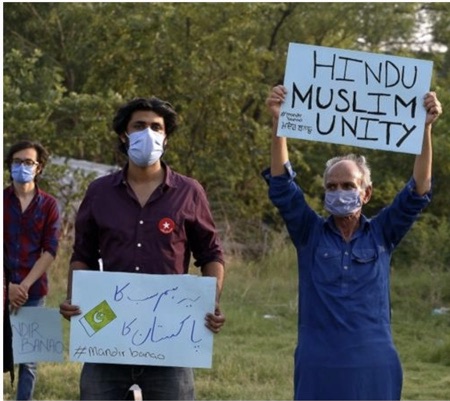
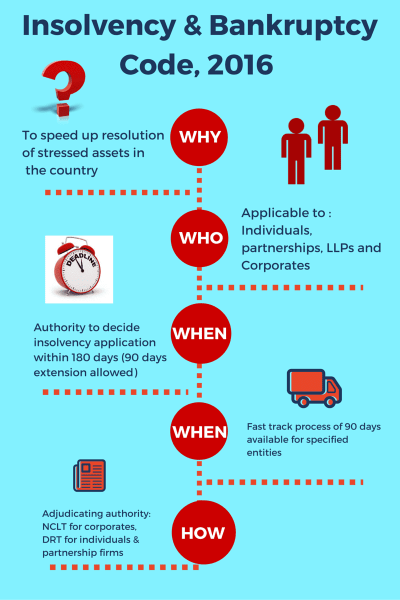



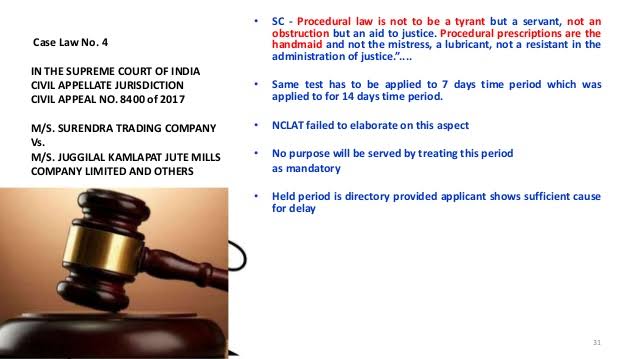
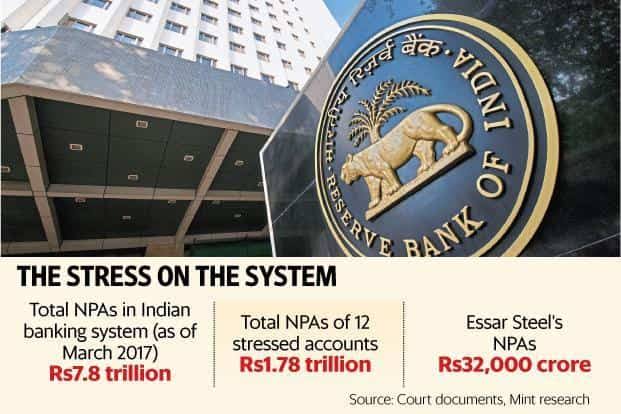

 Eduindex
You must be logged in to post a comment.