News for determining guilt or innocence, while lives hang in the balance. Often inspired by the latest headlines, the plots highlight legal, ethical or personal dilemmas to which people can relate.
“Justice delayed is justice denied” is a legal maxim. It implies that if legitimate review or fair help to a harmed party is accessible, however isn’t approaching in an opportune manner, it is successfully equivalent to having no cure by any stretch of the imagination.
This rule is the reason for the privilege to a fast preliminary and comparative rights which are intended to facilitate the lawful framework, on account of the injustice for the harmed party who continued the injury having little trust in opportune and compelling cure and goal. The expression has become a revitalizing weep for lawful reformers who view courts, councils, judges, mediators, authoritative law judges, commissions or governments as acting too gradually in settling lawful issues — either in light of the fact that the case is excessively unpredictable, the current framework is excessively mind boggling or overburdened, or on the grounds that the issue or gathering being referred to needs political kindness. Singular cases might be affected by legal aversion to settle on a choice. Resolutions and court rules have attempted to control the propensity; and judges might be dependent upon oversight and even order for tireless disappointments to convenient choose matters, or precisely report their excess.
Justice is one of civilisation’s primary objectives. It is subsequently basic for the legal executive to play out its obligation appropriately for any general public to proceed with its quest for harmony, amicability and progress. Shockingly, the Indian legal executive, notwithstanding its numerous victories, experiences extreme auxiliary issues that keep it from working appropriately. The legal executive’s travails, explicitly those identifying with deferrals and overabundance are very much reported and needn’t bother with reiteration. In any case, it is just over the most recent couple of years that these basic issues have been exceptional seen observationally because of the accessibility of better information. It is presently conceivable to survey, in a genuinely point by point way, the legal executive on boundaries, for example, spending plans, HR, remaining burden, assorted variety, foundation, and patterns throughout the years. We can likewise precisely analyse the pendency and excess issue at region and taluka level as well as at court complex levels.
From a bigger viewpoint, legal deferrals likewise lead to vulnerability with respect to laws and their application — the continuous case in the Supreme Court in regards to the use of the Right to Fair Compensation and Transparency in Land Acquisition, Rehabilitation, and Resettlement Act, 2013 and the assurance of remuneration thereunder has basically ended land securing case in the nation. Cases identified with land securing in the subordinate courts stay pending for a long time by and large and are a class of cases that set aside the most effort to be settled in court. A basic change required is the need to choose a full-time legal organization framework. Globally, legal organization is viewed as being subordinate to crafted by judges and is done by committed and concentrated faculty to help judges effectively play out their legal obligations. The foundation of a committed and prepared unit to offer help to the legal executive through case the board, help with planning, dealing with managerial errands, and guaranteeing support of court framework will go far in empowering the legal executive to concentrate on the organization of justice.
Biomedical Waste Management & Handling Rules, 1998 (“1998 Rules”) in India govern the handling, disposal and management of bio-medical waste (“BM Waste”)in India have been notified by the Central Government in the exercise of the powers conferred by Section 6,8 & 25 of the Environmental Protection Act, 1986. These rules provide for the framework of the management and Handling of disposal and scientific management of BM Waste
In wake of the COVID-19 pandemic, the Centre Pollution Control Board (“CPCB”) recently issued guidelines dated March 27, 2020 for handling, treatment and safe disposal of BM Waste generated during treatment, diagnosis and quarantine of patients confirmed or suspected to have COVID-19 (“Guidelines”).
The Guidelines have been necessitated due to the super infectious nature of the Novel corona virus and provide for a mechanism for the segregation, packaging, transportation, storage and disposal of BM Waste in order to avoid further spread of the virus through BM Waste.
So what do you mean by the BM Waste and what are the categories of BM Waste that the hospitals generate?
The Bio-Medical Waste Management Rules 2016[1] (“2016 Rules”) define the BM Waste as any waste, which is generated during the diagnosis, treatment or immunisation of human beings or animals or research activities pertaining thereto or in the production or testing of biological or in health camps, including the categories mentioned in Schedule I the 2016 Rules.
The 2016 Rules apply to all persons who generate, collect, receive, store, transport, treat, dispose, or handle bio medical waste in any form. The next imminent question that comes to our minds is what are the categories of BM Waste that the hospitals generate?
BM Waste generated from a hospital could be human anatomical waste, animal waste- microbiology & biotechnology, waste sharps, discarded medicines and cytotoxic drugs, solid & liquid waste.
Now that we know what’s the meaning and various categories of BM Waste, the most pertinent question arises that how is it supposed to be treated and disposed of by the hospitals in India during the ongoing COVID-19 pandemic?
While the hospitals in their usual course deal with the segregation, management and storage of BM Waste, the situation in times of COVID-19 is extraordinary the reason being the highly contagious nature of the virus and also it’s transmission cycle and multiplicity rate.
As the hospitals are being flooded with the suspected and confirmed cases, the Ministry of Health and family welfare (“MoHFW”) and the CPCB have issued various guidelines for the handling and management of waste generated from the COVID-19 facilities.
Under the 2016 Rules, while the hospitals are required to ensure that there is a secured location within its premises for a spill/pilferage free storage of segregated BM Waste in labelled/coloured bags or containers, the duty to transport the stored BM Waste from the hospital premises onwards to the common BM Waste treatment and disposal facility is of an ‘operator’ as defined in the Rules.
Specifically, in wake of COVID-19, the CPCB has issued Revision 1 to the Guidelines dated March 25, 2020 for Handling, Treatment and Disposal of Waste Generated during Treatment/Diagnosis/ Quarantine of COVID-19 Patients (“CPCB Guidelines”).
[2] The said CPCB Guidelines inter-alia, state that hospitals are required to depute separate BM Waste sanitation workers to COVID-19 isolation wards and maintain records of all waste generated in such isolation wards and ensure that the BWM generated is collected and separately stored in separate leakproof color-coded double layered bags or bins /containers labelled as “COVID-19 waste” as per the 1998 Rules and the Guidelines.
In fact the Bombay High Court in a recent pending public interest litigation has, while issuing notices to local municipal corporations and the State Pollution Control Board, also directed the Maharashtra government to clarify whether it was ensuring that all COVID-19 related biomedical waste generated in the state was being disposed of in a safe manner[3].
Now that we have a thorough understanding of how the BM Waste is supposed to be treated and disposed of the most important and the widely discussed about topic is that what are the measures that a hospital is required to take for the safety of its employees doctors, nurses and other support staff who are known as the (“healthcare personnel”) from the dangerous diseases like COVID-19?
In order to answer this pertinent question which is often there in the limelight, one must keep in mind that the Healthcare personnel who are the Frontline workers have a high risk of contracting the COVID-19.
While the hospitals are taking precautions and measures to control any spread of infection within the premises, it is particularly difficult given the highly super-infectious nature and hyper-speed feature of the virus. Due to this feature it spreads widely and it becomes a bit difficult to contain it in an over-crowded environment but it’s not impossible to achieve that as we all have been deterrent enough to contain it’s spread but still there is always scope for improvement.
The first steps towards controlling the spread of a virus is personal protective equipment also known as PPE which should preferably be a two-layered fluid-resistant apron and basic items like N-95 masks, face shield, full cover gowns and sanitisers but the same are rendered ineffective against the COVID-19 if the quality of these equipments is not up to the standard as required.
Greater emphasis is also to be laid upon the proper training and awareness of healthcare personnel towards proper use and disposal of the equipment. The spread of the COVID-19 virus is also particularly fast due to the heavy load of asymptomatic patients coming into the hospital and hence a greater need for the formulation of national COVID-19 protocol.
The MoHFW has vide its revised guidelines for clinical management of COVID-19 dated March 31, 2020[4] (“Clinical Management Guidelines”) impressed upon strict compliance of Infection prevention control (IPC) protocol for Hospitals and a consequent effect of the same is prevention and management of COVID-19 in the hospital staff.
This protocol inter-alia, standard precautions such as hand hygiene, use of PPE to avoid direct contact with patients’ blood, body fluids, secretions (including respiratory secretions) and non-intact skin, prevention of needle-stick or sharps injury, safe waste management, cleaning and disinfection of equipment and cleaning of the environment around a COVID-19 patient.
The 2016 Rules also provide as follows that in order to and for ensuring the safety of the healthcare workers and others involved in the segregation and pre-treatment of BM Waste, the hospital is required to train to all its healthcare workers, immunise them for protection against diseases which likely to be transmitted by handling of BM Waste, in the manner as prescribed in the National Immunisation Policy[5].
Also, hospitals are required to ensure occupational safety of all its health care workers and others involved in handling of BM Waste by providing appropriate and adequate PPE and also they must conduct health check ups at the time of induction and at least once in a year maintain the records for the same.
Now due to the pandemic if one is an employee ie the Healthcare personnel of the hospital one must understand the Legal aspect and angle also and the most important aspect of all is that what is the Legal obligations of the hospital, if and when an employee of the hospital tests positive for COVID-19.
Let’s answer this as it’s the most crucial and critical aspect. The present COVID-19 pandemic is an unprecedented event and is unlike any other infectious disease known to mankind and the medical world which is yet to fully decipher its modus operandi of infecting humans.
In a hypothetical situation wherein a hospital employee contracts COVID-19, it will be imperative for the employee in such a situation to establish that his possible exposure to COVID-19 was in the Hospital itself not in the community after considering that the employee is spending time outside as well apart from the hospital premises.
While in an ideal case, if it is proved that a hospital staff has contracted it ,i.e., it shall amount to ‘a hospital acquired infection’, then the hospital would be ordinarily liable. However, in the case of COVID-19 since it is seemingly impossible to trace down the exact source of the infection, in absence of such evidence and in light of utmost safety measures and precautions taken by the hospitals as per the guidelines, fastening of any liability on the hospital would be peculiarly difficult.
The defence available to the hospital may be culpability and negligence of the employee and proving that the hospital itself took all possible measures to avoid any mass spread of the infection.
The next relevant point to be analysed and answered is that when a Non COVID-19 patient contracts the virus during his term of being admitted in the hospital what are the Legal obligations of the hospital when this happens?
The National Consumer Dispute Redressal Commission in the matter of Apollo Emergency Hospital vs Dr. Bommakanti Sai Krishna & Anr.[6] observed that “As already observed, the infection occurred during the stay of the Complainant at the hospital. On the other hand, there is nothing to show that the source of infection lay outside the hospital. Thus, there is preponderance of possibilities of the infection having been acquired in the hospital itself. We therefore, do not accept the contention that it was necessary for the Complainant to produce expert evidence to prove negligence on the part of the concerned doctors in the hospital.”
The afore-stated judgement implies a presumption of liability on the hospital that in cases where the probability of acquiring the infection is much higher inside the hospital than from other sources. However, the same may not apply in COVID cases in light of the peculiar difficulty of tracing the source of acquiring the COVID-19 infection. Therefore, the presumption rendered by the aforesaid judgement will not be ipso facto applicable to cases of COVID patients.
As we have discussed the various pertinent relevant questions another one is that what are the legal obligations of the hospital, if and when a patient is misdiagnosed positive or negative for COVID-19 by the hospital due to a fault in the COVID-19 rapid testing kit (“testing kits”)?
The liability of a hospital in cases of misdiagnosis depends on the methodology of procuring of testing kits. A hospital may procure testing kit either from third party manufacturer or may manufacture them internally i.e. by itself or its subsidiary.
In cases where the misdiagnosis is on account of faulty testing kit procured externally, the hospital cannot be held directly liable as the liability may be shifted upon the manufacturer.
In cases where the misdiagnosis is on account of faulty testing kit is due to testing kits produced internally the hospital may be liable subject to it being proved that the misdiagnosed patient was indeed positive. However, factors such as the success rate of any testing kit not being 100% may have an interplay in determining the liability.
We have to be aware of what are the Legal liability of a hospital in a situation where the hospital discharges a mild/very mild/pre-symptomatic COVID patient to ramp up the capacity for serious COVID-19 patients.
A hospital will not be held liable for a systematic discharge of a mild/very mild/pre-symptomatic/moderate COVID-19 patient as the same is directed by the Central Government. On May 8, 2020, the MoHFW released its revised policy for the discharge of COVID-19 patients.[7] This revised policy provides that hospitals can discharge mild/very mild/pre-symptomatic in accordance with the protocols given therein.
In the earlier advisory[8], COVID-19 patients could be discharged only after chest radiograph clearance, viral clearance in respiratory samples, and if two of the patient’s specimens were negative within a period of 24 hours. The discharged patient would then have to home quarantine themselves in accordance with the revised policy.
So what is the protocol to be followed by a Hospital while disposing of the dead bodies of the COVID-19 patients?
The corpses are a source of infection for healthcare personnel/ other patients and cannot be disposed of by usual methods of disposal and therefore, the MHFW issued guidelines dated March 15, 2020 on dead body management in COVID-19.[9] The guidelines provide inter-alia, the protocol to be followed at the time of removal from the isolation room or area, put in bio-hazard bag and disinfection. Further, all surfaces of the isolation area (floors, bed, railings, side tables, IV stand etc.) should be wiped with 1% Sodium Hypochlorite solution and then it should allow a contact time of 30 minutes, and allow it to air dry as well.
While treating patients infected with the COVID-19 virus, what is the protocol for the treatment?
The All India Institute of Medical Sciences (AIIMS) has issued clinical protocol dated April 21, 2020 for treatment of Covid-19 patients and states such as Madhya Pradesh and Delhi have directed Hospitals and health centres dedicated to treating COVID-19 patients to follow the said clinical protocol.[10]
Treatment must be affordable for all. One must know whether or not there is a standardisation of costs of treatment of a COVID-19 for private hospitals?
Government hospitals are reaching their intake capacities and for that reason COVID-19 patients have been resorting to treatment in private hospitals. While some private hospitals are charging exorbitant amounts as costs of treatment, the same is worrying not just for the patients but also to the insurers.[11]
In a first, the State government of Maharashtra has capped treatment costs in private hospitals for people without medical insurance and for other patients, the capped prices will come into effect once they exhaust their medical insurance cover.[12]
The Hon’ble Gujarat High Court has vide its order dated May 22, 2020 directed the state government to issue a notification making it mandatory for all multi-speciality hospitals private/ corporate hospitals in Ahmedabad and on its outskirts to reserve 50% of their beds (or such other capacity as maybe specified by the state government) for COVID-19 patients.
In view of the same, the Government of Gujarat may come up with similar caps on costs as Maharashtra.[13] The Hon’ble Gujarat High Court also observed that the certain private hospitals authorised by the government to treat COVID-19 patients in Ahmedabad are charging exorbitant fees which is unaffordable for a massive section of the society and directed the state government to ensure that private hospitals do not charge exorbitant fees. [14]
Also in light of the same The Hon’ble Bombay High Court recently directed a charitable hospital to make court deposit of monies in a case pertaining to levy of exorbitant charges for treatment of COVID-19 patients belonging to poor strata of the society despite reserving 20% of its beds for poor and the needy.[15]
The recent death of a father-son duo in Tamil Nadu has sparked anger amongst the people of the country. The country also saw people raising hands to how this set of news being particularly from the Southern part has been neglected without losing even a breath. The legal issue covered in the case is on Custodial Violence. Such a violence is what takes place in the judicial and police custody. It is where a person who is alleged to commit the crime is tortured mentally as well as physically. In certain cases, the torture crosses the limits of rape and death as well.
The father-son case has raised several legal concerns such as the poor regard of fundamental rights as the SC identified in the case of Rama Murthy v. State of Karnataka in 1996, as how while upholding fundamental rights of prisoners, the ‘Torture and ill treatment’ in prisons is an area that requires reform. However, no such follow up has been seen. The question on the methods of investigation involving torture are particularly also against the fundamental right to life and dignity as enshrined under Article 21 of the Constitution.
The case puts lights to how the misuse of power of arrest happens in the country. The 3rd report of the National Police Commission observed how 60 per cent of all arrests were completely “unnecessary”. Furthermore, how the unnecessary applications under various sections of the Indian Penal Code, 1860 orders to get non-bailable remand for the accused and is against Article 19 of the Constitution which enables freedom as a fundamental right under the blanket of some reasonable restrictions.
The arresting involves ignorance of rules and use of torture by Police which mostly happens not in respect to the procedure as laid under the Criminal Procedure Code where the police custody is up to 15 days or judicial custody up to 60-90 days, etc. Such acts fall under extra-legal behaviours.
A major concern lines from this incident. It is how the laws still cannot protect its citizens due to the lack of implementation in the process. But when the laid laws are seen, it also reflects how there is a lack of strong legislation against such tortures in India. It shows how the mere release of draconian rules for non-compliance has turned the sector unprogressively ineffective to be bound by law.
India, despite the variety of laws protecting residents, tourists, animals is still yet to criminalise custodial violence. The country had signed the UN Convention against Torture in 1997 but like the trail, the ratification is still on hold.
The country has seen days after days when the police officials have been criticised for such a behaviour. But one needs to understand that there is lack of independent functioning in the particular sector. The Police Act of 1861 is specifically silent on ‘superintendence’ and ‘general control directions’. Such silence is deceptive as it only enables the executives to reduce the police to mere tools but more often not, they are used fulfil mere political interests.
The same could also been minimised through tightening the officials as right now, there stands no second thought before attaining the position of power. The process will certainly fall under regulations if the law permits common citizens to sue a police officer directly without the approval of the Government.
The law as such as has various loop holes. Including the weak functioning of National Human Rights Commission which righteously empowers to summon any witness, order certain production of evidence and also to recommend that the government which can initiate prosecution of officials. Needless to mention, the implementation loses hands they have mostly been limited. Merely to provide compensations or any other immediate interim relief by calling on the Government.
The way forward, however, looks progressive as India has ratified the International Covenant on Civil and Political Rights. Though it has only signed the Convention against Torture and Other Cruel, Inhuman or Degrading Treatment but positively, both of it prohibits torture.
Along with it, there is a reformation under Section 197 of CrPC as distinct so that there need not be requirement of any government approval before pursuing charges against police where the alleged crime is torture, arbitrary detention and also other criminal acts.
There have also been strict implementations of the DK Basu judgment given in 1997 by the SC. In the case, the apex court had issued 11 directions with the objective to increase the transparency and also to fix responsibility while any police official is making an arrest.
The effective role of magistrate is encouraged throughout the process as they have a duty to prevent the overreaching of police powers and have a right to ensure the wellbeing of suspects in custody by directly questioning them. They also have to ensure that the right to counsel is available to suspects so that Article 22 of the Constitution is not violated at any stage.
Various other steps as such as to ensure the police accountability, getting technically uplifted by providing training in scientific methods of investigation, introducing different gadgets to help the process as Body cameras used in the U.S. and the U.K and importantly, CCTV cameras inside the police stations.
Death due to torture is purely a criminal act and no authority should have power positioned to do it. The steps have certainly been put but it all that matters is that the entire way forward is duly maintained.
“The rights of every man are diminished when the rights of one man are threatened.”
John F. Kennedy
One week after World War II began, Herbert George Wells, wrote to the Times of London, with “What are we fighting for?” The science fiction writer answered his own questions with, “The Rights of Man.” On the February 5th publication of the Daily Herald in 1940, Wells published his own “Declaration of Rights.” This article was well received and was later turned into a book.
The United Nations (UN) was founded in 1945. The two main resolutions were; to prevent another world war and to attempt to make the world a better place for all the citizens of the world. The idea of the United Nations was suggested by the League of Nations, established in 1919 (post World War I). In 1878, Congress of Berlin was formed the same way the League of Nations was formed. Yet it wasn’t successful in avoiding World War I. UN was formed in hopes to rectify the shortcomings of the Congress of Berlin and the League of Nations.
On 10th December 1948, unanimously the General Assembly of the United Nations passed the Universal Declaration of Human Rights (UDHR). The 30 articles and sub-clauses of the UDHR promotes and the UN and Human Rights Commission (HRC), oversee that “everyone is entitled to all of the rights and freedoms set forth in this Declarations, without distinction of any kind such as race, colour, sex, language, religion, political or other opinion, national or social origin, property, birth or other status.”
The UDHR comprises the basic human rights every person deserves, like the civil and political right to life, free speech, privacy, seeking asylum, freedom from torture, right to education and so much more.
Below I list every Article of the UDHR and an explanation.
“Article 1:
All human beings are born free and equal in dignity and rights. They are endowed with reason and conscience and should act towards one another in a spirit of brotherhood.”
Every person born into this world has equal worth and rights. Everyone should be kind and respectful of others.
“Article 2:
Everyone is entitled to all the rights and freedoms set forth in this Declaration, without distinction of any kind, such as race, colour, sex, language, religion, political or other opinion, national or social origin, property, birth or other status. Furthermore, no distinction shall be made on the basis of the political, jurisdictional or international status of the country or territory to which a person belongs, whether it be independent, trust, non-self-governing or under any other limitation of sovereignty.”
No matter a person’s, race, colour, sex, or any other difference, everyone is entitled to all the rights listed in this Declaration.
“Article 3:
Everyone has the right to life, liberty and security of person.”
Everyone has a right to live, freely and securely.
“Article 4:
No one shall be held in slavery or servitude; slavery and the slave trade shall be prohibited in all their forms.”
No one can be enslaved or punished for being alive.
“Article 5:
No one shall be subjected to torture or to cruel, inhuman or degrading treatment or punishment.”
No one deserves or should be tortured or subjected to cruelty, inhumanity, or degrading behavior.
“Article 6:
Everyone has the right to recognition everywhere as a person before the law.”
Everyone in this world has the right to be recognized everywhere as a person.
“Article 7:
All are equal before the law and are entitled without any discrimination to equal protection of the law. All are entitled to equal protection….”
Everyone is equal before the law and is entitled to impartiality. And if anyone faces discrimination, they deserve equal protection.
“Article 8:
Everyone has the right to an effective remedy by the competent national tribunals for acts violating the fundamental rights granted him by the constitution or by law.”
Everyone has the right to legal support if and when needed/
“Article 9:
No one shall be subjected to arbitrary arrest, detention or exile.”
No one, unless proven guilty, can be arrested or exiled.
“Article 10:
Everyone is entitled in full equality to a fair and public hearing by an independent and impartial tribunal, in the determination of his rights and obligations and of any criminal charge against him.”
Everyone accused of a crime has a right to a fair and equal public trial. Subjective judgment is a violation of Human Rights.
“Article 11:
(1) Everyone charged with a penal offence has the right to be presumed innocent until proved guilty according to law in a….”
Everyone accused of a crime has the right to be considered innocent until proven guilty.
“Article 12:
No one shall be subjected to arbitrary interference with his privacy, family, home or correspondence, nor to attacks upon his honour and reputation. Everyone has the right to the protection of the law against such interference or attacks.”
No one has the right to enter another persons’ house, mail, or intrude without a good reason. We have a right to be protected if that happens.
“Article 13:
(1) Everyone has the right to freedom of movement and residence within the borders of each state.
(2) Everyone has the right to leave any country, including his own, and to return to his country.”
Everyone has the right to move around one’s home country and travel abroad with proper documents.
“Article 14:
(1) Everyone has the right to seek and to enjoy in other countries asylum from persecution.
(2) This right may not be invoked in the case of…..”
If a person is at risk of harm in one’s own country, one has the right to seek asylum in other nations.
“Article 15:
(1) Everyone has the right to a nationality.
(2) No one shall be arbitrarily deprived of his nationality nor denied the right to change his nationality.”
Everyone has a right to be a citizen of a country, and no one or government can deny that without a justifiable reason.
“Article 16:
(1) Men and women of full age, without any limitation due to race, nationality or religion, have the right to marry and to found a family. They are entitled to equal rights as to marriage, during….”
Every one of the legal age has the right to marry and start a family without any limitation of any race, nationality, religion, or any other reason.
“Article 17:
(1) Everyone has the right to own property alone as well as in association with others.
(2) No one shall be arbitrarily deprived of his property.”
Everyone has the right to own a property, and anyone deprived of this right is a violation of Human Rights.
“Article 18:
Everyone has the right to freedom of thought, conscience and religion; this right includes freedom to change his religion or belief, and freedom, either alone or in community with others and in public or private, to manifest his religion or belief in teaching, practice, worship and observance.”
Everyone has a right to their thoughts, beliefs, and religion. Anyone wishing to change their religion is entitled to do so.
“Article 19:
Everyone has the right to freedom of opinion and expression; this right includes freedom to hold opinions without interference and to seek, receive and impart information and ideas through any media and regardless of frontiers.”
Everyone has the right to express their thoughts and opinions freely with anyone.
“Article 20:
(1) Everyone has the right to freedom of peaceful assembly and association.
(2) No one may be compelled to belong to an association.”
Everyone has the right to form groups and organize peaceful protests. Anyone denying a person or group of protesting peacefully is violating Human Rights.
“Article 21:
(1) Everyone has the right to take part in the government of his country, directly or through freely chosen representatives……”
Everyone has the right to freely choose their political representative. Either by democracy or any other method. Any government or leader denying that right is violating Human Rights.
“Article 22:
Everyone, as a member of society, has the right to social security and is entitled to realization, through national effort and international…..”
“The society we live in should help every person develop to their best ability through access to work, involvement in cultural activity, and the right to social welfare. Every person in society should have the freedom to develop their personality with the support of the resources available in that country.”
“Article 23:
(1) Everyone has the right to work, to free choice of employment, to just and favourable conditions……”
Everyone has the right to work and freely choose any occupation. Unless the person is underqualified, no one can be denied the position.
“Article 24:
Everyone has the right to rest and leisure, including reasonable limitation of working hours and periodic holidays with pay.”
Everyone has the right to work reasonable hours. Everyone holds the right to enjoy leisure time each week. Any overtime spent working needs to be compensated with additional holiday/vacation pay.
“Article 25:
(1) Everyone has the right to a standard of living adequate for the health and well-being of himself and of his family, including food…..”
Everyone has the right to adequate food, clothing, housing, and healthcare. Everyone who is unable to work, or work adequately is entitled to benefits. Every disabled person is entitled to services and benefits to make life easier.
“Article 26:
(1) Everyone has the right to education. Education shall be free, at least in the elementary and fundamental stages. Elementary education shall be compulsory. Technical and professional education shall be made…….”
Everyone has the right to educations and elementary and primary education should be free for all. Education every child receives should include these rights and fundamental freedoms. Every parent has the right to choose the right kind of education for their children.
“Article 27:
(1) Everyone has the right freely to participate in the cultural life of the community, to enjoy the arts and to share in…..”
Everyone has the right to freely participate in the cultural activities of the community and also hold the right to reserve the copyright of one’s work.
“Article 28:
Everyone is entitled to a social and international order in which the rights and freedoms set forth in this Declaration can be fully realized.”
Everyone has the right to live peacefully at the local, national, and international order that this Declaration provides.
“Article 29:
(1) Everyone has duties to the community in which alone the free and full development of his personality is possible……”
“We have duties to the community we live in that should allow us to develop as fully as possible. The law should guarantee human rights and should allow everyone to enjoy the same mutual respect.”
“Article 30:
Nothing in this Declaration may be interpreted as implying for any State, group or person any right to engage in any activity or to perform any act aimed at the destruction of any of the rights and freedoms set forth herein.”
No person, group, or government holds the right to deny or destroy the rights and freedoms allocated by this Declaration.
Many countries, governments, and influenced groups are violating these basic Human Rights. A few examples of this are listed below:
Landlords forcibly evicting tenants who are unable to pay rent amidst the COVID-19 pandemic.
The Indian government detaining peaceful protestors during the anti-NRC and anti-CAA protests in 2019-20.
Police Brutality in the form of custodial rapes, custodial torture, no-knock searches, wrongful imprisonment, denial of medical attention, excessive force, and more.
Section 58 of transfer of property act defines the terms mortgage, mortgagor, mortgagee, mortgage money and mortgage deed.
Section 58 of transfer of property act. Mortgage is the transfer of an interest in specific immovable property for the purpose of securing the payment of money advanced or to be advanced by way of loan, existing or future debt, performance of an engagement which may give rise to a pecuniary liability.
What is a Mortgage ?
A mortgage or charge is granted by a borrower in favour of a lender to secure repayment of a loan. If the borrower fails to pay back the debt, the mortgage gives the lender the right to take possession or to sell the property. The mortgage must be registered against the property at the appropriate registry. Each province has its own mortgage and registration rules.
What is a mortgage discharge ?
A mortgage discharge (also known as a “release”) is the removal of a mortgage from the registry in which it was listed. Once the mortgage has been discharged, the lender loses any rights it had against the property under the mortgage. The borrower must pay the legal fees for preparing and registering the mortgage, as well as any administrative fees charged by the lender.
Conclusion
Mortgage is a legal instrument which is used to create a security interest in real property held by a lender as a security for a debt it is the lenders security for a debt. In other words the mortgage is a security for the loan that the lender makes to the borrower.
The case of Kanti Ram vs Kutubuddin is perfect to answer this question. Sale of mortgage property or suit for sale of mortgaged property without redeeming prior mortgage form of decree sections 48,58,60,86,88,96 and 97 of transfer of property act. The plaintiff is not entitled to bring to sale the mortgaged property without first redeeming the prior mortgages. The lower court have proceeded upon a mistaken view of the law on the subject, and that they are entitled to bring to sale the mortgaged property subject to the lien of the prior mortgages and that would be acquired by th purchaser under the sale is the equity or redemption which existed in the hands of the mortgagor at the time of the second mortgage. The right of the mortgagor to redeem the prior mortgages. And on the other hand it has been contended on behalf of the respondents relying mainly upon the case of mata din kasodhan vs Kazim Hussain.
India was ruled by Muslims from 1206 to 1857. Their rule, however, was almost on the verge of end since Aurangzeb died in 1707. The British Empire in India was laid down by a company, the East India Company. The ultimate purpose of the company was to grow the British interests in the overseas countries. The representatives of the Company arrived first in the country in 1604.
By 1661, the Company had developed factories in Surat, Madras and Bombay in India. The Company started delivering justice arbitrarily which could be called as “traders’ justice” under the Charters. The Company’s officials, however, were all traders and had no legal background. Before 1726, judiciary developed in the three presidencies without any uniformity of laws. Then came in the Charter of 1726 which focused on this specific issue in all the three places. Importantly, this Charter derived authority of adjudication from just the Kings and not the Company officials.
Municipal institutions were established in the presidency towns which strictly followed the laws of England. Especially since the charter allowed disputes between natives to be heard by these institutions only on request by the Indians. This act of the Company gained the trust as it showed respect the sovereignty of local rulers. The main role of the company until 1757 was the facilitation of trade and commerce.
By 1717, the Company had secured the right to control and collect revenue of villages near Calcutta. After the battle of Plassey, the Company had installed Mir Jafar as the Nawab of Calcutta. He surrendered the Zamindari of the twenty-four Parganas to the Company which is around eight hundred square miles. It was called the “moffussil”. The Company then provided the adalat system for the administration in the moffussil.
In 1765, Shah Alam granted the Diwani also called revenue administration the three cities Bengal, Bihar and Orissa to the Company for an amount of twenty-six lacs of rupees per annum. Then came in the 1772 plan which provided for a Moffussil Diwani Adalat in each district. It comprised of a Collector as judge to decide civil cases. The court was to apply the Quran for the Muslims and for Hindus it applied the Shastras. The Regulations of 1793 later modified the same and referred them as “Hindu Law” and “Mohammedan Laws” instead of the Quran and the Shastra respectively. Similarly, the Collector took the advice of a Qazi for Muslim cases and in the case of Hindus, the advice of a Pundit.
The criminal justice system in 1790 was taken from the Muslim Qazis, Muftis and Maulvis and handed over to the Company’s English officials. The Muslim Law officers advise the courts. Subsequently, the Regulation of 1773 authorized the Calcutta Supreme Court to enroll English, Irish and Scottish advocates in law.
In 1793 Cornwallis created a regular profession by authorizing the Sadar Diwani Adalat to enroll pleaders or lawyers for all Company’s courts. It could be both Muslims and Hinds. The War of Mutiny also called the war of independence, 1857 changed the fate of India as the Bill of 1858 handed the entire possession of government of the Company of all the territories to the Crown. In 1833, the Privy Council was established. High Courts were established in 1861 in the presidency towns Calcutta, Madras and Bombay. Early Law reporting as a private enterprise was introduced for the evolution of the doctrine of precedent. Authentic law reporting began alongside the Indian Law Reports Act, 1875. Thus, Early Law reporting and Authentic Law reporting served as the two indispensable necessities for implementation of the doctrine of precedent. It also proved successful in drawing the hierarchy of courts and the emergence of authentic law reporting was positively executed in 1875.
In 1937, a Federal Court for India was established.
The Supreme Court of India was established on the same set of principles. An appeal from the federal court laid to the privy council which served as the ultimate court of request. But the system could not prevail for much time with the independence of India. The independence of India also made inescapable changes to the structure of the judiciary. The replacement of the Privy Council with the Supreme Court to serve as the ultimate court in India being the hugest of all changes. The Indian Legal System now, consists of various level of courts and one Supreme Court. The Supreme Court serving as the ultimate court of request.
The Supreme Court in june said it will investigate the practicality of physical appearances of lawyers in the court while sticking to physical distancing standards in the midst of the COVID-19 pandemic. The court has been hearing pressing cases through videoconference all through the time of the lockdown. The Benches hearing these cases sit in the courts while legal advisors, who are provided with video joins, make their entries from their homes or workplaces. The court had named this component as the ‘virtual court’ system. However, the Supreme Court Advocates-on Record Association (SCAORA) has been making portrayals to the top court that a greater part of the legal counselors find that they can’t adequately introduce their contentions during virtual court hearings. SCAORA had as of late kept in touch with the court to start physical court hearings from July to serve the legal advisors.
The Bar Council of India (BCI) had recently asked the Chief Justice of India Sharad A. Bobde to continue physical court hearings from June 1. BCI chairperson and senior advocate Manan Kumar Mishra had written in a portrayal to the CJI that solitary a “handful of privileged class of advocates are beneficiaries of the virtual court system”. In its short roundabout, the court showed that it was available to the chance of physical court hearings, gave supporters and gatherings who come face to face to introduce their cases give a joint agree with respect to their “eagerness for genuinely showing up and contending in court”. The court said it would think about how conceivable it is dependent upon the accessibility of Benches, requests of the skilled position and physical removing standards.
Since March, 2020 an enormous number of people and associations have moved toward the Supreme Court concerning the effect of Covid-19. A large number of the Petitions, for example, the supplication to pronounce monetary crisis, are trivial. Some others have petitions requiring significant levels of clinical or other mastery, which the Supreme Court doesn’t have, can’t be gone into. Then again, various issues have been brought up in the Supreme Court which it could have and ought to have engaged however neglected to do as such. The essential methodology of the Supreme Court has been to either say that the Government is accomplishing awesome work and in this way the Court ought not meddle or to say that these are matters concerning strategy which can’t be meddled with. Basically the Supreme Court has been profoundly respectful towards whatever the Central Government says, particularly through the Solicitor General; and when pushed, the court will at the most solicitation the Central Government to consider the issue brought up in a Petition. No course of events is given nor any direction with regards to what are the elements to be taken into account while thinking about the issue. No inquiries are posed and no worries communicated; the Petition passes on a characteristic demise. Let us presently take a gander at a portion of the significant issues managed by the Supreme Court concerning Covid-19.
undoubtedly, this was uncommon in which the Government must be permitted a specific opportunity to go about as it saw fit. In any case, to totally abandon its duties towards the poor was something shocking. Possibly, be that as it may, Covid-19 is the darkest stage throughout the entire existence of the Supreme Court when it renounced its obligation at one go towards a huge number of penniless and underestimated individuals and this record will take some beating in the decades to come.
A bare reading of the definition of lynching states,
“To punish (a person) without legal process or authority, especially by hanging, for a perceived offense or as an act of bigotry”
One clear understanding from the above-mentioned definition is that there is no place for Mob lynching in a civilized land and especially in the world’s largest democracy.
The drafters of the Indian Constitution knew that laws in the country could be twisted to challenge the Fundamental Rights which were assured to the citizens and that’s exactly why The Right to Constitutional Remedies, that is, a process to seek justice through courts, was included in it.
Also going to through the epics, it holds no substantial, memorable or any quoted reference to this stated vicious practice.
Thus, in today’s world, Lynching stands as an exception.
The biggest irony and misfortune of our country is that everything and anything is politicized for insignificant political interests and vote bank. The same is true with most inhuman and abominable activity of mob lynching.
Early political context has been witnessed in the Kherlanji massacre in 2006. It was when four people were lynched over a land dispute at Kherlanji in Maharashtra. A mob of at least 50 villagers captured Bhaiyyalal Bhotmange’s house, and lynched four members of his family. Bhotmange’s wife and their daughter were marched naked in the village and sexually abused before being brutally murdered. The attack was after these women filed a police complaint against 15 villages who thrashed a relative. And despite such chaos, there were efforts to normalise the lynching later saying it was a casteist outrage against Dalits by the politically dominant Kumbi caste.
The next lynching that shocked the nation happened in Dimapur in 2015. A mob of least 7,000 to 8,000 infuriated people broke into Dimapur Central Jail, dragged Syed Farid Khan accused in a rape case out, marched him naked, stoned him, thrashed him, dragged him for over seven kilometres. There were attempts of tying a rope to his waist from a motorcycle. Ultimately, killing him and displaying his body on a clock tower. The brutal punishment was for the rape on a superficial level but what the mob thought was that they were lynching a Bangladeshi migrant. Khan, originally from Assam, had been living in for over Dimapur eight years. What is conflicting in this case is that the medical reports about the rape initially said the woman, who filed the complaint, was raped and then denying the same. Khan’s family claimed he was framed and said that the woman invited Khan to a hotel, forced him to drink and demanded Rs 2,00,000 from him. Ironically, this horrific mob violence executed was quoted by many as an example of serving justice.
Not much time later, Dadri lynching was witnessed. A 52-year-old Muslim man, Mohammad Akhlaq and his son, were attacked by a village mob with sticks and bricks, accusing them of stealing and slaughtering a cow calf and storing and consuming beef. The son was severely injured in the attack. Akhlaq was beaten till he died. This incident in Uttar Pradesh’s Bisara village near Dadri, was the first case of a Muslim lynched by a Hindu mob in the name of cow and beef. A primary inquiry by the Uttar Pradesh Veterinary Department said the meat recovered from Akhlaq’s refrigerator was not beef but of “goat progeny”. After a year in Mathura’s forensic department, the report said that the meat was of a cow or its progeny. And not much to surprise, the report was said to be politically motivated to normalise the lynching saying the mob was “emotionally charged” since cow slaughter is an extremely emotional issue for Hindus.
India is a multi-religious, multi-cultural, multi-ethnic, multi-dimensional and diverse country where people belonging to various faiths and religious denominations live together in peace and tranquillity. In such a diverse country, mob lynching in the name of protecting cow has the potential of leading to communal disharmony which may lead to national disintegration when national integration is badly required for peace, economic development and societal upliftment of the country.
Even since, Government imposed a ban on the sale and purchase of cattle for slaughter at animal markets across India, under Prevention of Cruelty to Animals statutes in 2017, it flashed a new wave of cow vigilante throughout the country. Though the SC suspended the ban on the sale of cattle in its judgment in 2017, giving relief to the multi dollar beef and leather industries and several states where beef is one among the primary foods, there was a rise in attacks on Muslims accusing them as beef eaters. Several innocent Muslims were murdered in such mob attack.
Law and order is a state subject and therefore all State Governments should deal with this inhuman activity strictly to maintain the rule of law and its supremacy. No one should be allowed to tinker with the law and the law violators and unruly mobs that resort to mob lynching should be put behind bars and severe punishment should be given to them so that this issue will be curbed and the country is saved from disturbance and violence. The primitive mindset and mob lynching are alien to our culture and should as such be discouraged and the secular democracy saved for the welfare of its citizens without any distinction of caste, creed, color or sex. Otherwise we will stoop to the 18th century which will take us back to the days of ignorance and illiteracy.
The government, though, has taken initiatives as it has asked States to appoint a nodal officer in each district to prevent the incidents of mob lynching. It has also asked to set up a special task force to procure intelligence reports about the people who are likely to commit such crimes or who are involved in spreading hate speeches, provocative statements and fake news.
Two high-level committees have also been constituted by the Centre to suggest ways to deal with incidents of mob lynching. One of the committees is being headed by Union Home Minister and the other by Union Home Secretary. The move came a week after the SC asked the Centre to enact a law to deal with incidents of lynching and take action on mob violence. The government respecting the directions of the Apex Court on the issue of mob lynching has issued an advisory to the State governments urging them to take effective measures to prevent such incidents, and also take severe actions as per the law.
Mob lynching should be dealt with an iron hand as it has the ramification of disturbing communal amity and peace in the diverse society and as such should not be tolerated and no one should be allowed to take law into his or her hands. It cannot be associated with any particular religion as it is a criminal activity and the criminal mindset does not come into people of any specific community. Thus to associate it with majority community is unjustified. But the majority community has the moral responsibility to protect and safeguard the minorities and supplement the efforts of the Government in this regard otherwise we cannot claim to build a new India where everyone irrespective of religion and faith will be safe and sound. We can rebuild new India only when there will be peace and the sectarian and communal violence will be things of yesteryears.
Thus, mob lynching should be condemned, discouraged and curbed if we have to build a strong and new India as a big economic power.
Aim of Untied Nations charter is to maintain international peace and security and to that end to take effective collective measures for the prevention and removal of threats to the peace and for the suppression of acts of aggression or other breaches of the peace and to bring about by peaceful means.
Purpose of the United Nations are:-
1. To maintain international peace and security, and to that end: to take effective collective measures for the prevention and removal of threats to the peace, and for the suppression of acts of aggression or other breaches of the peace, and to bring about by peaceful means, and in conformity with the principles of justice and international law, adjustment or settlement of international disputes or situations which might lead to a breach of the peace;
2. To develop friendly relations among nations based on respect for the principle of equal rights and self-determination of peoples, and to take other appropriate measures to strengthen universal peace;
3. To achieve international cooperation in solving international problems of an economic, social, cultural, or humanitarian character, and in promoting and encouraging respect for human rights and for fundamental freedoms for all without distinction as to race, sex, language, or religion,
4. To be a center for harmonizing the actions of nations in the attainment of these common ends.
5. To develop friendly relations among nation based on respect for the principle of equal rights and self determination of people’s.
Article 2
The Organization and its Members, in pursuit of the Purposes stated in Article 1, shall act in accordance with the following Principles.
1. The Organization is based on the principle of the sovereign equality of all its Members.
2. All Members, in order to ensure to all of them the rights and benefits resulting from membership, shall fulfil in good faith the obligations assumed by them in accordance with the present Charter.
3. All Members shall settle their international disputes by peaceful means in such a manner that international peace and security, and justice, are not endangered.
4. All Members shall refrain in their international relations from the threat or use of force against the territorial integrity or political independence of any state, or in any other manner inconsistent with the Purposes of the United Nations.
5. All Members shall give the United Nations every assistance in any action it takes in accordance with the present Charter, and shall refrain from giving assistance to any state against which the United Nations is taking preventive or enforcement action.
6. The Organization shall ensure that states which are not Members of the United Nations act in accordance with these Principles so far as may be necessary for the maintenance of international peace and security.
7. Nothing contained in the present Charter shall authorize the United Nations to intervene in matters which are essentially within the domestic jurisdiction of any state or shall require the Members to submit such matters to settlement under the present Charter; but this principle shall not prejudice the application of enforcement measures under Chapter VII.
The charter of the United Nations establishes a fundamental distinction between legal and illegal resort to force. By this it has in a way revived in international law the old distinction between just and unjust war.
The preamble of the charter of the United Nations starts with the determination of the people’s of the United Nations to save succeeding generations from the scourge of war and their willingness to practice tolerance and live together in peace with one another as good neighbors and not use armed force except in the common interest.
The prohibition of the threat or use of force in international relations against the territorial integrity or political independence of any state.
The use of force is necessary if it’s not possible to maintain peace by talks like things going on in Syria Iraq. But it’s not possible world or human being alwasys devide in two sides one is favour and one in against as positive negative or heads and tails this is impossible to fix everything and take stance at one side.
The case study is a landmark decision of the Hon’ble Supreme Court regarding the real estate industry in India and presumably the most anticipated in the light of the various challenges faced by home-buyers throughout India.
FACTS:
In 2011, Projects of Amrapali group launched construction of 42000 flats in Noida and Greater Noida and promised that delivery of possession will be made after 36 months. Buyers in 2010 – 2014 signed the buyer’s agreement. Even after payment of 40% consideration they faced the threat of forfeiture. The agreement contained some terms as to interest of owners, Clause 14 authorized himself to finance himself from any loans by way of mortgage/ charge / security and allotees cannot raise objection. Clause 15 authorized the builder to keep full authority over flat depriving allotees any lien or interest despite full payment. Clause 19(a) the builder was obliged to complete flats of Centurion Park within 30 months from date of commencement of signing agreement which may vary more or less than 6 months. Clause 19(c) builder fixed sum of Rs. 5 per square feet per month for period of delay. Breach of obligation by respondents to deliver flats even within 36 months. They did not pay amount to the allotees and also the bank. And buyers had to pay the EMI’s to bank thereby causing double loss.
Some consumers approached NCDRC by filing consumer complaint. Bank of Baroda filed a company petition in 2017 before the NCLT under Section 7 of Insolvency and Bankruptcy Code, 2016. The NCLT appointed Interim Resolution Professional. Moratorium was also declared thereby under the SARFAESI Act, 2002. The order adversely affected the interest of thousands of homebuyers of various projects being developed by Amrapali.
Meanwhile, a writ petition was also filed in Supreme Court. The apex court after hearing the complaints and in light of the accusations of draining off of funds being made against the Amrapali Group decided to take cognizance of petition and ordered to conduct a forensic audit over all the agencies of Amrapali Group.
ISSUES:
The charges levied by officials, banks, home purchasers and development agencies shall be valid.
The Amrapali Group’s RERA registration may be cancelled.
Form of relief accessible to homebuyers.
HELD:
Supreme Court held that:
RERA Amrapali Group registration under RERA Act shall be revoked and NBCC (India) Ltd is finalizing various projects.
The separate lease agreements issued for projects under consideration in favour of Amrapali Group Authorities are revoked and all the rights will now be vested in the Court Receiver who has authority to alienate, lease out or take any decision to raise funds. The Court Receiver will pay money raised to NBCC will complete the project with 8% profit margin (senior Adv., Shri R. Venkataramani).
The Authorities and Banks do not have the right to sell the property of the property buyers or the land leased for payment of their dues. They have to receive all their charges from the selling of other assets attached to the Amrapali Group.
The right of the lessee shall be enshrined in the Court Receiver (formerly with the Amrapali Group) and shall, by means of an authorized person on his behalf, conclude a tripartite agreement and perform all other acts as may be necessary and shall also make sure that the title is handed over to the home-buyers and that the possession is handed over to them.
The world has been divided into groups, sub-groups in which the people are categorised by either caste or religion and now on the basis of colour also. All of this is a very abstract topic and we just can’t argue on this but can we at least not work like the society, can we just look everyone with the same mindset, treat them equally, respect them equally. Our society has been ruled and judged by the superiors and is still being judged by our so called politicians who have manipulated the minds of the people and have turned off the ‘Humanity’ mode in them.
Things have turned really outrageous where people still haven’t learnt the real meaning of helping each other and treating everyone as equal. A recent example of “A Dalit couple” in Madhya Pradesh who have committed suicide because their crops were thrashed and they were being beaten up from the cops. This was a very brutal act against the marginalised sections of our society where those two were crying out for help and were begging to the police to stop and spare them, but nothing happened because it was an order from the government. This cruel and shameful act took place after the couple were seen growing crops on the land which was being inherited by the government. They were quickly rushed to the hospital after both of them consumed pesticides, and now they are in a normal condition.
Al Jazeera
“When our standing crop has been destroyed, we don’t have the option but to kill ourselves” Devi quoted.
All of this took place because the Government wants to build a college at the same spot where the couple had their farms and the government wanted them to leave everything and clear the land, but they didn’t accept their order because they were in debt and farming was the only source of living for their family. But in this also again the Political parties have started their war where they are blaming each other for this incident. This issue has come up weeks after that brutal and senseless incident where a son and a father were beaten up to death in Tamil Nadu by the cops.
What are we doing? where is the world going? On one hand where the policemen/policewomen are given the authority to serve for the country and work for the civilians, protect them, prevent all the evil things which are taking place in the society and on the other hand the police is beating up their people. Please stop, we are already having multiple issues in our society, people are dealing with numerous problems and above all Farmers are the fruit givers to the society, they feed us, how can we take their land and built something in place of a farm. This issue is something very serious and we have to fight against this, we have to fight against the rights of the farmers because they work for the Primary sector of the society. I hope this article will ring a bell of humanity in each one of us and will force us to make an initiative and stop the evil doings of this society, if not this at least we can pray for the farmers, for their health and well-being.
Let me begin by first and foremost penning that the most unfortunate death of a father Jayaraj and son Benicks allegedly due to severe custodial torture in a police station near Thoothukudi at Kovilpatti sub jail in Tuticorin in Tamil Nadu has raised serious questions on the conduct of the police and has shocked the entire nation! They were arrested for a seemingly trivial reason of violating lockdown norms in Sattankulam town in Tamil Nadu. It must be mentioned here that at the Kovilpatti sub jail when a medical check-up was done on the father and son, it came to light that there were serious injuries.
What is most shameful and most hurting to note is that when the check up of the son and the father revealed serious injuries and the duo were in an extremely bad condition, they were sent to jail instead of hospital! How can this be justified under any circumstances? As a corollary what followed next ostensibly was that their condition further deteriorated and it was then that they were sent very late to Kovilpatti general hospital where son Bennicks died on June 22 and his father Jayaraj died on June 23! There can be no blank cheque ever for custodial torture and custodial deaths
To be sure, it is most heartening to see that in the backdrop of the most horrifying custodial torture and death of a father and son as mentioned above, a writ petition has been filed as PIL just recently in the Supreme Court titled People’s Charioteer Organization & Another Vs Union Of India & Others seeking elaborate guidelines from the top court to ensure prevention of custodial torture. This petition has been filed by People’s Charioteer Organization (PCO) through its Secretary, Legal Cell, Mr Devesh Saxena, Advocate who lamented that, “We failed to eliminate the colonial attitude of our police”. This is mainly because they are rarely ever held accountable and rarely punished most strictly! This petition has been drawn by another advocate – Shashwat Anand.
To start with, it has been very rightly pointed out at the very outset in this petition that, “The murderous police assault, unending beatings and brutal torture which caused the death of two innocent traders, a father and a son, Jayaraj, aged 62 years and Bennix, aged 32 years, at Sathankulam Police Station, near Thoothukudi in Tamil Nadu, has brought the issue of custodial deaths to the limelight and it is an acute demonstration of a broken criminal justice system and failure to effectively uphold legal protection against police abuse. Accusations have been made against the police officers involved in two F.I.Rs filed on 24.06.2020, and thereafter news coverage regarding the incident gained traction. Due to huge outcry, 4 policemen, two sub inspectors and two constables working at the Sathankulam Police Station were suspended, and the Inspector In-charge was transferred.”
Furthermore, it has been also rightly pointed out that, “This incident, inter alia, has traumatized all those who respect the rule of law and personal liberty in the country and it underlines afresh the urgent need for institutional correctives within the policing system in this country and the acute need for India to enact a strong law to prohibit and prosecute cases of torture and custodial deaths, in fulfillment of its legal obligations, both national and international, to guarantee protection to right to life.”
It is quite baffling to see that till now there is no strong law that strongly prohibits custodial torture and custodial deaths and prescribes strongest punishment for those men in uniform who dare to indulge in custodial torture and custodial deaths under any circumstances! But certainly this does not mean that no law can ever be made now also just because in the past no attempt has been made in this direction! All that is needed is strong will to act in this direction and nothing else!
Bluntly put: Let me now ask few troubling questions which keep tormenting my mind. Why should custodial torture and custodial death not be prohibited, prosecuted and punished most severely? Why is there no zero tolerance for custodial torture and custodial deaths? Why instead do we see that there is zero conviction rate for custodial deaths and considerable delay in proceedings as we see in the annual report of 2017-18 of NHRC which received 148 intimations of death in police custody and 1636 intimations concerning deaths in judicial custody? Why should men in uniform not be held strictly accountable and strictly punished?
Also, it must be asked: When no law can ever under any circumstances sanction custodial torture then why are police given a blank cheque for custodial torture? Why are they not promptly arrested, held accountable and punished most severely so that no one can ever take law for granted? Why a criminal act perpetrated by a men in uniform not be sent behind bars and why those in uniform perpetrating custodial deaths be not sent to the gallows? Why men in uniform forget that uniform does not give them the unfettered right to indulge in mercilessly beating someone, then further torturing them and then not allowing them to be sent to hospital in time which ultimately ensures that they die while in custody?
It would be instructive for the police themselves to read some landmark judgments delivered by Supreme Court pertaining to this key issue. To start with, while explaining about the reason behind the poor rate of conviction, it is pointed out in State of M.P. v. Shyamsunder Trivedi 1995 4 SCC 262 that, “…rarely in cases of police torture or custodial death, direct ocular evidence of the complicity of the police personnel would be available. Generally speaking, it would be police officials alone who can only explain the circumstance in which a person in their custody had died. Bound as they are by the ties of brotherhood, it is not unknown that police personnel prefer to remain silent and more often than not pervert the truth to save their colleagues.”
Going ahead, why can’t the detailed guidelines that were laid down by the Supreme Court in Joginder Singh v. State of U.P. (1994) 4 SCC 260 and also in D.K. Basu v. State of West Bengal (1997) 1 SCC 416 be implemented in totality? We cannot be oblivious to what Justice AS Anand had famously stated in DK Basu’s case that, “Custodial torture is a naked violation of human dignity and degradation which destroys, to a large extent, the individual personality. It is a calculated assault on human dignity and whenever human dignity is wounded, civilization takes a step backward – flag of humanity must on each such occasion fly half-mast.”
Interestingly enough, it is quite laudable that it is further very rightly and very commendably stated in this very DK Basu’s case that, “Custodial death is one of the worst crimes in a civilized society governed by Rule of Law. Does a citizen shed off his fundamental right to life, the moment a policeman arrests him? Can the right to life of a citizen be put in abeyance on his arrest? The answer, indeed, has to be an emphatic “No”.”
It is quite unfortunate to see that till 2005 when amendments were carried out there were no provisions to deal with death, disappearance and rape in police custody. What is more unfortunate is that even after Section 176(1A) of the Code of Criminal Procedure which was inserted after the amendment of 2005, we see that the compliance with this mandatory provision which stipulates that “in such cases, the Judicial Magistrate or the Metropolitan Magistrate, within whose local jurisdiction the offence has been committed shall hold an inquiry in addition to the inquiry or investigation held by the police”, is rare and a long standing issue which is yet to be addressed, as a result of which this provision has become redundant in nature. All these loopholes must be plugged right now!
Also, it is a no-brainer that the landmark directions issued by the Supreme Court on police reforms in Prakash Singh v. Union of India 2006 8 SCC 1 must be implemented in totality. The governments should implement the police reforms by separating the investigating wing from the law and order branch. It also directed to establish a complaints authority to look into the human rights violations including custodial deaths and abuse of authority by the police.
Furthermore, in Prakash Kadam v. Ramprasad Vishwanath Gupta 2011 6 SCC 189, the Hon’ble Supreme Court has observed that, “Policemen are persons who are supposed to uphold the law. In our opinion, if crimes are committed by ordinary people, ordinary punishment should be given, but if the offence is committed by policemen, much harsher punishment should be given to them because they do an act totally contrary to their duties.”
What’s more, the Apex Court then laments in Re Inhuman Conditions in 1382 Prisons v. State of Assam AIR 2016 SC 993 that, “There are several such cases – documented and undocumented – all over the country but in spite of repeated decisions delivered by this Court and perhaps every High Court there seems to be no let-up in custodial deaths. This is not a sad but a tragic state of affairs indicating the apparent disdain of the State to the life and liberty of individuals, particularly those in custody. The time to remedy the situation is long past, and yet, there seems to be no will and therefore no solution in sight.”
Why can’t police be freed from political interference and political control? Why can’t police recruitment be made more strict and why can’t their service conditions be made further more strict? Why can’t the Supreme Court directives on police reforms in Prakash Singh case of 2006 be strictly implemented?
Why can’t police be made to follow the instructions given in the landmark DK Basu’s case while arresting a person? Like, for instance: All officials must carry name tags and full identification, arrest memo must be prepared, containing all details regarding time and place of arrest, attested by one family member or respectable member of the locality. The location of arrest must be intimated to one family or next friend, details notified to the nearest legal aid organization and arrestee must be made known of each DK Basu right, all such compliances must be recorded in the police register, he must get periodical medical examination, inspection memo must be signed by arrestee also and all such information must be centralized in a central police control room. Why can’t the archaic and colonial “The Police Act, 1861” be amended to meet the present circumstances? Why can’t the landmark recommendations of the Law Commission of India in its 152nd and 273rd report be implemented?
No doubt, the 152nd report submitted in 1994 had rightly recommended insertion of a new provision – Section 154A in Cr PC to enable any person to approach a judicial authority on the failure of police to register FIR! Similarly, the 273rd report of Law Commission of India on implementation of UN Convention against Torture and other Cruel, Inhuman and Degrading Treatment or punishment through legislation strongly recommended that those policemen who indulge in torture can be punished with imprisonment which may extend to life. Here I personally feel that custodial killing must be punished with death as they cannot be justified under any circumstances! Or at least, death penalty also must be included for custodial killings apart from life term so that a strong and stern message goes out that custodial killings won’t be tolerated by a civilized society like India any longer!
On a more serious note: Why can’t the police training be overhauled completely so that they are taught to be more humane, more responsive and more compassionate while dealing with people and human rights? Why can’t the landmark recommendations of the Malimath Committee on Reforms in Criminal Justice System be implemented? Why can’t the governments both at the Centre and in the States show more drive and determination to push through the necessary reforms as recommended by so many Committees and even Law Commission of India which have been just gathering dust till now?
In conclusion, only a strong political will is needed to do the same! There is nothing that cannot be done provided there is adequate political will! Custodial torture undermines the rule of law and erodes the people’s faith in the system.
In addition, it many times makes a common man pick up guns to avenge with what he/she feels has been done wrongly! To restore people’s faith many remedial steps have to be taken! They cannot be left in abeyance any longer now! The earlier the police reforms are carried into effect, the better it shall be for not just people but also for the police themselves!
The unconstitutional amendment of Juvenile Justice Act, 2015 begins its contradictions from the initial provisions itself. The section 2(12) of the main Act states that a juvenile means a person who has not completed the age of 18 years and on the other side this amended version contradicts its own law as it states that children from 16-18 years of age can be tried as adult criminals. It also reflects how arbitrary it is on testified along with the tests under Art. 14.
The test of Intelligible differentia, another test under Art. 14, is found unreasonable too due to the logic and the reasons behind the Act. Firstly, it replaces the word juvenile with child in conflict with law which was supposedly more humane. But this very child in conflict with law is meant to be tried for adult offences and this inhumane idea is conceived by the Government. Furthermore, the terms child alleged to be in conflict with law and child found to be in conflict with the law are not defined clearly and are used interchangeably in the Act. It stands as a great flaw due to the general understanding of the evident difference between alleged to be and found to be.
In the second test, the nexus between the classification and the object is absent as the authorities have acted without following the procedure to unequal treatment. The object or the purpose of the Juvenile Justice Act is to provide care, protection and child friendly approach but the approach suddenly disappears towards the child between the ages of 16-18 years. The objective of Juvenile Justice Act is not being fulfilled as Juveniles are being treated as adult criminals and sent to the prison where they would be influenced to be more hardened criminals since the purpose of the Act is to protect the juvenile from committing further crimes and evidently not fulfilled with the amendment. Instead the government through this specific provision is giving a hand in converting the juveniles into hardened criminals unlikely of the main idea which stands to reform the juveniles so that they could be accepted into the society.
There is also a violation of fundamental right under Art. 21 as the rights of opportunity to be heard and right of fair trial are infringed. The right of the juvenile to be tried infront of the Children’s Court gets him infront of the Session court with the other hardened criminals and consequently, the degree of punishment is harsher.
Section 15 of the Act seeks to repeal and replace the existing Juvenile Justice Act, 2002 with a draconian and unconstitutional amendment which instead of providing care and protection to the children deems them as an adult in cases where the alleged commission of crime by them is heinous in nature. It seeks to punish the child in conflict with the law for the failure of the society at large in providing the child with adequate care and protection. Juveniles in conflict with the law are more capable of change given the fact that their brains are still learning. Honest efforts made towards rehabilitation — including visits by a mental health professional three-four times a month — will have a significant positive impact on them. Unfortunately, there is no psychiatric screening in Indian prisons. No mental health professional would meet the juvenile convicted in any case and would lead to its worser development, totally against the objective of the Act. Every child develops in different background factors and considering to bring most of them into a similar set would be unethical since their mental faculty would not be equal.
The provision does not necessarily decide on the child in respect to his psychological or social factors but only governs on his mental faculty while committing the crime. It is totally undermined by the government that the mental faculty actually develops through these factors. More often than not the children who are put into rehabilitation centres come through as a changed human being. Under the existing law of a child in conflict with law between the age of 16-18 years who were found to have committed an offence by Juvenile Justice Board, there was an arrangement of rehabilitation supposition that could be passed by the Board. This rehabilitation disposition includes admonition community service, imposition of fine, probation group counselling and an extreme measure of deprivation of liberty by way of placement of the child in the special home for three years. The same facilities however could take a drastic turn in for cases when they are handed over the sessions court.
There are many further circumstances under the Indian law a person under the age is not allowed to vote, is considered minor for entering into a contract, a girl of age less than eighteen years cannot give consent for sexual relationships, a child of age less than eighteen years cannot marry. Yet by the amended Act that child can be tried as an adult after a preliminary assessment, the child shall be presumed to have the knowledge and understanding of the alleged crime that he has committed. Such a scenario would be travesty of justice. The idea behind treating a certain age group as children is to protect the most vulnerable section of the society where the government would have analysed in such matters that they are not mature enough to deal with these things. It is unjust and against the well-established principle lex iniusta non est lex that states that unjust law is not a law.
Section 15 of Juvenile Justice Act, 2015 is hence against natural conscience, unjustified and unconstitutional to which we hope, no child falls as prey.
Banks and financial institutions have been experiencing considerable difficulties in recovering loans and enforcement of securities charge with them. The procedure for recovery of debts due to the banks and financial institutions, which is being followed, has resulted in a significant portion of the funds being blocked.
The Committee on the Financial System has considered the setting up of the Special Tribunals with special powers for adjudication of such matters and speedy recovery as critical to the successful implementation of the financial sector reforms. An urgent need was, therefore, felt to work out a suitable mechanism through which the dues, to the banks and financial institutions could be realised. In 1981 a committee had examined the legal and other difficulties, faced by banks and financial institutions and suggested remedial measures including changes in law. This committee also suggested setting up of Special Tribunals for recovery of dues of the banks and financial institutions by following a summary procedure. Keeping in view the recommendations of the above Committees, the Recovery of Debts due to Bank and Financial Institutions Bill, 1993 was introduced in the Parliament.
THE RECOVERY OF DEBTS DUE TO BANKS AND FINANCIAL INSTITUTIONS ACT, 1993
An Act to provide for the establishment of Tribunals for expeditious adjudication and recovery of debts due to banks and financial institutions and for matters connected therewith or incidental thereto.
After a decade or working of the (RDDBI ACT) it was felt that RDDBI act was unable to achieve the desired result of efficiently recovering money from the borrower’s. This led to the enactment of the Securitization and reconstruction of final assets and enforcement of security interest act 2002.
SARFAESI 2002
The SARFAESI Act was passed on December 17, 2002, in order to lay down processes to help Indian lenders recover their dues quickly. The SARFAESI Act essentially empowers banks and other financial institutions to directly auction residential or commercial properties that have been pledged with them to recover loans from borrowers. Before this Act took effect, financial institutions had to take recourse to civil suits in the courts to recover their dues, which is a lengthy and time-consuming process.
As per the SARFAESI Act, if a borrower defaults on a loan financed by a bank against collateral, then the bank gets sweeping powers to recover its dues from the borrower. After giving a notice period of 60 days, the lender can take possession of the pledged assets of the borrower, take over the management of such assets, appoint any person to manage them or ask debtors of the borrower to pay their dues too, with respect to the asset. This recovery procedure saves banks and financial institutions a lot of time which otherwise would be long drawn out due to the intervention of courts.
With an attempt to revamp the slow pace of recovery of defaulting loans and mounting levels or non performing assets of banks and financial institutions. The SARFAESI act provides the secured creditor the right to enforce the security without the intervention of either court or tribunal by following procedure prescribed under section 13 of SARFEASI act. Thereafter the constitutional validity of SARFAESI act was challenged in Mardia chemicals Ltd V Union of India.
In the landmark judgement delivered in Mardia chemicals V Union of India the hon’ble supreme court held that provision of the securitization and reconstruction of financial assets and enforcement of security interest act 2002, SARFAESI ACT 2002, are valid except section 17 (2). Which is ultra vires of article 14 of the constitution of India.
It’s a new weapon to strengthen the hands of co-operative banks, but a small one still.
IBC 2016
The Insolvency and Bankruptcy Code 2016 offers a uniform comprehensive insolvency legislation to Corporations, Firms and Individuals (other than financial firms).
One of the fundamental features of the Code is that it allows creditors to assess the viability of a debtor as a business decision, and agree upon a plan for its revival or a speedy liquidation.
The IBC creates a new institutional framework, consisting of a regulator, insolvency professionals, information utilities and adjudicatory mechanisms, that will facilitate a formal and time bound insolvency resolution process and liquidation.
Insolvency and Bankruptcy code is a sound legal framework of bankruptcy law is required for achieving the following objectives:-
Improved handling of conflicts between creditors and the debtor It can provide procedural certainty about the process of negotiation, in such a way as to reduce problems of common property and reduce information asymmetry for all economic participants.
To consolidate and amend the laws relating to re-organization and insolvency resolution of corporate persons, partnership firms, and individuals. To fix time periods for execution of the law in a time-bound settlement of insolvency (i.e. 180 days).To maximize the value of assets of interested persons.
To establish higher levels of debt financing across a wide variety of debt instruments. To deal with cross-border insolvency .To resolve India’s bad debt problem by creating a database of defaulter list.
In short we can say that SARFAESI is upgraded version of RDDBI, and IBC is upgraded version of SARFAESI.
The Covid-19 pandemic has influenced the economy harshly, bringing about development stoppage in significant segments. The horticulture, vehicle, lodging, travel and the travel industry, assembling and administrations segments are completely hit. The suspension of monetary exercises during the national lockdown time frame in India has cost the economy $235 billion, Barclays Company evaluated. As per the Chicago Booth’s Rustandy Centre for Social Sector Innovation, which broke down information from the Centre for Monitoring Indian Economy (CMIE), has seen that over 84% of family units in India lost salary during the lockdown time frame.
In this time, some state governments have passed statutes and new guidelines influencing the work laws and their application. Nearly 10 states have achieved changes in the labour laws, for the most part in The Factories Act, 1948, The Industrial Disputes Act, 1947, and The Labour Laws (Exemption from Furnishing Returns and Maintaining Registers by Certain Establishments) Act, 1988. The state governments have asserted that these measures are important (I) to launch financial exercises (ii) to draw in outside speculation and (iii) to support development possibilities.
Not long after proclamation of these statutes, worker’s guilds the nation over, rights activists, work specialists and even industrialists censured these measures as being in opposition to laborers’ privileges. These measures disregard the set up guidelines of International Labor Organization (ILO) and the Fundamental Rights and Directive Principles of State Policy of the Indian Constitution. Numerous PILs (Public Interest Litigation) were documented in the separate state high courts and in the Supreme Court. The Allahabad High Court sent notification to the Uttar Pradesh government, following which the UP government pulled back one request, that on the 12-hour work move.
Labour is a subject in the Concurrent List and subsequently both Union and state governments are equipped to authorize enactments relating to work government assistance. Thing 24 on the Concurrent List explicitly makes reference to arrangements for the “government assistance of work, including states of work, fortunate assets, bosses’ obligation, laborers’ pay, shortcoming and mature age annuities and maternity benefits” of Article 246 of the Constitution. Any adjustments in the laws identified with the subjects recorded in the Concurrent List must be made in counsel with the Union government. Something else, the law passed by the Union government stands substantial according to Article 254(1). The state governments appear to have disregarded this while giving their laws. The debilitating of work laws have seriously obliged the government assistance and equity plan inserted in the Constitution.
The utilization of the law to suitable the privileges of average workers individuals is the plan of neoliberal administration systems. In the period of contractualisation of work, laborers’ privileges are seriously undermined as the administering power has moved from State to the private division. The withdrawal of the State from government assistance is in progress, as is obvious from these laws. These measures will remove the respect of work and its related rights. In “A Tale of Three States: Labour Reforms in the States of Gujarat, Madhya Pradesh and West Bengal,” Kingshuk Sarkar says that consideration was given to “guaranteeing simplicity of working together instead of securing laborers’ privileges and qualifications.”
The genuine issue lies not with the labour laws yet with the idea of the State. With these mandates, the state governments have disintegrated the standards of ‘helpful federalism’. With regards to the Covid-19 emergency, it would be judicious for the for the Indian State to maintain laborers’ privileges and poise to upgrade its own social authenticity and open trust.


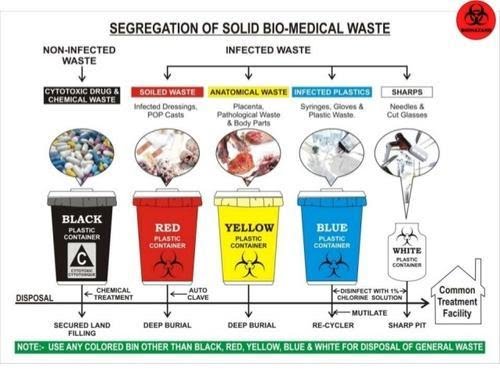
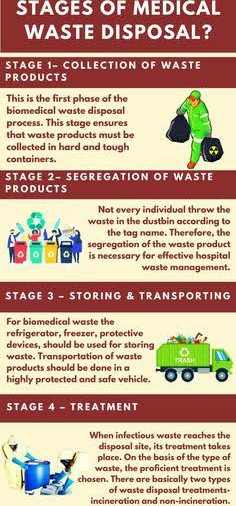
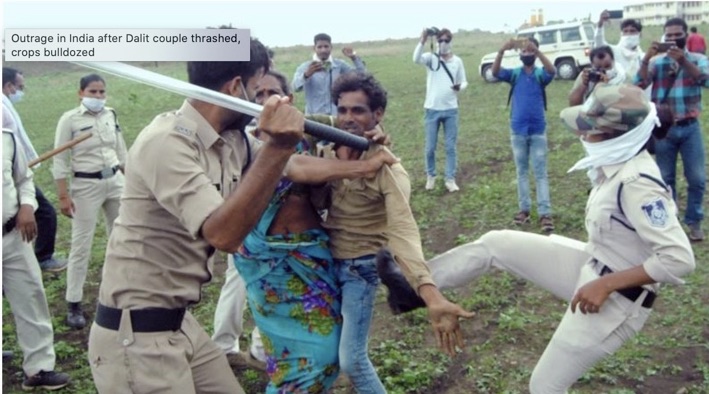
 Eduindex
You must be logged in to post a comment.