“RIGHT TO LIFE AND PERSONAL LIBERTY”

CONCEPT

Every person has the right to life library and security. Among all the fundamental right the right to life is unquestionably. Right to life means that no body can interfere in your freedom including government also. The people have human rights which protect their life and give them right to life. Right to life is concept which explain under the fundamental rights, that the citizen have rights to enjoy there life on there ways no body can stop them or restrictions on there fundamental rights.

The word “personal library” in Article 21[1] means nothing more than the liberty of the physical body, that is, freedom from arrest and detention without the authority of law. Personal liberty is one of the oldest concept which is safeguard by national court. The right to personal liberty as understood means in human rights not to be subjected to arrest any mode that does not admit to legal justification.

Personal liberty was not only merely the liberty of body, it also includes the other, freedom from restraintion and the law shall bind no person. Personal liberty was a widest concept that covers all the various rights. Right to personal liberty also means that free from the unnecessary restriction by the law on the member of the socity.

Every citizen has a right to life, liberty and the security. Among all the fundamental rights, right to life is unquestionably. The right to life and personal liberty is all about the development of human beings life. The right to life is a moral principle based on the right of freedom of peoples. The government should always take a proper measures or action to protect the life of peoples by making laws to protect citizen of their country and also in some conditions, by taking an good step to safeguard there states peoples at any risk.

There are many laws making by the government, which in any circumstance if a person might put in danger and if state was involve on that then the people might have the right to investigate. The main aim of the state to carry out the “justice”. According to the Constitution parliament and the State legislature in India have the power to make law. The meaning of personal liberty is that the citizen of state have there right arrest or detent according to law or if the person is guileless then he have right to protect there legal rights in such conditions. The right to personal liberty was an personal freedom in which no government can abbreviate.

ARTICLE 21

“No person shall be deprived of his life or personal liberty expect according to procedure established by law” [2]

The Article 21 explain about the protection to life and personal liberty, it protects the freedom of citizen. Two teams of Article 21:- First, “Due process of law”(USA).and second,”Procedure established by law”(India). The term “produce established by law” in India it taken from Japan. And in USA if citizen were deprive by law the tha term due process of law used, and in India it’s produce established by law was used. This rights are for both the citizens as well as non-citizen. And for those also how not have the knowledge about this concept.

Due process of the law is a very unique clause of the americanConstitution. It is very broad and formative concept. It is difficultto give the accurate definition which could explain it in very well manner. Due process of law literal meaning of it is ‘guarantee of fair procedure’. The Constitution promises there citizen or individual that government will not deprive him of life, liberty or property without due process of law. After having the brought explanation of life and liberty, now we will deal with the term”procedure established by law”. It does not have the same meaning as express in the due process of law. Procedure established by law express the wider connotation than the expression used in the Indian Constitution.

The Article 21 even thought to frame in negative language, established the person the fundamental right to life and personal liberty and it become the infinite source of many rights. It has the fundamental right for everyone who lives in country shall be live freely in the socity with the right that was enshrined in Article 21.

In Article 21 the right to life is not only with the physical existence of life but it is also for the other elements. Article 21 has proved to be avery fruitful source of right of the peoples.


[1] Protection of life and personal liberty No person shall be deprived of his life or personal liberty except according to procedure established by law.

[2] Article 21

The Indian Tax System

There are various references in History which act as evidence that taxation existed in olden times also. Some references are ‘Arthashastra’ by Chanakya, King Dalip’s regime and Caesar Augustus. The word “Tax” originated from “Taxation” meaning ‘an estimate’. These were imposed and collected on the trade of commodities or livestock in a disorganised manner. The importance of tax increased with time and became a source of government income and expenditure.

TAX STRUCTURE IN INDIA 

India has a well developed taxation structure. The tax system in India is mainly a three-tier system which is based between the Centre, State governments and the Local Government organisations. In most cases, these local bodies include the local councils and the municipalities. According to the Constitution of India, the Government has the right to levy taxes on individuals and organisations. However, the Constitution states that none has the right to levy or charge taxes except the authority of law. 

The tax structure in India is divided into two components: Direct Taxes (such as income tax) and indirect taxes (such as custom duty). 

I. Direct Taxes: Direct taxes are those taxes that are not shifted, that is, the incidence of which falls on persons who pay them to the government, the taxpayer. According to Article 265, each tax levied or collected has to be backed by an accompanying law, passed either by the Parliament or the State Legislature. 

The direct taxes in India are: 1. Wealth Tax- 

Wealth tax is one of the major direct taxes in India. It is also known as the Wealth Tax Act, 1957. This tax is applicable to all the citizens of India. Wealth tax is the cess levied on owned property. It applies to those who enjoy property ownership benefits. It is applicable to every property owner till he or she retains the ownership of that particular property. The tax paid on property depends entirely on the current market rate. In case the property is not generating any income, then also wealth tax has to be paid. 

2. Corporate Income Tax- 

Corporate income tax is levied in many different forms in India. Corporate Income Tax is primarily meant to be paid by domestic corporations. Domestic corporations in India pay a minimum income tax rate of 35 per cent along with a surcharge of 2.5 per cent. Corporate income tax is also applicable to foreign organisations that have their own economic bases working in the country. These types of corporations are required to pay tax on 40 per cent of their income along with a surcharge of 2 per cent. This surcharge goes as a reservation for funding the state‘s education. Corporate income tax is also applicable to all the people that are working for any corporation in or outside India. 

3. Personal Income Tax- 

This is the most common form of tax in India. The system of personal income tax in India is very similar to the taxation system in the United States of America. It is based on the personal income of an individual. If the annual income of an individual is under Rs. 1, 80, 000/- then he or she is exempted from paying any personal tax. There are further allowances made under the personal income tax domain for the physically handicapped and elderly. 

II. INDIRECT TAXES: An indirect tax is defined as a tax levied on goods and services rather than on income or profits. Given below are the indirect taxes imposed in India: 

1. Sales Tax- 

Sales tax is the tax levied by the State Government on goods bought and sold in the country. This policy is followed in most industrially developed countries in the world. The taxes levied under sales tax are not the same for all kinds of goods. 

2. Custom Duties-

Custom duties were introduced in India through the Customs Act in 1962. This duty was introduced with the aim of checking illegal exports and imports of goods. Taxes are charged for all the goods that are imported into the country, mainly to protect the industries in India. 

Shortcomings of Indian Tax System: 1. Canon of Justice: The increased activities of the Government of India to develop the infrastructure and economy indicate a regressive tax structure that is against the canon of justice. The lower and middle income groups have to bear more burden of taxation as compared to the higher income groups because the government tries to raise amounts by indirect taxation. 

2. Agricultural Income: Agricultural income is not taxed in India. Hence, there is a higher burden of taxes on the urban areas. 

3. Complex Tax Framework: India has a complex tax framework with contradictory tax exemptions. Efforts are being made by the IT Department to enhance and simplify transparency of the tax system to help the individual taxpayers by reducing their compliance costs. 

4. Removal of Tax Incentives: Tax exemptions are given to achieve the objectives of development but they promote rent seeking behaviour, contributing to the complex tax laws. Exemptions lead to tax leakage and tax abuse which makes the system counterproductive and dysfunctional. 

5. Refunds: Getting refunds of tax from the Income Tax Department is a difficult process. It should be made easier by easy accessibility through internet services and refunding electronically. 

6. PAN: The tax base must be increased by extending PAN to cover all citizens serving as a Citizen Identification Number. 

7. Monopolistic Power of Tax Officials: The tax officials operate within a geographical limit with ambiguously defined roles that leads to abusive behaviour on their part. A high degree of discretionary power and lack of adequate monitoring and reporting mechanisms leads to corruption. The tax officials misuse the rules of the government and extract illegal payments from taxpayers. 

8. Lack of Supervision: There is a lack of supervision and monitoring of officers and holding them accountable for their actions. There must be promotion and enforcement of ethical standards, merit based recruitments, promotion procedures and regular staff rotation schemes to prevent the creation of a nexus. 

9. Decrease in Tax Revenue due to Corruption: Corruption decreases tax revenue, which leads to a shortfall in the funds of the government. This forces governments to resort to public borrowing and public debt, thereby endangering fiscal sustainability. Corruption adds to the adverse effect over investment and growth. 

10. Broadening the Tax Base: The majority in India do not file personal income tax. To bring them into the tax net, the government adopted a “one-in-six” scheme under which an individual satisfies one out of six criteria. This measure has increased the number of individual income tax payers, but a lot needs to be done still. 

India was different from other countries as they were made by the Indian citizens without any sort of external interference. 

There are different types of taxes in India. The system of taxation in India is clearly vested in the hands of authorities such as the central government, state government and the local governments. The taxes that are levied by the central government are on personal income, central excise, custom duties and service tax.

DIGITAL INDIAN CAMPAIGN


Digital India is an umbrella programme that covers multiple Government Ministries and Departments. It weaves together a large number of ideas and thoughts into a single, comprehensive vision so that each of them can be implemented as part of a larger goal.
Each individual element stands on its own, but is also part of the larger picture. Digital India is to be implemented by the entire Government with overall coordination being done by the Department of Electronics and Information Technology (DeitY).


Digital India aims to provide the much needed thrust to the nine pillars of growth areas, namely Broadband Highways, Universal Access to Mobile Connectivity, Public Internet Access Programme, e-Governance: Reforming Government through Technology, e-Kranti – Electronic Delivery of Services, Information for All, Electronics Manufacturing, IT for Jobs and Early Harvest Programmes. Each of these areas is a complex programme in itself and cuts across multiple Ministries and Departments.


The Digital India programme aims at pulling together many existing schemes. These schemes will be restructured, revamped and re-focused and will be implemented in a synchronized manner. Many elements are only process improvements with minimal cost implications. The common branding of programmes as Digital India highlights their transformative impact. While implementing this programme, there would be wider consultations across government, industry, civil society, and citizens to discuss various issues to arrive at innovative solutions for achieving the desired outcomes of Digital India.

Why do we need taxes?

Taxes constitute a major source of revenue for modern governments. The total revenues of modern states besides tax revenues, non–tax revenues, customs and excise duties etc. also constitute parts of the revenue system. Tax revenues are important and useful as they do not create any liability to the state. Taxation is the only practical means of raising the revenue to finance government spending on the goods and services that most of us demand. Setting up an efficient and fair tax system is, however, far from simple, particularly for developing countries. 

Purpose of Taxation: Taxation is an important part of the national economic development. It serves many purposes, which are as follows: 

1. Pace of Economic Development: Tax policy can affect the pace of economic development and the way the rewards of that development are distributed. 

2. Improvement of Different Sectors: Collection of revenue helps to improve the performance of different sectors of the country. It cannot perform its administrative and development activities without collection of revenue. It is the main objective of tax. 

3. Redistribution of Income: It means the transfer of income from some individuals to others caused by progressive tax. Such redistribution from rich to poor reduces inequality. This can be accomplished by increasingly higher taxes, for example, estate and income tax. 

4. Correction of Externalities: Taxes can correct externalities and other forms of market failure such as monopoly. The purpose of taxes is to enable the government to regulate social welfare activities and to create a market to induce such activities. Also, government spending by using collection of taxes by increasing productive capacity and thus overcoming market failure. For example, health care may lead to a more healthier and productive workforce. 

5. Import Taxes: Import taxes may control imports and therefore help the country’s international balance of payments and protect industries from overseas competition. Indigenous industries may be awarded protection by way of taxation with the help of imposition of high custom duties on foreign goods.

Objectives and Principles of Tax: 

1. Tax as a Percentage of GDP: The current economic turmoil and recession requires special measures from governments. Degrees of taxation must be clearly stated as a percentage of Gross Domestic Product. Substantial tax gains show that there is quite a lot of burden on individuals as well as business houses. There must be an appraisal done before a tax is levied to question the requirement for new regulations and to set up a precise and up-to-date estimate of costs.  

2. Tax Simplification and Stability: Tax legislation and operation should be simple and straightforward to understand and comply with. To avoid too much time consumption in coping up with tax compliance, the volume of legislation must be kept to a minimum. Amendments in tax law, especially those that are opposite to earlier tax breaks or incentives that were the basis of business planning, must be reduced as much as possible.  

3. Openness, Transparency and Accountability: Tax policies should be transparent and without bias, but for a part of a declared discriminatory policy such as one required for promoting new businesses. There is a wider political question about the extent to which it is appropriate to use taxation as an instrument of social policy, for example, penalising smoking by heavy duties or environmental taxes to mitigate climate change.  

4. Certainty: This principle has been given by Adam Smith and explained earlier. The law should be framed in such a way that its interpretation must be the same whosoever analyses it. Authorities must be capable to amend and alter long established practices to which businesses are used to. Taxpayers must have certainty over Revenue authorities’ interrelations. 

5. Tax Competitiveness: The globalisation of business implies that every nation must make sure that its tax rates are competitive and its administration user friendly. Tax is a significant issue and a deciding factor in setting up a business. 

6. The tax base of a nation is more important than its rate. For instance, the headline corporate tax.

7. Efficiency: Efficient tax systems need to be developed so that the amounts due to the government can be collected without any delay, avoidance or evasion. Such efficiency would prevent the build-up of a black economy on one hand, and help the taxpayers in tax payment procedure on the other. 

Hence, a tax system that is rational, equitable and simple needs to be created. To promote growth, a stable revenue stream is needed so that inequalities are reduced and economic sustainability is achieved.

Administrative Law


Definitions:-

According to the definition of Sir Ivon Jennings” Administrative Law can be defined as a law relating to administration. It determines the organization, powers and duties of administrative authorities.” According to Britanica,

Administrative law, the legal framework within which public administration is carried out. It derives from the need to create and develop a system of public administration under law, a concept that may be compared with the much older notion of justice under law. Since administration involves the exercise of power by the executive arm of government , administrative law is of constitutional and political, as well as juridical in nature.

Austin has defined administrative law as one which determines the ends and modes to which the sovereign power shall be exercised. According to him sovereign power should be either exercised directly by the monarch or entrusted to subordinate political agents holding a position of trust.

Holland regards Administrative law as “one of the six divisions of public law”.

Bernard Schawartz has defined it to be the law applicable to those administrative agencies which possess adjudicatory authority of a delegated legislation.

The three main stages led to the expansion of the meaning of the term Administrative law-
1. Laissez Faire

2. Dogma of Collectivism

3. Social-Welfare State


Indian context:

The moving of a state from the laissez faire to welfare state.

Administration has been in the forefront in indian history.Akbar and Ashoka’s court provide classic examples of the same.Later on the British administration was adapted and embibed in India.After independence, After independence, India adopted to become a welfare state, which henceforth increased the state activities. As the activities and powers of the Government and administrative authorities increased so did the need for ‘Rule of Law’ and ‘Judicial Review of State actions’.

Henceforth, if rules, regulations and orders passed by the administrative authorities were found to be beyond the authorities legislative powers then such orders, rules and regulations.

Problems In Implementation Of Social legislation.

As we know problems in society are inevitable and because of these problems there arises the need for social work and social work is that field of knowledge that concerns with solving the problems of individual, community, and organisation, and to make their life happier and for this there are certain legislations or laws that are to be followed for the betterment of society. The role of social legislations is to mediate between the problems and solutions of the society but society is transforming at a rapid pace and social workers must do the same to provide the best support to their clients , but there are certain problems that has become hurdles for the implementation of social legislations in the required field.

Some of these problems that are hindering this process are :

  1. Health gap(limited access to health care )
  2. Social isolation
  3. Homelessness(migrant labourers)
  4. Extreme economic inequality
  5. Prejudice(negative perception)

1) health gap –health gap for example could be mental and physical and to bridge it government should take necessary steps in this direction be it (updating the medical facility and developement of mental fitness)

2) social isolation- social isolation generally means when a person feels or get isolated from the society and this could be possible through some reasons like failures ( professional)  or less socialisation in the society.

3)-homelessness- it is one of the biggest problems in the lives of strugglers who looks up to make their lives fruitful and start their carrier because  of lack of affordability people tend to live without shelters and eventually this leads to homelessness.

4) Extreme economic inequality-  it refers to the differences of individual’s income and wealth and it leads to obligations of certain legislation like sleeping and residing on footpaths has become a compulsion for beggars, poor people or migrants which is illegal by law but because of economic disparities and system failure this has become a bitter truth of our society.

5) Prejudice-when a person or society make up it’s mind about something and make generalizations about  before fully knowing about it. if we talk about the  pandemic vaccination derive most of the people have preassumed about the negative consequences of the dose without knowing and studying about the benefits of the same.

The above problems according to me are among the major problems that are faced by the social worker and the society as well, and to cope up with it a social worker needs to deep study in the areas of management and execution of social policy is an important element for the institutionalization of public policy which seeks to guarantee social rights therefore, the confrontation of the social challanges in this field become a fundamental question for the theoretical, ethical and technical legitimacy of the social work.

conclusion

Hence, in the conclusion we can say that sometimes natural practices or compulsions of a being are more vital with comparison to the implementation of social legislation. So in the pace of changing era government should study and figure out solutions regarding these hurdles by which the society would become a better place to live.

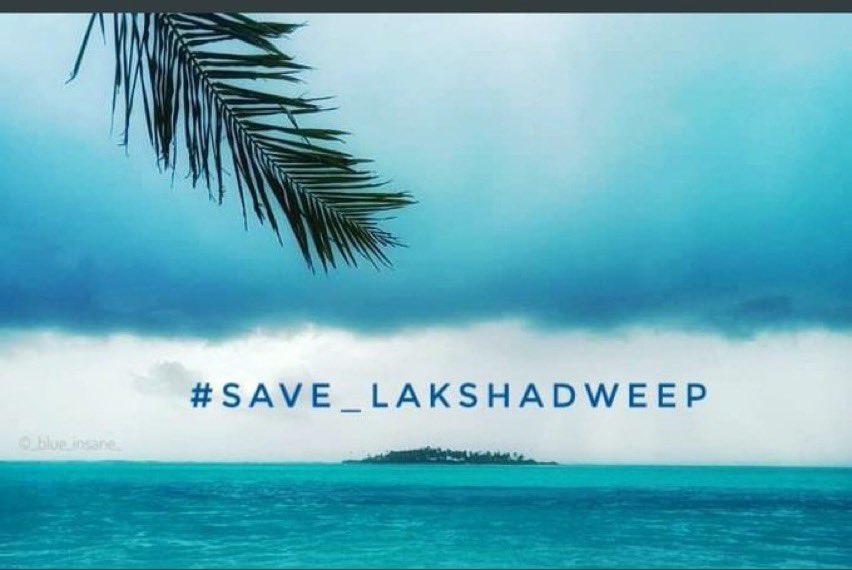
Protest’s surfacing in Lakshadweep after new Govt.laws

Located in the Arabian sea, Lakshadweep Island is the only part of India where nature has been existing in its purest form, with no traces of exploitation.
The archipelago is a collection of 36 islands, of which 10 are inhabited. Located on the southwestern coast of the Indian peninsula the island has just a population of 65,000 people, thus being the smallest among Union Territories(UT).

Amid the beautiful wilderness, harmony among the people, and well-balanced ecology, resentments among the people due to the introduction of new laws have been surfacing lately.
Protests of the hashtag “Save Lakshadweep” are echoing on social media.

A Brief Backdrop:


Lakshadweep politically has no Legislative Assembly or a Chief Minister. The entire administration of the island is divided into 3 levels-
* Lok Sabha has 1 Member of Parliament
* Local self-government: Panchayats
* The President of India appoints an Administrator for governance.

The administrators of Lakshadweep have always been bureaucrats. In 2020, it was Dineshwar Sharma, an IPS officer.
Unfortunately, on 4 December 2020, he passed away.
This was the time when entanglement started in the affairs.
After the death of Dineshwar Sharma, no bureaucrat was appointed as the administrator, rather the strings of the governance were passed to the hands of a politician. This person was Praful Khoda Patel, a right-wing politician of the running Bharatiya Janata Party (BJP) government.

The Resentment:


Since the new administrator came to the seat, Patel put forward a maverick set of laws without consulting the locally elected representatives of this Muslim-majority island. These laws have shattered the tranquility of the island and immersed it under protests and chaos.
The new algorithm of laws is being widely agitated upon. People claim that these laws endanger their livelihoods, land ownership, culture, and even the biodiversity of the tropical islands.

Typically the administrators of the island maintain their relationships with the local leaders for smooth governance. However, in the past few months, the people have raised voices against this new authoritarian administrator.

The Authoritarian approaches of Praful Khoda Patel:

Land Grab-


The administrator Praful Khoda Patel introduced the Lakshadweep Development Authority Regulation 2021, where the government is empowered to take over the lands from the residents for constructing highways, railways, or infrastructure.
The islanders view this as a land grab by giant corporates. This would also put a huge strain on the ecology and biodiversity of the area.

Weakened the democratic voting rights-


It is an old dream of the Lakshadweep inhabitants to have statehood and a Chief Minister like Goa.
They even do not have the right to elect their administrator.
keeping these besides, the poor islanders just have the shaky right to elect their MP and officials only at the Panchayat level.

Things do not stop here, the new administration under Praful Khoda Patel intruded in the local government and drained powers of the Panchayat from 5 different areas, namely- education, healthcare, agriculture, animal husbandry, and fisheries.

Further, Panchayat election regulation has been introduced declaring people having more than 2 children ineligible to contest elections.

Covid threat:


When the country was struggling hard from the Covid spell, Lakshadweep was the only Union Territory to be free of Covid. This was because until December Standard Operating Procedure to prevent COVID-19 was being strictly followed. Under this SOP, people coming from outside were mandated to have a negative RT-PCR test followed by a 14-day quarantine. People supported it and that is why Lakshadweep was Covid free.
Unfortunately, the first Covid case was reported on 18 January, 8 days after the SOP was removed by the new administrator.
The cases skyrocketed due to the island’s small area and dense population along with a not-so-modern healthcare system.

Unjustified laws:


Patel’s Anti-Social Activities Regulation Bill 2021 or Goonda Act further created discontentment among the inhabitants. This act empowers to detain anyone without public disclosure for up to a year.

This law would not be a fight against criminals because Lakshadweep already has the lowest crime rate in India. Rather it is the clear manifestation of authoritarian rule and sharply against the law of natural justice.
The application of this unjust law would be used to brand anyone who protested as a criminal.
The islanders allege that this law would be used by their administrator against those who criticize his decisions and protest his rule.

Liquor permit and beef ban:


Liquor and alcohol were banned in the inhabited resorts of Lakshadweep for a long time due to the Muslim majority and was allowed only at resorts on the uninhabited island. Praful K. Patel reversed the situation. He lifted the ban and permitted opening bars and shops, claiming this will boost tourism on the island.

Lakshadweep Animal Preservation and Regulation 2021 further aggravated people’s anger.
Praful K. Patel imposed a strict ban on the sale, or buy of beef or beef products in any form anywhere in the Muslim-majority islands. Anyone found violating the law would be imprisoned for up to 10 years.

The people of the island are Muslim majority and have a Malayali culture where beef consumption is followed traditionally and imposing something opposite of their culture is an intrusion.

Neighbouring Kerala state’s Chief Minister Pinarayi Vijayan and KC Venugopal, a Congress member of parliament, have also opposed Patel’s decisions. Vijayan says “Patel’s actions pose a grave threat to the life and culture of the people of Lakshadweep”.

Green Warriors ~ Women in woods

“Two roads diverged in a wood , and I took the one less traveled by , and that has made all the difference…”

These lines fit well on those women who choose the paths which aren’t meant for them , according to the society.

On 8th March, everyone talks about the women in space , in politics , in engineering , in mining , in medical , in Police, in writing , in this , in that. So I think I should also write about the women in most underrated service of India, The Forest Services.

Well , I searched a lot , but couldn’t get any extra information about the first Green Warrioress of India except their names and their years of joining the woods.

” In 1980,three young Women, C.S.Ramalakshmi, Veena Sekhari and Meera Agarwal, made history by entering into the Indian Forest Service. “

Later , Veena Sekhari was also appointed as the principal chief conservator of forests of Uttarakhand in 2015. She was the first woman to reach at the post of PCCF.

Presently, there are 284 women IFS officers , three of them are heads of forest force in different states.

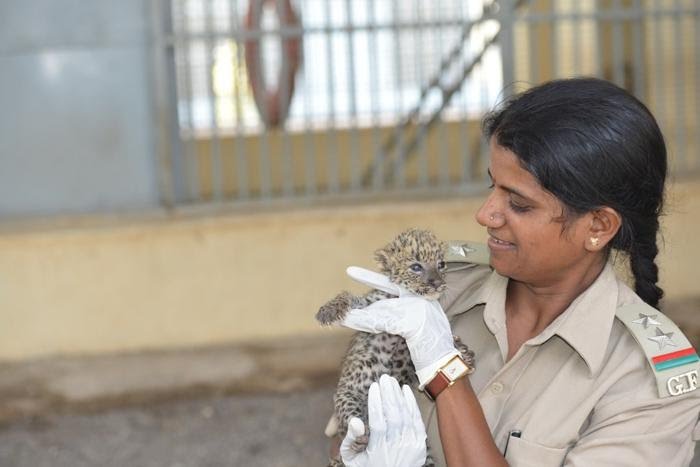
But women aren’t only limited to the post of IFS. It was only in year 2007, the Gujarat Forest Department recruited its first batch of 43 women.One of them was Rasila Wadher who was the first woman to join the the Forest Department in Gir. Since then she has managed to rescue around 1,100 animals.

Rasila Wadher, one of the lion queen of India.
~ From the forest guard to the head of Gir’s Rescue Department ~

Life in woods, isn’t that much easy , as everyone thinks. Unlike a policeman/woman in a city , a forest ranger is in a situation where there’s no one to help. They spend their nights and days in maintaining the coordination between humans and wild animals.

From the forest officers to forest guards, green warriors work not only for the welfare of forest and wildlife but also for the local tribes.And of course dangers are always there, from wild animals to bullets of poachers, from the rough terrains to the angry locals. Well , this explains that why I’m calling them Green Warriors.

And yes, the training is that much difficult & comprehensive as the job is. From the horse riding , shooting , swimming, rafting , trekking ,scuba diving to paragliding, it teaches the trainees everything from the endurance to the courage.

But these challenges are the love of our Green Warrioress ~

“We didn’t join as women guards, but as guards”, that’s what female guards say.

“Life needs purpose & empowerment needs confidence , IFS gives you both.” thinks a female IFS officer.

Women have came a long way , but still there’s a long way ahead. But as our inspiring warriors are risking their lives to save the wild & the wood, I remember these beautiful lines —-

“Woods are lovely dark & deep, but we have promises to keep.”🤝

I believe that there’s still beauty, peace & magic left in the world , & that’s in the forests. But these woods also have challenges. Ohh yeah , magic comes up with some challenges & responsibilities. If you also think of joining the green warriors club , then All The Very Best…

May the peace prevail on our Earth. May the hope abide in our Hearts. 🕊️

Happy Reading…🙂

Save Trees…💚🌱

WHEN THE ‘TOOLKIT’ BECOMES THE TOOL

In light of the recent ‘Farmer’s protest toolkit controversy’, a 22-year-old environmental activist from Bengaluru, Disha Ravi has been arrested by the Delhi police on Sunday 14th February 2021. She is now under five-day police custody as the Delhi Magistrate decided to remand her following the arrest. She has been booked under Indian Penal Code Sections 124(a) for sedition, 153(a) for promoting enmity between different sections of the society and 120(b) for criminal conspiracy. She is accused of involvement in the composition of the “toolkit”, an online document shared by the International environmental activist Greta Thunberg, which consists of action plans to protest against the farm bill. Police claimed that the toolkit had the violence on 26th January as one of its “action plans” to protest against the farm bill, in addition to the pro-Khalistani elements.

Since last October, thousands of farmers have been camping on the national capital borders, protesting against the three newly passed farm laws introduced by the NDA government. On the republic day, the tractor rally conducted by the protesting farmers has resulted in great commotion as the farmers attempted to enter the national capital region, storming the Red Fort complex and clashing with the police and security forces. The police allege that plans for such actions were formulated in the online document, described as a “toolkit” that Ravi created and shared with Thunberg. “The main aim of the toolkit was to create misinformation and disaffection against the lawfully enacted government,” said a police official. “The toolkit sought to artificially amplify the fake news through various tweets which they have created in the form of a tweet bank. The document that they drafted had secessionist and pro-Khalistani content embedded into it through links and texts” he added. 

The arrest of Disha has instigated furious criticism against the fascist actions of the government regarding the farmers protest. The efforts made by the government to silence and oppress the voice of the farmers and the people supporting them is more of a provocative manner than a call for peace.

INDIA PAID TRIBUTE TO THE VALIANT MARTYRS OF PULWAMA ATTACK

It’s been two years since the Pulwama terror attack which took the lives of 40 Indian soldiers happened. The 14th of February leaves a deep sigh in the hearts of every patriotic Indian. It is one of the worst hit attacks and is remembered as a ‘ black day’ in the history of India. While paying his tributes to the Pulwama martyrs on the occasion of the second anniversary of the attack, Prime minister Narendra Modi said: “No Indian can forget this day. Two years ago, the PulwamaAttack happened. We pay homage to all the martyrs we lost in that attack. We are proud of our security forces. Their bravery will continue to inspire generations”.

The gruesome incident which shook the whole nation took place on 14th February 2019 after the security convoy of 78 buses carrying around 2500 military personnels of the Indian Army was rammed by an IED-laden vehicle while traveling from Jammu to Srinagar. Investigations have revealed that the car which rammed the convoy was driven by a 22 year old suicide bomber Adil Ahmad Dar and carried nearly 300 Kgs of explosives including 80 Kgs of RDX and ammonium nitrate. The attack which took the lives of 40 CRPF jawans was later claimed by the Pakistan based terrorist group named Jaish-e-Mohammed (JeM). Even though the investigation agency was able to confirm the identity of the suicide bomber through DNA samples, they are yet to trace the source of the explosives used. 

Along with the Prime Minister, many Senior officers of the various armed forces of the country also participated in the remembrance and paid tribute to the valiant heroes of the nation. “Did not Forgive, will not Forget: Salute to our brothers who made the supreme sacrifice for the nation in #PulwamaAttack. Indebted, we stand with the families of our valiant Bravehearts,” the force said in a Twitter post.

Rajasthan or The Dowry Sthan

I’m just confused from where should I start. But ok , let me start from the rates, the rates of bridegroom. Ohh yes , you read it right.

10 lakhs for a government third grade teacher , 15 lakhs for a cleark or constable , 20 lakhs for a patwari , 30 lakhs for a college profesor or minimum 50-60 lakhs for income tax officer , more than a crore for an IAS , IPS or for a doctor. I’m not so familiar about conditions of other states , so let’s only talk about Rajasthan & its neighbors. Rates may vary ( T & C applied ) . I’m not a trader friends , I just wrote down some rates I’ve heard or seen. Yes , it’s what you people call dowry.

Rajasthan , the braveland , has such a bad condition , in this matter. This is the place where dowry is like the Saat Feras , compulsory element of marriage ( relax, exceptions are always there ). It’s not only about Rajasthan , but this tradition is followed on equal basis in the states of M.P. , Bihar & U.P. .Well , I only know about eastern Rajasthan.

I know it’s hard to believe. But you’ve to believe. The rates actually varies directly with the government job , the power & with the amount of money the groom can earn. Like a patwari & constable will get more money than a teacher. And this principle tells us why an income tax officer , a doctor , an IAS , an IPS or an IRS are pro in this game. They fall in the upper most category.

And yes , these marriages happen on a large scale , but you may not be able to find about such marriages as there’s no one complains about these. Why will people register complain when they know that their girls can only get married to the one whom they can pay. Or you can say , no one forces the other. This dowry doesn’t stop here , this continues in an indirect manner , even after the marriage. Middle class people often take years just to pay the loan , they take for their daughter’s marriage.

This kind of direct or indirect dowry , or this kind of rate system can’t be stopped by any law because no one will complain against this. It’s not like that people like this , but they just accept it.

Like a frog in a well , people have accepted their fate. They are stuck in a well which is called as society , so they can’t even think of getting out from it.

The only way to stop this is to change the thinking of society. Only equally provided real education can do this.

FARMERS’ PROTEST: GOVERNMENT’S PLANS TO OPPRESS THE MOVEMENT TAKES A HIT WITH INTERNATIONAL ATTENTION POURING IN

Iron nails, rods, barbed wire, boulders, makeshift walls….. These are not the visuals from a war front. This is how the largest democratic government in the world is preparing the country capital to face its farmers. The Farmers’ Produce Trade and Commerce (Promotion and Facilitation) Bill, 2020 was passed by the parliament followed by the approval of the President in September 2020. Since then, the farmers mainly from regions of Haryana and Punjab are protesting in the outskirts of New Delhi against the bill. Several rounds of discussions between the farmers and the government representatives have taken place but none of them was fruitful. The government had earlier offered to suspend the farmers’ bill as part of negotiations to end the protest but the farmers were loath as they demanded a complete abrogation. 

The protestors took hold of the major highways at Singhu, Ghazipur and Tikri, thereby isolating the national capital. It is in the third month that the protest took a violent turn when protesters and police clashed after thousands of farmers entered Delhi as part of a massive tractor rally, on January 26th. Several injuries were reported and a protester lost his life during the commotion. The police used tear gas and water cannons along with brutal lathi-charge to oppress the rally. Media personals who reported the incidents in favour of the farmers were also arrested with sedition charges. The government has disconnected the fuel, power and water supplies to the protestors as part of oppressing the movement. The shutting down of the internet and the mobile networks by the government in and  around the protest sites in order to “ensure public safety” have further fueled up the rage among the farmers. 

To prevent the protestors from entering the city again, the government has deployed force at the capital borders with Haryana and Uttar Pradesh and have begun blocking the area around the protests by placing large concrete slabs , spools of razor wire, heavy metal barricades , layers of stone boulders and embedding huge iron nails across the breadth of the roads leading to the protest sites. Only few selected vehicles are permitted to go beyond the barricading with media vehicles being strictly prohibited. With the movement gaining international attention and support as many notable faces from across the world vouched support for the farmers, it won’t be easy for the government to oppress the farmers agitation anymore. 

GROPING WITHOUT ‘SKIN TO SKIN CONTACT’ – NOT A SEXUAL ASSAULT; SAYS BOMBAY HIGH COURT

The Bombay High Court is under negative spotlight recently following a verdict passed on a POCSO case. In the detailed copy of the judgement which has been made available lately, Justice Pushpa Ganediwala of the Nagpur bench of the Bombay High Court has said that ‘skin to skin contact with sexual intent without penetration is necessary for the act to be considered as a sexual assault’. The ruling also said that ‘mere groping’ will not fall under sexual assault.

A complaint regarding the pursuant events was filed by the victim’s mother on 14th December 2016 at Gittikhadan Police Station in Nagpur. The complaint registered at the station is that “on the pretext of giving her [the minor] a guava in his house, Satish Ragde pressed her breast and attempted to remove her salwar.” The girl was found crying while the mother rescued her. She complained that the man attempted to silence her when she started to cry while disrobing.

The accused was charged with Sections 354 (assault or criminal force to woman with intent to outrage her modesty); 363 (punishment for kidnapping); 342 (punishment for wrongful confinement) of the IPC; and Section 8 (punishment for sexual assault) of the Protection of Children from Sexual Offences Act (POCSO) by the police in the FIR. During the hearing, the special court added Section 361 (kidnapping from lawful guardianship) to the aforementioned charges. The accused was found guilty by the special court and was sentenced for 3 years of imprisonment with a fine of Rs.1500 in total. 

In pursuit of the appeal filed by Ragde at the High Court of Bombay, challenging the verdict passed by the special court, Justice Pushpa Ganediwala has acquitted him of Section 8 of the POCSO charges. The Court convicted him for minor charges of IPC, thereby cutting down his three years of imprisonment to one year. 

According to Section 8 of POSCO, ‘Whoever, with sexual intent touches the vagina, penis, anus or breast of the child or makes the child touch the vagina, penis, anus or breast of such person or any other person, or does any other act with sexual intent which involves physical contact without penetration is said to commit sexual assault.’ The High Court ruled out the POSCO charges by saying, “Considering the stringent nature of punishment provided for the offence, in the opinion of the court, stricter proof and serious allegations are required. The act of pressing of the breast of the child aged 12 years, in the absence of any specific detail as to whether the top was removed or whether he inserted his hand inside the top and pressed her breast, would not fall in the definition of sexual assault.”

This shocking verdict on sexual assault towards women and children has led to outrage across the country. The judicial system is turning a blind eye against its paramount concern of protecting its citizens through this judgement.

THE CURIOUS CASE OF MARITAL RAPES IN INDIA

Marital rape is the act of indulging in sexual intercourse without proper consent of the partner. People often mistake marital rape as an act of domestic violence or sexual abuse, although a lack of consent is enough in itself.  The right for sexual intercourse within the marriage was considered as a naturally consigned right of the spouse, historically. Many countries around the world have rightly classified non-consensual sexual intercourse as “rape”, yet countries including India regard this intimate assault a perfectly legal crime.

Section 375 of the Indian Penal Code propounds rape as all forms of sexual assault involving non-consensual intercourse with a woman. Yet the Exception 2 to Section 375 absolves the unwilling sexual intercourse between a husband and a wife over fifteen years of age from Section 375’s definition of “rape”. Thus the atrocities and abuses within the sacredness and sacrosanctity of marriage are legalized by the government under this section. This is a clear case of discrimination against female victims by the Indian criminal laws, just because they have been raped by their own husbands.

According to the National Family Health Survey (NFHS) reports, an average Indian woman is 17 times more likely to be subjected to sexual violence from her own husband than others. Such heinous acts go unreported due to the ineffectiveness of the existing laws. Though India is striving hard to empower its female population, it fails to ensure their safety even in the very basic social structure like family. The patriarchal social structure of India is the fundamental reason for the mortifying status of women in Indian society and the persisting ineffectiveness of laws protecting them.

NGOs for the empowerment of women and Constitutional experts are of the opinion that the Exception 2 to Section 375 is a clear violation of Article 14 and Article 21 and insists that its high time India criminalize marital rape and frame new laws for protecting women from intramarital violence. The equality and liberty rights assured for all citizens in Article 14  and Article 21 of the constitution are denied in exception 2 to section 375. Even the UN General Committee has recommended the Indian government to criminalize marital rape back in 2013. A large part of the British influenced Indian laws which need timely amendments remains untouched for the past 73 years since independence. No Indian government has, however, so far shown an active interest in remedying this problem. As a result, many of such primitive practices still exist in our society. 

TRUMP IMPEACHED; TRIAL TO START ON 20TH

For the second time, The United States President Donald Trump was impeached for “incitement of insurrection” by the House of Congress on 13th January 2021. President Trump was impeached for the first time last year on 18th December 2019, charged with “abuse of power and obstruction of congress”. However, in Feb 2020, the Senate voted to keep Donald Trump in office. Donald Trump became the first President in the history of The United States to be impeached twice.

The impeachment of Trump was carried out as an after effect of the Capitol Hill riot. On 5th and 6th of January 2020, the Trump supporters gathered at Washington D.C, supporting Trump’s false claim that the 2020 election had been “stolen” from him. The crowd was demanding the Congress to reject Joe Biden’s victory. In the morning of 6th January, Trump summoned the protestors to march to Capitol Hill and told them to “fight like hell to take back our country”. After marching to the Capitol and surmounting police barricades, the protesters became violent and broke into the building which ended up in total commotion. Five people including a police officer lost their lives and many were severely injured in the events. Trump denied the guards to control the riot initially but was forced to disperse the crowd and establish order thereafter.

Trump’s impassioned speech at the rally which exasperated the mob to stand against the federal establishment is the provenance of the impeachment charge against him by the House of Representatives. The power to hold a trial and further conviction rights resides with the US Senate, the upper chamber of the Federal system of US Government. A two-third majority of the Senate is necessary for the conviction of Trump through which the Democrats would be able to bar him from running for the President seat in future.

Trump’s trial by the Senate could start by January 20th, the day Joe Biden will be taking charge as the 46th President of the United States.  All eyes are on the capital city as it will be witnessing events which have never occurred in the history of the US.