The Ministry of Civil Aviation vide Order of even Number dated 21.05.2020 has issued general instructions and detailed guidelines and also Specific Operating Guidelines (SOP) for stakeholders, in connection with the recommencement of domestic air travel from 25th May, 2020.
As per Para. 1(j)(v) of Annexure-II to Order dated 21.05.2020, the passengers have to give a declaration to the effect that they have not tested COVID-19 positive in last two months.
Also it has decided that with regards to the evolving COVID-19 situation in various places where new cases that have been cured which are to be found in large numbers, a need has been felt to update this provision to avoid hardships in the matter of air travel to the persons cured/recovered from COVID-19.
The Ministry of Civil Aviation has accordingly decided to update the above provision with a clause which is as follows :- “I/we have not tested COVID-19 positive in the last three weeks (COVID-19 recovered persons fulfilling this condition will be allowed to travel upon showing a COVID-19 recovered/discharged certificate from any institution dealing with COVID-19 subjects).
The internet is a global network of inter -linked networks that mainly provide wireless interactive communication. The internet was developed in 1969. It was only in the 1990s that it became available to the public.
The internet has also led to a complete transformation in communication, availability of knowledge as well as social interaction. However there are some positive and negative effects of the internet on the society.
Postive effects of internet
Effective communication It provides effective communication using emailing, and instant messaging service to any part of the world.
A bundle of Information Through internet we can access the latest news From any part of the world without depending on the TV or newspaper. We can gain wide information related to any topic without depending on the books.
It save time It improves business interaction and transaction, saving on vital time. Banking and shopping online made life less complicated and it save time and energy.
Negative Effects of internet
Anxiety, depression and sadness Teenagers and kids Who spends most of the their time in the virtual world gradually move away from the real world and start living in a world of fantasy. And when they are unable to access the internet service they start experiencing anxiety, depression and sadness.
Lack of social interaction Those who spend a lot of time on the internet end up developing close relationship, friendship or intimate relationship with a lot of individuals. Internet addicts often end up isolating themselves from their families and peers.
Unable to keep schedules Those who spend a lot of time on the internet they are unable to keep track of the time they spend most of the time in doing browsing, chatting, watching movies and playing video games. As a result, they are not able to keep up with Their schedules.
Conclusion
So, we can conclude that internet has both the negative as well as positive effects on the society. We should not totally depend upon it, we should use it for the limited time.
As you are aware that Smoking/spitting tobacco is also a major public health hazard which contributes to the spreading of communicable diseases like Tuberculosis, Swine Flu, Avian Flu and Pireumonia disease. As India combats the novel coronavirus and ensures the safety of every citizen, the government is making stringent laws to help control the spread of COVID-19 pandemic.
On that note and in view of this there are new laws that can come into force as a bane to many Pan Masala lovers. The national directive on lockdown conditions issued by the Home Ministry on Wednesday, April 15 states that the violators will be punished. It states that “Spitting in public spaces shall be punishable with a fine. There should be a strict ban on the sale of liquor, gutka, tobacco etc.”
RELEVANT PROVISIONS APPLICABLE
Following are the sections under the Indian Penal Code, 1860:-
Section 268 : Public nuisance:- a person is guilty of a public nuisance who does any act or is guilty of an illegal omission which causes any common injury, danger or annoyance to the public or to the people in general who dwell or occupy property in the vicinity, or which must necessarily cause injury, obstruction, danger, or annoyance to persons who may have occasion to use any public right.
Section 269:- Negligent act likely to spread infection of disease dangerous to life:—Whoever unlawfully or negligently does any act which is, and which he knows or has reason to believe to be, likely to spread the infection of any disease dangerous to life, shall be punished with imprisonment of either description for a term which may extend to six months, or with fine, or with both.
Section 278 :- Making atmosphere noxious to health:—Whoever voluntarily vitiates the atmosphere in any place so as to make it noxious to the health of persons in general dwelling or carrying on business in the neighbourhood or passing along a public way, shall be punished with fine which may extend to five hundred rupees.
WHAT’S IN IT?
The Union Ministry has made public spitting an offence under the Disaster Management Act. With a daily rise of novel coronavirus, the patients around the country and the State Governments are ensuring strict laws. On that note, Himachal Pradesh police have issued a law for people who spit in public will now be charged with attempt to murder.
The reason for this measure that not only Himachal Pradesh but various states around the country are banning spitting because of its scientific reasons. Medical professionals state that droplets expelled in the air by infected patients via coughing or sneezing are the common means of transmission of the virus. As such, spitting is more dangerous as it can carry the pathogen to a longer distance than even coughing or sneezing could.
CONCLUSION
Other states in India have their own take when it comes to public spitting. In states like Uttar Pradesh, pan masala products are banned to discourage spitting. Other states including Bihar, Telangana, Haryana, and Assam, have banned smokeless tobacco products and public spitting. Furthermore, the Brihanmumbai Municipal Corporation imposed ₹1000 fine on anyone caught spitting in public. So everyone, do be careful and refrain from spitting in public.
BOOKS REFERRED
Pillai’s, P S A Criminal Law Lexis Nexis 13th edition 2017 p. 537
“N” OBLE, Law is a ‘Noble’ Profession as its purpose is to conserve and preserve the moral sanctity that binds the society and it protects and upholds the law, this is depicted in Article 14 as per the Constitution of India, the State shall not deny to any person equality before law or the equal protection of the laws within the territory of India.
“E” NERGY, we are full of ‘Energy’ and ‘zeal’ due to Lawyers providing legal aid to all as “Justice delayed is Justice denied”.
“O” BEDIENT, as Lawyers we appear in Hon’ble Court in person at certain place, time and aid the person who seeks justice when the summons, notice, order, or proclamation proceeding issued from any public servant who is legally competent to the same as stated under Section 174 of Indian Penal Code.
“N” IFTY meaning Skilful. An Advocate is effective and good in proffering legal assistance, apart from being an avid Listener and an effective communicator.
Books Referred:-
Universal Law Publications :- The Constitution of India by P.M. Bakshi, 15th edition
As the saying goes by “Honesty is the best policy”. The power of truth can be known from the fact that nobody, not even the greatest liar in the world, has the courage to say that he is telling a lie or thattruth is not good. A man who tells a lie is like a criminal who has committed murder and is pleading not guilty even though all the facts, circumstances and evidences point towards the criminal. And the thing which a criminal pleads guilty for a crime which the hardened criminal is pleading not guilty yet it is that criminal who has committed the murder, one must always be truthful and honest no matter how henious the crime is and also avoid lying and being dishonest.
And when the truth is known, that person is terribly upset and highly afraid. An ordinary criminal may be afraid of fine, imprisonment or other punishment. But if the liar i.e the criminal happens to be a well-known popular figure, that person may be afraid of losing his popularity or reputation. In this respect, truth also becomes an acid test for our inner strength or bravery.
Many people may not be afraid of losing their life with a bullet but there must be few who have the courage to face the bullet of truth. A truly brave person sticks to the truth in all the circumstances. But many succumb to pressure or fear of torture or death like a criminal might. Joan of Arc, a young girl of eighteen, who refused to bow before the church and the government and embraced death by being burnt but she stuck to what she believed to be the truth.
Recently, the Central government has introduced the Electricity (Amendment) Bill 2020 to amend various provisions in the Electricity Act 2003.
The Electricity Act, 2003 (the “Electricity Act”) was enacted to consolidate the electricity laws in India. While the Electricity Act facilitated significant private investments, market development, and adoption of transparent tariff mechanism etc., the power sector has been facing various developmental hurdles for some time.
Consequently, to address various issues which have been highlighted by the industry and to further reform the power sector, the Ministry of Power (“MoP”), Government of India, released the draft Electricity (Amendment) Bill, 2020 (the “Amendment Bill”) on April 17, 2020, to amend the Electricity Act.
The MoP has requested the stakeholders to provide their comments and suggestions on the Amendment Bill within 21 (twenty-one) days from the date of release of the Amendment Bill (i.e. by or before 8 May 2020).
The electricity amendment seeks to end the malaise in the production, distribution and transmission. Further, it seeks to revive investments and promote growth in line with the vision of a $5 trillion economy in the near future
KEY OBJECTIVES:
Following are the key objectives of the Electricity (Amendment) Bill 2020:
Ensure consumer centricity
Promote Ease of Doing Business
Enhance the sustainability of the power sector
Promote green power
THE DIMENSIONS
There are two dimensions, these are as follows:
Static Dimension: The Electricity Act, 2003 and Privatisation of Discoms and;
Current Dimension: UDAY Scheme, T&D Losses, Need for a new amendment and Important features.
WHY IS THE NEW AMENDMENT REQUIRED
Some of the provisions of the Act have become dated and archaic and needs an update.
Policy modifications are needed to address some recurring issues and to promote further commercial incentive for private players to enter the market in the generation, distribution and transmission of electricity.
Measures need to be augmented to ease the financial crunch of the Discoms.
It is necessary to promote a legal and administrative ecosystem which harbours special attention to renewable energy.
ISSUES INVOLVED
Cost reflective tariff has been a concern for states like Telangana which provide free electricity to the farming sector.
Formation of ECEA has also been criticized as a move towards centralization of power.
Recognition of franchisees and sublicensees might open the sector to private players.
IMPORTANT FEATURES OF THE DRAFT
The bill enables state as well as central power regulators to specify transmission charges under open access (earlier both functions were with the central commission).
The draft law provides for the introduction of power distribution sub-licensee or franchisee, which would not require a separate licence from the state commission.
The Electricity Act would be applicable to the entire country, including the Union Territories of Jammu and Kashmir and Ladakh.
KEY AMENDMENTS
National Selection Committee: Instead of the separate Selection Committee (for appointment of Chairperson and Members of State Electricity Regulatory Commissions-SERCs), there is a proposal to set up a National Selection Committee.
Introduction of Direct Benefit Transfer: Direct Benefit Transfer will be beneficial for both the State Governments and as well as Distribution Companies. It will be beneficial for the State Government because it will ensure that the subsidy reaches the people who are actually entitled and the State Government gets clear accounts of the amount given as subsidy.
National Renewable Energy Policy: India is a signatory to the Paris Climate Agreement. It is therefore proposed to have a separate policy for the development and promotion of generation of electricity from renewable sources of energy. The policy prescribes a minimum percentage of the purchase of electricity from renewable sources of production. It seeks to give special attention to hydropower.
Sustainability: To address this problem, the Amendment has prescribed a period of 60 days to adopt the determined tariffs. Failing such a timeline of 60 days, the tariff would be deemed to be accepted.
Cost Reflective Tariff: To address this problem, the Amendment has prescribed a period of 60 days to adopt the determined tariffs. Failing such a timeline of 60 days, the tariff would be deemed to be accepted.
Payment Security: It is proposed to empower Load Dispatch Centres to oversee the establishment of adequate payment security mechanisms before dispatch of electricity, as per contracts.
Ease of Doing Business:
Establishment of Electricity Contract Enforcement Authority (ECEA): The Authority will enforce performance of contracts related to purchase or sale or transmission of power between a generating company, distribution licensee or transmission licensee.
Central Electricity Regulatory Commission (CERC) and State Electricity Regulatory Commissions (SERCs) do not have powers to execute their orders as a decree of a civil court.
Cross Subsidy: The Bill provides for the SERCs to reduce cross-subsidies as per the provisions of the Tariff Policy.
8. Open Access: Under the Electricity Act, open access can be granted to a consumer on the payment of surcharge and wheeling charges as determined by the relevant State Commission. However, such charges do not include charges for intra-state transmission and interstate transmission of power. In view of this, the Amendment Bill proposes to add such transmission charges, wherever applicable, to the existing charges (i.e. surcharge and wheeling charges).
Further, it is proposed under the Amendment Bill that open access surcharge and cross-subsidies will be “progressively reduced” by the State Commission in the manner provided in the tariff policy – Section 42 of the Electricity Act envisaged reduction in cross-subsidy as per discretion of the relevant State Commission, however, the Amendment Bill seek to take away the discretion of the State Commission for determination of cross-subsidy and post amendment the State Commission will be bound to follow the mandate of the Central Government.
Miscellanous:
Strengthening of the Appellate Tribunal (APTEL): It is proposed to increase the strength of APTEL to at least seven to facilitate quick disposal of cases.
Penalties: In order to ensure compliance of the provisions of the Electricity Act and orders of the Commission, section 142 and section 146 of the Electricity Act are proposed to be amended to provide for higher penalties.
Cross Border Trade in Electricity: Provisions have been added to facilitate and develop trade in electricity with other countries. and Lastly
The Distribution sub-licensees: To improve quality of supply, an option is proposed to be provided to Discoms to authorize another person as a sub-license to supply electricity in any particular part of its area, with the permission of the State Electricity Regulatory Commission.
The word Euthanasia originiates from the Greek words: Eu (good) and Thanatos (death) and it means “Good Death”, “Gentle and Easy Death.” It is also known as Mercy killing. It was first used in a medical context by Francis Bacon in the 17th century, to refer to an easy, painless, happy death, during which it was a “physician’s responsibility to alleviate the ‘physical sufferings’ of the body”.
According to the World Medical Association Euthanasia means:
Deliberate and intentional action with a clear intention to end another person’s life under the following conditions: The subject is a competent informed person with incurable illness. Who voluntarily asked for ending his life. The person who is acting knows about the state of this person and about his wish to die and is doing this action with an intention to end life of this person. The action is done with compassion and without any personal profit.
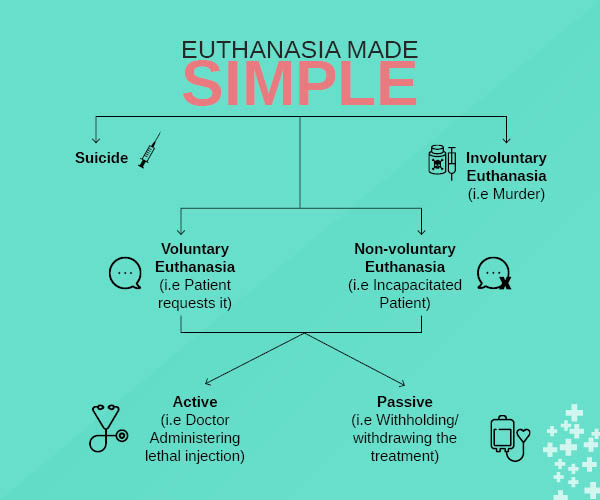
TYPES OF EUTHANASIA
Following are the types of euthanasia:-
Passive or Negative euthanasia means the withdrawal of necessary medical treatment with the deliberate intention to hasten the death of a terminally-ill patient is a must. In order for the death to be voluntary, the medicines which aids in saving lives will be discontinued so that death is brought about voluntarily. A common practice of this is a patient signing a ‘Do Not Resuscitate’ (DNR) document. It implies discontinuing or not using extraordinary life sustaining measures to prolong life. Others include act of omission such as failure to resuscitate a terminally ill or incapacitated patient (e.g. a severely defective new-born infant).
2. Active or Direct euthanasia means when one induces death by giving or providing medication or treatment leading to death.
3. Voluntary Euthanasia, sometimes called “assisted suicide”, is used in cases where the sufferer has made it clear that s/he wishes to die and has requested help to bring this about. When the euthanasia is practiced with the expressed desire and consent of the person concerned
4. Involuntary Euthanasia is one which is conducted without the consent and where an individual makes a decision for another person who is incapable of doing so. E.g. prolonged comma, old age, etc. It occurs when no consent or wish to die is expressed by the sufferer. When the euthanasia is practiced against the will of the person and also involuntary Euthanasia is one where patients can express a wish to die but don’t (this equates to murder).
5. Non- Voluntary Euthanasia is one where patients cannot express a wish to die. Patients who are in comas, infants, profound mentally retarded, severely brain damaged, cases of extreme senile dementia, those who cannot communicate for other reasons.
LEGAL VALIDITY IN INDIA
Passive euthanasia is legal in India. As per the 2018 ruling, The Supreme Court has held that the right to die with dignity is a fundamental right.
WHAT IS THE LEGAL POSITION AND TRENDS OF EUTHANASIAIN DIFFERENT COUNTRIES?
The Laws around the world vary greatly with regard to euthanasia, and are constantly subject to change as cultural values shift and better palliative care, or treatments become available. It is legal in some nations, while in others it may be criminalized. In some countries there is a divisive public controversy over the moral, ethical, and legal issues of euthanasia. Those who are against euthanasia may argue for the sanctity of life, while proponents of euthanasia rights emphasize alleviating suffering, and preserving bodily integrity, self-determination, and personal autonomy. Countries which have legitimized euthanasia are The Netherlands,Belgium, Oregon and Washington in the USA. In Switzerland only assisted suicide is legal. In India as mentioned above only passive euthanasia is legal.
LANDMARK CASE IN INDIA
Aruna Ramchandra Shanbaug vs Union Of India
FACTS OF THE CASE
Aruna Shanbaug, a nurse who was assaulted by a ward boy, and went into a vegetative state in 1973. • She remained blind, deaf, paralyzed and in a vegetative state till her death in 2015. A Writ Petition was filed by Pinki Virani claiming that her right to life guaranteed by the constitution had been violated. The petition was rejected by the court after medical examination. However, later in Aruna Ramchandra Shanbaug vs Union Of India, the Supreme Court in March 2011 held that passive euthanasia could be given a nod in case of exceptional circumstances and under strict monitoring of the apex court.
On 7 March 2011 the Supreme Court of India legalized passive euthanasia by means of the withdrawal of life support to patients in a permanent vegetative state. The decision was made as part of the verdict in a case involving Aruna Shanbaug, who had been in a Persistent Vegetative State (PVS) for 42 years until her death in 2015.
The Supreme Court of India specified two irreversible conditions to permit Passive Euthanasia:
The Brain-Dead for whom the ventilator can be switched off.
Those in a Persistent Vegetative State (PVS) for whom the feed can be tapered out and pain-managing palliatives be added, according to laid-down international specifications.
GUIDELINES LAID DOWN BY APEX COURT:
The following guidelines were laid down: A decision has to be taken to discontinue life support either by the parents or the spouse or other close relatives, or in the absence of any of them, such a decision can be taken even by a person or a body of persons acting as a next friend. It can also be taken by the doctors attending the patient. However, the decision should be taken bona fide in the best interest of the patient.
Even if a decision is taken by the near relatives or doctors or next friend to withdraw life support, such a decision requires approval from the High Court concerned. When such an application is filled the Chief Justice of the High Court should forthwith constitute a Bench of at least two Judges who should decide to grant approval or not.
A committee of three reputed doctors to be nominated by the Bench, who will give report regarding the condition of the patient. Before giving the verdict a notice regarding the report should be given to the close relatives and the State. After hearing the parties, the High Court can give its verdict.
WHAT ARE THE ARGUMENTS FOR AND AGAINST EUTHANASIA?
Benefits of Legalizing Euthanasia (Arguments For)
Provides relief to extreme pain.
Relieves physical, mental and psychological pain for the patient and the family.
Provides more facilities and funds for other patients needing medical treatment and attention.
Euthanasia provides a way of relief when a person’s quality of life is low.
It is another case of freedom of choice – the right to commit suicide.
People should not be forced to stay alive.
Speedy termination of physical and emotional suffering.
Organs can be put to good use.
Relieve mental suffering for the patient and his relatives.
Consequences of legalizing Euthanasia(Arguments Against)
The ‘living will’ could be misused
Religious beliefs could pose as a conflict in few scenarios
The person might not be well informed of the possible treatment options
Guidelines of the content of ‘living will’ has to be standardized
Euthanasia demeans and devalues the sanctity of human life.
Euthanasia can become a means of health care cost containment.
Euthanasia will become non-voluntary.
Euthanasia would not only be for people who are terminally ill.
It amounts to murder and it is only God who can take away human life.
It destroys life, which has potential that could be yet unknown to the patient, doctor or the family members.
It discourages scientists who are looking for a cure for incurable ailments.
An Act to provide for protection of the interests of consumers and for the said purpose, to establish authorities for timely and effective administration and settlement of consumers’ disputes and for matters connected therewith or incidental thereto.
The Indian Parliament, on 6 August 2019, passed the landmark Consumer Protection Bill, 2019 which aims to provide the timely and effective administration and settlement of consumer disputes. The Consumer Protection Act, 2019 (New Act) received the assent of the President of India and was published in the official gazette on 9 August 2019. The New Act will come into force on such date as the Central Government may so notify. The New Act seeks to replace the more than 3 (three) decades old Consumer Protection Act, 1986 (Act).
While e-commerce has opened new avenues and has made transactions faster and more convenient, they have also been prone to unfair trade practices. Although e-commerce platforms tried to resolve the grievance of the customers, there was a need to streamline the functioning of the same. With this perspective, the Central government notified the Consumer Protection (E-commerce) Rules, 2020.
From Amazon to Walmart and now Facebook and Google, through Reliance Jio are all betting on India being their next big online consumer market.
Walmart has invested $1.2 billion in Flipkart in an equity round, two years after it bought a 77% stake in the Indian retail giant for $16 billion. Walmart’s investment came just days after Amazon invested ₹2300 crore or $305 million into its Indian arm, following Jeff Bezos’ $1 billion investment promise to India. Earlier this year, Amazon had also signed a long-term business agreement with Kishore Biyani’s Future Group.
Meanwhile, Facebook’s $5.7 billion investment and Google’s $4.5 billion bet on Reliance Jio come at a time when Reliance chairperson Mukesh Ambani is betting on retail as the next big venture. One of the most significant factors of the Facebook-Jio deal was that Reliance Retail and WhatsApp are now in a commercial partnership to accelerate JioMart’s growth. Through JioMart and WhatsApp, the entities will now help support consumer businesses.
E-commerce Rule, 2020
The intention of the Legislature to specifically deal with e-commerce and online transactions was evident from the very enlargement of the definition of consumer under Section 2(7) of the Act by including both online and offline transactions within the scope of ‘buying goods’ and ‘hiring services’. Further, the Act categorically defines relevant e-commerce, electronic service provider and misleading advertisement while specifically addressing the most commonly faced issues such as refusing to take back defective goods or refusing to refund the amount.
The Rules are pretty exhaustive in their sweep and, at the outset, declares its application to:
(i) All goods and services bought or sold over digital or electronic network including digital products;
(ii) All models of e-commerce, including marketplace and inventory models of e-commerce;
(iii) All e-commerce retail, including multi-channel single brand retailers and single brand retailers in single or multiple formats; and
(iv) All forms of unfair trade practices across all models of e-commerce.
A bare perusal of the same demonstrates that the intention of the Legislature is, clearly, to encompass every aspect of e-commerce and keep consumer interests on the highest pedestal while streamlining the functioning of e-commerce platforms. This is also demonstrated from the fact that the Rules clearly define the relevant players of the e-commerce space, such as e-commerce entity, inventory e-commerce entity, marketplace e-commerce entity and seller.
The National Centre of Polar and Ocean Research (NCPOR) recently found the largest decline in the Arctic Sea ice as seen in last 41 years due to global warming in July 2019.
Between 1979 and 2018, NCPOR noted that the sea ice has seen a declination at a rate of -4.7 per cent per decade while its rate in July 2019 was found to be -13 per cent.
Sea ice is basically frozen seawater that floats on the ocean surface. It forms in each hemisphere’s winter of both the Arctic and the Antarctic. The ice retreats in the summer. However, it does not completely disappear.
The Research has clarified that if this trend continues, there would be no ice left by 2050 in the Arctic sea since the volume of ice loss during summers might surpass the volume of the same formed during winters. This rapid decline in Arctic sea ice cover has been linked with growing carbon emissions and subsequent global warming.
The Impacts of Declining Arctic Sea ice cover can be huge. It would have an influence on regional weather as the decline of sea ice may impact the evaporation rates, cloud cover, air humility and rainfall of neighbouring regions.
The National Centre for Polar and Ocean Research (NCPOR) was established in 1998 as an autonomous Research and Development Institution under the Ministry of Earth Sciences. The objective was to primarily carry out research activities in the polar and Southern Ocean realms.
It is also responsible for maintenance of the Indian stations in Arctic (Himadri) and Antarctica (Maitri & Bharati).
In recent times, the high temperatures that have been recorded in the Siberian region have caused a prolonged heatwave that has been ascribed to the absence of sea ice among other factors.
Loss of habitat for seals and polar bears have also increased resulting encounters between polar bears and humans. As the sea ice retreats from coastlines, wind-driven waves combined with melting permafrost may also lead to more rapid coastal erosion.
In the Arctic region, the ocean circulation is driven by the sinking of dense and salty water. Fresh meltwater coming largely from the Greenland Ice Sheet could furthermore interfere with ocean circulation at high latitudes, ultimately slowing it down. Any changes in ocean circulations can have unpredictable global impacts even in lower latitudes such as extreme weather events, droughts etc.
It is a result from the positive feedback cycle known as the ice-albedo feedback states that sea ice has higher albedo than ocean water. Once sea ice begins to melt, a self-reinforcing cycle often begins whereby as more ice melts and exposes more dark water. Then the water absorbs more sunlight and the sun-warm water then melts more ice.
On concluding, Arctic sea ice is part of a complex global system, and as a result it affects communities at all latitudes. The loss of Arctic sea ice has to be slowed down existentially by reducing carbon dioxide and other greenhouse gas emissions and also by conserving other natural resources that have global impacts. The world needs to come together as one.
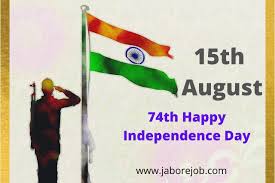
The Ministry of Home Affairs (MHA) has issued the guidelines for the Independence Day celebrations that will take place amid the cloud of novel coronavirus pandemic. Due to this unfortunate and extraordinary situation the Independence Day celebrations on the 15th August will be subdued and low key.
THE LETTER
Joint Secretary Anuj Sharma has written a letter to all States and Union Territories sharing with them how the celebrations should be carried out in these testing times. In the letter preventive measures like social distancing, wearing of masks that are absolutely imperative have been mentioned in order to make sure that the celebrations are carried out without any collateral damage.
“In view of the spread of Covid-19 pandemic, while organizing various programmes or activities for the Independence Day celebrations, it is imperative to follow certain preventive measures such as maintaining social distancing, wearing of masks, proper sanitization, avoiding large congregations, protecting vulnerable persons, etc.; and follow all guidelines related to Covid-19 issued by the Ministry of Home Affairs and Ministry of Health a Family Welfare,” the letter read. Hence one can assume and infer that all the functions organised countrywide will be deprived of large gatherings.
CELEBRATIONS AT THE LAL QILA
The Ceremony at Red Fort consisting of the presentation of a Guard of Honour by the Armed Forces and the Delhi Police to the Prime Minister (Pradhan Mantri), unfurling of the National Flag accompanied by playing of the National Anthem and firing of 21-gun salute, speech by the Prime Minister, singing of the National Anthem immediately after PM’s speech, and release of tricoloured balloons at the end. This will be followed by “At Home” reception at Rashtrapati Bhawan. As regards holding of “At Home” reception at Raj Bhawan /Raj Niwas by the Governor/Lt. Governor on the Independence Day, the matter is left to the discretion of Governors/Lt. Governors.
CELEBRATIONSAT THE STATE LEVEL
A ceremony in the morning (after 9.00 AM) in the State/Union Territory Capitals consisting of unfurling of the National Flag by the Chief Minister; playing of the National Anthem; presentation of Guard of Honour by the Police including Para-Military Forces, Home Guards, NCC, Scouts, etc; speech by the Chief Minister; and singing of the National Anthem.
In view of Covid-19 pandemic, large congregation in the ceremony be avoided. It is imperative that social distancing norms, wearing masks, etc., are followed. It would also be appropriate that Covid-19 warriors like doctors, health workers, sanitation workers, etc., are invited in the ceremony as a recognition of their noble service in fight against Covid-19 Pandemic. Some persons cured from Covid-19 infection may also be invited.
CELEBRATIONSAT THE DISTRICTS, SUB DIVISIONAL BLOCS AND PANCHAYAT HEADQUARTERS
The Districts, Sub Divisional blocs, Panchayat headquarters will have to follow similar protocols as the states. In view of the COVID-19 pandemic, preventive measures such as maintaining social distancing, wearing of masks, proper sanitization, avoiding large congregations, protecting vulnerable groups, etc., and other measures as prescribed and recommended by the Ministry of Health a Family Welfare, are to be followed. It would be appropriate that frontline warriors and workers like the doctors, health workers, sanitation workers, etc., are invited in the ceremony as recognition for their noble service in fight against the COVID-19 Pandemic. Some persons who have been cured from the infection may also be invited.
Performance of Police/Military bands may be recorded at places of historic importance associated with the Independence movement; and recorded versions thereof may be displayed through large screens/digital media, during public functions and on social media.
Other functions of the day may include activities like planting of trees; inter-school/inter-college debates on digital platforms; online quiz contests/patriotic essay writing and poetry competitions; launching of any important scheme, singing patriotic songs/delivering patriotic talks by selected boys/girls on the social media; illumination of Government Buildings/State Bhawans, etc; thematic webinars; online campaign by NSS and NYKS centered around patriotic themes; or any other activity deemed appropriate by the State Government/Union Territory Administration befitting the occasion. Other innovative ways of celebrating Independence Day may be considered like propagating patriotic or national integration messages/songs through digital and social media platforms, sound shows/lighting of important public buildings, waving of National Flags by people at rooftops/balconies, etc.
“It would be appropriate that the theme of “Aatmanirbhar Bharat” is suitably spread and publicized amongst the masses through various activities/messages in the functions and on social media during Independence Day celebrations,” the letter signed off with.
Chaolung Sukapha, the founder of Ahom kingdom, was recently referred to as a “Chinese invader”. The name-calling broke media as it showed the illiteracy of knowing his/her own history and culture. To know of Chaolung Sukapha is the least we can do to pay a tribute.
This 13th-century ruler founded the Ahom kingdom that went on to reign over Assam for six centuries.
The contemporary scholars have traced his roots which evidentially belong to Myanmar. He is also widely referred to as the architect of Assam that is recalled as “Bor Asom” or “Greater Assam”. This shows the gratitude given by the indigenous people towards his successful efforts to assimilate so many different communities and tribes that make today a dignified society.
As the state today is fighting with floods, it is the best time to commemorate Sukapha and his rule, which Assam celebrates as “Asom Divas” on the 2nd of December every year.
The Ahom Kingdom ruled from 1228 to 1824. In the 13th century, the Ahoms migrated from the regions of present-day Myanmar to the Brahmaputra valley.
In 1253, this tributary ruler established his capital at Charaidau, Assam. They recognized new states by suppressing the older political systems of the landlords locally called as Bhuiyas. The same was done in 1523 by conquering one of the powerful kingdoms of those times, the Chhutiyas and in 1581 the Koch-Hajo. By the 16th century, Sukapha had subjugated different tribes into their community.
These unpopular kingdoms faced many invasions from the south-western areas of the Indian subcontinent on a repetitive basis and remained under as shackles as they were finally defeated by the Mughals in 1662.
The Burmese invasion of Assam ended the dynasty of this kingdom and later the subsequent annexation was done by the British East India Company which followed the Treaty of Yandaboo in 1826.
The Administration of Ahom society was then divided into clans or khels. A khel in turn was often in control of several villages. A census was done and the people were transferred from the more populated to the less populated areas.
By the beginning of the 17th century, the administration transformed into almost a centralised version.
The administration involved labourers called ‘paiks’, system of forced labour prevalent in the Ahom kingdoms, who in the name of economic structure were sent and received from each village by rotation.
The Men of the kingdoms were mostly involved in agriculture, construction of dams and other similar public works. During the times of wars, the men also served in the armies. There were also employed in different home manufacturers and cottage industries.
Inclusive of this, the State impressively saw flourishment as the agriculture thrived. It saw many new methods of rice cultivation which were developed by the Ahoms.
The Culture of the Ahoms was originally the worshipping of their tribal gods. But gradually with other developments, Hinduism became a predominant religion during the mid-eighteenth century due to the rule of Hindu kings. However, the entire community of the Ahoms did not adopt Hinduism completely.
Various arts and literature also had a separate culture in the Ahom kingdoms. The Poets and Scholars were specifically given land grants on their valuable performances. Theatre was encouraged thoroughly as well.
The translation works carried out from Sanskrit into the local languages with time. It involved the historical works, known as Buranjis, to be written and converted into first the Ahom language and then in Assamese language.
The technology in the Ahom Kingdoms as the usages of firearms suggest even in the 1530s reflect advancement. The kingdom began to make gunpowder and cannons by 1660s.
The kingdom may not be highlighted by bright colors but their reflection is very well noticed in the developments of the State and importantly, the country as a whole. To be giving them terms without proper knowledge only reflects signs of disrespect towards our own country.
We as a generation were born with resources available to us at a switch of a button. But would that be the same considering our irresponsible usage?
Let’s make a few lifestyle changes and teach our kids to become eco-friendly and live in a sustainable environment and household.
WATERCONSERVATION:
Do not encorage your kids to take long showers. Teach them to take a bucket water bath and advice them on keeping the taps shut. If they brush their teeth with running tap water, show them how water is needed only while rinsing the mouth. Tell them the importance of water in our lives and how it is essential to survive.
PAPER WASTAGE:
Encourage your children to use both sides of the paper. Tell them how papers are made from trees and the importance of trees in our lives. Adopt paper savvy techniques like using of eco-friendly notebooks and e-newspapers instead of hardback papers.
PLANT TREES, INHALE FRESH:
Plant trees in your backyard with them. You can teach them the art of gardening and also tell them about compost pits. It is a good hobby for your kids to row up nurturing a living organism and to be compasssionate towards others.
BEST OUT OF WASTE:
Making interesting and useful objects at home from waste will be a good bonding activity. One can make creative items like newspaper wall hangings, old plastic bottles can be made into show pieces or pen stands,etc.Show them how to reusee than discarding and hence creating less wastage.
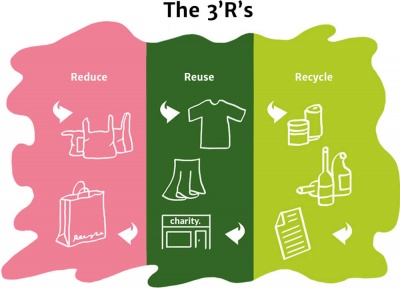
REUSE- REDUCE -RECYCLE:
Use tote bags or bins when shopping, say no to the plastic shopping bag. Select packaging that does not have a lot of excess waste. Use dinnerware that can be washed instead of paper plates and plastic ware. Only buy things that you will use in the immediate future.
Give your discards a chance at a second life by holding a yard sale or donating items to Goodwill, the Salvation Army, Habitat for Humanity, or other charitable outlets. Contact schools and nursery schools to find out different types of items they reuse for art projects. Donate used books to the Library. Several organizations take used cars and even boats.
India has been elected as a non-permanent member of the UN Security Council.
For this two-year term, India is the only endorsed candidate from the Asia Pacific States. The country has won 184 votes out of the 192 ballots cast in the entire elections.
The country’s term as the non-permanent member of the UNSC would commence from January 1, 2021. It of course, isn’t the first time when India has served in this position as the country is all set for its 8th term as the non-permanent member at the Security Council.
The previous eight years for India have been for the terms 1950-1951, 1967-1968, 1972-1973, 1977-1978, 1984-1985, 1991-1992 with the last term being in 2011-2012.
The countries such as Ireland, Norway and Mexico have also won the Security Council elections along with India for the non-permanent membership.
Ministry of External Affairs had launched a brochure during the election campaign which outlined India’s priorities. According to that, the country will be directed by five priorities under the predominant theme of New Orientation for a Reformed Multilateral System (NORMS). These priorities include would include:
Firstly, the new opportunities for progress. As a constructive contributor to the security of the global commons and undoubtedly a rule-abiding democracy, India will work positively with the partners with the aim to bring inclusive and innovative solutions which would foster development. The objective specifically revolves for greater engrossment of women and youth to shape a new paradigm. The idea behind it is to present a platform for a coherent, nimble, pragmatic and effective collaboration to ensure complete sustainability of peace in a generation of rapidly shifting global security landscape.
To an effective response to International terrorism, India had also planned to pursue strong and result-oriented action by the Council which is aimed at addressing the abuse of the Information and Communication Technology by terrorists. It is also aimed at disrupting their nexus with transnational organised criminal entities and their sponsors. Additionally, it will also be halting the flow of terror finance. Thus, strengthening operative and normative frameworks for greater coordination with other multilateral mediums.
Reforming the mentioned multilateral system will also commence. Thereby addressing the widespread concerns of the inadequacy and lack of existing multilateral establishments to deliver outcomes or meet the new challenges.
The reformation of the multilateralism is looked as a must for the post-COVID19 era. The first and the most vital step which is sought at the moment is the reform of the Security Council itself. It looked to amend so that it reflects contemporary realities in order to be more effective.
A comprehensive approach which will also be taken towards the International peace and security as India’s vision for the same is steered by the dialogue and cooperation, mutual respect, and ofcourse its commitment to international law.
However, streamlining the UN peacekeeping is an overdue task. Greater clarity, professionalism, direction must be ensured in the UN Peacekeeping Operations.
Thus, promoting the technology with a human governance stands as a driver of solutions. To this, India mentions to encourage partnerships which will harness the benefits of technological innovations. Ultimately reducing the human suffering, enhancing the ease of living and building resilient communities.
The country looks to pursue these priorities through the Five-S approach plan: Samman (Respect), Sahyog (Cooperation), Samvad (Dialogue), Samriddhi (Prosperity) and Shanti (Peace).
Today, we’re going to talk about TOP business ideas for 2020. They are not going to be those obvious ideas that you can think of yourself like starting a restaurant or a car wash; we are going to talk about ideas based on recent trends, recent growing markets.
A very important rule! If you decide to start your own business, your motivation shouldn’t be because someone said: “It’s going to be a great business!”. Your perfect business idea should consist of the following things: it should be something you like doing and it should be something you are really good at.
1. Coworking Space
Remote workers are spurring on a new revolution for white-collar professionals, as many roles traditionally set in the office space transition to working via the web. Since loneliness is an all-too-common affliction for remote workers and working from a coffee shop isn’t always the quietest choice, the appeal of shared coworking spaces grows each year.
2. Posture Corrector
Nowadays, people constantly hunch over their phones and laptops, it’s no surprise that there’s been a rise in back and neck pain. The keyword “posture corrector” gets about 74,000 monthly searches proving to be a great startup idea for new entrepreneurs.
3. Fitness Tech
Apps related to diet and fitness account for 3.31% of all app on the Apple Store. People are constantly on the move. Making it possible for consumers to fit daily workouts conveniently into their crazy schedules closes another barrier to a healthy lifestyle.
4. Men’s Cosmetics
Men’s cosmetics industry is worth approximately $3.4 billion. One of the most popular niche products targeting men is beard oil, a part of the male grooming industry that makes approximately $6 billion in annual sales. Approximately 39% of American men have beards.
5. Food truck
Food trucks represent all the benefits of a restaurant but without the initial investment of a brick and mortar business space. Only 10-20% of food trucks fail, whereas the failure rate for new restaurants can be as high as 90%.
6. Healthy Fast Food
Think about why people flock to their favorite fast-food chains. The price, speed, and convenience offer consumers a quick way to eat on the go and on a budget. With high demand and low competition, healthy fast food makes a great business idea for 2020.
7. Reusable Bags
As people become more conscious of the waste they produce in their homes, some are starting to use reusable bags to lower the amount of plastic waste. Business ideas centered around preserving the environment can help you build a socially conscious brand.
8. Smart Apparel
With smart apparel’s surging growth rates, this niched industry is looking to net over $4 billion by 2024. This subsector is still so new, making it fresh for innovative ideas from budding entrepreneur techies.
9.Travel Consulting
If traveling is your passion and you are always updated about things like best airplane ticket options and hotel deals, then you fit the bill. You can start by helping your family and friends, securing the best travel deals and selling rewards flights.
Hope these ideas are useful to young budding minds out there looking forward to being Entrepreneurs of tomorrow!
A virtual bilateral summit was held virtually for the first time between the Prime Ministers of India and Australia.
A few of the major outcomes of the Summit was the Elevation of the bilateral Strategic Partnership to Comprehensive Strategic Partnership. The Elevation of the “2+2” engagement to the level of Foreign and Defence Ministers, where strategic discussions will be taking place every two years. India previously has had such mechanisms with USA and Japan.
Memorandum of Understanding (MOU) was established for cooperation in the field of mining and processing of Critical and Strategic minerals. Along with it, the Mutual Logistics Support Agreement was also signed. A Joint declaration on the shared vision for Maritime Cooperation in the Indo- Pacific region was also emphasized upon.
India- Australia Relations is not a ‘today affair’ as the two countries began their alliances during the cold war period back since when Australia was United States’ closest ally, also remembered to when India opted for non-alignment. The end of the Cold War and the launch major economic reforms in 1991 provided the first positive move towards development of closer ties between these two nations.
However, this could not last long as India’s nuclear status outside the nuclear Non-Proliferation Treaty (NPT) resulted in Australia taking a particularly strong stance against India’s 1998 nuclear tests.
With the changing global scenario in 21st century, Australia looked at India as an important partner in promoting regional security and stability. This led to up progression of their bilateral relationship to a ‘Strategic Partnership’, as well as a Joint Declaration on Security Cooperation in 2009.
Talking of the Economic and commercial relations, the Bilateral goods and services trade between these two nations was about $30.3 billion in 2018-19, and the level of two-way investment was $30.7 billion in 2018.
Australia announced implementation of “An India Economic Strategy to 2035” in 2018. A vision document to shape India- Australia bilateral ties. India is also preparing an Australia Economic Strategy Paper (AES) on these similar outlines.
The two countries have also decided to re-engage meetings on a Comprehensive Economic Cooperation Agreement (CECA). These discussions first started in 2011, and the last time it happened was in 2015.
In the Defence and security cooperation field, there was a Civil Nuclear Cooperation Agreement signed between the two in 2014 which had also enabled India to secure uranium from Australia.
Both of the countries also contracted Mutual Legal Assistance Treaty (MLAT), Extradition Treaty and the Social Security Agreement.
Maritime Security cooperation is seen in the form of joint exercises like AUSINDEX 2019, AUSTRAHIND, Exercise Pitch Black and Kakadu biennial exercise (Hosted by the Australian Navy).
Some concerns that remain in India-Australia relations is the Comprehensive Economic Cooperation Agreement (CECA) which is still unsettled after nine rounds of negotiations. India had also earlier opted out from Regional Comprehensive Economic Partnership (RCEP). Among other things, India and Australia could not reach to agreement on the market access over agriculture and dairy products.
Furthermore, an Australia-India Strategic Research Fund commenced in 2006 for scientists to collaborate on leading-edge research. Agreement on Cyber and Cyber-Enabled Critical Technology was also signed of late to promote cooperation in the extents of digital economy, cyber security, critical and emerging technologies.
The economy of Australia has been quite heavily dependent on China, as China is one of Australia’s largest trading partners and accounts for 26 % of its world trade. Chinese aggressions and assertive foreign policies are common apprehensions between the two nations and certainly has brought both the democracies closer.
Both the countries have also shown similar interests in the vision of an open, free inclusive and rules-based Indo-Pacific region. Australia’s Pacific Step Up and India’s Forum for India-Pacific Islands Cooperation (FIPIC) give reaffirmation of their cooperation in the South Pacific region.
Both also have co-operated in various multilateral fora including QUAD security dialogue, G-20, Indian Ocean Rim Association (IORA), East Asia Summits, ASEAN Regional Forum etc.
The People to People Relations have found a different edge for these countries as the Indian diaspora, estimated at nearly 7 lakhs is the fastest growing in Australia and has become a constructive factor in the bilateral relations. Including that, almost 1 lakh Indian students are enrolled for studying in Australia and the under New Colombo Plan of Australian government, Australian undergraduates have studied and completed numerous internships in India.
Australia Government has also affirmed to help in establishing a world class Sports University in India.















 Eduindex
You must be logged in to post a comment.