President of India approves the conferment of Correctional Service Medals on Prison Personnel on Republic Day 2020

The President of India is pleased to approve the conferment of the following Correctional Service Medals on Prison Personnel on the occasion of Republic Day, 2020.

Distinguished Service

S. No. Name of the person recommended Designation & Posting State/UT
1 Shri Sathyaraj. D Superintendent,           District Jail,

Thiruvananthapuram

Kerala
2 Shri E. Krishnadas Assistant Superintendent, Special Sub Jail, Kozhikode Kerala
3 Shri Priyadarshan Shrivastava Deputy Superintendent, Central Jail Bhopal Madhya Pradesh
4 Shri Niranjan Sahu District Probation Officer, Sambalpur Odisha
5 Shri Lalatendu Bhusan Das Jailor, Sub-Jail, Jeypore Odisha
6 Smt. Sobhagini Singh Assistant Matron, Nari Bandi Niketan, Sambalpur Odisha

Meritorious Service

S. No. Name of the person recommended Designation & Posting State/UT
1 Dr. Indla Sreenivasa Rao Deputy Inspector General, Coastal Andhra Range, Rajamahendravaram Andhra Pradesh
2 Shri M. Venkateswarlu Deputy Superintendent, Central Prison, Visakhapatnam Andhra Pradesh
3 Smt. Boddu Nagamani Chief Head Warder, Special Prison for Women, Kadapa Andhra Pradesh
4 Shri Bhupatsinh Shabhaibhai Parmar Subedar, Nadiad District Prison Gujarat
5 Shri Pande Atulbhai Bindesawari Prasad Haveldar, Ahmedabad Central Prison Gujarat
6 Shri Santhosh. S DIG Prison & Director SICA, DIG Office, South Zone, Thiruvananthapuram Kerala
7 Shri Anilkumar. P Deputy Superintendent, Superintendent            Special Sub Jail, Mavelikkara Kerala
8 Shri Jagadeesan. K.V Joint Superintendent, Superintendent,             District Jail, Ernakulam Kerala
9 Shri K.A. Babu Assistant Superintendent, District Jail, Ernakulam Kerala
10 Shri Raveendran K.V Assistant Superintendent, Sub Jail, Kannur Kerala
11 Shri Shelendra Singh Kushwah Assistant Superintendent, Sub Jail Sabalgarh Madhya Pradesh
12 Shri Amjad Khan Head Warder, District Jail, Datia Madhya Pradesh
13 Shri Ramesh Prasad Ojha Head Warder, Central Jail, Satna Madhya Pradesh
14 Smt. Sandhya Dhusiya Nurse, Central Jail Narsinghpur Madhya Pradesh
15 Shri Sanju Kumar Nayak Assistant Superintendent, Central Jail Rewa Madhya Pradesh
16 Shri Amir Kumar Nathsharma Superintendent, Observation Home & Special Home, Angul Odisha
17 Shri Dhirendra Nath Barik Jailor, Sub-Jail, Gunupur Odisha
18 Shri Ram Krushna Das Prison Welfare Officer, Circle Jail, Cuttak Odisha
19 Smt. K Jeyabharathi Deputy Inspector General, Deputy Inspector General of Prisons, Vellore Range Tamil Nadu
20 Shri U. Tamil Maran Jailor, District Jail, Tiruppur Tamil Nadu
21 Smt. M. Baby Deputy Jailor, Special Prison for Women Tamil Nadu
22 Smt. J. Geetha Deputy Jailor, Special Sub Jail, Kokkirakulam Tamil Nadu
23 Shri S. Kannan Assistant Jailor, Sub Jail, Aruppukkottai Tamil Nadu
24 Shri Surakanti Srinivasa Reddy Deputy Superintendent, Central Prison, Hyderabad Telangana
25 Shri Sattu Parushu Ramulu Chief Head Warder, State Institute of Correctional Administration, Hyderabad Telangana
26 Shri Dopathi Prathap Chief Head Warder, State Institute of Correctional Administration, Hyderabad Telangana
27 Shri G. Lalu Head Warder, District Jail, Adilabad Telangana
28 Shri E. Satyanarayana Head Warder, Central Prison, Chenchalguda, Hyderabad Telangana
29 Shri Thota Chandra Mouli Head Warder, Central Prison, Cherlapalli Telangana

*****

Update on Novel Coronavirus: 20,844 passengers from 96 flights screened

As on 24th January, 20,844 passengers from 96 flights have been screened for Novel Coronovirus symptoms. Today, 4082 passengers were screened in 19 flights.

No nCoV case has been detected in the country so far. However, three persons have been put under observation.

Travel advisory has been extended to 12 more airports in addition to the current seven.

National Institute of Virology, Pune is fully geared up to test samples of nCoV. Ten other laboratories under Indian Council of Medical Research’s Viral Research and Diagnostics Laboratories network are also equipped to test such samples, if a need arises.

The other measures taken by Ministry of Health & Family Welfare are:

  • A travel advisory was issued on 17th January and put up on Ministry’s website and also on the Twitter handle for wider circulation.
  • Secretary (HFW) has written to the States/UTs to review their preparedness, identify gaps and strengthen core capacities in the area of surveillance, laboratory support infection prevention & control, logistics, risk communication and in particular, hospital preparedness in terms of isolation and ventilator management of critically ill patients of SARI.
  • Thermal screening is being done at the International airports of Delhi, Mumbai, Kolkata, Chennai, Bengaluru, Hyderabad and Cochin. MoCA has asked airlines to follow International Civil Aviation Organization (ICAO) guidelines for managing and notifying anybody reporting illness on flights originating from China and disembarking in India. MoCA has instructed for in-flight announcements for India bound flights.
  • Port and Airport Health Organizations have been sensitized. The Airport Health Organizations at the airports of Delhi, Mumbai, Kolkata, Chennai, Bengaluru, Hyderabad and Cochinhave put up signages at prominent locations informing the public about self-reporting of illness. Immigration officers manning the counters have been sensitized at these airports. MoHFW has written to State Governments of Maharashtra, West Bengal, Tamil Nadu, Telangana, Kerala and Karnataka to review and strengthen preparedness measures at designated airports for provision of isolation and critical care facilities, linkages with VRDL network laboratories and adherence to infection prevention and control guidelines.
  • Integrated Disease Surveillance Programme has issued advisory to all States/UTs for SARI surveillance to pick up any travel related case reported in the community and follow up contacts of suspect/confirmed cases.
  • Adequate stock of Personal Protection Equipment is being maintained by Medical Stores Organization.
  • Rapid response teams of the States/UTs have been trained in management of MERS-CoV outbreak (a similarly placed virus, reported from Middle East) in the year 2014. More recently these Rapid Response Teams of all States/UTs, APHO/PHOs and Regional Directors of this Ministry have also been trained (in Nov.-Dec., 2019) on management of high risk pathogens in context of Ebola virus disease outbreak in Democratic Republic of Congo.
  • Ministry of External Affairs disseminating travel advisory (in local languages) to Indian Embassies in China and adjoining countries for wider circulation and passenger information. In view of significant population of Indian students in China, MEA is providing details of such students.
  • Ministry of Home Affairs to share details of travelers from China who have been issued e-Visa since 31st December, 2019.

The situation is being closely monitored by the top officials of the Ministry in close coordination with other concerned Ministries & Departments and States/UTs.

****

Income Tax searches lead to detection of undisclosed foreign assets of more than Rs. 1000 crore

Taking forward the mission of the Government against black money, particularly undisclosed foreign assets, the Income Tax Department conducted searches on 19th January, 2020, on a group which has been on their radar for having substantial undisclosed foreign assets. The operation covered 13 premises in NCR.

The group is a leading member of the hospitality industry, running a hotel abroad and a chain of luxury hotels under a prominent brand name, situated at various locations in India.

The search operation has so far resulted in seizure of unaccounted assets valued at Rs. 24.93 crore(cash of Rs. 71.5 lakh, jewellery worth Rs.23 crore and expensive watches valued at Rs.1.2 crore).

Evidence seized during the search reveals that a large amount of black money was stashed abroad by the group, through the mechanism of Trusts, formed in early 1990s in tax havens.

Such foreign holdings of the main persons have remained hidden for decades beneath complex multi layered structures, located in different countries, ensuring secrecy. Search action further revealed that one of the close relatives of the promoter family was intentionally introduced as a front to ostensibly escape the provisions of domestic tax laws.

The investigation has successfully lifted the veil, leading to detection of  undisclosed foreign assets of more than Rs. 1000 crore, apart from domestic tax evasion of more than Rs. 35crore which may,inter alia, lead to consequences under the Black Money Act, 2015,as also,action under the Income-tax Act, 1961 respectively. Foreign assets include investment in a Hotel in UK, immovable properties in UK and UAE and deposits with foreign banks. Further investigations are in progress.

*****

Search in group running renowned educational institutions in Tamil Nadu

The Income Tax Department mounted a search on a group operating leading educational institutions having a large number of schools and colleges in Chennai and Madurai region. The search was conducted at the office of the Trust, residences of the trustees and key employees of the group. The charitable trusts are running a medical college and hospital, Engineering colleges and schools across Tamil Nadu. Search and survey operations were carried out at 64 places across the State.

During the search, evidences were unearthed of fee collected under various nomenclatures from students of Engineering colleges; schools run by the group which were received in cash and not accounted for;and cash receipts not accounted for in the hospital account. Loans and interest were seen repaid in cash which were earlier taken in cash for the purpose of unaccounted investments. These receipts were utilised for the purchase of properties by paying on-money.

The search has resulted in the seizure of around Rs.2 crore of unaccounted cash. Out of the unaccounted income detected so far, the group has admitted an amount of Rs. 532 crore as their undisclosed income. The searches are temporarily concluded and further investigations are under progress.

The display of various indigenously-developed military systems and technologies by Defence Research and Development Organisation (DRDO) will bring alive the spirit of self-reliance and national pride at the forthcoming DefExpo 2020. The 11th edition of the biennial expo will be held at Uttar Pradesh capital Lucknow from February 5-9, 2020. The participation of DRDO at the expo is marked with the live demonstration of Advanced Towed Artillery Gun System (ATAGS), Main Battle Tank (MBT) Arjun MK IA, Wheeled Armoured Platform (WhAP), Counter Mine Flail, 15m Advanced Composite Modular Bridging System (ACMBS) and modular bridge. The DRDO will exhibit more than 500 products from all technology clusters in the five-day mega expo in line with the theme of the event “Digital Transformation of Defence”. DRDO will showcase over 23 products in the India Pavilion at DefExpo, which has been set up to showcase the combined strength of DRDO, public and private sector in defence manufacturing.

The Government of India, the Government of Maharashtra and the World Bank today signed a loan agreement ofUSD 210 million to support small holder farmers participate in competitive agriculture value chains, facilitate agri-business investments, increase market access and productivity in focus commodities, and build resilience of crops to recurrent floods or droughts in the Indian state of Maharashtra.

The USD210 million Maharashtra Agribusiness and Rural Transformation Project, will help build capacity of the nodal departments and institutions; increase private sector investments in agricultural value chains; remove constraints for producers and entrepreneurs in accessing emerging domestic and export markets; build the capacity of the state to respond to commodity-price fluctuations by providing access to timely information on markets and production trends; and enhance adoption of climate resilient production techniques in the state.

Foreseeing the future risks of climate change, the Government of India is implementing several programs under its National Action Plan on Climate Change. In agriculture it promotes the use of less water and adoption of climate-smart practices and technologies,” said Sameer Kumar Khare, Additional Secretary, Department of Economic Affairs, Ministry of Finance. “This project in Maharashtra is a significant step towards transforming the state’s rural economy through sustainable agriculture practices and empowerment of farmers by connecting them directly to the markets,” he added.

The loan agreement was signed by Shri Sameer Kumar Khare, Additional Secretary, Department of Economic Affairs, Ministry of Finance on behalf of the Government of India and by Mr JunaidKamal Ahmad, Country Director (India), World Bank on behalf of the World Bank.

Whereas, the project agreement was signed byShri Eknath Dawale, Secretary, Department of Agriculture, Government of Maharashtraand by Mr JunaidKamal Ahmad, Country Director (India), World Bank on behalf of the World Bank.

The project will be implemented in all 36 districts of Maharashtra. Over one million farming households will directly benefit from the project. At least 43 percent of farmers and farm-workers participating in project activities are expected to be women. Specific focus will be given to women-led enterprises and the participation of women in the decision-making processes of farmer producer organizations.

“The Government of Maharashtra aims to double agriculture exports from the state and transform the sector into a stable source of sustainable growth and economic development,” said Mr Junaid Kamal Ahmad, Country Director (India), World Bank. “This project will serve as the nucleus to fulfill the state’s much larger vision of an agriculture-based rural transformation.”

Such an agricultural transformation is already under way in Maharashtra with an upsurge in the production of high value crops such as fruits and vegetables, pulses, and maize and soybean for animal feed. The state has emerged as one of the country’s largest producer and exporter of fruits, vegetables, pulses, cotton, and soybean. Whereas the area under cultivation for cereals such as rice and wheat has been declining since 2000.

Many of these changes have led to several positive developments for Maharashtra where production is labour intensive (example, in horticulture and floriculture), is climate-resilient (pulse-based cropping systems increases resilience, e.g. pigeon pea intercropping leads to higher soil carbon sequestration than monocrop system) and responds to domestic and global market needs.

However a combination of increasing production and downturn in the commodity prices are affecting farmers’ profitability. Commodities like cotton, soybean, sugar, (covering 44 per cent of the cropped area in Maharashtra), are strongly influenced by global price movements. Broad shifts in the global prices of such commodities affect farmers who then find it difficult to cover the cost of production in many cases.

The focus of the project on enhancing the capacity of the state to effectively manage and deliver agricultural technical support and services, increasing credit linkages to formal financing institutions, improving Sanitary and Phytosanitary (SPS) standards and investing in business development services will help small holder farmers become more competitive and increase their links to organized domestic and export markets.

“With a substantial urban population, relatively high per capita incomes, and highest industrialization levels, Maharashtra is well-placed for an agriculture-sector transformation. This project will strengthen the capacity of small holder farmers to cope with fluctuations in the commodity market and enhance their incomes. The International Finance Corporation, the World Bank’s private sector arm will also be actively engaged in project design and implementation,” saidShri Manivannan Pathy, Senior Agricultural Specialist and Shri Adarsh Kumar, Senior Agribusiness Specialist and World Bank’s Team Leaders for the project.

The USD 210 million loan from the International Bank for Reconstruction and Development (IBRD) has a 6-year grace period and a maturity period of 13.5 years.

DRDO to showcase indigenously-developed military systems and technologies at DefExpo 2020

The display of various indigenously-developed military systems and technologies by Defence Research and Development Organisation (DRDO) will bring alive the spirit of self-reliance and national pride at the forthcoming DefExpo 2020. The 11th edition of the biennial expo will be held at Uttar Pradesh capital Lucknow from February 5-9, 2020.

The participation of DRDO at the expo is marked with the live demonstration of Advanced Towed Artillery Gun System (ATAGS), Main Battle Tank (MBT) Arjun MK IA, Wheeled Armoured Platform (WhAP), Counter Mine Flail, 15m Advanced Composite Modular Bridging System (ACMBS) and modular bridge.

The DRDO will exhibit more than 500 products from all technology clusters in the five-day mega expo in line with the theme of the event “Digital Transformation of Defence”. DRDO will showcase over 23 products in the India Pavilion at DefExpo, which has been set up to showcase the combined strength of DRDO, public and private sector in defence manufacturing.


The Fifteenth Finance Commission holds meeting with the Government of Goa

The 15th Finance Commission headed by Chairman, Shri N.K. Singh alongwith its Members and senior officials met today with  Chief Minister of Goa, Shri Pramod Sawant alongwith his Cabinet colleagues and senior State Government officials.

The Commission observed that:

  • Goa has a population of 1.459 million, making it India’s fourth smallest State in terms of Population (after SikkimMizoram and Arunachal Pradesh). The population has a growth rate of 8.23% per decade.
  • There are 394 people for each square kilometer of land which is higher than national average 382 per km2. Goa is the state with highest proportion of urban population with 62.17% of the population living in urban areas.
  • Estimates put the migrant, or non-Goan, population at 20% of the population, with a State Government study projecting that by 2021 the migrant community will outnumber the native population.
  • Goa has the highest GDP per capita among all Indian states, two and a half times that of the country. In 2018-19, per capita NSDP of the State was Rs. 4,67,998 against per capita income of Rs. 1,26,406 for India.
  • It was ranked the best-placed state by the Eleventh Finance Commission for its infrastructure and ranked on top for the best quality of life in India by the National Commission on Population based on the 12 Indicators.
  •  Goa is also one of the few states in India to achieve 100 percent rural electrification.
  • In 2018-19, the share of primary, secondary and tertiary sector in GSVA (current prices 2011) of the State was 9.6, 46.3 and 34.3%, respectively.
  • The State’s share in inter-se devolution had risen from 0.26 during 2010-15 (as recommended by FC-XIII) to 0.37 during 2015-20 (as recommended by FC-XIV).


The Commission was appreciative of the fact that:

  • In 2017-18, the Own Tax Revenue to GSDP of the State was 6.7%, which is sixth highest among all States. Also, the NTR as the percent to GSDP is 4.3 and ORR as a percent to GSDP is 11 which is highest among all the States.
  • The annual growth rate as a percent to GSDP has been on the higher side when compared to GDP growth rate from 2014-15 onwards.
  • State Government has witnessed revenue surplus to GSDP in all the years since 2011-12 till 2018-19 except for the years 2012-13 and 2013 -14.
  • The Per Capita Tax Revenue is 7.34 as a % to the PCI for 2017-18.
  • The social indicators including literacy rate, decennial growth rate, Total Fertility Rate (TFR), IMR, Birth Rate, Death Rate are well above the national average.
  • The debt-GSDP ratio of the State was 26.32% in 2017-18, which is well above the average of the all States i.e 25.51 %. The State is ranked at 12th among all the States for the year 2017-18.
  • Solid waste management and sewage treatment related issues.
  • Tourism development.


The Finance Commission was concerned about:

  • In the recent past, Goa has been facing the problem of slower own tax revenue growth. The slowdown in the economy is affecting the revenue potential of the State.  The nominal GSDP growth in Goa has fallen to 8.5 percent in 2015-16 from an average of 12 percent in the last decade.


  •  The State Government may need to make progress towards increasing capital expenditure, eliminating AT&D losses in the power sector, and improving the quality of such expenditure in generating future income streams.


  • The State Government has been irregular in constitution of State Finance Commission and not implemented recommendations of any two SFCs so far constituted in spite of having 190 Village Panchayats and 14 ULBs.


  • All the functions mentioned under Eleventh and Twelfth Schedule of the Constitution have not yet been fully devolved to the local bodies.


The Commission desired to know about the natural disaster preparedness of the State.  The Commission also sought information on how the State dealt with the huge tourist arrival (both domestic & international) in Goa each year.

Earlier the Commission had held a meeting with the representatives of the Political Parties of the State of Goa including BJP, INC, AAP, MGP, GFP and CPI.  Cutting across party lines, all parties had put forth issues and problems facing Goa currently.

The State Government gave a detailed presentation of the current fiscal situation of Goa and its requirements for funds.  The State has submitted a demand for grant of Rs.6333.32 crores in addition to the overall tax devolution.

The Commission has assured to look into all matters and issues, specifically solid waste management, tourism development, etc. before making its recommendations to the Union Government.


********

New Delhi Resolution Unanimously Adopted by FEMBoSA Members

Chief Election Commissioner of India, Shri Sunil Arora today assumed Chairmanship of The Forum of the Election Management Bodies (EMBs) of South Asia (FEMBoSA) for the year 2020. The Outgoing Chair of FEMBoSA, Mr. K.M.Nurul Huda,  CEC of Bangladesh handed over the Logo of FEMBoSA to the Incoming Chair, Mr. Sunil Arora at the 10th Annual Meeting of  FEMBoSA  held in New Delhi today.

In his address, Mr. Nurul Huda stated that in keeping with the objectives of the Forum, members have been sharing experiences and skills and taking steps to enhance cooperation with other EMBs.   EMB Bangladesh presented the Stewardship Report on the activities of FEMBoSA members during the last year.

Accepting the responsibility as Chairperson of the Forum, Sh Arora thanked the delegates for the trust and confidence reposed in the Election Commission of India. Sh. Arora said “The democratic scaffold and superstructure can be enacted and strengthened on the principle that the political power is validated by the will of the people. In democracy, power is won and legitimized only by regular elections, based on the universal, equal, direct and freely expressed suffrage”. Strong participatory and inclusive democracies are better able to ensure good governance and empowerment of all the citizens, he said. Sh. Arora added that for Capacity Building, Election Commission of India has established the India International Institute of Democracy and Election Management (IIIDEM) in June 2011.

FEMBoSA was established at the 3rd Conference of Heads of Election Management Bodies (EMBs) of SAARC Countries held at New Delhi in May, 2012. With its eight members, FEMBoSA represents a very large part of the democratic world and is an active regional association of EMBs.  Annual FEMBoSA meeting is held by rotation among the members.  The last (9th) annual meeting of FEMBoSA was held in Dhaka in September 2018.

A New Delhi Resolution was unanimously adopted at the 10th FEMBoSA Annual Meeting today by the seven FEMBoSA members present at the meeting. The Members resolved to : Implement the Work Plan for 2020 as approved by the member EMBs in the 10th Meeting of FEMBoSA; Cooperate in capacity building of the member countries; Host election visitor programmes in the respective countries as feasible; Provide technical assistance to the members as requested and as feasible; Actively share best practices and knowledge in ICT tools and modules being used by the member EMBs and to develop standards for sustainable use of ICT in elections; Take steps to curb use of money power and muscle power; Enhance and ease participation of Persons with Disabilities and Senior Citizens in the election process; Maintain the permanent content management based web portal of FEMBoSA to share information among the EMBs through the www.fembosa.org web portal; Design and implement regional research projects.

The Work Plan for 2020 on ‘Use of Technology in Elections’ calls for Members to undertake projects and initiatives on various aspects of use of technology in elections and present a report on their experiences and challenges faced in this regard at the next FEMBoSA Meeting.

On the sidelines of the Conference, ECI renewed Memorandum of Understanding (MOU) for cooperation in the field of election management with the Independent Election Commission of Afghanistan. The MOU was signed by H.E. Mrs. Hawa Alam Nooristani, Chairwoman, IEC Afghanistan and by Shri Sunil Arora, CEC on behalf of ECI. An MoU for cooperation in the field of election management was also signed with the Independent High Authority for Elections (ISIE) of Tunisia.  The MOU was signed by H.E. Mr. Nabil Baffoun, President, ISIE of Tunisia and by Shri Arora.

An International Conference was also organised today on the theme “Strengthening Institutional Capacity”, where nearly 30 delegates gathered to attend the International Conference. The day long International Conference included delegates from participating FEMBoSA members as also participants from EMBs of Kazakhstan, Kenya, Kyrgystan, Mauritius, Tunisia and three International Organisations viz. the A-WEB, International Foundation of Electoral Systems and International IDEA. Presentations were made by delegates from ECs of Afghanistan, Bangladesh, Bhutan, India, Kyrgyz Republic, Maldives, Mauritius, Nepal, Sri Lanka, Tunisia, IFES and Intl. IDEA. The representatives shared their experiences, best practices and initiatives. Experts also analysed barriers, policy interventions, strategies, programmes, good practices and technological innovation for strengthening Institutional capacity of EMBs.

On this occasion, CEC Sh Sunil Arora along with the two Election Commissioners of India Sh. Ashok Lavasa and Sh. Sushil Chandra and Secretary General, ECI Sh Umesh Sinha also launched the 10th issue of ECI’s magazine – ‘VOICE International’ which carries articles on the theme of “Innovative Methods of Voter Registration”. The 4th Issue of magazine “My Vote Matters” was also released on the occasion. A webportal on Association of World Election Bodies (A-WEB) was also unveiled. IIIDEM will host A-WEB Centre for documentation, research and training for sharing the best practices and capacity building of officials of A-WEB members. The Commission also released “ICT 2020; a compendium of 20 Apps for Election”.

Election Commission of India has endeavoured to play a pioneering role in organizing free, fair and credible elections in a participative manner in the largest democracy in the world.  It enjoys impeccable reputation in imparting knowledge and sharing skills and best practices with other EMBs through its robust international cooperation programme.  In September 2019, ECI took over as Chair of the 115 member Association of World Election Bodies for 2019-21 term.  Earlier today, ECI assumed Chairmanship of FEMBoSA for 2020.  ECI remains committed to the ideals and objectives of these Associations and looks forward to further strengthen its cooperation and interaction with fellow EMBs to spread the march of democracy globally.

****

DRDO to showcase indigenously-developed military systems and technologies at DefExpo 2020

The display of various indigenously-developed military systems and technologies by Defence Research and Development Organisation (DRDO) will bring alive the spirit of self-reliance and national pride at the forthcoming DefExpo 2020. The 11th edition of the biennial expo will be held at Uttar Pradesh capital Lucknow from February 5-9, 2020.

The participation of DRDO at the expo is marked with the live demonstration of Advanced Towed Artillery Gun System (ATAGS), Main Battle Tank (MBT) Arjun MK IA, Wheeled Armoured Platform (WhAP), Counter Mine Flail, 15m Advanced Composite Modular Bridging System (ACMBS) and modular bridge.

The DRDO will exhibit more than 500 products from all technology clusters in the five-day mega expo in line with the theme of the event “Digital Transformation of Defence”. DRDO will showcase over 23 products in the India Pavilion at DefExpo, which has been set up to showcase the combined strength of DRDO, public and private sector in defence manufacturing.


The Fifteenth Finance Commission holds meeting with the Government of Goa

The 15th Finance Commission headed by Chairman, Shri N.K. Singh alongwith its Members and senior officials met today with  Chief Minister of Goa, Shri Pramod Sawant alongwith his Cabinet colleagues and senior State Government officials.

The Commission observed that:

  • Goa has a population of 1.459 million, making it India’s fourth smallest State in terms of Population (after SikkimMizoram and Arunachal Pradesh). The population has a growth rate of 8.23% per decade.
  • There are 394 people for each square kilometer of land which is higher than national average 382 per km2. Goa is the state with highest proportion of urban population with 62.17% of the population living in urban areas.
  • Estimates put the migrant, or non-Goan, population at 20% of the population, with a State Government study projecting that by 2021 the migrant community will outnumber the native population.
  • Goa has the highest GDP per capita among all Indian states, two and a half times that of the country. In 2018-19, per capita NSDP of the State was Rs. 4,67,998 against per capita income of Rs. 1,26,406 for India.
  • It was ranked the best-placed state by the Eleventh Finance Commission for its infrastructure and ranked on top for the best quality of life in India by the National Commission on Population based on the 12 Indicators.
  •  Goa is also one of the few states in India to achieve 100 percent rural electrification.
  • In 2018-19, the share of primary, secondary and tertiary sector in GSVA (current prices 2011) of the State was 9.6, 46.3 and 34.3%, respectively.
  • The State’s share in inter-se devolution had risen from 0.26 during 2010-15 (as recommended by FC-XIII) to 0.37 during 2015-20 (as recommended by FC-XIV).


The Commission was appreciative of the fact that:

  • In 2017-18, the Own Tax Revenue to GSDP of the State was 6.7%, which is sixth highest among all States. Also, the NTR as the percent to GSDP is 4.3 and ORR as a percent to GSDP is 11 which is highest among all the States.
  • The annual growth rate as a percent to GSDP has been on the higher side when compared to GDP growth rate from 2014-15 onwards.
  • State Government has witnessed revenue surplus to GSDP in all the years since 2011-12 till 2018-19 except for the years 2012-13 and 2013 -14.
  • The Per Capita Tax Revenue is 7.34 as a % to the PCI for 2017-18.
  • The social indicators including literacy rate, decennial growth rate, Total Fertility Rate (TFR), IMR, Birth Rate, Death Rate are well above the national average.
  • The debt-GSDP ratio of the State was 26.32% in 2017-18, which is well above the average of the all States i.e 25.51 %. The State is ranked at 12th among all the States for the year 2017-18.
  • Solid waste management and sewage treatment related issues.
  • Tourism development.


The Finance Commission was concerned about:

  • In the recent past, Goa has been facing the problem of slower own tax revenue growth. The slowdown in the economy is affecting the revenue potential of the State.  The nominal GSDP growth in Goa has fallen to 8.5 percent in 2015-16 from an average of 12 percent in the last decade.


  •  The State Government may need to make progress towards increasing capital expenditure, eliminating AT&D losses in the power sector, and improving the quality of such expenditure in generating future income streams.


  • The State Government has been irregular in constitution of State Finance Commission and not implemented recommendations of any two SFCs so far constituted in spite of having 190 Village Panchayats and 14 ULBs.


  • All the functions mentioned under Eleventh and Twelfth Schedule of the Constitution have not yet been fully devolved to the local bodies.


The Commission desired to know about the natural disaster preparedness of the State.  The Commission also sought information on how the State dealt with the huge tourist arrival (both domestic & international) in Goa each year.

Earlier the Commission had held a meeting with the representatives of the Political Parties of the State of Goa including BJP, INC, AAP, MGP, GFP and CPI.  Cutting across party lines, all parties had put forth issues and problems facing Goa currently.

The State Government gave a detailed presentation of the current fiscal situation of Goa and its requirements for funds.  The State has submitted a demand for grant of Rs.6333.32 crores in addition to the overall tax devolution.

The Commission has assured to look into all matters and issues, specifically solid waste management, tourism development, etc. before making its recommendations to the Union Government.


********

10th National Voters’ Day to be celebrated on 25th January 2020

Hon’ble President of India Sh. Ram Nath Kovind will be the Chief Guest at the 10th National Voters’ Day being organized by Election Commission of India on 25th January 2020 at Manekshaw Centre, Delhi Cantt. Shri Ravi Shankar Prasad, Union Minister for Law and Justice, Communications and Electronics and Information Technology shall also grace the national function. This year marks an important milestone in the history of Indian democracy as Election Commission of India (ECI) completes 70 years of its journey.

The National Voters’ Day (NVD) has been celebrated on January 25 every year since 2011, all across the country at over ten lakh locations across the nation, that include polling stations areas, sub divisions, divisions, district and state headquarters, to mark the Foundation day of Election Commission of India, which was established on 25th January 1950.The main purpose of the NVD celebration is to encourage, facilitate and maximize the enrolment, especially for the new voters. Dedicated to the voters of the country, the Day is utilized to spread awareness among voters for promoting informed participation in the electoral process. New Voters are felicitated and handed over their Elector Photo Identity Card in the NVD function.

Belief in the Ballot-2, an anthology of 101 human stories from across the nation about Indian elections, developed in collaboration with the Publication Division will be launched on the occasion and the first copy shall be presented by the Commission to the Hon’ble President.

‘The Centenarian Voters: Sentinels of Democracy’ with 51 stories of veteran voters across the nation who braved difficult terrain, poor health and other challenges to come out and vote will be launched on the occasion by the Hon’ble President.

The National Awards for the Best Electoral Practices shall be conferred on District and State level Officers for their outstanding performance in the conduct of elections in different spheres such as IT initiatives, Security Management, Election Management and contribution in the field of voter awareness and outreach.

Chief Election Commissioners and delegates from Afghanistan, Bangladesh, Bhutan, Kazakhstan, Kyrgyz Republic, Maldives, Mauritius, Nepal, Srilanka and Tunisia, who are coming to New Delhi to attend the 10th Annual Meeting of the  Forum of the Election Management Bodies of South Asia (FEMBoSA), shall grace the occasion.  Reputed international organisations working in elections such as A-WEB, IFES and International IDEA will also be a part of the occasion. Members of Political Parties, Members of Parliament besides Diplomats from various countries and representatives from national and international organizations working in the area of democracy and elections are expected to attend the national function.

The theme for NVD 2020 is ‘Electoral Literacy for Stronger Democracy’. The theme sets the tone for year-long activities which focus on voter education and renewal of citizens’ faith in the electoral process.


10th Annual Meeting of (FEMBoSA) & International Conference on ‘Strengthening Institutional Capacity’ concludes at New Delhi

Chief Election Commissioner of India, Shri Sunil Arora today assumed Chairmanship of The Forum of the Election Management Bodies (EMBs) of South Asia (FEMBoSA) for the year 2020. The Outgoing Chair of FEMBoSA, Mr. K.M.Nurul Huda,  CEC of Bangladesh handed over the Logo of FEMBoSA to the Incoming Chair, Mr. Sunil Arora at the 10th Annual Meeting of  FEMBoSA  held in New Delhi today.

In his address, Mr. Nurul Huda stated that in keeping with the objectives of the Forum, members have been sharing experiences and skills and taking steps to enhance cooperation with other EMBs.   EMB Bangladesh presented the Stewardship Report on the activities of FEMBoSA members during the last year.

Accepting the responsibility as Chairperson of the Forum, Sh Arora thanked the delegates for the trust and confidence reposed in the Election Commission of India. Sh. Arora said “The democratic scaffold and superstructure can be enacted and strengthened on the principle that the political power is validated by the will of the people. In democracy, power is won and legitimized only by regular elections, based on the universal, equal, direct and freely expressed suffrage”. Strong participatory and inclusive democracies are better able to ensure good governance and empowerment of all the citizens, he said. Sh. Arora added that for Capacity Building, Election Commission of India has established the India International Institute of Democracy and Election Management (IIIDEM) in June 2011.

FEMBoSA was established at the 3rd Conference of Heads of Election Management Bodies (EMBs) of SAARC Countries held at New Delhi in May, 2012. With its eight members, FEMBoSA represents a very large part of the democratic world and is an active regional association of EMBs.  Annual FEMBoSA meeting is held by rotation among the members.  The last (9th) annual meeting of FEMBoSA was held in Dhaka in September 2018.

A New Delhi Resolution was unanimously adopted at the 10th FEMBoSA Annual Meeting today by the seven FEMBoSA members present at the meeting. The Members resolved to : Implement the Work Plan for 2020 as approved by the member EMBs in the 10th Meeting of FEMBoSA; Cooperate in capacity building of the member countries; Host election visitor programmes in the respective countries as feasible; Provide technical assistance to the members as requested and as feasible; Actively share best practices and knowledge in ICT tools and modules being used by the member EMBs and to develop standards for sustainable use of ICT in elections; Take steps to curb use of money power and muscle power; Enhance and ease participation of Persons with Disabilities and Senior Citizens in the election process; Maintain the permanent content management based web portal of FEMBoSA to share information among the EMBs through the www.fembosa.org web portal; Design and implement regional research projects.

The Work Plan for 2020 on ‘Use of Technology in Elections’ calls for Members to undertake projects and initiatives on various aspects of use of technology in elections and present a report on their experiences and challenges faced in this regard at the next FEMBoSA Meeting.

On the sidelines of the Conference, ECI renewed Memorandum of Understanding (MOU) for cooperation in the field of election management with the Independent Election Commission of Afghanistan. The MOU was signed by H.E. Mrs. Hawa Alam Nooristani, Chairwoman, IEC Afghanistan and by Shri Sunil Arora, CEC on behalf of ECI. An MoU for cooperation in the field of election management was also signed with the Independent High Authority for Elections (ISIE) of Tunisia.  The MOU was signed by H.E. Mr. Nabil Baffoun, President, ISIE of Tunisia and by Shri Arora.

An International Conference was also organised today on the theme “Strengthening Institutional Capacity”, where nearly 30 delegates gathered to attend the International Conference. The day long International Conference included delegates from participating FEMBoSA members as also participants from EMBs of Kazakhstan, Kenya, Kyrgystan, Mauritius, Tunisia and three International Organisations viz. the A-WEB, International Foundation of Electoral Systems and International IDEA. Presentations were made by delegates from ECs of Afghanistan, Bangladesh, Bhutan, India, Kyrgyz Republic, Maldives, Mauritius, Nepal, Sri Lanka, Tunisia, IFES and Intl. IDEA. The representatives shared their experiences, best practices and initiatives. Experts also analysed barriers, policy interventions, strategies, programmes, good practices and technological innovation for strengthening Institutional capacity of EMBs.

On this occasion, CEC Sh Sunil Arora along with the two Election Commissioners of India Sh. Ashok Lavasa and Sh. Sushil Chandra and Secretary General, ECI Sh Umesh Sinha also launched the 10th issue of ECI’s magazine – ‘VOICE International’ which carries articles on the theme of “Innovative Methods of Voter Registration”. The 4th Issue of magazine “My Vote Matters” was also released on the occasion. A webportal on Association of World Election Bodies (A-WEB) was also unveiled. IIIDEM will host A-WEB Centre for documentation, research and training for sharing the best practices and capacity building of officials of A-WEB members. The Commission also released “ICT 2020; a compendium of 20 Apps for Election”.

Election Commission of India has endeavoured to play a pioneering role in organizing free, fair and credible elections in a participative manner in the largest democracy in the world.  It enjoys impeccable reputation in imparting knowledge and sharing skills and best practices with other EMBs through its robust international cooperation programme.  In September 2019, ECI took over as Chair of the 115 member Association of World Election Bodies for 2019-21 term.  Earlier today, ECI assumed Chairmanship of FEMBoSA for 2020.  ECI remains committed to the ideals and objectives of these Associations and looks forward to further strengthen its cooperation and interaction with fellow EMBs to spread the march of democracy globally.

****

SBS/MR/AC

CEC Sh Sunil Arora Assumes Chairmanship of The Forum of the Election Management Bodies of South Asia (FEMBoSA) for 2020

Chief Election Commissioner of India, Shri Sunil Arora today assumed Chairmanship of The Forum of the Election Management Bodies (EMBs) of South Asia (FEMBoSA) for the year 2020. The Outgoing Chair of FEMBoSA, Mr. K.M.Nurul Huda,  CEC of Bangladesh handed over the Logo of FEMBoSA to the Incoming Chair, Mr. Sunil Arora at the 10th Annual Meeting of  FEMBoSA  held in New Delhi today.

In his address, Mr. Nurul Huda stated that in keeping with the objectives of the Forum, members have been sharing experiences and skills and taking steps to enhance cooperation with other EMBs.   EMB Bangladesh presented the Stewardship Report on the activities of FEMBoSA members during the last year.

Accepting the responsibility as Chairperson of the Forum, Sh Arora thanked the delegates for the trust and confidence reposed in the Election Commission of India. Sh. Arora said “The democratic scaffold and superstructure can be enacted and strengthened on the principle that the political power is validated by the will of the people. In democracy, power is won and legitimized only by regular elections, based on the universal, equal, direct and freely expressed suffrage”. Strong participatory and inclusive democracies are better able to ensure good governance and empowerment of all the citizens, he said. Sh. Arora added that for Capacity Building, Election Commission of India has established the India International Institute of Democracy and Election Management (IIIDEM) in June 2011.

FEMBoSA was established at the 3rd Conference of Heads of Election Management Bodies (EMBs) of SAARC Countries held at New Delhi in May, 2012. With its eight members, FEMBoSA represents a very large part of the democratic world and is an active regional association of EMBs.  Annual FEMBoSA meeting is held by rotation among the members.  The last (9th) annual meeting of FEMBoSA was held in Dhaka in September 2018.

A New Delhi Resolution was unanimously adopted at the 10th FEMBoSA Annual Meeting today by the seven FEMBoSA members present at the meeting. The Members resolved to : Implement the Work Plan for 2020 as approved by the member EMBs in the 10th Meeting of FEMBoSA; Cooperate in capacity building of the member countries; Host election visitor programmes in the respective countries as feasible; Provide technical assistance to the members as requested and as feasible; Actively share best practices and knowledge in ICT tools and modules being used by the member EMBs and to develop standards for sustainable use of ICT in elections; Take steps to curb use of money power and muscle power; Enhance and ease participation of Persons with Disabilities and Senior Citizens in the election process; Maintain the permanent content management based web portal of FEMBoSA to share information among the EMBs through the www.fembosa.org web portal; Design and implement regional research projects.

The Work Plan for 2020 on ‘Use of Technology in Elections’ calls for Members to undertake projects and initiatives on various aspects of use of technology in elections and present a report on their experiences and challenges faced in this regard at the next FEMBoSA Meeting.

On the sidelines of the Conference, ECI renewed Memorandum of Understanding (MOU) for cooperation in the field of election management with the Independent Election Commission of Afghanistan. The MOU was signed by H.E. Mrs. Hawa Alam Nooristani, Chairwoman, IEC Afghanistan and by Shri Sunil Arora, CEC on behalf of ECI. An MoU for cooperation in the field of election management was also signed with the Independent High Authority for Elections (ISIE) of Tunisia.  The MOU was signed by H.E. Mr. Nabil Baffoun, President, ISIE of Tunisia and by Shri Arora.

An International Conference was also organised today on the theme “Strengthening Institutional Capacity”, where nearly 30 delegates gathered to attend the International Conference. The day long International Conference included delegates from participating FEMBoSA members as also participants from EMBs of Kazakhstan, Kenya, Kyrgystan, Mauritius, Tunisia and three International Organisations viz. the A-WEB, International Foundation of Electoral Systems and International IDEA. Presentations were made by delegates from ECs of Afghanistan, Bangladesh, Bhutan, India, Kyrgyz Republic, Maldives, Mauritius, Nepal, Sri Lanka, Tunisia, IFES and Intl. IDEA. The representatives shared their experiences, best practices and initiatives. Experts also analysed barriers, policy interventions, strategies, programmes, good practices and technological innovation for strengthening Institutional capacity of EMBs.

On this occasion, CEC Sh Sunil Arora along with the two Election Commissioners of India Sh. Ashok Lavasa and Sh. Sushil Chandra and Secretary General, ECI Sh Umesh Sinha also launched the 10th issue of ECI’s magazine – ‘VOICE International’ which carries articles on the theme of “Innovative Methods of Voter Registration”. The 4th Issue of magazine “My Vote Matters” was also released on the occasion. A webportal on Association of World Election Bodies (A-WEB) was also unveiled. IIIDEM will host A-WEB Centre for documentation, research and training for sharing the best practices and capacity building of officials of A-WEB members. The Commission also released “ICT 2020; a compendium of 20 Apps for Election”.

Election Commission of India has endeavoured to play a pioneering role in organizing free, fair and credible elections in a participative manner in the largest democracy in the world.  It enjoys impeccable reputation in imparting knowledge and sharing skills and best practices with other EMBs through its robust international cooperation programme.  In September 2019, ECI took over as Chair of the 115 member Association of World Election Bodies for 2019-21 term.  Earlier today, ECI assumed Chairmanship of FEMBoSA for 2020.  ECI remains committed to the ideals and objectives of these Associations and looks forward to further strengthen its cooperation and interaction with fellow EMBs to spread the march of democracy globally.

****

SBS/MR/AC

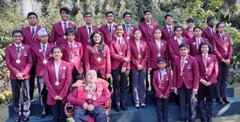
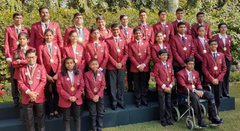
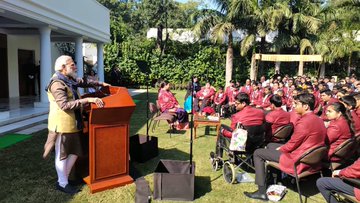
Prime Minister Shri Narendra Modi interacted with recipients of Rashtriya Bal Puraskar, here today. The awards were conferred by the President of India on 22 Jan 2020. The awardees will also participate in the Republic Day Parade. The 49 awardees are from various states of India including one each from Jammu & Kashmir, Manipur and Arunachal Pradesh. The children are winners in the fields of art & culture, Innovation, Scholastic, Social Service, Sports and Bravery. The Government of India acknowledges children as one of the most important partners in nation-building. Towards this end the Government gives these awards every year to recognize exceptional achievements of our children in the fields of innovation, scholastic achievements, social service, arts & culture, sports and bravery PMO India ✔ @PMOIndia थोड़ी देर पहले आप सभी का परिचय जब हो रहा था, तो मैं सच में हैरान था। इतनी कम आयु में जिस प्रकार आप सभी ने अलग-अलग क्षेत्रों में जो प्रयास किए, जो काम किया है, वो अदभुत है: PM @narendramodi View image on TwitterView image on Twitter 4,682 11:23 – 24 Jan 2020 Twitter Ads information and privacy 885 people are talking about this Admiring the outstanding achievements of the children in different fields, the Prime Minister termed the work done by them at such a young age as amazing. He said, “I am proud to see the way in which you are fulfilling your duties towards society and the nation. It gives me that extra energy and the push to work harder when I hear the stories of bravery and achievements of our young comrades” PMO India ✔ @PMOIndia आप अपने समाज के प्रति, राष्ट्र के प्रति अपनी ड्यूटी के लिए जिस प्रकार से जागरूक हैं, ये देखकर गर्व होता है: PM @narendramodi View image on Twitter 7,473 11:24 – 24 Jan 2020 Twitter Ads information and privacy 1,330 people are talking about this The Prime Minister asked the awardee children to work harder while being strongly rooted to the ground realities. “This recognition should be a beginning to achieve more and you should realise this is not an end in itself. And such awards will inspire your peers and other children to become achievers.” PMO India ✔ @PMOIndia मैं आप सभी युवा साथियों के ऐसे साहसिक काम के बारे में जब भी सुनता हूं, आपसे बातचीत करता हूं, तो मुझे भी प्रेरणा मिलती है, ऊर्जा मिलती है: PM @narendramodi 16.3K 11:27 – 24 Jan 2020 Twitter Ads information and privacy 2,860 people are talking about this ***

A group of students from Veer Surendra Sai Space Innovation Centre (VSSSIC), Odisha called on Union Minister of State (I/C) Ministry of Development of North Eastern Region, MoS PMO, Personnel, Public Grievances and Pensions, Atomic Energy and Space, Dr Jitendra Singh, here today. These students informed that their team has developed Satellite Launch Vehicle.


Dr Jitendra Singh said that India is a frontline nation in the field of space technology and these students will also contribute to it. The efforts of these students reflect their talent, curiosity and capabilities. He said that first time a Space Launch Vehicle (SLV) has been developed by the students, adding that nano-satellites have been developed earlier by the students. He said that this will inspire other students to excel in science and technology. The Minister said that Prime Minister Shri Narendra Modi has natural temper for science and under his leadership Government has taken various steps for development of science and technology. The Minister further said that these students are in touch with ISRO. He further said that ISRO is providing Rs 50 lakh financial and technical assistance to these students for their endeavours. They will also utilise facilities of ISRO based upon requirement and feasibility.


ISRO has been the pioneer for encouraging space-related innovations. The team of students interacted with ISRO Chairman, Dr K Sivan as a part of “Samvad with Students”. They were registered as the first and only student body to indigenously developed and successfully launched Sounding rockets, in Limca Book of Records, 2019.


*******

PM interacts with recipients of Rashtriya Bal Puraskar, 2020

Prime Minister Shri Narendra Modi interacted with recipients of Rashtriya Bal Puraskar, here today. The awards were conferred by the President of India on 22 Jan 2020. The awardees will also participate in the Republic Day Parade.


The 49 awardees are from various states of India including one each from Jammu & Kashmir, Manipur and Arunachal Pradesh. The children are winners in the fields of art & culture, Innovation, Scholastic, Social Service, Sports and Bravery. The Government of India acknowledges children as one of the most important partners in nation-building. Towards this end the Government gives these awards every year to recognize exceptional achievements of our children in the fields of innovation, scholastic achievements, social service, arts & culture, sports and bravery


PMO India

@PMOIndia

थोड़ी देर पहले आप सभी का परिचय जब हो रहा था, तो मैं सच में हैरान था। इतनी कम आयु में जिस प्रकार आप सभी ने अलग-अलग क्षेत्रों में जो प्रयास किए, जो काम किया है, वो अदभुत है: PM @narendramodi

View image on TwitterView image on Twitter
885 people are talking about this


Admiring the outstanding achievements of the children in different fields, the Prime Minister termed the work done by them at such a young age as amazing. He said, “I am proud to see the way in which you are fulfilling your duties towards society and the nation. It gives me that extra energy and the push to work harder when I hear the stories of bravery and achievements of our young comrades”


PMO India

@PMOIndia

आप अपने समाज के प्रति, राष्ट्र के प्रति अपनी ड्यूटी के लिए जिस प्रकार से जागरूक हैं, ये देखकर गर्व होता है: PM @narendramodi

View image on Twitter
1,330 people are talking about this


The Prime Minister asked the awardee children to work harder while being strongly rooted to the ground realities. “This recognition should be a beginning to achieve more and you should realise this is not an end in itself. And such awards will inspire your peers and other children to become achievers.”


PMO India

@PMOIndia

मैं आप सभी युवा साथियों के ऐसे साहसिक काम के बारे में जब भी सुनता हूं, आपसे बातचीत करता हूं, तो मुझे भी प्रेरणा मिलती है, ऊर्जा मिलती है: PM @narendramodi

2,860 people are talking about this


***