
Learn from history – Steel tariffs don\’t help

The US has been there before many times. And yet they do it again and again. Granted that logic and thoughtful action is not a feature of the current US administration. But still, you would have thought they would have read up what happened when they tried it last time.
I am referring to the announcement today that the US plans to impose a tariff of 25% on steel imports.
George W Bush tried the same tactics in 2002, with an eye on the same political prize – voters in Pennsylvania and West Virginia.  He imposed 8-30% tariffs on imported steel . At that time the target was European steel. Europe promptly took the US to the WTO and won sanctions of  some $2 billion. More tellingly, the politically astute European Union threatened retaliatory tariffs on oranges (goodbye Florida votes) and cars (ta ta Michigan votes).  Meanwhile steel prices in the US surged, screwing industries that buy steel. A later study concluded that 200,000 jobs were lost in the US as a result.  Bush retreated and called off the tariffs in 2003.
His father George HW Bush , and his predecessor Ronald Reagan tried various forms of it too. Reagan famously tried quotas on cars (at that time the target was Japan). The end result of that was that car prices went up by $1000 between 1982 and 1984 and the auto industry actually lost 60,000 jobs as a result of the quotas.
Obama indulged in steel tariffs too. His target was China. But that administration did it selectively – huge tariffs, selectively on products and against companies from China that were dumping.
It is not clear what the current administration is trying to achieve. Presumably their target is China , the current bogeyman and indisputably the cause of depressed world steel prices because of overcapacity. But China exports not much steel to the US possibly as a result of the Obama era actions. It is the 11th largest exporter to the US occupying a small portion of US imports – even India is above it in the rankings. The biggest exporter of steel to the US is Canada, followed by Brazil. Is the US trying to screw Canada ?
Why pick a trade war with Canada of all the countries. The US has a  deficit of $ 12 bn in goods and a surplus of $24 bn in services on a $ 700 bn two way trade. Overall the US has a surplus with Canada. And you want to provoke a war with them ? Yes, the current administration has launched a war on NAFTA, but even by that perverted logic, the target must be Mexico and not Canada.  Canadians are not fools . Selected tariffs from Canada  on Vehicles (bye Michigan) and Agricultural Produce ( adieu Ohio) and we are back to reliving the George Bush experience.
Albert Einstein is famously quoted to have said \” The definition of insanity is doing the same thing over and over again, but expecting different results.” But to avoid that, you have to read history to determine what has been done before. Well, in the current administration, reading history is too much to ask. They would make a \”yuuge\” improvement if they could just begin with reading !
Who\’s who in Chinese politics

Xi Jinping, the current Chinese leader is easily the most powerful leader that China has had ever since Deng Xiaoping faded away in the early 90s. But in order to understand his power, we have to go back a bit in time in modern Chinese history.
Mao was a tyrant and supremely powerful in China and until his death, he was simply the sole power centre. But that degree of concentration of power resulted in chaos in China – the Great Leap Forward and the Cultural Revolution being two big disasters. When he died, the elders decided that no single person should ever be allowed to accumulate such power. Deng Xiaoping became the preeminent leader, but there was a rival power centre in Chen Yun and to a lesser extent in Li Xiannian. Multiple purges later,  Jiang Zemin was appointed the Secretary of the Communist Party immediately after the infamous Tiananmen incident in 1989.
Jiang accumulated a fair degree of power, but was never all powerful. He led the party out of the post Tiananmen crisis and then earned his own notoriety by the brutal suppression, and virtual extermination, of  Falun Gong – a cult loosely based on mysticism, but which was feared by the Party as a political movement. By the norms set by Deng, which he followed and reinforced,  he stepped down after some 12 years as the Secretary of the Party and handed over to Hu Jintao, who was handpicked by Deng himself before his death. However, Jiang continued to remain the Chairman of the Central Military Commission and therefore in his first term Hu really did not have much power and had to constantly \”handle\” Jiang. Jiang continues to remain a power centre and is the leader of the Shanghai faction. However he is getting old (he\’s past 90) and his power is fading, helped along by Xi\’s efforts to undermine this faction.
Hu Jintao is a colourless and plodding leader, who even while he was the Secretary of the Party, was never a charismatic leader. His hold on power was weaker. When he handed over the reins to Xi Jinping, he quit all his formal roles. He leads the Youth League, another faction, but is not a powerful leader.
Xi Jinping comes from a group called the \”princelings\” – their fathers were revolutionary leaders in the Mao era and their positions, at least to some measure, is owed to their parentage. When Xi took over, he swiftly started to consolidate his power with a massive anti corruption drive, the likes of which China has never seen.
Ostensibly Xi was tackling one of the greatest scourges of China – corruption. The scale of corruption in China is simply unbelievable. Nowhere has mankind seen anything like this. It is all pervasive . I won\’t say anything more – I still wish to travel to China !! Let me just say that whatever you think is the level of corruption in China, the reality is probably tenfold worse. It is an existential threat to the Party.  Therefore tackling corruption was a popular thing to do.
But the anti corruption drive was also a big consolidation of power by Xi. It was positioned as catching \”tigers and flies\” – both the small fry as well as the really powerful.  Unsurprisingly, the people targeted the most were political opponents. More than 100,000 flies have been indicted, but more importantly so have nearly 200 tigers. This includes some 100 senior people in the military including two former Vice Chairmen of the Central Military Commission (the equivalent would be Defence Secretary and the Joint Chiefs of Staff in the US military being purged). The biggest tiger of all who was jailed is clearly Zhou Yongkang, a past member of the Standing Committee. Such a thing is simply not done in Chinese politics – the upper echelon of the Communist Party was thought untouchable.
Xi\’s main ally who has carried out the anti corruption drive is Wang Qishan, a current member of the Standing Committee and 6th in the formal order of seniority. But clearly the real no 2 in China is Wang Qishan. He is a star economic leader in China – having held a number of economic portfolios in the past. But for the last 5 years he has been Xi\’s enforcer in the anti corruption drive. Crucially he is 69 and by the tenets of the unofficial retirement policy, he should retire in October. All the rumours swirling around China are that Xi will keep him. 
The formal No 2 is the Premier Li Keqiang. His job is to run the economy and the general consensus is that he has not been successful. His power base is small and he belongs to the Youth League faction of Hu Jintao. In fact at the time of Xi\’s succession it was rumoured that Hu actually wanted Li to succeed him and not Xi. Li is only 62 and can continue as Premier for one more term.  This blogger has a view (wild guess) as to what might happen to both Wang Qishan and Li Keqiang and he will boldly articulate a prediction in a subsequent post !
Two other names need mention. When Xi and Li were appointed, there was also speculation as to who would succeed them in 10 years time (the next generation of leaders). Two names were mentioned – Hu Chunhua and Sun Zhengcai. Both were included in the politburo last time around and given important positions. Just two months ago, Sun Zhengcai was summarily replaced and an anti corruption investigation started against him. Clearly he lost out in a power struggle.
How do the Chinese themselves view all this ? You may be surprised ! Watch out for the next post.

Are You An \’Education Survivor\’?

If you\’re reading this you obviously went through the education system. And maybe you are among those who are grateful that your school days were lovely. And that what you learnt is being put to use every day.

Or maybe not.

Conduct a group discussion with people (friends, colleagues, family members), around their school days. You will find a mix of smiles, frowns and giggles — and the frowns will usually be about their experiences inside the classroom. Almost everyone has a story of how they were wrongly punished or discriminated against or didn\’t receive their just dues for something or the other. Around half the people will recall the oppression they felt at different times — examinations, punishment being handed out, the subject/s they could make neither head nor tail of, the quiet acceptance by their families that they would be mediocre and their own realization that they would not be \’good enough\’ in a number of things.

Cut to the present, and many of them (now quite successful in life) will also be saying : \”Why did we learn all those things? And even what I studied in college, what am I doing with it now?\”

These are the symptoms of the \’education survivor\’. Are you one of them? Are there really as many of them around as my dire prediction indicates? Is it only our tendency to wallow in self-pity? Or just the usual, superficial user-critique of education? Finally, is school education really something like a dreadful disease (or at least a dreadful experience) which leaves behind \’survivors\’?

From \’Teacher Condemnation\’ to \’System Condemnation\’?

Years ago, it was felt that the root of all problems in education is the teacher. In fact, the MLLs (Minimum Levels of Learning, which served as the de fact national curriculum framework) in the late 80s and early 90s were designed to ensure \’teacher accountability\’ in terms of the minimum that would be achieved. A popular programme, Rishi Valley\’s multi-grade teaching  (adopted/adapted as \’activity based learning\’ in many states) actually originated from the desire to get children to be able to learn without needing the teacher (which is why there is so much of self learning in it).

People still continue to condemn the teacher and hold him responsible for all the ills in education. However, with the proliferation of so many \’reports\’ on education all around, there is now a great sense of intolerance towards the education system itself. The belief seems to be that not only government teachers and schools but the government education system itself is condemnable. Among NGOs, academics, commentators, researchers and intellectuals the general notion seems to be gathering steam that everything and everyone in the government system is the problem!

But what is a system if not the people in it, the way they work and the frame within which they work? From that point of view, I have to say that some of the finest people I\’ve come across are \’system\’ people. Every year I get the chance to work with thousands of teachers who I see putting in 12-14 hour days when others from outside the system (e.g. NGOs) fade away after only 8 hrs of input. This is not to say everything is OK with the system or the policies or the people – it\’s just point out that a black and white view doesn\’t help. And that just as it is not possible to change a teacher while condemning him, it is not likely to be possible to improve a system while condemning it!

The Tsunami We Don\’t Always See

Our hearts go out to the sufferings of people in Japan. The pictures of the tsunami rushing in and engulfing everything in sight, wreaking havoc – will stay with us. Our sympathies and support should – and will – be available to help our fellow human beings in whatever way we can.
Our horror – and the desire to do something – would obviously be even more if we saw something similar happening all around us. And in a way something similar is happening all around us, only it is not as dramatic as a physical tsunami, making it a little difficult to be noticed by most people. It is what I would call the tsunami of poor quality of education that is hitting a million schools and tens of millions of children, its impact likely to be visible over the years rather than right now, instantly, in front of our eyes.
The Tsunami Around Us
No this is not alarmist, but an effort to put across a real picture and the urgency with which it needs to be recognized and acted upon. Every day, in hundreds of thousands of locations across the country, children make their way to the school. Around a quarter of them may find their teacher not there. This number alone is staggering, ranging as it would between one and two million teachers. MILLION! And if each teacher has 30 children in his class, you can estimate the number but not really conceive how enormous it is. And it is huge not just in terms of numbers, but for each child who loses a day of learning, and does so for many days every month, it is incalculable.
Had the facilities or the teachers not been available we could have cried over our fate in terms of being an underdeveloped country. But having the infrastructure (over 98% children have a school within a kilometre, and most buildings are not bad) and teachers actually in place (though the number of vacancies is still very large) – it is horrifying to watch or at least it should be, for there doesn\’t seem to be a sense of horror, or as much of it as would shake the country into action.
However the story doesn\’t end there. It is when \’teaching\’ takes place that the impact on children is often at its greatest. Decades ago, the Yashpal Committee\’s report on The Burden of the School Bag had detailed the \’burden of incomprehension\’ a majority of children bear. And it is difficult to see if things have changed dramatically, despite changed curricula, textbooks, the use of TLM, evolving assessment patterns, new training programmes… The number of children attending school – and their diversity – too has grown in leaps and bounds, while the approach to handling their needs has remained fairly static. Hence, survey after survey shows that – despite a degree of improvement – we continue to be far from the levels of learning desired (and possible).
But it is when it comes to the process that the greatest deadening effect takes place. Rote memorization, \’explanation\’ ina language not necessarily understood by children, a disregard for the needs of children who are too poor to be able to attend regularly, (an often active) discrimination in the classroom, are the lot of a majority of our children. If you doubt this, all you have to do is visit any 10 government schools in different locations, especially those away from \’headquarters\’.
This is not to say that all government schools are bad and that the \’bad\’ is restricted to government schools. It is to point out that even if only a third of schools are like the ones described above (and the number is surely more than that), it adds up to literally hundreds of thousands of schools and tens of millions of children – a slow tsunami of poor quality education that is surely wreaking havoc on the potential of our children, our country.
Dealing With It
So after all this panic, what do we do?
As in any disaster, stay calm! First recognize that there is a problem and accept that something must be done about it.
Second, realize that you are the right person to do something about it. Anyone is, everyone is. Every small action counts. Even if you smile at a child, say an encouraging word to a teacher, raise this issue with friends, relatives and colleagues, you are doing something.
Third, if you are willing to be more proactive or are already active, please do look at the urgency of the situation. Children cannot wait for us to learn or get our act together slowly. We need to quickly:
  • Establish the minimum conditions that must obtain. These are well laid out in the RTE (Right to Education) and its rules. Raise this issue wherever you can, and directly with the school or education authorities.
  • Encourage and support the community and the school management committees (SMCs) drawn from among the community to become more active. You can help in setting them up, in record keeping, in setting the agenda, in follow up, in helping ensure that teachers take them seriously and that they in turn don\’t take an adversarial position vis-à-vis teachers. You can use your position to ensure that the educational agenda is not hijacked by the money-making or power-gaining agenda.

If you are a Head Teacher, supervisor, CRC-BRC / district level teacher educator or officer:
  • Model the kind of behaviour you want from teachers
  • Share practical steps they can take in their classes, especially in terms of activity-based teaching (see the many entries in this blog for support)
  • Encourage teachers to be innovative, support them. If they ask questions, don\’t be dismissive (pass on the questions here if you can answer them!)

If you are a planner / policy-maker / decision- maker, please start by not dismissing what you have just read here. It is real, and it is happening – and it\’s on a gargantuan scale. On any given day, the number of children who are in school and not learning is more than the population of many countries – and it is a shame. What kind of performance standards can you set in place? What kind of outcomes can you insist on? How can you prepare the institutions and the system to deliver this, monitor them effectively and enable an ongoing improvement? Once again, the many entries in this blog would be helpful – and you could always share issues you would like others to provide suggestions / inputs on.
As surely as Japan will recover from the huge earthquake and the devastating tsunami, we can deal with this too. But first we have to see it as an emergency and address it. With all our might.

What Do We Actually \’Celebrate\’ In Our Schools?

\’So, you\’re \’celebrating\’ again.\’
\’Yes, it\’s Independence Day tomorrow.\’
\’Oh, so another round of ritualistic speeches?\’
\’What do you mean, ritualistic speeches?\’
\’You know what I mean. The same old \’important\’ people will be called. They will be welcomed, garlanded and they will walk around, feeling even more self-important.\’
\’You\’re being very unkind, you know.\’
\’But close to the truth, isn\’t it?\’
\’I\’m not sure if this is really ritualistic…\’
\’No, it is what follows afterwards…. The same formal atmosphere will be created. Children will sit in neat rows and told not to talk too much. The LIP (or your Local Important Person) will be praised, invited to give us the benefit of his wisdom, children will be asked to shush, and then the LIP will give the same speech as every year – you are the future of the country… freedom is very important.. our great leaders were so very great… you must work hard… you must try to like the great people of the past… And all this while instead of experiencing freedom on Independence Day of India, children will be sitting bored, stiff, not allowed tomove around or talk or express themselves….\’
\’You\’re being really harsh!\’\’
\’OK, tell me, didn\’t you hear the same speeches when you were a child?\’
\’Ye-es.\’
\’Did you really enjoy those celebrations? Were they a celebration for you?\’
\’Actually, to be honest, no, not really.\’
\’Aren\’t you surprised that the same speeches are being made even now?\’
\’Yeah, now that you mention it…\’
\’And shouldn\’t children be more like the leaders of tomorrow rather than the leaders of long past. After all, every kid is not going to experience walking 17 kilometres to school!\’
\’Hmm… something to think about, there. And come to think of it, why was every great man\’s school 17 kilometres away?\’
\’See, it\’s getting you too!  And when it comes to – no, no, better not to say that.\’
\’Well you can tell me… I\’m not going to shout at you!\’
\’I know you won\’t. But I don\’t want you to feel depressed either.\’
\’Come on, I can handle it. Tell me what you were going to say.\’

\’Well, if you insist. The thing is, children attend all these functions year after year, experience the same thing over and over again. And what do they learn? They learn that they don\’t matter. Their job is to listen. Their role is to be passive, not think for themselves. And look at you – you were a child who once found these functions boring but you are organizing exactly the same kind of function again! Independence Day isn\’t quite an experience in Independence, isn\’t it? My thesis is that these National Day type of \’celebrations\’ only teach us to be slaves, to accept that we have no freedom to be different or better, to allow ourselves to be defined by the limited vision of those limited adults who were similarly made limited by the experience they went through as children themselves…. Hey, you\’re suddenly very silent now. This is not look good… come on, say something.\’
\’What do I say? I\’m feeling so…\’
\’So… what?\’
\’So depressed!\’
————————————————-
What do you think about the other \’celebrations\’ we have in our schools? Is the birthday of a child celebrated \’more\’ or differently or better than that of other children whose families are considered to be less important or not influential?
What are the festivals celebrated in schools? Whose festivals are left out? Many communities / religious groups never see their festivals even discussed in school? What do they feel about it? And what do they \’learn\’ from this?
On Sports Day, do most children have the scope to participate and gain something? Or is only the \’victory\’ of a  few celebrated again and again? And what do the rest learn from this?
And on Results Day, whose achievements stand out? And what does everyone learn from this? (Maybe CCE will make a difference here?)
Perhaps all these celebrations, in the end, make us realise that their isn\’t much about us that is worth celebrating. When I was younger I would have said that this happens even though the intention is quite different. But now, a little more battered and older, I think the intention was always this – to make you realise that only a few can be \’important\’ persons worth celebrating, not you.
————————————————-
So what should we celebrate in our schools?
For starters, children and learning. Simply the presence of every child is worth celebrating (rather than \’Oh God, another one!\’). And how to celebrate? By smiling, by welcoming, by genuinely talking with the child, giving space to her questions, by looking for ways to ensure she is comfortable, involved and engaged in an actual learning.
Children will ask unexpected questions, offer different points of view, find innovative ways of doing things, or help each other… celebrate this. Point out what they have done which is so good, and why it is so.
There will be times when those who usually \’fall behind\’ will make an effort, come up with something of their own (of course, only if you ensure they have the opportunity to do so). Celebrate their efforts, point out their good parts, and indicate what else they can do that will earn them similar \’celebration\’.
If you find a fellow teacher, a staff member, a parent, an SMC member who is doing something successfully and contributing to children and the school, that\’s worth celebrating.
And on Independence Day? Start a few days before. Discuss with children what Independence Day means to us. Ask them how they think it should be celebrated. Come up with ideas that puts the children in the front, not adults or LIPs. Maybe they make drawings and posters related to freedom. Maybe they hold a debate on what freedom means and whether we really are a free people. Maybe they decide not to do a \’function\’ in the  school at all and instead spend time with children who are unable to be in school because they are not really free…And maybe they will learn something very different from such \’celebrations\’ than we did.

Anna\’s is NOT a movement for change

Let\’s imagine for a moment that corruption vanishes – no one takes bribes any more. Which of the following do you think would now happen as a result?
  • Dalits will not face discrimination anywhere; people will stop believing in caste and elections will be around issues, not social groups. Unborn girls will not be killed, dowry will go, sexual harassment will vanish, the notion of \’minority\’ will not need to be discussed, equality and equity will be established.
  • People will start working harder, with greater commitment, be much more innovative, and therefore the economy will shoot up. Private enterprise will no more be required to shore up government efforts.
  • We will stop exploiting environmental resources in a dangerous manner, all power and energy related problems will be solved, petrol will become cheaper, our sources of water will not be polluted any more and global warming will come to a halt (at least in India).
  • All children will start attending school and learning well; teachers will transform into good teachers, all government schools will become great schools, and India\’s learning standards will be among the highest in the world. In sports too we will emerge as a world power.
  • Inflation will not affect us any more, the price of food and other essentials will come down, no matter what happens elsewhere in the world.
  • Health and nutrition levels will go up greatly, diseases of the poor (water-borne ones or those caused by malnutrition, for instance) will be vanquished.
  • Poor governance will vanish – in the absence of bribes, officials will become competent, start taking good decisions, stop representing power groups, start listening to people and actually working for their betterment.
I hope you were able to tick off quite a few!

Oscar Wild said: \’Stupidity is the only sin.\’ And in that sense, Anna&Co are great sinners. Unfortunately, those who continue to believe they\’re helping destroy the roots of our problems and bringing about real change – are even more so.

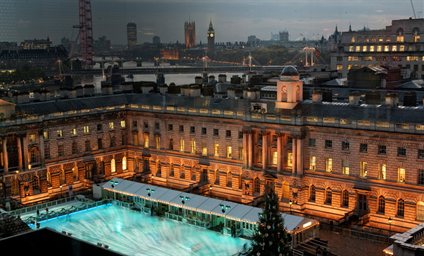
King\’s College London

Image result for King\'s College London

King\’s College London is one of the top 25 universities in the world (2016/17 QS World University Rankings) and among the oldest in England. King\’s has more than 27,600 students (of whom nearly 10,500 are graduate students) from some 150 countries worldwide, and some 6,800 staff.
King\’s has an outstanding reputation for world-class teaching and cutting-edge research. In the 2014 Research Excellence Framework (REF) King’s was ranked 6th nationally in the ‘power’ ranking, which takes into account both the quality and quantity of research activity, and 7th for quality according to Times Higher Education rankings. Eighty-four per cent of research at King’s was deemed ‘world-leading’ or ‘internationally excellent’ (3* and 4*). The university is in the top seven UK universities for research earnings and has an overall annual income of more than £684 million.
King\’s has a particularly distinguished reputation in the humanities, law, the sciences (including a wide range of health areas such as psychiatry, medicine, nursing and dentistry) and social sciences including international affairs. It has played a major role in many of the advances that have shaped modern life, such as the discovery of the structure of DNA and research that led to the development of radio, television, mobile phones and radar.
King\’s College London and Guy\’s and St Thomas\’, King\’s College Hospital and South London and Maudsley NHS Foundation Trusts are part of King\’s Health Partners. King\’s Health Partners Academic Health Sciences Centre (AHSC) is a pioneering global collaboration between one of the world\’s leading research-led universities and three of London\’s most successful NHS Foundation Trusts, including leading teaching hospitals and comprehensive mental health services. For more information, visit: www.kingshealthpartners.org.
King’s £600 million campaign, World questions|KING’s answers, has delivered huge global impact in areas where King’s has particular expertise. Philanthropic support has funded new research to save young lives at Evelina London Children’s Hospital; established the King’s Dickson Poon School of Law as a worldwide leader in transnational law; built a new Cancer Centre at Guy’s Hospital; allowed unique collaboration between leading neuroscientists to fast-track new treatments for Alzheimer’s, Parkinson’s, motor neurone disease, depression and schizophrenia at the new Maurice Wohl Clinical Neuroscience Institute; created the Cicely Saunders Institute: the first academic institution in the world dedicated to palliative care, and supported the King’s Sierra Leone Partnership in the Ebola crisis. Donations provide over 300 of the most promising students with scholarships and bursaries each year.More information about the campaign is available at www.kcl.ac.uk/kingsanswers.

King\’s College London

Image result for King\'s College London

King\’s College London is one of the top 25 universities in the world (2016/17 QS World University Rankings) and among the oldest in England. King\’s has more than 27,600 students (of whom nearly 10,500 are graduate students) from some 150 countries worldwide, and some 6,800 staff.
King\’s has an outstanding reputation for world-class teaching and cutting-edge research. In the 2014 Research Excellence Framework (REF) King’s was ranked 6th nationally in the ‘power’ ranking, which takes into account both the quality and quantity of research activity, and 7th for quality according to Times Higher Education rankings. Eighty-four per cent of research at King’s was deemed ‘world-leading’ or ‘internationally excellent’ (3* and 4*). The university is in the top seven UK universities for research earnings and has an overall annual income of more than £684 million.
King\’s has a particularly distinguished reputation in the humanities, law, the sciences (including a wide range of health areas such as psychiatry, medicine, nursing and dentistry) and social sciences including international affairs. It has played a major role in many of the advances that have shaped modern life, such as the discovery of the structure of DNA and research that led to the development of radio, television, mobile phones and radar.
King\’s College London and Guy\’s and St Thomas\’, King\’s College Hospital and South London and Maudsley NHS Foundation Trusts are part of King\’s Health Partners. King\’s Health Partners Academic Health Sciences Centre (AHSC) is a pioneering global collaboration between one of the world\’s leading research-led universities and three of London\’s most successful NHS Foundation Trusts, including leading teaching hospitals and comprehensive mental health services. For more information, visit: www.kingshealthpartners.org.
King’s £600 million campaign, World questions|KING’s answers, has delivered huge global impact in areas where King’s has particular expertise. Philanthropic support has funded new research to save young lives at Evelina London Children’s Hospital; established the King’s Dickson Poon School of Law as a worldwide leader in transnational law; built a new Cancer Centre at Guy’s Hospital; allowed unique collaboration between leading neuroscientists to fast-track new treatments for Alzheimer’s, Parkinson’s, motor neurone disease, depression and schizophrenia at the new Maurice Wohl Clinical Neuroscience Institute; created the Cicely Saunders Institute: the first academic institution in the world dedicated to palliative care, and supported the King’s Sierra Leone Partnership in the Ebola crisis. Donations provide over 300 of the most promising students with scholarships and bursaries each year.More information about the campaign is available at www.kcl.ac.uk/kingsanswers.

King\’s College London

Image result for King\'s College London
ABOUT
King\’s College London is one of the top 25 universities in the world (2016/17 QS World University Rankings) and among the oldest in England. King\’s has more than 27,600 students (of whom nearly 10,500 are graduate students) from some 150 countries worldwide, and some 6,800 staff.
King\’s has an outstanding reputation for world-class teaching and cutting-edge research. In the 2014 Research Excellence Framework (REF) King’s was ranked 6th nationally in the ‘power’ ranking, which takes into account both the quality and quantity of research activity, and 7th for quality according to Times Higher Education rankings. Eighty-four per cent of research at King’s was deemed ‘world-leading’ or ‘internationally excellent’ (3* and 4*). The university is in the top seven UK universities for research earnings and has an overall annual income of more than £684 million.
King\’s has a particularly distinguished reputation in the humanities, law, the sciences (including a wide range of health areas such as psychiatry, medicine, nursing and dentistry) and social sciences including international affairs. It has played a major role in many of the advances that have shaped modern life, such as the discovery of the structure of DNA and research that led to the development of radio, television, mobile phones and radar.
King\’s College London and Guy\’s and St Thomas\’, King\’s College Hospital and South London and Maudsley NHS Foundation Trusts are part of King\’s Health Partners. King\’s Health Partners Academic Health Sciences Centre (AHSC) is a pioneering global collaboration between one of the world\’s leading research-led universities and three of London\’s most successful NHS Foundation Trusts, including leading teaching hospitals and comprehensive mental health services. For more information, visit: www.kingshealthpartners.org.
King’s £600 million campaign, World questions|KING’s answers, has delivered huge global impact in areas where King’s has particular expertise. Philanthropic support has funded new research to save young lives at Evelina London Children’s Hospital; established the King’s Dickson Poon School of Law as a worldwide leader in transnational law; built a new Cancer Centre at Guy’s Hospital; allowed unique collaboration between leading neuroscientists to fast-track new treatments for Alzheimer’s, Parkinson’s, motor neurone disease, depression and schizophrenia at the new Maurice Wohl Clinical Neuroscience Institute; created the Cicely Saunders Institute: the first academic institution in the world dedicated to palliative care, and supported the King’s Sierra Leone Partnership in the Ebola crisis. Donations provide over 300 of the most promising students with scholarships and bursaries each year.More information about the campaign is available at www.kcl.ac.uk/kingsanswers.

INDIA\’S BEST ARCHITECTURE COLLEGES 2019 EduINDEX Ranking

1. Department of Architecture and Planning, Indian Institute of Technology Roorkee
2. Sir J J College of Architecture
3. Department of Architecture, Birla Institute of Technology Mesra
4. Faculty of Architecture, Manipal Institute of Technology
5. Faculty of Architecture & Ekistics, Jamia Millia Islamia
6. School of Planning and Architecture, Bhopal
7. School of Planning And Architecture, University of Mysore
8. Sushant School of Art and Architecture
9. School of Planning & Architecture Jawaharlal Nehru Architecture and Fine Arts University
10. BMS College of Architecture
11. R V College of Architecture
12. Amity Institute of Planning and Architecture
13. Aayojan School of Architecture
14. School of Architecture IPS Academy Indore
15. The Department of Architecture, Town and Regional Planning, Indian Institute of Engineering Science and Technology Shibpur
16. AAERT & SSB Faculty of Architecture, Sarvajanik College of Engineering & Technology
17. Faculty of Architecture & Planning, Integral University
18. Department of Architecture, Sathyabama Institute of Science & Technology (Deemed To Be University)
19. Rizvi College of Architecture
20. Amity School of Architecture and Planning
21. Axis Institute of Architecture
22. Guwahati College of Architecture
23. Priyadarshini Institute of Architecture & Design Studies
24. MBS School of Planning and Architecture
25. Institute of Design Education & Architectural Studies