03 Fully Funded PhD Programs at University of Oulu, Oulu, Finland
Holding Master’s degree and looking for fully funded PhD positions? University of Oulu, Oulu, Finland invites online application for multiple funded PhD Programs / fully funded PhD positions in various research areas.
Candidates interested in fully funded PhD positions can check the details and may apply as soon as possible. Interested and eligible applicants may submit their online application for PhD programs via the University’s Online Application Portal.
1. Fully Funded PhD Position in multidisciplinary research of the integration of technology with healthcare education
Summary of PhD Program:
LET focuses on investigating and developing innovative educational technologies and learning environments to enhance learning processes, collaboration, and self-regulated learning across various educational contexts. HST integrates multidisciplinary research across health sciences, biomedical engineering, and medical technology, aiming to advance health care solutions, improve patient outcomes, and promote innovative technologies for health and well-being.
2. Fully Funded PhD Position in Nature-based water treatment systems in mining waters
Summary of PhD Program:
You will work on research tasks involved in the projects “Prowater” co-funded by the European Union via the Interreg Aurora and “RestMine” and “LuVe-JK” funded by Maa- ja Vesitekniikan tuki ry foundation. The project activities linked to this position focus on the use of industrial by-products as secondary sources of materials to be utilized in water treatment systems aiming at reducing aquatic pollution in mining-affected areas. Project tasks include e.g. mapping of available materials, designing, implementing and monitoring of in-situ pilot scale systems, data treatment and analysis (statistical methods) followed by system evaluation.
3. Fully Funded PhD Position in Mechanical Engineering (Hydrogen Combustion and Advanced Engine Simulation)
Summary of PhD Program:
We seek a highly motivated doctoral researcher to contribute to a cutting-edge research project focusing on hydrogen combustion and advanced engine simulation technologies. The position involves conducting 3D computational fluid dynamics (CFD) simulations, designing advanced combustion systems, and exploring innovative solutions for engine thermal stress mitigation and knock suppression.
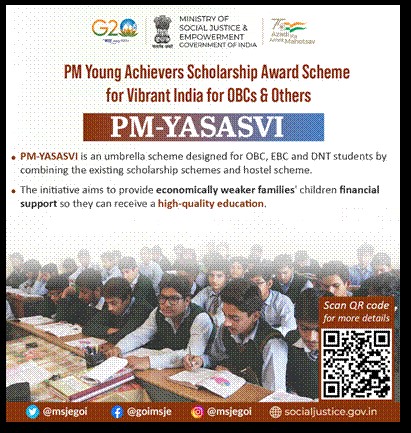
With a vision of “Sabka Sath, Sabka Vikas”, the Ministry of Social Justice and Empowerment has implemented the PM Young Achievers Scholarship Award Scheme for Vibrant India (PM-YASASVI). This comprehensive umbrella scheme is aimed at uplifting students from Other Backward Classes (OBC), Economically Backward Classes (EBC), and Denotified Tribes (DNT) by providing them with access to quality education during their formative years.
The PM YASASVI scheme consolidates and enhances several earlier initiatives, including the Dr. Ambedkar Post-Matric Scholarship Scheme for EBCs and the Dr. Ambedkar Pre-Matric and Post-Matric Scholarship Scheme for DNTs, which were subsumed under this program starting from 2021-22. By integrating these schemes, PM YASASVI aims to ensure a more streamlined and impactful approach to supporting the educational needs of socially and economically disadvantaged students.
Objective
The overarching goal of the scheme is to promote educational empowerment among these vulnerable groups, helping them overcome financial barriers and complete their education. This initiative not only fosters individual academic growth but also contributes to the broader vision of creating a more inclusive and equitable society.
Under this Scheme students can avail Pre-Matric Scholarship from Class 9 to 10 and Post Matric Scholarship for their higher studies at post-matriculation or post-secondary stage. Students who excel in their studies also get an opportunity of Scholarship to study in Top Class Schools and Colleges under the Scheme of ‘Top Class School Education’ and ‘Top Class College Education’. Hostel facilities are also provided to OBC students under the ‘Scheme of Construction of Hostels for OBC boys and girls.’
PM –YASASVI for OBC, EBC and DNT students has been formulated having following five sub-schemes:
Pre-Matric Scholarship for OBC, EBC and DNT Students
Post-Matric Scholarship for OBC, EBC and DNT Students
Top Class School Education for OBC, EBC and DNT Students
Top Class College Education for OBC, EBC and DNT Students
Construction of Hostel for OBC Boys and Girls
Scope
The Pre-Matric Scholarship is designed for students in classes IX and X attending government schools, offering an annual academic allowance of Rs. 4,000 to families with an income below Rs. 2.5 lakh. For the 2023-24 academic year, Rs. 32.44 crore has been allocated to states and Union Territories for its implementation. The Post-Matric Scholarship supports students pursuing post-secondary education, providing academic allowances ranging from Rs. 5,000 to Rs. 20,000 based on the category of the course. For this scheme, Rs. 387.27 crore has been released for the current year.
Additionally, the Top Class School and College Education schemes are designed to support meritorious students from OBC, EBC, and DNT categories. These programs cover tuition fees, hostel expenses, and other academic costs, with school students (Class 9-12) eligible for funding up to Rs. 1.25 lakh annually. College students at top institutions receive full financial support, including tuition, living expenses, and educational materials. To further enhance access to education, Rs. 12.75 crore has been allocated in 2023-24 under the ‘Construction of Hostels for OBC Boys and Girls’ scheme, which aims to provide accommodation for socially and educationally backward students near government schools and institutions, ensuring they have better access to quality education.
Benefits
The PM YASASVI aligns with the government’s broader vision of fostering inclusivity, equity, and societal upliftment. By offering comprehensive support to students from OBC, EBC, and DNT categories, it directly addresses the systemic barriers that prevent many from accessing quality education. This initiative not only ensures financial assistance but also promotes educational empowerment for some of the most vulnerable sections of society, thereby creating opportunities for upward mobility and self-reliance.
The scheme’s focus on supporting students at both school and college levels helps to nurture talent from an early age and carry it through to higher education, laying a strong foundation for personal and professional growth. Moreover, by integrating earlier scholarship initiatives into a single, streamlined program, PM YASASVI enhances the impact of these efforts, contributing to the creation of a more inclusive and equitable education system. PM-YASASVI is ensuring that no student is left behind in the pursuit of academic and social progress. This scheme is playing a crucial role in the welfare and upliftment of marginalized communities, enabling them to contribute meaningfully to the vision of Viksit Bharat @ 2047.
Impact
The PM YASASVI (Young Achievers Scholarship Award Scheme for Vibrant India) scheme has made significant strides in providing financial assistance to students from Other Backward Classes (OBC), Economically Backward Classes (EBC), and De-Notified Tribes (DNT). In Financial Year 2023-24, a substantial sum of ₹ 193.83 cr. was allocated for the Pre-Matric Scholarship, benefiting 19.86 lakh students during 2023-24, with further beneficiaries for 2023-24 expected. Similarly, under the Post-Matric Scholarship scheme, ₹988.05 cr. was released, benefiting 27.97 lakh students in 2023-24. These scholarships aim to empower underprivileged students by alleviating financial burdens, thereby promoting education across marginalized communities.
Additionally, the government has invested in other educational support initiatives. ₹14.30 cr. has been released for the construction of hostels, accommodating 1146 students in 2023-24. Top-class education programs and overseas study interest subsidies have also seen significant funding, reaching thousands of students. For example, ₹ 111.18 cr. was allocated to support 4762 students in top Class education in college scheme and Rs. 6.55 Cr. Was allocated to support 2602 students in Top Class education in Schools for OBC, EBC & DNT Students and ₹ 56.24 Cr. was granted as interest subsidies to 2789 students pursuing overseas education. These efforts reflect the growing impact of the PM YASASVI scheme, which is transforming the educational landscape for disadvantaged students, enabling them to achieve their academic potential and contributing to overall societal upliftment.
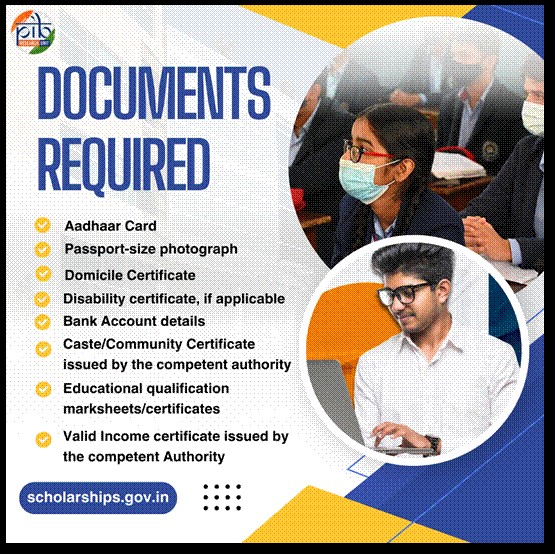
*Any additional documents specified in the application form
Key Points
Selection Process: The YASASVI Entrance Test (YET) 2023 is the basis for candidate selection, conducted by the National Testing Agency (NTA) under the direction of the Ministry of Social Justice and Empowerment (MSJ&E), Government of India.
Eligibility: Open to OBC, EBC, and DNT students with a total annual family income of up to ₹2.50 lakhs. Additional eligibility criteria may apply, depending on the specific scholarship scheme.
Where to Apply: Eligible students can apply online at the National Scholarship Portal: scholarships.gov.in.
Conclusion
By offering a comprehensive array of scholarships and support programs, PM-YASASVI is addressing the financial constraints that often hinder access to education for marginalized communities. The integration of various earlier schemes into one streamlined initiative ensures that students are supported from their school years through to higher education, creating pathways for personal and professional growth. With the government’s ongoing commitment to expanding access to quality education, the PM YASASVI Scheme is making a tangible impact on the lives of thousands of students, helping to create a more inclusive and prosperous India.
Studying in Australia is an appealing option for international students due to its high-quality education system, vibrant culture, and beautiful landscapes. Many scholarships are available to help offset the costs of studying, including options from the Australian government, universities, and other organizations. Below is a detailed overview of major scholarships available to international students for studying in Australia.
1. Australia Awards Scholarships (AAS)
Eligibility: Students from developing countries, particularly from Asia, the Pacific, Africa, and the Middle East. Level: Undergraduate, Postgraduate (Master’s, Ph.D.) Description: Funded by the Australian government, the Australia Awards Scholarships aim to promote development in partner countries through education. These scholarships are highly competitive and target students who will contribute to the development of their home countries upon their return.
Financial Coverage: Full tuition, return air travel, establishment allowance, health insurance, and a living allowance.
Duration: Full duration of the chosen course.
Fields of Study: Wide range of academic fields that align with Australia’s development goals.
2. Destination Australia Scholarship
Eligibility: Domestic and international students Level: Undergraduate, Postgraduate Description: The Destination Australia Program is an initiative by the Australian Government to encourage students to study in regional Australia. It aims to support both domestic and international students to undertake their studies in regional areas, thus promoting economic growth and community diversity.
Financial Coverage: Up to AUD 15,000 per year.
Duration: Depends on the course length.
Fields of Study: Available for a variety of courses in regional universities.
3. Research Training Program (RTP)
Eligibility: International and domestic students Level: Postgraduate Research (Master’s, Ph.D.) Description: The Australian government’s Research Training Program (RTP) provides block grants to universities to fund students’ tuition and living expenses during their research degrees. RTP scholarships are primarily for students undertaking research-based master’s and doctoral degrees.
Financial Coverage: Tuition fees, a stipend for living costs, and allowances for research expenses.
Duration: 2 years for a master’s by research and 3-4 years for a Ph.D.
Fields of Study: Various research areas are covered, depending on the university.
4. Australia Research Council (ARC) Scholarships
Eligibility: High-achieving postgraduate researchers Level: Ph.D. Description: The ARC offers funding opportunities for research-focused students pursuing doctoral programs in Australia. These scholarships support research in a wide range of disciplines and are typically offered in collaboration with universities and research institutions.
Financial Coverage: Research grants, living stipends, and tuition fee waivers (depending on the program).
Duration: 3 to 4 years.
Fields of Study: Science, engineering, health, and social sciences.
5. Australian Government Endeavour Scholarships
Eligibility: International students from the Asia-Pacific region, the Americas, Europe, and the Middle East. Level: Postgraduate (Master’s, Ph.D.), short-term research programs, professional development. Description: The Endeavour Scholarships, funded by the Australian government, aim to build international relations and promote Australia as a destination for education. The program supports postgraduate study and research in various fields.
Financial Coverage: Tuition, travel allowance (up to AUD 3,000), establishment allowance, and monthly stipend (up to AUD 3,000 per month), plus health and travel insurance.
Duration: 2 to 4 years for long-term programs.
Fields of Study: Open to various academic disciplines.
6. University-Specific Scholarships
Many Australian universities offer scholarships to international students based on academic merit, research potential, or financial need. Some prominent university-based scholarships include:
a. University of Melbourne Scholarships
Eligibility: International students
Level: Undergraduate, Postgraduate, Research
Description: The University of Melbourne offers a range of scholarships, including the Melbourne International Undergraduate Scholarship and the Melbourne Graduate Research Scholarship. These are based on academic merit.
Financial Coverage: Full or partial tuition waivers, living allowances, and health coverage.
b. Australian National University (ANU) Chancellor’s International Scholarship
Eligibility: International students
Level: Undergraduate, Postgraduate
Description: The Chancellor’s International Scholarship recognizes academic excellence and provides financial support to high-performing international students.
Financial Coverage: Tuition fee reductions of up to 50%.
c. University of Sydney International Scholarship
Eligibility: International students
Level: Postgraduate (Master’s, Ph.D.)
Description: This scholarship supports outstanding international postgraduate students undertaking research at the University of Sydney.
Financial Coverage: Tuition fees and a living allowance.
d. Monash University International Scholarships
Eligibility: International students
Level: Undergraduate, Postgraduate
Description: Monash University offers several scholarships, such as the Monash International Merit Scholarship, for high-achieving students.
Financial Coverage: Up to AUD 50,000 over the duration of the course.
e. University of Queensland (UQ) Global Scholarships
Eligibility: International students
Level: Undergraduate, Postgraduate
Description: UQ provides several scholarships, including those for high-achieving students from specific regions, such as India, Hong Kong, and Latin America.
Financial Coverage: Partial or full tuition fee waivers.
7. ACIAR (Australian Centre for International Agricultural Research) Fellowships
Eligibility: Citizens from developing countries Level: Postgraduate (Master’s, Ph.D.) Description: ACIAR provides scholarships to students from partner countries to pursue agricultural research that aligns with Australia’s development cooperation priorities. The scholarship aims to build research capacity in agricultural sciences and related fields.
Financial Coverage: Tuition fees, travel expenses, living allowance, and research costs.
Duration: Up to 4 years.
Fields of Study: Agricultural sciences, environmental management, and related fields.
8. Rotary Peace Fellowship
Eligibility: International students committed to promoting peace and conflict resolution. Level: Master’s Description: This prestigious fellowship is awarded to students studying peace and conflict resolution at one of the Rotary Peace Centers, including the University of Queensland.
Financial Coverage: Tuition fees, travel, living stipend, and field-study expenses.
Duration: 1 to 2 years.
Fields of Study: Peace and conflict studies.
9. Macquarie University Vice-Chancellor’s International Scholarship
Eligibility: International students Level: Undergraduate, Postgraduate Description: Macquarie University offers this partial scholarship to academically outstanding students from around the world. The scholarship is aimed at supporting students financially while also promoting cultural diversity on campus.
Financial Coverage: Up to AUD 10,000 towards tuition fees.
Duration: Varies depending on the course.
Fields of Study: All fields.
How to Apply for Australian Scholarships:
1. Research: Begin by identifying which scholarships you are eligible for based on your country of origin, field of study, and academic level.
2. Check Eligibility: Review each scholarship’s specific requirements, such as academic qualifications, English language proficiency, and professional experience (for some postgraduate scholarships).
3. Prepare Documents: Ensure you have all necessary documents, such as academic transcripts, recommendation letters, a personal statement, and proof of English proficiency (IELTS/TOEFL).
4. Apply Early: Scholarship deadlines often precede admission deadlines, so it’s crucial to apply well in advance.
5. Follow Guidelines: Adhere strictly to the application guidelines provided by the scholarship or university to maximize your chances.
Conclusion:
Australia offers a wide variety of scholarships for international students, many of which provide full or partial financial support for tuition, living expenses, and research. With careful planning and thorough research, you can find scholarship opportunities that will make your dream of studying in Australia a reality.
Studying in Europe can be a transformative experience, offering students exposure to world-class education, diverse cultures, and career opportunities. Scholarships are an excellent way to make studying in Europe more affordable. Here’s an overview of some key scholarships and funding opportunities for international students, including those from Asia, Africa, and other regions.
1. Erasmus+ Program
Eligibility: Students from EU and non-EU countries Level: Bachelor’s, Master’s, Ph.D., and professional training Description: The Erasmus+ program is a flagship EU initiative that offers scholarships to students from across the globe for study, training, and internships in Europe. Students can spend 3 to 12 months at an EU-based university or undertake internships. Erasmus Mundus Joint Master Degrees (EMJMD) are also available for students pursuing a master’s program in two or more European countries.
Financial Coverage: Full tuition, living allowance, travel costs, and health insurance.
Duration: Typically 1 to 2 years for master’s programs.
2. DAAD Scholarships (Germany)
Eligibility: International students Level: Master’s and Ph.D. Description: The German Academic Exchange Service (DAAD) offers numerous scholarships for international students to study in Germany. DAAD scholarships are available for a wide range of programs, including full-time master’s degrees and doctoral studies at German universities.
Financial Coverage: Monthly stipend (approximately €861 for graduates and €1,200 for doctoral candidates), health insurance, and travel allowances.
Additional Benefits: Free German language course and support for dependents.
Duration: Varies depending on the program, typically 1 to 3 years.
3. Chevening Scholarships (UK)
Eligibility: Citizens from Chevening-eligible countries Level: Master’s Description: Chevening is a prestigious UK government scholarship for international students to pursue a one-year master’s degree at any UK university. The scholarship focuses on leadership and networking opportunities in addition to academic achievements.
Financial Coverage: Full tuition fees, a monthly stipend, travel costs, and other allowances.
Duration: 1 year (master’s programs only).
4. Swedish Institute Scholarships (Sweden)
Eligibility: Non-EU/EEA citizens Level: Master’s Description: The Swedish Institute (SI) offers scholarships to talented students from select countries for master’s degree studies in Sweden. This scholarship is aimed at fostering future global leaders and is available for many programs offered in Swedish universities.
Financial Coverage: Full tuition fees, living allowance, travel grants, and health insurance.
Duration: 1 to 2 years.
5. Eiffel Excellence Scholarship Program (France)
Eligibility: International students from developing countries Level: Master’s and Ph.D. Description: The Eiffel Scholarship is offered by the French Ministry for Europe and Foreign Affairs. It is aimed at attracting international students to French institutions for studies in engineering, economics, law, and political science.
Financial Coverage: Monthly allowance of €1,181 (master’s) or €1,700 (Ph.D.), travel costs, health insurance, and cultural activities.
Duration: Up to 24 months for a master’s program and 36 months for Ph.D.
6. ETH Zurich Excellence Scholarship (Switzerland)
Eligibility: International students Level: Master’s Description: ETH Zurich, one of Europe’s top universities, offers the Excellence Scholarship & Opportunity Program (ESOP) for students wishing to pursue a master’s degree at the university. The scholarship is highly competitive and is awarded to students with excellent academic records.
Financial Coverage: Full tuition fee waiver and living allowance (CHF 12,000 per semester).
Duration: 3 to 4 semesters (depends on the program).
7. Holland Scholarship (Netherlands)
Eligibility: Non-EEA international students Level: Bachelor’s and Master’s Description: The Holland Scholarship is provided by the Dutch Ministry of Education, Culture, and Science in cooperation with Dutch universities. This scholarship supports international students who wish to pursue bachelor’s or master’s degrees in the Netherlands.
Financial Coverage: €5,000 for the first year of study.
Duration: 1 year.
8. Italian Government Scholarships
Eligibility: International students and Italian citizens abroad Level: Master’s, Ph.D., and research programs Description: The Italian government offers scholarships for foreign students to pursue master’s, Ph.D., or research programs in Italy. Priority is given to students from countries with which Italy has bilateral cultural agreements.
Financial Coverage: Tuition fee waiver, monthly allowance, and health insurance.
Duration: Varies depending on the program.
9. Norwegian Quota Scheme
Eligibility: Students from developing countries Level: Bachelor’s, Master’s, Ph.D. Description: The Quota Scheme provides scholarships for students from developing countries to study at Norwegian universities. The scheme focuses on building academic and institutional capacity in the students’ home countries.
Financial Coverage: Tuition fee waiver, living stipend, travel grants, and allowances.
Duration: Typically 2 to 4 years.
10. Visegrad Scholarship Program (Central Europe)
Eligibility: Students from select countries (e.g., Eastern Partnership countries, Western Balkans) Level: Master’s and Ph.D. Description: The International Visegrad Fund offers scholarships for students from Eastern Partnership countries and the Western Balkans to study at universities in Central Europe (Czech Republic, Hungary, Poland, Slovakia).
Financial Coverage: Monthly stipend of €2,500 for master’s students and €2,300 for Ph.D. candidates, with travel costs.
Duration: 1 to 4 semesters.
How to Apply for Scholarships:
1. Research: Identify scholarships that align with your educational goals and personal profile.
2. Eligibility: Check all requirements, including academic qualifications, country-specific rules, and deadlines.
3. Prepare Documents: Typically, you’ll need academic transcripts, letters of recommendation, proof of language proficiency (like IELTS/TOEFL), and a personal statement or essay.
4. Submit Early: Scholarship deadlines are often months before academic program deadlines, so plan well in advance.
Conclusion:
Europe is home to many prestigious scholarships that offer substantial financial support to international students. These scholarships are not just about tuition waivers but also cover living expenses and provide enriching cultural and academic experiences. By researching the right opportunities and preparing carefully, you can greatly enhance your chances of securing a scholarship to study in Europe.
Here are ten top institutes in the USA known for offering scholarships for international students, including merit-based, need-based, and special scholarships. These institutions are renowned for their academic excellence and financial aid programs:
1. Harvard University (Massachusetts)
Scholarships: Harvard offers generous need-based financial aid for international students. The aid is determined solely on financial need, and around 55% of students receive aid.
Programs: Wide range of undergraduate, graduate, and professional programs, including Law, Business, Medicine, and Engineering.
2. Stanford University (California)
Scholarships: Stanford provides need-based financial aid for international students. Graduate students can receive fellowships, teaching, or research assistantships.
Programs: Famous for programs in Engineering, Business, and Computer Science, among others.
3. Massachusetts Institute of Technology (MIT)
Scholarships: MIT offers need-based scholarships for international undergraduate students. Graduate fellowships are also available.
Programs: MIT is a world leader in STEM fields, particularly in Engineering, Computer Science, and the Physical Sciences.
4. Princeton University (New Jersey)
Scholarships: Princeton offers 100% need-based financial aid for all students, including internationals. No loans are offered; aid is in the form of grants.
Programs: Renowned for programs in Economics, Public Policy, and STEM fields.
5. Yale University (Connecticut)
Scholarships: Yale provides need-based financial aid to international students. Around 50% of students receive some form of financial aid.
Programs: Famous for its Law, Humanities, and Social Science programs.
6. California Institute of Technology (Caltech)
Scholarships: Caltech offers need-based scholarships and assistantships for graduate students. There are also research grants available.
Programs: Primarily known for Engineering, Physics, and Space Science.
7. University of Chicago (Illinois)
Scholarships: UChicago offers merit-based scholarships to international students, as well as need-based aid for those demonstrating financial need.
Programs: Noted for Economics, Business, Political Science, and Law.
8. Columbia University (New York)
Scholarships: Columbia offers need-based financial aid to international students. Graduate fellowships and assistantships are available as well.
Programs: Strong in Journalism, Business, International Affairs, and Law.
9. Duke University (North Carolina)
Scholarships: Duke offers a mix of merit-based and need-based scholarships to international students. The Karsh International Scholarship is particularly prestigious.
Programs: Renowned for Medicine, Business, Public Policy, and Engineering.
10. University of Pennsylvania (Pennsylvania)
Scholarships: UPenn provides need-based aid for international students and is committed to meeting 100% of demonstrated need.
Programs: Highly respected for programs in Business (Wharton), Law, and Medical fields.
Types of Scholarships:
Need-Based Aid: Many top universities, such as Harvard, MIT, and Princeton, focus on providing financial aid based on a family’s financial situation.
Merit-Based Scholarships: Some schools, like Duke and UChicago, offer scholarships based on academic achievement, leadership, or extracurricular activities.
Special Scholarships: Institutions often have targeted scholarships, like athletic scholarships, or scholarships for students from specific regions.
These institutes also offer fellowships and assistantships for graduate students, which can cover tuition and provide a stipend for research or teaching roles.
The Fulbright Scholarship is one of the most prestigious academic programs globally, aimed at fostering international educational exchange and cultural diplomacy. Established in 1946, it is sponsored by the U.S. government and administered by the Bureau of Educational and Cultural Affairs. The Fulbright Program operates in over 160 countries and offers scholarships to students, scholars, teachers, professionals, and artists to study, research, or teach in the United States and, in some cases, other countries.
Here is a detailed overview of the Fulbright Scholarship:
1. Purpose of the Fulbright Program
The Fulbright Program was established to promote mutual understanding between the people of the United States and other countries. It aims to:
Foster cross-cultural understanding by bringing together students, researchers, and professionals from various countries to learn from each other.
Promote academic exchange by offering opportunities for study and research in diverse disciplines.
Support global education and cooperation by creating opportunities for U.S. citizens to travel abroad and for international students and scholars to visit the U.S.
2. Types of Fulbright Scholarships
The Fulbright Program offers a wide range of scholarship opportunities, divided into several categories:
a) For Students
Fulbright Foreign Student Program: This is the most well-known Fulbright scholarship, offering graduate students, young professionals, and artists the chance to study or conduct research in the U.S. for one to two years.
Fulbright U.S. Student Program: This program allows recent graduates and graduate students from the U.S. to travel abroad for study, research, or teaching English.
b) For Scholars and Researchers
Fulbright Visiting Scholar Program: This is designed for international scholars who wish to conduct postdoctoral research, teach, or undertake specialized programs in the U.S.
Fulbright U.S. Scholar Program: This program provides opportunities for U.S. academics and professionals to conduct research, teach, or undertake other scholarly projects abroad.
Fulbright Scholar-in-Residence Program: This allows U.S. institutions to host foreign scholars for a semester or a full academic year.
c) For Professionals
Fulbright Specialist Program: This short-term program allows U.S. professionals and academics to collaborate with institutions in other countries on a variety of projects.
d) For Teachers
Fulbright Teacher Exchange Programs: These programs provide opportunities for K-12 teachers and administrators from both the U.S. and abroad to participate in international exchanges.
3. Eligibility Criteria
Fulbright programs have specific eligibility criteria, which vary depending on the country and type of award. However, common criteria include:
Nationality: Applicants must be citizens of the country from which they are applying.
Academic Qualifications: Applicants must hold at least a bachelor’s degree for most Fulbright student programs. For scholar programs, a Ph.D. or equivalent professional experience may be required.
Language Proficiency: Depending on the program, applicants may need to demonstrate proficiency in English or another relevant language.
Work Experience: Some Fulbright programs, particularly those for professionals and scholars, may require relevant work experience or research achievements.
Additionally, each country has its own Fulbright Commission or U.S. Embassy that sets specific eligibility requirements based on its development priorities and needs.
4. Application Process
The application process for a Fulbright Scholarship is rigorous and highly competitive. Here’s an overview of the steps involved:
a) Research the Program:
Applicants should start by researching the specific Fulbright opportunities available for their country or academic field. This can be done by visiting the Fulbright website or consulting the Fulbright Commission in their country.
b) Online Application:
The Fulbright application is submitted online. It typically requires:
Personal Information: Biographical details, educational background, and professional experience.
Statement of Purpose: A detailed essay explaining why the applicant wants to study, research, or teach in the U.S. or abroad.
Letters of Recommendation: Usually two to three letters from academic or professional references.
Research Proposal or Study Plan: For research-based programs, applicants need to provide a well-developed research proposal.
Standardized Tests: Some applicants may need to submit scores from tests like the TOEFL, GRE, or GMAT, depending on the program.
c) Interviews:
In some countries, shortlisted candidates may be invited for an interview with a panel. This is usually conducted by the Fulbright Commission or U.S. Embassy in the applicant’s country.
d) Selection:
Selection is based on academic merit, the applicant’s leadership potential, their proposed project’s alignment with Fulbright’s objectives, and their ability to contribute to cross-cultural understanding.
5. Selection Criteria
Fulbright selects candidates based on a combination of the following factors:
Academic Excellence: The applicant’s academic record, research skills, and professional achievements.
Cultural Exchange Potential: The ability to promote understanding between their home country and the U.S.
Leadership Qualities: Evidence of leadership potential, community involvement, and the capacity to make an impact in their field of study.
Proposed Study/Research Plan: The quality and feasibility of the proposed research or study plan.
6. Benefits of the Fulbright Scholarship
The Fulbright Scholarship is a fully funded program, and its benefits include:
Tuition Fees: Coverage of full tuition costs for the selected academic program.
Living Stipend: A monthly allowance to cover living expenses such as accommodation, meals, and incidentals.
Travel Costs: Round-trip airfare from the scholar’s home country to the host country.
Health Insurance: Limited health and accident insurance coverage for the duration of the scholarship.
Research Allowance: Some scholars receive additional funds to cover research-related expenses such as books, materials, or fieldwork.
7. Post-Scholarship Requirements
Upon completion of the Fulbright program, scholars are typically required to return to their home countries for at least two years. This is to ensure that they contribute to their home country’s development with the skills and knowledge gained during the program. Fulbright alumni are also encouraged to engage with the wider Fulbright network and participate in alumni activities and initiatives.
8. Impact and Alumni Network
Fulbright alumni form a global network of influential leaders, scholars, and professionals. Many Fulbright alumni have gone on to achieve great success in their fields, including Nobel Prize winners, heads of state, renowned researchers, and artists. The program fosters long-term collaborations, partnerships, and friendships that transcend borders.
The Fulbright Program also hosts events and workshops for alumni, providing ongoing professional development opportunities and a platform for global networking.
9. How to Apply
Applicants must apply through the Fulbright Commission in their home country or the U.S. Embassy, depending on where they are applying from. The application deadlines and procedures vary by country, so it is important to consult the specific requirements for each country.
Conclusion
The Fulbright Scholarship is a prestigious and valuable opportunity for individuals seeking to further their education, research, or teaching while promoting international understanding. It not only provides financial support for academic pursuits but also opens doors to a global network of professionals and scholars. The program is ideal for those committed to making a positive impact in their fields and contributing to cross-cultural collaboration.
The Commonwealth Scholarship is a prestigious and competitive scholarship offered to students from Commonwealth countries, enabling them to pursue higher education in the UK or other Commonwealth nations. The scholarship aims to promote cultural and academic exchange, foster development, and provide educational opportunities for students with outstanding academic merit and potential. Here is a detailed overview of the Commonwealth Scholarship:
1. Types of Commonwealth Scholarships
The Commonwealth Scholarship Commission (CSC) offers several types of scholarships, each tailored to different academic levels and fields of study:
Commonwealth Master’s Scholarships: These are for students from low and middle-income Commonwealth countries who want to pursue a full-time Master’s degree at a UK university.
Commonwealth PhD Scholarships: These scholarships are for students from eligible Commonwealth countries who wish to pursue a PhD in the UK.
Commonwealth Split-site Scholarships: These scholarships support PhD candidates to spend time at a UK institution while pursuing their research.
Commonwealth Shared Scholarships: These are for students from developing Commonwealth countries who would not otherwise be able to afford to study in the UK, focusing on themes related to development.
Commonwealth Distance Learning Scholarships: These are for candidates from least developed and lower middle-income countries to study for a Master’s degree while living and working in their home country.
Commonwealth Professional Fellowships: These are for mid-career professionals from low- and middle-income countries to spend time at a UK organization for professional development.
2. Eligibility Criteria
Eligibility varies based on the specific scholarship type, but generally, applicants must meet the following criteria:
Nationality: Must be a citizen of a Commonwealth country (specific countries are eligible for different scholarships).
Academic Qualification: For Master’s scholarships, candidates typically need a first degree of at least upper second-class honors or equivalent. For PhD scholarships, candidates generally require a Master’s degree or equivalent.
Development Themes: Applicants need to demonstrate how their proposed studies will contribute to the development of their home country, in alignment with one of the CSC’s six themes:
1. Science and technology for development
2. Strengthening health systems and capacity
3. Promoting global prosperity
4. Strengthening global peace, security, and governance
5. Strengthening resilience and response to crises
6. Access, inclusion, and opportunity
3. Application Process
The application process for Commonwealth Scholarships typically follows these steps:
1. Check Eligibility: Ensure you meet the specific eligibility criteria for the scholarship you’re applying for.
2. Apply through National Agencies or Universities: Applications must be submitted through a national nominating agency (for certain countries) or directly through UK universities. Some scholarships, like the Commonwealth Shared Scholarship, involve direct application to the institution offering the course.
3. Prepare Supporting Documents: These may include academic transcripts, references, a personal statement, and a detailed study plan.
4. Deadline: The deadlines vary by type of scholarship, usually between October and December each year.
5. Shortlisting and Interview: Some applicants may be shortlisted for an interview as part of the selection process.
4. Selection Criteria
The selection process is highly competitive, and candidates are assessed based on:
Academic Merit: The academic qualifications and track record of the applicant.
Potential Impact: How the study or research proposal aligns with development needs of the applicant’s home country and the potential to contribute to its growth.
Study Plan: The feasibility and quality of the applicant’s study or research plan, including how it fits with CSC’s objectives.
5. Benefits
The Commonwealth Scholarship covers a variety of costs, ensuring that financial constraints do not inhibit the student’s ability to study. These include:
Tuition Fees: Full coverage of tuition fees.
Airfare: Round-trip airfare from the scholar’s home country to the UK.
Living Allowance: Monthly stipend to cover living expenses (usually between £1,000 to £1,500 depending on the location).
Thesis Grant: Assistance with costs related to thesis or dissertation production.
Warm Clothing Allowance (if applicable).
Additional Allowances: Some scholarships may offer an additional grant for travel related to study, fieldwork, or attending conferences.
6. Post-Scholarship Obligations
Upon completion of their studies, Commonwealth Scholars are often expected to return to their home countries to contribute to their development. They are encouraged to implement the skills and knowledge gained during their study to impact local communities and industries positively.
7. Impact and Opportunities
The Commonwealth Scholarship is highly regarded globally. It opens doors to academic and professional networks, enhances career prospects, and fosters international cooperation. Scholars also become part of the Commonwealth Alumni Network, which provides lifelong access to professional development opportunities and networking platforms.
8. How to Apply
The application process for Commonwealth Scholarships typically begins online. The steps usually involve:
Online Application: Through the CSC’s application system or partner organizations.
Supporting Documentation: Providing the necessary academic records, references, and study/research proposals.
Interview and Final Selection: In some cases, shortlisted candidates may be invited for an interview.
Conclusion
The Commonwealth Scholarship is an invaluable opportunity for students from eligible Commonwealth countries to pursue higher education in the UK or other member countries. It not only helps students advance their academic careers but also equips them with the skills to contribute to the development of their home countries.








 Eduindex
You must be logged in to post a comment.