

Unemployment, according to the OECD (Organisation for Economic Co-operation and Development), is persons above a specified age (usually 15)not being in paid employment or self-employment but currently available for work during the reference period.
Unemployment rate, 2017
Unemployment is measured by the unemployment rate, which is the number of people who are unemployed as a percentage of the labour force (the total number of people employed added to those unemployed).
Unemployment can have many sources, such as the following:
new technologies and inventions
the status of the economy, which can be influenced by a recession
competition caused by globalization and international trade
policies of the government
regulation and market
Unemployment and the status of the economy can be influenced by a country through, for example, fiscal policy. Furthermore, the monetary authority of a country, such as the central bank, can influence the availability and cost for money through its monetary policy.
In addition to theories of unemployment, a few categorisations of unemployment are used for more precisely modelling the effects of unemployment within the economic system. Some of the main types of unemployment include structural unemployment, frictional unemployment, cyclical unemployment, involuntary unemployment and classical unemployment. Structural unemployment focuses on foundational problems in the economy and inefficiencies inherent in labor markets, including a mismatch between the supply and demand of laborers with necessary skill sets. Structural arguments emphasize causes and solutions related to disruptive technologies and globalization. Discussions of frictional unemployment focus on voluntary decisions to work based on individuals’ valuation of their own work and how that compares to current wage rates added to the time and effort required to find a job. Causes and solutions for frictional unemployment often address job entry threshold and wage rates.
According to the UN’s International Labour Organization (ILO), there were 172 million people worldwide (or 5% of the reported global workforce) without work in 2018.
Because of the difficulty in measuring the unemployment rate by, for example, using surveys (as in the United States) or through registered unemployed citizens (as in some European countries), statistical figures such as the employment-to-population ratio might be more suitable for evaluating the status of the workforce and the economy if they were based on people who are registered, for example, as taxpayers.
Category: social issues
Voting rights
Suffrage, political franchise, or simply franchise is the right to vote in public, political elections (although the term is sometimes used for any right to vote). In some languages, and occasionally in English, the right to vote is called active suffrage, as distinct from passive suffrage, which is the right to stand for election.
Suffrage universel dédié à Ledru-Rollin, Frédéric Sorrieu, 1850
Suffrage is often conceived in terms of elections for representatives. However, suffrage applies equally to referendums.
In most democracies, eligible voters can vote in elections of representatives. Voting on issues by referendum may also be available. For example, in Switzerland this is permitted at all levels of government. In the United States, some states such as California, Washington, and Wisconsin have exercised their shared sovereignty to offer citizens the opportunity to write, propose, and vote on referendums; other states and the federal government have not. Referendums in the United Kingdom are rare.
Suffrage is granted to qualifying citizens once they have reached the voting age. What constitutes a qualifying citizen depends on the government’s decision. Resident non-citizens can vote in some countries, which may be restricted to citizens of closely linked countries (e.g., Commonwealth citizens and European Union citizens) or to certain offices or questions.
Age discrimination
What is age discrimination?
This is when you are treated differently because of your age in one of the situations that are covered by the Equality Act.
The Equality Act has some exceptions. For example, students are not protected from age discrimination at school.
The treatment could be a one-off action or as a result of a rule or policy based on age. It doesn’t have to be intentional to be unlawful.
There are some circumstances when being treated differently due to age is lawful, explained below.
What the Equality Act says about age discrimination
The Equality Act 2010 says that you must not be discriminated against because:
you are (or are not) a certain age or in a certain age group
someone thinks you are (or are not) a specific age or age group, this is known as discrimination by perception
you are connected to someone of a specific age or age group, this is known as discrimination by association
Age groups can be quite wide (for example, ‘people under 50’ or ‘under 18s’). They can also be quite specific (for example, ‘people in their mid-40s’). Terms such as ‘young person’ and ‘youthful’ or ‘elderly’ and ‘pensioner’ can also indicate an age group.
Different types of age discrimination
There are four main types of age discrimination.
Direct discrimination
This happens when someone treats you worse than another person in a similar situation because of your age. For example:
your employer refuses to allow you to do a training course because she thinks you are ‘too old’, but allows younger colleagues to do the training.
Direct age discrimination is permitted provided that the organisation or employer can show that there is a good reason for the discrimination.
This is known as objective justification. For example:
you are 17 and apply for a job on a construction site. The building company refuses to employ under-18s on that site because accident statistics show that it can be dangerous for them. The company’s treatment of you is probably justified
a guest house owner charges twice her normal rates for people under 21. She hopes it will deter young people from booking because a few have caused damage recently. A more appropriate alternative would be to ask for a deposit. It is unlikely that the guest house can justify charging the increased rates
Indirect discrimination
Indirect discrimination happens when an organisation has a particular policy or way of working that applies to everyone but which puts people of your age group at a disadvantage. For example:
you are 22 and you find you are not eligible to be promoted because your employer has a policy that only workers with a post graduate qualification (such as a Masters) can be promoted. Although this applies to everyone it disadvantages people of your age because they are less likely to have that qualification
an optician allows customers to pay for their glasses by instalments, provided they are in employment. This could indirectly discriminate against older people, who are less likely to be working
Like direct age discrimination, indirect age discrimination can be permitted if the organisation or employer is able to show that there is a good reason for the policy. This is known as objective justification.
Harassment
Harassment occurs when someone makes you feel humiliated, offended or degraded. For example:
during a training session at work, the trainer keeps commenting how slow an older employee is at learning how to use a new software package because of his age. The employee finds this distressing. This could be considered harassment related to age
Harassment can never be justified. However, if an organisation or employer can show it did everything it could to prevent people who work for it from behaving like that, you will not be able to make a claim for harassment against it, although you could make a claim against the harasser.
Victimisation
This is when you are treated badly because you have made a complaint of age discrimination under the Equality Act. It can also occur if you are supporting someone who has made a complaint of age discrimination. For example:
your colleague complains of being called a ‘wrinkly’ at work. You help them complain to your manager. Your manager treats you badly as a result of getting involved
Public health issues
Although the United States offers some of the highest quality health care in the world, there are still many difficult challenges left to solve. From heart disease and chronic illness to alcoholism and prescription drug abuse, there’s no shortage of public health problems that need to be addressed. And while public health professionals are constantly engaged at the local and national levels, making a positive impact isn’t easy.
Tackling key health issues in America requires input from a diverse range of stakeholders, including government agencies, nonprofit organizations, and private medical facilities. The ability to collaborate across industry lines is essential, as breakthrough medical treatments and public health initiatives depend on experts with different specializations. For example, educating citizens about the risks of excessive alcohol consumption relies on the knowledge of medical practitioners, the communication skills of health educators and the policy experience of lawmakers. But what exactly is a public health problem and how do experts keep track of them over time?
What makes something a public health problem?
Public health is the science of improving the well-being of communities through research, health programs, policies, and education. Unlike the health care field, public health is more about protecting entire populations (CDC Foundation, 2018). This could be something as small as a rural neighborhood, or as large as an entire country. Rather than treating existing medical issues, public health professionals try to prevent problems by promoting healthy lifestyles, designing outreach campaigns, and advising policymakers. They also work to eliminate health disparities by advocating for health care equity and accessibility.
Drug use
What are drugs?
Drugs are chemical substances that can change how your body and mind work. They include prescription medicines, over-the-counter medicines, alcohol, tobacco, and illegal drugs.
What is drug use?
Drug use, or misuse, includes
Using illegal substances, such as
Anabolic steroids
Club drugs
Cocaine
Heroin
Inhalants
Marijuana
Methamphetamines
Misusing prescription medicines, including opioids. This means taking the medicines in a different way than the health care provider prescribed. This includes
Taking a medicine that was prescribed for someone else
Taking a larger dose than you are supposed to
Using the medicine in a different way than you are supposed to. For example, instead of swallowing your tablets, you might crush and then snort or inject them.
Using the medicine for another purpose, such as getting high
Misusing over-the-counter medicines, including using them for another purpose and using them in a different way than you are supposed to
Drug use is dangerous. It can harm your brain and body, sometimes permanently. It can hurt the people around you, including friends, families, kids, and unborn babies. Drug use can also lead to addiction.
What is drug addiction?
Drug addiction is a chronic brain disease. It causes a person to take drugs repeatedly, despite the harm they cause. Repeated drug use can change the brain and lead to addiction.
The brain changes from addiction can be lasting, so drug addiction is considered a “relapsing” disease. This means that people in recovery are at risk for taking drugs again, even after years of not taking them.
Does everyone who takes drugs become addicted?
Not everyone who uses drugs becomes addicted. Everyone’s bodies and brains are different, so their reactions to drugs can also be different. Some people may become addicted quickly, or it may happen over time. Other people never become addicted. Whether or not someone becomes addicted depends on many factors. They include genetic, environmental, and developmental factors.
Economic issues
What kinds and quantities of goods shall be produced, “how much and which of alternative goods and services shall be produced?
How shall goods be produced? ..by whom and with what resources (using what technology)…?
For whom are the goods or services produced? Who benefits? Samuelson rephrased this question as “how is the total of the national product to be distributed among different individuals and families?
Economic systems solve these problems in several ways:”… by custom and instinct; by command and centralized control (in planned economies) and in mixed economies that “…uses both market signals and government directives to allocate goods and resources.The latter is variously defined as an economic system blending elements of a market economy with elements of a planned economy, free markets with state interventionism, or private enterprise with public enterprise…
Samuelson wrote in Economics, a “canonical textbook” of mainstream economic thought[5] that “the price mechanism, working through supply and demand in competitive markets, operates to (simultaneously) answer the three fundamental problems in a mixed private enterprise system… At competitive equilibrium, the value society places on a good is equivalent to the value of the resources given up to produce it (marginal benefit equals marginal cost). This ensures allocative efficiency-the additional value society places on another unit of the good is equal to what society must give up in resources to produce it.
The solution to these problems is important because of the “fundamental fact of economic institution life” that ..
“The economic problem, “the struggle for subsistence”, always has been hitherto primary, most pressing problem of the human race- not only of the human race, but of the whole of the biological kingdom from the beginnings of life in its most primitive forms.” -Samuelson, Economics, 11th ed., 1980
What is Uniform Civil Code?

Article 44 directs the state to secure a uniform civil code for the citizens applicable throughout the territory of India. Its main motive is to establish gender justice in India. Even though the state has not shown any efforts towards the enactment of uniform civil code but the judiciary considers it essential to lookout the necessity of the code in the country so as to establish gender justice. Also, the uniformity in the application of laws such as marriage laws, divorce and maintenance laws, etc.
Article 44 states that, “The state shall endeavor to secure for the citizens a uniform civil code throughout the India.”
The above article was looked upon by the historical judgment in Sarla Mudgal vs. Union of India[1]. The Court had directed the government through the Secretary of Ministry Law and Justice, to file an affidavit, and issue a Uniform Civil Law. There had been many cases witnessed that involved such incidents. In the cases, the husband of the plaintiff had converted his religion to Islam and married another woman. The problems were not confined to this but had a large scope, for instance in a case the man had married to a Muslim woman and later left her and converted to Hinduism again. By this, the grievance of the woman was that she could not claim and ask for any protection under the Muslim law as she continued to be a Muslim. In another case, the petitioner was threatened by her husband that he would embrace Islam and marry another woman. She had asked for a restraining order by the court for preventing her husband to marry another woman.
On the facts, the court held that a Hindu marriage continues to exist even after conversion to Islam. And the husband as declared by the court under the section 494 of IPC will be held liable under the practice of bigamy.
Uniform Civil Code seeks to replace personal laws that were based on the scriptures and holy books and customs of each specific religion and community in India by a common set of rules and law. As discussed before, the list of marriage, divorce and the maintenance comes under the list.
Recently, the Supreme Court considering the judgments held that:
- The constitution in Article 44 requires the state to enact the common civil code throughout the but till date no action has been taken in this regard.
- The Hindu personal laws have been modified but there has been no attempt to frame a uniform civil code for the citizens of the country.
- Even after the conclusions made and the judgments delivered in the case of Shah Bane in 1985[2], there has nothing been done to enact a common law for all.
- The Supreme Court has enshrined the state of Goa as a ‘Shining Example’ where Uniform Civil Code has been implemented for every religion while protecting certain limited rights.
“Goa as a shining example”
Goa has a common civil code for all which follows the Portuguese civil code 1867. It includes certain provisions:
- A Muslim man residing in the state of Goa who has registered marriage in the state cannot practice polygamy.
- If a married couple share property equally, in a pre-nuptial order the assets are divided equally between man and woman on divorce.
Personal laws
The laws that are applicabe to a certain class or group of people based on their religion, faith and culture are the personal laws. In a country like India, there are many religions and the people belong to different castes, having their own faith and belief. The set of laws prescribed for their religion is based on their belief. These laws were made considering the customs followed by the people and their religion. In India, people follow these laws since colonial period. Earlier the British had implemented these laws as they were a foreign Nation and it was an approach to prevent any kind of protests that they could have faced by imposing a common civil code for all.
The main subjects of personal law were marriage, divorce and maintenance. The Hindu law, initially had a lot of discrimination towards the women. But later, with the actions and voices raised against, they were largely modified and secularized by the statutory enactments. It was codified by the parliament in 1956 . It was applicable to Sikhs, Jains and the Buddhists too. The Hindu code bill has been split in four parts:
- The Hindu Marriage Act, 1955
- The Hindu Succession Act, 1956
- The Hindu Minority and Guardianship Act, 1956
- The Hindu Adoption and Maintenance Act, 1956
The Muslim personal laws are unmodified and has a traditional approach in their content and laws. They have not been changed considering the opposition. The Muslim laws are governed by the Shariah Law of 1937. There hasn’t been much change in those laws. There are only some enactments till the date. The law clearly states that in the matters of personal disputes, the state shall not interfere and a religious authority would pass a declaration on the basis of interpretation of the Quran and the Hadith.
The Christian and Jews apart from these have their own personal laws.
Are the personal laws Fault-less?
The Supreme Court has recently declared the act triple-talaaq as illegal which is a big step towards the gender equality and has raised a question on religion-based personal laws in the country.
Thirty-two years ago Shahnaaz Shaikh filed a public interest litigation (PIL) challenging the triple talaq provisions as she was given divorce by her husband at midnight, which acquired attention. The petition stated that Sharia law had given unequal rights to the Muslim women by imposing purdah, also allowing polygamy and the unilateral divorce and depriving the divorced Muslim women of maintenance rights.
The women activists had soon discovered that this kind of discrimination existed for all the personal laws,and all the religions. For instance, the hindu daughters were also deprived of the property rights. They were not entitled to their patriarchal property. After Lata Mittal filed a case in 1985 and won a 20-year legal battle in the Supreme Court was only that Hindu daughters were provided equal rights in the ancestral property.
Similarly, the Christian women were not allowed to divorce their husbands on the claim of adultery committed by their husbands. But on the other hand the Christian men could simply pronounce their wives as adulteress and issue a divorce. It was only a few years ago that the proposal to amend the Christian divorce act, 1869 was accepted.
[1] (1995) 3 SSC 635.
[2] 1985 AIR 945, 1985 SCR (3) 844
Depression and it’s symptoms
Depression is a mood disorder that involves a persistent feeling of sadness and loss of interest. It is different from the mood fluctuations that people regularly experience as a part of life.
Major life events, such as bereavement or the loss of a job, can lead toTrusted Source depression. However, doctors only consider feelings of grief to be part of depression if they persist.
Depression is an ongoing problem, not a passing one. It consists of episodes during which the symptoms last for at least 2 weeks. Depression can last for several weeks, months, or years.
Signs and symptoms
The symptoms of depression can include:
a depressed mood
reduced interest or pleasure in activities once enjoyed
a loss of sexual desire
changes in appetite
unintentional weight loss or gain
sleeping too much or too little
agitation, restlessness, and pacing up and down
slowed movement and speech
fatigue or loss of energy
feelings of worthlessness or guilt
difficulty thinking, concentrating, or making decisions
recurrent thoughts of death or suicide, or an attempt at suicide
Positive and Negative Impacts of Industrialization
:max_bytes(150000):strip_icc()/GettyImages-1007291702-1917f938359e4f51a039db086b18f585.jpg)
IMPACT OF THE INDUSTRIAL REVOLUTION
The Industrial Revolution started in the 18th century in the United Kingdom and later spread too many other parts of the world, during which the agrarian and handicraft economies changed rapidly to industrial and machine-manufacturing-dominated ones. Not only did this economic change alter how work was done and goods were produced, but it also altered how individuals related to each other and to the world as a whole. Today, this wholesale shift in social organization continues and has created many impacts that have rippled through the political, ecological, and cultural spheres of the World.
POSITIVE IMPACTS OF INDUSTRIALIZATION
Goods became cheaper and more affordable:
The factories and equipment they housed started making goods faster and cheaper than they could make by hand. As the availability of different goods increased, their cost to the customer declined (see supply and demand). Shoes, clothes, household goods, equipment, and other products have become more common and less costly to improve people’s quality of life. For these products, international markets were also established, and the balance of trade changed in favor of the consumer, bringing increased prosperity to the businesses that manufactured these products and adding tax revenue to government coffers. It has, however, also led to the disparity in income between countries producing products and consuming goods.
Manual labour was replaced by machine work:
The rapid manufacture of hand tools and other useful objects has led to the development of new types of instruments and vehicles for moving goods and people from one location to another. The development of road and rail transport and the formation of the telegraph (and its related telegraph infrastructure and later telephone and fiber optic lines) meant that progress in manufacturing, agricultural harvesting, energy production, and medical techniques could be easily communicated between stakeholders. Also well-known products of the Industrial Revolution are labor-saving machines such as the spinning jenny (a multi-spindle machine for spinning wool or cotton) and other inventions, particularly those driven by electricity (such as home appliances and refrigeration) and fossil fuels (such as cars and other fuel-powered vehicles).
Evolution in the field of medicine:
The Industrial Revolution was the catalyst behind numerous medical advancements. Industrialization has made it possible to manufacture medical instruments more rapidly (such as scalpels, microscope lenses, test tubes, and other equipment). Using machine production, refinements to these tools could be more effective for the doctors who wanted them to roll out. When contact between doctors in various fields increased, it was possible to easily spread the information behind new cures and disease treatments, resulting in better care.
Increased standard of living:
Mass production reduced the cost to the common (i.e. non-aristocratic) people of much-needed tools, clothing, and other household goods, which allowed them to save money for other things and create personal wealth. Furthermore, new job opportunities emerged as new manufacturing devices were developed and new factories were established. The average citizen was no longer so tightly tied to land-related issues (such as being dependent upon the wages farm labor could provide or the plant and animal products farms could produce). The emphasis on land ownership as the chief source of personal wealth was diminished by industrialization. The increasing demand for manufactured goods meant that as factory workers and as employees of companies that sponsored the factories, average individuals could make their fortunes in towns, paying better salaries than farm-related positions.
Rise of Professional jobs:
As industrialization advanced, in search of better pay in the factories, more and more rural folk flocked to the towns. To improve the overall productivity of the factories and to take advantage of new business opportunities, factory employees have been qualified to perform specific tasks. The owners of the factory divided their employees into numerous groups, each group concentrating on a particular mission.
Some groups secured and transported the raw materials used in the mass production of goods (namely iron, coal and steel) to factories, while other groups worked different machines. When they broke down, some groups of workers repaired equipment, while others were tasked with making changes to them and the overall operation of the plant.
Additional teachers and trainers were required to pass on advanced skills as the factories expanded and employees became more specialized. Furthermore, factory workers’ lodging, transportation, and leisure needs contributed to the rapid growth of cities and towns. To support these, governmental bureaucracies expanded, and new specialized departments were formed to manage traffic, sanitation, taxation, and other services. As more builders, doctors, attorneys, and other staff were added to handle the diverse needs of the new inhabitants, other industries inside the cities also became more skilled.
NEGATIVE IMPACTS OF INDUSTRIALIZATION
Over crowded cities:
The prospect of better pay attracted refugees, who were ill-prepared to manage them, to cities and manufacturing cities. Although initial housing shortages ultimately gave way to construction booms and the development of new buildings in many areas, first existed crowded shantytowns made up of shacks and other types of poor-quality housing. The sudden influx of people overwhelmed local sewerage and sanitation schemes, and drinking water was frequently polluted. Ideal conditions for outbreaks of typhus, cholera, smallpox, tuberculosis, and other infectious diseases were provided by people living in such close proximity, fatigued by bad working conditions, and consuming contaminated water.
Environmental degradation:
In India two centuries ago, factories emitted toxins such as carbon di oxide, carbon monoxide, and other harmful gases that caused air pollution along with vehicular exhausts that were not heard or seen before. Because of Greedy Indians and their Expansionist conquests, India lost many of its forests and natural ecosystems and botanical and zoological species became Endangered or Extinct overnight. Water contamination is caused by heavy metals, arsenic, lead; hard water and industrial hazardous waste are released into lakes, rivers and other water bodies. Aquatic and aquatic animals are dying as a result of water bodies being polluted. As the human population of the planet continues to rise and more and more people are chasing the material benefits promised by the Industrial Revolution, more and more of the resources of the Earth are appropriated for human use, leaving a diminishing stock of plants and animals on which ecological services the biosphere depends (clean air, clean water, etc.).
Moreover, more than 40 percent of the Earth’s land-based net primary production is used by human beings, a measure of the rate at which plants transform solar energy into food and development. Coal, which had to be extracted or obtained after wood burning, was used by most factories, creating smoke and photo chemical smog in North Indian cities such as New Delhi, where visibility and breathing was difficult. Fossil fuels had to be imported from foreign countries and would again produce smoke, Green House Effect, Global Warming by using them for industrial purposes.
Poor working conditions:
Their owners valued production and profit above all else as factories appeared in the cities and industrial towns. Security and salaries of employees were less important. Compared with farm workers, factory workers received higher wages, but this also came at the cost of time and less than desirable working conditions. Factory staff frequently work six days a week for 14-16 hours a day. Human beings (employees) have become more vulnerable to exploitation, violence at work, more working hours and fewer fixed payments, job instability, and after retirement or termination of their employment, a bleak future. Also, finished Indian products were not on par with global standards and labels, but were more costly than comparatively cheaper imports from countries such as China, Hong Kong, Japan, etc.
Other problems
Nuclear plants are a threat to health and different forms of diseases can be caused by human beings living in close proximity. Farmers, who were in heavy debt to pay their dues to industrialists and real estate sharks, sold agricultural land with fertile and cultivable soil, and these lands have now become less yielding as factories or buildings have been constructed upon them. Inflation in India has always been increasing due to scarce natural resources or lack of availability.
Causes of gender inequality
Over the years, the world has gotten closer to achieving gender equality. There is better representation of women in politics, more economic opportunities, and better healthcare in many places of the world. However, the World Economic Forum estimates it will take another century before true gender equality becomes a reality. What drives the gap between genders? Here are 10 causes of gender inequality:
#1. Uneven access to education
Around the world, women still have less access to education than men. ¼ of young women between 15-24 will not finish primary school. That group makes up 58% of the people not completing that basic education. Of all the illiterate people in the world, ⅔ are women. When girls are not educated on the same level as boys, it has a huge effect on their future and the kinds of opportunities they’ll get.
#2. Lack of employment equality
Only 6 countries in the world give women the same legal work rights as men. In fact, most economies give women only ¾ the rights of men. Studies show that if employment became a more even playing field, it has a positive domino effect on other areas prone to gender inequality.
#3. Job segregation
One of the causes for gender inequality within employment is the division of jobs. In most societies, there’s an inherent belief that men are simply better equipped to handle certain jobs. Most of the time, those are the jobs that pay the best. This discrimination results in lower income for women. Women also take on the primary responsibility for unpaid labor, so even as they participate in the paid workforce, they have extra work that never gets recognized financially.
#4. Lack of legal protections
According to research from the World Bank, over one billion women don’t have legal protection against domestic sexual violence or domestic economic violence. Both have a significant impact on women’s ability to thrive and live in freedom. In many countries, there’s also a lack of legal protections against harassment in the workplace, at school, and in public. These places become unsafe and without protection, women frequently have to make decisions that compromise and limit their goals.
#5. Lack of bodily autonomy
Many women around the world do not have authority over their own bodies or when they become parents. Accessing birth control is frequently very difficult. According to the World Health Organization, over 200 million women who don’t want to get pregnant are not using contraception. There are various reasons for this such as a lack of options, limited access, and cultural/religious opposition. On a global scale, about 40% of pregnancies are not planned and while 50% of them do end in abortion, 38% result in births. These mothers often become financially dependent on another person or the state, losing their freedom.
June 26- International day against Drug abuse and illicit trafficking
International day against drug abuse and illicit trafficking is annually observed on 26 June to raise awareness on the dangers of drugs and to strengthen global action to achieve a world free from drug abuse. The day is initiated by United Nations General Assembly decided to observe it on June 26th. UN every year reaches out to non-profit organizations and countries to do more against drug abuse and illicit trafficking. On this day, people communities, organizations across the globe try to raise awareness about the problems that occur due to illicit drugs. The United Nations in its message said people globally got to have more solidarity and compassion to tackle the menace that destroyed lives of millions including youngsters. The theme for 2020 International Day against drug abuse and illicit trafficking “Better Knowledge for Better Care” emphasizes the need for improve the understanding of the world drug problem. Around 35.6 million people suffer from drug use disorders globally.
How do drugs affect our mind?
Let’s take a look at how our brain works. The basic working unit of the brain is called a ‘Neuron’, neuron sends signals back and forth to each other and the rest of the nervous system. In order to do this, it releases neurotransmitters through the gap between it and the next neuron. Once the neurotransmitters crosses the gap, it attaches itself on the receptor of the receiving neuron in the middle of our brain there is a system that controls our emotions and memories. A part of that system is called the ‘Brain Reward System’ which generates the feelings of pleasure. One type of neurotransmitters involved in this system is called ‘Dopamine’, when dopamine is released it sends signals to the brain that something important is happening and it needs to be remembered.
Some drugs have similar chemical structures as our natural neurotransmitters, this means that the drugs can activate neurons. However since they are not natural neurotransmitters, they send abnormal messages to the brain. Other drugs can cause neurons to release large amount of natural neurotransmitters like dopamine and this over activates the reward system. It then makes the connection between the pleasurable feeling and drugs. The increased use of drugs makes the brain adjust the levels of dopamine and other neurotransmitters. The brain will then produce less of these neurotransmitters in the Reward System or it will reduce the number of receptors receiving the neurotransmitters which means it will get much more difficult for the person to feel pleasure from anything but the drugs. Over time as the brain gets more adapted to high levels of dopamine taking drugs becomes less of a pleasure unless they keep taking more drugs. Eventually the person takes drugs to relieve from the discomfort rather than to seek the initial. Although the effects of drugs vary from person to person, the process is difficult one to stop, instead of turning the drugs we could always choose natural ways to release chemicals in our brain. Around 8.4 million females or 6.6 percent ages 18 and above have misused prescription drugs in the past year. We must tackle the world’s drug problem by building solutions that are based on facts shared responsibility and solidarity with the most vulnerable.
Child Abuse in India

Abusing a toddler is like insulting the God you preach . Children are featured as soft hearted and are free from all their works and enjoying as the way they are. They are kind hearted and adorable. They shower love towards whom they love more.
But there are some culprits who are abusing this adorable children without any courtesy or any humanity towards them.
What is child abusing?
Child abusing is not just a violence directed to them. It includes both physical and verbal abuse. It is a type of maltreatment by the adults, which many be violent or threatening the child and troubling their emotions. It is also called as maltreatment. There are several types of child abuse which includes physical, emotional or psychological, physical neglect , psychological neglect or emotional neglect , sexual abuse and so on .
Causes of child abuse
There are several causes of child abusing and the prime mover is poverty. It happens when the family doesn’t have the resources to supply or to satisfy the necessity of their relations especially children like food, proper dress, education.
Many people who cannot satisfy the needs of their children are leaving their children at orphanage or selling them to the rich people who are ready to accept them for many purposes. As we all know that family is the best place for children and it is the place for crucial sour of affection and care .
Now-a-days maltreatment are occurring within the family and it is not exposed to the society.
Substance abuse is becoming one among the reasons for increasing number of child abuse round the world. Throughout different studies it had been clear that oldsters with history of drug abuse , most ordinarily alcohol, cocaine, and heroin, were more likely to abuse their children.
This substance can results in developing abnormal behaviors by the abuser either they are from family or strangers. The last explanation for maltreatment are often psychological. Parents who don’t have community of close friends or relatives living nearby may feel isolated. Parents with psychological disorders may affect their children without knowing.
How to prevent children from child abusing?
• Parents taking note of their children and talk with them.
• Educating new parents on the parenting skills since Children got to know that they’re special, loved and capable of following their dreams.
• Stopping maltreatment when seeing it.
• Teaching the kid the difference between acceptable and unacceptable touching, and to trust their instincts about people.
• Educating the oldsters about the signs of abuse so it’ll be easy to detect it and making the laws more stronger.
Preventing maltreatment isn’t simply a matter of oldsters doing a far better job, but rather it’s about creating a context during which “doing better” is simpler . Enlightened public policy and therefore the replication of high-quality publicly supported interventions are only a part of what’s needed to successfully combat maltreatment . It remains important to remind the general public that maltreatment and neglect are serious threats to child’s health development which overt violence toward children and a persistent lack of attention to their care and supervision are unacceptable. Individuals have the power to simply accept personal responsibility for reducing acts of kid abuse and neglect by providing support to every other and protectively to all or any children within their family and their community.
As sociologist Robert Wuthnow has noted that every volunteer effort or act of compassion finds its justification not in offering solutions for society’s problems but in offering hope “both that the great society we envision is feasible which the very act of helping one another gives us strength and a standard destiny”.
Save child and save future generations
World poverty

Poverty entails more than the lack of income and productive resources to ensure sustainable livelihoods. Its manifestations include hunger and malnutrition, limited access to education and other basic services, social discrimination and exclusion, as well as the lack of participation in decision-making. In 2015, more than 736 million people lived below the international poverty line. Around 10 per cent of the world population (pre-pandemic) was living in extreme poverty and struggling to fulfil the most basic needs like health, education, and access to water and sanitation, to name a few.
While pre-pandemic global poverty rates had been cut by more than half since 2000, the COVID-19 pandemic could increase global poverty by as much as half a billion people, or 8% of the total human population.
For those who work, having a job does not guarantee a decent living. In fact, 8 per cent of employed workers and their families worldwide lived in extreme poverty in 2018. One out of five children live in extreme poverty. Ensuring social protection for all children and other vulnerable groups is critical to reduce poverty.
Recent estimates for global poverty are that 9.2% of the world, or 689 million people, live in extreme poverty on $1.90 or less a day, according to the World Bank.
Money isn’t a complete measure of poverty. Other dimensions of poverty include access (or lack thereof) to work, health, nutrition, education, sanitation, housing, etc.
A study of 13 developing countries found that government spending on education and health accounted for 69% of the total reduction of economic inequality. The entire health budget of Ethiopia, a country of 105 million people, is equivalent to just 1% of the fortune of the world’s richest man, Amazon CEO Jeff Bezos.
Poor leadership
Poor leaders are characterized by their lack of ability to provide direction to the team, which may stem from their own lack of vision. Chron says not setting clear expectations keeps workers from understanding what they actually need to deliver. It can cause frustration on both ends when the deliverables are not completely in line with what the department needs.
As a leader, it is your responsibility to provide not just clear instructions to your team, but also to help them see how their tasks contribute towards achieving the company’s overall objectives. Keeping them informed of how their efforts impact the organization can motivate them to perform at their best while considering their own obligations.
Plus, you also get to see how your employees grow as the business moves forward. Constant growth of workers is more vital than simply completing tasks because at the end of the day, they are still the main driving force towards the company’s success. In other words, an employee who does what’s required is good; but one who exceeds expectations and develops into an invaluable company asset is the best.
Sexual Harrasment
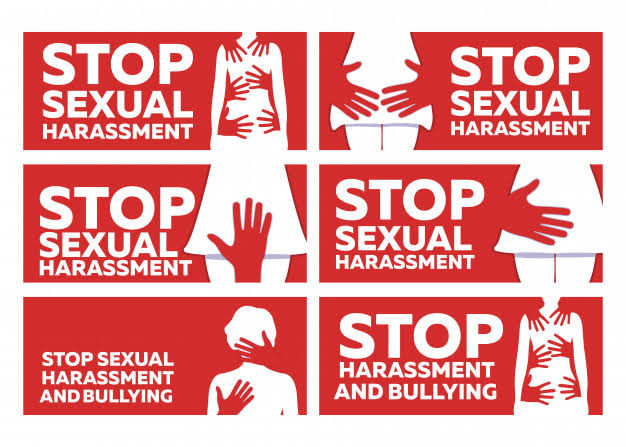
In this uncertainty world , girls are facing many struggles in working places or even in schools by men’s. One of it is sexual harrasment. It took longer time to recognize about this problem.
Sexual harrasment is an form of unwilling sexual behavior which is offensive without womens willingness. It is against law. In this modern world , there are new laws were put forth by the government. But many culprits are escaping from the law and orders. Now take a glimpse at these paragraphs below, so that you could understand what it means .
What is sexual harrasment?
It is an unwillingness sexual behavior which is offensive , humiliating and intimidating. If this sexual activity takes place without his or her personal willingness or interest , then it is considered to be sexual harrasment. This is not only happened to women but also to mens. There are three types of sexual harrasment in work place is verbal or written, physical and visual.
SEXUAL HARASSMENT ANS ITS IMPACT:
Sexual harassment comes in many forms and not just a single one. You can understood what is good touch and bad touch.
It includes when someone tries to bad touch you or grab you or tries to make other physical contacts with you without your consent.
Not only that, compelling you or requesting you to have sex with them and leering at you.
Asking unwanted questions about your sex life and showing offensive material.
Sending unwanted messages or videos or photos about sex or observe phone calls.
Sexual harassment can impact a person severely. It may stress out the victim and they may suffer from anxiety or depression.
Moreover, it can also cause them to withdraw from social situations. After that, the victim also starts to lose confidence and self-esteem. There may also be physical symptoms like headaches, sleeping problems and being not able to concentrate or be productive.
WHAT CAN WE DO:
It is better to solve this problem fastly. First thing , you share this problem with your family members or else share it with your closed ones.
Take this problem to police or your higher officials about this harrasment .
Maintain a document to make it as proof like the texts or social medias comments or emails etc…
Get your friends suggestions or ideas to get rid of from this problem.
Many countries issued that sexual harrasment is an illegal. The word ‘sexual harrasment ‘ means occurring violence within the general community. In India it is described as ‘ eve teasing ‘ .
Indian Law and order
According to Indian constitution, it overrun the fundamental rights of women to gender equality under Article 14 and her rights to live life with dignity under Article 21.
The Supreme Court of India in a public Litigation defined sexual harassment at work place in 1997. This judgement is known as vishaka judgement. Indian law passed its own law on sexual harrasment in the work place which is ” The sexual Harrasment of women at workplace ( prevention, prohibition and Redressal) , Act in 2013.
The criminal Law (Amendment) act in 2013 was introduced with some changes in the Indian Penal Code , making it as an expressed offense under the section 354. The one who involves in this will get punishment upto 3 years of imprisonment or fine.
Though we have many laws and orders for this harrasment, many criminals are easily escaped from this . Think what is making these culprits to spoil many persons life.
To conclude, sexual harassment is a very real issue that went unnoticed for a long period of time, but not anymore. It is essential for all of us to take measures to prevent it from happening as it damages the life of the victim severely.
 Eduindex News
You must be logged in to post a comment.