Every Indian School child is taught that the peacock is India’s National Bird, Tiger is the national Animal, Jana gana Mana is the national Anthem, and Hockey is the national sport.
But in India, the Ministry of Youth Affairs and Sports in 2012 cleared that no particular sport is recognised as India’s National Game.
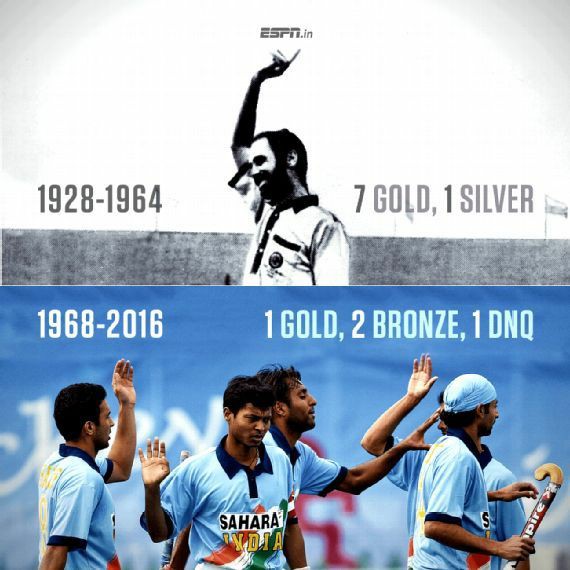
Some people called Hockey as the National Sport probably because of the international success that hockey gained since it’s Olympic debut in the early 20th century. In 1928, the Indian men’s hockey team made their debut at the Olympics, and won 6 gold medal between 1928-1956. Though their performance declined later.
Similarly, some people believe Kabaddi as the National Sport of India because Kabaddi too is most popularly played in India. Kabaddi is one of the Oldest sports in our country.
But the truth is that the national game of India is neither Hockey nor Kabaddi. There is no sport which has been declared or recognised as the National Sport of India till date.
Neeraj Chopra won Gold in the men’s Javelin throw final with a throw of 87.58 to win the first gold medal in athletics for India and the second gold overall.
This is India’s 7th medal at Tokyo Olympic, the best ever medal haul for India at a single edition of the games.
The first Gold medalist in Olympics for India was Abhinav Bindra in shooting and Neeraj becomes the second Gold medalist for India in the history of Olympics.
So far, India won 1 gold, 2 silvers and 4 bronze at Tokyo Olympics.
One of the most ancient games in the world — a crude form of the sport was played in Egypt some 4,000 years ago — the history of hockey can be traced back to 1527 in Scotland. Back then, it was called ‘hokie’ – where players hit around a small ball with sticks.However, the first version of modern-day field hockey was developed by the British sometime between the late 18th and early 19th century. It was introduced as a popular school game then and made its way to the Indian army during British rule in the 1850s.In the next few decades, national competitions like the Beighton Cup in Calcutta and Aga Khan tournament in Bombay (now Mumbai) popularised the sport further, especially in erstwhile provinces of Bombay and Punjab.
Ask any sportsperson, the pinnacle of sporting success for them is to stand on the Olympic podium and see their country’s national flag rise in that hallowed arena. It is that dream that pushes them into making sacrifices as they chase Olympic glory.The London Olympics saw India finally take steps towards realising its true potential at the Olympics. Abhinav Bindra had raised the bar in Beijing with a first ever individual Gold medal.Just one individual Gold in a country of a billion plus people. Even the six medals at London 2012 were nowhere close to the tally India should be aspiring for. But at least it was a start.
However no story of Indian sport is complete without a look back at a rich legacy. The Champions of today are inspired by past generations who have coveted Olympic glory. Only a handful have managed to attain the ultimate glory in world sport, an Olympic medal.Yet the story of India at the Olympics begins with Hockey. Very rarely has a sport been as synonymous with a country than India and Hockey. It is a rich legacy, 8 gold medals, six of those consecutive wins across four decades.
Dominance in the world of hockey
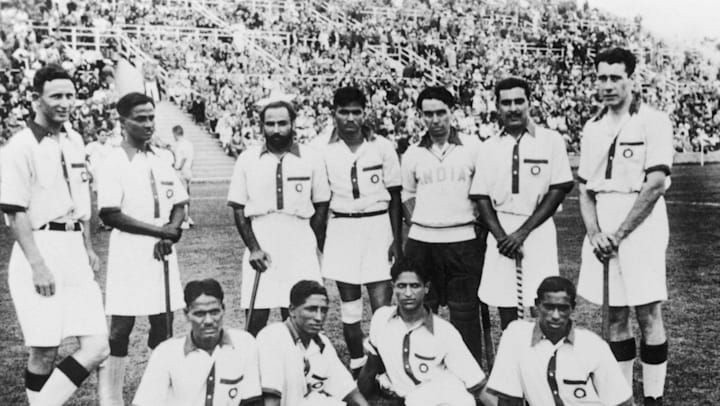
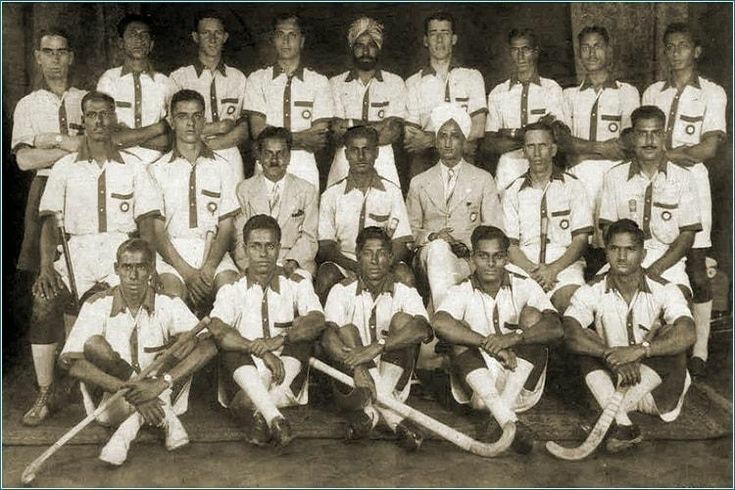
After a rocky relationship with the Olympic Games until 1924 — hockey was only played in 1908 and 1920 and dropped for the other editions — the presence of a global sports body (FIH) ensured that hockey gained permanent Olympic status starting Amsterdam 1928. The Indian Hockey Federation applied and earned an FIH membership in 1927, thus ensuring that the Indian hockey team would play its first Olympics in 1928.It was the beginning of a legacy – decorated with eight gold medals – a record till today.
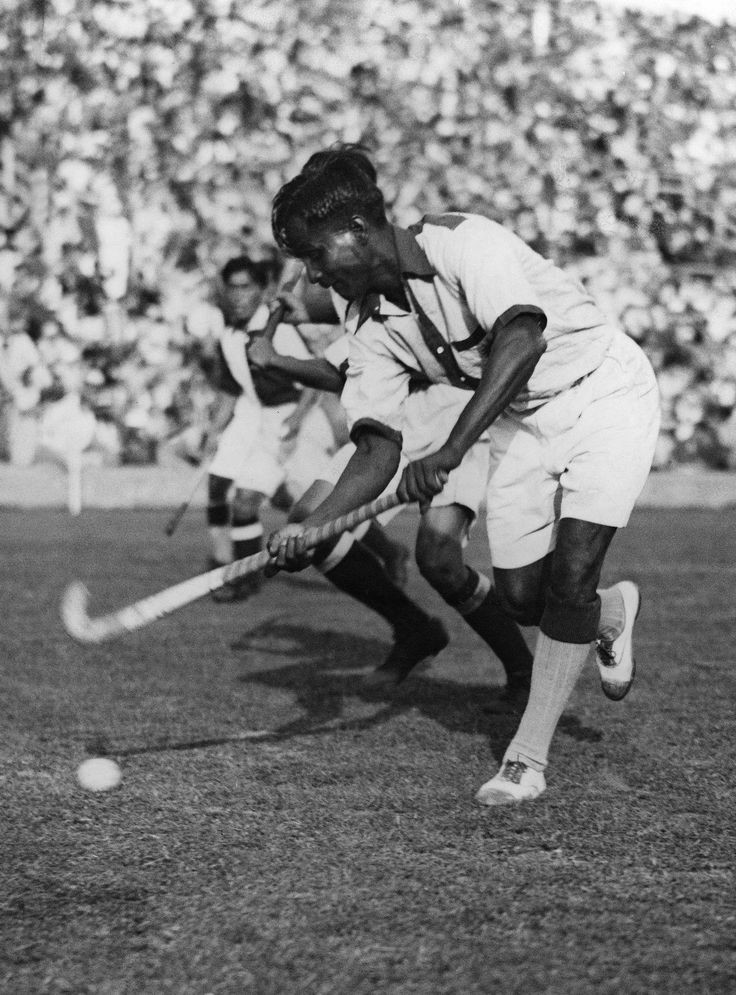
The Indian hockey team clinched the Olympic gold medal in its first attempt in 1928. India played five matches, scoring 29 goals and conceding none, with Dhyan Chand scoring 14 of them.The hockey wizard became the cornerstone of the Indian hockey team as it won two more gold medals in 1932 and 1936, completing a hat-trick of Olympic hockey golds. Dhyan Chand was made captain in 1936 in what would prove to be his final Olympic Games.
Unfortunately there were no Olympics in 1940 and 1944 due to the Second World War and that was the last the Olympics saw of Dhyan Chand. In 1948 a newly independent India had to battle not just strong teams but also cope with the exodus of players to Pakistan.When the Olympics returned after World War II in 1948, India found a new genius in the legendary Balbir Singh Sr. as he steered them to a second hat-trick of Olympic gold medals in 1948, 1952, and 1956, this time as an independent nation. The period was one of the most significant in the history of hockey in India. While Pakistan halted the gold run in the final at the 1960 Rome Olympics, India would ascend to the top step at Tokyo 1964. However, it was apparent that India’s domination of the sport was weakening. The Indian hockey team had won silver at the 1958 and 1962 Asian Games, before finally winning gold in the 1966 edition. However, India only managed a bronze at Mexico 1968, in what was then their lowest finish in the Olympics.
In 1968 and 1972 the team returned with a Bronze medal while Montreal saw the team draw a blank, unable to adjust to a change from grass to artificial turf. The pain of those campaigns is expressed by 3-time medallist Harbinder Singh, Ashok Kumar, Aslam Sher Khan and Dr Vece Paes. Hockey expanded its reach beyond the Olympics with the first Hockey World Cup held in 1971 in Spain. Though Pakistan beat Spain to win the title and India finished third, the sport was steadily gaining popularity in Europe, and innovations were underway.
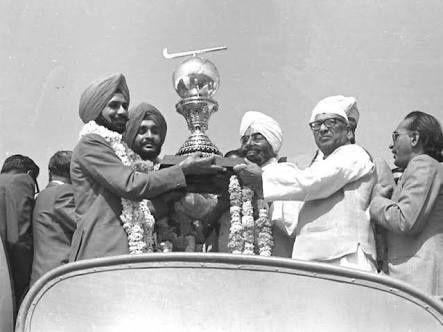
While India’s representation in global hockey was largely restricted to the men, the women’s team made its first appearance in international competition at the inaugural women’s Hockey World Cup in 1974, finishing a creditable fourth.There seemed to be an upturn when the men’s team won its only World Cup title in 1975.
1980s-2008: A period of declination of performance
The 1980s actually began well for the Indian hockey teams.The men’s team took advantage of a depleted field to win their eighth Olympic gold at Moscow 1980 while the women’s team finished fourth in what was the first edition of women’s hockey at the Olympics.At the 1982 Asian Games in New Delhi, where women’s hockey was played for the first time, the women’s Indian hockey team clinched a historic gold at home while the men’s team won silver.
The introduction of hockey at the Commonwealth Games in 1998 provided another platform for global hockey. The Indian men’s and women’s teams finished fourth in the inaugural edition.The decline of Indian hockey hit rock bottom in 2008 when the men’s team, for the first time since 1928, failed to qualify for the Beijing Olympics.
Revival of Indian hockey
After the disappointment of 2008, the men’s Indian hockey team responded by returning to the podium at the 2010 Commonwealth Games, winning silver and the 2010 Asian Games, where they won bronze.The men’s Indian hockey team qualified for the 2012 London Olympics. Though India ended last, it represented a small bit of progress.
In the years since, Indian hockey seems to have found its feet again.The women’s team, led by Rani Rampal, won silver at the 2018 Asian Games, achieving their best ranking of ninth in the world the same year and qualified for a second-consecutive Olympics in Tokyo the following year.The men’s Indian hockey team has imbibed an attacking philosophy under new head coach Graham Reid and young captain Manpreet Singh.India played their first FIH Pro League campaign in 2020, winning games against the best in the world like Belgium, Australia and the Netherlands and rising to fourth in the world rankings, their best in history.
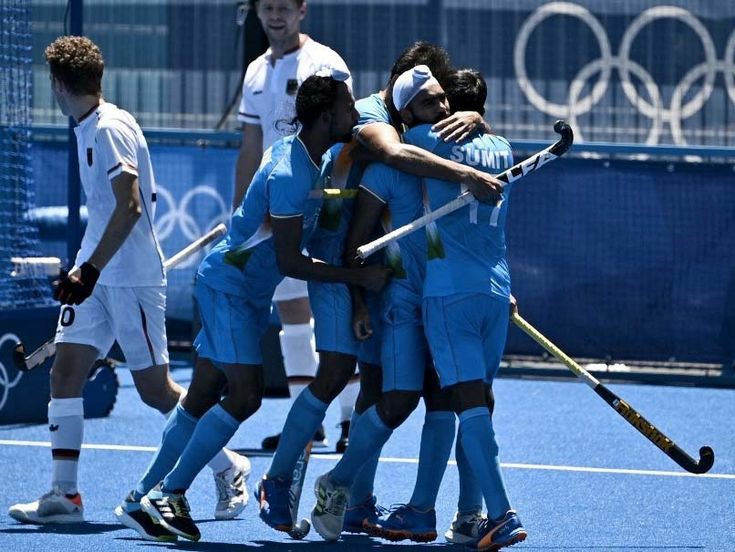
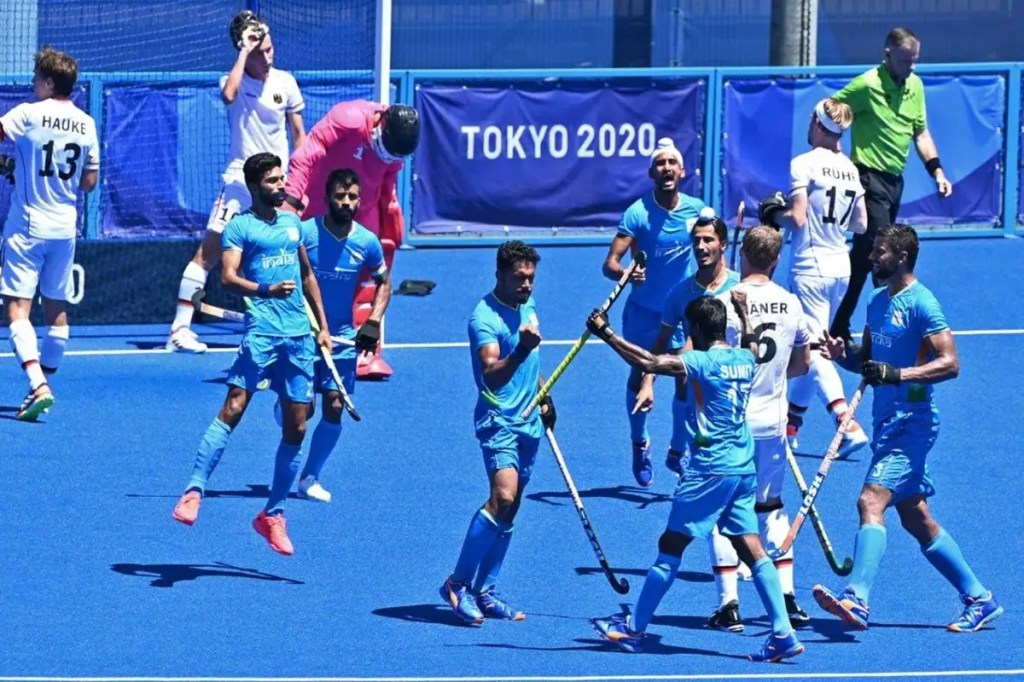
Indian men’s hockey team today displayed a great game of counter-attacking play as it won defeated Germany 5-4 in the bronze medal play-offs at the Tokyo Olympics today. Indian men’s hockey team won an Olympic medal after a gap of 41 years. India’s last of the eight Olympic golds came way back in the 1980 Moscow Games.The eight-time former gold-winners, who battled a heartbreaking slump in the last four decades, made the resurgence of the last couple of years count in the best way possible with an Olympic medal.
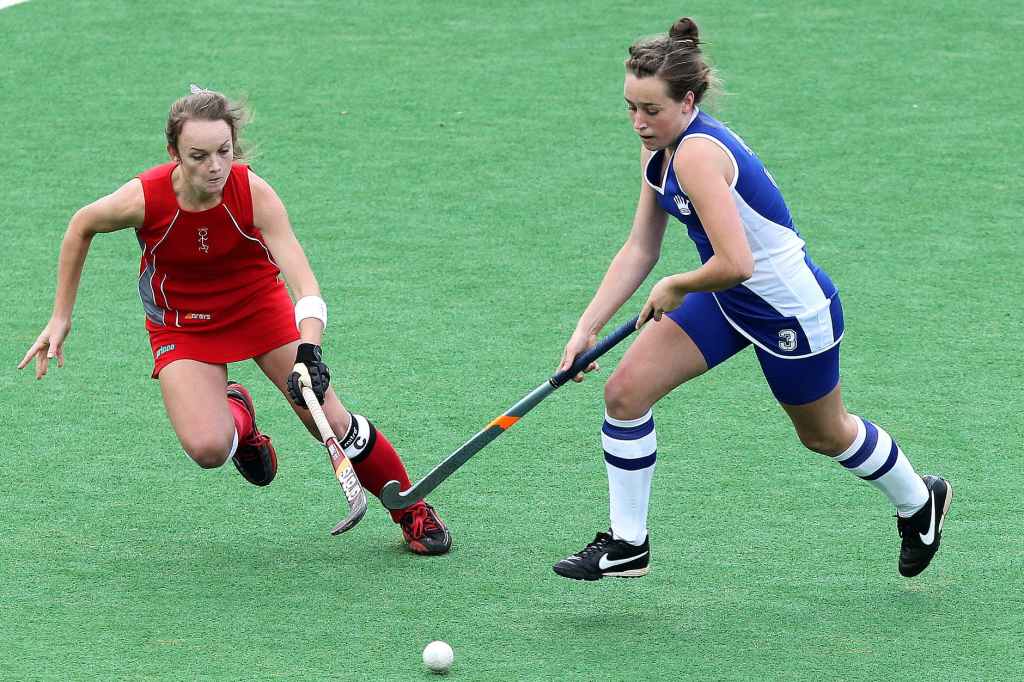
Hockey is a sport in which two teams play against each other by trying to manoeuvre a ball or a puck into the opponent’s goal using a hockey stick. There are many types of hockey such as bandy, field hockey, ice hockey and rink hockey.
In most of the world, the term hockey by itself refers to field hockey, while in Canada, the United States, Russia and most of Eastern and Northern Europe, the term usually refers to ice hockey.
Games played with curved sticks and a ball can be found in the histories of many cultures. In Egypt, 4000-year-old carvings feature teams with sticks and a projectile, hurling dates to before 1272 BC in Ireland, and there is a depiction from approximately 600 BC in Ancient Greece, where the game may have been called kerētízein or because it was played with a horn or horn-like stick .[10] In Inner Mongolia, the Daur people have been playing , a game similar to modern field hockey, for about 1,000 years.
Most evidence of hockey-like games during the Middle Ages is found in legislation concerning sports and games. The Galway Statute enacted in Ireland in 1527 banned certain types of ball games, including games using “hooked” (written “hockie”, similar to “hooky”) sticks
By the 19th century, the various forms and divisions of historic games began to differentiate and coalesce into the individual sports defined today. Organizations dedicated to the codification of rules and regulations began to form, and national and international bodies sprang up to manage domestic and international competition.
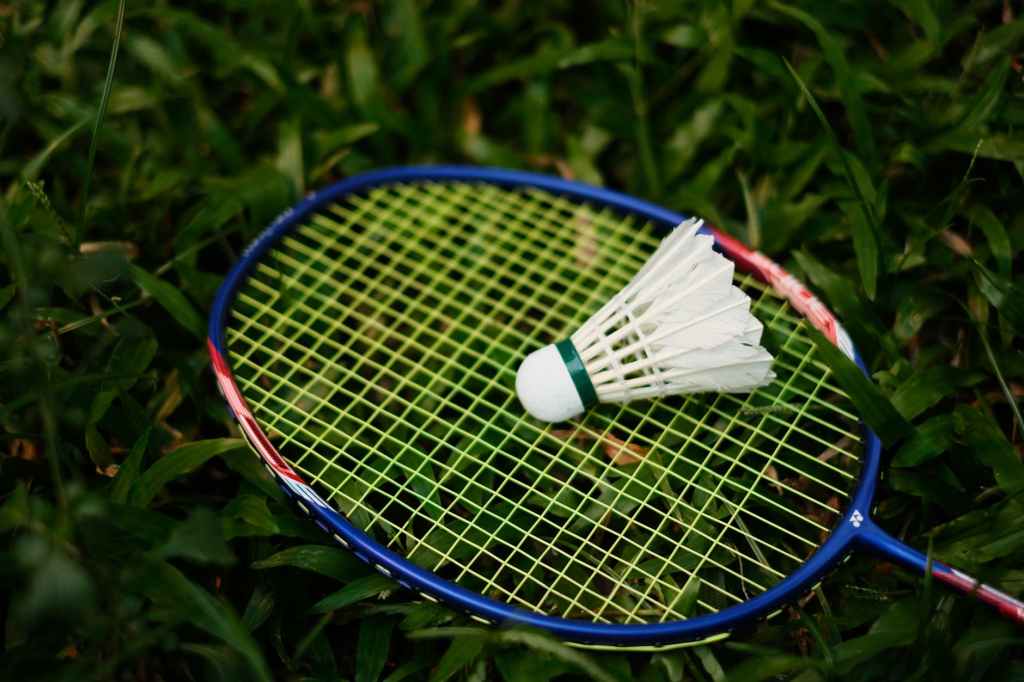
Badminton is a racquet sport played using racquets to hit a shuttlecock across a net. Although it may be played with larger teams, the most common forms of the game are “singles” (with one player per side) and “doubles” (with two players per side). Badminton is often played as a casual outdoor activity in a yard or on a beach; formal games are played on a rectangular indoor court. Points are scored by striking the shuttlecock with the racquet and landing it within the opposing side’s half of the court.
Each side may only strike the shuttlecock once before it passes over the net. Play ends once the shuttlecock has struck the floor or if a fault has been called by the umpire, service judge, or (in their absence) the opposing side.
The shuttlecock is a feathered or plastic projectile which flies differently from the balls used in many other sports. In particular, the feathers create much higher drag, causing the shuttlecock to decelerate more rapidly. Shuttlecocks also have a high top speed compared to the balls in other racquet sports. The flight of the shuttlecock gives the sport its distinctive nature.
The game may have originally developed among expatriate officers in British India, where it was very popular by the 1870s. Ball badminton, a form of the game played with a wool ball instead of a shuttlecock, was being played in Thanjavur as early as the 1850s and was at first played interchangeably with badminton by the British, the woollen ball being preferred in windy or wet weather.
Early on, the game was also known as Poona or Poonah after the garrison town of Poona, where it was particularly popular and where the first rules for the game were drawn up in 1873.By 1875, officers returning home had started a badminton club in Folkestone. Initially, the sport was played with sides ranging from 1 to 4 players, but it was quickly established that games between two or four competitors worked the best. The shuttlecocks were coated with India rubber and, in outdoor play, sometimes weighted with lead. Although the depth of the net was of no consequence, it was preferred that it should reach the ground.
Prime Minister Narendra Modi announced today the Rajiv Gandhi Khel Ratna Award, the highest sporting honour of India, has been renamed as Major Dhyan Chand Khel Ratna Award. The renaming recognises the ultimate hockey hero and legend of the sport, Dhyan Chand.
The prime Minister said the move was based on the numerous requests he received from across the country.
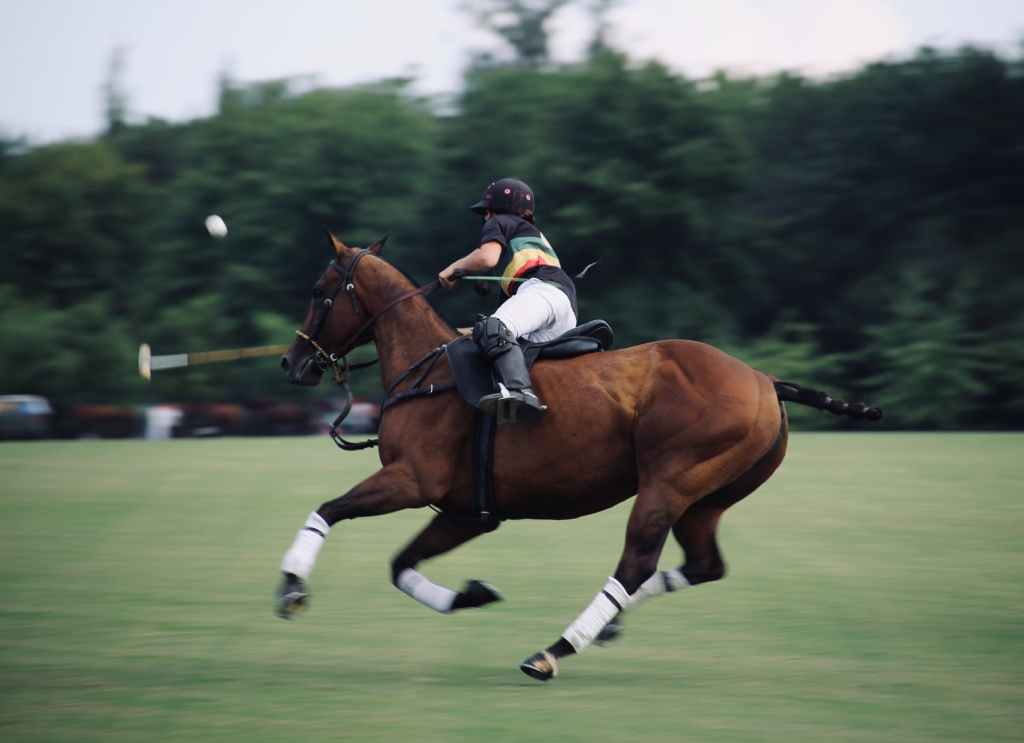
Polo is a horseback ball game, a traditional field sport and one of the world’s oldest known team sports. The game is played by two opposing teams with the objective of scoring using a long-handled wooden mallet to hit a small hard ball through the opposing team’s goal. Each team has four mounted riders, and the game usually lasts one to two hours, divided into periods called chukkas or “chukkers”
Polo has been called “the sport of kings”, and has become a spectator sport for equestrians and high society, often supported by sponsorship. The concept of the game and its variants date back from the 6th century BC to the 1st century AD, originated from equestrian games played by nomadic Iranian peoples. The sport was at first a training game for Persian cavalry units, usually the royal guard or other elite troops.A notable example is Saladin, who was known for being a skilled polo player which contributed to his cavalry training.It is now popular around the world, with well over 100 member countries in the Federation of International Polo, played professionally in 16 countries, and was an Olympic sport from 1900 to 1936.
Polo is played professionally in many countries, notably Argentina, Australia, Brazil, Canada, Chile, Dominican Republic, France, Germany, Iran, India, New Zealand, Mexico, Pakistan, Jamaica, Spain, South Africa, Switzerland, the United Kingdom, and the United States, and is now an active sport in 77 countries. Although its tenure as an Olympic sport was limited to 1900–1939, in 1998 the International Olympic Committee recognised it as a sport with a bona fide international governing body, the Federation of International Polo. The World Polo Championship is held every three years by the Federation.
Polo is unique among team sports in that amateur players, often the team patrons, routinely hire and play alongside the sport’s top professionals.
The playing field is 300 by 160 yards (270 by 150 m), the area of approximately six soccer fields or nine American football fields (10 acres), while arena polo is 96 x 46 metres. The playing field is carefully maintained with closely mowed turf providing a safe, fast playing surface. Goals are posts which are set eight yards apart, centred at each end of the field. The surface of a polo field requires careful and constant grounds maintenance to keep the surface in good playing condition.
The time the women had made their first Olympic apperance was at the 1980 games in Moscow. The second Olympic appearance was at the 2016 Olympics in Rio de Janeiro.
The Indian Women’s hockey team had created history after they had entered the semi-finals of the big tournament. While they lost against Argentina, they will now play for the bronze in their maiden Olympic podium clash at Oi Hockey Stadium against Great Britain tomorrow (6th August,2021) at 7 AM.
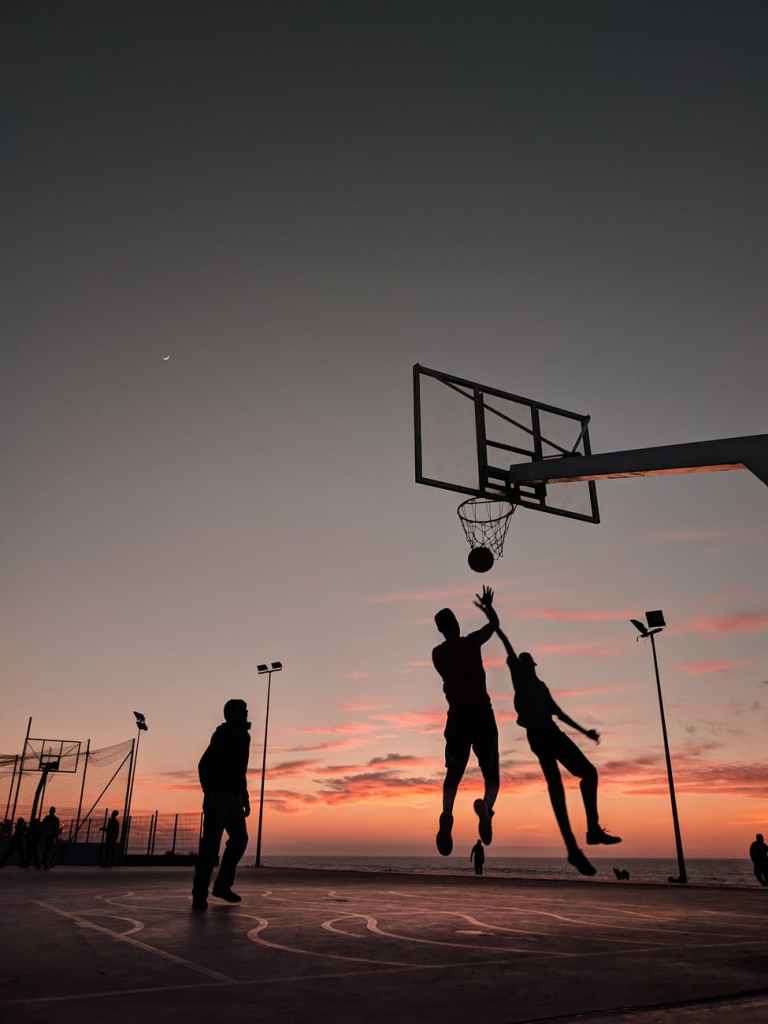
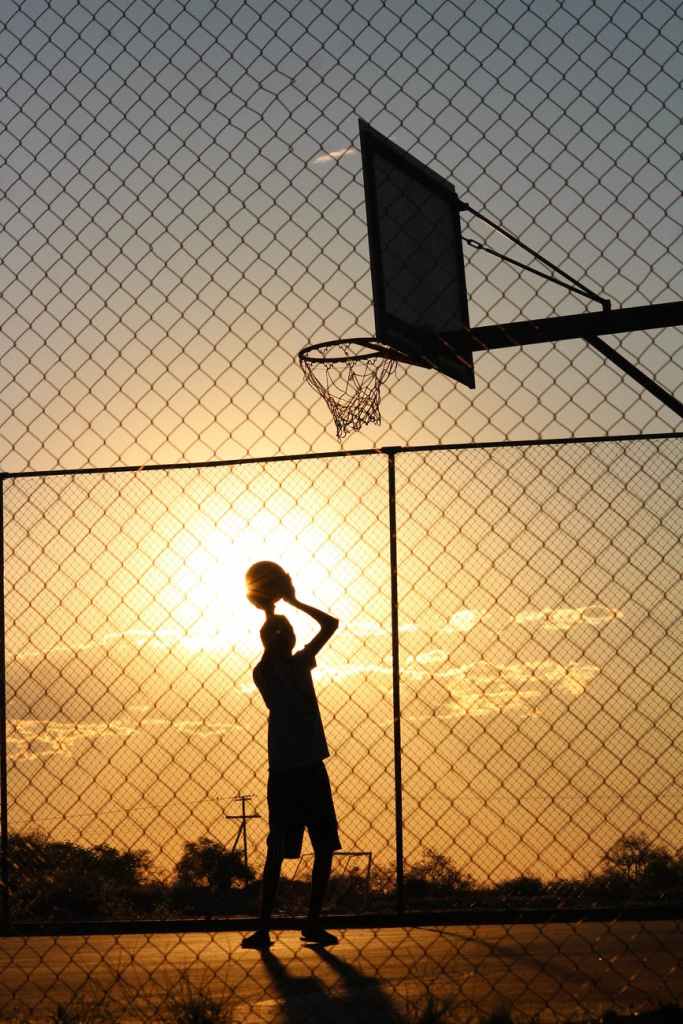
Basketball is a team sport in which two teams, most commonly of five players each, opposing one another on a rectangular court, compete with the primary objective of shooting a basketball (approximately 9.4 inches (24 cm in diameter) through the defender’s hoop a basket 18 inches (46 cm) in diameter mounted 10 feet (3.048 m) high to a backboard at each end of the court) while preventing the opposing team from shooting through their own hoop. A field goal is worth two points, unless made from behind the three-point line, when it is worth three. After a foul, timed play stops and the player fouled or designated to shoot a technical foul is given one, two or three one-point free throws. The team with the most points at the end of the game wins, but if regulation play expires with the score tied, an additional period of play (overtime) is mandated.
The five players on each side fall into five playing positions. The tallest player is usually the center, the second-tallest and strongest is the power forward, a slightly shorter but more agile player is the small forward, and the shortest players or the best ball handlers are the shooting guard and the point guard, who implements the coach’s game plan by managing the execution of offensive and defensive plays (player positioning). Informally, players may play three-on-three, two-on-two, and one-on-one.
In December 1891, James Naismith, a Canadian professor of physical education and instructor at the International Young Men’s Christian Association Training School (now Springfield College) in Springfield, Massachusetts, was trying to keep his gym class active on a rainy day. He sought a vigorous indoor game to keep his students occupied and at proper levels of fitness during the long New England winters. After rejecting other ideas as either too rough or poorly suited to walled-in gymnasiums, he invented a new game in which players would pass a ball to teammates and try to score points by tossing the ball into a basket mounted on a wall.
Basketball was originally played with a soccer ball. These round balls from “association football” were made, at the time, with a set of laces to close off the hole needed for inserting the inflatable bladder after the other sewn-together segments of the ball’s cover had been flipped outside-in. These laces could cause bounce passes and dribbling to be unpredictable. Eventually a lace-free ball construction method was invented, and this change to the game was endorsed by Naismith. The first balls made specifically for basketball were brown, and it was only in the late 1950s that Tony Hinkle, searching for a ball that would be more visible to players and spectators alike, introduced the orange ball that is now in common use.
Today was a very historical day for Indian hockey in Olympics. Today was day 13 of Tokyo Olympics. India started on a bright note by defeating a strong side Germany in a mouth watering contest by 5-4 , and winning an Olympic medal in hockey after 41 years .
It was a very emotional moment for Indian hockey and players. Indian team made a wonderful comeback because at one stage they were behind by 1-3 . In the match Simranjeet Singh scored India’s first goal of the match but Germany made a roaring comeback and scored 2 goals straightaway and score was 3-1 after that , but just after few minutes Hardik Singh and Harmanpreet Singh scored goals for India and leveled the scorecard with 3-3. After the end of 2nd quarter,
The third quarter went very good quarter for India as India added 2 more goals in their scorecard. Rupinder pal Singh scored 4th goal of the match for India with the help of penalty stroke. The scorecard only got better after that as Simranjeet Singh again scored a goal and gave a 5-3 lead to India. Germany was under pressure .However, Germany scored a goal in 4th quarter but it was not enough as India won a hard fought match by 5-4.
In wrestling, wrestler Vinesh phogat won her first match convincingly by 7-1 but in the next round Vinesh Phogat was defeated by V Kaladzinskaya in 53 kg weight category . But there was a still a way win a bronze medal by winning repechage round but this dream was shattered when V Kaladzinskaya was defeated by Chinese wrestler. Vinesh Phogat was one of the biggest medals hopes for India.
Then came two important matches of India in wrestling where India’s Ravi kumar Dahiya was in finals of the 57 kg category against defending champion Zavur Uguev . But unfortunately, Ravi Dahiya lost a hard fought match by 4-7, and ended with a Silver medal. It was a wonderful performance from wrestler Ravi Dahiya. After that , wrestler Deepak Punia was against M Anime in 86 kg weight category. He was giving a tough fight but unfortunately he lost the match in last seconds of the match.
Today was a very mix kind of day for India, after winning a historic bronze medal in hockey India star wrestler Vinesh Phogat was knocked out of Tokyo Olympics. Aditi Ashok was a big positive for India. Ravi Dahiya won Silver medal but Deepak Punia was unable to win Bronze medal.
Tomorrow is also a very interesting day in Olympics for India as India women hockey team will play against Great Britain and India’s one of the biggest medal hopes Bajrang Punia will start his campaign tomorrow.
Women Boxer Lovlina Burgohain won bronze medal for India in Tokyo Olympic after being defeated in semi final. She lost the match to top seed Busenaz Surmenili of Turkey in a 0-5 score.
Lovlina, was assured of bagging a medal after defeating former world champion Nien Chin Chen of Chinese Taipei 4-1 to enter the semi-finals of the welter weight category.
She has became the third Indian boxer after Vijender Singh and Mary Kom to win an Olympic medal.
India creates history as the Indian men’s hockey team win bronze medal after 41 years at Tokyo Olympic.
Hockey which was considered as the national game of India but this is the third time the team clinched the medal in Olympics, the other two came in 1968 (Mexico City) and 1972 (Munich games).
India defeated Germany,the Bronze medal winner in Rio Olympic 2016 by 5-4 goals.
It was over 40 years ago in 1980 that Indian hockey team won a medal in Olympics. Today after defeating Germany, India’s men hockey won 12th medal at the Olympics, which makes it the sole best-performing nation in history. After loosing against Belgium in the semi finals on August 3 with the margin of 5-2, India fought against Germany for the bronze medal.
In the first quarter Germany took the lead with the score 1-0 against India. Timm Herzbruch sent the ball to Florian Fuchs, who in turn set up Timur Oruz. There were a couple of defenders around him, but Oruz still scored. After 10 minutes German midfielder Mats Grambusch received a long pass up front and entered the circle. He got past Hardik Singh and released a shot, which was blocked by Indian keeper PR Sreejesh.
After 17 minutes just after the start of second round Nilakanta Sharma received the ball, evaded a couple of tackles and sent a delightful pass towards Simranjeet Singh, who found the back of the net and scored the goal and the score was now 1-1. After 24 minutes Eventually, Christopher Ruhr slipped a pass to Niklas Wellen, who made it 2-1 for the Germans and just after a minute Germans scored another goal making it to 3-1. The hopes had just started declining until Hardik Singh scored a goal for India and it was 3-2 now and just after 2 minutes Harmanpreet Singh scored his sixth goal of the Tokyo Olympics with an excellent drag-flick. The second round ended with the score 3-3. It was the most thrilling round of all.
Just after the start of the third round India received a penalty stroke and Rupinder Pal Singh made no mistake and gave India a lead with the score 3-4. At 34 minutes India scored another goal setting the score to 3-5. After the start of the fourth quarter Germany scored a goal and now score was 4-5. In the end Germans were able to penetrate twice but the Indian goalkeeper Sreejesh saved the goal beautifully twice and thus leading the country to the victory.





 Eduindex
You must be logged in to post a comment.