The Enlightenment Age

The Age of Enlightenment, also called the Age of Reason was an intellectual revolution which dominated Europe during the 17th and 18th century. Enlightenment was the emergence and creation of ideas which challenged the existing notions of the world. It questioned the existing set of ideas and conceptions about religion, society and politics. Before this period, Europe was essentially a land dominated by religion. This intellectual movement was carried out by the Enlightenment philosophers like Baron de Montesquieu, Voltaire, David Hume and Adam Ferguson.

According to some, the beginning of the Enlightenment was after the publication of René Descartes’ philosophy of ‘Cogito, ergo sum’ (“I think, therefore I Am”) in 1637, while others belief the publication of Isaac Newton’s ‘Principia Mathematica’ (1687) began the Scientific Revolution and the beginning of the Enlightenment.

The philosophers and intellectuals challenged the clergy men who supported the traditional view of society. These new ideas influenced cultural practices like writing, painting, printing, music, sculpture and architecture. There was also significant progress in technology and medical science.

The key ideas of the Enlightenment were Reason, Empiricism, Science, Universalism, Individualism, Secularism, Freedom and similar others. The thinkers stressed on the primacy of reason to establish rationalist ideas based on fact. The key to expanding human knowledge was shifted upon empirical facts and scientific experiments. This concept of scientific reason was considered universal and could be applied to all situations. Philosophers opposed all traditional religious authority and stressed on the importance of knowledge free from all religious biases. They pointed out the creation of a form of knowledge which was not influenced by any religious ideas or superstitions. A secular idea was born and this spread quickly throughout Europe. This led to the belief that all individuals are same and equal despite their religious and philosophical views.

It was the idea of Individualism which was the starting point of all scientific knowledge. Science was the supreme form of knowledge as scientific facts were based on observation and experiments. This led to an increase in objective ideas and decrease in belief of superstitions. The philosophers wrote in a very direct way and took clear positions. They wrote about important changes and transitions going on in the society. A traditional social order was replaced by a modern State. The formation of a political State took place and the powers shifted from the hands of the Church to the State. Society was no longer dependent on the traditional religious institutions. It was believed that the application of reason and scientific knowledge could remove the cruelty and injustice from social institutions. The works of Voltaire instilled a desire for new ideas and belief in progress among the Europeans.

Thinkers like Saint Simon greatly influenced the societal processes. According to him modern society was threatened by anarchy and disorder. To bring back social order a Science of Society would be necessary. He constructed a ‘Social Physiology’ to bring order and stability in the society. He believed that modern society would flourish if science and industry were used for the service of humans. A major social re-organisation would be necessary to bring about order and proceed towards a successful social change which would bring about societal progress. Although his ideas were neglected at first, as Europe became engulfed with disorder and war, these ideas started influencing people. Eventually Saint Simon became a key figure in the liberal political movements of Europe.

Exotic Island Getaways

Island destinations offer beautiful beaches, exotic food and interesting tales of history and culture. Such islands are present all across the world. Iconic beaches, striking landscapes and coral reefs will make one fall in love with these beautiful islands. Most travellers would keep such destinations in their travelling bucket list. Some of these iconic travel destinations are mentioned here –  

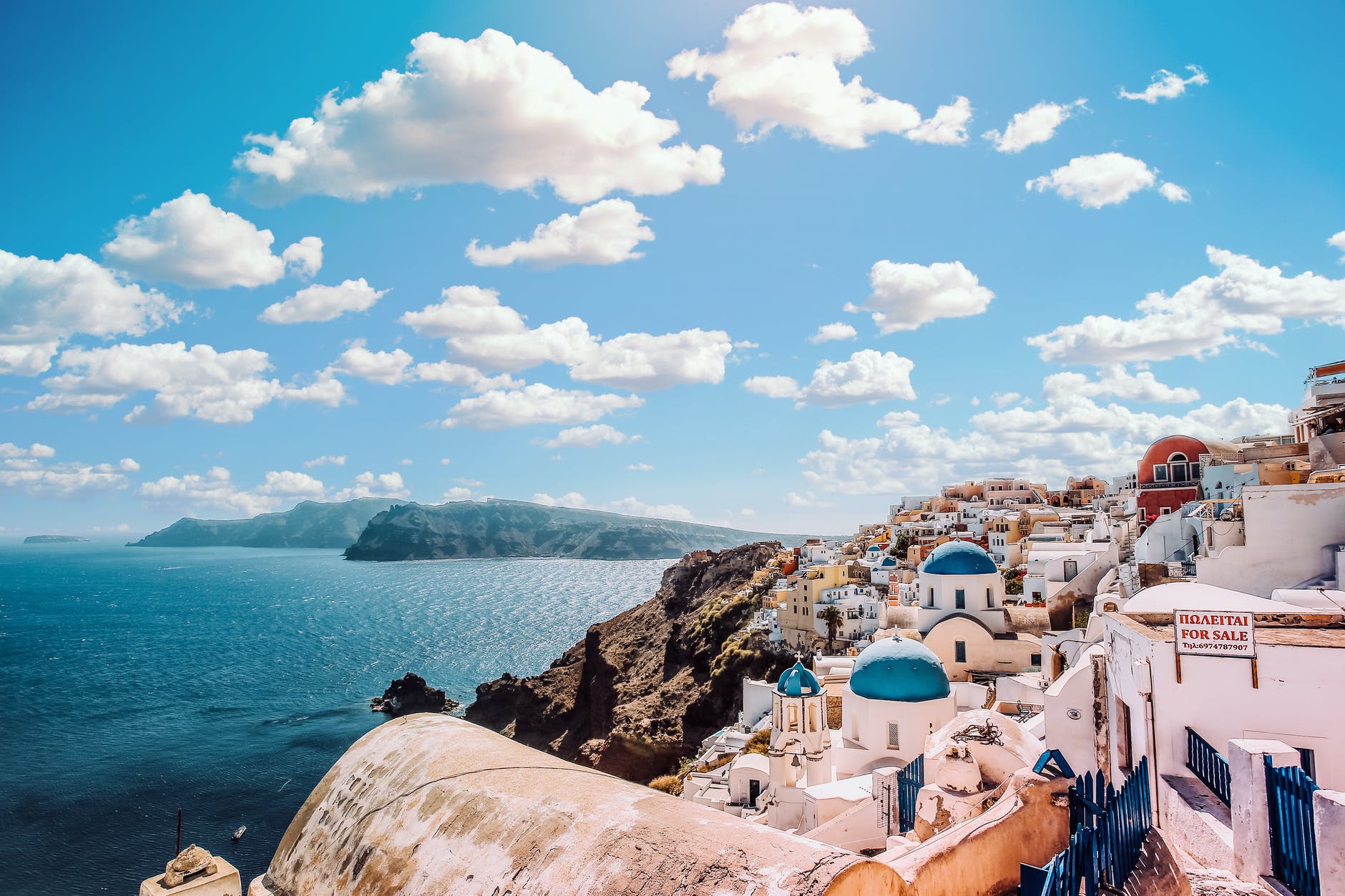
Santorini – The iconic island city of Greece, is a very popular travel destination which is a must visit in every traveller’s list. The turquoise waters, aromatic Mediterranean flavours and historical tales will surely make you admire and fall in love with the island. It was devastated by a volcanic eruption in the 16th century BC, which has shaped its rugged landscape. The two principal towns Fira and Oia are situated along cliffs above an underwater crater. The unique red and black sand beaches due to the volcanic setting of the island makes some picturesque sites. Visitors can walk around the lanes of white washed villages and find some great restaurants and shops.  

Photo by Aleksandar Pasaric on Pexels.com

Cyprus – This Mediterranean island is a home to both Greek and Turkish descendants which makes it a rich cultural amalgamation. The honey coloured beaches, ancient ruins will appeal to every traveler. It is known as the jewel of the Meditteranean. History enthusiasts can admire the Hala Sultan mosque while beach lovers will love the vibrant waters of Nissi Beach. While in Cyprus, one can also visit the city of Paphos which is the mythical birthplace of Aphrodite, the ancient Goddess of love and beauty. The traditional food include grilled meat kababs, pork marinated in coriander, fried halloumi cheese, olives, pitta bread, lamb, rabbit stews, root vegetables, chickpeas and artichokes. 

Maldives – Situated in the Indian Ocean, this island is a paradise for all beach lovers. It has striking beaches and exceptional diving spots. You can also try activities like snorkeling at Hulhumale beach, or take a pleasant evening stroll at Cocoa Island during the sunset. The Grand Friday Mosque and Male’ Fish Market are also some popular spots. It consists of a chain of about 1,200 small coral islands and sandbanks (some 200 of which are inhabited), grouped in clusters. The archipelago was inhabited as early as the 5th century BC by Buddhist peoples, from Sri Lanka and southern India.  

Phuket – This dreamy Thai island in the Andaman Sea with its dreamy white beaches with mountainous rain-forests will give you the best views. The towns are full of ornate Buddhist temples like Wat Chalong. The southernmost tip of the island, Promthep Cape, is something which you wouldn’t want to miss. You can also enjoy shopping and dining in Patong. It is famous for a number of things like exotic beaches, vibrant nightlife, colourful night markets, delicious seafood, white marble Big Buddha and scuba diving. Phuket has a tropical climate and it is usually warm, cool or rainy. It can however get quite hot in April and May. The tourist season is from November to February when it has a cool and dry weather.

History of Chocolate

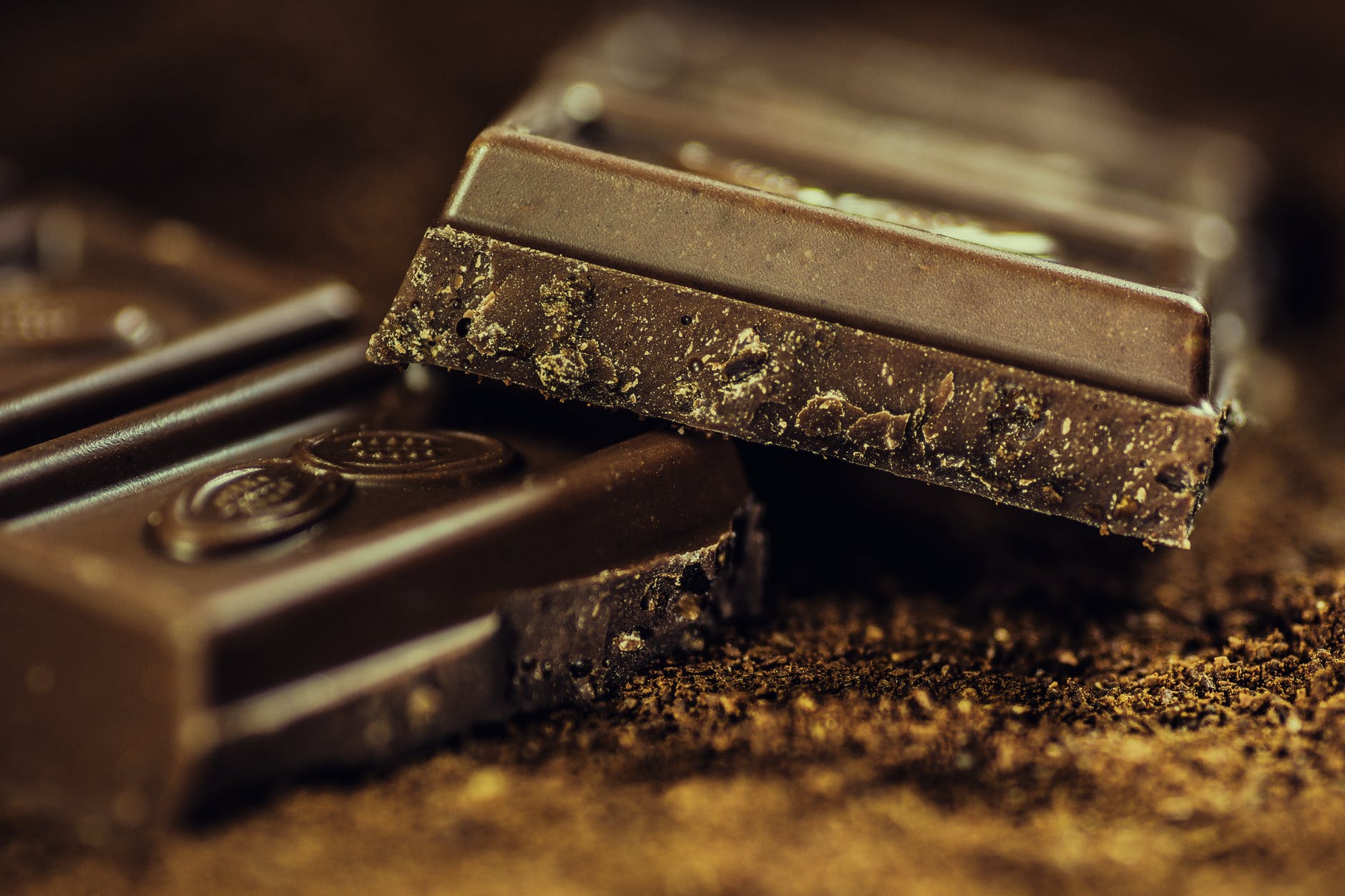
The first thing which comes to our mind when we hear the word chocolate is a candy or a dessert which tastes sweet. At present, Chocolate is one of the most famous food items in the world. It is consumed worldwide in different forms and is loved by foodies. At first thought we think of it as something to eat and not drink. Chocolate has a very different history and the story behind its popularity is quite an interesting one. The history of Chocolate dates back to about 450 B.C. when it was originally consumed as a bitter drink mixed with spices or corn puree. It originated in Mesoamerica where the Aztecs believed that the cocoa or cacao seeds were the gifts of the God of wisdom. It was used as an aphrodisiac which gave the drinker strength. The sweet pulp of the cacao fruit surrounding the beans, was also fermented into an alcoholic beverage at that time. Today local folks of South Mexico are still known to make such drinks.

Photo by Pixabay on Pexels.com


The word chocolate came from the Aztec word “xocoatl” meaning a bitter drink brewed from cacao beans. The cacao tree has a Latin name “Theobroma cacao” meaning Food of the Gods. In pre-modern Latin America, the cacao seeds were considered so valuable that it was used as a currency. It was one of the essential items in rations of the United States soldiers during war. According to a 16th century Aztec document 100 cacao beans could be exchanged for a good turkey hen.  

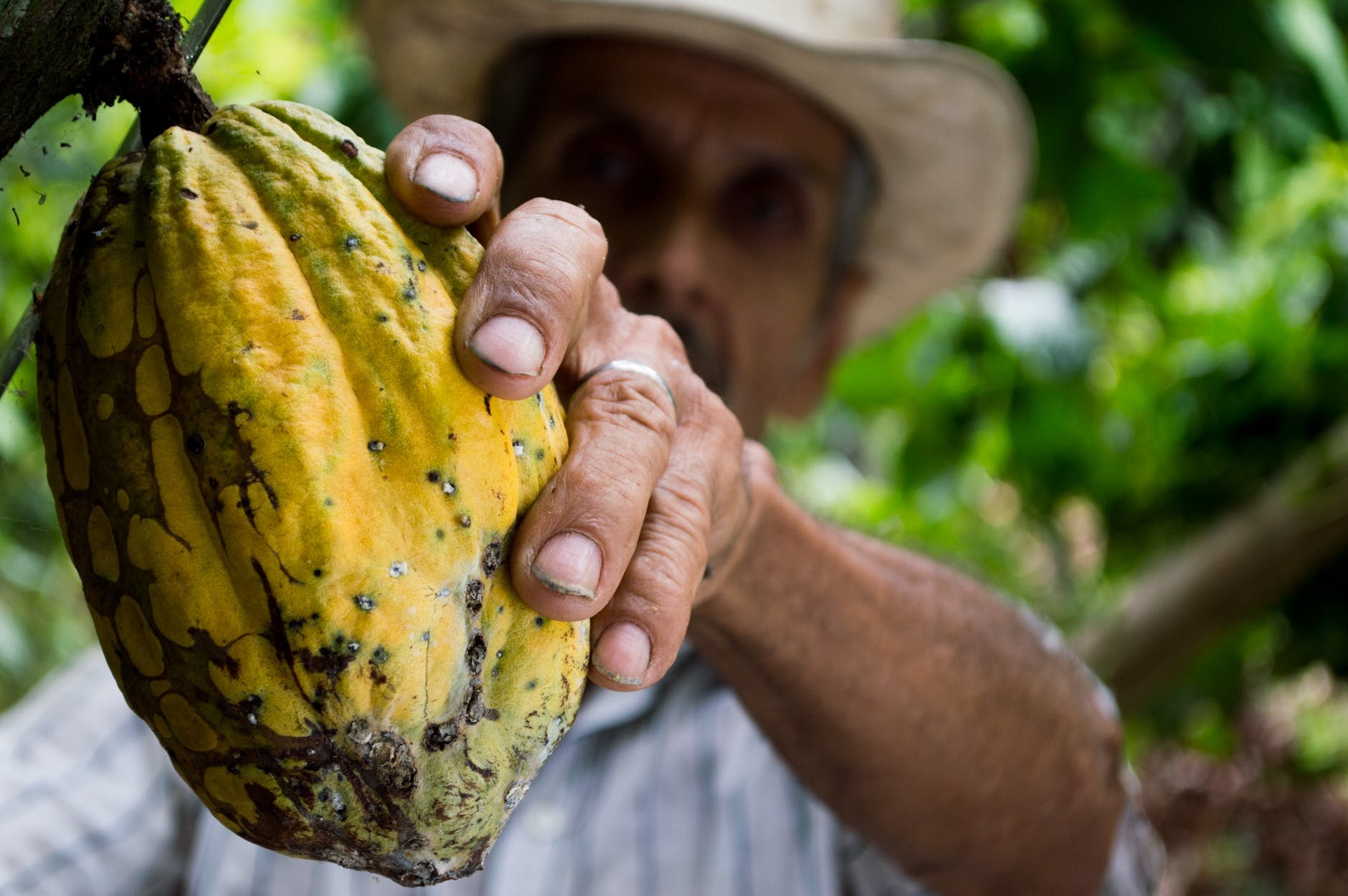
The cacao tree is native to Mesoamerica where its cultivation, consumption and cultural use began. When pollinated, the seeds of the cacao tree form a sheath, within which 30 to 40 brownish-red almond shaped beans are embedded in a sweet viscous pulp. The beans are bitter but the pulp is sweet which may have been consumed by humans at first. The cacao pods grow in a wide range of colors, like pale yellow, bright green, purple and crimson. The texture may vary from sculpted to completely smooth. The plantation of the cocoa trees is a tough process. When in natural environment, the trees can grow up to 60 feet tall but in plantations they grow only up to 20 feet.  

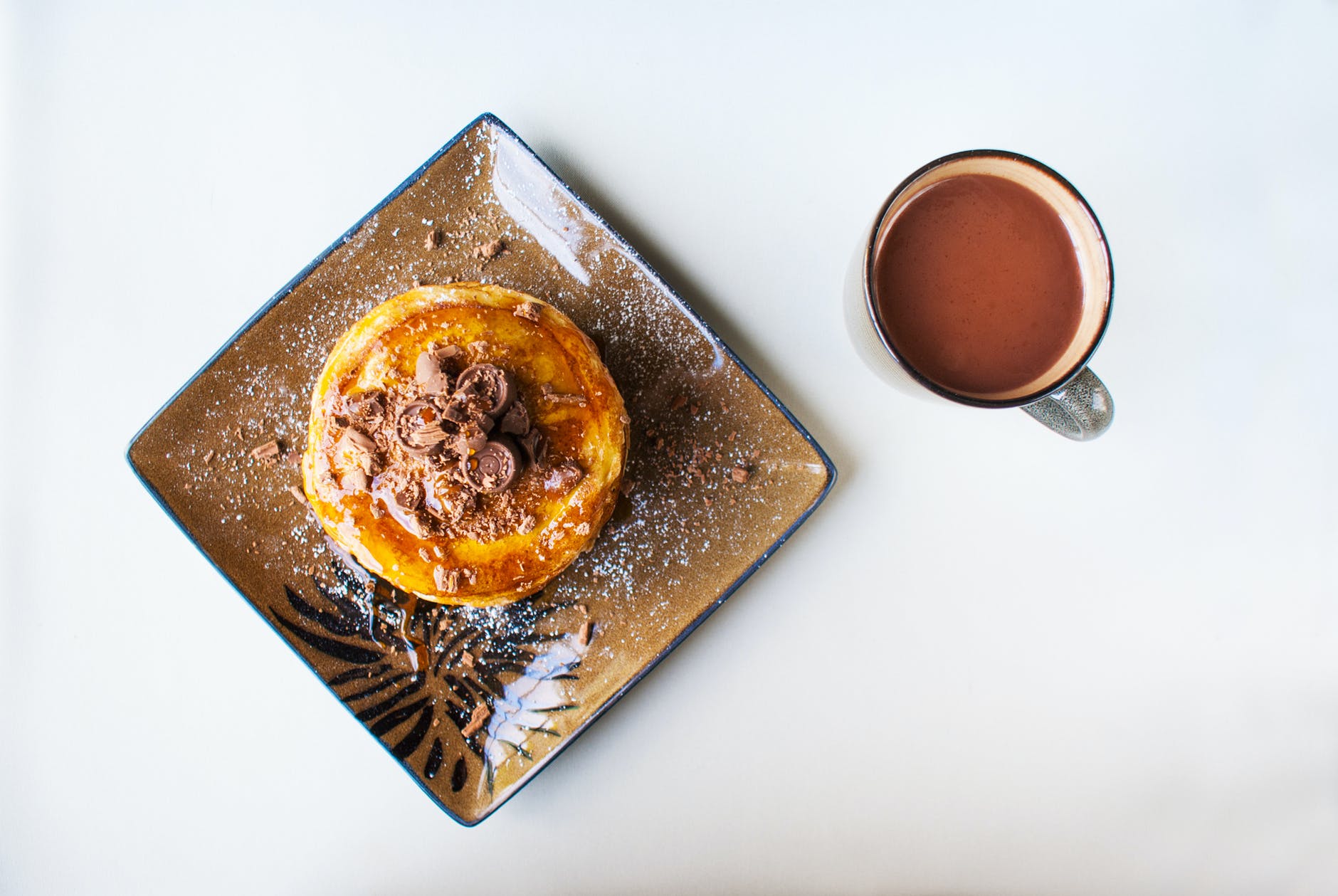
Photo by Sheena Wood on Pexels.com

Chocolate was prepared as a sweet by the European people when it arrived there. It got popularized among the rich people and eventually among the common. Christopher Columbus first came across cacao on his fourth mission to America, when he and his crew seized a canoe full of native goods for trade. He took the beans back to Spain. After it got imported to Europe, it was used as a medicine for treating abdominal diseases because of its bitter taste. After getting sweetened with the addition of sugar or honey, it became a court favorite and chocolate established a foothold in Europe within hundred years.  

In 1828, a Dutch chemist found a way to make powdered chocolate and this product became known as the Dutch cocoa. This led to the creation of solid chocolate. The first modern chocolate bar was made by Joseph Fry in 1847 by making a moldable chocolate paste. By 1868, a small company called Cadbury was making chocolate candies in England. A few years later milk chocolate was made by Nestle. In the 20th century the word chocolate includes a variety of sweet treats. Modern day chocolate is made from the hardiest but least flavorful cocoa beans and it is often said that it has more sugar and additives than actual cocoa.  

Sustainable Development goals by corporates: latest in 2020

5 Latest Sustainable Development Goals in the Corporate World. 

Sustainable Development Goals by private firms has increased noticeably since the last decade. Many big corporates like Google, Apple, Dell, Tech Mahindra, Hero MotoCorp, etc. are working with the view of sustainable development since the beginning. Let’s look at some recent sustainable development goals and initiatives by private firms.

1. Microsoft

Microsoft is setting multiple sustainable development goals and adopting different approaches to tackle environmental degradation. The company recently launched its initiative ‘Zero waste by 2030’ focusing on carbon, water, ecosystems, and waste. 

  • Building Microsoft Circular Centers to reuse and repurpose servers and hardware in their data centers.
  • Eliminate single-use plastics in packaging.
  • Improve their waste accounting technology.
  • Invest in circular economy ventures.
  • Help employees to reduce their own waste footprints.
Sustainable development goals Microsoft headquarters, Redmond.
Microsoft headquarters, Redmond. Source: Microsoft

2. Vestas

It is the first renewable energy manufacturer verified by ‘Science-based target initiatives’ for its sustainable development goals. Vestas has earlier made many contributions to environment protection.

  • Vestas announced its green initiative to become carbon neutral, without using offsets, by 2030.
  • IPCC in a recent report, states that limiting the rise in the global temperature to 1.5°C, as stated in the Paris Agreement, will significantly reduce the risk of extreme affects from climate change.
  • Reduce greenhouse gas emissions by 45% within its own supply chain.

3. Dropbox

The file-hosting company laid out some initiatives under the sustainable development goals to achieve by 2030.

  • Carbon neutrality and minimize energy consumption.
  • 100% renewable electricity for offices and data centers.
  • Remote jobs to reduce travel emissions.
  • Support other organizations in their climate actions.
  • Help employees to volunteer for environmental causes.

4. Crown

Packaging firm ‘crown’ laid out their initiative ‘Twentyby30’ containing 20 sustainable development goals aiming to get accomplished by 2025, 2030, and 2050. The initiatives include:

  • Send zero waste to landfill
  • Make aluminum and steel cans 10 percent lighter to reduce the usage of packaging material.
  • Increase the recycling of its plastic strapping by 10 percent.

5. Salesforce

The latest initiative of this AI-based CRM firm is to achieve 100% renewable power by 2022. This renewable energy deal is in collaboration with  Bloomberg, Cox Enterprises, Gap Inc., and Workday, Inc. and with guidance from LevelTen. The sustainable development goal is to provide renewable energy at a small scale, available to everyone. Currently, renewable energy contracts are made at a high scale involving large investments which are not feasible for small-scale organizations and individuals.

New Cases of Covid-19 Break Out Again in New Zealand

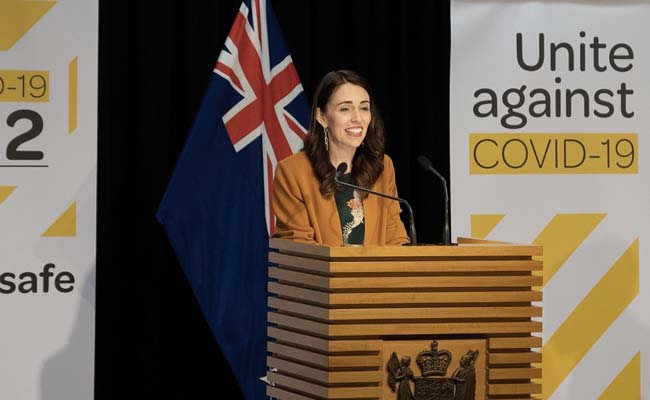
On Tuesday, New Zealand announced that Auckland, its largest city, would be shutting down since 4 new cases has been found in the city.  It is the first case of domestic transmission for the nation after remaining covid free for 102 days.

New Zealand’s fight against Covid was recognised across the world. Prime Minister Jacinda Ardern was congratulated for her effective method and governance. A vigorous and decisive response to the pandemic had effectively curbed down the rates of infection. The Pacific island nation of 5 million citizens was considered to be the safest place as it remained Covid free for 100 days at a stretch. It had made a record of zero new cases of community transmission of Covid-19. From a first case on Feb 26 to the last one recorded on May 1st, the whole process of elimination took about 65 days. The nation was placed under lockdown for weeks when the virus first broke out and it had achieved a milestone of 100 days. The last case was recorded on May 1st. The government had warned from before as countries like Australia and Vietnam which were once free from the virus are now fighting a second battle.

The Director General of Health had said that the 4 new cases are from a single family in South Auckland. It is the first local case in 102 days. The patients had no international travel history and contact tracing has been started.

With the announcement of shutdown, media reports suggested that people have started panic buying. The Prime Minister has made a surprise news conference and announced that Auckland will have Level 3 restriction from Wednesday as a “precautionary approach”. According to it, people should be staying at home, away from work, school or any social gathering. Any gathering of more than 10 people will not be allowed. This restriction would be applicable for 3 days, until Friday. This was done to assess the situation and gain further information about contact tracing. Immediate steps have been taken to find the source of the infection and to prevent further spread. There is an added concern because the source of the virus is not known this time. Travelling to Auckland, on North Island, would be restricted for people other than the ones who live there. The rest of New Zealand would go into Level 2 restriction from Wednesday for 3 days. Social gatherings would be restricted and mass gatherings over 100 people would not be allowed. Since sources are unknown for the new cases, it is expected that there could be a rise in numbers in the coming few days.

Auckland Mayor Phil Goff has said, “I am urging Aucklanders to come together like we did last time to stamp out community transmission. Please remain calm, please do not panic buy and please follow the lockdown rules.” People have been instructed to use masks and to avoid all kinds of social gathering. Jacinda Ardern has told reporters, “No other country in the world was free of community transmission as long as New Zealand. Together we have beaten the virus before. We can do so again.”

New Zealand elections are scheduled to happen on September 19. The break of new cases was unexpected. Till now, the government has fought against the situation and done quite well as a result  Ardern’s Labour Party has got a lot of support before the elections.

TERRITORIAL SEA

INTRODUCTION

Sea is a large body of water that is surrounded by the land. It is an important a part of human trade and commerce, voyage, mineral processing, power generation and is additionally considered as an important source of blue economy nowadays. International law of the ocean may be a law of maritime space that peacefully settles the worldwide disputes on maritime boundary between or among the States and defines various jurisdictions of the maritime zones also because the rights and obligations of the coastal States in these zones, especially with reference to the conservation of marine environment and biodiversity.

Territorial sea is that part of the sea which is adjoining to the coastal State and which is adjacent to the high seas on its outer boundary. The Coastal State exercises its supremacy over this area as it exercises over its domestic waters. The sovereignty expands to the airspace over the territorial sea as well as its bed and sub-soil. This sovereignty accumulates to a State under the customary international law which no State can rebut.

Law of the Sea

The law of the ocean may be a body of customs, treaties, and global agreements; by which governments maintain order, productivity, and amicable relations on the ocean. It involves subjects such as navigational rights, sea mineral claims, and coastal waters jurisdiction.

Body of international law concerned with civic order at sea. Much of this law is codified within the United Nations Convention on the Law of the ocean, signed Dec. 10, 1982. The convention, described as a “constitution for the oceans,” represents an endeavor to systemize international law regarding territorial waters, sea-lanes and ocean resources. It came into authority in 1994 after it had been approved by the required 60 countries; by the early 21st century the convention had been approved by 150+ countries.

UN Convention of the Law of the Sea

Maritime zones are a principal component of present law of the sea. The first effort to publish and codify a comprehensive law of the sea was in the 1950s, shortly after the Truman proclamation on the continental shelf. In 1956, the United Nations held its first Conference on the Law of the Sea (UNCLOS I) in Geneva, Switzerland, outcome of which was four treaties concluded in 1958: Convention on the Territorial Sea and Contiguous Zone, entry into force: 10 September 1964 Convention on the ocean floor, entry into force: 10 June 1964 Convention on the High Seas, entry into force: 30 September 1962 Convention on Fishing and Conservation of Living Resources of the High Seas, entry into force: 20 March 1966

The Convention on the ocean floor effectively codified Truman’s proclamation as customary law of nations. While UNCLOS I was widely considered a triumph, it left unwrap the concern of the extent of territorial waters. In 1960, the UN held a second Conference on the Law of the Sea (“UNCLOS II”), but this did not result in any new agreements. The pressing issue of varying claims of territorial waters was elevated at the UN in 1967 by Malta, prompting in 1973 a third United Nations Conference on the Law of the Sea in New York City. In an effort to scale back the likelihood of groups of nation-states dominating the negotiations, the conference used a consensus process instead of majority vote. With quite 160 nations participating, the conference lasted until 1982, leading to the UN Convention of the Law of the ocean, also referred to as the Law of the Sea Treaty, which defines the rights and responsibilities of nations in their use of the world’s ocean.

Territorial Sea

Maritime Belt or territorial waters is that belt of the sea which is adjacent to the costal state and over which costal state exercises the sovereignty. The territorial sea (also called territorial waters) may be a maritime area beyond and adjacent to the interior waters, and shall not extend beyond twelve nautical miles (‘nm’) from the baselines. In the territorial sea the coastal State exercises sovereignty extending to the air space over the territorial sea also on its bed and subsoil.[1]

However, the sovereignty over this zone has to be exercised subject to the provisions of the conventions and ‘to other rules of international law’ which provides several rights to other States, particularly right of ‘innocent passage’ within the body of water of the State. The territorial sea extends to a limit of 12 nautical miles from the baseline of a coastal State. Within this zone, the coastal State exercises full sovereignty over the air space above the sea and over the seabed and subsoil. A coastal State may enact on matters concerning the security of navigation, the preservation of the environment, and the prevention, reduction, and control of pollution without any compulsion to make these rules compliant with international benchmark. Resource use within the territorial sea is strictly reserved to the coastal State.

Territorial sea, as defined by the 1982 United Nations Convention on the Law of the ocean[2] , may be a belt of coastal waters extending at the most 12 nautical miles (22.2 km; 13.8 mi) from the baseline (usually the mean low-water mark) of a coastal state. The territorial sea is taken into account the sovereign territory of the state, although foreign ships (military and civilian) are allowed innocent passage through it, or transit passage for straits; this sovereignty also extends to the airspace over and seabed below. Adjustment of those boundaries is named, in law of nations, maritime delimitation.

A state’s territorial sea extends up to 12 nautical miles (22.2 km; 13.8 mi) from its baseline. If this is often ready to overlap with another state’s territorial sea, the border is taken because the median point between the states’ baselines, unless the states in question agree otherwise. A state also can prefer to claim a smaller territorial sea.

Problem of Breadth of Territorial Waters

The breadth of the territorial sea has remained a tricky issue, and up to 18th century the opinion was that breadth of territorial sea extends to the range of a ‘cannon-shot’ which at that time was three nautical miles. The three-mile rule which is popularly known as ‘cannon-shot’ rule was promulgated by the Dutch jurist, Bynkershock. He had a hypothesis that a State’s sovereignty broaden to the sea as far as a canon or fire could reach.

In order to fix breadth of the maritime belt, first important attempt was made by the league of the Nations. The Hague Conference of 1930 made an unsuccessful attempt to obtain consensus of the nations on a specific breadth of territorial sea. Since, International Law could not fix definite breadth of maritime belt, different countries claimed different breadths. In order to resolve this problem, Geneva Conference on the Law of the sea was called but the controversy could not be resolved. For the same purpose another conference, known as UN Convention on the Law of the Sea was called in 1960. In this conference, America presented a compromise formula which provided that the breadth of territorial waters should be 6 miles and beyond these 6 miles rights for fishing etc. for another 6 miles. The proposal was defeated by majority of a single vote.

Before the 1982, Sea Convention was concluded; States announced varying breadth of the territorial sea, ranging from 3 to 12 miles, though in certain cases they had state publicly wider areas comparatively, in few cases up to 200 nautical miles. But at the UNCLOS-III, claims broader than 12 miles did not find favour and the 12 miles rule was accepted by the Conference, which may be considered the present customary international law position.

The U.N. Convention of 1982 under Article 3 adopts the twelve-mile limit as a breadth of the territorial sea.  It provides that every State has the right to establish the breadth of its territorial sea up to a limit not exceeding 12 nautical miles measured from baselines determined in accordance with the Convention. Two methods have been laid down for measuring the breadth of the territorial sea:

  1. The low-water line 2. The straight baseline.

 The normal method used is the low-water line as marked on large-scale charts officially recognized by coastal State.

The method of straight baseline was expressed by the Anglo Norwegian Fisheries case, which had a decisive effect on the baseline issue.

Innocent Passage

Under the 1982, the sovereignty of a coastal State over its territorial water has a vital limitation that is the right of innocent passage enjoyed by ships (merchant ships, governmental ships and warships) of all States, whether coastal or landlocked, over the territorial sea of the coastal State.  Passage means navigation through the territorial sea for the purpose of passing through that sea with no entering into internal waters or calling at a roadstead or port facility outside internal waters. Passage must be continuous and efficient; however, it may include stopping and anchoring in so far as they are incidental to ordinary navigation or are rendered necessary by inevitable accident or anguish or for the purpose of rendering assistance to persons, ships or aircraft in danger or trouble.  Passage must take place in conformity with the 1982 Convention and with other rules of International Law.

 Passage must be innocent; it is innocent so long as it is not detrimental to the peace, order or security of the coastal State. The coastal States has the right to make laws to regulate the territorial waters. It can implement laws and regulations governing innocent passage, and to prevent passage which is not innocent. Foreign ships in the innocent passage are required to comply with all such laws and regulations, framed by the coastal State, and other common international regulations for the prevention of collisions at sea.

The 1982 Conventions provides that the coastal State must not hamper the innocent passage of foreign ships through its territorial seas except in accordance with the Convention. The Coastal State, within the application of the Convention or of any laws or regulations adopted in conformity with it, must not impose requirements aiming at denying or impairing the right of innocent passage, or discriminate on form or actually against the ships of any State or against ships carrying cargoes to, from or on behalf of any State. It must give appropriate publicity to any danger to navigation, of which it’s knowledge, within its territorial sea. It must not levy any charges upon foreign ships by reason only of their passage through its territorial sea; charges could also be levied as payment just for specific services rendered to the ship.[3]

The coastal State is under an obligation not to exercise its criminal jurisdiction on foreign ship elapsing through its territorial sea, except in the cases precise by the Convention. It is also under an obligation not to exercise civil jurisdiction in relation to a foreign ship or a person on its board, except in the cases specified by the Convention. Remarkably, the warships and other government ships operated for non-commercial purposes are exempted from any jurisdiction; however the coastal State, during a case of failure of any of those ships from obeying with its laws and regulations, may order it to leave its territorial Sea immediately.

The right of innocent passage is additionally enjoyed by submarines and other underwater vehicles. However, it is required that they pilot on the surface and show their flag.

Rights of the Coastal State over the Territorial Sea[4]                

As the 1982 Convention provides, the sovereignty of the coastal State extends to its territorial sea as well as to the air-space over its territorial sea, its bed and subsoil.  In this regard the coastal State enjoys the following:

(1)     The exclusive right to fish, and to exploit the resources of the seabed and subsoil of its territorial sea.

(2)     The exclusive right in the air-space over its territorial sea to the exclusion of other States. Foreign aircrafts, unlike ships, have no right of innocent fly in the air-space over the territorial sea of a State.

(3)     The right to enact laws and regulations, in conformity with the 1982 Convention and other rules of International Law, particularly in respect of navigation, health, customs, immigration and preservation of the environment.

(4)     The right to take the necessary steps in its territorial Sea to prevent passage which is not innocent.

(5)     The exercise of criminal jurisdiction on board of a foreign ship (arresting any person or conducting any investigation in connection with any crime committed on board of the foreign ship) in the following cases: if the consequences of the crime extend to it; if the crime is of a kind to disturb the peace of the country or the good order of its territorial sea; if the assistance of the local authorities has been requested; if the measures are necessary for the suppression of illicit traffic in narcotic drugs; or after leaving its internal water.

(6)     The exercise of civil jurisdiction in relation to a foreign ship (levy execution against or arrest the ship for the purpose of any civil proceedings) in respect of obligations or liabilities assumed or incurred by the ship itself in the course or for the purpose of its voyage through its waters, or in respect of any civil proceedings against a foreign ship after leaving its internal waters.


[1] Art. 2 UN Convention on the Law of the Sea; Arts 1–2, Geneva Convention on the Territorial Sea and the Contiguous Zone

[2]UNITED NATIONS CONVENTION ON THE LAW OF THE SEA, retrieved 27 April 2016.

[3]https://sites.google.com/site/walidabdulrahim/home/my-studies-in-english/12-the-law-of-the-sea

[4] The 1982 Convention on the Law of the Sea, Article 2, 21, 22, 25-28.

Coronavirus and Social Responsibilities

Coronavirus pandemic is not ending anytime soon. Cases are rising everywhere, with the USA being on top. With many people suffering and being cautious, many other people are ignorant, misinformed, and hostile. Community spread of the virus is increasing in the USA and India. Medical staff, scientists, and police are giving their best to control the spread of coronavirus. It is also the duty of all the citizens to help in controlling the spread of coronavirus. All the capable citizens should come forward in this devastating pandemic situation and lend a helping hand in contributing to treatment, vaccine preparation, manufacture, and distribution. Governments should plan and execute smart measures for the same, but only a handful of countries, including New Zealand, are seen coping effectively with the community spread of coronavirus. Let’s look at the latest coronavirus scenarios around the world, keeping in view the social responsibility, awareness, and control measures.

Schools to reopen in the USA

The USA has the highest number of coronavirus cases and the rate of spread is increasing day by day with 55,196 fresh cases on August 8. A high school in Indiana had to shift to online learning just two days after reopening. Students in Mississippi had to quarantine after classmates tested positive for coronavirus within the first week of reopening. Teachers and parents protesting, scientists forecasting and young kids being at high risk of infections, reopening schools in the USA is under discussion. What did the US president say on August 4?

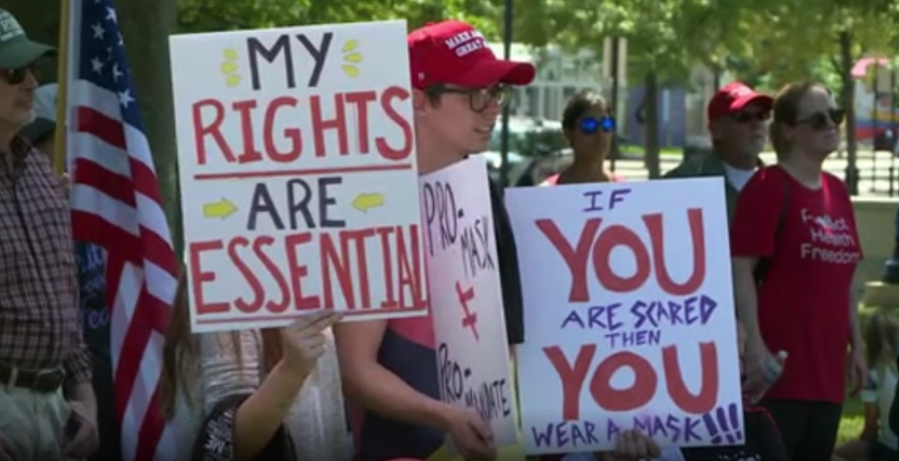
Anti -mask protests in Japan and USA

  • Approximately 150 demonstrators gathered held an anti-mask rally in Salt Lake City on August 5, carrying posters that read “Don’t smother the children” and “Let kids be kids. No masks!”
  • A grilled-cheese shop owner in Windermere, Florida, announced that she wouldn’t require face masks inside her restaurant and promised “100 free meals for patrons who come with no masks.” Many anti-mask protesters gathered outside her shop in her support.
  • Today, in Shibuya, Japan, a cluster festival, which deliberately spreads coronavirus without wearing masks, held a cluster demo and roamed around the Yamanote Line. The organizer of the demo calls himself “cluster jack” and seems to have a bad throat.
coronavirus, anti-mask, Wisconsin, USA
Anti-mask rally in Wisconsin.
Source: Channel3000.

Look at the Cluster demo.

Bill Gates and Serum Institute of India

Bill gates tie-up with the Serum Institute of India in the speedy manufacture and distribution of the coronavirus vaccine. Serum Institute is one of the vaccine developers in the world. The Bill and Melinda Gates Foundation will provide at-risk funding of USD 150 million to Gavi, the vaccine alliance, via its Strategic Investment Fund, which is to get used by the Serum Institute to manufacture the coronavirus vaccine. The vaccine is likely to be available to at least 92 countries.

New Zealand: 100 days without community spread

New Zealand gets praised internationally for its handling of the coronavirus pandemic. The government has lifted almost all of its lockdown restrictions, first imposed in March. The last case of community transmission in New Zealand got reported on May 1, days after the government started lifting its lockdown. August 9 is the fourth day in a row that no fresh coronavirus cases got reported and the total number of active cases in the country is 23, all in managed isolation. The country of 5 million people sought control measures like immediate lockdown, tough border restrictions, effective communication and high testing and link tracking program.

Russia to launch the first coronavirus vaccine next week

Russia is all set to register the first coronavirus vaccine on August 12. Currently, the vaccine is at the third stage of testing and will get tested on 1600 people after registration to ensure its effectiveness and safety. The vaccine trials began on June 17 among 76 volunteers. The fast-track testing of the vaccine by Russia is worrying the scientists, activists and lawmakers and is being questioned. We hope that the vaccine is being tested rightfully and does not have any side-effects.

Coercion under English Law and Indian Law- A Comparative Analysis

Under Section 15 of Indian Contract Act, 1872 –

“Coercion” defined – “Coercion” is the committing, or threatening to commit any act forbidden by the Indian Penal Code, or the unlawful detaining, or threatening to detain, any property, to the prejudice of any person whatever, with the intention of causing any person to enter into an agreement. (45 of 1860).

Explanation.- It is immaterial whether the Indian Penal Code is or is not force in the place where the coercion is employed. (45 of 1860).

Coercion as defined under Section 15. It corresponds with most part with ‘Duress’, known to English Law.

Coercion comprises of the following two elements :

  1. Committing or threatening to commit an act which is contrary to law with the intention of causing any person to enter into an agreement ;
  2. Which compels an individual to act in an involuntary manner.

In case a contract is entered into by coercion, the contract shall be voidable under Section 19 of the Indian Contract Act, 1872.

Also, in case certain money has been paid or goods been delivered by the party to the contract under coercion, the same is recoverable under Section 72 of the Act.

Coercion: Voidable Contract

To cause any person to enter into an agreement is not necessary. It has been held in Purushottam Daji Mandalik v. Pandurang Chintaman Biwalkar[1] Plaintiff sued the defendant to set aside a sale-deed on he ground of coercion under Section 39 of the Specific Relief Act, 1963. Particulars of the coercion alleged were given in the plaint and further elucidated in the plaintiff’s deposition and supported by definite willingness to the effect that here has been open and violent abduction and severe beating to procure signature of the document. The contract was declared voidable.

Burden of Proof

The invalidating circumstances, which allege coercion must be stated by the party relying on the defence of coercion. Therefore, the aggrieved party which wants to set aside the contract will have to establish that the consent was obtained by coercion.

Duress

What the India Law calls coercion is called in English duress or menace. Duress is said to consist in actual or threatened violence or imprisonment of the contracting party or his wife, parent or child, inflicted or threatened by the other party or by one acting with his knowledge and for his advantage. Duress must be such as to cause immediate violence and also to unnerve a person with ordinary firmness of mind.

Test for Duress

The person who applies pressure to extract a promise from another is not allowed to excuse his wrongful behavior by using other reasons which the victim may have had for making the promise. In the case of Barton v. Armstrong[2], where the Court observed that it is enough that the pressure “was a reason (not the reason, nor the predominant reason nor the clinching reason) why the complainant acted the way he did.” In this case: A exerted pressure on B by threatening to kill B if he did not enter the agreement. There were other commercial reasons which might have induced B to enter into the agreement even in the absence of the threats from A. It was held that it was enough that A’s threat was a reason that contributed to the decision to enter into the agreement. It was not necessary to show that it was the prime reason.

DIFFERENCE BETWEEN COERCION AND DURESS

Coercion in India means committing or threatening to commit an act forbidden by the Indian Penal Code, duress under common law, consists in actual violence or threat of violence to a person. It includes doing of an illegal act against a person, whether it be a crime or a tort. Unlike coercion, duress is not confined to unlawful acts forbidden by any specific penal law like the Indian Penal Code in India.

Detaining a property or threatening to detain any property is also covered within the definition of coercion whereas duress is constituted by acts or threats against the person and not against his property.

India, coercion may proceed from a person who is not a party to the contract, and it may also be directed against a person who, against, may be a stranger to contract i.e. a third party.

Duress does not cover acts done by a party to the contract, or a person stranger to contract. In England, duress should proceed from a party to the contract and is also directed against the party to the contract himself, or his wife, parent, child, or other near relative.


[1] AIR 1968 SCR 705

[2] UKPC 1976 AC 104

Payment of Wages during Pandemic

‘If a free society cannot help the many who are poor, it cannot save the few who are rich’, quoted John F. Kennedy years before an epidemic like Covid-19 could have even been forecasted.

Starting from the Plague, a bacteria led pandemic to the Spanish Flu caused by a virus in 1918, the world has seen an invisible enemy mongering fear among the people. Though the epidemics did not change the patterns in people’s reactions but it outbreaks have certainly taught us about social distancing and responsibility. The response to the current pandemic, Novel Coronavirus Disease (COVID 19) has been no different. The current situation where the Government has been repeatedly asking people to be selfish about their loved ones and stay indoors is undoubtedly a decision in the public welfare as it stands as the only way to fight the issue. This infection with symptoms is frightening and can kill people in large numbers as evident in the developed countries but the epidemic is more threatening when thought of people it might affect without symptoms.

Looking back, the plague epidemic was certainly a major turning point in India’s public health system. The principles introduced were new then and vaccines developed turned the history of hospitalization in the country. But when it first came in Mumbai, there were only Social Service leagues and other voluntary organizations which did the work of supplying food and medicine to the needy. Thus, there was impression of hope and being taken care of even when the situation turned helpless.

The society is divided into sections and it is not unknown to anyone of the country. Even though the upper class can claim money not being important more than happiness, the lower class does not even know the meaning of happiness if there is no penny in the pocket. The lockdown period has pushed the lower class people, working under ‘no work, no pay’ policy to the extreme points of their lives so much that the deaths due to hunger can compete with the numbers of deaths due to the virus after a couple of months. The situation is similar to the Plague in a lot of ways, maybe it is time to change the principles and policies of the wage workers and mark it in the history once again.

Coronavirus pandemic is not a depression yet but it is a recession already. The country can easily fall back into a temporary economic crisis and technical point of actions can prevent permanent scars of depression. Compelling the payment of wages to the daily wage workers can be a measure that can instantly transform the social safety of the nation as once these workers lay off; there might be irreparable damages to the entire nation’s productive capacity.

The government has issued directions to the employers to pay wages on mere humanitarian grounds and, it is not only for the permanent workmen but for the contract workers as well. The Disaster Management Act, 2005 or the Epidemic Diseases Act, 1897 which specifically came into force after the epidemic in Mumbai does not guarantee any such direction to be in compliance with the statutory law. However, Central and State governments can take its measures accordingly and it is backed by the provisions. 

Though it has taken time but the Government has come up with ideas to deal with the situation. The government has strictly advised to support the country by paying wages without any consequential deduction in wages for this period. The direction is issued particularly for the casual or contractual workers. On non-payment, the employees can drive down morally to combat their fight. On such kind of a scene, India, as a country, would lose even if it manages to fight the virus.

But the circular is only an ‘advisory’ and has not been issued under any law, ultimately making it not binding on any person. As dealt in the judgment of Narendra Kumar Maheshwari v Union of India that any policy does not take the place of law. Even the legislation under the Disaster Management Act, 2005 does not prohibit any employer from terminating employees or to vary their terms of service. But it does mention securing employees as it requires them to be paid salaries in the course of business. There also lies a major difference between the terms, employees and workmen as pointed out in Dhrangadhra Chemical works Limited v State of Saurashtra. The matter stands important since a workman is entitled to retrenchment as well as other benefits unlike the employers irrespective of whether temporary or permanent. It is important to note that ‘natural calamity’ is not particularly defined in the Act and can be claimed to fall under the ambit of it.  

The migrants are stranded on roadways due to the current situation but hands of employers are tied as well and even though some might think but everyone cannot afford the same. Such a crisis is itself not compensated under loan forbearance.

In such a situation, the solution can be to adopt the idea of common law ‘lay off’ concept to pay 50% of wages so that their daily needs are at least met and also so that it can be done for a larger period to a bigger audience. The Government can also secure by adopting Canada’s plan to subsidize certain requirements and by giving them a privileged position by offering different schemes.

It is time that the country understands that we are all in this together. Without one section the other cannot sustain for long. Very evidently, when John F. Kennedy quoted, he might not have forecasted viruses or pandemics but he knew the world required to stand together for development.

RACISM; a modern devil

 Racism, also called racialism, the belief that humans may be divided into separate and exclusive biological entities called “races”; that there is a causal link between inherited physical traits and traits of personality, intellect, morality, and other cultural and behavioural features; and that some races are innately superior to others. The term is also applied to political, economic, or legal institutions and systems that engage in or perpetuate discrimination based on race or otherwise reinforce racial inequalities in wealth and income, education, health care, civil rights, and other areas. Such institutional, structural, or systemic racism became a particular focus of scholarly investigation in the 1980s with the emergence of critical race theory, an offshoot of the critical legal studies movement. Since the late 20th century the notion of biological race has been recognized as a cultural invention, entirely without scientific basis.

Racism takes many forms and can happen in many places. It includes prejudice, discrimination or hatred directed at someone because of their colour, ethnicity or national origin.

People often associate racism with acts of abuse or harassment. However, it doesn’t need to involve violent or intimidating behaviour. Take racial name-calling and jokes. Or consider situations when people may be excluded from groups or activities because of where they come from.

Racism can be revealed through people’s actions as well as their attitudes. It can also be reflected in systems and institutions. But sometimes it may not be revealed at all. Not all racism is obvious. For example, someone may look through a list of job applicants and decide not to interview people with certain surnames.

Racism is more than just words, beliefs and actions. It includes all the barriers that prevent people from enjoying dignity and equality because of their race.

The police killings of Breonna Taylor and George Floyd have galvanized anti-racism protests throughout the United States, Canada and elsewhere. As a result, lawmakers have made pledges to divest from

police and school districts have cut ties with law enforcement. The organizing of the Black

Lives Matter (BLM) movement and their provocative protest tactics have played a significant role in this shifting public discourse.

BLM has been resisting dominant narratives in new ways. The movement amplifies knowledge and counter-discourses that affirm the identities and needs of Black communities. The BLM movement can be seen as a “subaltern counterpublic,” defined by critical theorist Nancy Fraser as a space dedicated to centring marginalized voices.

The dominant public often expects marginalized groups to use persuasion to educate them about their grievances. However, some have argued that persuasion alone cannot facilitate substantive systemic change. Dominant society will generally tolerate only those transformations in public discourse that leave

distributions of power and privilege untouched. For instance, white Americans may support calls for incremental police reform, but once activists utter the phrase “abolish the police,” the discourse is deemed too radical.

Counterpublics, like BLM, have successfully cultivated their power and drawn attention to their messaging by forcing their narratives onto the public.

That painful past is still present today — not only in the form of violence, but in the everyday experience of deeply rooted discrimination. We see it in our criminal justice system, in the disproportionate toll of the disease on Black and Brown communities, in the inequalities in neighbourhood services and the educations our children receive.

While our laws have changed, the reality is that their protections are still not universally applied. We’ve seen progress since the America I grew up in, but it is similarly true that communities of colour continue to endure discrimination and trauma.

Travelling after corona

We will travel again, but it will not be the same. Even if borders reopen, travellers must trust that boarding a plane is safe and that they will be able to enter the destination country. New health safety protocols and systems will need to be in place, and these have yet to be defined. As governments and industry plan for recovery in this new context and adapt to changing traveller behaviour, the use of digital identity and biometrics technologies could restore trust while also ensuring a seamless journey. However, these tools will only be effective if users feel that their data is protected. Privacy, consent and transparent data governance must be at the heart of any technical solution.

1. The queue at immigration will be longer than ever before

We’re already seeing with China, Singapore, and South Korea, countries that feel like they are on top of their outbreaks, that the biggest worry now is new infections coming from outside. Korea is ordering all persons entering from the US and Europe to isolate for two weeks, even if they test negative for COVID-19. Those without a permanent residence are being sent directly to an isolation ward. Manufacturers of heat cameras are seeing a spike in demand. Even when lockdowns in Europe are over and we start to travel again, countries will test at the border. If you thought the line at JFK immigration control was torturous before, now consider what it’ll be like as you line up, take a swab test, and wait for the results. 

2. You’ll need more than a passport

Some countries will not even take the chance of testing at the border. Especially if you’re coming from an outbreak hotspot. Entrance will be refused unless you have a certificate of immunity since you’ve recovered from an infection or because you’ve been vaccinated (once there are vaccines available). Wristbands with barcodes like those in the movie Contagion are a very real prospect. Certainly in the short-term, travel will become more defined by purpose. Any business travel will need to be strictly validated as an economic activity, with companies tightening the numbers of employees who travel for them. Countries will likely only open their borders where there is merit and it’s safe to let travellers through. This may mean temporary visas and more documentation that you’ll need to take with you when travelling. 

3. Travel will have different (expensive) seasons

A very influential paper from Imperial College London speculates that governments will need to turn lockdown measures on and off to keep demands on healthcare systems at a manageable level. This means there will be windows of opportunity to travel that last only weeks or even days. Even with airlines desperate to get airborne again, seats will be limited and we could see dramatic increases in pricing during those windows.

4. Recovery will be uneven

We’re seeing already that the factors influencing this pandemic are numerous. Strictness and timing of lockdown measures, robustness of healthcare systems, the weather, luck, and other factors are all at work. Meaning some countries and regions will recover first. We will see corridors of recovery open back up one by one. 

5. You’ll pack differently

We may well see the relaxing of liquid carry-on restrictions as travellers want to take more than 100ml, especially on long-haul flights. Along with hand sanitizer travel packs, it’s a pretty easy prediction to make that a lot more people will travel with masks. In the same way that companies like Away have made luxury, fashionable travel baggage, we will most likely see “desirable” travel masks worn by Instagram influencers. 

6. You’ll tick that little box every time

We’re all very used to aeroplane bookings coming with tens of add-ons once we’ve chosen our flight. Let’s be honest, most of us skip past speedy boarding, extra baggage, car rental, and even seat selection. One box that we won’t be skipping past as much as the one asking us if we want to ensure the flight. Be careful though, often this “insurance” doesn’t cover you for many things, including the outbreak of a pandemic. Either airline providers or insurance companies are going to have to change to accommodate our new reality.

7. Society won’t like you when you’re sick

Even those who have recovered from COVID-19, and have built up immunity (if the virus doesn’t mutate too much) won’t want to travel with a cold. The current situation and the conviction with which the world is adopting social distancing will make it socially unacceptable to travel with a cold or any symptoms. The looks you will get if you cough or sneeze at an airport or on a plane will be scathing.

8. You’ll take the train before the plane

Domestic travel will recover first (there’s no border control) and for most countries that means taking a train. Not only will we be able to get back on tracks (ha, a pun) first, we’ll also be more secure about it. Trains are less crowded, have windows that open, and also are much more environmentally friendly. Once the lockdowns we see in Europe now are lifted, I predict people will rush to take a train, just because they can. 

9. Air quality will be an advertised feature

Any idea what grade air filter Lufthansa uses on their flights? How about British Airways? Korean Air? Which Airbus model has the cleanest air? Do Boeing planes have fewer microbes in the air? No idea? Well, you may not know now, but once we’re flying again, airlines will start boasting about their filtration systems. Some have already started emailing customers about their current systems in a bid to stop people cancelling. By the end of the year, it’ll be a question many people will be asking—how safe is the air onboard?

Touchless travel

The most immediate and perhaps most visible change will be a shift to touchless travel from airport curbside to hotel check-in. Even with strict cleaning protocols in place, exchanging travel documents and touching surfaces through check-in, security, border control, and boarding still represent a significant risk of infection for both travellers and staff.

Automation across the entire sector will become the new norm. Biometrics is already a widely accepted solution for identity verification, and their use will become more widespread as physical fingerprint and hand scanners are phased out. More touchless options will come into play including contactless fingerprint, as well as iris and face recognition. Moreover, technology for touchless data-entry such as gesture control, touchless document scanning and voice commands are already being tested. Care must be taken to ensure these technologies are inclusive and to eliminate the risk of potential biases.

Energy drinks, good or bad ?

Energy drinks are widely promoted as products that increase energy and enhance mental alertness and physical performance. Next to multivitamins, energy drinks are the most popular dietary supplement consumed by American teens and young adults. Men between the ages of 18 and 34 years consume the most energy drinks, and almost one-third of teens between 12 and 17 years drink them regularly. Energy drinks are supposed to do just what the name implies — give you an extra burst of energy. As it turns out, most of that “energy” comes from two main ingredients: sugar and caffeine. A typical energy drink can contain up to 80 milligrams of caffeine (about the same amount as a cup of coffee). By comparison, a 2006 study found that the average 12-ounce soda contains 18 to 48 mg of caffeine.

Other than caffeine levels, how do energy drinks differ from sodas and sports drinks? Soft drinks are mainly water, sugar and flavouring. They don’t do anything for your body; they’re just supposed to taste good. Sports drinks are designed to replenish fluids lost during activity. They typically contain water, electrolytes and sugar. Energy drinks have added caffeine and other ingredients that their manufacturers say increase stamina and “boost” performance. They’re designed for students, athletes and anyone else who wants an extra energy kick.

Energy drinks became popular in Asia long before they reached the United States. In 1962, Japanese pharmaceutical company, Taisho, released its Lipovitan D drink. It was designed to help employees work hard well into the night. Lipovitan D contains taurine, the same ingredient found in many of today’s energy drinks.

The very first “energy” drink to reach the United States wasn’t an energy drink at all — it was more of a hyped-up soft drink called Jolt Cola. The “jolt” in the cola was a lot of added sugar and caffeine. Introduced in the 1980s, Jolt Cola quickly became a staple of college campuses.

There are two kinds of energy drink products. One is sold in containers similar in size to those of ordinary soft drinks, such as a 16-oz. bottle. The other kind, called “energy shots,” is sold in small containers holding 2 to 2½ oz. of concentrated liquid. Caffeine is a major ingredient in both types of energy drink products—at levels of 70 to 240 mg in a 16-oz. drink and 113 to 200 mg in an energy shot. (For comparison, a 12-oz. can of cola contains about 35 mg of caffeine, and an 8-oz. cup of coffee contains about 100 mg.) Energy drinks also may contain other ingredients such as guarana (another source of caffeine sometimes called Brazilian cocoa), sugars, taurine, ginseng, B vitamins, glucuronolactone, Yohimbe, carnitine, and bitter orange.

Consuming energy drinks raises important safety concerns.

  • Between 2007 and 2011, the number of energy drink-related visits to emergency departments doubled. In 2011, 1 in 10 of these visits resulted in hospitalization.
  • About 25 per cent of college students consume alcohol with energy drinks, and they binge-drink significantly more often than students who don’t mix them.
  • The CDC reports that drinkers aged 15 to 23 who mix alcohol with energy drinks are four times more likely to binge drink at a high intensity (i.e., consume six or more drinks per binge episode) than drinkers who do not mix alcohol with energy drinks.
  • Drinkers who mix alcohol with energy drinks are more likely than drinkers who do not mix alcohol with energy drinks to report unwanted or unprotected sex, driving drunk or riding with a driver who was intoxicated, or sustaining alcohol-related injuries.
  • In 2011, 42 per cent of all energy drink-related emergency department visits involved combining these beverages with alcohol or drugs (such as marijuana or over-the-counter or prescription medicines).

A growing body of scientific evidence shows that energy drinks can have serious health effects, particularly in children, teenagers, and young adults. In several studies, energy drinks have been found to improve physical endurance, but there’s less evidence of any effect on muscle strength or power. Energy drinks may enhance alertness and improve reaction time, but they may also reduce the steadiness of the hands. The amounts of caffeine in energy drinks vary widely, and the actual caffeine content may not be identified easily. Some energy drinks are marketed as beverages and others as dietary supplements. There’s no requirement to declare the amount of caffeine on the label of either type of product.

Microsoft is in Talks to Acquire TikTok, as Trump to demand TikTok Chinese owner divest application

Microsoft is in advanced talks to acquire the United States operations of the Chinese owned video app TikTok, according to people with knowledge of the discussions, in a deal that would be a concession to White House pressure and make the software giant a major player in social media.

A sale to Microsoft, likely for billions of dollars, would be a win for both TikTok and its parent company, Bytedance Ltd., where executives had feared that the U.S. government would force device makers to take TikTok out of their app stores, according to another person familiar with the matter.

As U.S. president, Trump previously has issued three orders stopping M&A deals involving foreign parties, through the inter-agency Committee on Foreign Investment in the United States.

A deal could be completed by Monday, according to people familiar with the matter. The talks involve representatives from Microsoft, Bytedance and the White House. Talks are fluid, and a deal may not come together.

In a statement to Media, a TikTok representative said: “While we do not comment on rumors or speculation, we are confident in the long-term success of TikTok. Hundreds of millions of people come to TikTok for entertainment and connection, including our community of creators and artists who are building livelihoods from the platform. We’re motivated by their passion and creativity, and committed to protecting their privacy and safety as we continue working to bring joy to families and meaningful careers to those who create on our platform.”

A group of ByteDance investors including Sequoia and General Atlantic, who want to acquire control of TikTok amid the concerns over its Chinese ownership, have valued TikTok at about $50 billion,

Source- Reuters, Wall Street Journal, CGTN

Three young individual charged in Twitter Hack last month

Twitter Inc.’s worstever hack began months earlier with a teenager on a telephone, according to an indictment filed Friday by federal authorities.

The US Department of Justice has charged three young individuals with hacking Twitter last month that compromised the accounts of 130 high profile users including Barack Obama, Bill Gates, Jeff Bezos and Elon Musk.

The three were charged in connection with the July 15 hack, including a 17-year-old juvenile whom authorities have accused of masterminding the scam.

Two teenagers and a 22-year-old were charged with hacking the Twitter Inc accounts of famous people including former President Barack Obama, billionaire Bill Gates and Tesla Chief Executive Elon Musk, the Department of Justice said on Friday.

Mason Sheppard, a 19-year-old British man who went by the alias Chaewon, was charged with carrying out the hack, as well as related wire fraud and money laundering crimes, according to a Justice Department statement.

Orlando, Florida based Nima Fazeli, 22, nicknamed Rolex, was charged with aiding and abetting those crimes. The Justice Department did not name the third defendant, but the Hillsborough County State Attorney Office in Tampa, Florida said it had arrested 17-year-old Graham Clark.

The tweets offered to send $2,000 for every $1,000 sent to an anonymous Bitcoin address.