Wildlife crimes rise by 100% in a year in Kerala

KOCHI: Wildlife-related crimes have increased dramatically in the state and there has been a 100% rise in the number of cases registered in 2020 compared to the previous year.

According to data obtained under the Right to Information (RTI) Act, the state registered 303 cases in 2020 as against 151 in 2019 and 61 in 2018. As many as 156 cases were recorded in the state in 2021 till August 26 this year.


Most cases pertained to poaching of endangered animals and reptiles, hunting for meat and illegal trading and possession of horns, tusks, nails, and teeth. Removing tusks or nails and collecting meat from animals that died naturally is also an offence. More than 80% of the total cases registered each year are in connection with poaching of wild animals other than wild boars that cause extensive damage to standing crops.

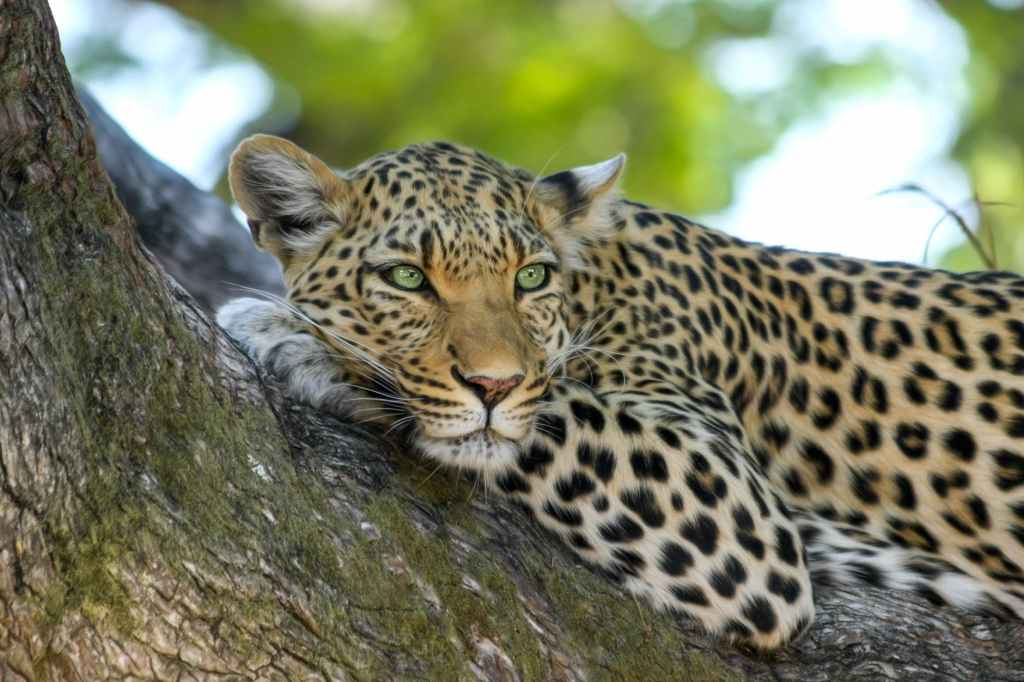
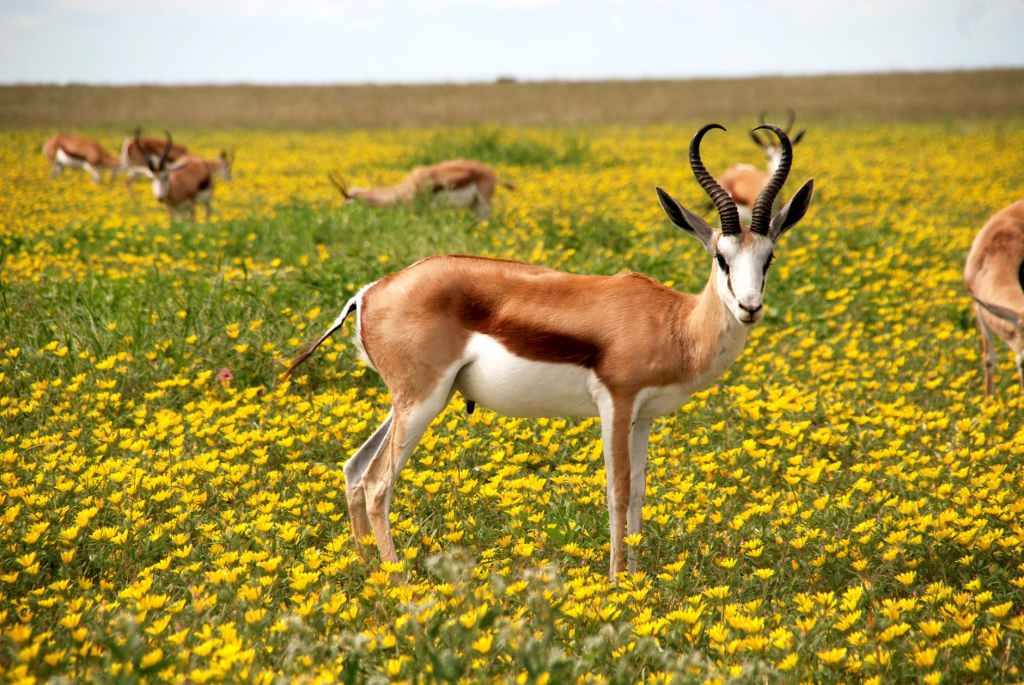
Besides wild boars, sambar deer, spotted deer, porcupines, monitor lizards, pythons, civets and turtles are among those that fall prey to poaching. Occasionally, elephants, leopard, tigers and wild gaurs are also hunted down, say the data.


“Since movements were restricted during the Covid period, people living adjacent to forests got more opportunities to engage in poaching. Poachers have also improved their intelligence gathering. The presence of wild animals also increased in the fringe areas, leading to the rise in poaching incidents,” said a member of a flying squad of the forest department.


People also lay electric wires to electrocute the animals, besides using poisoning too.
Besides killing the animals, depriving them of food is also an offence, as the data show. Among the registered cases, two are in connection with freeing chickens from the mouth of a python forcefully.

Climate change: Everyone Focused on saving lives till now, time to save livelihood as well:

According to a Climate Central map, hundreds of cities on India’s eastern coast will be under water by 2050. CEEW says more than 80% of India’s population is vulnerable to “extreme climate risks”

According to a map created by Climate Central, hundreds of cities on the eastern coast of India will be under water by the year 2050. Over 27 states and union territories in India and more than 80% of the country’s population are vulnerable to “extreme climate risks”, says a report by the Council on Energy, Environment and Water.

These statistics show that the lives of many communities are put in danger due to climate change, and that a significant number of them lose their livelihood to it as well. Ritayan Mukherjee, a photojournalist, shares that while covering the pastoral nomads in the Himalayas, he came across the Changpa community who take their yak and sheep to grazing grounds that are 10,000-11,000 feet above the sea level. “The livelihood of these people is directly dependent on nature, because they move with their herd from one place to another,” says he.


Mukherjee shares that because of global warming, rising temperatures and the winter months getting shorter, the pastoralists have to take their herds to even higher grazing grounds. A report that Mukherjee worked on for the People’s Archive of Rural India said that the yak population in Leh fell about 57% between 1991-2010, according to the Department of Animal Husbandry and Dairying. A lot of these pastoralists don’t just depend on yak for their economic incomes, but they also use the yak-wool to build traditional tents, called Rebos. However, Mukherjee shares that these residential tents have disappeared over the past few years for reasons that can be attributed to climate change.

According to a Climate Central map, hundreds of cities on India’s eastern coast will be under water by 2050. CEEW says more than 80% of India’s population is vulnerable to “extreme climate risks”.

How many headlines and news articles did you come across in the last month that told you the condition of the climate is deteriorating? That a big chunk of our lives will be lost battling global warming in the next few decades? It’s no secret that climate change is impacting lives every single day, but let’s take a look at how it has been affecting us and what we can do to change its course.

Summary of Union Budget 2021-22


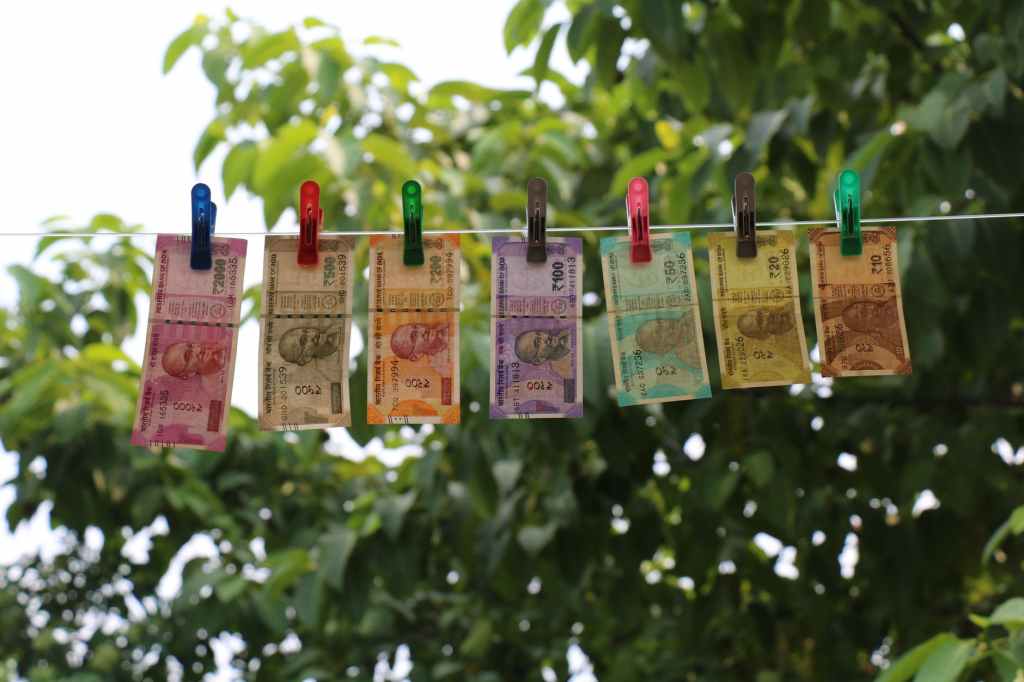
The Union Minister for Finance & Corporate Affairs, Smt Nirmala Sitharaman presented the Union Budget 2021-22 in Parliament today, which is the first budget of this new decade and also a digital one in the backdrop of unprecedented COVID-19 crisis.

This year’s Budget lays focus on the seven pillars for reviving the economy – Health and Wellbeing, Physical and Financial Capital and Infrastructure, Inclusive Development for Aspirational India, Reinvigorating Human Capital, Innovation and R&D, and Minimum Government Maximum Governance. Several regulations around the securities market are proposed to be merged as a single code. Several direct taxes and indirect taxes amendments were also proposed.


Our FM starts the budget2021 announcement by mentioning the challenges during the pandemic and the vision of the Pradhan Mantri Garib Kalyan Yojana.
FM says that India has two vaccines made available and two more will be made accessible soon.
FM reiterated that the government is fully prepared to support the economy’s reset.
FM says the Budget2021 is based on 6 pillars.
Starting with healthcare & wellbeing:
Spending’s been increased
New scheme with an outlay of Rs.64K crore to be spread over 6 yrs
The above is in addition to the National Health Mission.


Support to rural & urban health centres
FM announces the Jal Jeevan Mission with an outlay of 2.87 lakh crores aiming to provide full-fledged water supply to all urban local bodies with household tap connections.
The FM proposed Rs1.41 lakh crores over a period of 5 Years for the Urban Swacch Bharath 2.0.


An amount of Rs.1.47 lakh crores, over a 5-year-period, from 2021 has been assigned for initiatives such as wastewater treatment, reduction in plastic waster, reduction in pollution and the like.
The Scrapping Policy has been announced in the Budget2021. The voluntary vehicle scrapping policy aims to remove inefficient vehicles so as to reduce vehicular pollution and oil import bills.
FM proposes an amount of Rs.35000 crore to manufacture and make accessible the COVID19 vaccine.


To strengthen nutritional content, delivery, outreach, and outcome, Government will merge the Supplementary Nutrition Programme and the PoshanAbhiyan and launch the Mission Poshan 2.0. Government will adopt an intensified strategy to improve nutritional outcomes across 112 Aspirational Districts.


Universal Coverage of Water Supply and Swachch Bharat Mission:

The Finance Minister announced that the JalJeevan Mission (Urban), will be launched for universal water supply in all 4,378 Urban Local Bodies with 2.86 crore household tap connections, as well as liquid waste management in 500 AMRUT cities. It will be implemented over 5 years, with an outlay of Rs. 2,87,000 crore. Moreover, the Urban Swachh Bharat Mission will be implemented with a total financial allocation of Rs 1,41,678 crore over a period of 5 years from 2021-2026. Also to tackle the burgeoning problem of air pollution, government proposed to provide an amount of Rs. 2,217 crore for 42 urban centres with a million-plus population in this budget. A voluntary vehicle scrapping policy to phase out old and unfit vehicles was also announced. Fitness tests have been proposed in automated fitness centres after 20 years in case of personal vehicles, and after 15 years in case of commercial vehicles.


Physical and Financial Capital and Infrastructure:

AatmaNirbhar Bharat-Production Linked Incentive Scheme

Finance Minister said that for a USD 5 trillion economy, our manufacturing sector has to grow in double digits on a sustained basis. Our manufacturing companies need to become an integral part of global supply chains, possess core competence and cutting-edge technology. To achieve all of the above, PLI schemes to create manufacturing global champions for an AatmaNirbhar Bharat have been announced for 13 sectors. For this, the government has committed nearly Rs.1.97 lakh crore in the next 5 years starting FY 2021-22. This initiative will help bring scale and size in key sectors, create and nurture global champions and provide jobs to our youth.


Textiles:

Similarly, to enable the textile industry to become globally competitive, attract large investments and boost employment generation, a scheme of Mega Investment Textiles Parks (MITRA) will be launched in addition to the PLI scheme. This will create world class infrastructure with plug and play facilities to enable create global champions in exports. 7 Textile Parks will be established over 3 years.

Thus, the budget was widely acclaimed and appreciated.

Indian spirituality

In India there is a discipline prescribed for the gradual evolution of the human individual by stages of

(1) education,

(2) adjustment of oneself with the demands of natural and social living and,

(3) an austere detachment from the usual entanglements in life and

(4) final rootedness of oneself in God. This last mentioned stage is known as Sannyasa and the first two stages are the religious disciplines preparing a person for the third and the fourth stages.


Religion has its various restrictions imposed on a person, keeping all human activity confined to specific areas of living with its several do’s and don’ts – ‘do this’ and ‘do not do that’. There cannot be any religion without these two mandates imposed on man. People in the first two stages of life mentioned above are placed under an obligation to follow these dos and don’ts of religion in social behaviour, in personal conduct and dealings with people in any manner whatsoever. Every religion has these ordinances defining the duties, which are religious, whether in the form of ritual, worship, or pilgrimage and even in diet, daily ablution, and an exclusive literal devotion to the word of the scripture of the religion. These restrictions are lifted in the third stage where the life of a person is mainly an internal operation of thought, feeling and understanding and not connected with human society in any way.

Spirituality

Spirituality is a broad concept with room for many perspectives. In general, it includes a sense of connection to something bigger than ourselves, and it typically involves a search for meaning in life. As such, it is a universal human experience—something that touches us all. People may describe a spiritual experience as sacred or transcendent or simply a deep sense of aliveness and interconnectedness.

Some may find that their spiritual life is intricately linked to their association with a church, temple, mosque, or synagogue. Others may pray or find comfort in a personal relationship with God or a higher power. Still others seek meaning through their connections to nature or art. Like your sense of purpose, your personal definition of spirituality may change throughout your life, adapting to your own experiences and relationships.

Environmental Crisis From Oil Spills

Environmental pollution is increasing with each passing year and inflicting grave and irreparable injury to the world. Environmental pollution is of different types namely air, water, soil, noise and light-weight. These cause damage to the living system. How pollution interacts with public health, environmental medicine and the environment has undergone dramatic change.

Recent oil spills in the Yellowstone River, Alaska tundra and Enbridge (Wisconsin) demonstrate how pollution can directly and indirectly impact man’s health environmental pollution was not a medical/public health issue nor was it discussed in clinical settings. Since the 1950s, environmental medicine has been discussed more frequently through a greater awareness in public health and preventive medicine; although today, there is now a focus on occupational medicine.

Environmental and occupational medicine are however more commonly viewed as an integrated subject, with emphasis given to industrial issues. Certainly, pollution problems have been recognized in the distant past but were more easily mitigated by nature due to the limited complexity of the pollutant, its degradability (e.g. biodegradable organics) and lower industrialization. Health-related effects from environmental pollution have been well known, but were not fully realized until highly notable events like the Donora (Pennsylvania) smog occurrence in 1948 resulting in later public health programs including in their training a discussion of environmental medicine.

There has been an increased awareness of how pollution is observed regarding its health impact and attitudes toward public health and environmental medicine. Damage from oil spills will not only influence public health but overall disease rates for years to come. As environmental pollution increases so will the importance of environmental medicine in managing its consequences.

Reasons why Sleep Deprivation is toxic for your Career


In the present scenario, most of us live the ultra-modern lifestyle. This means that we set unrealistic goals for ourselves and to pursue those larger than life dreams we stretch ourselves thin, often to the extent of depreciating our well being and manipulating with our healthy lifestyle.

Time for a reality check…more often than not, you skip breakfast, ignore the mid day hunger pangs that creep up between an important presentation, binge an extra loaded cheese sandwich to compensate for a healthy lunch, drive straight into a pub after work to unwind the load of a hectic day, return home to gorge on a cold frozen dinner and head straight to bed when it is already past midnight and still struggle to sleep!


This is what slowly kills our capacity to work better. Sleep plays a major role in improving our work efficiency. Think of a machine, if not given proper rest, it will overheat and break down.

To put it simply, you cannot expect to deliver your best at work, if your body is un-rested and under nourished. While a number of modern vitamin and health supplements flooding the markets may make up for the deficiency in vitamins, there is absolutely no substitute for good sleep.


On going in detail about the science of sleep nourishment, When we are off to sleep, our brain removes the toxic proteins from its neurons that are by products of neural activity when we are awake and our brains are functioning. Our brain can engage in this cleansing activity only when we are asleep and most of the nerves are resting. Sleep deprivation would mean missing out on this important cleansing regime. When we deprive our bodies of sleep, the brain cannot drive out or sanitize the nerve cells, hampering our thinking and cognitive abilities to a large extent.


Revisit the old adage ‘Take care of the pennies and the pounds will take care of themselves’ with a new perception. Yes, you take care of your health and quintessential sleep and everything else will fall into place-your health, your lifestyle, your emotions, your relationships, your job and not to forget -your applaudable performance at the boardroom!

Top 5 books to read at least once in your life. 

This is an image of Top 5 books to read at least once in your life.
Photo by rikka ameboshi on Pexels.com

Reading is an immersive experience that often rewards you with a great story and good vocabulary. There are books across several genres one can choose from to indulge in a wonderful reading experience. But there are some books that fall under the category of ‘classics’ as their themes, characters, and plot lines become relevant for ages to come. These are written by some of the brilliant literary minds that became popular and they went on to influence many modern works of literature. 

Animal Farm- a satirical allegory

This is an image of Animal Farm
Photo by Amelie Lachapelle on Pexels.com

The story begins with a typical farm being run by a human with a variety of animals living in it. The farm animals are often mistreated, overworked and ignored by the human which agitates them. Hoping to overthrow the human race and reaping all the benefits of their work, they drive the human out of the farm. What follows is a satirical allegory to the events that happened during and after the Russian Revolution of 1917. 

Although the story revolves around farm animals, its  themes of corruption, slavery, dicatorship, class distinction, and characters, makes the readers draw parallels with the current political scenario. It is a must-read for a better understanding of the Russian revolution and an engaging experience. 

The Great Gatsby- The Jazz age novel

The Great Gatsby is a 1925 novel written by F. Scott Fitzgerald. It follows the life of a self-made millionaire named Jay Gatsby who is in pursuit of his long lost lover named Daisy Buchanan. The novel however, has little scope for romance and represents America in the 1920s. It highlights the era of unrivalled wealth and materialistic access. 

The novel upon its release didn’t gain commercial success. Critics believed that it did not amount to Fitzgerald’s earlier novels. However, it began to gain popularity during World War II as free copies were distributed among American soldiers who were serving overseas. The Great Gatsby went on to become an important part of America’s educational curriculum and pop culture. 

The novel continues to attract scholarly attention and is a contender for the title of ‘The Great American Novel’. 

Harry Potter and the Philosopher’s stone- You Know Who

This is an image of Harry Potter and the Philosopher's stone
Photo by Dzenina Lukac on Pexels.com

This book can be considered as J.K Rowlings’ stepping stone to success. After being rejected by 11 publications and finally being published by Bloomsbury publication, upon the request of the chief executive’s 8 year old daughter. Harry Potter and the Philosopher’s stone went on to be translated into 73 languages and sold 120 million copies. Becoming the second best-selling novel of all time. 

The story follows Harry Potter and the readers’ introduction to the world of magic, following Harry’s discovery of his magical heritage and acceptance into the Hogwarts School of Witchcraft and Wizardry. As the readers alongside Harry manage to grasp the  revelation of a whole new world of possibilities, worthy opponents and dangers show up on whom magic must be used to defeat and protect. 

The Book Thief- Narrated by death.

Photo by Ingo Joseph on Pexels.com

Reading is an immersive experience that often rewards you with a great story and good vocabulary. There are books across several genres one can choose from to indulge in a wonderful reading experience. But there are some books that fall under the category of ‘classics’ as their themes, characters, and plot lines become relevant for ages to come. These are written by some of the brilliant literary minds that became popular and they went on to influence many modern works of literature. 

The book thief is a 21st century novel that uses the Nazi regime in Germany as its background. Although it has its fair share of horror and despair. The Book Thief delivers hope to its readers through love and tranquility among family and friends. 

The novel follows the life of Liesel, who moves into her new foster parents’ home following her brother’s death. As she goes on to witness the dangers posed by the Nazi regime, Liesel adopts her newly found passion for reading by stealing books from the rubbles and also the Mayor’s house. One of the pivotal characters in the novel is death itself as it narrates the entire story. 

The Lion, The Witch, and The Wardrobe- A world of fantasy

This is an image of The Lion, The  Witch and The Wardrobe
Photo by Pixabay on Pexels.com

Open the book to a whole new world of fantasy, mythical creatures and magic. When 4 siblings are relocated to a large house in the countryside due to wartime evacuation. They discover a wardrobe in the house which had more than just clothes hanging inside. The 4 siblings venture into the world of dreams upon entering the wardrobe. They go on to encounter the witch and the lion, and participate in an impending war to end the evil’s oppression over the good. 

This fantasy novel was the first to be published among the 7 volumes known as The Chronicles of Narnia. C.S Lewis wrote this novel as a dedication to his goddaughter named Lucy Barfield. 

Here are some of the classic novels from the 20th century across different genres to enhance your reading pleasure. 

Happy Reading.

Buy books on Amazon

References

Anna Chui, 26th  January 2021, lifehack.org

goodreads.com

wikipedia.org

Remembering R K Narayan, The Creator of Malgudi

R K Narayan is arguably one of the brilliant storytellers who could create stories and characters that were relatable yet intriguing. He was one among the few writers of his era, who could weave magic with simple words and effortlessly spin a tale out of the mundane everyday events.

Born as Rasipuram Krishnaswami Iyyer NarayanaSwami in Madras, R K Narayan spent a part of his childhood in Madras with his grandmother and later moved to Mysore when his father, a school headmaster, was posted to the Maharajah’s College High School. An avid reader, he devoured the works of Dickens, Wodehouse, Thomas Hardy and Arthur Conan Doyle during his boyhood. 

If you were to observe the trajectory of R K Narayan’s life, you would find that he wasn’t someone who has had a smooth ride. From failing his university entrance exam, taking an extra year to complete his bachelor’s degree, quitting his rather short stint  as a school teacher, remaining jobless for a very long time to being ridiculed for his writing and facing a series of initial rejections, setbacks were a part and parcel of his life. Through all these, what kept him going was his intense passion for writing. 

During his initial days as a writer, he wrote occasionally  for local publications. His first short story Dodo – about a boy who wanted to earn pocket money to roam about and buy peanuts – was published by The Merry magazine. Thereafter he managed to get several other of his works printed by the magazine and by the Hindu. Later, he had also worked as a reporter for The Justice, a Madras-based paper, after his marriage to the love of his life, Rajam.

When he wrote his first book, Swami and Friends, it went through a string of rejections that, after a point, Narayan lost hope and asked his friend Kittu Purna in Oxford (whose address he had given as return address for the manuscript), to weigh manuscript  down with rocks and  drown it in the Thames if it were to be rejected again. Well, the novel did get rejected but his friend had a better idea than drowning it. He took it to Graham Greene, a writer who he had met in Oxford, who ended up loving it and even found a publisher for the book. The literary world would forever be indebted to Kittu Purna for not complying to his friend’s request or else the magical town of Malgudi would have forever remained hidden in the depths of the Thames. 

Around the time when he was gradually making a mark as a writer, life was not being particularly kind to him on the personal front. He lost his father and his wife within a gap of merely a couple of years, which left him devastated. In the face of losses, it was the world of words that held his hands and he managed to channel his grief into creating masterpieces in literature. The English Teacher, as he later acknowledged, was a reflection of his emotions during the time of his wife’s death.He went on to write several other novels and short stories during his career and most of them were set in Narayan’s very own Malgudi.

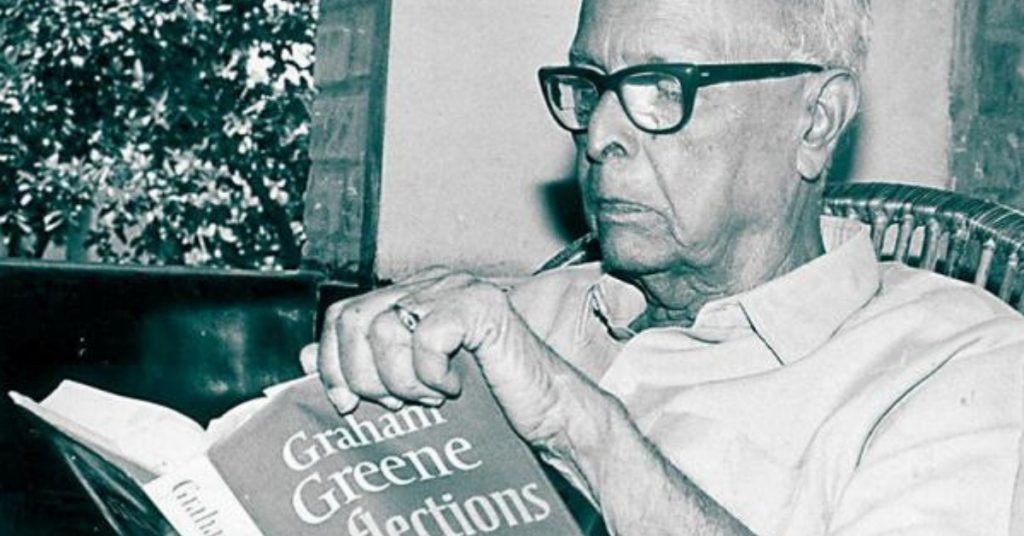
Image Credit: Farnaz Fever

Narayan was a brilliant storyteller who could capture the essence of the mundane everyday life and turn it into a literary masterpiece.Through simple words, punctuated cleverly by just the right amount of humour, he found his way into the hearts of millions of readers.

During the course of his literary career, he won various awards including the Sahitya Akademi Award for The Guide and the AC Benson Medal by the British Royal Society of Literature. He was also awarded Padma Bhushan and Padma Vibhushan  for his contributions to the country. 

He was a man of simple needs (well,  except for that coffee, which he needed exactly the way he liked it ! ) and just like his characters lived a rather simple life. He always made sure to keep himself rooted in reality.Even during his later years, he never missed the chance to have a chat with the people who he used to meet during his afternoon strolls. He treated these walks as his office hours for that is where he often met his characters. 

Narayan was a person who valued friendships more than anything else. Much of his later years were spent in having warm conversations and the perfect Narayan-style coffees with the people he treasured the most. Perhaps those were the things that kept him going after he lost his daughter to cancer.  His final novel, Grandmother’s Tale was dedicated to his daughter Hema. He was a writer who was so invested in his craft that he used to write around 1000 words daily, even while travelling (aspiring writers please make a note !). Even a few hours before he was shifted to the ventilator, all he wanted was for his friend, N. Ram, to get him a notebook for the next novel that he was planning to write. Unfortunately for the readers, that novel never got materialised as he passed away soon after, at the age of 94.

R K Narayan will always be remembered as one of the finest storytellers who inspired many generations of writers to discover the beauty of their own backyards and his legacy will live on through every reader, who secretly wish to pack their bags and move to Malgudi.

How to make the best use of time. 

This is an image for how to make the best use of time.
Photo by Eunice Lui on Pexels.com

Time is precious, it’s a saying that is reiterated often by everyone! We all are gifted with 24 hours everyday and many more during our whole lives. But often we don’t know how to utilize them. We understand how precious time is only when it passes away, leaving us with only a few hours left to turn in an assignment! This doesn’t have to repeat because here are some ways you can make the best use of time. 

Keep track of your time

When time passes you in a whiff, leaving you with the feeling of having nothing done from your ‘to do list’. The moment has come to identify how you have been utilizing your time. A simple note making activity along the week can do the trick. Keep tabs on the activities you do on a regular basis across different time periods. You can do this the old school way by writing down in a notebook or the modern way by typing in your smartphone. The aim of the activity is to figure out the tasks that waste your time by the end of the week and curb the duration of indulging in such activities. 

For example if using your mobile phone or watching television is eating up your time, leaving you with no time to do what is necessary. Keeping track of your time will help you understand this mishap and rectify your actions. Thus helping you to make the best use of time. 

Make a ‘To do list’, but avoid listing a ton of items. 

This is an image of  To do list.
Photo by Breakingpic on Pexels.com

Making a ‘To do list’ is supposed to motivate us to get things done for the day. But listing a ton of tasks kills the motivation to do the same. Listing even 3 important items to do for the day can help you get things done and motivate you to do more. Three tasks might seem very less, but it accounts for a day well spent as you accomplish the 3 most important tasks that need to be done, rather than listing 10 items in your ‘to do list’ and get nothing finished. 

Doing less also helps you focus and spend adequate time over your important tasks, making you less prone to make errors and getting things done efficiently. 

Plan your day before time

We all have heard the famous words of Benjamin Franklin, “If you fail to plan, you are planning to fail.” Although it sounds daunting and negative, it makes a lot of sense when you try to make the best use of time. When you haven’t given a thought about the day ahead, you end up spending the day doing mundane things that take up the majority of your time. 

It is best to plan the next day before going to bed or during the early hours of the day to make the best use of time. This helps you to remember the important things to be done for the day and keep you occupied. 

Take out the bad habits from your day

This is an image for bad habits
Photo by Maria Orlova on Pexels.com

We all develop some habits in our lives that are harmful or keep us from being productive. You might probably take your love for music to the next level by having your earphones plugged in for several hours. This could be harmful to your ears or reduce efficiency as you listen to music in the background while doing something important. Hence, it becomes necessary to fix a duration for plugging in some music rather than doing so all the time.

Similarly, you can curb other time consuming habits by spending less time over them or putting them away during your time of productivity. 

  • Put your phone away to resist the urge for checking messages while you study or work on an assignment. 
  • Turn off the Wifi or mobile data on your phone to prevent notifications from interrupting your work schedule. 

Begin with the most important task for the day

Although it sounds intimidating, waking up after the right duration of sleep leaves you with great energy and potential to complete important tasks that you have planned for the day. Maybe that’s why schools, colleges and offices expect people to arrive in the morning as they are equipped with sufficient energy for conveyance and other important things. 

Finishing the significant tasks in the morning such as studying or attending meetings, equips you with the necessary information and a sense of accomplishment to carry on with the rest of the day. Thus making the best use of time. 

Figure out what is important to you in the long run

This is an image for important
Photo by cottonbro on Pexels.com

Finally, it’s all in the bigger picture. You need to figure out what carries significance in your life. Some may want to explore while the others may want to settle down. What is important to you would determine your actions. 

Do tasks that provide good returns. 

Taking a break during the day from your studies or work is something you deserve. As you plan your activities and ‘to do lists’, it is also necessary to plan your time of leisure. Playing video games or watching television for 4 hours straight can be tempting, but it prevents you from reading the book you were planning on reading or meeting up with a good friend. 

It is better to limit your time over tasks that provide less returns and focus more on tasks that add value to your life.  So pick an interesting book while you feel the urge to binge watch or initiate a meet-up with friends which you have been putting off for a while. 

Because making the best use of time is to learn new things and add new experiences to your life. 

References

Chris Bailey, https://www.lifehack.org/articles/productivity/7-ways-make-better-use-your-time.html

Arda Ozdemir, August 25 2021, https://www.wikihow.com/Use-Your-Time-Wisely

John Rampton, May 1 2018, 8:00am, https://www.forbes.com/sites/johnrampton/2018/05/01/manipulate-time-with-these-powerful-20-time-management-tips/?sh=62c777857ab4

Things to do after BA in English Literature

Photo by Pixabay on Pexels.com

BA in English Literature is an undergraduate course that is opted for following the completion of the 10+2 formal schooling. Do you have a knack for analysing poetry or writing one? Are you keen about learning the history and evolution of different forms of arts and literature? Then a BA in English Literature was an ideal choice for your graduation. Many great inventions today across different fields such as astronomy, engineering and medicine are influenced by ancient literature and several art forms. 

For example, Nicolaus Copernicus’ book “The revolutions of the celestial spheres” popularised the heliocentric theory that proposed the sun as the centre of the universe. With the majority of students opting for medical, engineering or legal degrees, Bachelor of Arts as a degree course is often undermined. There are a lot of common misconceptions and stigmas surrounding this graduation course. 

  • Students studying BA in English Literature are assumed to lackluster in studies. 
  • It is a course often idealised as suitable for women. 
  • Students opting for BA in English LIterature can only become a teacher or professor. 

Many students graduate in English Literature as they are passionate about what the course has to offer. Although women are the majority among English Literature graduates, Men also specialise in this field and go on to pursue post graduation alongside women. 

As we have debunked some of the misconceptions and stigmas surrounding BA in English Literature, let us look at the doors of opportunities this course leads us to. 

Courses to take up after BA In English Literature

BA in English Literature is a three year graduation course that familiarises you with the evolution of English language and its literature through plays, different forms of poems, novels and theatre. Its curriculum consists of literary analysis, literary criticism and communication skills. Graduating in English Literature qualifies you for several job opportunities and higher studies. 

For further specialisation or better job opportunities, doing a Masters course following BA in English Literature might be an ideal choice. 

Here are the following courses you can consider following your graduation in English Literature. 

Master of Arts in Communication

Photo by Terje Sollie on Pexels.com

MA in Communication is a postgraduate program for the duration of 2 years which equips students with information regarding transmitting messages and principles of communication. 

This masters course prepares its candidates for professions such as film directors, producers, screenwriters, journalists, public relations officers, and other professional careers. 

Eligibility

  • Minimum requirement for admission to MA in Communication is a Bachelor’s degree in any stream from a recognized university. 
  • Students must have secured 50% in their bachelor’s degree course. 
  • Candidates may be required to pass entrance exams conducted by specific colleges or universities. 

Employment Opportunities

Choosing MA in Communication following BA in English Literature can set you up for the following employment roles. 

  1. Television or Film Director 
  2. Content Writer
  3. Event Management
  4. Digital Marketing Expert
  5. Journalist
  6. Public Relations Professionals

Master of Arts in Sociology

Photo by Element5 Digital on Pexels.com

MA in Sociology is a postgraduate program like MA in Communication. Students keen about social studies, politics and economics can pursue this masters course following BA in English Literature. The MA Sociology curriculum consists of the study of religion and society, political society, Indian society, economy and society, social development, and research in sociology. 

Eligibility

  • Interested candidates must be graduated in any stream of education from a reputed university.
  • Candidates must have scored a minimum of 50% in the undergraduate level. 
  • Some colleges expect students to be a graduate in psychology while the others accept candidates across different streams. 
  • Colleges conduct entrance exams that need to be cleared by the admission seeking candidates. 

Employment Opportunities

MA in Sociology opens doors to an expansive range of career opportunities after your graduation in English Literature. Following are some of the job profiles that might get you interested. 

  1. Counselors
  2. PR Executives
  3. Administrators
  4. Educators
  5. Sociologist
  6. Researcher

Master of Arts in English Literature

Photo by Janko Ferlic on Pexels.com

Nothing seems more appropriate than studying for MA in English Literature post your graduation from BA in English Literature. This post graduation course in English Literature is the study of ancient and modern English literature, consisting of poetry, drama and fiction. Literature in the English language is not only written by English authors from England but also writers from across the world. 

Post graduation in English Literature sets you up for job profiles such as a teacher or a journalist. Candidates interested in writing and translating for agencies can also benefit from this masters course. 

Eligibility

  • Already being a graduate in English Literature, one needs to make sure that he or she has earned upto 50% marks to be qualified for admission. 
  • Your graduation course should be from a recognized university.
  • Admissions can be provided on both merit basis as well as clearance of entrance exams. 

Employment Opportunities

Upon completion of your post graduation course, you will be qualified for the following job profiles. 

  1. English Language Specialist
  2. Translator / Interpreter
  3. English Teacher
  4. English Editor
  5. Junior Parliamentary Reporter

Bachelor of Law (LLB)

Photo by Sora Shimazaki on Pexels.com

Bachelor of Law is a popular choice for higher studies among graduates of English Literature. A degree in LLB familiarises students with environmental law, consumer protection act, arbitration, and insurance law including others. Following the completion of Bachelor in Law, candidates can opt to study LLM (Masters of Law) for further specialisation, practice law after registering with certain agencies or take up careers as legal professionals in public or private sectors. 

Eligibility

  • Students aspiring to study Bachelor of Law must have graduated from a recognized university with an aggregate of 45% in any stream. 
  • Selection for the course is based on the results from entrance exams such as SLAT, CUET, and CLAT. 

Employment Opportunities

Careers after a Bachelor of Law are not confined to courtroom duties involving defending clients. Law graduates today have scope for job profiles in corporate firms, legal agencies, IT firms, and administrative services. Following are some of the job profiles mentioned below.

  1. HR Manager
  2. Legal Advisor
  3. Lawyer
  4. Attorney
  5. Legal Manager

Bachelor of Education

Photo by Pixabay on Pexels.com

Graduates who want to begin a career in the field of teaching can further study Bachelor of Education. This post graduation course acquaints the candidates with different learning methods and Pedagogy of a school subject. The course lasts for a duration of 3 to 4 years. 

After the completion of B.Ed, clearing aptitude tests such as TET and CTET will qualify you for teaching in primary and secondary schools. 

Eligibility

  • A bachelor’s degree from a recognized university with 50% aggregate marks.
  • A master’s degree from a recognized university with 50% aggregate marks. 
  • Aspirants for B.Ed must be at least 21 years old, irrespective of their graduation or post graduation. 

Job Profiles

Job profiles for B.Ed graduates are usually related to the field of teaching. One can become a teacher with specialisation in a particular subject or head teacher in a primary or secondary school. 

Happy Learning!

References

Vinayak Kashyap, mycourseguru.in/courses after ba english/

Team Careers360 | Updated on Sep 29, 2021 – 3:32 p.m. IST career360.com/10 best career options to progress with after llb degree/

Things to know before taking up Mass Media and Communication courses.

Photo by Caleb Oquendo on Pexels.com

Let’s begin by knowing what Mass Media or Mass Communication is. Mass media refers to the media technologies such as movies, songs, news, podcasts, advertisements and photos, that are utilized to carry information to the masses. 

Importance of Mass Media

This blog you are reading is helping you gain knowledge about Mass Media and communication. Hence this blog becomes a media technology and educating you in the field of Mass Media defines its importance. From applying for a job to reaching out to a friend on your phone, everything becomes a portion of Mass Media as they help users pass on information from one place to another or one person to another. 

Here are some advantages of Mass Media to highlight its importance. 

  • It becomes a voice for the voiceless: Mass Media provides every individual with an opportunity to practice their freedom of speech and spread their ideas among the world. YouTube is a great example of Mass Media. As a platform in this 21st century it helps both small and large creators publish their videos for everybody to watch. 
  • Enables widespread communication: Today, the world is often referred to as a global village. This is made possible due to several types of mass media technologies such as social media, internet, and other digital content. It helps governments, businesses and organizations to communicate with each other and stay connected. 
  • Diversifying culture: Mass Media helps in diversifying languages and cultures beyond its place of origin. A good internet connection and a mobile phone or a computer is all you need to learn a new language or gain knowledge about a new culture. You can even take a peek around the world without leaving your home. 

The Evolution of Mass Media

Mass Media can be traced back to the 800 AD which consisted of prehistoric arts, writings and some basic printing technology. The introduction of Gutenberg’s printing press in the 1450s helped art and literature gain a wider reach among the people.The year 1605 witnessed the publishing of the first weekly newspaper in Antwerp, known as ‘Relation’. This was followed by the inventions of radio and television in 1895 and 1925 respectively. Finally in 1990, the world wide web was introduced by Tim Berners Lee. 

The number of people benefiting from these media technologies witnessed a steady growth from a handful, to thousands, and millions with the introduction of newspapers, radios and televisions. Today, due to the internet, these numbers are reaching billions. In 2018, the number of  World Wide Web’s users was estimated to be 4 billion. 

The 21st century has introduced the ability for even individuals to broadcast a customised message for thousands across the globe. You no longer need to be a part of some huge networking channel to do so. A good internet connection and a hand held device can do the job. 

The functions of Mass Media

Mass Media, in the form of writing, podcasting, and publishing, has a significant effect on the masses. Commercials on television, billboards and social media influence the audience into buying a product or availing a service. Hence companies across the world look for suitable mediums such as social media, blogs, forums, or video streaming platforms to convey their messages based on their businesses. Once they find the right mass media technology, they conduct campaigns to communicate their ideas. 

Majority of the companies today create and maintain their social media pages, maintain blog posts on their websites, and run advertisements on video streaming platforms to educate viewers about their products or to entertain them. These define the functionality of Mass Media. 

Courses in the field of Mass Media and communication

Photo by Redrecords u00a9ufe0f on Pexels.com

After addressing the ‘Wh’ questions of Mass Media, let us dive into the courses one can opt for in the field of Mass Media and communication. There are three kinds of courses available for aspiring students in the field of Mass Media and communication. Courses at undergraduate, postgraduate and diploma levels.

Both the course levels familiarise students both practically and theoretically in the field of Mass Media and Communication. 

Eligibility for courses in Mass Media and communication (UG PG) 

A student aspiring to seek admission in a Bachelor of Arts in Mass Communication course, he or she must fulfil some eligibility criterias. 

  • The applicant should have completed senior secondary schooling (10+2) from a recognized university. 
  • The applicant must have scored a minimum of 50% from the aggregate in their senior secondary schooling. 

Similarly, students aspiring for seeking admission in the Master of Arts in Mass Communication course must fulfil the following eligibility criterias. 

  • The applicant must have a Bachelor’s degree in any stream from a recognized university. 
  • The applicant must have scored a minimum of 50% from the aggregates in their Bachelor’s degree. 

Institutes may also require you to give an entrance exam to fulfil the admission process.

Here’s what you will learn from Mass Media and Communication courses

Courses in Mass Media helps you get acquainted with subjects such as Public Relations, Design and Graphics, Digital Media, Reporting and Editing for Print Media, Data Journalism, Photojournalism, Event Management, and Media Law and Ethics. The courses are inclusive of Computer based learning, Guest Lectures, Seminars, Workshops, Massive Open Online Courses, Individual and Group projects, and community based projects. 

Scope for Mass Media courses under employment prospect.

Photo by Pixabay on Pexels.com

With an increase in media technologies following new inventions and establishments such as Television Channels, Radio Stations, Advertising Agencies, PR Agencies, etc. Scope in this field is also parallely increasing. Here are some of the job profiles candidates can look out for upon completion of the course. 

  • Journalism
  • Public Relations
  • Advertising
  • Media Planner
  • Broadcasting and Production
  • Event Manager

Conclusion

Mass Media and Communication as a field in academics has a great scope in India and overseas. Freshers with expertise in specific areas and sufficient experience will be hired by prominent media companies for different job profiles. Individuals with good communication skills, writing proficiency, and passion for learning can pursue an undergraduate or a postgraduate course in Mass Media and Communication. 

References

Ritika Shrivastava, May 17, 2021 09:36 IST, shiksha.com

Akanksha Sirohi, July 15 2020, collegedekho.com

https://www.careers360.com/courses/mass-communication-course

Expression

Every person has their own language of expression. Each being express themselves in a way that is so unique to them and that way gives them next level comfort and warmth. Every morning they find one or other way of letting people know what they are feeling but the best way they can and should and mostly express themselves is through their love language. A language that makes them more of themselves and less of everyone else, a language that describes them in the most perfect way, a language that makes them free, independent and illuminated. This language is so pure and pious. And this language as said, have many forms and states but with each different personality these forms and states of this language also becomes different making it not only unique but special in its own way.

Poetry has to be the one that is close to my heart and special to my personality. But as mentioned, it might not necessarily be same poetry as someone else. I might write in way that not only describes my state of mind but also my insecurities or even the thoughts that are deep engraved in by sub-conscious. My language has to be poetry, it is the way I express myself. My poetries not only make me free but also lead me out of the dark tunnel of silence in to the world that has bright sunny day of full of thoughts and intellect. I express only grief, anger, or despair through my poetries but also, love, compassion and even bliss through it. Every emotion finds its place in my poetry and just fit well in its position to portray myself being just the way I want to.

Some people have painting as their language. They communicate their thoughts, feelings through painting them in colours. They choose red for love and green for happiness and black for grief and they go for white to describe peace. These colours express them way better than words could ever. They paint the canvas of their life with these colours of emotions and passion and at the same convey their opinions in the most colourful way to the person across the room. They have colour for each occasion and they have the best strokes to kill the heart breaking moments of life. Their paintings not only describe them as the painter who knows how well to use colours but those pieces are the reflection of their inner self and that they paint a part of themselves with each of their painting and say it out loud in those art works just as perfectly anybody could through writing.

Along with these languages that mostly involve the imagination in their expression, there come are languages that help beings express themselves through the moves of their body. Dance as they say, one must dance to express, not to impress has to be one of the most powerful of expressing and channeling their inner energy in conveying what they want to. With all the gloomy days taking a toll on the dancers they become quite and choose to perform only for themselves or on the music that fits their conditions but sometimes, their performance has a glow that shows us how happy or contended they are. This dance language is the language that makes us express through our body, a language that makes us believe in the beauty of this self that god created.

Allahabad: A city of literary doyen

Allahabad is a venue for Urdu-Hindi literary feat.

A feast for the lovers of art and literature, Allahabad is a venue for Urdu-Hindi literary feat. Allahabad is a cradle of the Hindi and Urdu literary world which attracts writers, poets and scholars from all over the world. 

Allahabad has been a political hub since the very beginning and has also contributed to the making of at least six prime ministers, namely Jawaharlal Nehru, Indira and Rajiv Gandhi, Lal Bahadur Shastri, VP Singh and Chandrashekhar and it is very well known that politics leads to creation and invention of different forms art, poetry, stories.  

Art and writing, poems and stories, basically any form of art is revolutionary and hence, there was also a literary movement taking place during the time when politics was at its peak in Allahabad. One of the contributing factors was the Allahabad University, which was for a long while referred to by the proud alumni as the “Oxford of the East”. 

The city is also associated with some of the literary giants of the Hindi-Urdu world in the last century. Some of the legends are mentioned below: 

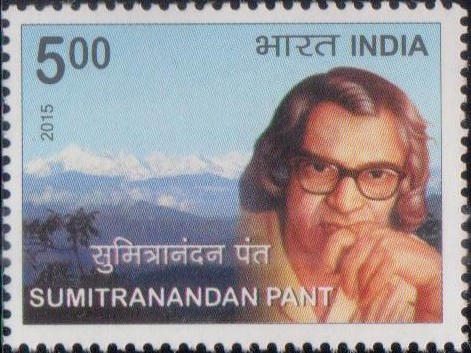
1.Sumitranandan Pant: Sumitranandan Pant was an Indian poet. He was one of the most celebrated 20th century poets of the Hindi language and was known for romanticism in his poems which were inspired by nature, people and beauty within. 

He is considered one of the major poets of the Chhayavaadi school of Hindi literature. Pant mostly wrote in Sanskritized Hindi. Pant authored twenty-eight published works including poetry, verse plays and essays. Apart from Chhayavaadi poems, Pant also wrote progressive, socialist, humanist poems and philosophical (influenced by Sri Aurobindo) poems. Pant eventually moved beyond this style. As the late scholar and translator of Pant, David Rubin, writes, “In the early forties the new psychological and experimental “schools” were emerging. It was typical of both Nirala and Pant that they themselves anticipated these trends and, by the time the new approaches were in vogue, they had already moved on to newer areas of experimentation.” 

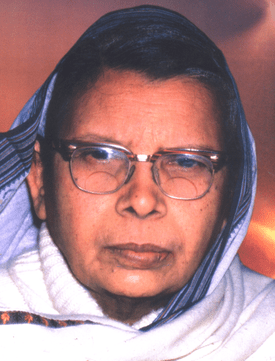
2.Mahadevi Varma: Mahadevi Varma was an Indian Hindi-language poet and a novelist. She is considered one of the four major pillars of the Chhayawadi era in Hindi literature. She has been also addressed as the Modern Meera.  Poet Nirala had once called her “Saraswati in the vast temple of Hindi Literature”. Varma had witnessed India both before and after independence. She was one of those poets who worked for the wider society of India. Not only her poetry but also her social upliftment work and welfare development among women were also depicted deeply in her writings. These largely influenced not only the readers but also the critics especially through her novel Deepshikha. Varma was a feminist par-excellence even before the term became trendy in public discourse. She was turned down by her husband only a few years after marriage. Her looks were not the kind that the fashion industry portrays as desirable, but the physicality of being has little to do with the beauty of her soul and intellect. 

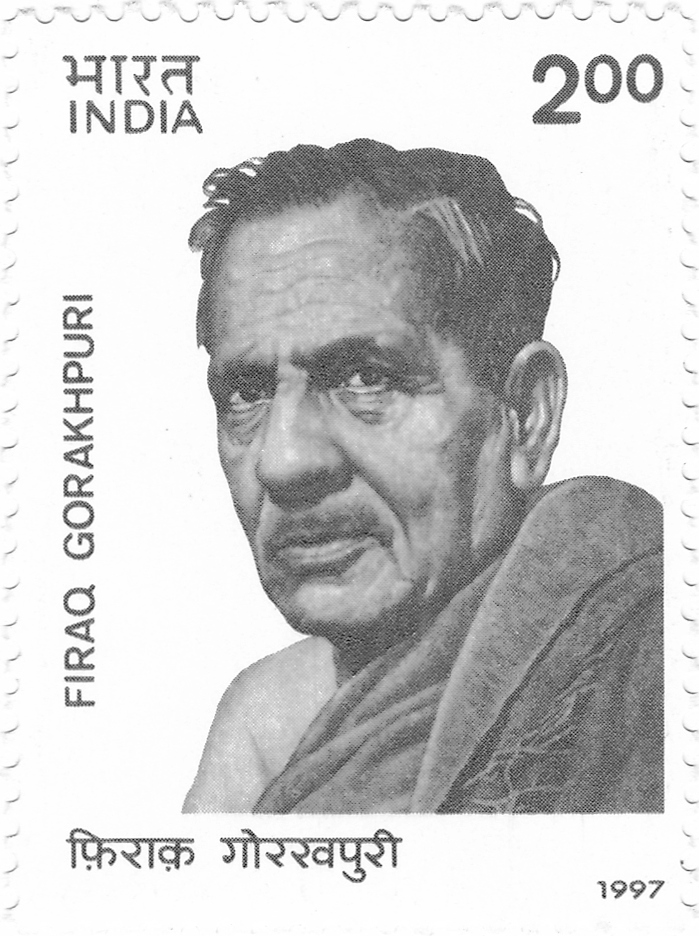
3.Firaq Gorakhpuri: Raghupati Sahay, better known under his pen name Firaq Gorakhpuri, was a writer, critic, and, according to one commentator, one of the most noted contemporary Urdu poets from India. He established himself among peers including Muhammad Iqbal, Yagana Changezi, Jigar Moradabadi and Josh Malihabadi. Some of his works are as followed, 

  • Gul-e-Naghma 
  • Gul-e-Ra’naa 
  • Mash’aal 
  • Rooh-e-Kaayenaat 
  • Roop   

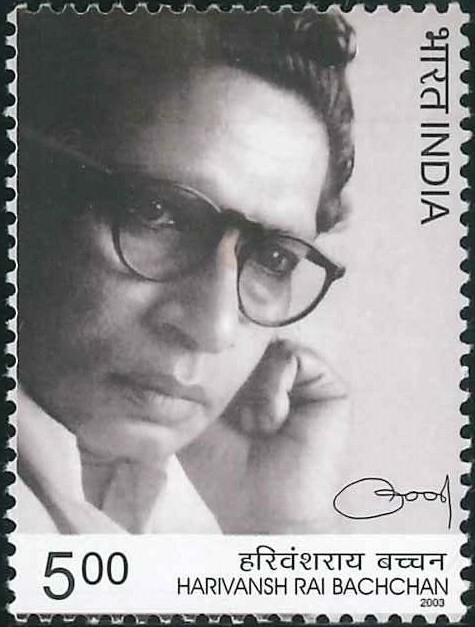
4. Harivansh Rai Bachchan: Harivansh Rai Bachchan was an Indian poet and writer of the Nayi Kavita literary movement (romantic upsurge) of early 20th century Hindi literature. He was also a poet of the Hindi Kavi Sammelan. He is best known for his early work Madhushala. He is also the husband of social activist, Teji Bachchan, father of Amitabh Bachchan and Ajitabh Bachchan, and grandfather of Abhishek Bachchan. In 1976, he received the Padma Bhushan for his service to Hindi literature. 

As the river Saraswati flows in the city and is regarded as the goddess of education according to the Hindu scriptures, hence, Allahabad is gifted with literature. The city is buffet of art and literature and is a feast for explorers. 

Let It Out

We the creatures of this planet are born with numerous feelings and emotions and as soon as we get hold of ourselves we decide for ourselves if a certain emotions are important for us or not. And the emotion that gets the last place in this not so perfect ranking is the feeling that portray us as sentimental, weak, and quite vulnerable that of crying, venting out all that we have deep buried inside us through our eyes, tears as people call them are what we find the heaviest to let out and yet heavier to carry within us. The vulnerability that we believe surrounds us every time we emit sentiments or feelings that are emotionally draining turns us into some being that isn’t comfortable about their own emotions and consequently we crawl further into ourselves becoming more of an emotional wreck than an emotional person.

The salty water that is emitted every time we experience any sort of emotional trouble or low can actually turn in to the best kind of respite from the burden that this world puts on us. The relieving of our tensions through our eyes is quite normal and in fact healthy. Taking into the acceptance that we are having a bad day and that crying it out might be the best part of the day then one must do that. With all the responsibilities and tensions of the world we definitely need some type of respite from that hectic schedule and mostly people want to run away from it but crying can actually be the medicine we need on a long day. Though different people have different ways of getting themselves back after a heavy day but if letting out the tears is your way you must not shy away from it.

A common stereotype that makes people control their tears to the extent that they start getting uneasy and it becomes unhealthy is that of crying being associated with weakness, while in reality it has to be quite strong of a person to be vulnerable enough to own this emotional self that they make of themselves. Physical health has always got priority over mental health for a very long time in the past. But now as the times are changing and we as human beings are evolving the significance of taking care of our mental health has been increasing to the extent that people are normalizing the act of crying as the perfect humanly behavior and no connection whatsoever with it being the deed of the coward or the weak. In fact keeping it in is considered much less brave and as more of the action of those who are not familiar with their own weak side and in consequence do not know themselves inside out.

There is no insistence on crying out loud in front of the people we know or not know, but rather it is about letting out of the fear which resides within us, the fear of losing it all, the fear of staying the emotional wreck for the rest of our lives, the fear of going away from sanity, the fear of knowing the weak, vulnerable person that we actually are, the fear of people knowing or seeing our not so perfect side, the fear of getting everything to its worst end, the fear of not making ourselves what we thought of, the fear of not getting back on our feet, the fear of unknown, the fear that makes us let it out.

Photo by Kat Jayne on Pexels.com