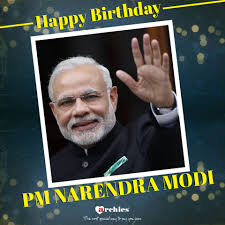
17th September,1950. A date when a legend was born. Narendra Damodardas Modi, born and brought up in the city of Vadnagar, Mehsana district, Bombay State (present-day Gujarat). He is one poor tea selling kid who grew up to be the most powerful and influential leaders in India. Modi ji aspires to serve the nation and to do the best he can do to attain his vision and mission in favor of his country. I am not entering into any political conflicts and nor will i talk out the Bhartiya Janta Party (BJP) . I will only talk about this miraculous leader who has changed the outlook of INDIA in his leadership tenure .
As a Chief Minister of Gujarat, Modiji has changed the outlook of Gujarat. In his 12 years of being a CM, he has developed Gujarat . He has developed industries, he has served the poor, brought in different schemes. The tourism sector has flourished because of his reign.
In 2014, there was a Modi leher, with slogans of “Har har Modi. ghar ghar Modi” and ” achhe din aane wale haii” . The majority supported BJP for a sole reason Modi. Modi jihas become the brand face of BJP. Modi ji became the first Prime minister after many years to get the whole majority of votes. On the day of 26th May 2014, he swore the oath as a prime minister. From that day onwards he has been serving the nation in it’s best of interests.
The confidence and aura he has makes him a charismatic leader. The speech delivery and the kind of orator he is is incredible! He knows the power of persuation. He is like water that takes the shape of whichever container you put in.The degree of decisiveness is very high in him,he does not care about what people speak about him because he firmly believes that whatever he is doing is right and will only serve the nation in the long run.
His party along with Modi ji and the president of BJP has taken tremendous efforts. Demonetization, Implementation of Goods and service tax, Swacchh Bharat Abhiyan, Make in India, Jan dhan yojna, Beti bachao beti padhao and Smart city missio. He dreams of a Digital India. And he is also doing everything he can to make India digital. The BHIM app for transactions is also a form of that.
It is only because of our Prime Minister today, that our foreign relations have improved to an extent that they are standing with India and ready to help it in all possible ways. He knows the importance of ties globally. From the US to Japan, they are with India in the time of crisis.
He has also won several awards — ” The King Hamad Order of Reneissance” , one of the most reputed award of Bahrain. His presence in the HOWDY MODI event in the US was also a great achievement.
Modi ji has set examples not only for the adults but also for the youth of today. He firmly believes that youth of today is the future of tomorrow and he does everything to encourage them to turn the future in their own way. He also engages his audience with various platforms like Man ki baat on the radio or talking directly to the students on children;s day or teachers day.
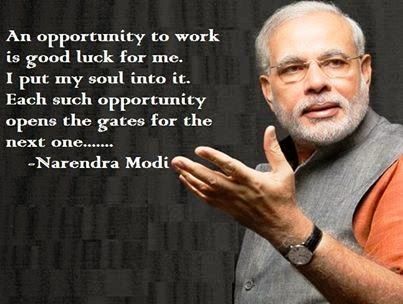
Modi ji is a living legend and is a Lion that is not afraid to roar. He says that hard work never brings fatigue, it brings in satisfaction.Once again Happy Birthday Modi ji !!
Wine is as old as civilization itself and it has a significant place in many ancient cultures. Many experts agree that wine probably dates to 6000 B.C., to Mesopotamia where wild vines grew in abundance. The popularity of wine eventually spread to Egypt, along the Nile Delta. Wine came to Europe with the spread of the Greek civilization around 1600 B.C. It was an important article of Greek commerce and Greek doctors including Hippocrates, were the among the first to prescribe it. The Greeks also learned to add herbs and spices to mask spoilage.
Starting about 1,000 B.C., the Romans made major contributions in classifying grape varieties and colours, observing and charting ripening characteristics, and popularizing the growing of vines and manufacturing of wines. As time progressed, the wealthy enjoyed the fruits of the vine. After the collapse of the Roman Empire, Europe’s wine industry was saved by the church as monks planted vines to provide wine for Mass. Before long, France emerged as a leader, with some of the world’s finest wines.
Did you know that an ancient Persian fable credits a lady of the court with the discovery of wine? This princess lost favour with the king and attempted to poison herself by eating some table grapes that had ‘spoiled’ in a jar. She became intoxicated and fell asleep. When she awoke, she found that she felt much more relaxed and stress free and wine was discovered!
• Coffee
According to legend, an Arabian shepherd named Kaldi found his goats dancing joyously around a dark green leafed shrub with bright red cherries in the southern tip of the Arabian Peninsula. Kaldi soon determined that it was the cherries on the shrub that were making them act this way. After trying the cherries himself, he learned of their powerful effect. These were coffee berries and monks at a local monastery started using a drink made of these berries to stay awake during extended hours of prayer. And so, coffee was born.
The ancient Ethiopians made balls of crushed coffee beans and fat to give them energy during long journeys. The coffee we are familiar with originated in Arabia, where roasted beans were first brewed around A.D. 1,000. Later, coffee was brought to the rest of Asia from where it was taken to Europe by a merchant from Venice.
Did you know that the name coffee is derived from the Arabic term ‘gahwa’ which means ‘that which prevents sleep’?
• Tea
Did you know that tea is 5000 years old? According to legend, it was discovered in 2737 B.C., by a Chinese emperor when some tea leaves accidently blew into a pot of boiling water. The emperor was interested in the new liquid, drank some, found it very refreshing, and tea was created!
Tea consumption spread throughout Chinese society reaching into every strata. In time, drinking tea became part of the social and cultural life in the far East and India. Tea was introduced to India by the silk caravans travelling from the Orient to Europe. It was a Buddhist priest who brought the first tea seeds from China to Japan. In Japan, tea received almost instant imperial sponsorship, and spread rapidly from the royal court and monasteries to the other sections of Japanese society. Dutch traders and Portuguese missionaries brought tea into Europe and tea became an extremely fashionable drink in the court of Charles II of England. Tea has played a very important role in the history of England for it brought fortune to the British empire and at the same time, it was a tax levied on tea that led to the loss of her colonies in the New World.
Today, tea is grown on tea estates, and 70% of the tea we drink is grown in Sri Lanka, India, Indonesia, Kenya, Argentina and China. Amazing, we drink virtually the same tea today that the Chinese emperor drank the day he discovered it!
• Carbonated soft drinks
Do you love fizzy soft drinks? Well, even the ancient Romans loved to drink the bubbling waters of mineral springs and they believed that this water was very good for health as well. Later, scientists discovered that it was the carbon dioxide in the water that caused these bubbles and tried to find a way to introduce this gas into plain water to give the same effect. Thanks to the efforts of such scientists as Joseph Riestley and John Nooth, this feat was accomplished and carbonated water was available for sale by the end of the 1700.
The next step was to flavour this sparkling water. In 1784, citric acid was developed from lemon juice and by 1833, carbonated lemonade was on sale in England. Soon, other flavours were introduced and in 1886, Coca Cola entered the market and created soft drink history.
On 2nd Oct 2014, when the country was celebrating the birth anniversary of Mahatma Gandhi , PM Narendra Modi launched a national campaign “Swatch Bharat Abhiyan” with a aim to make India completely clean by the 150th anniversary of Mahatma Gandhi (2nd Oct 2019). “Clean India” was a dream of Bapu who advocated cleanliness and sanitation to be an essential part of healthy and peaceful nation. The campaign urged people to spend at least 100 hours every year to make their surroundings clean.Cleanliness is essential for physical, social , mental and intellectual well- being , and is the responsibility of not only Government but also a common man to make our country clean and green as it is said that “Cleanliness is Godliness”.
The mission was started by Prime Minister Modi, who, on December 25, 2014, nominated nine famous personalities for the campaign. They took up the challenge and nominated nine more people. Among those nominated by the PM are film actors Salman Khan, Priyanka Chopra and Kamal Hassan, industrialist Anil Ambani, Goa Governor Mridula Sinha and Congress leader Shashi Tharoor, yoga guru Ramdev and the team of TV serial “Tarak Mehta Ka Ulta Chashma”. Thereafter, it has been carried forward with people from all walks of life joining it. The nine public figures selected by Modi to propagate the mission include:Comedian Kapil Sharma, Former captain of Indian cricket team Sourav Ganguly, Former IPS officer Kiran Bedi, Padmanabha Acharya, Nagaland Governor Sonal Mansingh,classical dancer Ramoji Rao of Eenadu group and Aroon Purie of the India Today group. “I have invited nine people and asked them to come to public places and work towards a Clean India. I ask them to invite nine more people too…I am sure these nine people will do the work and each will invite nine more people to form a chain and clean the country,” Modi said.
Swachh Bharat Abhiyan ( Clean India Mission in English) is a campaign in India that aims to clean up the streets, roads and infrastructure of India’s cities, smaller towns, and rural areas. The objectives of Swachh Bharat include eliminating open defecation through the construction of household-owned and community-owned toilets and establishing an accountable mechanism of monitoring toilet use. Run by the GOI, the mission aimed to achieve an Open-Defecation Free (ODF) India by 2 October 2019, the 150th anniversary of the birth of Mahatma Gandhi, by constructing 90 million toilets in rural India at a project costed of ₹1.96 lakh crore (US$30 billion).
Construction of exclusive village sanitary complexes for women providing facilities for hand pumping, bathing, sanitation and washing on a selective basis where there is not adequate land or space within houses and where village panchayats are willing to maintain the facilities.Many civil society organisations and companies have also joined the campaign, spreading awareness in urban slums and villages by putting on street plays about rubbish disposal, handing out leaflets about washing hands and even giving out broomsticks to members of the public.
Swachh sarvekshan covered 4,242 cities, 62 cantonment boards and 92 Ganga towns. This survey was carried out in 28 days.Fourth edition of the survey in 2019 covered 4,237 cities. It was the first-of-its-kind completely digital survey completed in a record time of 28 days.
After winning the cleanest city of India tittle for the fourth time, Indore Municipal corporation employees federation president Umakant Kale said that many sanitation employees were infected with coronavirus, but they did not give up and the first position in the Swachh Survekshan 2020 is the result of their hard work
There is no disadvantage of Swachh Bharat Abhiyan. However, the advantages are many. 1. Boost in tourism 2. Improve health of masses 3. Adoption of clean technology 4. Improved productivity of individuals attract foreign direct investment (FDI)
There is a famous saying, ‘Cleanliness is next to godliness’.
Development of orthotic devices may soon receive a boost with a Kerala based scientific institution collaborating with a Mohali based private manufacturer for co-development of such devices catering to clinical conditions such as osteoarthritis and diabetic foot ulcer.
Sree Chitra Tirunal Institute for Medical Sciences and Technology, Trivandrum, Kerala (SCTIMST), an Institute of National Importance under the Department of Science and Technology, Government of India, has signed an MoU with Tynor Orthotics Private Limited (Tynor), Mohali, to set up an Orthotics and Rehabilitation R&D vertical to promote indigenous device development in this sector towards the goal of ‘Aatmanirbhar Bharat’, a high priority target of the Govt of India.
Tynor, a manufacturer and exporter of high quality and affordable orthopedic appliances and fracture aids in India, will collaborate with SCTIMST for the co-development of Orthotic devices and to promote joint research programs in Orthotics and Rehab. Tynor has funded SCTIMST for Research and Development of two off-loading devices in patients with diabetic foot ulcers and osteoarthritis. The project is planned for one year with Tynor contributing INR 27 lakhs to the program.
The main objective of this Institute-Industry collaboration is to develop a cluster of orthoses for catering to clinical conditions such as osteoarthritis and diabetic foot ulcer. Asia Pacific is anticipated to witness a lucrative growth in global diabetic foot ulcer therapeutics market owing to the increasing geriatric population, which is more prone to diabetes. Global Diabetic Foot ulcers and Pressure ulcer Market is expected to reach 5265 Million Dollars by 2025 with a compound annual growth rate(CAGR) of 6.6% from 2019-2025, which is quite alarming.
Similarly, the global knee braces market is growing due to the rising prevalence of osteoarthritis, increasing number of orthopedic knee surgeries, and growing number of sports injuries in athletics. The global knee braces market size was estimated at USD 1.5 billion in 2018 and is expected to witness a CAGR of 4.3%. The growing burden of osteoarthritis, the increase in target population, and the technology of cost-effective and easy to wear braces are the major growth propellers for the market.
SCTIMST has done considerable amount of R&D work in biomedical devices over the last 30 or more years and has established itself as a pioneer in this field. This collaboration with an Industry leader for co-development of ortho-rehab devices in the country is a commendable step.
Tynor has planned to set up India’s first R&D Center in Orthopedic Appliances, Fracture Aids, Walking Aids, Compression Garments, and Footcare Products. This center has been named TORNADO (Tynor Ortho Research N Appliance Development Organization) and aims to bring about technology and innovation-based disruption at the scale of a tornado. This will be a novel center in which a Cross-Functional Team consisting of experts from Engineering, Orthopedics, Biomedical Sciences, Design shall be brought together to brainstorm and develop products as per the requirements of the Indian patient. Industry-academia collaboration is the key to achieve this feat.
In order to boost real estate sector, the Government has taken various initiatives such as reduction in Goods and Services Tax (GST) on under-construction Affordable Housing project from existing 8% to 1% without Input Tax Credit (ITC) and in case of other housing projects from 12% to 5% without ITC; increase in Priority Sector Lending for Affordable Housing Project from Rs. 28 lakh to Rs. 35 lakh in metros and from Rs. 20 lakh to Rs. 25 lakh in non-metros; Setting up of Affordable Housing Fund in National Housing Bank; additional Deduction of Rs. 1.5 lakh on account of Home Loan Interest in addition to the deduction of Rs. 2 lakh for affordable housing, Extension of 100% deduction on profits for construction of affordable housing projects under section 80-IBA of the Income Tax Act till 31.03.2021 and widening the scope of section 80-IBA from 30 to 60 square meters in metros regions and 60 to 90 square meters in non-metros cities.
In order to give relief to homebuyers of stalled projects, a Special Window for Completion of Affordable and Mid-Income Housing (SWAMIH investment fund) has been created for funding stalled projects that are net-worth positive, including those projects that have been declared as Non-Performing Assets (NPAs) or are pending proceedings before the National Company Law Tribunal under the Insolvency and Bankruptcy Code. SWAMIH investment fund will provide last mile funding to the stressed affordable and middle-income housing projects in the country,
Recently, in view of global pandemic of COVID-19, to protect the interest of all stakeholders, Central Government has issued the necessary advisory to all States/Union Territories and their Real Estate Regulatory Authorities for issuance of requisite orders/ directions under enabling provisions of Real Estate (Regulation and Development) Act, 2016 (RERA) to invoke force majeure clause to automatically revise / extend completion date for all real estate projects registered under RERA for a period of 6 months, where completion date expires on or after 25th March, 2020 and to allow further extension of 3 months, if the situation so demands, for the reasons to be recorded in writing and also extend concurrently the timelines of other statutory compliances under RERA.
This was informed by Minister of State (I/C) for Housing and Urban Affairs Shri Hardeep Singh Puri in a written reply in the Rajya Sabha today.
In order to boost real estate sector, the Government has taken various initiatives such as reduction in Goods and Services Tax (GST) on under-construction Affordable Housing project from existing 8% to 1% without Input Tax Credit (ITC) and in case of other housing projects from 12% to 5% without ITC; increase in Priority Sector Lending for Affordable Housing Project from Rs. 28 lakh to Rs. 35 lakh in metros and from Rs. 20 lakh to Rs. 25 lakh in non-metros; Setting up of Affordable Housing Fund in National Housing Bank; additional Deduction of Rs. 1.5 lakh on account of Home Loan Interest in addition to the deduction of Rs. 2 lakh for affordable housing, Extension of 100% deduction on profits for construction of affordable housing projects under section 80-IBA of the Income Tax Act till 31.03.2021 and widening the scope of section 80-IBA from 30 to 60 square meters in metros regions and 60 to 90 square meters in non-metros cities.
In order to give relief to homebuyers of stalled projects, a Special Window for Completion of Affordable and Mid-Income Housing (SWAMIH investment fund) has been created for funding stalled projects that are net-worth positive, including those projects that have been declared as Non-Performing Assets (NPAs) or are pending proceedings before the National Company Law Tribunal under the Insolvency and Bankruptcy Code. SWAMIH investment fund will provide last mile funding to the stressed affordable and middle-income housing projects in the country,
Recently, in view of global pandemic of COVID-19, to protect the interest of all stakeholders, Central Government has issued the necessary advisory to all States/Union Territories and their Real Estate Regulatory Authorities for issuance of requisite orders/ directions under enabling provisions of Real Estate (Regulation and Development) Act, 2016 (RERA) to invoke force majeure clause to automatically revise / extend completion date for all real estate projects registered under RERA for a period of 6 months, where completion date expires on or after 25th March, 2020 and to allow further extension of 3 months, if the situation so demands, for the reasons to be recorded in writing and also extend concurrently the timelines of other statutory compliances under RERA.
This was informed by Minister of State (I/C) for Housing and Urban Affairs Shri Hardeep Singh Puri in a written reply in the Rajya Sabha today.
The Ministry of Education organized a webinar on Faculty Development for Quality Educationon 15th September, 2020 under Shikshak Parv Initiative. The webinar was organised with the objective to reflect on the roles and responsibilities of teachers in the light of NEP and to understand various aspects of capacity development and career progression of the faculty.Shikshak Parv is being celebrated by Ministryof Education from 8th September- 25th September, 2020 to felicitate the Teachers and to take New Education Policy 2020 forward.
Professor J. S. Rajput,India’s Representative on the ExecutiveBoard of the UNESCO, Prof. N.V. Varghese, Vice Chancellor, NIEPA, Prof. A.C. Pandey, Director, IUAC and Dr. Geeta Bhatt, Associate Professor, University of Delhi were the guest speakers in the session of Higher Education. Dr. Archana Thakur, Joint Secretary, UGC moderated the session.
India is now determined to create a pool of teachers who would not only be degree-holders; but ‘persons’ who would possess ‘personalities’ said Prof. J.S. Rajput. He added that the new approach to teacher preparation would expect every teacher to develop a comprehensive perspective towards life and living. He further said that teachers would internalize the higher goals of education, appreciate the measure of responsibility entrusted by the nation, society and community, to prepare a new confident generation, professionals who understand India, its ethos, its culture, history and heritage; as also its emerging role in the globalized world.
Prof. N.V. Varghese emphasised that teachers in higher education need to be supported rather than trained. Higher education needs more research in pedagogy. PMMMNMTT is a good initiative by the Ministry of Education, he added. He also stressed upon academic freedom and autonomy with safeguardsand modified means of student’s engagement.
Prof. Pandey emphasized synergistic role of science and society and how education willinfluence sustainable development goals. In the COVID era blended mode of teaching learning has replaced brick and mortar classrooms. There should be appropriate integration of technology into all levels of education to improve classroom process support, he added.
The NEP-2020 took care to give freedom to teachers/faculty with right teaching material, pedagogy for delivering quality education incentives in terms of promotions, awards etcand, teachers have to be like catalyst, said Dr. Geeta Bhatt. They have to be competitive, proactive for global challenges, she added. Dr. Archana Thakur lauded the role of PMMMNMTT, Ministry of Education and UGC-HRDC in implementation of faculty development programmes and NEP 2020 for far-reaching changes in higher education.
In the session organized by the Department of School Education and Literacy The expert speakers were Prof. M.A. Siddiqui, Former Chairman NCTE, Prof. Ranjana Arora, Head, Dept. of Teacher Education, NCERT, and Ms. Manju Balasubramanyam Principal, Delhi Public School, Bengaluru. The beneficiary group for this session are Teacher Education Institutions, Teachers Educators, Teacher, Aspiring Teacher and School Education Department in all States/UTs.
The session started with a general presentation of the major recommendations of the NEP 2020 on Teachers and Faculty Development followed by a presentation made by Prof. Ranjana Arora. She said that for the first time, Teachers have been accorded special status by the NEP 2020 by acknowledging the high respect for teachers and the high status of the teaching profession. The need of the hour now is mass education and orientation of the teachers and teacher educators on the recommendations of the NEP 2020.A detailed Programme of Action (POA) needs to be developed for implementation of the NEP 2020 which would have action points listed out for various stakeholders within a specified time frame. The scope for evaluation of these action points could also be listed out in the POA.
Prof. M.A. Siddiqui highlighted the need for strengthening the Teacher recruitment and deployment system has been recognized through adoption of an online computerized system for transfer that ensures transparency. More empowerment to teachers through assessment of performance of teachers will be based on peer reviews, attendance, commitment, hours of CPD, and other forms of service to the school and the community, he added. Prof Siddiqui also said that NEP has ensured decent and pleasant service conditions at schools, rationalization of schools, without in any way reducing accessibility, for effective school governance, resource sharing, and community building and teachers will not be engaged any longer in work that is not directly related to teaching.
Considering the fact that proportion of participation of the private sector in Teacher Education is very high i.e., about 92%, enhancing the presence of the Government sector in Teacher Education is very important,Ms. Manju Balasubramanyam said. Strengthening and extending TET to cover all stages of School Education is a welcome step, she said. In addition to TET, personal interviews could also be considered a requisitefor entering the Teaching profession, she added.
Vande Bharat Mission consists of special repatriation flights operated by Indian carriers and chartered flights operated by both Indian and foreign carriers. As per information provided by the Ministry of External Affairs (MEA), as on 31.08.2020, a total of 5817 flights (inbound to India) were operated to repatriate Indian nationals. The country-wise details of repatriated Indians along with the state-wise arrival figures are attached as Annexure-A (Click here)
As per information submitted by the State Government of Tamil Nadu, a total of 585 Vande Bharat Mission flights have been operated to the State of Tamil Nadu till the end of Phase 5. Phase-wise details are given in the Annexure-B(Click here)
This information was given in a written reply by Shri Hardeep Singh Puri, Minister of State (I/C), Civil Aviation in Rajya Sabha today.
Childhood, the most beautiful moment of human life, nothing to worry nor any responsibility. Just being lost in your head all the time, playing, and reading. But it is not necessary for everyone to have such a childhood.
You will be well aware of the problem of child labor. Any child who is under 14 years of age and works for a living is called a child laborer. Due to poverty, helplessness, and harassment of parents, these children continue to sink into this morass of child labor.
Today there are 215 million children worldwide who are under 14 years of age. And the time of these children does not pass between copy-books and friends in school, but between hotels, houses, industries, utensils, brooms, and tools.
This situation has become very frightening in India. India has the largest number of child laborers in the world. According to the 1991 census, the number of child laborers was 11.3 million. The figure rose to 12.7 million in 2001.
Child labor is a major social problem in developing countries. Children are covered under child labor who work at their playing and reading age. When a child who is under 14 years of age and earns a living earns wages, it is called child labor or child labor. Huh. India has the highest number of child laborers in the world, which is a curse on our country. Poverty is the main cause of child labor. Due to poverty, people get their children to do child labor, so that the family’s income can increase and feed them. Therefore, to stop child labor, it is most important to eradicate poverty. Apart from unemployment, illiteracy is also the main reason for child labor. Apart from this, some greedy contractors get the children to work in the greed of low wages by the shopkeepers. Child labor takes away the childhood of these children.
At the age of jumping, these children do wages, due to which their physical and mental development is not possible. This is dangerous for the future of any country because these children go ahead and build the country. Therefore child labor always proves fatal for the good future of any country. Crime also increases due to child labor. Therefore, the government has also enacted several laws against child labor, but it is necessary to implement those laws properly. Awareness against child labor is necessary for the government as well as in the general public because the government alone cannot ban child labor. We should all help the government to stop child labor, and this is also important.
To improve this situation of child laborers, the Government enacted the Child Labor Act in 1986 under which child labor was considered a crime and raised the minimum age of employment to 14 years. With this, the government has taken steps to eliminate child labor in the form of the National Child Labor Project. The aim of this project is to save children from this crisis. In January 2005, the National Child Labor Project Scheme was extended to 250 districts in 21 different Indian states.
Today, the government has made education up to the eighth compulsory and free, but in the face of poverty and helplessness of the people, this plan also seems to be fruitless. The parents of the children do not send them to school simply because their going to school will reduce the family’s income.
Consequent on the announcement of the Aatma Nirbhar Bharat Abhiyan package, Ministry of Housing and Urban Affairs has, on June 01, 2020, launched ‘Prime Minister Street Vendor’s AmtaNirbharNidhi Scheme (PM SVANidhi). It aims at facilitating collateral free working capital loans upto Rs 10,000 of 1 year tenure, to about 50 lakh street vendors across the country. It provides for incentives in the form of interest subsidy @ 7% per annum on regular repayment of loan and cash-back upto Rs. 1,200 per annum on undertaking prescribed digital transactions. Further, on timely or early repayment, the vendors will be eligible for the next cycle of working capital loan with an enhanced limit.For the purpose of scheme administration, an end-to-end solution through an IT platform has been developed in collaboration with Small Industries Development Bank of India. The loan processing under the Scheme has commenced on July 02, 2020.
State / Union Territory-wise number of loan applications received, sanctioned and disbursed,as on 14th September, 2020, is at Annexure.
This was informed by Minister of State (I/C) for Housing and Urban Affairs Shri Hardeep Singh Puri in a written reply in the Rajya Sabha today.
♦ The Monsoon Trough lies to the north of its normal position. Western end of the Monsoon Trough is likely to remain close to foothills of Himalayas during next 5 days and the eastern end is likely to shift southwards from 19th September onwards.♦ An east-west shear zone runs roughly along Latitude 15°N between 3.6 & 5.8 km above mean sea level. It is likely to persist during next 2 days and weaken thereafter.♦ Due to the above favourable meteorological conditions, Fairly widespread to widespread rainfall with isolated heavy falls very likely over Coastal Andhra Pradesh, Telangana, Madhya Maharashtra, Marathwada, Coastal & North Interior Karnataka and Kerala &Mahe during next 3days.♦ Under the influence of likely formation of a Low Pressure Area over Northeast Bay of Bengal and consequent strengthening of lower level winds along the West Coast; Fairly widespread to widespread rainfall with Isolated heavy to very heavy falls are likely over Andaman & Nicobar Islands, Odisha, Coastal & South Interior Karnataka and Kerala during 19th-20th September,2020.♦Moderate thunderstorm with lightning very likely at isolated places over Madhya Pradesh, Vidarbha, Bihar, Jharkhand, Assam & Meghalaya, Madhya Maharashtra, Marathwada, Coastal Andhra Pradesh &Yanam, Odisha, Telangana, Kutch region, Southeast & Northwest Uttar Pradesh, South Rajasthan and Chhattisgarh during next 12 hours.
Weather Warning during next 5 days *
16 September (Day 1):♦ Heavy to very heavy rainfall with extremely heavy falls very likely at isolated places over Assam & Meghalaya; heavy to very heavy rainfall at isolated places over Sub-Himalayan West Bengal & Sikkim, Marathwada, Telangana and heavy rainfall at isolated places over West Madhya Pradesh, Vidarbha, Bihar, Andaman & Nicobar Islands, Arunachal Pradesh, Madhya Maharashtra, Konkan & Goa, Coastal Andhra Pradesh &Yanam, Rayalaseema, Coastal & North Interior Karnataka, Kerala &Mahe and Tamilnadu, Puducherry &Karaikal.
♦ Thunderstorm accompanied with lightning at isolated places over Madhya Pradesh, Vidarbha, Bihar, West Bengal & Sikkim, Arunachal Pradesh, Assam & Meghalaya, Nagaland, Manipur, Mizoram & Tripura, Madhya Maharashtra, Marathwada, Kutch & South Gujarat Region, North Jharkhand, South Interior Odisha, Northwest & Southeast Uttar Pradesh, Southeast Rajasthan, Chhattisgarh, Coastal Andhra Pradesh &Yanam, Telangana and Rayalaseema.
♦ Strong Wind (speed reaching 45-55 kmph) very likely over Southwest Arabian Sea. Fishermen are advised not to venture into these areas.
17 September (Day 2):♦ Heavy rainfall at isolated places over West Madhya Pradesh, Vidarbha, Bihar, Sub-Himalayan West Bengal & Sikkim, Andaman & Nicobar Islands, Assam & Meghalaya, Madhya Maharashtra, Marathwada, Konkan & Goa, Coastal Andhra Pradesh &Yanam, Telangana, Coastal & North Interior Karnataka and Kerala &Mahe.
♦ Thunderstorm accompanied with lightning at isolated places over Madhya Pradesh, Vidarbha, Chhattisgarh, Bihar, Gangetic West Bengal, Assam & Meghalaya, Nagaland, Manipur, Mizoram & Tripura, Coastal Andhra Pradesh &Yanam, Telangana and Rayalaseema.
♦ Strong Wind (speed reaching 45-55 kmph) very likely over Southwest Arabian Sea. Fishermen are advised not to venture into these areas.
18 September (Day 3):♦ Heavy to very heavy rainfall likely at isolated places over Coastal Karnataka and heavy rainfall at isolated places over southeast Rajasthan, Madhya Pradesh, Vidarbha, Odisha, Andaman & Nicobar Islands, Nagaland, Madhya Maharashtra, Marathwada, Konkan & Goa, Coastal Andhra Pradesh &Yanam, Telangana, Interior Karnataka and Kerala &Mahe.
♦Thundersquall (speed 50-60 kmph) accompanied with lightning very likely at isolated places over Andaman & Nicobar Islands; moderate thunderstorm accompanied with lightning likely at isolated places over southeast Rajasthan and thunderstorm accompanied with lightning at isolated places over Madhya Pradesh, Vidarbha, Chhattisgarh, Jharkhand, Odisha, Nagaland, Manipur, Mizoram & Tripura, Coastal Andhra Pradesh &Yanam, Telangana andRayalaseema.
♦ Strong Wind (speed reaching 45-55 kmph) likely over Southwest Arabian Sea and along & off Kerala-Karnataka coasts and Lakshadweep area; Gulf of Mannar and Southwest Bay of Bengal, Southeast & adjoining Eastcentral Bay of Bengal and Andaman Sea.Fishermen are advised not to venture into these areas.
19 September (Day 4):♦ Heavy to very heavy rainfall likely at isolated places over Andaman & Nicobar Islands, Coastal & South Interior Karnataka and Kerala &Mahe and heavy rainfall at isolated places over southeast Rajasthan, Odisha, Madhya Maharashtra, Konkan & Goa, Coastal Andhra Pradesh &Yanam, Telangana, North Interior Karnataka and Tamilnadu, Puducherry &Karaikal.
♦ Thundersquall (speed 50-60 kmph) accompanied with lightning very likely at isolated places over Andaman & Nicobar Islands; moderate thunderstorm accompanied with lightning likely at isolated places over East Uttar Pradesh and southeast Rajasthan and thunderstorm accompanied with lightning at isolated places over West Madhya Pradesh, Chhattisgarh, Jharkhand, Odisha, Coastal Andhra Pradesh &Yanam, Telangana, Rayalaseema and Tamilnadu, Puducherry &Karaikal.
♦ Strong Wind (speed reaching 45-55 kmph) likely over Southwest Arabian Sea and along & off Kerala-Karnataka coasts and Lakshadweep area; Gulf of Mannar and Southwest Bay of Bengal, Southeast &Eastcentral Bay of Bengal and Andaman Sea.Fishermen are advised not to venture into theseareas.
20 September (Day 5):♦ Heavy to very heavy rainfall likely at isolated places over Odisha, Coastal & South Interior Karnataka and Kerala &Mahe and heavy rainfall at isolated places over south Chhattisgarh, Gangetic West Bengal, Andaman & Nicobar Islands, Madhya Maharashtra, Konkan & Goa, Coastal Andhra Pradesh &Yanam, Telangana and North Interior Karnataka.
♦Thundersquall (speed 50-60 kmph) accompanied with lightning very likely at isolated places over Andaman & Nicobar Islands; moderate thunderstorm accompanied with lightning likely at isolated places over East Uttar Pradesh and southeast Rajasthan and thunderstorm accompanied with lightning at isolated places over West Madhya Pradesh, Chhattisgarh, Jharkhand, Gangetic West Bengal, Coastal Andhra Pradesh &Yanam, Telangana, Rayalaseema and Tamilnadu, Puducherry &Karaikal.
♦ Strong Wind (speed reaching 45-55 kmph) likely over Southwest Arabian Sea and along & off Kerala-Karnataka coasts and Lakshadweep area; Gulf of Mannar and Southwest Bay of Bengal, Northeast, Southeast &Eastcentral Bay of Bengal and Andaman Sea.Fishermen are advised not to venture into these areas
Ministry of Education organised a National Webinar on Creating Awareness about National Education Policy, 2020 through NSS, NCC, NYKS and Unnat Bharat Abhiyan (UBA) Volunteers under Shikshak Parv Initiative today . Raksha Mantri Shri Rajnath Singh was the chief guest at the webinar. Union Education Minister Shri Ramesh Pokhriyal ‘Nishank’ ; Minister of State for Youth Affairs & Sports (Independent Charge) Shri Kiren Rijiju; Minister of State for Education, Shri Sanjay Dhotre were present on the occasion. Secretary, Defence Ministry; Shri Ajay Kumar; Secretary, Higher Education Shri Amit Khare; Secretary, School Education & Literacy, Smt Anita Karwal; Secretary, Youth Affairs and Sports, Smt Usha Sharma, Chairman, University Grants Commission, Prof. D.P Singh, Vice Chancellor of various Universities also participated in the event. Volunteers of National Cadet Corps (NCC), National Service Scheme (NSS), Nehru Yuva Kendra Sangathanand Unnat Bharat Abhiyan from all over the country also joined through virtual medium.
Addressing the participants Raksha Mantri said that New Education Policy is the first policy in Indian history, in which a multi-pronged and multi-stakeholder consultative process was undertaken which included online, grassroots and national level deliberations. At the grassroots level, consultations spanned across Gram Panchayats, Blocks, Urban Local Bodies, Districts and States/Union Territories. He added that NEP is prepared keeping in mind more than 2 lakh suggestions given by teachers, academicians, parents and other stakeholders relating to education. This policy suggests many revolutionary changes in school and higher education leading to the holistic development of students. The National Education Policy will fulfill the vision of Prime Minister, Shri Narendra Modi, to create a ‘self-reliant India’, he said.
Raksha Mantri informed that this policy also has a provision to encourage state governments to start NCC wing in their middle and high schools. He further informed that in higher education, the Multiple Entry and Exit scheme will benefit those youth, who have to leave the education midway. This step will prove to be of great benefit to the soldiers of our armed forces who are interested in studying, besides serving the country. He further informed that to increase the resource pool, local eminent persons or experts in the school will be encouraged to be kept as ‘special trainers’.In this, retired teachers and officers of the army will be able to contribute to the nation building by providing services in nearby schools.
Raksha Mantri quoted a famous saying that if you want to improve generations, then you should invest in education. He further said India is one of the youngest countries in the world and youth are our strength in achieving bigger milestones in nation development. He hoped that this event will prove to be an important link in bringing awareness among the youths of the country to contemporary issues.He said that with the support of youths, the entire education system will be more efficient.
The National Education Policy 2020 is the culmination of positive thinking and sustained efforts for making India a ‘knowledge power’, Shri Pokhriyal said. NEP is not merely a policy document, but a reflection of the aspirations of thepeople of India. This policy is comprehensive and far-sighted and will play a great role in facilitating the progress of the nation in future, he added.
Shri Pokhriyal said that National Education Policy 2020 calls for a positive change in the current education system and redress of challenges of the future. NEP ensures equal access to quality education to all students with special emphasis on socially and economically disadvantaged sections, he added.
Shri Pokhriyal highlighted that the Ministry of Youth Affairs and Sports has a superpower of self-motivated youth of India associated with various youth programs.Youth,as an NEP ambassadors can contribute significantly in creating awareness of the National Education Policy 2020 at grassroots level. He expressed his happiness for the webinar organized under the joint aegis of Ministry of Education and Ministry of Youth Affairs and Sports for the successful implementation of education policy.He hoped that volunteers from NYKS, NSS, NCC and coordinators of Unnat Bharat Abhiyan will play crucial role in the successful implementation of this education policy designed in accordance with the aspirations of young India.
Shri R.K. Singh, Union Minister of State (Independent Charge) (Power and New & Renewable Energy) & Minister of State (Skill Development and Entrepreneurship) dedicated various projects implemented under CSR activities of NHPC and PFC in Shahpur and Bihiya block of Bhojpur district through video conferencing on 16.09.2020. Shri A.K. Singh, CMD, NHPC, Shri Ratish Kumar, Director (Projects), NHPC, Shri R.K. Murahari, Executive Director, PFC, local representatives, officers from administration and other officials attended the programme.
Shri R.K. Singh, Hon’ble Union Minister of State (Independent Charge) (Power and New & Renewable Energy) & Minister of State (Skill Development and Entrepreneurship), Shri A.K. Singh, CMD, NHPC, Shri Ratish Kumar, Director (Projects), NHPC and Shri R.K. Murahari, Executive Director, PFC during the dedication of various projects of NHPC and PFC under CSR activities through video conference on 16.09.2020
A total of 33 projects in Shahpur block and 39 projects in Bihayi block were dedicated during the programme. These projects in both the blocks include works as construction of PCC road at 55 locations, community building and chabutras at 3 locations, solar / LED / high mast lights at 7 locations, construction of open gym at 2 locations, construction of drainage system at 2 locations, Chhath Ghat at 1 location and library and community building at 2 locations. The total cost of all these projects is about Rs 9 crore.
Speaking on the occasion, Union Minister of State for Power (Independent Charge) said that NHPC is the largest hydro power company in the country and PFC is the largest financial companies in India in the field of power. He referred to Rural roads works executed by NHPC in six districts of Bihar and also Rural electrification works executed in six districts of Bihar. He further said that PFC is playing important role in development of the country by providing loans of thousands of crore rupees to various power companies. He also said that both these companies operate throughout the country and are capable of competing with any foreign company due to their capability, quality of work and timeliness. While, speaking about the achievements in the power sector in the country, he said that in the last few years, we have increased the installed capacity of the country by 1.25 lakh MW and have fulfilled the dream of one nation-one grid-one frequency connecting remote areas like Leh-Ladakh to the grid. Today electricity has reached every village and every house in the country and India has been praised all over the world for such large scale electrification in such a short period.
Addressing during the programme, Shri A.K. Singh, CMD, NHPC said that these public utility projects are a result of the visionary thinking of Hon’ble Minister. He said that that all these projects have been completed in these two blocks at a cost of about Rs 9 crore. On this occasion, Shri Singh especially thanked the local public and administration in particular and said that it would be difficult to complete this work without their cooperation. He further assured that NHPC will continue to do such socially beneficial works in the future.
Earlier, Shri Ratish Kumar, Director (Projects), NHPC welcomed all the dignitaries in the beginning of the programme. Shri R. Murahari, Executive Director (CSR) PFC, presented the vote of thanks at the end of the programme.
The Environment Ministerial Meeting (EMM) of the G20 countries took place today through video conferencing under the Presidency of Kingdom of Saudi Arabia. Representing India, Union Environment, Climate Change and Forest Minister Shri Prakash Javadekar said, India has taken significant steps to protect environment and forest and wildlife as well as combating pollution and climate change.
Shri Javadekar said, India is committed to work with G20 nations for a better world. He said, India is blessed with vast bio-diversity and ecosystem. The Minister said, India has been taking measures to enhance coral reef conservation. He noted that India’s steps towards dealing with climate change have been remarkable and stated that the world has to channel its best practices to deal with climate change and to get concrete results.













 Eduindex
You must be logged in to post a comment.