Covid-19 vaccine tracker, Sept 10: AstraZeneca trial paused after volunteer developed neurological symptoms

Covid-19 vaccine tracker, Sept 10: AstraZeneca trial paused after volunteer developed neurological symptoms

Coronavirus (COVID-19) vaccine tracker September 10 Update: The report also said that the trials had been halted once earlier as well, in July, after another participant had also developed neurological problems. The patient was later diagnosed with multiple sclerosis, something that was assessed to be unrelated to the vaccine.
A test tube labelled with the Vaccine is seen in front of AstraZeneca logo in this illustration taken, September 9, 2020. REUTERS/Dado Ruvic

Coronavirus (COVID-19) Vaccine Tracker: The volunteer whose serious ailment halted clinical trials of a coronavirus vaccine candidate being developed by AstraZeneca and Oxford University is a woman who has shown symptoms of a neurological disorder that affects the spinal cord, according to a report in Stat News, the media organisation which first reported that the clinical trials had been paused.

The report said information about the woman was released by AstraZeneca CEO Pascal Soriot during a “private conference call” with company investors. It said the CEO had informed the investors that the woman had symptoms of a rare disease called transverse myelitis, but that her condition was improving and she was likely to be discharged from the hospital soon.

Equality

Priya Yadav,

I think nowadays we are taking the word ‘equality’ in the wrong sense. Equality does not mean to be exactly the same. Here it means equal, equal chance, equal respect, but not equal work. If you get equal in the activity, you will bring the woman in a state of harm in most areas of life, and in some other areas of life, the man will come in a state of loss. More than this, inefficiency will spread everywhere. Women will try to do in which men are better, men will try to do that in which women are better. In this way, both works will get messed up. See, with training, everyone can do everything. But natural ability must be used. If this is not done, the level of activity will be average. Therefore it is best to use the natural ability.

Now the question is, who will decide who should do what? Why should it be decided beforehand what a man should do or what a woman should do? It should be allowed only to decide that person.

We are proud to be 21st century Indians who celebrate happiness when a son is born and if a daughter is born, they are peaceful even when no rule has been made to celebrate. So much love for the boy that in the desire of the birth of boys, we have been killing girls since ancient times before birth or before birth, if fortunately they are not killed then we find many ways to discriminate with them throughout life. Let’s take it.

Today the circumstances have changed a lot and many activities can be done by both men and women, which was not possible in earlier times. Thousands of years ago, most people lived in villages and there was forest all around. There were wild animals everywhere. At that time, tigers were not like cats, which needed protection. They were very dangerous creatures, which made you panic. At that time there was no shop from where anything could be purchased. You had to hunt every day or bring something to break. The man was definitely fit to go out and do this job. There was also a biological responsibility for the woman, to have children. If she went to the forest with a small baby, she might have to return empty-handed. Therefore, because of children, the woman was kept safe and the male went out in search of food. This was an ideal sharing of work.

Vice President calls for making nature’s conservation a people’s movement

The Vice President of India, Shri M. Venkaiah Naidu called for making nature’s conservation a people’s movement and appealed to all citizens, especially the youth to actively take up this cause. 

Speaking at a webinar on the occasion of Himalayan Day, the Vice President called for rethinking our development paradigm in such a way that human beings and nature co-exist and thrive together.

Shri Naidu further said that the Himalayas are an invaluable treasure house and emphasized the need for their protection and preservation. He also called for a pan-Himalayan development strategy based on the region’s natural resources, culture and traditional knowledge.

Drawing attention to threat of degradation faced by the fragile Himalayan ecosystem, the Vice President stressed that development should not be at the cost of the environment.

Frequent natural calamities are a result of our carelessness towards the nature, he added.

Highlighting the ecological, economic and cultural importance of the Himalaya, the Vice President said that in the absence of these mountains, India would have been a dry desert.

These mountain ranges not only guard our country from the cold and dry winds coming from Central Asia but also cause most of the rainfall in northern India by acting as a barrier for the monsoon winds, he said.

Further highlighting the contribution of Himalayan Ecosystems, Shri Naidu said that with more than 54,000 glaciers these mountains are the source for 10 major river systems in Asia, a lifeline for almost half of humanity. 

He also drew attention to the immense hydropower potential of the Himalaya which could make it a reliable source of clean energy thus reducing the carbon emissions.

Expressing concern over the increasing rate of melting of Himalayan glaciers due to global warming, the Vice President said that this would severely affect the lives of over one billion people who depend on it for water – for their drinking, irrigation and energy needs.

“We cannot continue with this kind of disregard for nature. If we neglect or over-exploit nature, we are putting our future in danger”, he warned.

Describing the conservation of nature as our ‘culture’, he appealed to respect nature and preserve culture for a better future.

Talking about the various government programs for the conservation of Himalayan ecology such as ‘National Mission for Sustaining the Himalayan Ecosystem’ and ‘SECURE Himalayas’, Shri Naidu stressed that our developmental approach should be sustainable.

Drawing attention to the fact that local communities are dependent on forests for their agriculture and basic needs, the Vice President called for creating a development model that maintains balance between economic activity and the pristine environment of the region.

This is important not only for Himalayan states, but for the future of all North Indian states dependent on rivers originating from there, he added. 

Suggesting that the organic agriculture may be the best way forward in a fragile ecology, the VP appreciated the states such as Sikkim, Meghalaya and Uttarakhand that have made strides in this direction.

He appealed to governments, scientists and universities to find solutions to the challenges faced by the farmers in adopting organic farming.

Calling tourism as an important route to economic development in the Himalaya, Shri Naidu called for an ecosystem-based approach for tourism which is sustainable in long term.

Signifying the ecological and spiritual importance of Himalayas, the Vice President said that tourists come to these majestic mountains for both its natural beauty as well as for holy pilgrimages.

He called for creating awareness among the tourists as well as locals about the problem of pollution, litter and solid waste affecting most high Himalayan tourist sites. “People need to understand that if the environment degrades, tourism will also be impacted”, he said.

On this occasion, he was also virtually presented the copy of a book titled “Sansad Mein Himalaya” written by the Education Minister, Dr. Ramesh Pokhriyal Nishank.

The Vice President also appreciated the efforts of by green activists such as Shri Anil Prakash Joshiji who have been working towards the development of environmentally sustainable technologies for agriculture and livelihood of people in the region.

Dr.Ramesh Pokhriyal, Union Minister of Education, Shri Jitendra Singh, Minister of State (IC) for Personnel, Public Grievances and Pensions, Shri Kiren Rijiju, Minister of State for Youth Affairs and sports, Shri Anurag Singh Thakur, Minister of State for Finance and Corporate Affairs, Shri Ajit Doval, National Security Advisor, Gen. Bipin Rawat, the Chief of Defence Staff, Shri Vijay Raghavan, Principal Scientific Advisor, Shri Rajiv Kumar, Vice Chairman, NITI Aayog, Dr. Anil Prakash Joshi, Founder, Himalayan Environmental Studies and Conservation, Shri Ashutosh Sharma, Secretary, Department of Science, Ms Renu Swarup, Secretary, Department of Bio-technology were among the dignitaries who participated in the webinar. 

Ministry of Education to organise a two-day conclave on School Education in 21st Century under Shikshak Parv initiative on 10th and 11th September

Ministry of Education will be organising a two-day conclave on School Education in 21st Century under Shikshak Parv on 10th and 11th September, 2020 through online medium. On first day of the Conclave, the focus will be on Principal and Teacher practitioners, who will discuss how they have already implemented certain themes of the NEP in creative ways. National Awardee teachers and other creative teachers will be a part of this conclave. Prime Minister Shri Narendra Modi will address the conclave on 11th September, 2020. Earlier Prime Minister Shri Narendra Modi also delivered the inaugural address at the ‘Conclave on Transformational Reforms in Higher Education under National Education Policy’ on 7th August 2020 through video conference.

In the two days conclave discussions by Expert Practitioners will be held to demystify some of the important themes of NEP for school education. Some of the suggestions from teachers received on MyGov will also be shared.

Shikshak Parv is being celebrated from 8th September- 25th September, 2020 to felicitate the Teachers and to take New Education Policy 2020 forward. The Ministry will be organizing a

series of webinars on NEP and its implementation. In these webinars, various important themes of NEP will be discussed by experts. Each theme will target different sets of stakeholders of the education system; however, it will be useful for all schools, teachers, parents, students as well.   

Chairman, Rajya Sabha conducts mock session of the House to ensure a smooth beginning of Monsoon Session

Chairman, Rajya Sabha, Shri M. Venkaiah Naidu, today took stock of the entire gamut of special arrangements put in place for holding the Monsoon Session of Parliament summoned from Monday, the 14th September.

A mock session of the House was conducted, with him in the Chair, and the Chamber and the four galleries of the House occupied by the staff of the Secretariat as per the seating arrangements already earmarked keeping in view the social distancing norms.  Staff members were also made to sit in and participate from the Chamber of the Lok Sabha, which becomes a part of the House for the entire session. 

Every aspect of transmission of audio and video signals from one Chamber of the House to the other was thoroughly checked.  Interpretation signals were also found to be working well.  People sat in the Chamber of Lok Sabha were asked to participate in the discussions.  A sample voting process was also conducted by distribution of slips in all the three places.  Chairman, Shri Naidu, expressed his satisfaction over the arrangements made.

Shri Naidu advised the senior officials of the Secretariat to ensure that all the guidelines issued by the Ministries of Home and Health & Family Welfare have to be followed very scrupulously.  He also directed the officials to remind Hon’ble Members through an advisory about the health protocols to be observed by them before and during the upcoming session.

Shri Naidu reiterated the need to get every member of Staff connected with the functioning of the House tested.  The officials said that testing processing was on for the last two days.  The Secretariat has been trying to tie up the loose ends, if any.

The Chairman also administered the oath to the newly elected Member from Andhra Pradesh, Shri Parimal Nathwani, in his Chamber.  The Hon’ble Member made a special request for taking oath in the Chamber of Chairman. Oath/Affirmation for the remaining Members who could not take oath on 22nd July, 2020 will be administered on the first day of the Session i.e., 14th September, 2020.

PM reviewed ongoing development work at Kedarnath Dham

Prime Minister, Shri Narendra Modi today reviewed the ongoing development work at Kedarnath Dham. The review included boosting infrastructure at Kedarnath, which would enable more pilgrims as well as tourists to visit.

Prime Minister  emphasized on the need to create pilgrim-friendly and environment-friendly facilities. He also called for using latest technology in the efforts underway as a part of further developing Kedarnath and surrounding areas.

Prime Minister  emphasized on the need to create pilgrim-friendly and environment-friendly facilities. He also called for using latest technology in the efforts underway as a part of further developing Kedarnath and surrounding areas.

Finance Minister unveils Doorstep Banking Services and declares EASE 2.0 Index Results

Union Minister of Finance & Corporate Affairs Smt. Nirmala Sitharaman today inaugurated Doorstep Banking Services by PSBs and participated in the awards ceremony to felicitate best performing banks on EASE Banking Reforms Index.

Secretary, Department of Financial Services Shri Debasish Panda and Chairman IBA, Shri Rajnish Kumar,were also present at the virtual event.

Doorstep Banking Services by PSBs

As part of the EASE Reforms, Doorstep Banking Services is envisaged to provide convenience of banking services to the customers at their door step through the universal touch points of Call Centre, Web Portal or Mobile App.  Customers canalso track their service request through these channels.

The services shall be rendered by the Doorstep Banking Agents deployed by the selected Service Providers at 100 centres across the country. 

At present only non-financial services viz. Pick up of negotiable instruments (cheque / demand draft / pay order, etc.), Pick up new cheque book requisition slip, Pick up of 15G / 15H forms, Pick up of IT / GST challan, Issue request for standing instructions, Request for account statement, Delivery of non-personalised cheque book, demand draft, pay order, Delivery of term deposit receipt, acknowledgement, etc., Delivery of TDS / Form 16 certificate issuance, Delivery of pre-paid instrument / gift card  are available to customers.  Financial services shall be made available from October 2020.

The services can be availed by customers of Public Sector Banks at nominal charges. The services shall benefit all customers, particularly Senior Citizens and Divyangs who would find it at ease to avail these services. 

Performance of PSB on EASE 2.0 Index

A common reform agenda for PSBs, EASE Agenda is aimed at institutionalizing clean and smart banking. It was launched in January 2018, and the subsequent edition of the program ― EASE 2.0 built on the foundation laid in EASE 1.0 and furthered the progress on reforms. Reform Action Points in EASE 2.0 aimed at making the reforms journey irreversible, strengthening processes and systems, and driving outcomes.

PSBs have shown a healthy trajectory in their performance over fourquarters since the launch of EASE 2.0 Reforms Agenda. The overall score of PSBs increased by 37% between March-2019 and March-2020, with the average EASE index score improving from 49.2 to 67.4 out of 100. Significant progress is seen across six themes of the Reforms Agenda, with the highest improvement seen in the themes of‘Responsible Banking’, ‘Governance and HR’, ‘PSBs as Udyamimitra for MSMEs’, and ‘Credit off-take’.

Union Minister of Youth Affairs and Sports Shri Kiren Rijiju sanctions Rs.5 lakhs for ailing Indian junior footballer Ramananda Ningthoujam

The Sports Ministry has come forward to extend financial support to Ramananda Ningthoujam, a young Indian footballer who has represented India at various international tournaments, and is suffering from kidney failure. The son of a rickshaw-puller, his family does not have the means to provide him necessary treatment. He is presently at Shija Hospital in Manipur and is also suffering from a problem of blurred vision, along with the kidney problem.

Taking cognizance of his serious medical condition and the financial situation of the family, Union Minister of Youth Affairs and Sports Shri Kiren Rijiju has sanctioned an ex-gratia financial assistance of Rs. 5 lakhs to the athlete under the Pandit Deendayal Upadhyay National Welfare Fund for Sportspersons.

Speaking about the decision, Sports Minister said, “The welfare of our athletes is of primary concern for the Government. Ramananda has represented the country on various occasions and contributed to Indian sport. To provide the best facilities, both off and on the field, is important because not only are athletes our national assets, they are also national icons so if we cannot ensure a life of dignity for them, then it would be impossible to motivate sportspersons who give up the best years of their life for sport.”   

Ramananda, who is also the eldest son of the family, has represented India in  the U-17 Asian Football Soccer Championships in Guwahati in 2017 as well as the U-12/U-13 National Sub-Junior Championships in 2013 in Kalyani and U-15 National Championships in Delhi in 2015.  

Earlier, veteran sports commentator Novy Kapadia was given financial assistance through the same fund. Any needy sportsperson can apply for the assistance through the Sports Ministry’s website or write to myasoffice@gmail.com

Atal Innovation Mission Launches Aatmanirbhar Bharat ARISE-ANIC Initiative

Atal Innovation Mission (AIM), NITI Aayog, today launched one of its most awaited programmes,the Aatmanirbhar Bharat ARISE-Atal New India Challenges, to spur applied research and innovation in Indian MSMEs and startups.

The programme will be driven by Indian Space Research Organization (ISRO), four ministries—Ministry of Defence; Ministry of Food Processing Industries; Ministry of Health and Family Welfare; and Ministry of Housing and Urban Affairs—and associated industriesto facilitate innovative solutions to sectoral problems.

Speaking at the virtual launch of the initiative, Minister of Micro, Small and Medium EnterprisesShri Nitin Gadkari said, “MSMEsare the growth engine of the country and thereare a lot of expectations from them. I am sure this initiative will help identify and promote innovations necessary for boosting this sector.”Recalling Prime Minister Shri Narendra Modi’s vision of focusing on scientific research, he added, “Science should help solve socio-economic problems and scientific research should be extended from the labs to the land.”

Agreeing with the Hon’ble Minister, NITI Aayog Vice ChairmanDr Rajiv Kumar said that the initiative will help promote technopreneurs who deserve to be supported because of their immense potential of taking India forward.“This is a historical day as crucial personalities from the science and technology sector have collaborated with us for boosting the MSME sector,” he said.

The Aatmanirbhar Bharat ARISE–ANIC programme will support deserving applied research–based innovations by providing funding support of up to Rs 50 lakh for speedy development of the proposed technology solution and/or product.

“Other than ISRO, which is a great promoter of technology, Indian departments and big companies never encourage and promote new startups that have done unique work. For ARISE-ANIC’s success, the government must become the first buyer. I am sure AIM will be able to break new grounds with these challenges, which will lead to the creation of new Indian products,” added NITI Aayog CEO Shri Amitabh Kant.

While it is essential to have science and technology advancing products, it is equally important to have an opportunity to procure those products, said Principal Scientific Advisor Prof. VijayRaghavan.“Government policies have changed dramatically over the years to allow this to happen.Now it needs to permeate across state governments’ procurement mechanism and Indian-made products given a chance to go to market. I assure our fullest support to ARISE on the scientific domain,” he added.

Being a crucial part of the ARISE-ANIC initiative, ISRO Chairman Dr K. Sivan said,“ISRO has extensively supported the MSME sector. I am sure that there are a number of startups and MSMEs that require handholding to transform their ideas into viable products and with this initiative, we look forward to achieve this goal.”

AIM Mission Director Shri R. Ramananadded that MSMEsare a vibrant and one of the fastest-growing sectors that will undisputedly play a crucial role in attaining the PM’s vision of an Aatmanirbhar Bharat.

“The fifteen Aatmanirbhar Bharat ARISE challenges are a pioneering initiative to stimulate Make-in-India innovations in the associated MSME startups’ sector and a unique opportunity to make advanced research and development ideas market viable, and field deployable MSME products that can be procured by the government,” he concluded.

Sidelights:

  • ISRO to adopt 100 Atal Tinkering Labs from Atal Innovation Mission
  • Officials stressed on attracting innovators using the Mahatma Gandhi Challenge method
  • Minister of Road Transport and Highways laid emphasis on developing the MSME sector with the help of the ARISE-ANIC initiative under Atal Innovation Mission

Telephone Conversation between Prime Minister and His Majesty the King of Saudi Arabia

Prime Minister Shri Narendra Modi spoke on phone today with His Majesty King Salman Bin Abdulaziz Al Saud.  

The two leaders exchanged views on the global challenges in the context of the COVID-19 pandemic.  

Prime Minister expressed his appreciation for the leadership provided by Saudi Arabia during its ongoing Presidency of the G20 grouping.  The leaders agreed that the initiatives taken at the level of the G20 had helped in promoting a coordinated response to the pandemic.  They also discussed the main priorities presently on the agenda of the G20.

The two leaders expressed their satisfaction at the state of bilateral relations between India and Saudi Arabia, and committed to further strengthen cooperation in all areas.  Prime Minister expressed his special thanks to His Majesty King Salman for the support provided to Indian expatriates by the Saudi authorities during the COVID-19 pandemic.

Prime Minister conveyed his warm good wishes for the good health and wellbeing of His Majesty King Salman Bin Abdulaziz Al Saud, other members of the Royal Family of Saudi Arabia and all citizens of the Kingdom.

Extremely heavy rainfall at isolated places also very likely over Coastal & South Interior Karnataka on 11th September, 2020

According to the National Weather Forecasting Centre/Regional Meteorological Centre, New Delhi of the India Meteorological Department (IMD):

Significant Weather Features (September 09, 2020):

♦ An off-shore trough at mean sea level runs from south Maharashtra coast to north Kerala coast. The east-west shear zone runs roughly along 13°N across the peninsular India at 3.1 km above mean sea level and a cyclonic circulation lies over Eastcentral Arabian Sea off Karnataka coast between 1.5 km and 5.8 km above mean sea level.

Under their influence:

  1. Fairly widespread to widespread rainfall with isolated heavy falls, thunderstorm & lightning very likely over Peninsular India during next 4-5 days.
  2. Heavy to very heavy rainfall at isolated places very likely over Coastal Karnataka during 10th-13th; South Interior Karnataka during 09th-12th; Kerala & Mahe during 09th-11th and Tamilnadu, Puducherry Karaikal on 09th September, 2020.

Extremely heavy rainfall at isolated places also very likely over Coastal & South Interior Karnataka on 11th September, 2020.

♦ The western part of the monsoon trough lies north of its normal position and the eastern end lies near to its normal position. A cyclonic circulation lies over Gangetic West Bengal and neighbourhood in lower tropospheric levels.

Under their influence:

  1. Fairly widespread rainfall with isolated thunderstorm & lightning very likely over Northeast and adjoining East India. Heavy rainfall at isolated places also very likely over Sub-Himalayan West Bengal & Sikkim during next 5 days; Odisha on 09th and over Northeast India during next 4-5 days.

♦ Under the influence of likely formation of a low pressure area over Westcentral Bay of Bengal off Andhra Pradesh coast around 13th September, rainfall distribution and intensity very likely to increase over Odisha, Coastal Andhra Pradesh & Yanam, Telangana, Vidarbha and adjoining areas from 12th September onwards.

♦ Moderate thunderstorm with lightning very likely at isolated places over East Uttar Pradesh, Bihar, Jharkhand, Odisha, Chhattisgarh, Vidarbha, Madhya Pradesh, Gujarat region, Rayalseema and Tamilnadu, Puducherry & Karaikal during next 12 hours.

FORECAST:

09 September (Day 1):

♦ Heavy to very heavy rainfall very likely at isolated places over South Interior Karnataka, Tamil Nadu, Puducherry & Karaikal and Kerala & Mahe; heavy rainfall at isolated places over Sub-Himalayan West Bengal & Sikkim, Odisha, Assam & Meghalaya, Madhya Maharashtra, Konkan & Goa, Rayalaseema, Coastal Karnataka and Lakshadweep.

  • Thunderstorm accompanied with lightning very likely at isolated places over East Uttar Pradesh, East Rajasthan, Gujarat region, Madhya Pradesh, Vidarbha, Chhattisgarh, Bihar, Jharkhand, West Bengal & Sikkim, Odisha, Arunachal Pradesh, Assam & Meghalaya, Nagaland, Manipur, Mizoram & Tripura, Madhya Maharashtra, Marathwada, Konkan & Goa, Coastal Andhra Pradesh & Yanam, Telangana, Rayalaseema, Karnataka, Kerala & Mahe and Tamilnadu, Puducherry & Karaikal.
  • Strong Wind (speed reaching 45-55 kmph) very likely over Southwest Arabian Sea; (speed reaching 40-50 kmph) over Gulf of Mannar and Comorin area. Squally Weather (wind speed reaching 40-50 kmph) over Southeast & Eastcentral Arabian Sea and along & off Kerala coast and Lakshadweep area; over Eastcentral & Southwest Bay of Bengal and along & off Tamil Nadu coast. Fishermen are advised not to venture into these areas.

10 September (Day 2):

♦ Heavy to very heavy rainfall very likely at isolated places over Assam & Meghalaya, Coastal & South Interior Karnataka and Kerala & Mahe; heavy rainfall at isolated places over Chhattisgarh, Sub-Himalayan West Bengal & Sikkim, Andaman & Nicobar Islands, Madhya Maharashtra, Konkan & Goa, Coastal Andhra Pradesh & Yanam, Telangana, Rayalaseema, North Interior Karnataka and Tamil Nadu, Puducherry & Karaikal.

  • Thunderstorm accompanied with lightning very likely at isolated places over Chhattisgarh, Bihar, Jharkhand, West Bengal & Sikkim, Odisha, Assam & Meghalaya, Nagaland, Manipur, Mizoram & Tripura, Madhya Maharashtra, Marathwada, Konkan & Goa, Coastal Andhra Pradesh & Yanam, Telangana, Rayalaseema, Karnataka, Kerala & Mahe and Tamilnadu, Puducherry & Karaikal.
  • Strong Wind (speed reaching 45-55 kmph) very likely over Southwest Arabian Sea; (speed reaching 40-50 kmph) over Gulf of Mannar and Comorin area. Squally Weather (wind speed reaching 40-50 kmph) over Southeast & Eastcentral Arabian Sea and Lakshadweep area; over Eastcentral & Southwest Bay of Bengal and along & off Tamil Nadu coast. Fishermen are advised not to venture into these areas.

11 September (Day 3):

♦ Heavy to very heavy rainfall at a few places with extremely heavy falls at isolated places very likely over Coastal Karnataka; heavy to very heavy rainfall at isolated places with extremely heavy falls at isolated places over South Interior Karnataka; heavy to very heavy rainfall at isolated places over Assam & Meghalaya and Kerala & Mahe; heavy rainfall at isolated places over East Madhya Pradesh, Vidarbha, Chhattisgarh, Bihar, Sub-Himalayan West Bengal & Sikkim, Andaman & Nicobar Islands, Arunachal Pradesh, Nagaland, Manipur, Mizoram & Tripura, Madhya Maharashtra, Konkan & Goa, Coastal Andhra Pradesh & Yanam, Telangana, Rayalaseema, North Interior Karnataka and Tamil Nadu, Puducherry & Karaikal.

  • Thunderstorm accompanied with lightning very likely at isolated places over Bihar, Jharkhand, Gangetic West Bengal, Odisha, Assam & Meghalaya, Nagaland, Manipur, Mizoram & Tripura, Gujarat Region, Madhya Maharashtra, Marathwada, Konkan & Goa, Coastal Andhra Pradesh & Yanam, Telangana, Rayalaseema, Karnataka, Kerala & Mahe and Tamilnadu, Puducherry & Karaikal.
  • Strong Wind (speed reaching 45-55 kmph) very likely over Southwest Arabian Sea; (speed reaching 40-50 kmph) over Gulf of Mannar and Comorin area. Fishermen are advised not to venture into these areas.

12 September (Day 4):

♦ Heavy to very heavy rainfall likely at isolated places over Coastal & South Interior Karnataka; heavy rainfall at isolated places over East Madhya Pradesh, Vidarbha, Chhattisgarh, Sub-Himalayan West Bengal & Sikkim, Odisha, Andaman & Nicobar Islands, Arunachal Pradesh, Assam & Meghalaya, Nagaland, Manipur, Mizoram & Tripura, Gujarat Region, Madhya Maharashtra, Marathwada, Konkan & Goa, Coastal Andhra Pradesh & Yanam, Telangana, North Interior Karnataka and Kerala & Mahe.

  • Thunderstorm accompanied with lightning likely at isolated places over Jharkhand, Gangetic West Bengal, Assam & Meghalaya, Nagaland, Manipur, Mizoram & Tripura and Gujarat State.
  • Strong Wind (speed reaching 45-55 kmph) likely over Southwest Arabian Sea and Westcentral Bay of Bengal . Fishermen are advised not to venture into these areas.

13 September (Day 5):

♦ Heavy to very heavy rainfall likely at isolated places over Konkan & Goa and Coastal Karnataka; heavy rainfall at isolated places over Vidarbha, Chhattisgarh, Sub-Himalayan West Bengal & Sikkim, Odisha, Arunachal Pradesh, Assam & Meghalaya, Gujarat Region, Madhya Maharashtra, Marathwada, Coastal Andhra Pradesh & Yanam, Telangana, Interior Karnataka and Kerala & Mahe.

  • Thunderstorm accompanied with lightning likely at isolated places over Jharkhand, Gangetic West Bengal, Assam & Meghalaya, Nagaland, Manipur, Mizoram & Tripura and Gujarat State.
  • Strong Wind (speed reaching 45-55 kmph) likely over Southwest Arabian Sea and Westcentral Bay of Bengal . Fishermen are advised not to venture into these areas.

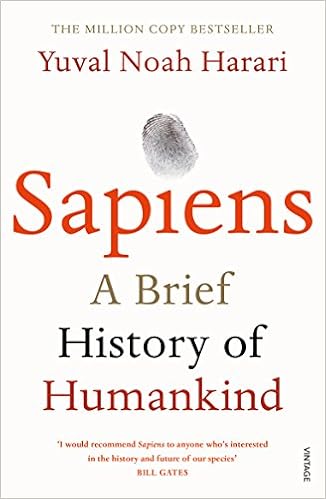
Sapiens: A Brief History of Humankind

What makes us brilliant? What makes us deadly? What makes us Sapiens? Yuval Noah Harari challenges everything we know about being human in the perfect read for these unprecedented times. Earth is 4.5 billion years old. In just a fraction of that time, one species among countless others has conquered it: us. In this bold and provocative book, Yuval Noah Harari explores who we are, how we got here and where we’re going. ‘I would recommend Sapiens to anyone who’s interested in the history and future of our species’ Bill Gates ‘Interesting and provocative… It gives you a sense of how briefly we’ve been on this Earth’ Barack Obama ONE OF THE GUARDIAN’S 100 BEST BOOKS OF THE 21st CENTURY

General Knowledge 2021

  1. General Knowledge 2021 is a compact version of all current events of the whole year. 2. Divided into 5 Key Sections; History, Geography, Indian Polity, Indian Economy, General Science and General Knowledge. 3. A separate section has been provided for Current Affairs 4. Provides accurate, perfect and complete coverage of facts. 5. It is useful for the preparation of SSC, Bank, Railway, Police, NDA/CDS and various other competitive exams.

General knowledge has become the essential part for human social life. Have little knowledge about most of the hot topics it not only makes aware of the world but also gives you the satisfaction of being socially accepted. The more you keep yourself aware & updated with happenings around you the better you perform, not just in the various exams but also at your work by making better decisions according to the recent tastes and preferences in the market. Get the compact version of all current events of the whole year with new edition of the ‘General Knowledge 2021’. This book has been prepared for the students who are going to appear for the various upcoming examinations. It covers the key subjects including History, Geography, Indian Polity, Indian Economy, General Science and General Knowledge with latest facts and updates supported by figures,graphics and tables. A separate section has been provided for Current Affairs right in the beginning of the book promoting actual knowledge from recent happening occurred at different areas. Providing accurate, perfect and complete coverage of facts, it is a complete general knowledge book, useful for the preparation of SSC, Bank, Railway, Police, NDA/CDS and various other competitive exams. TABLE OF CONTENT Current Affairs, History, Geography, Indian Polity, Indian Economy, General Science and General Knowledge.

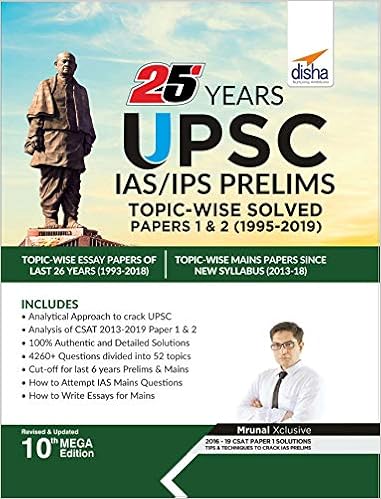
25 Years UPSC IAS/ IPS Prelims Topic-wise Solved Papers

The thoroughly revised and updated 10th edition of Disha’s bestseller “UPSC IAS/ IPS Prelims topic-wise Solved Papers 1 and 2 (1995-2019)” consists of past years solved papers of the General Studies Paper 1 and 2 distributed into 8 units and 52 topics. The book has been empowered with unique inputs/ articles by one of the most esteemed faculties for IAS – mrunal on ‘understanding the IAS exam and strategies to crack the Prelim and Main exam’, how to attempt the IAS main exam questions?, how to write essays for GS IV main exam, along with solutions to 2017-19 exams. The book provides unsolved Mains papers from 2013-18, divided topic-wise. The book also provides list of essays divided topic-wise from 1993-2018.The strength of the book lies in the Errorless detailed solutions. The book is 100% useful for both the General Studies Papers (1 and 2) of the Prelims/ CSAT.

The Monk Who Sold His Ferrari

A renowned inspirational fiction, The Monk Who Sold His Ferrari is a revealing story that offers the readers a simple yet profound way to live life. The plot of this story revolves around Julian Mantle, a lawyer who has made his fortune and name in the profession. A sudden heart-attack creates havoc in the successful lawyer’s life. Jolted by the sudden onset of the illness, his practice comes to a standstill. He ponders over material success being worth it all, renounces all of it and leaves for India.

A visit to India about a spiritual awakening that opens up new vistas and Julian begins to view life in a different perspective. He decides to live his life once again but in a way that is much more fulfilling and meaningful than before. In the book, the reader goes through a spiritual journey and into a very old culture that has gathered much wisdom over the millennia. The book advocates about how to live happily, think deep and rightly, value time and relationships, be more disciplined, follow the heart’s call and live every moment of the life. Written in simple words, the book has turned out to be a bestseller and is more than just an endearing story. Through storytelling, Robin Sharma showcases the miracles and wonders of living a fulfilling life. In the process, the book introduces readers to enlightening yet simple principles that vouch to make life better, happier and more meaningful. A bestselling novel, what readers all over the globe appreciate about this book is its deft amalgam of the philosophies from both western and eastern worlds. The book has been followed by important personalities around the world. About the Author Robin Sharma, the bestselling author of ‘The Monk Who Sold His Ferrari’, first published in 1999, is an International Leadership Professional Guru who is credited with having written 15 books on leadership. He has been guiding people to live a better life, by drawing inspiration from his own life experiences. The Leader Who Had No Title, The Leader Who Had No Title, The Greatness Guide and The Saint and The Saint are among his best books. He heads the Sharma Leadership International Inc, a firm that trains people in leadership. A former litigation lawyer, Robin holds a law degree from Dalhousie Law School, Canada. This book along with The Greatness Guide has been among the world’s bestsellers and has been translated in as many as 70 languages all over the world.