Document Object Model(DOM)

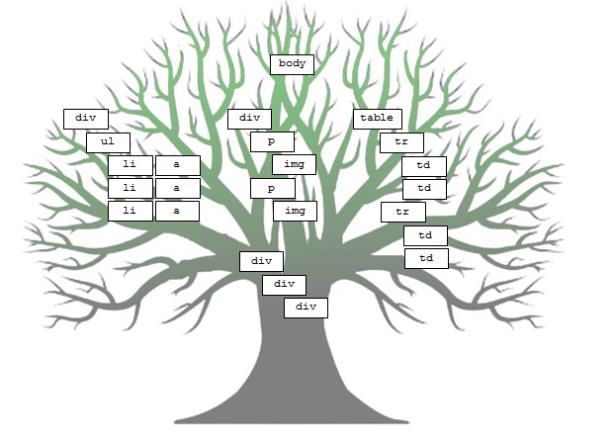
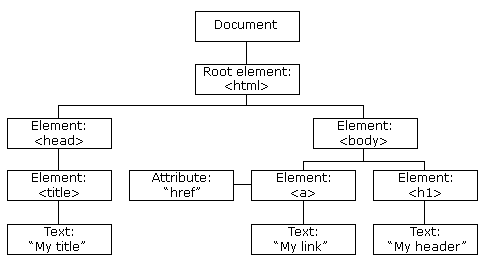
When it comes to design a site or a web page it plays a very important role, basically here we are talking about HTML DOM, with the help of this the javascript can interact with the HTML code and can find or change any element of HTML code. Let’s try to make it simpler, whenever any web page loads it creates a document object model, it has a tree-like structure and have nodes, every node has one parent and probably many children.

The Document Object Model (DOM) is the HTML and XML application development API. This determines the basic framework of the records and how the paper is obtained and exploited. The Document Object Model may be used in any programming language.

THE HTML DOM TREE OF OBJECTS

Java Script can change all the existing HTML elements and attributes of a page, all the CSS styles of the page and you can even add new ones. the HTML DOM is the standard of how to get, change, add, or delete HTML elements.

DOM and JavaScript

The DOM is not a programming language, but without it, the JavaScript language will have no concept or notion of web pages, HTML documents, XML documents, and their components ( e.g. elements). Each document element — the document as a whole, the heading, the column tables, the table headers, the text in the table cells — is part of the database object model for that column, so that they can all be accessed and controlled using the DOM and the JavaScript scripting language.

In the beginning, JavaScript and DOM were closely intertwined, but eventually, they evolved into separate entities. The output of the website is stored in the DOM and can be accessed and manipulated using JavaScript so that we can write this approximate equation:

API = DOM and JavaScript

The DOM was developed to be independent of any common programming language, allowing the conceptual representation of the text accessible from a single, coherent API. While we concentrate solely on JavaScript in this reference paper, DOM implementations can be designed for any language.

Accessing the DOM

You don’t have to do something different to continue using the DOM. Different browsers have different DOM implementations, and these implementations show varying degrees of compliance with the actual DOM standard (the subject we are trying to avoid in this documentation), but each web browser uses a document object model to make web pages accessible via JavaScript.

When you create a script–whether it’s inline in an <script> element or included in the web page through a script loading instruction–you can immediately begin using the API for the document or window elements to manipulate the document itself or to get at the children of that document, which are the various elements in the web page. As this is not a topic that can be covered at once.

So here I am concluding this. Hope you guys enjoy reading this!

CASE SUMMARY: R.M.D.C. VS. UNION OF INDIA

DETAILS:

Case Name: R. M. D. Chamarbaugwalla vs. Union of India

Citation: 1957 AIR 628, 1957 SCR 930

Court of jurisdiction: Supreme Court of India

Year of the Case: 9 April, 1957

Appellant: R. M. D. Chamarbaugwalla 

Respondent: Union of India

Bench/Judges: HON’BLE JUSTICE T. L. VENKATARAMA AYYAR, HON’BLE JUSTICE S. R. DASS (CJI), HON’BLE JUSTICE B. P. SINHA, HON’BLE JUSTICE S. K. DAS AND HON’BLE JUSTICE P. B. GAJENDRAGADKAR

SUMMARY:

In R.M.D.C. v. Union of India, AIR 1957 SC 628, the constitutionality of the Prize Competitions Act 1955, was challenged on the ground that it violated the Fundamental Right of the petitioners secured by Article 19(1(g). The impugned Act, provided for the control and regulation of prize competitions. It was contended that Section 2(d) of the impugned Act which defined the expression “prize competitions” included not only competitions of a gambling nature but also those in which success to a substantial degree depends on skill.

Having regard to the circumstances under which the impugned Act was passed, the Supreme Court held that it was to control and regulate prize competitions of a gambling character. Therefore, the Court stated that the application of impugned provision of the Act could be restricted to the competitions of gambling character. The provisions of the impugned Act were thus held severable in their application to competitions, in which, success did not depend, to any substantial extent, on skill. The Court held that when a Statute, was in part, void, it would be enforced as regards the rest, if that was severable from what was invalid, The Court then referred to the rules of construction laid down by the American Courts for the operation of the doctrine of severability and applied these to the present case.

The Supreme Court then summed up the rules relating to severability

1. In determining whether the valid parts of the statute are separable from the invalid parts thereof, it is the intention of the Legislature that is the determining factor. The test.to be applied is whether the Legislature would have enacted the valid part if it had known that the rest of the statute was invalid.

2. If the valid and invalid provisions are so indistinguishably mixed up that they cannot be separated from one another, then, the invalidity of a portion must result in the invalidity of the Act in its entirety. On the other hand, if they are so distinct and separate that after striking out what is invalid, what remains is in itself a complete code independent of the rest, then it will be upheld notwithstanding that the rest has become unenforceable.

3. Even when the provisions which are valid are distinct and separate from those which are invalid, if they all form parts of a single scheme which is intended to be operative as a whole, then also the invalidity of a part will result in the failure of the whole.

4. Likewise, when the valid and invalid parts of a statute are independent and do not form part of a scheme but what is left after omitting the invalid portion is so thin and truncated as to be in substance different from what it was when it emerged out of the legislature, then also it will be rejected in its entirety.

5. The reparability of the valid and invalid provision of a statute does not depend on whether the law is enacted in the same section or different sections (Vide Coley’s Constitutional Limitations, Vol. I, pp. 361-362), it is not the form, but the substance of the matter that is material, and that has to be ascertained on an examination of the Act as a whole and of the setting of the relevant provision therein.

6. If after the invalid portion is expunged from the statute what remains cannot be enforced without making alterations and modifications therein, then the whole of if must be struck down as void, as otherwise it will amount to judicial legislation.

7. In determining the legislative intent on the question of severability, it will be legitimate to take into account the history of legislation, its object, the title and the preamble to it.

REMARKS

Intention of the legislature will determine whether the valid part of a statute is severable from the invalid parts. If the valid and invalid provisions are so inseparably mixed up that they cannot be separated from another, then the irrationality of a portion must result in the invalidity of the Act in its whole. On the other hand, if they are so distinct and separate that after striking out what is invalid what remains is itself a complete code independent of the rest, then it will be upheld notwithstanding that the rest had become unenforceable.

Courts would be reluctant to declare a law invalid or ultra vires on account of unconstitutionality. Courts would accept an interpretation, which would be in favour of constitutionality rather than the one which would render the law unconstitutional. The court can resort to reading down a law in order to save it from being rendered unconstitutional. But while doing so, it cannot change the essence of the law and create a new law which in its opinion is more desirable.

We May Lose Complete Sea Ice By 2035- A Study

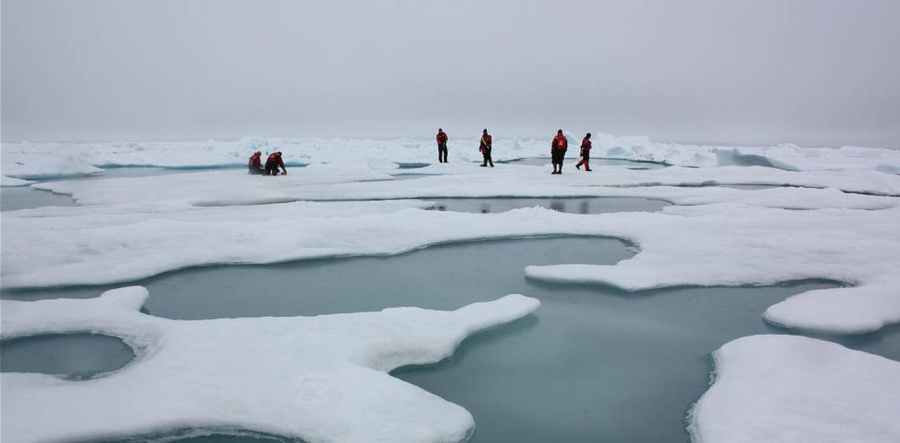
Arctic melt ponds. Image retrieved from theconversation.com

Around 1,27,000 years ago, during the last inter-glacial, the high temperature at that time have confounded researchers for years. An international team of researchers authorized by the UK Met Office’s Hadley Centre Climate Model was able to juxtapose Arctic sea ice conditions and last inter-glacial with today’s situation. Such discoveries have the capacity to change the current of ongoing research and can be used in better evaluation and prediction in future sea changes. An astounding study about Arctic sea being free of sea ice by 2035 published in a journal, Nature Climate Change, has given researchers a new lead to work on.

Appearance of shallow pools of water on the surface of Arctic sea- ice during every spring and prior summer help in the study of absorption of sunlight by ice and reflection of it into space. As a result of such studies every year, the team is able to culminate the result of such prediction, as there are many melt ponds which can be seen during recent summers created due to an impact of intense sun rays. 

INTERNATIONAL YOUTH DAY

 “A few heart-whole, sincere, and energetic men and women can do more in a year than a mob in a century.” –  Swami Vivekananda

International Youth Day is a United Nations-designated day when youth from different countries participate in events and discussions on socio-economic and socio-political issues. It is celebrated on august 12 every year.

This year the theme was ‘Youth Engagement for Global Action’. It focus on majorly three areas:

  • Engagement at the community level
  • Engagement at the national level (formulation of laws, policies, and their implementation)
  • Engagement at the global level.

Due to the coronavirus pandemic, this year no huge events are planned but the UN has launched a social media campaign, Join #31DaysOfYOUth, to celebrate young people throughout the month of August to help spread the word and strike up a conversation surrounding youth engagement for global action. Many online debates and discussions were done to ensure that needs of the young are met. Several universities, colleges and schools had organised a webinar to spread inter generational understanding, organisation of a youth forum to exchange ideas are too done.

Over the past weeks, maybe months, young people have been taking action and developing many creative ideas to face these challenging times, whether by helping their community, finding innovative learning ways, keeping a positive spirit, taking care of their relatives and loved ones, and much much more.

In this time of pandemic, it is important that governments too should listen to youth alongside other sections of the population in responding to COVID-19 challenges.

A young mind and body is far more productive both economy and politically. If directed towards right path they could do wonders for the country as a whole. This day every year lays emphasis on up liftment of people and contribute in spreading awareness about importance of human resources for development of oneself as well as the country.

It is not possible for civilization to flow backwards while there is youth in the world. Youth may be headstrong, but it will advance it allotted length.There is a fountain of youth: it is your mind, your talents, the creativity you bring to your life and the lives of people you love. When you learn to tap this source, you will truly have defeated age.

Is Work From Home next big thing as companies and individuals save resources like time and money?

Being up every morning to head to the workplace, looking for the car keys, hiring an Ola or Uber or racing to catch the subway now seems like a sight. Despite the proposal for a full shutdown owing to the COVID-19 pandemic, everything was shifting nearly overnight. Life was thrown out of balance and the modern standard was social distancing.

Indians and people around the world are also getting used to meeting up with phone calls with friends and families, waiting at grocery stores a few steps away, or just talking with neighbors. For several the greatest shift has been the idea of operating from home. About the country’s whole population is doing it right now. The world has never had a the exercise of magnitude.

Will the work from home stay temporary or here in its current format? Do companies see that as a feasible choice, especially with people arguing that the barriers between work and life are almost gone?

Pros of work from home:

1.Related to Transportation: First and foremost, it will save a lot of time-travel back and forth From work-Particularly in dense urban areas where traffic jams are high. It also saves a great deal of diesel, eases the pressure on public transport and road transport .

2.Savings on office facilities and infrastructure:

Companies require office room, work desk , chair, monitor, lighting, air State, meeting spaces, private car parking space etc. None of that Can be reduced, though can not be done away with completely, if we follow Wherever and whenever WFH can.

3.Can help in women empowerment:

This often restricts their job options. For further acceptances at WFH, They could have larger career options. Women can be involved in the work force Edited. Harassment in offices should be prevented.

Cons of Work From Home (WFH):

1.Loss of social interaction:Ideas pop up through group experiences in other artistic areas. For instance in Fresh suggestions for a tea or coffee break are explored at the seminar. This can not happen Occur in the case of WFH. Work becomes easier when the people surround you. Whenever you’re stuck you can ask your superiors for support. You got Meetings in meeting centers with proposals to present and improvise on. 

2.May affect women negatively:

When women are at the workplace, they can get relief from housekeeping jobs. This is especially of traditional households where harassment of women is recognized as a regular routine. We can never get off house hold job with WFM. Less on others Indian house holding has limited office service facilities.For example, they only have a single laptop- this is used by man head of the house, leaving women with no options. Internet connection is also not universal (not even 50%). In rural areas the situation is even worst.

3.Effects livelihood of small shop keepers:

Each office should have a small coffee shop nearby. As WFH has fresh Normally all of those people are going to be unemployed. Housekeeping, defense, work force of clerks Will be reduced to a minimal. Since they are not professional employees, it is going to be really hard To transferring them to a certain kind of work.

4.Lot of distractions and no leisure from work, change in lifestyle:

Kids are still around to annoy us. For most of us a daily career brings Following procedure. Which organizes our body and mind. On WFH- Habits to sleep and eat can go to a toss.

Can WFH be adopted universally?

Answer is a big no.There are other occupations where you need to be there for successful learning or some other learning on the ground. A laboratory technician, for example, can not guide an engineering student to conduct an online chemistry experiment. Likewise, education isn’t only a place to study academic topics, but instead a position of personality.

Conclusion:

First of all, we will decide what kinds of organisations had 100% WFH, Which partial and kind of employment may there be where WFH is not successful. Then figure out Dispose with such criteria to assess workplace performance when operating From Home and the School.Once we have done that, we can continue by giving 1 day or 2 WFH mandatory days in a week for all workers imaginable. When this fits perfectly, To both workers we will have obligatory working days of 1 or 2 days. Tweet Group workers will provide alternating working days.This will have a win-win situation as employees and employers will save cost and time, will not miss on socialization. To avoid discrimination towards women or any other potentialemployee, employers can offer a laptop to them from the savings they makeon infrastructure cost.

International youth day

Celebrating Hope for the Future

August 12 marks the annual celebration of International Youth Day. It is an international day of awareness, recognizing youth across the globe and empowering the world’s youth to make positive contributions to their communities and nations.

International Youth Day and World Youth Day

International Youth Day is not to be confused with World Youth Day. World Youth Day was founded by Pope John Paul II in 1986 as an invitation for youth to respond to the call to bring the love of Christ to the world. World Youth Day is celebrated each year on Palm Sunday.

International Youth Day is a United Nations supported celebration, while World Youth Day is a celebration founded within the Catholic tradition. Though technically different celebrations, both International Youth Day and World Youth Day recognize the value of young people across the world.

Understanding the World Programme of Action for Youth

The United Nations (UN) celebrated the first ever International Year of Youth in 1985. A decade later, the UN General Assembly adopted the World Programme of Action for Youth (WPAY), a set of policies and guidelines for nations to look to in improving the situation of the world’s youth. However, it was not until 2000 that the world celebrated the first International Youth Day.

The values and celebrations of International Youth Day are heavily influenced by the core principles of the WPAY.

The World Programme of Action for Youth is a strategic framework of policies and guidelines to guide nations in supporting, empowering, and improving the conditions of young people. The focus of the WPAY is to encourage national actions to improve the number of quality opportunities for youth, ultimately encouraging them to be active and effective participants in society.

The program also encourages youth around the world to gather and create awareness about the realities young people face within their own nation.

The Impact Potential of Youth

The world currently holds the largest generation of youth in history. Young people represent hope for the future. However, they are more than just that.

In a message about International Youth Day, Director-General of UNESCO, Irina Bokova, writes, “Young people are not only our future—they are our present…They are the most connected, the most outspoken and the most open-minded generation the world has ever seen.”

Today’s youth have potential to shape the world both in the present and in the future.

Sadly, this potential for impact is often inhibited. The tragedy is that many young people around the world battle the suffocating grip of poverty, disease, lack of resources, education, and more. The progress, dreams, and world-changing abilities are restricted for many young people.

Youth and You

The destructive nature of poverty often follows children out of their childhood and into their youth. Many young people around the world lack basic literary, reading, and writing skills. Without opportunities for education or to learn a trade, many teenagers in poverty get involved with gangs, drugs, and other dangerous activities.

We want the lives of youth across the world to tell a different story. We want better stories. And we want you to be a part of it.

Our work in youth development provides young people ages 12 and older with customized training and educational paths according to their unique God-given talents and potential. Our goal is for youth to be prepared, equipped, and able to support themselves while contributing positively to their families and communities. By partnering with us, your donation may support formal education, non-formal education, or income generation training.

Empowerment through education has the ability to bring positive change to the lives of young people and release them from the grip of poverty.

India is full of Natural Resources but are we conscious of this fact ?

A country’s economy largely depends on the amount and preciousness of the natural resources it possesses. Yes, industries and agricultural factors do contribute the economy, but these are all secondary factors. If we concentrate on India particularly, we will see that the main economy of India heavily depends on these natural resources. The cultivable land in India almost comprises 57 percent of the whole land area. The water resources are plenty, having several major rivers crisscrossing across the country. However though these are important natural resources for any country, let us concentrate on the mineral resources which are abundantly found in India.  

Here’s a list of some of the mineral resources that are abundantly found in India and their use :  

• Coal (India is the fourth largest producer of industrial and domestic coal) – Mainly used in the power generation sector.  

• Bauxite – Aluminium, whose usage ranges from making planes to utensils, is extracted from this ore.  

• Manganese – This is mainly used in the manufacture of ferromanganese and steel.  

• Titanium ore – Used in the steel industry, among others.  

• Petroleum – Mainly used as a fuel for running vehicles.  

• Limestone – Used in the cement industry.  

• Thorium (the Kerala beaches account for the world’s largest thorium deposits) – Used as a fuel in nuclear power plants  

• Iron ore – Used for manufacturing raw iron which is used for making heavy machines for industries.  

• Mica – Used in condensers, transformers, electronic tubes, and radio or radar circuits.  

• Chromite – Used in the manufacture of stainless steel.  

• Natural gas – Used a fuel for vehicles.  

• Diamonds – Their main usage is for making jewelleries and cutting glass.  

Coal :  

India has the fourth largest coal reserves in the world. The total amount of coal reserves in India is expected to be around 267 billion tons. It is also one of the top nations in the world when it comes to the usage of energy derived from coal in heavy industries. The notable areas in India where coal is found and, as a result mined are – Orissa, Chhattisgarh, Jharia, Nagpur and Chandrapur, Raniganj, Jharkhand, Neyveli, Singrauli and Umaria coalfields. The coal found in India has high ash contents and low calorific coal. However these are combustion friendly and needless to say this is the reason behind the underground fires which occur in a few mining districts. Almost 94 percent of the coal produces is from the Government sector companies. In the 2011-12 period the total production has been reported to be around 680million tons, while the demand was 731million tons.  

This vast use of this singular reserve has led to its depletion in recent years, and it has been predicted that India will run out of its coal reserves within 2040. This stresses the need to employ new mining technologies and the use of alternative fuels to run the heavy industries.   

Petroleum :  

India ranks next to China in terms of its oil reserves in the Asia-Pacific region, china being the leading producer. Most of these reserves are located along the western coast of India, namely Mumbai High and the north-east region of the country. Though underdeveloped, some reserves have been recently found in the Bay of Bengal along the eastern coast of India and in Rajasthan. The sector is dominated by the state-owned enterprises, namely Oil and Natural Gas Corporation.   

The usage is much more than the production, and this result in India having to import oil from foreign nations to meet its rising consumption levels. Statistics show that India is a net importer of oil, as 70percent of its oil needs is imported from countries like Saudi Arabia and Iran. The rest 30percent is produced within the country. This is because the demand for oil is somewhere around 3million barrels per day, whereas the production is only a meagre 500 thousand.   

Natural Gas :  

As of April 2010, India has an approximately 1437 cubic metres of natural gas. Of this a huge percentage comes from the Mumbai High reserves. Assam, Andhra Pradesh and Gujarat also have reserves which produce considerable amount of natural gas. In terms of production volume, ONGC is the leading producer of natural gas in India. Among the private enterprises, Reliance Industries play a big role in this sector due to the large reserve found in the Krishna Godavari basin. India has to import small amounts from Qatar and likewise nations. At this level of production and consumption, the reserves are predicted to last for around 29 years.  

Iron ore :  

Possessing one of the richest reserves of iron ore in the world, India holds a leading position in the world in terms of its iron ore production. The haematite deposits found in India are spread throughout the country, though the huge deposits are concentrated in a few regions like Chikkamagaluru, Singhbhum etc. Many iron and steel industries are located near these mines. The nearness of the industries not only reduces transportation costs but also reduces the times taken to produce the final products. The ores found in Goa are mainly shipped to Japan. Export of iron is mainly done from the ports of Vishakhapatnam, Marma Goa, Paradip and Kolkata. At present the deposits are quite vast, but some calculations indicate that the exponential rise in consumption in coming years may make these reserves seem finite in the near future.   

Bauxite :  

India is one of the leading producers of bauxite in the world. The reserves account for 7.5 percent of the world’s total deposits; however the aluminium output is only 3 percent. This indicates the lack of infrastructure which dominates the Indian market. The state-owned NALCO is the largest company dealing with bauxite ores. The acquiring of INDAL by Hindalco Industries accounted for a steep rise in the aluminium production of the country in the last year.   The extensive deposits will take a long, long time to get replenished. 

Business of Subsidies in India

Introduction

A subsidy, often viewed as the converse of a tax, is an instrument of fiscal policy. Derived from the Latin word ‘subsidium’, a subsidy literally implies coming to assistance from behind. However, their beneficial potential is at its best when they are transparent, well targeted, and suitably designed for practical implementation. Subsidies are helpful for both economy and people as well. Subsidies have a long-term impact on the economy; the Green Revolution being one example. Farmers were given good quality grain for subsidised prices. Likewise, we can see that how the government of India is trying to reduce air pollution to subsidies LPG.

Like indirect taxes, they can alter relative prices and budget constraints and thereby affect decisions concerning production, consumption and allocation of resources. Subsidies in areas such as education, health and environment at times merit justification on grounds that their benefits are spread well beyond the immediate recipients, and are shared by the population at large, present and future. For many other subsidies, however the case is not so clear-cut. Arising due to extensive governmental participation in a variety of economic activities, there are many subsidies that shelter inefficiencies or are of doubtful distributional credentials. Subsidies that are ineffective need to be weaned out, for an undiscerning, uncontrolled and opaque growth of subsidies can be deleterious for a country’s public finances.

Although the term “subsidy” is widely used in economics, it is rarely defined. Often it is used as an antonym to a tax. While tax is transfer of money from a private entity to government, vice versa is subsidy. It can be defined as a sum of money granted from public funds to help an industry, business or individual keep the price of a commodity or service low.     

Subsidies are often criticized for intervening into the market mechanism by altering the price and thus consumption of the object. However, many times, their necessity is felt to provide the safety net to the vulnerable and downtrodden of the society. Since in India, more than one third of the population is living below poverty line (BPL), subsidy cannot be criticized on social grounds but it is criticized on economic grounds.  

According to the Budget proposals, the central government’s subsidy bill on food, petroleum and fertilizers is estimated at Rs 1, 79,554 crore for the 2012-13. The oil subsidy, which is given to state-run oil marketing firms, such as Indian Oil Corp, BPCL and HPCL, for selling diesel, domestic LPG to households and kerosene through the PDS system, below cost, is estimated lower at Rs 43,580 crore in the fiscal year 2012-13.  

The government’s food subsidy given to run the public distribution system is estimated to be Rs 75,000 crore. Food subsidy is provided to meet the difference between the economic cost of food grains and their sales realization at the Central Issue Price fixed under the public distribution system (PDS) and other welfare schemes.  

The fertilizer subsidy is also pegged lower at Rs 60,974 crore. Under the fertilizer subsidy, the government would provide Rs 13,398 crore for imported urea, Rs 19,000 crore for indigenous (urea) fertilizers, and Rs 28,576 crore for the sale of decontrolled fertilizers (DAP, MOP and complexes) at a subsidized rate to farmers.   

At the start of current fiscal year, subsidy burden was estimated to be 2.5percent of GDP and the Central Government’s target is to trim the subsidies upto 2 percent this fiscal. Current economic prospects of the country are bleak marred by rising fiscal deficit, mounting inflation, reducing Foreign Direct Investment (FDI), policy paralysis, downfall in international rating, all culminating into a growth fatigue. In order to realign the country’s economy with the high growth path, major reforms are to be undertaken in all the sectors including the subsidy budget. As already stated, ensuring employment, food, sanitation, potable water etc are tasks entrusted to the government; subsidy for such activities should not and must not be denied. However, the motive of subsidies is not just to provide food, water and sanitation etc at subsidized prices but a little more holistic.  

Subsidies must be designed in such a manner that they help in the strengthening the manpower and human resources of the country. Government has been providing subsides for the last sixty years since independence but dependency on subsidies has not been reduced which meant subsidy tool is not been effectively used in India. Need of hour is not to eliminate the subsidies but to better target the subsidies. In India, cost of an LPG cylinder which is sold at subsidized prices is same for CEO of a Fortune 500 company as well as for BPL family. Petrol prices are same for driving scooter as well as BMW etc. Moreover, the subsidies which are targeted for poor only are don’t reach the designated person and even if reaches, it is hardly 10 percent of the initial amount.  

Therefore, in order to assure the effectiveness of subsidies, an effective monitoring mechanism is needed. Subsidies granted because of purely political motivations must be withdrawn. For example, free electricity is provided to the farmers in Punjab which not only causes the wastage of electricity but also resulted in over exploitation of ground water further negatively effecting the environment. Socio-economic conditions of the country don’t call for withdrawal of subsidies but reform of subsidies.   

In Public Distribution System (PDS), huge subsidies are provided to feed the poorest sections of the population but entire PDS is marred by pilferage and rampant corruption. Here, a monetary transfer in the form of coupons can reduce the corruption as with those coupons, poor can buy food grains from open market.  Similarly MNREGA, the flagship programme of UPA government is also witnessing corruption and is enriching the bank accounts of few influential persons only. A compulsory social audit every quarterly of half yearly can make a dent on the corruption.   Currently, Indian economy is derailed from its track of high growth path and in order to grow at 9 percent per annum sustainably, it is important to assure that fiscal deficit doesn’t become unsustainable. Unsustainable, increasing and ill-targeted subsidies are bound to increase fiscal deficit and thereby strengthen the inflationary tendencies.   

Country needs a second generation of reforms which must be holistic in nature and starting these reforms from subsidy is not a bad idea as this will benefit those who are in dire need of benefits.


Much preferable source of entertainment – Movies or Webseries

The whole world is fighting with the pandemic called COVID-19. The pandemic has led many noticable changes in the lives of people. Even the working of people has now changed. Almost everything is taking place digitally nowadays. People are using internet to spend their leisure time and the best way they found to this by watching movies and webseries. But the question arises, what people prefer most among them and why?

To answer the question, let us first understand what are movies/webseries. A movie is a visual form of art/motion picture and is shown in movie theatres while a web series is basically a series/show which airs on internet/web for viewership.

The first series distributed via web was Rox with an episode titled “Global Village idiots”. This was released in 1995.

But few years back, the technique got popularity and many people even in India started to watch webseries. Why did this happened? The most basic reason for this was the low price of internet services. Almost everyone had the access to internet from past 2-3 years making webseries easily accessible to the audience and also gave rise to the OTT platforms which is another big reason for its popularity. Because of the tremendous response from the audience given to the web content, a lot of OTT platforms like Netflix, Amazon Prime, Hotstar, AltBalaji, ErosNow, Zee5 came into existence.

Now let’s talk about the content of movies and webseries. One can’t disagree the fact that the contents of webseries are way much better than that of movies. Lack of quality content and good stories on TV and movies, and growth of social media in recent times provided an opportunity for web content. The variations in the stories of webseries are much more than movies.

Also, the dialogues of webseries are much relatable to the audience as there is no censorship. Many webseries have slangs in their dialogues but that’s what makes it original.

Just having a good content won’t do wonders for a show, even the role assigned to the actors should be done with conviction. Thus giving chance to so many unknown faces, who might not even have got a chance to make a mark in cinemas is what done by webseries. The combination of well settled actors and new faces makes it much better than movies.

Moreover, most web-series prefer to release all their episodes(or atleast a bulk) together which can be watched on a weekend or maybe while traveling at one stretch.

The OTT platforms where these webseries are available are also cheap as compared to movies. Some of them are also free. For example: YouTube, TVF, Airtel Xtreme (free with airtel recharge)

All these things makes the webseries way much better than movies and because of rise of OTT platforms, even movies are also also getting released on these platforms.

Over One Lakh loans sanctioned under PM SVANIDHI scheme

The number of applications received under PM Street Vendor’s Atmanirbhar Nidhi (PM SVANidhi) scheme has crossed the five lakh mark within 41 days of commencement of lending process. The number of loans sanctioned under the scheme has crossed one lakh.

The PM SVANidhi scheme has generated considerable enthusiasm among the street vendors, who have been looking for access to affordable working capital credit for re-starting their businesses post COVID-19 lockdown.

The scheme was launched by the Ministry of Housing and Urban Affairs under the ambit of ‘Atmanirbhar Bharat Abhiyan’. It aims at facilitating collateral free working capital loans upto 10 thousand rupees of one year tenure, to about 50 lakh street vendors in the urban areas, including those from the surrounding peri-urban/ rural areas.

Incentives in the form of interest subsidy at seven per cent per annum on regular repayment of loan, cashback upto 1,200 rupees per annum on undertaking prescribed digital transactions and eligibility for enhanced next tranche of loan have also been provided.

PM SVANidhi Scheme envisages bringing Banks at the door steps of these nano-entrepreneurs by engaging the Non-Banking Financial Companies (NBFCs) and the Micro-Finance Institutions (MFIs) as lending institutions. This is in addition to Scheduled Commercial Banks – Public and Private, Regional Rural Banks, Cooperative Banks, and SHG Banks.

The onboarding of the vendors on digital payment platforms is a very important component to build the credit profile of the vendors to help them become part of the formal urban economy.

Assam govt to roll out Arunodoi scheme to provide financial assistance to around 17 lakh families from Oct 2

With an aim to provide financial assistance to around 17 lakh families, the Assam government is all set to roll out Arunodoi scheme in the state from 2nd of October. Talking to newspersons in Guwahati yesterday, Finance minister Himanta Biswa Sarma said that under this scheme an amount of 830 rupees will be given to eligible families per month to buy essential food items. He said, this will be the largest Direct Benefit Transfer scheme in Assam.

The Minister said that 15 to 17 thousand families would be benefited per Assembly constituency by this scheme. Mr. Sarma said that the Assam government will bear 210 crore rupees per month for the Arunodoi scheme.

Electric mobility gets a boost; Govt allows registration of electric vehicles without pre-fitted batteries

The Road Transport and Highways Ministry has allowed registration of electric vehicles without pre-fitted batteries. In a letter to transport Secretaries of all the States and Union Territories, the Ministry has clarified that vehicles without batteries can be sold and registered based on the type approval certificate issued by the Test Agency. It said, there is no need to specify the Make/Type or any other details of the Battery for the purpose of Registration.

The Government is striving to create an ecosystem to accelerate the uptake of electric mobility in the country. The Ministry said, it is time to come together to work Jointly to achieve the broader national agenda to reduce vehicular pollution and oil import bill. 

Better road engineering and increased public awareness will reduce road accidents by about 50 pct: Nitin Gadkari

Union Minister Nitin Gadkari has called for increased investment by international institutions and bodies in the Indian Highways and MSME sectors. He said, automobile and MSME are the two growth engines of Indian economy. 

Addressing the Indo-Australian Chamber of Commerce and Womennovator on Trade Investment and collaborations in Road infrastructure and MSMEs yesterday, the Minister said, India and Australia are already co-operating in the road safety sector. He said, this cooperation has provided better designs for roads and awareness opportunities for the public.

Under Indian Road Safety Assessment Programme, 21 thousand km roads have been assessed and about 3000 km road length is under technological upgradation. He said, better road engineering and increased public awareness have brought improvement. He added that it is estimated that these upgradation programmes will bring about 50 per cent reduction in Road accidents. Mr Gadkari informed that the objective is to set out to achieve zero road fatalities by 2030.

COVID-19 recovery rate in country crosses 70 pct

India conducted the highest ever single day Covid tests at over seven lakh 33 thousand in the last 24 hours. This has taken the cumulative tests to more than two crore 60 lakh. Union Health Ministry said, the country’s Test, Track and Treat strategy has achieved another peak with 18 thousand 852 tests per million.

The graded and evolving response has resulted in a testing strategy that steadily widened the testing net in the country. The testing lab network in the country is continuously strengthened with one thousand 421 labs in the country, 944 labs in the government sector and 477 private labs.

The country also reported the highest ever single-day COVID-19 recoveries of over 56 thousand patients in the last 24 hours. The Health Ministry said that 16 lakh 39 thousand 599 people have recovered till date. The Recovery rate has reached another high of 70.38 per cent.

The actual case load of the country is over six lakh 43 thousand, which is only 27.64 per cent of the total positive cases. It said, a single day spike of 60 thousand 963 COVID-19 cases has taken the virus caseload to over 23 lakh 29 thousand. In the last 24 hours, 834 deaths pushed the death toll to 46 thousand 91.

PM Modi to launch platform for Transparent Taxation ‘Honoring the Honest’ through video conferencing today

Prime Minister Narendra Modi will launch the platform for Transparent Taxation – Honoring the Honest through video conferencing today. This platform will further carry forward the journey of direct tax reforms. The Central Board of Direct Taxes, CBDT has carried out several major tax reforms in direct taxes in recent years.

Last year, the Corporate Tax rates were reduced from 30 per cent to 22 per cent and for new manufacturing units the rates were reduced to 15 per cent. Dividend distribution Tax was also abolished. Our Correspondent reports that the event will be witnessed by various Chambers of Commerce, Trade Associations, Chartered Accountants’ associations and also eminent taxpayers, apart from the officers and officials of Income Tax Department. Finance Minister Nirmala Sitharaman and Minister of State for Finance Anurag Singh Thakur will be present on the occasion.

AIR correspondent reports, several initiatives have been taken by the CBDT for bringing in efficiency and transparency in the functioning of the IT Department. This includes bringing more transparency in official communication through the newly introduced Document Identification Number, wherein every communication of the Department would carry a computer generated unique document identification number.

The focus of the tax reforms has also been on reduction in tax rates and on simplification of direct tax laws. With a view to provide for resolution of pending tax disputes the IT Department also brought out the Direct Tax ‘Vivad se Vishwas Act, 2020’ under which declarations for settling disputes are being filed currently.

To effectively reduce taxpayer grievances and litigation, the monetary thresholds for filing of departmental appeals in various appellate Courts have been raised. Several measures have also been taken to promote digital transactions and electronic modes of payment.