List of Important Days in July 2024

 1st July – National Doctor’s Day 

In India, Doctor’s Day is observed on the 1st of July to mark the importance of doctors in our lives. This day is also meant to commemorate the medical industry and its advancements.

1st July – National Postal Worker Day
National Postal Worker Day is observed every year on 1st July to thank and appreciate all men and women who work consistently and diligently to deliver all our mail and packages.

1st July – Canada Day 
Canada Day is celebrated annually on the 1st of July and it is a statutory holiday. This day marks the anniversary of the formation of the union of the British North American provinces in a federation under the name of Canada. Canada Day also means fireworks and the year’s biggest national party.

1st July – Chartered Accountants Day 
The Institute of Chartered Accountants of India (ICAI) was established on 1st July 1949 and so in India is marked as Chartered Accountants Day. It is the second-largest professional accounting and finance body in the world.

1 July – National U.S. Postage Stamp Day
National U.S. Postage Stamp Day is celebrated on 1st July every year to commemorate the existence of Postage Stamps that is used for sending letters and to appreciate the extraordinary works of all the Philatelists.

1st July – National Gingersnap Day
National Gingersnap Day is celebrated on 1st July every year to enjoy this sweet and savoury treat. Do you know Gingersnaps are cookies mainly made from molasses, cloves, ginger, cinnamon, and brown sugar? Basically, it is a combination of sweet and spicy. They are healthier alternatives to other cookies as they are lower in calories.

2nd July – World UFO Day
World UFO Day is observed on 2nd July. It was founded by the UFO hunter Haktan Akdogan. The first World UFO Day was celebrated in 2001 and spread awareness among people to gaze at the heavens scanning for unidentified flying objects.

2nd July – National Anisette Day
National Anisette Day is observed on 2nd July every year and is popular in Spain, Italy, Portugal, and France. Let us tell you that Anisette is an anise-flavoured liquor that is made by distilling aniseed and sometimes made by adding sugar.

3rd July – National Fried Clam Day
National Fried Clam Day is celebrated every year on the 3rd of July. Fried clam is the process of deep-frying the clams after being coated in the bread crumbs and stripping them further. This is a traditional way to prepare fried crumbs.

4 July – USA Independence Day
Independence Day USA is celebrated on 4 July. The United States Independence Day is also known as the Fourth of July or the Fourth. This day commemorates the adoption of the Declaration of Independence on 4 July 1776 from the Kingdom of Great Britain.

5 July – List of Historical Events

Someone has rightly said that history is not made in a day! But, one day can bring many changes in history. Various events, birthdays, etc. fall on the 5th of July. 

6 July – World Zoonoses Day
World Zoonoses Day is observed every year on 6 July to emphasise and bring problem awareness amongst people and teach them to take the right action. Do you know the first vaccination against a zoonotic disease was administered by Louis Pasteur on 6 July 1885?

7 July – World Chocolate Day 

The day is observed on July 7 as on this date in 1550, chocolate was first brought to Europe. World Chocolate Day is celebrated in different countries on different days. 

7 July- Global Forgiveness Day 

Global Forgiveness Day on July 7, also known as International Forgiveness Day, is a relatively new observance dedicated to promoting forgiveness and reconciliation on a global scale. The exact origin and history of Global Forgiveness Day are not well-documented, but forgiveness as a concept has deep roots in various cultures and religions.

7 July- Islamic New Year

The Islamic New Year is also known as the  Hijri New Year. The day marks the beginning of the new lunar Hijri year and also the day on which the year count is increased. Most Muslims around the globe mark the first day of the month of Muharram as the start of the Islamic year. This year the first day of the Islamic New Year will be marked on July 7(tentative).

9 July- National Sugar Cookie Day

 It is observed on 9 July to honour the popular and delicious sugar cookie. The day celebrates the delicious little treat of sugar cookie and the big role it plays in our lives.

9 July- Nunavut Day 

Nunavut Day is a celebration of the creation of the Canadian territory of Nunavut. The day honours the rich culture, heritage, and contributions of the Inuit people who call Nunavut home. Nunavut Day also serves as a reminder of the ongoing efforts to preserve and protect the Inuit way of life and to foster understanding and respect for Indigenous cultures in Canada.

10 July- Global Energy Independence Day

Global Energy Independence Day is observed on July 10 all over the world annually. It serves as a reminder to governments, organizations, and individuals about the importance of reducing reliance on non-renewable resources and transitioning towards cleaner and more resilient energy systems. 

11 July – World Population Day
World Population Day is observed annually on 11 July to focus attention on the urgency and importance of population issues.

11 July – National 7-Eleven Day
National 7-Eleven Day is observed every year on 11 July. On this day 7-Eleven convenience stores reserve special deals for their customers. Every year it honours its customers in a variety of ways.

12 July – National Simplicity Day
National Simplicity Day is observed annually on 12 July to honour Henry David Thoreau who was an author, philosopher, historian, tax resister, abolitionist, development critic, surveyor, and leading transcendentalist. Basically, he was an advocate for living a life of simplicity.

12 July – Paper Bag Day
Paper Bag Day is observed on 12 July annually to recognise the importance of the invention of the Paper Bag that we mostly take for granted. In 1852, Francis Wolle, a schoolteacher, invented the first machine to mass-produce paper bags. 

12 July- Malala Day

Malala Day is celebrated every year on July 12 to celebrate the birthday of activist Malala Yousafzai. Malala Day was designated by the United Nations to honour the young woman who has been advocating for women’s education for years. 

13 July: National French Fry Day

It is observed on 13 July to recognise a staple food in menus across the country. The day is generated to celebrate the amazing food dish. French fries come in various cuts and styles.

14 July – Bastille Day or French National Day
Bastille Day is celebrated on 14 July every year. This day marks the anniversary of the Storming of the Bastille on 14 July 1789 which is a turning point of the French Revolution.

15 July – World Youth Skills Day

World Youth Skills Day is celebrated on 15 July every year to raise awareness about the importance of technical, vocational education & training and the development of other skills relevant to both local and global economies.

15 July – Social Media Giving Day

It is observed on 15 July. The day was inaugurated by Givver.com, a platform dedicated to fundraising through Twitter, in 2013.

17 July – World Day for International Justice
World Day for International Justice is observed annually on 17 July every year. It is also known as the Day of International Criminal Justice or International Justice Day. This day recognises the emerging system of international criminal justice.

17 July – World Emoji Day

World Emoji Day is observed on 17 July every year since 2014. The day is celebrated to represent an idea or an emotion through electronic means. 

18 July – International Nelson Mandela Day
International Nelson Mandela Day is observed on 18 July every year. The day celebrates Mandela’s life and legacy in a sustainable way that will bring about the needful changes.

20 July – International Chess Day

It is observed on 20 July to honour the foundation of the Federation Internationale des Eches (FIDES).

20 July – Moon Day

Moon Day commemorates the day when man first walked on the moon in 1969.

21 July- Guru Purnima 

Guru Purnima is a Hindu religious festival honouring all gurus, both academic and spiritual. Hindus, Jains, and Buddhists all participate in the holiday celebrations in India, Nepal, and Bhutan. 

22 July – Pi Approximation Day
Pi Approximation Day is observed on 22 July every year because of the value of Pi which is 22/7. Whereas Pi Day is celebrated on 14 March which is similar to the approximate value of 3.14 and also coincides with Albert Einstein’s birthday.

22 July- National Flag Day

The Indian National Flag remains a symbol of India’s rich cultural heritage, its hard-fought struggle for freedom, and the aspirations of its people for a united and prosperous nation. National Flag Day is observed on July 22 annually to celebrate the adoption of the tricolour designed by Pingali Vekayya as the flag of India.

22 July – National Mango Day or Mango Day

It is celebrated on 22 July. The day is to know about the history and some lesser-known facts about the juicy and delicious fruit mango

22 July- Sawan

The holy month of Sawan or Shravan begins on 22 July this year. The date for Sawan changes every year. This fifth month of the Hindu lunar calendar typically falls between July and August in the Gregorian calendar. The holy month is dedicated to Lord Shiva, one of the most revered deities in Hinduism. It is believed that observing prayers, fasting, and other rituals during this month pleases Lord Shiva and in return, he grants devotees his blessings and divine grace.

24 July – National Thermal Engineer Day
National Thermal Engineer Day is observed every year on 24 July to show the importance of advancing the thermal engineering industry and is provide the electronics industry with innovative, high-quality, and cost-effective thermal management and packaging solutions.

25 July – World Embryologist Day

On 25 July 1978, Louise Joy Brown became the first baby to be conceived through IVF or in vitro fertilization and so the date is celebrated as World Embryologists Day every year.

25 July (Fourth Thursday in July) – National Refreshment Day
National Refreshment Day is observed annually on the fourth Thursday in July which falls on 25 July 2024. This day is basically to celebrate fun and refreshment during the hottest time of the year which is in the summer.

26 July – Kargil Vijay Diwas
Kargil Vijay Diwas is observed on 26 July and is named after the success of Operation Vijay. The Kargil war was ended on 26 July which continued approx 60 days. This day is celebrated to honour the Kargil War Heroes.

26 July (Last Friday in July) – System Administrator Appreciation Day
System Administrator Appreciation Day is observed annually on the last Friday of July to recognise the time and effort of the administrators, device doctors, and tech-therapists who sacrifice and work their magic during unsocial hours. This year in 2024 it falls on 26 July.

27 July- APJ Abdul Kalam’s Death Anniversary

Avul Pakir Jainulabdeen Abdul Kalam, aka APJ Abdul Kalam, was the 11th President of India. He took his last breath on July 27 2015. This year marks the 7th death of ‘Missile Man’. On this day, we can honour him as one of history’s finest educators who made a significant contribution to the advancement of Indian space and military research.

28 July – World Nature Conservation Day
World Nature Conservation Day is observed on 28 July every year to recognise that a healthy environment is a foundation for a stable and productive society and for future generations. We must protect, conserve and sustainably manage our natural resources.

28 July – World Hepatitis Day
World Hepatitis Day is observed annually on 28 July to generate an opportunity to step up national and international efforts on hepatitis. Also, this day makes people aware of hepatitis disease and its consequences in the life of the people suffering from it.

28 July – National Parent’s Day (Fourth Sunday in July)
National Parents Day is observed on the fourth Sunday in July and in 2024 it falls on 28 July. This day is celebrated to honour all the parents who play a vital role in the lives of children. Their unconditional love and sacrifice for their children can’t be measured.

29 July – International Tiger Day
International Tiger Day is observed every year on 29 July to spread awareness about the need for the conservation of Tigers and promote the protection of the natural habitat of tigers. This day is also known as Global Tiger Day.

30 July – International Friendship Day

International Friendship Day is celebrated on 30 July to mark the importance of friends and friendship in life. The day also advocates the role that friendship plays in promoting peace in several cultures across the world.
Government reopens application window for PLI Scheme for White Goods (ACs and LED Lights) for 90 days from 15th July, 2024

 The application window for the PLI Scheme for White Goods (ACs and LED Lights) is being reopened based on the appetite of the Industry to invest more under the Scheme, which is an outcome of the growing market and confidence generated due to manufacturing of key components of ACs and LED Lights in India under the PLIWG Scheme. The application window is being opened on the same terms & conditions stipulated in PLIWG Scheme notified on 16.04.2021 and PLIWG Scheme Guidelines issued on 04.06.2021, as amended from time to time.

The application window for the Scheme shall remain open for the period from 15th July, 2024 to 12th October, 2024 (inclusive) on the same on-line portal having URL as https://pliwhitegoods.ifciltd.com/. No application shall be accepted after the closure of the application window.

In order to avoid any discrimination, both new applicants as well as existing beneficiaries of PLIWG who propose to invest more by way of switching over to higher target segment or their group companies applying under different target segment would be eligible to apply subject to fulfilling the eligibility conditions as mentioned in the Para 5.6 of the Scheme Guidelines and adhering to investment schedule as mentioned in Appendix-1 or Appendix-1A of the Scheme Guidelines, as applicable.

Consolidated Scheme Guidelines is available at https://pliwhitegoods.ifciltd.com/ and https://dpiit.gov.in/sites/default/files/Consolidated_Guidelines_PLIScheme_23October2023.pdf.

In terms of Para 6.4 of the PLIWG Scheme and Para 9.2 of the Scheme Guidelines, applicants shall only be eligible for incentives for the remainder of the Scheme’s tenure. The applicant approved in the proposed third round would be eligible for PLI for maximum three years only in the case of new applicants and existing beneficiaries opting for investment period upto March 2023 seeking to move to higher investment category. For existing beneficiaries opting for investment period upto March 2022 seeking to move to higher investment category in the proposed third round would be eligible for PLI for maximum two years only. Existing beneficiaries opting for the above, in case they are not able to achieve the threshold investment or sales in a given year will be eligible for submitting the claims as per their original investment plan. However, this flexibility will be provided only once during the Scheme period.

Further, to maintain liquidity in the business, better working capital management, and enhance operational efficiency of beneficiaries, it has been decided to introduce the system of Quarterly claims processing of PLI in place of processing of claims on Annual basis. Necessary amendments are incorporated in the Scheme Guidelines to clarify the above.

So far, 66 applicants with committed investment of Rs 6,962 crore have been selected as beneficiaries under the PLI scheme. For manufacturing components of Air conditioners (ACs) companies like DAIKIN, VOLTAS, HINDALCO, AMBER, PG TECHNOPLAST, EPACK, METTUBE, LG, BLUE STAR, JOHNSON HITACHI, PANASONIC, HAIER, MIDEA, HAVELLS, IFB, NIDEC, LUCAS, SWAMINATHAN, AND TRITON VALVES etc. have invested. Similarly, in manufacturing components of LED lights, companies like DIXON, R K LIGHTING, RADHIKA OPTO, SURYA, ORIENT, SIGNIFY, CROMPTON GREAVES, STOVE KRAFT, COSMO FILMS, HALONIX, CHENFENG, FULHAM, ADSUN, INVENTRONIX and LUKER etc. have invested. These investments will lead to manufacturing of components of Air Conditioners and LED Lights across the complete value chain including components which are not manufactured in India presently with sufficient quantity.

The Union Cabinet had given approval for the PLI Scheme for White Goods for manufacture of components and sub-assemblies of Air Conditioners (ACs) and LED Lights on 7.04.2021 in pursuance of the clarion call of the Prime Minister, Shri Narendra Modi, for ‘Atmanirbhar Bharat’ to bring manufacturing at the centre stage and emphasise its significance in driving India’s growth and creating jobs. The Scheme is to be implemented over a seven-year period, from FY 2021-22 to FY 2028-29 and has an outlay of Rs. 6,238 crore.

***

SEA BEACH OF PURI

The President of India, Smt Droupadi Murmu spent some time this morning (July 8, 2024) at the sea beach of the holy city of Puri, a day after participating in the annual Rath Yatra. Later she penned her thoughts about the experience of being in close commune with nature.

Here is the text that was posted on X: “There are places that bring us in closer touch with the essence of life and remind us that we are part of nature. Mountains, forests, rivers and seashores appeal to something deep within us. As I walked along the seashore today, I felt a communion with the surroundings – the gentle wind, the roar of the waves, and the immense expanse of water. It was a meditative experience.

It brought to me a profound inner peace that I had also felt when I had a darshan of Mahaprabhu Shri Jagannathji yesterday. And I am not alone in having such an experience; all of us can feel that way when we encounter something that is far larger than us, that sustains us and that makes our lives meaningful.

In the hustle and bustle of the daily grind, we lose this connection with Mother Nature. Humankind believes it has mastered nature and is exploiting it for its own short-term benefits. The result is for all to see. This summer, many parts of India suffered a terrible series of heatwaves. Extreme weather events have become more frequent around the globe in recent years. The situation is projected to be far worse in the decades to come.

More than seventy percent of the surface of the earth is made up of oceans, and global warming is leading to a rise in global sea levels, threatening to submerge coastal areas. The oceans and the rich variety of flora and fauna found there have suffered heavily due to different kinds of pollution.

Fortunately, people living in nature’s lap have sustained traditions that can show us the way. Inhabitants of coastal areas, for example, know the language of the winds and waves of the sea. Following our ancestors, they worship the sea as God.

There are two ways, I believe, to meet the challenge of protection and conservation of the environment; broader steps that can come from governments and international organisations, and smaller, local steps that we can take as citizens. The two are, of course, complementary. Let us pledge to do what we can do – individually, locally – for the sake of a better tomorrow. We owe it to our children.”


***

5th Capacity Building program on Public Policy and Governance for Civil Servants of the Kingdom of Cambodia

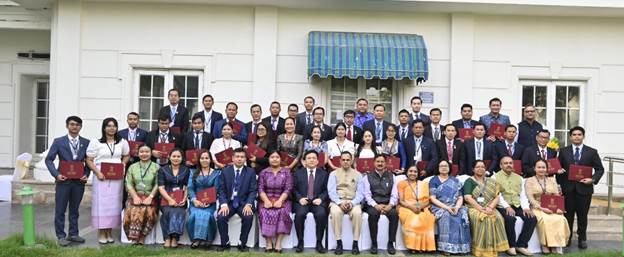
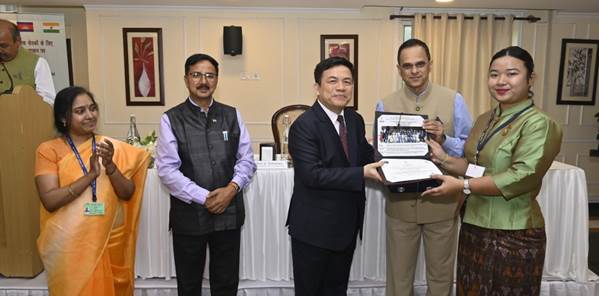
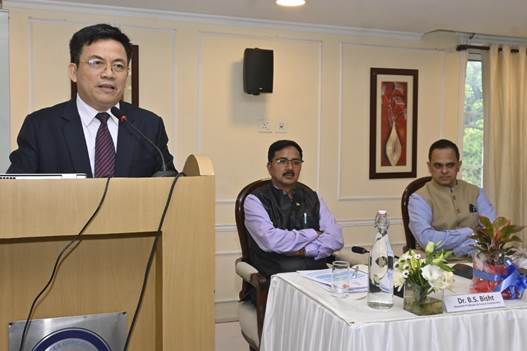
  The National Centre for Good Governance (NCGG) successfully completed the 5th Capacity Building Program on Public Policy and Governance for Civil Servants of Cambodia today in New Delhi. The 2-week program was organized from June 24th to July 5th, 2024 in collaboration with the Ministry of External Affairs (MEA). The program was attended by 40 civil servants from Kingdom of Cambodia, such as Joint Secretary, Director, Deputy Secretary and Under Secretary from the Ministry of Civil Services and Senate of Cambodia. The program offered a platform for policy dialogue and sharing best practices, helping participants gain valuable insights into institutional transformation and citizen engagement.

The valedictory session was chaired by Shri V. Srinivas, Director General (DG) National Centre for Good Governance (NCGG) & Secretary Department of Administrative Reform and Public Grievances (DARPG), Government of India who highlighted the importance of long friendly and historical relations between the two nations. He discussed that it is the role of civil servants to simplify the interface between citizen and government. Citing examples from the grievance redressal model he elaborated how technology has played a key role in bringing citizens closer to government, while optimizing transparency and accountability. He complemented the participating officers for making excellent and substantive presentations.

Speaking on the occasion guest of honour H.E. Mr.Koy Kuong, High Commissioner of Kingdom of Cambodia to India spoke about the ancient connections between the two civilizations and thanked the government of India for support in capacity building of its officers. He elaborated how the two nations have been exchanging knowledge, wisdom and people have been travelling between the countries for pilgrimage as well as medical requirements. He spoke that it was encouraging to see the participants showcasing the learning from the programme in the form of insightful and excellent presentations made during the valedictory session. He highlighted that bilateral relations are at the core of collaborations between the two countries, which are aimed at building the human resource capital of the countries which in turn are necessary to meet the aspirations of the common people, thus helping in achieving good governance.

H.E Ms. Say Pagnvathey, Deputy Director General, Senate of Cambodia and head of delegation from Cambodia expressed gratitude to the Indian Government for this opportunity. She also thanked  Shri V. Srinivas, Director General, NCGG along with the training team for conducting such a training programme for the Cambodian civil service officers. She elaborated how they learnt about a lot of best practices in the area of public policy and governance and how technology is being leveraged in India. She was of the opinion that they are looking forward to such exposure and this will lead the officers to give better services to the people of their country and ultimately help in achieving good governance.

The participating officers as part of the learning outcomes gave four elaborate and insightful presentation on “ Role of Civil Services in Policy Design and Implementation in Cambodia”, “Social Protection in Cambodia”, “Cambodia towards Hybrid Digital 2050” and “Role of Cambodia Parliament in Policy Design and Implementation”.

Dr. B. S. Bisht, Associate Professor, NCGG and Course Coordinator of the programme gave detailed information about the programme. He discussed that in the first week, the training focused on a variety of topics, including Public Policy and Management, GeM: Bringing Transparency in Government Procurement, Parliament in the Indian Constitutional Scheme, India-Cambodia Relations, Public-Private Partnerships in Infrastructure, Aadhaar as a Tool for Good Governance, Health Governance, the impact of Parliamentary Devices on governance, Best Practices from various development schemes, approaches to achieving SDG by 2023, Viksit Bharat: Policies and Developments in Industry and Infrastructure, Financial Inclusion, the Changing Paradigm of Governance, Leadership and Communication, Urban Governance and Sustainable Cities, Civil Services in India, Doorstep Delivery of Services, E-Governance and Digital Public Service Delivery, Gender Development, and Ethics in Administration, PM Award on exemplary execution of Pradhan Mantri Fasal Bima Yojana among others. The second phase of the program included field visits to Smart City project and Information Technology Developmetn Agency in Dehradun, District Administration in Gautam Buddha Nagar, Uttar Pradesh, the Union Public Service Commission and Indian Parliament. The programme also gives exposure to history and culture of the country during visits to the PM Sangrahalaya, Buddha Temple and the Taj Mahal.

It is noteworthy that NCGG has imparted training to civil servants of 17 countries viz. Bangladesh, Kenya, Tanzania, Tunisia, Seychelles, Gambia, Maldives, Sri Lanka, Afghanistan, Laos, Vietnam, Nepal, Bhutan, Myanmar, Ethiopia, Eretria and Cambodia.

The Valedictory Ceremony was graced by Ms. Prisca Mathews, Chief Administrative Officer, NCGG, Dr. Himanshi Rastogi, Associate Professor, NCGG, Dr. Gazala Hasan, Assistant Professor, NCGG among others. The programme was supervised and coordinated by Dr. B. S. Bisht, course coordinator, along with Dr. Sanjeev Sharma, co-course coordinator, Shri. Brijesh Bisht, Training Assistant and Ms. Monisha Bahuguna, Young Professional alongwith the capacity building team of the NCGG.

*****

Demographic dividend and labour reforms will drive future growth

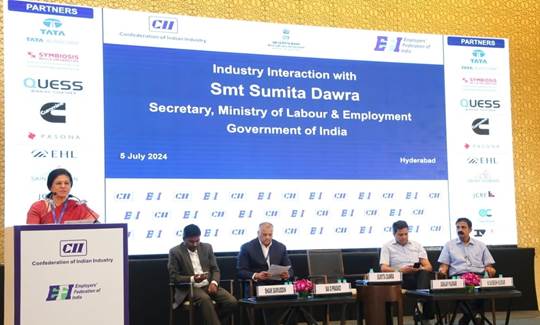
 Smt. Sumita Dawra, Secretary, Ministry of Labour & Employment, Government of India participated in an industry interaction organised by Confederation of Indian Industry (CII) and the Employers’ Federation of India (EFI) on 5th July 2024 at Hyderabad.

In her inaugural address, Smt. Sumita Dawra, Secretary, Ministry of Labour and Employment, highlighted India’s fast growth rates, and emphasized that India’s demographic dividend and labour reforms are pivotal to driving future growth, alongside other growth engines of manufacturing, expansion of service sector, infrastructure, etc.

Citing the RBI’s KLEMS data, she conveyed that about 8 crore new employment opportunities were created in India during past five years [ending 2021-22], largely driven by various government initiatives aimed at incentivising and promoting manufacturing ( such as PLI, Make in India), expansion of services sector, access to micro credit, investments, emergence of new areas such as Gig and Platform workers, Global Capability Centres (GCCs) and Startups, etc. She further highlighted the growing gig economy, which is estimated to employ about 2.3 crore people by 2030.

Smt. Dawra discussed the consolidation of 29 labour laws into four comprehensive codes aimed at simplifying regulations and administrative processes, including the decriminalization of labour laws, thereby enhancing ease of doing business and reduction in compliance burden. This will in turn be attractive for enhanced domestic and foreign investment flows, and in bringing supply chains and global value chains to India, she added. She further said that the reforms will stimulate the economy, enhancing employment opportunities, increasing female workforce participation, and improvements in social security and labour welfare, all of which are expected to drive inclusive growth in India. Currently, India’s GDP is more than USD 3 trillion and is expected to reach USD 33 trillion by 2047 riding on various initiatives, including labour reforms, she added.

Smt Dawra underscored the importance of expanding social security coverage for the unorganized and informal sectors while recognizing the need for governance reforms in the Employees’ State Insurance Corporation (ESIC) and the Employees’ Provident Fund Organisation (EPFO). She also highlighted various systemic reforms initiated in ESIC and EPFO such as auto settlement of claims, reduction in rejections, and improving the pace of claims settlement in EPFO, as well as enhancing the coverage and quality of services in ESIC.

During the interaction, presentations on various systemic reforms in ESIC and EPFO were made, outlining topics such as digitization, e-governance, and compliance simplification, with discussions aimed at gathering suggestions from participants to further improve these systems.

The National Career Service (NCS) portal of Ministry of Labour and Employment was also showcased as a comprehensive solution for career counselling and employment networking. It was highlighted that more than 1 crore vacancies were mobilised on NCS portal during 2023-24. The portal is also integrating SIDH database from the Ministry of Skill Development and Entrepreneurship to ensure availability of rich pool of skilled jobseekers on the portal to reduce skill gap in labour market. The ongoing integration of databases of the two Ministries will effectively link the youth to both skills and employment, resulting in aligning the demand-supply gap in the labour market, it was informed.

The session highlighted the collaborative efforts between the government and industry to create a positive environment for economic development and employment growth. Such interactions are crucial for creating awareness and implementing effective reforms, besides getting feedback from industry and other stakeholders.

The session witnessed participation from over 300 industry representatives keen to engage in discussions on critical labour and employment reforms shaping India’s economic landscape. Senior officials from the Ministry of Labour and Employment, EPFO, ESIC and State Government of Telangana also attended the session.

The event aimed to foster dialogue between government officials and industry stakeholders, focusing on employment generation, labour reforms, and ease of doing business in India.

****

FSSAI approves proposal to display nutritional information labelling of total sugar, salt and saturated fat

 The Food Safety and Standards Authority of India (FSSAI) has approved a proposal to display nutritional information regarding Total Sugar, Salt and Saturated Fat in bold letters and relatively increased font size on labels of packaged food items.

The decision to approve the amendment in the Food Safety and Standards (Labelling and Display) Regulations, 2020 regarding Nutritional information labelling was taken in the 44th meeting of the Food Authority, held under the chairmanship of Shri Apurva Chandra, Chairperson, FSSAI. The amendment aims to empower consumers to better understand the nutritional value of the product they are consuming and make healthier decisions.

The draft notification for the said amendment would now be put in the public domain for inviting suggestions and objections.

The information regarding per serve percentage (%) contribution to Recommended Dietary Allowances (RDAs) would be given in bold letters for total sugar, total saturated fat and sodium content. Regulation 2 (v) and 5(3) of FSS (Labelling and Display) Regulation, 2020 specifies requirements to mention serving size and nutritional information on the food product label, respectively.

Along with empowering consumers make healthier choices, the amendment would also contribute towards efforts to combat the rise of Non-Communicable Diseases (NCDs) and promote public health and well-being. The prioritisation of the development of clear and distinguish labelling requirements would help in the global effort to combat NCDs.

Further, FSSAI has been issuing advisories from time to time to prevent false and misleading claims. These include advisories sent to e-commerce website for removal of the term ‘Health Drink’ as it is not defined or standardized anywhere under the FSS Act 2006 or rules/regulations made thereunder, apart from directive mandating all Food Business Operators (FBOs) to remove any claim of ‘100% fruit juices’ from the labels and advertisements of reconstituted fruit juices, the use of the term wheat flour/ refined wheat flour, the advertisement and marketing of ORS along with prefix or suffix, nutrient function claim for multi-source edible vegetable oils etc. These advisories and directives are issued to prevent misleading claims by FBOs.

Senior officials from the Ministry of Health and Family Welfare, Ministry of Commerce, Ministry of Consumer Affairs, Food and Public Distribution, Ministry of Law and Justice, Ministry of Micro, Small and Medium Enterprises; States and Union Territories attended the meeting. Representatives from industry associations, consumer organizations, research institutes and farmers’ organisations were also present in the meeting.

*****

Department Consumer Affairs meets Automobile Associations and partner companies to Onboard them on Right to Repair Portal India

 The Department of Consumer Affairs (DoCA) under Ministry of Consumer Affairs, Food and Public Distribution, Government of India has launched the Right to Repair Portal India (https://righttorepairindia.gov.in/) to provide consumers with an easy access to information for repairing their products and enabling them to reuse it, thereby contributing to the circular economy as well as reduction of e-waste in a hassle-free manner.

In an effort to uphold consumer rights and respond to evolving concerns regarding hassle free product repairs, a meeting was convened under the Chairmanship of Smt. Nidhi Khare, Secretary, Department of Consumer Affairs (DoCA) with Automobile Associations and their partner companies in the Automobile Sector. The objective was to onboard companies onto the Right to Repair Portal India.

In the meeting, it was emphasized that products that cannot be repaired or are subject to planned obsolescence—designed with an artificially limited lifespan—contribute to e-waste and compel consumers to purchase new products due to lack of repair options or extremely expensive repair options for reuse. Therefore, the goal is to eliminate obstacles such as restricted access to tools or repair information, ensuring that consumers have complete ownership of the products they purchase.

Over time, it has been noted that repair services are increasingly constrained due to significant delays in service and absence of repair documentation for vehicles. Additionally, products are sometimes repaired at excessively high costs, leaving consumers dissatisfied with repair services which often delays repairs, even if necessary, due to limited repair options. A major constraint is also the availability of genuine spare parts at affordable prices. Often their unavailability   at affordable prices, forces consumers towards purchasing counterfeit spare parts from the grey markets. Further, lack of accessible information for minor repairs or Do it yourself guides, exacerbates consumer distress, adding to their financial burden and overall dissatisfaction.

Secretary, Smt. Khare emphasized the need to enhance efforts towards democratization of repair manuals/videos accessible to all, fostering a robust ecosystem for third-party repair services, and establishing standards for them. She also laid stress on offering roadside assistance to consumers, esp. on highways and introducing a repairability index of the automotive that provide information on the life of the product, easy repair ecosystem, availability of spare parts, detailed manual on self-repair, warranty on different parts etc. These measures aim to empower consumers with informed choices regarding the post-sales service of their products, besides ease in enjoying their products fully. The meeting concluded with the consensus on to on board the Right to Repair Portal and adopting a greater collaborative approach in providing a vibrant post sale services to the consumers.

The discussions also covered topics such as aligning standardization of parts along with standardization of skilled workmanship, companies developing catalogs that should benefit consumers for post-purchase service and longevity of products life, and measures for addressing deceptive practices in repair workshops in the name of motor insurance that contribute to unnecessary generation of plastic waste.

In this regard, all companies were urged to on board on the unified Right to Repair Portal India which encompasses to facilitate and works as catalyst for providing relevant repair associated information between the consumers and companies. The information includes:

  1. Access to product manuals/ repair videos (by linking the websites and youtube channels of the companies);
  2. Address the concern on the price and warranty of spare parts;
  3. Explicit mention on differences in liability covered guarantee, warranty and extended warranty;
  4. Details of Companies Service Centre across India and Recognition third-parties repairers, if any, by the companies and
  5. Information on country of origin to be explicitly mentioned.

Some companies like TVS have shared their post-onboarding experiences on the portal. Companies including TATA Motors and TVS discussed how, based on complaints received from the National Consumer Helpline, they identified key repair issues and subsequently created repair videos accessible to consumers via their official YouTube channels. Additionally, associations like ACMA emphasized the Automotive Skill Development Council’s role in facilitating and supporting training youth for automotive skills in the dynamic and innovative market landscape.

The meeting was attended by various representatives of  Automobile Associations like ACMA, SIAM, ATMA, EPIC Foundation and Companies including TATA Motors, Mahindra, TVS, Royal Enfield, Renaulds and Bosch, Yamaha Motors India, Honda Car India were also present.

****

Ministry of Culture initiates Project PARI for the 46th World Heritage Committee Meeting

 India has long been a vibrant centre of artistic expression, with its rich history of public art reflecting the country’s cultural and spiritual diversity. From ancient rock-cut temples and intricate frescoes to grand public sculptures and vibrant street art, Bharat’s landscapes have always been adorned with artistic marvels. Historically, art has been deeply intertwined with daily life, religious practices, and social customs, manifesting through various modalities such as dance, music, theatre, and visual arts.

Project PARI (Public Art of India), an initiative by the Ministry of Culture, Government of India, being executed by Lalit Kala Akademi and National Gallery of Modern Art seeks to bring forth public art that draws inspiration from millennia of artistic heritage (lok kala/lok sanskriti) while incorporating modern themes and techniques. These expressions underscore the intrinsic value that art holds in Indian society, serving as a testament to the nation’s enduring commitment to creativity and artistic expression.

The first intervention under Project PARI is taking place in Delhi. It coincides with the 46th session of the World Heritage Committee scheduled to be held in New Delhi, India between 21-31 July 2024.

The representation of art in public spaces is particularly significant, reflecting the nation’s rich and diverse cultural heritage. The democratization of art through public installations transforms urban landscapes into accessible galleries, where art transcends the confines of traditional venues such as museums and galleries. By integrating art into streets, parks, and transit hubs, these initiatives ensure that artistic experiences are available to one and all. This inclusive approach fosters a shared cultural identity and enhances social cohesion, inviting citizens to engage with art in their daily lives. Project PARI aims at stimulating dialogue, reflection, and inspiration, contributing to the dynamic cultural fabric of the nation.


More than 150 visual artists from all over the country have come together to create the various wall paintings, murals, sculptures and installations being prepared under this project. The creative canvas includes but is not limited to artwork inspired by and /or drawn in styles of Phad paintings (Rajasthan), Thangka painting (Sikkim/Ladakh), miniature painting (Himachal Pradesh), Gond art (Madhya Pradesh), Tanjore paintings (Tamil Nadu), Kalamkari (Andhra Pradesh), Alpona art (West Bengal), Cheriyal painting (Telangana), Pichhwai Painting (Rajasthan), Lanjia Saura (Odisha), Pattachitra (West Bengal), Bani Thani Painting (Rajasthan), Warli (Maharashtra), Pithora Art (Gujarat), Aipan (Uttarakhand), Kerala Murals (Kerala), Alpana art (Tripura) and more.


The proposed sculptures being created for Project PARI include wide ranging ideas that include but are not limited to paying tributes to nature, ideas inspired by the Natyashastra, Gandhi ji, toys of India, hospitality, ancient knowledge, Naad or Primeval Soun, Harmony of life, Kalpataru – the divine tree etc. 


In sync with the proposed 46th World Heritage Committee Meeting some of the artworks and sculptures draw inspiration from World Heritage Sites such as Bimbetka and the 7 natural World Heritage Sites in India find a special place in the proposed artworks.


Women artists have been an integral part of Project PARI and their participation in large numbers is a testimony of Bharat’s NARI SHAKTI. Come and join the celebrations. Click your selfie with a Project PARI creation and share your pictures on social media with #ProjectPARI.


More details on artworks will be available soon on https://lalitkala.gov.in/pariproject

******

'Sahkar se Samriddhi' program in Gandhinagar, Gujarat

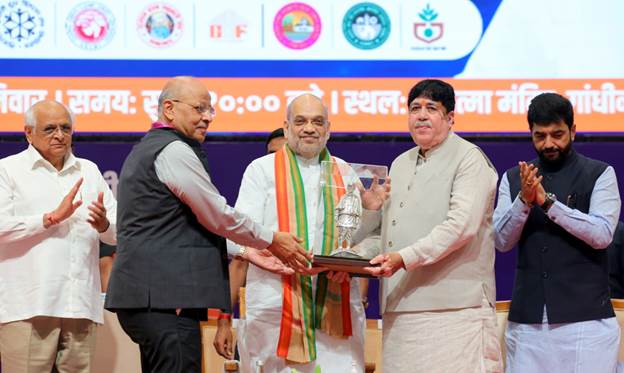
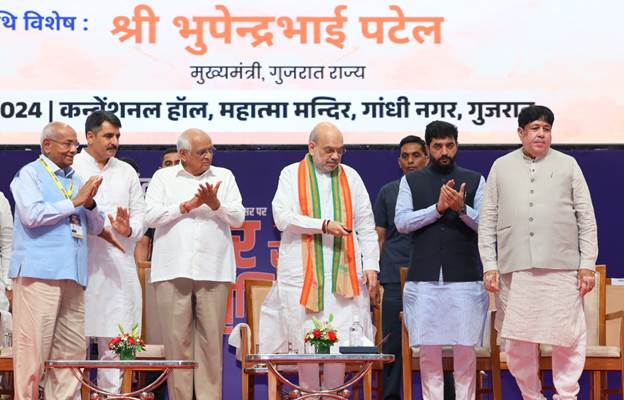
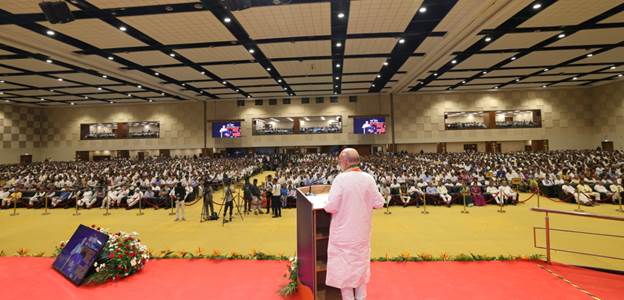
 Union Home Minister and Minister of Cooperation Shri Amit Shah addressed the ‘Sahkar se Samriddhi’ (Prosperity through Cooperation) program organized on the occasion of 102nd International Day of Cooperatives in Gandhinagar, Gujarat today. Many dignitaries including Gujarat Chief Minister Shri Bhupendra Patel, and Secretary, Ministry of Cooperation were present on the occasion.

In his address, Shri Amit Shah said that today is the birth anniversary of Dr. Shyama Prasad Mukherjee and we owe to him for making Bengal and Kashmir integral parts of India today. He said that it was Dr. Mukherjee who led the movement against having two legislations, two heads at the top and two flags in one country and sacrificed his life fighting for this cause. Shri Shah said that today under the leadership of Prime Minister Shri Narendra Modi the duality of having two legislations (Vidhan), two heads at the top (Pradhan) and two flags (Nishaan) has ended in Kashmir and the tricolour is flying there high with great pride. He said that today is also the death anniversary of Babu Jagjivan Ram ji, who initiated and took forward many development programs for the Dalits of the country and laid the foundation of social harmony and opposed religious conversion.


The Union Minister of Cooperation said that today is a very important day in many ways for all the people and workers associated with the cooperative sector. He said that on this day, Prime Minister Shri Narendra Modi had established an independent Ministry of Cooperation. He said that previous governments never paid heed to the demand of a separate Cooperation Ministry. He said that Shri Narendra Modi, who comes from the land of Gujarat, after becoming the Prime Minister, established an independent Ministry of Cooperation by understanding the need for cooperation in today’s time.


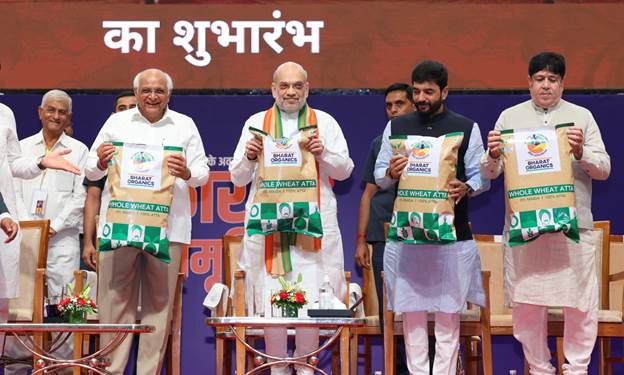
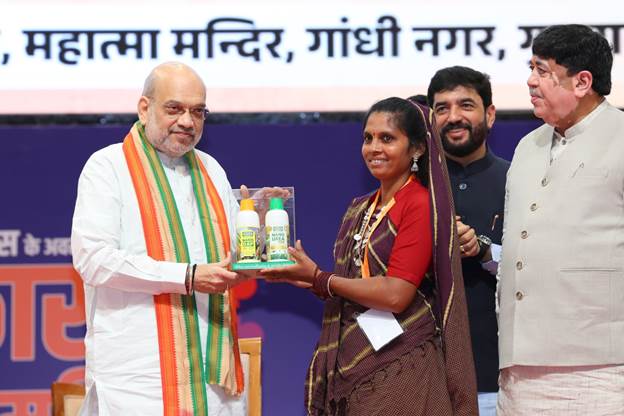
Shri Amit Shah said that today the Government of Gujarat has taken a very important decision and announced a subsidy of 50 percent on Nano-Urea and Nano-DAP. He thanked the Gujarat government for the decision and said that farmers need to spray Nano-Urea only once and that there is no need to add Urea to the fields later during the crop’s growth. Shri Shah said that spraying Nano-Urea and Nano-DAP in the field is sufficient for increased production and will also save the soil. He said that the Modi government has made them cheaper and farmers should use them. He said that the Government of India has established National Cooperative Organic Limited (NCOL) to promote organic products and ensure fair price for their produce to farmers practising organic farming. Shri Shah said that today Bharat Organic Atta has also been launched by NCOL. Shri Shah said that Amul has also launched a shop of Organic products in Delhi. He said that both Bharat Organic and Amul are reliable and 100 percent organic brands. Shri Shah said that the Bharat brand stamp is put on organic products only after testing them using the world’s most modern technology.


Union Home Minister and Minister of Cooperation said that cooperation is not a new idea in India and our forefathers had adopted this 125 years old idea. He said that many great personalities like Sardar Patel, Mahatma Gandhi, Gadgil ji, Vaikunthbhai Mehta and Tribhuvandas Patel started it. He said that a time came when this idea started weakening gradually. Shri Shah said that Prime Minister Modi established a new and independent Ministry of Cooperation recognizing the relevance of cooperation. He said that today we are at an important juncture and the 125 years old cooperative movement is making a big contribution in various areas of the country. He said that the cooperative sector is contributing 20 percent in the distribution of agricultural loans, 35 percent in the distribution of fertilizers and 21 percent in production, 31 percent in sugar production, 13 percent in the purchase of wheat and 20 percent in the purchase of paddy. He said that the cooperative sector is making a very important contribution in the rural and agricultural economy. He said that we have to lay such a strong foundation of cooperation in the next 5 years so that cooperation can reach every village and household for the next 125 years.


Shri Amit Shah said that the Modi government has come up with two new schemes through cooperatives. He said that the government has taken important steps to promote Ethanol and for the prosperity of the farmers producing Maize. He said that the government have made arrangements that two big cooperative institutions of the government will buy Maize produced by the farmers online at the minimum support price (MSP) and Ethanol will be made from it. He said that this will not only make the farmers prosperous but will also help in increasing the country’s foreign exchange reserves by reducing the import of Petrol. Shri Shah said that similarly, now National Agricultural Cooperative Marketing Federation of India (NAFED) and Consumer cooperative institutions will also procure 4 types of Pulses at 100 per cent MSP. He said that we should promote ‘Cooperation among Cooperative’ institutions. He said that if we do all the economic transactions of the cooperative sector within the cooperative sector itself, then we will not need to bring a single penny from outside the cooperative sector. The Minister of Cooperation urged National Bank for Agriculture and Rural Development (NABARD) and all the State Cooperative Banks across the country that every Primary Agriculture Credit Society (PACS) and other cooperative institutions should open their account in the District Cooperative Bank or State Cooperative Bank, which will not only strengthen the cooperative sector but will also increase capital and confidence.


Union Home Minister and Minister of Cooperation said that Prime Minister Shri Narendra Modi has given the slogan of ‘Sahkar se Samriddhi’ to the cooperative sector of the country. He said that in the last 10 years, Prime Minister Modi emancipated 30 crore people from poverty and freed them of their worries of daily needs. He said that PM Modi has provided facilities like house, electricity, toilet, drinking water, 5 kg free food grains and gas cylinder to crores of poor people of the country. Shri Shah said that now these crores of poor people want to contribute to the development of the country but they do not have capital. He said that the only way to contribute to the development of the country and to develop oneself without capital is cooperation. Shri Shah said that the only objective behind the mantra of ‘Sahkar se Samriddhi’ given by Prime Minister Shri Narendra Modi is to bring confidence, happiness and prosperity in the lives of these 30-crore people who are backward even after 75 years of independence.


Shri Amit Shah said that the Union Ministry of Cooperation has taken many important steps for the cooperative sector. He said that the government has set a target that there should not be any state or district in the country where there is not a viable district cooperative bank and a viable district milk producer union. He said that only by doing this we will be able to expand the cooperative sector and make every rural and poor person prosperous. Shri Shah said that for this we have envisioned a Cooperative Panchayat. He said that even today there are 2 lakh panchayats in the country where there is not a single cooperative institution. He said that we have set a target that in the next 5 years we will work to create multipurpose PACS in these two lakh panchayats. Shri Shah said that the government has also made model bylaws for PACS and despite PACS being a state subject, every state from Kashmir to Kanyakumari and Assam to Dwarka has accepted these model bylaws. Shri Shah said that the Government has also worked towards making PACS multi-purpose and today, out of 65,000 functional PACS in the country, 48,000 have taken initiatives towards becoming viable by adding some new activity to themselves.


Union Minister of Cooperation said that the central government has also formed three multi-state cooperative institutions – Organic Committee, Export Committee and Seed Committee – through which the path has been paved to enrich the lives of farmers. He said that the government will soon bring a National Cooperative Policy. Shri Shah said that 1100 new Farmer Producer Organisations (FPOs) have been formed in the country, more than 1 lakh PACS have accepted the new bylaws and now with the issuance of bonds worth Rs 2000 crore to National Cooperative Development Corporation (NCDC), this institution will be able to work for the welfare of more cooperative institutions. Along with this, the urban cooperative banks have got the target of opening new branches, the limit of personal housing loan given by cooperative banks has been doubled, both the income tax benefits and the limit of cash withdrawal have been increased and Prime Minister Shri Narendra Modi, by enacting a law, has done the work of cancelling the income tax liability of Rs 15000 crore of sugar cooperative mills. The IT liability was pending for many years.


Shri Amit Shah called upon the workers of the cooperative sector across the country and asked them to make cooperatives a strong pillar of the country’s economy. He said that we not only have to make cooperatives a strong pillar but also work to instil facilities, prosperity and self-confidence in the lives of crores of poor people of the country through this sector. Shri Shah expressed confidence that on the day when International Day of Cooperatives will be celebrated in 2029, there will not be a single Panchayat in the country where there will not be a PACS. He said that we all have to come together to make Prime Minister Shri Narendra Modi’s dream come true and take cooperatives forward to serve the poor.

*****

12th convocation of Indian Institute of Space Science and Technology (IIST) in Thiruvananthapuram

 The Vice-President, Shri Jagdeep Dhankhar today, without taking the name, condemned the remarks by a senior parliamentarian and former finance minister who said that “New laws were drafted by part timers.” Describing his words as inexcusable insult to the wisdom of parliament, VP questioned “Are we part timers in parliament?”

Taking strong exception to the senior parliamentarian remarks to an English daily, VP further said. “I do not have words strong enough to condemn such a kind of narrative being set brough. A member of parliament being labelled as a part timer, ultimately it is a parliament that is a last source of law formulation.”

Appealing to the aforementioned leader to withdraw his “derogatory, defamatory and highly insulting observations to the Members of the Parliament,” VP asked him to hold himself accountable to his conscience.

Wishing that such a thing had never been said, Shri Dhankhar cautioned that we need to be on guard “when informed minds knowingly lead you astray.” If you say something different which you don’t believe in, everyone will believe you because you are having elevated position, he added.

Addressing the 12th convocation of IIST in Thiruvananthapuram, Kerala today, Shri Dhankhar remarked, “This morning when I read a newspaper, an informed mind who has been finance minister of this country, a parliamentarian for long and a Member of Rajya Sabha currently, he stunned me because I took great pride that this parliament has done a great thing. It had unshackled us from colonial legacy by giving three laws that are of epochal dimension. From “Danda Vidhan” we have come to “Nyaya Vidhan”.

Highlighting that every Member of Parliament had the opportunity to contribute when these three laws were being debated in the House, Shri Dhankhar lamented, “This honourable gentleman, a distinguished member of parliament has a great background as finance minister. But with heavy heart, I am sharing with you, he did not use his lung power, he gave total rest to his vocal chords while debate was going on.”

Disapproving the non-participation of other legal luminaries in Parliament during the debate on the three laws, VP said, “Not only he, his distinguished colleagues from my legal fraternity, senior advocates did not come forward to help the nation. They had an opportunity to make this point in the parliament. It was a failure on his part to perform his constitutional duty and obligation and how can we count on such a man, speaking in high decibel trying to seek resonance from people only to unsettle mechanism.”

Shri Dhankhar said that he was “shocked beyond words” and asked everyone to beware of minds that deliberately run a narrative trying to run down our nation, demean our institutions and taint our progress. They don’t see the writing on the wall, they engage in criticism for the sake of criticism, he added.

Lauding the success of missions led by the Indian Space Research Organisation, Shri Dhankhar underscored that these missions have contributed significantly to India’s diplomatic soft power and enhanced the quality of life of millions.

Congratulating the graduating students, Shri Dhankhar advised them to keep learning in their lives. Describing the education as the most impactful transformational mechanism, he said “It fosters equality& antidotes inequities.It’s a mechanism of positive change.”

Recalling his visit to ISRO, VP said that he was inspired, motivated and enthused, energized by the work being done by the people there.

Shri S Somnath, President, Governing Body IIST, Secretary, Deptt of Science, Shri Dr. B.N. Suresh, Chancellor ISD, Dr Unnikrishnan Nayyar
Director, Vikram Sarabhai Space Centre, faculty, staff, graduating students and their parents were present.


Read Full Text here :https://pib.gov.in/PressReleasePage.aspx?PRID=2031214

 *****

Utkalamani Pandit Gopabandhu Das: A Biography


Early Life and Education

Pandit Gopabandhu Das, often revered as “Utkalamani” or “The Jewel of Odisha,” was born on October 9, 1877, in the village of Suando in Puri district, Odisha, India. His parents, Shrimati Swarnamayee Devi and Shree Daitari Dash, instilled in him a strong sense of morality and a commitment to social service from a young age. Gopabandhu’s early education took place in his village, after which he attended Puri Zilla School. Demonstrating academic brilliance, he continued his education at Ravenshaw College in Cuttack, where he earned a degree in Arts. He later pursued law at Calcutta University, which equipped him with the knowledge and skills to advocate for social justice and reform.

Political and Social Activism

Gopabandhu Das was not just a scholar but a passionate activist committed to the upliftment of the downtrodden. His foray into politics was driven by a deep desire to fight against the oppressive British colonial rule and to work for the socio-economic betterment of his fellow Odias. He became a prominent leader in the Indian National Congress and participated actively in the freedom struggle, advocating non-violent resistance and civil disobedience.

However, his contributions extended far beyond the political arena. Gopabandhu was deeply concerned with the social and educational upliftment of Odisha. He believed that true freedom could only be achieved through education and social reform. To this end, he founded the Satyabadi Bana Bidyalaya at Sakshi Gopal in 1909, which became a beacon of progressive education, focusing on the all-around development of students, blending traditional and modern methods of learning.

Literary Contributions

Gopabandhu Das was also a prolific writer and poet, using his literary talents to inspire and mobilize the masses. His works are marked by their patriotic fervor, social consciousness, and simplicity, making them accessible to a broad audience. His notable literary contributions include:

  • “Kara Kabita”: A collection of poems written during his imprisonment, reflecting his indomitable spirit and love for the nation.
  • “Bandira Atmakatha”: His autobiography, providing deep insights into his life, struggles, and philosophy.

Journalism and the Establishment of “The Samaja”

In 1919, Gopabandhu Das founded “The Samaja,” a newspaper that played a crucial role in awakening nationalistic sentiments among the people of Odisha. The newspaper became a powerful tool for disseminating information, promoting social reforms, and rallying support for the freedom movement. Under his stewardship, “The Samaja” advocated for the rights of the oppressed, exposed injustices, and fostered a sense of unity and pride among Odias.

Personal Life and Legacy

Gopabandhu Das was a man of profound humility and simplicity, characteristics that endeared him to people from all walks of life. Despite facing personal tragedies, including the loss of his wife and children, he remained steadfast in his commitment to serving humanity.

Pandit Gopabandhu Das passed away on June 17, 1928, but his legacy endures. He is remembered as a visionary leader, a compassionate social reformer, and a dedicated educator who laid the groundwork for modern Odisha. His life’s work continues to inspire generations to strive for a just and equitable society.

Conclusion

Utkalamani Pandit Gopabandhu Das’s life is a testament to the power of selfless service and the enduring impact of visionary leadership. His contributions to the freedom struggle, education, literature, and journalism have left an indelible mark on the history and culture of Odisha. Through his exemplary life, he showed that true greatness lies in serving others and working tirelessly for the betterment of society.

96TH DEATH ANNIVERSARY OF UTKALAMANI PANDIT GOPABANDHU DAS

 The President of India, Smt Droupadi Murmu graced the 96th Death Anniversary of Utkalamani Pandit Gopabandhu Das at Bhubaneswar, Odisha today (July 6, 2024). 

Speaking on the occasion, the President said it doesn’t matter how long a person lives; rather, what is important is the kind of life he or she lives. That is, the reputation of a person is evaluated based only on his/her contribution to society and country. She stated that it is amazing to think about the number of good deeds Pandit Gopabandhu Das did in his short lifespan. She said that his contribution to the fields of social service, literature, education, and journalism is unforgettable. She paid her tributes to Pandit Gapabandhu Das.

The President said that Pandit Gopabandhu Das knew very well that no society or nation can progress without proper education. That is why he established Muktakash School, also known as Van Vidyalaya, at Satyabadi in Puri district. His approach of introducing students to nature right from the beginning is very important. Pandit Gopabandhu emphasised on holistic development of students through Van Vidyalaya. In his view, education does not mean only bookish knowledge but, education should develop students physically, mentally, intellectually, and spiritually as well.

The President said that in the year 1919, Pandit Gopabandhu Das started the publication of the Samaj newspaper. Through this publication, he spread the message of freedom in Odisha. He also raised the problems of the people through this newspaper. His editorials in the Samaj have enriched Odia literature.

The President said that Pandit Gopabandhu Das believed in nationalism and democratic values. His poetries and prose give the message of patriotism and the welfare of the world. He was dedicated to Odia pride as well as Indian nationalism. Pandit Gopabandhu wrote ‘Wherever I am in India, I should believe that I am at home’. We should take inspiration from this pan-India thinking of Gopabandhu ji, the President stated.


***

Conference Proceedings Publications with ISBN from EduPub

EduPub offers a specialized service for the publication of conference proceedings with an International Standard Book Number (ISBN). This service is tailored to meet the needs of conference organizers and participants, ensuring that the research presented at conferences is professionally documented, disseminated, and recognized.

Key Services Offered by EduPub

  1. Editorial and Review Management
    • Editorial Support: EduPub provides comprehensive editorial support, including the compilation and organization of submitted papers, ensuring consistency and coherence in the final proceedings.
    • Peer Review Coordination: They manage the peer review process, ensuring that each paper meets the conference’s quality standards and contributes valuable insights to the field.
  2. Formatting and Design
    • Professional Formatting: EduPub ensures that all papers are formatted according to specific guidelines, including layout, citation style, and graphics integration, maintaining a professional and uniform appearance throughout the proceedings.
    • Cover and Layout Design: They offer custom cover design and layout services to enhance the visual appeal and professionalism of the proceedings.
  3. ISBN Assignment
    • Obtaining an ISBN: EduPub facilitates the acquisition of an ISBN for the conference proceedings. An ISBN ensures that the proceedings are cataloged and easily accessible in libraries and databases worldwide, providing formal recognition and legitimacy.
    • ISBN Registration: They handle the registration of the ISBN with relevant authorities, ensuring proper documentation and tracking.
  4. Digital and Print Publication
    • Digital Publication: EduPub publishes the proceedings in digital format, making them easily accessible online. This includes distribution through various digital platforms and repositories.
    • Print Publication: For conferences requiring physical copies, EduPub offers print publication services, producing high-quality printed volumes of the proceedings.
  5. Distribution and Accessibility
    • Wide Distribution: EduPub ensures that the proceedings are distributed widely, reaching academic institutions, libraries, and online platforms to maximize visibility and accessibility.
    • Open Access Options: They offer open access publishing options, allowing unrestricted access to the proceedings and enhancing the dissemination and impact of the research.
  6. Indexing and Archiving
    • Indexing Services: EduPub facilitates the indexing of conference proceedings in major academic databases, increasing the discoverability and citation potential of the included papers.
    • Archiving: They ensure long-term preservation of the proceedings in digital archives, providing a lasting record of the conference contributions.

Benefits of Publishing Conference Proceedings with EduPub

  1. Enhanced Visibility and Credibility
    • An ISBN provides formal recognition and enhances the credibility of the conference proceedings, making them more attractive to researchers and institutions.
  2. Increased Accessibility
    • Wide distribution and indexing ensure that the research is accessible to a global audience, increasing the potential for citations and academic impact.
  3. Professional Quality
    • Expert editorial and design services ensure that the proceedings are of high professional quality, reflecting positively on the conference and its organizers.
  4. Comprehensive Management
    • EduPub handles all aspects of the publication process, from peer review coordination to distribution, allowing conference organizers to focus on other critical aspects of event planning.
  5. Long-Term Preservation
    • Archiving services ensure that the conference proceedings are preserved for future reference, providing a permanent record of the event’s contributions.
  6. Flexible Publishing Options
    • EduPub offers both digital and print publication options, catering to the specific needs and preferences of conference organizers and participants.

In summary, EduPub’s conference proceedings publication service with ISBN provides a comprehensive solution for documenting and disseminating conference research. By ensuring professional quality, wide accessibility, and long-term preservation, EduPub helps enhance the impact and recognition of conference contributions, benefiting both organizers and participants.

EduPub: Publication Services in SCI and Scopus Journals

EduPub is a prominent organization providing comprehensive publication services to researchers, academics, and professionals aiming to publish their work in prestigious journals indexed by Science Citation Index (SCI) and Scopus. These indices are globally recognized for their rigorous standards, ensuring that published research is of high quality and widely respected in the academic and professional communities.

Key Services Offered by EduPub

  1. Manuscript Preparation and Editing
    • Professional Editing: EduPub offers meticulous editing services to ensure manuscripts meet the high standards required by SCI and Scopus journals. This includes language polishing, grammar correction, and improving overall readability.
    • Formatting Assistance: The service ensures that the manuscript adheres to the specific formatting guidelines of the target journal, which can be critical for acceptance.
  2. Research Consultation
    • Topic Selection and Development: EduPub assists researchers in selecting relevant and impactful topics for their research, aligned with the scope of high-impact journals.
    • Methodology Guidance: Experts provide advice on research design, data collection, and analysis to enhance the robustness and credibility of the study.
  3. Journal Selection
    • Target Journal Identification: EduPub helps in identifying suitable journals indexed in SCI and Scopus that align with the research topic and objectives. This increases the chances of acceptance and wider dissemination of the work.
    • Impact Factor Consideration: Guidance is provided on selecting journals with appropriate impact factors to match the author’s career goals and research impact aspirations.
  4. Submission Process Management
    • Manuscript Submission: EduPub handles the entire submission process, ensuring that all required documents and forms are correctly filled out and submitted.
    • Correspondence Handling: They manage communication with journal editors and reviewers, ensuring timely responses and addressing any queries or revision requests.
  5. Peer Review and Revisions
    • Pre-Submission Peer Review: EduPub arranges for an internal peer review to provide constructive feedback and identify areas for improvement before official submission.
    • Revision Support: If a manuscript requires revisions, EduPub offers detailed assistance in addressing reviewer comments and making necessary changes to enhance the chances of acceptance.
  6. Post-Publication Support
    • Promotion and Dissemination: EduPub helps authors promote their published work through various channels to increase visibility and citations.
    • Indexing and Archiving: They ensure that published articles are properly indexed and archived in relevant databases for long-term accessibility.

Benefits of Using EduPub’s Services

  1. Increased Acceptance Rates
    • With expert guidance and meticulous preparation, manuscripts are more likely to meet the stringent criteria of SCI and Scopus journals, leading to higher acceptance rates.
  2. Time Efficiency
    • EduPub streamlines the publication process, saving researchers significant time and allowing them to focus more on their core research activities.
  3. Enhanced Research Quality
    • The thorough editing and review process ensures that the research is presented in the best possible manner, enhancing its quality and impact.
  4. Strategic Journal Targeting
    • By selecting the right journals, EduPub maximizes the visibility and reach of the research, contributing to greater academic and professional recognition.
  5. Comprehensive Support
    • From manuscript preparation to post-publication promotion, EduPub provides end-to-end support, making the publication journey smoother and more successful.

In summary, EduPub’s publication services are designed to help researchers navigate the complex process of publishing in high-impact SCI and Scopus journals. Their expertise and comprehensive support significantly enhance the quality, visibility, and impact of the research, contributing to the academic and professional growth of the authors.

Benefits of Book Chapter Publication

Publishing a book chapter offers a range of benefits, particularly for academics, researchers, and professionals. Here are some key advantages:

Academic and Professional Recognition

  1. Credibility and Authority: Contributing a chapter to a reputable book establishes the author as an expert in their field. It demonstrates a deep understanding of the subject matter and a capacity to contribute to scholarly discourse.
  2. Networking Opportunities: Collaborating with other experts in a book project can foster professional relationships, leading to potential future collaborations, joint research projects, or speaking engagements.
  3. Career Advancement: For academics, book chapters can enhance their curriculum vitae, contributing to career advancement opportunities such as tenure, promotions, and new job prospects.

Contribution to the Field

  1. Knowledge Dissemination: Publishing a chapter allows the author to share new findings, theories, and methodologies with a wider audience, contributing to the advancement of the field.
  2. Influencing Future Research: By presenting innovative ideas and research, book chapters can influence future studies and inspire other researchers.

Broader Audience Reach

  1. Access to Diverse Readers: Books often reach a more varied audience than journal articles, including students, professionals, and policy-makers, thus broadening the impact of the research.
  2. Interdisciplinary Engagement: Books, especially edited volumes, often cover interdisciplinary topics, allowing the author’s work to be accessible to readers from different academic backgrounds.

Intellectual Property and Long-Term Impact

  1. Permanent Record: Unlike journal articles, books are often used as reference materials for many years, ensuring the author’s contributions remain accessible over the long term.
  2. Citation and Impact: Chapters in widely cited books can increase the author’s citation count, enhancing their research impact and visibility in the academic community.

Financial and Institutional Support

  1. Funding Opportunities: Authors may receive financial support or grants for their contributions, particularly if the book is funded by academic institutions or organizations.
  2. Institutional Recognition: Universities and research institutions often recognize and reward book chapter publications, viewing them as significant scholarly achievements.

Personal and Professional Development

  1. Skill Enhancement: Writing a book chapter involves rigorous research, synthesis of information, and critical thinking, which are valuable skills for any researcher or professional.
  2. Creative Freedom: Authors often have more creative freedom in book chapters compared to journal articles, allowing them to explore topics in greater depth and from unique perspectives.

In summary, publishing a book chapter can significantly enhance an author’s academic and professional profile, contribute to the dissemination and advancement of knowledge, and provide long-lasting benefits in terms of credibility, impact, and career opportunities.