What is the Biography of Mahatma Gandhi?

I would like to ask you some questions first. What happened in the life of Mahatma Gandhi? How many struggles did he face? How did he passed away? Do you know the answer to all this? We are going to read the answers in this article. Let’s start reading the article.

In this we will see in detail about Mahatma Gandhi who was born as a human being and transformed himself into a ‘Great Man’ in accordance with the words in Tirukkural ” If man you walk the stage, appear adorned with glory’s grace. “

Gandhi’s birth and adolescence 

Gandhi was born on October 2, 1869 in Porbandar, Gujarat. His father’s name was Karamchand Gandhi and his mother’s name was Putlibai. He learned to pay divine feeling and love to his mother. He later earned his title of barrister in England. At the age of 12, he married Kasturba. But then at the age of 19 he went to study barrister.

Gandhi’s mental strength and self-awareness

Anything born as an organism has a kind of mental strength and self-awareness. Time can put it off if desired. Thus many events took place in the life of Gandhiji. He worked as a lawyer in South Africa from 1893 to 1914. He was heartbroken to see that there were racist policies against Indians in British-dominated South Africa. Gandhi was once denied that he could not be given the opportunity to get a ticket to travel in a first class compartment while traveling by train. He was not allowed to sit in the train on another trip when he was so thoughtful about it. But he struggled and eventually sat down with the driver and traveled. When the driver asked him to get off, he refused.

The struggles waged by Gandhiji


He started a “Civil disobedience movement” against the British there because of the many atrocities he witnessed while in South Africa. Gandhi returned to India after 1914 and took the field in the Indian independence struggle. After the demise of Bal Gangadhar Tilak, he assumed the responsibility of leading the Indian freedom fighters. But unlike Tilak, he did not follow extremist methods but followed a non-violent system called moderation. He also accepted Gopal Krishna Gokhale as his guru for his struggle. 

He opposed the laws of England by using the Rowlatt Act in an oral way. He spoke out against not only the British but also the atrocities such as sectarianism, untouchability and feminism that had plagued the Indians at the same time. 

He wore Khadar clothes to support the Swadeshi movement. On March 12, 1930, he launched the Non-Cooperation Movement against the British. On April 6 of the same year he staged a salt satyagraha with 2500 volunteers against the tax on salt. In 1942, he launched the ‘Quit India Movement’ movement.

Victories achieved by struggles

He started the ‘Civil Disobedience Movement’ against the South Africans. So got the rights for Indians in South Africa. August 15, 1947 was declared our Independence Day because of the determination of the British Government to liberate India as a way of fighting ‘Without a knife and without blood’. 

On January 30, 1948, one of us, ‘Godse’, shot and killed our Gandhiji, who loved the Indian nation and people very much and lived for us. Gandhiji even forgave the one who shot himself. One cannot talk about Gandhiji who lost all his body, substance and spirit for others by proving that man can become Mahatma through his activities. But we must try, that we may live in his way. This is the duty we owe him.
CIVIC SENSE

However, humans are born with 6 sense but none are born with civic sense. Callousness and irresponsibility seem to be the order of the day. Its high time that we inculcate strong civic sense in your young generation.

CIVIC simply means social ethics. It reflects personality and responsibility of an individual and shows who the real person is. It is consideration by the people for the unspoken norms of society. Its not only about keeping roads or streets clean. Its more than that. It is abiding with the laws, respecting fellow human being and also maintaining a sort of decorum in the public.

But unfortunately, these days we lack basic civic sense. Modern lifestyle has given birth to different and uncivilized individuals who lack the basic moral behavior. The society is no longer etched with the goodness of people instead people are driven with their own selfishness and individual needs.

WHY CIVIC SENSE IS IMPORTANT?

If basic civic sense is absent in the society it leads to a lot of problems and to avoid these problems civic sense is necessary. It is important because people with high civic sense does not resort to unethical tactics and shortcuts. Civic sense leads to a more cleaner and fresh environment and also results in a high hygienic society. Civic sense leads you to be more social, mature and unbiased when it comes to situations in public.

LACK OF CIVIC SENSE LEADS TO?

Why is there a sense of detachment from the society? Why a person is always self centered? What are the factors that causes Separatism, vandalism, intolerance and racism? Why are people less tolerant now a days? The answer to all these questions are simple and its due to LACK OF CIVIC SENSE.

INCULCATE CIVIC SENSE:

Its high time that we inculcate civic sense. We can do so by inculcating young minds about the importance of civil sense at a very young age. Civic education should be made mandatory in school. One can also spread awareness about civic sense through rallies, educational programs, medias etc. Strict laws must be enforced. Penalties and stricter punishment’s should be considered if violated.

All these adds up to the society. If all these are followed properly and if people get to know the importance of civic sense then society will be a better place to live.

CIVIC SENSE

However, humans are born with 6 sense but none are born with civic sense. Callousness and irresponsibility seem to be the order of the day. Its high time that we inculcate strong civic sense in your young generation.

CIVIC simply means social ethics. It reflects personality and responsibility of an individual and shows who the real person is. It is consideration by the people for the unspoken norms of society. Its not only about keeping roads or streets clean. Its more than that. It is abiding with the laws, respecting fellow human being and also maintaining a sort of decorum in the public.

But unfortunately, these days we lack basic civic sense. Modern lifestyle has given birth to different and uncivilized individuals who lack the basic moral behavior. The society is no longer etched with the goodness of people instead people are driven with their own selfishness and individual needs.

WHY CIVIC SENSE IS IMPORTANT?

If basic civic sense is absent in the society it leads to a lot of problems and to avoid these problems civic sense is necessary. It is important because people with high civic sense does not resort to unethical tactics and shortcuts. Civic sense leads to a more cleaner and fresh environment and also results in a high hygienic society. Civic sense leads you to be more social, mature and unbiased when it comes to situations in public.

LACK OF CIVIC SENSE LEADS TO?

Why is there a sense of detachment from the society? Why a person is always self centered? What are the factors that causes Separatism, vandalism, intolerance and racism? Why are people less tolerant now a days? The answer to all these questions are simple and its due to LACK OF CIVIC SENSE.

INCULCATE CIVIC SENSE:

Its high time that we inculcate civic sense. We can do so by inculcating young minds about the importance of civil sense at a very young age. Civic education should be made mandatory in school. One can also spread awareness about civic sense through rallies, educational programs, medias etc. Strict laws must be enforced. Penalties and stricter punishment’s should be considered if violated.

All these adds up to the society. If all these are followed properly and if people get to know the importance of civic sense then society will be a better place to live.

THE LUXIRIOUS LOTUS SILK

Lotus silk is one of the world’s most exquisite and rare fabrics, made exclusively in Myanmar, Cambodia, Vietnam, and parts of Manipur. Lotus silk can ultimately cost ten times as much as regular silk.       

LOTUS SILK possesses incredible features such as lightweight, soft-touch, breathability, Crease-resistant, pilling resistance, tear-resistant, Cellulosic fibre, stiffness, neatness, moisture absorption, Antibacterial, Self-cleaning and tensile strength. The stems of lotus flowers are used to produce this silk thread. As a result, this fibre is free of animal cruelty.

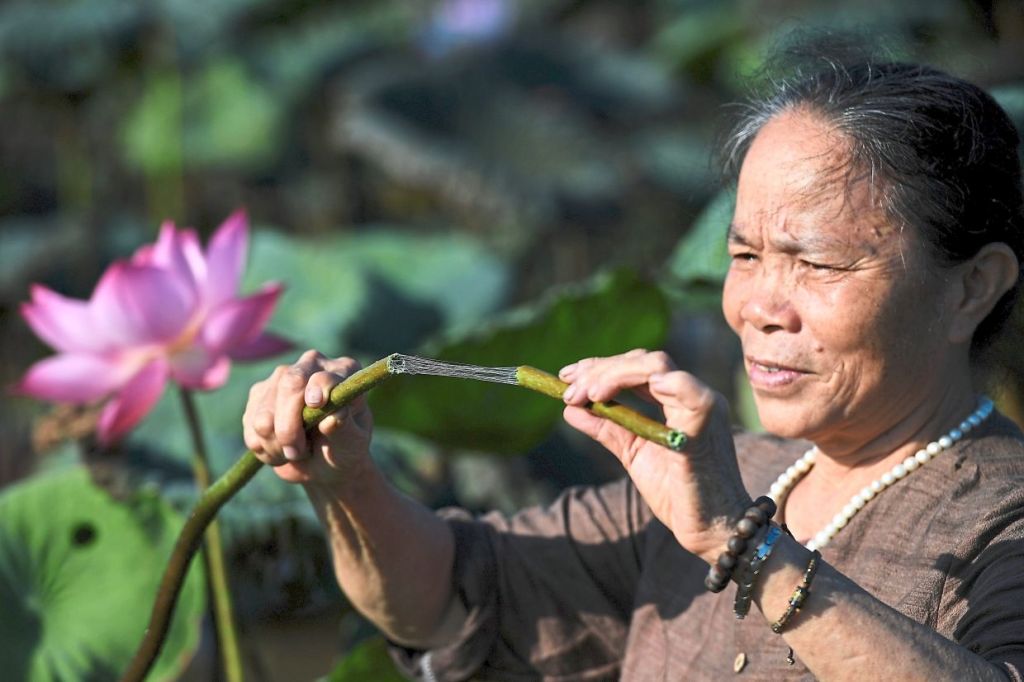
Vietnamese weaver, Phan Thi Thuan checking the quality of natural raw material from a lotus stem to be processed into silk, at a pond in Hanoi.

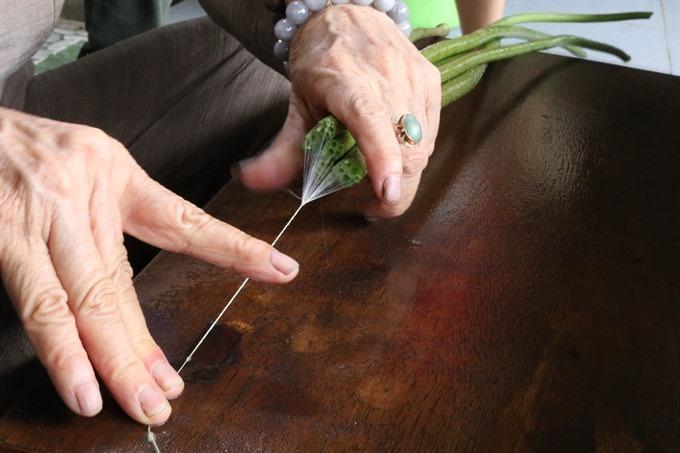
Lotus stems first cut in small portions. A single lotus stem contains a tiny quantity of fine, sticky fibre which is twirled and pulled to reveal a web of thin filaments. The filament is placed on a wooden surface and kept damp by intermittent water splashes. The artisan rolls the wet fibre together to create a denser and stronger thread as the practice occurs with new stems. A new length is welded on to the last to form a continuous thread. dried off together.

To preclude fibre degradation the lotus fabric must be woven in 24 hours. These parched yarns would then be weighed carefully, skillfully hand-crafted, and put into the loom at last. The natural fibre is delicate at this stage but, it can be just as workable as traditional silk once woven.

Lotus fibre is manufactured entirely by hand and is only obtained by a few skilled craftsmen worldwide.  It also takes a lot of time. To extract one kilogram of fibre, it can take up to two months. In addition, only a minuscule amount of fabric can be produced.

STEP 1- Gathering

Lotus plant stems for the production of fibre are collected from the lake. The lotus flower is ideally expected to flower in full when the stem is collected. the deep pink flowers make the best lotus fibres.

Step 2- Extraction of lotus fibre

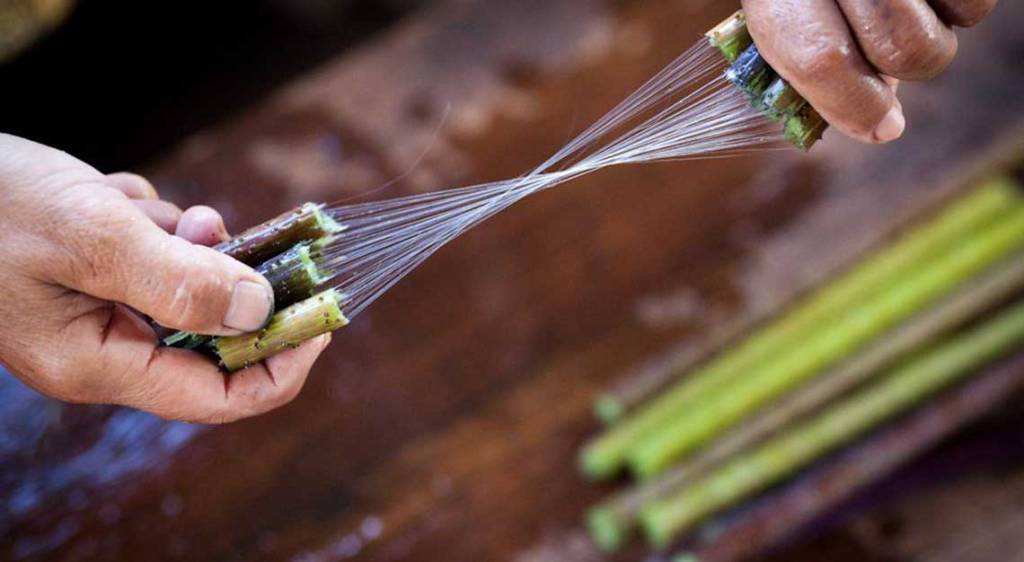
5-6 Lotus plant stems are gleaned with a shallow knife, sliced, tore and contorted to reveal 20-30 fine white filaments of fibre. These stalks are cut with a low cube and the 5-6 stalks are simultaneously snapped, revealing 20-30 fine white fibre filaments.

Step 3- Yarn production process

Prepared skeins are placed on the bamboo spinning frame and then relocated to winders for the warping phase. Yarn is coiled in plastic bags to mitigate tangling. The weft yarn is wound on bamboo bobbins. Crude lotus threads are a creamy colour, and coloration is usually done with natural dyes.

Step 4 – weaving

To weave the material in an outfit, strands of 120,000 lotus stalks are required. In a single day, a spinner can produce a thread of up to 250 metres. Around 30 kg of stems is required to produce 250 metres of thread. A skilled weaver could weave one metres of lotus fabric daily.

THE LUXIRIOUS LOTUS SILK

Lotus silk is one of the world’s most exquisite and rare fabrics, made exclusively in Myanmar, Cambodia, Vietnam, and parts of Manipur. Lotus silk can ultimately cost ten times as much as regular silk.       

LOTUS SILK possesses incredible features such as lightweight, soft-touch, breathability, Crease-resistant, pilling resistance, tear-resistant, Cellulosic fibre, stiffness, neatness, moisture absorption, Antibacterial, Self-cleaning and tensile strength. The stems of lotus flowers are used to produce this silk thread. As a result, this fibre is free of animal cruelty.

Vietnamese weaver, Phan Thi Thuan checking the quality of natural raw material from a lotus stem to be processed into silk, at a pond in Hanoi.

Lotus stems first cut in small portions. A single lotus stem contains a tiny quantity of fine, sticky fibre which is twirled and pulled to reveal a web of thin filaments. The filament is placed on a wooden surface and kept damp by intermittent water splashes. The artisan rolls the wet fibre together to create a denser and stronger thread as the practice occurs with new stems. A new length is welded on to the last to form a continuous thread. dried off together.

To preclude fibre degradation the lotus fabric must be woven in 24 hours. These parched yarns would then be weighed carefully, skillfully hand-crafted, and put into the loom at last. The natural fibre is delicate at this stage but, it can be just as workable as traditional silk once woven.

Lotus fibre is manufactured entirely by hand and is only obtained by a few skilled craftsmen worldwide.  It also takes a lot of time. To extract one kilogram of fibre, it can take up to two months. In addition, only a minuscule amount of fabric can be produced.

STEP 1- Gathering

Lotus plant stems for the production of fibre are collected from the lake. The lotus flower is ideally expected to flower in full when the stem is collected. the deep pink flowers make the best lotus fibres.

Step 2- Extraction of lotus fibre

5-6 Lotus plant stems are gleaned with a shallow knife, sliced, tore and contorted to reveal 20-30 fine white filaments of fibre. These stalks are cut with a low cube and the 5-6 stalks are simultaneously snapped, revealing 20-30 fine white fibre filaments.

Step 3- Yarn production process

Prepared skeins are placed on the bamboo spinning frame and then relocated to winders for the warping phase. Yarn is coiled in plastic bags to mitigate tangling. The weft yarn is wound on bamboo bobbins. Crude lotus threads are a creamy colour, and coloration is usually done with natural dyes.

Step 4 – weaving

To weave the material in an outfit, strands of 120,000 lotus stalks are required. In a single day, a spinner can produce a thread of up to 250 metres. Around 30 kg of stems is required to produce 250 metres of thread. A skilled weaver could weave one metres of lotus fabric daily.

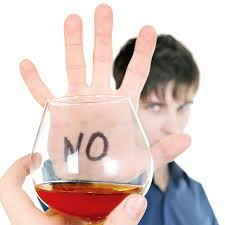
Alcohol Addiction in Teenagers

ALCOHOL ADDICTION IN TEENAGERS


This topic is an essential part of the present society and touches almost all sections of the society, including parents, teenagers, school administrations, and churches. There has been a notable increase in the level of moral decadence especially among the young generation. This has been as a result of the lack of sufficient parenting techniques and inadequate monitoring of the movements of teenage children, both at schools and home. This paper examines the current situation of alcohol addiction among teenagers, the factors that facilitate early exposure and addiction to alcohol. It also takes a look at the efforts that various institutions are making to control the situation, and the challenges that hinder the effective control of the social vice (Biddulph, 2003).

One can define addiction to alcohol as a continuous urge and desire to consume alcoholic drinks at all times of the day. An addict is an individual who cannot survive without the commodity, to which he has an addiction. On several occasions, the individual will experience certain side effects as a result of not consuming the commodity or service. For example, an individual who has an alcohol addiction is likely to suffer from anxiety and restlessness if he or she does not take alcohol regularly. Addiction to alcohol manifests itself in different ways, depending on the body set up of the individual suffering from the addiction. Alcohol remains to be the most abused drug among teenagers in most countries, notably, in the United States. According to recent findings, approximately a half of the junior and senior high school students consume alcoholic drinks on a monthly basis. In addition, approximately 14 percent of teens in the USA have been under intoxication at least once in the past year. The most alarming trend that is arising is that these teens drink a wide variety of the alcoholic drinks, which increases the damage on their health. Other specialists have defined alcohol addiction as the negative pattern of alcohol use that leads to several health problems. Some of the problems include the urge for additional alcohol to experience intoxication, difficulties that occur when the impacts of the alcohol wears off from the individual, and other social problems that come as a result of consuming alcohol (Castillo, 2009).

Causes and Risk Factors of Alcohol Addiction among Teenagers

There are certain elements that encourage the progress of an alcoholic behavior among teenagers. Most of these factors usually comprise of family factors that occur in the homes of these teenagers. First, low levels of supervision and communication from the parents to teenage children is likely to foster a drinking habit in a teenager. Children in the teenage years are in a period of experimentation, and it is at this time that they need adequate attention from the parents. When parents fail to stay close to their children at this stage in life, there is a tendency that these children may fall victims of peer pressure, and start consuming alcohol (Essau, 2002).

Family conflicts also contribute massively towards alcohol addiction among the teens. Young children are not proficient at dealing with problems in their families. The most notable family conflict in families is that of marital misunderstandings between the mother and father. Teenagers tend to keep their minds off the misunderstandings between parents by consuming drugs, mostly alcohol. Persistent conflicts in the family will lead to the development of the drinking habit in such a young person, leading to addictiocauen (Monti, 2012).

Family History of Alcohol Addiction

Some teenagers tend to drink alcohol because some members of the family were heavy drinkers. This is most common in a situation where these past family drinkers were successful in life at some point. Thus, a teenager will look at alcohol as a positive effect on someone’s potential and success. This continued exposure to alcohol will eventually lead to addiction at a tender age.

Exposure to alcohol at a tender teen age is likely to lead to heavy alcoholism in the later years of an individual. For instance, teens that start drinking at an age of 14 to 16 years have a high tendency of suffering from alcoholism during their maturity age (Stewart, 2009).


<

p style=”background-color: white;color: #444d7d;font-family: arial, helvetica, sans-serif;font-size: 14px;margin: 0px 0px 10px;text-align: justify”>

WATER CYCLE

Water cycle or hydrological cycle is the continuous movement of water on earth. In this process, water moves from one reservoir to another by processes such as evaporation, sublimation, transpiration, condensation, precipitation, surface runoff and infiltration, during which water converts itself to various forms like liquid, solid and vapour.

Evaporation

Evaporation is a type of vaporization, where liquid is converted to gas before reaching its boiling point. Water evaporates from the surface of the earth and water bodies such as the oceans, seas, lakes, ponds and rivers.

Sublimation

Sublimation is conversion of solid to gas, without passing through the intermediate liquid phase. Ice sheets and ice caps from north and south poles, and icecaps on mountains, get converted into water vapour directly, without converting into liquid.

Transpiration

Transpiration is the process by which plants release water vapour into the atmosphere through stomata in leaves and stems.

Condensation

Condensation is the changing of gas phase into liquid phase and is the reverse of vaporisation. At higher altitudes, the temperature is low. The water vapour present there condenses to form very tiny particles of water droplets. These particles come close together to form clouds and fog.

Precipitation

Due to change in wind or temperature, clouds combine to make bigger droplets, and pour down as precipitation (rain). Precipitation includes drizzle, rain, snow and hail.

Run off

As the water pours down, it runs over the surface of earth. Runoff water combines to form channels, rivers, lakes and ends up into seas and oceans.

Infiltration

Some of the precipitated water moves deep into the soil. Then it moves down and increase the ground water level.

Percolation

Some of the precipitated water flows through soil and porous or fractured rock.

Infiltration and percolation are two related but different processes describing the movement of water through soil.

Human impacts on water cycle

Major human activities affecting the water cycle on land are urbanisation, dumping of plastic waste on land and into water, polluting water bodies and deforestation.

WATER CYCLE

Water cycle or hydrological cycle is the continuous movement of water on earth. In this process, water moves from one reservoir to another by processes such as evaporation, sublimation, transpiration, condensation, precipitation, surface runoff and infiltration, during which water converts itself to various forms like liquid, solid and vapour.

Evaporation

Evaporation is a type of vaporization, where liquid is converted to gas before reaching its boiling point. Water evaporates from the surface of the earth and water bodies such as the oceans, seas, lakes, ponds and rivers.

Sublimation

Sublimation is conversion of solid to gas, without passing through the intermediate liquid phase. Ice sheets and ice caps from north and south poles, and icecaps on mountains, get converted into water vapour directly, without converting into liquid.

Transpiration

Transpiration is the process by which plants release water vapour into the atmosphere through stomata in leaves and stems.

Condensation

Condensation is the changing of gas phase into liquid phase and is the reverse of vaporisation. At higher altitudes, the temperature is low. The water vapour present there condenses to form very tiny particles of water droplets. These particles come close together to form clouds and fog.

Precipitation

Due to change in wind or temperature, clouds combine to make bigger droplets, and pour down as precipitation (rain). Precipitation includes drizzle, rain, snow and hail.

Run off

As the water pours down, it runs over the surface of earth. Runoff water combines to form channels, rivers, lakes and ends up into seas and oceans.

Infiltration

Some of the precipitated water moves deep into the soil. Then it moves down and increase the ground water level.

Percolation

Some of the precipitated water flows through soil and porous or fractured rock.

Infiltration and percolation are two related but different processes describing the movement of water through soil.

Human impacts on water cycle

Major human activities affecting the water cycle on land are urbanisation, dumping of plastic waste on land and into water, polluting water bodies and deforestation.

The Great Pyramid of Giza

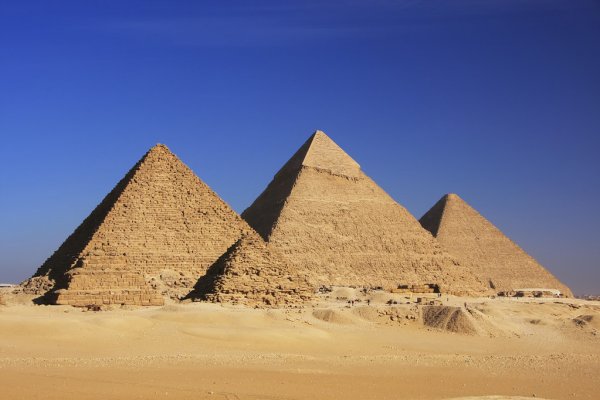
The Great Pyramid of Giza is a defining symbol of Egypt and the last of the ancient Seven Wonders of the World. It is located on the Giza plateau near the modern city of Cairo and was built over a twenty-year period during the reign of the king Khufu (2589-2566 BCE, also known as Cheops) of the 4th Dynasty. Until the Eiffel Tower was completed in Paris, France in 1889 CE, the Great Pyramid was the tallest structure made by human hands in the world; a record it held for over 3,000 years and one unlikely to be broken. Other scholars have pointed to the Lincoln Cathedral spire in England, built in 1300 CE, as the structure which finally surpassed the Great Pyramid in height but, still, the Egyptian monument held the title for an impressive span of time. The pyramid rises to a height of 479 feet (146 metres) with a base of 754 feet (230 metres) and is comprised of over two million blocks of stone. Some of these stones are of such immense size and weight (such as the granite slabs in the King’s Chamber) that the logistics of raising and positioning them so precisely seems an impossibility by modern standards.

Design

In terms of design and planning, some theories suggest that parts of the plan were laid out on the ground at a 1:1 scale. This might account for the accuracy of the workmanship, such that the four sides of the base have an average error of only 58 mm in length. The sides of the pyramid rise at the angle of 51°52′, accurately oriented to the compass’ four cardinal points.

The entrance is around 18 m (59 ft) above the ground on the north side. The Queen’s Chamber and the King’s Chamber are contained inside, connected via a corridor and a slanting gallery 46 m (151 ft) long. The King’s Chamber is shielded from the thrust exerted by the masses of masonry piled on top of it, by five compartments separated by massive horizontal slabs of granite, weighing 25-80 tonnes.

Construction

Most hypotheses are based on the idea that the huge stones were moved from a quarry, and then either dragged, lifted or rolled into place. The most widely accepted theory is that a ramp-like embankment of brick, earth and sand was increased along with the pyramid. Using this embankment, the Egyptians would have hauled the stone blocks using sledges, rollers and levers.

There is also disagreement about the size and nature of the workforce required. The Ancient Greeks thought that slave labour was used, with the historian Herodotus theorising that it took 20 years and 100,000 slaves to build. However, Egyptologists in the 20th century discovered archaeological remains of workers’ camps, which gave rise to the belief that a more limited workforce of as few as 20,000 could have been sufficient, with the workers being skilled rather than slaves.

The core of the pyramid was formed from 2.3 million limestone blocks. The outer casing was made using white Tura limestone, crafted to form a smooth surface with intricate joints unrivalled by any other Egyptian masonry. However, this casing was gradually plundered during ancient and medieval times, although some of the stones can still be seen around the base today.

Shine Bright Like a Diamond:

Today, the Giza pyramids wear the tawny tones of their surrounding Libyan Desert. But back in their heyday, they sparkled. Originally, the pyramids were encased in slabs of highly polished white limestone. When the sun struck them, they lit up and shimmered. Some researchers believe that the pyramids’ capstones were plated in gold as well.

Those dazzling façades have long been stripped—some sources report that those blocks of stone were repurposed and used to build mosques—but you can still see remnants of a once-snowy cap atop the middle pyramid.

The Great Pyramid of Giza

The Great Pyramid of Giza is a defining symbol of Egypt and the last of the ancient Seven Wonders of the World. It is located on the Giza plateau near the modern city of Cairo and was built over a twenty-year period during the reign of the king Khufu (2589-2566 BCE, also known as Cheops) of the 4th Dynasty. Until the Eiffel Tower was completed in Paris, France in 1889 CE, the Great Pyramid was the tallest structure made by human hands in the world; a record it held for over 3,000 years and one unlikely to be broken. Other scholars have pointed to the Lincoln Cathedral spire in England, built in 1300 CE, as the structure which finally surpassed the Great Pyramid in height but, still, the Egyptian monument held the title for an impressive span of time. The pyramid rises to a height of 479 feet (146 metres) with a base of 754 feet (230 metres) and is comprised of over two million blocks of stone. Some of these stones are of such immense size and weight (such as the granite slabs in the King’s Chamber) that the logistics of raising and positioning them so precisely seems an impossibility by modern standards.

Design

In terms of design and planning, some theories suggest that parts of the plan were laid out on the ground at a 1:1 scale. This might account for the accuracy of the workmanship, such that the four sides of the base have an average error of only 58 mm in length. The sides of the pyramid rise at the angle of 51°52′, accurately oriented to the compass’ four cardinal points.

The entrance is around 18 m (59 ft) above the ground on the north side. The Queen’s Chamber and the King’s Chamber are contained inside, connected via a corridor and a slanting gallery 46 m (151 ft) long. The King’s Chamber is shielded from the thrust exerted by the masses of masonry piled on top of it, by five compartments separated by massive horizontal slabs of granite, weighing 25-80 tonnes.

Construction

Most hypotheses are based on the idea that the huge stones were moved from a quarry, and then either dragged, lifted or rolled into place. The most widely accepted theory is that a ramp-like embankment of brick, earth and sand was increased along with the pyramid. Using this embankment, the Egyptians would have hauled the stone blocks using sledges, rollers and levers.

There is also disagreement about the size and nature of the workforce required. The Ancient Greeks thought that slave labour was used, with the historian Herodotus theorising that it took 20 years and 100,000 slaves to build. However, Egyptologists in the 20th century discovered archaeological remains of workers’ camps, which gave rise to the belief that a more limited workforce of as few as 20,000 could have been sufficient, with the workers being skilled rather than slaves.

The core of the pyramid was formed from 2.3 million limestone blocks. The outer casing was made using white Tura limestone, crafted to form a smooth surface with intricate joints unrivalled by any other Egyptian masonry. However, this casing was gradually plundered during ancient and medieval times, although some of the stones can still be seen around the base today.

Shine Bright Like a Diamond:

Today, the Giza pyramids wear the tawny tones of their surrounding Libyan Desert. But back in their heyday, they sparkled. Originally, the pyramids were encased in slabs of highly polished white limestone. When the sun struck them, they lit up and shimmered. Some researchers believe that the pyramids’ capstones were plated in gold as well.

Those dazzling façades have long been stripped—some sources report that those blocks of stone were repurposed and used to build mosques—but you can still see remnants of a once-snowy cap atop the middle pyramid.

Down Syndrome

Down syndrome also known as Trisomy 21 is a chromosomal condition that is associated with intellectual disability, a characteristic facial appearance, and weak muscle tone (hypotonia) in infancy. All affected individuals experience cognitive delays, but the intellectual disability is usually mild to moderate.

People with Down syndrome often have a characteristic facial appearance that includes a flattened appearance to the face, outside corners of the eyes that point upward, small ears, a short neck and a tongue that tends to stick out of the mouth. Affected individuals may have a variety of birth defects. Many people with Down syndrome have small hands and feet and a single crease across the palms of their hands. About half of all affected children are born with a heart defect. Digestive abnormalities, such as a blockage of the intestine, are less common.

Most cases of Down syndrome are not inherited. When the condition is caused by trisomy 21, the chromosomal abnormality occurs as a random event during the formation of reproductive cells in a parent. The abnormality usually occurs in egg cells, but it occasionally occurs in sperm cells. An error in cell division called nondisjunction results in a reproductive cell with an abnormal number of chromosomes. For example, an egg or sperm cell may gain an extra copy of chromosome 21

Down Syndrome

Down syndrome also known as Trisomy 21 is a chromosomal condition that is associated with intellectual disability, a characteristic facial appearance, and weak muscle tone (hypotonia) in infancy. All affected individuals experience cognitive delays, but the intellectual disability is usually mild to moderate.

People with Down syndrome often have a characteristic facial appearance that includes a flattened appearance to the face, outside corners of the eyes that point upward, small ears, a short neck and a tongue that tends to stick out of the mouth. Affected individuals may have a variety of birth defects. Many people with Down syndrome have small hands and feet and a single crease across the palms of their hands. About half of all affected children are born with a heart defect. Digestive abnormalities, such as a blockage of the intestine, are less common.

Most cases of Down syndrome are not inherited. When the condition is caused by trisomy 21, the chromosomal abnormality occurs as a random event during the formation of reproductive cells in a parent. The abnormality usually occurs in egg cells, but it occasionally occurs in sperm cells. An error in cell division called nondisjunction results in a reproductive cell with an abnormal number of chromosomes. For example, an egg or sperm cell may gain an extra copy of chromosome 21

Love looks through a telescope; envy, through a microscope

• The invention of the microscope has opened up a whole new dimension in science. By using microscopes scientists were able to discover the existence of microorganisms, study the structure of cells, and see the smallest parts of plants, animals, and fungi.

Today, the microscope is still a commonly used tool to diagnosis illness in hospitals and clinics all over the world.

• Since their original invention, microscopes have moved beyond the simple visible light refracting lenses.

Electrons, x-rays, and infrared rays are used by far more sophisticated and expensive microscopes to detect even smaller and smaller structures. Scanning electron microscopes are able to resolve viruses, which are far smaller than any cell.

The most familiar type of microscope is the optical, or light, microscope, in which glass lenses are used to form the image. …… Other types of microscopes use the wave nature of various physical processes.

The most important is the electron microscope, which uses a beam of electrons in its image formation. A microscope is an instrument that makes an enlarged image of a small object, thus revealing details too small to be seen by the unaided eye.

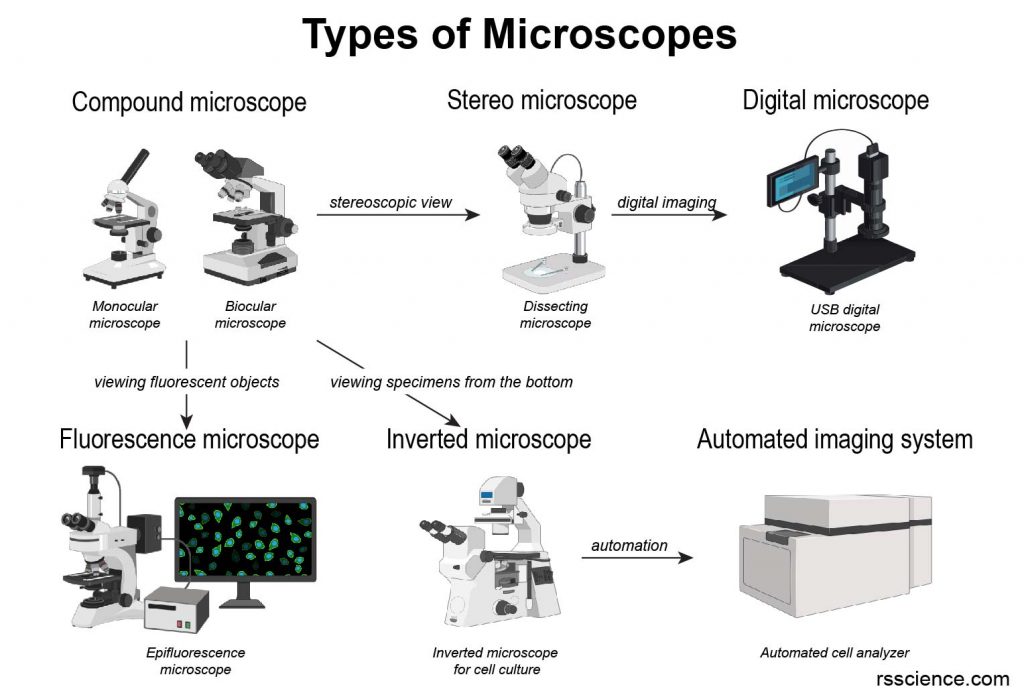
Simple Microscope – contains only one lens.

Ex. Magnifying glass.

Compound light microscope – a system of two lens that work together.

Electron microscopes – uses electrons to provide detailed views of specimens.

Ex. TEM and SEM

Dissecting microscope – allows for the viewing of specimens without the use of slide.

Love looks through a telescope; envy, through a microscope

• The invention of the microscope has opened up a whole new dimension in science. By using microscopes scientists were able to discover the existence of microorganisms, study the structure of cells, and see the smallest parts of plants, animals, and fungi.

Today, the microscope is still a commonly used tool to diagnosis illness in hospitals and clinics all over the world.

• Since their original invention, microscopes have moved beyond the simple visible light refracting lenses.

Electrons, x-rays, and infrared rays are used by far more sophisticated and expensive microscopes to detect even smaller and smaller structures. Scanning electron microscopes are able to resolve viruses, which are far smaller than any cell.

The most familiar type of microscope is the optical, or light, microscope, in which glass lenses are used to form the image. …… Other types of microscopes use the wave nature of various physical processes.

The most important is the electron microscope, which uses a beam of electrons in its image formation. A microscope is an instrument that makes an enlarged image of a small object, thus revealing details too small to be seen by the unaided eye.

Simple Microscope – contains only one lens.

Ex. Magnifying glass.

Compound light microscope – a system of two lens that work together.

Electron microscopes – uses electrons to provide detailed views of specimens.

Ex. TEM and SEM

Dissecting microscope – allows for the viewing of specimens without the use of slide.

Unveiling of a 100-Qubit Quantum Computing System

Atom Computing, a quantum computing firm, has announced the development of a quantum computing machine with unrivaled capabilities. The Phoenix system, which is in its initial iteration, can hold up to 100 qubits and is touted to be ‘exceptionally’ stable with lengthy coherence periods, allowing for high performance. Separately, the firm reported the receipt of approximately $15 million in Series A investment and the appointment of a new CEO.

With optical tweezers, Atom Computing’s Phoenix can capture 100 atomic qubits (of an alkaline earth element) in a vacuum container. Lasers are then used to alter the quantum states of atomic qubits. Atom Computing’s Phoenix, according to the firm, is ideal for complicated calculations since its qubits are exceptionally robust and have very long coherence times (over 100 ms).

Using optical tweezers to manipulate atomic qubits in a vacuum environment is not a novel concept. Although Honeywell sells similar devices, their quantum computers only have six qubits. According to Atom Computing, their laser technology and platform design enable the scalability of the number of qubits to 100 units. The firm must, however, demonstrate such a system.

“The development of quantum computing has advanced to the point that it is no longer a decade away. Because of our systems’ scalability and reliability, we are certain that we will be able to lead the industry to genuine quantum advantage “Atom Computing’s CEO and President, Rob Hays, stated. “We’ll be able to solve complicated problems that were previously impossible to handle with traditional computing, even with Moore’s Law’s exponential performance improvements and massively scalable cluster designs.”

Atom Computing announced that it has raised $15 million in Series A investment from venture capital companies Venrock, Innovation Endeavors, and Prelude Ventures, in addition to providing the first information about its Phoenix quantum computing system. The funds will go toward the construction of the Phoenix quantum computing system.

Rob Hays has also been named CEO and President of the firm. Hays previously worked at Intel for 20 years, establishing the company’s Xeon roadmap. Later in his career, he worked at Lenovo, where he established the company’s data center product and service strategy.