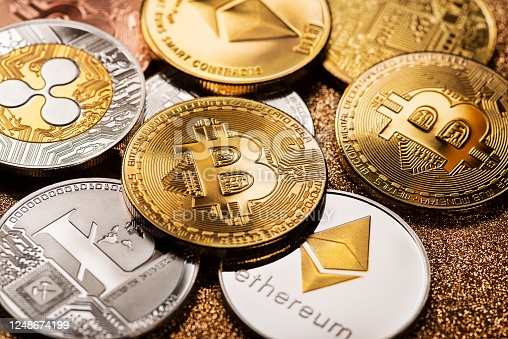
CBDC; digital currency put forward by RBI

 The Reserve Bank of India is likely to soon kick off pilot projects to assess the viability of using digital currency to make wholesale and retail payments to help calibrate its strategy for introducing a full-scale central bank digital currency (CBDC).

India is already a leader in digital payments, but cash remains dominant for small-value transactions, he said, stressing that an official digital currency would reduce the cost of currency management while enabling real-time payments without any inter-bank settlement.

“Every idea has to wait for its time, perhaps the time for a CBDC is here,” RBI Deputy Governor T. Rabi Sankar said on Thursday. “Like other central banks, we have also been exploring the pros and cons of this since quite some time,” he added. A high-level inter-ministerial committee set up by the Finance Ministry had recommended the introduction of a CBDC with changes in the legal framework including the RBI Act, which currently empowers the RBI to regulate issuance of bank notes.

Transacting with CBDC would be an instantaneous process as the need for inter-bank settlement would disappear as it would be a central bank liability handed over from one person to another, Mr. Sankar pointed out. Moreover, foreign trade transactions could be speeded up between countries adopting a CBDC. “India’s fairly high currency-to-GDP ratio holds out another benefit of CBDC — to the extent large cash usage can be replaced by CBDC, the cost of printing, transporting and storing paper currency can be substantially reduced,” Mr. Sankar said at a discussion hosted by Vidhi Centre for Legal Policy. CBDC will be India’s sovereign currency in an electronic form.

According to the RBI deputy Governor, since CBDC is a currency that does not pay interest, its impact on bank deposits may “actually” be limited.“Depositors that require CBDCs for transactional purposes are likely to sweep day end balances to interest-earning deposit accounts,” he said.

However, he said that CBDC is not comparable to the private virtual currencies that have mushroomed over the last decade. He said, “Private virtual currencies sit at substantial odds to the historical concept of money. They are not commodities or claims on commodities as they have no intrinsic value; some claims that they are akin to gold clearly seem opportunistic.”

Complements fiat currency?

Sajai Singh, Partner at J Sagar Associates, said, “RBI is moving in the right direction with regard to digital currencies. Any RBI backed digital currency will come with a promise of less volatility and greater security for the bearer of the same. This will be very different from cryptocurrencies, like Bitcoin and Ethereum, which are rather popular, but carry innumerable risks. Also, RBI’s support to a digital currency will ensure its financial stability. It will be similar to say a potential digital Euro and digital Yuan.”

FaTE of crypto’s

According to Patel, CBDC’s might have a negligible direct impact on private digital currencies such as Bitcoin, Matic, Doge, etc. These private cryptocurrencies are based on ‘decentralization’. “The sovereign digital currencies are in stark contrast to decentralization, as the central banks govern and control them. However, as and when CBDCs start gaining more adoption, people would get to learn more about private cryptocurrencies as well. It would indirectly act as a catalyst to creating awareness of the practical usage of cryptocurrencies. That is when the crypto markets would start getting increased retail participation as well,” he told FE Online.
Dogecoin


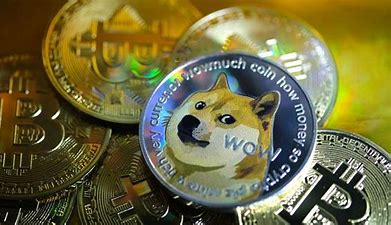
A cryptocurrency is a form of digital asset based on a network that is distributed across a large number of computers. This decentralized structure allows them to exist outside the control of governments and central authorities. Dogecoin is a type of  cryptocurrency created by software engineers Billy Markus and Jackson Palmer, who decided to create a payment system as a joke, making fun of the wild speculation in cryptocurrencies at the time. It was initially released on December 6, 2013, and quickly developed its own online community, reaching a market capitalization of US$85,314,347,523 on May 5, 2021.

Dogecoin.com promotes the currency as the “fun and friendly internet currency”, referencing its origins as a joke. It further gained major popularity when  founder, CEO, and Chief Engineer at SpaceX and one of the richest person of the world – Elon Musk talked about it. Billy Markus was a IBM software engineer and Jackson Palmer was a Adobe Software engineer.

Palmer had purchased the domain Dogecoin.com and added a splash screen, which featured the coin’s logo and scattered Comic SanMarkus reached out to Palmer after seeing the site, and started efforts to develop the currency. Markus designed Dogecoin prototype based on other cryptocurrencies such as litecoin and Lucky coin using the scrypt technology in their proof-of-work algorithm.

On December 19, 2013, Dogecoin jumped nearly 300 percent in value in 72 hours, rising from US$0.00026 to $0.00095,with a volume of billions of Dogecoins per day. This growth occurred during a time when bitcoin and many other cryptocurrencies were reeling from China’s decision to forbid Chinese banks from investing into the bitcoin economy. But three days later its value dropped by 80%. 

Blockchain Network

 Blockchain is a system of recording information in a way that makes it difficult or impossible to change, hack, or cheat the system.

A blockchain is esstenially a digital ledger of transactions that is duplicated across the entire network of computer systems on the blockchain. Each block in the chain contains a number of transactions, and every time a new transaction occurs on the blockchain, a record of that transaction is added to every participant’s ledger. The decentralised database managed by multiple participants is known as Distrributed Ledger Technology (DLT).

Blockchain is a type of DLT in which transactions are recorded with an unchangeable cryptographic signature called a hash. This means if one block in one chain was changed, it would be immediately apparent it had been tampered with. If hackers wanted to corrupt a blockchain system, they would have to change every block in the chain, across all of the distributed versions of the chain.

There have been many attempts to create digital money in the past, but they have always failed. The prevailing issue is trust. If someone creates a new currency called the X dollar, how can we trust that they won’t give themselves a million X dollars, or steal your X dollars for themselves?

Bitcoin was designed to solve this problem by using a specific type of database called a blockchain. Most normal databases, such as an SQL database, have someone in charge who can change the entries (e.g. giving themselves a million X dollars). Blockchain is different because nobody is in charge; it’s run by the people who use it. Bitcoins cannot be faked, hacked or double spent – so people that own this money can trust that it has some value.

Elon Musk's Twitter profile picture change sends Dogecoin soaring

 The Tesla boss changed his Twitter profile picture to snap of him wearing glasses reflecting Dogecoin’s symbolic Shiba Inu, making the cryptocurrency value jump on Monday.

The picture shows musk in a mirrored sunglasses with Shiba Inu dog flashing through the frame.

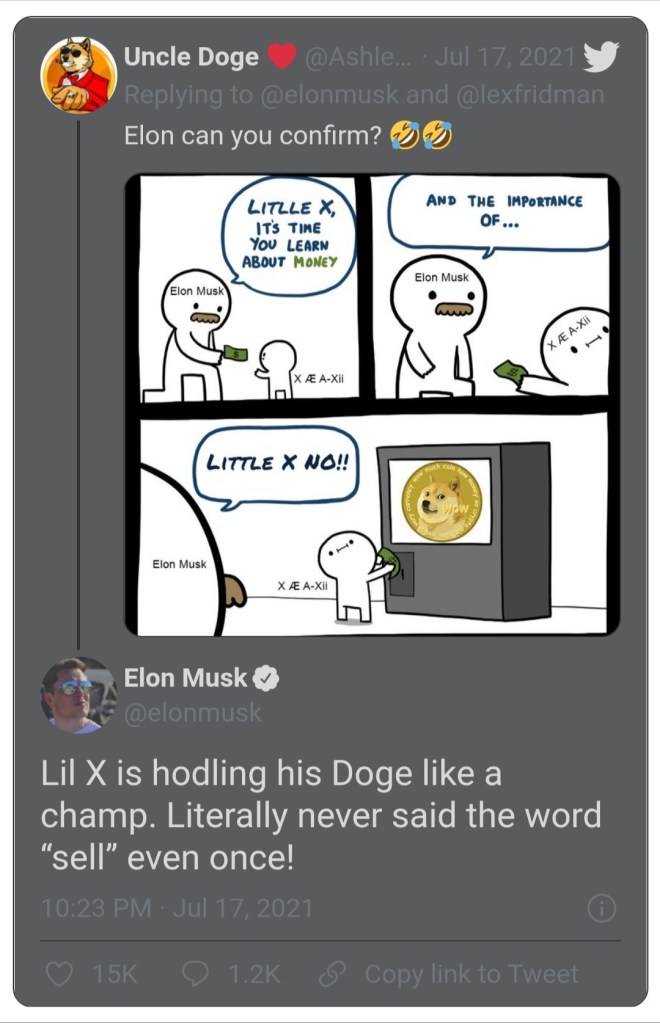
The tech billionaire changed his display picture soon after mentioning that his son was holding his doge like a champin a reply tweet.

This isn’t the first time Musk has mentioned Dogecoin. The 50-year-old has often sent the prices of doge cryptocurrency soaring on numerous occasions by sharing memes on social media. And Musk’s recent picture change did not go unnoticed by Dogecoin’s co-founder Bill Markus, who took to Twitter to share his own meme.

Thought previously Dogecoin saw a jump in the market, the recent fall of cryptocurrencies has been a matter of worry for many, especially the investors. However, the recent push by Musk surely brought slight relief for Dogecoin.

Dogecoin

 Dogecoin (DOGE) is a cryptocurrency that is taking the world by storm with over 129.5 billion coin in circulation. In 2013, Jackson Palmer and Billy Markus created this open source cryptocurrency as a sarcastic meme coin. Even though it was started as a joke, Doge’s blockchain still has a lot of merit as it is derived from Litecoin’s technology. Dogecoin can be merge mined with Litecoin, meaning miners can mine both cryptos simultaneously using the same work. Essentially, practically everyone who mines Litecoin chooses to mine Dogecoin as well, because merge mining Dogecoin increases profits. Dogecoin has the image of a Shiba Inu dog as its logo and has a loyal community of supporters who trade it and use it as a tipping currency for social media content. This group has banded together to support a variety of charitable endeavours and other ventures. They were also able to fund a NASCAR race.

Billy Markus thought that by branding it as a more lighthearted coin, it would have a greater chance of going mainstream, as opposed to coins like Bitcoin and Ethereum. Dogecoin’s casual presentation suited the mood of the burgeoning crypto community. Its scrypt technology and unlimited supply was an argument for a faster, more adaptable, and consumer-friendly version of Bitcoin. Dogecoin is an “inflationary coin,” while cryptocurrencies like Bitcoin are deflationary because there’s a ceiling on the number of coins that will be created. Although Dogecoin is nowhere near the scale of Bitcoin, the meme currency’s market cap has risen from more than $1 billion in early January to $47 billion in May according to CoinMarketCap.

Celebrities like Elon Musk and Snoop Dogg have been supporting Dogecoin, which is driving its price up. There are even rumours that Tesla will begin accepting dogecoin soon. Elon Musk’s tweets once even caused the price to rise from a 24-hour low of 0.062 dollars to 0.078 dollars, a 20% increase. A strange combination of factors, including Elon Musk’s apparent endorsement for the coin and overwhelming support from Robinhood dealers, has propelled Dogecoin into the mainstream. Many have even started calling Musk “The Dogefather”. DOGE liquidations topped Bitcoin (BTC) at one point during the market mania, demonstrating the asset’s great demand.

On a year-to-date basis, the token has climbed approximately 7,000 percent. DOGE achieved its all-time high of $0.73 on 8 May 2021, driven by Elon Musk as well as its cult following. At this rate it just might become a viable currency. Doge to the moon!

Exploring Bitcoin: The Quintessential Cryptocurrency


Bitcoin, the name synonymous with cryptocurrency, has become the default thought for most people when they hear about digital currencies. It is the pioneering cryptocurrency that brought the concept of decentralized, digital money into the mainstream, offering a medium of exchange that exists entirely in the digital realm. Invisible and intangible, cryptocurrencies like Bitcoin have altered our perceptions of what money can be.

The Origins of Bitcoin

Bitcoin was introduced to the world in a 2008 white paper by an individual or group of individuals using the pseudonym Satoshi Nakamoto. The true identity of Satoshi Nakamoto remains one of the digital age’s most intriguing mysteries, with theories about their identity ranging from a Finnish sociologist to an Irish mathematician. Despite numerous investigations and speculation, Nakamoto’s identity remains undisclosed, adding an element of mystique to Bitcoin’s origin.

The Mechanics of Bitcoin

Bitcoin operates on a technology known as blockchain, which is essentially a public ledger that records all transactions across a network of computers. Blockchain technology ensures that every transaction is securely encrypted and virtually impossible to tamper with, providing a high level of security and transparency.

Bitcoin is created through a process known as mining. Contrary to what the term might suggest, this mining is purely digital and involves solving complex mathematical puzzles using powerful computers. Successful miners are rewarded with new bitcoins, contributing to the gradual increase in the total supply.

Decentralized Nature

One of the core features of Bitcoin is its decentralized nature. Unlike traditional currencies, Bitcoin operates independently of a central authority. This decentralization means that no single entity, including governments, has control over it. The decentralized structure not only enhances security but also eliminates the need for intermediaries such as banks in financial transactions.

Transaction Speed and Efficiency

Bitcoin transactions are known for their efficiency. A typical transaction can be confirmed within about 10 minutes, regardless of the geographical locations of the parties involved. This speed, coupled with the absence of intermediaries, makes Bitcoin an attractive option for many users worldwide, especially in regions where access to traditional banking is limited or non-existent.

The Impact of Bitcoin

Bitcoin has paved the way for thousands of other cryptocurrencies, each with unique functionalities and purposes. As the progenitor of this revolutionary technology, Bitcoin remains the most well-known and widely used cryptocurrency. Its introduction has spurred debates about the future of money, privacy, and the role of sovereign currencies in an increasingly digital world.

In conclusion, Bitcoin is not just a currency but a groundbreaking technology that has challenged the traditional financial systems and introduced a new era of decentralized digital assets. Its ongoing development and the dynamic ecosystem it has inspired continue to influence various sectors, including finance, law, and technology.

Dogecoin


Part-1

We all know about Rupee coin and Bitcoin. Now there is another similar thing getting noticed and goes spoken more. That is Dogecoin. The value of rupee is based on Dollar currency and Bitcoin is based on Blockchain that promises to revolutionise the monetary systems around the world. But this Dogecoin is based on a meme. This coin was made in jest. In this blog, let’s see about this Dogecoin.

Someone took the Doge meme, the meme of this dog was quite famous at some time and a coin was made out of it. It’s like taking a ‘Akshay Kumar meme’ and creating a Akshy coin. It’s easy. Anyone can create it. Because cryptocurrency is so decentralised that any person can develop their own coin. They will need basic coding knowledge to do that. But the thing is that Dogecoin became so famous that, elite people like Elon Musk started buying it and promoting it.

After the popularity of Bitcoin, several people bought up its disadvantages. Like the long transaction time of Bitcoin. It that the whole process of Bitcoin mining consumes a lot of energy. And that is not good for the environment. That’s why some people considered making their own coins. These coins are called Alt-coins. i.e. Alternative coins (Named because they are alternative to Bitcoins). And they try to counter the disadvantages of Bitcoin. Examples: Etherium, Litecoin. But after Alt-coins had been developed, people realised that everyone can create their own coins. So people started creating their own coins for fun. But there was no advantages in their coins as compared to Bitcoin. Some scammers created their own coins and fooled people to invest in those coins. To drive the value of the coin, they followed Pump and Dump scheme. That is many people would put in their money and then the scammers take away their money. Then the people would suffer heavy losses and the scmmer would gain many. Some coins are created just for fun. These coins which were created without any reason are called as Shitcoins. Because they add no value to the world. They are not bringing any improvements to the process.

Some people believe that Dogecoin is also a Shitcoin. It was not created to scam people but just to make prank on people. It’s only for jokes. This doge meme was at the peak of its popularity in 2013. Jackson Palmer, an Australian marketer and Billy Markus, a software developer at IBM developed this Degecoin together then. Palmer says that he thought up this idea as a joke to combine two most popular things on the internet. Cryptocurrency and Doge meme. The code of Dogecoin is based on Litecoin. Litecoin is an Alt-coin that does have a few advantages over Bitcoin. Like lesser processing time and lower transaction fees. But the surprising thing is that the market valuation of Dogecoin has already surpassed that of Litecoin. If you look at the largest cryptocurrencies in the world, Dogecoin has become the fourth -largest currency.

Let’s discuss about this more in Part-2. Bye.! #stayhomestaysafe

Dogecoin Part-2

 Dogecoin, evolved just as a meme and fun factor now got more attention. It became the fourth- largest cryptocurrency in the world. After Bitcoin, Etherium and Binance. The biggest question is how is it possible? How did a coin made as a joke gain such popularity? Why are people buying it?

The first and foremost reason is Reddit website. People on Reddit started using it as a joke initially. Whenever someone liked a post or a comment on Reddit, people would award some Dogecoins to the OP as a tip. It was known as the DogeBot tip. Usually, this was a tip of 5 Dogecoins. And at that time, the value of Dogecoin was 0.0002¢. It was a very small amount. But using Dogecoin as a tip started gaining popularity on Reddit. And this expanded over years. Dogecoins were used so much and exchanged so many times that their value started increasing rapidly. In September 2018, the CEO of Tesla, Elon Musk noticed it. Elon Musk met Jackson Palmer on the issue of Twitter scambots. The fake Twitter accounts that scam people using the guise of cryptocurrency. Elon Musk wanted to take them down because his name was being used to run these scams.

So he asked Jackson Palmer to help on this. That was when Elon Musk came to know about Dogecoin. After 7 months he tweeted “Dogecoin might be my fav cryptocurrency. It’s pretty cool”. In March 2020 he tweeted “Dogs rock. They are the best coins”. So in the coming months and years he tweeted about Dogecoin several times which indirectly or directly promoting Dogecoin. And because Elon Musk is so famous, and perhaps the most renowned and liked billionaire in the world, every time he tweeted, it sent the value of Dogecoin by 25% to 50%. Eventually 2021 followed 2020. And now the value of Dogecoin has exceeded 50¢. At its peak, Dogecoin had almost touched the valuation of $80 billion. Though its price has fallen a bit in the last couple of days, the supporters of Dogecoin aim to drive its value to $1. It means that the value of 1 Dogecoin would be equal to $1. Currently it is around 50-60¢.

And what is the process to buy Dogecoin?

It is the same as buying any other cryptocurrency. You have to use cryptocurrency exchange platforms.

Talking about the real life use of Dogecoin, the community of Dogecoin have donated to several charitable causes. Their first donation was to a Jamaican Bobsleigh team of $30,000 in Dogecoins. So that the team could participate in the 2014 Russian Winter Olympics. After this, for some water conservation projects in Kenya and for helping some special needs children, the Dogecoin community donated.

Who are the community of Dogecoin?

Basically there is a subreddit on Degecoin where the users who buy and promote Dogecoins come together and make such donations.

But overall friends, now Dogecoin has become a culture trend now. The value of Dogecoin goes higher, higher and higher and one day it will reach its peak. Then, it will start decreasing. There is a very high possibility for this to happen. 

BITCOIN AND THE BITCOIN BLOCK CHAIN

 Bitcoin is a virtual monetary unit and therefore has no physical representation. A bitcoin unit is divisible and can be divided into 100 million ”Satoshis” the smallest fraction of a bitcoin. the bitcoin blockchain is a data file that carries the records of all past bitcoin transactions, including the creation of bitcoin units. it is often referred to as the ledger of the bitcoin system. the bitcoin blockchain consists information about new bitcoin transactions. the average time between bitcoin blocks to 10 minutes. the first block was created in 2009 and at the time of this writing was appended as the most recent block to the chain. because everyone can download and read the bitcoin blockchain, it is a public record, a ledger that contains bitcoin ownership information for any point in time.

The word ledger has to be qualified here. there is no single instance of the bitcoin blockchain. instead every participant is free to manage his or her own copy of the ledger accounts. instead there is a predefined set of rules and the oppurtunity for individuals to also has to be qualified because the owners of bitcoin units usually remain anonymous through the use of pseudonyms. to use the bitcoin system, an agent downloads a bitcoin wallet. a bitcoin wallet is software that allows the receiving, storing, and sending of bitcoin units. the next steps is to exchange fiat currencies, such as the U.S dollar, for bitcoin units. the most common way is to open an account at one of the many bitcoin exchanges and to tranfer a fiat currency to it. the account holder can then use these funds to buy bitcoin units or one of the many other cryptoassets on the exchange. due to widespread adoption of bitcoin, the pricing on large exchanges is very competative with relatively small bid ask spreads. most exchanges provide order books and many other financial tools that make the trading process transparent. a bitcoin transaction works in a way that is similar to a transaction in the yap payment system.

for a virtual currency to function, it is crucial to establish at every point in time how many monetory units exist, as well as how many new units have been created. there must also be a consensus mechanism that ensure that all participants agree about the ownership rights to the virtual currency units. in small communities as with the yap islanders everyone knows everyone else. the participants care about their reputation and conflicts can be disputed directly. in contrast within the bitcoin system the number of participants is substantially larger, and network participants can remain anonymous.

GROWTH OF DIGITAL PAYMENTS IN INDIA


The evolution of digital payments in India:-

  • India is a massive cash dependent economy with a 13% cash-to-GDP ratio to the global average of 2.5 to 8%. This invites many illegal transactions and black money within the system. The government hence, figured out that going cashless can be a solution to reduce these money laundering transactions, and a fair play in the economy of the country will persist.
  • In 2005, a tax named ‘Banking Cash Transaction Tax’ was one of the steps taken towards the removal of black money by the then finance minister, P.Chidambaram of UPA government, which levied a tax of 0.1% on withdrawals of cash above 10,000 rupees. But this mainly focused on the banks, while blurring the cash users like merchants or businessmen.
  • Demonetization was the next major and effective step taken by Prime Minister Narendra Modi to evacuate black money and embrace digitization on 8th of November, 2016. Elimination of 500 and 1000 rupee notes shook the entire economy of the country and paved way for digital transactions with open doors.

Present situation :-

  • Since the attack of demonetization by the government has been taken, digital and online transactions have had a steep up-rise in its graph. The rate of digital cash users is increasing exponentially day by day. Mobile transaction applications like PayTM says that there has been a 200% increase in its mobile app downloads in recent times and a 250% increase in their recent transactions. Applications like MobiKwik, Oxigen and UPay also reports the growth of digitization in their statistics after the widespread of demonetization.
  • The plan of using the Aadhar card details as a key or the pincode for monetary transactions has been going on. The Aadhaar enabled payment system (AEPS)  uses the biometrics of an individual, like the fingerprints, as a personal identification number instead of passwords and pincodes for transactions. This system will also serve the security purposes as the biometric of an individual is unique.
  • India has showcased a massive progress on going cashless in a very small amount of time. The Digital Evolution Index 2017, which is a joint study conducted by the Fletcher School at Tufts University with Mastercard has categorized India under the “break out” segment among the top 60 countries worldwide for going cashless.
  • In spite of all these achievements, a security threat remains all over the system. Cyber bullies and hackers have not left behind a single scope to invade databases of banks or companies or personal accounts and emails of politicians, businessmen, journalists and other prominent people for personal fetishes. According to the 2015 data breaches study by IBM and the Ponemon Institute, India is the most targeted country for data breaches. Be it the big, famous brands like IBM, Hitachi or renowned banks like ICICI and HDFC, they all faced cyber attacks.
  • With the abundant availability of higher denomination notes, cash transactions are increasing again.

Steps taken by Indian Government :- 

  • Demonetization is the biggest and the most effective step taken so far by the Indian government towards digitization. The dumping of 500 and 1000 notes has triggered the wealth of black money holders massively. Though the economy country-wide has dropped, the black money and big-fat illegal cash transactions have also been minimized greatly.
  • New portals for online digital transactions have been opened on a wide-scale, encouraging more customers or users of cash to dump the old techniques and go cashless.
  • For better security reasons and backing up the after-effects of demonetization, the Ministry of Electronics and Information Technology will be issuing a Request For Proposal (RFP) to set up a common e-governance platform for end-to-end transactional experience for a citizen, businesses as well as internal government functions.

What still needs to be done:- 

  •  The government must propose more secure and tight algorithms to stop the intervention of cyber attacks on top security databases for big companies, governments and systems, as well as on personal accounts for the public.
  • Apart from the digital security, the public also needs to be aware of cyber threats and phishing that take place on a daily basis. Falling as a prey for cyber attacks can be a nightmare for the common people, as well as the big industries and governments. People who do not know much about handling money in a digital way can be fooled easily by asking for their account details or lending information over fake calls, all in the name of digitization. Thus, it is of primary importance that the public is aware of such misleading.
  • The security departments of every system must be well equipped with behavior analytics and pattern analysis to identify suspicious activities and prevent them then and there. Identification of frauds and fake apps which serve monetary transactions has to be the main motive of the security departments. 

Best practices worldwide :-  

  • A worldwide digital payment system and a cryptocurrency, which is the first decentralized digital currency is the Bitcoin. This system works without a central repository or a single administrator. The transactions here, are verified by network nodes, and takes place between users directly and the record is kept in a public distributed ledger.
  • Mobile applications like PayTM, for instance, is certified under the Payment Card Industry Data Security Standard (PCI DSS) 2.0 certification, which is the current industry security standard set by American Express, Visa International, MasterCard Worldwide and a few other international dealers. This is an essential certification for companies that store credit card information. PayTM and other such companies also use 128-bit encryption technology to crypt any information transfer between two systems. 

Introduction to Block chain technology

 Blockchain is a system of recording information in a way that makes it difficult or impossible to change, hack, or cheat the system.

A blockchain is essentially a digital ledger of transactions that is duplicated and distributed across the entire network of computer systems on the blockchain. Each block in the chain contains a number of transactions, and every time a new transaction occurs on the blockchain, a record of that transaction is added to every participant’s ledger. The decentralised database managed by multiple participants is known as Distributed Ledger Technology (DLT).

Blockchain is a type of DLT in which transactions are recorded with an immutable cryptographic signature called a hash.

This means if one block in one chain was changed, it would be immediately apparent it had been tampered with. If hackers wanted to corrupt a blockchain system, they would have to change every block in the chain, across all of the distributed versions of the chain.

Blockchains such as Bitcoin and Ethereum are constantly and continually growing as blocks are being added to the chain, which significantly adds to the security of the ledger.

There have been many attempts to create digital money in the past, but they have always failed.

The prevailing issue is trust. If someone creates a new currency called the X dollar, how can we trust that they won’t give themselves a million X dollars, or steal your X dollars for themselves?

Bitcoin was designed to solve this problem by using a specific type of database called a blockchain. Most normal databases, such as an SQL database, have someone in charge who can change the entries (e.g. giving themselves a million X dollars). Blockchain is different because nobody is in charge; it’s run by the people who use it. What’s more, bitcoins can’t be faked, hacked or double spent – so people that own this money can trust that it has some value.

Blockchain: What It Is and Why You Should Care

By leveraging blockchain technology, smaller businesses can operate with more autonomy and efficiency.

You’ve probably heard of blockchain technology, but you might not know that it’s quickly revolutionizing the way the world shares information and does business.
Blockchain technology has already been adopted by many prominent institutions. According to IBM, 91 percent of the world’s banks plan to invest in blockchain solutions by 2018. Today, most small to mid-size business owners and future employees are aware they should know a thing or two about this new technology, but they don’t know where to start.
Let’s break down what blockchain is and why you – as a future entrepreneur, business owner or employee of a large corporation – should care.

So, what is blockchain?

Blockchain is a decentralized, digital public ledger – or record – of transactions. Blockchain was originally developed to record transactions of the cryptocurrency bitcoin, but today it offers many important opportunities for businesses of all types and sizes.
Blockchain technology is an effective, business-friendly way to structure data, allowing information to be shared easily and securely from business to business. As a result, large companies can automate processes and scale operations more easily.
Small businesses and entrepreneurs can benefit from blockchain technology, too. By leveraging blockchain technology, smaller businesses can operate with more autonomy and efficiency.
Here are the three ways blockchain technology could affect operations for small business owners and entrepreneurs:

1. Automate HR processes

Using blockchain technology, a company could verify the identity and employment background of potential hires. This could save businesses a huge amount of time and resources by eliminating the extensive research and background checks typically conducted by an HR department.

2. Develop “smart” contracts

Blockchain technology could help businesses potentially automate legal agreements and contracts between clients and customers. Since blockchain is a “smart contract,” meaning the information is instantly verifiable and accessible, small businesses could use blockchain to streamline certain legal or administrative processes and free up capital for other business areas.

3. Improve security

Managing large amounts of consumer data is a risk for businesses that could be the target of a cyber-attack or data breach. Today, many consumers are wary of exposing their personal information, whether they’re shopping online, swiping their card in the store or filling out a form for more information. With the enhanced security enabled by blockchain, businesses can rest assured that their customers’ sensitive information is encrypted and safe from hackers and cybercriminals.
Blockchain technology is already changing the business world. By familiarizing yourself with this new technology – and its applications to a variety of businesses and industries – you can prepare and position yourself to be a forward-thinking future business leader.

Block Chain Technology

 Blockchain is a system of recording information in a way that makes it difficult or impossible to change, hack, or cheat the system.A blockchain is essentially a digital ledger of transactions that is duplicated and distributed across the entire network of computer systems on the blockchain. Each block in the chain contains a number of transactions, and every time a new transaction occurs on the blockchain, a record of that transaction is added to every participants ledger.

The original Blockchain is open-source technology which offers an alternative to the traditional intermediary for transfers of the crypto-currency Bitcoin. The intermediary is replaced by the collective verification of the ecosystem offering a huge degree of traceability, security and speed.

How online notary business is changing the game for conventional practices

Daily writing prompt
Share a story about someone who had a positive impact on your life.

Conventional ideas of notarial service delivery are being challenged by the proliferation ofonline notary business, which is changing the face of traditional notarial operations. Notaries may better serve their customers’ changing demands by embracing new technology and adjusting to the digital era. This will increase efficiency, accessibility, and security. Traditional notaries may find development possibilities and continue to make valuable contributions to the legal profession in the digital age by proactively managing the digital shift and embracing cooperation and innovation.  Notaries may thrive in the ever-evolving notarial landscape by being open to digital change, maintaining high professional standards, and building trust with clients. This will allow them to keep serving both individuals and businesses.

Progression of digital notarial functions

A new age of efficiency, accessibility, and convenience has dawned with the advent of online notary business, which has caused a revolutionary change in conventional notary operations. Notarial acts were traditionally executed when a notary public met in person with the signer, who was typically required to be present at a certain place and time during normal business hours. Online notary platforms, on the other hand, have made it possible for people and companies to get notarial services remotely, using digital technology to finish the notarization process whenever and wherever they choose. Because of this shift in notarial procedures, more people are able to afford notarial services, which gives them more freedom and control over how they meet their legal duties.

The process of integrating and adjusting digital solutions

Beyond the obvious convenience factor, the incorporation of digital solutions and cutting-edge technology into online notary company has a profound effect on conventional processes, improving the notarial experience as a whole:

  • In order to simplify the notarization of documents, do away with paperwork, and lessen administrative responsibilities, traditional notaries are more and more turning to digital platforms and electronic signature solutions.
  • Biometric identification and encrypted communication channels are two of the sophisticated security elements offered by online notary platforms that guarantee the authenticity and secrecy of notarial activities.

Traditional notaries may better serve their customers in today’s digitally linked world by embracing digital transformation, which allows them to increase efficiency, expand their service offerings, and respond to client demands.

Challenges and opportunities for traditional notaries

Traditional notaries face new obstacles as they adapt to the digital age, despite the many possibilities presented by the proliferation of online notary services. Competition from online platforms offering easy and affordable notarial services might affect the client base and income streams of traditional notaries.  Traditional notaries may succeed in the digital era by accepting digital solutions and delivering more services, such as online notarization. To stand out from the competition and attract customers looking for trustworthy and dependable notarial services, conventional notaries rely on their experience, reputation, and personal touch. The continuous relevance and importance of notarial services in the digital age may be assured by partnerships between conventional notaries and online platforms, which can lead to mutual development and innovation.

The present situation of Bitcoin in the UK and US

  There is no doubt that Bitcoin has turned out to be one of the most efficient, trustworthy, and popular cryptocurrencies on the planet right now. It does not have any physical existence as it is a digital currency. Nevertheless, one will be guaranteed online safety, accountability, and transparency while making use of Bitcoin as a mode of payment. It is because bitcoin used some latest technologies to make its network more secure and the most vital is Blockchain technology that offers bitcoin cryptocurrency a decentralized network where no data could be altered or deleted. Bitcoin has already attracted many entrepreneurs, global investors, beginners, as well as financial experts.

Photo by Alesia Kozik on Pexels.com

Bitcoin is a significant digital currency:

It is a fact that Bitcoin investment will allow you to manage the highest target since the prices are changing constantly on the market these days. The inventor of this cryptocurrency introduced blockchain systems into Bitcoin to gain the trust of the audience, attaining some safety factors, as well as maintaining transparency, efficiency, and consistency. 

Though, the question might arise in our minds regarding who will be responsible in the event of something unusual happening because of governmental factors.

It is also important to get rid of the bugs and viruses that might affect online platforms right now. This is because many of these platforms consist of bugs, viruses, and intermediaries these days. Fixing these glitches will result in the seamless functioning of the online platforms without any problem whatsoever.

Investing in Bitcoin in the UK:

. In case you are residing in the UK, then the simplest way to invest in this cryptocurrency will be to buy it from a crypto exchange like Coinbase, eToro, or Uphold online.

It is possible to purchase and sell Bitcoin from your computer, smartphone, or tablet directly with the help of crypto exchanges. After purchasing this cryptocurrency, you may do any of these two things mentioned below:

  • Your Bitcoin can be moved to a secure wallet that is owned by a crypto exchange used by you or it can be separate as well. 
  • Otherwise, it will be a sensible idea to leave the currency in the crypto exchange where Bitcoin can be exchanged for other digital currencies or fiat currencies.

Purchasing Bitcoin in the US:

It will not be difficult to purchase Bitcoin or any other cryptocurrency in the US. It is as simple as selecting a wallet and picking an exchange to purchase from. However, you need to verify your identity through a somewhat complicated KYC process. After providing your details, you need to verify your identity by providing a passport copy or a government-issued ID copy. It will be simple to purchase and sell Bitcoin once your identity has been verified by the exchange.

However, if you like to trade in Bitcoin globally, then make sure to use a powerful tool known as BitTrader. You will get more information regarding this tool from bit-trader.io

Is Bitcoin legal in the US?

There is no doubt that the US is one of those countries on the planet that have embraced the usage of Bitcoin. This particular cryptocurrency has been described by the U.S. –  Treasury as a convertible currency that can be used by individuals instead of the US dollar. 

‘The United States Financial Crimes Enforcement Network’ is providing guidelines regarding Bitcoin since 2013. As per their work is going on this crypto-

  • All entities administering or exchanging this cryptocurrency as money service businesses have been classified by them. 
  • Besides this, this organization is likewise implementing regulations intended for financial and non-financial institutions for establishing crypto tracking and reporting priorities. 
  • According to these regulations, financial institutions, crypto exchanges, and other institutions need to report any distrustful activity for immediate investigation regarding transactions.

Bitcoin asset regulations in the UK:

When it comes to the UK, it is a fact that no single document outlining the comprehensive regulatory specifications of Bitcoin exists at present. The primary target of UK regulators will be to stay away from all types of online scams related to cryptocurrencies while enticing new customers. 

Final thoughts:

According to the latest news, the trading of Bitcoin has been legalized fully in the UK and the United Kingdom along with several other countries. Many individuals are investing in Bitcoin at present and they have also been able to generate lots of money from this as well.