

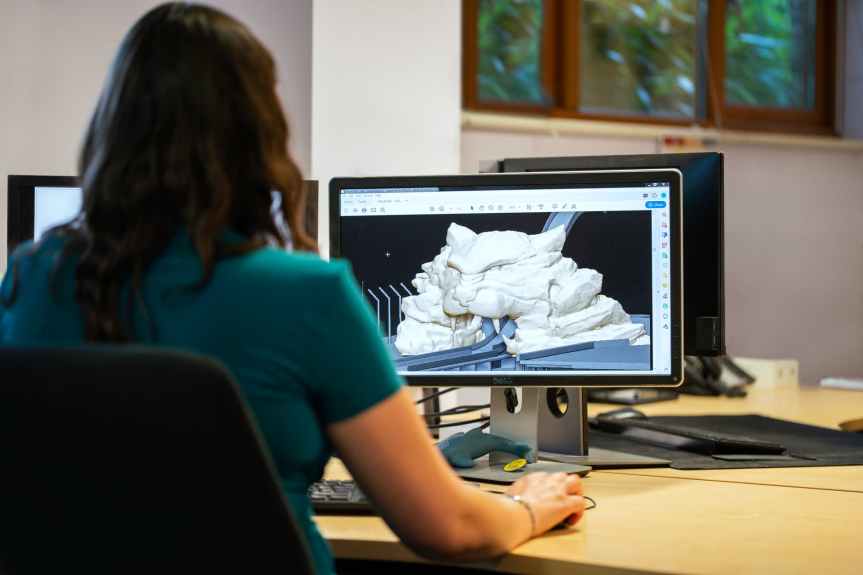
3D PRINTING
3D printing is the process of producing a 3D object by the successive addition of layers one above the other. It is also called additive manufacturing. To know more about 3D printing, check out my article on 3D printing. There are seven different types and technologies involved in 3D printing.
TYPES OF 3D PRINTING
- Sintering
Sintering is a technology where the material to be used for 3D printing is heated but not to the melting point. Metal powders are used for selective laser sintering whereas thermoplastic powders are used for direct laser metal sintering. Laser is used for fusing the layers of the final object. Each layer is formed and the laser traces the parts formed and fuses the next layer on the top until the complete object is made.
2. Melting Methods
The melting methods include
- Power bed fusion – Uses a thermal source such as laser to melt the materials. The layers are fused and consolidated to form the object. It combines sintering and melting processes.
- Electron beam melting – Uses a high-power electron beam that can generate heat to melt the material in the vacuum. It ensures no residue and a clean environment.
- Direct energy deposition – Uses electric arcs or beams to melt the substrate material. It is used to add parts to the existing object.
3. Binder Jetting
Binder jetting is a method where the powdered material is deposited on the bed and adhesive is added to bind the particles to form one layer of the object. Sand, metals, and ceramics are the most commonly used materials. The process is repeated until the complete object is formed.
4. Fused Deposition Modeling
In this, the thermoplastic filament is heated to its melting point and shaped layer-by-layer to form a solid object. It is a cost-effective method where the material softens and sets in the shape and then becomes ready to add the next layer. It is also called material extrusion.
5. Material Jetting
It is similar to inkjet printing where the liquid material is jetted from the nozzle and a layer of the object is formed. After the layer solidifies, the next layer is added on the top. The layers are cured using UV rays for a smooth finish. It is the most expensive method in 3D printing.
6. Sheet Lamination
This process is made by superimposing the layers one above the other and then joining them using ultrasound for metals or adhesive for cardboards and plastic. Once the layers are combined, it is cut and refined to get the desired shape. This method is not widely used as the other methods. Ultrasonic Additive Manufacturing (UAM) and Laminated Object Manufacturing (LOM) are the two sub-types in this method.
7. VAT polymerization
It uses the method of photopolymerization where liquids are turned into solids by exposing UV light to them. It is one of the most commonly used 3D printing methods that include
- Stereolithography – Stereolithography uses photopolymerization technique where a single point laser or UV beam is used to cure and solidify the object.
- Digital light processing – It also creates objects from liquids like resin where the image of each layer is flashed onto the surface.

 Eduindex