Users are getting advertisements based on their phone conversations

Today we are living in an era in which there is constant surveillance on us through various sources. Among these, there are satellites and various other electronic equipment that we use daily. Some of those apps collect our data in the background.

The Internet has oven us many things but along with that, there are also some scary consequences. Among those consequences, there is also a breach of our privacy. Especially, smart devices are the main culprits that help in such breaches of trust. We are using them daily. We are also giving consent to various apps to access our microphones as well as our contact list as a whole. This data is then sold to advertising companies, who then show advertisements relevant to us on our devices.

These findings have been proved recently by some recent research. During the research, the users were asked whether they see advertisements based on their conversations or not. In return, several users admitted to getting ads based on their conversations, during phone calls. Several users even admitted to getting emails with the relevant products of their choice. On the other hand, some users did not see any such advertisements. Then some users had no opinion on such matters and some did get such ads some and some very times.

https://unsplash.com/photos/XIVDN9cxOVc

The above problem now needs some strict rules or regulations. This can only happen when the government will pass the Personal Data Protection Bill 2019. Once this will gets passed then people will have control over their privacy. The bill will also ensure that the apps need to specify the data which they are accessing. There also needs to be some clarification about the collection of data and their transactions with third parties.

These changes will make sure that the companies whose apps we are using are alert to the way our data is being used by them. They will also need to be careful with the way they handle our data. Then our data will get some protection om the wrong hands. These changes will also bring about some much-needed changes in the data field. The companies will focus more on the protection of the privacy of data. The data will also need some serious protection from outer elements. It is because various attacks are happening nowadays which are affecting various big organizations. In recent times, AIIMS servers were also hacked and there is a demand for 200 crore rupees in cryptocurrencies from hackers to give back control of servers to the major medical organization.

The recent attacks on the data of such major organizations are also asking for some data-related laws in the country. The changes will pave way for the implementation of some better rules for future generations so that their privacy remains in their own hands. These data-related issues will also safeguard the future of the country. Nowadays, data is the real gold. Data now paves the way for development shortly as technology is getting more dependent on the data being collected from users like us.

Top 3 Hindu-Muslim Unity Advertisements

Advertisements have the potential to change human thoughts, behaviour and actions. They can do a lot more than just promoting brands. Through visual and auditory modes, advertisements have the competency to bring about a societal change and provoke a positive impact on people. Readers can have a glance at such impactful advertisements through the examples listed out in this blog.

Red Label (Tea Brand)

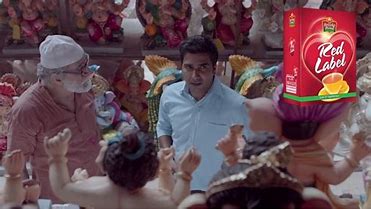
A man visits a store to place an order for a Ganesh idol (A Hindu God). The shopkeeper exhibits the different idols created by him to the man. While having a conversation with the buyer the shopkeeper also illustrates the meaning behind the different forms of the Ganesh idols. To the buyer, this shopkeeper seems to be a very knowledgeable man, who has much information about the Hindu worship and reverence. While conversing with the buyer, the shopkeeper puts on the Kufi (skullcap worn by Muslims). The Hindu buyer is taken aback after realising that the shopkeeper selling the Ganesh idols is a Muslim by religion. He attempts to cancel his order and go to his workplace. The Muslim shopkeeper offers him a cup of tea before leaving. The vendor explains him that , work is worship too, one need not compulsorily pray. The Muslim man was in fact worshipping God, by creating his idol. The buyer takes a sip of tea and plans to change his mind. He does not cancel his order and amiably buys the idol from that vendor on that day itself. The Brand, Red Label intends to portray that their product attempts to create harmonious relations between different religions.

Kaun Banega Crorepati (Reality Game Show)

Six years ago, KBC came up with a phenomenal ad campaign featuring communal unity. In the ad it has been shown that, a Hindu boy had been selected for the episode. His family members were all set to bid him a goodbye as he was about to step out of his home, while his Muslim neighbors were watching him from the floor above. Just as the Hindu boy was about to step out, his neighbor sneezes. Sneezing while someone is about to leave from the doorstep is considered as a bad omen in the Hindu community. The Hindu boy’s family members feel agitated at the neighbor for sneezing and they misinterpret that, he had done it deliberately. Hours later, while facing a difficult question on the show, the Hindu participant decides to use the option of ‘Phone A Friend’ (According to the game’s format, this option is availed to all participants only once, whenever they wish to make use of it). He then rings up the same Muslim family and asks them the question i.e ‘What is the meaning of As-Salaam-Alaikum ?’ The man is overwhelmed by such a trustworthy gesture by the young boy. He answers his question accurately and assists him in winning the prize amount. This advertisement touched the hearts of many Indians. It indeed reflected the idea of communal harmony.

Surf Excel (Cloth Detergent Brand)

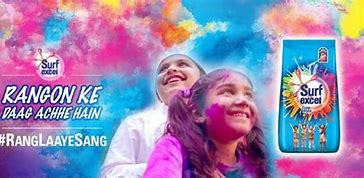
The advertisement broadcasted by this brand, intends to portray how Indian festivals are secular in nature. An individual from any community can enjoy a festivity according to his/her discretion. It is shown that, on the day of the Hindu festival of Holi (people celebrate this festival by applying colour on each other and splashing water with waterguns/waterballoons), a little boy wearing a white robe is hesitant to step out of his house. A girl of the same age as his, notices this and challenges her friends around, to smear all their colours on her. Her friends do accordingly, by throwing all the colour on her, from the floors above, as she waits down on her little bicycle. By doing so, she makes them use all their colour supplies on her and no colours are left out with them. Later, she offers to drop the boy to the place where he wants to go. It is then shown that, she drops him to the mosque, where he wanted to go to offer Namaaz (Islamic prayers). She also jests that, after he’s done with his prayers, the other kids will not leave him without including him in the merry festivities. He agrees to join them in the Holi celebrations after his prayers are done. The ad tagline said, “Rang Laaye Sang, Daag Acche Hai” (colours bind people together, such stains should be cherished). This advertisement depicts how mutual respect for each other’s religion can bring about unity. The principles of unity in diversity must be inculcated in children from their grassroot years, so that peace and harmony prevails in the society.

Advertisements can have a huge impact over the society, in terms of patriotism, unity, cohesiveness and peace-keeping. Various brands are positioning their ad campaigns around the pivot of National Unity in today’s times as the audience nowadays is readily accepting things which were not accepted earlier. Brands thus, not only create a name in the market with their products but also with their ad campaigns promoting social values and messages.