International collaboration for sustainable growth of fisheries, aquaculture

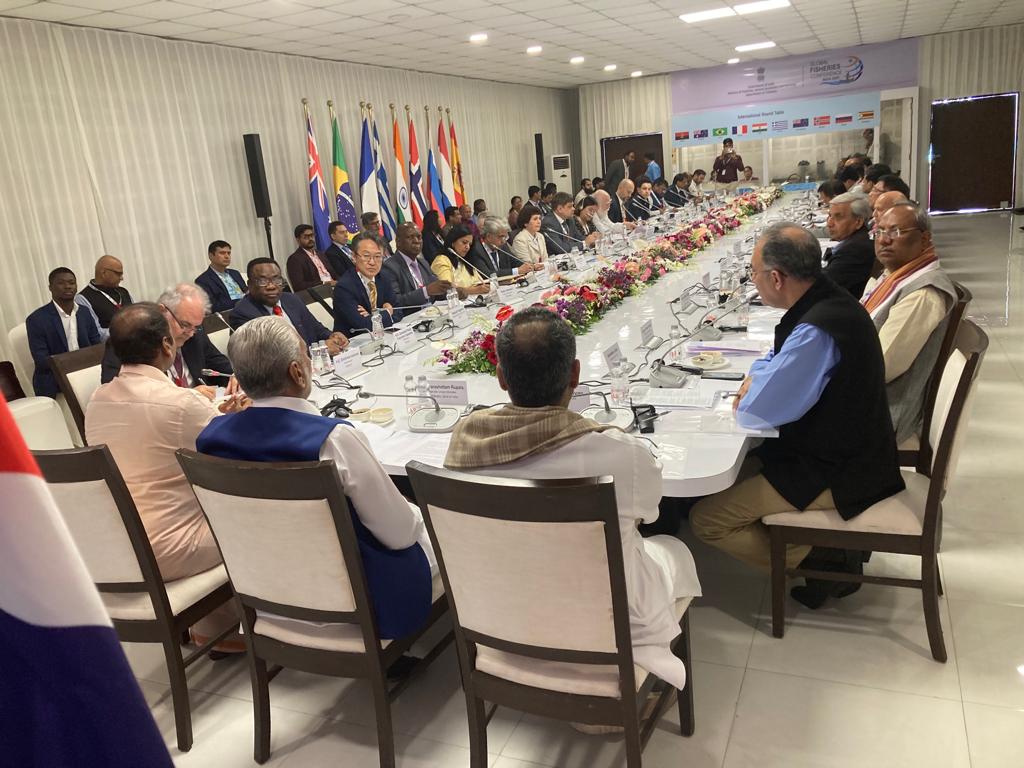
 An International Round Table Meet led by Union Fisheries Minister Shri Parshottam Rupala at the Global Fisheries Conference India 2023 has called for cooperation and collaboration between countries for a sustainable growth of the fisheries and aquaculture sector.
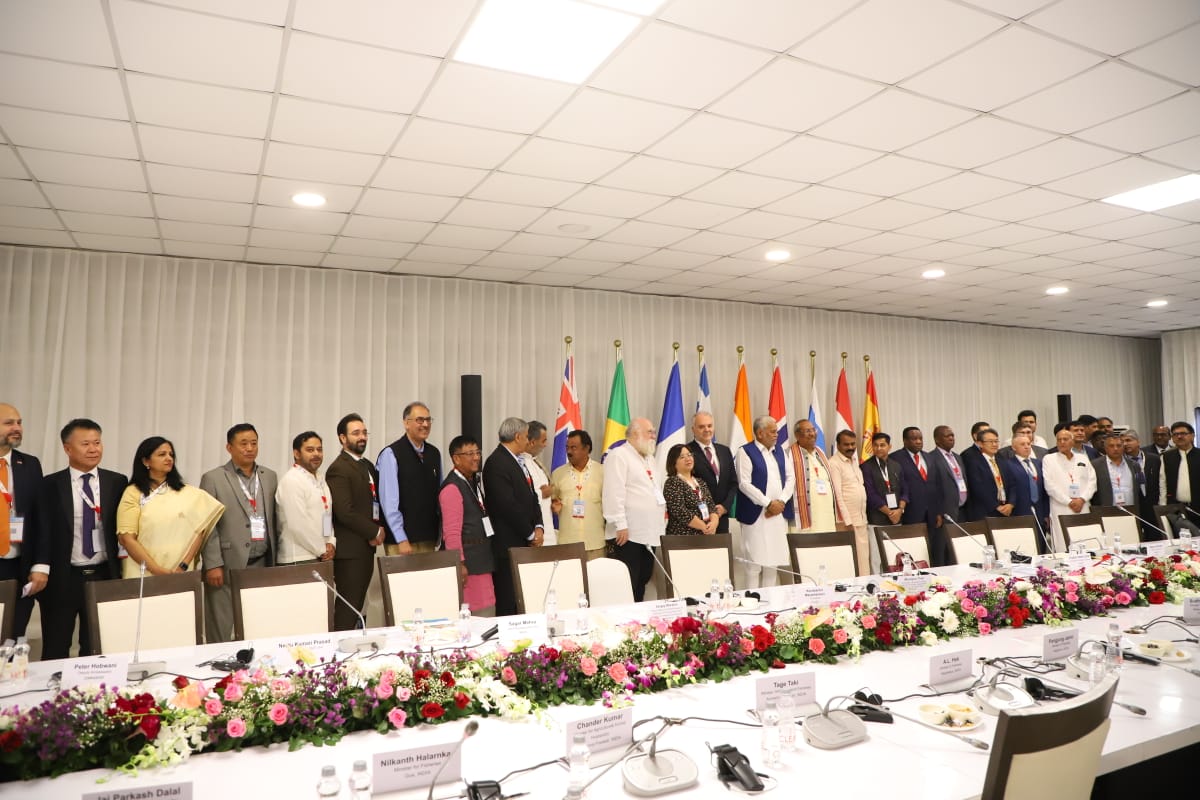
Partnering with other countries and organisations that have advanced technologies and expertise in fisheries and aquaculture to facilitate the transfer of technology and knowledge would greatly help to enhance the Indian fisheries sector, the meet suggested.

Speaking at the session, Union Minister Shri Parshottam Rupala said that the GPS system should be made user-friendly to the fishermen, utilising the global expertise and technologies. Cost-effective and reliable technologies are essential for marine navigation to be truly beneficial to fishermen venturing into the sea, the Minister said.
“Global exchange programmes in data collection and data sharing can play a major role to improve the fisheries sector, Shri Rupala said. By fostering collaboration and knowledge exchange, these programmes can facilitate the adoption of best practices, promote sustainable resource management, and develop effective mitigation strategies in response to climate change. This collective approach can play a pivotal role in safeguarding the livelihoods of traditional fishermen, who are particularly vulnerable to the escalating impacts of climate change.

Global data exchange programmes can significantly enhance the quality and availability of fisheries data, providing a comprehensive understanding of fish stocks, migration patterns, and ecosystem dynamics”, the Union Minister said.

In his address, Mr. DimitriousIoannou, Ambassador of Greece, underscored the critical need to harmonize fishing and aquaculture practices with environmental sustainability. He advocated for a multifaceted approach that encompasses both domestic and international strategies.
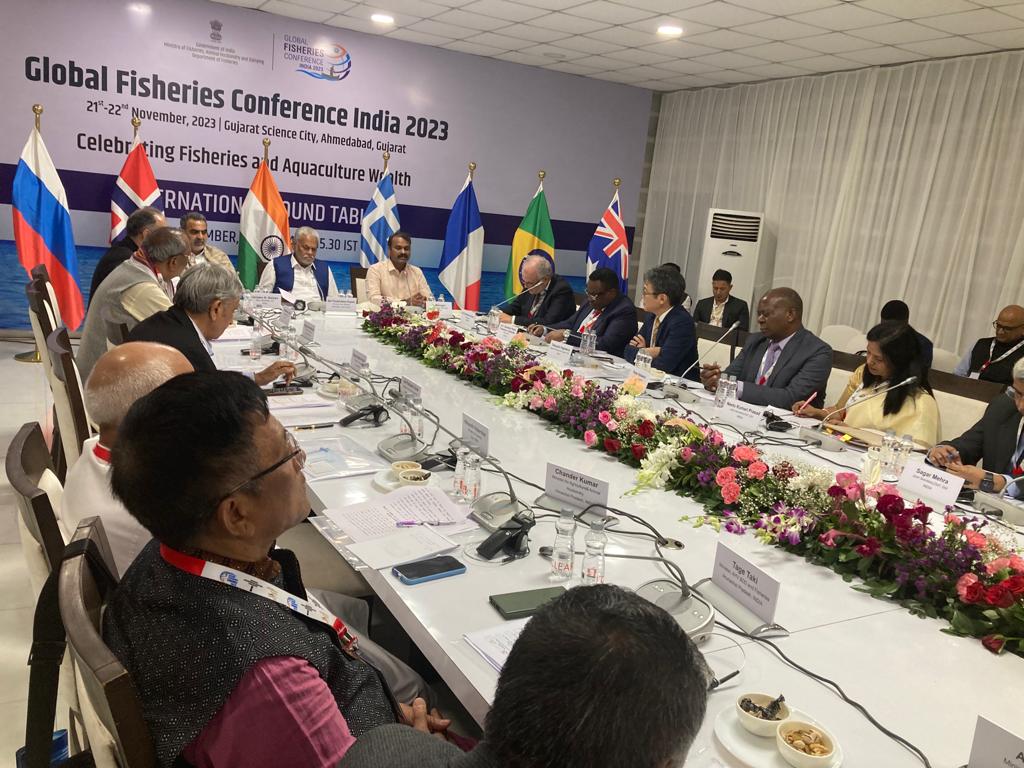
This high-level dialogue was attended by Ministers of State for Fisheries, Animal Husbandry and Dairying  Sanjeev Kumar Balyan and Dr L Murugan,  Union Fisheries Secretary, Dr Abhilaksh Likhi, Ambassadors  from Greece, Angola and diplomatic delegation from  Australia, Brazil, France, Norway, Russia, Zimbabwe and; State Fisheries Ministers of Uttar Pradesh, Haryana, Himachal Pradesh, Arunachal Pradesh, Meghalaya, Nagaland and Tripura; representatives of international organisations such as Food and Agriculture Organisation  (FAO) of the United Nations , Bay of Bengal Programme Inter-Governmental Organization (BOBP-IGO), GiZ; Asian Development Bank (ADB); senior officials of the Department of Fisheries, Govt of India; senior officers of State Fisheries Departments and Heads of various research and development agencies.  Dr Abhilaksh Likhi, Union Fisheries Secretary welcomed the gathering.

The forum underscored the need of exchange of adequate technology expertise to tap the unexplored deep-sea resources in India. The country has vast unexplored deep-sea resources and equipping the fishermen and the vessels with adequate technologies and training could utilise these untapped resources, it observed.

The speakers at the Round Table Meet identified four major areas which require international collaboration. They are enhancing fisheries production targeting food and nutritional security, strengthening of aquaculture to combat human hunger, sustainable utilisation of the resources in the fisheries sector, and development of deep-sea fishing.

Shri Sanjay Kumar Nishad, Minister of Animal Husbandry, Dairying and Fisheries of Uttar Pradesh emphasised the importance of collective efforts and advanced technologies to boost fish production and secure the livelihoods of fishermen and aqua farmers.

Highlighting the potential for growth in the fisheries sector, Shri Jai Prakash Dalal, Minister of Animal Husbandry, Dairying and Fisheries of Haryana announced plans for an Aqua Park, and he invited investors to participate in this development.

Shri Chander Kumar, Minister for Agriculture and Animal Husbandry of Himachal Pradesh, Shri A L Hek, Minister of Fisheries of Meghalaya, Shri Pangjung Jami, Minister of Fisheries of Nagaland, Shri Sudhangshu Das, Minister for Fisheries, Animal Resource Development of Tripura and Shri Nilkanth Halarnkar, Minister for Fisheries of Goa also spoke at the meet.

Foreign diplomatic delegations expressed their keen interest in fostering collaboration with India in several key areas, including research, data collection, resource monitoring and technology backstopping.

Discussions on expanding market access for Indian fishery products, collaborating with research institutions, universities and international organisations to conduct research on sustainable fishing practices, aquaculture technologies and resource management were also held during the session.

Mr. Clemente Pedro Francisco Camenha, Ambassador of Angola, Mr Peter Hobwani, Deputy Ambassador of Zimbabwe, Mr. Sergey Muratov, Head of National Research Institutions for Preservation and Safety of Fisheries Sources and Aquaculture, Russia, Mr. Monique Tran, Counsellor for Agricultural Affairs, France, Mr. Christian Valdes Carter, Commercial Counsellor, Embassy of Norway, Mr. Wagner Antunes, Head of the Trade Promotion Department, Embassy of Brazil and Dr Richard Niall, First Secretary (Agriculture), Australian High Commission spoke at the International Round Table Meet.

Joint Secretary, Department of Fisheries, GoI, Ms Neetu Kumari Prasad gave the summary of the discussion and the vote of thanks.

******
Newsletter (EIACP) with scientific papers on various topics like Green farming practices of Vermicompost, Aquaculture and Ornamental fishes

 On the fifth day of Mass awareness campaign several activities were organised  to increase understanding towards the need of living sustainably.World Environment Day (June 5) is an occasion which brings together millions of people across the country for awareness and action for the environment. Mass mobilisation across the country on LiFE are being organized in the run-up to the celebrations.

  1. National Museum of Natural History (NMNH)

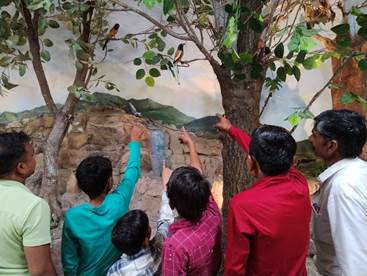
As part of mass mobilization of Mission LiFE NMNH in collaboration with NZP organized on the spot painting competition on good practice to mitigate Climate change and administered LiFE pledge for 241 participants.

A picture containing clothing, tree, outdoor, personDescription automatically generated

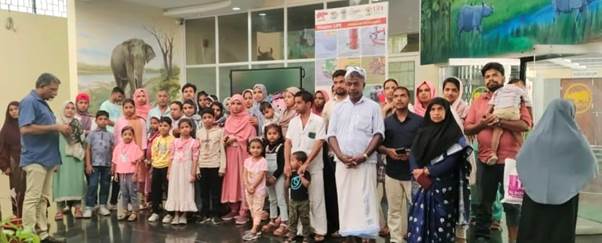
RMNH, Mysore conducted interactive talk on LiFE STYLE FOR ENVIRONMENT as part of Mass mobilization of MISSION LiFE for 119 students and General public and encouraged to adopt Eco friendly lifestyle.

A group of people standing togetherDescription automatically generated

RGRMNH, Sawai Madhopur organized Bird Identification Programme as part of Mass mobilization of Mission LiFe in which 287 Children and Visitors actively participated and learned to identify various Local & Migratory Birds through Gallery Visit.

RMNH, Bhopal organised Awareness Programme on Encouraging Millets to change the lifestyle by adopting LiFE actions under Meri LiFE: Lifestyle For Environment in which158 students and general public actively participated.

A group of people standing together holding signsDescription automatically generated with medium confidence

  1. Zoological Survey of India

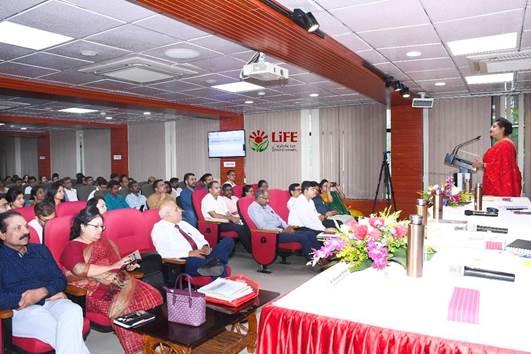
To promote objectives under Mission LiFE and for mass mobilisation, Dr. Dhriti Banerjee, Director, Zoological Survey of India released 4 volumes of Newsletter (EIACP) with scientific papers on various topics like Green farming practices of Vermicompost, Aquaculture and Ornamental fishes in tune with Mission Life objectives. Dr. K. Venkataraman, Former Director of ZSI and Prof Urmi Chatterjee of University of Calcutta were also present on the occasion. While presenting the Annual Progress Report of  ZSI for 2022-23 at  Headquarters,ZSI, Kolkata Dr Dhriti Banerjee, Director, ZSI  highlighted the objectives of LiFE and said that adopting  practices of farming like Vermicompost could bring about a positive  change in the environment.The program was attended by almost 120 scientists and researchers.

A group of people sitting in chairsDescription automatically generated with medium confidence

  1. National Centre for Sustainable Coastal Management (NCSCM)

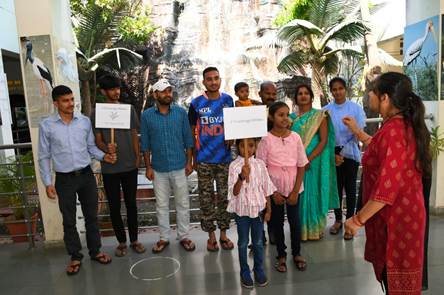
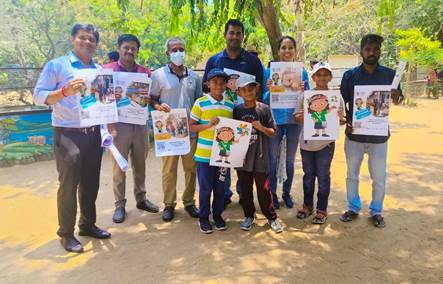
As part of the mass mobilisation of the Lifestyle for the Environment (LiFE) movement, NCSCM organised an awareness programme on the ban of single-use plastics, the use of ecoalternatives, responsible tourism, and coastal and marine conservation at the Madras Crocodile Bank Trust and Centre for Herpetology, located 40 km south of the city of Chennai. It is the largest breeding centre for crocodiles in the country. It has successfully bred 5000 crocodiles and alligators, including the three endangered Indian crocodile species (the mugger crocodile, saltwater crocodile, and gharial), along with several threatened species of turtles. The mission of the park is to promote the conservation of reptiles and amphibians and their habitats through education, scientific research, and captive breeding. As a part of this event, park visitors took part in a green pledge and signature campaign against littering and the need to live in harmony with nature. Placards, pamphlets, and LiFE mascots were displayed in the park as part of this event. NCSCM scientists explained the importance of Mission Life to over 150 visitors. In this campaign, the focus is on educating the public on responsible tourism, wildlife conservation, and the need for an eco-friendly lifestyle to live in harmony with nature.

A group of people holding up postersDescription automatically generated


  1. National Institute of Himalayan Environment

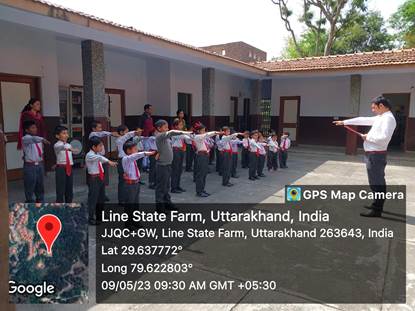
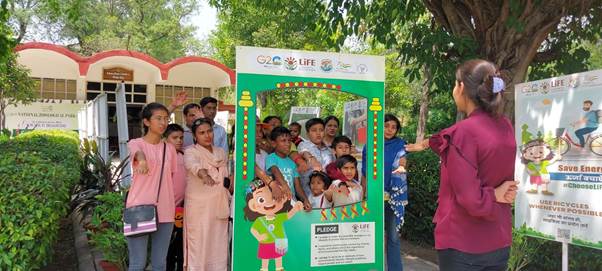
National Institute of Himalayan Environment (NIHE) conducted an awareness program under mission LiFE covering three themes viz. Save energy, Save water and Adopt a healthy lifestyle. In the program, nearly 40 children, students, teachers and researchers participated in the program. All the participants took the LiFE pledge for adopting environmentally friendly habits.  Children were mainly made aware through demonstrations to save water and energy in their homes. The school teachers were sensitized on adopting good practices for a healthy lifestyle.

A group of children standing in a lineDescription automatically generated with medium confidence

******

MJPS

webinar on 'Cage aquaculture in Reservoir

 Department of Fisheries, Ministry of Fisheries, Animal Husbandry and Dairying, Government of India organized a webinar on “Cage aquaculture in Reservoir: Sleeping Giants” today as a part of  “Azadi Ka Amrit Mohatsav”. The event was presided over by Shri Jatindra Nath Swain, Secretary, Department of Fisheries (DoF), Government of India (GOI) and well-attended by around 100 participants including officials of Department of Fisheries, GoI and fisheries officials of different States/UTs, faculties from State Agriculture, Veterinary and Fisheries universities, entrepreneurs, scientists, farmers, hatchery owners, students and stakeholders from aquaculture industry across the country.

 The Webinar began with the welcome address by Shri I. A. Siddiqui, Fisheries Development Commissioner, DoF along with introduction of the theme of the Webinar and the distinguished panellists, Shri Jatindra Nath Swain, Secretary, Shri Sagar Mehra, Joint Secretary (Inland Fisheries) along with Dr. B. K. Das, Director, ICAR- Central Inland Fisheries Research Institute (CIFRI) and other participants.

In his inaugural address, Union Secretary Fisheries, Shri Swain stated the importance of reservoirs and cage aquaculture for the development of fisheries sector.  Further, Mr. Swain advised to have robust cage culture system in reservoirs including potential markets to ensure good returns to the farmers and highlighted the examples of success stories across the globe and the country. Mr. Swain also requested the scientists and the Fisheries Departments of the States/ Uts to motivate fish farmers and develop innovative ways as well as policies for increasing profits, decreasing input cost, species diversification and increasing the production and productivity of cage culture systems in the reservoirs.

Shri Sagar Mehra, JS (Inland Fisheries), in his opening remarks, briefly stated the pivotal of reservoir fisheries and aquaculture in enhancing fish production using enclosures such as cages. Further, Shri Mehra added that cage systems efficiently utilise the water bodies by harnessing their natural productivity and are economically, socially and ecologically viable. Department of Fisheries, GOI earmarked the investment atrgets for promoting cage aquaculture under flagship scheme Pradhan Mantri Matsya Sampada Yojana (PMMSY).

During the technical session, Dr. B. K. Das, Director, ICAR- Central Inland Fisheries Research Institute (CIFRI) made a comprehensive presentation on “Cage aquaculture in Reservoir: Sleeping Giants” and briefed about various technologies, opportunities and activities developed by ICAR-CIFRI for diversification of cage aquaculture in various parts of the country along with various skill and capacity development programmes for the farmers and stakeholders. Dr. Das emphasised on the need for promotion of cage aquaculture in reservoirs of the country by following good management practices and providing support services and CIFRI is ready to associate in tandem with the States and Uts for knowledge support on technological back drop for various perspectives of enclosed pisciculture.

After the presentation, an open discussion session was held with the fish farmers, entrepreneurs, hatchery owners, students, scientists and faculty of the universities. After discussion, the webinar concluded with a vote of thanks proposed by Dr. S. K. Dwivedi, Assistant Commissioner, DoF.

*******