Chola Art and its Architecture

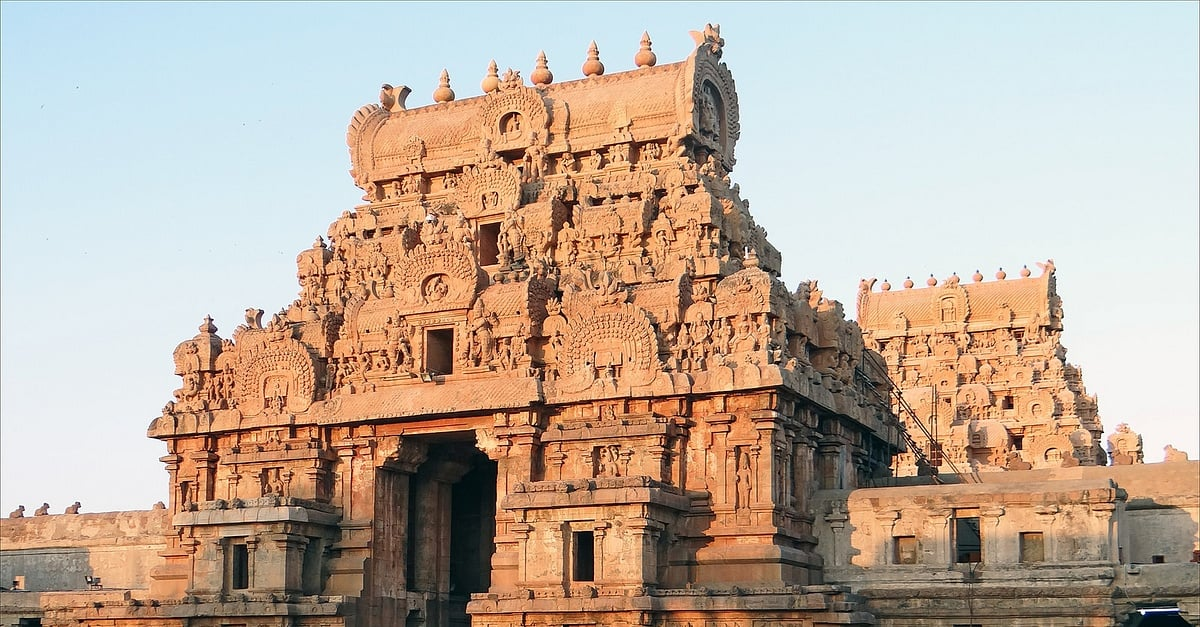
The Cholas were incredible builders. They continued and developed the art tradition of the Pallavas and Pandyas, whom they succeeded in building long-lasting stone temples and exquisite bronze sculptures. Under the Cholas, temple architecture, particularly the Dravida or south Indian style of temple building, reached its pinnacle of glory. During the Cholas’ nearly four-century rule, the entire Tamil country was studded with temples, and Chola art traditions were adopted and followed in Sri Lanka and other parts of South India.

Monumental Gateway, Brihadishvara Temple, Thanjavur
(CC by Jean-Pierre Dalbera)

Chola Architecture’s main characteristics included:

  • The gopuram or the gateway.
  • The garbhagriha or the main shrine.
  • The mandapa or the audience hall.
  • The vimanas or the towers above the main shrine.
  • The spacious courtyards.
The Chola temples were notable for their massive towers, known as vimanas. The vimana or tower in the Brihadeswara or Rajarajesvara temple, built by Rajaraja I and dedicated to Lord Shiva, is approximately 57 metres high and consists of thirteen successive storeys. It is crowned by a single block of granite that stands 7.5 metres tall and weighs approximately 80 tonnes. Similarly, Rajendra I built a magnificent temple in his new capital. Cholapuram, Gangaikonda. Other temples built during this time period include Rajaraja Chola II’s Airavateswara Temple at Darasuram near Thanjavur and Kulothunga Chola III’s Kampaharesvara Temple at Tribhuvanam near Kumbakonam.During this time, the Chola temples were the hub of social activity. The temple received numerous generous donations. These temples also created a lot of job opportunities by hiring people to help with the day-to-day operations of these places. The temple authorities also pursued many welfare activities, such as temples serving as schools.

Nataraja Temple

Source – freepik.com


The Cholas also promoted plastic art; the metal and stone images cast during the period are exquisitely executed and exude vigour, dignity, and grace. The famous Nataraja or Dancing Shiva image at Chidambaram’s great temple is a masterpiece of Chola sculpture. Many of these images were also cast in bronze. The Chola period’s “cultural epitome” has been described as this Nataraja.

The Cholas were also fans of painting. Of all the Chola paintings, the most important are those in the pradakshina passage of the Rajarajesvara Temple. Chola wall paintings, also known as frescoes, can be found on the walls of the Vijayalaya Cholesvara Temple. Large painted figures of Mahakala, Devi, and Shiva adorn it. Scenes depicting Lord Shiva in his abode of Kailash as Nataraja and tripurantaka are painted on the walls of the Rajarajesvara Temple in large and forceful compositions.

5 must-visit places in Bhubaneshwar


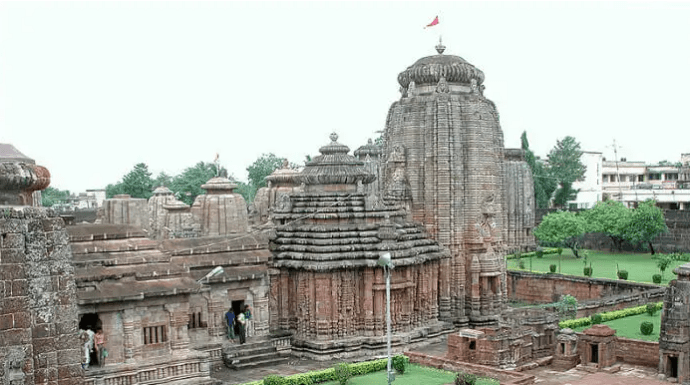
Lingaraja Temple

This image has an empty alt attribute; its file name is image-58.png

The 54m-high Lingaraj Mandir dedicated to Shiva dates from 1090 to 1104 – though some parts are more than 1400 years old–and is surrounded by several smaller temples and shrines. The granite block within, representing Tribhubaneswar (Lord of Three Worlds), is bathed daily with water, milk and bhang (marijuana). The main gate, guarded by two mustachioed yellow lions, is a spectacle in itself as lines of pilgrims approach with offerings in hand. The temple is closed to non-Hindus.

Given the high compound wall, foreigners can view the temple’s interiors only from a viewing platform (this may also include Hindu foreigners). Face the main entrance, walk right, then follow the wall around to the left and find the viewing platform on your left, just before you reach Chitrakarini Temple. There is occasional aggressive hassling for ‘donations’ at the viewing platform. The money will not go to the temple, so stand your ground and do not pay.

Location: Lingaraj Road, Old Town Bhubaneswar, Odisha
Timings: 5:00 AM to 9:00 PM
Entry Fees: No entry fee

Nandankanan Zoological Park

This image has an empty alt attribute; its file name is image-54.png

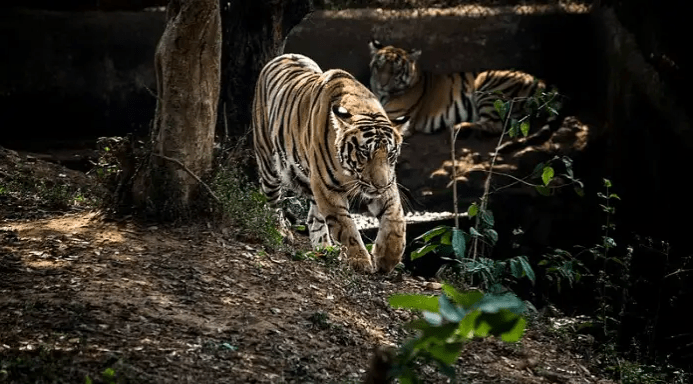
Spread over 400 hectares in the Chandaka forest lies the impressive Nandankanan Zoological Park. Located on the banks of Kanjia Lake, this zoo is home to over 67 kinds of mammals, 81 species of birds and 18 varieties of reptiles. It was the first zoo in India to join the World Association of Zoos and Aquariums (WAZA) and also houses a botanical garden. Visitors can see black panthers, white tigers, gharial crocodiles and many other animals, birds and reptiles in an attempt to maintain the natural balance of nature against the growing urbanisation of Bhubaneswar.

Price: Budget

Opening hours: 7.30am-5.30pm (April–September), 8am-5pm (October–March); Closed Monday.

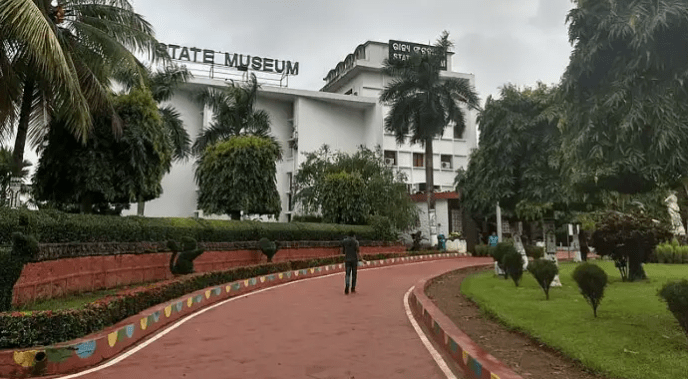
Odisha State Museum

This image has an empty alt attribute; its file name is image-55.png

Wondering what to do in Bhubaneswar? Visit Odisha State Museum, which houses a treasure trove of artifacts emphasizing the magnificent history of the state and the families which ruled it for centuries. The museum, established in the year 1948, houses the best collection of erratic palm-leaf manuscripts, scroll paintings, folk musical instruments, and Bronze Age tools.

Location: Near Lewis Road, Kalpana Square, BJB Nagar Bhubaneswar, Odisha
Timings: 10 AM to 5.00 PM
Entry Fees: INR 10 for Indians and INR 50 for foreigners

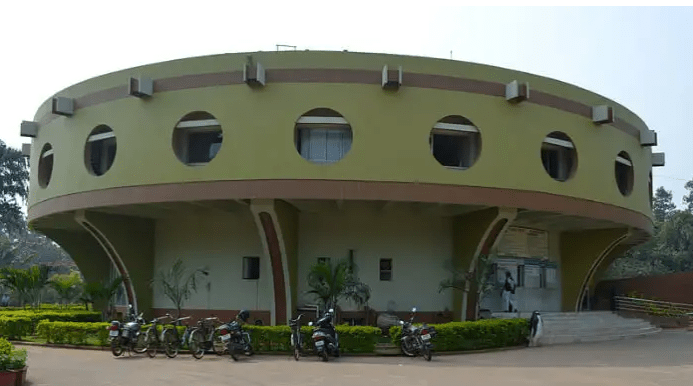
Pathani Samanta Planetarium 

This image has an empty alt attribute; its file name is image-56.png

The Pathani Samanta Planetarium was recognized to create awareness of astrophysics, astronomy, and space science. Multiple shows, workshops, regular conferences about outer space are organized here. There is an extensive library with an impressive number of books from the field of astronomy, science and technology are there.

Location: Sachivalaya Marg Acharya Vihar, Bhubaneswar, Odisha
Timings: 1.00 PM to 5:45 PM
Entry Fees: INR 30

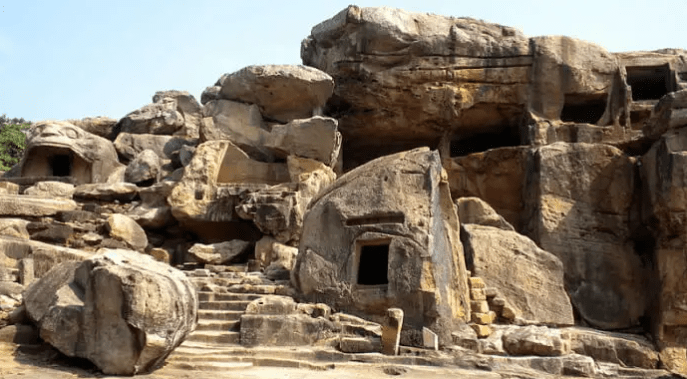
Udayagiri & Khandagiri Caves

This image has an empty alt attribute; its file name is image-57.png

Udayagiri and Khandagiri caves are located six kilometres to the west of Bhubaneswar. These caves offer a brief look into the history of Jain religion and Kalinga Empire. The names of these caves were derived from the hills on which they are located. The caves have been numbered according to the Archaeological Survey of India, Hatigumpha, and Ganesha Gumpha are the most popular in the area. Cave 1 is decked out by sculptural wall painting with carved figures of athletes, women, elephants, and geese carrying flowers.

Location: Khandagiri, Bhubaneswar, Odisha
Timings: 9.00 AM to 6.00 PM
Entry Fees: INR 15 for Indians and INR 200 for foreigners

7 intriguing facts of Jagannath Puri

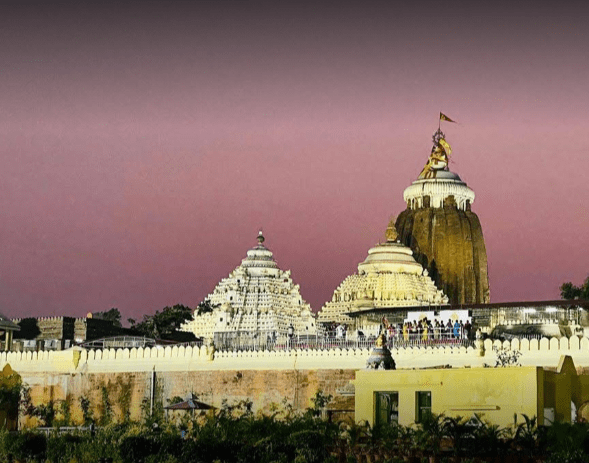
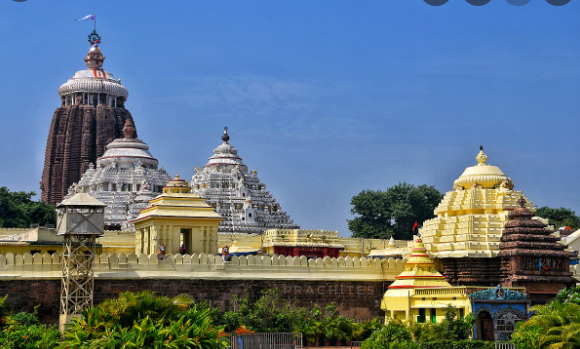
 Shri Jagannath’s Temple in Puri has uttermost importance for the Hindu devotees as it is one of the Char-Dham pilgrimages i.e. Puri, Dwaraka, Badrinath, and Rameshwar. This temple is famous for its annual Rath Yatra, but that’s not the sole reason people worship Lord Jagannath and Devi Subhadra and elder brother Lord Balabhadra.

Jagannath Puri is also famous for the mysteries and undefinable facts that catch the traveler’s eye worldwide. Devotees believe that all these are blessings of Lord Jagannath, and people who consider these as myths should visit the place themselves and find themselves dumbfounded. So, here are some most intriguing facts about Jagannath Puri.

1. No birds, no planes fly above the Lord

They say no one’s above God, so nothing flies above it. It’ll leave you surprised to encounter such a divine miracle that no birds, no planes fly above the temple. This is a rare contrast compared to other temples, as we have always seen birds resting on the top of temples are other entities. The temple is considered as a no-fly zone, not by any state government orders but by the Lord himself. And this phenomenon apparently has no scientific explanation.

2. Flag defying the power of wind

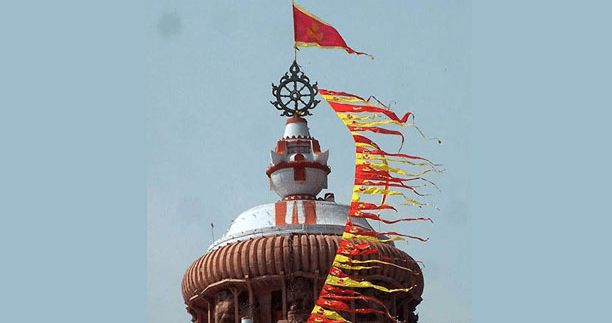
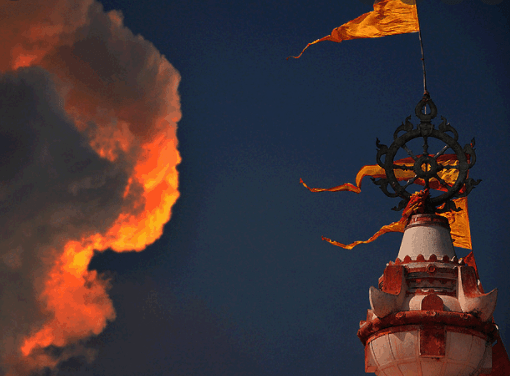
All of us know that any cloth flows towards wind direction, be it the sails of ship or the kites we flew in our childhoods. But here, the flag that flies atop of the Jagannath temple is an exception to this common principle. No scientific explanations reason the flag flow in the opposite direction of wind.

3. Mute oceans

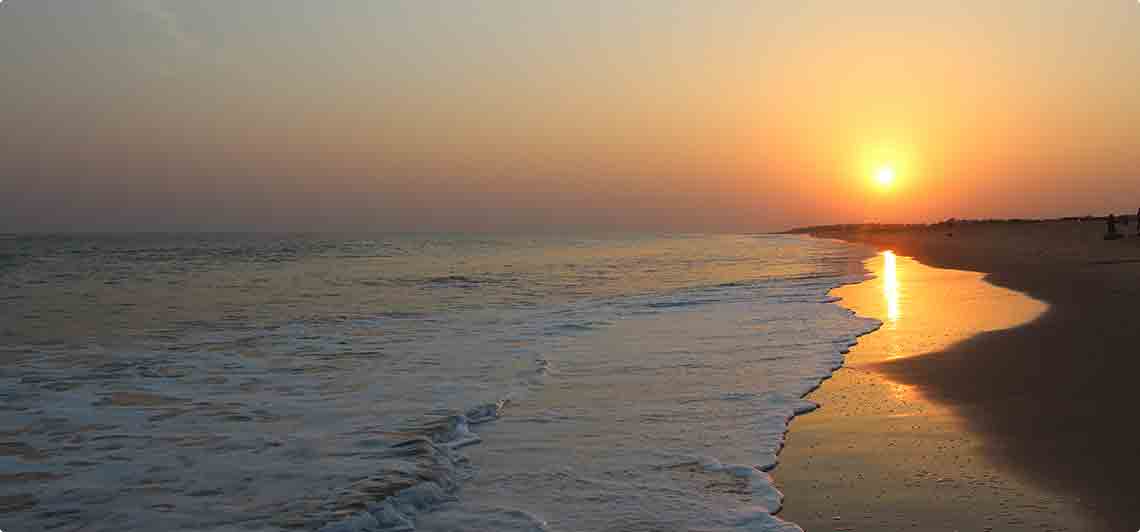
Odisha Tourism : Puri Beach
As soon as you step inside the main door, i.e. Singha Dwara entrance of the temple, you can’t hear the burble of water. And this phenomenon is more prominent in the evenings. But once you step out the audibility of water returns. It’s said that Devi Subhadra wished for serenity inside the temple walls and by this her wish was duly fulfilled.

4. Neela Chakra at the pinnacle

The riddle of Neela Chakra (Blue wheel) has still been unsolved. First, just think about the fact, how did the wheel made of 8 different alloys and a 36 feet circumference get up there at the pinnacle with just a human force of that century. Second, the view of this wheel doesn’t really depend on the direction that we look at it from. It’s like it was designed to look the same from all directions.

5. The temple casts no shadows

Every small object/thing/ peoples have shadows. But ever wondered what if something doesn’t have a shadow? The temple Jagannath Puri doesn’t cast any shadow on any part of the day under sunlight. If this is not a miracle, what would it be; just an unexplained phenomenon with no scientific reason to back up.

6. The magical techniques to cook

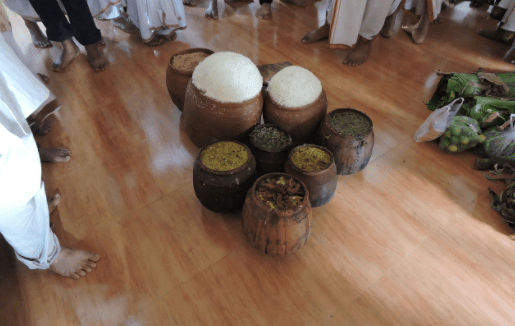
The traditional methods for cooking the mahaprasadam have been preserved here from the start. They place exactly 7 pots, one above the other on the firewood. Enchantingly, the upper pot gets cooked first, followed by the rest in order.

7. Mahaprasad never goes vain here

In India, wasting food is considered as a bad sign; the temple crew lives by this same. So, here at Jagannath temple the food is never futile, even if the crowd of devotees may vary from 2,000 to 2,00,000. Miraculously, the Parsadam prepared every day is never wasted, not even a bite. Could this be an effective management or the Lord’s will?

After reading such celestial facts, you might want to see them yourself. So, do not forget to check these facts on your next trip to Odisha and share your experience with me.

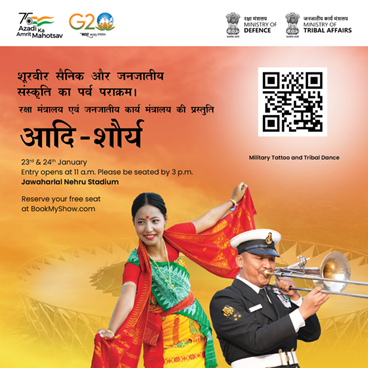
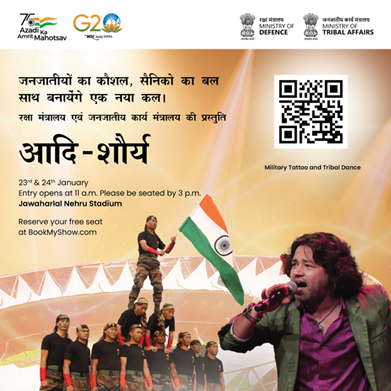
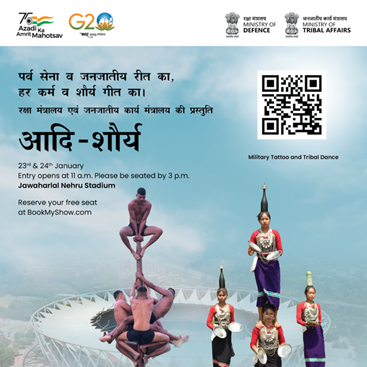
Military Tattoo & Tribal Dance Festival to be held in New Delhi on 23rd & 24th January

 As part of the Republic Day Celebrations 2023 and to mark the 126th birth anniversary of Netaji Subhas Chandra Bose (celebrated as Parakram Diwas), a Military Tattoo & Tribal Dance Festival ‘Aadi Shaurya – Parv Parakram Ka’ will be held at Jawaharlal Nehru stadium, New Delhi on January 23 & 24, 2023. The two-day festival will showcase the prowess of the Armed Forces and the ethnic beauty of India’s tribal culture. Free tickets are available through www.bookmyshow.com.

The programme comprises a Military Tattoo (Paramotor Gliding, Hot Air Balloon, Horse Show, Motor Cycle Display, Air Warrior Drill, Navy Band) and an hour of traditional dance performances (Khukhri Dance, Gatka, Mallakhamb, Kalaripaytu, Thangta) by tribal artists from across the country. The grand finale includes a performance by famous singer Shri Kailash Kher.

The aim of the festival is to remember the sacrifices of the country’s bravehearts and celebrate the rich cultural heritage which makes India so unique and diverse. The objective is to celebrate together the bravery of Netaji Subhas Chandra Bose; embrace the true spirit of India and renew the commitment to building a strong and prosperous ‘New India’. Ministry of Defence and Ministry of Tribal Affairs are jointly organising the event, with Indian Coast Guard being the coordinating agency.

****


‘Dhara’ on Sangeet and Natya Parampara

 Highlights:

  • The aim of the event  was to create a Vision Document 2047 to revitalise and popularise our performing art traditions and effectively address the challenges that this ecosystem faces.

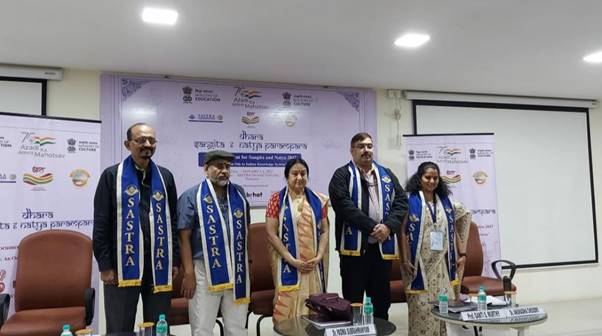
 Ministry of Culture and Ministry of Education organized the Dhara on Sangeet  and Natya Parampara  on 5th-6th January, 2023 at SASTRA (Deemed-to-be University) in Thanjavur, Tamil Nadu in collaboration with Brhat, Prachyam and Sangam Talks.

Dhara is   a series of conferences  under the aegis of Azadi Ka Amrit Mahotsav to create awareness, preserve and promote multiple domains of Indian Knowledge Systems.

The aim of the event  was to create a Vision Document 2047 to revitalise and popularise our performing art traditions and effectively address the challenges that this ecosystem faces.

This Dhara event was inaugurated in the presence of dignitaries such as Chief Guest Dr Padma Subrahmanyam (President, Nrithyodaya), Prof Ganti S Murthy (National Co-ordinator, IKS Division), Dr R.Chandramouli (Registrar, SASTRA University), Shri Srinivasan Iyer from the Ministry of Culture and Vote of Thanks by Prof. Anuradha Choudry (Outreach Co-ordinator, IKS Division).

The keynote address was delivered by Dr Padma Subrahmanyam who succinctly laid out the glory of India’s rich intangible heritage, the concerns we face and the roadmap ahead for our performing arts. She emphasised that Indian arts are a path to realising the divine immanent in us. She spoke of how the youth of the nation need to develop pride in a culture that has remained unbroken and blossomed into artists who revere our art forms.

The consecutive panel discussions over the next two days saw eminent practitioners, researchers, innovators and educators from across the nation represent Carnatic, Hindustani and Loka (vocal and instrumental) Paramparas in sangeet and Nritya.

The participants and students also witnessed mesmerising performances such as the Jugalbandi led by Shri Kannan Balakrishnan and team, Sunaad led by Smt Tara Kini and team representing sangeet Parampara, a Manipuri dance presentation by Shri Thokchom Tolen Meitei representing Natya parampara and a musical performance in Loka Parampara led by Dr Revati Sakalkar.

Towards the end the students and speakers of the conference had multiple action points to work out for the upcoming years and become heralders of a bright future for India’s age-old performing arts. These will be presented as a formal White Paper titled: Dhara – Vision 2047 for sangeet and Natya Parampara”.


****

An exhibition of paintings wholly inspired by Prime Minister Shri Narendra Modi

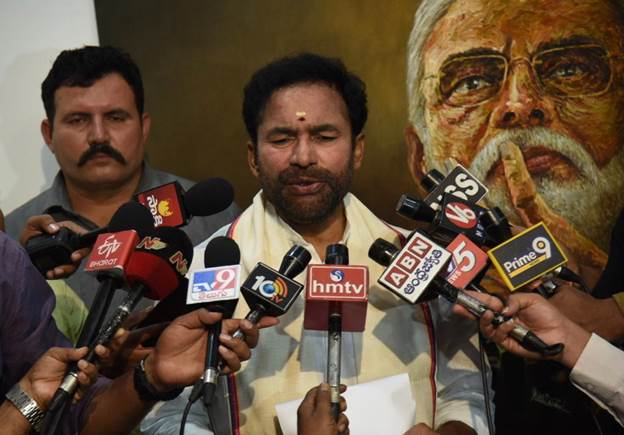
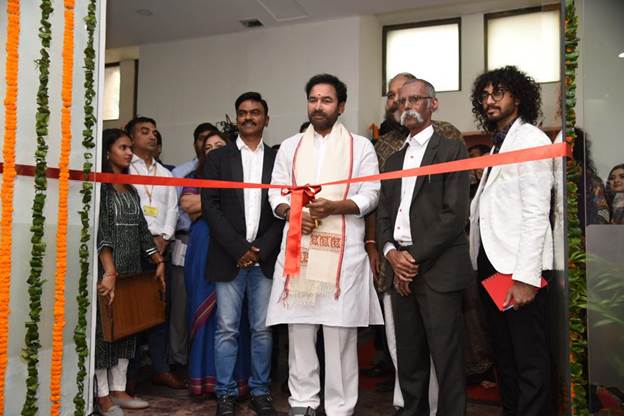
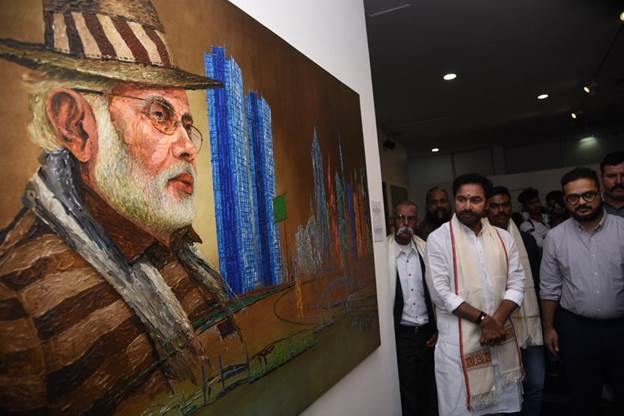
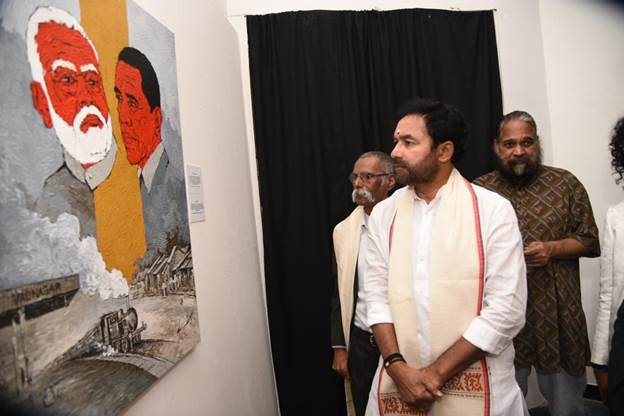
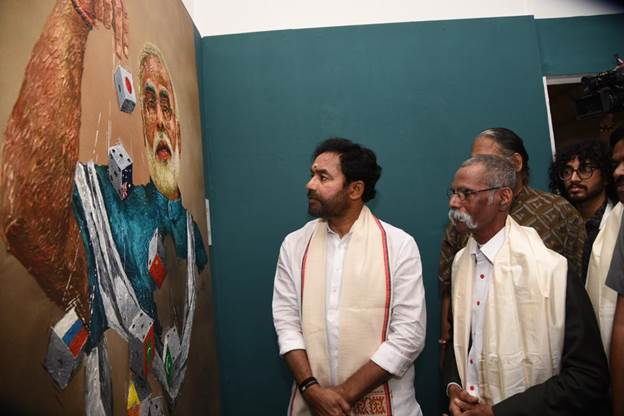
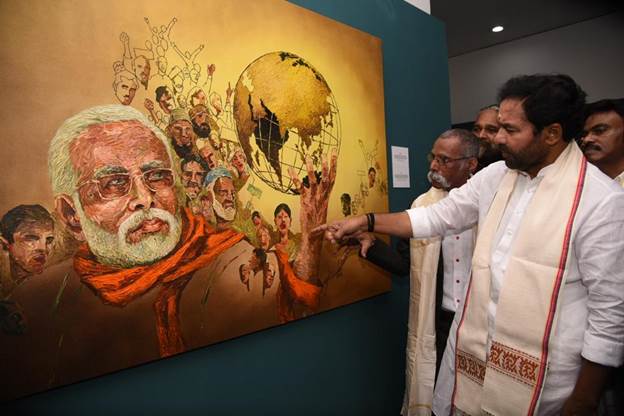
 Shri G Kishan Reddy, Union Minister for Culture, Tourism and Development of North-eastern Region, inaugurated an exhibition of paintings by eminent artist, Akbar Saheb today at National Gallery of Modern Art, New Delhi.  The art of Akbar Saheb is unique as all fifty-five artworks are wholly inspired by the Prime Minister Shri Narendra Modi and his incredible journey and vision. The exhibition, curated by the well-known Rajeev Menon is open to the public from 28th October to 3rd November 2022.

On the occasion, the Union Minister said that Akbar Saheb has shown the journey of Prime Minister Shri Narendra Modi including from Gujarat to becoming the world leader. He added that the paintings show major policy decisions such as GST and depict demonetisation and surgical strike in a clear manner. Shri G.K also said the paintings show the challenges faced by Shri Narendra Modi and his achievements as Prime Minister. The paintings are also important as they show the impact of Shri Narendra Modi  around the world.


The themes presented promise to resonate with every Indian across the country. Each work is deeply rooted in the initiatives taken by the Union government and is directly linked to the aspirations of the common man and the progress of the nation. With his exceptional paintings, Akbar Saheb’s sole intention is to simply encourage and inspire Indians to follow their dream. Of particular interest is the painting titled ‘Dare to Dream’ which documents the courageous journey of a young boy, selling tea in a small town in Gujarat to realise his destiny as Prime Minister of the world’s largest democracy.

The paintings also highlight Prime Minister Shri Narendra Modi’s success stories as well as the many challenges faced with various projects such as Vibrant Gujarat, Shining Bright (based on Asia’s largest solar park in Gujarat), Statue of Unity, Truth Prevails, Sadhbhavana Yatra and so on. Some paintings of note are ‘Lasting Impact’ which depicts his formidable power of resilience and endurance. ‘Bharat Mata’ is another evocative work where the Hon’ble Prime Minister’s mother is personified as Bharat Mata.

Interestingly more than forty artworks are fine expressions based on the popular series of talks, Mann ki Baat. Works like Sankalp Se Siddhi, Say NO to Black Money, Beware of Drugs, Save our Farmers, Water is a Blessing and Helping Hands are masterful compositions that are not only aesthetically pleasing but also send out a powerful message of humanity and compassion. A painting titled ‘Two Great Leaders’ illustrates some special moments shared with President Barack Obama of the United States. There are also the artist’s masterstrokes on the challenges of demonetization, Indus water treaty and the heroic sacrifices of the Indian army.

Akbar Saheb’s paintings present a narrative of mass mobilization and the positive impact of programmes like Swachh Bharat, Digital India, Mudra Yojana, Yoga as part of Life, electrification of villages and LPG connections for the poor. They also illustrate the revitalisation of the economy with the ambitious Make in India project and the growth of tourism as a showcase for the cultural heritage of the country.

***

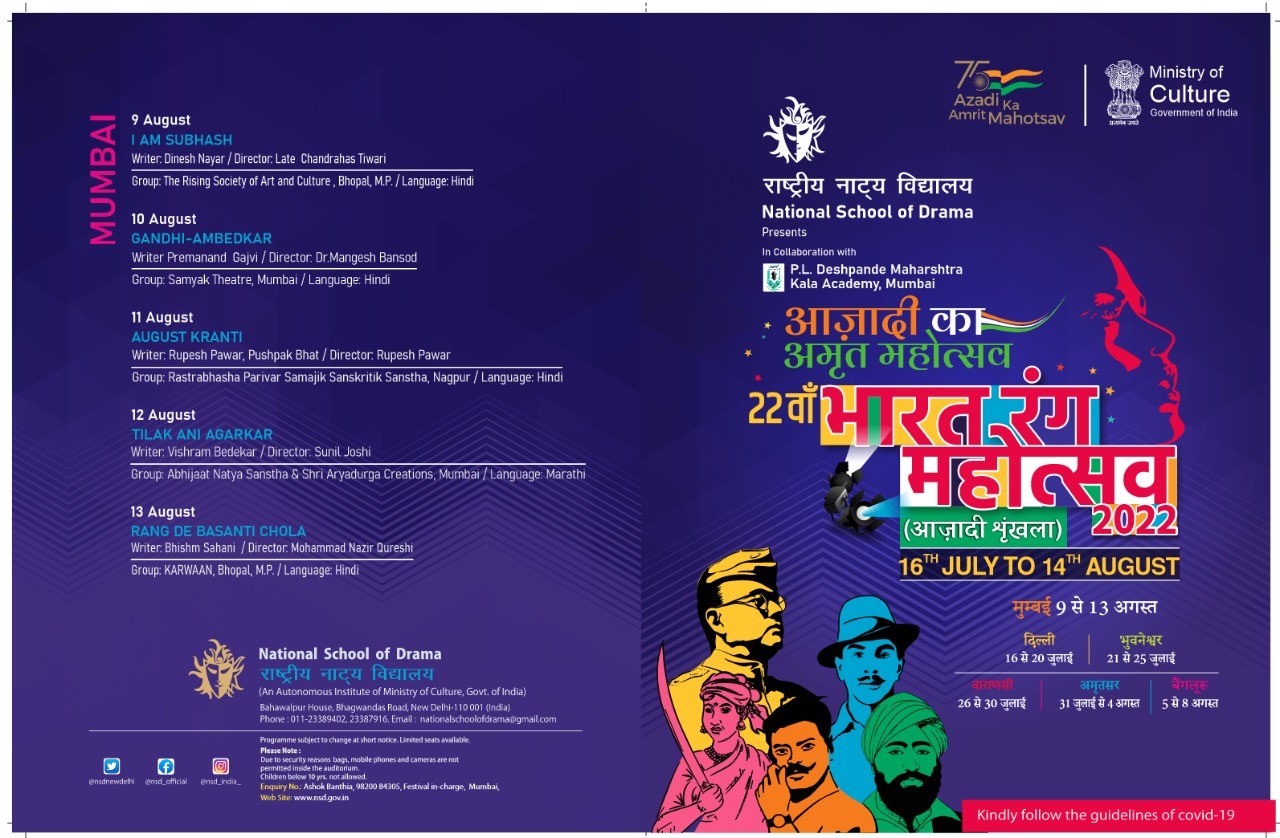
22nd ‘Bharat Rang Mahotsav’ at Rabindra Natya Mandir in Mumbai

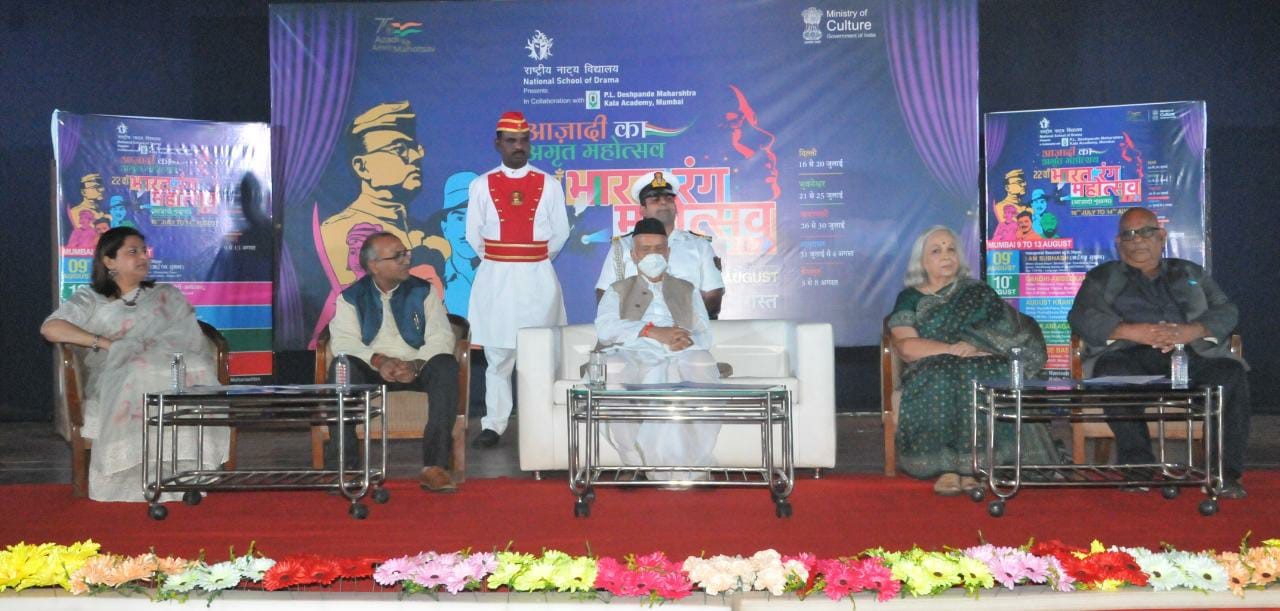
 Maharashtra Governor Shri Bhagat Singh Koshyari inaugurated the 22nd ‘Bharat Rang Mahotsav’ at Rabindra Natya Mandir in Mumbai today. The five-day drama festival (being held from August 9 to August 13, 2022) is being jointly organised by the Union Ministry of Culture and P.L. Deshpande Maharashtra Kala Akademi in the city to pay tribute to our freedom fighters. Veteran actress Rohini Hattangadi, Producer Director Satish Kaushik and Vani Tripathi Tikku also graced the inauguration ceremony in Mumbai today.  The Director of National School of Drama (NSD), Professor Ramesh Chandra Goud presided over the programme. 

Speaking on the occasion, Maharashtra Governor said that theatre is an important medium to spread joy, promote awareness and protect our rich heritage and culture.  Theatre has also an important role in showing us how we should be as a nation and society, he added. When the stories of great people such as freedom fighters are told through the plays of National Theatre Festival, it will provide inspiration for citizens to imbibe their qualities and make similar contribution, said the Governor. Speaking about the great role played by the NSD in shaping good actors, he expressed hope that more talented actors will come up from NSD. The Governor said that more theatre artists should come up and contribute positively to the society. Recalling that today is the 80th anniversary of the launch of Quit India Movement from Mumbai, the Governor wished all success for the Bharat Rang Mahotsav which showcases the contribution of Indian freedom fighters.

Actor Vani Tripathi said, “It is commendable that NSD has identified plays showcasing the stories of our freedom fighters from across the country. We all need to work together to make our youth too aware about the festival and the stories being portrayed in the plays of the festival”. Actor Rohini Hattangadi said, “This drama festival organized by the National School of Drama on the occasion of Amrit Mahotsav is a commendable initiative and it is an inspiration to the younger generation”.

NSD Director Professor Ramesh Chandra Goud stated that NSD has taken this initiative to remember the brave freedom fighters through various programmes on the occasion of Azadi Ka Amrit Mahotsav. Besides, a play called ‘Kargil Ek Shauryakatha’ was staged on Kargil Vijay Diwas a few days back, he added.

The festival is open for public. The festival will showcase plays of renowned theatre directors based on life and sacrifices of our freedom fighters. Hindi Drama ‘I am Subhash’ by Bhopal based theatre group ‘The Rising Society of Art and Culture’ and directed by Chandrahas Tiwari will be played on the first day of the festival. On August 10, Hindi play ‘Gandhi-Ambedkar’ by Mumbai-based Samyak Theatre and directed by Dr. Mangesh Bansod will be performed. Rupesh Pawar’s Hindi play “August Kranti” will be staged by Nagpur-based group ‘Rashtrabhasha Parivar Samajik Sanskritik Sanstha’  on August 11 and Marathi play “Tilak and Agarkar” directed by Sunil Joshi will be presented by Mumbai-based Abhijat Natya Sanstha and Shri Aryadurga Creations on August 12. The festival will conclude on August 13 with the Bhopal-based KARWAAN theatre group’s Hindi play ‘Rang De Basanti Chola’ which is directed by Mohammad Nazir Qureshi.

Over the five day festival in Mumbai, noted theatre personalities from Maharashtra will be felicitated from the stage of Bharat Rang Manch. This list includes Sohani Kumar, Anand Panchal, Ullas Surve, Chandrashekhar vaman kirdavkar, Pange Rohidas, Sharad Sawant, Lau Raul, Nayana Apte, Balu Mama Ghodke, Sushma Deshpande and Abhiram Bhadakmakar.

As part of the 22nd Bharat Rang Mahotsav, 2022 (Azadi Segment), 30 plays are being showcased in Delhi, Bhubaneshwar, Varanasi, Amritsar, Bengaluru and Mumbai from 16th July to 14th August, 2022. Bharat Rang Mahotsav (BRM) (भारत रंग महोत्सव) or the National Theatre Festival, started in 1999, is the annual theatre festival organized by National School of Drama (NSD), New Delhi. Bharat Rang Manch was started to stimulate the growth and development of theatre across the country. Originally a national festival showcasing the work of the most creative theatre workers in India, it has evolved to international scope, hosting theatre companies from around the world, and is now the largest theatre festival of Asia. The National School of Drama is India’s premier theatre training institute funded by Govt. Of India.

*** 

Nangiar Koothu: Exclusive Domain of Female Artists in Kerala

Kerala is home to several fascinating traditions and art forms. There is the graceful Mohiniyattam, the enigmatic Kathakali and the amusing Ottan Thullal. As we celebrate International Women’s Day this year, let us look at one such dance form that is interestingly, only performed by women.

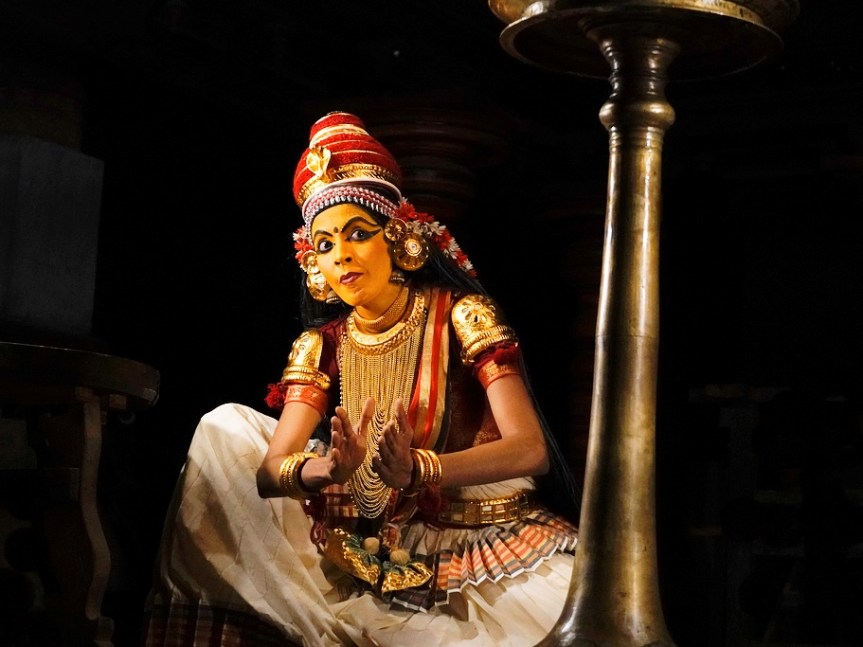
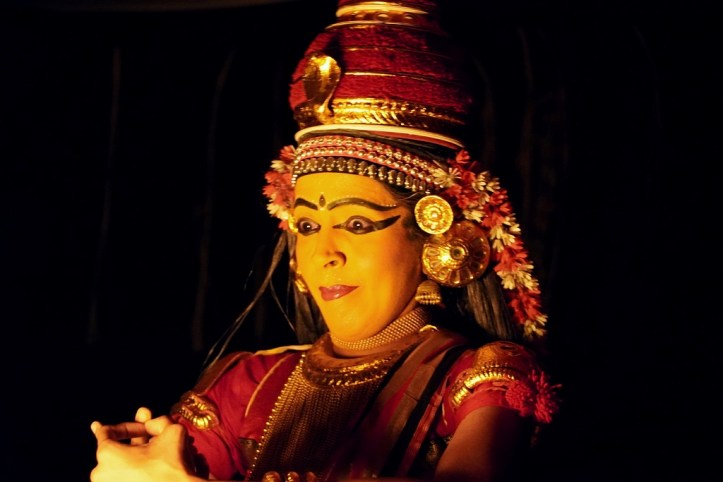
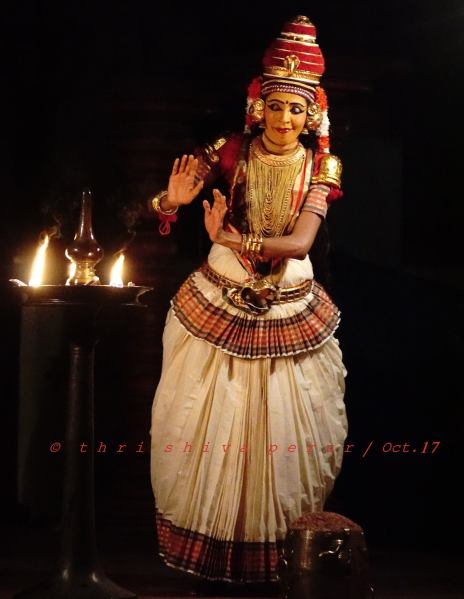
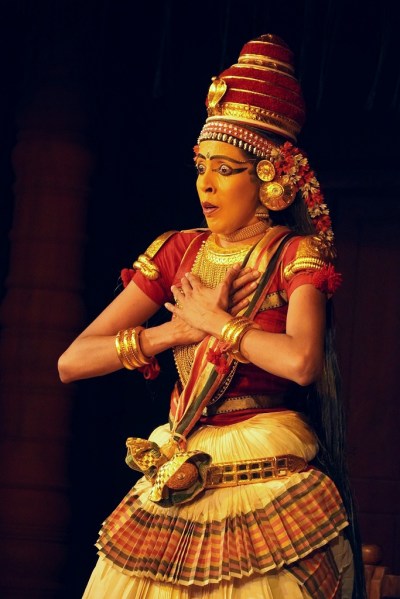
Nangiar Koothu is an art form that evolved from Koodiyattam, an ancient Sanskrit drama tradition. Koodiyattam is performed by Chakyars (a Hindu ‘ambalavasi’ or ‘temple-dwelling’ community) and Nangiars (women of the Hindu “Nambiar” community) together on stage. The Nangiars or ‘Nangiarammas’ as they are called, performed Nangiar Koothu as solo performances purely as a ceremonial ritual in a few temples in Kerala. These performances are staged in a special theatre that forms a part of temples in Kerala called “Koothambalams”. During the 1990s, Nangiar Koothu also experienced a cultural revival much like many other classical art forms in Kerala. The dance form which was until then performed only by a few Nambiar women in some temples across Kerala gained traction after an old acting manual of Sri Krishna Charitam called “Attaprakaram” was discovered in 1982 by Nirmala Paniker and G. Venu. This manuscript which contained 208 slokas dealt with women’s roles in Koodiyattam. Ammanur Madhava Chakyar, a Koodiyattam exponent re-worked the manuscript and made it more popular. It was after this that Kerala Kalamandalam and other training institutions began to witness an increasing number of girl students in the Koodiyattam genre and its offshoots like Nangiar Koothu. This dance form is nowadays no longer restricted to just the Nambiar community. In 1971, Kalamandalam Girija was the first woman from outside the community to learn and perform Nangiar Koothu. Kalamandalam Shylaja, Margi Sathi and Usha Nangiar are other exponents in this field.

source: nangiarkoothu.com

Nangiar Koothu presents stories from Sri Krishna Charitam, which depicts the life of Sri Krishna. The dancer is accompanied by the vocal artist and percussion instruments such as the Mizhavu (pot drum), Idakka and Thimila. Traditionally, this dance goes on for 12 consecutive days. It has its foundations based on the ancient treatise Natya Shastra by Bharatamuni.

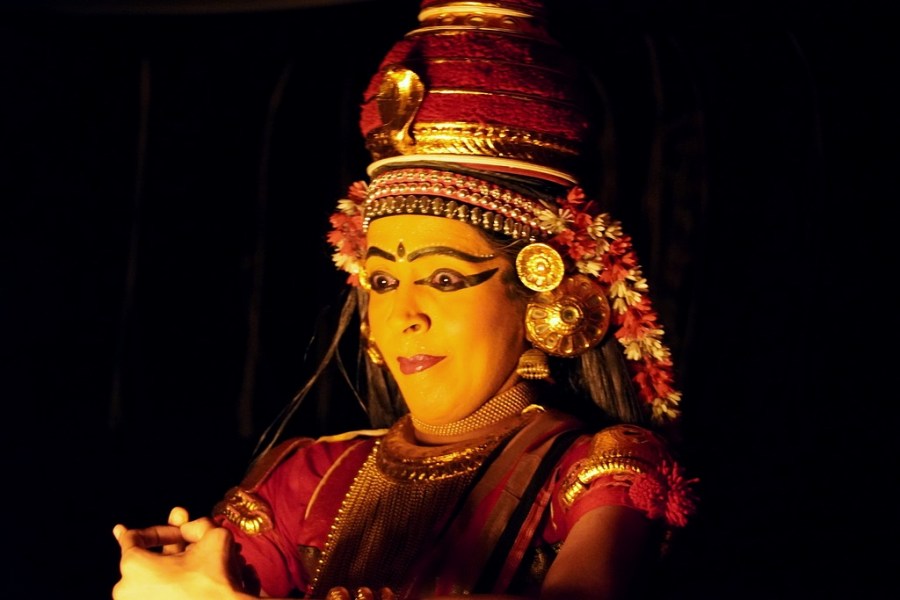
Nangiar Koothu is ‘abhinaya’ or acting-centric, the dancer expressing emotions with her eyes and hand gestures. ‘Nritta’ or pure dance is in focus only during the entry rituals (‘Purappad’). This dance at the beginning is called “Purvaranga Nritta”. During the performance, the Nangiar usually sits on a stool behind an oil lamp and acts out stories using intricate hand gestures, body movements and expressions. The dancer wears a red blouse and a white or cream-coloured skirt laced with gold or “kasavu” embroidery. She also wears red and white flowers in her hair and a distinct red headgear, with a hooded serpent on it probably symbolizing Anantha, the 1000-headed serpent.

This captivating dance form is still performed as a ritual offering in the Trissur Vadakkunathan Temple, Ambalapuzha Sri Krishna Temple, Irinjalakkuda Koodalmanikyam Temple, Tripunithara Poornathrayeswara Temple and Kottayam Kumaranellore Bhagavathy Temple. The performance begins on the day before Ashtamirohini, i.e. Sri Krishna’s birthday, in the Vadakkunathan temple and Ambalapuzha temple. Even though Nangiar Koothu is performed in the daytime, on Ashtamirohini day, it is held at night to match up with the time when Sri Krishna was born. The Koothu starts on the festival day in the Malayalam month of Chingam in the Poonathrayeswara temple and goes on for 8 days. It goes on for 12 consecutive days from the star-day ‘Uttram’ in the month of Medam in the Koodalmanikyam temple.

There is a variant form of Nangiar Koothu known as Dasamam Koothu or Chudala Koothu which is performed after an Akkithirippad has passed away. Akkithippad is a brahmin who has qualified himself to perform yagas including the athirathram, the most intricate of the yagas. The Nangiaramma performs on the ‘Sanjayanam’ day in a temperory koothambalam-like set-up, to help the deceased soul and his wife attain moksha. Though it is a rarely-performed dance form, artists like Aparna Nangiar have performed Dasamam Koothu in the last few years, even as recent as in 2021.

Over time, this art form which has historical antiquity of over 1500 years has also seen innovations in its story content. Dancers like Margi Sathi have introduced stories from Ramayana and the Kannaki Charitha into the performances. For art lovers and others alike, Nangiar Koothu is a very alluring dance form to witness and enjoy.        

Traditional Dance Forms of Kerala

The state of Kerala is well known for its luscious landscapes and beautiful backwaters. It is also home to a treasure trove of art forms and literature. These art and dance forms symbolize the rich historical and cultural heritage of the state. Let us take a look at some of the classical dance forms of Kerala that will no doubt mesmerize anyone.

Kathakali

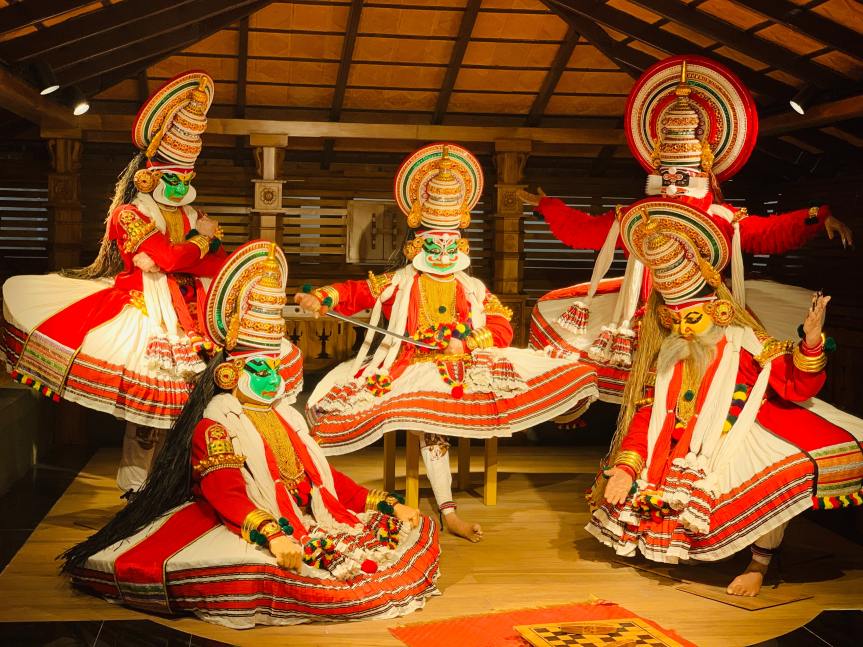
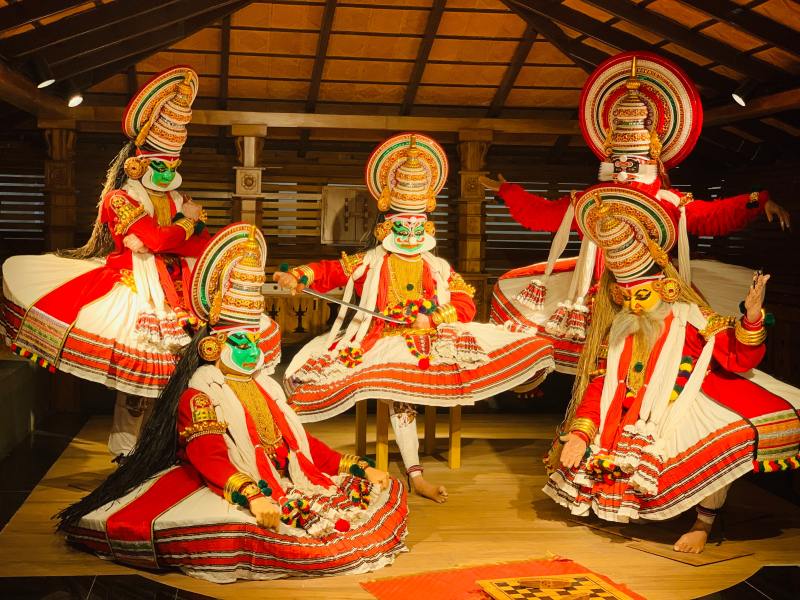
Kathakali is one of the most famous dance forms of Kerala, iconic for its elaborate costumes, colourful make-up, complex gestures and facial expressions. Formally systematized in the 17th century, this dance form has its roots in the temple and folk arts which are traceable to at least the 1st millennium CE. The term ‘Kathakali’ literally means ‘Story-play’. It has elements and aspects taken from Bharatamuni’s Natya Shastra as well as movements incorporated from ancient Indian martial arts and athletic traditions of South India.

A Kathakali performance perfectly blends musical instruments like Maddalam, Chenda, and Idakka, vocal performers, choreography, hand gestures and facial expressions to express ideas. The performances show folk stories, religious legends and spiritual ideas from the Puranas and Hindu epics. Traditionally, it was performed only by males, with female roles also being performed by men. Since the 1970s, women have also entered this field of classical dance. The performances used to be long and extended to many nights but have now been shortened. Taught in the past through the ancient Gurukula-based training system, students of Kathakali today are trained in professional schools like the Kerala Kalamandalam and Trivandrum Margi School.

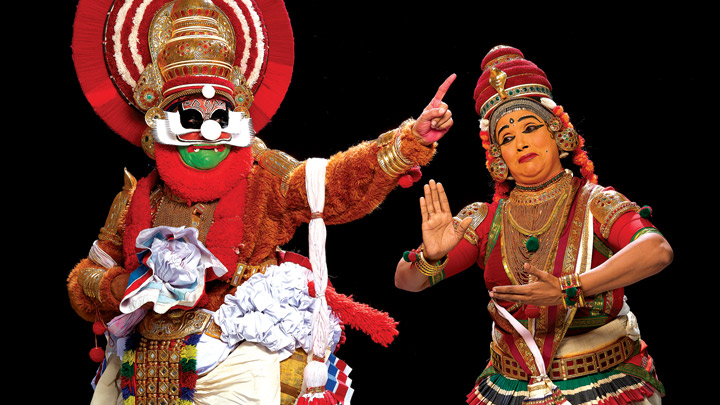
Kathakali has 6 basic make-up types – Pachcha (green, typically for noble characters like Krishna, Rama, Nala), Kathi (Knife, for villain characters), Kari (Black, for she-demons), Thaadi (Beard, for characters like Hanuman), Minukku (Shining, for female characters), and Teppu (for special characters like Garuda, Jatayu, Hamsa).

Mohiniyattam

Source: wikimedia commons.org

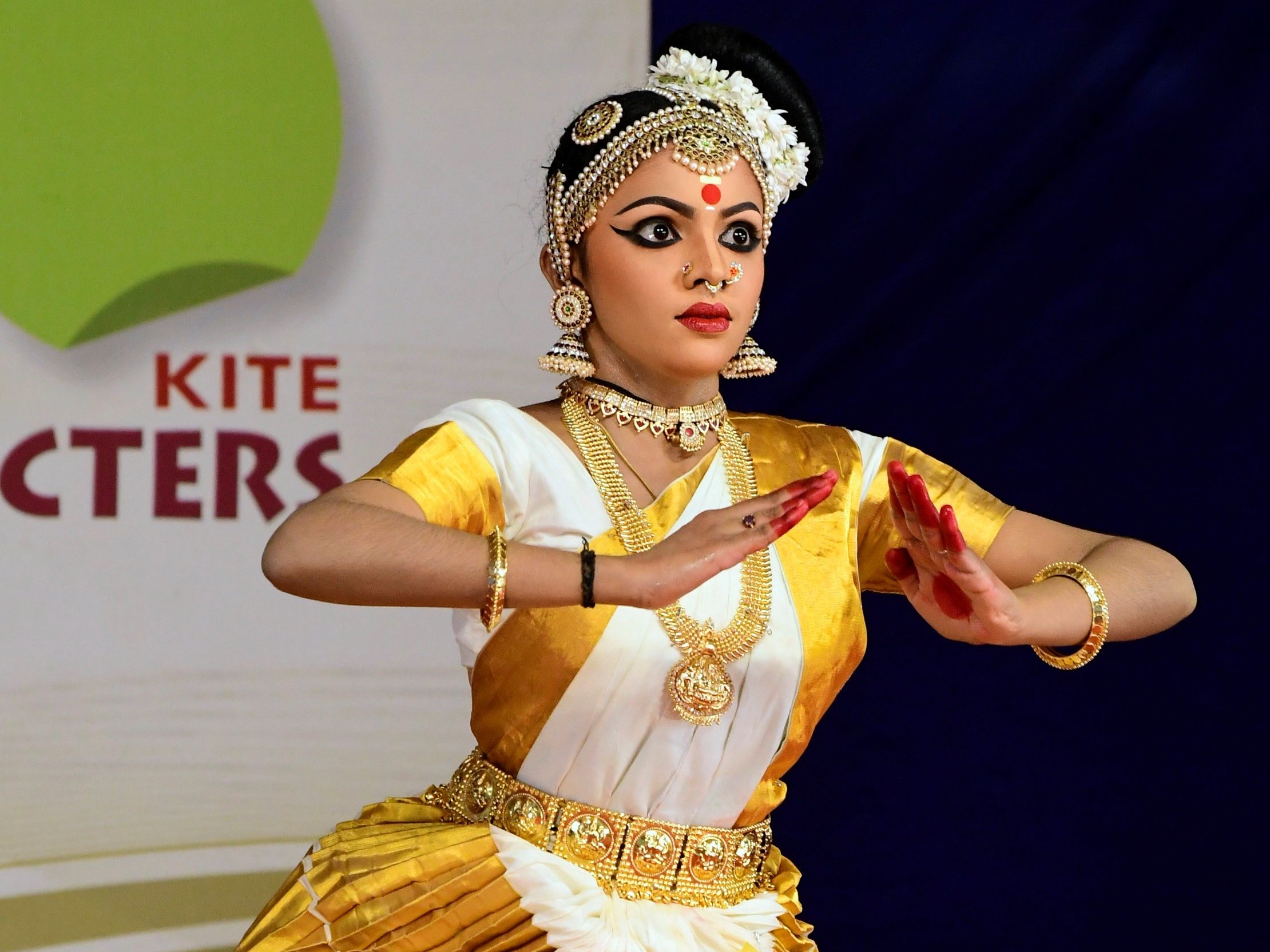
The roots of Mohiniyattam are in the Natya Shastra, following the Lasya style of delicate, graceful and feminine movements, The name comes from Mohini – a divine avatar of Lord Vishnu. It was traditionally performed solo by women although men perform it now as well. A typical Mohiniyattam performance includes Carnatic music and singing, with the songs in a Malayalam-Sanskrit hybrid called Manipravalam. The performers wear a plain white, off-white, or cream coloured saree with gold-laced embroidery. This dance form was banned by the British during their rule, ridiculed as a dance form of the devdasi system. The reintroduction and revival of Mohiniyattam after the Colonial era was spearheaded by the poet Vallathol Narayana Menon, who established the Kerala Kalamandalam dance school, encouraging the training and practice of the dance form.

Mohiniyattam and Kathakali form a part of the 7 classical dance forms of India.

Chakyar Koothu

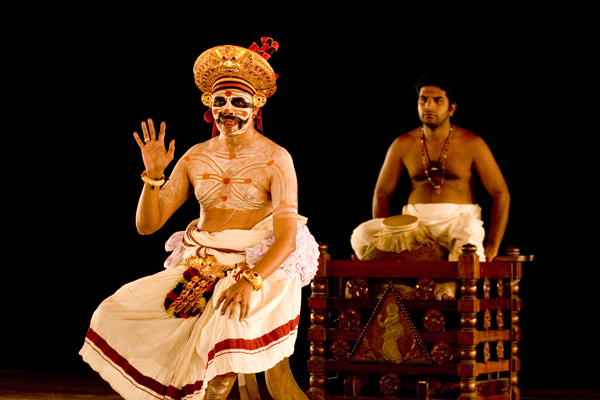
Chakyar Koothu is an art form performed in a place specifically designed inside Hindu temples called a Koothambalam. This dance form was traditionally performed by members of the Chakyar community in times of temple festivals. It is performed solo, with the performer narrating stories from Puranas and Hindu epics like Ramayana and Mahabharata. The performer wears a distinctive headgear and black mustache and has his torso covered in sandalwood paste and red dots. The performance is basically a monologue, oftentimes incorporating humor and wit to comment on current events and members of the audience. The performer is accompanied by musical instruments namely the pot drum Mizhavu and a pair of Ilathalam.

Nangiar Koothu

source: nangiarkoothu.com

Nangiar Koothu is a traditional dance form related to the art of Koodiyattam. Similar to Chakyar Koothu, it was presented only in Koothambalams, Performed solely by women, this dance form traditionally allowed only women of the Ambalavasi Nambiar community to learn it, but now is open to all. Nangiar koothu shows stories from Sree Krishna Charitam – a text depicting the life of Lord Krishna. The performer or Nangyaramma presents stories of Krishna using body movements, hand gestures and facial expressions and is accompanied by the Mizhavu.

Koodiyattam

souce: Keralatourism.org

Koodiyattam which literally translates to ‘Combined Act’ is an art form recognized by UNESCO as Masterpiece of the Oral and Intangible Heritage of Humanity. It is also performed in Koothambalams and combines Sanskrit theatre performances with elements of traditional Koothu, much like Chakyar Koothu. It is performed by Chakyars and Nangyarammas, who perform together on stage, unlike the solo performances of Chakyar Koothu and Nangiar Koothu.

In both Koodiyattam and Chakyar Koothu, Guru Mani Madhava Chakyar is considered the greatest master and artist. He introduced the art form to people outside the Chakyar community and outside Kerala.

Ottan Thullal

There are 3 varieties of Thullal – Ottan Thullal, Seekanthan Thullal and Parayan Thullal, of which Ottan Thullal is the most popular. It was introduced by the legendary poet Kunchan Nambiar in the 18th century, with its principles based on the Natya Shastra. It is said that Kunchan Nambiar developed this dance form to get back at a Chakyar who ridiculed him for falling asleep during a Chakyar Koothu performance. Ottan Thullal performances are often laced with humour, criticizing and commenting on society. The performer is accompanied by a Mridangam, Idakka and a pair of Ilathalam.

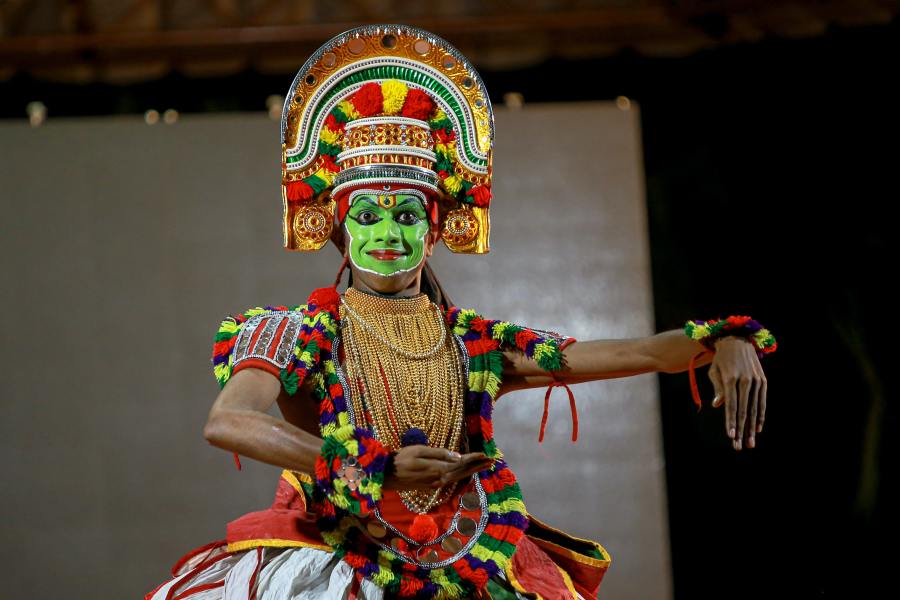
The performers wear green make-up much like a Pachcha character in Kathakali, with colourful costumes. They dance and recite while a chorus of 1 or more artists repeats the sentence that is recited. They perform in Malayalam, making it easily understandable for the local audience, and use old sayings and elements of folklore.

Scheme for Pension and Medical Aid to artistes’ to improve financial and socio-economic status

 The Ministry of Culture administers a Scheme by the name of ‘Scheme for Pension and Medical Aid to artistes’.  The objective of the Scheme is to improve financial and socio-economic status of the old aged artistes and scholars who have contributed significantly in their specialized fields of arts, letters etc. but are in penury condition.  The amount is being given to eligible beneficiaries (both professional and non-professional artists) who are above 60 years and whose annual income is less than Rs.48000/-. Further, Ministry of Culture also administers a Scheme namely ‘Scheme of Scholarship & Fellowship for promotion of art and culture’ having following three components: –

  1. ‘Award of Scholarships to Young Artists in Different Cultural Fields (SYA)’–  Scholarship of Rs.5000/- per month is provided to selected beneficiaries in the age group of 18 -25 years, in four equal six monthly installments for a period of 2 years. The candidates should have undergone training under any Guru or Institution for a minimum period of five years. The scholars are selected on the basis of their performance in a personal interview/interaction before an Expert Committee for Scholarship constituted by the Ministry;
  2. Award of Senior/Junior Fellowships to outstanding persons in different cultural fields – Senior Fellowship is provided to selected Fellows in the age group of forty years and above in four equal 6 monthly instalments @ Rs.20,000/- per month for 02 years for cultural research. Junior Fellowship is provided to selected Fellows in the age group of twenty five to forty years in four equal 6 monthly installments @ Rs. 10,000/- per month for 02 years.  Upto 400 Senior & Junior Fellowships are awarded in one batch year. The Fellows are selected by an Expert Committee for Sr/Jr Fellowship constituted by the Ministry.
  3. Award of Tagore National Fellowship for cultural research – The candidates are selected under two categories viz. Tagore National Fellowship and Tagore Research Scholarship to work on cultural research by affiliation under different participating institutions in 4 different groups.  The final selection is made by the National Selection Committee (NSC) specially constituted by the Ministry.

Apart from the above, financial assistance is also provided to professional and non-professional artists through other schemes such as Repertory Grant, Cultural Function Production Grant, etc.

Winners of Vande Bhartam, Nritya Utsav competition gearing up to enthrall audiences

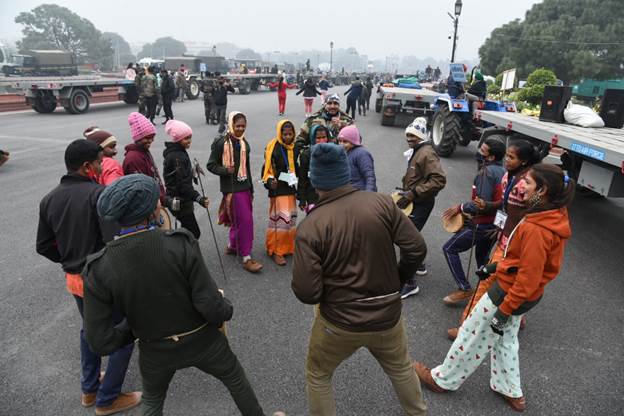
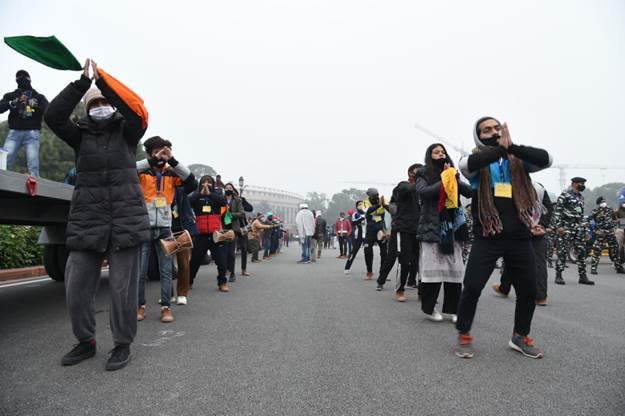
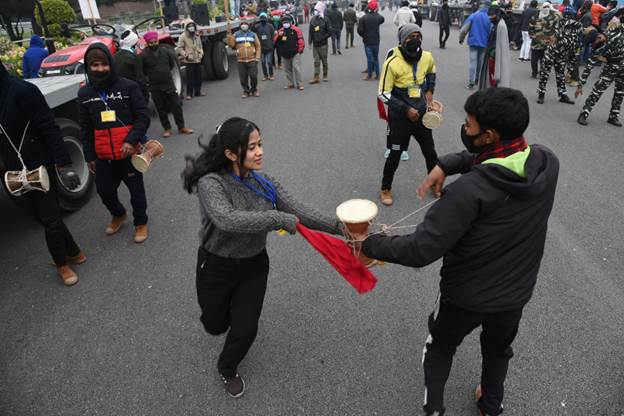
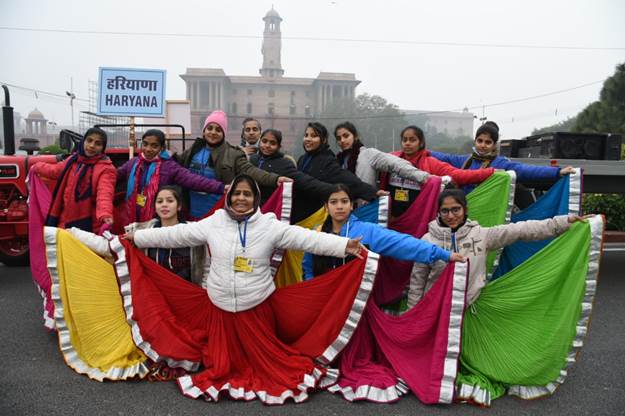
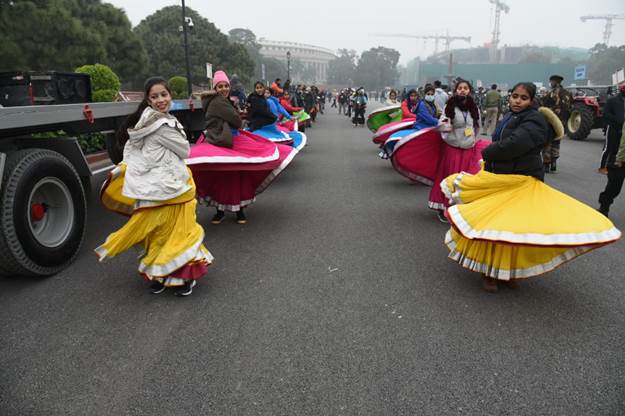
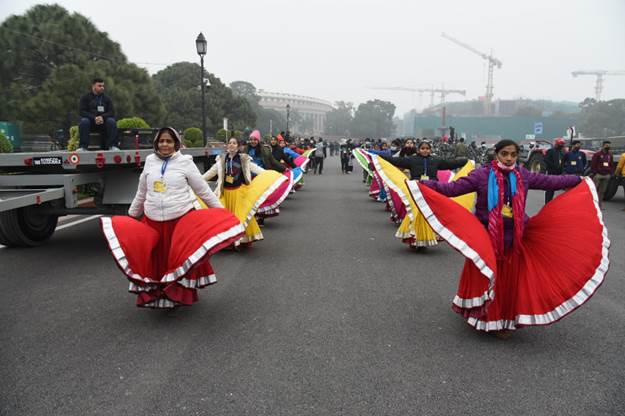
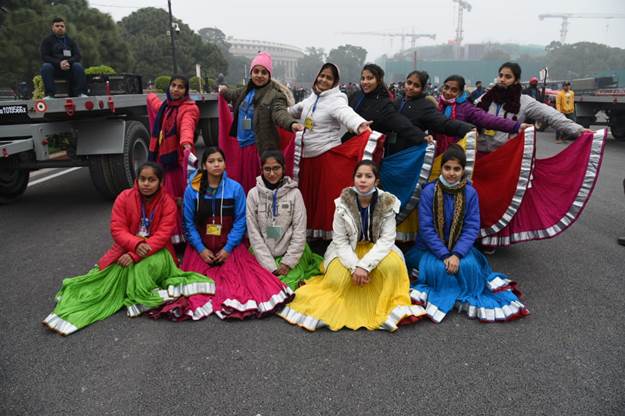
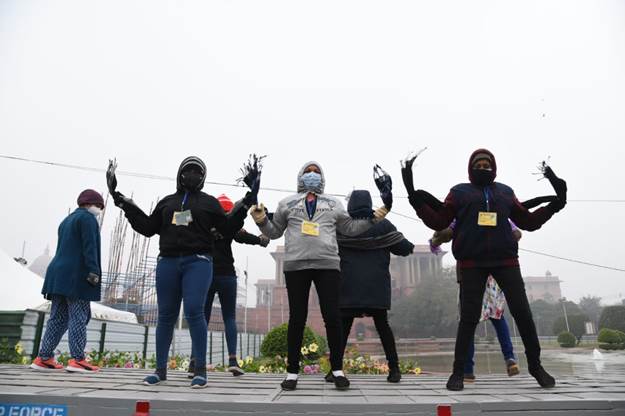
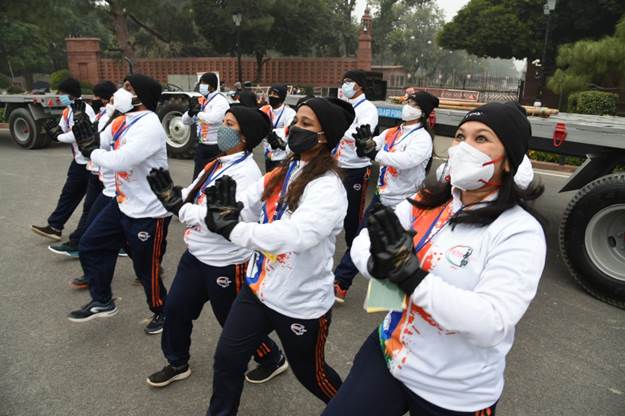
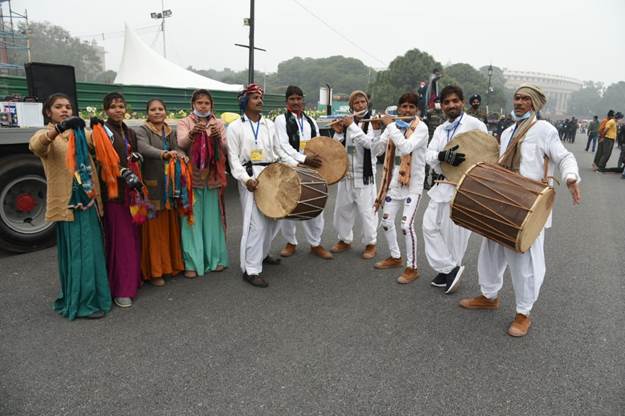
 The winners ofVande Bhartam, Nritya Utsav Grand Finale are gearing up to enthrall the audiences at the Republic Day 2022 parade at Rajpath, New Delhi on 26th January. The rehearsals for the grand performance have been taking place with full enthusiasm at Rajpath and Indira Gandhi Indoor Stadium , New Delhi.

The winners are being trained by the four renowned choreographers. These include Kathak Dancer Ms. Rani Khanam, along with Ms. Maiyetree Pahari, Ms. Tejaswini Sathe, and Mr.Santosh Nair who are giving training to 36 teams who have come from different states.

The 480 performers have been selected by the Ministry of Culture through a four level Vande Bharatam-Nritya Utsav competition. The Grand Finale of the Vande Bharatam-Nritya Utsav, a part of Azadi Ka Amrit Mahotsav was held in New Delhi on 19th December, 2021

The Vande Bharatam competition began at the district level on November 17 and saw the participation of more than 3,870 contestants in 323 groups. Those who cleared the screening at the district level took part in the state-level competition from November 30, 2021. More than 20 virtual events were conducted for the state-level competition over a span of 5 days till 4th December 2021

Over 2,400 participants from 200 plus teams were short-listed for the zonal level competition. The zonal finals took place at Kolkata, Mumbai, Bengaluru, and Delhi from 9th to 12th of December where 104 groups displayed their dance prowess before an august jury and applauding fans. Participating groups performed specially choreographed acts in various dance categories like classical, folk, tribal, and fusion. They will now give a performance on Republic Day where all the groups will merge into a one whole, yet retaining the identity of individual dance forms, in the true spirit of Ek Bharat Shrestha Bharat.

Of these 104 groups,73 groups comprising 949 dancers from all 4 zones made it to the Grand Finale, which was held in Delhi at the Jawaharlal Nehru Stadium Auditorium on 19th of December.

Top 480 dancers were declared as winners from the Grand Finale and they will perform on the Republic Day Parade to be held at Rajpath, New Delhi on 26th January 2022.

WhatsApp Image 2022-01-18 at 08.54.40.jpegWhatsApp Image 2022-01-18 at 08.53.38.jpegWhatsApp Image 2022-01-18 at 08.53.24.jpegWhatsApp Image 2022-01-18 at 08.51.39.jpegWhatsApp Image 2022-01-18 at 08.51.21.jpegWhatsApp Image 2022-01-18 at 08.51.01.jpegWhatsApp Image 2022-01-18 at 08.50.50.jpegWhatsApp Image 2022-01-18 at 08.50.02.jpegWhatsApp Image 2022-01-18 at 08.49.05.jpegWhatsApp Image 2022-01-18 at 08.48.53 (1).jpeg

This is the first time that teams are selected for Republic Day Performance at Rajpath through an All India dance competition with the aim of enhancing Jan Bhagidari.

*****

What are Differences Between Eastern and Western Cultures

Eastern world refers to countries in the Asia and Middle East whereas Western world refers to North and South America, Europe, Australia and New Zeeland. East and West may have numerous differences based on culture. These differences can be noted mainly in people’s behavior and attitudes. However, since east and west refers to various countries and cultures scattered across the globe, only a broad generalization can be made to compare the two cultures. The main difference between eastern and western culture is that people in the east are more traditional and conservative than the people in the west.
Eastern culture includes Asia and the Middle East, while the western world includes South and North America, European countries, New Zealand and Australia. The East and West have many differences based on their culture which is reflected in people’s attitude and behaviour.
When a comparison between eastern and western culture is made, one of the key differences between western and eastern culture is that countries in the West are more liberal than countries in the East. Western culture allows people to be more open and critical. They discuss subjects that are considered taboo in eastern cultures and they are allowed to show their emotions and vent anger if they think they should. This sort of behaviour wouldn’t take place in eastern cultures. People prefer to approach difficult situations by using good manners and tact, not aggression.
A second eastern and western culture comparison is a person from the West is more free and flexible to reach decisions on his/her own, unlike what happens in the East where families make more decisions collectively. Thirdly, arranged marriages are not a key feature of western cultures, as love is considered to be the way that people tie the marital knot.
Can there ever be similarities between eastern and western culture?
Many schools of thought believe that there is not enough common ground between eastern and western cultures for them to ever share similar characteristics. There are some features that are so different, like the types of religions in eastern cultures, such as Islam, Hinduism, Shenism, Buddhism, Jainism and Taoism. Clothing and rituals are so different in eastern cultures, like Indians paying respect to parents or elders by touching his/her feet. East Asians bow down as a gesture used when welcoming guests, saying thank you and apologizing. When it comes to ideologies and beliefs, eastern cultures find it difficult to question them despite what they might really feel. In contrast, most people can forsake religion and no one will think anything of it.
Elders are the decision-makers in eastern cultures
The difference between western and eastern culture can be seen by looking at the role of elders. In eastern cultures, elders are the leaders in the home, so children do what the elders say without questioning them. Any important decisions to do with a child are generally made by an elder. When parents grow old, children are often the ones who take on the responsibility for caring for them. Often in western cultures, an elderly person’s welfare becomes the responsibility of the state in collaboration with children or other close relatives.
Arranged marriages commonly take place in eastern cultures. They are usually arranged by a couple’s parents or another elder. They believe that love follows marriage, not the other way round.
Education has few similarities between eastern and western cultures
The comparison between eastern and western culture shows that western education focuses on creativity and allows individuals to develop as much as they can. In Eastern education, achievement is linked to struggle and hard work. This means you can achieve anything if you work hard enough. Students from eastern cultures often excel academically when in a western educational environment because they work harder than western children.
Students in western culture are encouraged to actively participate in debates and ask questions. This is not so much the case in eastern cultures where what the teacher says is always right. Added to this is the extra effort in western cultures to integrate children who are classified as special needs. They sit in classrooms alongside other students. This doesn’t often happen in eastern cultures where special needs children are taught separately.
Eastern Culture
Eastern world refers to countries in Asia and Middle East. The people in eastern countries are more traditional than people in the West when we consider their rituals, customs, clothing, etc. For example, Indians pay respect to their elders by touching their feet; East Asians use bows as greetings, apologizing and thanking. People in the East are rigid in their ideologies and beliefs; they are often reluctant to challenge and question the long practiced traditions and customs.
In eastern countries, elders are considered as the head of the home and children respect and obey them in all decisions. The important decisions regarding children’s future are usually taken by elders. When parents grow old, the children are expected to look after them.
Arranged marriages are a common phenomenon in eastern countries. They are usually arranged by parents or elders. Factors like education, social status, and family background are considered in these marriages. The concept that love comes after marriage is also promoted by these marriages. Moreover, public displays of affection are often frowned upon in Eastern countries.
Islam, Hinduism, Buddhism, Jainism, Shenism, and Taoism are some common religions in these countries. Rituals and customs of different communities may also differ according to these religions.
Western Culture
Western World mainly refers to Europe and North America. Judaism, Christianity, and Islam are some of the most common religions practiced in the Western world.
People in the west are more open-minded than those in the east. The westerns are more open and forthright. For example, topics such as the birth of a child and sex are still taboo in some eastern countries.
People in the west are also more open about their feelings. If they are angry, they might express. But people in the east might cover it for the sake of diplomacy and politeness. Westerns may also display their feelings and emotions in public.
Moreover, the individual is given preference over family, so a person has more freedom and power to take decisions on his own, unlike those in the east. Therefore, concepts like arranged marriages are not common in the west; they marry for love.
In western culture, relationships are not hierarchical and everyone is considered to be equally important and respected irrespective of their age or professional qualification, whereas, in eastern culture, people who are older or have higher professional qualifications are considered to be more respectful and important.
Moreover, in the west, people are more task-focused when it comes to spending time, that is, they see time as money and want to get their tasks done without wasting any time, whereas, in the east, people are more event focused and love to spend their time on building relationships.
When it comes to speech, people in the west are honest, whereas people in the east value harmony over honesty, that is, they would rather speak the lie and maintain harmony in the relationship than speak the truth.
Also, the westerners are independent and do things themselves, on the other hand, the eastern culture has different levels of society, and people in a higher level of society hire people from a lower level of society and help them monetarily.
Considering food, eastern culture is famous for its hospitality, whereas westerners view the same hospitality as ostentatious and prefer to be efficient which easterners view as inconsiderate.
Then there is a difference in ethics, how something is considered to be right or wrong. In eastern culture, ethics are based on honor and shame. If something brings honor to your society then it is considered to be right and if something brings shame to your society then it is considered to be wrong. Such is not the case in western culture. In western culture, ethics are strictly based on law. If something follows the law it is considered to be right and if something breaks the law it is considered to be wrong.
Another good cultural model that will help you paint a clear picture of the cultural differences is the Hofstede’s Cultural Dimensions Theory


‘EK BHARAT SHRESHTHA BHARAT’ EXHIBITION; EXHORTS PEOPLE TO LEARN ABOUT ART AND CULTURE OF THE PAIRED STATES

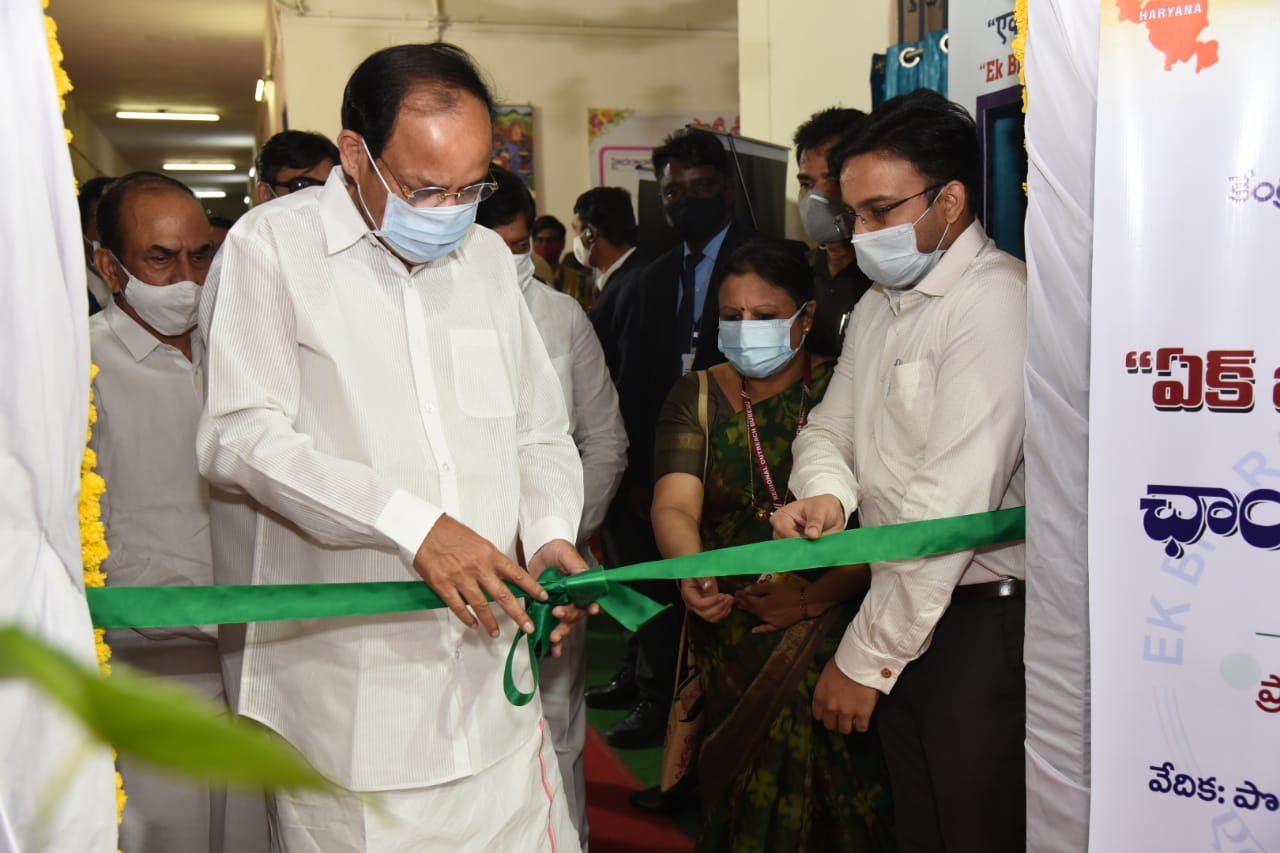
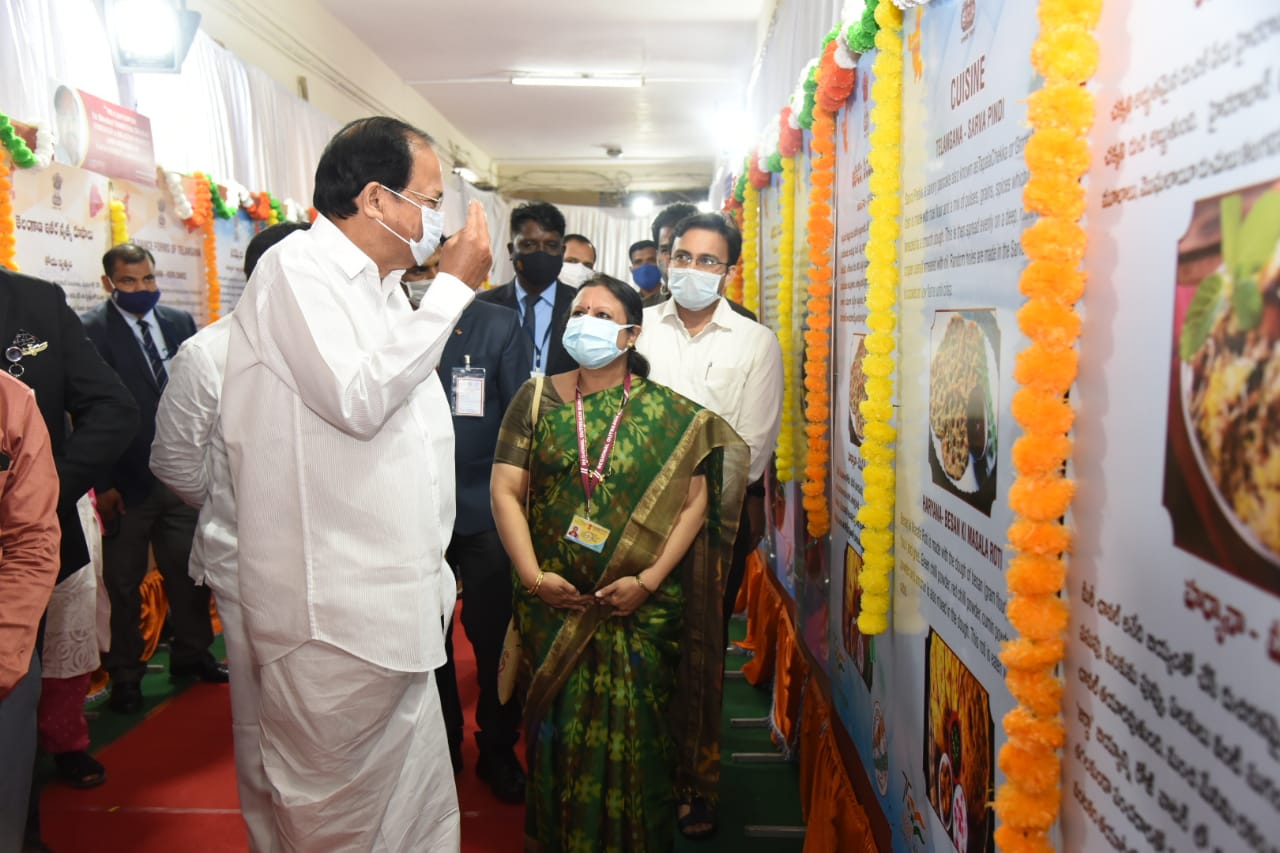
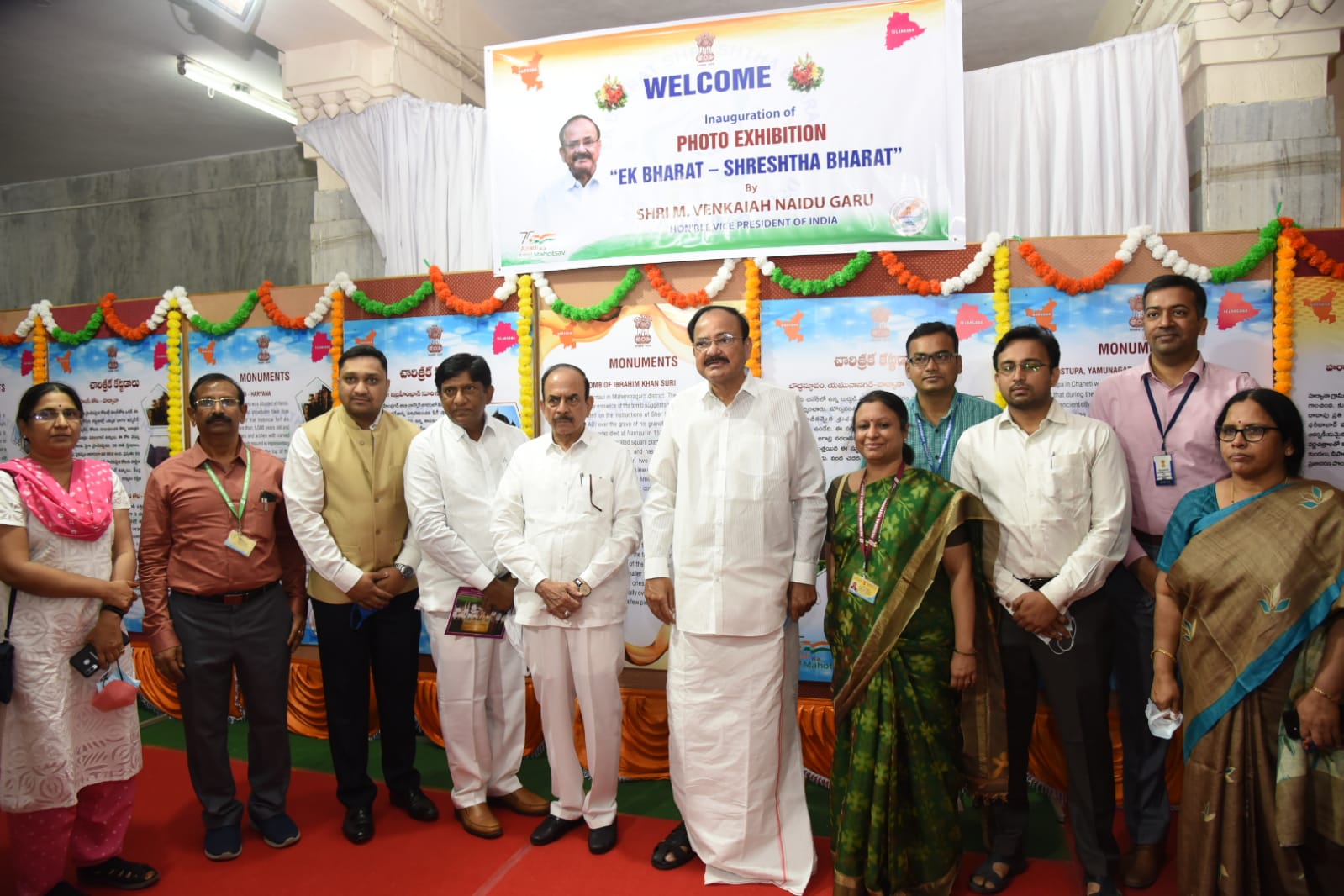
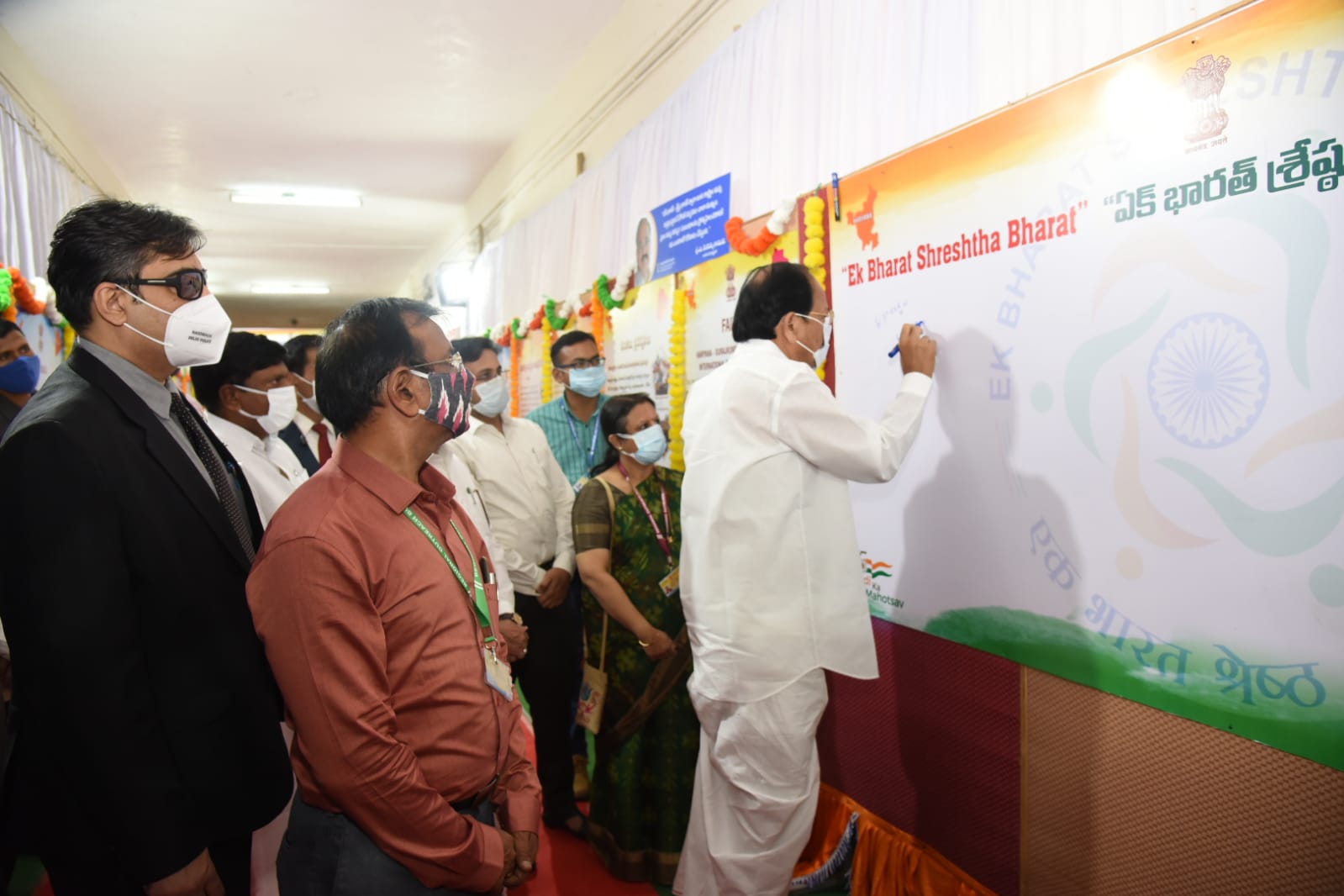
 The Hon’ble Vice President Shri M. Venkaiah Naidu inaugurated an exhibition on ‘Ek Bharat Shreshtha Bharat’ (EBSB) at Potti Sreeramulu Telugu University in the city today. Organised by the Regional Outreach Bureau, Ministry of Information and Broadcasting, this exhibition highlights the various interesting aspects of the paired states of Haryana and Telangana like art forms, cuisine, festivals, monuments, tourism spots etc, The exhibition will be open for viewing from 12th to 14th December, 2021 at Potti Sreeramulu Telugu University Campus, Nampally, Hyderabad. Noteworthy books brought out on the themes of art and culture have been  put up on display by the Publications Division at the exhibition.

Sharing his thoughts on the occasion, Shri Naidu said that such initiatives will go a long way in propagating the rich cultural heritage of the paired states and promoting people-to-people contacts. He complimented the Ministry of Information & Broadcasting for this initiative that brings people from the both States together and creates awareness about our rich & diverse cultural heritage.

Telangana State Home Minister, Shri Mohammed Mahmood Ali, Vice Chairman, Telangana State Planning Board, Shri B. Vinod Kumar, attended the event. The senior officers of Ministry of I&B from ROB, PIB, DPD and AIR were present on the occasion.

The Ek Bharat Shreshtha Bharat programme is a unique initiative by the Government to promote the spirit of national integration and to strengthen the fabric of emotional bonds between the people of our country. The Ek Bharat Shreshtha Bharat (EBSB) programme was launched by the Hon’ble Prime Minister on 31st October, 2015 on the occasion of the 140th birth anniversary of Sardar Vallabhbhai Patel, who played a significant part in the unification of the country post-independence.

*****

The Art of Rogan Painting

India is a diverse country, rich in age-old traditions and culture. Throughout its history, India has witnessed the emergence of many exotic art forms and craftsmanship. However, with the rise of cutting-edge technology of industrial textiles, many traditional craft forms have taken a massive hit. Rogan painting is a classic example of an enthralling yet sadly dying art. 

What is Rogan Painting?

Rogan painting is a 400-year old inherited traditional textile craft of Gujarat. It is considered to be the oldest and most challenging printing art in the history of textile. The word Rogan means oil in PersiaWith origins in Persia, it was brought to India around 300 years ago, even though there is not enough historical evidence to support the statement. 
Preparation of the Ingredients

The chief ingredients required for Rogan painting are castor oil, wood, kerosene oil and dyes. The first step in the painting is the preparation of Rogan paste. 

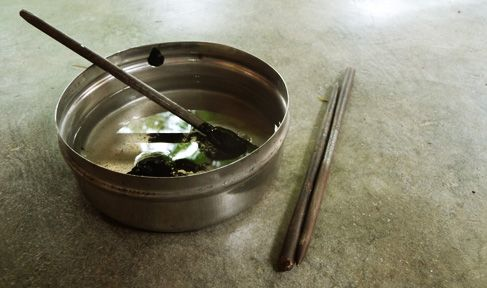
After preparing a furnace and selecting a suitable aluminium container, the local craftsmen boil a litre of castor oil for a minimum of four hours. The time required for boiling may vary depending upon the quantity of the oil taken. Then, they continuously stir the oil until it is time to remove the container from the furnace to let it cool down. While boiling, the castor oil may catch fire, after which it is immediately taken out and covered with a lid. During this, the impurities present in the oil gets thrown out in the form of fumes. This process is repeated several times until the oil forms a thick, gelatin-like consistency and turns yellowish. 
Traditionally, the dyes used in Rogan painting were derived from organic, natural sources such as stones and plants. But today, synthetic dyes are used too. Red, yellow, blue, white, green, and brown are the primary colours used in the painting. 

A manual stone grinder was used to mix naphthol dyes and white chalk powder and prepare the colour paste. With the gradual addition of water, the required consistency of the paste is reached. The Rogan paste is added to the colour paste and ground until it forms the desired soft, smooth, gelatinous dye paste. 

Process of Rogan Painting

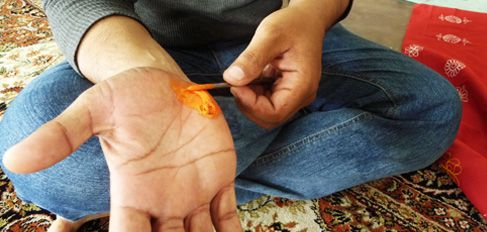
The process of painting is a very tedious and cumbersome task. Initially, the craftsmen lay the fabric to be painted on the floor. Next, they take a lump of the dye paste and put it on the palm of one hand. They hold a suya rod or a metal stylus in the other hand and mix the thick paste till it stretches into a thread-like structure. 

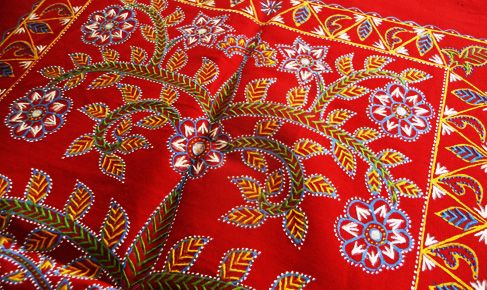
They carefully twist the rod to create beautiful motifs and patterns across the fabric without the rod touching the cloth. After that, they fold the fabric and press it evenly to obtain an identical impression on the other half of the fabric. Lastly, the fabric is left out in the sunlight for about six to seven hours to let it dry.

The intricate motifs that embellish the fabric, such as geometric flowers, peacocks, the tree of life, etc., are inspired by the history and folk culture of the Kutch region of Gujarat.

Originally, the Rogan Art was used to adorn the trousseau of a bride. But due to the limited resources, meeting the market demand has become a challenge. From almost becoming a dying art to gaining worldwide recognition, Rogan Art sure has come a long way.

Indian Art Style

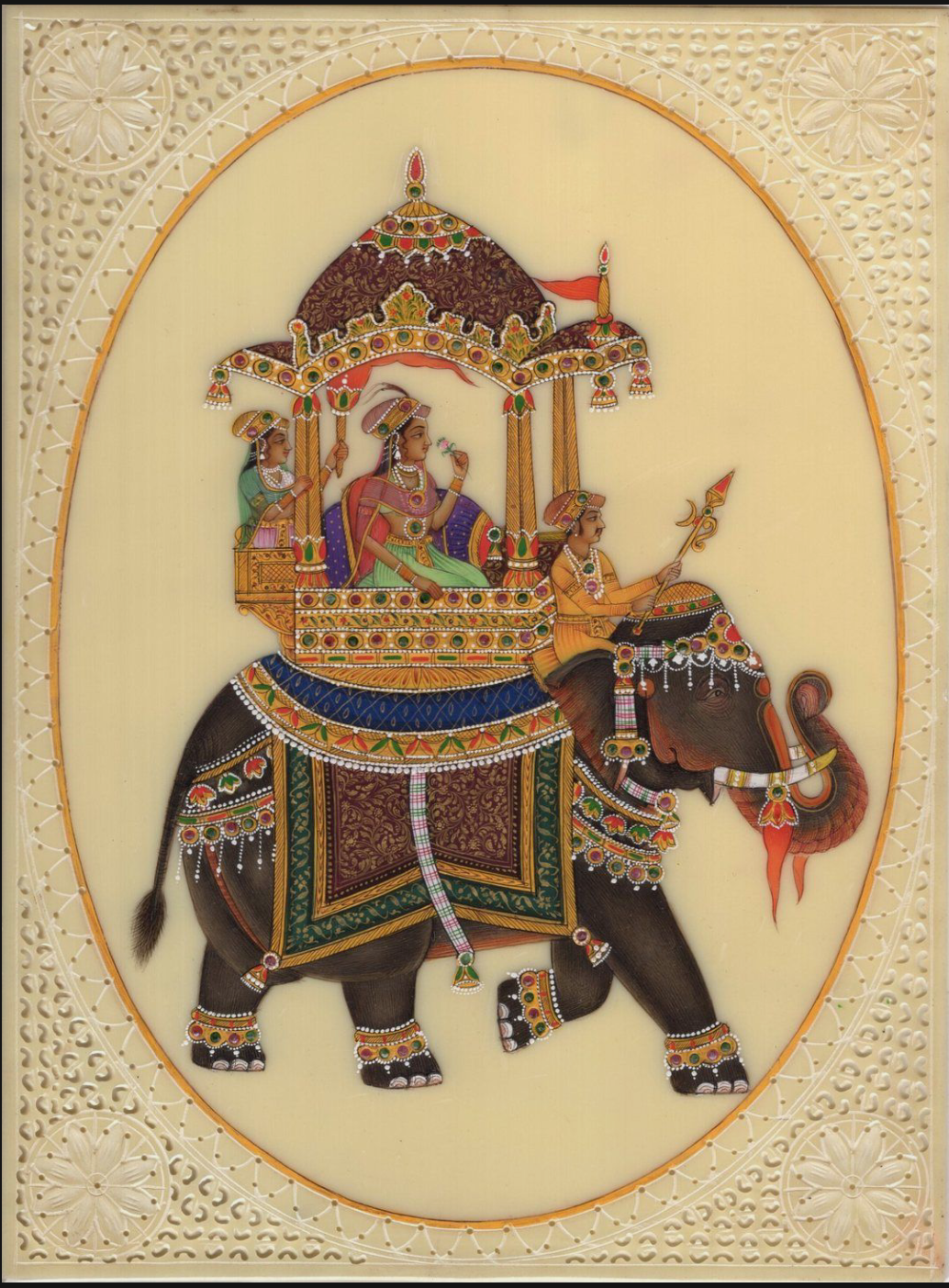
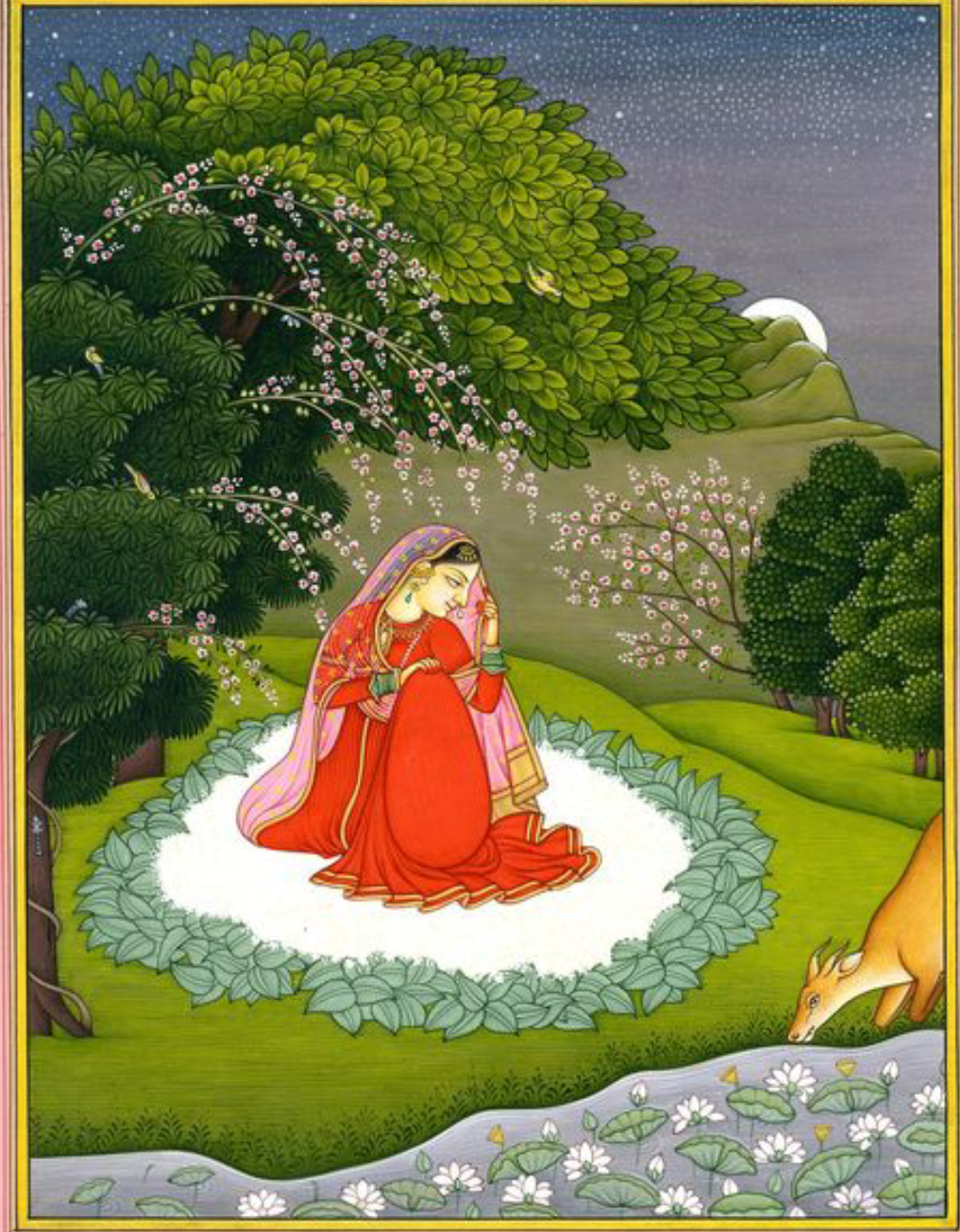
• Rajasthani miniature art

Rajasthan is one of the pioneer seats of miniature painting in India. Rajput painting, also known as Rajasthani painting, is a style of Indian painting evolved and flourished in the royal courts of Rajputana, India. Each Rajput kingdom evolved a distinct style but with certain common features. Rajput paintings depict a number of themes, events of epics like the Ramayana and the Mahabharata, Krishna’s life, beautiful landscapes and humans.

Miniatures in manuscripts or single sheets to be kept in albums were the preferred medium of Rajput painting but many paintings were done on the walls of palaces, inner chambers of the forts, havelis, particularly the havelis of Shekhawati, the forts and palaces built by Shekhawat Rajputs. The colours were extracted from certain minerals, plant sources and conch shells and were even derived by processing precious stones. Gold and silver were also used. The preparation of desired colours was a lengthy process, sometimes taking weeks. The brushes used were very fine.

• Pattachitra

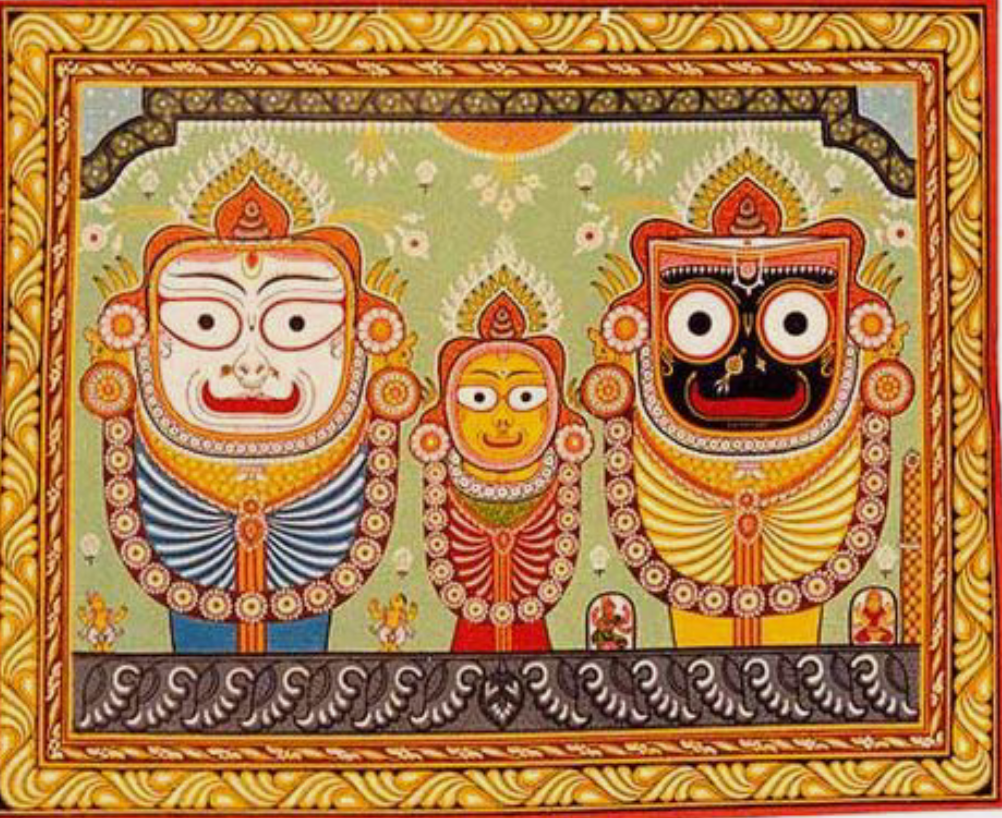
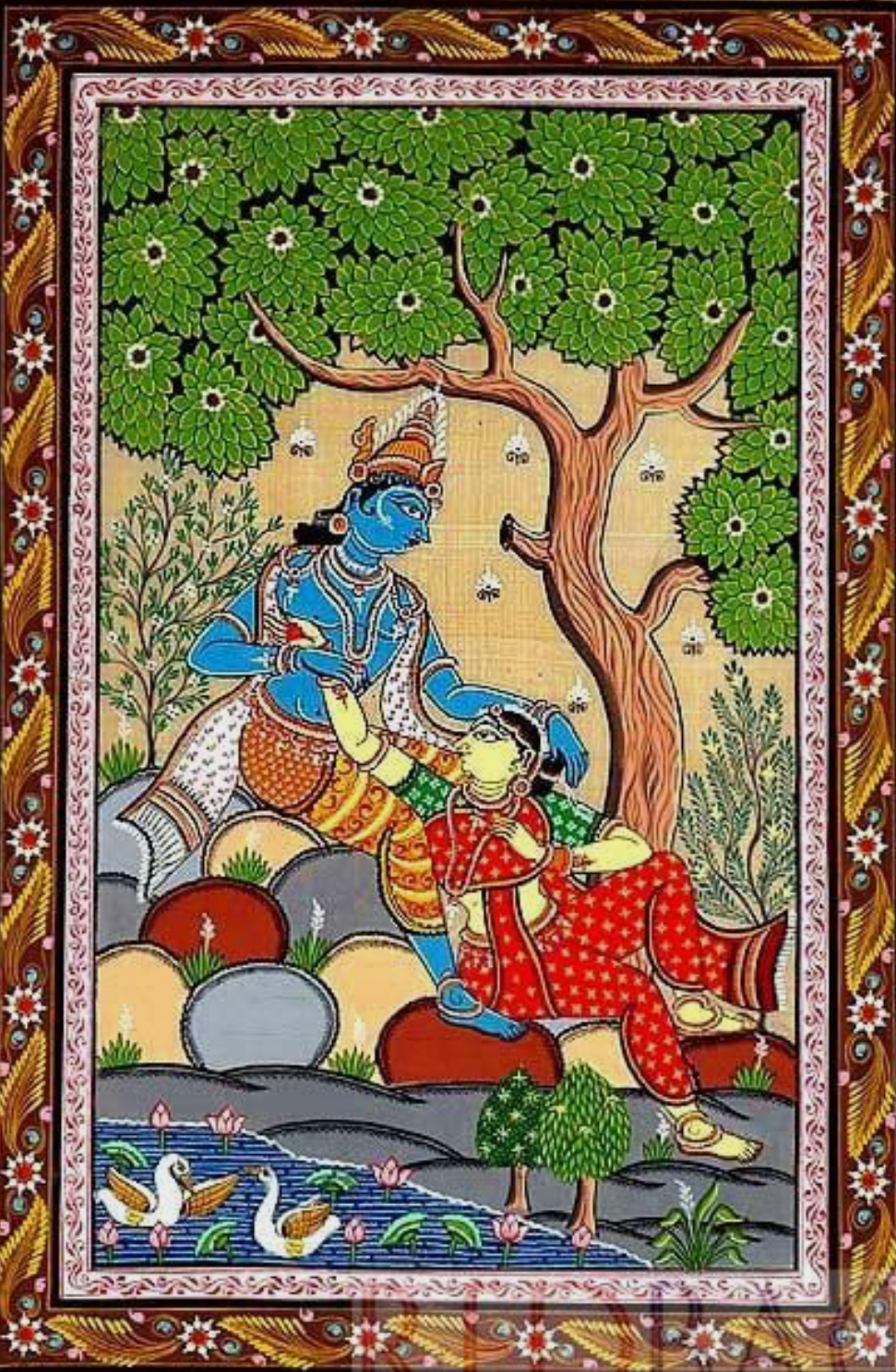
‘Pattachitra’ is a general term for traditional, cloth based scroll painting based in the eastern Indian state of Odisha. In the Sanskrit language, ‘patta’ literally means ‘cloth’ and ‘chitra’ means ‘ picture’. The pattachitra style of painting is one of the oldest and most popular art forms of Odisha.

All colours used in the paintings are natural and the paintings are made fully in the old traditional way by chitrakaras who are Oriya painters. Pattachitra is manifested by a rich colourful application, creative motifs and designs and portrayal of simple themes mostly mythological in depiction. The traditions of pattachitra paintings are more than a 1000 years old. Pattachitra paintings resemble the old murals of Odisha, especially those from the religious centres of Puri, Konark and Bhubaneswar regions, dating back to the 5th century BC. The best works are found in and around Puri, especially in the village of Raghurajpur. The theme of Oriya painting centers round the Jagannath cult and the Vaishnava cult. Since the beginning of pattachitra culture, Lord Jagannath, who is an incarnation of Lord Krishna, has been the major source of inspiration. In the 16th century, with the emergence of the Bhakti movement, the paintings of Radha and Krishna were painted in vibrant shades of orange, red and yellow. There are typical scenes and figures like Krishna, Gopi’s, elephants, trees and other creatures portrayed in these paintings. Krishna is always painted in blue and Gopis in light pink, purple or brown.

Thank you for reading. Have a nice day!🌼