Assassination Of Former Prime Minister Rajiv Gandhi .

The assassination of former Prime Minister of India Rajiv Gandhi, , occurred on 21 May 1991 as a result of a suicide bombing in Sriperumbudur in Tamil Nadu, India . At least 14 others,we’re killed alongside Rajiv Gandhi in the suicide bombing.
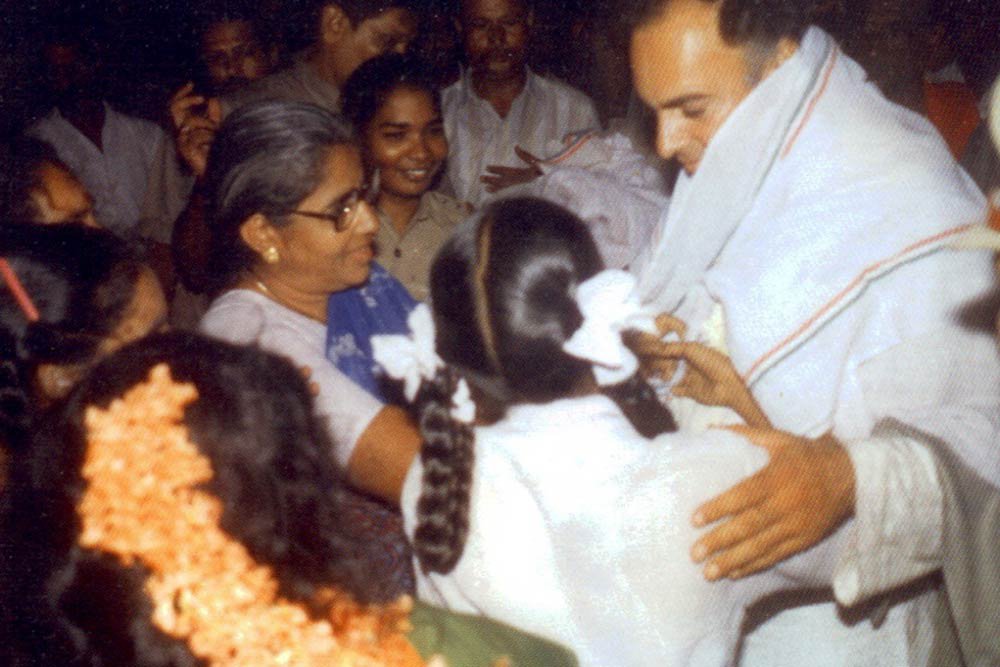
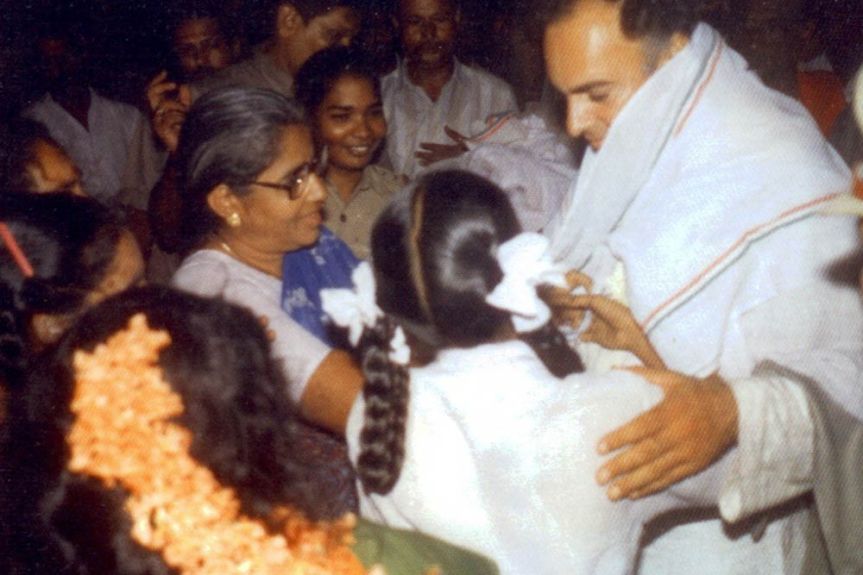
The assassination was carried out by Thenmozhi Rajaratnam, a member of the Tamil Liberation Tigers (LTTE), a Tamil separatist organization in Sri Lanka, and Dr. Jagjit Singh Chohan of the National Council of Khalistan (NCK) and Gurjant Singh Budhsinghwala of the Khalistan Liberation Force. At that time, India had just finished its involvement in the civil war in Sri Lanka through the Indian Peace Keeping Force. Rajiv Gandhi along with G.K. Moupanal started election campaign in southern state of India. After campaigning in Visakhapatnam, Andhra Pradesh on May 21, his next destination was Sriperumbudur, Tamil Nadu. Approximately two hours after arriving in Madras ,Rajiv Gandhi rode a white ambassador car to Slipelumbudur in a convoy, stopping at several other campaign sites along the way. Arriving at the campaign rally at Sriperumbudur, Rajiv left the car and went up to the podium, where he gave a speech. After the soeech the assassin Danu (Thenmozhi Rajaratnam) approached and greeted him. Then she bent over and touched his leg, and at 10:10 pm, detonated a belt loaded with RDX explosives place under her dress. Gandhi, his assassin and 14 others were killed in a subsequent explosion, and 43 were seriously injured. The assassination was filmed by local photographer Haribab. Haribab’s camera and film were found intact on the scene, but he also died in the blast.

Apart from Rajiv Gandhi, former Prime Minister of India and the suicide bomber Thenmozhi Rajaratnam , several people were killed in the blast on 21 May 1991:
Including Pradeep K Gupta (personal security officer of Rajiv Gandhi ), K.S Mohammed Iqbal (police superintendent), Edward Joseph ( police inspector) ,Dharman,Chandra, Ethiraju Muruganand and Rajguru (police constables), Santhani Begum (Mahila Congressn Leader) ,Latha Kannan ( Mahila Congress worker,who was with her daughter Kokilavani ),Kokilavani (ten-year-old daughter of Latha Kannan, who sang a poem to Gandhi immediately before the blast), Munuswamy (former member of the Tamil Nadu Legislative Council) ,Saroja Devi (seventeen-year-old college student), Ravichandran (Black Cat commando).
Around forty-three spectator present in the campaign including police sub-inspector Anushiya Daisy were also injured in the explosion.
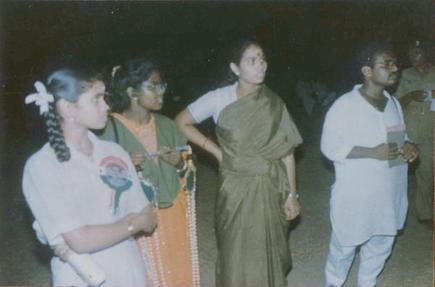
Immediately after the assassination, the Chandrasekhar government handed over the investigation to the CBI on May 22, 1991. Authorities, formed a special research team led by Karthikeyan to determine who is responsible for the assassination. A SIT investigation confirmed the role of the LTTE in assassination and was endorsed by the Supreme Court of India. Judge Millap Chand Jain’s interim report investigated the secret aspects of the assassination and accused DMK of working with the LTTE. The report concluded that the DMK provided the LTTE with shelter and made it easier for rebels to assassinate Rajiv Gandhi. The report also claimed that Jaffna’s LTTE leaders possessed confidential, encrypted messages exchanged between the federal and DMK state governments.Authorities also stated in reports “There is evidence that during this period some of the most important radio messages were exchanged between the LTTE agents stationed in Tamil Nadu and Jaffna. These later deciphered messages are directly related to the assassination of Rajiv Gandhi “. The Congress demanded withdrawal of DMK from the Union Front government, after claiming to have played an important role in Rajiv Gandhi’s death. According to reports Dr. Jagjit Singh Chohan supported the LITTE with logistic and tactical support. His involvement was first revealed in 2016, about 10 years later. Speculation. This was evidence of the Jain Commission’s report and was suspected that the LTTE had contacted Gurjant Singh Budhsinghwala with Jagjit Singh Chohan to plan the plot.

After the investigation on the assassination of former prime minister Rajiv Gandhi ,the court convicted and sentenced the seven persons who were involved in the assassination to life imprisonment. They are currently undergoing life imprisonment in prisons in India.
They are:
Murugan – A LTTE operative from Sri Lanka, Nalini – Wife of Murugan. Nalini is a citizen of India ,Jayakumar – The brother in law of Robert Pious ,Ravichandran – A Sri Lankan national ,T. Suthenthiraraja – A Sri Lankan national ,Robert Pious – A Sri Lankan national and A. G. Perarivalan – An Indian citizen who was arrested for supplying a 9-volt battery for the explosive device.
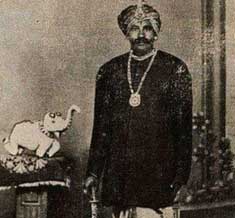
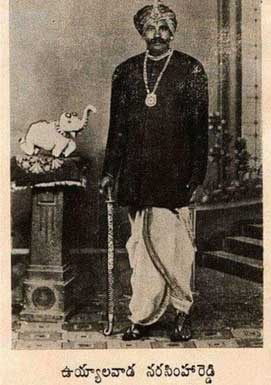
India’s first freedom fighter Narasimha Reddy.

Uyyalawada Narasimha Reddy was an Indian freedom fighter and he was born in Rupanagudi village, on 24 November 1806.

The father of Narasimha Reddy was related to the Palegar family of Uyyalawada in Koilakuntla taluk who had married two daughters of the Palegar of Nossam. He had three sons, of whom Narasimha was the youngest son of the Palegar of Nossam, Seethamma. He married a woman named Siddhamma at the age of 6 .
The British East India Company’s preface to the Chennai Presidency of the 1803 endless agreement, which had first been legislated in Bengal Presidency ten times preliminarily, replaced the agricultural socio- profitable status quo with a further egalitarian arrangement where anyone could cultivate handed that they paid a fixed sum to the East India Company for the honor of doing so.
The Palegars and other advanced- status people who preferred the old agricultural system” represented the decadent social order”, were in numerous cases” arrivistes” and” were also the heirs at law of a social system in which colorful orders of Hindu society were integrated through periods”. These people were ousted of their lands, which were also redistributed, but the primary purpose of the changes was to increase product rather than to restructure the social order. In some cases, it coincided with a discipline because among the dispossessed were those who had lately been involved in fighting the East India Company in the Palegar Wars. Some entered pensions in lieu of the lost lands but at inconsistent rates.


The changes, which included the preface of the ryotwari system and other attempts to maximize profit, deprived vill helmsmen and other advanced- status people of their part as profit collectors and position as lodgers, while also impacting on lower- status tillers by depleting their crops and leaving them impoverished. The East India Company were economically exploiting the people and that those who were dependent on the traditional work were no longer had a means of making a living. As the old order collapsed into disarray, the formerly-authoritative Palegars, including Narasimha Reddy, came the focus of attention from victims, whose pleas fell on deaf cognizance. The Palegars saw a chance to rally peasant opposition both for genuine social reasons.
Narasimha Reddy’s own expostulations too was grounded on their issues. Compared to the Palegar of Nossam, the pension awarded to his family upon their acquisition was paltry and the authorities refused to increase it by redistributing some of the Nossam moneybags when that ultimate family came defunct in 1821. At the same time, some of his cousins were facing proffers for farther reductions in their land rights, including by a reform of the vill policing system.


WAR AGAINT BRITISH EMPIRE
Effects came to a head in 1846 when the Company authorities assumed land rights preliminarily held by colorful people who had failed in the townlets of Goodladurty, Koilakuntla and Nossum. Encouraged by the disgruntlement of others, Reddy came the statuette for an insurrection.
An fortified group, originally comprising those ousted of inam lands around Koilakuntla, was led by Reddy’s Right- hand man Vadde Obanna in July 1846. The Amusement Collector for the area Lord Cochrane, believed that Reddy had material support from fellow pensioners in Bhagyanagar and Kurnool, whose land rights had also been appropriated. The group soon attracted support from the peasantry and was reported by Company authorities to have rampaged in Koilkuntla, taking back the pillaged storeroom there and escaping the police before killing several officers at Mittapally. They also despoiled Rudravaram before moving to an area near to Almore, pursued by the East India Company forces who also girdled them.
A battle between Obanna’s 5000-strong band of revolutionists and a much lower British contingent also took place, with around 200 of the revolutionary being killed and others captured before they were suitable to break out in the direction of Kothakota, Giddalur where Reddy’s family were positioned. He with his family moved to Nallamala Hills . The British offered impulses for information regarding the whereabouts of the revolutionists, who were again girdled amidst reports that uneasiness was now growing in other townlets of the area. In a farther skirmish between the revolutionists and the British, who had transferred for mounts, 40 – 50 revolutionists were killed and 90 were captured, including Reddy. Although there was no substantiation of Obanna’s prisoner, he most conceivably was also a interned along with his leader.
clearances were issued for the arrest of nearly,000 of the revolutionists, of which 412 were released without charge. A farther 273 were bailed and 112 were condemned. Reddy, too, was condemned and in his case entered the death penalty. On 22 February 1847, he was executed in Koilkuntla in front of a crowd of over 2000 people. Reddy’s head on the stronghold wall in public view until 1877.


LEGACY
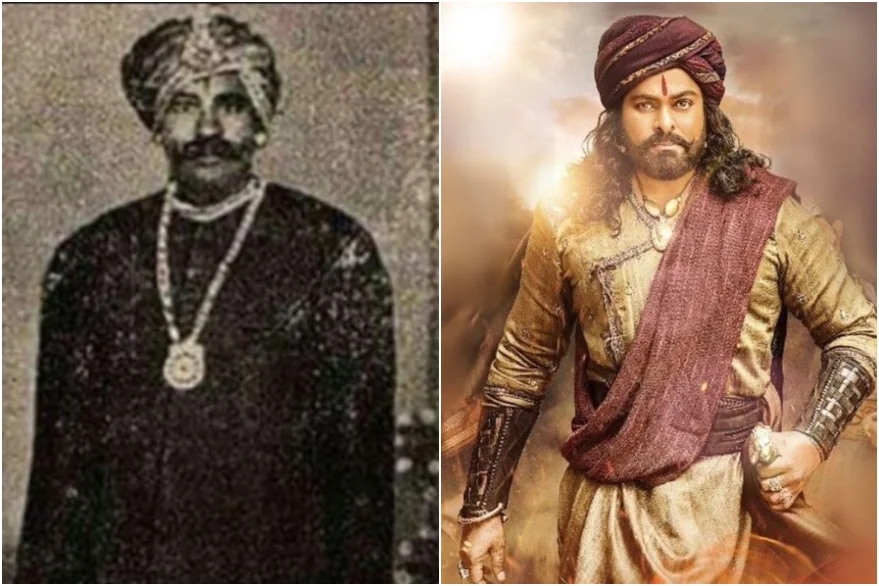
On 2 October 2019 , a film based on the life of Narsimha Reddy’s life named Sye Raa Narasimha Reddy was released . On 25 March 2021 Kurnool Airport at Orvakal was named as Uyyalawada Reddy Airport .

Koo App – An Indian Alternative to Twitter

Koo , an Indian alternative of twitter is gaining a lot of attention from the netizens as the government ministers & ministries are switching to the app.

Koo’s rise comes as Twitter is currently engaged in a standoff with the Indian government over the blocking and unblocking of accounts linked to the farmer protests. The Koo a made-in-India app is now seen as a prospective competitor to Twitter in the backdrop of the government’s disagreement with Twitter.

Union minister Piyush Goyal, who is quite active on Twitter,announced on Tuesday that he has also opened an account on Koo. Electronics and IT minister Ravi Shankar Prasad has already joined the platform and has a verified handle. Several government departments, including the ministry of Electronics and IT , India Post have verified handles on this platform. Former cricketer Anil Kumble & Sadhguru are among the personalities who have joined the Koo.

Koo is a microblogging app just like Twitter where you can post opinions publicly & follow others. The character limit for a ‘Koo post’ is 400 while it’s 280 on twitter.Users can share audio, video & can create the post polls just like twitter.Users also have option of linking their Facebook , LinkedIn , Youtube & Twitter feed to their Koo profile. It is available as a website and on ios and Google Play Store.

Koo , a Swadeshi app was launched in March 2020. It had also won the Aatmanirbhar App Innovation Challenge along with other Indian apps like Zoho and Chingari. The Koo app was created by Bombinate Technologies Private Limited which is a Bangalore-based private company incorporated in 2015. Aparameya Radhakrishna and Mayank Bidawatka are the co-founders.

Prime Minister Narendra Modi had, in one of his Mann Ki Baat encouraged Indians to use the app.

The app is available in several languages, including Hindi, Telugu, Kannada, Bengali, Tamil, Malayalam, Gujarati, Marathi, Punjabi, Odiya and Assamese.

The Koo website notes that only 10 per cent of India speaks English and “almost 1 billion people in India don’t know English.Instead they speak one of India’s 100s of languages.” The website adds that the “majority of the internet has been in English. Koo is an attempt to make the voice of these Indians heard. They can now participate on the internet in their mother tongue by listening to the views of some of the sharpest Indian minds and also speak their mind by sharing their thoughts.”

Atmanirbhar : a step towards better India.

Government of India is taking several steps to ensure that we are well prepared to face the challenges and threats posed by COVID-19. With active support of citizens of India, we have been able to mitigate the spread of the virus so far. One of the most important factors in the fight with the virus is to empower the citizens with accurate information and enable them to take precautions as per the advisories being issued by different Ministries. The COVID-19 Inter-Ministerial Notifications website serves this purpose efficiently by providing COVID-19 related notifications from various Ministries in a format that is accessible, built using the S3WaaS framework, that is secure & scalable.

India has faced the COVID-19 situation with fortitude and a spirit of self-reliance, that is evident in the fact that from zero production of Personal Protection Equipment (PPE) before March 2020, India today has created a capacity of producing 2 lakh PPE kits daily, which is also growing steadily.
Additionally, India has demonstrated how it rises up to challenges and uncovers opportunities therein, as manifested in the re-purposing of various automobile sector industries to collaborate in the making of life-saving ventilators. The clarion call given by the Hon’ble PM to use these trying times to become Atmanirbhar (self-reliant) has been very well received to enable the resurgence of the Indian economy.

Unlock 1 Guidelines have been issued to enable resumption of economic activities while maintaining abundant caution thus allowing graded easing of restrictions.
The Five pillars of Atmanirbhar Bharat focus on:
• Economy
• Infrastructure
• System
• Vibrant Demography and
• Demand

The Five phases of Atmanirbhar Bharat are:
• Phase-I: Businesses including MSMEs
• Phase-II: Poor, including migrants and farmers
• Phase-III: Agriculture
• Phase-IV: New Horizons of Growth
• Phase-V: Government Reforms and Enablers

The exemplary role played by India in the global fight against COVID-19 has been recognized and appreciated widely. The Union Minister of Health & Family Welfare Dr. Harsh Vardhan has been elected as Chair of the Executive Board of World Health Organization for the year 2020-21. This took place during the 147th session of the Executive Board, in a meeting that was held virtually. He takes over from Dr Hiroki Nakatani of Japan.

Atmanirbhar focuses on small scale and medium scale industries. It also focuses on the service sector. Development of business that has faced a downfall due to Covid-19 pandemic and bringing up of the nation is the primary aim of this scheme. It also involves development of the economy as a whole. Assisting farmers in providing some support to agriculture is also under this scheme.

These 5 phases are to be carried on With due attention has it involves the development of the economy. Assisting the migrants in reaching their destinations. They lacked income during this pandemic. Financial assistance also is to be provided to the migrants. Development of the infrastructure facilities in a better way.

Due to the pandemic, India suffered a greater loss in its income. this has been affected as the citizens lacked work reducing their income. It has affected the economy of the nation. Bringing back the economy is the main aim of this scheme. Nation can be developed through the propose implementation of this scheme.

E-commerce sites to display country of origin on products to promote made in India and Atmanirbhar Bharat.

New Delhi: The government had taken yet another big step after ban on 59 Chinese apps to make it compulsory for E-commerce sites to display ‘country of origin’ tag so that users can identify Indian products and help make Atmanirbhar Bharat a success. The online shopping sites have agreed with government to display’country of origin’ and are cooperating with government.

The Government e-Marketplace (GeM) portal, which is used by government departments for public procurement, on Tuesday made it mandatory for sellers to enter the “country of origin” while registering all new products.

The Department for Promotion of Industry and Internal Trade (DPIIT) asked e-commerce players including Amazon and Flipkart to display mention ”country of origin” on each product sold at their platforms.

While GeM says it has taken this step to promote ‘Make in India’ and ‘Aatmanirbhar Bharat’ (Self-reliant India), the move also comes days after a deadly border clash between Indian and Chinese soldiers. Sub-standard and cheap Chinese products often make their way into the Indian market, more so through online platforms. The government has ramped up efforts to curb the inflows of such low-grade imports and their consumption here.

The government has taken such steps to reduce dominance of Chinese products in Indian market and make India self-reliant country. We must support the efforts of government and use as much as possible made in India products.

‘Vocal for Local’: A Good Slogan Needing Proactive Policies

On 12 May, 2020, Prime Minister Narendra Modi in his address to the nation raised this important and attractive slogan. The immediate spark was to call for support to the local Indian brands which are facing terrible crisis due to the pandemic and the subsequent lockdown. The broader goal was to provide a rallying point for his idea of Atmanirbharata— self-reliance. The timing could not be better for such appeal. If not now, then never— one may argue. The Prime Minister who has great oratory skill, also justified his favour for the local by reminding ‘every Indian’ that what are now the distinguished and coveted global brands were local in their origin. True, because brands do not enter the world from the blue sky. They firmly originate in the rugged soil of the countries of their origin. But the question is, such slogan can only materialize when it is backed up by appropriate and proactive policies.

To establish legitimacy of the local products is not an easy task. It involves huge arrangement of human, financial and material resources. India is an exceptionally large country with rural-urban divide and steep social and economic inequality. One may argue that closer home China has managed to make use of the local production efficiently and has been able to spread local products throughout the world. But we have to remember that China has been able to systematically establish supportive policies to promote local production. It is true that China has less problems in formulating such policies because of her authoritarian political system which dictates public policies from the top of the ruling Communist Party. But that does not take away China’s credit in making her local products global. Today, with China’s infiltration in Ladakh there is a shrill cry for boycott of Chinese goods and Chinese apps. But even when one acknowledges the justification of patriotic emotion in such cry the fact remains that Chinese products and services have penetrated the Indian market too deeply to be removed by the sleight of the hand. We may, for instance, remove fifty nine Chinese apps but the Chinese phones remain. The irony evident in the joke that China has started supplying India with millions of ‘Boycott Chinese Products’ stickers cannot be underestimated. It is also an open secret that China’s aggressive presence in consumer goods market, including electronics industry, and in pharmaceutical industry, is to a great extent due to her ability to decentralize production.

Let us agree that basically lack of supportive financial and developmental policies has crippled the ‘local’ in post-independent India. India always had wonderful local production hubs— with immaculate artistic and engineering skills— the list is too long to mention here. But lack of support compelled them to either remain confined to dingy kiosks or to down their shutters. Our rulers were not wrong in emphasizing industrial development but they faltered in privileging large scale industries at the cost of medium, small and cottage industries. We sought to be global by neglecting the local. In underestimating local knowledge and local skill India is lagging far behind in creating micro-entrepreneurs. Take the case of textile industry. We have mega textile industries, some of which connect with the local but we have not been able decentralized it. One should also learn a lesson from the next door neighbour, Bangladesh. The small neighbour of ours has made global progress in garment manufacturing and has a staggering growth in garment exports. If Bangladesh can do it, why not India?— the question begs serious attention and scrutiny.

The issue is not just being vocal about local but to follow it up with the right kind of local-friendly policies to lend it first national and then global status. With the onset of the “Make in India’ policy there have been some progress in policy circle to cater to the MSME (Micro, Small and Medium Enterprises). It is needed because this sector’s contribution is 37.5% of the GDP. India also has a dynamic minister in charge of MSME, Mr. Nitin Gadkari. But lot more needs to be done without delay. New technology is to be introduced with vigour in local production shops, and taxes and tariff should be substantially reduced to generate competitiveness in them. Local producers should be freed from the tangled web of red-tapism and indifference when they come up with new ideas. National and foreign collaborators should also be encouraged to have tie-up with local entrepreneurs. In doing so we, Indians, have nothing to lose but our indifference and contempt for the anything local. The road to the global after all lies through the local. Thus, the local has to be in the loop beyond the realm of words.

“India Boycotting Chinese Products -Easy”?

India boycotting Chinese products has been trending these days . And it has been observed that civilians are reacting to the recent act which happened on the Indo-China border. The loss of our 20 brave soldiers is hitting the minds of people across the country. Defence and our political leaders are finding the best way out to fight these back. But current happenings arise, the big question which needs to be addressed which is to continue trade with them. Losing lives of our country men and still continuing trade with the same country is a shame for us as a response to  those brave souls. Common man is filled with anger and in the steps to take revenge and show their aggression, they have decided to boycott these products and their import. 

But “How difficult and how bad it could be for us to stop trade with these Chinese companies right away”. The major area to focus before discussing the Chinese products and their usage in India would be the export and import of products in and by India. The import percentage is almost double the amount of export we generally do.This surely defies our dependencies not only on China but also on other countries for more of our products. India lacks in their productivity growth which means the lack of raw material for manufacturing any product. Thus India is dependent on other countries for even the raw material. India along with that does not have better skilled labour due to lack of literacy around the country. This leads to rise of manufacturing cost of products and surely rise in their sale cost also. Which countries like China, have a plus point with. They have highly skilled labour, and due to high populations , work is a priority so they hire these skilled people at much lower cost and thus earn better profits than other international companies. 

Comparing China and also enlisting India’s dependency on it. India is dependent on china for most of its products and  components which include:

  1. Automotive parts
  2. Electronic material and parts
  3. Pharmaceutical ingredients
  4. Consumer durables
  5. And many more raw materials. 

These components and their share is hide in importing from other countries and especially china for cost effectiveness. Along with that all the countries are shifting towards sustainable forms of energy and one of the forms is solar energy, but the interesting fact is that most of the components in it are made in China. 

India technology as compared to China lacked in the time-period along the years as they invested most of their resources in creating resources which India focused on just importing and buying them. Many schemes like Make in India and a recent Atma Nirbhar bharat as launched by Prime minister of India Mr. Narendra Modi, which purely focuses on developing their product and manufacturing most of them india.  The main area we lack is raw material, India to manufacture products has to import most if raw material from other countries especially china. So India should try to shift to some other source for their raw material and on coming years must focus on there technology and production of these raw material and ingredients in our country only. 

It’s hard to believe and accept but yes India is dependent on china for most of its product and boycotting them and this stage could result in high lack of these resources especially in pharmaceutical industry, as many medicine especially paracetamol and ingredients used in it comes from china, so boycotting chinese product and its use could be harmful especially in today’s era if pandemic. 

“India should surely learn from this and focus and initiate more towards encouraging people to come up with their ideas of startup which include manufacturing and production of products within the country only, relying less on foreign imports rather focused on foreign exports in near future. India can develop its own market of products and raw material by focusing more on the inputs available in the country itself, and surely in future, India would see a hike with its products being exported all over the world, leaving with us a higher economy and growth capacity and independence from major exports from other countries”.