"Bio-vision" for Bharat

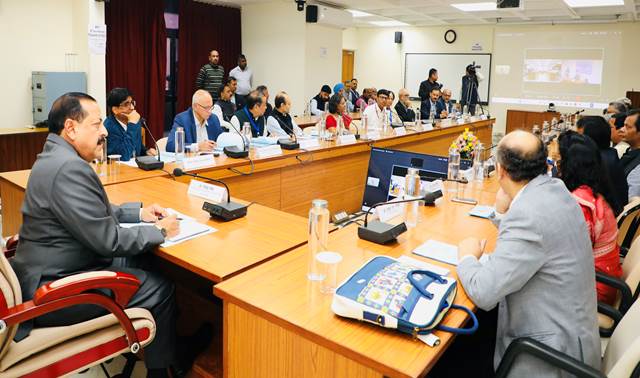
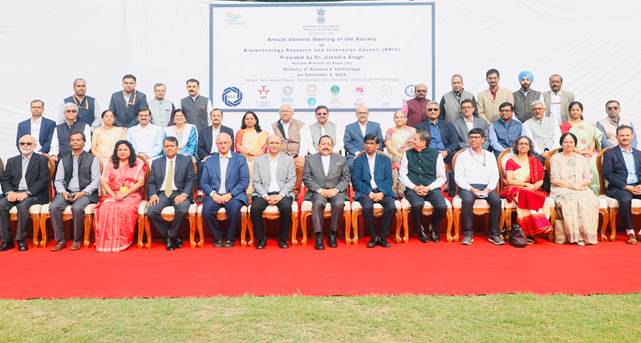
 Addressing the first-ever meeting of the BRIC Society after its registration on 10th November, 2023 after getting the Cabinet approval, Union Minister of State (Independent Charge) Science & Technology; MoS PMO, Personnel, Public Grievances, Pensions, Atomic Energy and Space, Dr Jitendra Singh said here today that time has come for defining “Bio-vision” for Bharat.

Dr Jitendra Singh today said that the new Apex Autonomous Society called Biotechnology Research and Innovation Council (BRIC) will fulfil Prime Minister Narendra Modi’s Vision for Atma Nirbhar Bharat in areas like healthcare, food and energy needs by scaling biotech research and innovation.

Dr Jitendra Singh said, Indian Bio-economy recorded 13 times increase in the last ten years.

The Minister quoted PM Modi as saying, “India is not too far from reaching the league of top-10 countries in Biotech’s global ecosystem”. He added that BRIC is going to be a testimony to this and again by inculcating the spirit of Sabka Prayas, the government is bringing together the best minds on a unified platform.

Dr Jitendra Singh informed that the Department of Biotechnology (DBT), Ministry of Science and Technology is functioning as the nodal agency for promotion of Biotechnology in the country. It was accorded the Cabinet approval for rationalization of its 14 Autonomous Institutions (AIs) by subsuming them under one Apex Autonomous Society viz. Biotechnology Research and Innovation Council (BRIC), for centralized and unified governance to maximize impact of biotech research across the country.
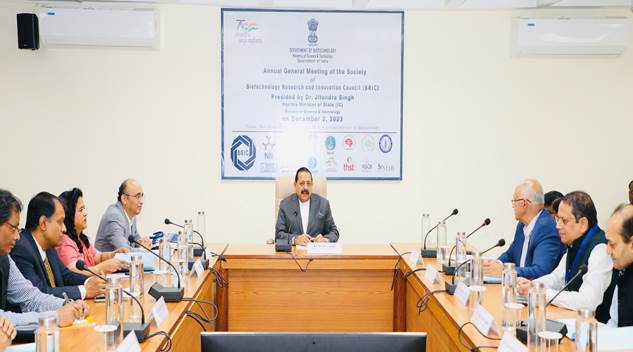
 

Dr Jitendra Singh described the BRIC meeting as a historical event in India’s Biotech Ecosystem, where elite institutions are consolidating their efforts to impact the biotech R&D ecosystem. He expressed hope that BRIC will prospectively enrich India’s progress in every front including economy and employment. The Minister said, as accomplished institution-builders, he would like to seek their views for defining the Bio-Vision for Bharat in this significant meeting, as they are supposed to bring in tremendous value to this noble mission.

Dr Jitendra Singh also pointed out that this is one of the first Departments in the Government of India to have successfully executed “Rationalization of Autonomous Bodies” for process and performance enhancement of its Autonomous bodies.

Dr Jitendra Singh said, some of the significant changes that will be driven by BRIC include that each of the 14 subsumed BRIC Institutions will maintain their distinct research mandates, governed by one Governing Body, at BRIC. He said, Institutes would be allowed utilization of institutional lab space, not exceeding one third, for researchers from outside DBT institutes and their collaborators (from industry or other institutes) to carry out R&D for start-ups emerging out of institutional research.

Dr Jitendra Singh also underlined that BRIC and its Institutes can engage in public-private research partnerships and receive endowments including funds from non-Governmental resources for research-related activities.

Dr Jitendra Singh also added that new Ph.D programs across BRIC institutions with a common course curriculum at RCB and immersion training for field or experimental studies for validating research hypotheses prior to thesis work. During the Immersion phase (for about 3 months) students will get additional fellowships from Grand Challenges India program. Additionally, to enhance the scientific character of the institutions, additional 120 scientific positions are being brought in. Parity across levels and cadres are also being pursued. Further improving service prospects for scientists are also being taken up, the Minister added.
 

The DBT initiated this restructuring activity as per the directives on “Rationalization of Autonomous Bodies” issued by Department of Expenditure, Ministry of Finance. However, they have used it as an opportunity to introspect and overhaul the way research is conducted across the DBT institutions. It is envisioned to improve governance, efficiency, encourage collaborations through greater interdisciplinary interactions and democratize resources. The compliance to governmental processes and administrative issues will be centrally managed in a coordinated effort thereby achieving “Minimum Government, Maximum Governance”.

The 14 institutes to be governed by the Society of the new Apex Body of BRIC are: :i) National Institute of Immunology (NII, New Delhi); ii) National Center for Cell Science (NCCS, Pune); iii) Institute of Life Sciences (ILS, Bhubaneshwar); iv) Rajiv Gandhi Centre for Biotechnology (RGCB, Thiruvananthapuram); v) Centre for DNA Fingerprinting & Diagnostics (CDFD, Hyderabad); vi) National Brain Research Centre (NBRC, Manesar); vii) National Institute for Plant Genome Research (NIPGR, New Delhi); viii) Institute of Bioresources and Sustainable Development (IBSD, Imphal); ix) National Institute of Animal Biotechnology (NIAB, Hyderabad); x) Institute for Stem Cell Science and Regenerative Medicine (inStem, Bangalore); xi) National Institute of Biomedical Genomics (NIBMG, Kalyani); xii) Translational Health Science and Technology Institute (THSTI, Faridabad); xiii) National Agri-Food Biotechnology Institute (NABI, Mohali); xiv) Center of Innovative and Applied Bioprocessing (CIAB, Mohali). NABI and CIAB have been merged into one administrative unit with one Director.

Dr. Jitendra Singh today also launched the ‘Zero Waste Life on Campus’ program on the occasion of first Society Meeting of BRIC.

The ‘Zero Waste Life on Campus’ program is aimed at achieving sustainability through application and adoption of knowledge and technologies, and promotion of management models focused on co-responsibility, on each BRIC campus. The diverse locations, cultures and climatic conditions of the 13 BRIC campuses will provide an opportunity to understand the benefits and challenges related to recycling technologies and techniques. This program will forge a new direction for research towards integrated waste management by the community at large.
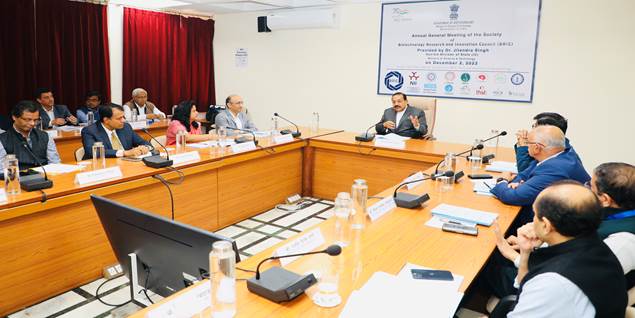
The Minister in his remarks said that this is a people centric movement that will serve as a beacon leading India into sustainable waste management. This programme will strengthen collaborations among all these institutions and also serve a catalyst for other institutions across India to follow the concept of Zero Waste.

This program is aligned with Prime Minister Shri Narendra Modi’s Mission LiFE movement said, Dr Jitendra Singh.
<
Bharat becomes the 13th country in world that can issue Internationally Accepted OIML (International Organization of Legal Metrology) Certificates

 OIML is an Intergovernmental organization which was established in 1955.  Bharat became it’s member in 1956. It has 63 Member States and 64 Corresponding Members.  Bharat has now become authority for issuing internationally accepted OIML certificate for selling weights & measures anywhere in the world.  To sell a weight or measure in the International market an OIML Pattern Approval certificate is mandatory, which Department of Consumer Affairs can issue now. 

Bharat follows OIML recommendations and procedures of testing and calibration of weights and measures.  The reports prepared by the Legal Metrology’s Regional Reference Standards Laboratories are now acceptable to the OIML issuing authorities. Now, Bharat is an authority for issue of OIML pattern approval certificates and can act as support system for indigenous manufacturers.  The domestic manufacturers can now export their weighing and measuring instrument worldwide without incurring additional testing fees, resulting in significant cost savings.

Bharat can also support the foreign manufacturers by issuing OIML pattern approval certificates from our certified RRSLs.  By issuing the OIML approval certificates of weighing & measuring instrument to the foreign manufacturers Bharat will also generate forex in terms of fees etc.

Bharat may now influence the OIML’s policies and provide input to the OIML Strategy. This system allows OIML Certificates issued by OIML Issuing Authorities in OIML Member States to be accepted by other participants as the basis for issuing national or regional type approvals for measuring instrument.  The other OIML Members can thus issue national type approval certificates without the need for expensive test facilities by relying on these certificates.

Bharat now joins an exclusive group of nations, including Australia, Switzerland, China, Czech Republic, Germany, Denmark, France, United Kingdom, Japan, Netherlands, Sweden, and Slovakia, as the 13th country worldwide, authorized for issuing OIML approval certificates.

Today, we proudly announce Bharat’s ascent to the ranks of globally recognized OIML Certificates Issuing Authorities, a testament to our nation’s commitment to quality standards and international trade facilitation.

Secretary (Consumer Affairs), Shri Rohit Kumar Singh, shared this significant achievement with the press during a conference, where a presentation and video were presented to illustrate the importance of this accomplishment.

Mr. Paul Dixon, Executive Secretary, OIML-CS, also joined from OIML’s Paris Headquarters for the briefing, re-affirming Bharat’s role as an OIML Certificates Issuing Authority and assuring continued cooperation.

***

Bharat: The Mother of Democracy&#39;

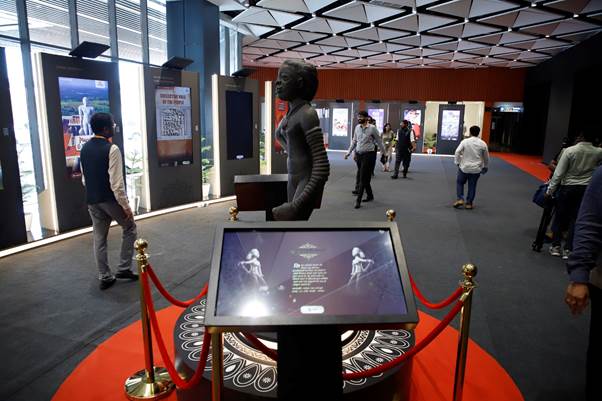
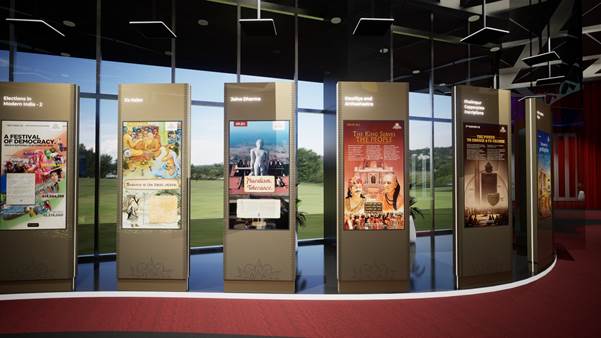
 Ministry of Culture, Government of India curated an exhibition on ‘Bharat: The Mother of Democracy’ at Hall No. 14 (foyer area), ITPO for G20 Summit during 8-10 September 2023. This curated experience displayed the democratic traditions of our country.

(The history of India’s democratic character was displayed in different languages through 26 interactive panels.)


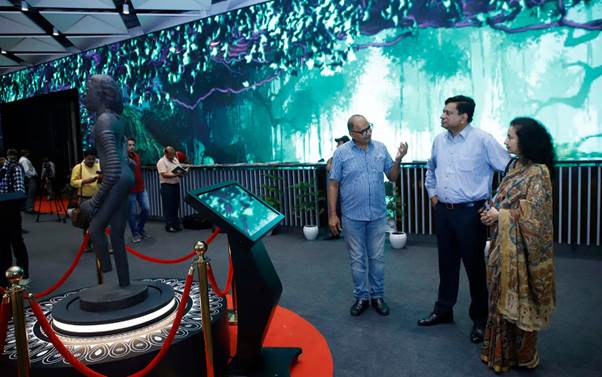
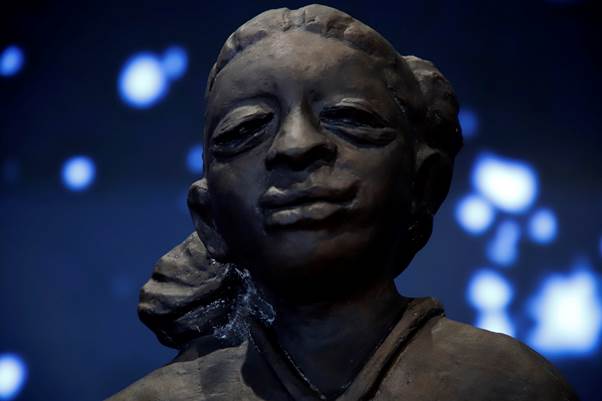
(The sculpture of the girl from the Sindhu-Saraswati Civilization in the centre)


(A huge video screen at the back of the reception showcasing the visuals of India’s rich cultural traditions)


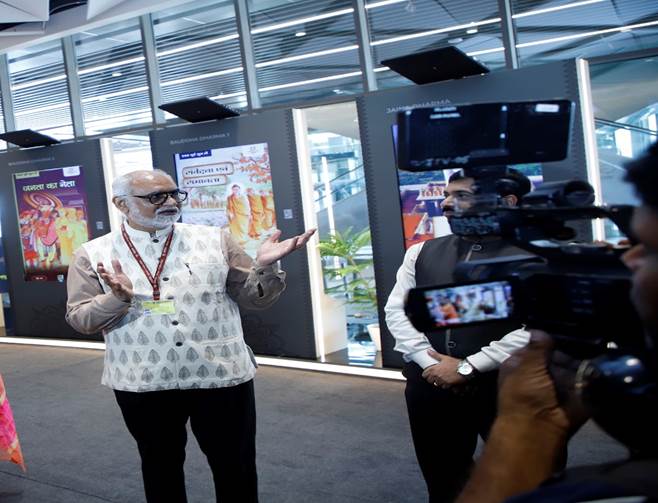
(Shri Sachchidanand Joshi, Member Secretary, IGNCA briefing the media about the ‘Bharat: The Mother of Democracy’ Exhibition)


She stands confident, self-assured and looking at the world eye-to-eye. Independent. Liberated. On her body, she wears jewellery much like the adornments that are worn every day by women in western India.The actual height of the object is 10.5 cm but the replica was created 5 ft. height and 120 kg weight in bronze.

 The history of democracy in India can be revisited through the 26 interactive panels on one side of the pathways where visitors can read content and listen to audio in 16 different languages. The panels include Local Self Governance, Elections in modern India, Krishna Deva Raya, Jain Dharma among others. The exhibition can be accessed digitally on the G20 application.

Democracy is an age-old concept in India. As per the Indian ethos, democracy comprises the values of freedom, acceptability, equality, and inclusivity in a society and allow its common citizens to lead a quality and dignified life. The Rigveda and the Atharvaveda, the earliest available sacred texts refer to participatory institutions like the Sabha, Samiti, and Sansad, the last term being still in currency denoting our parliament. The Ramayana and the Mahabharata, the great epics of this land, also talk about involving people in decision-making. There are also found in Indian textual instances that the authority to govern is earned through merit or common consensus and is not hereditary. There has been constant discourse on the legitimacy of the voter in various democratic institutions such as the Parishad and Samiti. The Indian democracy is truly a festive proclamation of veracity, cooperation, collaboration, peace, sympathy and collective strength of the people.


**

Should India be renamed, Bharat?

William Shakespeare had his most celebrated heroine Juliet say in his Romeo and Juliet play, What’s in a name”. “That which we call a rose. By any other name would smell as sweet.”

But most people wouldn’t agree with Shakespeare in their daily lives. For, a name is the most prominent identity of a person, a family, a caste, a religion or a country. Every name has a history. This was hotly debated in the constituent assembly when India got Independence from British rule. The British called India “India”. Before them, the Mughals, the biggest empire in India, called it Hindustan. After an intense debate, the Constitution accepted two names for the country, India and Bharat. Now, a petition had been filed in the Supreme Court seeking removal of ‘India’ as the name of the country and keeping just Bharat as the solitary identity of the nation.

In The Discovery of India, a book that Jawaharlal Nehru wrote during his years of captivity (1942-1946) and published in 1946 :

Often, as I walked from meeting to meeting, I spoke to my audiences of this India of ours, of Hindustan and of Bharata, the old Sanskrit name consequential from the mythical founders of the race.

When the book was published, these names, Hindustan, Bharat (also Bharata), India, coexisted in the subcontinent. Of the endless usage also was Hind, as in ‘Jai Hind’ (Victory to Hind), the battle-cry that Patel, Nehru other several other political leaders, liked to proclaim at the end of his speeches. To capture these innumerable meanings today is not an easy task. It demands to be conscious of the simple and yet too often forgotten fact that words have a past of their own; they do not maintain the same significance throughout time.

Naming the Nation and Constitutional debates

The constituent assembly debated Article 1 of the then draft constitution prepared under the chairmanship of BR Ambedkar. It was a heated debate that saw sharp exchanges among the members on November 18, 1949 – just eight days before the Constitution was adopted by “We, the people”. The debate opened with HV Kamath, a constituent assembly member from the Central Province and Berar. Kamath opposed the Ambedkar committee’s draft that had two names – India and Bharat.

Kamath projected amendments to Article 1 putting Bharat or alternatively Hind as the primary name for the country and voicing India only as the name in the English language. He listed names such as “Hindustan, Hind and Bharatbhumi or Bharatvarsh” to have been recommended by people.

When Kamath began explaining the origin of the name of Bharat, Bharatbhumi or Bharatvarsh dating it to ancient times. Kamath was strongly opposed to the language of Article 1(1) that says, “India that is Bharat”. Another prominent name to oppose the language was Seth Govind Das, who said, “India, that is, Bharat” are not beautiful words for the name of a country. We should have laid down the words “Bharat known as India also in foreign countries.” Das quoted the Vedas, the Mahabharat, some of the Puranas and the works of Chinese traveller Hiuen-Tsang to say that Bharat was the original name of the country, hence India should not be put as the principal name in the constitution post-independence. He also invoked Mahatma Gandhi saying that the country fought the battle of freedom raising the slogan of “Bharat Mata Ki Jai” asserting that Bharat could be the only plausible name for the country.

Among others who wanted India being named only as Bharat included KV Rao from Andhra Pradesh. Rao went to the extent of suggesting that on the basis of historical nomenclature, Pakistan could be named as Hindustan. Rao emphasized, “we can now call ‘Pakistan as Hindustan because the Indus river is there. Hind has replaced Sind : (Ha) in Prakrit is pronounced as (‘sa)’ in Sanskrit. Greeks pronounced Hind as Ind. Hereafter it is apt that we should refer to India as Bharat.”

At the end, when Rajendra Prasad put the amendments to vote, all fell. Article 1 remained intact as “India, that is Bharat”. However, the debate has continued.

Naming the nation: a sensitive and intricate issue to this day

In 2014, Yogi Adityanath – the current chief minister of Uttar Pradesh – had moved a Private Member’s Bill in the Lok Sabha, seeking substitution of word “India” in the Constitution with “Hindustan” proposing “Bharat” as the primary name of the country. His bill proposed to amend the language of Article 1 as, “Bharat, that is Hindustan, shall be a Union of States.

The Supreme Court wanted  the Centre and the states to comment on a plea demanding change in the name of the country from ‘India’ to ‘Bharat’, in April this year. A 2 judge bench of Chief Justice H L Dattu and Justice Arun Mishra had issued the notice to all state governments and union territories on the PIL which called for restricting the Centre from using the name of India in official papers and for any government purposes.

On June 1, 2020, Niranjan Bhatwal filed a petition, claiming to be a social activist from Maharashtra, said that even the NGO’s and corporates should be ordered to use ‘Bharat’ for all official and unofficial purposes. The PIL detailed that even in the Constituent Assembly, the leading suggestions for naming the country were “Hind, Hindustan, Bharat and Bharatbhumi or Bharatvarsh and names of that kind”.

Among the several questions raised in the PIL were whether the addition of India in Article 1 of the Constitution was just for reference, in order to repeal the Government of India Act 1935, and the Indian Independence Act 1947, where this country had been referred to as India and wanted it to be repealed by Article 395 of the Constitution. Further, it asked whether the addition of ‘India’ was simply referential for de-jure acknowledgement of the country by countries of other parts of the world for political purposes. The PIL also said whether Hindi language extracts of Article 1 Clause 1 of the Constitution signify the same meaning, as it signifies in the English language of the Constitution with respect to establishing the name of the country.

While the government has told the Supreme Court, there is no need to rename India as Bharat. Article 1 (1) of the Constitution lays down that “name and territory of the Union.—(1) India, that is Bharat, shall be a Union of States”. In its affidavit, the Ministry of Home Affairs has said issues concerning the country’s name have been reflected upon lengthily by the Constituent Assembly during the drafting of the Constitution and there was no requirement for a review.

The Supreme Court on 3rd June ordered that a plea to change India’s name specifically to ‘Bharat’ should be forwarded to the Centre for an appropriate decision.

“Bharat and India are both names given in the Constitution, says CJI.

The apex court had rejected a similar petition in 2016. Then CJI, T.S. Thakur emphasized that every Indian had the right to choose between calling his country ‘Bharat’ or ‘India’ and the Supreme Court had no business to either command or decide for a citizen what one should call his country.

Is there a solution?

The policymaking of naming is part of the societal production of the nation. Its processes are moulded by broad socio-political conditions and can be understood from several angles. The purpose has been to look at some of the inherited discourses on ‘Bhārata’ both prior to and at the time of its official equation with ‘India’ in the Constitution of 1950. In the 19th century, the name Bhārata was used to refer to the geographicalpolitical and administrative entity that the colonial power called ‘India’. That Bhārata—a cultural space whose unity was to be found in the social order of dharma—was a pre-national construction and not a national project.

 At the time of independence, India and Bhārata were equally worthy candidates to bless the newly-born nation, along with ‘Hindustan’. But the first article of the Constitution discarded Hindustan and listed the nation under a dual and bilingual identity: ‘India, that is Bharat’. One name was to be used as the translation of the other as exemplified on the cover of the national passport, where the English ‘Republic of India’ corresponds to the Hindi ‘Bhārata gaṇarājya’, or, possibly, even more, telling, on Indian postage stamps, where the two words Bhārata and India are located. It is possible that all these names will continue to be understood and interpreted with new circumstances, to give new connotations to India’s national identity, a constant, open-ended process.

What are we to make of the comparison of Bharat and India in the Constitution? How did such a double-name plan come about? This is the main question to be dealt with. In the end, we should realise that the Constituent assembly’s decision should be understood as the outcome of a long historical process with deep cultural roots.