Role of Demography & Rahul Gandhi in Karnataka State Election Results

Daily writing prompt
What’s the hardest decision you’ve ever had to make? Why?

By Shashikant Nishant Sharma
xr:d:DAFiyYG1Y4w:2,j:47066149369,t:23051309

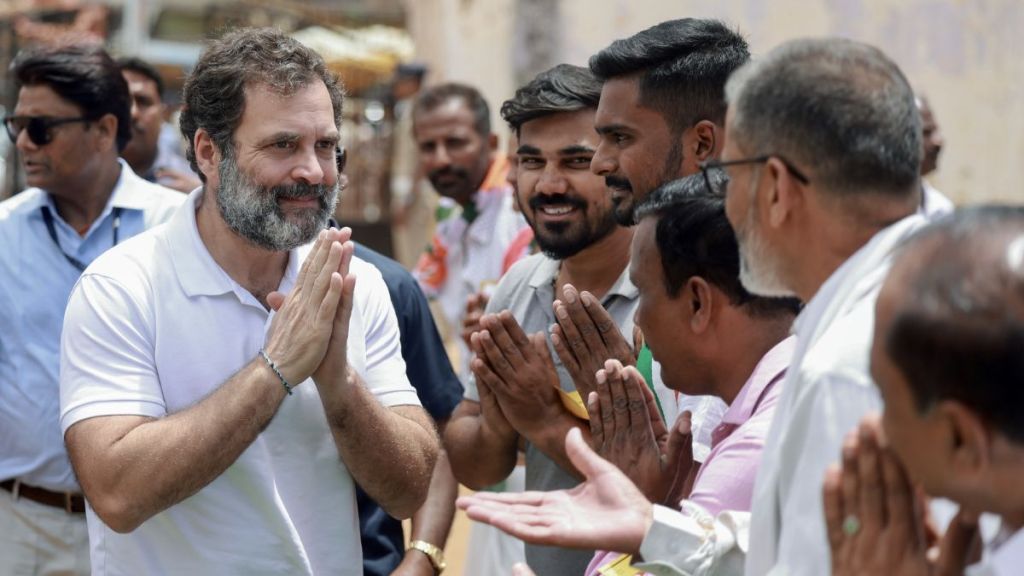
Demography, encompassing factors like age, caste, and religion, influences voting patterns in Karnataka state elections. Understanding the composition of the electorate helps analyze alliances and voting behavior. Rahul Gandhi, a prominent politician from the Indian National Congress, has campaigned in Karnataka and sought to mobilize support for his party. His effectiveness in connecting with voters and influencing the election outcome varies, as it depends on multiple factors beyond an individual’s influence. Other dynamics, such as party strategies, local issues, and the performance of rival parties, also play crucial roles in determining the results of Karnataka state elections.

Demography plays a significant role in elections as it involves the study of population characteristics and their influence on political outcomes. In the context of the Karnataka state election results, demography can provide insights into the composition of the electorate, such as age, gender, caste, and religion, which can shape voting patterns and alliances. Rahul Gandhi is a prominent Indian politician and a member of the Indian National Congress party. His role in the Karnataka state election results would depend on various factors, including his party’s performance, his campaign efforts, and his ability to connect with voters. While he may have campaigned in the state and tried to mobilize support for his party, the overall outcome of the election would depend on multiple factors beyond any individual’s influence.

Changing Demography of Karnataka

Karnataka has experienced significant demographic changes in recent years. The state’s population has been growing steadily, primarily due to natural increase and in-migration from other parts of India. According to the 2011 census, Karnataka had a population of approximately 61 million. Urbanization has been a prominent trend in the state, with cities like Bengaluru, Mysore, and Mangalore witnessing rapid growth. Bengaluru, in particular, has emerged as a major IT and technology hub, attracting professionals from different parts of the country. This influx of migrants has contributed to the cosmopolitan nature of the city. Karnataka is linguistically diverse, with Kannada being the primary language spoken by a majority of the population. However, there are also significant populations that speak other languages such as Tamil, Telugu, Urdu, and Konkani, among others. In terms of religious composition, Hinduism is the predominant religion in Karnataka, followed by Islam, Christianity, and Jainism. The state is also home to various religious sects and communities, contributing to its religious diversity. Caste continues to be a factor influencing Karnataka’s demography and politics. Historically influential communities, such as the Lingayats and Vokkaligas, have played significant roles in the state’s social and political landscape. However, other communities, including Scheduled Castes (Dalits) and Scheduled Tribes, have also gained political representation and influence.

It’s important to note that the demographic landscape of Karnataka may have evolved since my last update. For the most up-to-date and precise information, referring to recent studies and official data sources is recommended.

Emergence of Rahul Gandhi 

Rahul Gandhi is a prominent Indian politician and a member of the Indian National Congress party. He is the son of former Indian Prime Minister Rajiv Gandhi and the grandson of former Prime Minister Indira Gandhi. Rahul Gandhi’s emergence as a political figure in India began with his active involvement in the Indian National Congress party and his eventual entry into electoral politics. Rahul Gandhi initially served as a general secretary of the Indian National Congress, working behind the scenes to strengthen the party’s organization and support its electoral campaigns. Over time, he took on a more prominent role within the party, becoming the vice president in 2013 and eventually the president of the Indian National Congress in 2017. Rahul Gandhi’s emergence as a political leader has been characterized by efforts to connect with the youth, marginalized communities, and rural populations. He has advocated for issues such as social justice, inclusivity, and economic development. Rahul Gandhi has campaigned extensively in various state elections, including Karnataka, and has sought to rally support for his party’s candidates. While Rahul Gandhi has garnered a considerable following and support within the Indian National Congress party, his political journey has seen ups and downs. He has faced criticism and scrutiny from political opponents and has been actively involved in debates and discussions on various national and regional issues. It is worth noting that political dynamics and individual influence can vary over time, and the specific impact and future trajectory of Rahul Gandhi’s emergence in Indian politics will continue to evolve as political landscapes change.

History of Karnataka Elections

The history of Karnataka elections dates back to the formation of the state in 1956. Since then, Karnataka has witnessed numerous state assembly elections as well as Lok Sabha (parliamentary) elections. Here is a brief overview of the history of Karnataka elections: Early Years: The first general elections in Karnataka took place in 1957. The Indian National Congress (INC) dominated the political landscape in the early years, winning the majority of seats in the state assembly. Coalition Politics: In the 1980s and 1990s, Karnataka witnessed the rise of coalition politics. The Janata Party, a coalition of various anti-Congress parties, came to power in 1983, marking a shift from single-party dominance. This period saw multiple governments being formed by different alliances, including the Janata Dal and Bharatiya Janata Party (BJP). Rise of the BJP: The Bharatiya Janata Party (BJP) gained prominence in Karnataka during the late 1990s and early 2000s. In 2004, the BJP formed its first government in the state, led by Chief Minister B.S. Yeddyurappa. However, the government faced internal issues, leading to its collapse. Congress Revival: The Indian National Congress made a comeback in Karnataka politics, winning the state assembly elections in 2013. Siddaramaiah became the Chief Minister, leading a Congress government. However, in the 2018 elections, the Congress was unable to secure a majority, leading to a coalition government with the Janata Dal (Secular) party.

Recent Elections: In the most recent state assembly elections held in 2018, the BJP emerged as the single largest party. After a period of political uncertainty, the BJP formed the government with B.S. Yeddyurappa as the Chief Minister. However, in subsequent by-elections, the BJP lost a few seats, resulting in a change of Chief Minister with B.S. Yediyurappa resigning and Basavaraj Bommai taking office in 2021. It’s important to note that the political landscape in Karnataka has been dynamic, with various parties and alliances vying for power. State elections in Karnataka have seen the emergence of regional parties, coalition governments, and shifts in power between the Indian National Congress and the Bharatiya Janata Party. The outcome of elections in Karnataka has had implications for state governance as well as national politics.

New Challenges for Congress Party

The Congress Party in India has faced several challenges in recent years. Here are some of the key challenges it has encountered: 

Electoral Performance: The Congress Party has witnessed a decline in its electoral performance, especially in national elections. In the 2014 and 2019 Lok Sabha elections, the party faced significant setbacks, winning only a limited number of seats. This decline has impacted its overall political influence and ability to form a government at the national level.

Leadership Crisis: The party has grappled with a leadership crisis, with a lack of clear and dynamic leadership. This has resulted in a leadership vacuum and internal factionalism, which have weakened the party’s ability to present a united front and effectively communicate its message to the electorate.

Ideological Positioning: The Congress Party has faced challenges in clearly articulating its ideological positioning. In recent years, there has been a growing trend of political parties aligning themselves with specific ideologies or issues, while the Congress Party has struggled to define and communicate its distinct ideological stance.

Regional Strongholds: The Congress Party has lost ground in many states where it previously had strongholds. Regional parties have gained prominence and appeal, leading to a fragmentation of the political landscape. This has reduced the Congress Party’s ability to form alliances and consolidate its support base.

Youth Appeal: The Congress Party has faced difficulties in appealing to the aspirations and concerns of the younger generation. It has struggled to connect with the youth, who are increasingly looking for dynamic and transformative leadership and policies.

Communication Strategy: The Congress Party has faced challenges in effectively communicating its policies and achievements to the electorate. It has struggled to counter the narrative of its political opponents and has often been perceived as lacking a robust communication strategy.

Organizational Strength: The Congress Party has faced issues with its organizational strength and grassroots presence. It has struggled to rejuvenate its party structure and mobilize workers effectively, particularly at the local level.

To overcome these challenges, the Congress Party needs to undertake significant introspection, revitalize its leadership, redefine its ideological positioning, and strengthen its organizational structure. It must also focus on engaging with the aspirations of the youth and effectively communicate its policies and vision to regain public trust and support.

Concluding Remarks 

The Congress Party’s performance in Karnataka elections has been subject to critical appraisal due to a mix of successes and failures. While the party has experienced some notable achievements, it has also encountered significant setbacks. Here is a critical appraisal of the Congress Party’s performance in Karnataka elections:

Mixed Electoral Performance: The Congress Party has had mixed electoral performances in Karnataka. It won the state assembly elections in 2013, forming the government under the leadership of Siddaramaiah. However, in the subsequent 2018 elections, the party failed to secure a majority and had to form a coalition government with the Janata Dal (Secular) party. This highlighted a lack of sustained popularity and the inability to secure a clear mandate.

Leadership Challenges: The Congress Party has struggled with leadership challenges in Karnataka. While Siddaramaiah played a significant role in the party’s victory in 2013, his tenure as Chief Minister was marked by controversies and internal rifts. Additionally, the absence of a strong and decisive leader at the state level has affected the party’s ability to effectively mobilize support and present a cohesive image.

Intra-party Factionalism: The Congress Party in Karnataka has been plagued by factionalism and infighting. Internal divisions and power struggles have hindered the party’s unity and cohesion, leading to weakened electoral campaigns and suboptimal coordination among party members.

Failure to Capitalize on Governance: The Congress Party’s tenure in Karnataka witnessed a mixed record in governance. While some initiatives were undertaken, such as social welfare programs and measures to address agrarian issues, the party failed to effectively communicate and capitalize on these achievements. Inadequate implementation and a lack of clear messaging hindered their ability to connect with voters and secure their trust.

Inability to Counter BJP’s Rise: The Congress Party has struggled to counter the Bharatiya Janata Party’s (BJP) rise in Karnataka. The BJP’s strong organizational structure, effective campaign strategies, and appeal to Hindutva ideology have posed significant challenges for the Congress Party. The party has been unable to effectively counter the BJP’s messaging and address the concerns of a changing electorate.

Failure to Strengthen Party Organization: The Congress Party has faced challenges in strengthening its party organization at the grassroots level in Karnataka. The absence of a robust and well-connected organizational structure has hindered their ability to mobilize support and build a strong voter base.

To improve their performance in national elections, the Congress Party needs to address these critical issues. They should focus on nurturing strong and decisive leadership, resolving internal factionalism, communicating their achievements effectively, countering the BJP’s rise, and revitalizing the party organization at all levels. Additionally, connecting with voters on issues that resonate with them and presenting a clear vision for the state’s development will be crucial in rebuilding public trust and support.

References 

Antil, A., & Verma, H. V. (2021). Rahul Gandhi on Twitter: An analysis of brand building through Twitter by the leader of the main opposition party in India. Global Business Review, 22(5), 1258-1275.

Devi, B. U. (2013). Rahul Gandhi’s Immaturity. Economic and Political Weekly, 48(43), 5-5.

Gould, H. A. (1997). General Elections, 1996: Karnataka: Decline and Fall of the Congress Machine. Economic and Political Weekly, 2335-2349.

Manor, J. (2008). Letting a winnable election slip away: Congress in Karnataka. Economic and Political Weekly, 23-28.

Mahapatra, S., & Plagemann, J. (2019). Polarisation and politicisation: the social media strategies of Indian political parties.

Manor, J. (2013). Lucky in Its Adversaries: A Slipshod Congress Gains a Majority in the Karnataka Election. Economic and Political Weekly, 51-59.

Palshikar, S., & Suri, K. C. (2014). India’s 2014 Lok Sabha elections: Critical shifts in the long term, caution in the short term. Economic and Political Weekly, 39-49.

Pinto, A. (1994). Karnataka Assembly Elections: An Overview. Economic and Political Weekly, 3309-3311.

Shastri, S. (2009). Leadership at the state level mattered. Economic and Political Weekly, 88-91.

Shastri, S. (2013). The 2013 Karnataka Assembly Outcome: Government Performance and Party Organization Matters. Studies in Indian Politics, 1(2), 135-152.Simmons, C. (2019). Dynastic Continuity and Election in Contemporary Karnataka Politics. In South Asian Sovereignty (pp. 136-149). Routledge India.

More than 30 thousand houses approves in Madhya Pradesh for particularly vulnerable tribal group families under PM-Janman

The Government is continuously working under the leadership of Prime Minister Shri Narendra Modi for the development of the country, especially the vulnerable tribal group families, through the ambitious Pradhan Mantri Jan Man Yojana (PM-Jan Man). Under this, Union Minister for Rural Development and Agriculture & Farmers’ Welfare Shri Shivraj Singh Chouhan giving a gift to the tribal families of Madhya Pradesh, has approved more than 30 thousand houses in Madhya Pradesh. Union Minister said that PM Modi’s government is fully committed and sensitive towards the deprived and exploited. He said that every possible work will be done continuously for the upliftment of this section. 

Union Minister Shri Shivraj Singh Chouhan, while approving the allocation of additional targets for the year 2024-25 under the Pradhan Mantri Awas Yojana, Ministry of Rural Development, said that PM Janman Mission aims at the development of 75 Particularly Vulnerable Tribal Groups (PVTGs) who have been left out from the schemes of various Ministries/Departments. Shri Chouhan said that the full focus of the Modi government is to reach out to the last person in the country. He informed that the targeted housing (4.90 lakh houses) under PM-Janman is to be completed by March 2026.

Union Minister informed that earlier a target6 of 3,70,963 (2,18,890 in the year 2023-24 and 1,52,073 in the year 2024-25) has been allocated to the States4, out of which 3.38 lakh houses have been sanctioned and the first installment3 has been released to 2.71 lakh beneficiaries and 62,005 houses have been completed.  After the survey, the states have identified 46,573 additional eligible families, out of which more than 30 thousand houses have been allotted additionally to Madhya Pradesh. Earlier, 1,44,200 houses have been approved for Madhya Pradesh.

Approval of roads in Andhra Pradesh under PM-Janman – Shri Shivraj Singh Chouhan has also approved 76 roads of 297.18 km length in the state of Andhra Pradesh under PM-Janman. The estimated cost of these 76 roads is Rs 275.07 crore, out of which the central share is Rs 163.39 crore and the state share is Rs 111.68 crore.

Additional sanctioned housing in Madhya Pradesh (district wise)

Anuppur1522
Ashok Nagar2294
Balaghat401
Chhindwada202
Datiya110
Dindori1532
Guna2084
Gwalior266
Jabalpur42
Mandla903
Morena695
Narsinghpur158
Raisen29
Siwani117
Shahdol2591
Sheopur7561
Shivouri5154
Sidhi1042
Singrrauli1895
Umaria4092
Vidisha448

*****

SS

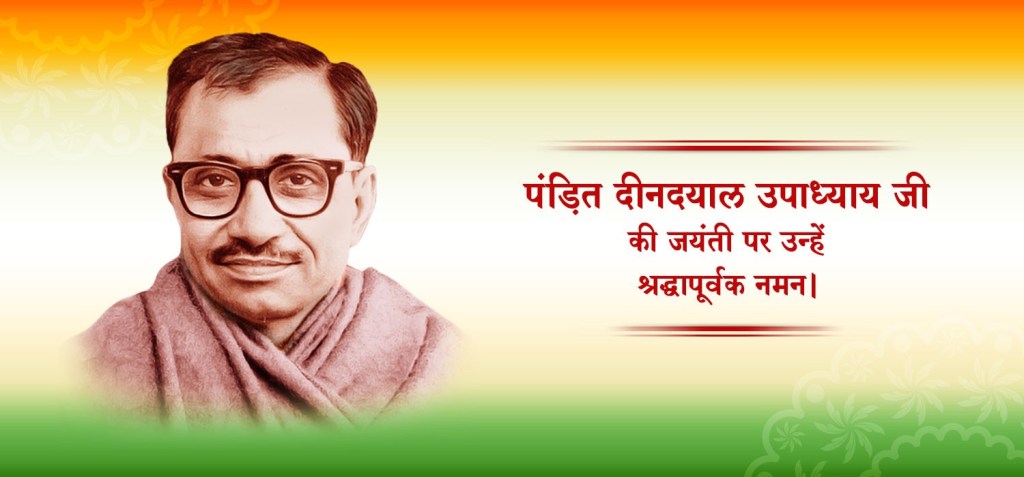
Pandit Deendayal Upadhyaya (1916–1968)

Daily writing prompt
What details of your life could you pay more attention to?

Pandit Deendayal Upadhyaya (1916–1968) was an Indian politician, philosopher, economist, and thinker, who played a significant role in shaping the political and ideological framework of modern India. He was a key leader in the Bharatiya Jana Sangh (the precursor to the Bharatiya Janata Party, or BJP) and is best known for his formulation of the concept of “Integral Humanism”—a philosophy that sought to define India’s political and socio-economic direction post-independence.

Early Life and Education

Deendayal Upadhyaya was born on September 25, 1916, in the small town of Chandrabhan (now renamed Deendayal Dham) in Mathura district, Uttar Pradesh. His early life was marked by tragedy, as he lost his parents at a young age, and he was raised by his maternal uncle. Despite financial hardships, Upadhyaya was an excellent student, excelling academically. He attended high school in Sikar, Rajasthan, where he earned a scholarship, and later completed his graduation from Sanatan Dharma College, Kanpur. He pursued further studies at St. John’s College, Agra.

However, despite excelling academically, Upadhyaya was drawn towards nationalist politics and social work, influenced by the ideas of Rashtriya Swayamsevak Sangh (RSS), a Hindu nationalist volunteer organization that focused on nation-building and social welfare.

Political Career

Pandit Deendayal Upadhyaya’s formal political journey began when he joined the RSS in the late 1930s. Deeply committed to the cause of Hindutva (Hindu nationalism), he worked as a full-time “pracharak” (propagator) for the RSS. His dedication to nationalist ideals was evident as he worked tirelessly to expand the influence of the organization in different parts of India.

In 1951, when Syama Prasad Mookerjee founded the Bharatiya Jana Sangh (BJS), Deendayal Upadhyaya was one of its key founding members. He became the party’s General Secretary, a post he held for nearly two decades, contributing to the growth of the party. He was instrumental in defining the ideological framework of the Jana Sangh, emphasizing a vision of India rooted in its indigenous culture, values, and self-reliance.

Integral Humanism

The most important contribution of Pandit Deendayal Upadhyaya to Indian political thought is his doctrine of “Integral Humanism” (Ekatma Manav Darshan). Delivered as a series of lectures in 1965, Integral Humanism was proposed as an alternative to both Western capitalism and socialism. According to Upadhyaya, both these systems were incompatible with Indian culture and failed to meet the holistic needs of human beings.

Core principles of Integral Humanism:

  1. Holistic Development of Human Beings: Upadhyaya believed that human development must address both material and spiritual needs. Western ideologies focused too much on material prosperity, neglecting the spiritual and cultural aspects of human life.
  2. Socio-Economic Model Based on Indian Traditions: Upadhyaya advocated for an economic model rooted in Indian values, emphasizing decentralized governance and self-reliance (Swadeshi). He was against the blind adoption of Western economic policies and called for a system that balanced economic growth with ethical living.
  3. Harmony between Individual and Society: He stressed that individual aspirations should align with the well-being of society as a whole. He argued for a balance between individual rights and societal duties, avoiding both excessive state control and extreme individualism.
  4. Focus on Indigenous Solutions: Upadhyaya’s vision was fundamentally based on the cultural and spiritual ethos of India. He believed that India must evolve a political and economic system that is not an imitation of the West but instead arises from its own traditions, culture, and spiritual heritage.

Integral Humanism continues to serve as the ideological foundation of the BJP today, which sees it as a guiding principle for national development and governance.

Political Leadership and Influence

Deendayal Upadhyaya’s leadership in the Bharatiya Jana Sangh was marked by his focus on organizational discipline and ideological clarity. Although he was not a mass leader like some of his contemporaries, his influence lay in his intellectual contributions and behind-the-scenes work in strengthening the party structure. He became the President of the Bharatiya Jana Sangh in 1967, but his tenure was tragically short-lived due to his untimely death.

Despite the challenges faced by the Jana Sangh in competing with larger political entities like the Congress, Upadhyaya’s vision helped solidify the party’s role as the voice of Hindu nationalism and cultural conservatism in Indian politics. His emphasis on a politics of ethics, discipline, and indigenous values resonated with many, laying the groundwork for the later rise of the BJP.

Mysterious Death

Pandit Deendayal Upadhyaya’s life was cut short under mysterious circumstances. On February 11, 1968, his body was found near the railway tracks in Mughal Sarai (now Deendayal Upadhyaya Junction) under suspicious circumstances. The circumstances of his death remain unclear to this day, leading to various theories and speculations. His untimely death was a great loss to Indian politics, as many believe he had much more to offer in terms of thought leadership and political guidance.

Legacy

Pandit Deendayal Upadhyaya’s legacy lives on through the political ideology he helped shape. The Bharatiya Janata Party (BJP), which emerged from the Bharatiya Jana Sangh, regards him as a key figure in its ideological foundation. His thoughts on Integral Humanism continue to influence Indian politics, particularly in the realm of governance, self-reliance, and national identity.

Several institutions, programs, and initiatives have been named in his honor, reflecting the continued relevance of his ideas. The government of India, especially under the leadership of BJP, has launched numerous schemes bearing his name, including Deen Dayal Antyodaya Yojana (for poverty alleviation) and Deen Dayal Upadhyaya Grameen Kaushalya Yojana (for rural employment).

Conclusion

Pandit Deendayal Upadhyaya was a thinker and politician who left an indelible mark on Indian political thought through his advocacy of a distinctive Indian philosophy, Integral Humanism. His ideas continue to inspire contemporary political discourse in India, especially within the Hindutva movement and the broader framework of Indian governance. His focus on the integration of material and spiritual development, as well as the promotion of an indigenous economic and political system, makes him a key figure in the intellectual history of modern India.

UNIFORM CIVIL CODE

In areas like as marriage, divorce, inheritance, and adoption, the Uniform Civil Code (UCC) advocates for the creation of a single law for India that would apply to all religious sects. The law is based on Article 44 of the Constitution, which states that the state must work to ensure that citizens throughout India have access to a uniform civil code.

For over a century, the subject has been at the forefront of political discourse and discussion, and it is a top priority for the Bharatiya Janata Party (BJP), which has been pressing for legislation in Parliament. The saffron party was the first to vow that if it wins power, it will adopt UCC, and the subject was included in its Lok Sabha election program for 2019.

The central family law acts were extended to Jammu and Kashmir when Article 370 was repealed. Although this is another step toward adopting UCC across India, there is still a long way to go in this endeavor. 

Human rights and the values of equality, fairness and justice all support the creation of a standard civil code. Article 44 of the Indian constitution’s directive principle is important because its goal is combat discrimination against vulnerable groups and to bring disparate cultural groupings together across the country. While drafting the Constitution, the father of our constitution “Dr. B R Ambedkar” stated that while a UCC is desirable, it should remain voluntary for the time being, and so Article 35 of the draft Constitution was added as part of the Directive Principles of State Policy in Part IV of the Constitution of India as Article 44. It was included into the Constitution as a condition that would be met when the nation was ready to embrace it and the UCC could gain societal acceptability.

The UCC aims to provide the following:-

  1. Protection of Vulnerable Portions of Society: The UCC strives to safeguard vulnerable sections of society, like women and religious minorities, as envisioned by Ambedkar, while simultaneously encouraging nationalistic ardour via unity.
  2. Rules will be simplified: The code will make the complicated laws of marriage ceremonies, inheritance, succession, and adoptions more accessible to everyone. All citizens, regardless of their faith, shall be subject to the same civil law. When passed, the code would strive to simplify laws that are now divided based on religious views, such as the Hindu code bill, Sharia law, and other similar legislation.
  3. Secularism: A goal established in the Preamble, and a secular republic requires a single law for all people rather than differentiating regulations based on religious customs.
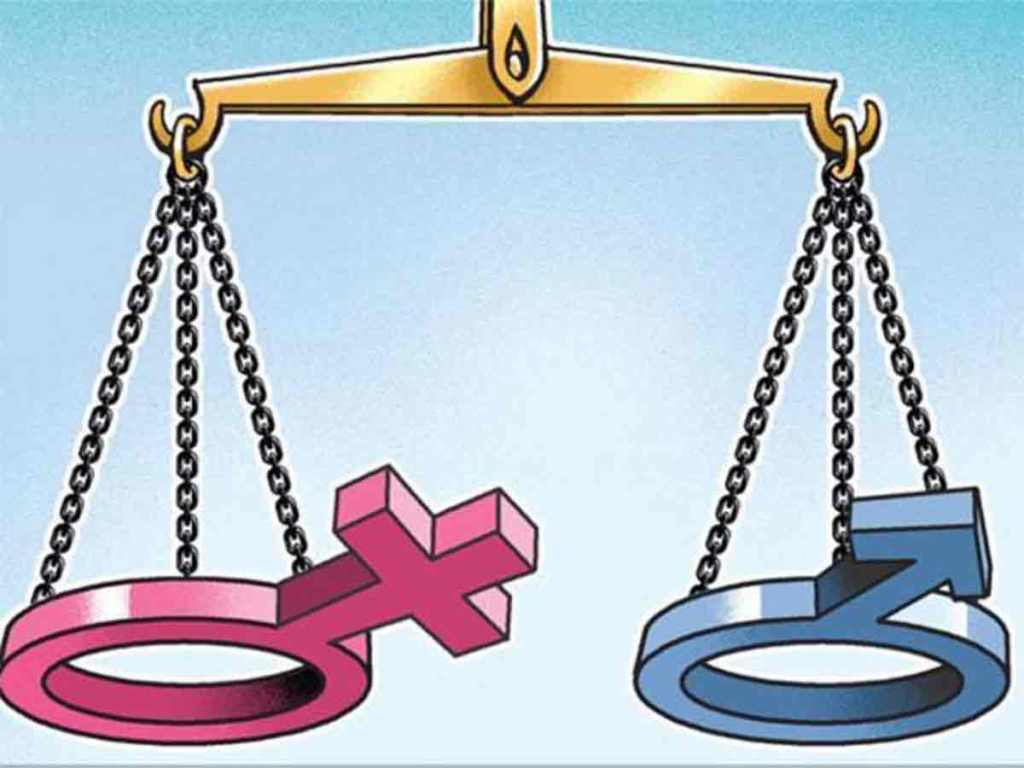
  4. Gender justice: Each religion in India has its own set of personal rules covering weddings, divorce, succession, adoption, and maintenance. Women’s rights, however, are typically restricted by religious legislation, whether Hindu or Muslim. A famous example is the practice of triple talaq which is now been held unconstitutional.

All personal laws will be abolished if an unified civil code is established. 

Therefore, the people’ fundamental rights to equality before the law and equal protection under the law, as guaranteed by the Constitution, need a comparable response throughout these regions. Article 44, which requires the state to make reasonable efforts to ensure that citizens have access to an unified civil code across India, has the same effect.

National Democratic Alliance (NDA)

What NDA or National Democratic Alliance is?

NDA is the abbreviation for the National Democratic Alliance. The NDA is the alliance of the centre-right and right-wing Indian political parties, which is led by the Bharatiya Janata Party (BJP). The alliance includes 17 parties. The NDA government was founded in 1998 by late Prime Minister Lal Krishna Advani and Atal Bihari Vajpayee.

BJP is the only national party in the NDA alliance. Other than that, the alliance includes 25 members as of May 2020:

Janata Dal (United) (JD (U))

Lok Janshakti Party (LJP)

Apna Dal (Sonelal) (AD (S))

Shiromani Akali Dal (SAD)

Jannayak Janata Party (JJP)

All India Anna Dravida Munetra Kazhagam (AIADMK)

All Jharkhand Students Union (AJSU)

National Democratic Progressive Party (NDPP)

Rashtriya Loktantrik Party (RLP)

Pattali Makal Katchi (PMK)

Kerala Congress (J)

Asom Gana Parishad (AGP)

Bodoland People’s Front (BPF)

Desiya Murpokku Dravida Kazhagam (DMDK)

Tamil Maanila Congress (M) (TMC (M))

Bharat Dharma Jana Sena (BDJS)

Al India N.R Congress (AINRC)

Mahrashtrawadi Gomantak Paksha (MGP)

Maharashtra Navnirman Sena (MNS)

Jana Sena Party (JSP)

Gorkha Janmukti Morcha (GJM)

National Peoples Party

Mizo National Front

Sikkim Krantikari Morcha

History of National Democratic Alliance (NDA)

The National Democratic Alliance (NDA) was formed to contest general elections as a coalition government in 1988. It was led by the Bharatiya Janata Party (BJP). Several regional parties were included in the NDA coalition, including the Samta Party, All India. Anna Dravida Munetra Kazhagam (AIADMK), and also the Shiv Sena which is the only member of NDA to share the Hindutva ideology of the BJP. In 1988, the NDA won the majority number of seats and with it won the elections, and Atal Bihari Vajpayee again came into power as the Prime Minister. The win was possible because of the outside support that the Telugu Desam Party (TDP). However, the government collapsed because of the withdrawal of the All India Anna Dravida Munetra Kazhagam (AIADMK). Later, few more regional parties joined the NDA, after which it again won the elections of 1999 and for the first time came into power for a full term of five years. Earlier the NDA came into power with Atal Bihari Vajpayee serving as the Prime Minister but for 13 days in 1996, then for 13 months from 1998-1999, and finally for a full term of five years from 1999 – 2004.

Formation of Bharatiya Janata Party (BJP)

Bharatiya Janata Party (BJP) is one of the two major national political parties of India. One is the Indian National Congress (INC) and the other is the Bharatiya Janata Party (BJP) among the two major parties. In 1951, Shyama Prasad Mukherjee formed the Bharatiya Janata Sangh, from where the BJP originated. In 1977, the State of Emergency emerged, and to form the Janata Party the Jana Sangh emerged with several other parties and defeated the Congress Party in the general elections of 1977. The Janata Party dissolved in 1980 after being in power for three years, and the former members of the Jana Sangh came together to form the Bharatiya Janata Party (BJP). The BJP then officially was formed in 1980. Initially, in the 1984 elections, it only won 2 seats but later it followed victories in state and national elections and 1996 became the largest party in the parliament. However, it lasted for only 13 days due to the lack of a majority in the lower house of parliament (Lok Sabha). In 1998, after the general elections the coalition government of the National Democratic Alliance (NDA), led by the BJP came into power lasted for 13 months and then in 1999 for a full term of five years. However, in 2004 the NDA government faced defeat and Congress Party stayed in power for the next 10 years. In 2014, the BJP led NDA government finally regained its power and served for a full term of five years under Narendra Modi serving as the Prime Minister of India.

India to become a knowledge hub :PM Modi

Prime Minister Narendra Modi said that that the New Education Policy will transform millions of lives by making India a knowledge hub in an era where learing, research and innovation are important.

In a series of tweets, Mr. Modi said NEP is based on the pillars of ‘access, equity, quality, affordability and accountability.’

He stated that the policy will bring 2crore ‘out of school’ children back into the mainstream. “Aspects such as widening the availability of scholarships, strengthning the infrastructure for open and distance learning, online education and increasing the usage of technology have recieved great attention in NEP. These are vital reforms for the education sector”

“A truly remarkable day in the history of Indian Education System! Under the visionary leadership of PM Modi , the Union Cabinet approved ‘New Education Policy 2020’, which brings in much needed historic reforms in both School and Higher Education,” said Home Minister Amit Shah. “No nation in the world can excel by giving up its culture and values”, he added.

The Politics Of PHONE TAPPING

The ghost of phone tapping in Indian Politics has returned, this time in Rajasthan. After releasing three audio clips by the congress, BJP has alleged the state government of doing illegal phone tapping. BJP spokesperson Sandeep Patra has asked for a CBI probe. Patra accused, chief minister Ashok Gehlot of “manufacturing lies” and undertaking “illegal measures like phone-tapping” to save his government. He said that, “The Congress has a history of phone-tapping.”

On the other hand Bahujan Samaj Party chief Mayawati named Ashok Gehlot, a serial offender and alleged him of acting illegally. Mayawati called for President’s rule in the state. While the Congress has refuted the claims of phone tapping and said that the audio clips were sourced from the social media.

Political History of Phone Tapping

Tapping of phones for political gain is illegal but not rare in Indian Politics. Be it in 2010 phone tapping case between then IPL Chief Lalit Modi and NCP supremo Sharad Pawar, in 2017 Kerala, in 2018 Karnataka or in 2019 Chhattisgarh. Even the phones of Rashtrapati Bhavan had also been bugged.  

Last year hearing the matter of Chattisgarh Phone Tapping case, the Supreme court of India had remarked that, ‘No Privacy Left For Anybody’. The bench of justices Arun Mishra and Indira Banerjee, had sternly said that, ‘‘what is the need to do (things) like this? No privacy is left for anybody. What is happening in this country?”

Procedure for Phone Tapping:

Though the country has seen various infamous instances of phone tapping, but there are laws which allows phone tapping in certain circumstances legal. Under entry 31 of the Union List of the Constitution and Entry 7 of the Federal List of the Government of India Act, 1935, telephonic along with other communication devices is mentioned. And both the Central government and the State government has the right to tap phones of people under Section 5 (2) of the Indian Telegraphic Act, 1885.

  1. Section 69 of the Information Technology Act, 2000, empowers the central government or a state government to intercept, monitor or decrypt or cause to be intercepted or monitored or decrypted, any information generated, transmitted, received or stored in any computer resource in the interest of the sovereignty or integrity of the country.
  2.  This power of interception is to be executed as per the provisions of law, rules and Standard Operating Procedures (SoPs), approved by the Union Home Secretary in case of central government and by the Home Secretary of the state concerned in case of the state government.
  3. Only ten agencies are authorised for phone tapping: (i) Intelligence Bureau, (ii) Central Bureau of Investigation, (iii) Enforcement Directorate, (iv) Narcotics Control Bureau, (v) Central Board of Direct Taxes, (vi) Directorate of Revenue Intelligence, (vii) National Investigation Agency, (viii) R&AW, (ix) Directorate of Signal Intelligence and (x) Delhi Police Commissioner.
  4. Such authorities must seek permission from the Home Ministry before they tap the calls of the person. In the application to the Ministry, the agency has to mention reasons and the needs for tapping the phone calls. In the case of State, the permission has to be taken from State Home secretary.

Remedies:

  1. Unauthorized tapping or interception is a violation of the right to privacy, and the aggrieved party can file a complaint with the National Human Rights Commission.
  2. The aggrieved party can also file an FIR against unauthorized tapping.
  3. The aggrieved person can also move to the Court against the person doing any unauthorized act under Section 26 (b) of the Indian Telegraphic Act.